
CBSE Syllabus for Class 12 Physics

eSaral Academic and Editorial Team
Here is the detailed syllabus of Class 12 Physics for CBSE Boards:
Get the detailed CBSE Syllabus for Class 12 Physics. This syllabus contains Unit and Chapterwise distribution for Physics. You can also get Syllabus of Chemistry and Math.
Unit I : Electrostatics
Chapter–1: Electric Charges and Fields
Electric Charges; Conservation of charge, Coulomb’s law-force between two point charges, forces between multiple charges; superposition principle and continuous charge distribution. Electric field, electric field due to a point charge, electric field lines, electric dipole, electric field due to a dipole, torque on a dipole in uniform electric field. Electric flux, statement of Gauss’s theorem and its applications to find field due to infinitely long straight wire, uniformly charged infinite plane sheet and uniformly charged thin spherical shell (field inside and outside).
Chapter–2: Electrostatic Potential and Capacitance
Electric potential, potential difference, electric potential due to a point charge, a dipole and system of charges; equipotential surfaces, electrical potential energy of a system of two point charges and of electric dipole in an electrostatic field. Conductors and insulators, free charges and bound charges inside a conductor. Dielectrics and electric polarisation, capacitors and capacitance, combination of capacitors in series and in parallel, capacitance of a parallel plate capacitor with and without dielectric medium between the plates, energy stored in a capacitor.
Unit II : Current Electricity
Chapter–3: Current Electricity
Electric current, flow of electric charges in a metallic conductor, drift velocity, mobility and their relation with electric current; Ohm’s law, electrical resistance, V-I characteristics (linear and non-linear), electrical energy and power, electrical resistivity and conductivity, Carbon resistors, colour code for carbon resistors; series and parallel combinations of resistors; temperature dependence of resistance. Internal resistance of a cell, potential difference and emf of a cell, combination of cells in series and in parallel, Kirchhoff’s laws and simple applications, Wheatstone bridge, metre bridge. Potentiometer - principle and its applications to measure potential difference and for comparing EMF of two cells; measurement of internal resistance of a cell.
Unit III : Magnetic Effects of Current and Magnetism
Chapter–4: Moving Charges and Magnetism
Concept of magnetic field, Oersted’s experiment. Biot - Savart law and its application to current carrying circular loop. Ampere’s law and its applications to infinitely long straight wire. Straight and toroidal solenoids (only qualitative treatment), force on a moving charge in uniform magnetic and electric fields, Cyclotron. Force on a current-carrying conductor in a uniform magnetic field, force between two parallel current-carrying conductors-definition of ampere, torque experienced by a current loop in uniform magnetic field; moving coil galvanometer-its current sensitivity and conversion to ammeter and voltmeter. 12
Chapter–5 : Magnetism and Matter
Current loop as a magnetic dipole and its magnetic dipole moment, magnetic dipole moment of a revolving electron, magnetic field intensity due to a magnetic dipole (bar magnet) along its axis and perpendicular to its axis, torque on a magnetic dipole (bar magnet) in a uniform magnetic field; bar magnet as an equivalent solenoid, magnetic field lines; earth’s magnetic field and magnetic elements. Para-, dia- and ferro - magnetic substances, with examples. Electromagnets and factors affecting their strengths, permanent magnets.
Unit IV : Electromagnetic Induction and Alternating Currents
Chapter–6: Electromagnetic Induction
Electromagnetic induction; Faraday’s laws, induced EMF and current; Lenz’s Law, Eddy currents. Self and mutual induction.
Chapter–7: Alternating Current
Alternating currents, peak and RMS value of alternating current/voltage; reactance and impedance; LC oscillations (qualitative treatment only), LCR series circuit, resonance; power in AC circuits, power factor, wattless current. AC generator and transformer.
Unit V : Electromagnetic waves
Chapter–8: Electromagnetic Waves
Basic idea of displacement current, Electromagnetic waves, their characteristics, their Transverse nature (qualitative ideas only). Electromagnetic spectrum (radio waves, microwaves, infrared, visible, ultraviolet, X-rays, gamma rays) including elementary facts about their uses.
Unit VI : Optics
Chapter–9: Ray Optics and Optical Instruments
Ray Optics: Reflection of light, spherical mirrors, mirror formula, refraction of light, total internal reflection and its applications, optical fibres, refraction at spherical surfaces, lenses, thin lens formula, lensmaker’s formula, magnification, power of a lens, combination of thin lenses in contact, refraction and dispersion of light through a prism. Scattering of light - blue colour of sky and reddish apprearance of the sun at sunrise and sunset. Optical instruments: Microscopes and astronomical telescopes (reflecting and refracting) and their magnifying powers.
Chapter–10: Wave Optics
Wave optics: Wave front and Huygen’s principle, reflection and refraction of plane wave at a plane surface using wave fronts. Proof of laws of reflection and refraction using Huygen’s principle. Interference, Young’s double slit experiment and expression for fringe width, coherent sources and sustained interference of light, diffraction due to a single slit, width of central maximum, resolving power of microscope and astronomical telescope, polarisation, plane polarised light, Brewster’s law, uses of plane polarised light and Polaroids.
Unit VII : Dual Nature of Radiation and Matter
Chapter–11: Dual Nature of Radiation and Matter
Dual nature of radiation, Photoelectric effect, Hertz and Lenard’s observations; Einstein’s photoelectric equation-particle nature of light. Matter waves-wave nature of particles, de-Broglie relation, Davisson-Germer experiment (experimental details should be omitted; only conclusion should be explained).
Unit VIII : Atoms and Nuclei
Chapter–12: Atoms
Alpha-particle scattering experiment; Rutherford’s model of atom; Bohr model, energy levels, hydrogen spectrum.
Chapter–13: Nuclei
Composition and size of nucleus, Radioactivity, alpha, beta and gamma particles/rays and their properties; radioactive decay law. Mass-energy relation, mass defect; binding energy per nucleon and its variation with mass number; nuclear fission, nuclear fusion.
Unit IX : Electronic Devices
Chapter–14 : Semiconductor Electronics: Materials, Devices and Simple Circuits
Energy bands in conductors, semiconductors and insulators (qualitative ideas only) Semiconductor diode - I-V characteristics in forward and reverse bias, diode as a rectifier; Special purpose p-n junction diodes: LED, photodiode, solar cell and Zener diode and their characteristics, zener diode as a voltage regulator. Junction transistor, transistor action, characteristics of a transistor and transistor as an amplifier (common emitter configuration), basic idea of analog and digital signals, Logic gates (OR, AND, NOT, NAND and NOR).
Unit X : Communication Systems
Chapter–15: Communication Systems
Elements of a communication system (block diagram only); bandwidth of signals (speech, TV and digital data); bandwidth of transmission medium. Propagation of electromagnetic waves in the atmosphere, sky and space wave propagation, satellite communication. Need for modulation, amplitude modulation.
Team eSaral
eSaral Academic and Editorial Team
Team eSaral is the collective author profile for educational content created by eSaral’s teachers and academic contributors. The team draws on expertise from IIT graduates, doctors, experienced educators and subject specialists to develop resources for JEE, NEET and school students. Our articles aim to explain concepts clearly and help students study with confidence.
Related Posts
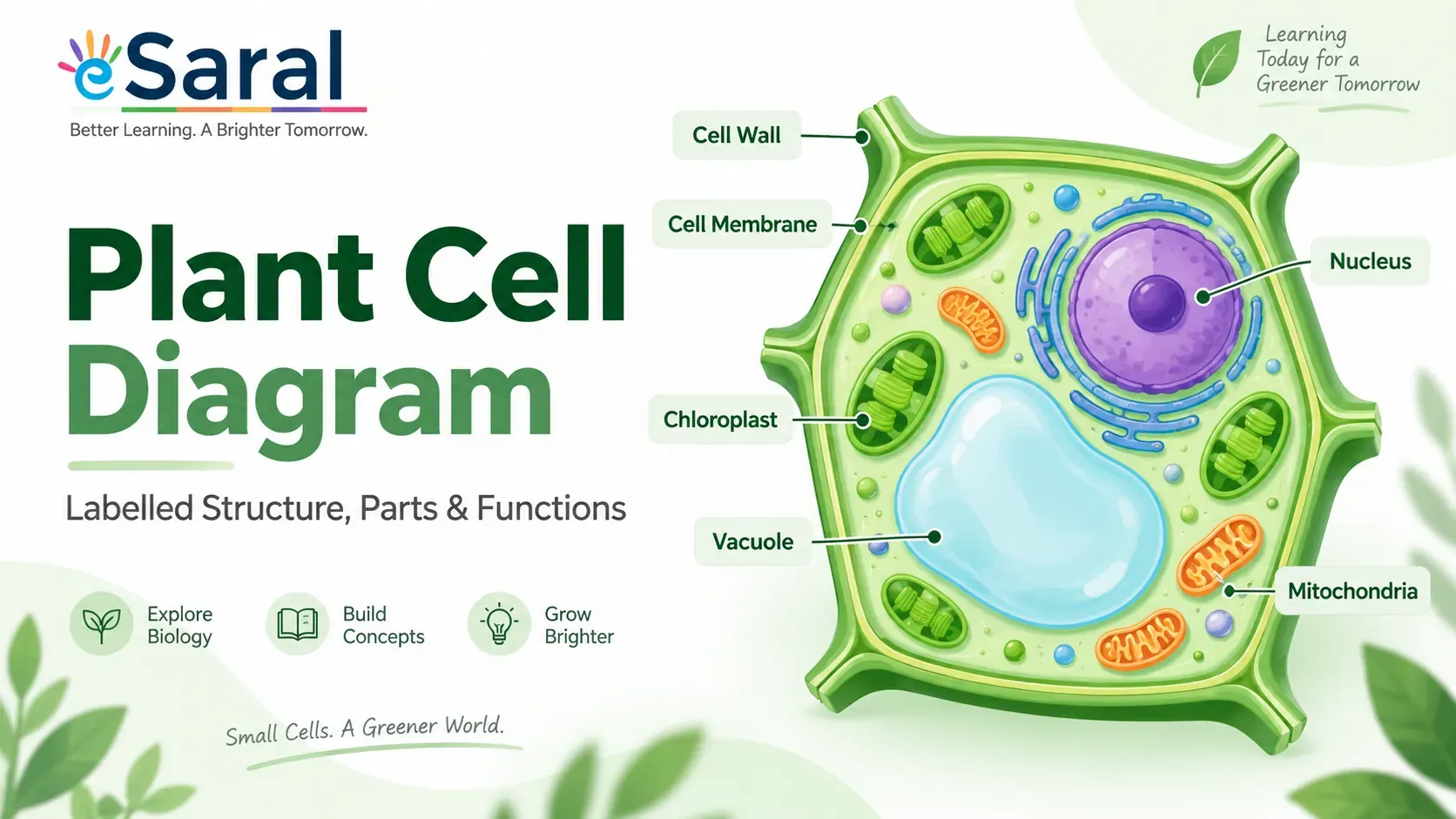
Plant Cell Diagram: Labelled Structure, Parts and Functions
Simple, labelled plant cell diagram with parts and functions. Covers plant cell structure for Class 6, 7, 8, 9, 10 and 11 students, CBSE-aligned.
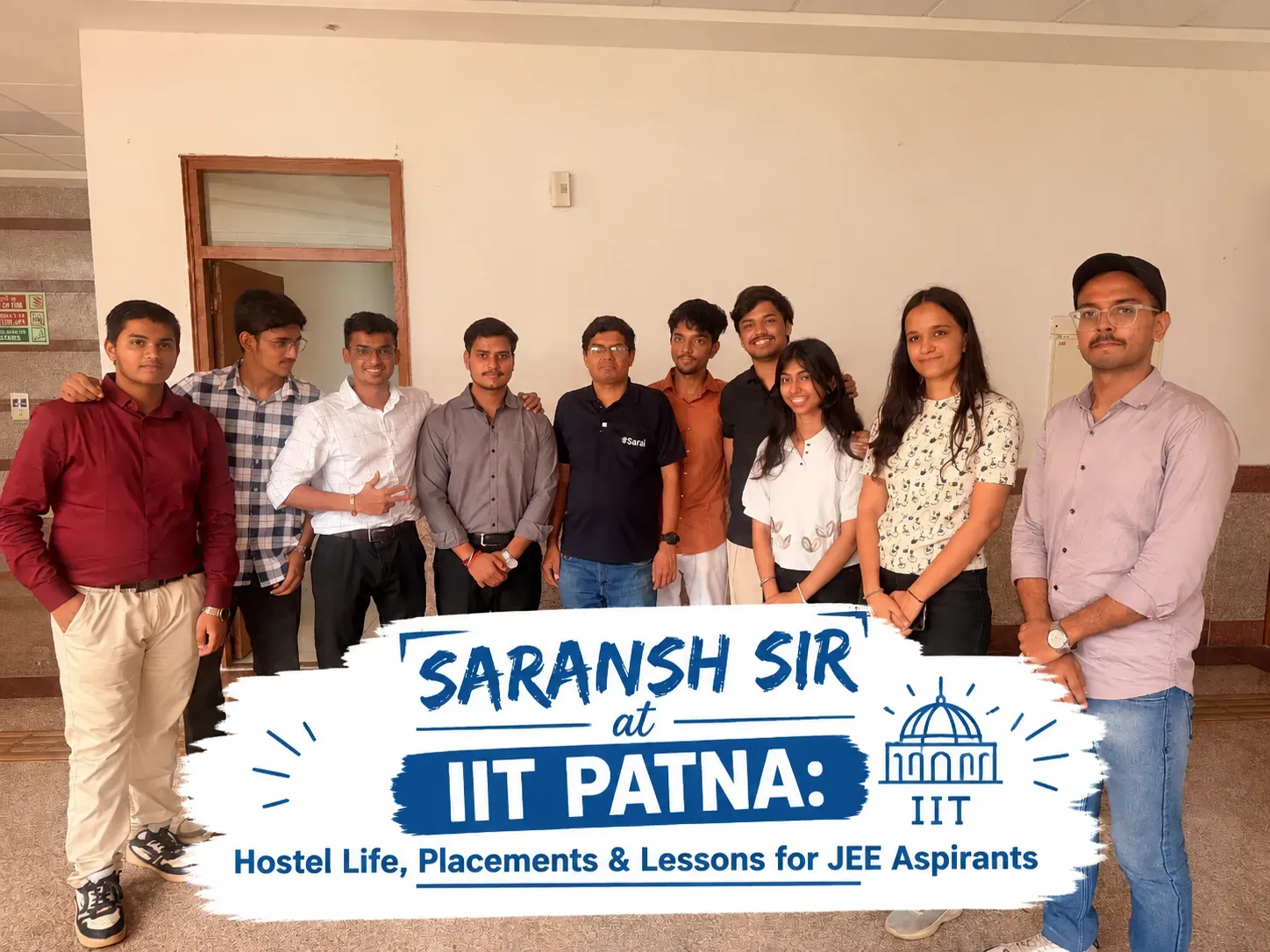
Saransh Gupta Sir's Visit to IIT Patna: Hostel Life, Placements & Lessons for JEE Aspirants
Inside Saransh Gupta Sir's IIT Patna visit — hostel life, the library, placements, internships, and real advice for JEE aspirants from students living the IIT dream.
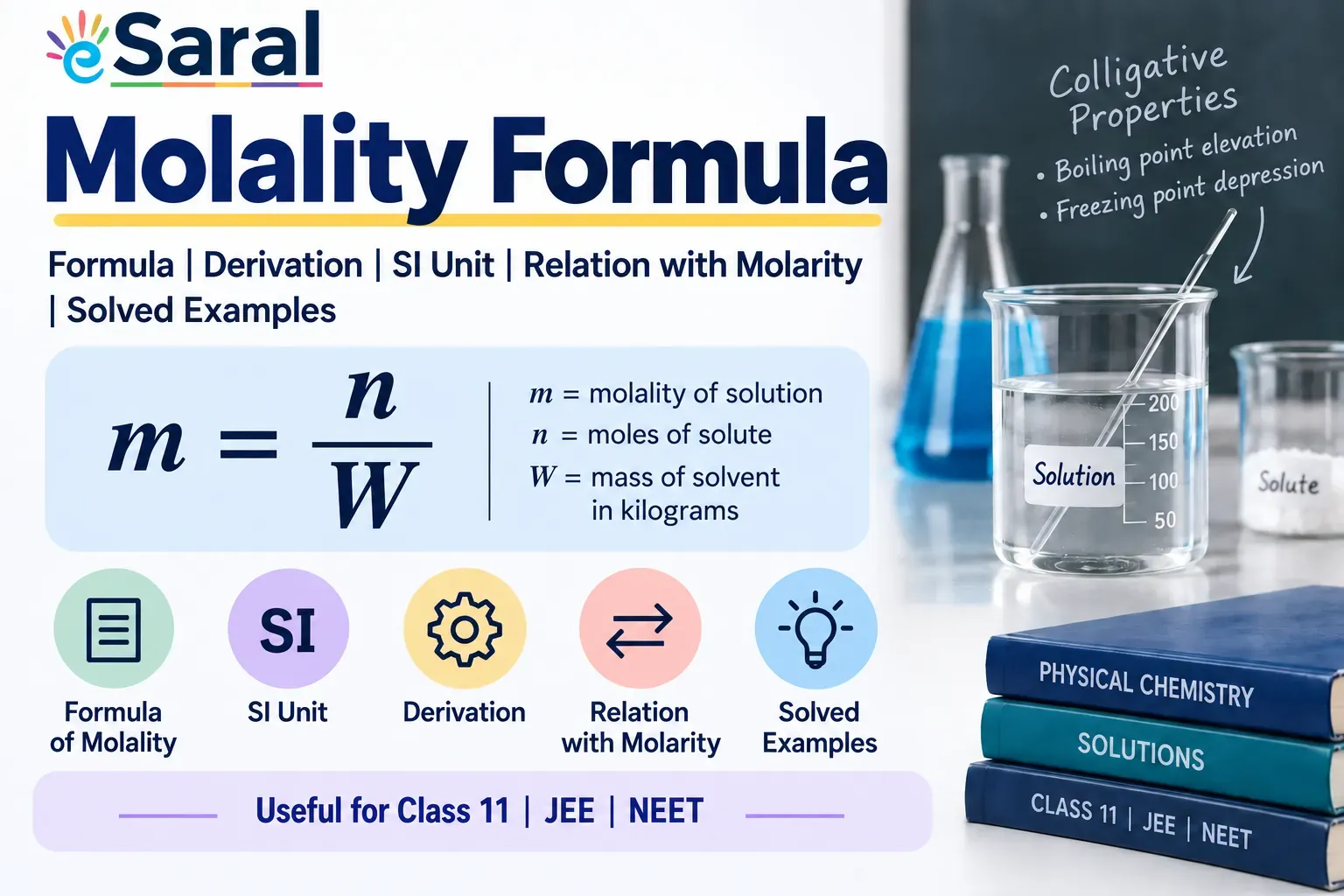
Molality Formula: Formula for Molality, Derivation & Solved Examples
Molality formula is $m = \dfrac{n}{W}$. Learn the formula of molality, its SI unit, derivation, relation with molarity, and solved examples for Class 11, JEE and NEET.
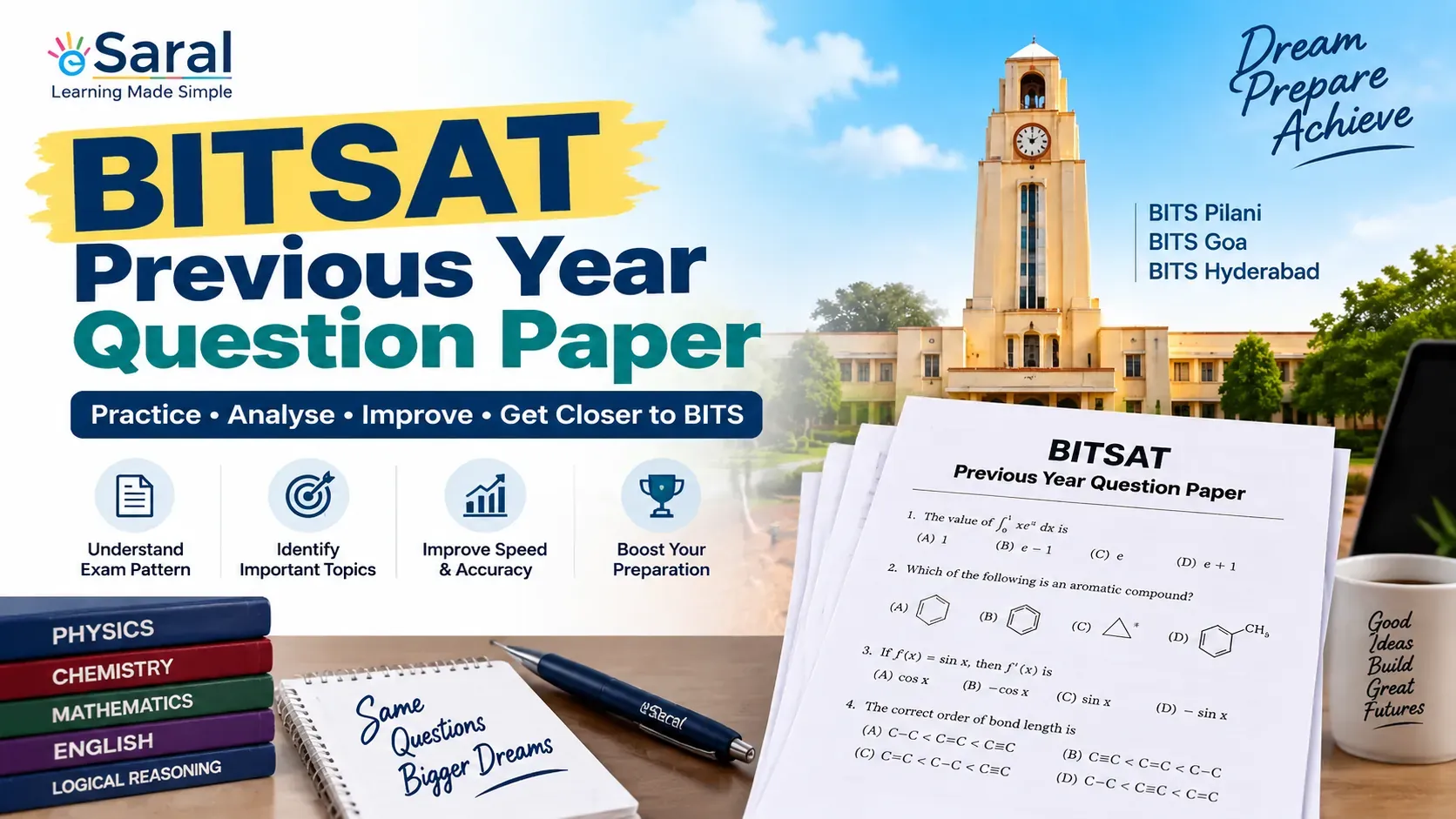
BITSAT Previous Year Question Paper PDF
Download BITSAT previous year question papers PDF. Get year-wise BITSAT PYQs, memory-based papers, exam pattern, and preparation tips to improve your BITSAT preparation.

Teachers’ Day 2026 at eSaral Gurukul: Celebrating the Bond Between Students, Teachers & Mentors
See how Teachers’ Day 2026 was celebrated at eSaral Gurukul, reflecting the bond among students, teachers, and mentors, and the role of guidance beyond academics.
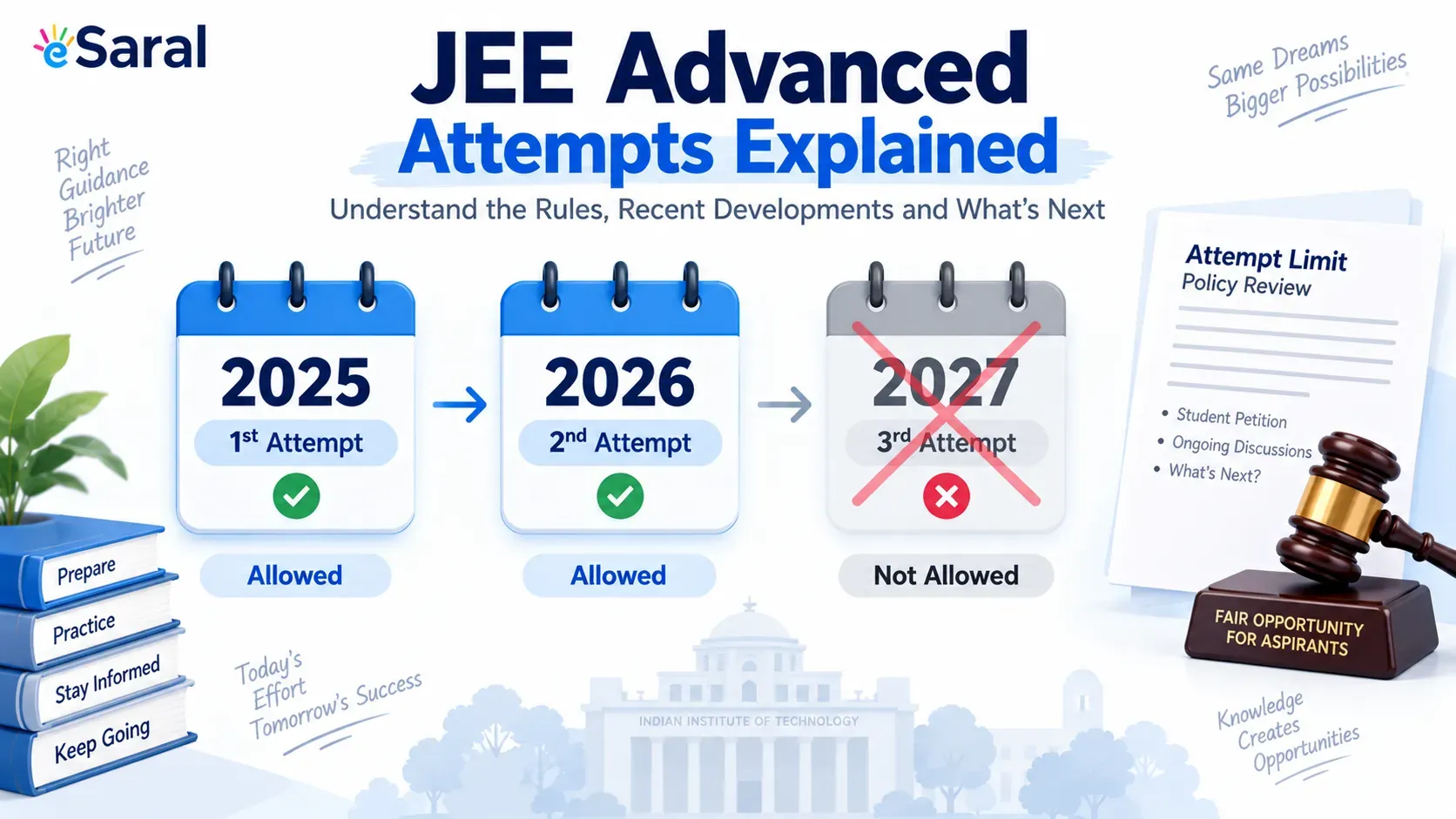
JEE Advanced Attempts: Can You Give It a Third Time? Rules Explained
JEE Advanced attempts: current rule is 2 consecutive years only: full eligibility criteria, the 2025 third-attempt controversy, and the latest 2026 petition news.
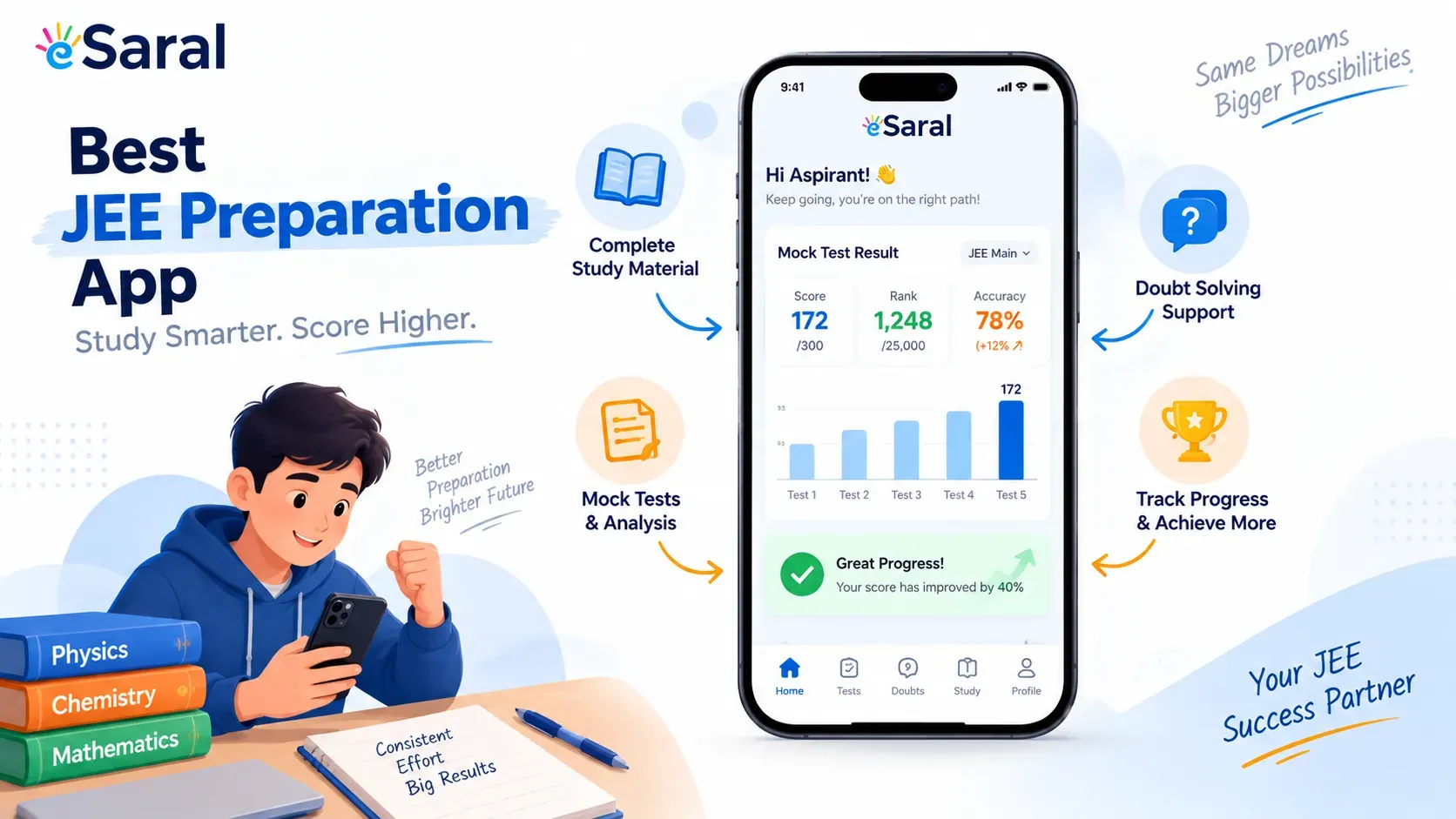
Best JEE Preparation App
Best JEE preparation app for Main & Advanced: AI mock tests, live doubt-solving, thousands of practice questions. JEE preparation app for droppers & Class 11-12.
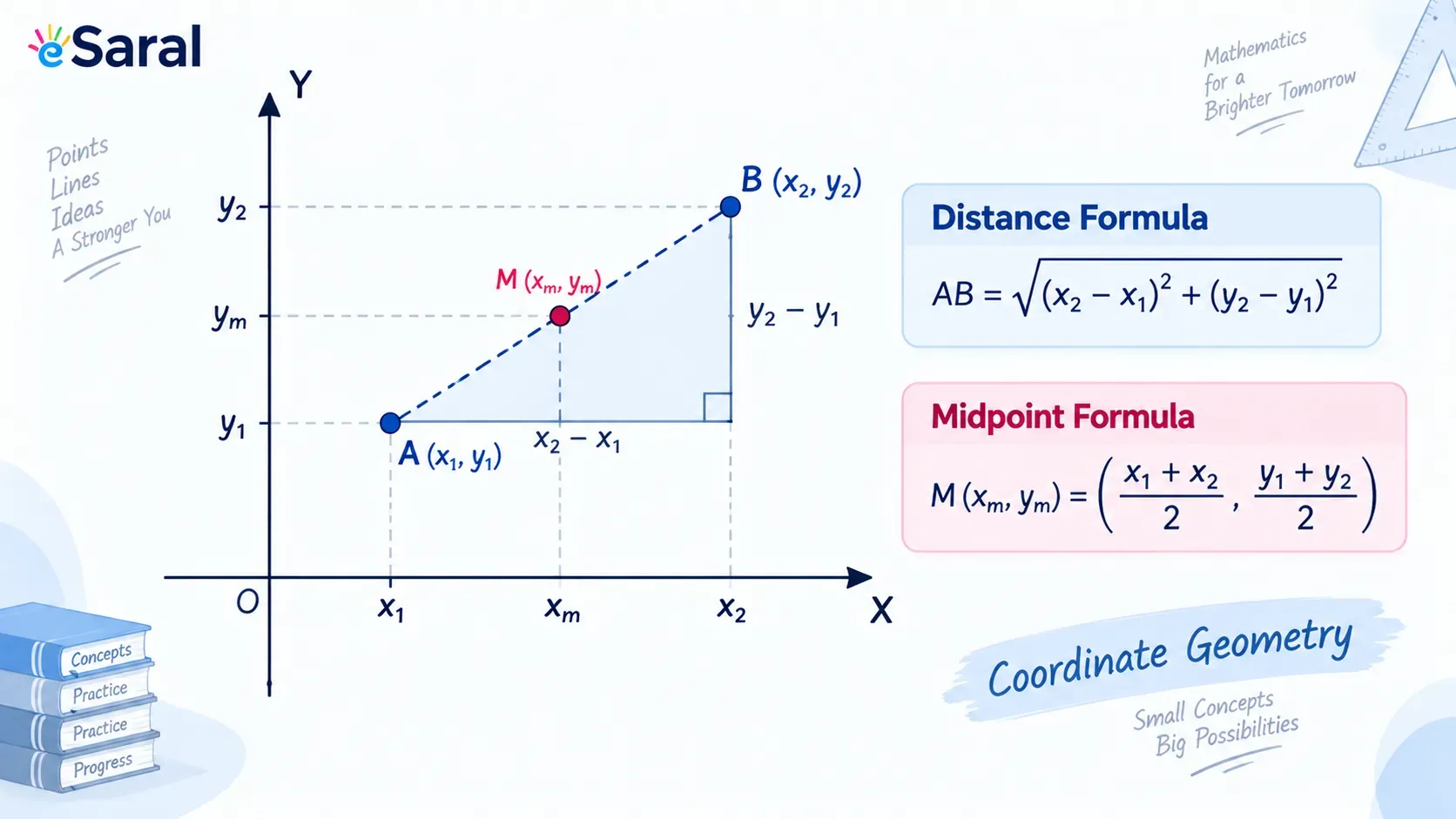
Coordinate Geometry Class 10: Formulas, Notes & Solved Examples
Coordinate geometry class 10: complete CBSE formulas — distance, section, midpoint and area of triangle — with derivation, notes and solved examples.
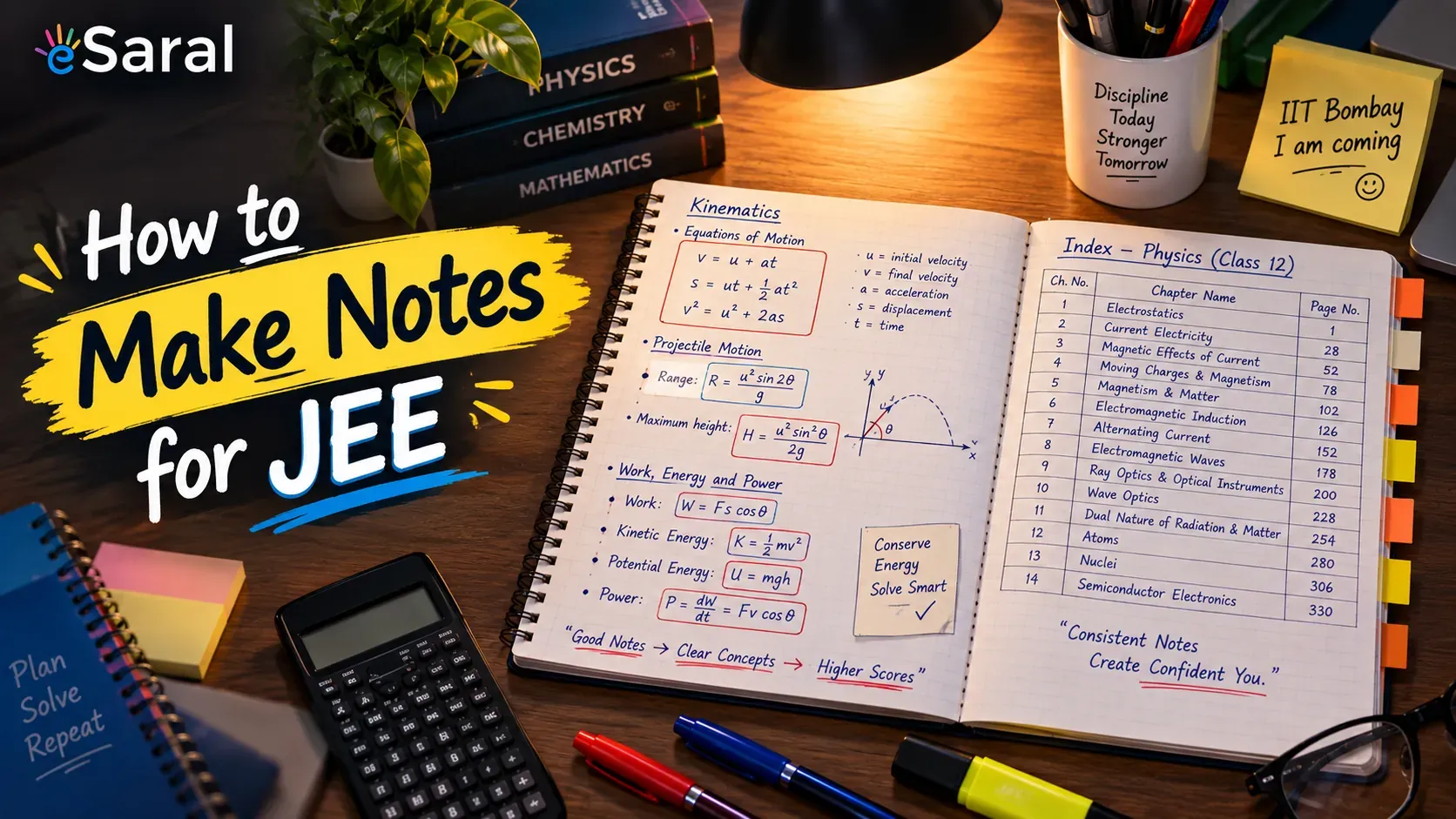
How to make Notes For JEE Smart Notes Strategy of an AIR 41
Learn how to make notes for JEE the way toppers do — indexing, shorthand, and smart short notes for JEE that cut revision time to just 5–7 days.
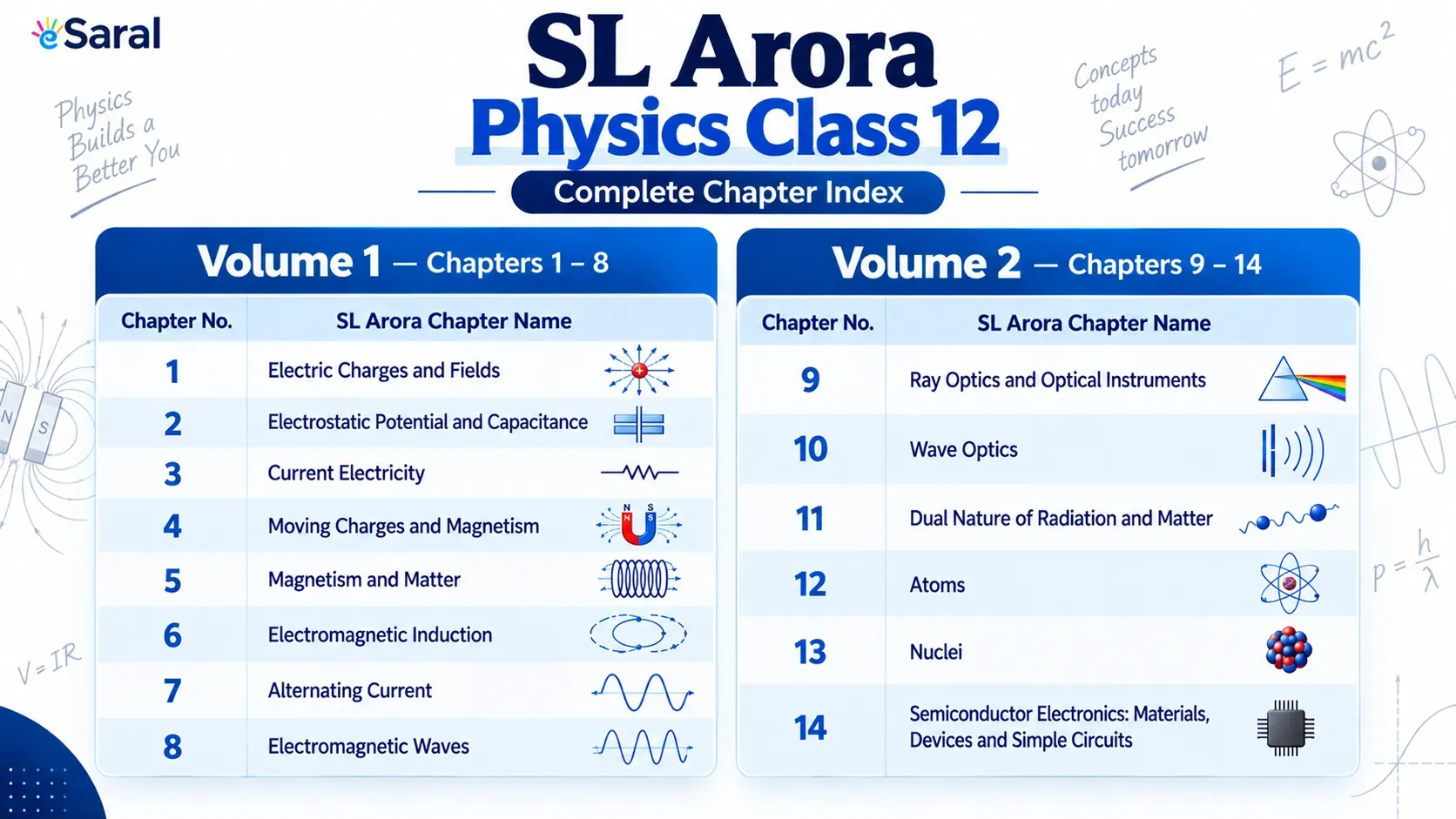
SL Arora Physics Class 12 Index – Chapter List for Volume 1 & 2
SL Arora Physics Class 12 index — complete chapter list for Volume 1 & 2, mapped to NCERT solutions for board, JEE Main, and NEET preparation.