
Important Questions for Class 11 Chemistry Chapter 6 Equilibrium - PDF Downoad

eSaral Academic and Editorial Team
Class 11 Chemistry Important Questions with Answers for Chapter 7 - Equilibrium are listed here. These Class 11 Important Questions are based on CBSE Board Curriculum and according to the latest Class 11 Chemistry syllabus. Practicing these Class 11 Important Questions will help you to quickly review all the concepts covered in this Chapter and prepare for the upcoming Class 11 Annual examinations and other entrance exams like NEET and JEE. Download Free PDF Important Questions for Chemistry Class 11 Chapter 7 Equilibrium from latest edition NCERT books by eSaral expert Chemistry teachers.
Equilibrium is a fundamental concept in science and plays a crucial role in understanding the behavior of systems, whether they are chemical reactions, physical processes, or economic markets. It helps scientists and researchers describe, predict, and control these systems. Equilibrium concepts allow us to make predictions about the behavior of a system once it reaches a state of equilibrium. This predictive power is essential in fields like chemistry, where reactions must be controlled to produce desired products, and in economics, where market stability is critical for decision-making.
Important Topics & Sub-topics of Equilibrium Class 11 Chemistry
Topic | Sub-Topic |
|---|---|
Equilibrium in physical processes | Solid-Liquid Equilibrium, Liquid-Vapour Equilibrium, Solid- Vapour Equilibrium |
Law of chemical equilibrium and Equilibrium constant | Equilibrium equation, Equilibrium constant |
Homogeneous Equilibria | Equilibrium constant in gaseous systems |
Applications of equilibrium constants | Predicting the extent of a reaction, calculating equilibrium concentrations |
Relationship between equilibrium constant K, reaction quotient Q and gibbs energy G | Relationship between equilibrium constant K, reaction quotient Q and gibbs energy G |
Factors affecting equilibria | Effect of concentration change, effect of pressure change, effect of inert gas addition, effect of temperature change, effect of a catalyst |
Class 11 Chemistry Chapter 6 Equilibrium Weightage
In class 11 CBSE exam, every subject exam paper consist of 70 marks. Class 11 chemistry CBSE exam paper also consist of 70 marks. Every single chapter of chemistry have different weightage in the CBSE chemistry exam. Class 11 chemistry chapter 6 – Equilibrium have 7 marks weightage in the class 11 chemistry CBSE exam paper. The weightage percentage of chemistry chapter 6 – Equilibrium in the CBSE chemistry exam is 10%. Hence, chemistry chapter 6 – Equilibrium is consider as important and scoring chapter in the class 11 chemistry CBSE exam.
Tips to Solve Class 11 Chemistry Chapter 6 Equilibrium
Time management strategies to solve Class 11 chemistry Chapter 6 important questions
Prioritize questions: Begin by reviewing the most important questions and deciding which ones are most difficult for you or which ones are more important for your exam. Focus on these questions and start working on them.
Understand the concepts: Before solving any question, ensure you have a good grasp of the fundamental concepts. Check your class notes and textbooks, as well as any related reference materials, to make sure you understand the basics.
Special Focus on Challenging Topics
Chapter 6, which covers the topic of equilibrium in chemistry, can be challenging for some students.
- Understand the concept of the equilibrium constant (K) and its expression for various types of reactions, including homogeneous and heterogeneous reactions.
- Practice calculating equilibrium constants for different chemical reactions.
- Pay attention to the relationship between K and the direction of the reaction. Larger K values indicate a reaction favors products, while smaller K values favor reactants.
Self Test Checklist
A self-test checklist for Chapter 6 on equilibrium in chemistry can help you gauge your understanding and preparation. Here's a checklist to assess your knowledge and readiness for this chapter:
- Do I understand the concept of chemical equilibrium?
- Can I define and explain the equilibrium constant (K) for different types of reactions?
- Do I know how to write equilibrium expressions for various chemical reactions?
- Have I grasped the significance of Le Chatelier's Principle and its applications?
Benefits of Solving Class 11 Chemistry Chapter 6 Important Questions with Answers
Solving Class 11 Chemistry Chapter 6 Equilibrium important questions with answers offers several benefits to students:
Understanding of Key Concepts: It reinforces your understanding of fundamental concepts related to chemical equilibrium, such as the equilibrium constant, Le Chatelier's Principle, and the factors affecting equilibrium.
Application of Theory: It allows you to apply theoretical knowledge to practical problems, helping you see how equilibrium concepts are used in real-world scenarios.
Frequently Asked Questions
Question 1: What are the topics of chapter 6 Equilibrium introduced in Class 11 Chemistry?
Answer 1: Following topics have been introduced in class 11 chemistry chapter 6 Equilibrium:
- Equilibrium in physical processes
- Equilibrium in chemical processes - Dynamic Equilibrium
- Law of chemical equilibrium and equilibrium constant
- Homogeneous equilibria
- Heterogeneous equilibria
- Applications of equilibrium constants
- Relationship between equilibrium constant K, reaction quotient Q and gibbs energy G
- Factors affecting equilibria
- Ionic equilibrium in solution
- Acids, bases and salts
- Ionization of acids and bases
- Buffer solutions
- Solubility equilibria of sparingly soluble salts
Question 2: How to score good marks in Class 11 Chemistry Chapter 2 Equilibrium?
Answer 2: Scoring good marks in Class 11 Chemistry Chapter 2 on Equilibrium requires a combination of effective study strategies and a strong understanding of the subject matter. Start by building a strong foundation in the fundamental concepts of chemical equilibrium. Ensure that you grasp the concept of equilibrium, the equilibrium constant (K), and Le Chatelier's Principle.
Team eSaral
eSaral Academic and Editorial Team
Team eSaral is the collective author profile for educational content created by eSaral’s teachers and academic contributors. The team draws on expertise from IIT graduates, doctors, experienced educators and subject specialists to develop resources for JEE, NEET and school students. Our articles aim to explain concepts clearly and help students study with confidence.
Related Posts
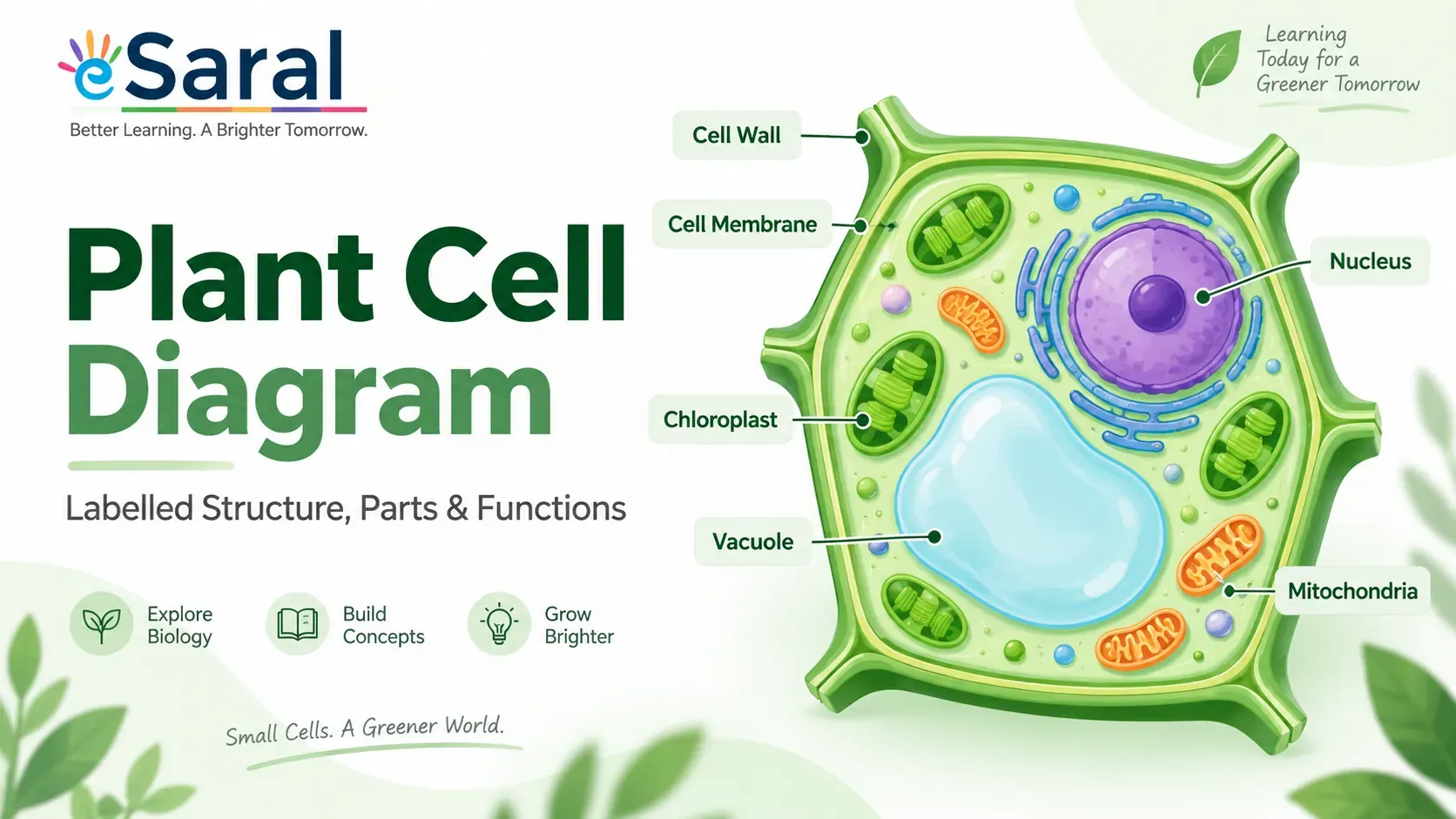
Plant Cell Diagram: Labelled Structure, Parts and Functions
Simple, labelled plant cell diagram with parts and functions. Covers plant cell structure for Class 6, 7, 8, 9, 10 and 11 students, CBSE-aligned.

Saransh Gupta Sir's Visit to IIT Patna: Hostel Life, Placements & Lessons for JEE Aspirants
Inside Saransh Gupta Sir's IIT Patna visit — hostel life, the library, placements, internships, and real advice for JEE aspirants from students living the IIT dream.
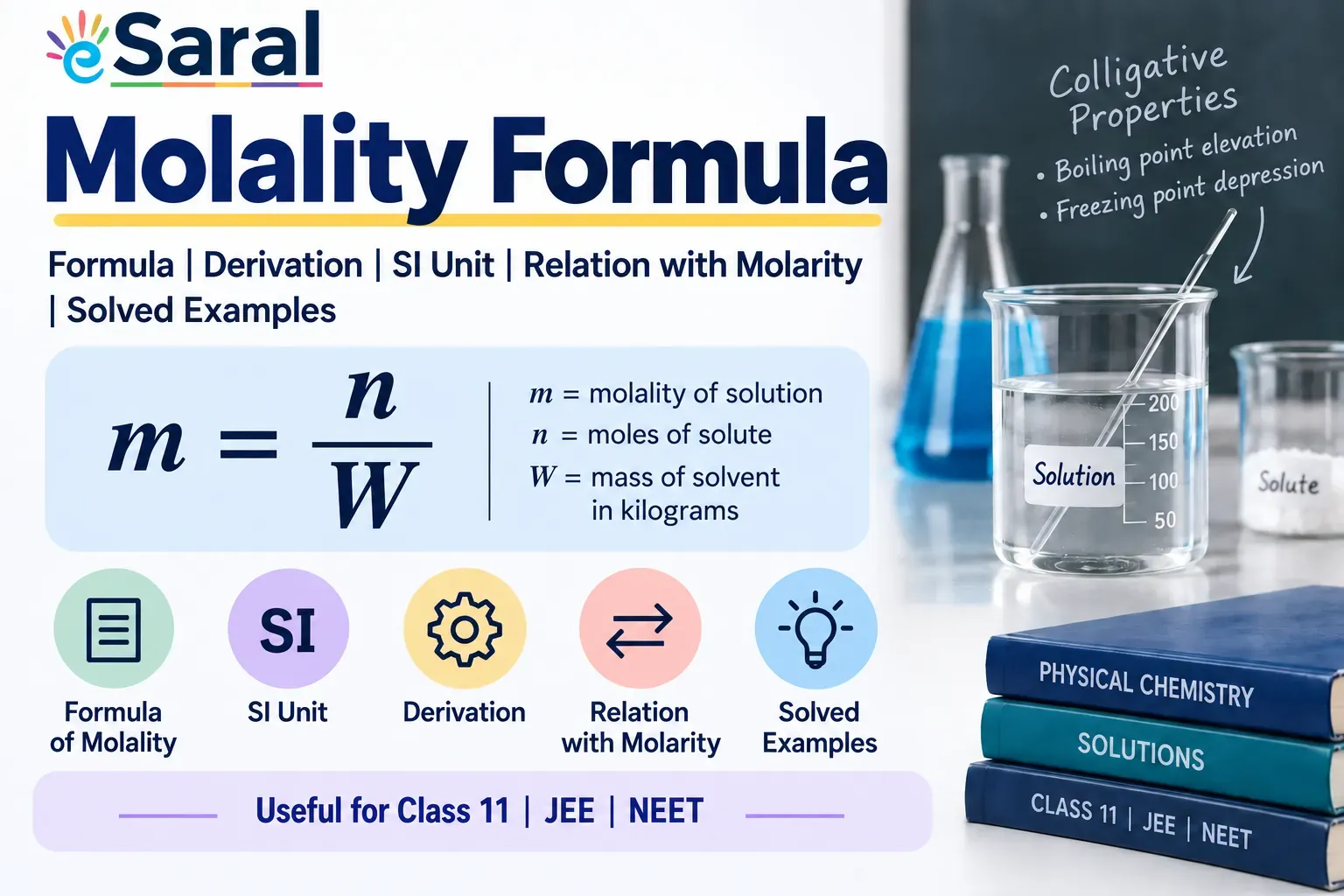
Molality Formula: Formula for Molality, Derivation & Solved Examples
Molality formula is $m = \dfrac{n}{W}$. Learn the formula of molality, its SI unit, derivation, relation with molarity, and solved examples for Class 11, JEE and NEET.
BITSAT Previous Year Question Paper PDF
Download BITSAT previous year question papers PDF. Get year-wise BITSAT PYQs, memory-based papers, exam pattern, and preparation tips to improve your BITSAT preparation.

Teachers’ Day 2026 at eSaral Gurukul: Celebrating the Bond Between Students, Teachers & Mentors
See how Teachers’ Day 2026 was celebrated at eSaral Gurukul, reflecting the bond among students, teachers, and mentors, and the role of guidance beyond academics.
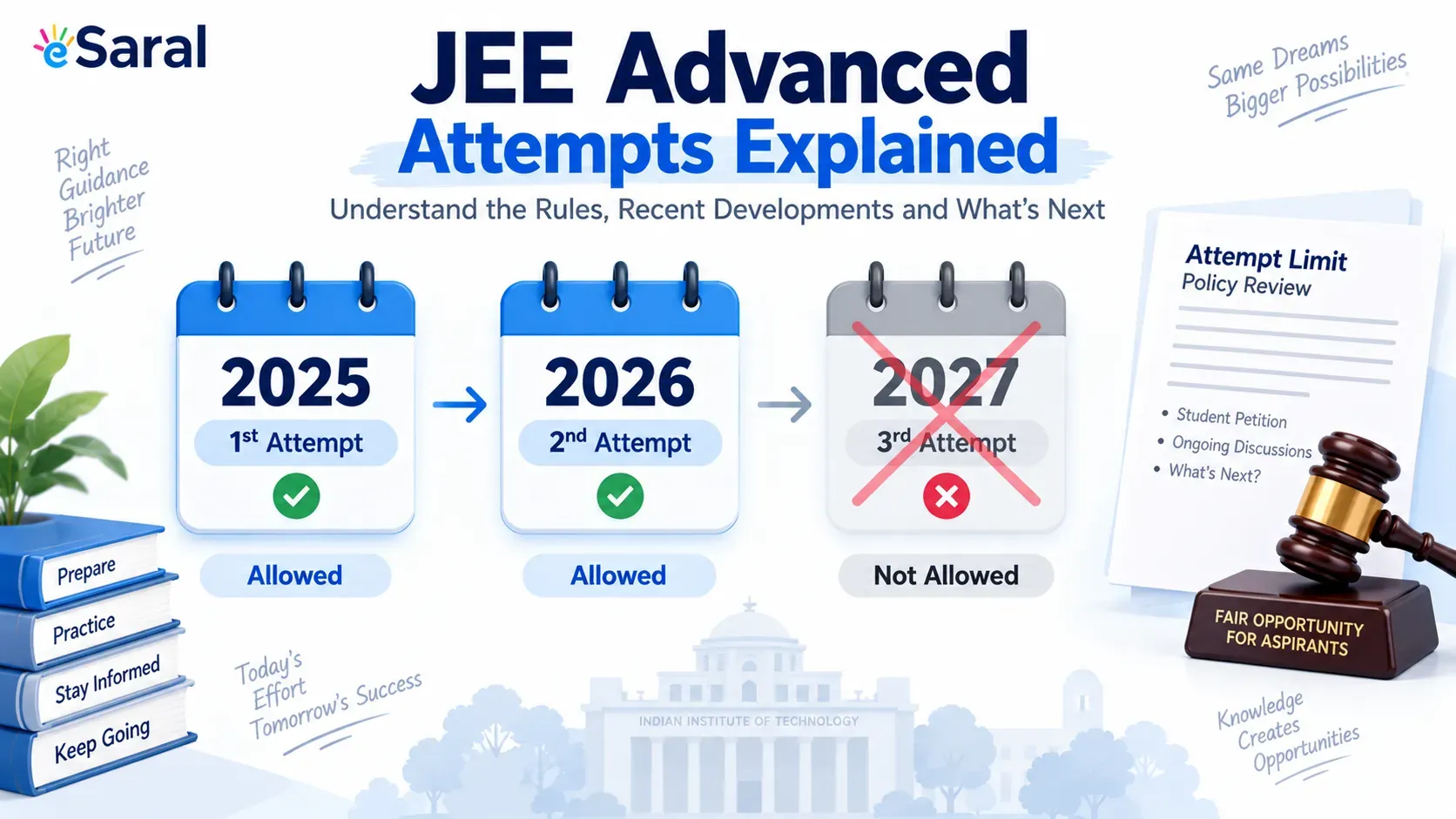
JEE Advanced Attempts: Can You Give It a Third Time? Rules Explained
JEE Advanced attempts: current rule is 2 consecutive years only: full eligibility criteria, the 2025 third-attempt controversy, and the latest 2026 petition news.

Best JEE Preparation App
Best JEE preparation app for Main & Advanced: AI mock tests, live doubt-solving, thousands of practice questions. JEE preparation app for droppers & Class 11-12.
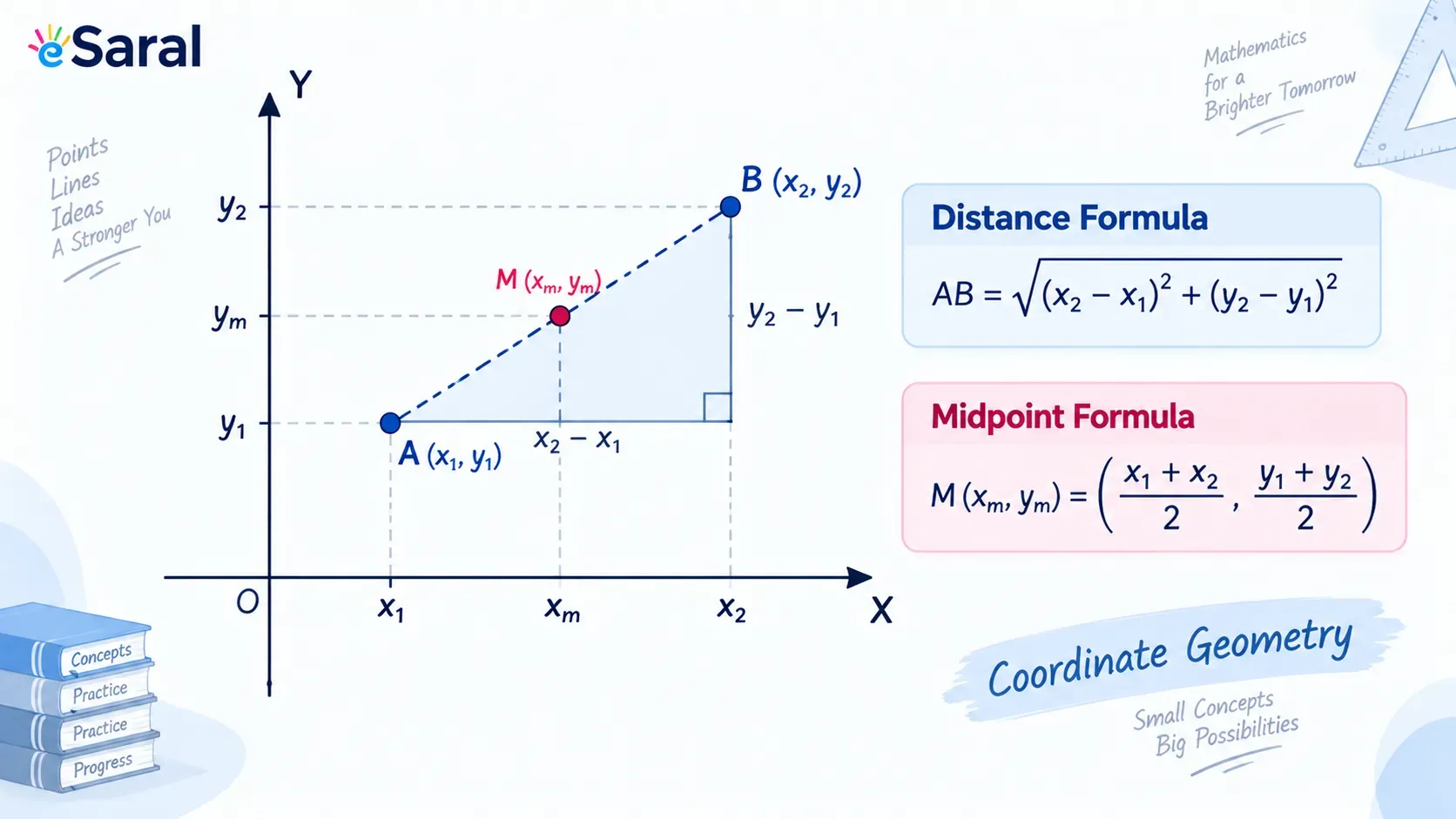
Coordinate Geometry Class 10: Formulas, Notes & Solved Examples
Coordinate geometry class 10: complete CBSE formulas — distance, section, midpoint and area of triangle — with derivation, notes and solved examples.
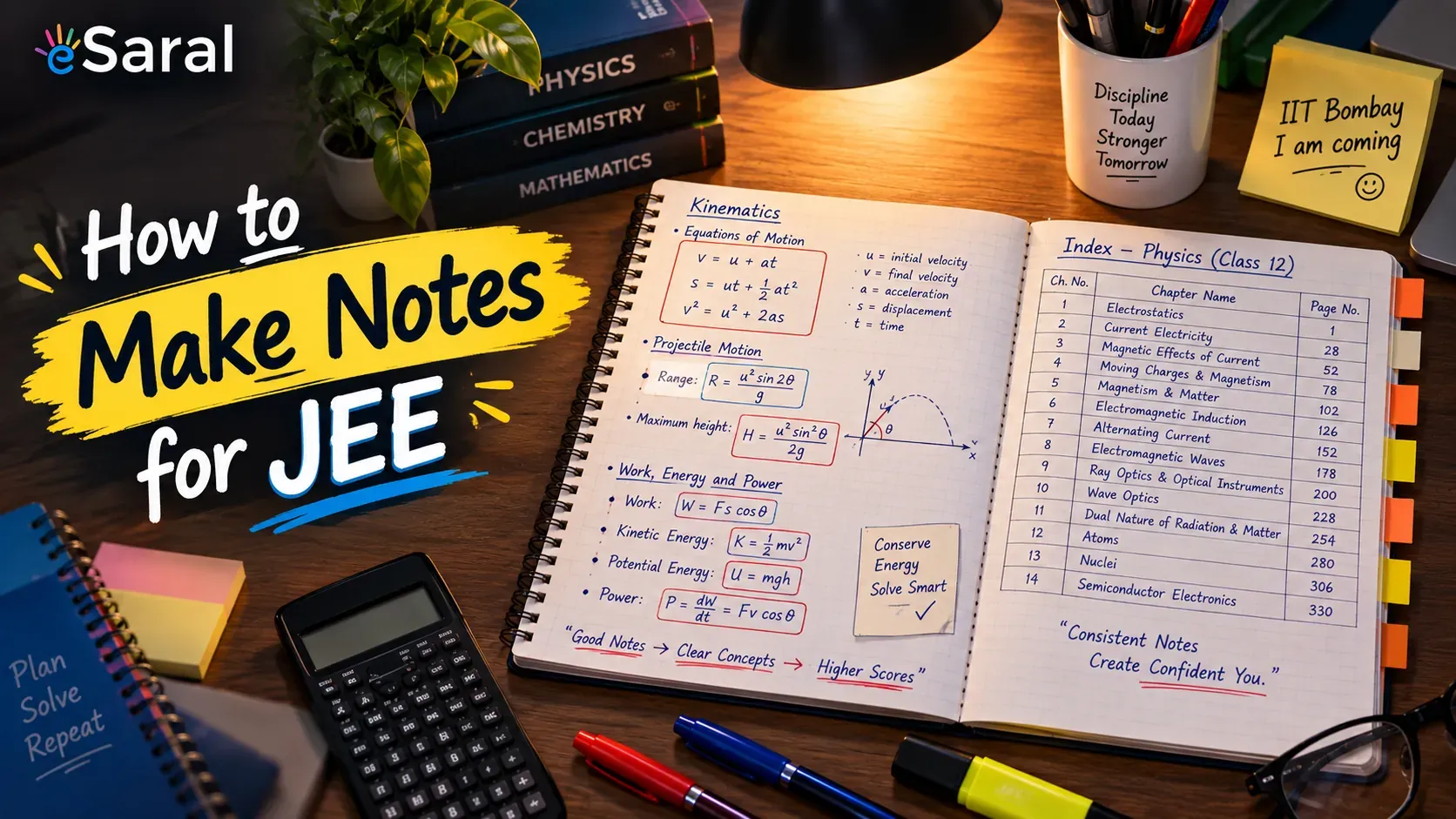
How to make Notes For JEE Smart Notes Strategy of an AIR 41
Learn how to make notes for JEE the way toppers do — indexing, shorthand, and smart short notes for JEE that cut revision time to just 5–7 days.
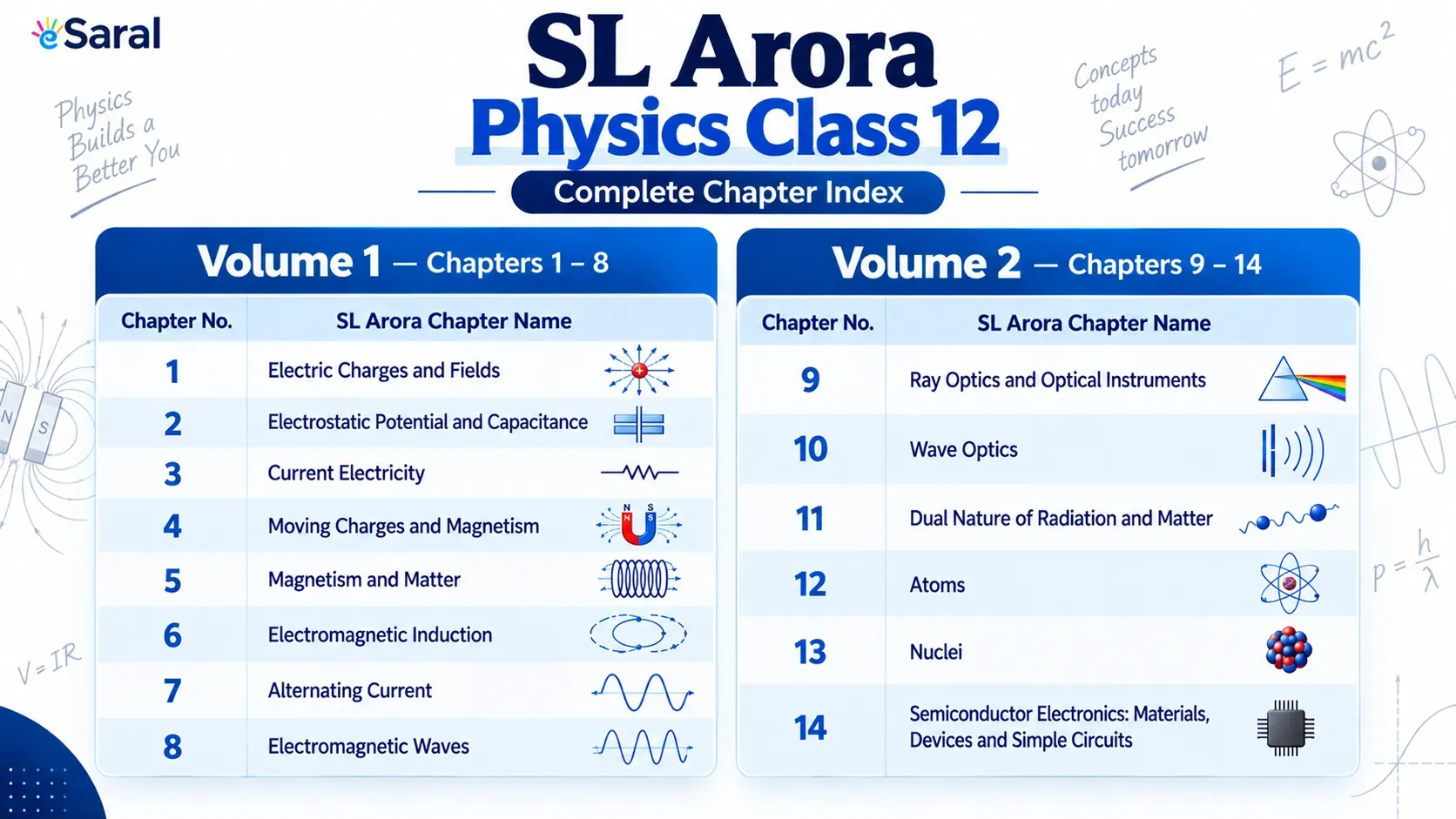
SL Arora Physics Class 12 Index – Chapter List for Volume 1 & 2
SL Arora Physics Class 12 index — complete chapter list for Volume 1 & 2, mapped to NCERT solutions for board, JEE Main, and NEET preparation.