
Important Questions for Class 11 Chemistry Chapter 8 Organic Chemistry - Some Basic Principles and Techniques - PDF Download

eSaral Academic and Editorial Team
class 11 chemistry chapter 8, organic chemistry some basic principles and techniques are listed in this article. These important questions have been developed by the experts in the subject. They cover all the topics given in the chapter. You can download and reference the PDF of the Organic Chemistry class 11 important questions for free.
The main purpose of developing these important questions was to help students in organizing their study materials before the tests. The latest CBSE rules have been used in the development of these important questions. The organic chemistry class 11 important questions in this chapter will help students to understand the kind of questions asked during the competitive exams. For better exam preparation, students can consult additional study materials for Class 11 chemistry chapter 12 found on eSaral.
Class 11 Chemistry Important Questions with Answers for Organic Chemistry Chapter 12 – Some Basic Principles & Technique. These Class 11 Chemistry Important Questions are based on CBSE Board Curriculum and according to the latest Class 11 Chemistry Syllabus. Practicing these Class 11 Important Questions will help you to review all the ideas in this chapter in a short time and will help you in preparing for the Annual examinations of Class 11 and other entrance exams like NEET & JEE.
Important Topics & Sub-topics of Organic Chemistry - Some Basic Principles and Techniques Class 11 Chemistry
Topic | Sub-Topic |
|---|---|
Tetravalence of carbon: shapes of organic compounds | The shapes of carbon compounds, Some characteristic feature of pi bond |
Structural representations of organic compounds | Complete, condensed and bond line structural formulas, three dimensional representation of organic molecules |
Classification of organic compounds | Functional group, homologous series |
Nomenclature of organic compounds | The IUPAC system of nomenclature, IUPAC nomenclature of alkanes |
Isomerism | Structural isomerism, stereoisomerism |
Fundamental concepts in organic reaction mechanism | Inductive effect, Resonance structure, electromeric effect, Hyperconjugation, types of organic reaction and mechanism |
Methods of purification of organic compounds | Sublimation, Crystallisation, Distillation, Chromatography |
Class 11 Chemistry Chapter 8 Organic Chemistry - Some Basic Principles and Techniques Weightage
In class 11 CBSE exam, every subject exam paper consist of 70 marks. Class 11 chemistry CBSE exam paper also consist of 70 marks. Every single chapter of chemistry have different weightage in the CBSE chemistry exam. Class 11 chemistry chapter 8 Organic chemistry - some basic principles and techniques have 11 marks weightage in the class 11 chemistry CBSE exam paper. The weightage percentage of chemistry chapter 8 Organic chemistry - some basic principles and techniques in the CBSE chemistry exam is 16%. Hence, chemistry chapter 8 Organic chemistry - some basic principles and techniques is consider as important and scoring chapter in the class 11 chemistry CBSE exam.
Tips to Solve Class 11 Chemistry Chapter 8 Organic Chemistry - Some Basic Principles and Techniques
Time management strategies to solve Class 11 chemistry Chapter 8 important questions
Effectively managing your time to solve important questions in Class 11 Chemistry Chapter 8 Organic Chemistry - Some Basic Principles and Techniques is crucial for efficient and thorough preparation. Here are some time management strategies to help you tackle these questions:
Understand the Chapter: Before you start solving questions, ensure you have a solid understanding of the chapter's concepts. Read the chapter thoroughly and make concise notes to serve as quick references.
Prioritize Important Questions: Identify the most important questions. Your teacher or study guide may provide a list of such questions. Focus on these first.
Break It Down: Break your study session into manageable chunks. Don't try to solve all the questions in one go. Allocate specific time slots for different types of questions.
Special Focus on Challenging Topics
Special focus on challenging topics in Class 11 Chemistry Chapter 8 Organic Chemistry - Some Basic Principles and Techniques can yield several benefits for students.
Comprehensive Understanding: Focusing on challenging topics allows you to delve deeper into the subject matter, ensuring a more comprehensive understanding of organic chemistry.
Problem-Solving Skills: Complex topics often involve intricate problem-solving. Tackling challenging areas helps hone your analytical and problem-solving skills, which are valuable not only in chemistry but also in various other fields.
Self Test Checklist
A self test checklist for class 11 chemistry chapter 8 Organic Chemistry - Some Basic Principles and Techniques can help you assess your understanding and preparedness for class 11 annual exam. Here's a checklist of important topics and concepts you should cover in this chapter:
- Understand the distinction between organic and inorganic compounds.
- Know the importance of carbon and its bonding properties.
- Comprehend the concept of carbon's tetravalency and its ability to form diverse organic compounds.
Benefits of Solving Class 11 Chemistry Chapter 8 Important Questions with Answers
Solving important questions with answers from Class 11 Chemistry Chapter 8 Organic Chemistry - Some Basic Principles and Techniques offers several advantages for students. Here are the benefits of using these questions as part of your study and exam preparation:
Conceptual Clarity: Solving important questions reinforces your understanding of the fundamental concepts in organic chemistry.
Application of Knowledge: By answering these questions, you can apply what you've learned to real-world scenarios and problem-solving.
Problem-Solving Skills: Practicing important questions enhances your problem-solving skills, enabling you to tackle complex problems with confidence.
Frequently Asked Questions
Question 1: What are the topics of chapter 8 Organic Chemistry - Some Basic Principles and Techniques introduced in Class 11 Chemistry?
Answer 1: Following topics have been introduced in class 11 chemistry Chapter 8 Organic Chemistry - Some Basic Principles and Techniques:
- General Introduction
- Tetravalence of carbon: shapes of organic compounds
- Structural representations of organic compounds
- Classification of organic compounds
- Nomenclature of organic compounds
- Isomerism
- Fundamental concepts in organic reaction mechanism
- Methods of purification of organic compounds
- Qualitative analysis of organic compounds
- Quantitative analysis
Question 2: How to score good marks in Class 11 Chemistry Chapter 8 Organic Chemistry - Some Basic Principles and Techniques?
Answer 2: Scoring good marks in Class 11 Chemistry Chapter 8 (Organic Chemistry - Some Basic Principles and Techniques) requires a systematic approach and consistent effort. Start by building a strong foundation in organic chemistry. Understand the basics of bonding, isomerism, and the structure of organic compounds.
Team eSaral
eSaral Academic and Editorial Team
Team eSaral is the collective author profile for educational content created by eSaral’s teachers and academic contributors. The team draws on expertise from IIT graduates, doctors, experienced educators and subject specialists to develop resources for JEE, NEET and school students. Our articles aim to explain concepts clearly and help students study with confidence.
Related Posts
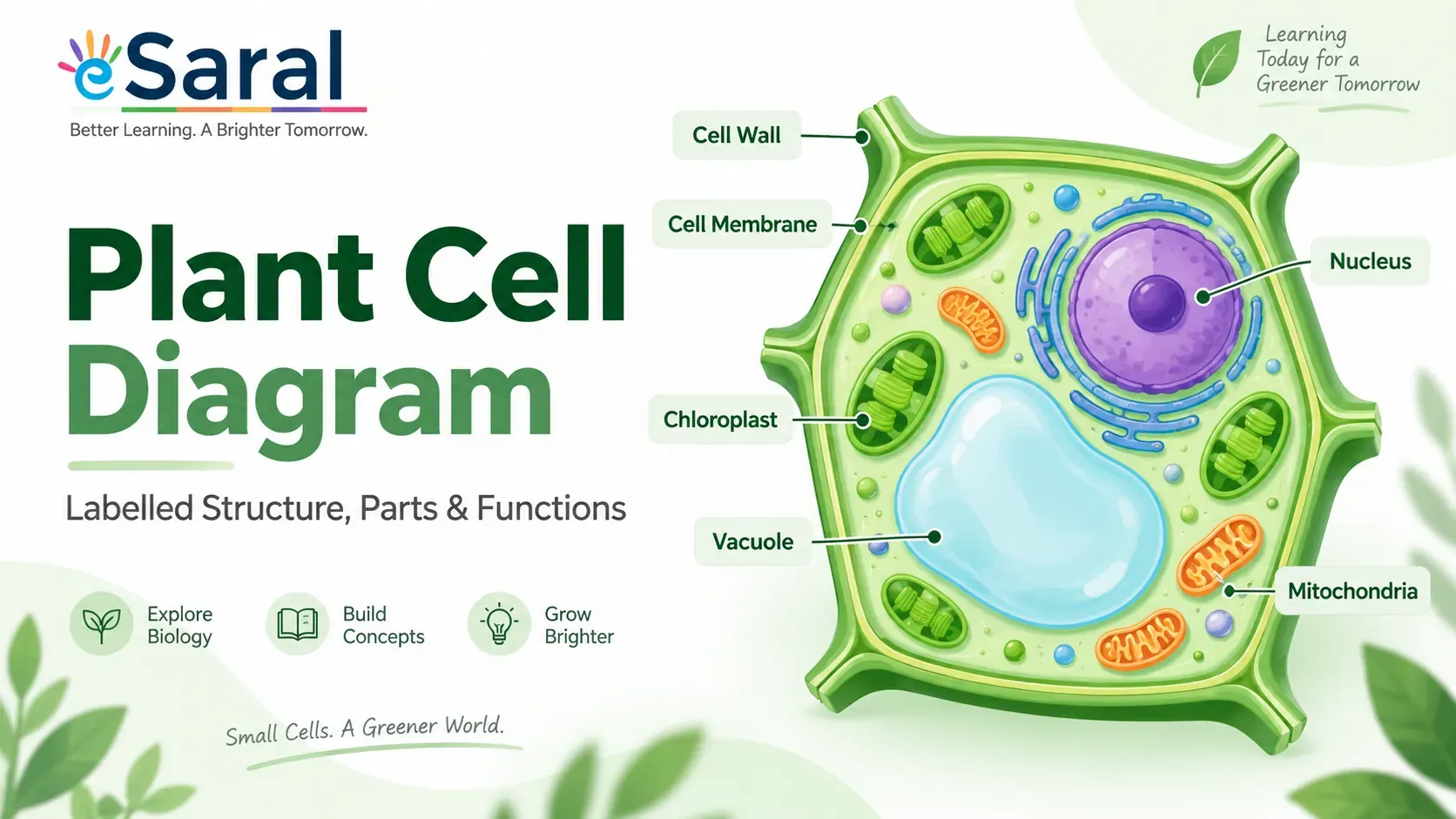
Plant Cell Diagram: Labelled Structure, Parts and Functions
Simple, labelled plant cell diagram with parts and functions. Covers plant cell structure for Class 6, 7, 8, 9, 10 and 11 students, CBSE-aligned.
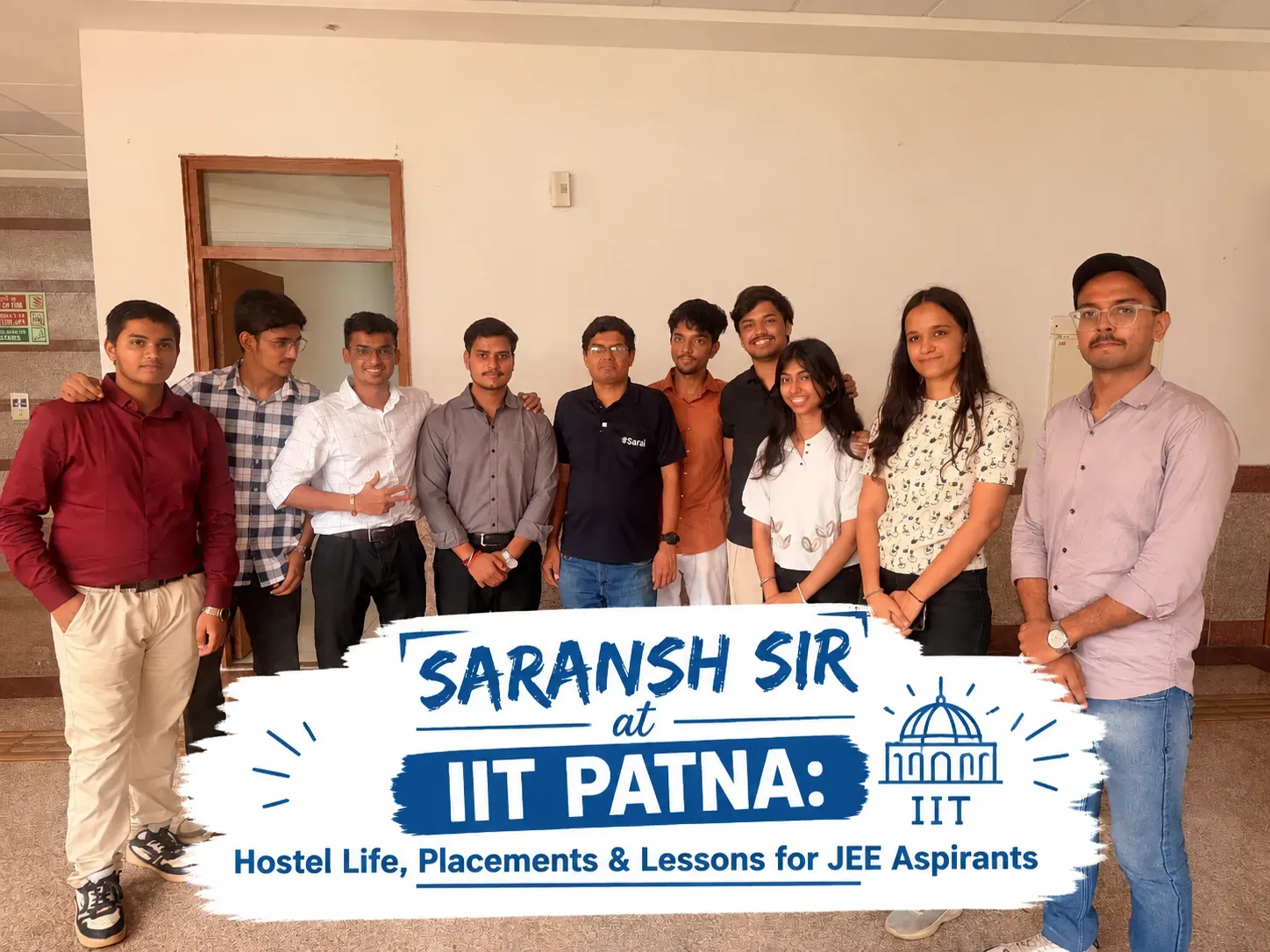
Saransh Gupta Sir's Visit to IIT Patna: Hostel Life, Placements & Lessons for JEE Aspirants
Inside Saransh Gupta Sir's IIT Patna visit — hostel life, the library, placements, internships, and real advice for JEE aspirants from students living the IIT dream.
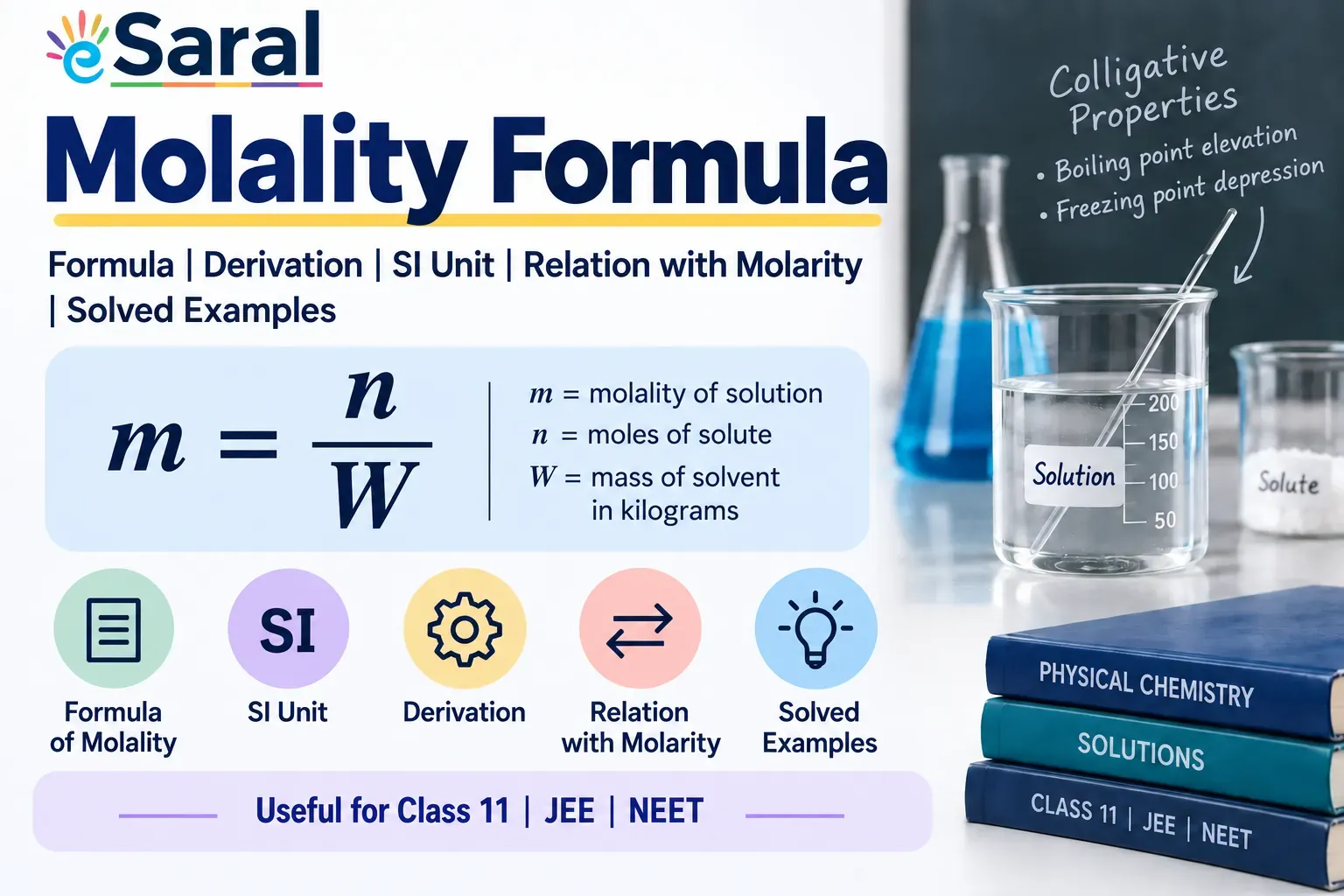
Molality Formula: Formula for Molality, Derivation & Solved Examples
Molality formula is $m = \dfrac{n}{W}$. Learn the formula of molality, its SI unit, derivation, relation with molarity, and solved examples for Class 11, JEE and NEET.
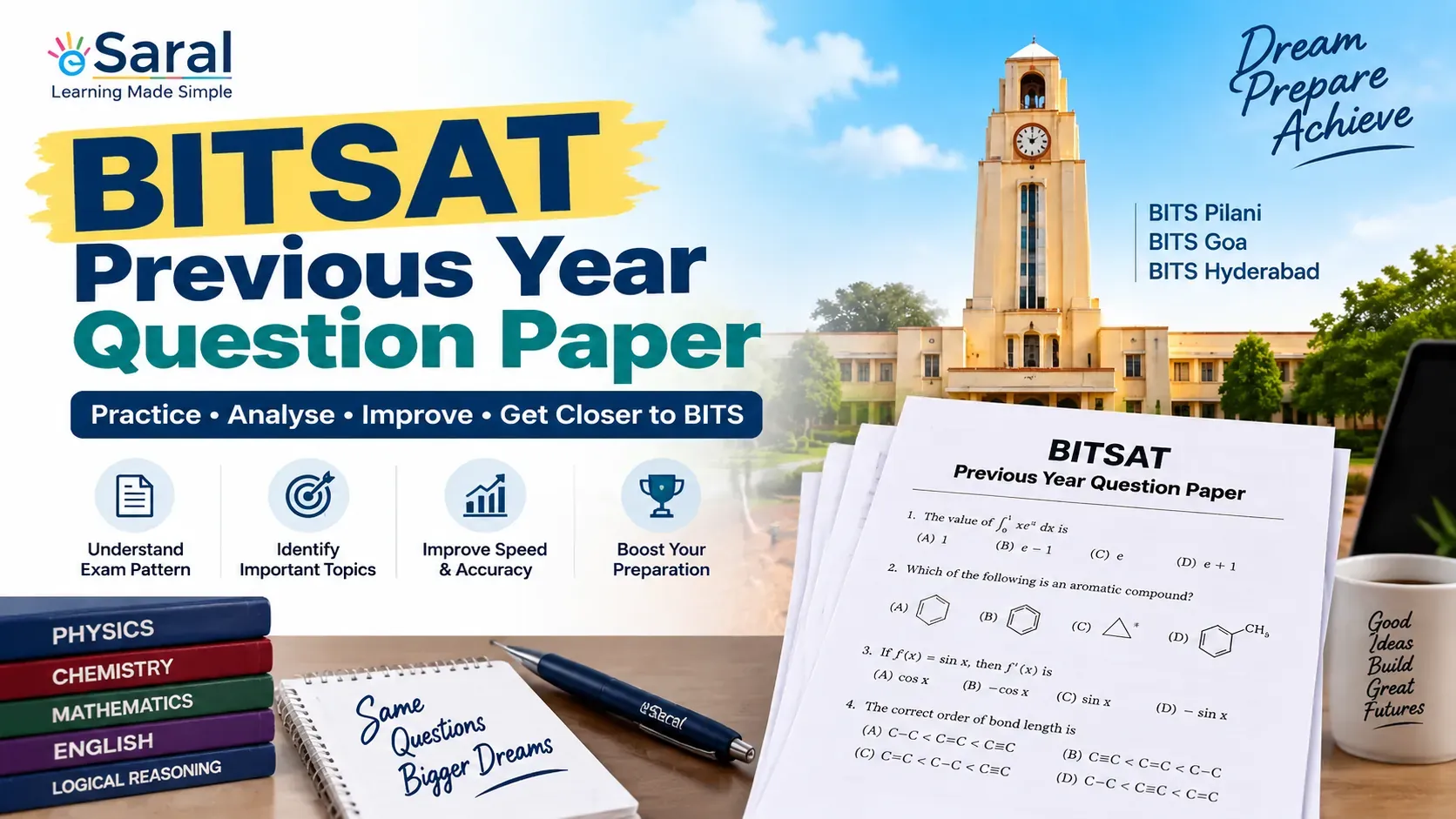
BITSAT Previous Year Question Paper PDF
Download BITSAT previous year question papers PDF. Get year-wise BITSAT PYQs, memory-based papers, exam pattern, and preparation tips to improve your BITSAT preparation.

Teachers’ Day 2026 at eSaral Gurukul: Celebrating the Bond Between Students, Teachers & Mentors
See how Teachers’ Day 2026 was celebrated at eSaral Gurukul, reflecting the bond among students, teachers, and mentors, and the role of guidance beyond academics.
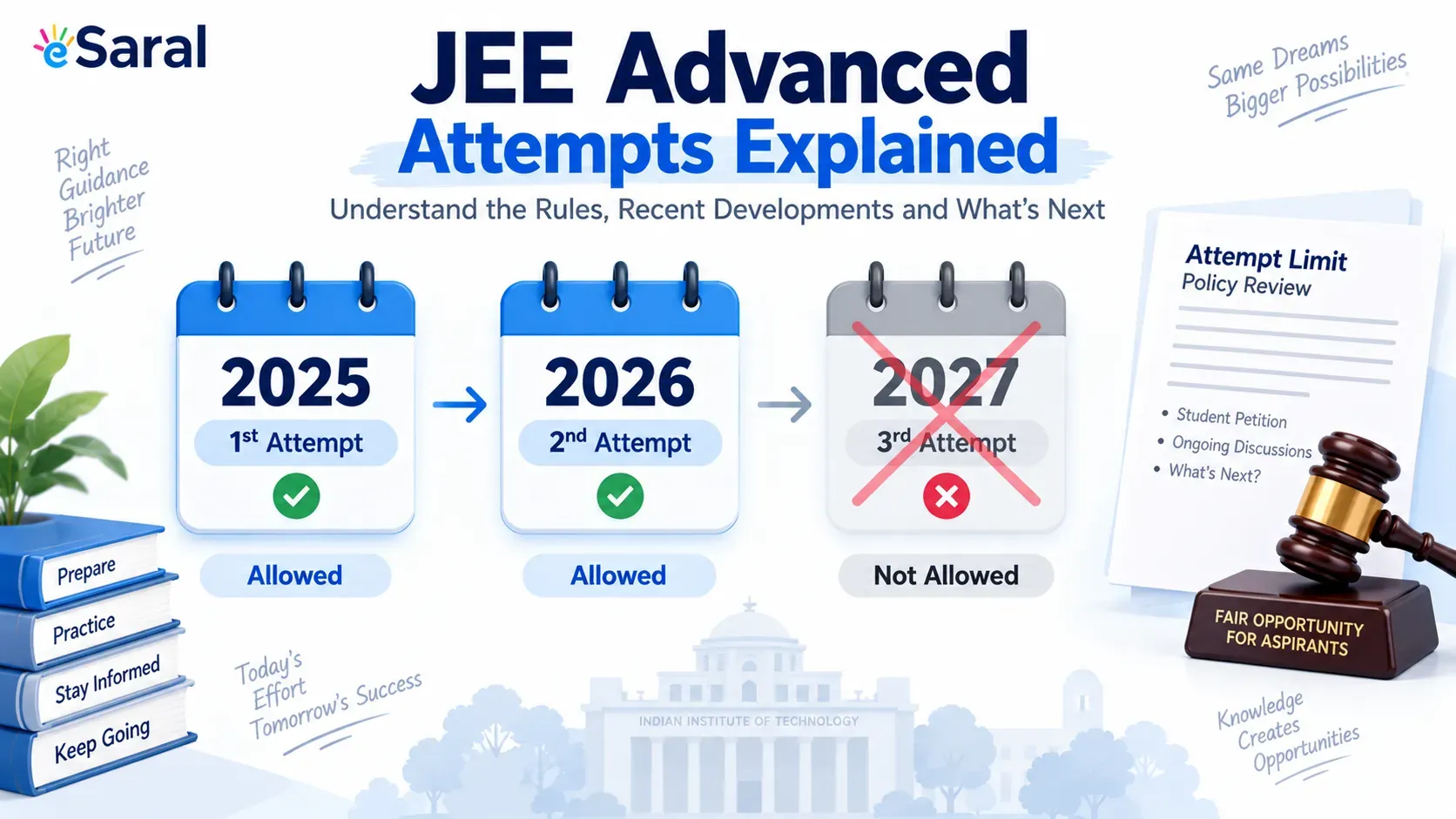
JEE Advanced Attempts: Can You Give It a Third Time? Rules Explained
JEE Advanced attempts: current rule is 2 consecutive years only: full eligibility criteria, the 2025 third-attempt controversy, and the latest 2026 petition news.
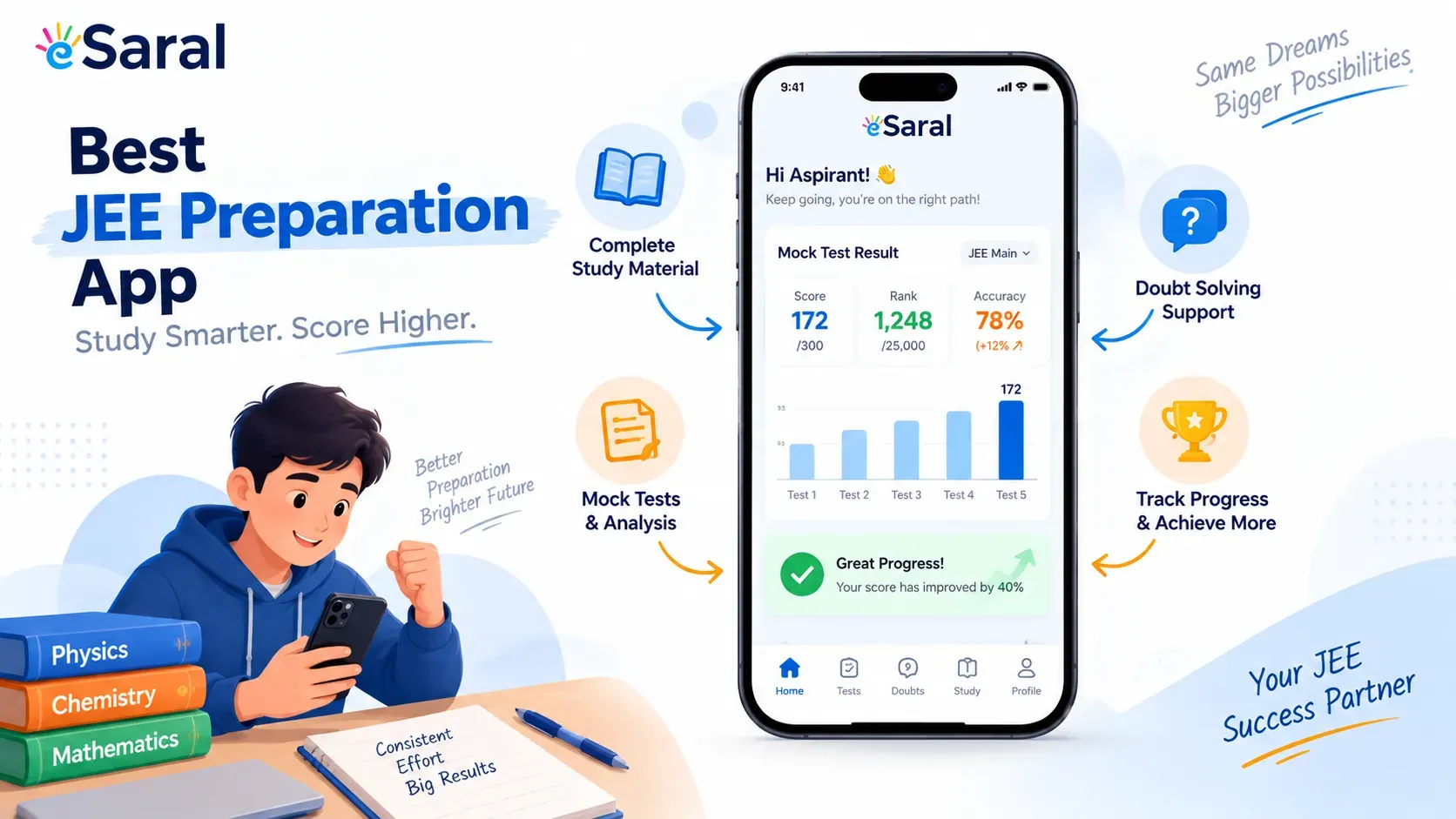
Best JEE Preparation App
Best JEE preparation app for Main & Advanced: AI mock tests, live doubt-solving, thousands of practice questions. JEE preparation app for droppers & Class 11-12.
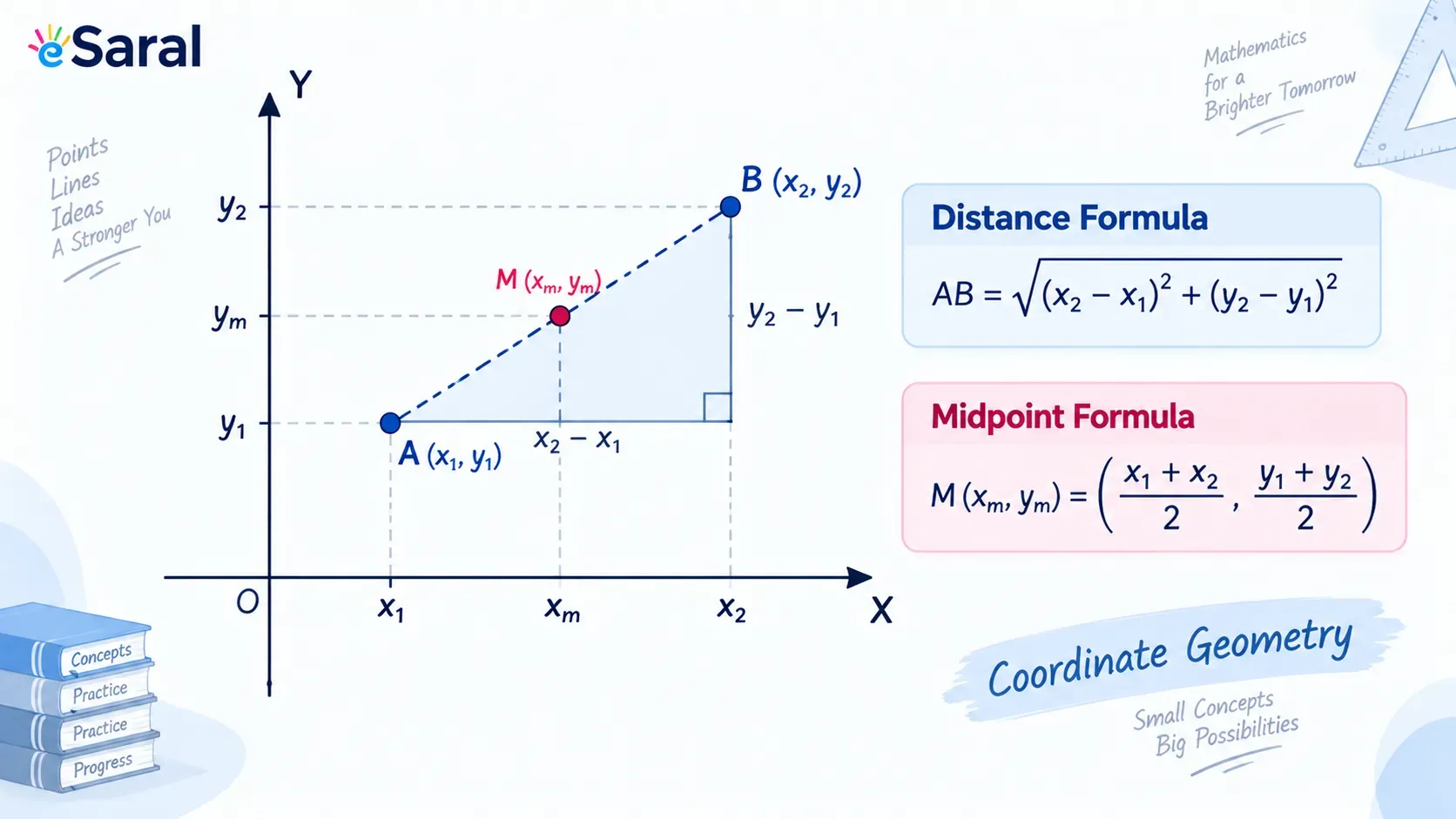
Coordinate Geometry Class 10: Formulas, Notes & Solved Examples
Coordinate geometry class 10: complete CBSE formulas — distance, section, midpoint and area of triangle — with derivation, notes and solved examples.
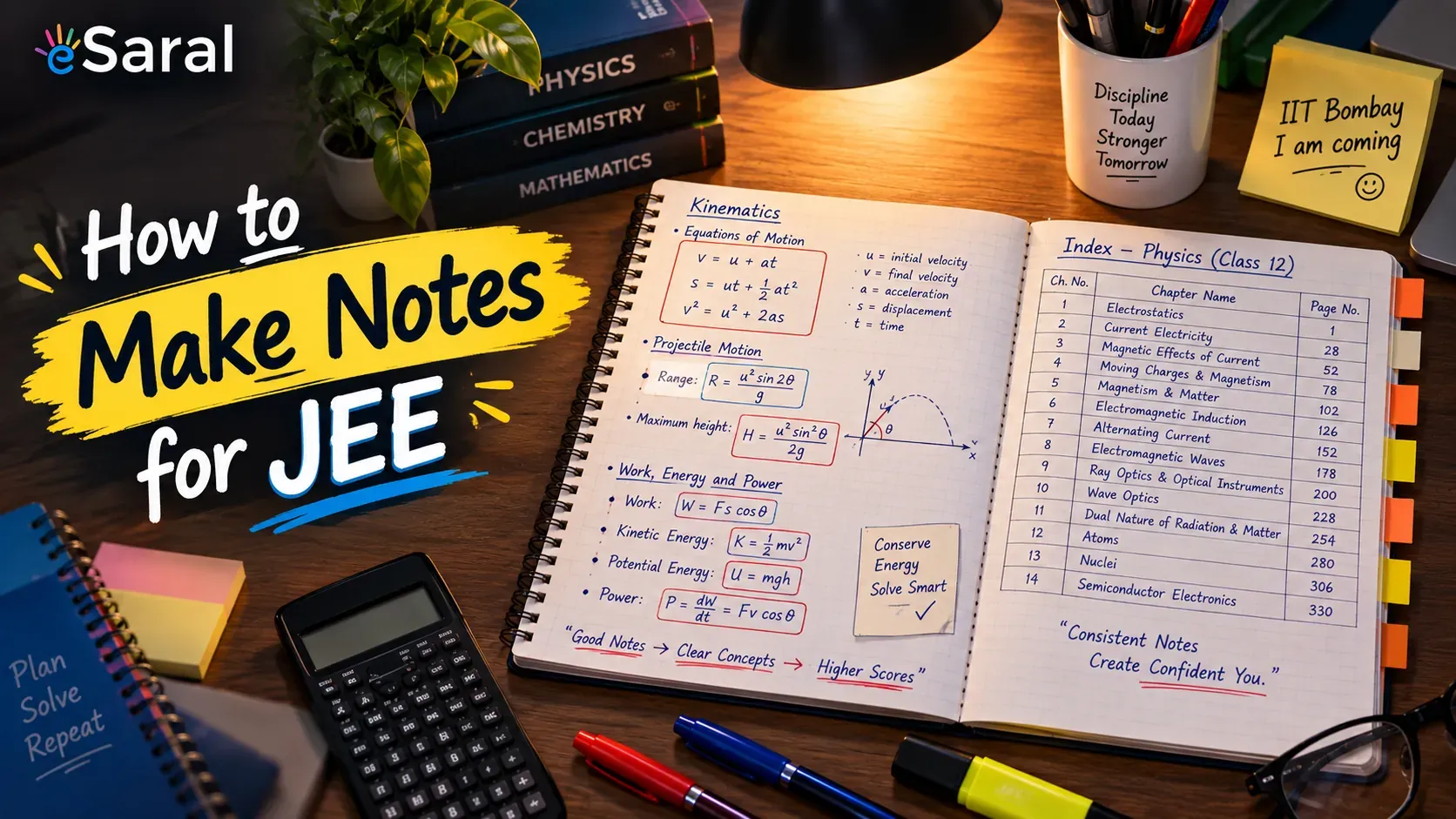
How to make Notes For JEE Smart Notes Strategy of an AIR 41
Learn how to make notes for JEE the way toppers do — indexing, shorthand, and smart short notes for JEE that cut revision time to just 5–7 days.
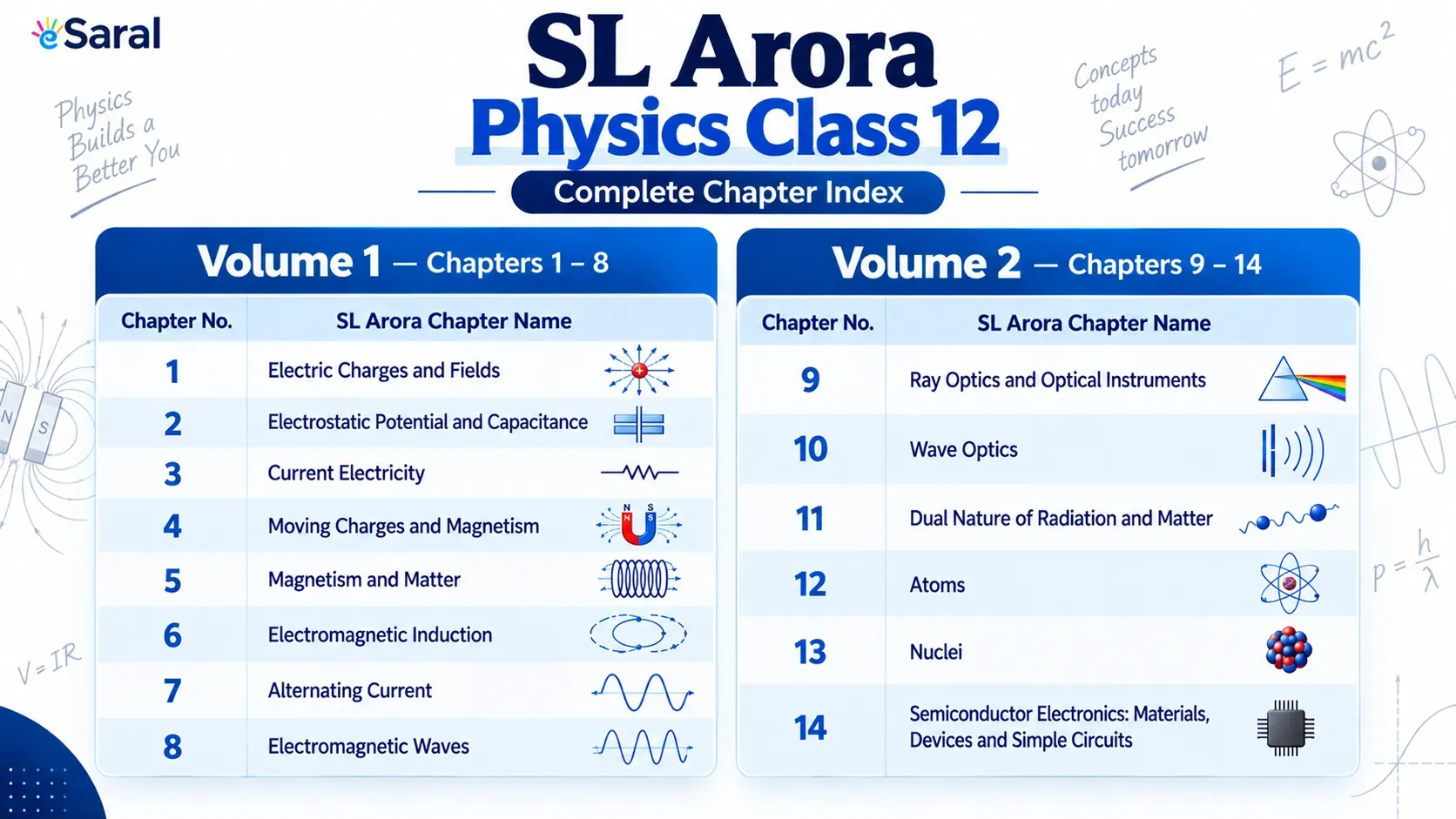
SL Arora Physics Class 12 Index – Chapter List for Volume 1 & 2
SL Arora Physics Class 12 index — complete chapter list for Volume 1 & 2, mapped to NCERT solutions for board, JEE Main, and NEET preparation.