
Important Questions For Class 11 Physics Chapter 14 Waves - PDF Download
The Important Questions for Class 11 Physics Chapter 14 wave are given below in pdf form so that any student can download them. Physics is one of the most crucial and conceptual subjects among all three subjects in Class 11, as the concepts of this standard are included in the board examination. Class 11 Physics Chapter 14 wave is one of the scoring chapters of the Physics subject. Candidates should study hard so that you can solve any type of question asked from this chapter in the exam. It will also help you to score better in your papers.
Students can download the pdf free of cost of Important Questions with solutions for CBSE Class 11 Physics Chapter 14 - wave prepared by expert Physics teachers from the latest edition of CBSE(NCERT) books.
Important Topics & Sub-topics of Waves Class 11 Physics
|
Topics |
Sub-Topic |
|
Mechanical Waves |
|
|
Wave Motion |
|
|
Sound Waves |
|
|
Electromagnetic Waves |
|
|
Wave Optics |
|
|
Polarization |
|
These are the important topics and sub-topics related to waves covered in Class 11 Physics. Understanding these concepts will provide a strong foundation for further studies in physics, particularly in the context of wave phenomena.
Class 11 Physics Chapter 14 Waves Weightage
The weightage of topics within Chapter 14 "Waves" in Class 11 Physics may vary from one educational board or school to another, but generally, the weightage of topics is distributed relatively evenly. However, to provide you with a rough idea, here's a general breakdown of the weightage of some key topics within the chapter
Concepts related to the nature of mechanical waves, such as longitudinal and transverse waves, wave parameters (amplitude, frequency, wavelength, speed), and wave equations, often have a significant weightage.
Topics like the nature of sound as a longitudinal wave, the speed of sound, and the Doppler effect are essential and are likely to be weighted appropriately.
Topics related to wave optics, including Huygens' principle, reflection and refraction of waves, dispersion of light, and interference and diffraction of light waves, might be moderately weighted
Keep in mind that the actual weightage may differ depending on one board to another board examination and syllabus. To prepare effectively, it's essential to cover all the topics in the chapter, but you might want to allocate more time to topics that are commonly weighted higher in your exams. Additionally, solving practice questions related to each of these topics will help you prepare comprehensively for your physics exams.
Tips to Solve Class 11 Physics Chapter 14 Waves
Certainly, here are some tips to help you solve Class 11 Physics Chapter 14 on Waves:
- Begin by understanding the fundamental concepts of waves, including types (mechanical and electromagnetic), wave parameters (amplitude, frequency, wavelength, speed), and wave propagation.
- Familiarize yourself with the wave equation, which relates the speed, frequency, and wavelength of a wave (v = fλ).
- Drawing diagrams of different types of waves, such as transverse and longitudinal waves, helps in visualizing the concepts.
- Understand how waves superpose, both constructively and destructively. Learn how to find resultant amplitudes in superposition.
- Explore interference phenomena, including the double-slit experiment. Understand how the phase difference affects interference patterns.
- Study how waves reflect and refract at boundaries. Be clear about the difference between fixed and free ends in reflection.
- Understand standing waves and nodes/antinodes. Practice solving problems related to standing waves on strings and in pipes.
- Practice numerical problems to apply wave principles. Work on problems involving the Doppler effect, wave speed, frequency, and wavelength.
- Familiarize yourself with key formulas and equations, such as those for wave speed (v = fλ), Doppler effect, and Snell's Law for refraction.
- If possible, conduct experiments or observations related to wave phenomena, as practical experience can reinforce theoretical knowledge.
- Waves build upon earlier physics concepts. Ensure you have a good understanding of previous chapters, especially those related to mechanics and energy.
- Allocate sufficient time to this chapter, as it involves a range of concepts. Break down your study into smaller, manageable sessions.
Remember, understanding waves is important, not just for Class 11 but also because wave phenomena are prevalent in various fields of science and engineering. So, take your time to grasp the concepts thoroughly.
Benefits of Solving Class 11 Physics Chapter 14 Important Questions with Answers
Solving Class 11 Physics Chapter 14 important questions with answers offers several benefits:
- Class 11 physics chapter 14 important questions are typically selected to cover key concepts in the chapter, ensuring that you have a comprehensive understanding.
- These important questions of physics class 11 chapter 14 are often aligned with the exam pattern, so practicing them helps you prepare effectively for exams.
- It helps you learn how to manage your time efficiently during exams, which is crucial for completing the paper within the stipulated time.
- You'll develop problem-solving skills by tackling a variety of questions, which can be applied to a wide range of physics problems.
- Solving these questions reinforces your understanding of the chapter's important principles and theories.
- It allows you to assess your knowledge and identify areas that require more attention or revision.
- Success in solving important questions boosts your confidence for the actual exams.
- Regularly practicing important questions can help you retain information and concepts better.
- Often, important questions have a higher probability of appearing in exams, so practicing them gives you an advantage.
Frequently Asked Questions
Question 1:What is Superposition in Waves?
Answer : Superposition is when two or more waves combine. This can result in constructive (amplitude increases) or destructive (amplitude decreases) interference.
Question 2:What is the Doppler Effect in Waves?
Answer 2: The Doppler effect is a change in the observed frequency of a wave when there is relative motion between the source of the wave and the observer
Team eSaral
Related Posts
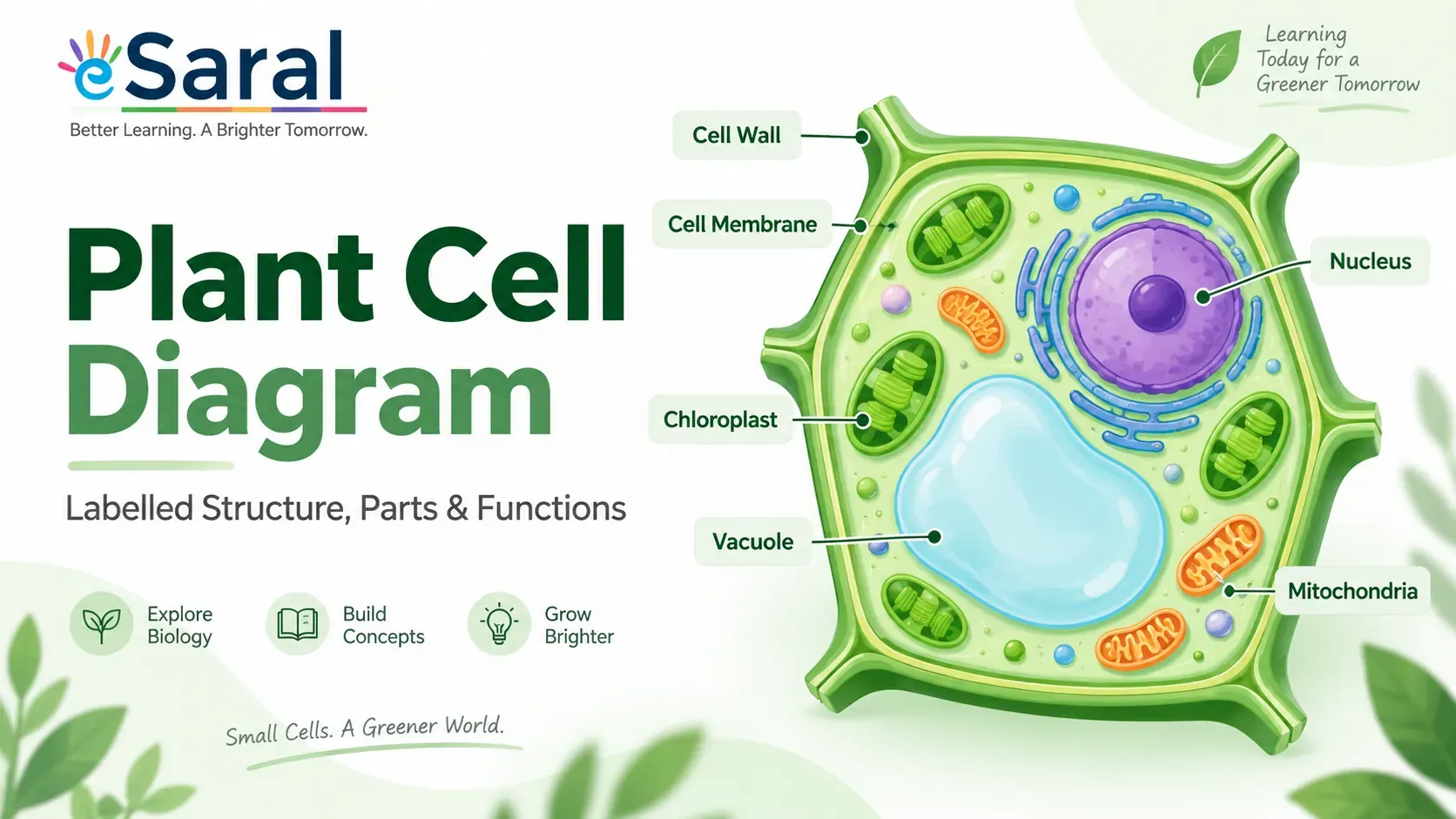
Plant Cell Diagram: Labelled Structure, Parts and Functions
Simple, labelled plant cell diagram with parts and functions. Covers plant cell structure for Class 6, 7, 8, 9, 10 and 11 students, CBSE-aligned.
Saransh Gupta Sir's Visit to IIT Patna: Hostel Life, Placements & Lessons for JEE Aspirants
Inside Saransh Gupta Sir's IIT Patna visit — hostel life, the library, placements, internships, and real advice for JEE aspirants from students living the IIT dream.
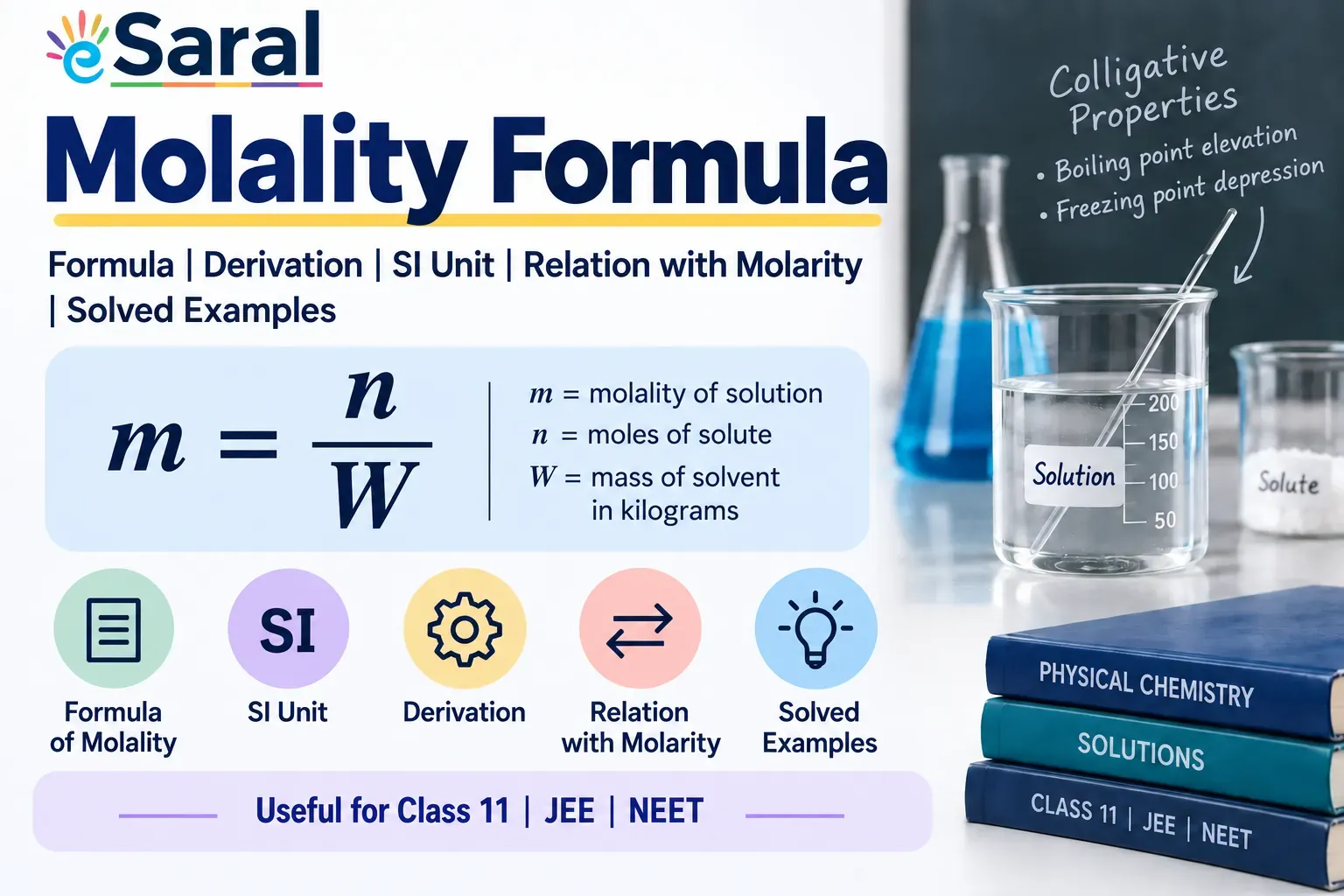
Molality Formula: Formula for Molality, Derivation & Solved Examples
Molality formula is $m = \dfrac{n}{W}$. Learn the formula of molality, its SI unit, derivation, relation with molarity, and solved examples for Class 11, JEE and NEET.
BITSAT Previous Year Question Paper PDF
Download BITSAT previous year question papers PDF. Get year-wise BITSAT PYQs, memory-based papers, exam pattern, and preparation tips to improve your BITSAT preparation.

Teachers’ Day 2026 at eSaral Gurukul: Celebrating the Bond Between Students, Teachers & Mentors
See how Teachers’ Day 2026 was celebrated at eSaral Gurukul, reflecting the bond among students, teachers, and mentors, and the role of guidance beyond academics.
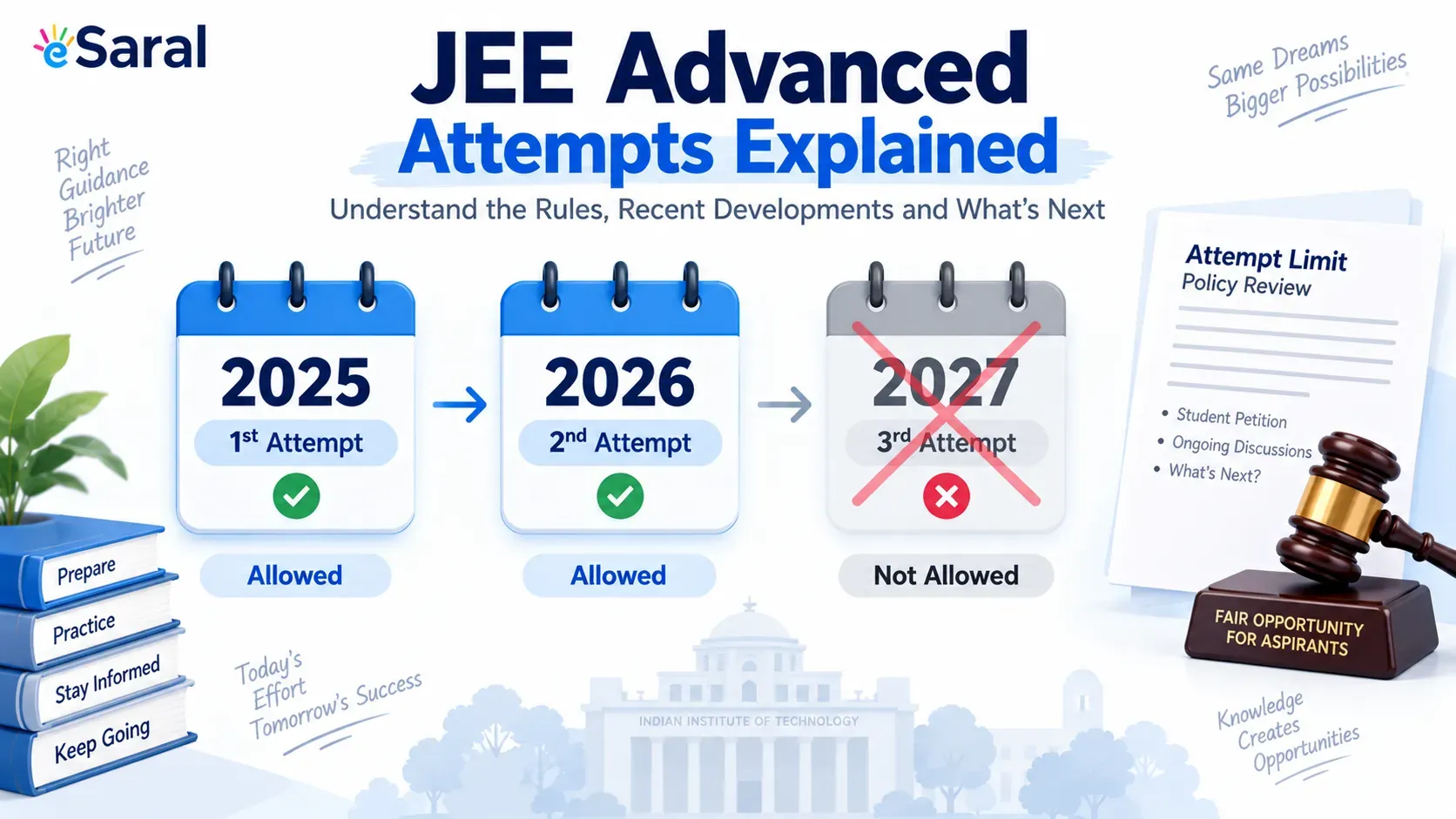
JEE Advanced Attempts: Can You Give It a Third Time? Rules Explained
JEE Advanced attempts: current rule is 2 consecutive years only: full eligibility criteria, the 2025 third-attempt controversy, and the latest 2026 petition news.
Best JEE Preparation App
Best JEE preparation app for Main & Advanced: AI mock tests, live doubt-solving, thousands of practice questions. JEE preparation app for droppers & Class 11-12.
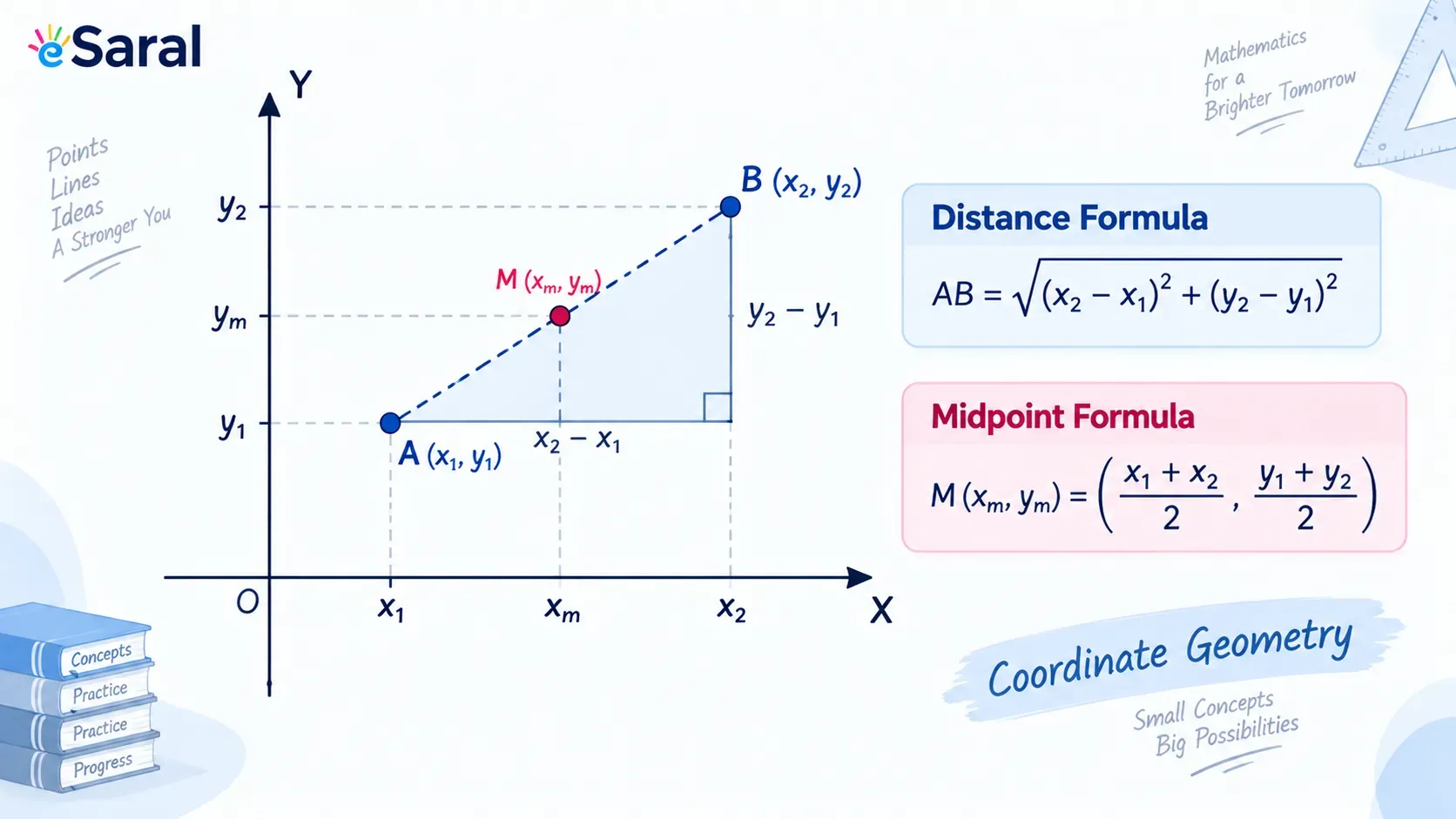
Coordinate Geometry Class 10: Formulas, Notes & Solved Examples
Coordinate geometry class 10: complete CBSE formulas — distance, section, midpoint and area of triangle — with derivation, notes and solved examples.
How to make Notes For JEE Smart Notes Strategy of an AIR 41
Learn how to make notes for JEE the way toppers do — indexing, shorthand, and smart short notes for JEE that cut revision time to just 5–7 days.
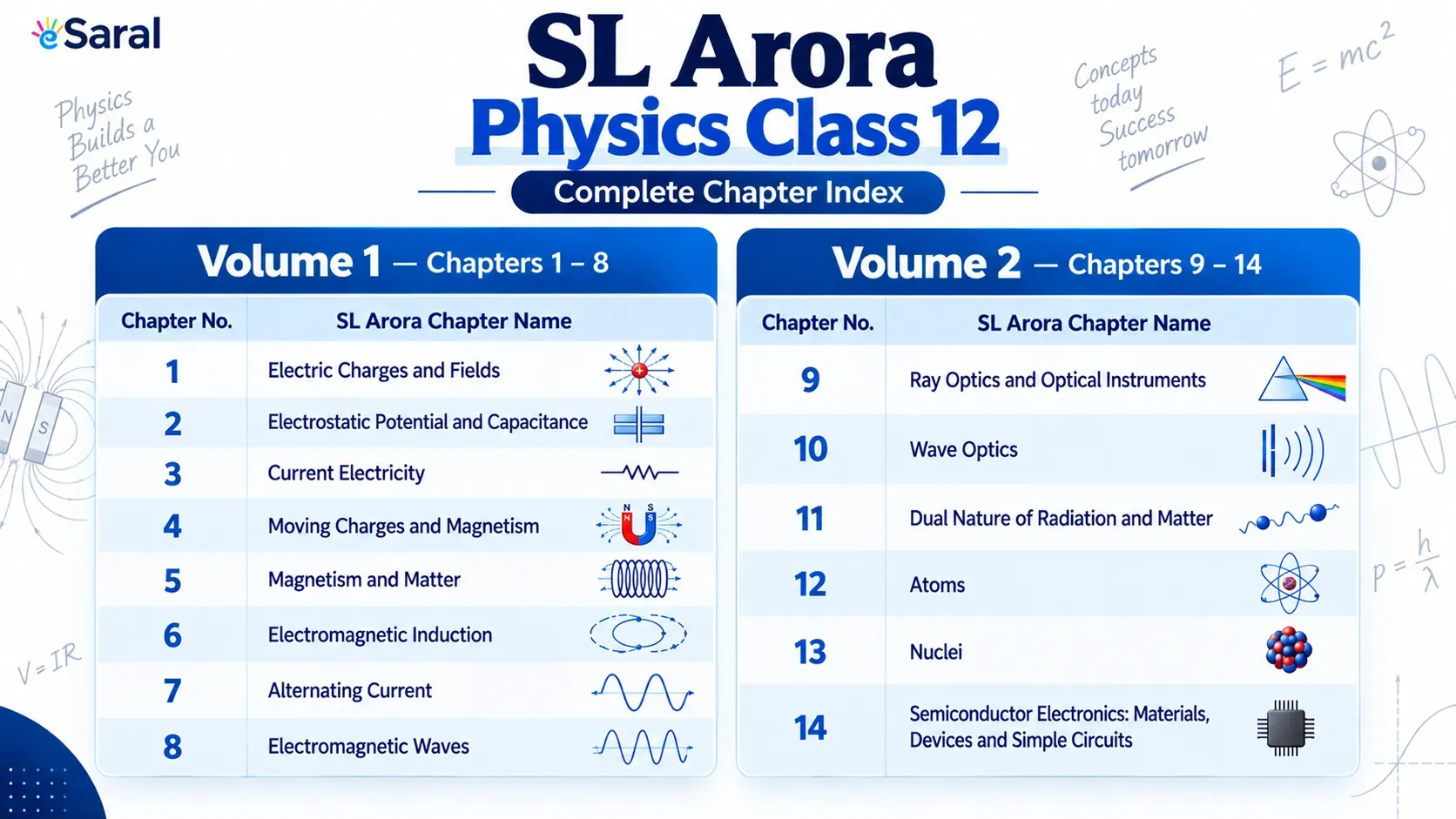
SL Arora Physics Class 12 Index – Chapter List for Volume 1 & 2
SL Arora Physics Class 12 index — complete chapter list for Volume 1 & 2, mapped to NCERT solutions for board, JEE Main, and NEET preparation.