
Chemical Bonding and Molecular Structure Notes for Class 11, JEE and NEET

eSaral Academic and Editorial Team
Summary
Chemical Bonding and Molecular Structure Notes for Class 11 cover ionic and covalent bonds, Lewis structures and formal charge, bond parameters, resonance, polarity and Fajan’s rules, VSEPR theory, valence bond theory and hybridisation, molecular orbital theory, hydrogen bonding and metallic bonding. This page gives tables, solved examples and handwritten notes for CBSE boards, JEE Main and NEET.
Chemical bonding explains why atoms combine and why molecules have particular shapes and properties. It is Chapter 4 of NCERT Class 11 Chemistry. It builds on Structure of Atom (Class 11 Chemistry Chapter 2), and it is used again in Coordination Compounds, the p-Block and Organic Chemistry. These Chemical Bonding and Molecular Structure Notes follow the chapter in the same order as the textbook.

India's Best Exam Preparation for Class 11th - Download Now
Chemical Bonding and Molecular Structure Notes
India's Best Exam Preparation for Class 11th - Download Now
Also read, Class 11 Chemistry Chapter 2 Notes
India's Best Exam Preparation for Class 11th - Download Now
India's Best Exam Preparation for Class 11th - Download Now
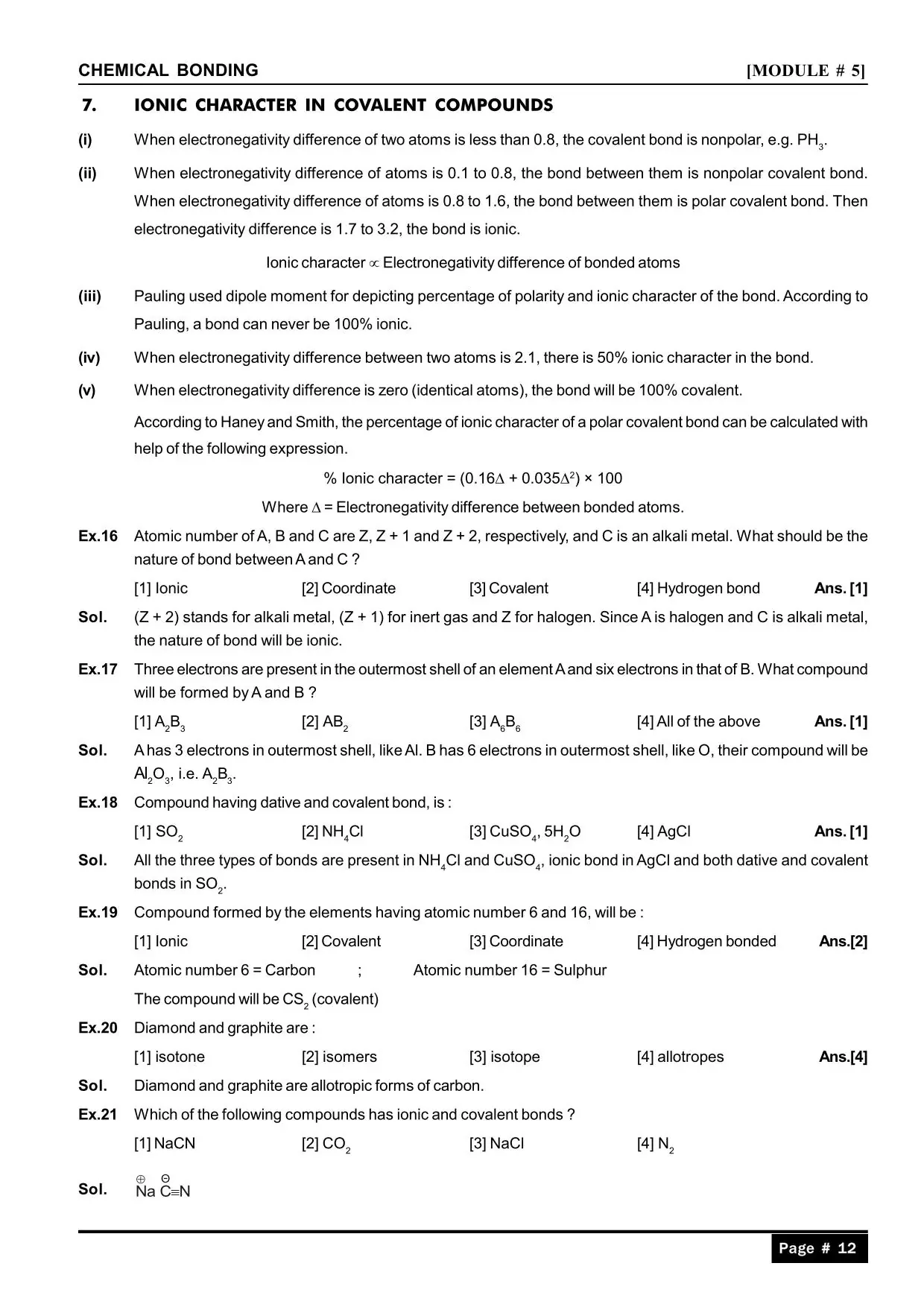
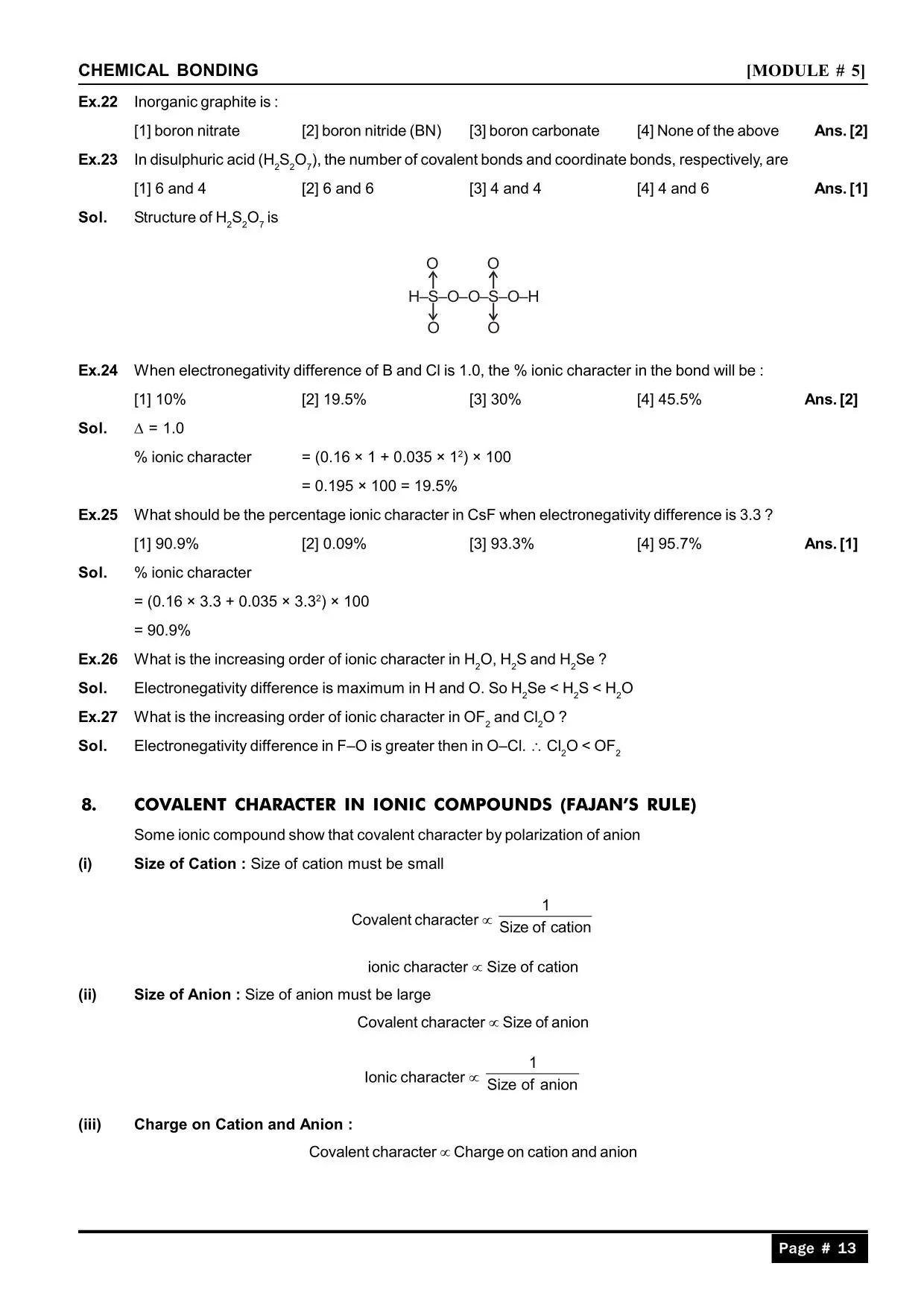
India's Best Exam Preparation for Class 11th - Download Now
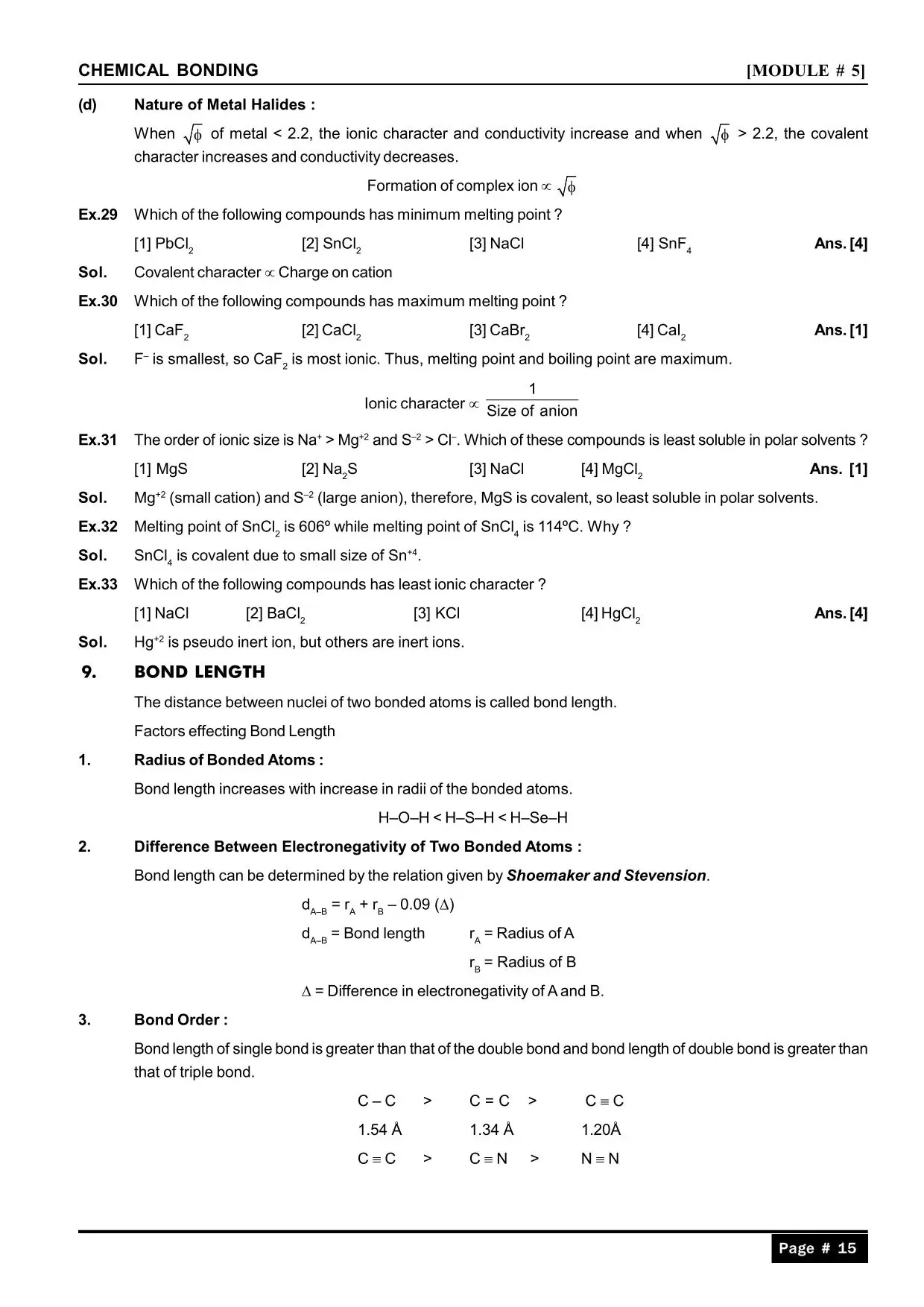
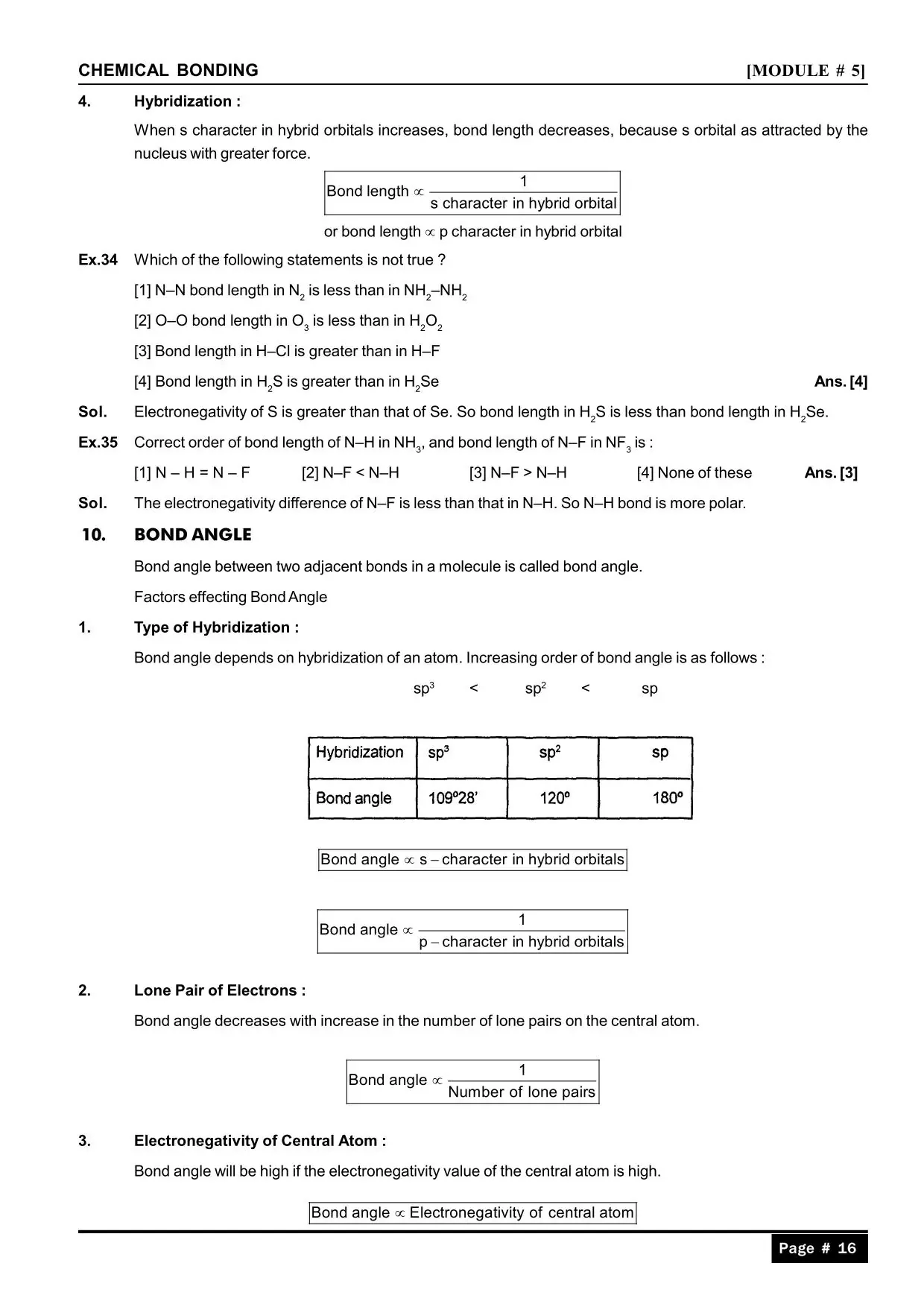
India's Best Exam Preparation for Class 11th - Download Now
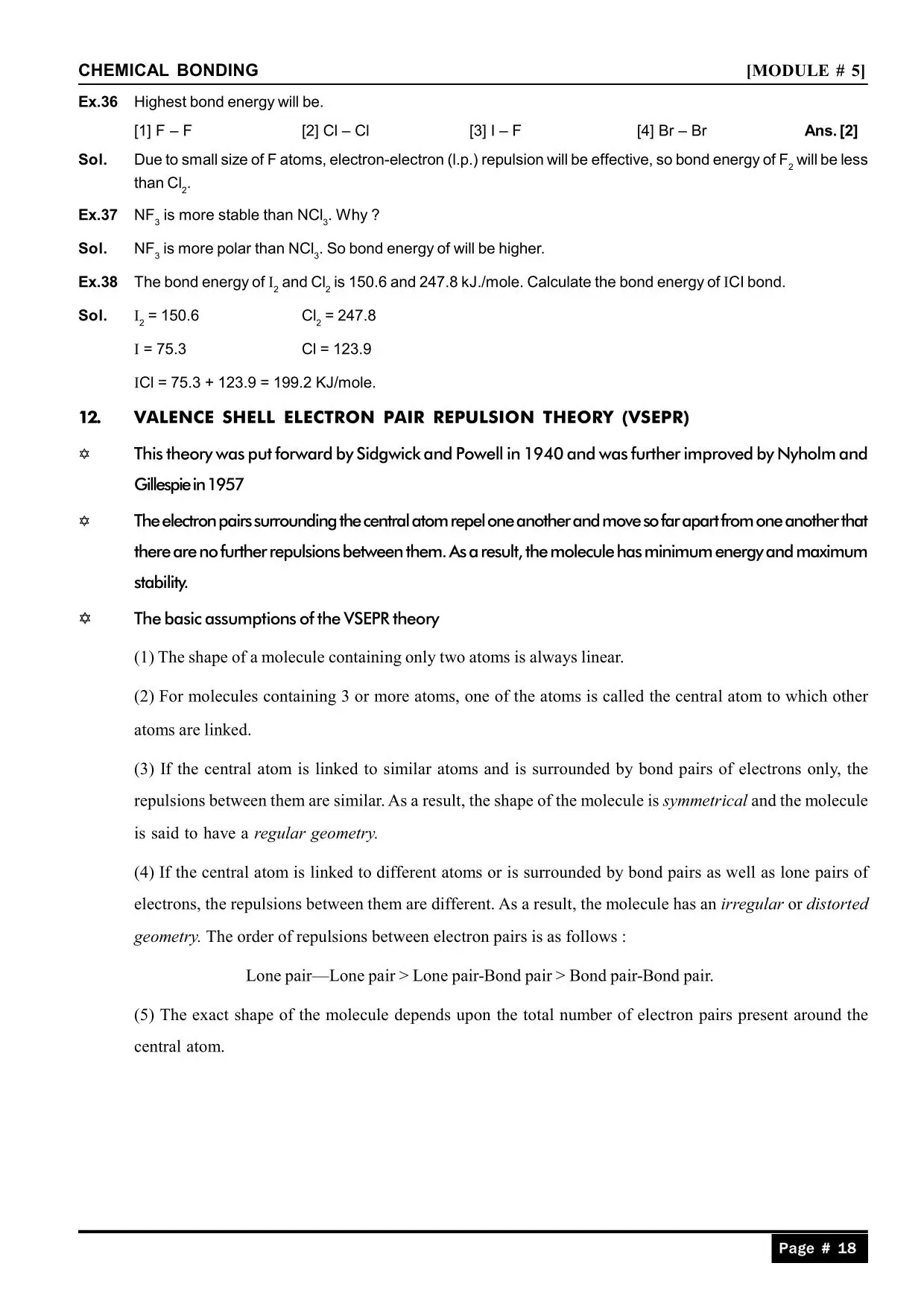
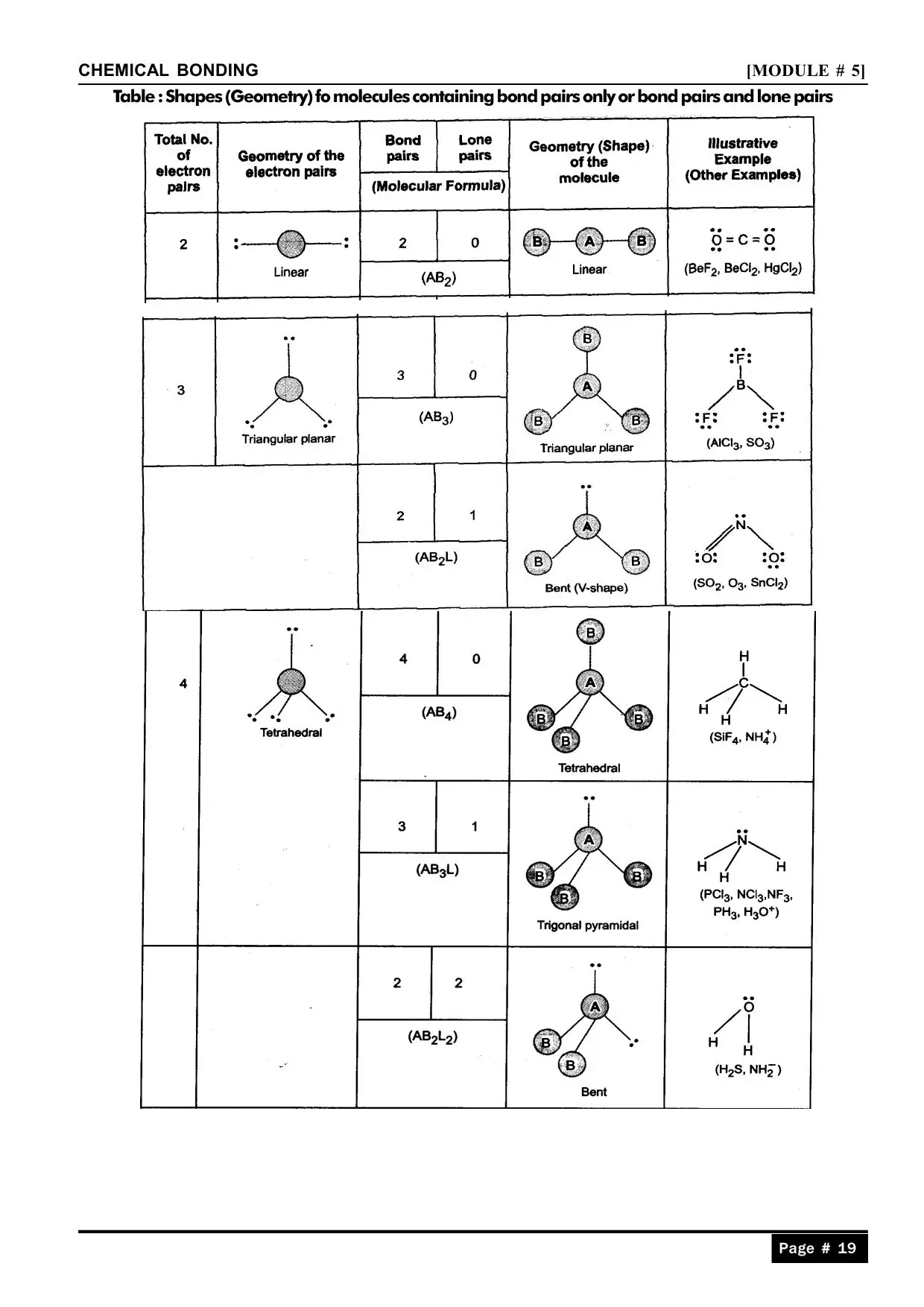
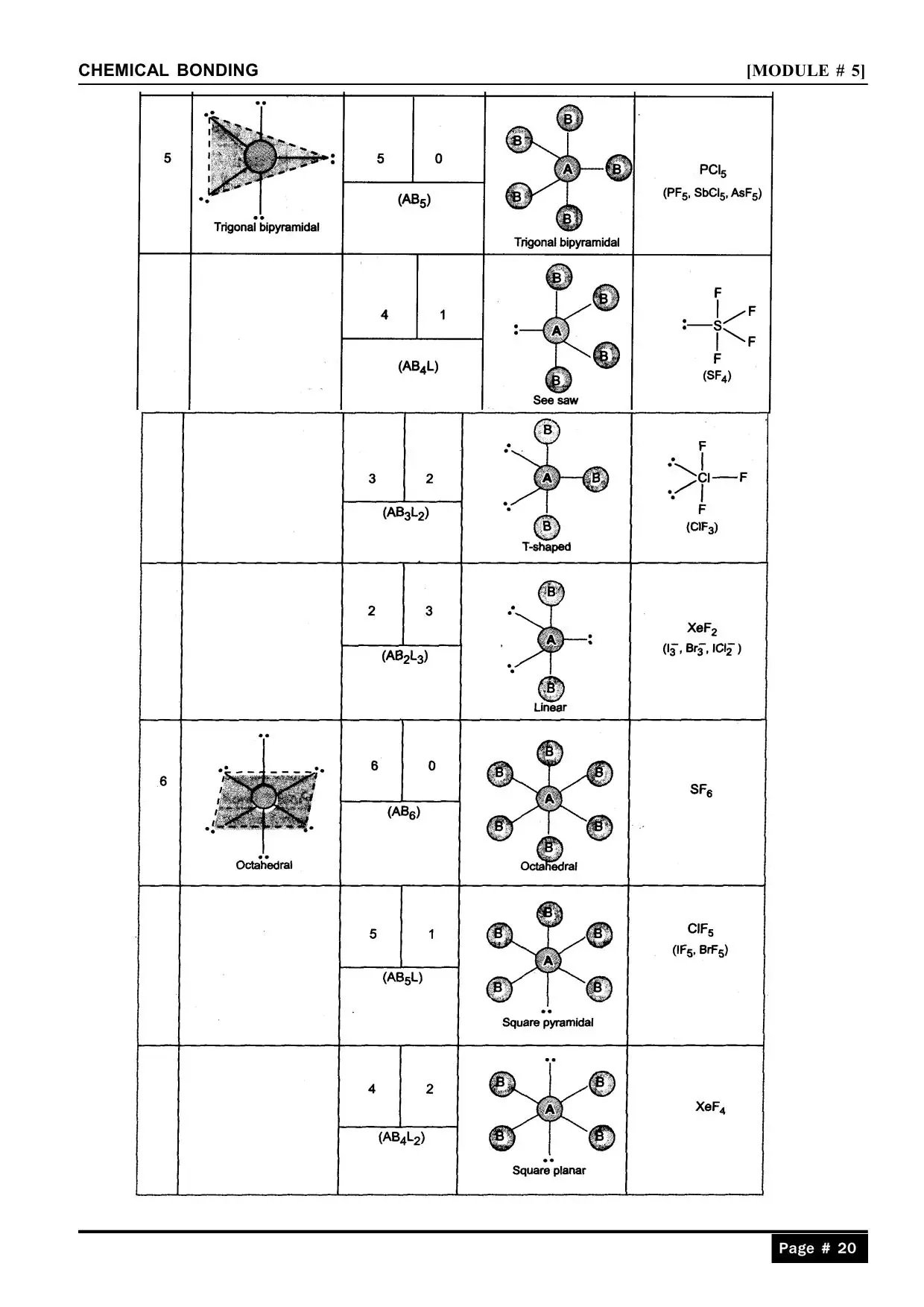
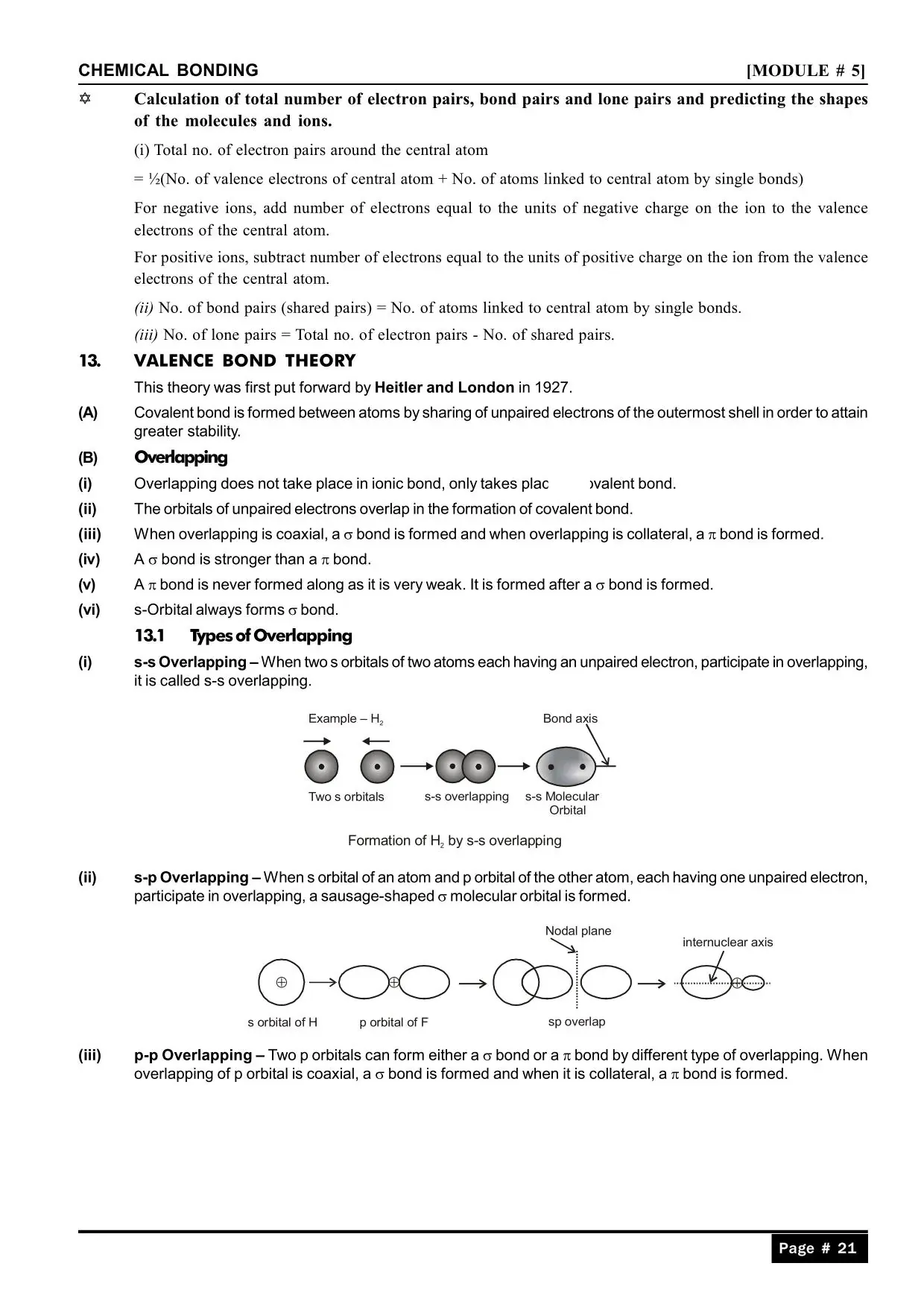
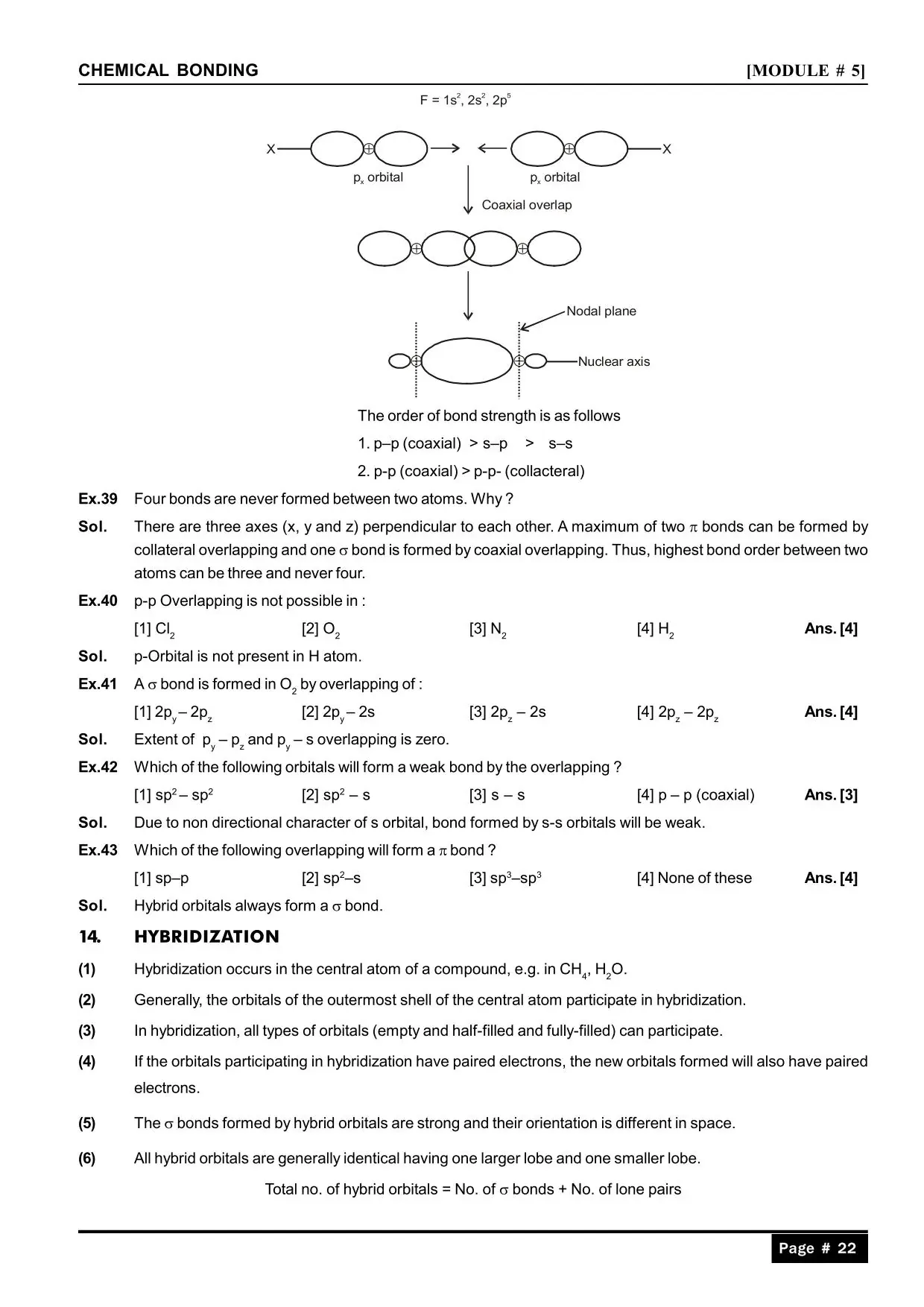
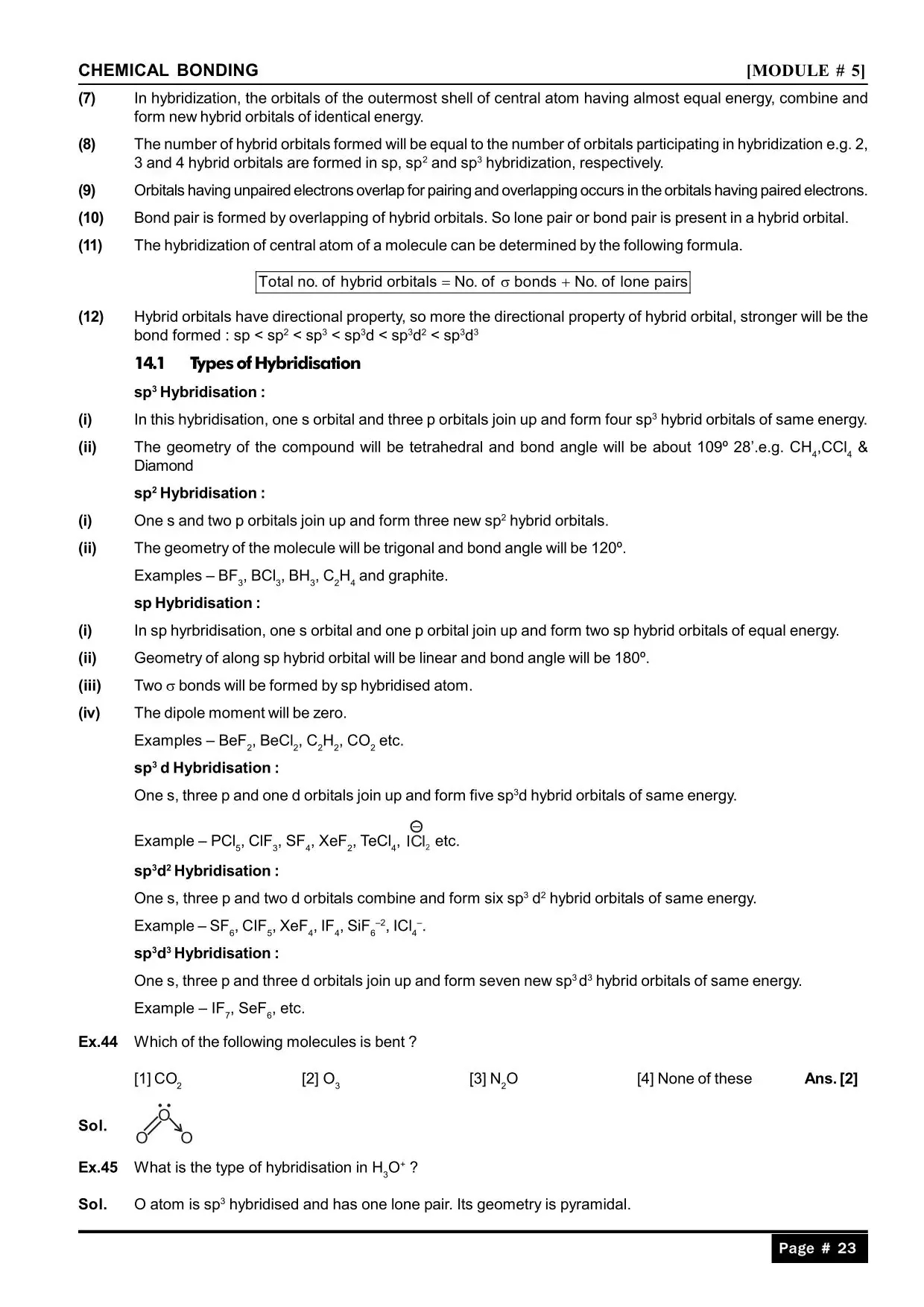
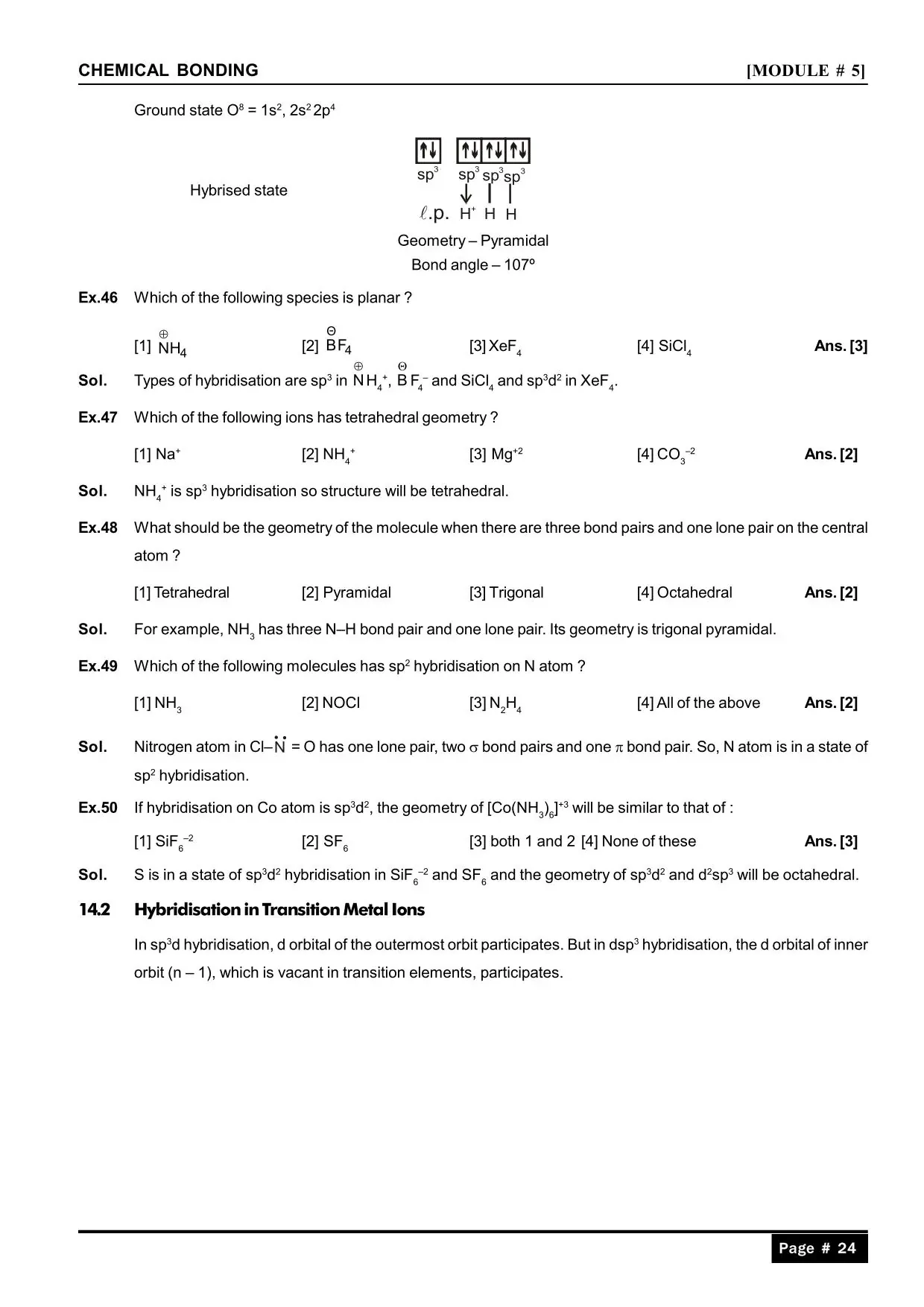
India's Best Exam Preparation for Class 11th - Download Now
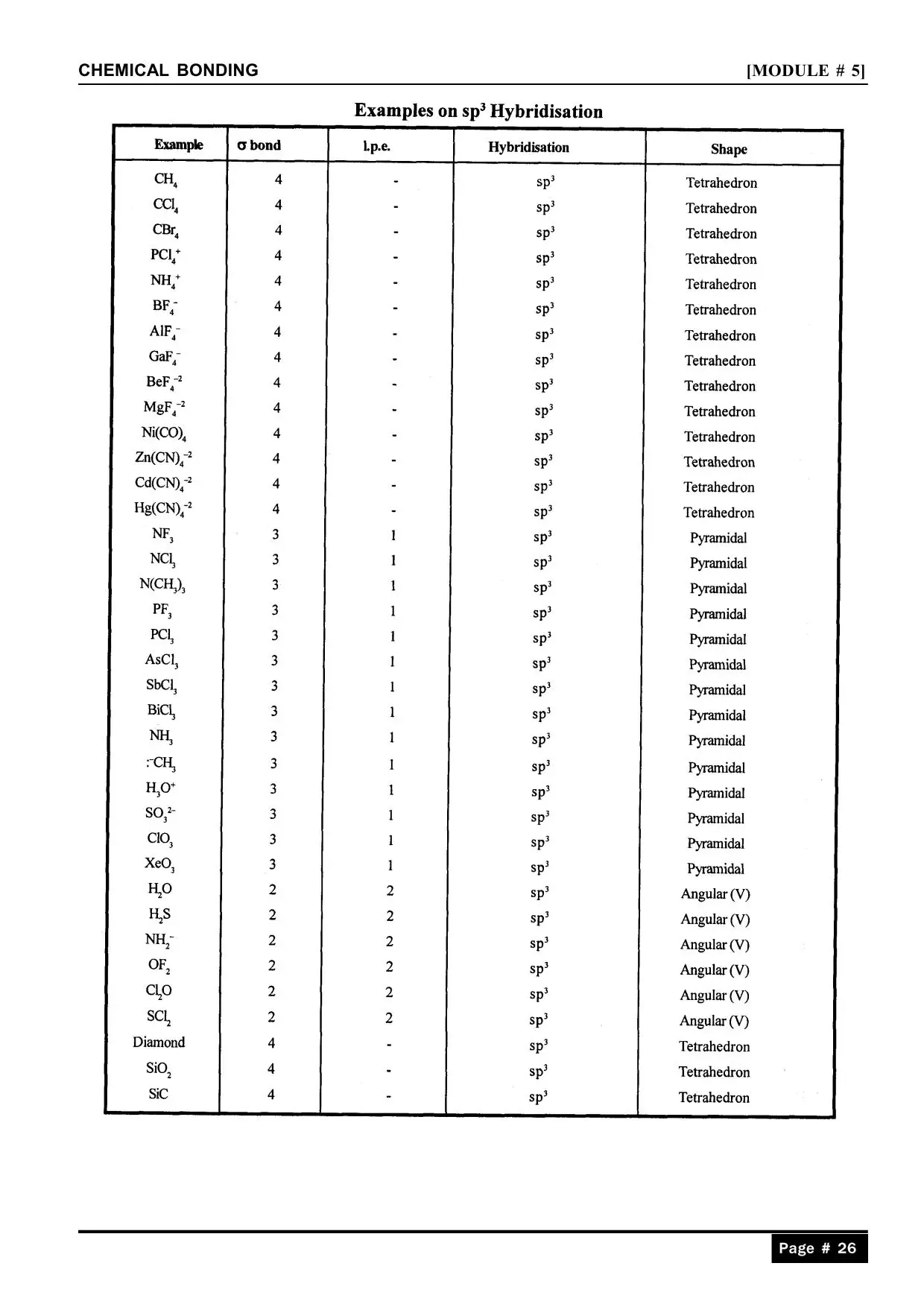
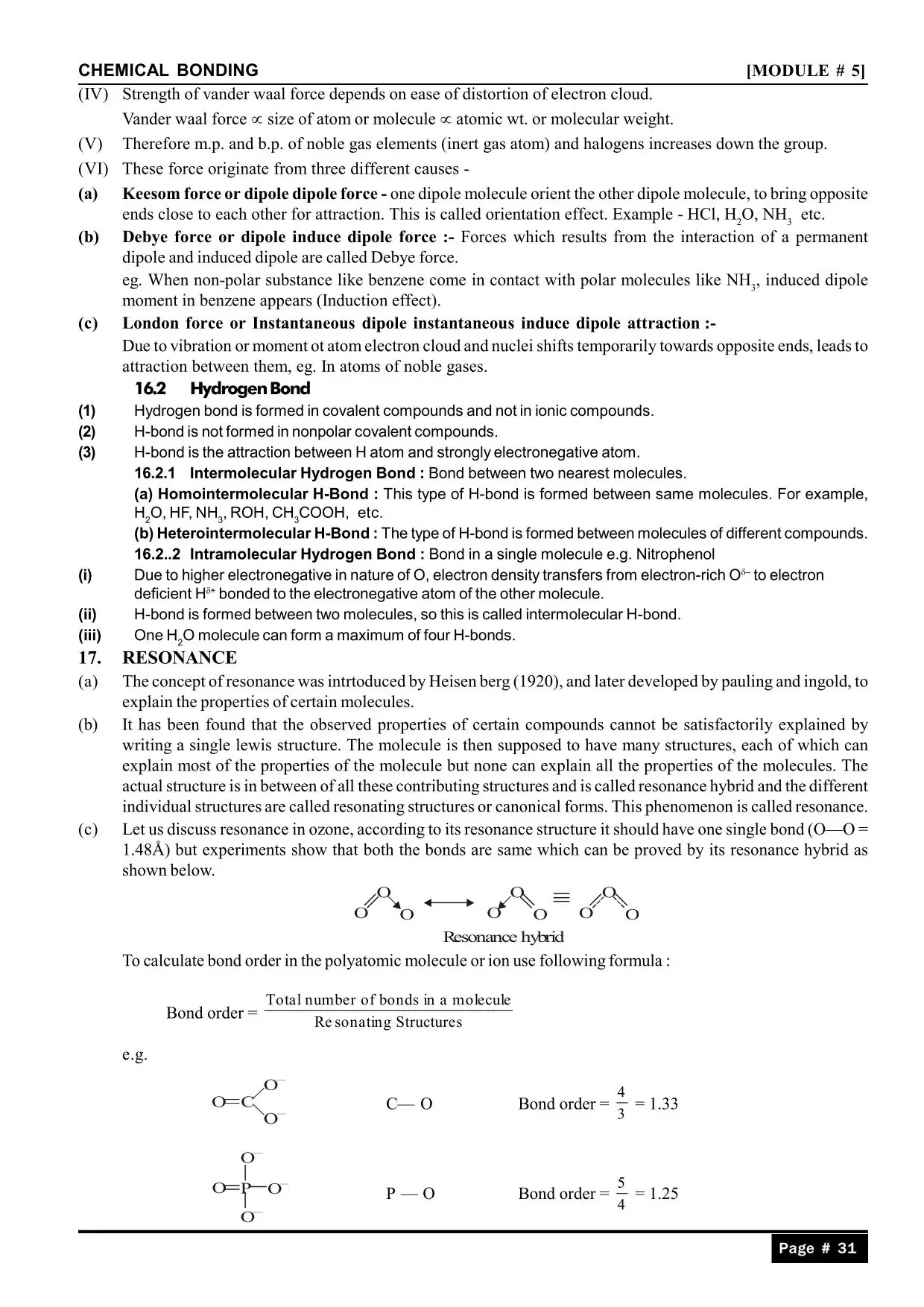
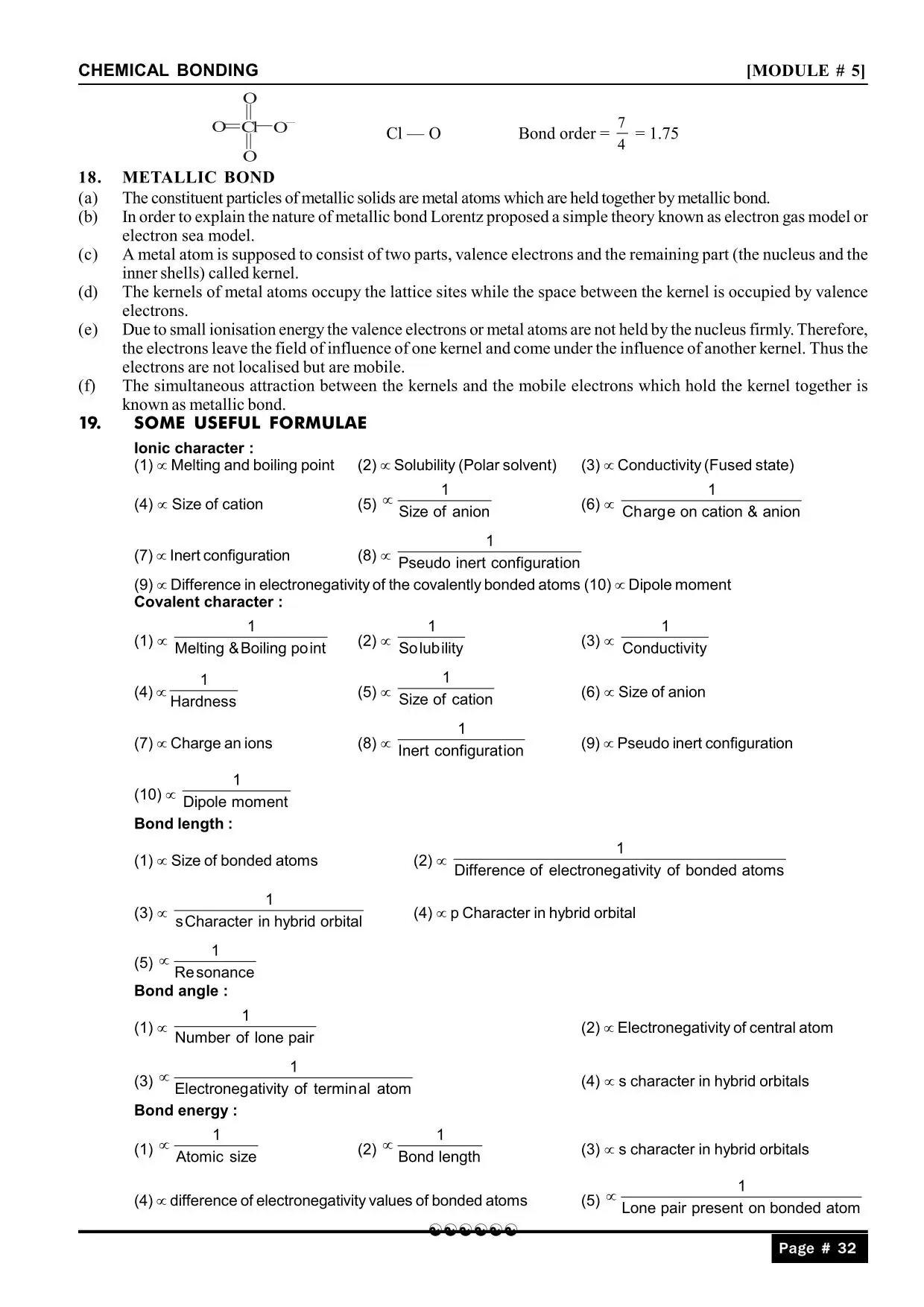
India's Best Exam Preparation for Class 11th - Download Now
Chemical Bonding and Molecular Structure Notes: Chapter Overview and Syllabus
The chapter covers:
- Kossel–Lewis approach, the octet rule and its limitations
- Ionic bonding and lattice enthalpy
- Covalent bonding: Lewis structures, formal charge, bond parameters and resonance
- Polarity: electronegativity, dipole moment and Fajan’s rules
- VSEPR theory and the shapes of molecules
- Valence bond theory and hybridisation (s, p and d orbitals)
- Molecular orbital theory for homonuclear diatomic molecules
- Hydrogen bonding and an elementary idea of metallic bonding
Check the latest syllabi of CBSE, JEE Main and NEET for the exact topic lists.
Tip from the eSaral Chemistry team: Do not memorise shapes one by one. Count the bond pairs and lone pairs on the central atom, find the steric number, and then read the shape from the VSEPR table. The same method works for every molecule.
Octet Rule, Ionic Bonds and Lattice Enthalpy in Chemical Bonding and Molecular Structure Notes
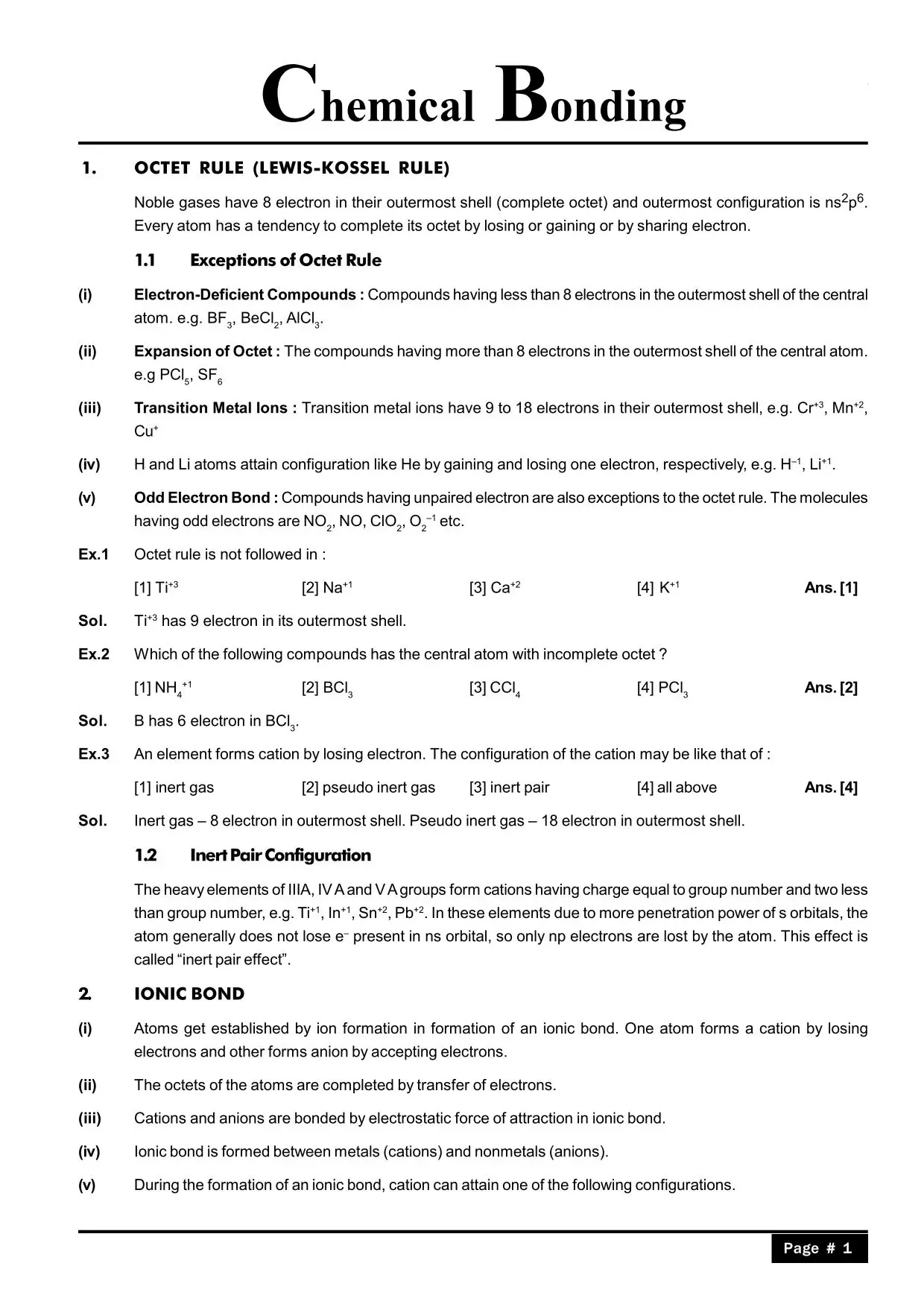
Octet Rule and Its Limitations
Atoms tend to gain, lose or share electrons to get eight electrons in the outermost shell (two for hydrogen). The octet rule fails for:
- Incomplete octet: BeCl₂ (4 electrons around Be), BF₃ (6 electrons around B)
- Expanded octet: PCl₅, SF₆ and other compounds of the third period and below
- Odd-electron molecules: NO and NO₂
Ionic Bond and Lattice Enthalpy
An ionic bond forms by the transfer of electrons. It is favoured by a low ionisation enthalpy of the metal, a high electron gain enthalpy of the non-metal and a high lattice enthalpy. Lattice enthalpy is the energy released when one mole of an ionic solid forms from its gaseous ions, and it is larger when the ions are smaller and have higher charges. For example, MgO has a much higher lattice enthalpy than NaCl.
Covalent Bonds, Formal Charge and Resonance in Chemical Bonding and Molecular Structure Notes
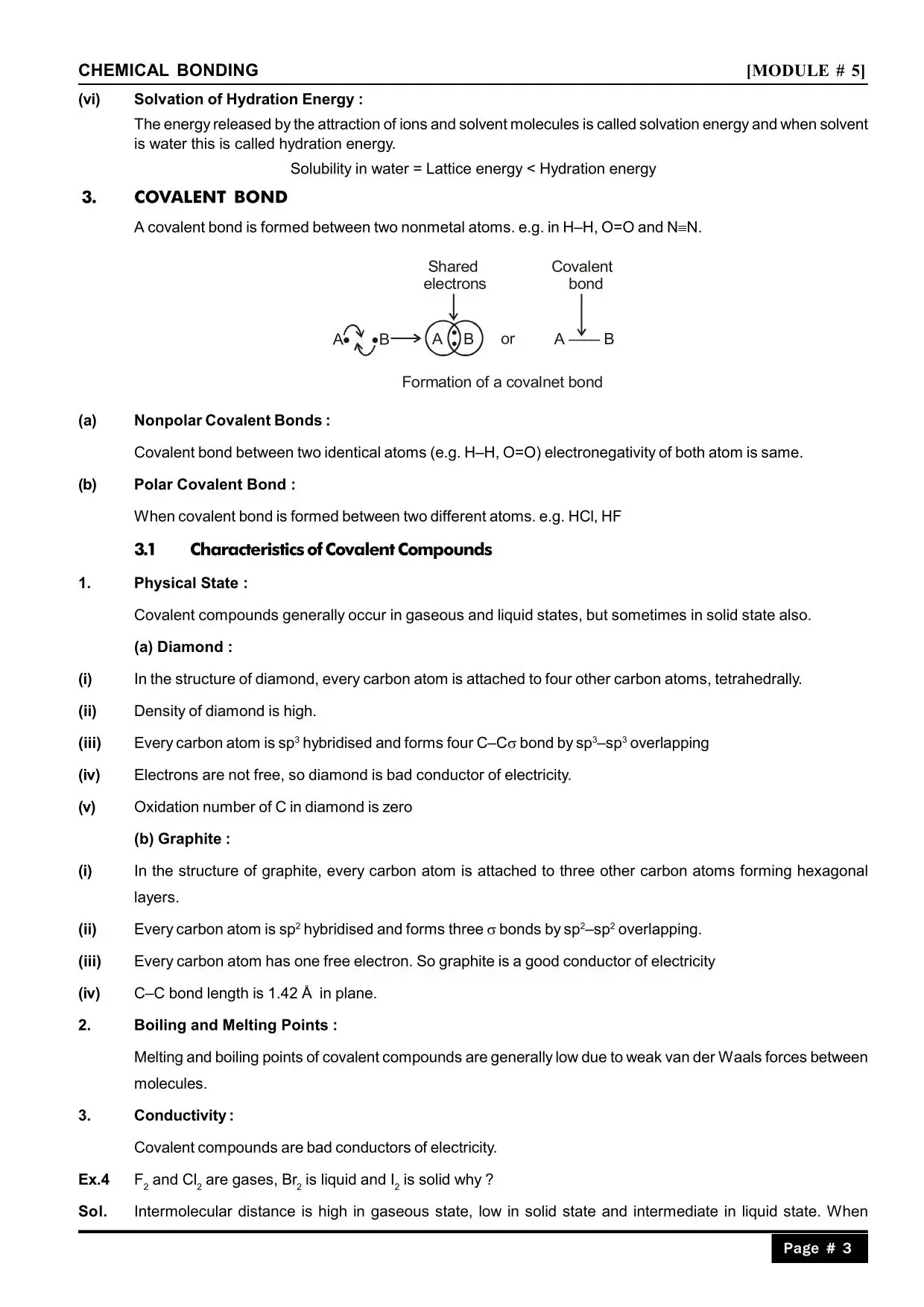
- Formal charge = (valence electrons of the free atom) − (non-bonding electrons) − ½(bonding electrons). The structure with formal charges closest to zero is the most stable.
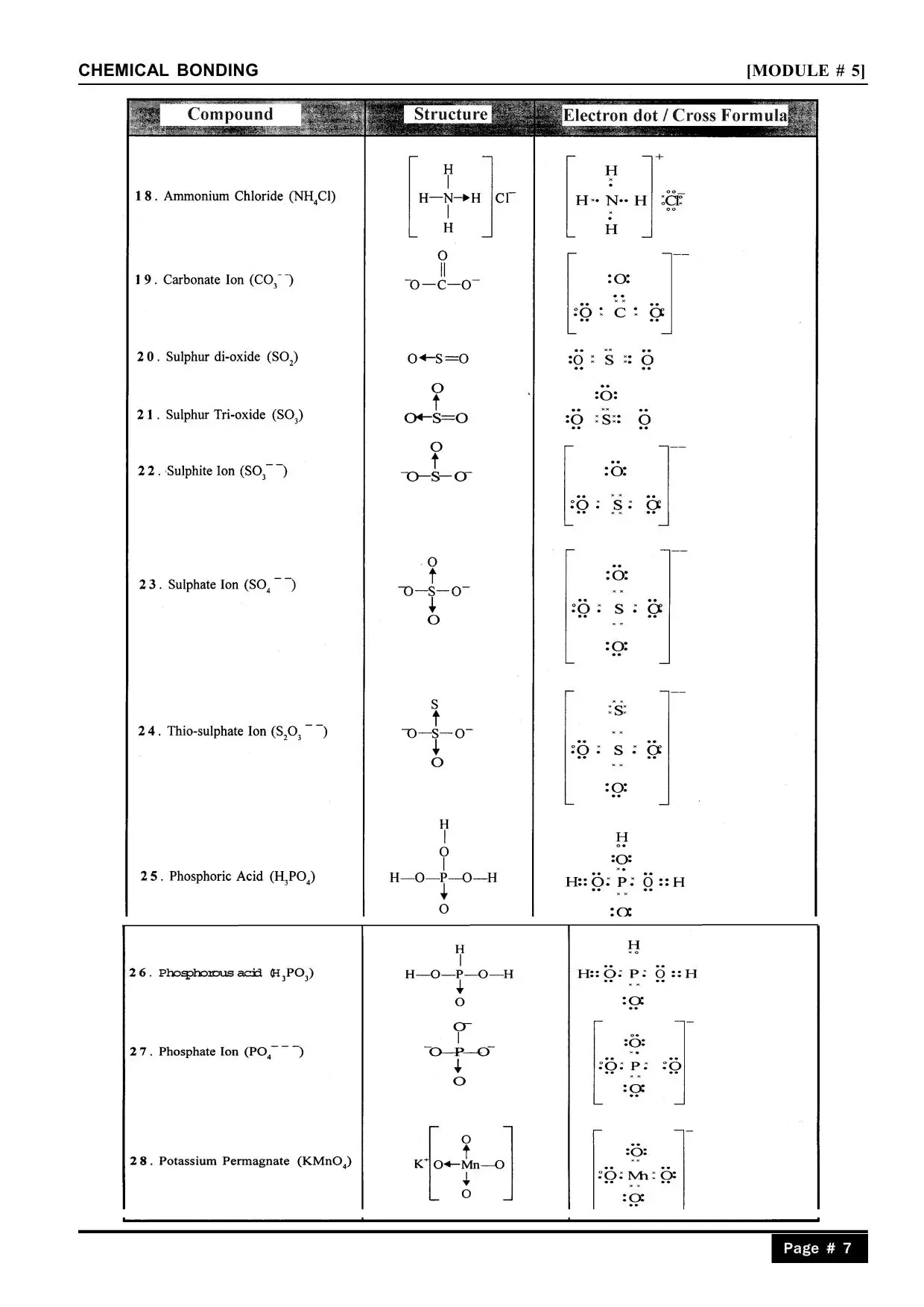
- Resonance: when one Lewis structure cannot describe a molecule, the real structure is a hybrid of the contributing structures. In the carbonate ion (CO₃²⁻), all three C–O bonds are equal, with a bond order of 4/3.
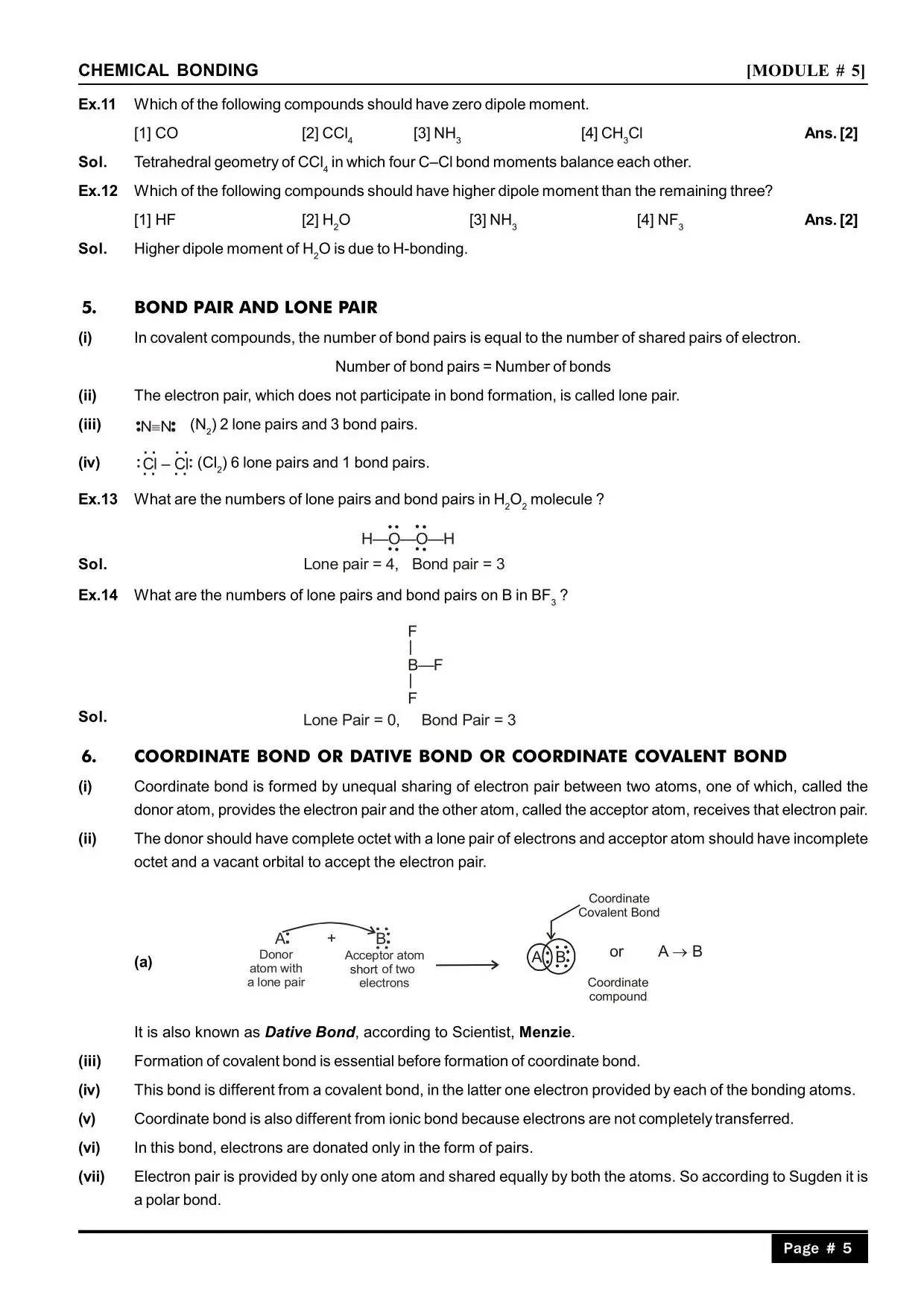
Bond Parameters
Parameter | Meaning | Trend |
|---|---|---|
Bond length | Distance between the nuclei of two bonded atoms | Decreases as the bond order increases |
Bond enthalpy | Energy needed to break one mole of a bond | Increases as the bond order increases |
Bond order | Number of bonds between two atoms | Single 1, double 2, triple 3 |
Bond angle | Angle between two bonds at an atom | Depends on the lone pairs and hybridisation |
Polarity, Dipole Moment and Fajan’s Rules in Chemical Bonding and Molecular Structure Notes
- Dipole moment: μ = q × d. The unit is the debye (D), where 1 D = 3.336 × 10⁻³⁰ C·m. It is a vector, and the molecular dipole moment is the vector sum of the bond dipoles. Symmetrical molecules such as CO₂, BF₃ and CH₄ have zero dipole moment.
- Fajan’s rules: the covalent character of an ionic bond increases when the cation is small and has a high charge, the anion is large and has a high charge, and the cation has a pseudo-noble gas configuration (for example Cu⁺) instead of a noble gas configuration. LiCl is more covalent than NaCl.
VSEPR Theory and Shapes of Molecules in Chemical Bonding and Molecular Structure Notes
The VSEPR theory says that electron pairs around the central atom arrange themselves to minimise repulsion. The order of repulsion is lone pair–lone pair > lone pair–bond pair > bond pair–bond pair.
Steric number | Bond pairs + lone pairs | Shape | Example |
|---|---|---|---|
2 | 2 + 0 | Linear | BeCl₂, CO₂ |
3 | 3 + 0 | Trigonal planar | BF₃ |
3 | 2 + 1 | Bent (V-shaped) | SO₂ |
4 | 4 + 0 | Tetrahedral | CH₄ |
4 | 3 + 1 | Trigonal pyramidal | NH₃ |
4 | 2 + 2 | Bent | H₂O |
5 | 5 + 0 | Trigonal bipyramidal | PCl₅ |
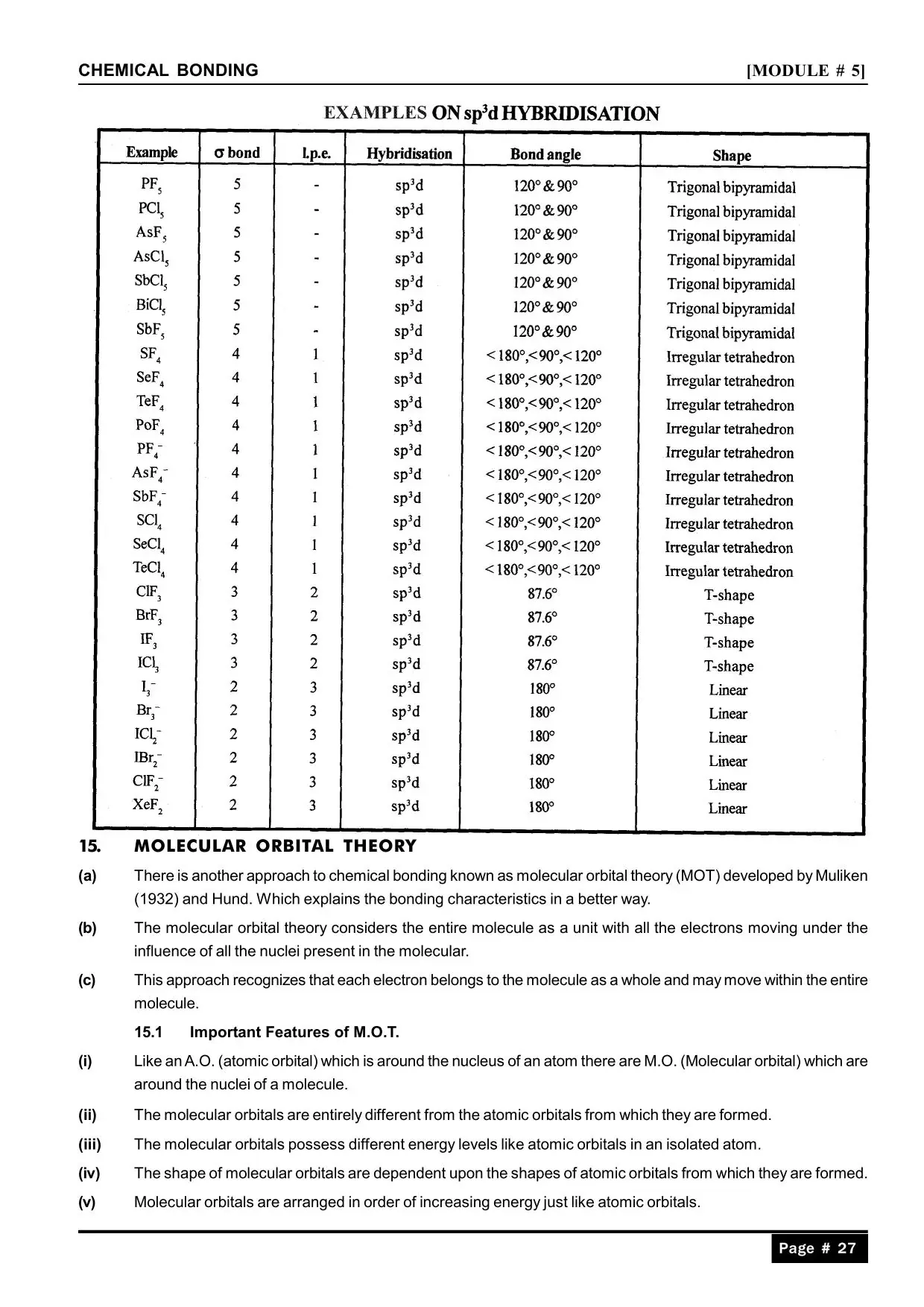
5 | 4 + 1 | See-saw | SF₄ |
5 | 3 + 2 | T-shaped | ClF₃ |
5 | 2 + 3 | Linear | XeF₂ |
6 | 6 + 0 | Octahedral | SF₆ |
6 | 5 + 1 | Square pyramidal | BrF₅ |
6 | 4 + 2 | Square planar | XeF₄ |
Ammonia is the standard trigonal pyramidal example. Its bond angle (about 107°) is smaller than the tetrahedral angle (109.5°), because the lone pair repels the bond pairs more strongly. For its formula, preparation and properties, see the chemical formula of ammonia.
Valence Bond Theory and Hybridisation in Chemical Bonding and Molecular Structure Notes
Hybridisation is the mixing of atomic orbitals of similar energies to form new hybrid orbitals. The number of hybrid orbitals equals the number of orbitals mixed.
Steric number (H) = ½[valence electrons of the central atom + number of monovalent atoms − charge on a cation + charge on an anion].
Hybridisation | Steric number | Geometry | Example |
|---|---|---|---|
sp | 2 | Linear | BeCl₂, CO₂, C₂H₂ |
sp² | 3 | Trigonal planar | BF₃, C₂H₄ |
sp³ | 4 | Tetrahedral | CH₄, NH₃, H₂O |
sp³d | 5 | Trigonal bipyramidal | PCl₅ |
sp³d² | 6 | Octahedral | SF₆ |
sp³d³ | 7 | Pentagonal bipyramidal | IF₇ |
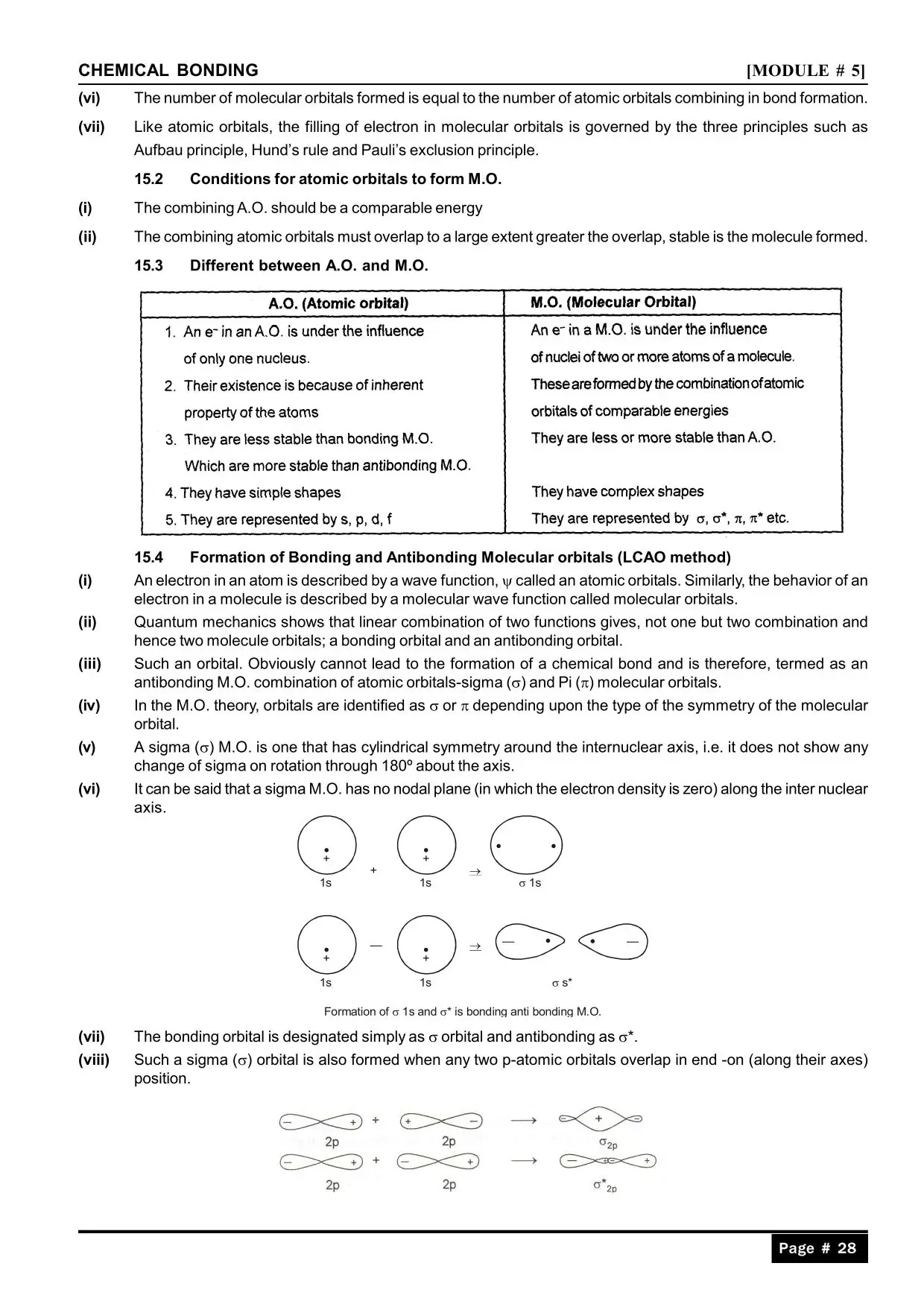
A sigma (σ) bond forms by the head-on overlap of orbitals, and a pi (π) bond forms by the sideways overlap of p orbitals. A double bond has one σ and one π bond, and a triple bond has one σ and two π bonds.
Molecular Orbital Theory in Chemical Bonding and Molecular Structure Notes
Atomic orbitals combine (LCAO) to form bonding and antibonding molecular orbitals.
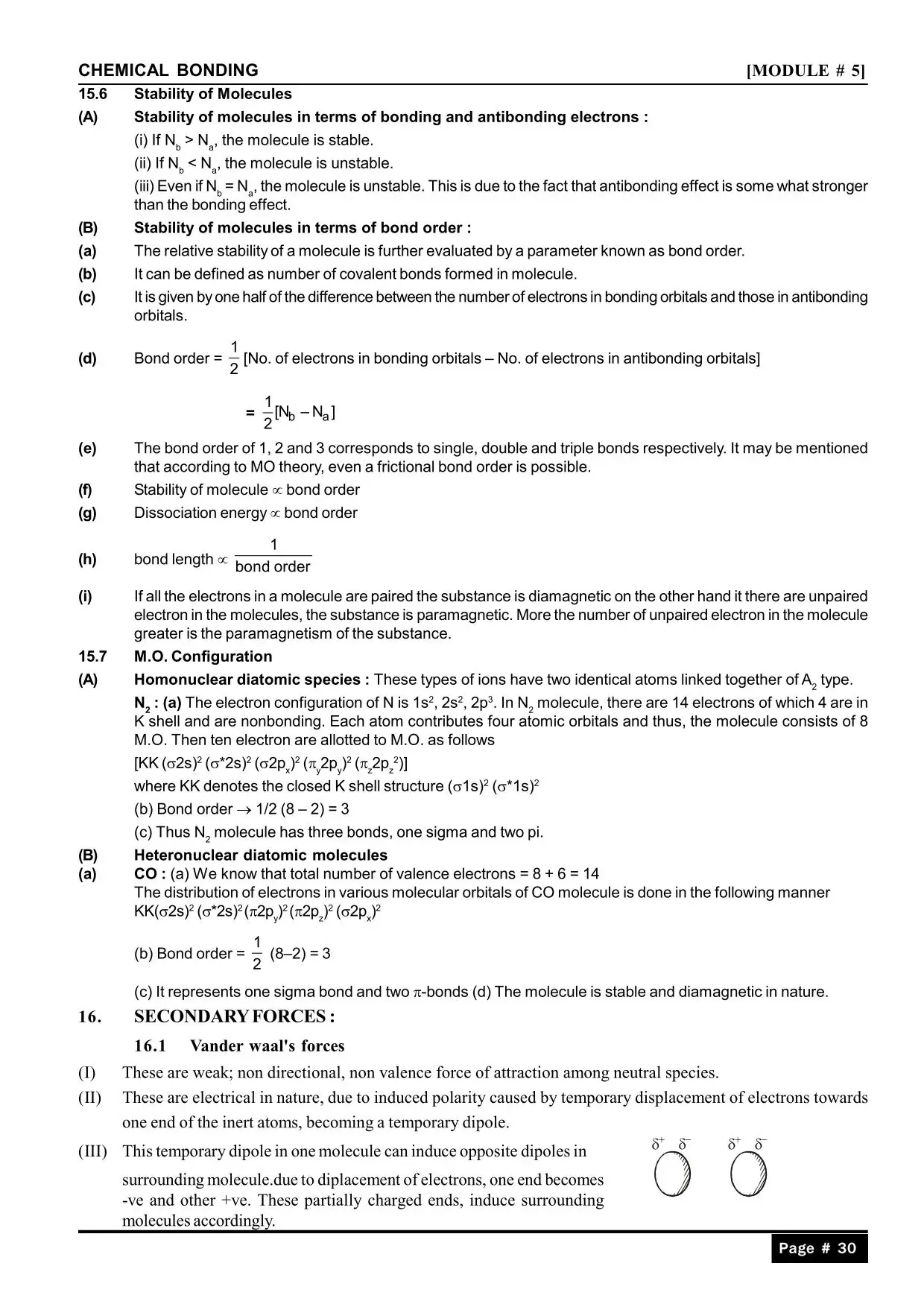
Bond order = ½ (N_b − N_a), where N_b and N_a are the numbers of electrons in the bonding and antibonding orbitals. A molecule is stable if its bond order is greater than zero.
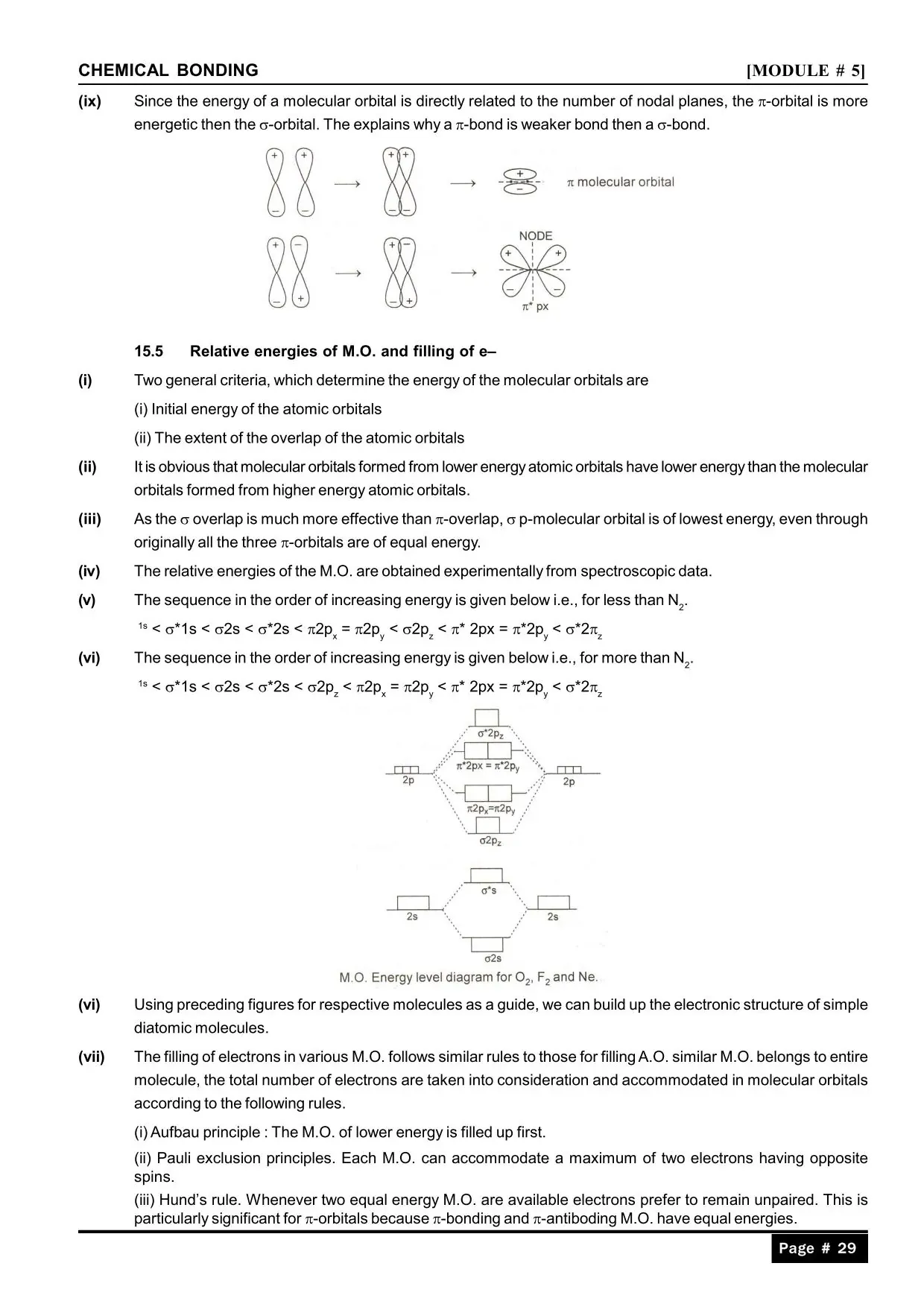
- Energy order for O₂, F₂ and Ne₂: σ1s < σ1s < σ2s < σ2s < σ2p_z < (π2p_x = π2p_y) < (π2p_x = π2p_y) < σ*2p_z.
- Energy order for B₂, C₂ and N₂: the π2p orbitals lie below σ2p_z.
Species | Bond order | Magnetic behaviour |
|---|---|---|
H₂ | 1 | Diamagnetic |
He₂ | 0 | Does not exist |
B₂ | 1 | Paramagnetic |
C₂ | 2 | Diamagnetic |
N₂ | 3 | Diamagnetic |
O₂ | 2 | Paramagnetic (2 unpaired electrons) |
O₂⁻ | 1.5 | Paramagnetic (1 unpaired electron) |
F₂ | 1 | Diamagnetic |
A higher bond order means a shorter bond length and a higher bond enthalpy.
Hydrogen Bonding and Metallic Bonding in Chemical Bonding and Molecular Structure Notes
Hydrogen bonding occurs when hydrogen attached to a highly electronegative atom (F, O or N) is attracted to another electronegative atom.
- Intermolecular hydrogen bonding (HF, H₂O, alcohols) increases the boiling point and the solubility in water.
- Intramolecular hydrogen bonding (o-nitrophenol) lowers the boiling point and makes the compound steam volatile, while p-nitrophenol has intermolecular hydrogen bonding and a higher boiling point.
- Hydrogen bonding explains why water has a high boiling point for its molecular mass, and why ice is less dense than water.
Metallic bonding (elementary idea): the metal ions sit in a sea of delocalised electrons, which explains the conductivity, malleability and lustre of metals.
Solved Examples from Chemical Bonding and Molecular Structure Notes
Example 1 (hybridisation and shape): Find the hybridisation and shape of SF₄.
H = ½(6 + 4) = 5, so the hybridisation is sp³d. There are 4 bond pairs and 1 lone pair, so the shape is see-saw.
Example 2 (bond order): Find the bond order and the magnetic behaviour of O₂⁻.
O₂⁻ has 17 electrons: N_b = 10 and N_a = 7. Bond order = ½(10 − 7) = 1.5, and there is 1 unpaired electron, so it is paramagnetic.
Example 3 (dipole moment): Two charges of +1.6 × 10⁻¹⁹ C and −1.6 × 10⁻¹⁹ C are 1.0 Å apart. Find the dipole moment in debye.
μ = q × d = 1.6 × 10⁻¹⁹ × 10⁻¹⁰ = 1.6 × 10⁻²⁹ C·m = 1.6 × 10⁻²⁹/3.336 × 10⁻³⁰ ≈ 4.8 D.
Example 4 (formal charge): Find the formal charge on nitrogen in NH₄⁺.
Formal charge = 5 − 0 − ½(8) = +1.
Example 5 (bond angle): Arrange CH₄, NH₃ and H₂O in the decreasing order of bond angle.
CH₄ (109.5°) > NH₃ (about 107°) > H₂O (about 104.5°). The lone pairs repel the bond pairs more strongly than bond pairs repel each other.
Example 6 (Fajan’s rules): Which is more covalent, LiCl or NaCl? Which has the higher lattice enthalpy, NaCl or MgO?
LiCl is more covalent, because Li⁺ is smaller than Na⁺ and polarises the anion more. MgO has the higher lattice enthalpy, because its ions are smaller and carry higher charges.
Common Mistakes in Chemical Bonding and Molecular Structure Notes Problems
These are the errors that students make most often when they apply the Chemical Bonding and Molecular Structure Notes to problems.
Mistake | Correct approach |
|---|---|
Ignoring lone pairs when you find the shape | Count bond pairs and lone pairs together (steric number), and then read the shape from the table |
Saying that NH₃ is tetrahedral | The electron geometry is tetrahedral, and the molecular shape is trigonal pyramidal |
Using the oxidation state instead of the valence electrons in the steric number formula | Use the valence electrons of the central atom |
Thinking that every molecule with polar bonds is polar | Check the symmetry. CO₂, BF₃ and CH₄ have zero dipole moment |
Forgetting that the order of the π2p and σ2p orbitals changes after N₂ | B₂, C₂ and N₂ have π below σ, and O₂, F₂ and Ne₂ have σ below π |
Counting the bond order of resonance structures wrongly | Average the bond orders, for example 4/3 in CO₃²⁻ |
How to Study Chemical Bonding and Molecular Structure Notes
- Read the NCERT chapter first, and learn the VSEPR and hybridisation tables. Download the textbook from eSaral’s NCERT books page.
- Revise Structure of Atom first if electronic configurations feel weak, because hybridisation and MOT depend on them.
- Practise shapes, hybridisation and bond order for 10 species every day for a week.
- Revise the chapter with eSaral’s Class 11 Chemistry notes, and then solve previous year questions.
eSaral helps the students by providing you an easy to understand concepts and attractive study material for IIT JEE which includes the chemistry video lectures by top expert IITian Faculties of KOTA. We are also providing Quick revision for Chemistry to help the students in revising the chapter quickly. eSaral brings complete notes for Class 11 Chemistry. eSaral provides a series of detailed chapter wise notes for all the Subjects of class 11th and 12th. These notes will also help you in your IIT JEE & NEET preparations. We hope these Chemistry Notes for Class 11 will help you understand the important topics and help in remembering the key points for the exam point of view. Get Complete Class 11 Chemistry Notes for easy learning and understanding. For free video lectures and complete study material, Download eSaral APP
Frequently Asked Questions
What are the most important topics in Chemical Bonding and Molecular Structure notes for JEE Main?
VSEPR shapes and bond angles, hybridisation, molecular orbital theory (bond order and magnetic behaviour), dipole moment and polarity, resonance, Fajan’s rules and hydrogen bonding. In the Chemical Bonding and Molecular Structure Notes, practise finding the shape and hybridisation of molecules and ions such as SF₄, XeF₄ and ClF₃.
What is the difference between VSEPR theory and valence bond theory?
In Chemical Bonding and Molecular Structure notes, VSEPR theory predicts the shape of a molecule from the repulsion between the electron pairs around the central atom. Valence bond theory explains how bonds form from overlapping orbitals, and hybridisation explains the geometry. They agree on shapes, for example sp³ for tetrahedral and sp³d² for octahedral.
How do you find the hybridisation of the central atom?
In Chemical Bonding and Molecular Structure notes, use the steric number H = ½[valence electrons + monovalent atoms − cation charge + anion charge]. H = 2 is sp, 3 is sp², 4 is sp³, 5 is sp³d and 6 is sp³d². For SF₄, H = ½(6 + 4) = 5, so the hybridisation is sp³d.
How is bond order calculated in molecular orbital theory?
Bond order = ½(N_b − N_a), where N_b is the number of electrons in the bonding orbitals and N_a is the number in the antibonding orbitals. For O₂, N_b = 10 and N_a = 6, so the bond order is 2. Chemical Bonding and Molecular Structure notes on eSaral show the molecular orbital energy order for each group of molecules.
Why does hydrogen bonding raise the boiling point?
In Chemical Bonding and Molecular Structure notes, hydrogen bonds between molecules (as in H₂O and HF) need extra energy to break, so the boiling point is higher than that of molecules of similar mass without hydrogen bonding. Intramolecular hydrogen bonding, as in o-nitrophenol, lowers the boiling point instead.
Which chapter number is Chemical Bonding in Class 11 Chemistry?
Chemical Bonding and Molecular Structure is Chapter 4 of the NCERT Class 11 Chemistry book. These Chemical Bonding and Molecular Structure Notes for Class 11 on eSaral follow the NCERT order of topics.
Why is the bond angle in water smaller than in ammonia?
In Chemical Bonding and Molecular Structure notes, the reason is simple: water has two lone pairs on oxygen, and ammonia has one lone pair on nitrogen. Lone pairs repel the bond pairs more strongly than bond pairs repel each other, so the bond angle is about 104.5° in water, compared with about 107° in ammonia and 109.5° in methane.
What is the difference between a sigma bond and a pi bond?
A sigma bond forms by head-on overlap of orbitals along the bond axis, and it is stronger. A pi bond forms by sideways overlap of parallel p orbitals, and it is weaker. A single bond is one σ bond, a double bond is one σ and one π bond, and a triple bond is one σ and two π bonds.
Where can I find more Class 11 Chemistry notes on eSaral?
eSaral has handwritten Chemical Bonding and Molecular Structure Notes on this page, the NCERT book for Class 11, and the complete Class 11 Chemistry notes hub, all linked on this page.
Team eSaral
eSaral Academic and Editorial Team
Team eSaral is the collective author profile for educational content created by eSaral’s teachers and academic contributors. The team draws on expertise from IIT graduates, doctors, experienced educators and subject specialists to develop resources for JEE, NEET and school students. Our articles aim to explain concepts clearly and help students study with confidence.
Related Posts

BITSAT 2027: Registration Date, Exam Date, Syllabus, Eligibility, Pattern & Fees
BITSAT 2027 exam dates, registration timeline, eligibility criteria, exam pattern, marking scheme, syllabus and fees in one page.

BITSAT Previous Year Question Paper PDF (2017-2026)
Download BITSAT previous year question papers PDF from 2017 to 2026,session-wise. Memory-based papers,exam pattern, paper analysis and how to practise

CBSE Class 10 Date Sheet 2027: Expected Exam Dates, Release Date, Admit Card & Result Timeline
CBSE Class 10 date sheet 2027 is awaited. See the expected exam dates, release window, how to download the PDF, admit card and result timelines.

NCERT Physics Class 10 Book PDF in Hindi 2026-27 – भौतिक विज्ञान के 4 अध्याय (Free Download)
NCERT Physics Class 10 book PDF in Hindi 2026-27: download all 4 chapters (अध्याय 9–12) free, with topics and important formulas.

NCERT Biology Class 9 Book Anveshan PDF in Hindi - जीव विज्ञान कक्षा 9 पुस्तक अन्वेषण PDF
Download NCERT Biology Class 9 book PDF in Hindi chapterwise for 2026-27: Cell, Tissues, Reproduction and Diversity. Free PDFs.

Essay On Artificial Intelligence in English (100,150, 200, 250, 300, 500 Words)
This is in contrast to the natural intelligence of humans. With Artificial Intelligence, machines can perform

Essay on 78th India Independence Day in English for Student (100, 150, 200, 250, 300, 500 Words)
Read the best essays on India's Independence Day in English. Short & long essays (100, 150, 200, 250, 300, 500 words) perfect for school exams
NCERT Class 11 English Snapshots book - Free PDF download- Esaral
Download NCERT Class 11 English Snapshots book PDF for free. Get all 8 chapters, chapter-wise. Start your prep today!
NCERT Class 10 biology book pdf - Free PDF Download - eSaral
NCERT Class 10 Biology book PDF 2026-27: all 5 chapters (Life Processes to Our Environment) in English & Hindi, with CBSE syllabus, marks & practical

Essay on Global Warming in English (100,150, 200, 250, 300, 500 Words)
Global warming means the Earth is getting hotter. This happens because of things like pollution from cars and factories.