
Class 12 Physics Dual Nature of Radiation and Matter Notes | Photoelectric Effect for JEE & NEET

eSaral Academic and Editorial Team
Summary
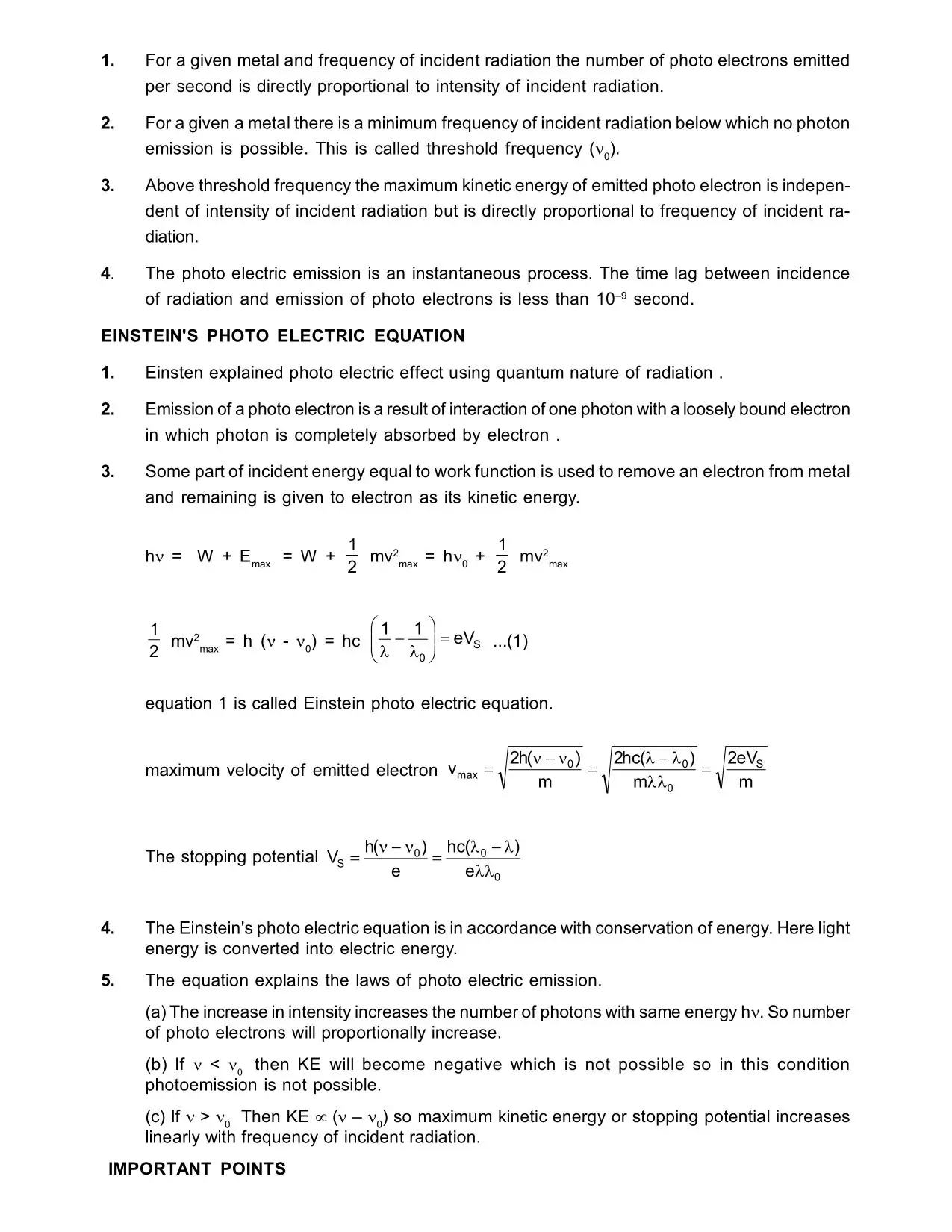
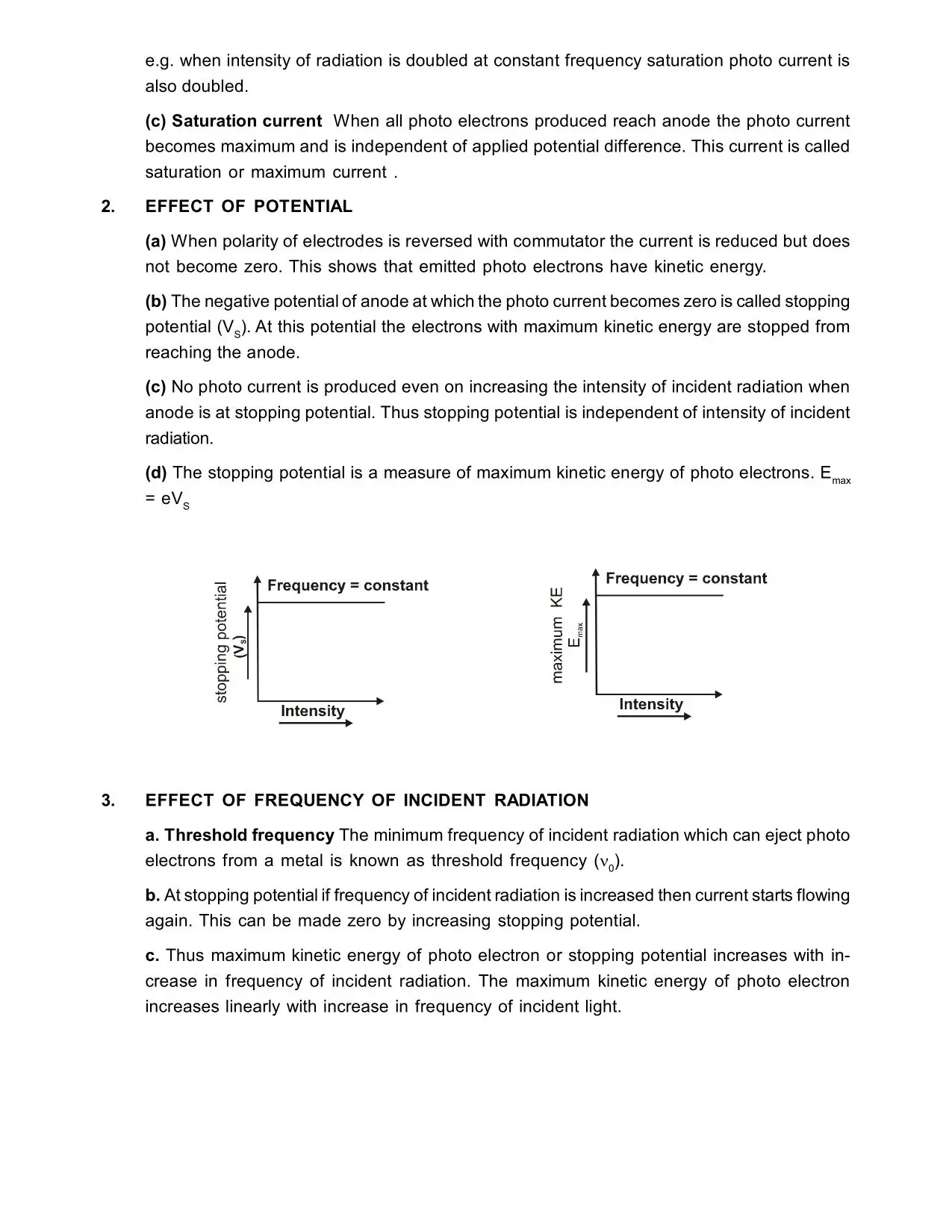
The photoelectric effect is the emission of electrons from a metal surface when light of sufficient frequency strikes it. Only light above the threshold frequency causes emission, regardless of intensity. Albert Einstein explained this using the quantum nature of light (photons) in 1905, earning him the Nobel Prize. This phenomenon proves light behaves as a particle.
eSaral > Class 12 Physics Notes > Dual Nature of Radiation and Matter

Here are Dual Nature of Radiation and Matter Notes to prepare for Boards, JEE and NEET Exams. This Chapter discusses about everything that has Dual Nature. Like any matter can be wave as well as Particle. This chapter includes everything from Electron Emission and Photoelectric effect to particle nature of Light. From Explanations on the wave Nature of Matter to Davisson and Germer Experiments.
India's Best Exam Preparation for Class 12th - Download Now
India's Best Exam Preparation for Class 12th - Download Now
India's Best Exam Preparation for Class 12th - Download Now
India's Best Exam Preparation for Class 12th - Download Now
eSaral have already come up with an amazing Revision Series of Physics where you can easily revise your chapter within minutes with all the important formulae and key points. This revision series is free for all. Click Here for Complete Physics Revision Series by Saransh Gupta Sir (AIR-41) About Saransh Gupta Sir Computer Science Graduate from IIT Bombay. Cracked IIT-JEE with AIR-41 and AIEEE (JM) with AIR-71 in 2006.
He is an author of JEE Mentorship Book “StrateJEE”. He taught Physics for 5 years at Allen and was loved immensely by all the students. Many of his students bagged success with flying colours in JEE & NEET Exams. eSaral brings you detailed Class 11th Physics study material. eSaral provides a series of detailed chapter wise notes for all the Subjects of class 11th and 12th. These notes will also help you in your IIT JEE & NEET preparations. We hope these Physics Notes for Class 12 will help you understand the important topics and remember the key points for the exam point of view.
Get Complete Physics Notes for Physics Class 12 for easy learning and understanding. For free video lectures and complete study material, download the eSaral APP. About eSaral: At eSaral, we are offering a complete platform for IIT-JEE & NEET preparation. The main mission behind eSaral is to provide education to each and every student in India by eliminating the Geographic and Economic factors, as a nation’s progress and development depend on the availability of quality education to each and every one. With the blend of education & technology, the eSaral team made the learning personalized & adaptive for everyone.
Frequently Asked Questions
What is work function and which metal has the lowest work function?
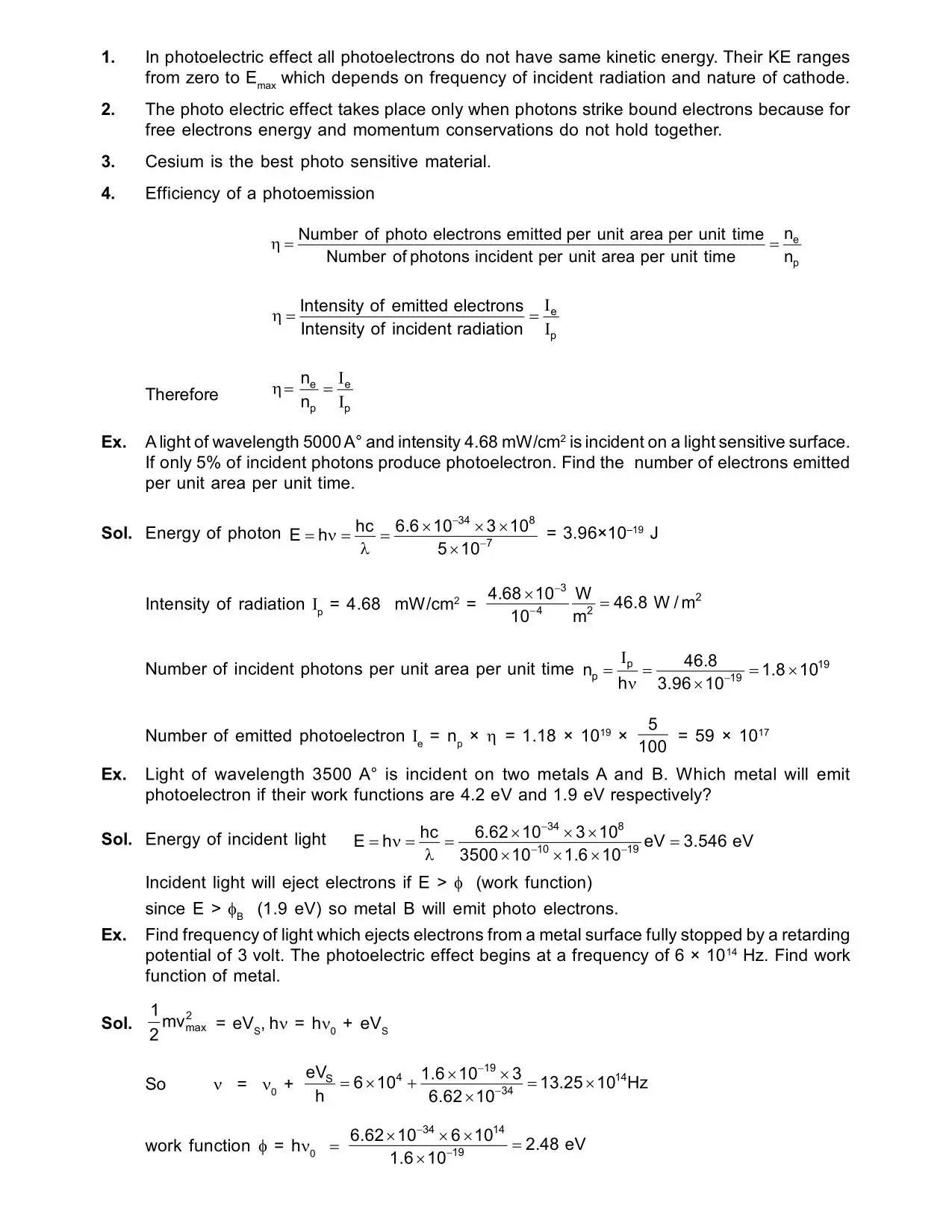
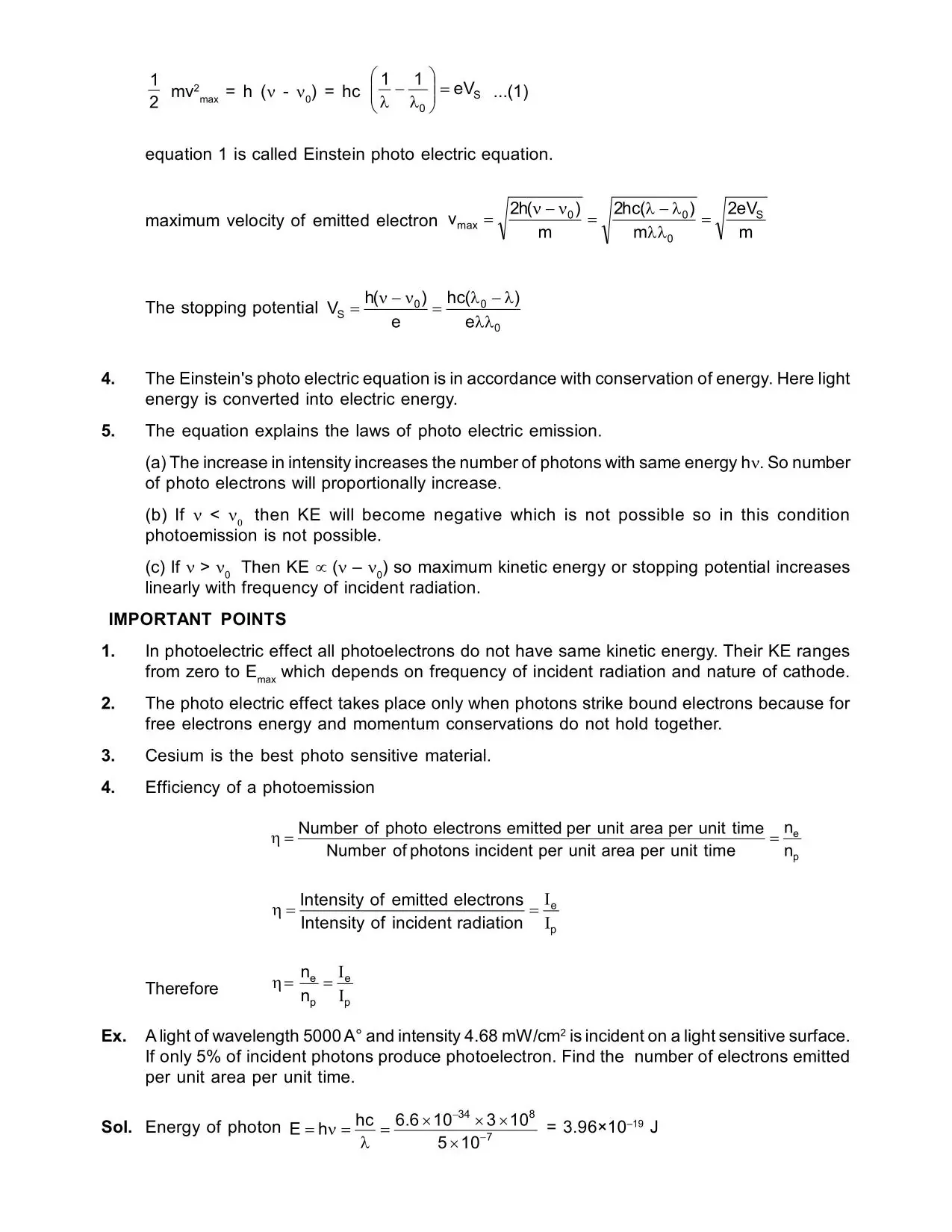
Work function is the minimum energy (in eV) needed to eject an electron from a metal surface. Caesium has the lowest work function at approximately 2.0 eV, making it the most sensitive metal to light. Metals with low work functions are used in photoelectric devices like photocells and solar panels.
What is Einstein's photoelectric equation?
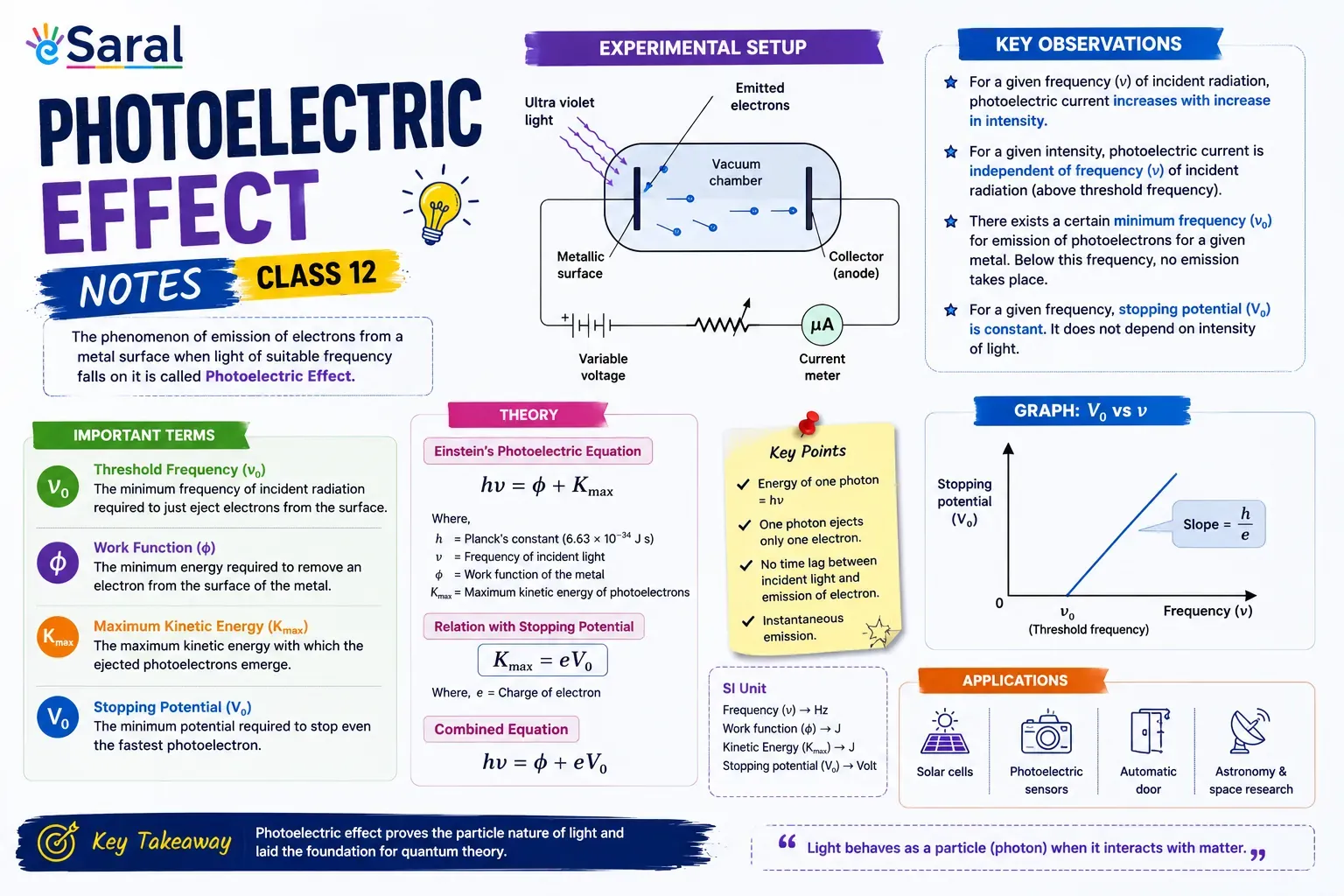
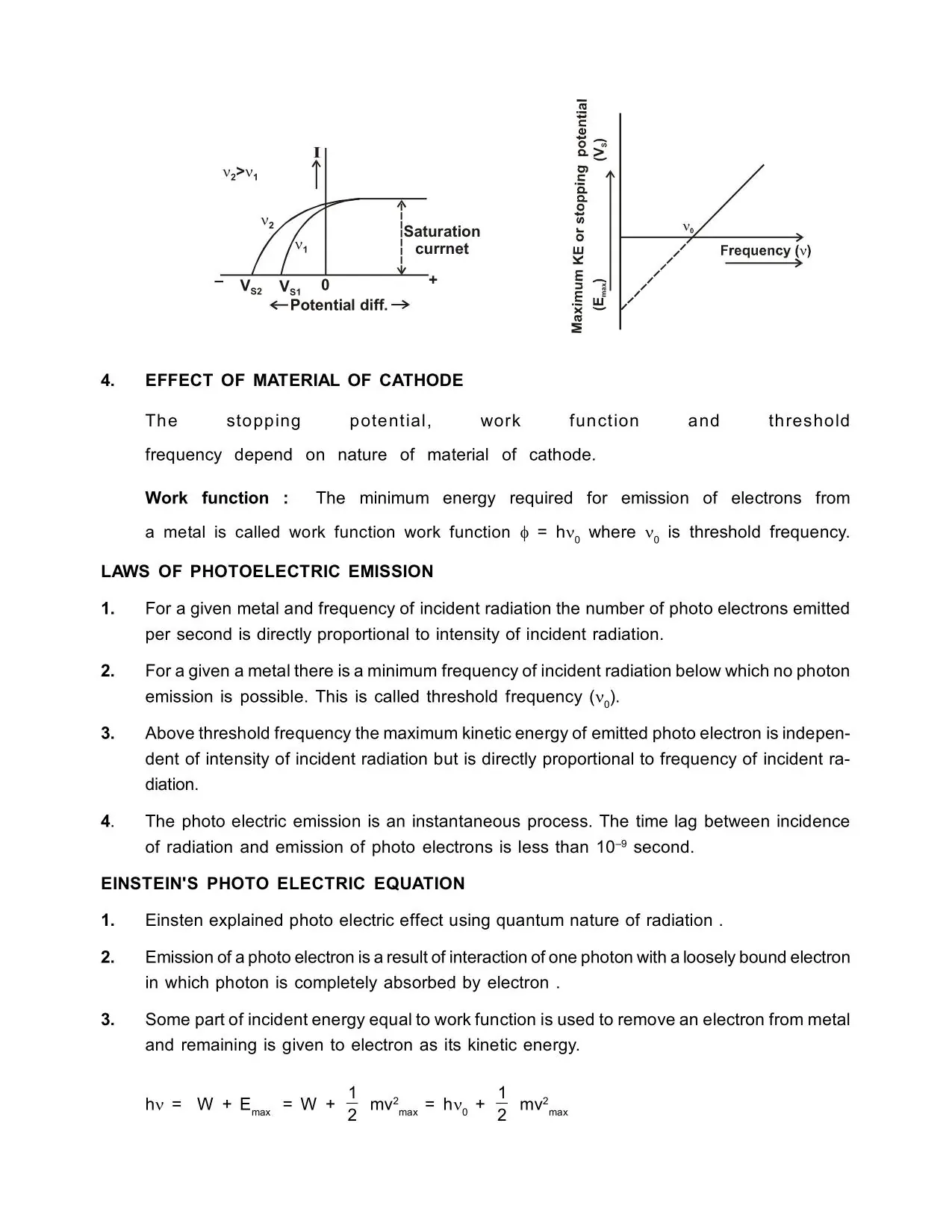
Einstein's photoelectric equation is KE_max = hν − φ, where KE_max is the maximum kinetic energy of the emitted electron, h is Planck's constant, ν is the frequency of incident light, and φ is the work function of the metal. It tells you exactly how much energy an electron gains after overcoming the metal's binding energy.
What is the photoelectric effect in simple words?
The photoelectric effect is the release of electrons from a metal surface when light hits it. Only light above a specific minimum frequency — called the threshold frequency — can eject electrons. The number of electrons ejected increases with light intensity, but their maximum kinetic energy depends only on the frequency of light. Einstein explained this using photons in 1905.
How many marks does this chapter carry in JEE Main and NEET?
In JEE Main, Dual Nature of Radiation and Matter typically contributes 1–2 questions (4–8 marks) per paper. In NEET, it contributes 2–3 questions (8–12 marks). High-yield topics are Einstein's photoelectric equation, stopping potential graphs, and de Broglie wavelength calculations. Consistent practice with previous year papers significantly improves accuracy in this chapter.
What is de Broglie wavelength and how is it calculated?
de Broglie wavelength (λ) is the wavelength associated with any moving particle, given by λ = h/mv, where h is Planck's constant, m is mass, and v is velocity. For an electron accelerated through potential V, the formula becomes λ = h/√(2meV). This concept proved particles have wave properties.
What is stopping potential in the photoelectric effect?
Stopping potential (V₀) is the minimum reverse voltage applied to a photoelectric cell that reduces photocurrent to zero. It equals KE_max/e, where e is the electron charge. Stopping potential depends on the frequency of incident light and the metal used — it does not change with light intensity.
Team eSaral
eSaral Academic and Editorial Team
Team eSaral is the collective author profile for educational content created by eSaral’s teachers and academic contributors. The team draws on expertise from IIT graduates, doctors, experienced educators and subject specialists to develop resources for JEE, NEET and school students. Our articles aim to explain concepts clearly and help students study with confidence.
Related Posts

Plant Cell Diagram: Labelled Structure, Parts and Functions
Simple, labelled plant cell diagram with parts and functions. Covers plant cell structure for Class 6, 7, 8, 9, 10 and 11 students, CBSE-aligned.

Saransh Gupta Sir's Visit to IIT Patna: Hostel Life, Placements & Lessons for JEE Aspirants
Inside Saransh Gupta Sir's IIT Patna visit — hostel life, the library, placements, internships, and real advice for JEE aspirants from students living the IIT dream.
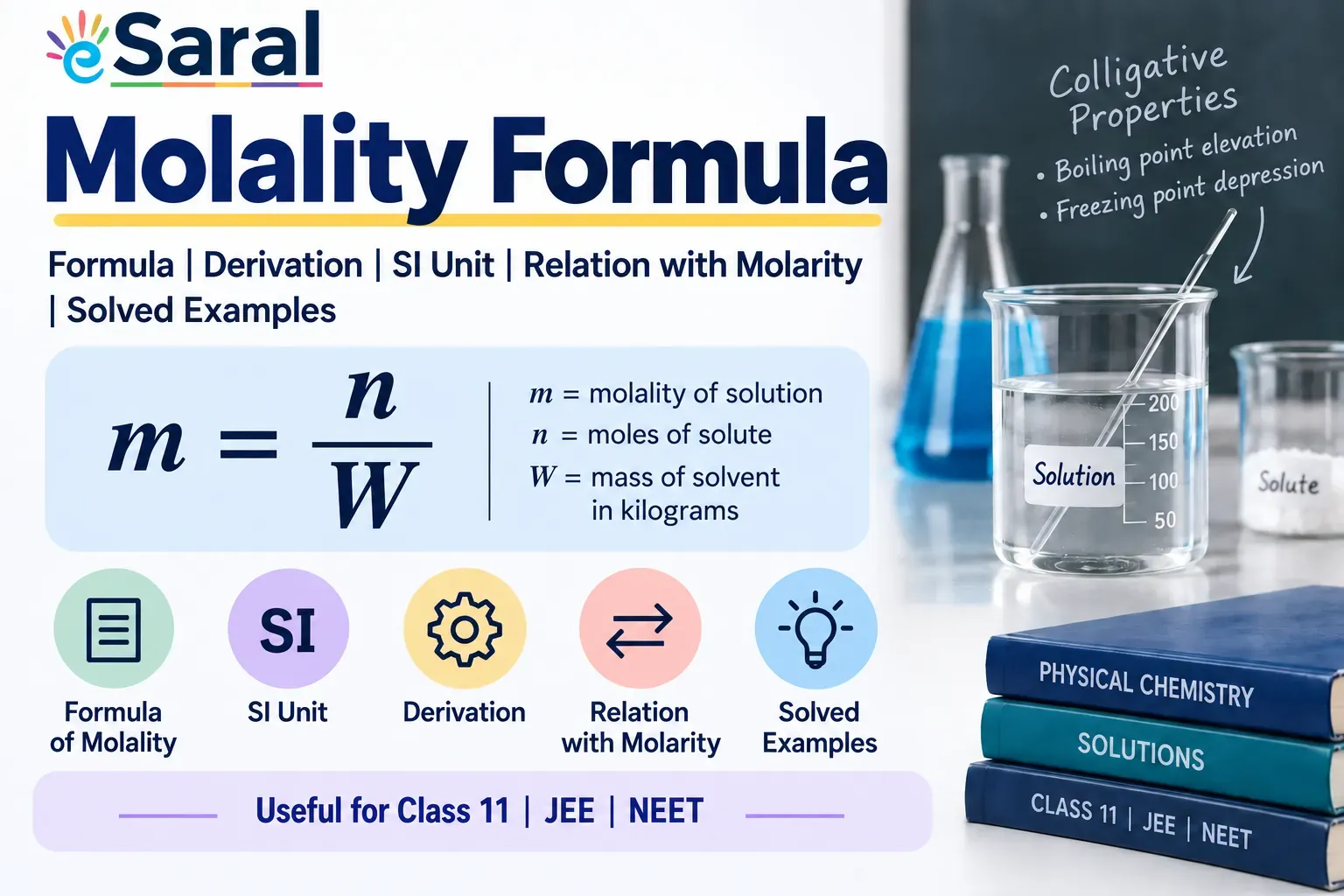
Molality Formula: Formula for Molality, Derivation & Solved Examples
Molality formula is $m = \dfrac{n}{W}$. Learn the formula of molality, its SI unit, derivation, relation with molarity, and solved examples for Class 11, JEE and NEET.
BITSAT Previous Year Question Paper PDF
Download BITSAT previous year question papers PDF. Get year-wise BITSAT PYQs, memory-based papers, exam pattern, and preparation tips to improve your BITSAT preparation.

Teachers’ Day 2026 at eSaral Gurukul: Celebrating the Bond Between Students, Teachers & Mentors
See how Teachers’ Day 2026 was celebrated at eSaral Gurukul, reflecting the bond among students, teachers, and mentors, and the role of guidance beyond academics.

JEE Advanced Attempts: Can You Give It a Third Time? Rules Explained
JEE Advanced attempts: current rule is 2 consecutive years only: full eligibility criteria, the 2025 third-attempt controversy, and the latest 2026 petition news.

Best JEE Preparation App
Best JEE preparation app for Main & Advanced: AI mock tests, live doubt-solving, thousands of practice questions. JEE preparation app for droppers & Class 11-12.
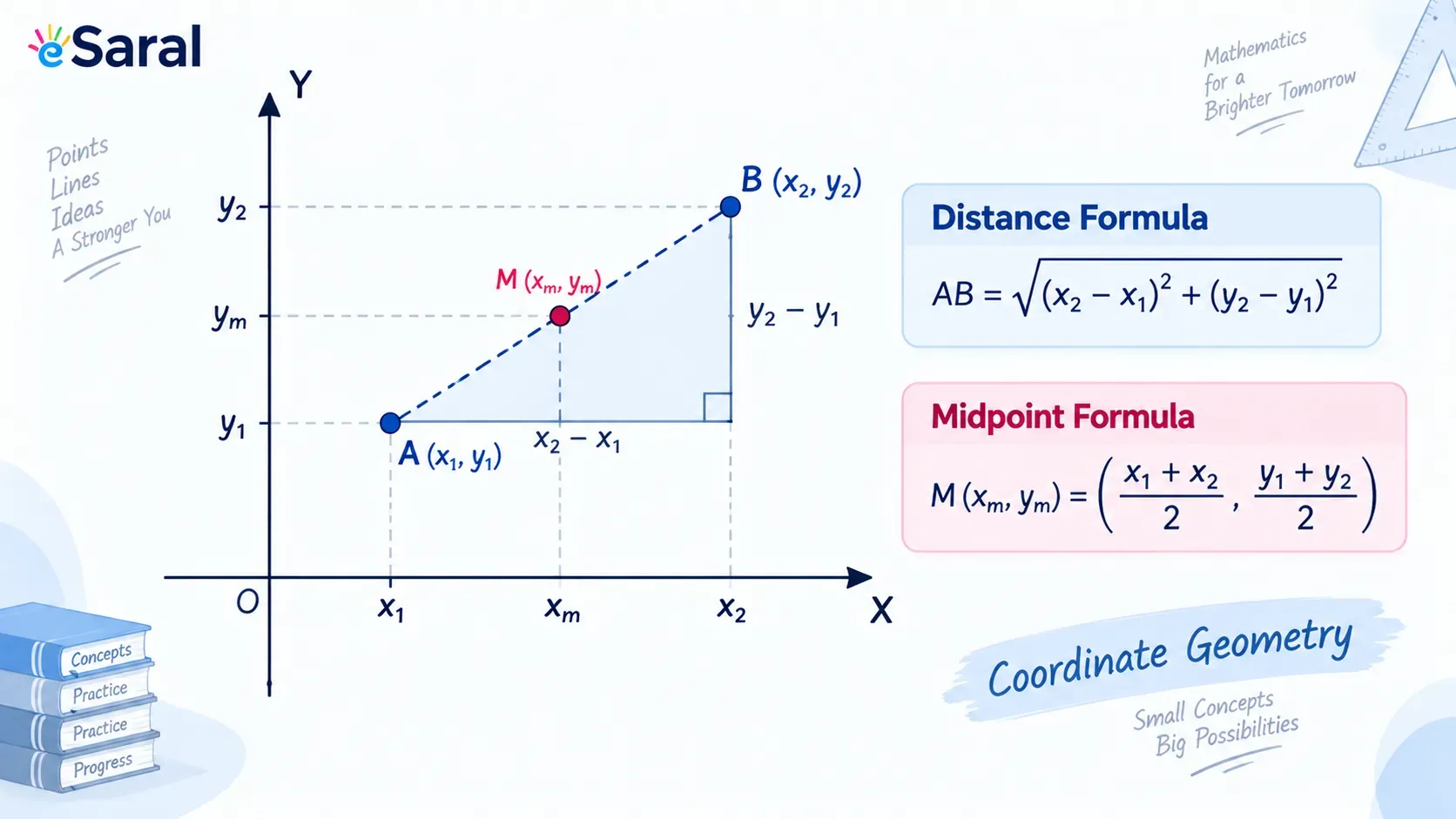
Coordinate Geometry Class 10: Formulas, Notes & Solved Examples
Coordinate geometry class 10: complete CBSE formulas — distance, section, midpoint and area of triangle — with derivation, notes and solved examples.
How to make Notes For JEE Smart Notes Strategy of an AIR 41
Learn how to make notes for JEE the way toppers do — indexing, shorthand, and smart short notes for JEE that cut revision time to just 5–7 days.
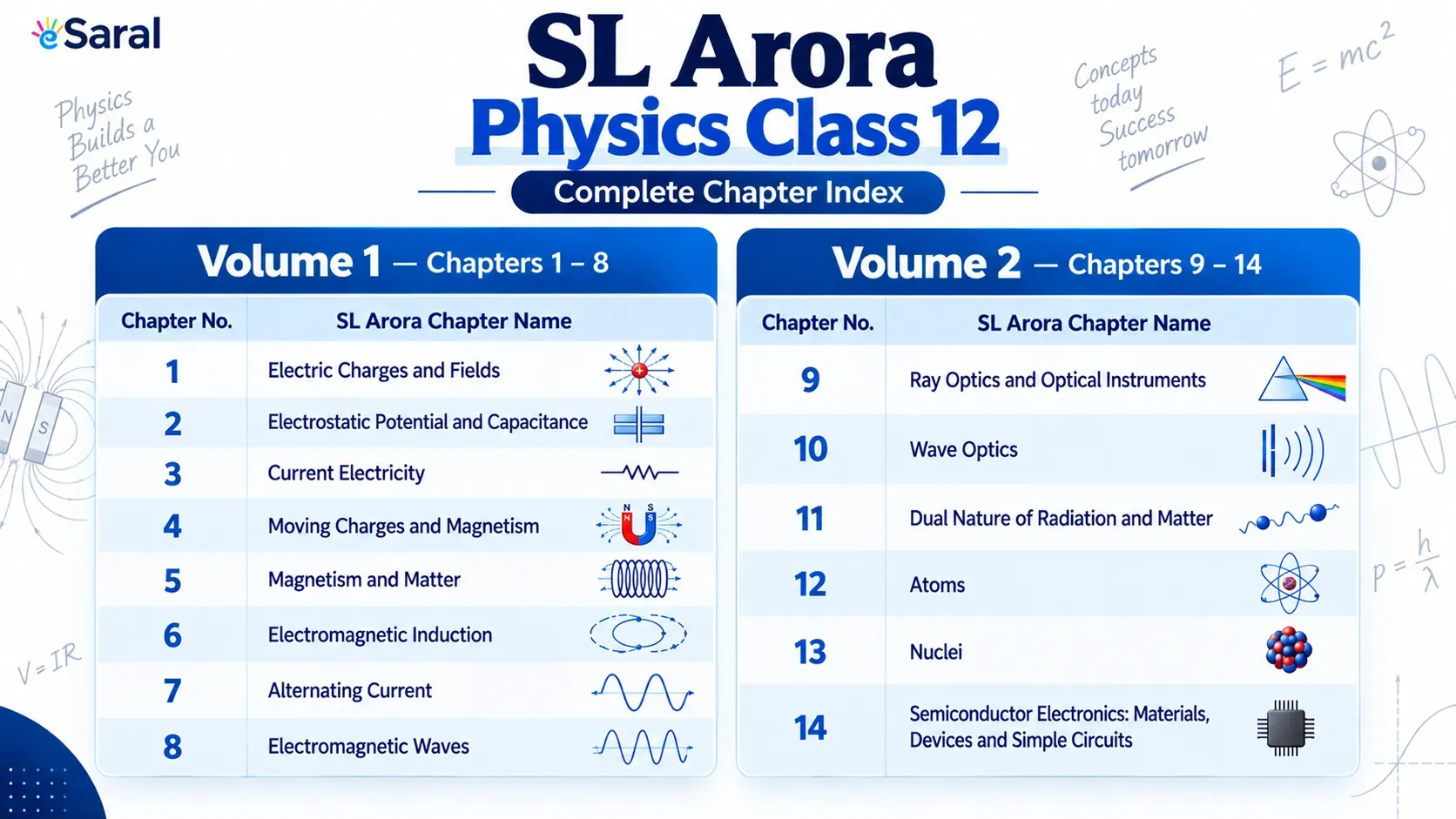
SL Arora Physics Class 12 Index – Chapter List for Volume 1 & 2
SL Arora Physics Class 12 index — complete chapter list for Volume 1 & 2, mapped to NCERT solutions for board, JEE Main, and NEET preparation.