
Ray Optics and Optical Instruments Class 12 Notes for CBSE, JEE and NEET: Formulas, Sign Convention and Solved Examples

eSaral Academic and Editorial Team
Summary
Ray Optics and Optical Instruments Class 12 notes cover Chapter 9 of NCERT Physics: reflection by spherical mirrors, refraction, total internal reflection, lenses, the prism, the microscope and the telescope. This page gives the sign convention, the key formulas, image-formation tables, solved examples and handwritten notes for CBSE boards, JEE Main and NEET.
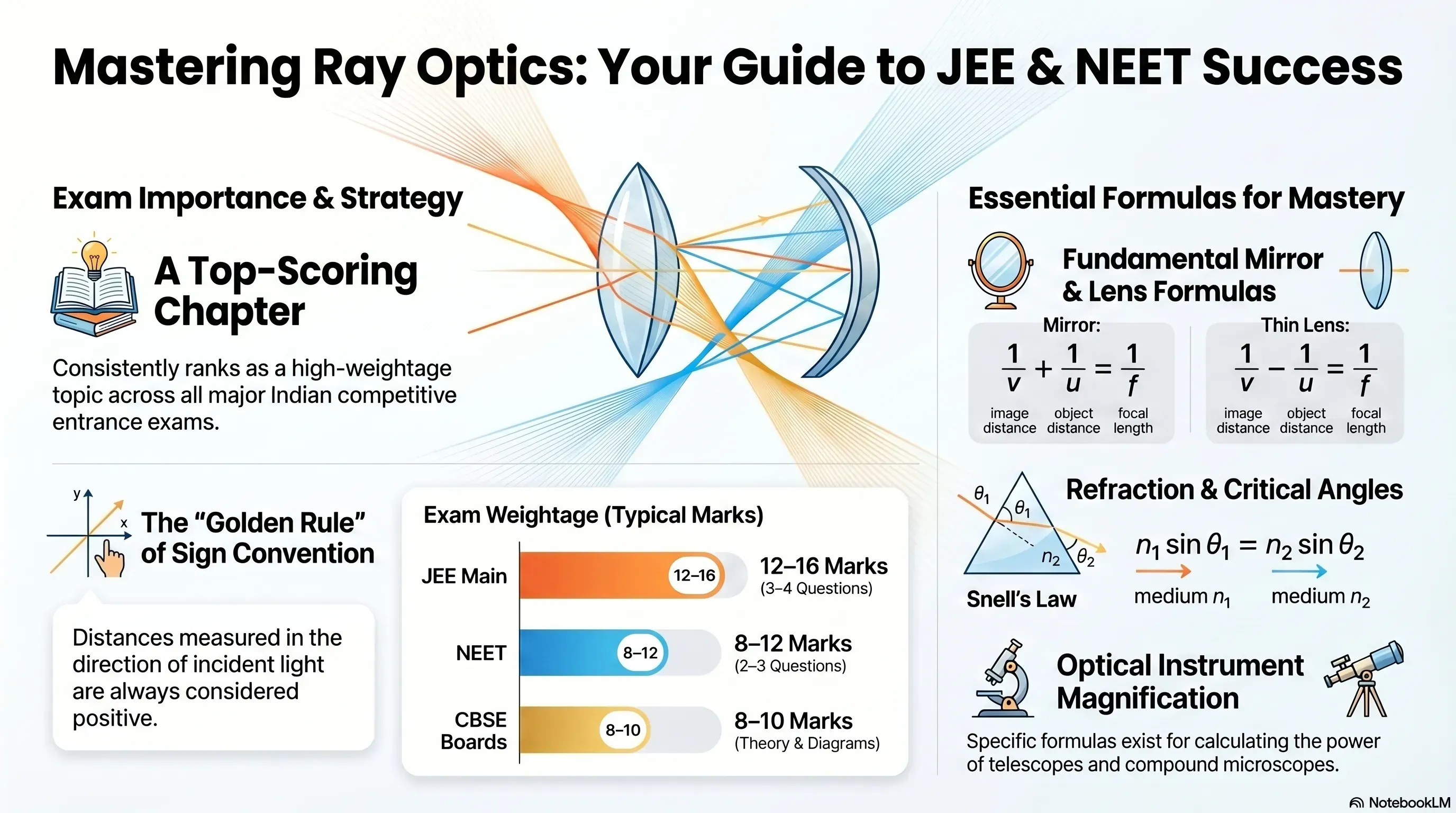
Ray optics treats light as straight-line rays. It explains what happens when light reflects from a surface or passes from one medium to another, and how lenses, prisms, microscopes and telescopes form images. These Ray Optics and Optical Instruments Class 12 notes follow the current NCERT chapter and the JEE Main 2026 syllabus, so you can see what each exam needs.
Ray Optics and Optical Instruments Class 12: Chapter Overview and Syllabus
In the current NCERT book, this is Chapter 9 of Class 12 Physics. The chapter covers:
- Reflection of light and spherical mirrors, with the mirror formula
- Refraction at plane and spherical surfaces, and Snell’s law
- Total internal reflection and its applications, such as optical fibres
- Thin lenses, the lens formula, the lens maker’s formula, magnification, power and combinations of thin lenses in contact
- Refraction through a prism
- Optical instruments: the microscope and the astronomical telescope, and their magnifying powers
Syllabus note: the human eye and its defects are not in the rationalised CBSE syllabus (check the latest CBSE syllabus to confirm), and they are not listed in the JEE Main 2026 syllabus (Unit 16, Optics). Treat them as extra reading. In JEE Main, Unit 16 also includes wave optics, which has its own chapter (Chapter 10) in NCERT.
What Do Boards, JEE and NEET Ask from Ray Optics and Optical Instruments Class 12?
Exam | What to focus on |
|---|---|
CBSE boards | Ray diagrams, mirror and lens formulas, TIR, prism, microscope and telescope. Optics and electromagnetic waves together carry 18 marks in the 70-mark paper |
JEE Main | Mirror and lens formulas, refraction at spherical surfaces, TIR, prism, combination of lenses, microscope and telescope magnification |
NEET | Formula-based numericals on mirrors, lenses, TIR and the prism, and the optical instruments |
The number of questions varies every year, so check previous years’ papers.
💡 Expert Tip by Saransh Gupta Sir, IIT Bombay AIR-41:In ray optics, the sign convention decides the answer. Fix the Cartesian sign convention before you use any formula, and draw a quick ray diagram to check that your answer is sensible.
India's Best Exam Preparation for Class 12th - Download Now
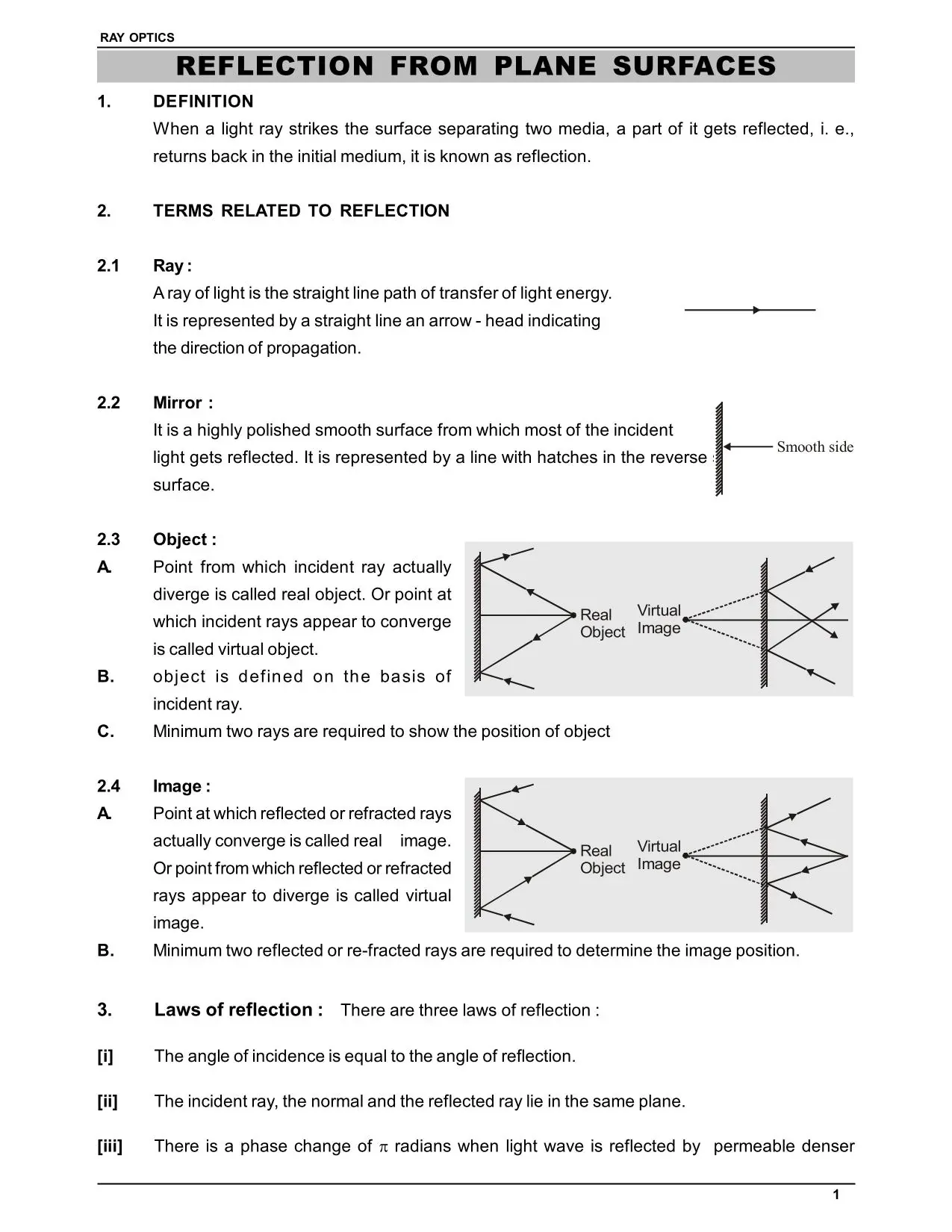
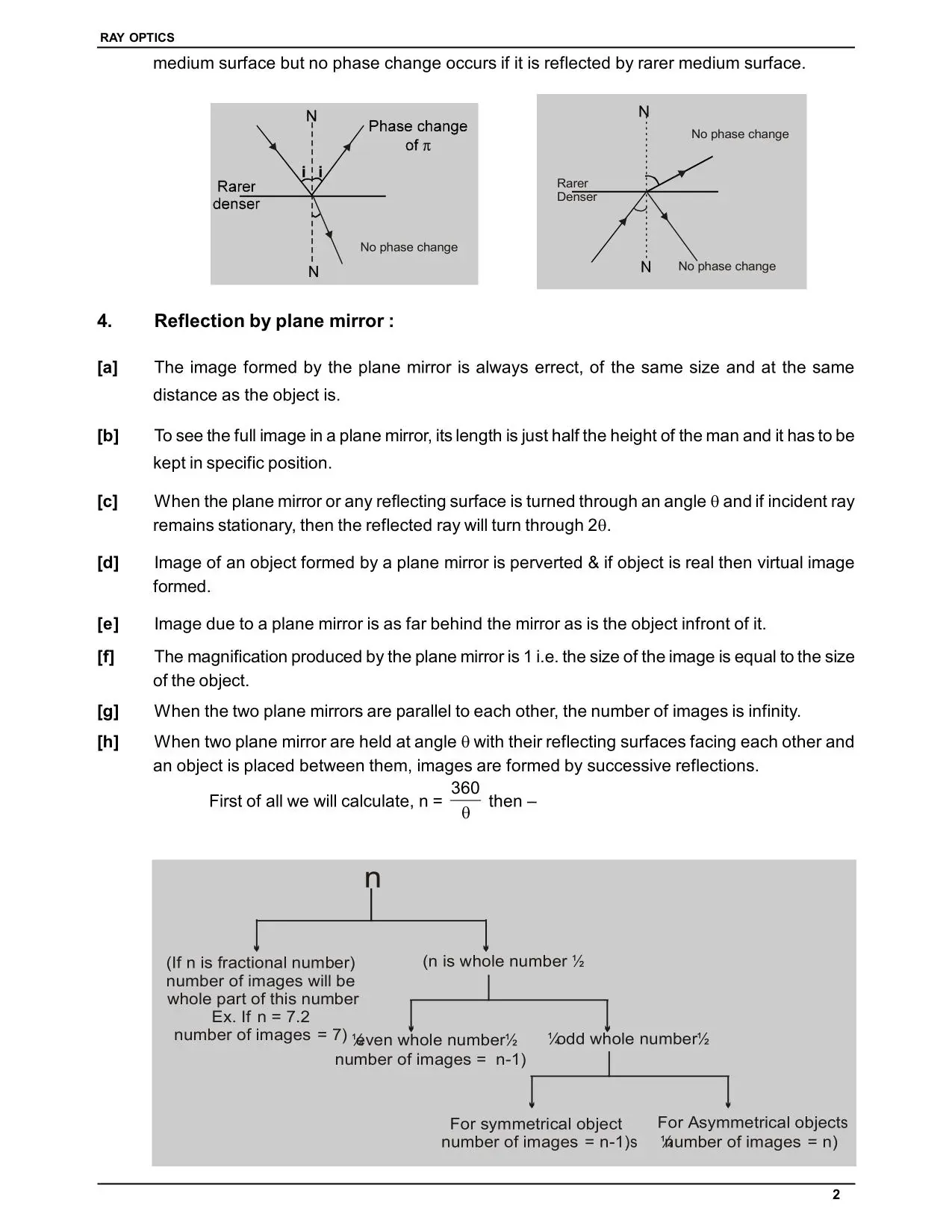
India's Best Exam Preparation for Class 12th - Download Now
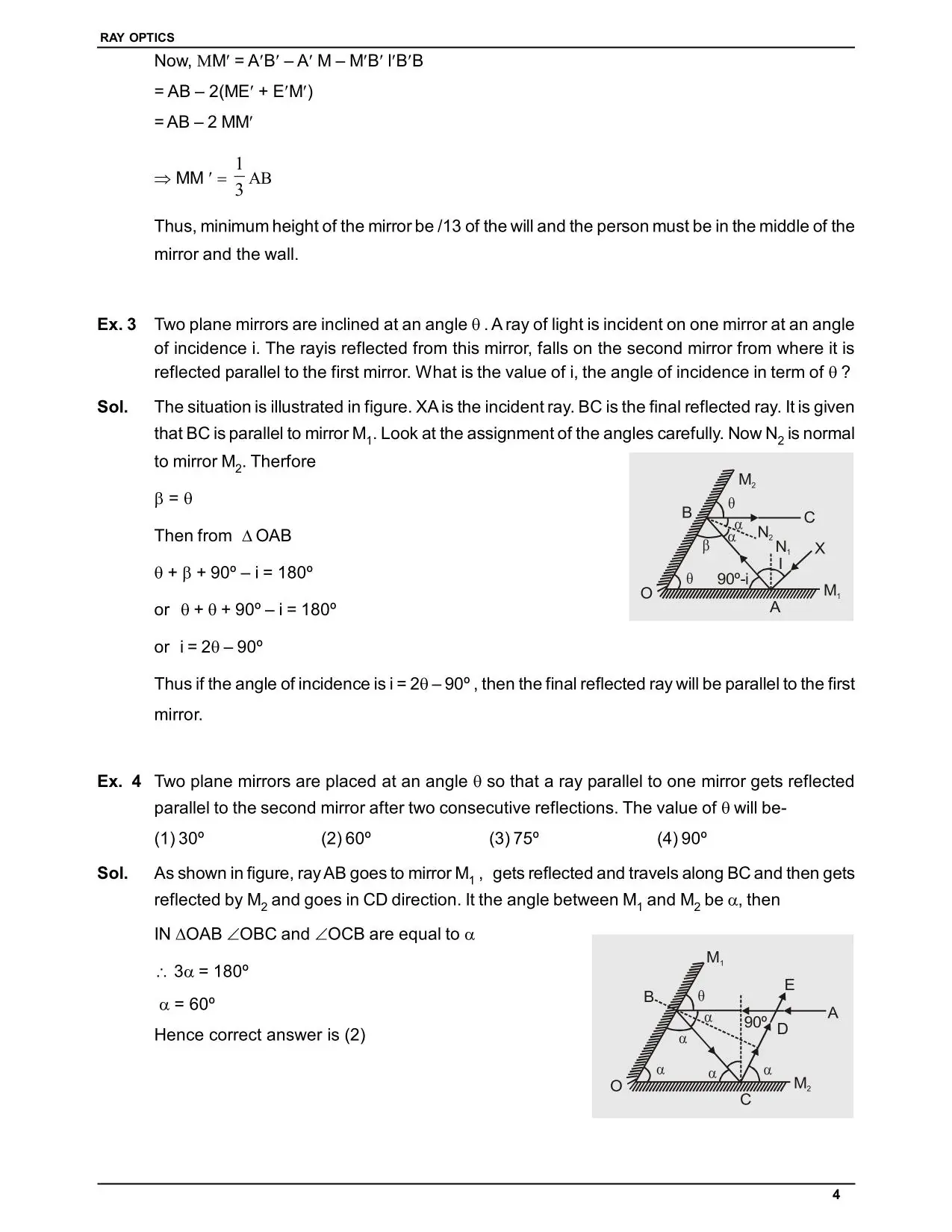
India's Best Exam Preparation for Class 12th - Download Now
India's Best Exam Preparation for Class 12th - Download Now
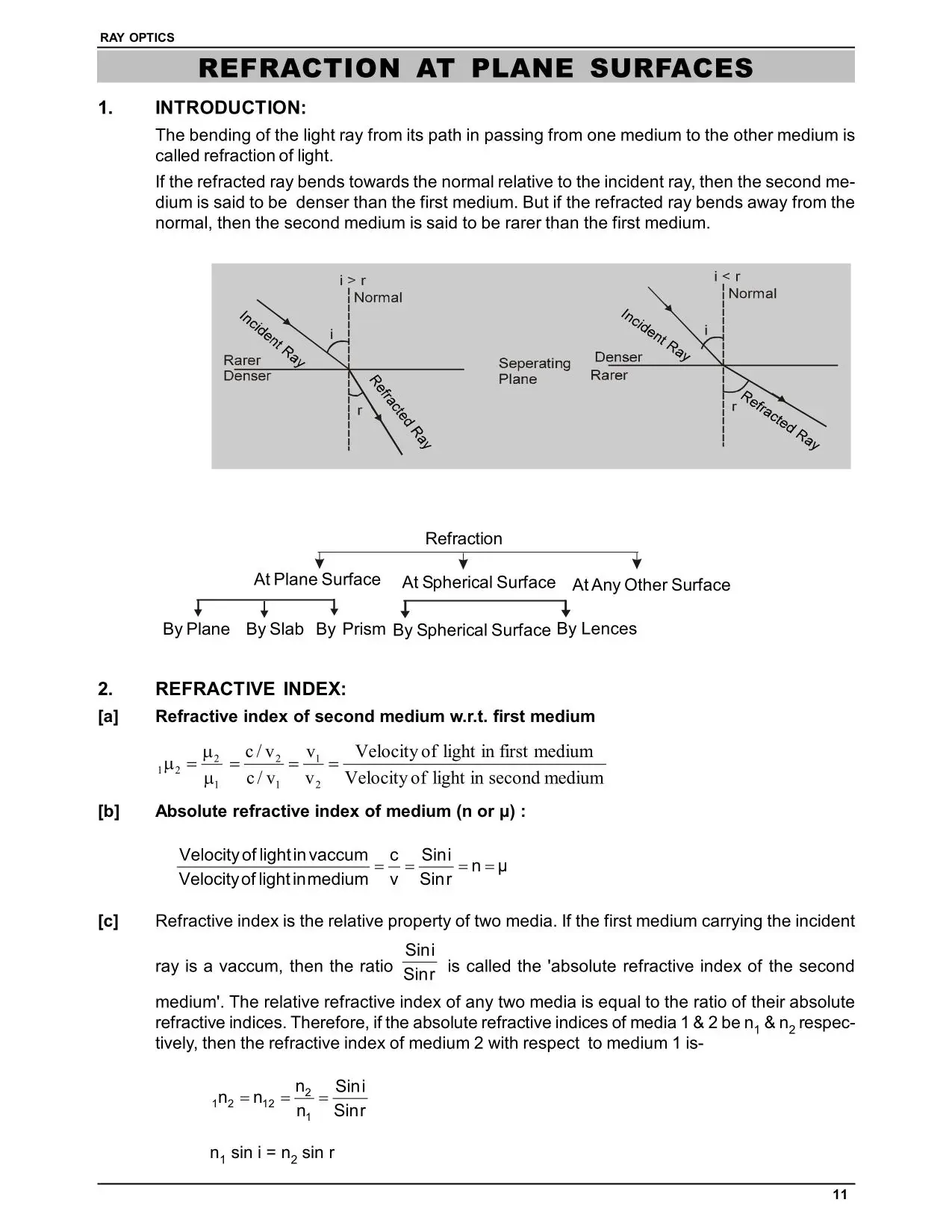
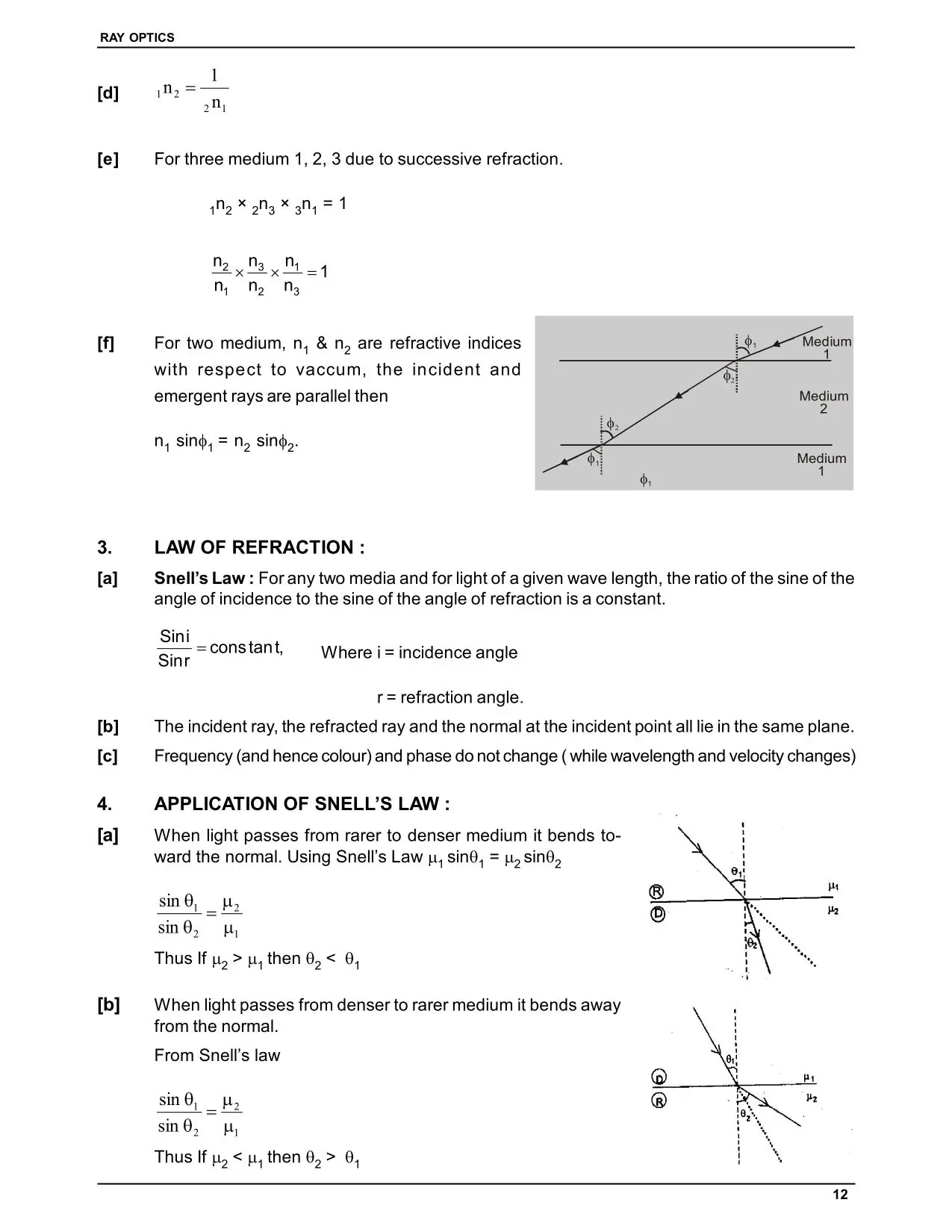
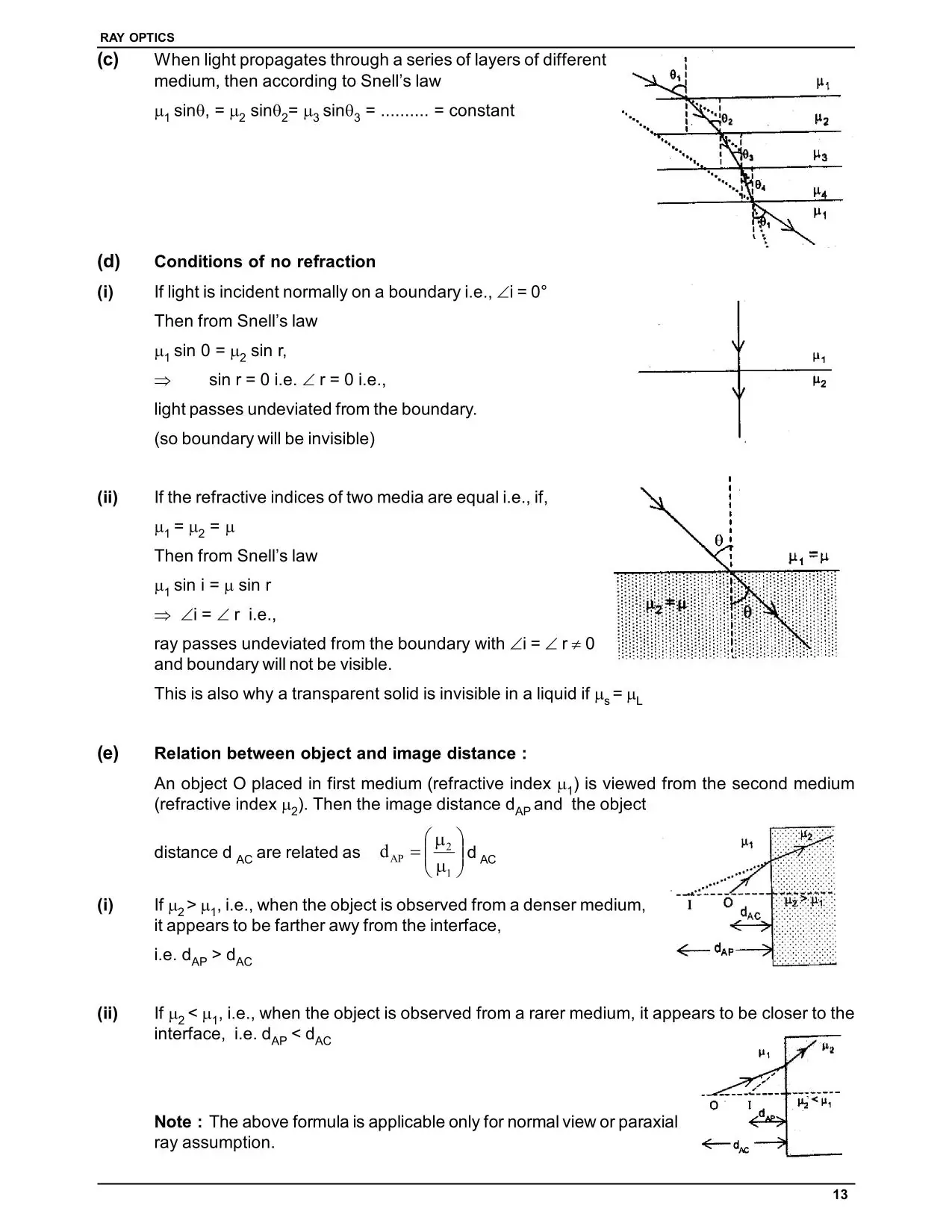
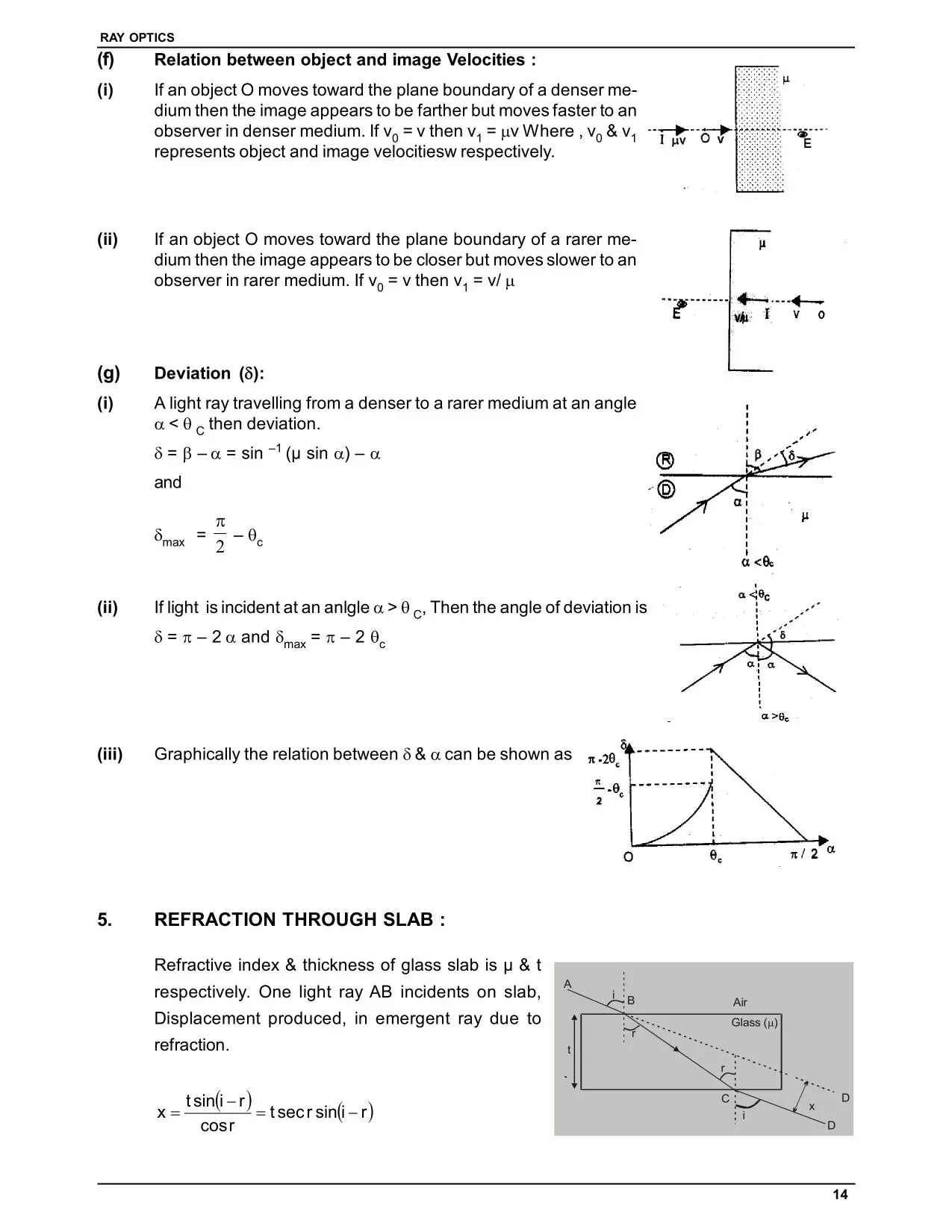
India's Best Exam Preparation for Class 12th - Download Now
India's Best Exam Preparation for Class 12th - Download Now
India's Best Exam Preparation for Class 12th - Download Now
India's Best Exam Preparation for Class 12th - Download Now
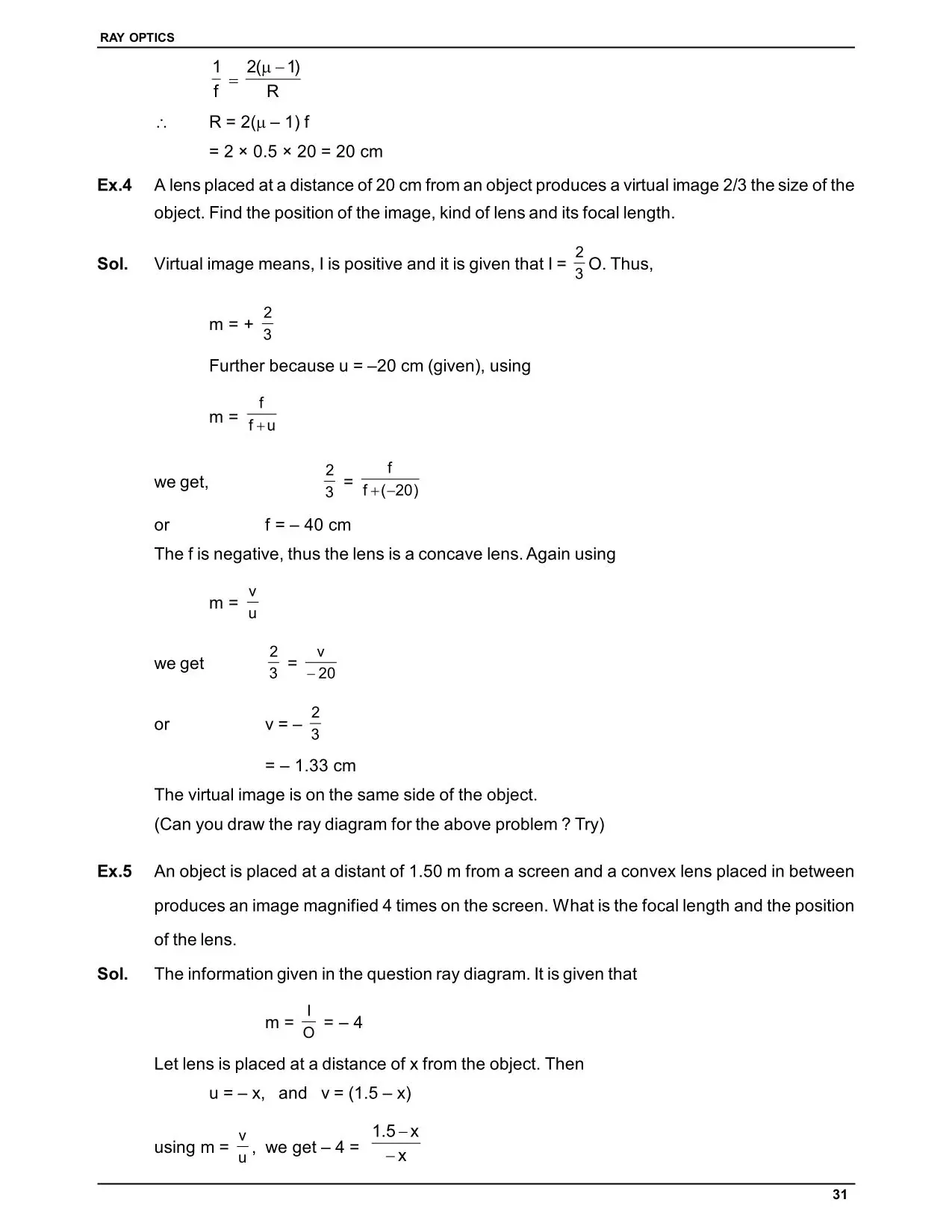
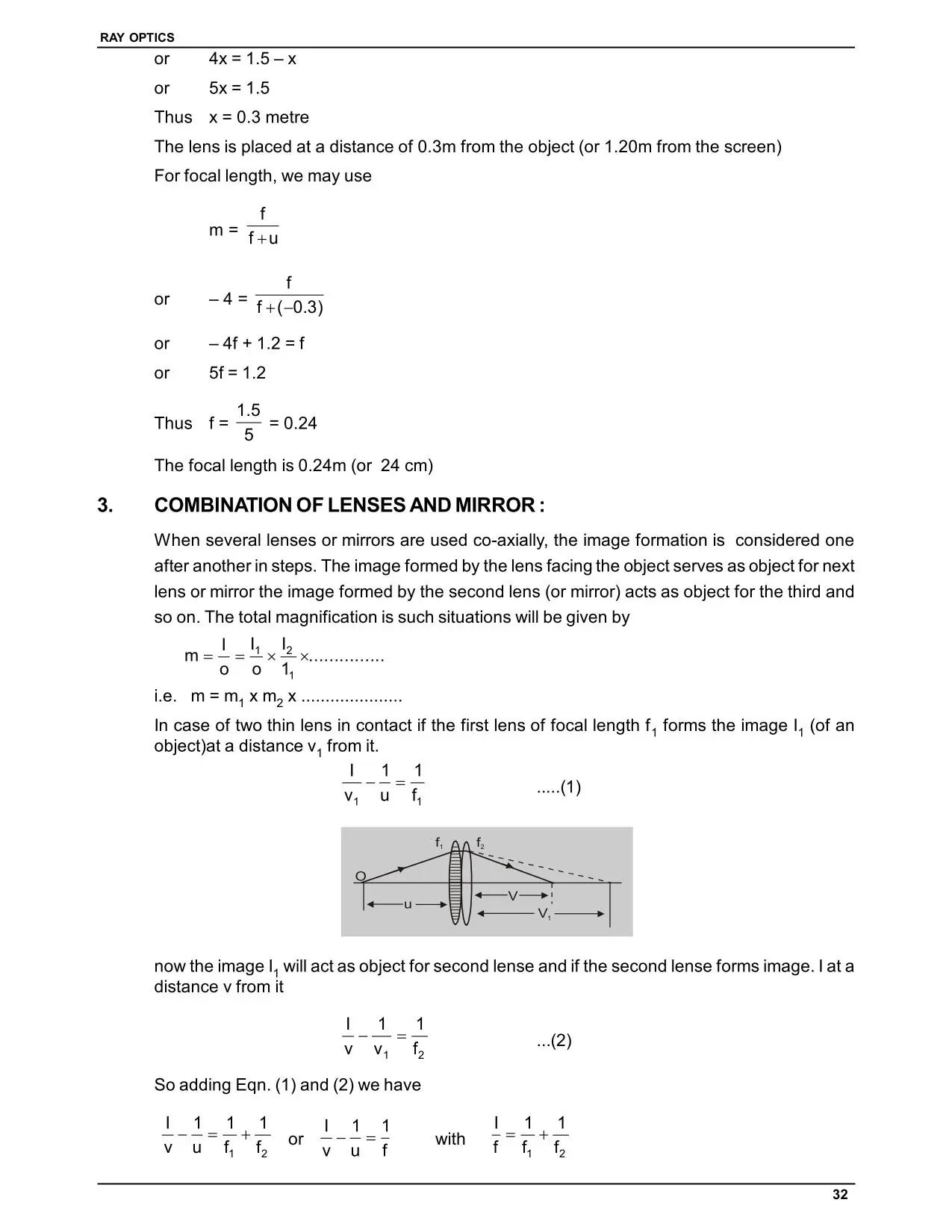
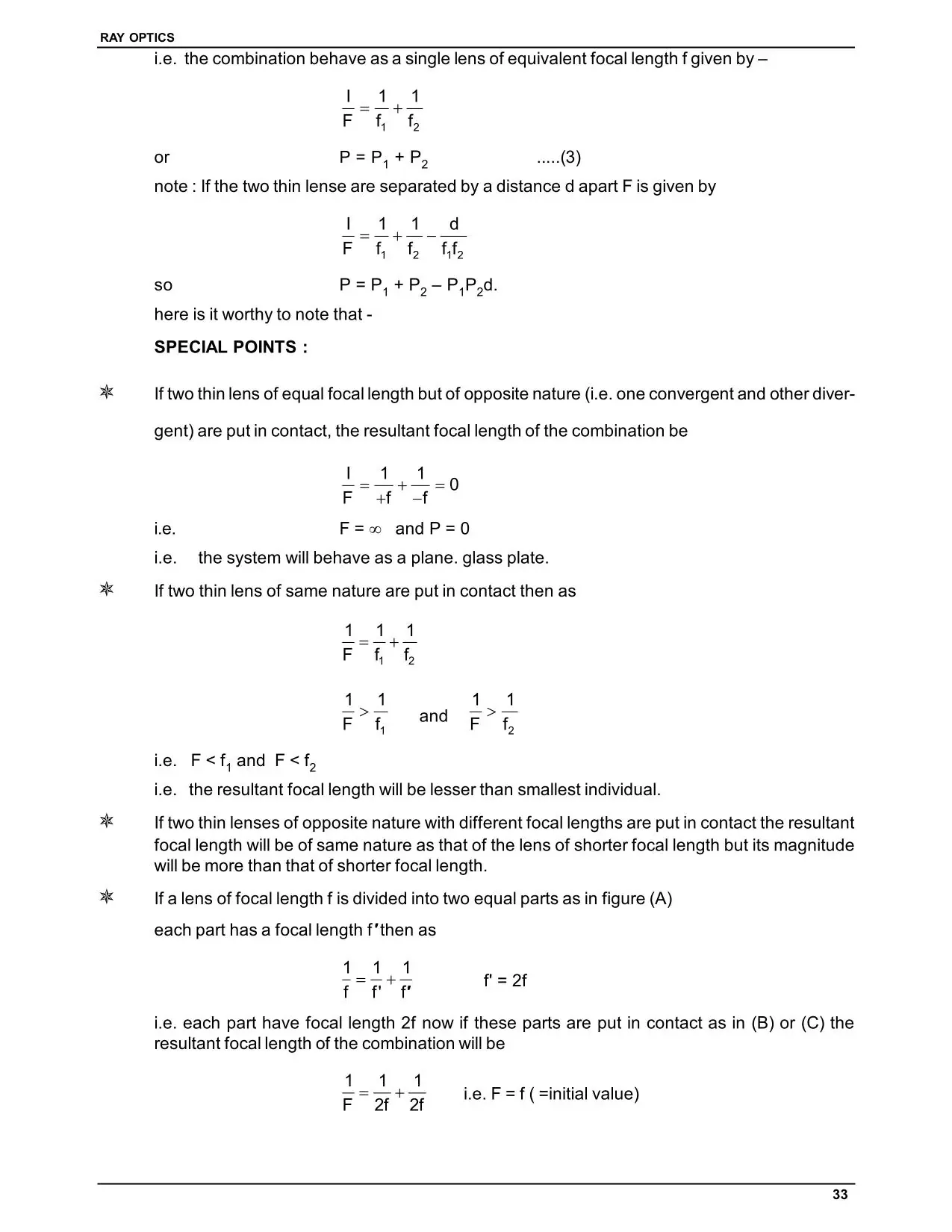
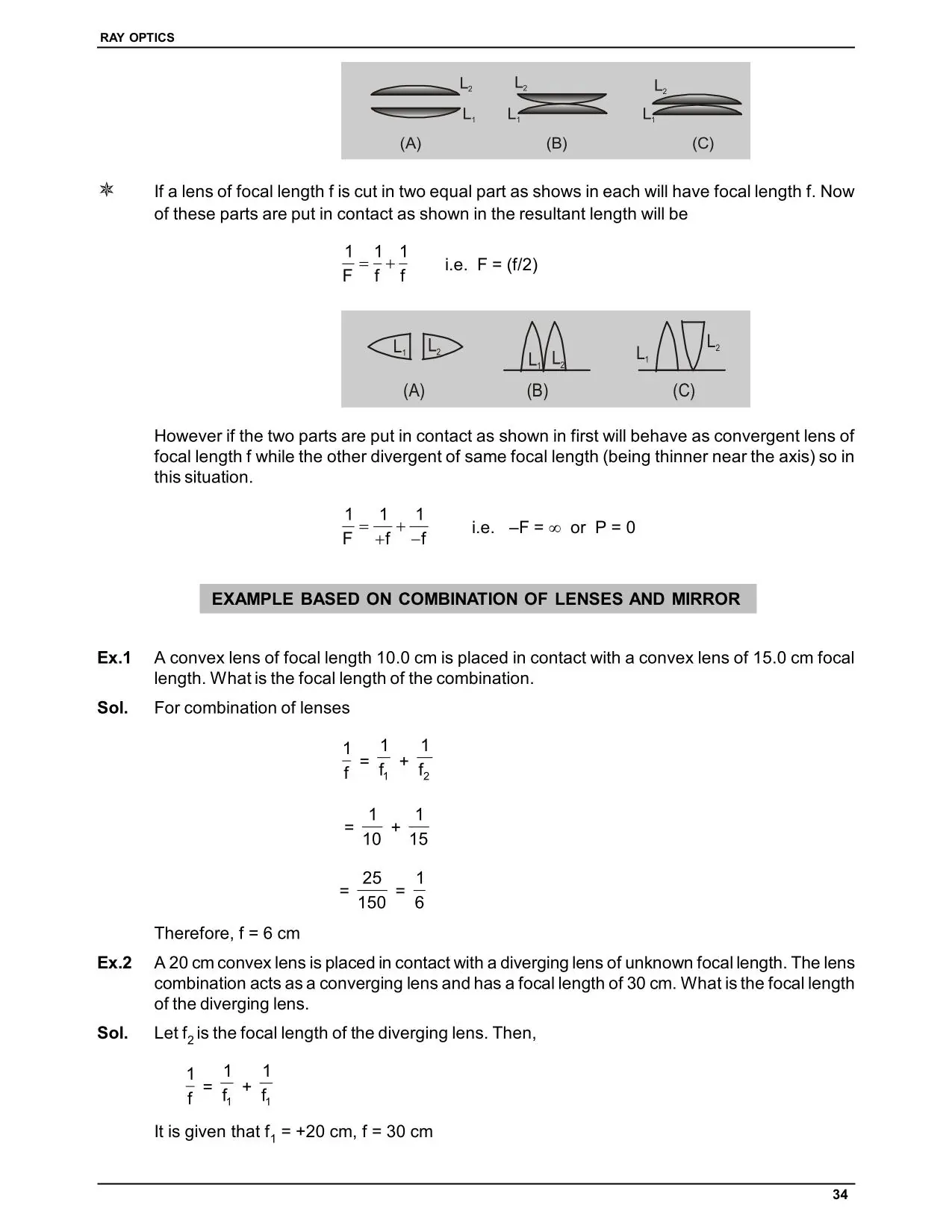
India's Best Exam Preparation for Class 12th - Download Now
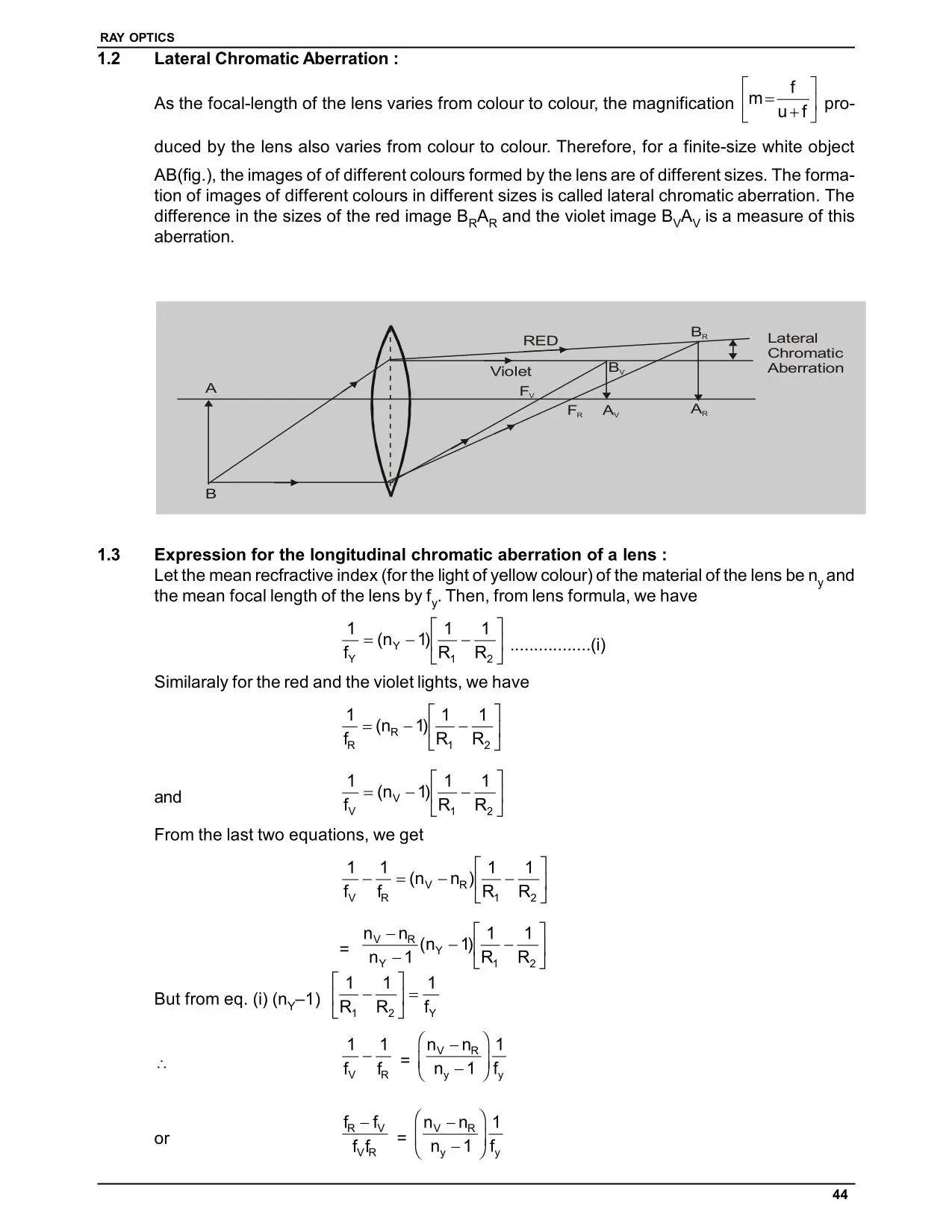
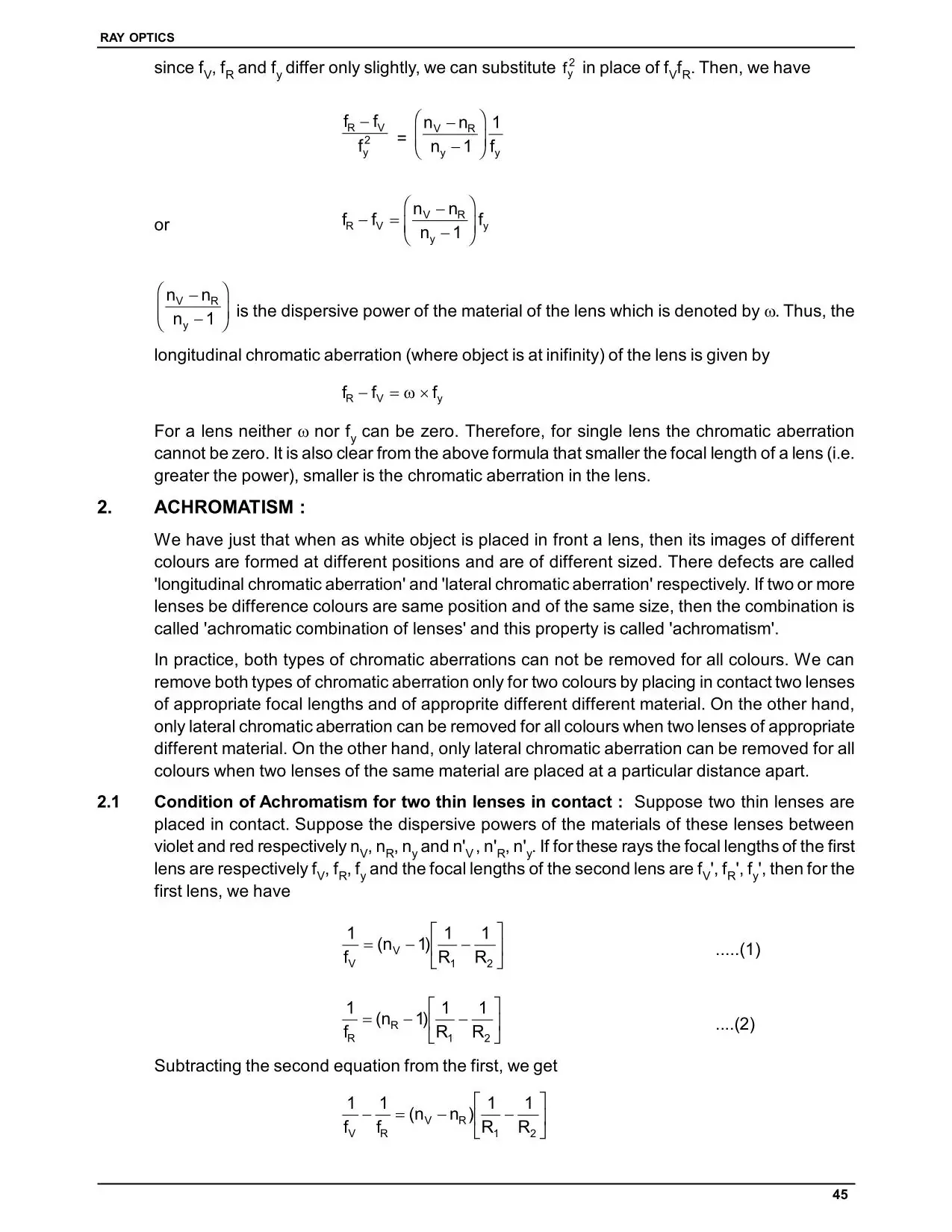
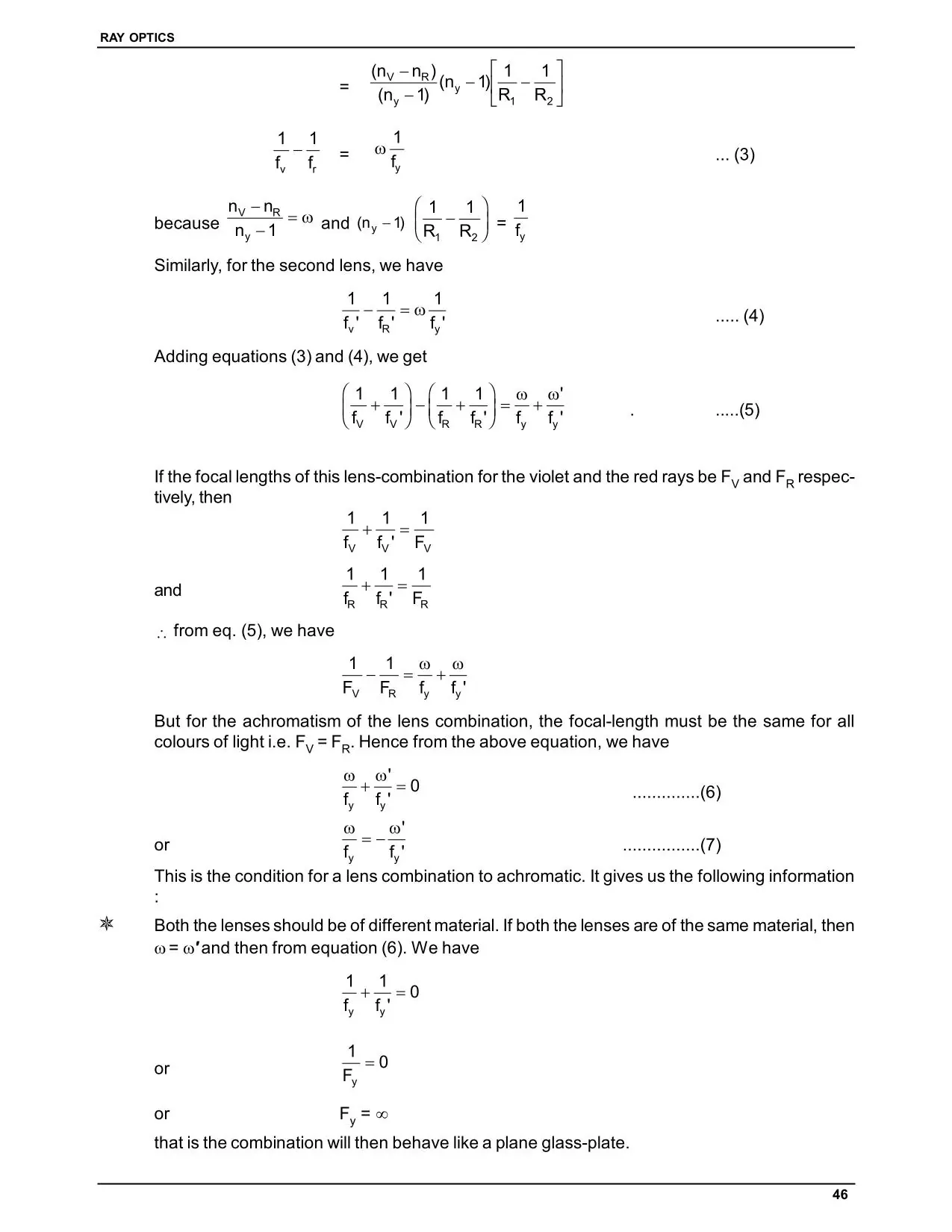
India's Best Exam Preparation for Class 12th - Download Now
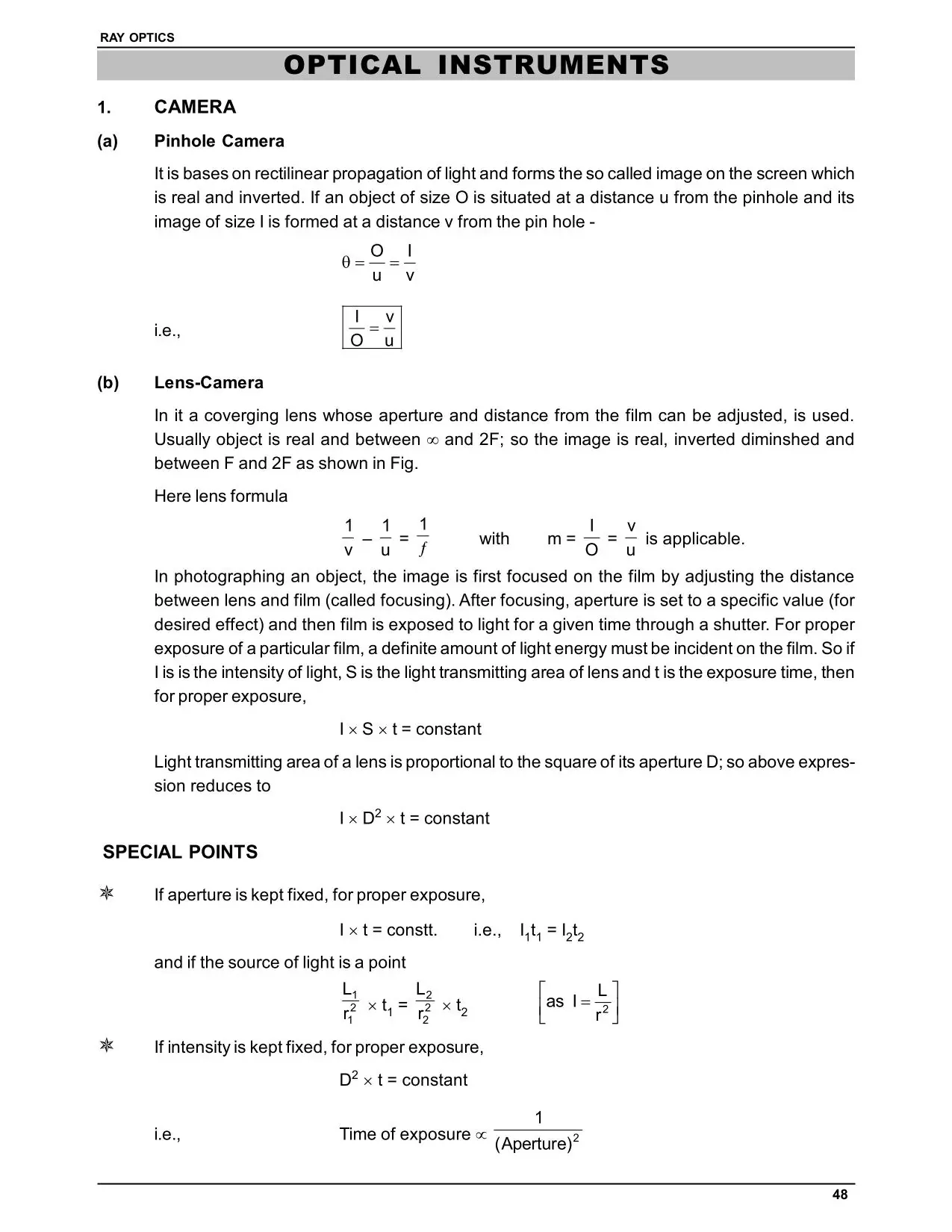
India's Best Exam Preparation for Class 12th - Download Now
India's Best Exam Preparation for Class 12th - Download Now
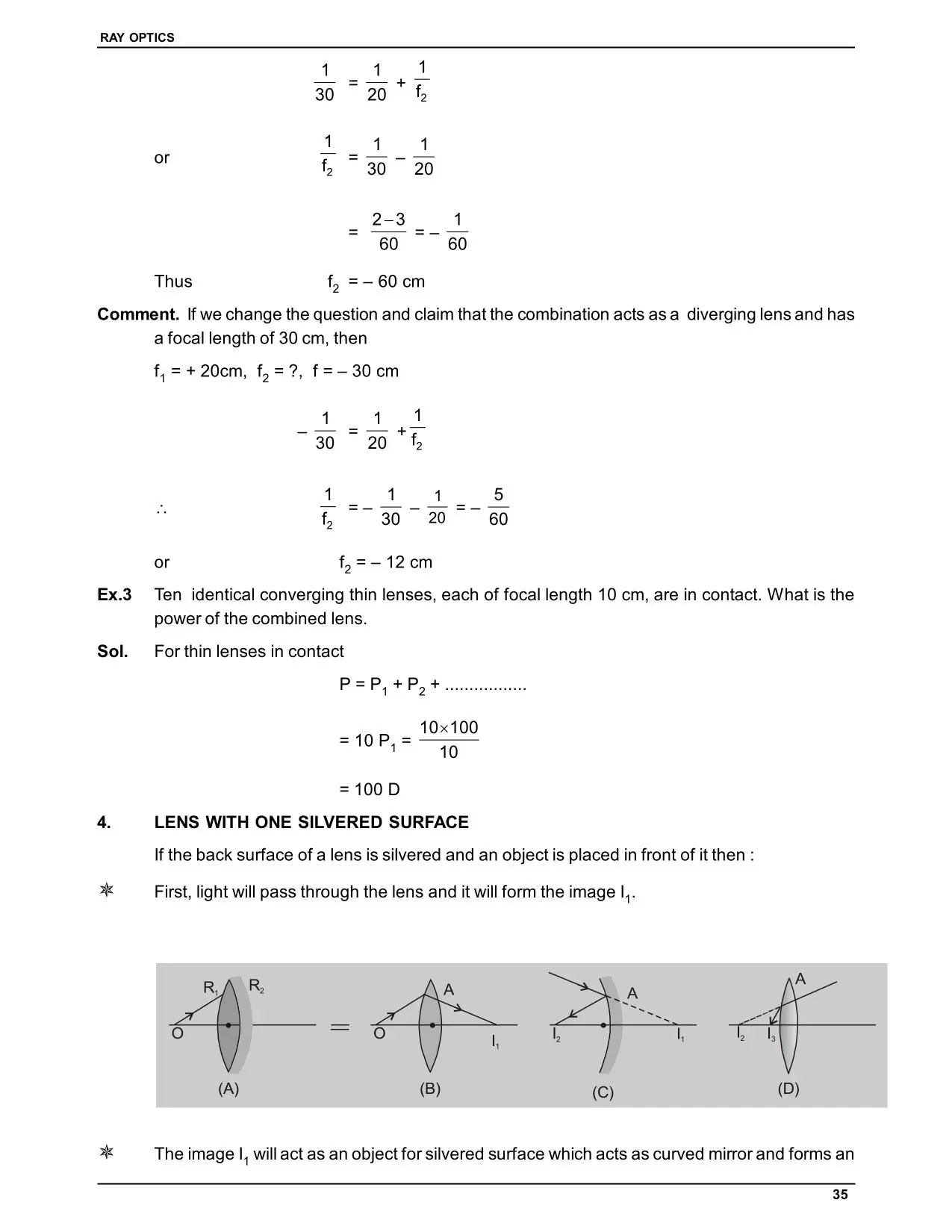
Sign Convention in Ray Optics and Optical Instruments Class 12 Notes
Use the new Cartesian sign convention:
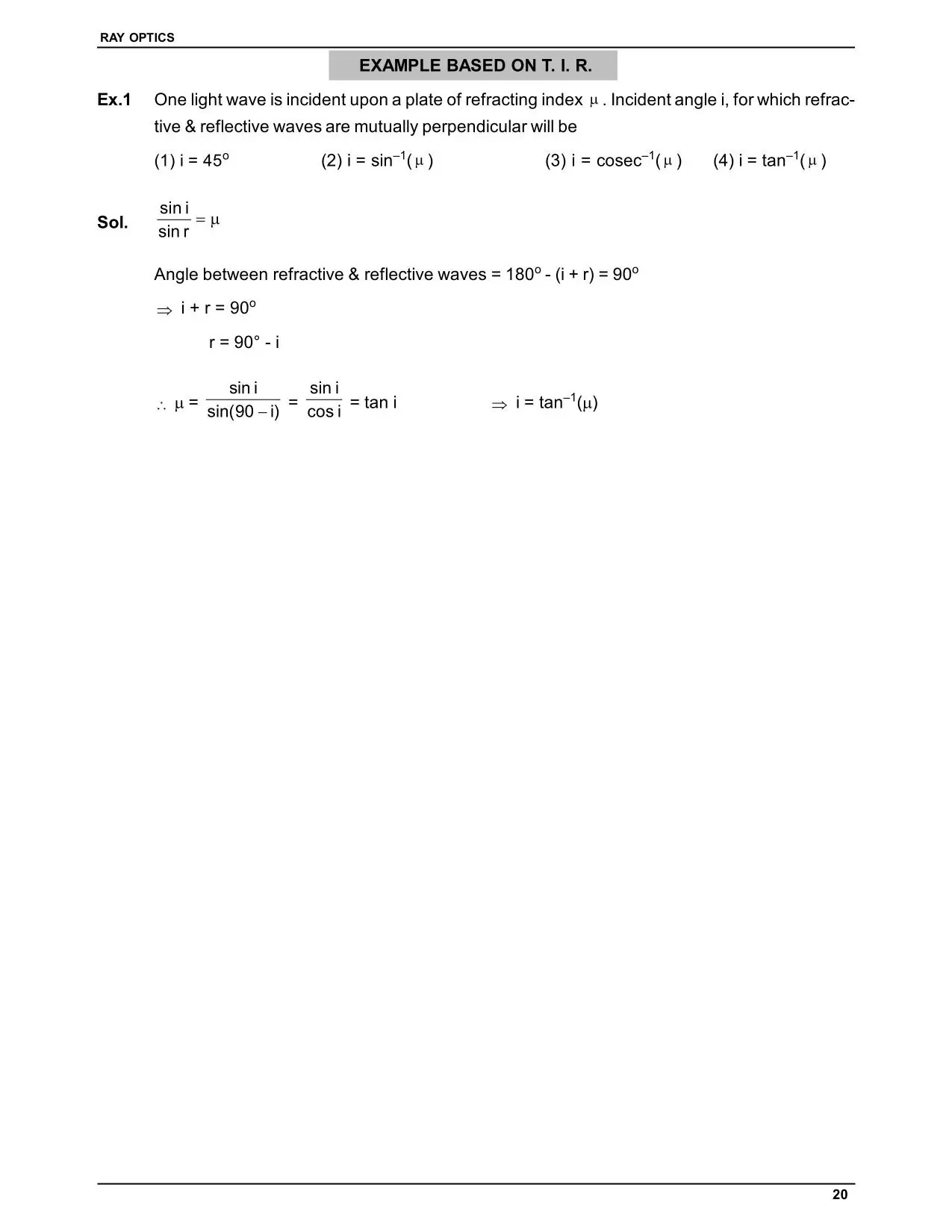
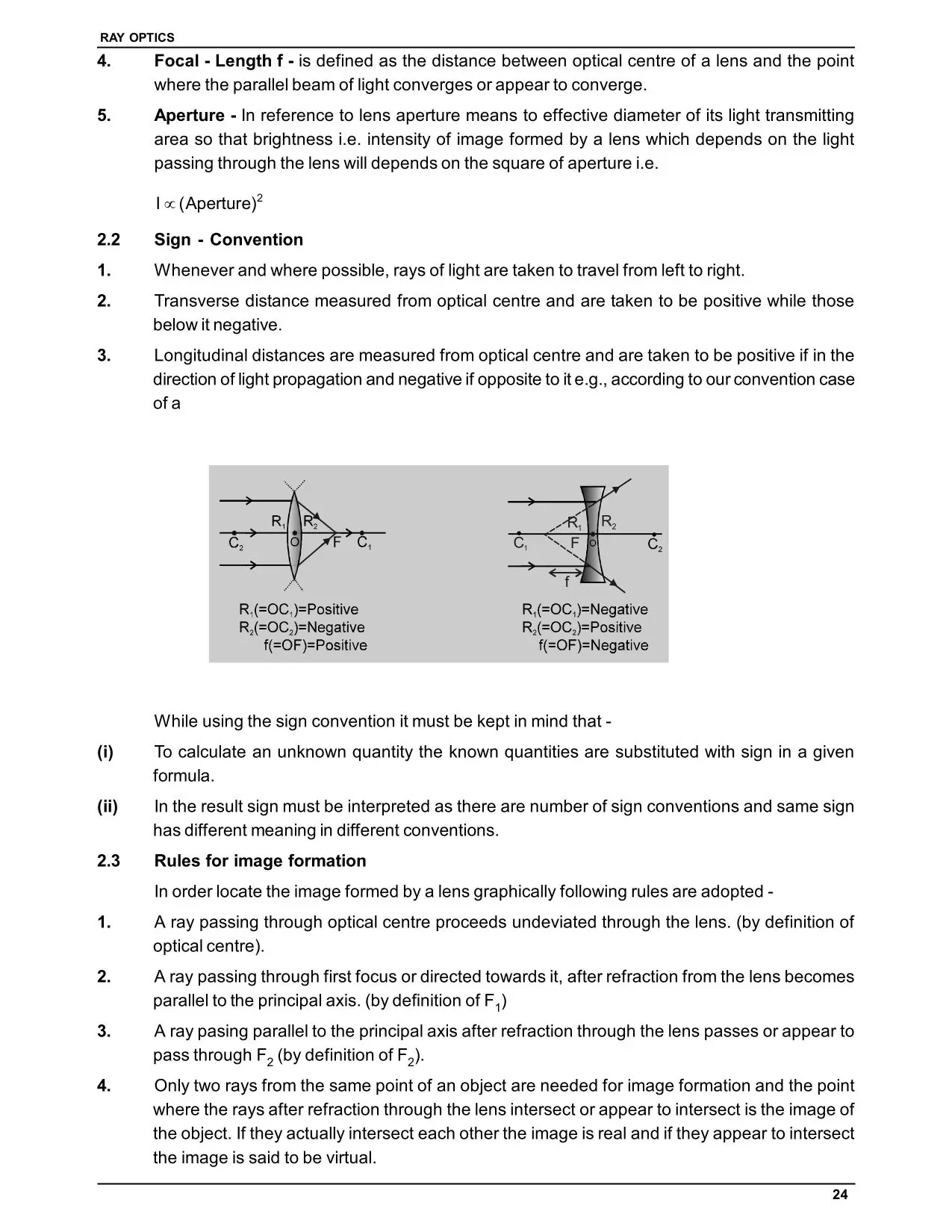
- Take the pole of the mirror (or the optical centre of the lens) as the origin, and the principal axis as the x-axis.
- Distances measured in the direction of the incident light are positive, and distances measured against it are negative.
- Heights above the principal axis are positive, and heights below it are negative.
- For a concave mirror, f is negative. For a convex mirror, f is positive.
- For a convex lens, f is positive. For a concave lens, f is negative.
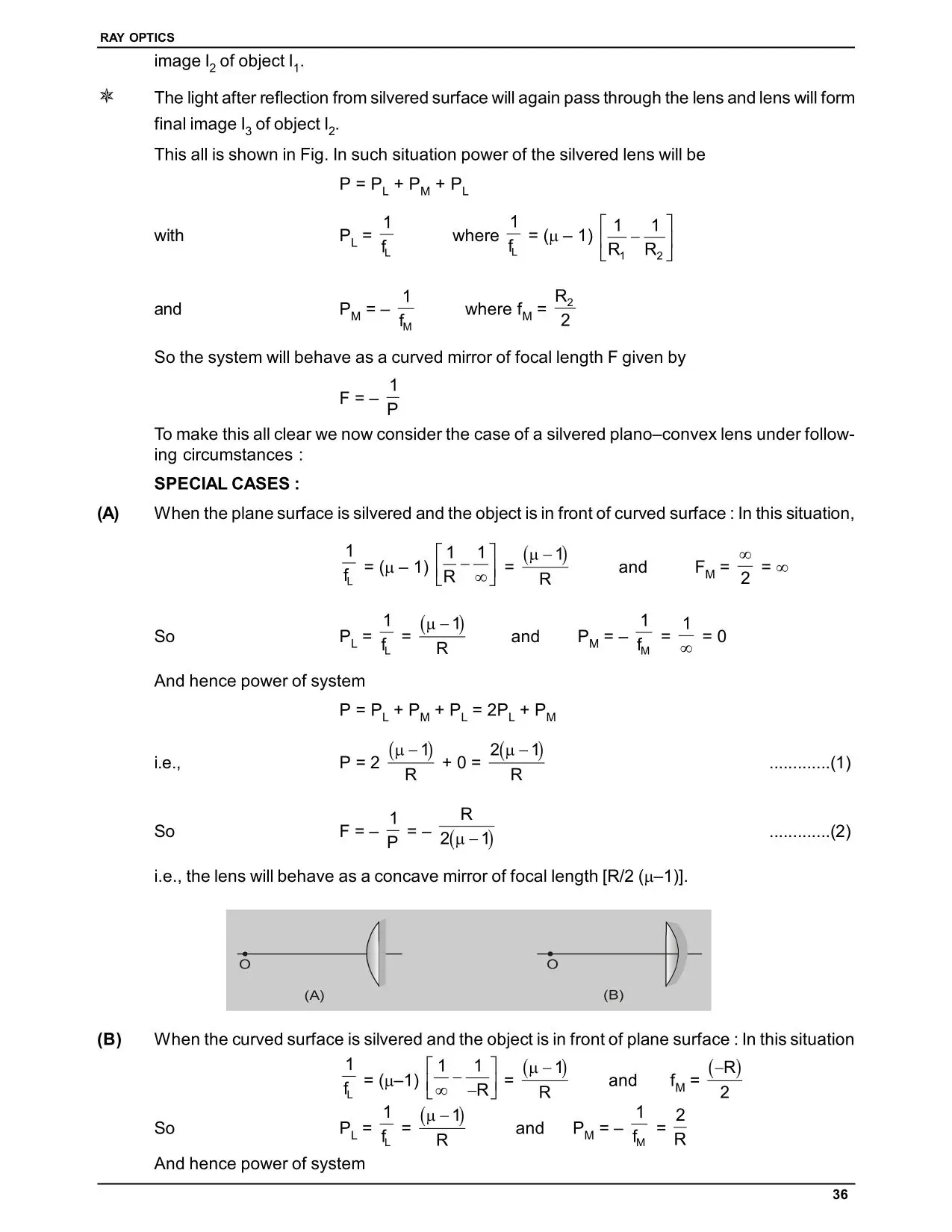
Reflection from Spherical Mirrors in Ray Optics and Optical Instruments Class 12 Notes
- Mirror formula: 1/v + 1/u = 1/f, with f = R/2.
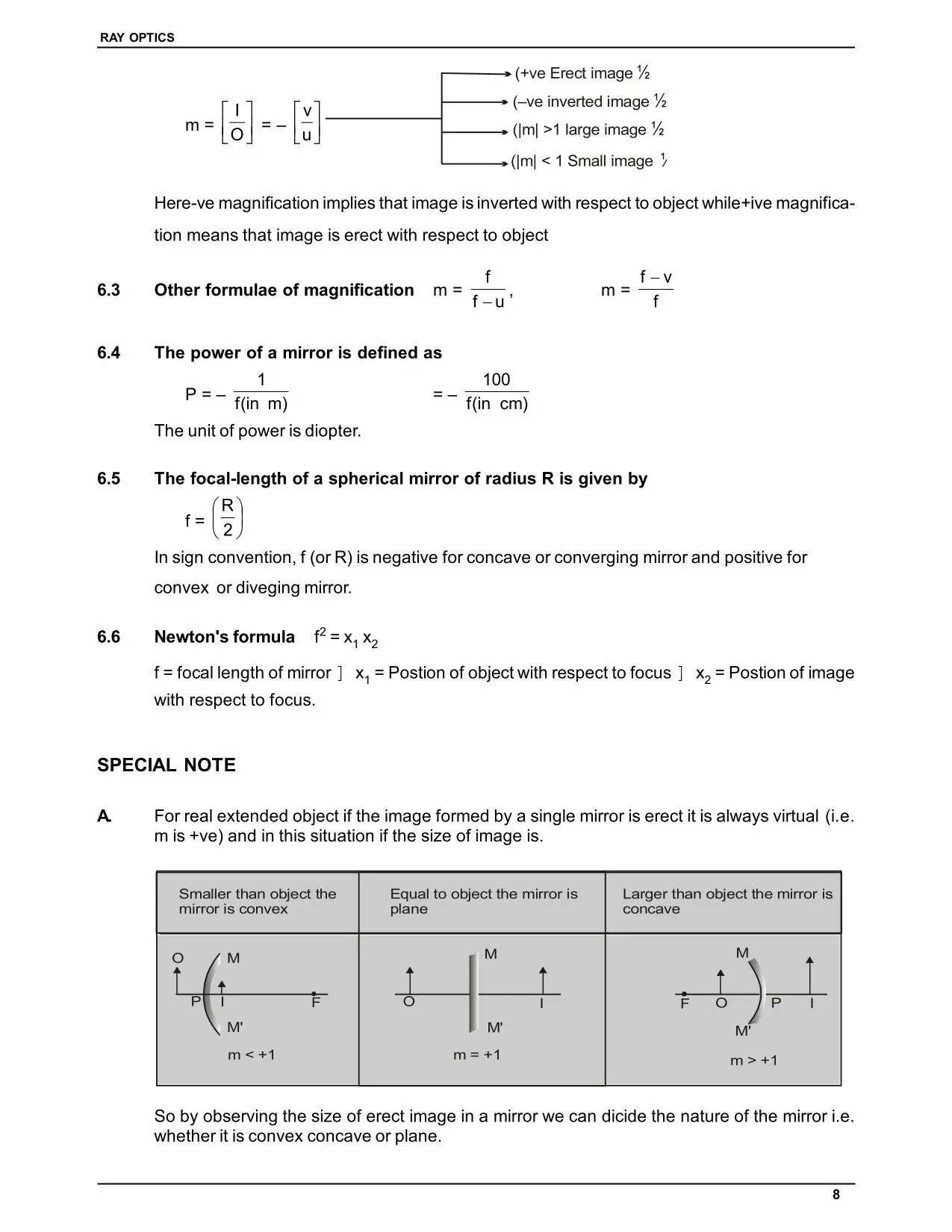
- Magnification: m = −v/u = h′/h. A negative m means an inverted image.
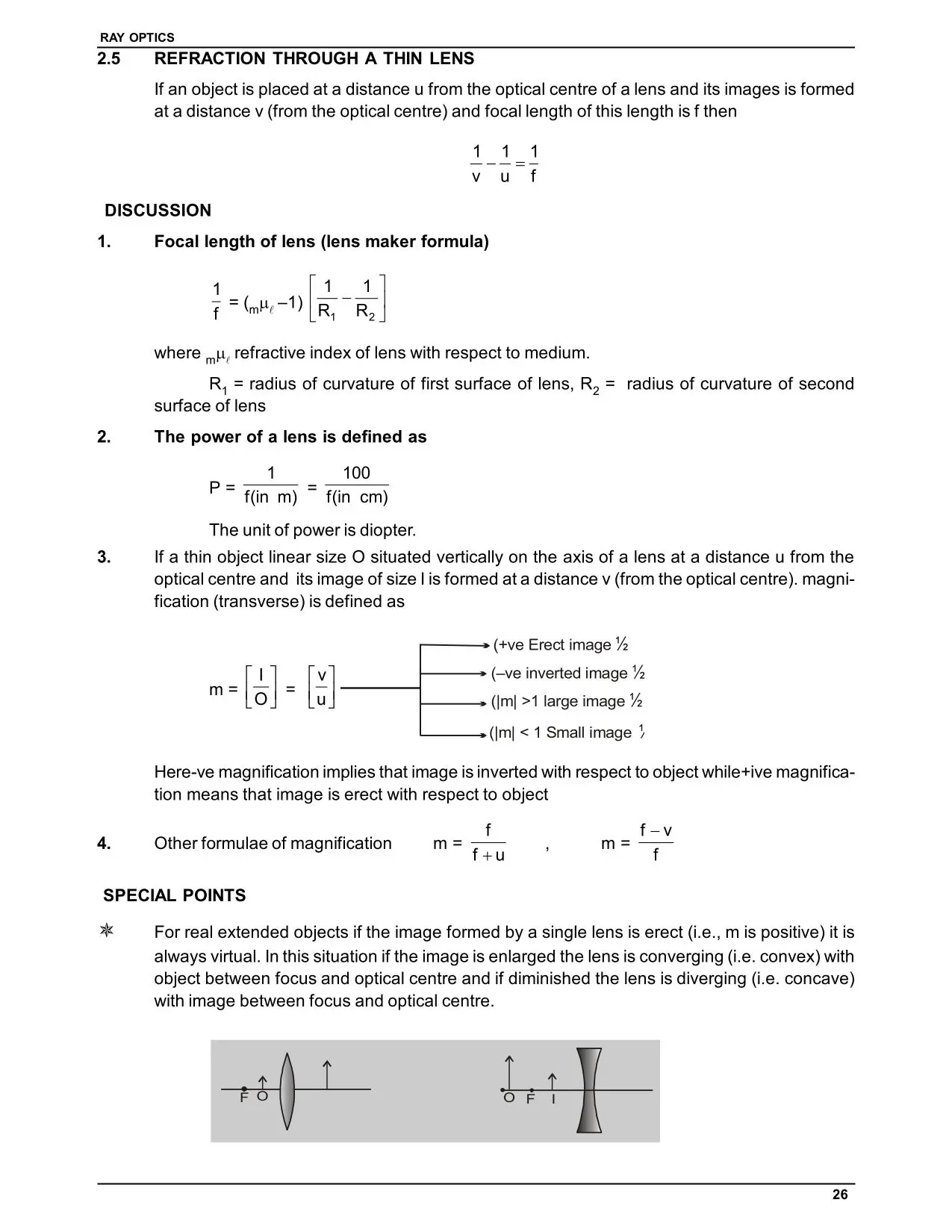
Image Formation by a Concave Mirror
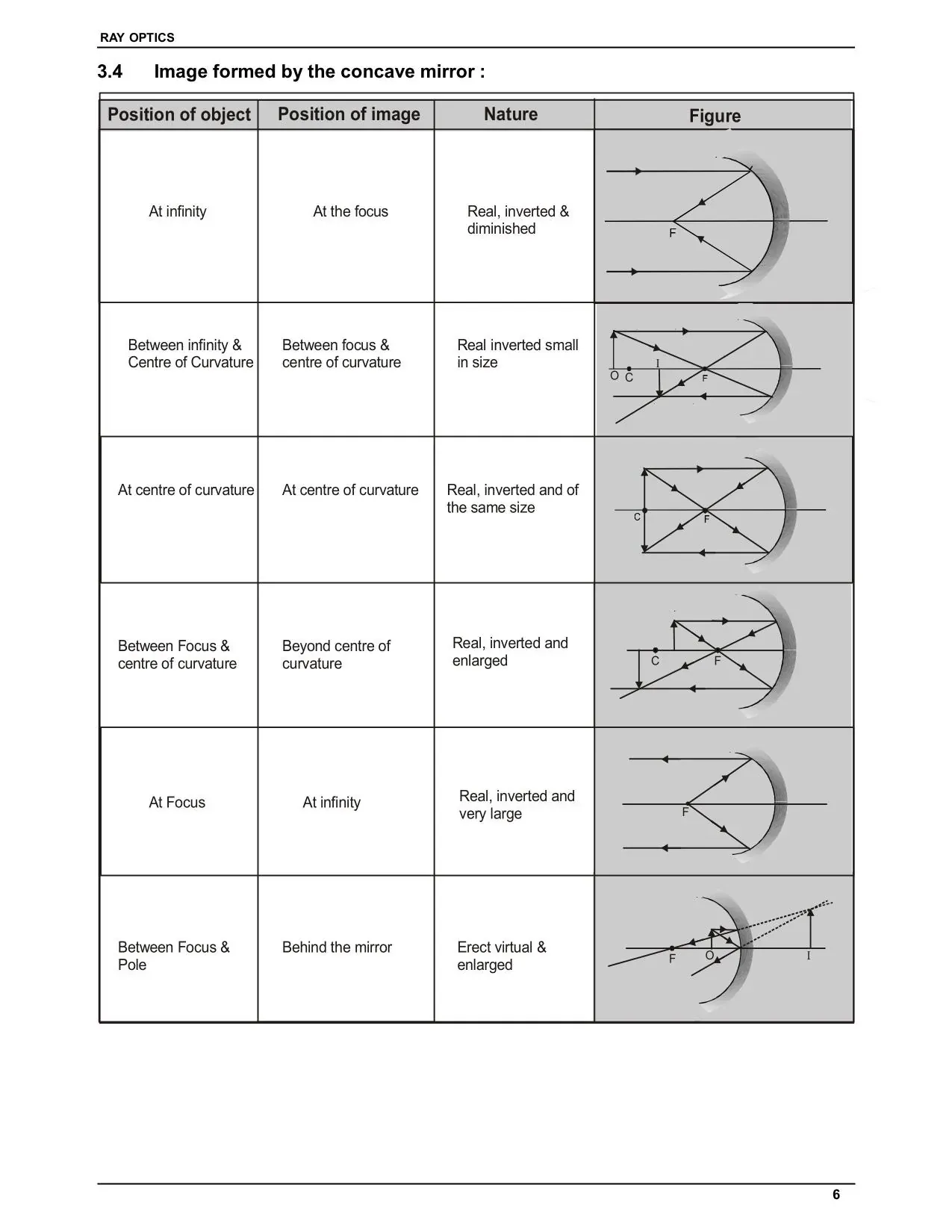
Object position | Image position | Nature of the image |
|---|---|---|
At infinity | At F | Real, inverted, highly diminished |
Beyond C | Between F and C | Real, inverted, diminished |
At C | At C | Real, inverted, same size |
Between C and F | Beyond C | Real, inverted, magnified |
At F | At infinity | Real, inverted, highly magnified |
Between F and P | Behind the mirror | Virtual, erect, magnified |
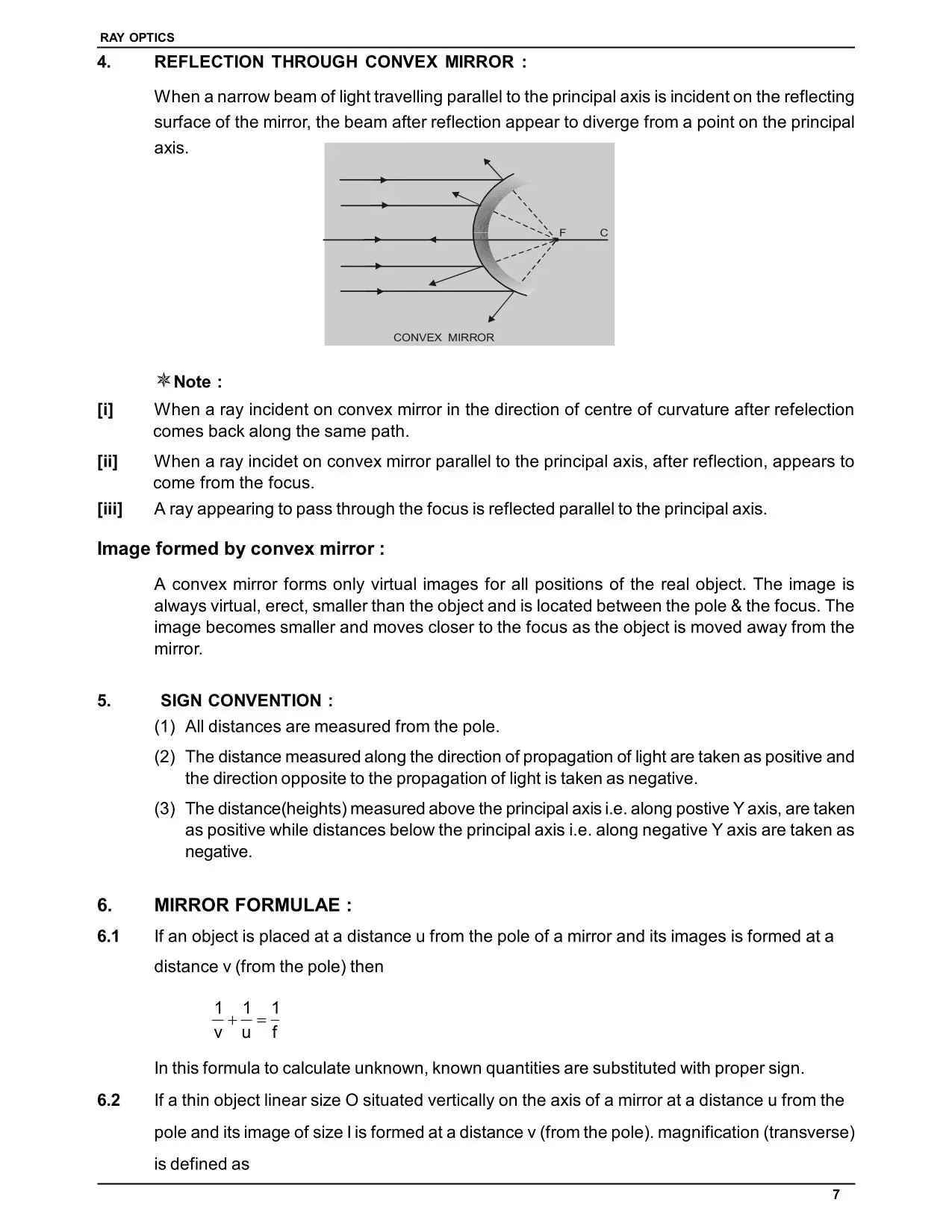
A convex mirror always forms a virtual, erect and diminished image between P and F.
Refraction and Total Internal Reflection in Ray Optics and Optical Instruments Class 12 Notes
- Snell’s law: n₁ sin θ₁ = n₂ sin θ₂.
- Apparent depth: real depth/apparent depth = n for a medium seen from the air.
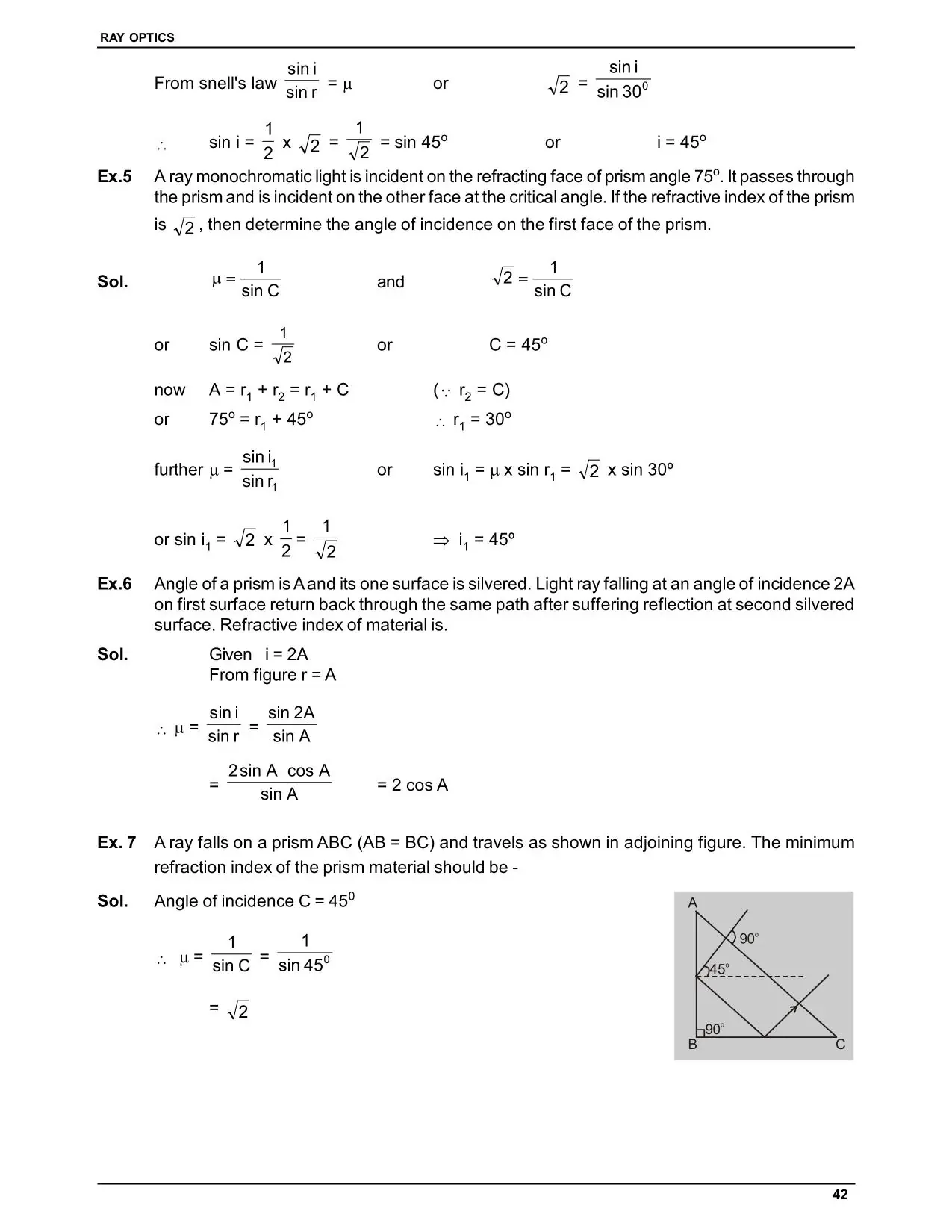
- Critical angle: for light going from a denser medium (n) to air, sin θ_c = 1/n.
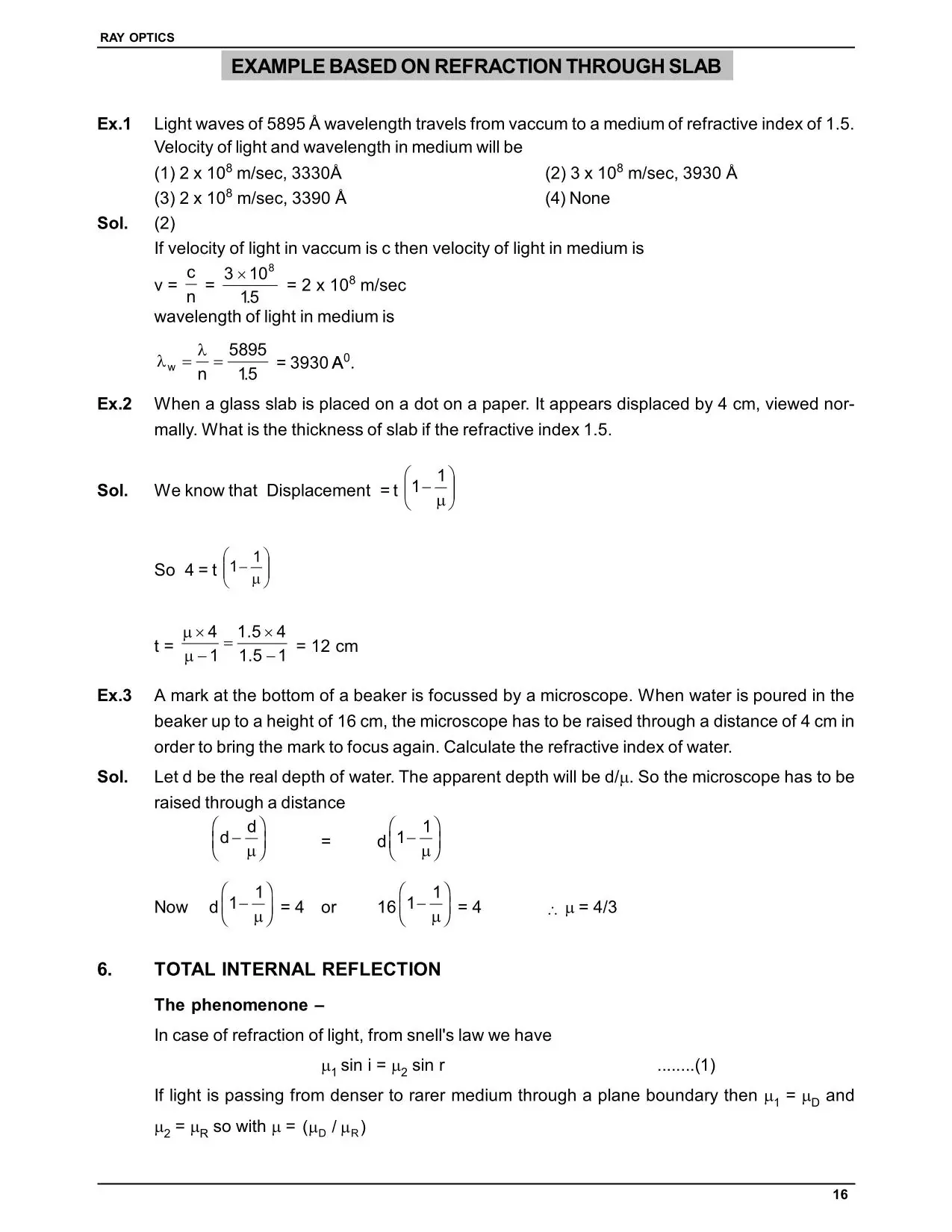
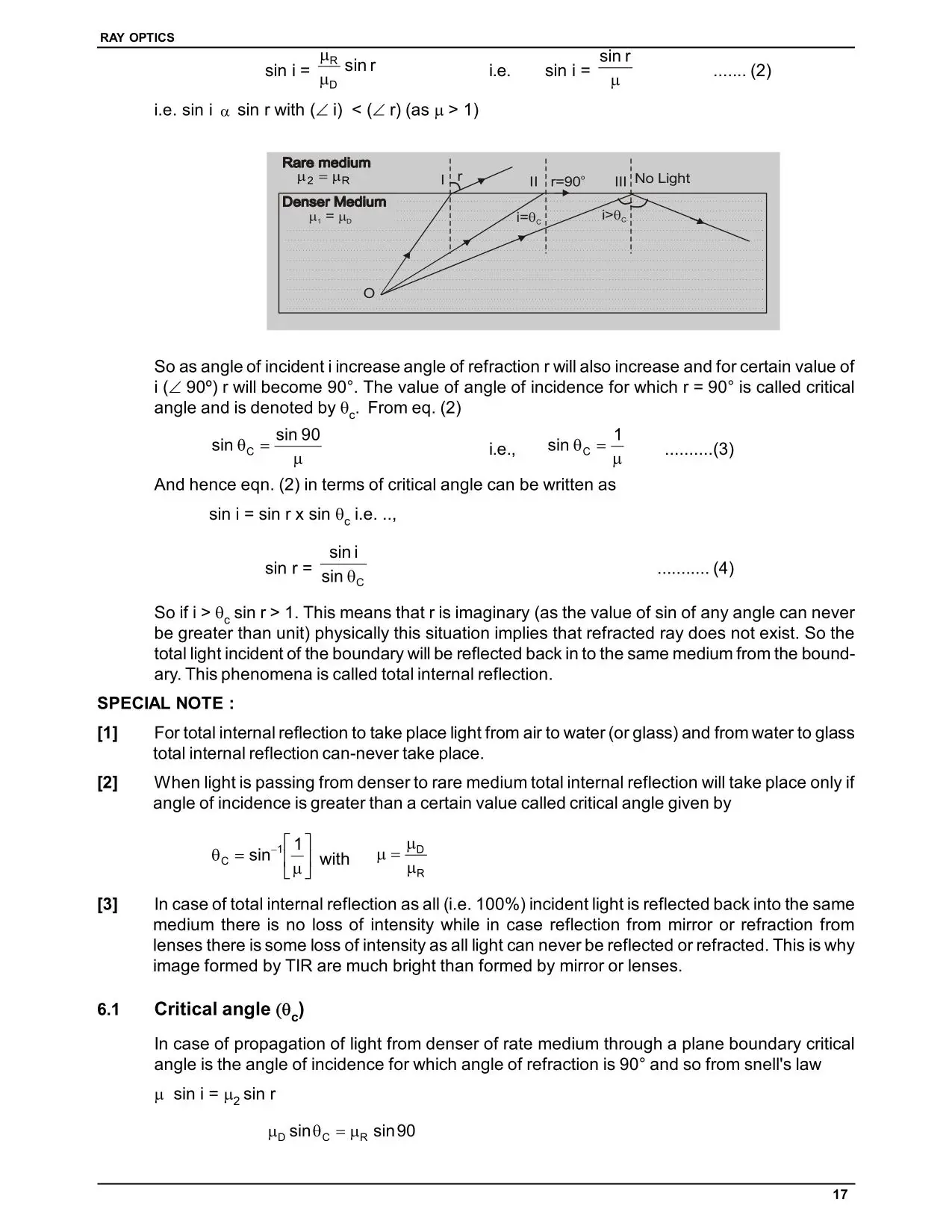
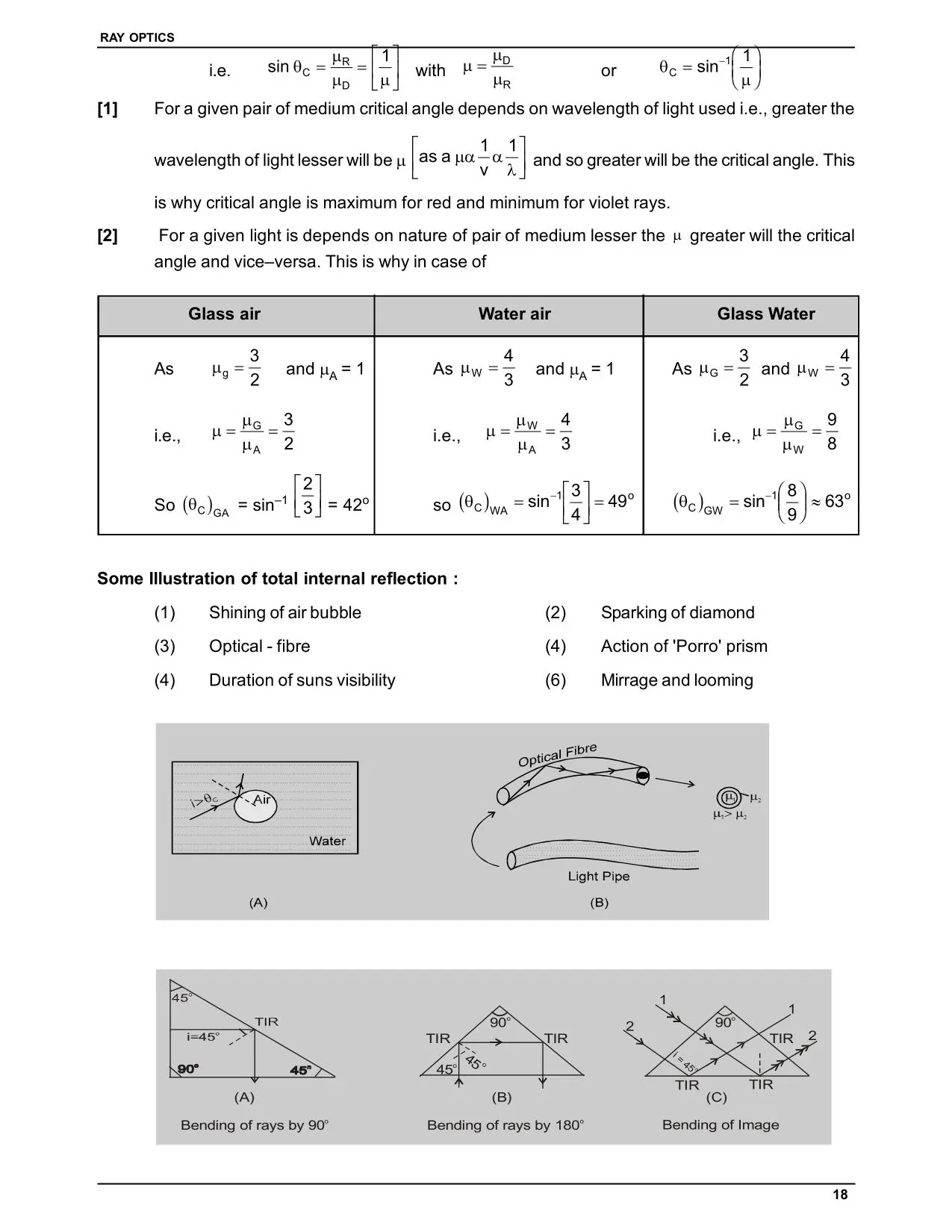
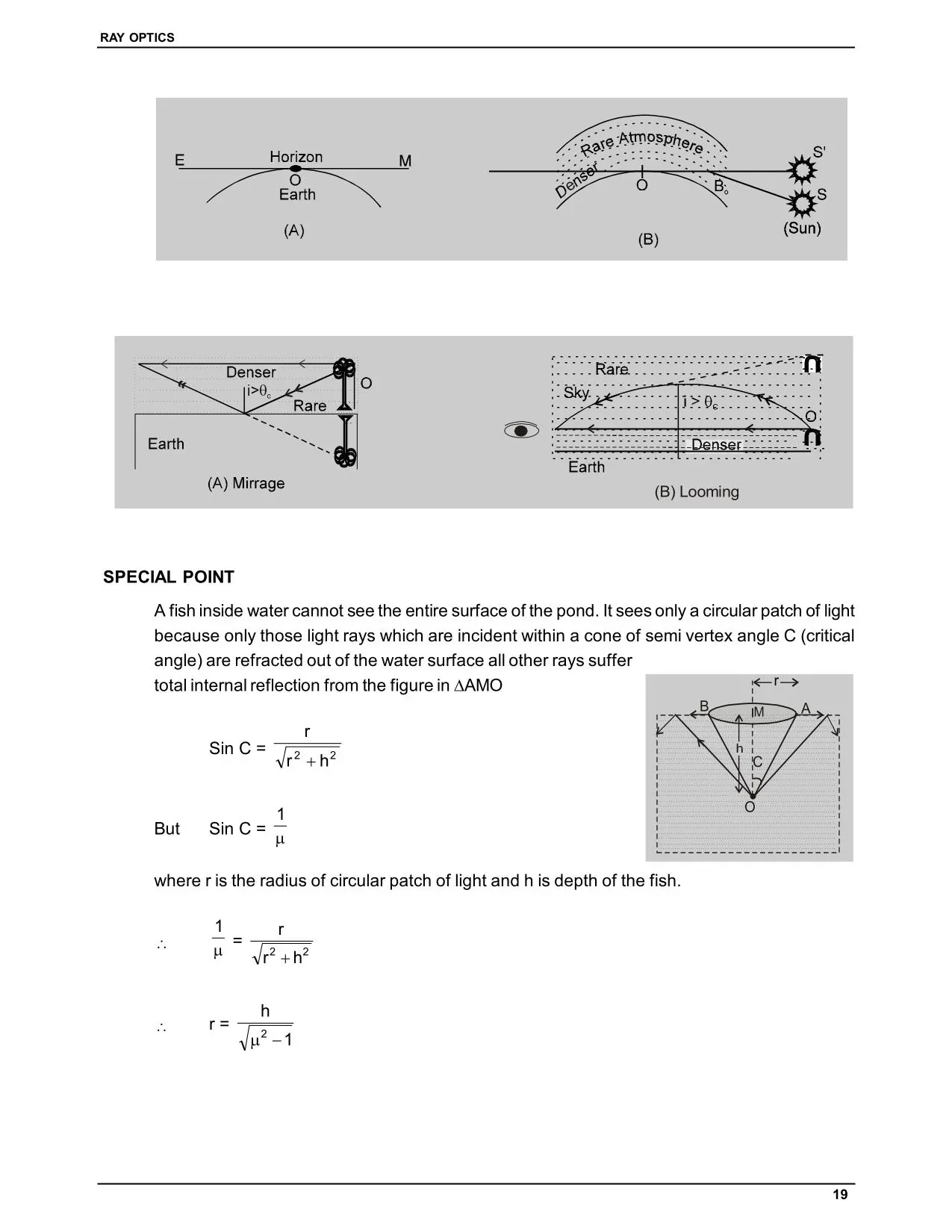
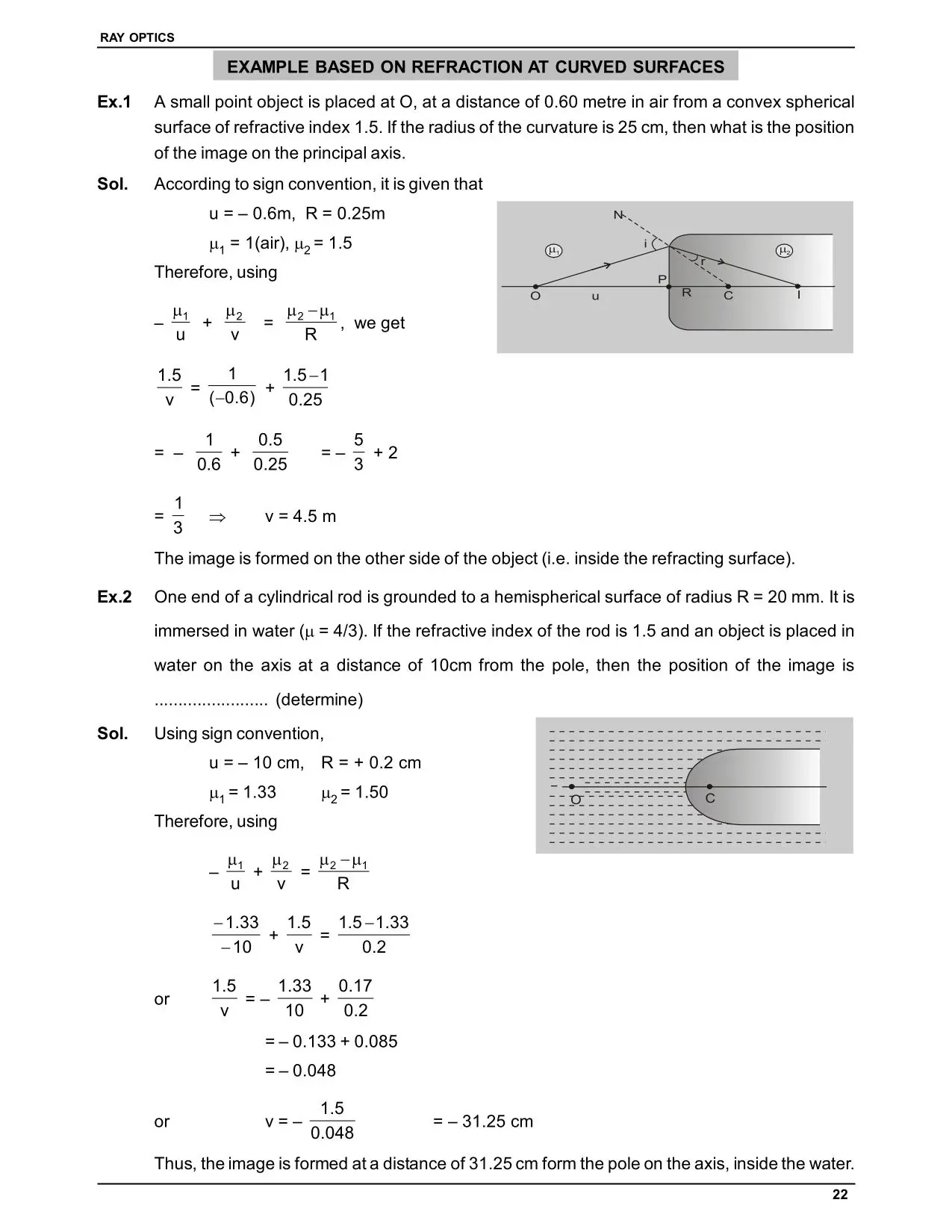
Total internal reflection (TIR) occurs when light goes from a denser medium to a rarer medium and the angle of incidence is greater than the critical angle. Applications include optical fibres, the brilliance of diamond and totally reflecting prisms.
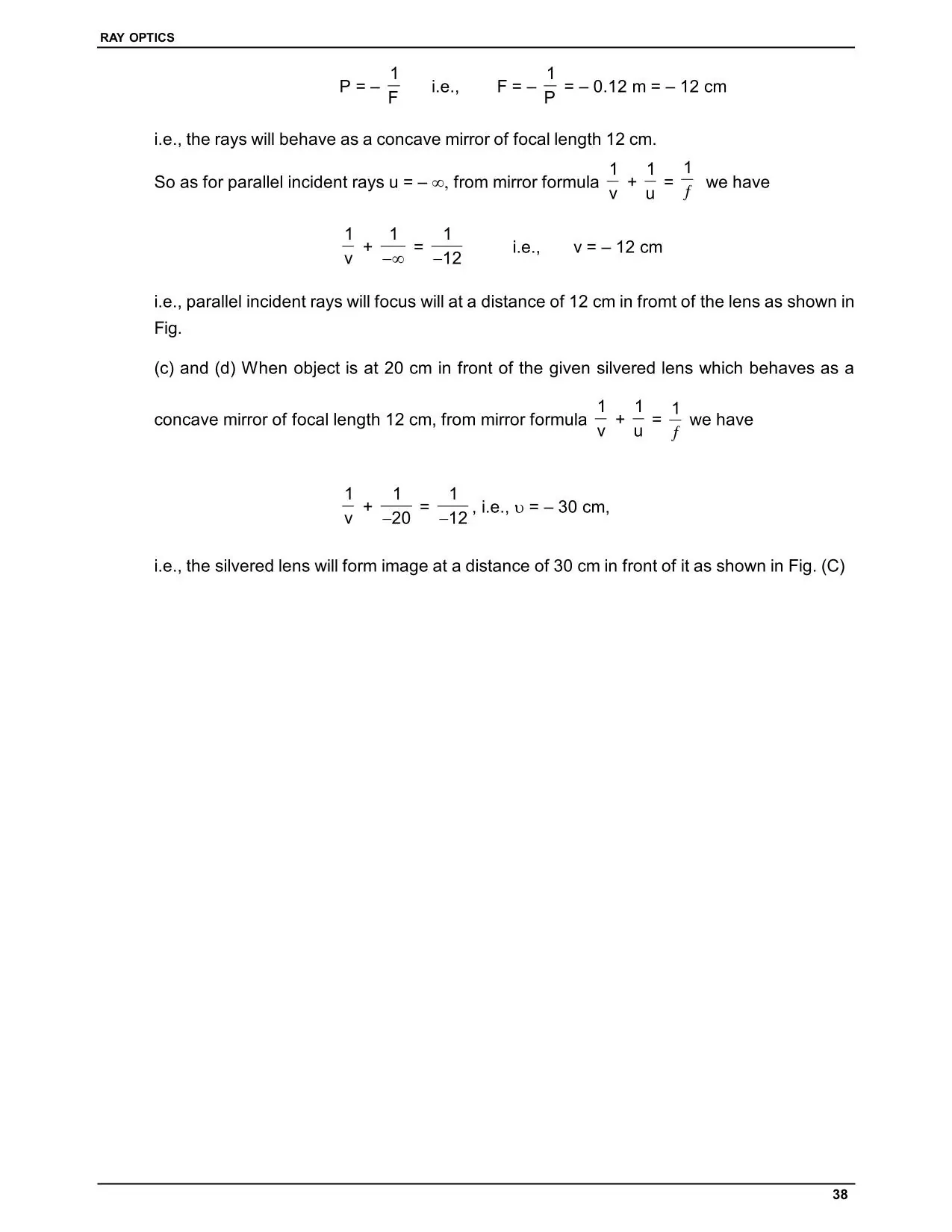
Lenses and Refraction at Spherical Surfaces in Ray Optics and Optical Instruments Class 12 Notes
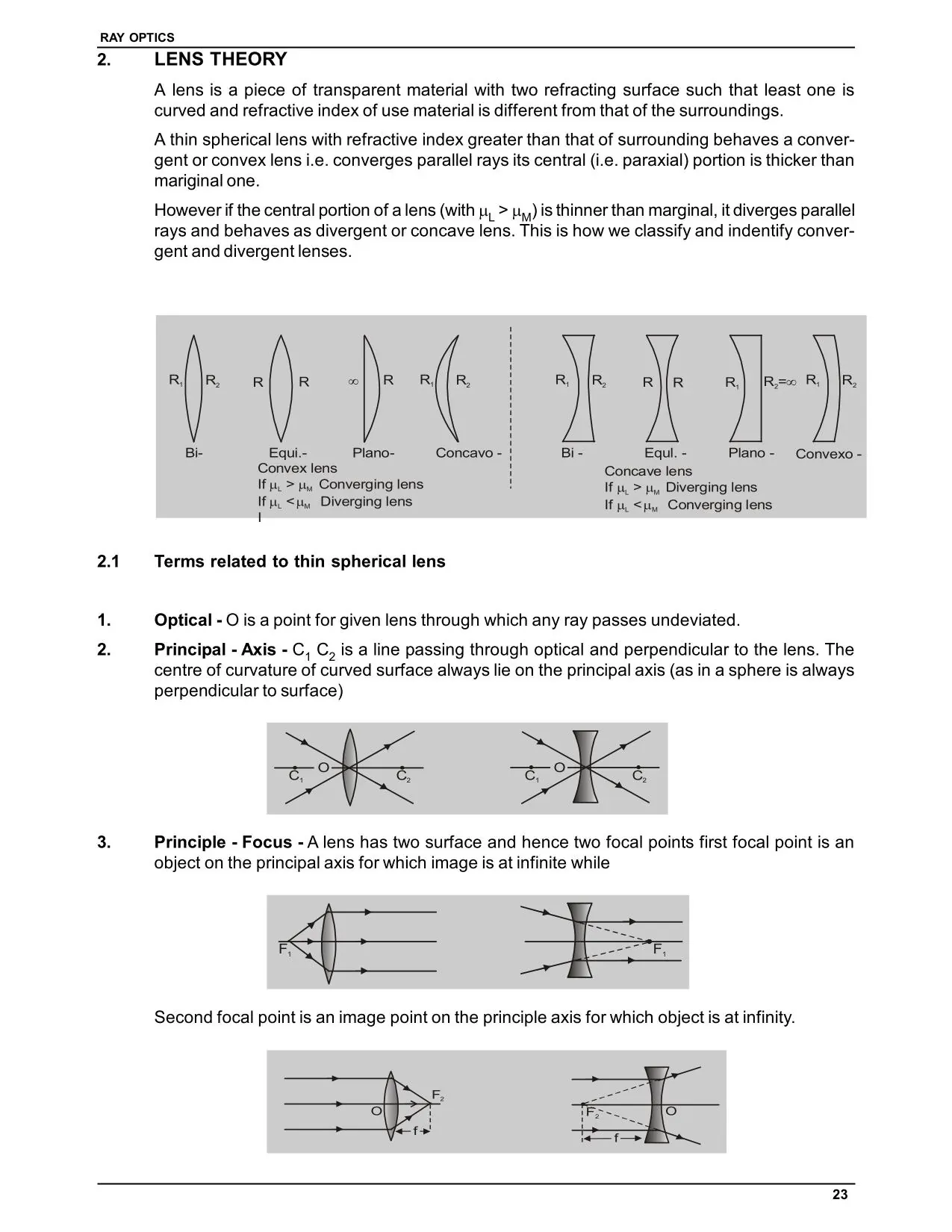
- Refraction at a spherical surface: n₂/v − n₁/u = (n₂ − n₁)/R.
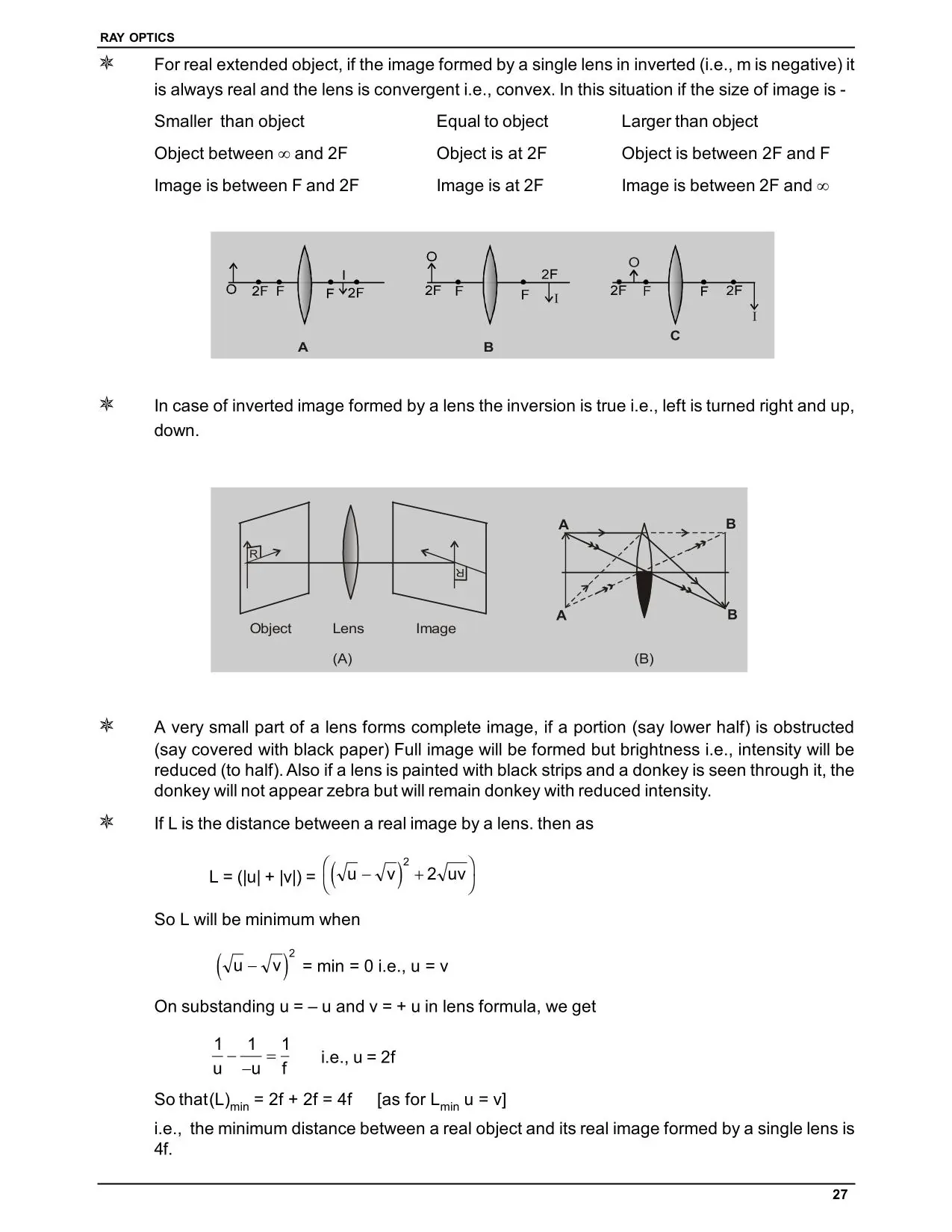
- Thin lens formula: 1/v − 1/u = 1/f.
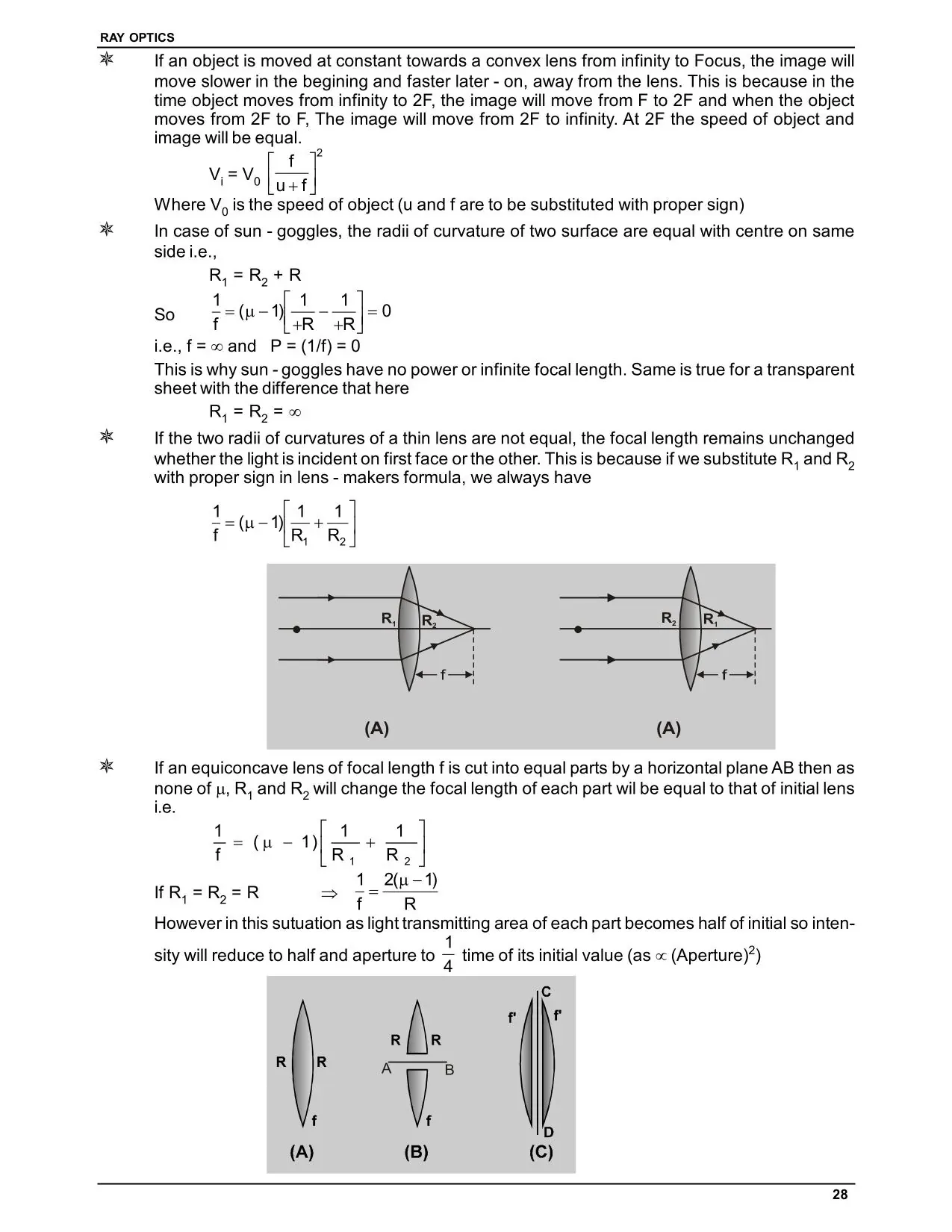
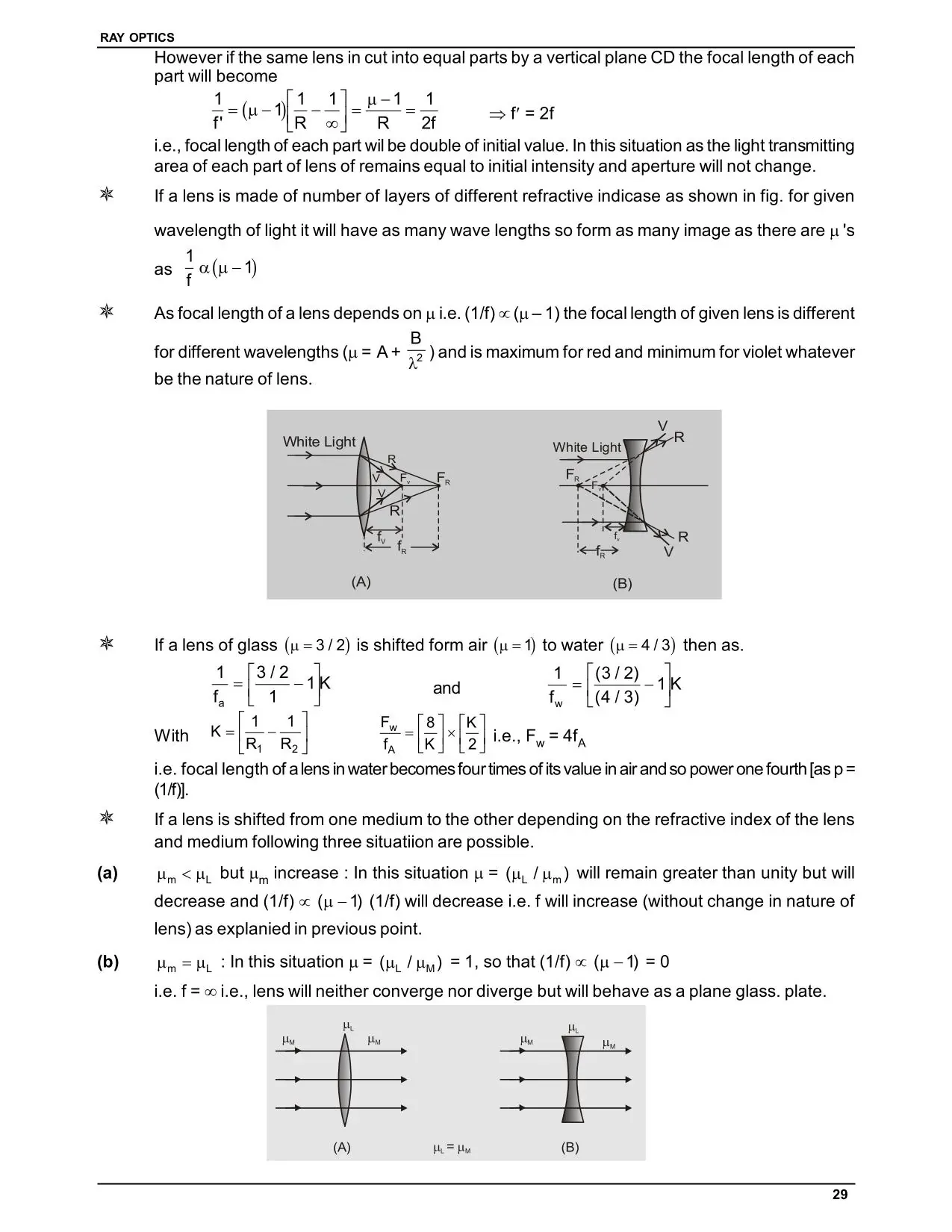
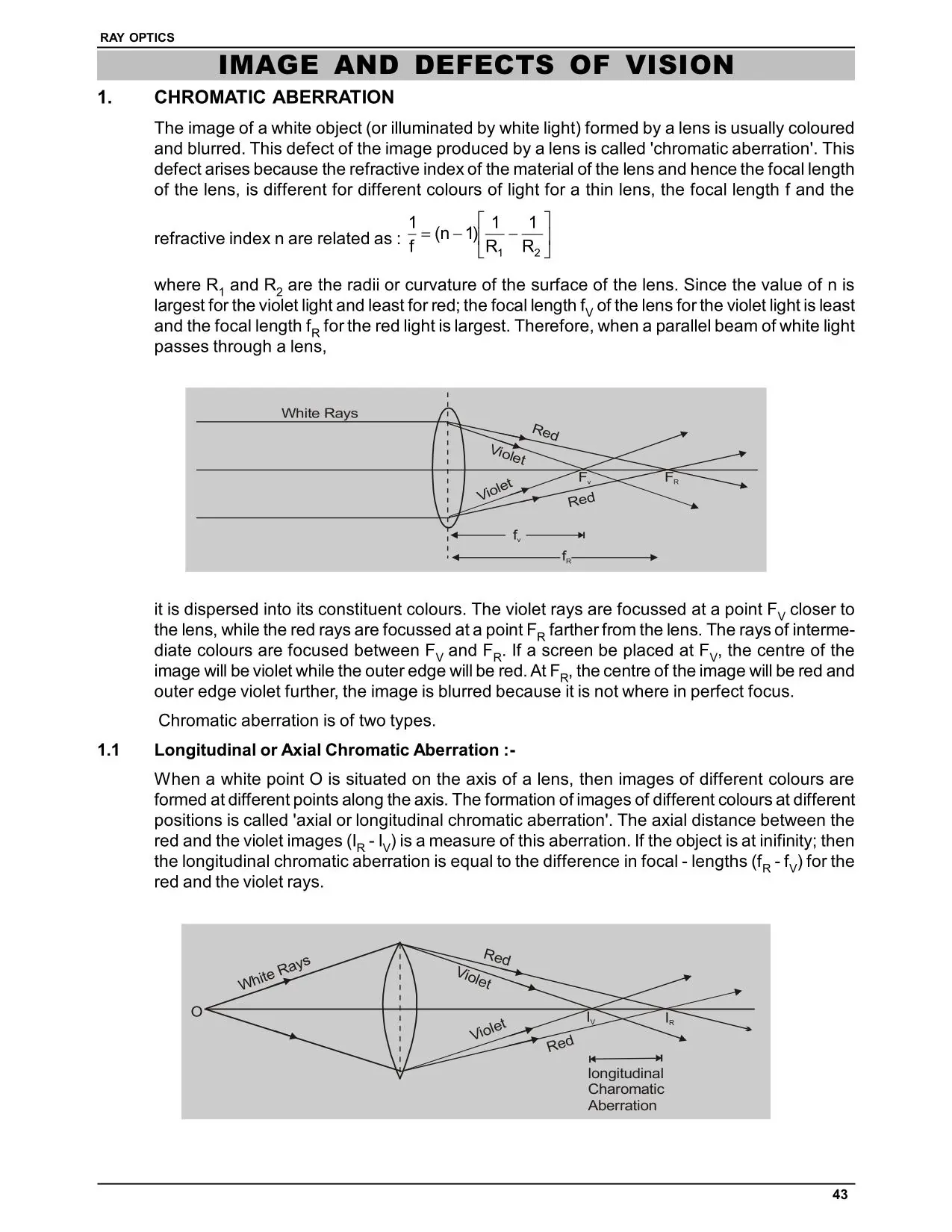
- Lens maker’s formula: 1/f = (n − 1)(1/R₁ − 1/R₂), where n is the refractive index of the lens relative to the surrounding medium.
- Magnification of a lens: m = v/u.
- Power of a lens: P = 1/f, with f in metres. The unit is the dioptre (D).
- Combination of thin lenses in contact: 1/f = 1/f₁ + 1/f₂, so P = P₁ + P₂.
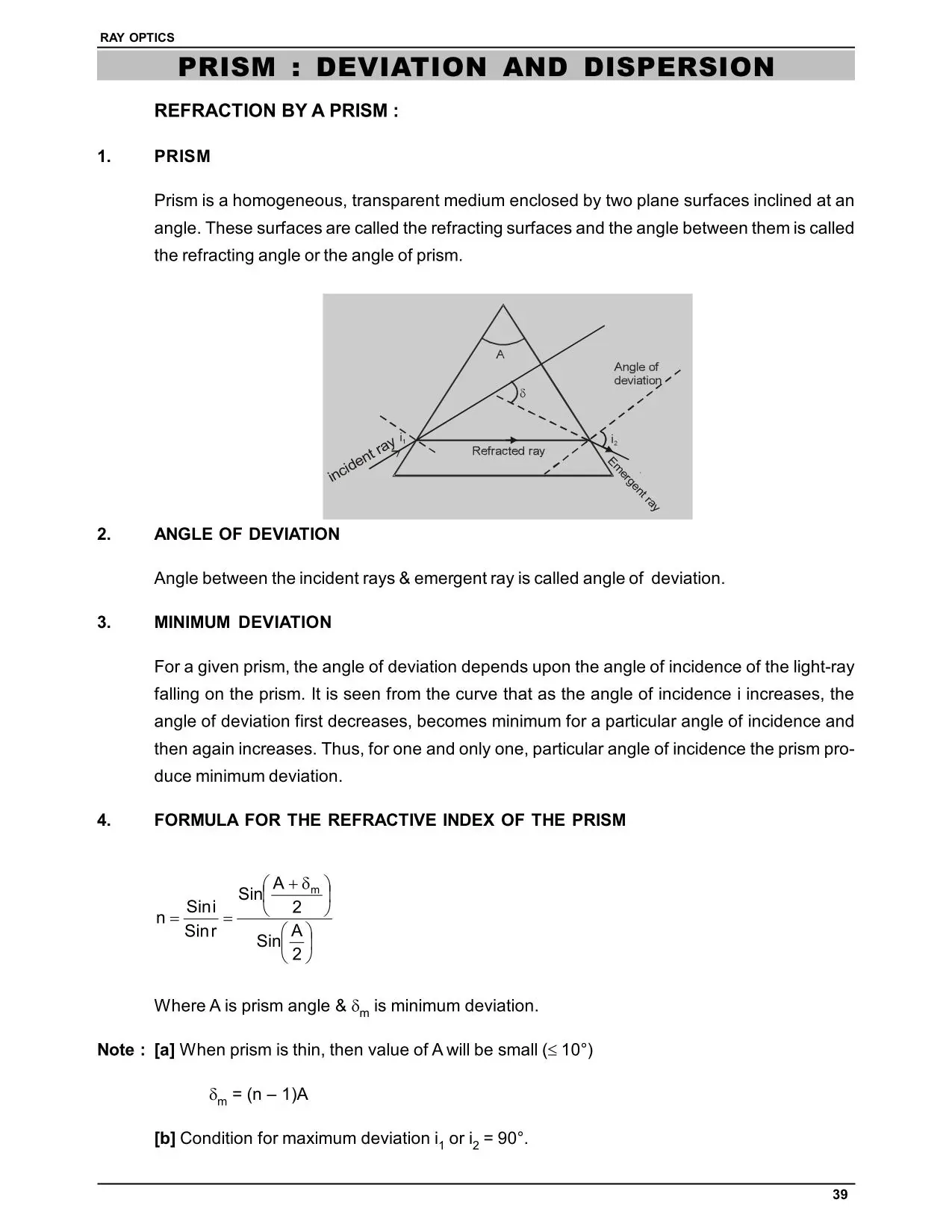
Refraction Through a Prism in Ray Optics and Optical Instruments Class 12 Notes
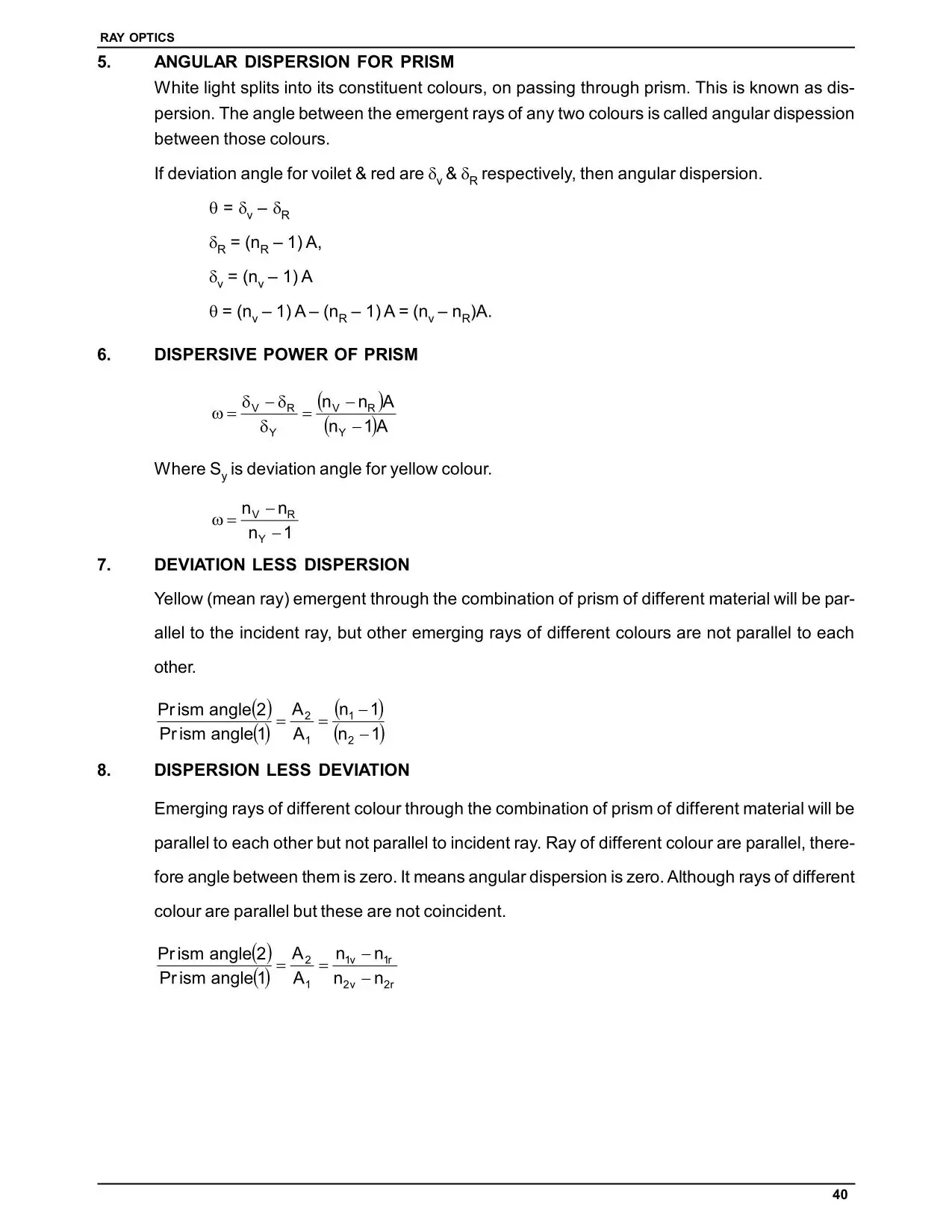
For a prism of angle A, the angle of deviation is δ = i + e − A. At the minimum deviation, the ray passes symmetrically through the prism (i = e and r₁ = r₂ = A/2), and:
n = sin[(A + δ_m)/2] / sin(A/2)
For a thin prism (small angle A), δ = (n − 1)A. White light splits into colours because the refractive index is different for each colour. This is called dispersion.
Optical Instruments in Ray Optics and Optical Instruments Class 12 Notes
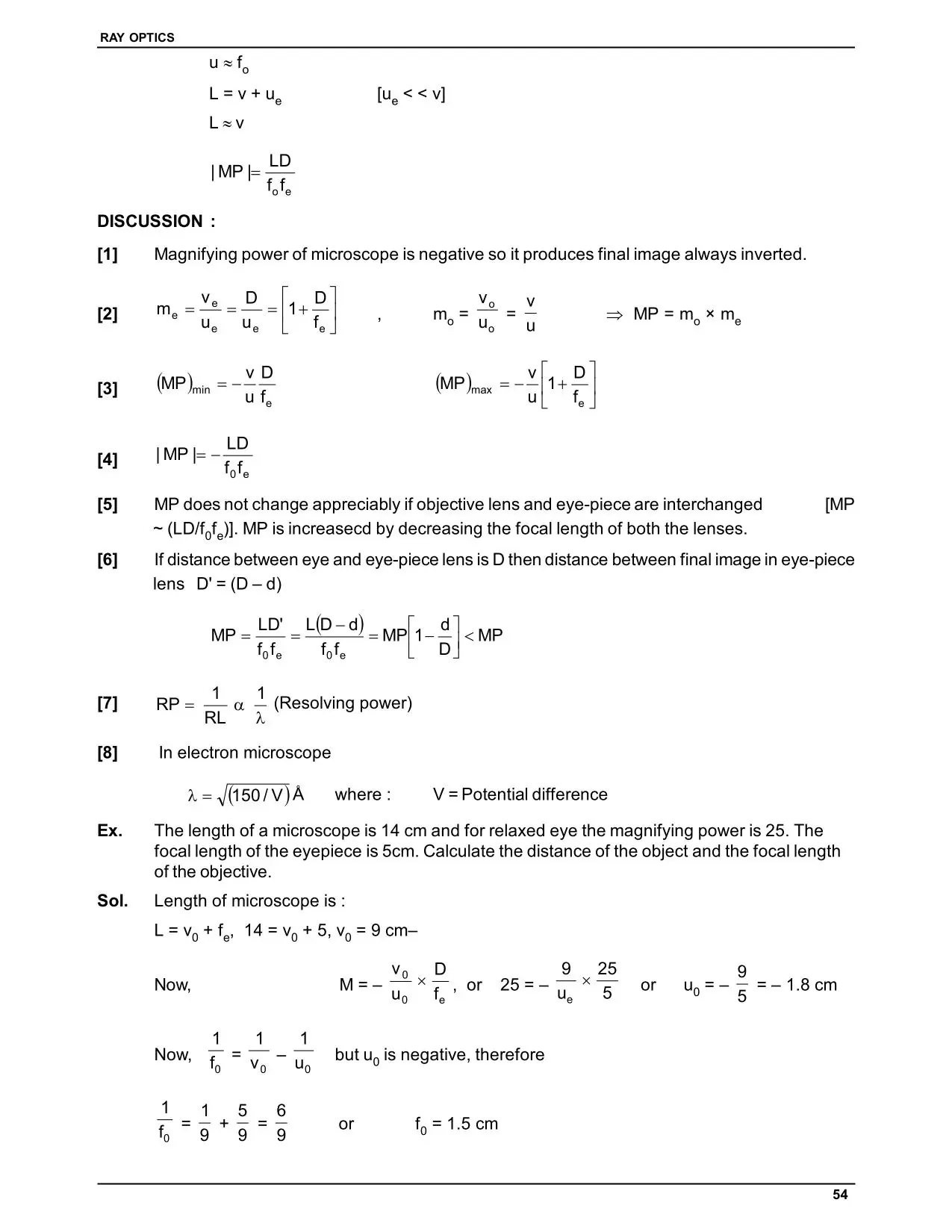
Instrument | Magnification | Note |
|---|---|---|
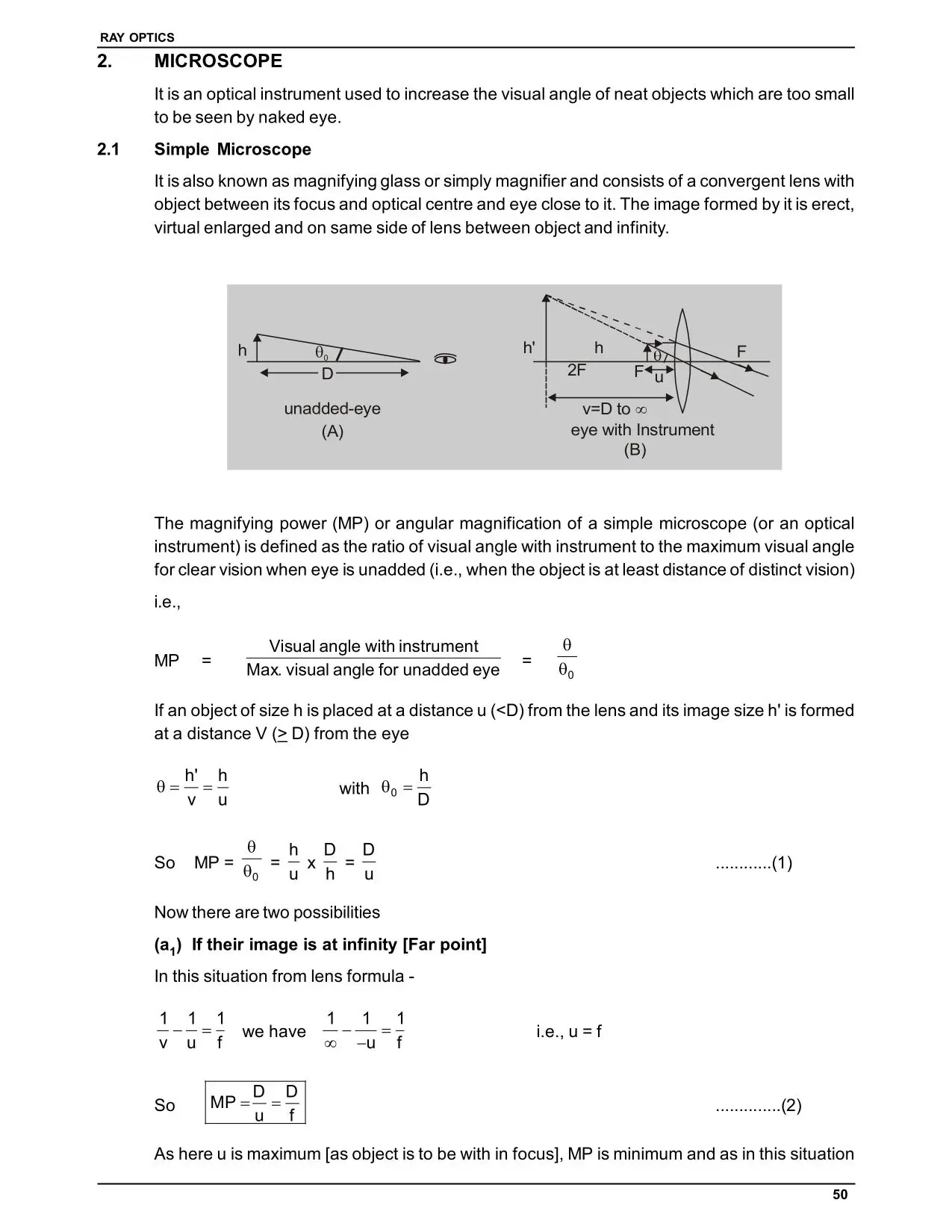
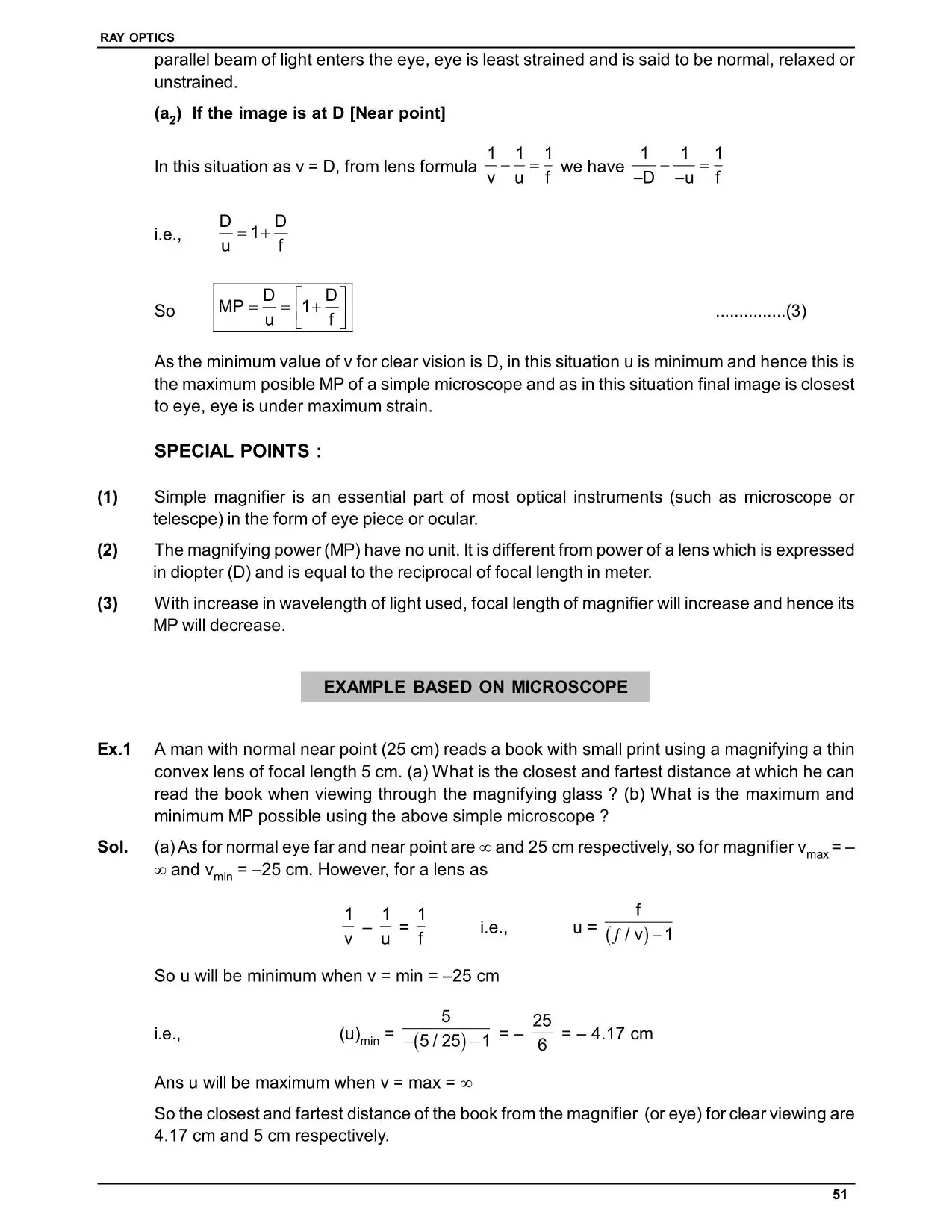
Simple microscope | m = 1 + D/f (image at the near point), m = D/f (image at infinity) | D = 25 cm |
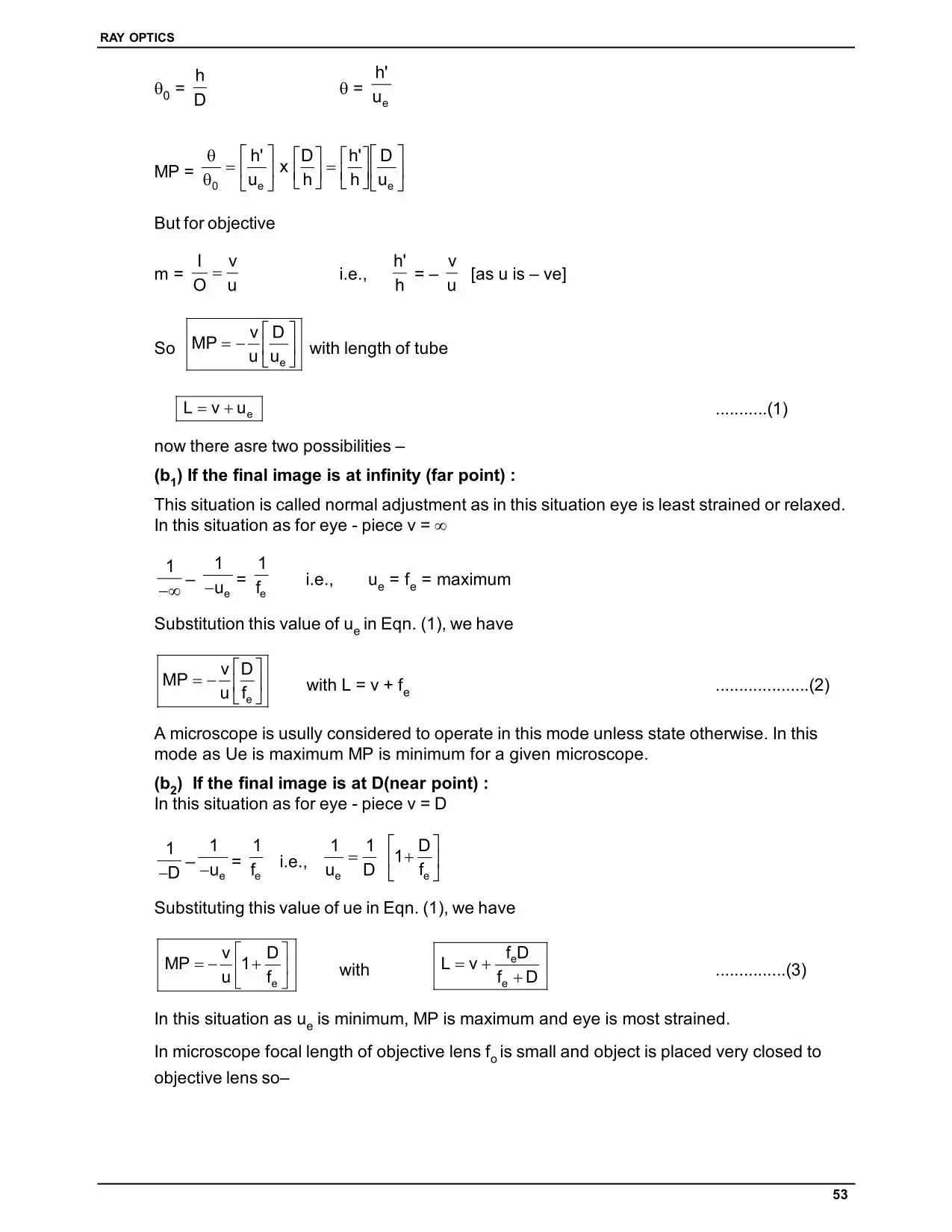
Compound microscope | m = −(L/f_o)(1 + D/f_e) (image at the near point) | L is the tube length |
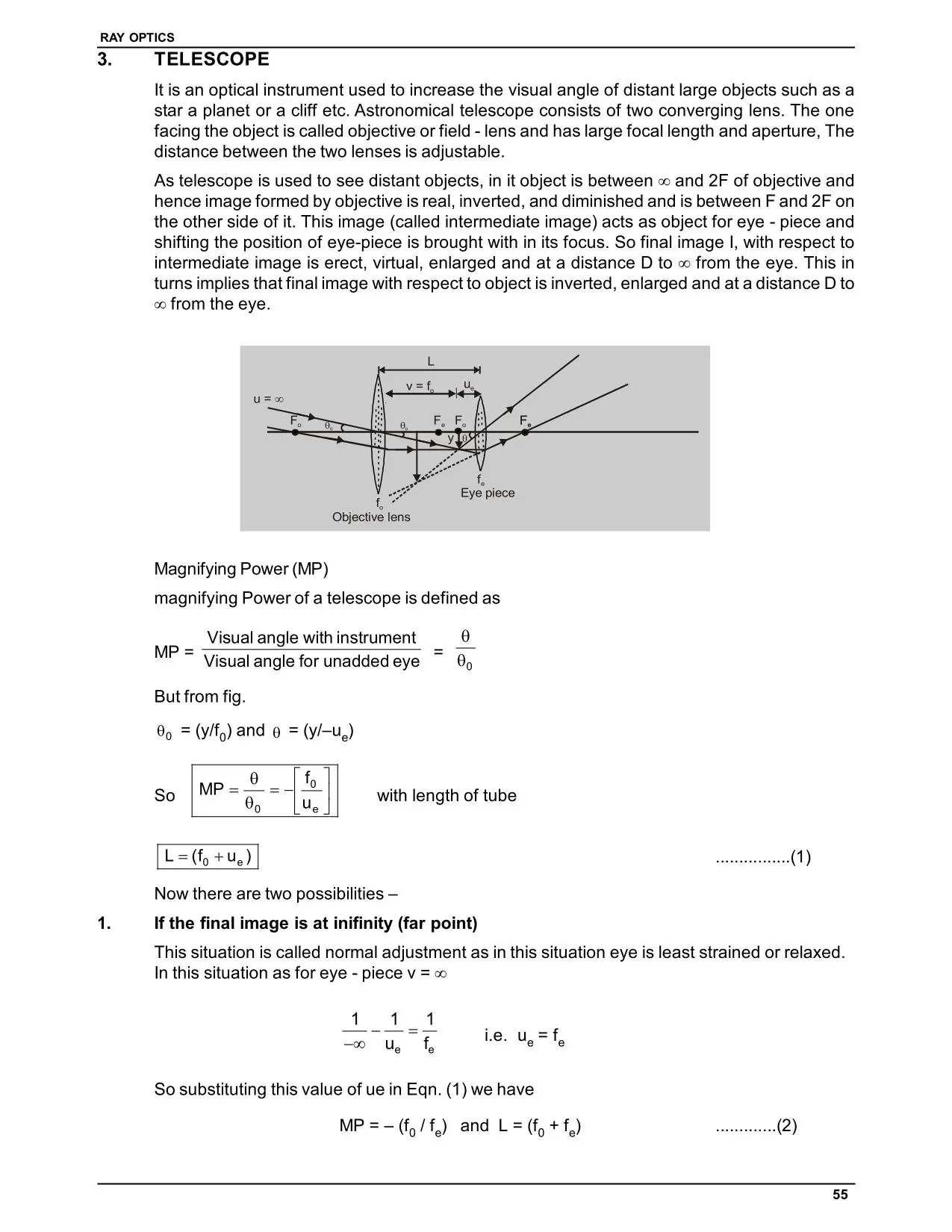
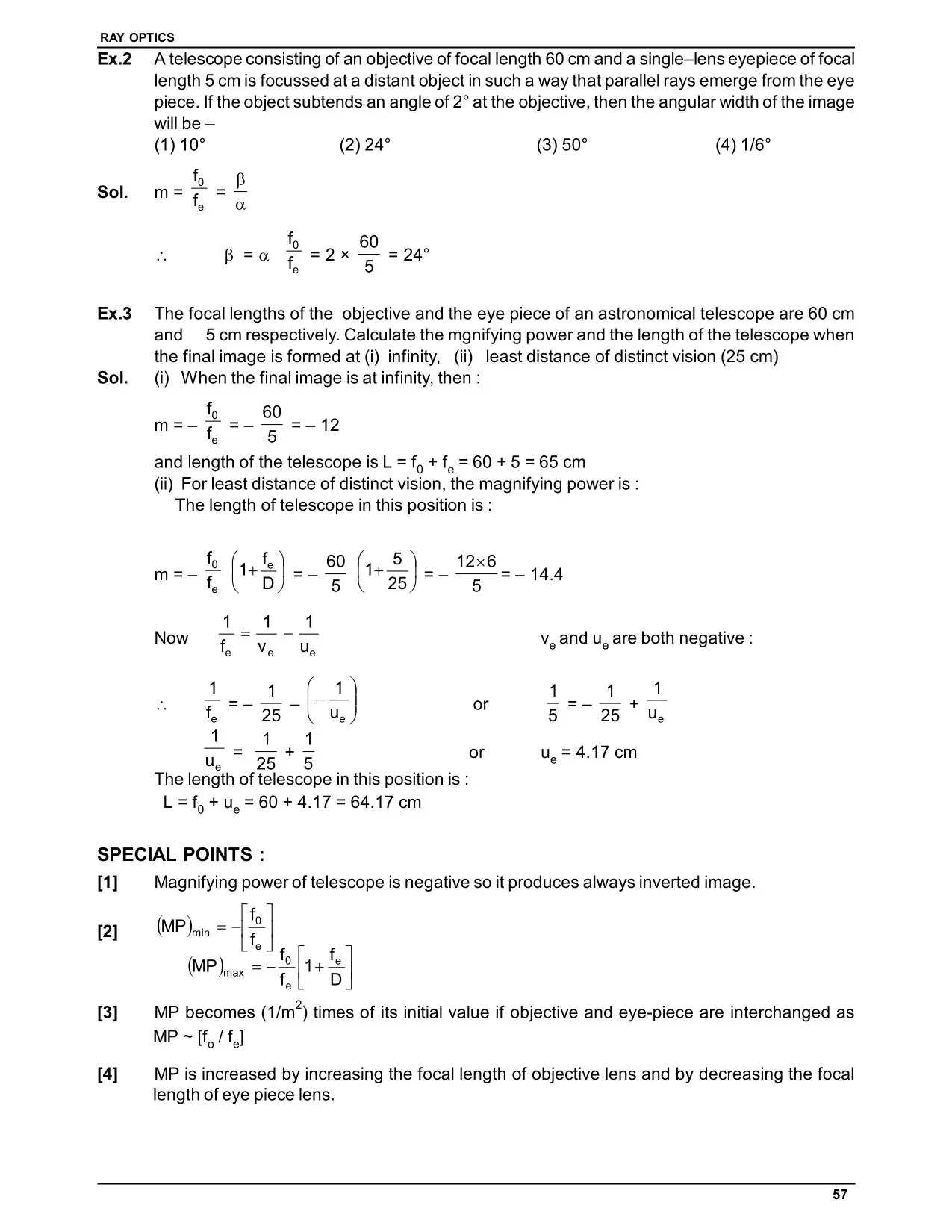
Astronomical telescope (normal adjustment) | m = f_o/f_e | Tube length = f_o + f_e |
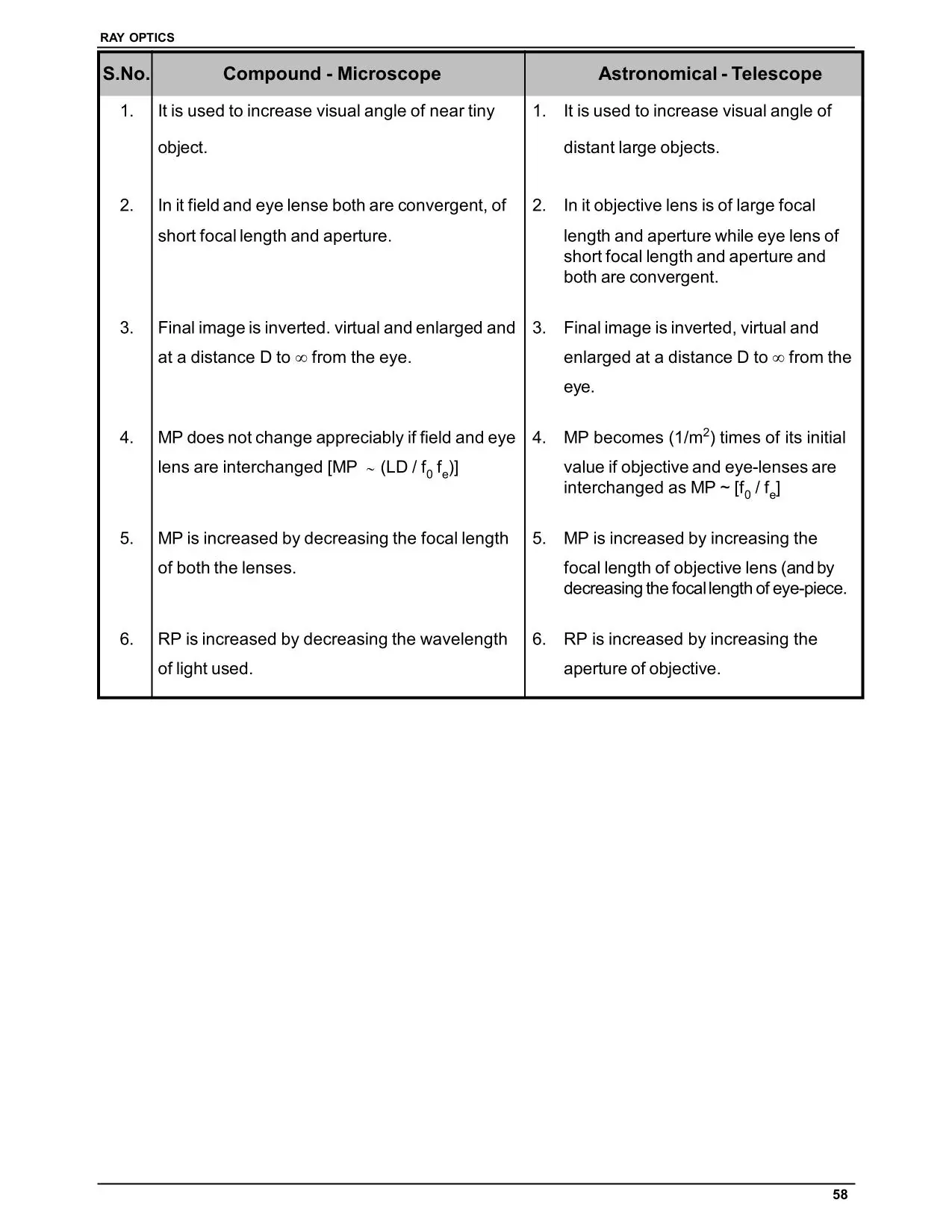
An astronomical telescope uses an objective of long focal length and an eyepiece of short focal length. A compound microscope uses an objective and an eyepiece, both with short focal lengths. Reflecting telescopes use a concave mirror as the objective.
Key Formulas in Ray Optics and Optical Instruments Class 12 Notes
Formula | Description |
|---|---|
1/v + 1/u = 1/f | Mirror formula |
m = −v/u | Mirror magnification |
n₁ sin θ₁ = n₂ sin θ₂ | Snell’s law |
sin θ_c = 1/n | Critical angle for a medium and air |
n₂/v − n₁/u = (n₂ − n₁)/R | Refraction at a spherical surface |
1/v − 1/u = 1/f | Thin lens formula |
1/f = (n − 1)(1/R₁ − 1/R₂) | Lens maker’s formula |
P = 1/f | Power of a lens (dioptres) |
1/f = 1/f₁ + 1/f₂ | Lenses in contact |
n = sin[(A + δ_m)/2]/sin(A/2) | Refractive index of a prism |
m = f_o/f_e | Telescope magnification (normal adjustment) |
m = −(L/f_o)(1 + D/f_e) | Compound microscope magnification |
Solved Examples from Ray Optics and Optical Instruments Class 12 Notes
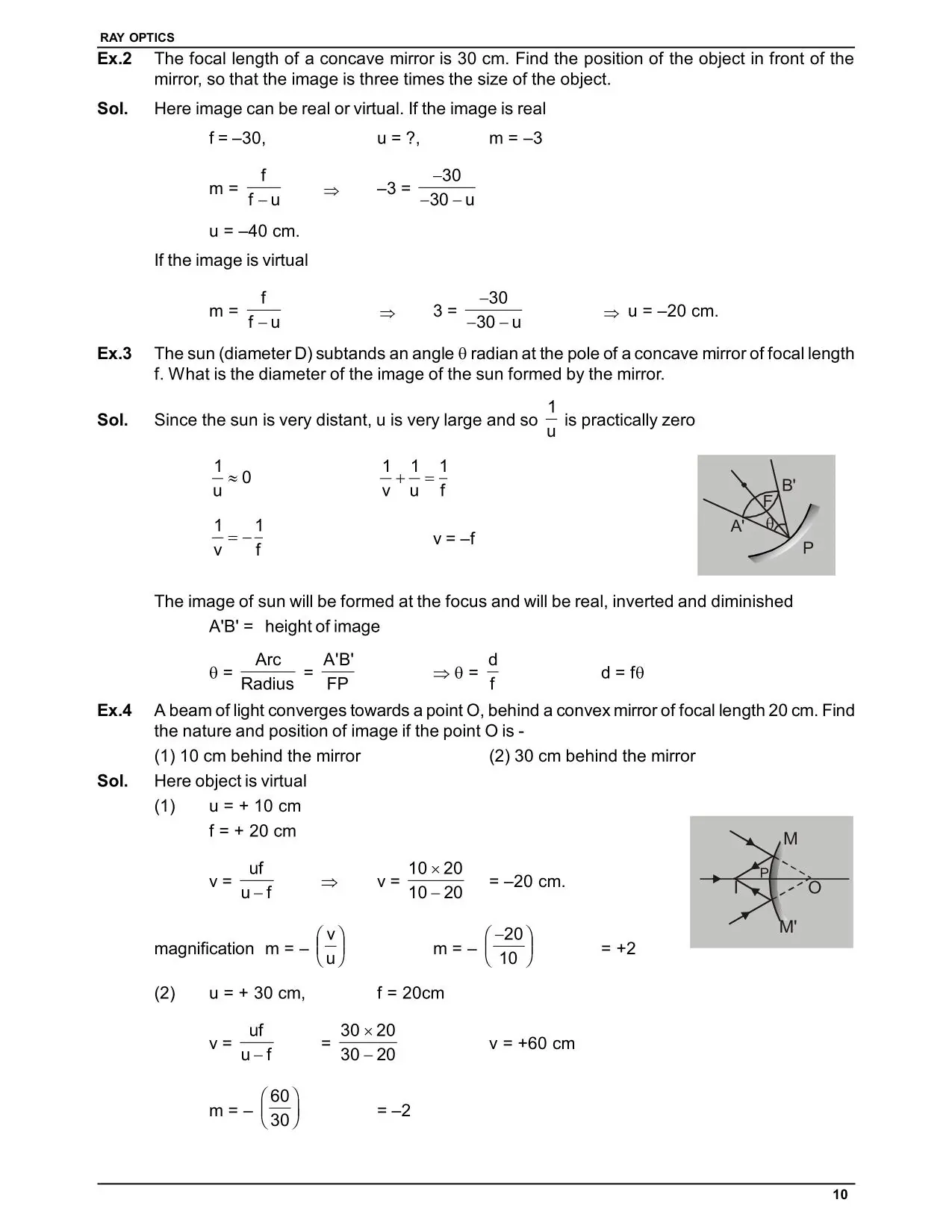
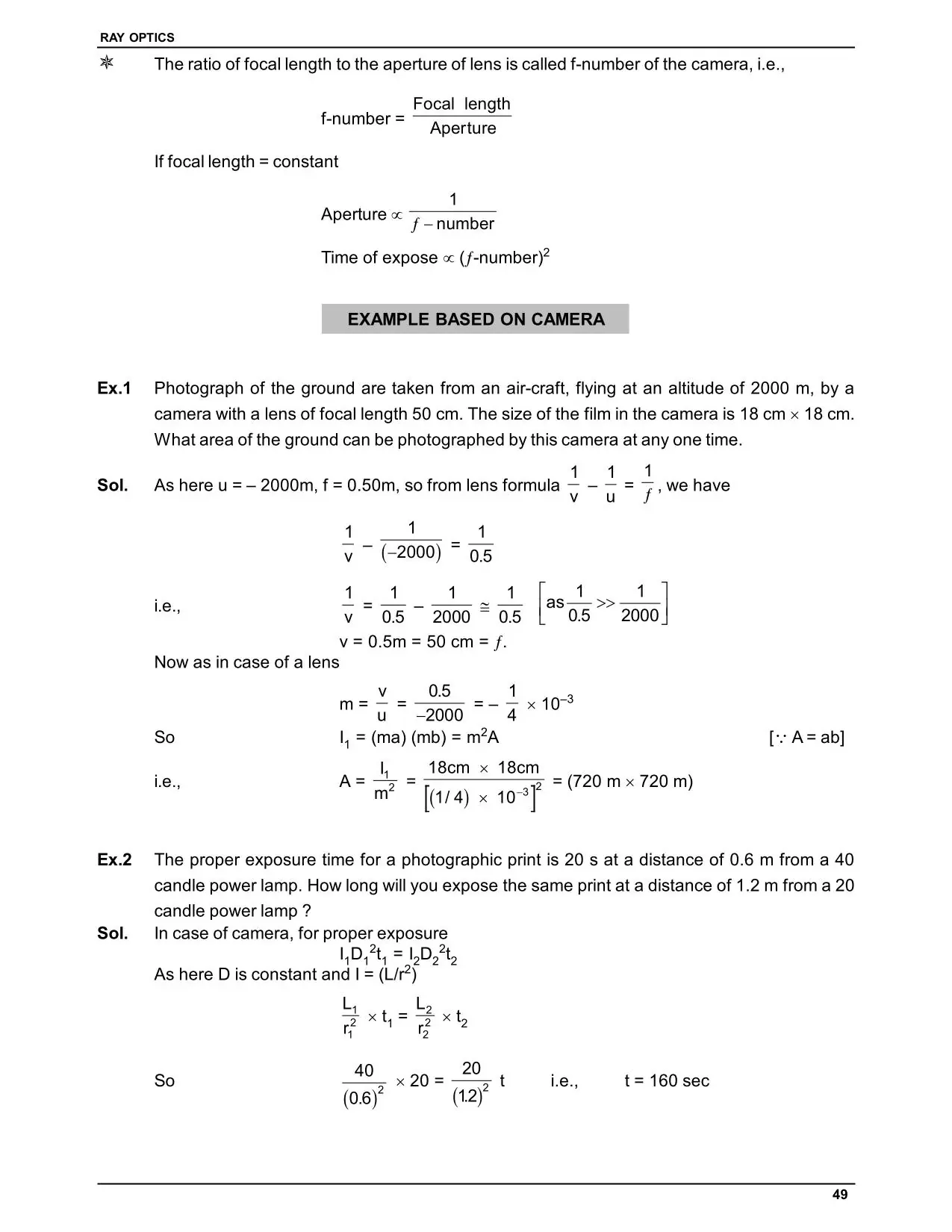
Example 1 (concave mirror): An object is 15 cm in front of a concave mirror of focal length 10 cm. Find the image position and the magnification.
u = −15 cm and f = −10 cm. 1/v = 1/f − 1/u = −1/10 + 1/15 = −1/30, so v = −30 cm. m = −v/u = −(−30)/(−15) = −2. The image is real, inverted and twice the size of the object.
Example 2 (convex lens): A convex lens of focal length 20 cm forms an image of an object placed 30 cm from it. Find the image distance and the magnification.
u = −30 cm and f = +20 cm. 1/v = 1/f + 1/u = 1/20 − 1/30 = 1/60, so v = +60 cm. m = v/u = 60/(−30) = −2. The image is real and inverted.
Example 3 (critical angle): Find the critical angle for glass of refractive index 1.5 with air.
sin θ_c = 1/1.5 = 0.667, so θ_c ≈ 41.8°.
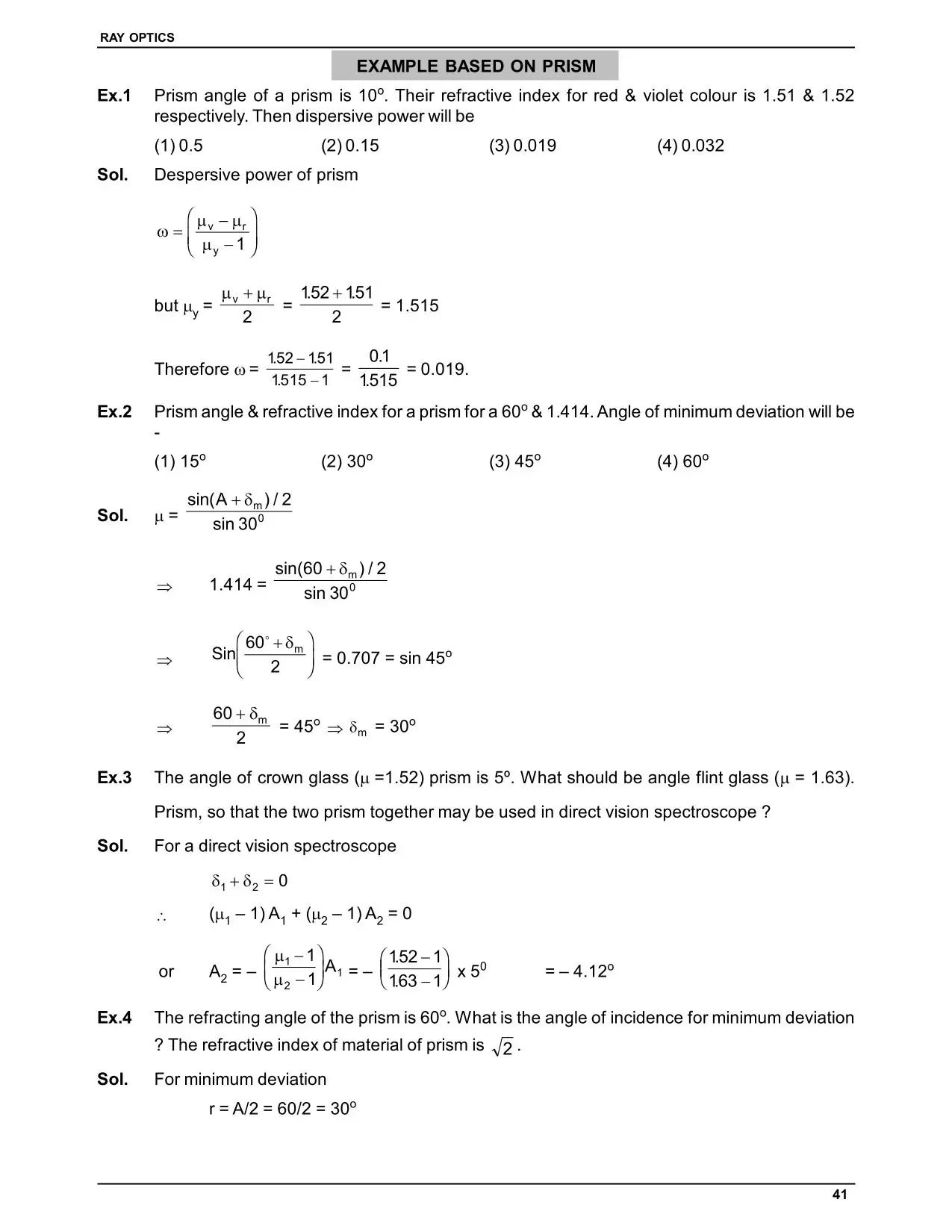
Example 4 (prism): A prism of angle 60° has a minimum deviation of 30°. Find the refractive index.
n = sin[(60° + 30°)/2]/sin(60°/2) = sin 45°/sin 30° = 0.707/0.5 ≈ 1.41.
Example 5 (telescope): An astronomical telescope has an objective of focal length 100 cm and an eyepiece of focal length 5 cm. Find the magnification and the tube length in normal adjustment.
m = f_o/f_e = 100/5 = 20. Tube length = 100 + 5 = 105 cm.
Example 6 (compound microscope): A compound microscope has f_o = 1 cm, f_e = 5 cm and a tube length of 20 cm. Find the magnification when the final image is at the near point (D = 25 cm).
m = −(L/f_o)(1 + D/f_e) = −(20/1)(1 + 25/5) = −120.
Common Mistakes in Ray Optics and Optical Instruments Class 12 Notes Problems
Mistake | Correct approach |
|---|---|
Using the wrong sign for f or u | Apply the Cartesian sign convention first: f is negative for a concave mirror and a concave lens, and positive for a convex mirror and a convex lens |
Using the mirror formula for a lens | Mirror: 1/v + 1/u = 1/f. Lens: 1/v − 1/u = 1/f. |
Using sin θ_c = 1/n between two dense media | In general sin θ_c = n_rarer/n_denser |
Forgetting that TIR needs a denser to rarer path | Check both conditions: the direction and the critical angle |
Using n for the lens maker’s formula in a different medium | Use the relative refractive index n_lens/n_medium |
Mixing the near-point and infinity formulas for instruments | Check where the final image is formed |
How to Study Ray Optics and Optical Instruments Class 12 Notes
- Read the NCERT chapter first, and learn the sign convention. eSaral’s NCERT Solutions for Class 12 Physics can help you check your answers.
- Practise ray diagrams for each object position, with a mirror and a lens.
- Revise from the formula table and the handwritten notes above, and use eSaral’s Class 12 Physics revision notes before the exam.
- For JEE Main, see the unit-wise list in eSaral’s JEE Main Physics revision notes.
Frequently Asked Questions
What are the most important topics in Ray Optics and Optical Instruments Class 12 notes for JEE?
The mirror formula and magnification, refraction at spherical surfaces, Snell’s law and total internal reflection, the lens maker’s formula and combination of lenses, the prism and minimum deviation, and the microscope and telescope. These are the topics in Unit 16 of the JEE Main 2026 syllabus.
How many questions come from Ray Optics in JEE Main and NEET?
Both exams ask questions from optics every year, but the number changes from session to session. Check previous years’ papers for the trend. JEE Main lists ray optics and wave optics together in Unit 16.
What is the difference between a real image and a virtual image?
In Ray Optics and Optical Instruments Class 12 notes, a real image forms where the rays actually meet. It can be projected on a screen, and for a single mirror or lens it is inverted. A virtual image forms where the rays only appear to diverge from. It cannot be projected on a screen, and for a single mirror or lens it is erect. Concave mirrors and convex lenses can form both kinds. Convex mirrors and concave lenses form only virtual images.
What is total internal reflection, and when does it occur?
Total internal reflection occurs when light goes from a denser medium to a rarer medium and the angle of incidence is greater than the critical angle. No light is refracted, and all of it is reflected back. It is the principle behind optical fibres and the brilliance of diamonds.
Which chapter number is Ray Optics and Optical Instruments in Class 12 Physics?
In the current NCERT book, it is Chapter 9. Wave Optics is Chapter 10. These Ray Optics and Optical Instruments Class 12 notes on eSaral follow the current chapter.
Is the human eye in the Class 12 Ray Optics syllabus?
In Ray Optics and Optical Instruments Class 12 notes, the answer is no. The human eye and its defects are not in the rationalised CBSE syllabus (check the latest CBSE syllabus to confirm), and they are not listed in the JEE Main 2026 syllabus. The chapter now ends with the microscope and the telescope.
What is the sign convention used in ray optics?
In Ray Optics and Optical Instruments Class 12 notes, the sign convention is the new Cartesian one. Distances measured in the direction of the incident light are positive, and distances against it are negative. Heights above the principal axis are positive. A concave mirror has a negative focal length and a convex mirror has a positive one. A convex lens has a positive focal length and a concave lens has a negative one.
How do you find the magnification of a telescope and a microscope?
For an astronomical telescope in normal adjustment, m = f_o/f_e. For a compound microscope with the final image at the near point, m = −(L/f_o)(1 + D/f_e), where L is the tube length and D = 25 cm. The Ray Optics and Optical Instruments Class 12 notes on this page give examples.
Where can I find more Class 12 Physics notes on eSaral?
eSaral has chapter-wise Class 12 Physics revision notes, NCERT solutions, and handwritten notes on topics such as current electricity and moving charges, as well as the Ray Optics and Optical Instruments Class 12 notes on this page.
Team eSaral
eSaral Academic and Editorial Team
Team eSaral is the collective author profile for educational content created by eSaral’s teachers and academic contributors. The team draws on expertise from IIT graduates, doctors, experienced educators and subject specialists to develop resources for JEE, NEET and school students. Our articles aim to explain concepts clearly and help students study with confidence.
Related Posts

BITSAT 2027: Registration Date, Exam Date, Syllabus, Eligibility, Pattern & Fees
BITSAT 2027 exam dates, registration timeline, eligibility criteria, exam pattern, marking scheme, syllabus and fees in one page.

BITSAT Previous Year Question Paper PDF (2017-2026)
Download BITSAT previous year question papers PDF from 2017 to 2026,session-wise. Memory-based papers,exam pattern, paper analysis and how to practise

CBSE Class 10 Date Sheet 2027: Expected Exam Dates, Release Date, Admit Card & Result Timeline
CBSE Class 10 date sheet 2027 is awaited. See the expected exam dates, release window, how to download the PDF, admit card and result timelines.

NCERT Physics Class 10 Book PDF in Hindi 2026-27 – भौतिक विज्ञान के 4 अध्याय (Free Download)
NCERT Physics Class 10 book PDF in Hindi 2026-27: download all 4 chapters (अध्याय 9–12) free, with topics and important formulas.

NCERT Biology Class 9 Book Anveshan PDF in Hindi - जीव विज्ञान कक्षा 9 पुस्तक अन्वेषण PDF
Download NCERT Biology Class 9 book PDF in Hindi chapterwise for 2026-27: Cell, Tissues, Reproduction and Diversity. Free PDFs.

Essay On Artificial Intelligence in English (100,150, 200, 250, 300, 500 Words)
This is in contrast to the natural intelligence of humans. With Artificial Intelligence, machines can perform

Essay on 78th India Independence Day in English for Student (100, 150, 200, 250, 300, 500 Words)
Read the best essays on India's Independence Day in English. Short & long essays (100, 150, 200, 250, 300, 500 words) perfect for school exams
NCERT Class 11 English Snapshots book - Free PDF download- Esaral
Download NCERT Class 11 English Snapshots book PDF for free. Get all 8 chapters, chapter-wise. Start your prep today!
NCERT Class 10 biology book pdf - Free PDF Download - eSaral
NCERT Class 10 Biology book PDF 2026-27: all 5 chapters (Life Processes to Our Environment) in English & Hindi, with CBSE syllabus, marks & practical

Essay on Global Warming in English (100,150, 200, 250, 300, 500 Words)
Global warming means the Earth is getting hotter. This happens because of things like pollution from cars and factories.