
Diversity in the Living World - NEET Previous Year Questions with Complete Solutions

eSaral Academic and Editorial Team
Summary
Diversity in the Living World NEET previous year questions cover Chapters 1 and 2 of Class 11 Biology — The Living World and Biological Classification. NTA has consistently asked 2–4 questions from these chapters every year. Practising these PYQs with solutions is the fastest way to identify repeated concepts and secure easy marks in NEET Biology.

eSaral › NEET › Biology › Diversity in the Living World Previous Year Questions with Complete Solutions

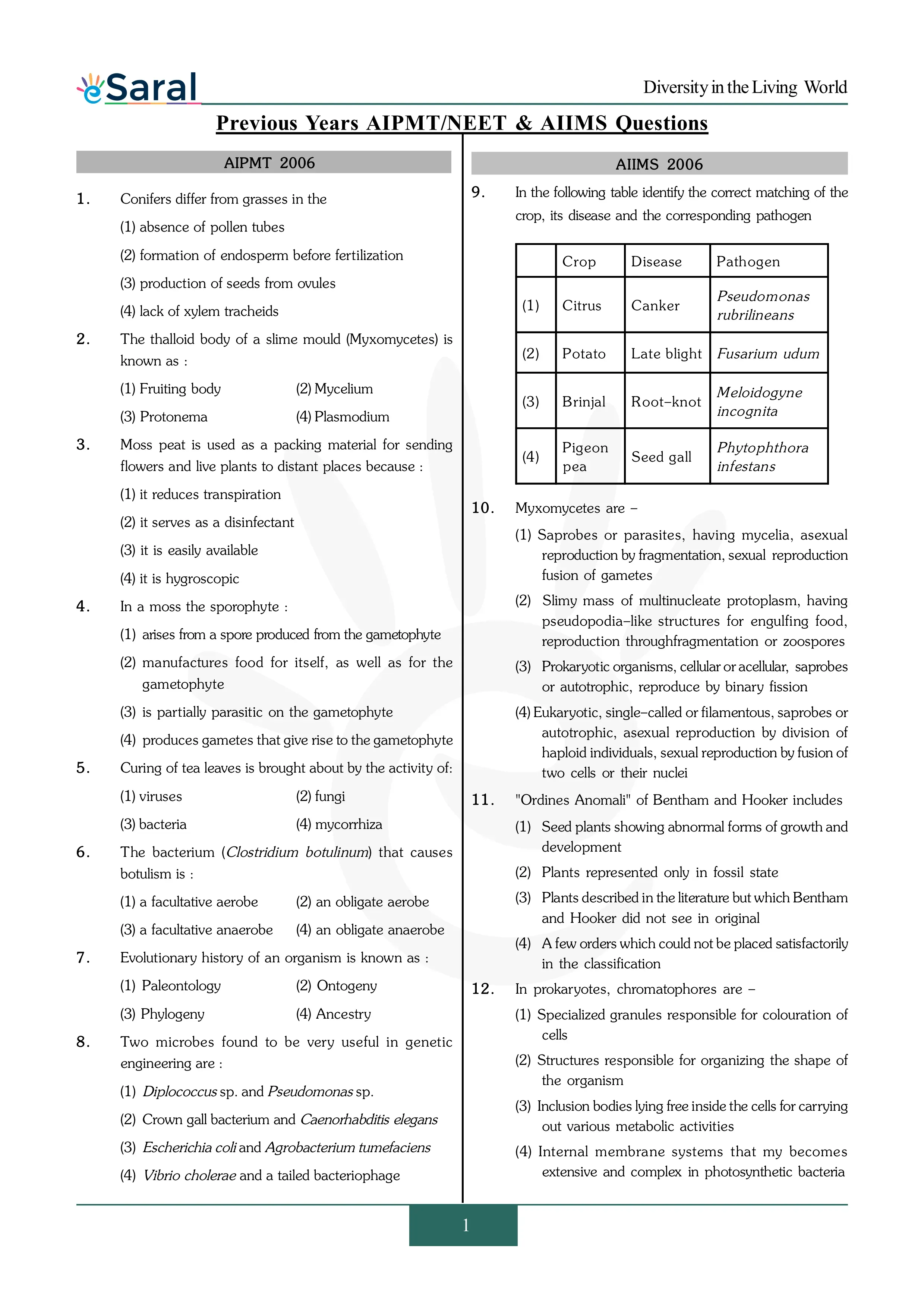
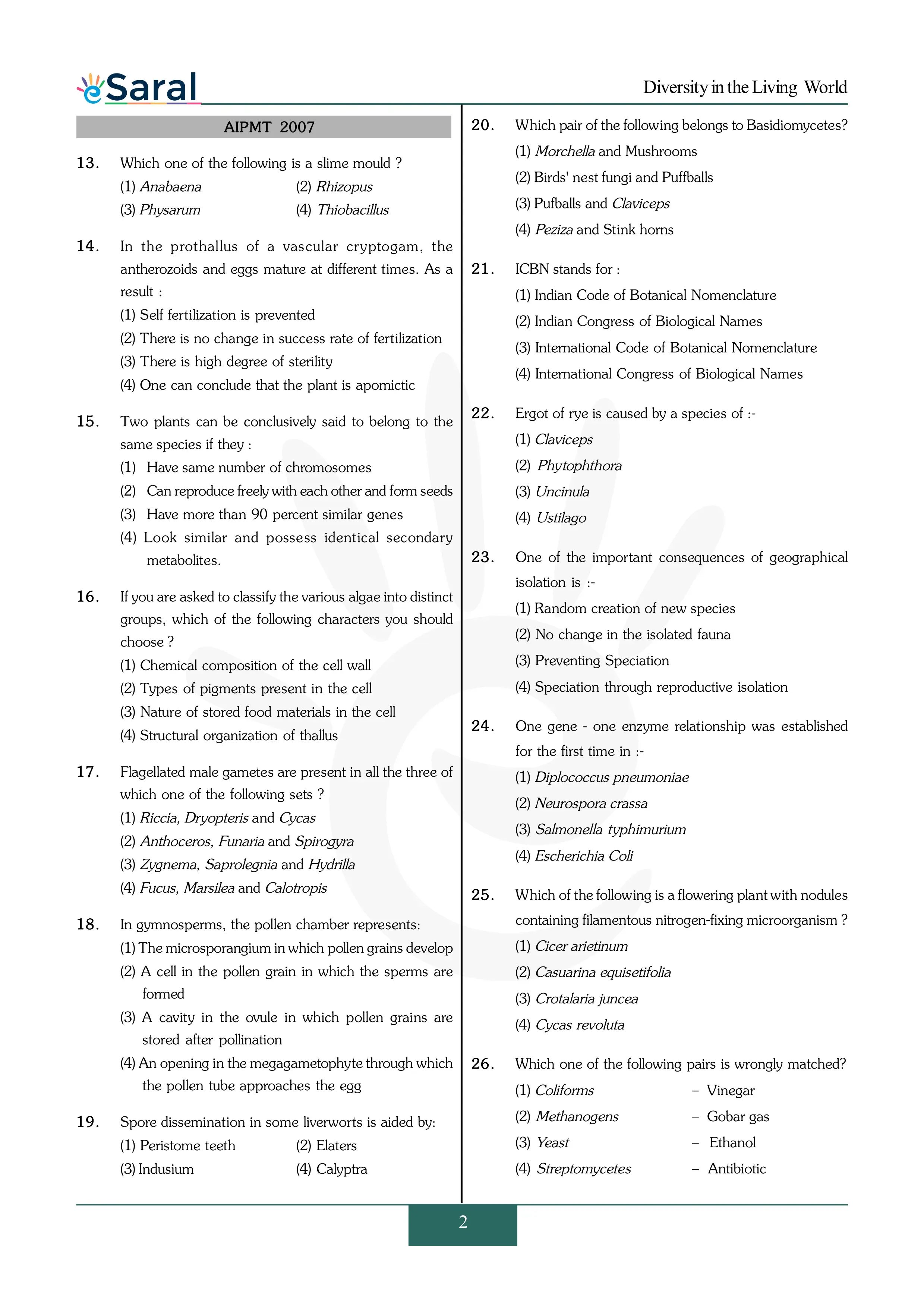
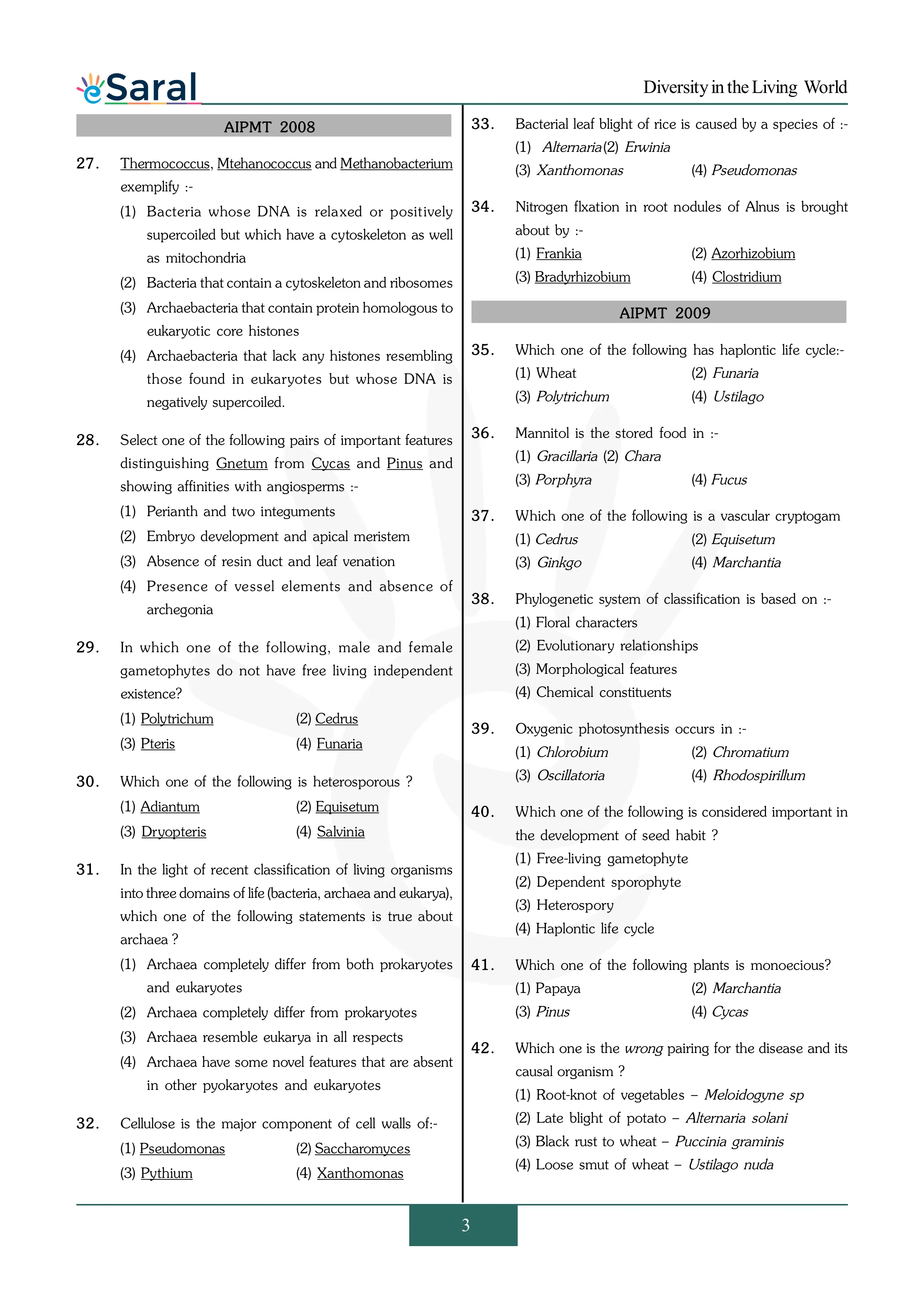
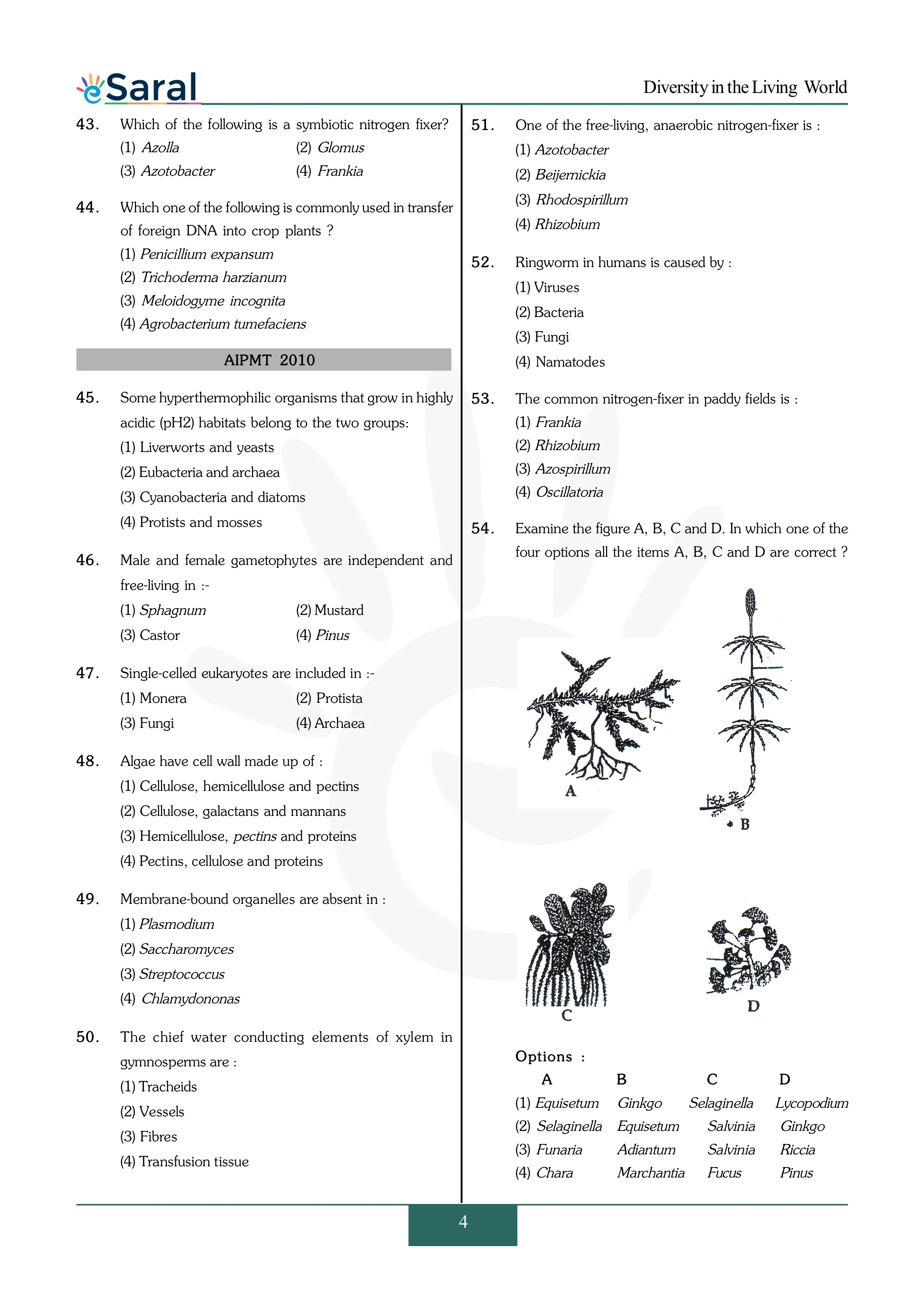
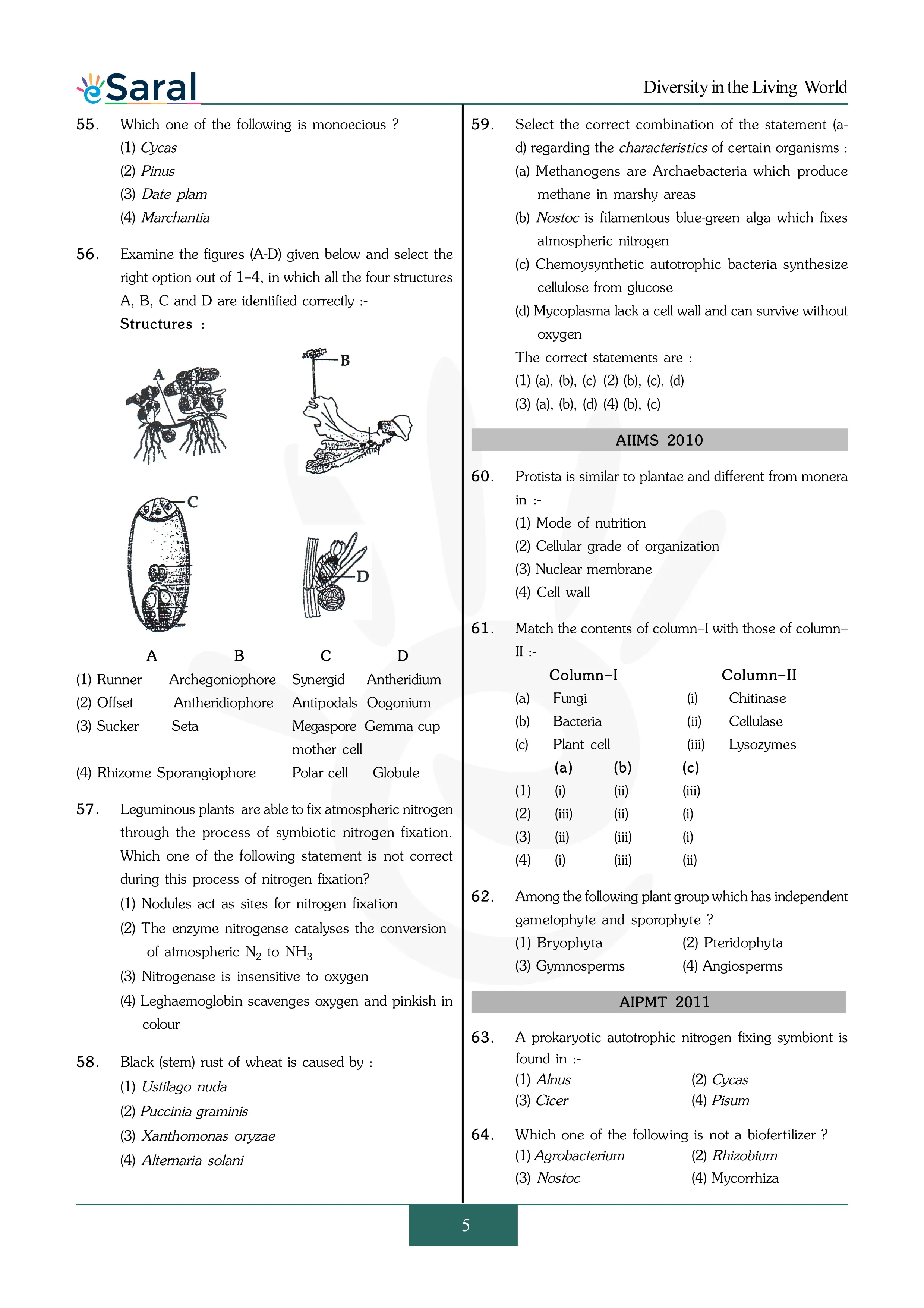
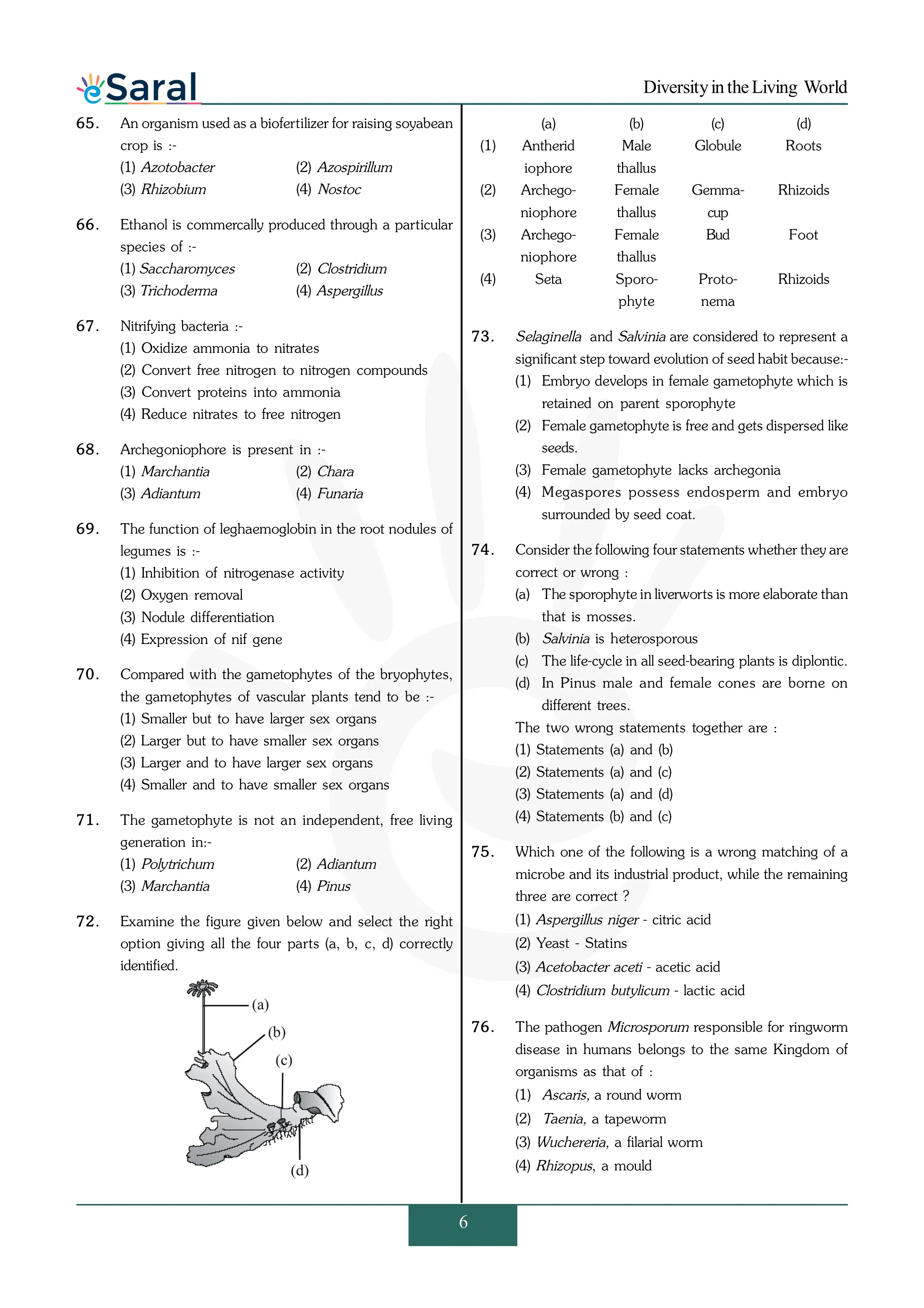
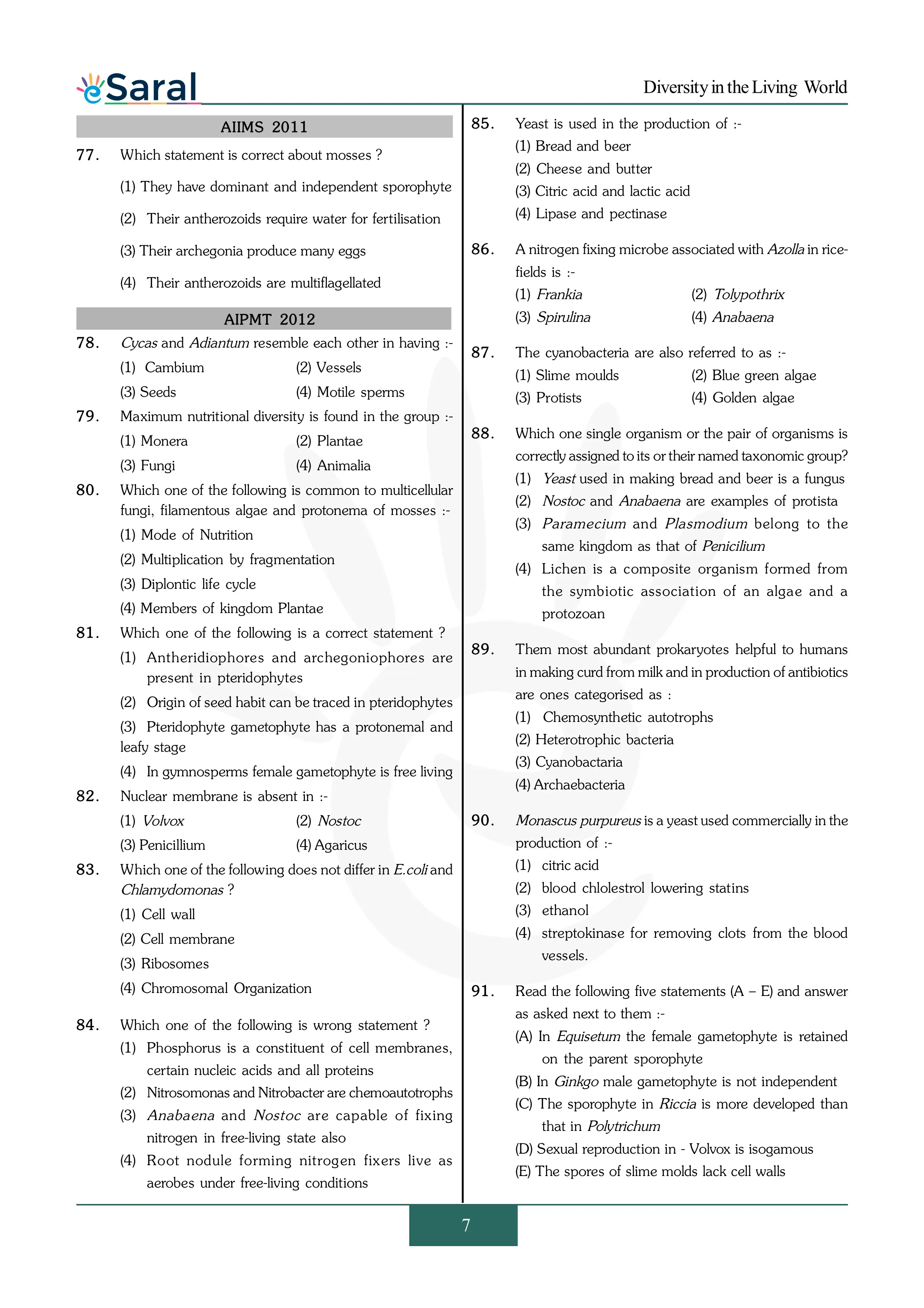
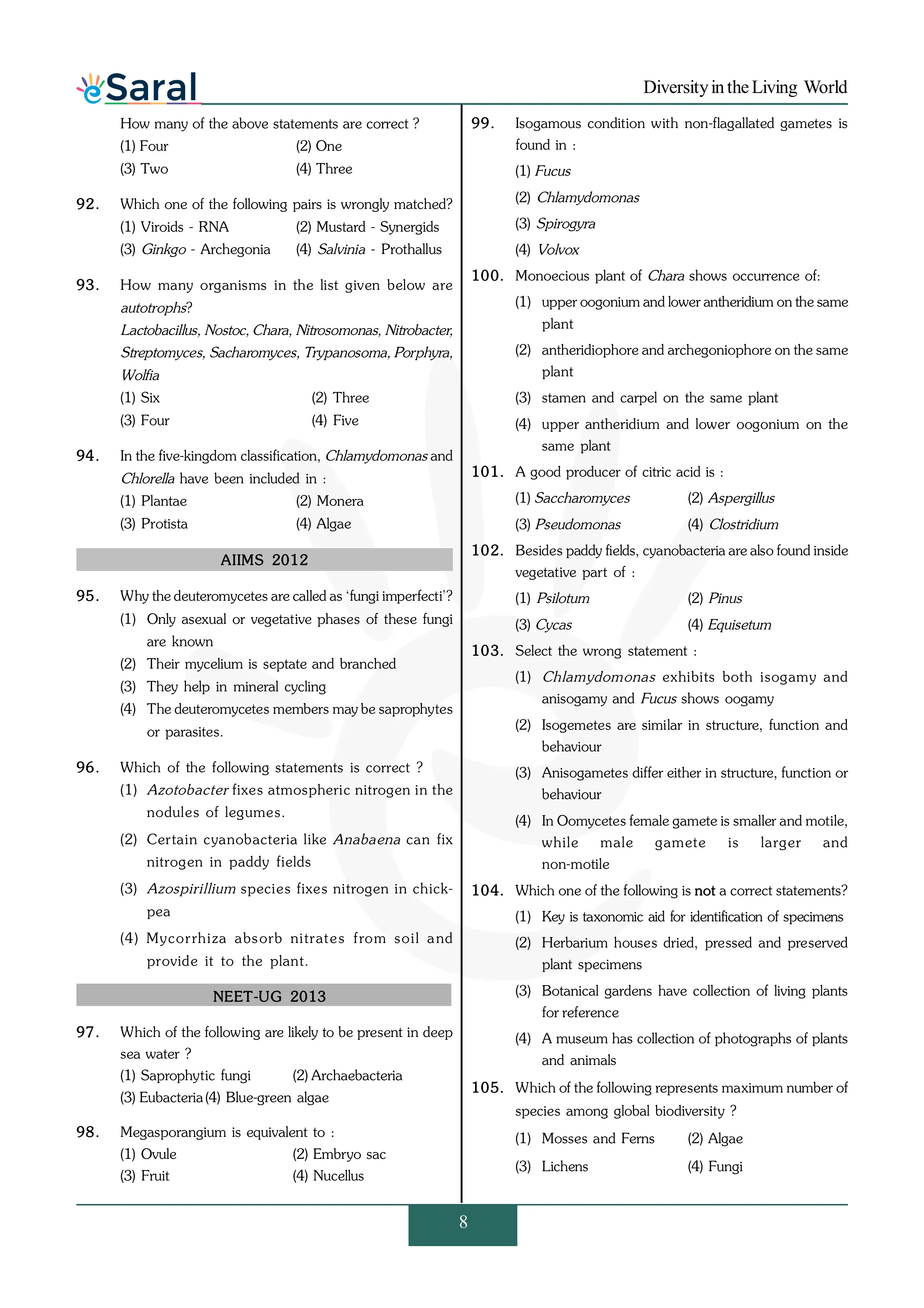
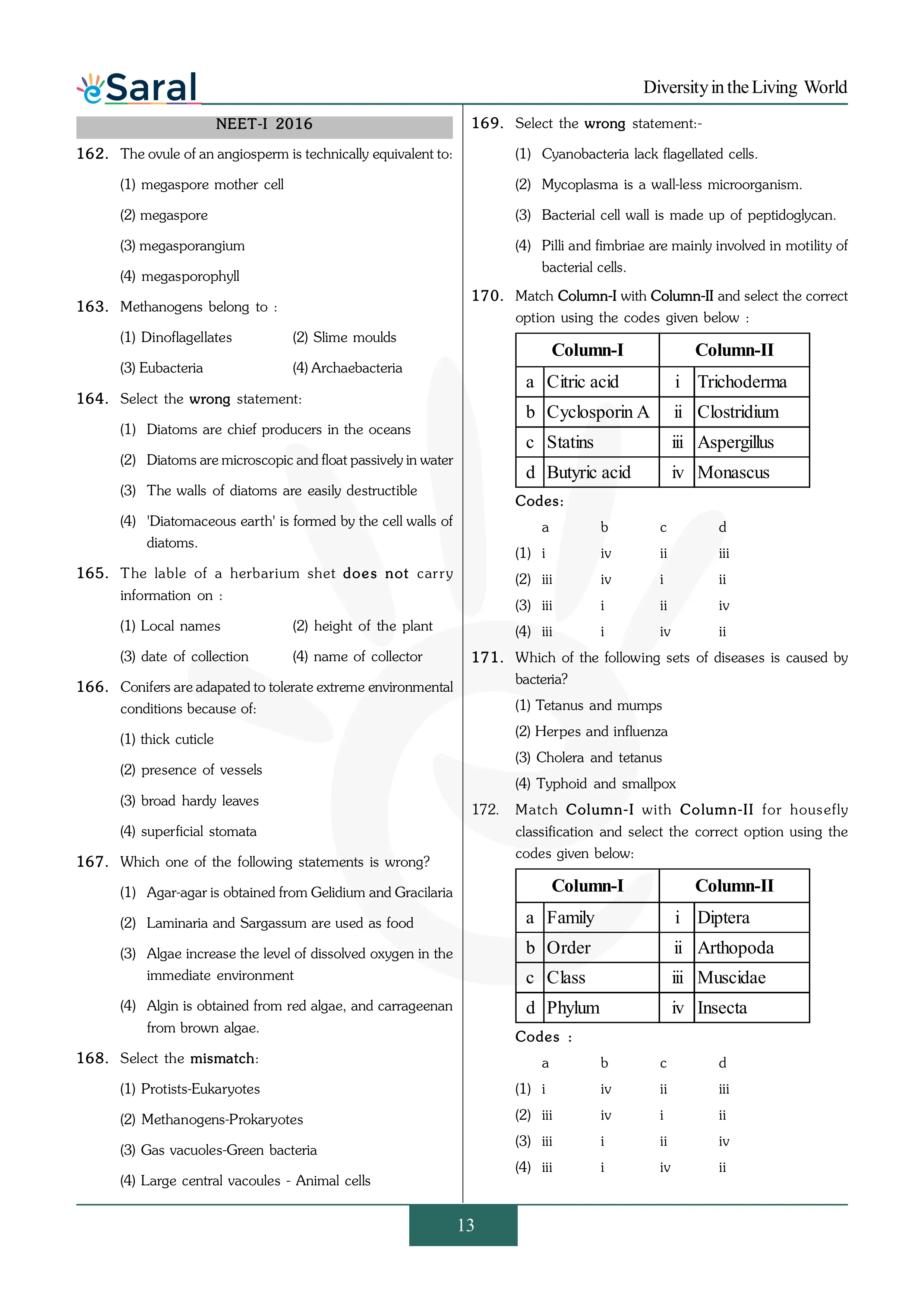
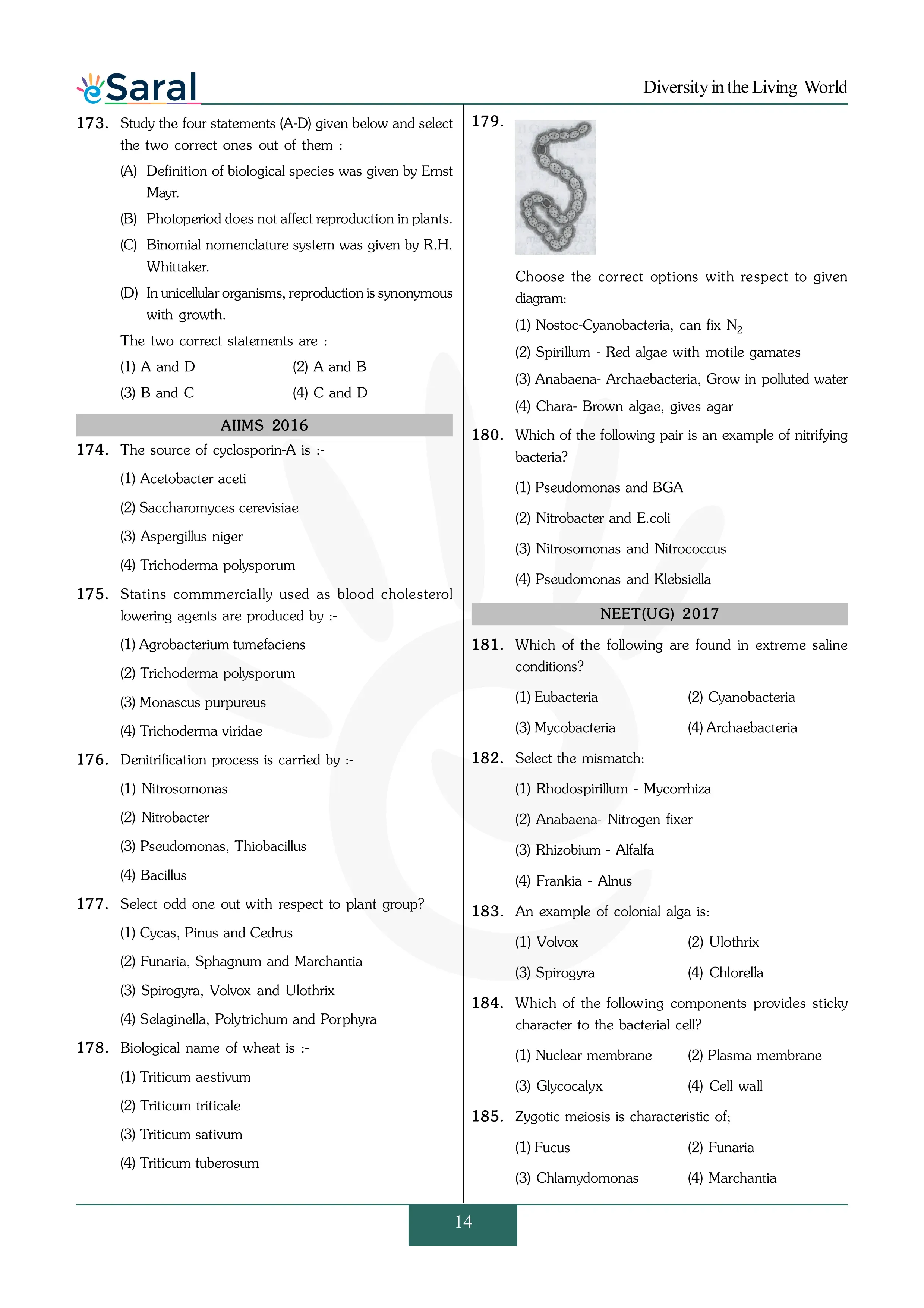
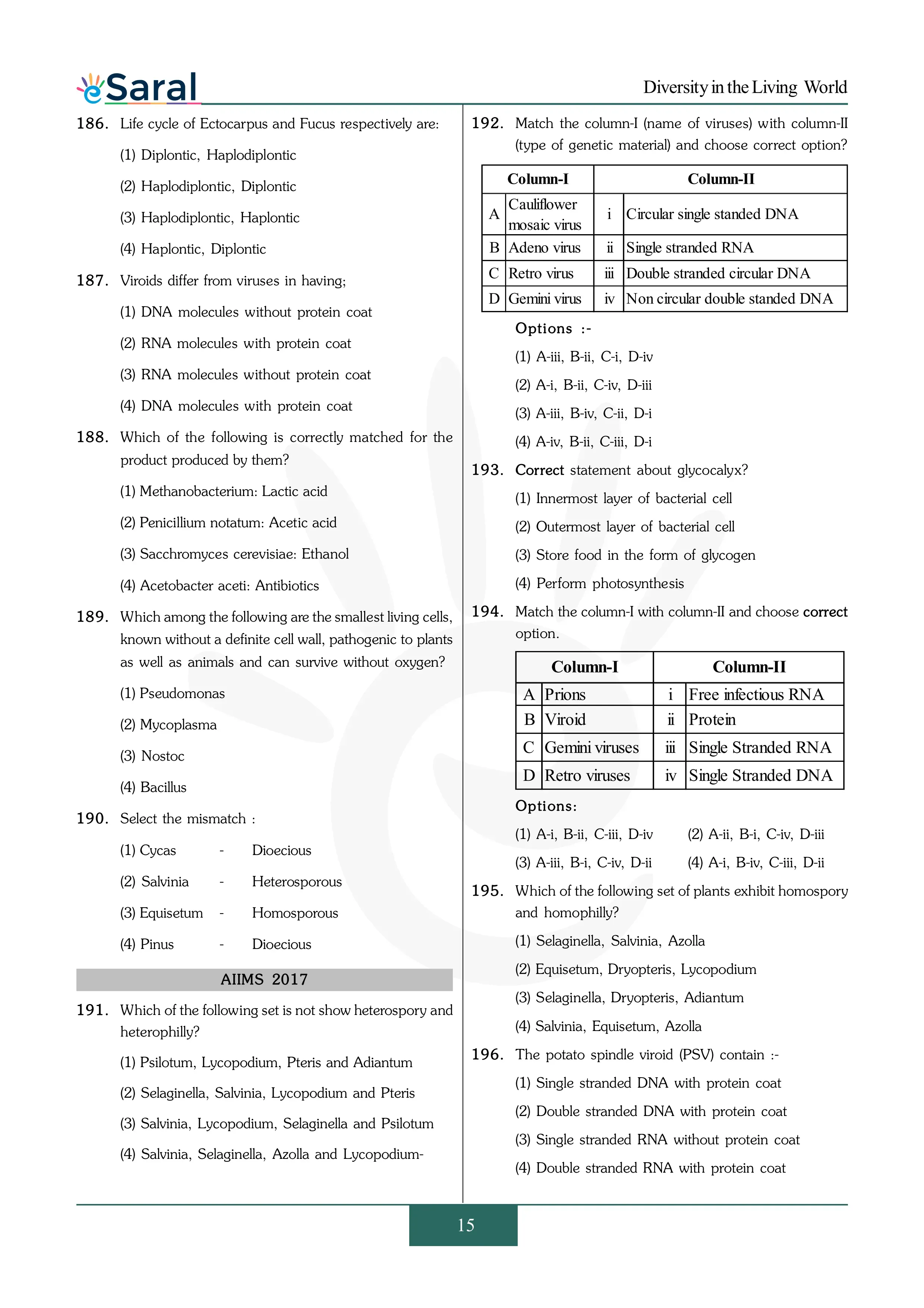
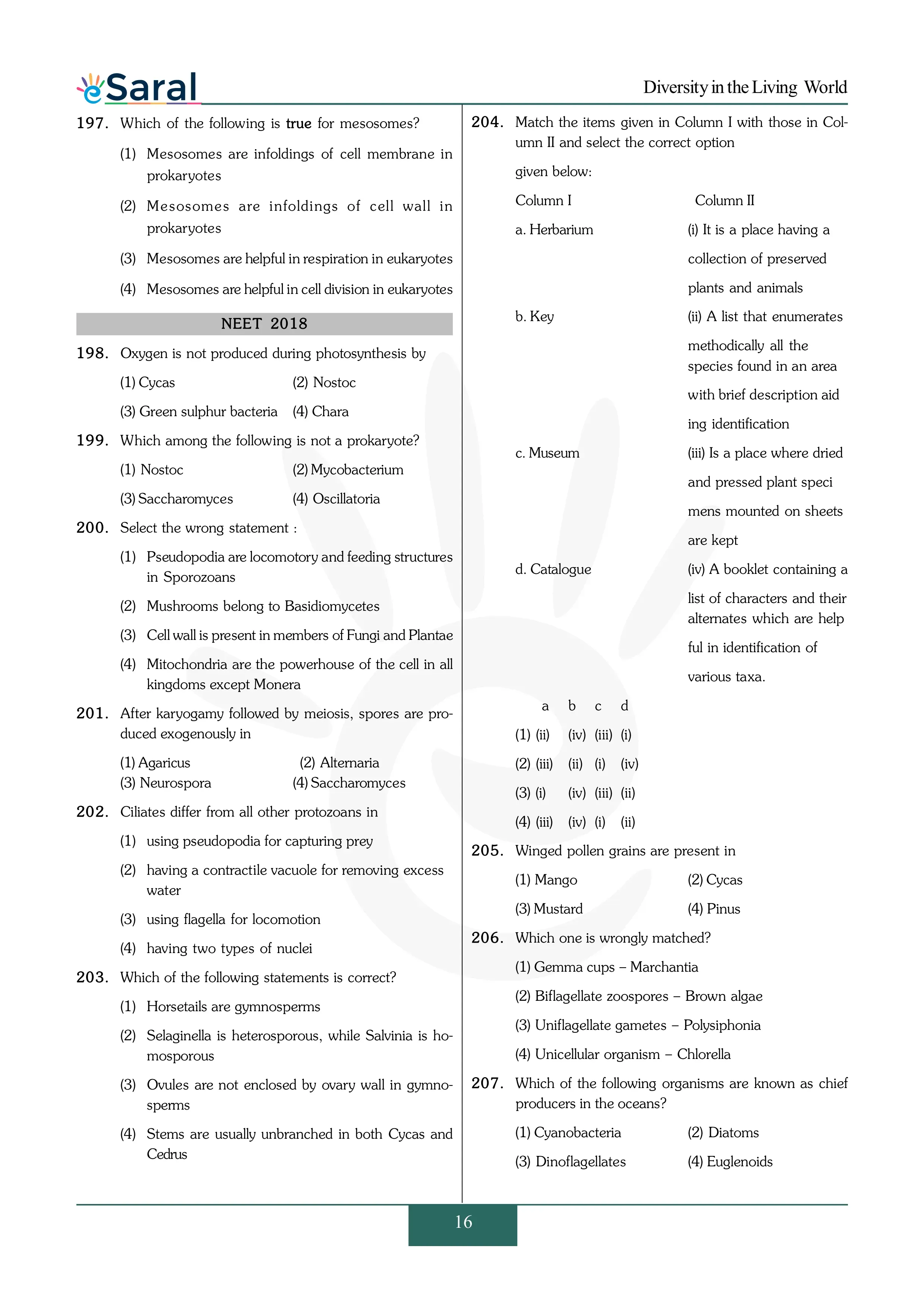
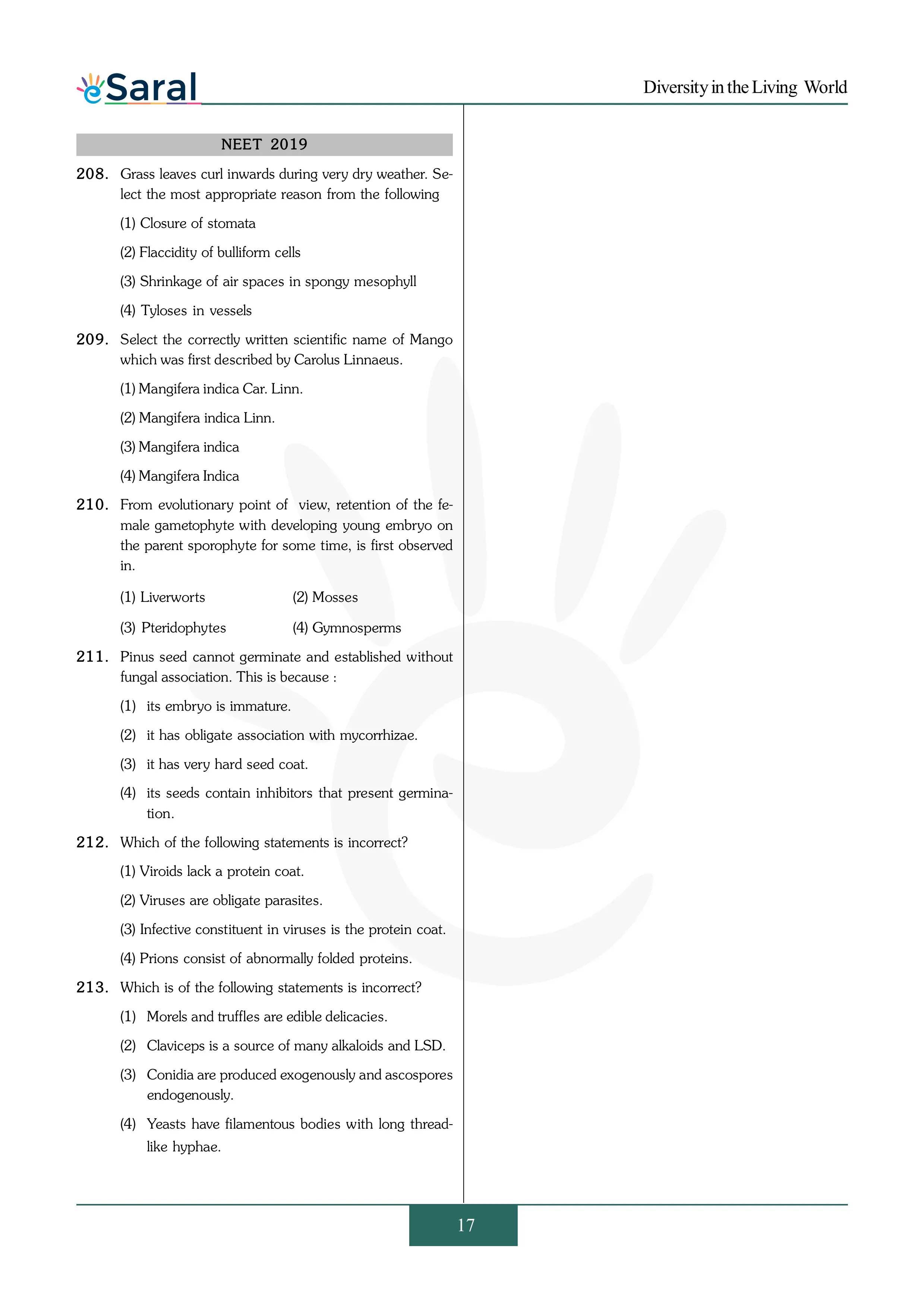
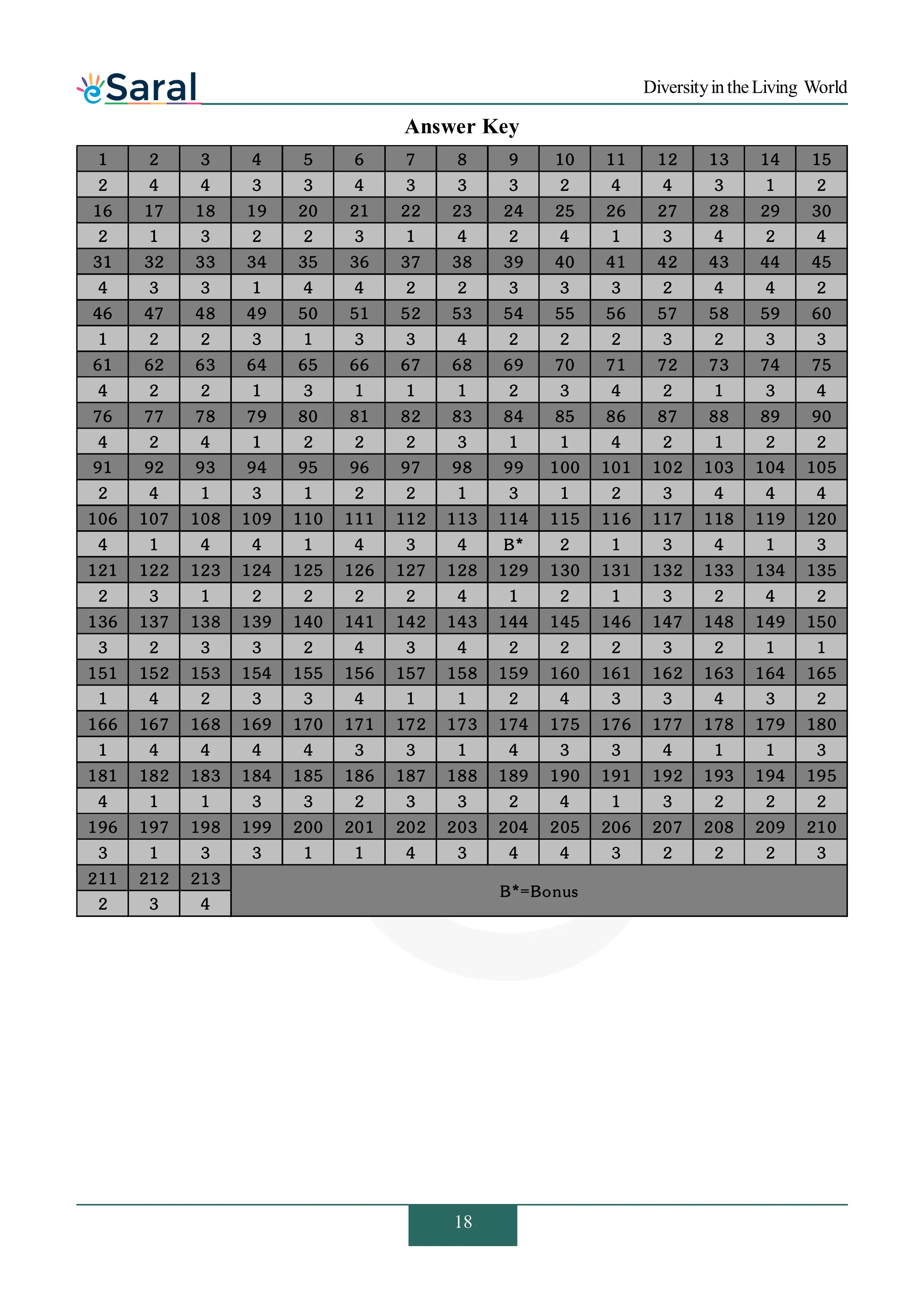
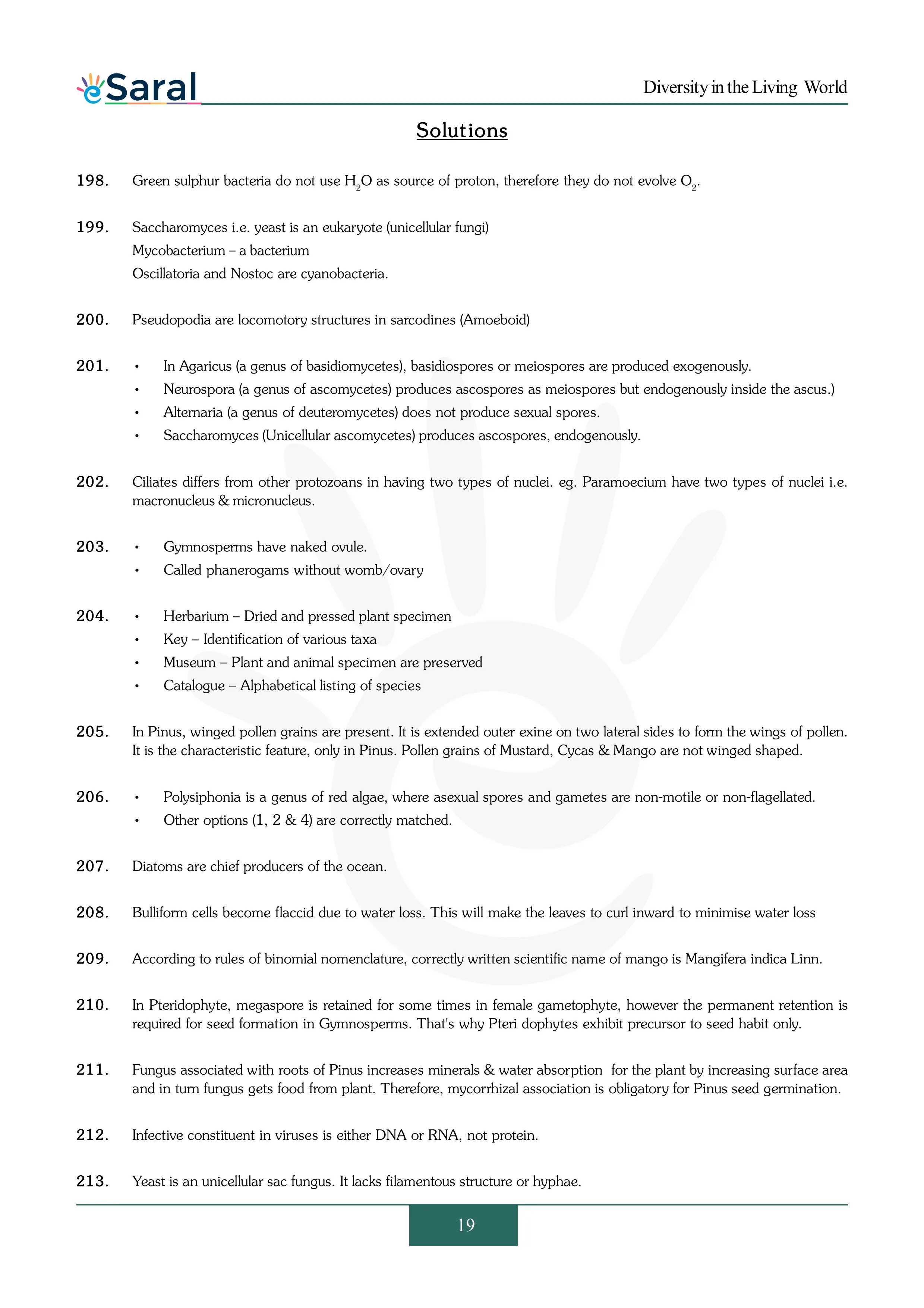
Here you will get Complete Diversity in the Living World NEET Previous Year Questions with complete and detailed solutions.
Get complete NEET previous year questions for Physics, Chemistry and Biology.
You will find all the solutions at the end of this page:
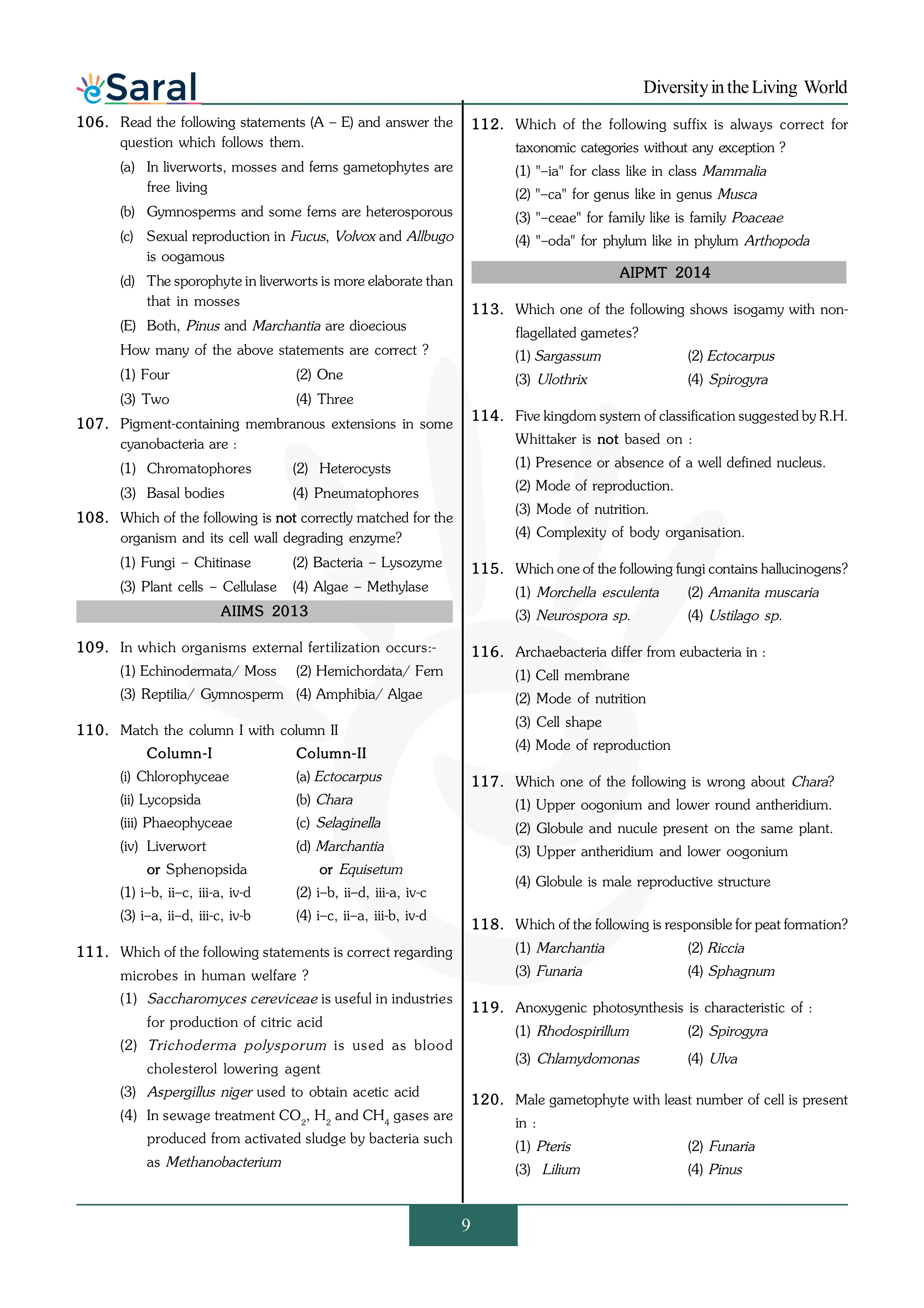
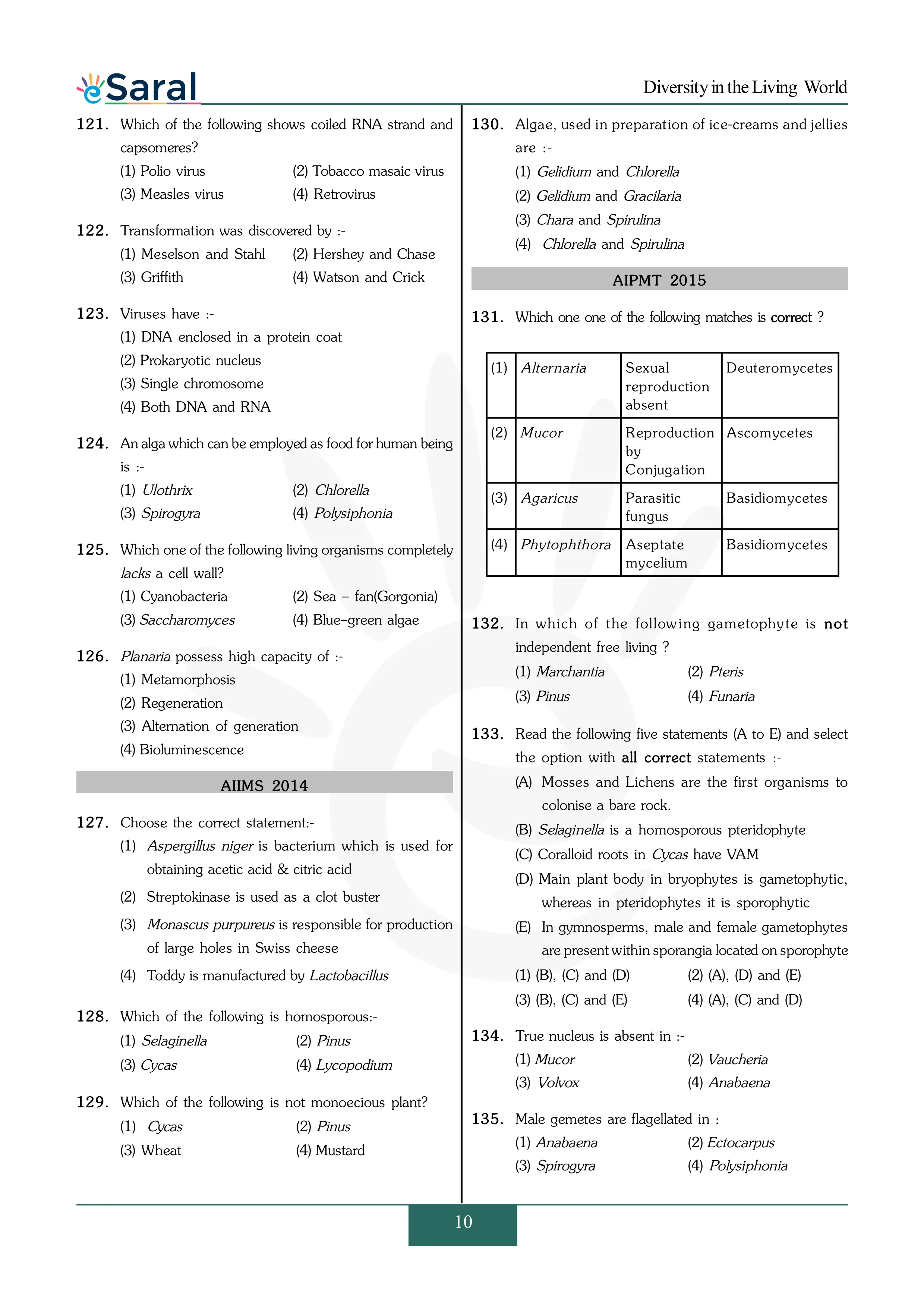
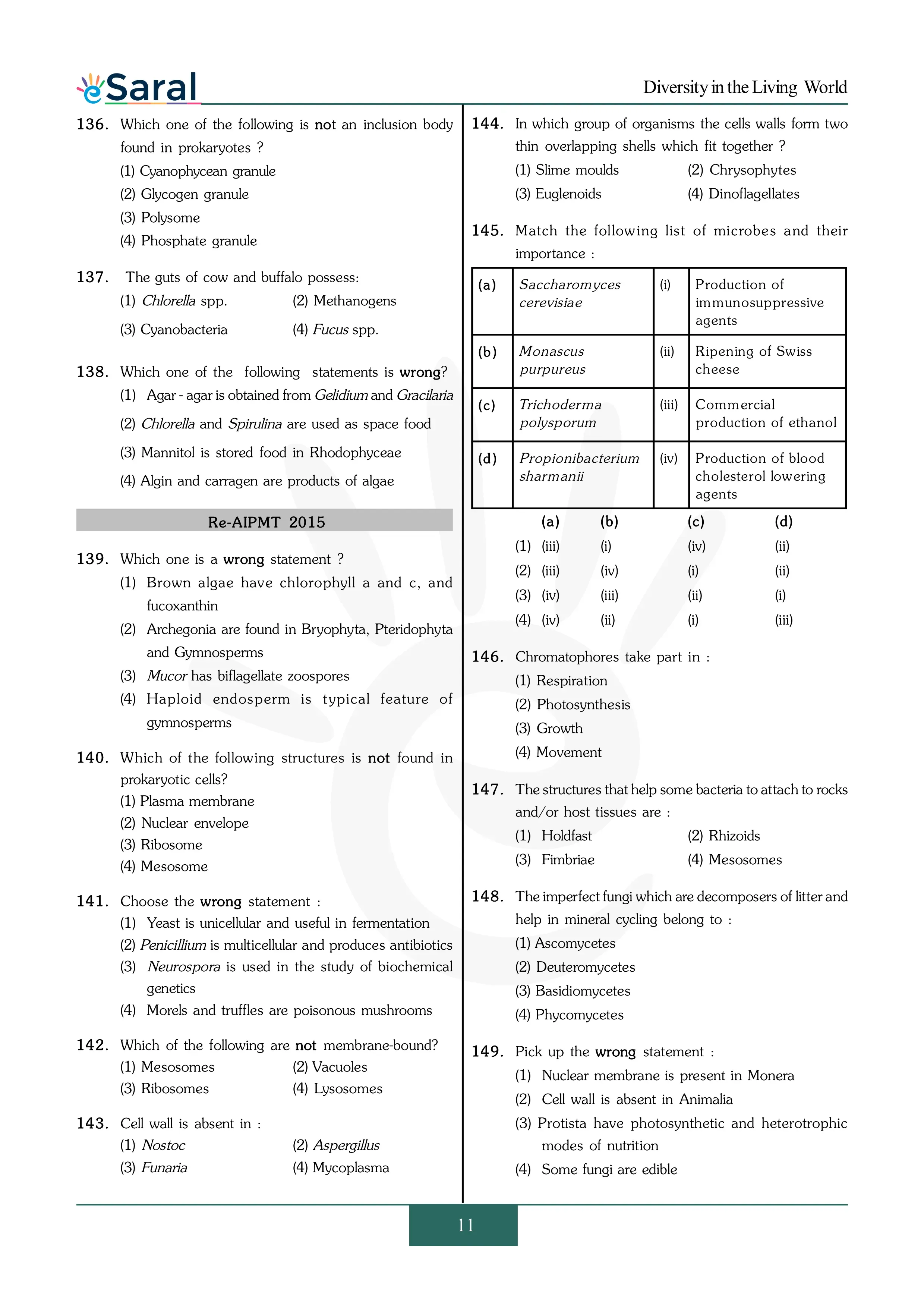
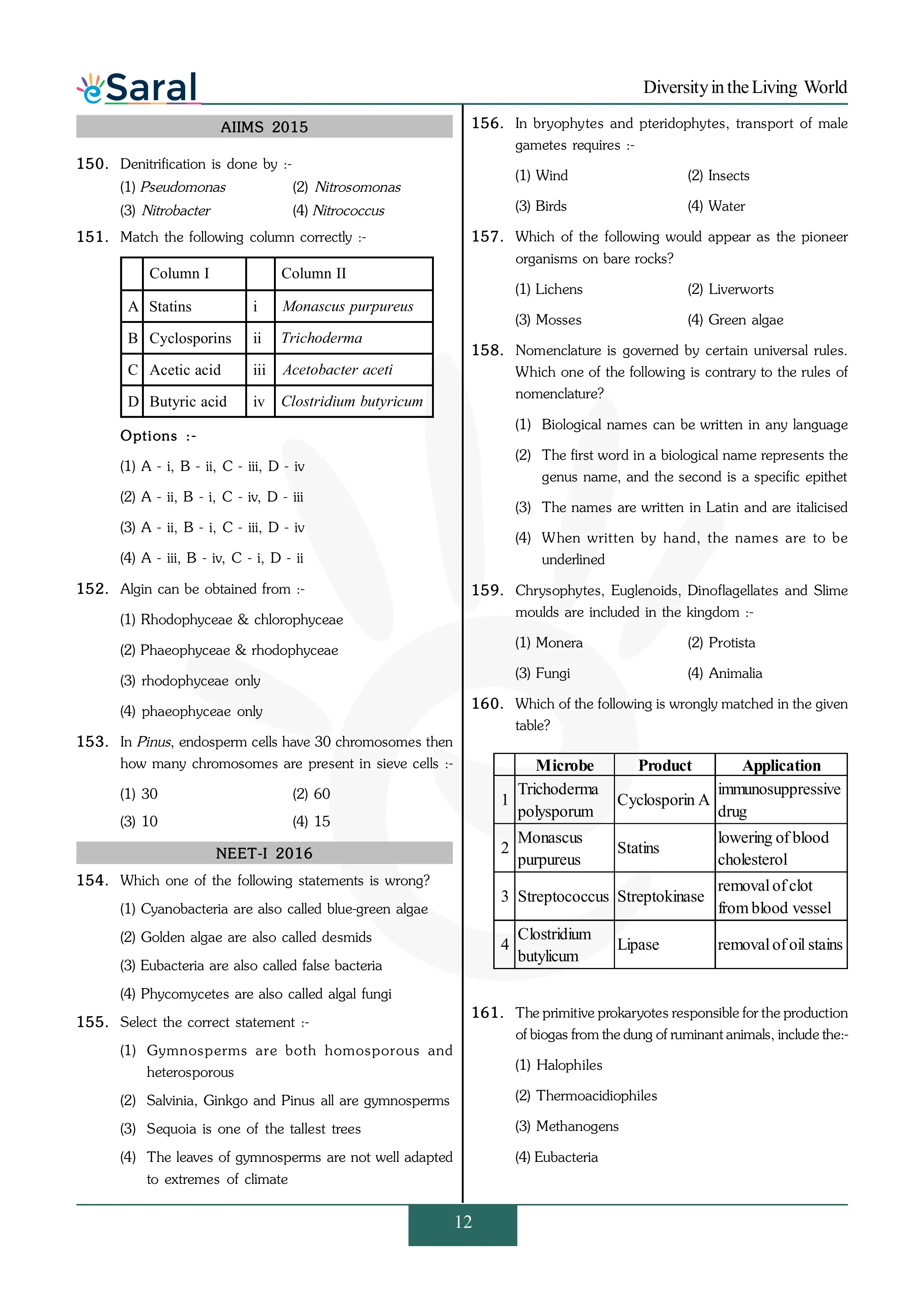
Frequently Asked Questions
Which topics from Biological Classification are most repeated in NEET?
The most repeated topics are: Five Kingdom classification by R.H. Whittaker, characteristics of Fungi (cell wall composition, heterotrophic nutrition, spore types), differences between viruses and viroids, and features of Monera. These four areas account for the majority of PYQ questions from Chapter 2 over the past decade.
Is Diversity in the Living World important for NEET 2025?
Yes, it is important. This unit appears every year without exception in NEET, as confirmed by NTA's official past papers available at nta.ac.in. The topics are largely factual and NCERT-based, making them some of the most reliably scorable questions in the entire Biology section if prepared correctly
How many questions are asked from Diversity in the Living World in NEET?
NTA asks 2–4 questions from this unit (Chapters 1 and 2 of Class 11 Biology) in NEET every year. Biological Classification consistently contributes more questions than The Living World chapter. Over the last seven years, the average has been 3 questions per year, worth 12 marks in total.
How should I use NEET previous year questions for Diversity in the Living World?
Solve all PYQs topic-by-topic, not year-by-year. First attempt each question without looking at the answer, then check the solution and trace the answer back to the exact NCERT sentence. Make a separate error log for repeated mistakes. Review this log 48 hours before your exam. This method is more effective than re-reading the full chapter multiple times.
What is the difference between The Living World and Biological Classification for NEET?
The Living World (Chapter 1) focuses on what life is — characteristics of living organisms, taxonomic hierarchy, binomial nomenclature, and the concept of species. Biological Classification (Chapter 2) focuses on how living things are grouped — the five-kingdom system, features of each kingdom, and exceptions like viruses and lichens. Chapter 2 is higher-yield for NEET marks.
Can I score full marks in Diversity in the Living World just by reading NCERT?
For most questions — yes. Approximately 80–85% of NEET questions from these chapters are directly traceable to specific lines, tables, or diagrams in NCERT Class 11 Biology. The remaining 15–20% require application of NCERT concepts. Thorough NCERT reading combined with PYQ practice is sufficient to score 12–16 marks from this unit.
Are questions from this chapter repeated in NEET across years?
Yes, conceptual repetitions are common. While the exact wording changes, the underlying concept — for example, "which organism belongs to Protista" or "what is the cell wall material in Fungi" — repeats in different forms. This is why PYQ practice directly improves your score: you learn to recognise the concept behind each question, not just the answer options.
Team eSaral
eSaral Academic and Editorial Team
Team eSaral is the collective author profile for educational content created by eSaral’s teachers and academic contributors. The team draws on expertise from IIT graduates, doctors, experienced educators and subject specialists to develop resources for JEE, NEET and school students. Our articles aim to explain concepts clearly and help students study with confidence.
Related Posts

BITSAT 2027: Registration Date, Exam Date, Syllabus, Eligibility, Pattern & Fees
BITSAT 2027 exam dates, registration timeline, eligibility criteria, exam pattern, marking scheme, syllabus and fees in one page.

BITSAT Previous Year Question Paper PDF (2017-2026)
Download BITSAT previous year question papers PDF from 2017 to 2026,session-wise. Memory-based papers,exam pattern, paper analysis and how to practise

CBSE Class 10 Date Sheet 2027: Expected Exam Dates, Release Date, Admit Card & Result Timeline
CBSE Class 10 date sheet 2027 is awaited. See the expected exam dates, release window, how to download the PDF, admit card and result timelines.

NCERT Physics Class 10 Book PDF in Hindi 2026-27 – भौतिक विज्ञान के 4 अध्याय (Free Download)
NCERT Physics Class 10 book PDF in Hindi 2026-27: download all 4 chapters (अध्याय 9–12) free, with topics and important formulas.

NCERT Biology Class 9 Book Anveshan PDF in Hindi - जीव विज्ञान कक्षा 9 पुस्तक अन्वेषण PDF
Download NCERT Biology Class 9 book PDF in Hindi chapterwise for 2026-27: Cell, Tissues, Reproduction and Diversity. Free PDFs.

Essay On Artificial Intelligence in English (100,150, 200, 250, 300, 500 Words)
This is in contrast to the natural intelligence of humans. With Artificial Intelligence, machines can perform

Essay on 78th India Independence Day in English for Student (100, 150, 200, 250, 300, 500 Words)
Read the best essays on India's Independence Day in English. Short & long essays (100, 150, 200, 250, 300, 500 words) perfect for school exams
NCERT Class 11 English Snapshots book - Free PDF download- Esaral
Download NCERT Class 11 English Snapshots book PDF for free. Get all 8 chapters, chapter-wise. Start your prep today!
NCERT Class 10 biology book pdf - Free PDF Download - eSaral
NCERT Class 10 Biology book PDF 2026-27: all 5 chapters (Life Processes to Our Environment) in English & Hindi, with CBSE syllabus, marks & practical

Essay on Global Warming in English (100,150, 200, 250, 300, 500 Words)
Global warming means the Earth is getting hotter. This happens because of things like pollution from cars and factories.