
Electrostatics: Electric Charges and Fields Class 12 Physics Chapter 1 Notes

eSaral Academic and Editorial Team
Summary
Electric Charges and Fields Class 12 Notes cover the foundational concepts of electrostatics including types of electric charge, Coulomb's Law, the principle of superposition, electric field and field lines, electric dipole, Gauss's Law, and electric flux. This is Chapter 1 of Class 12 Physics as per the CBSE syllabus and carries significant weight in JEE Main and NEET.
eSaral › Class 12 Physics › Electrostatics: Electric Charges and Fields Notes

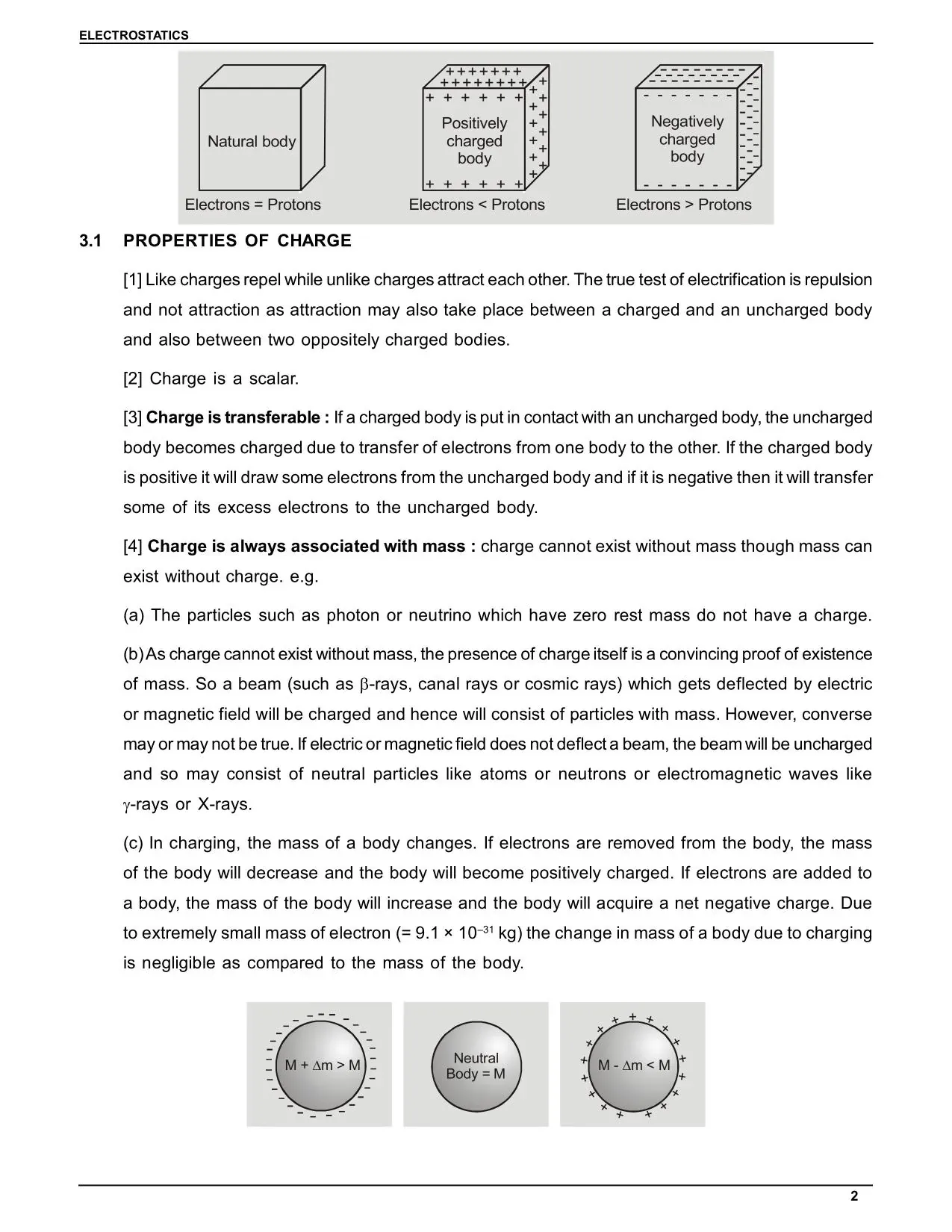
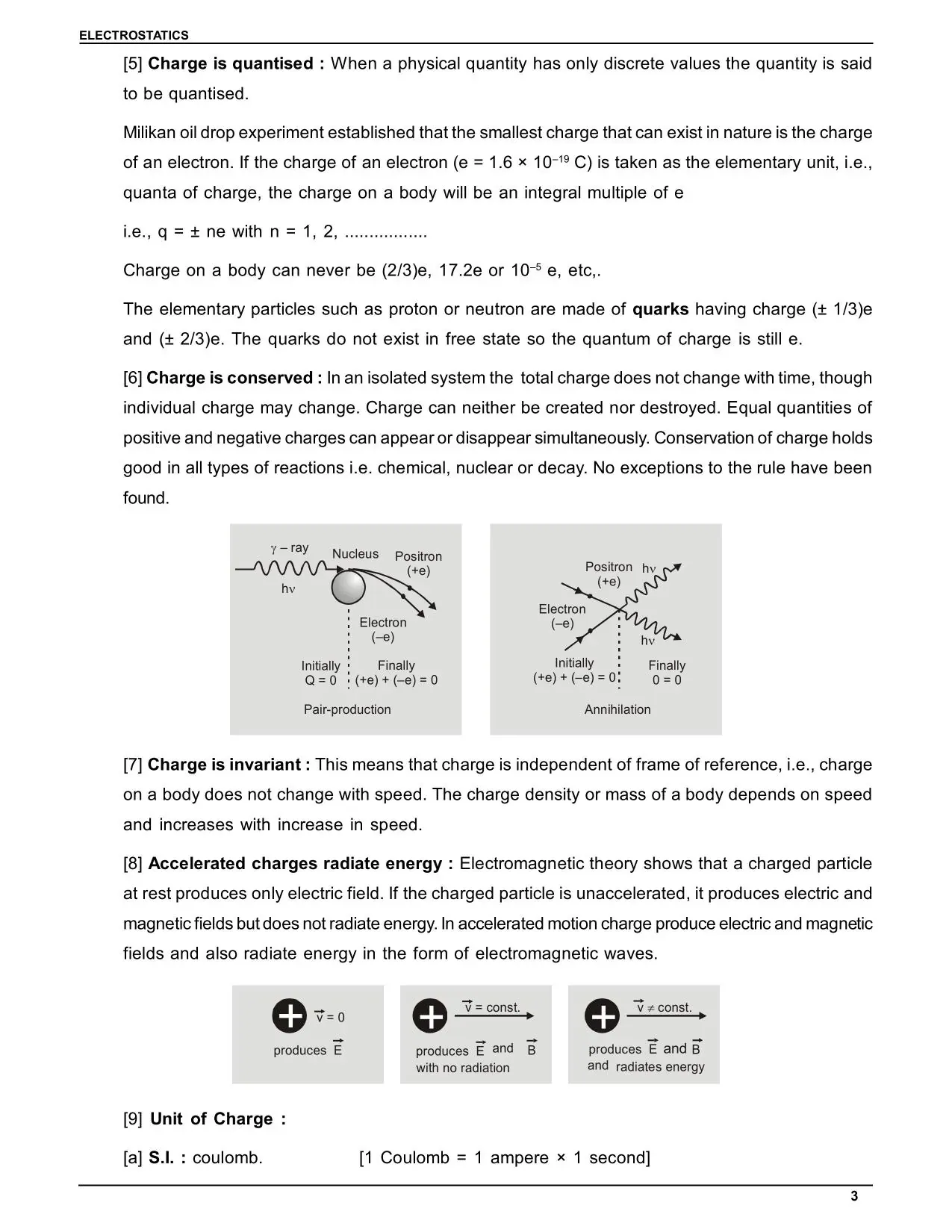
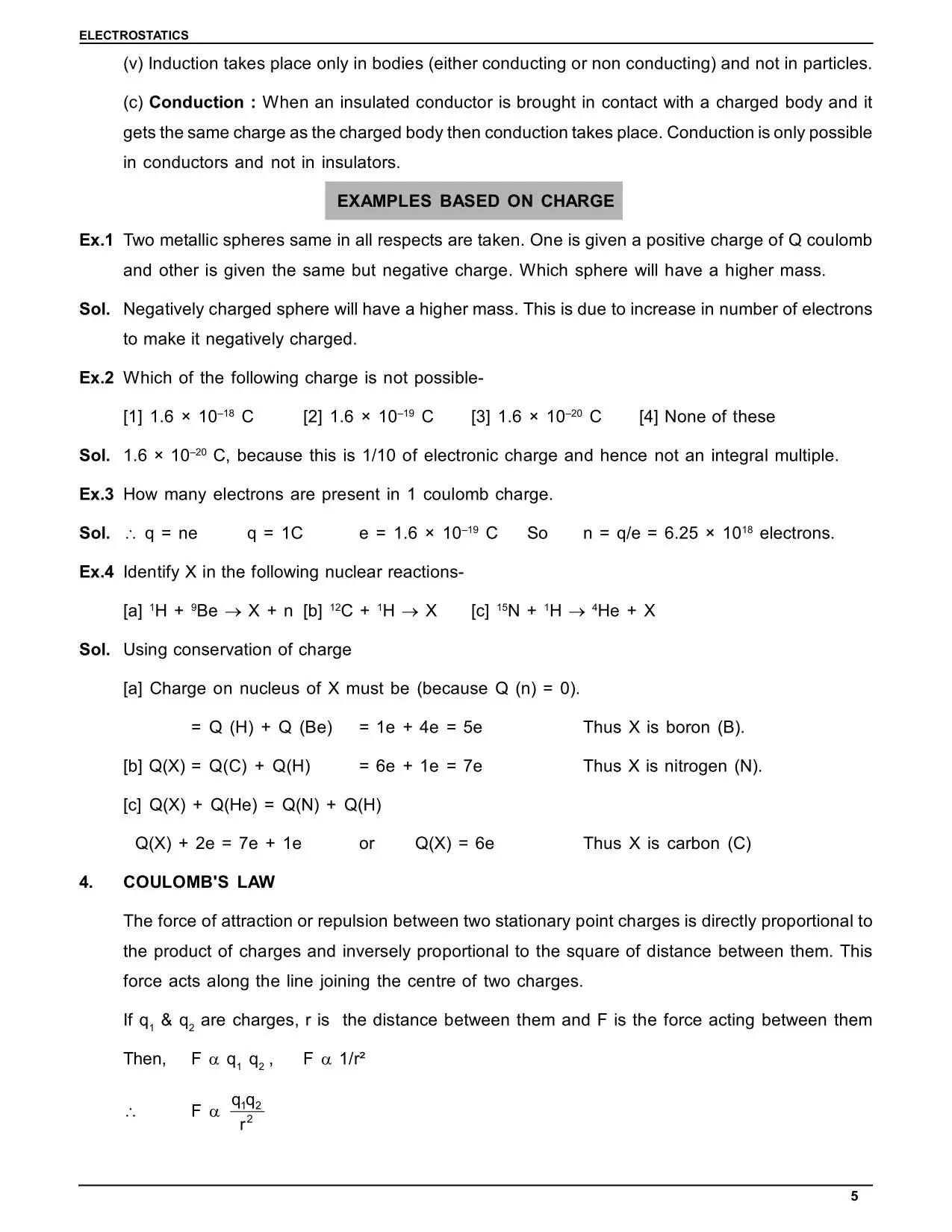
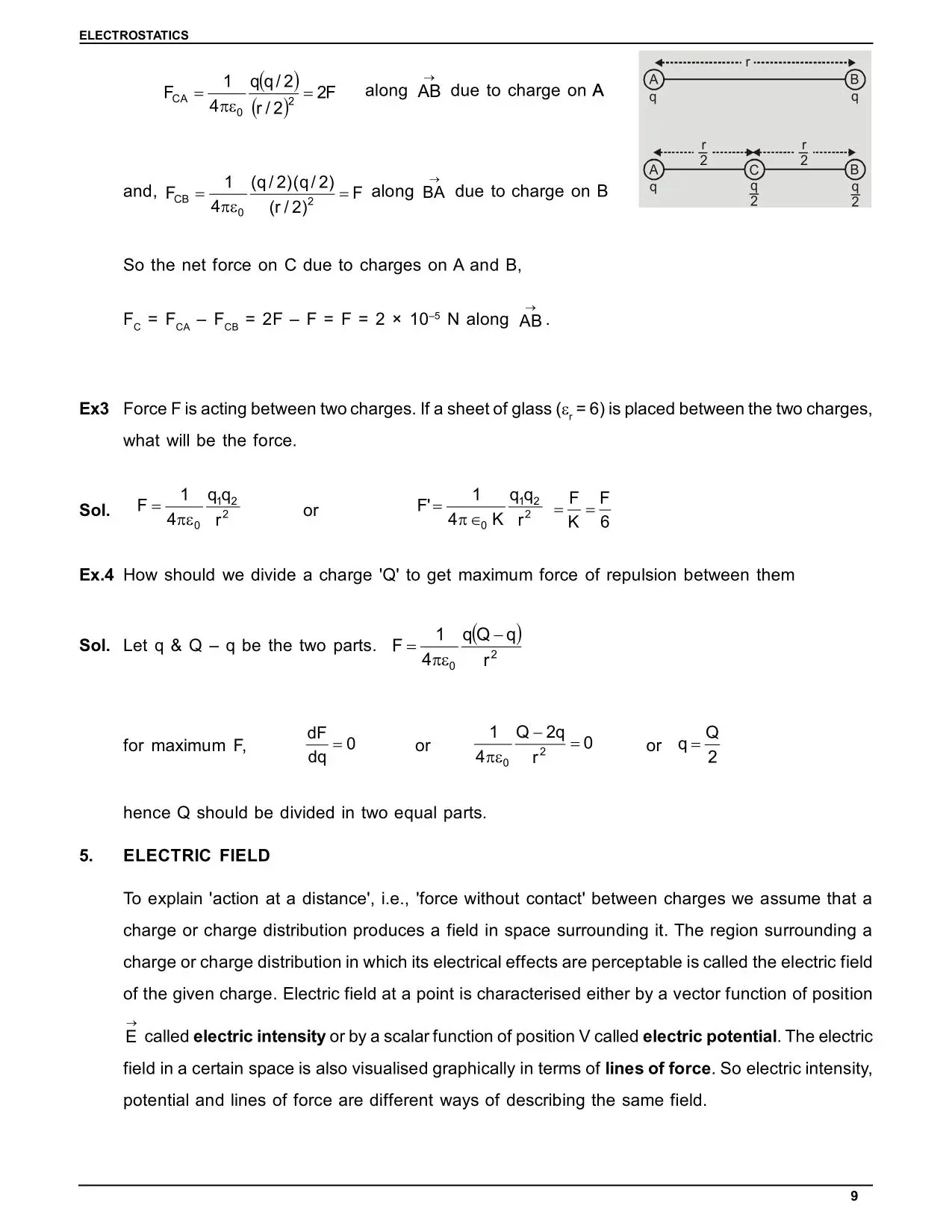
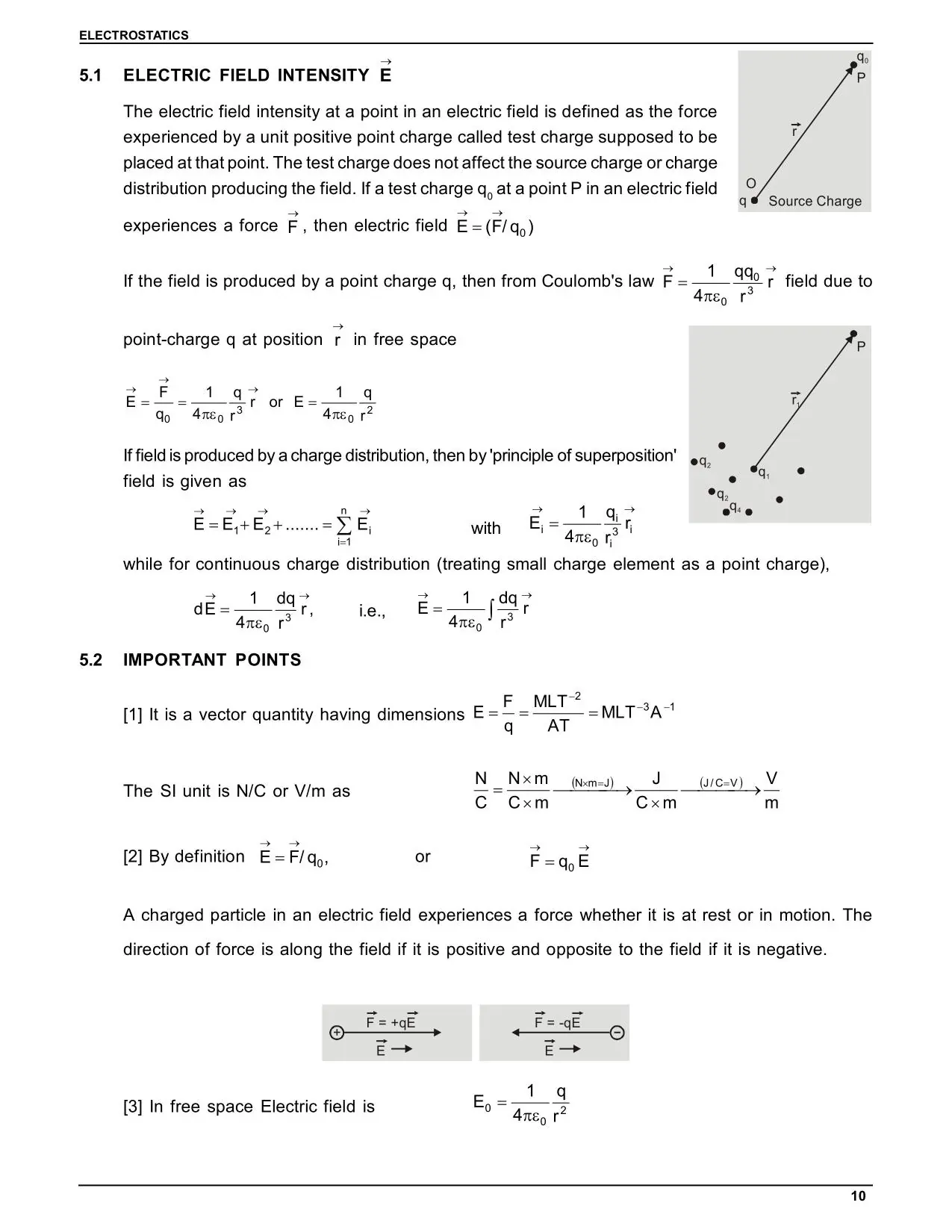
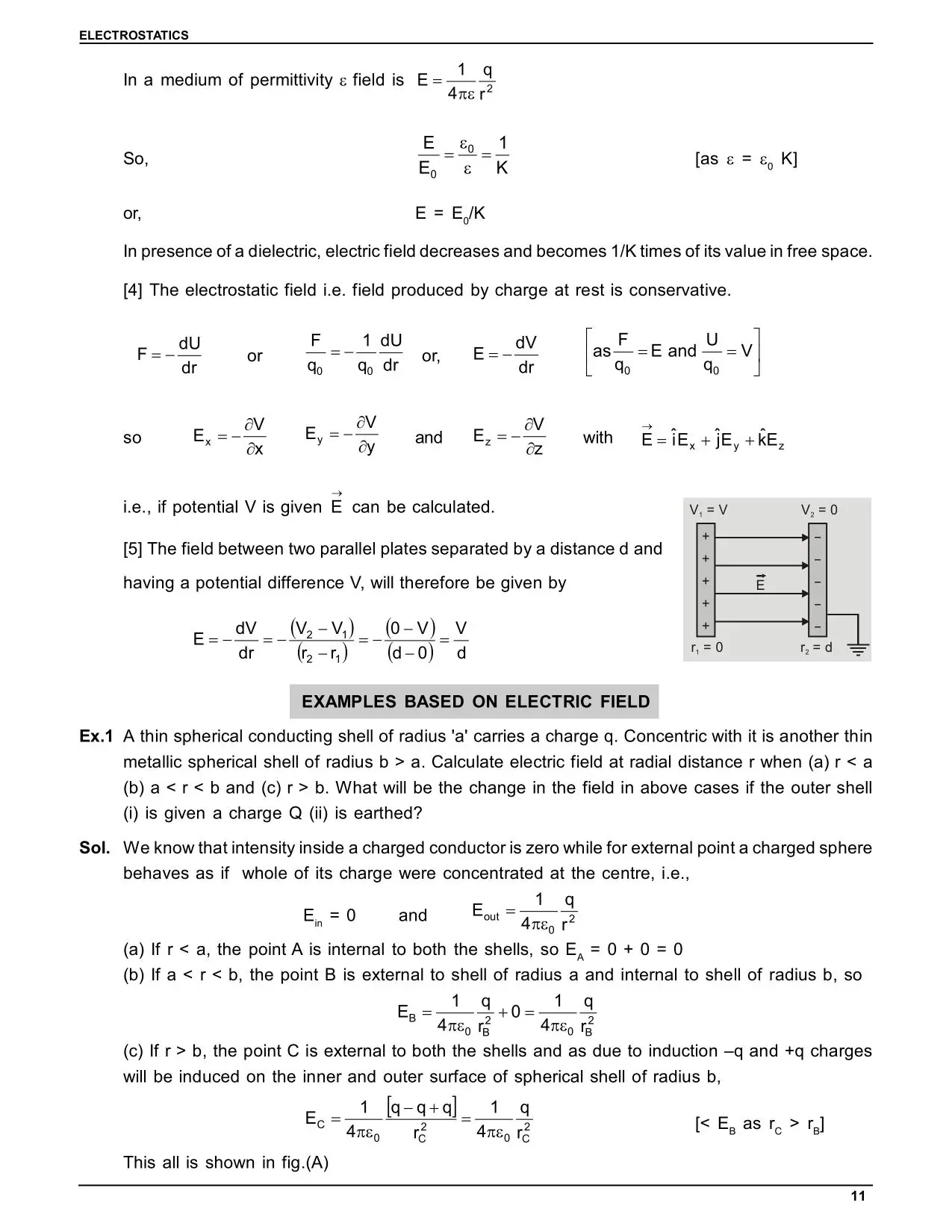
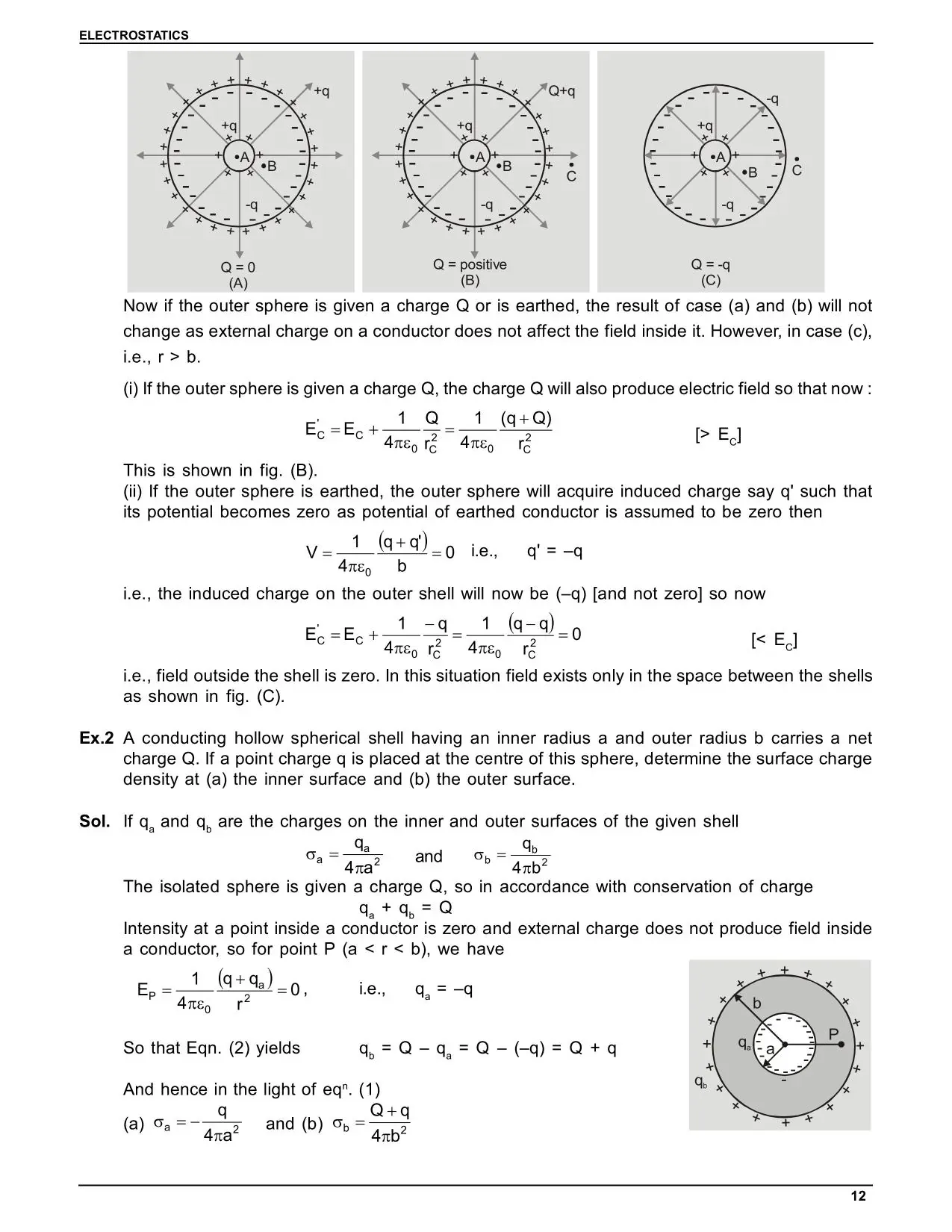
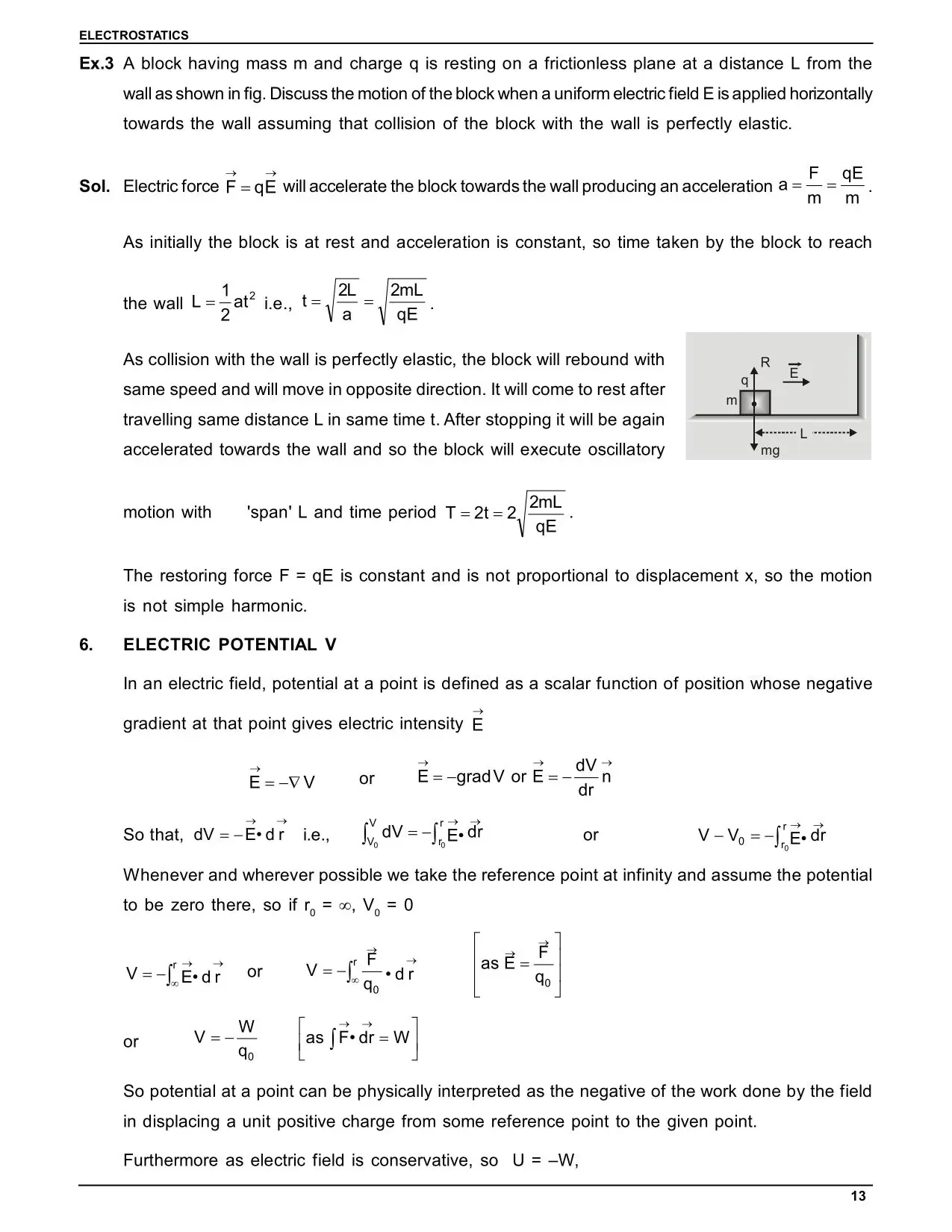
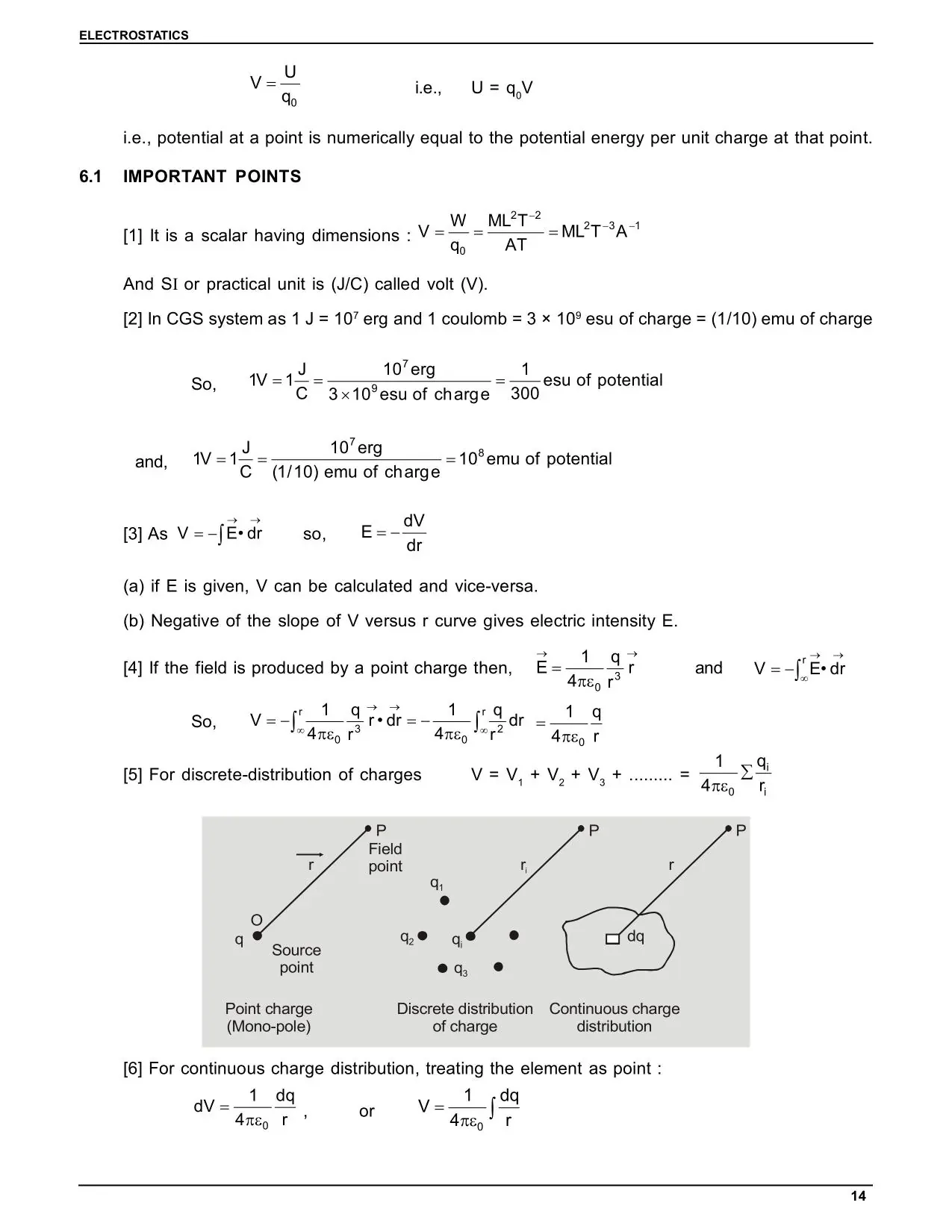
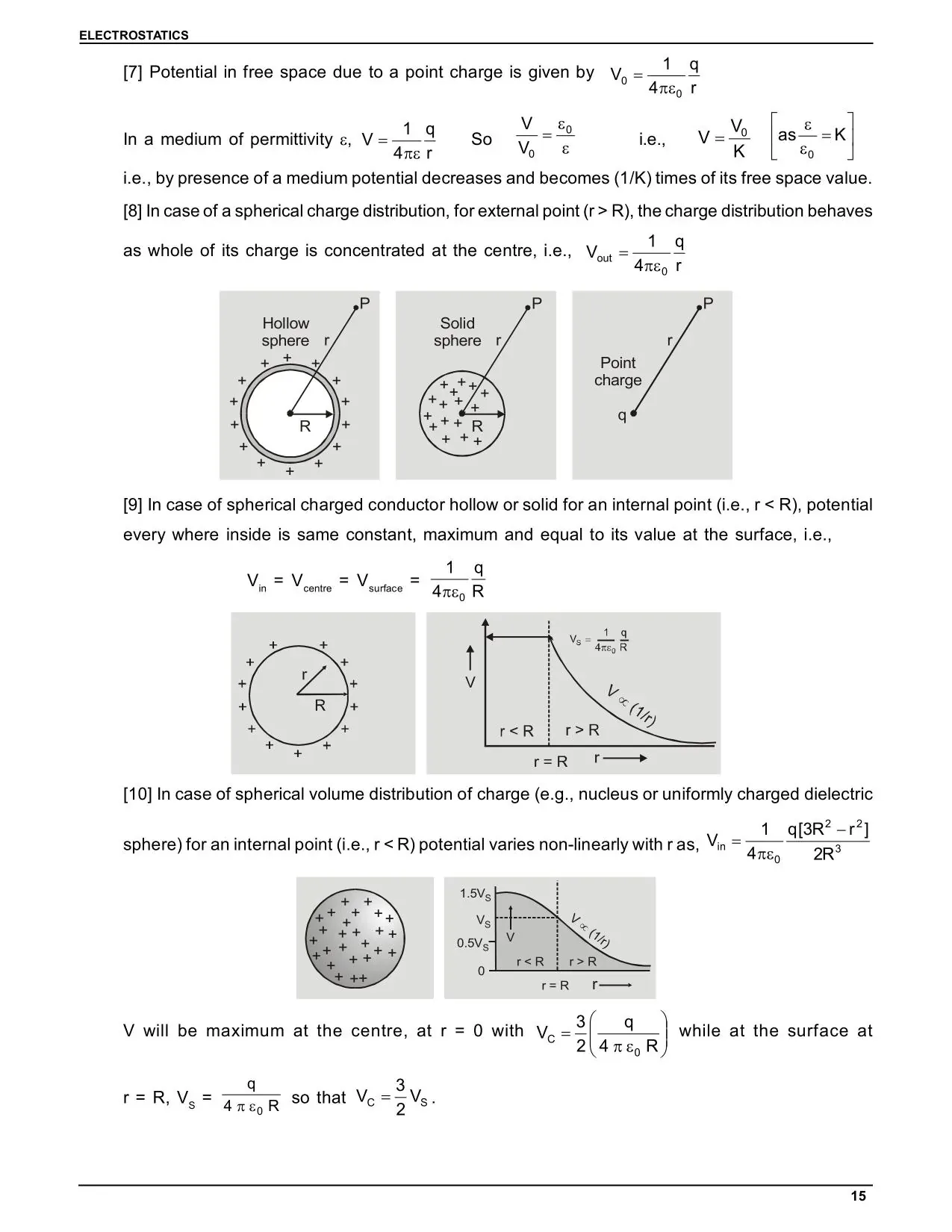
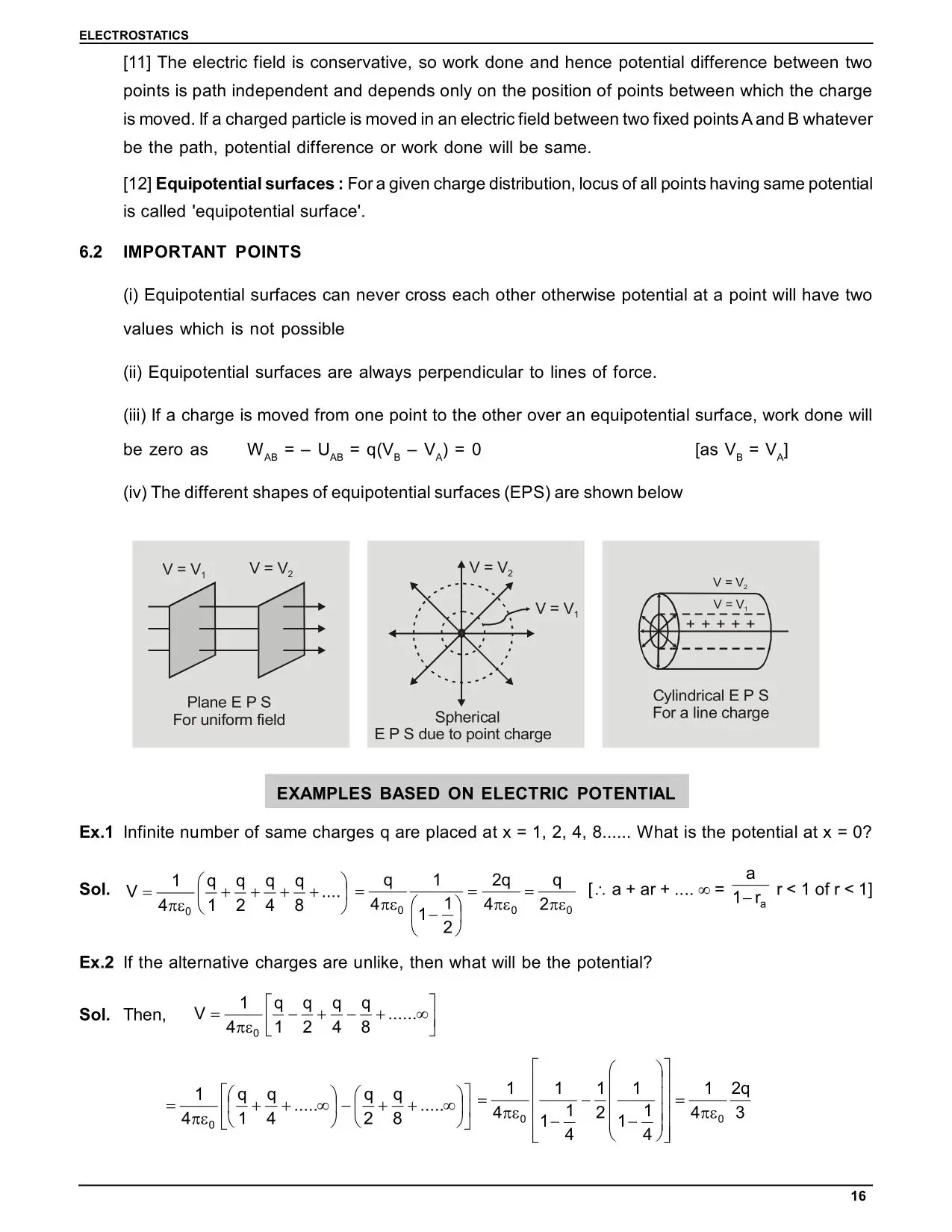
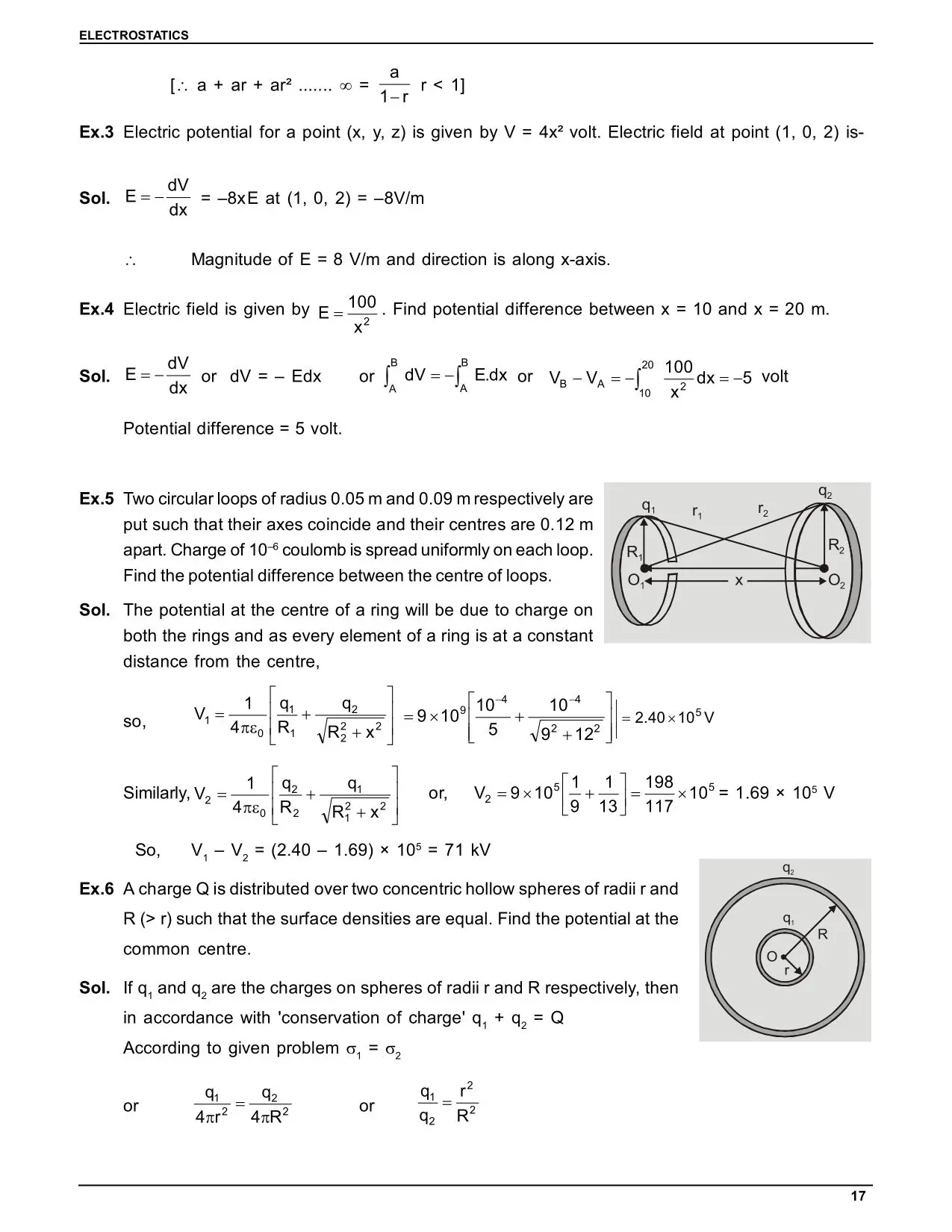
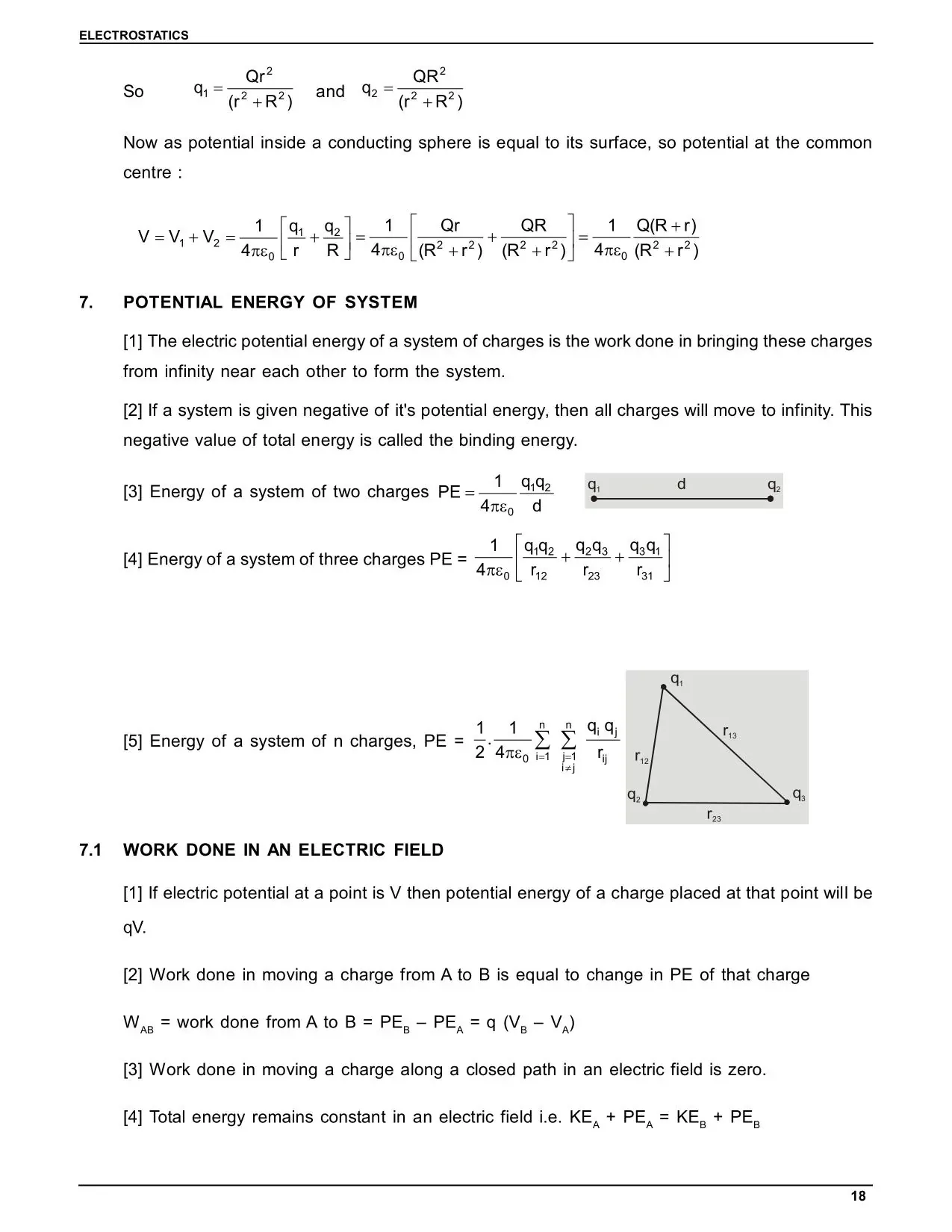
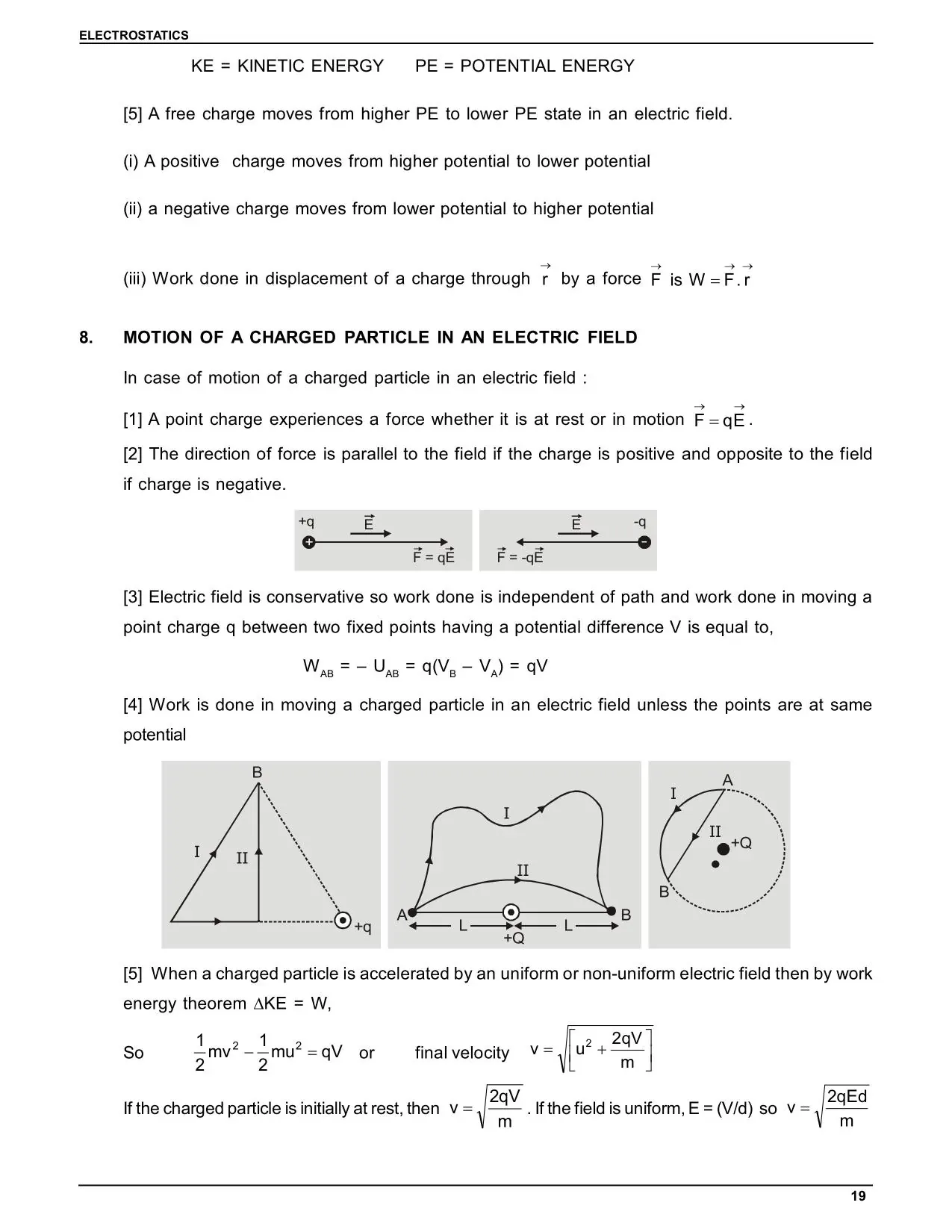
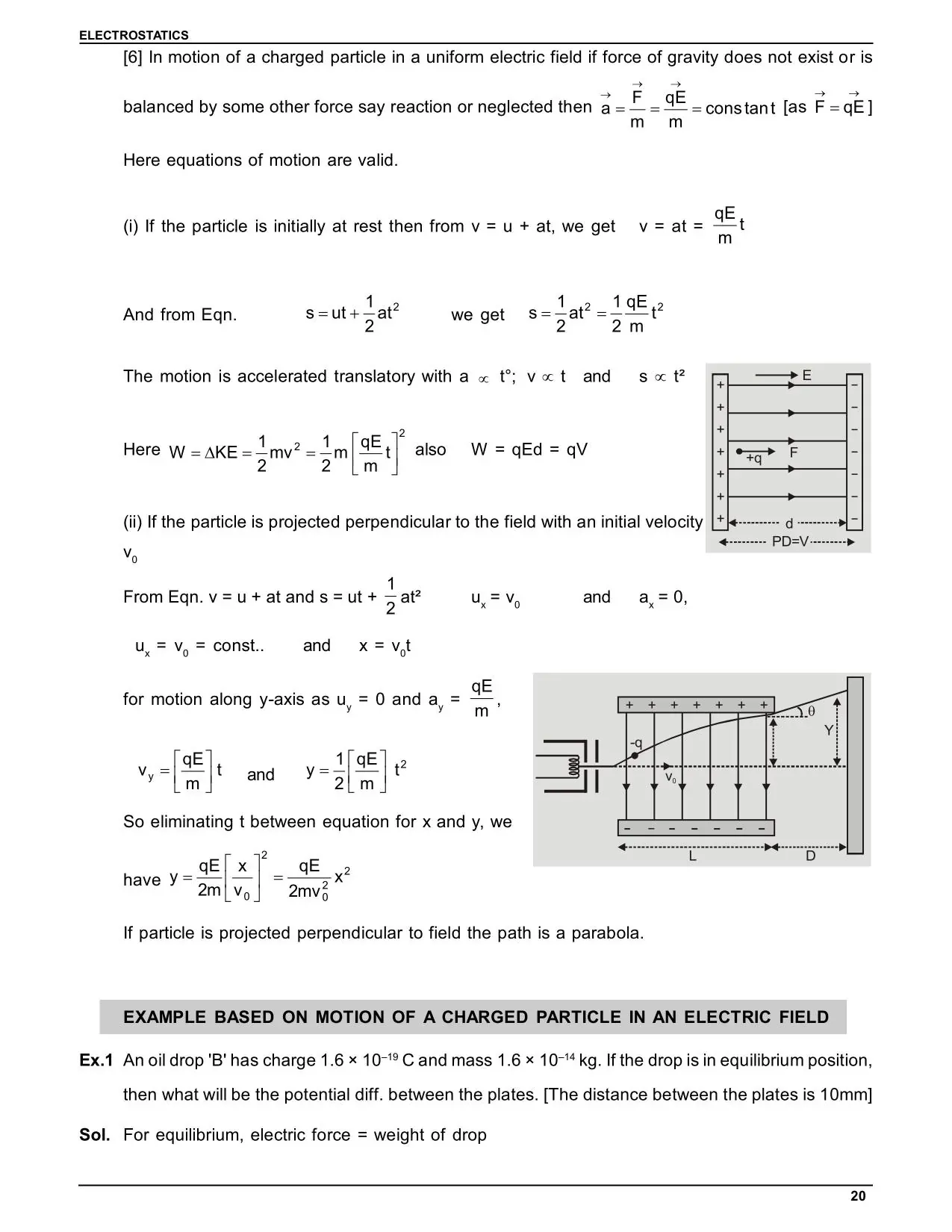
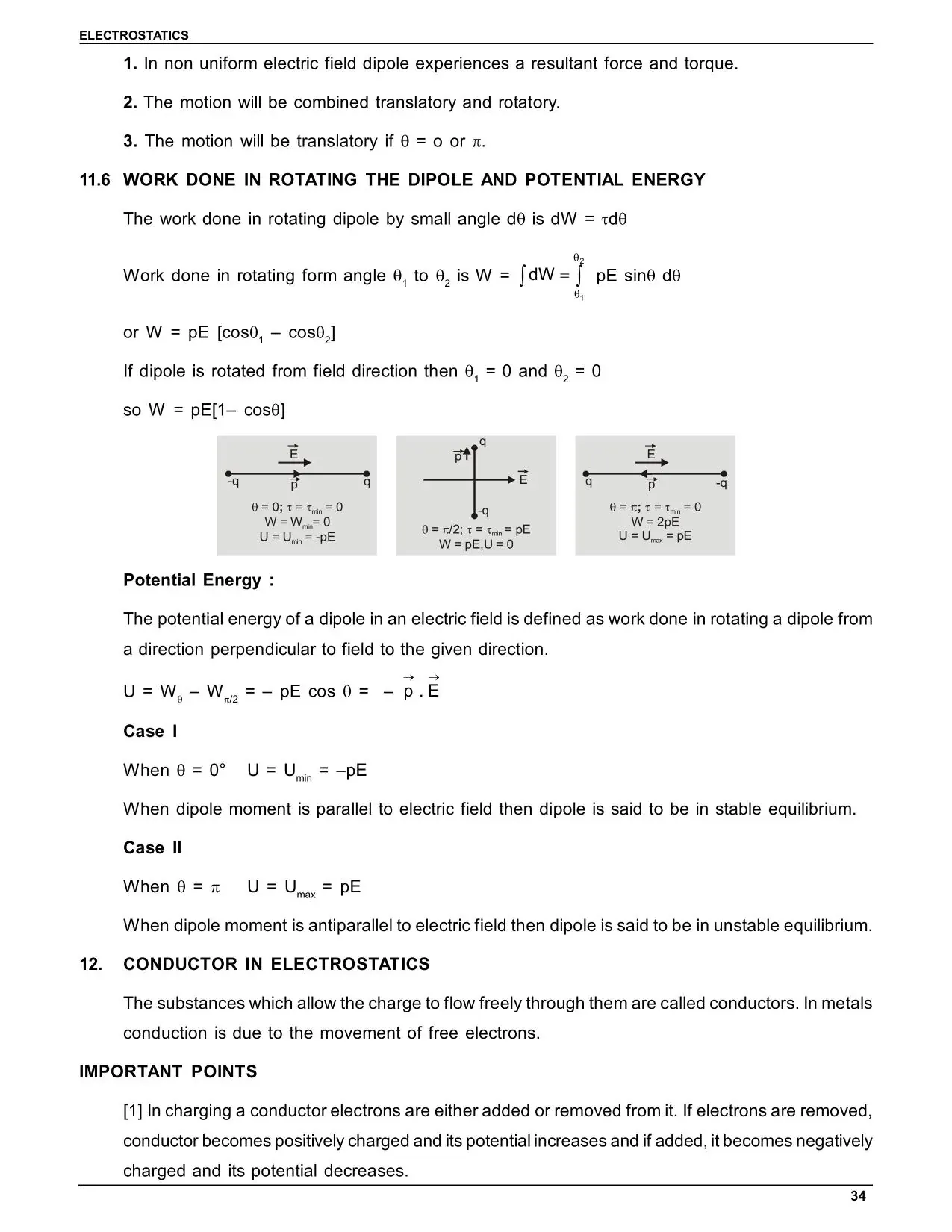
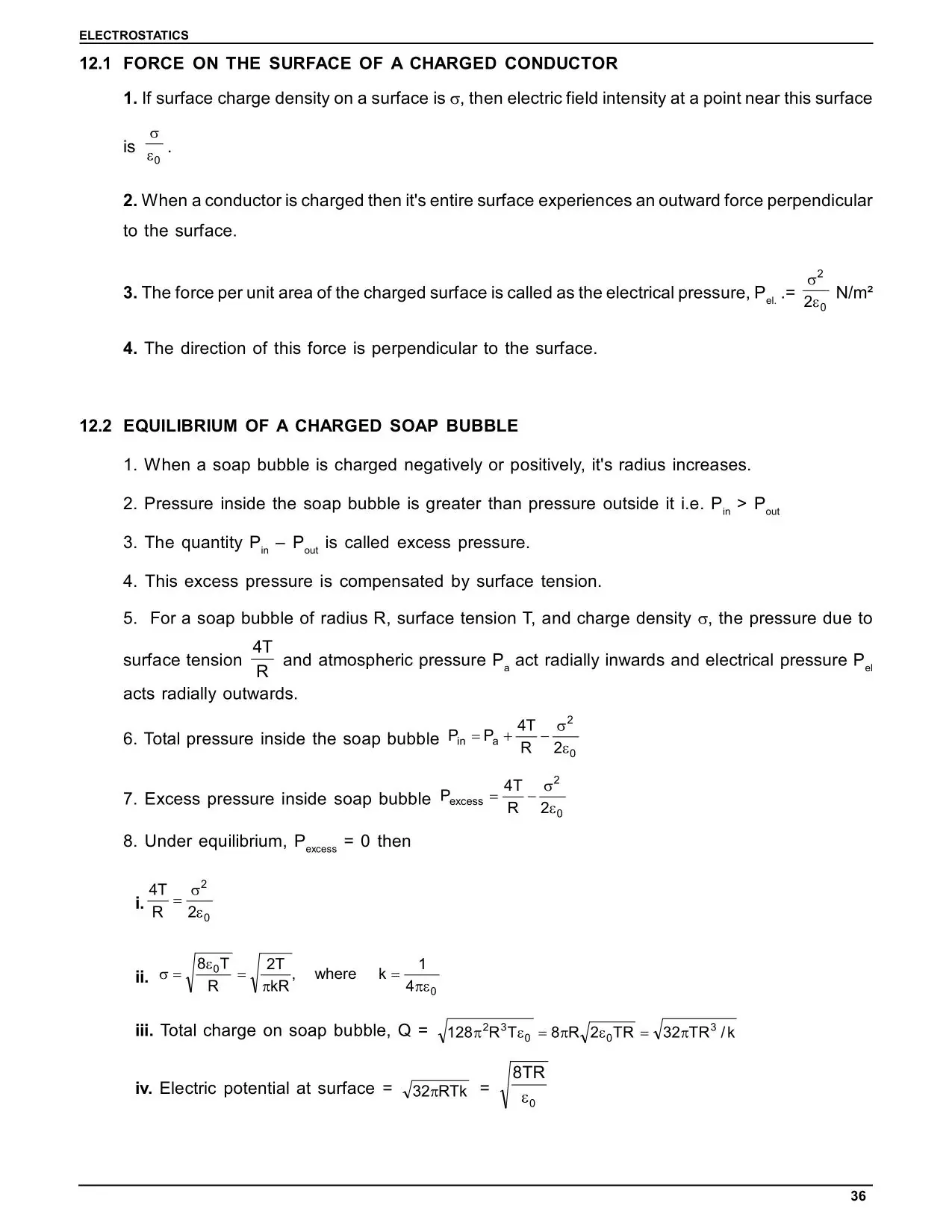
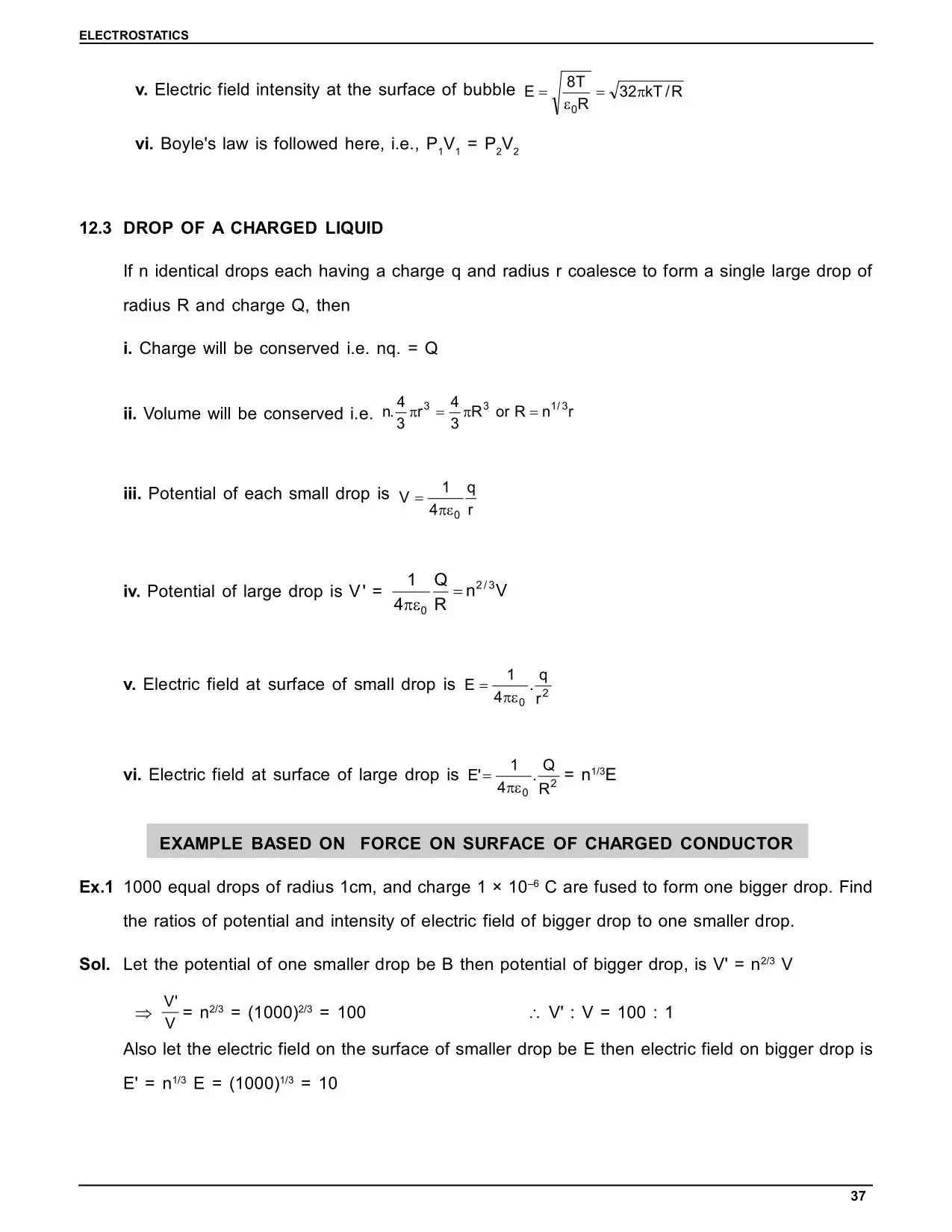
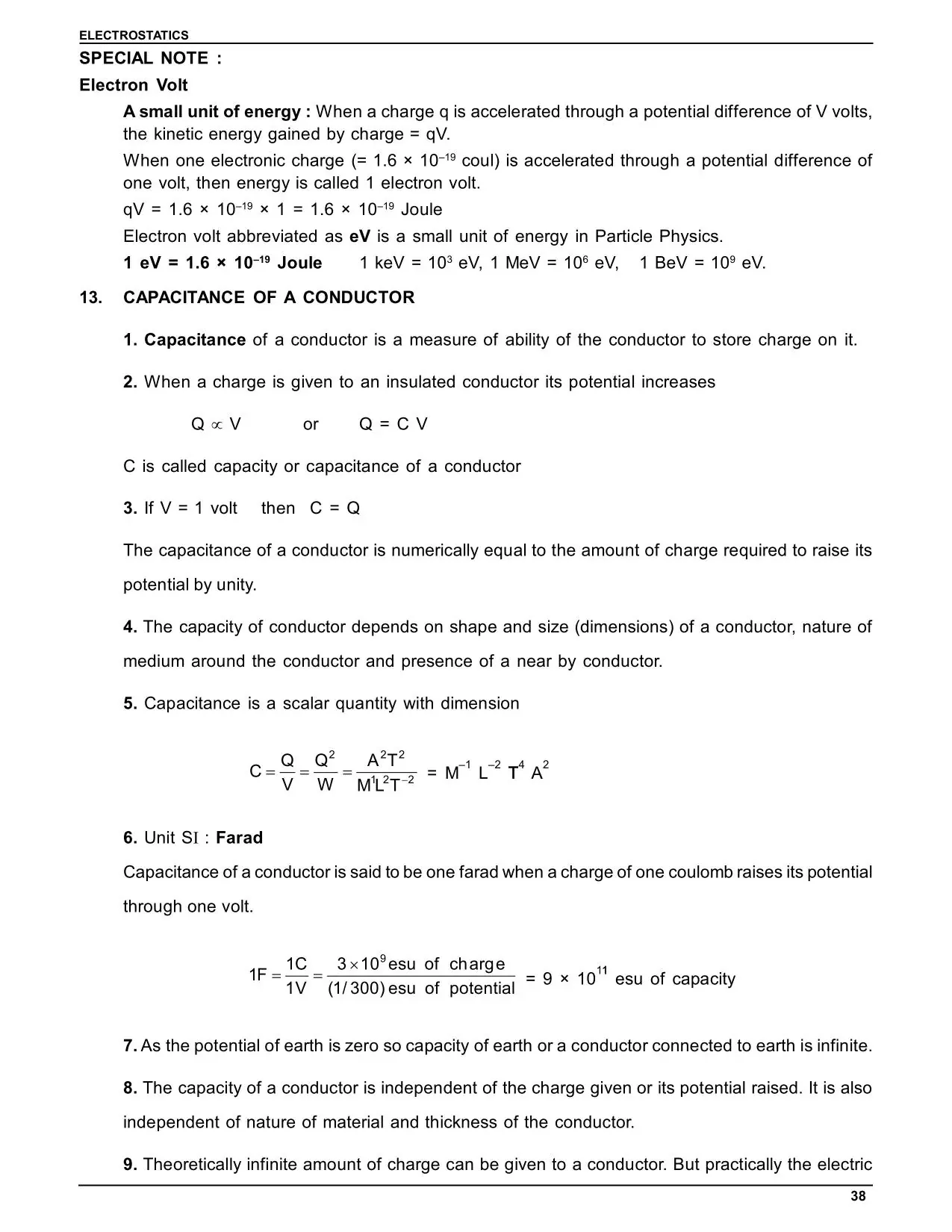
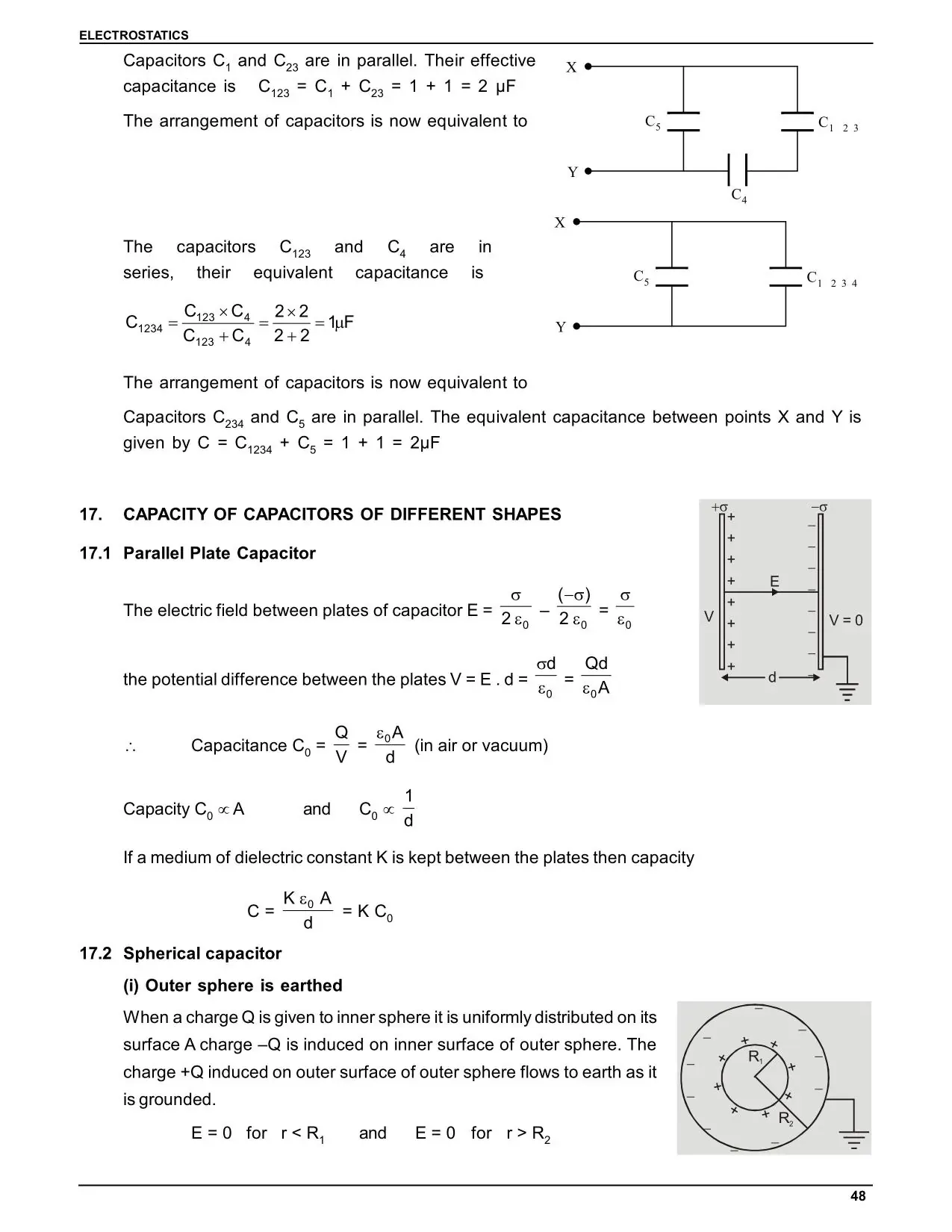
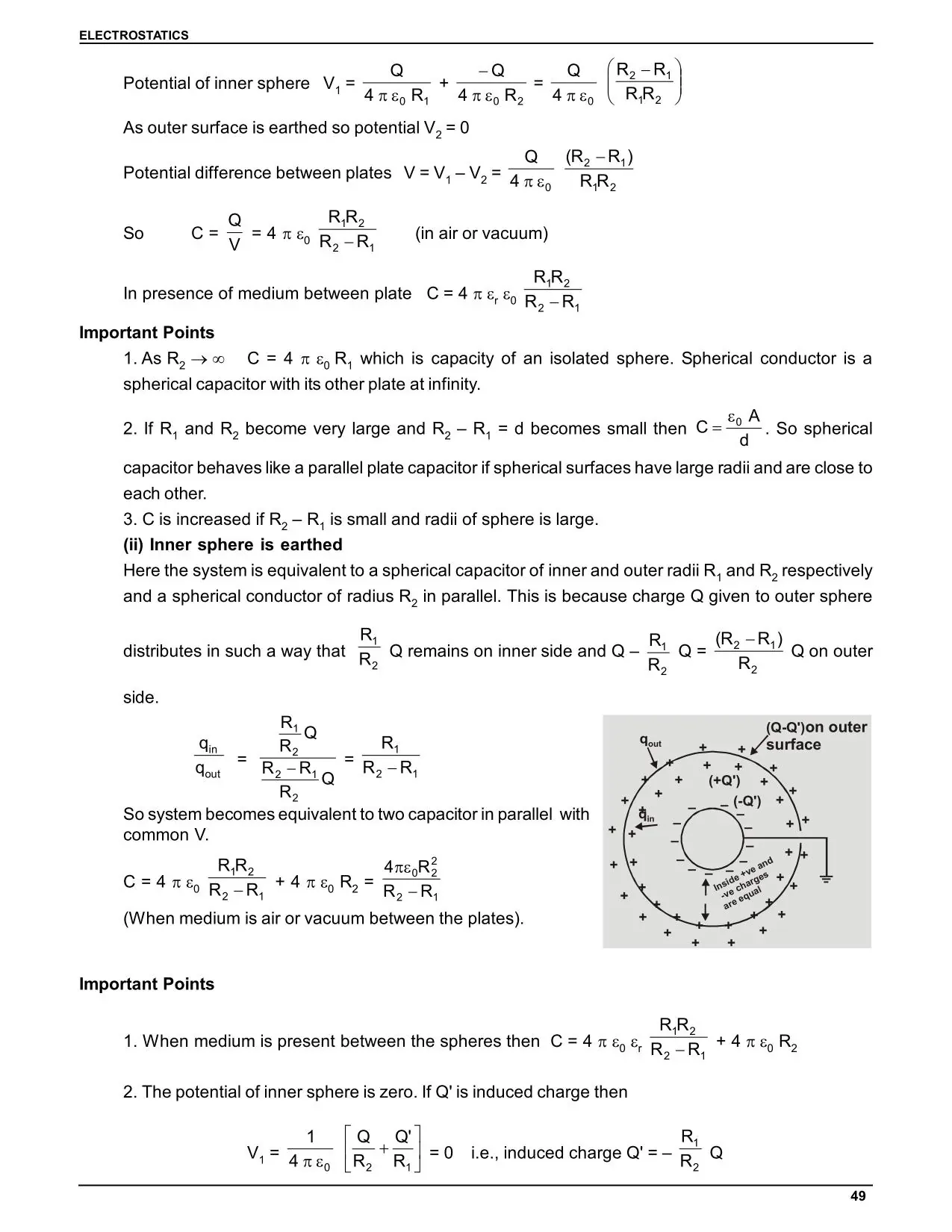
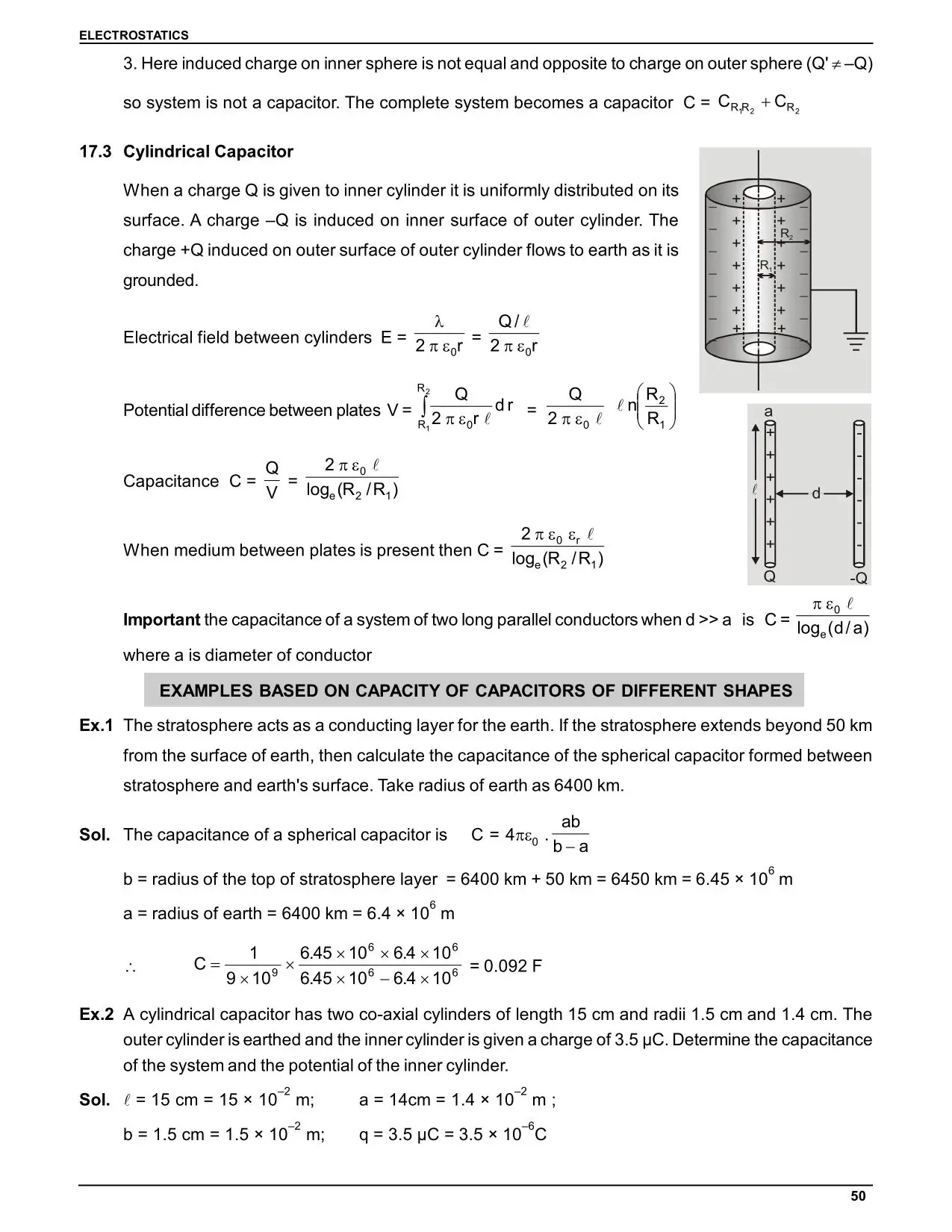
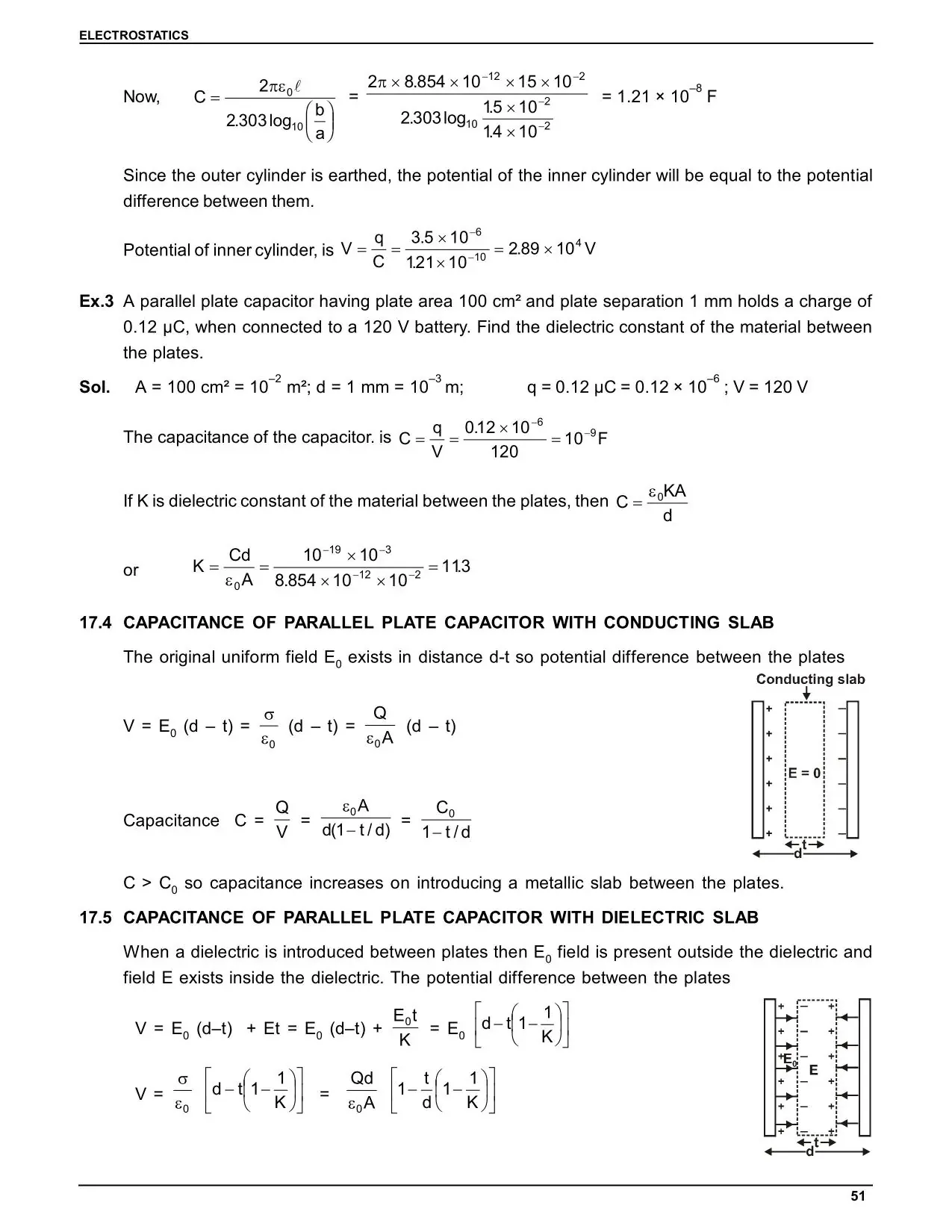
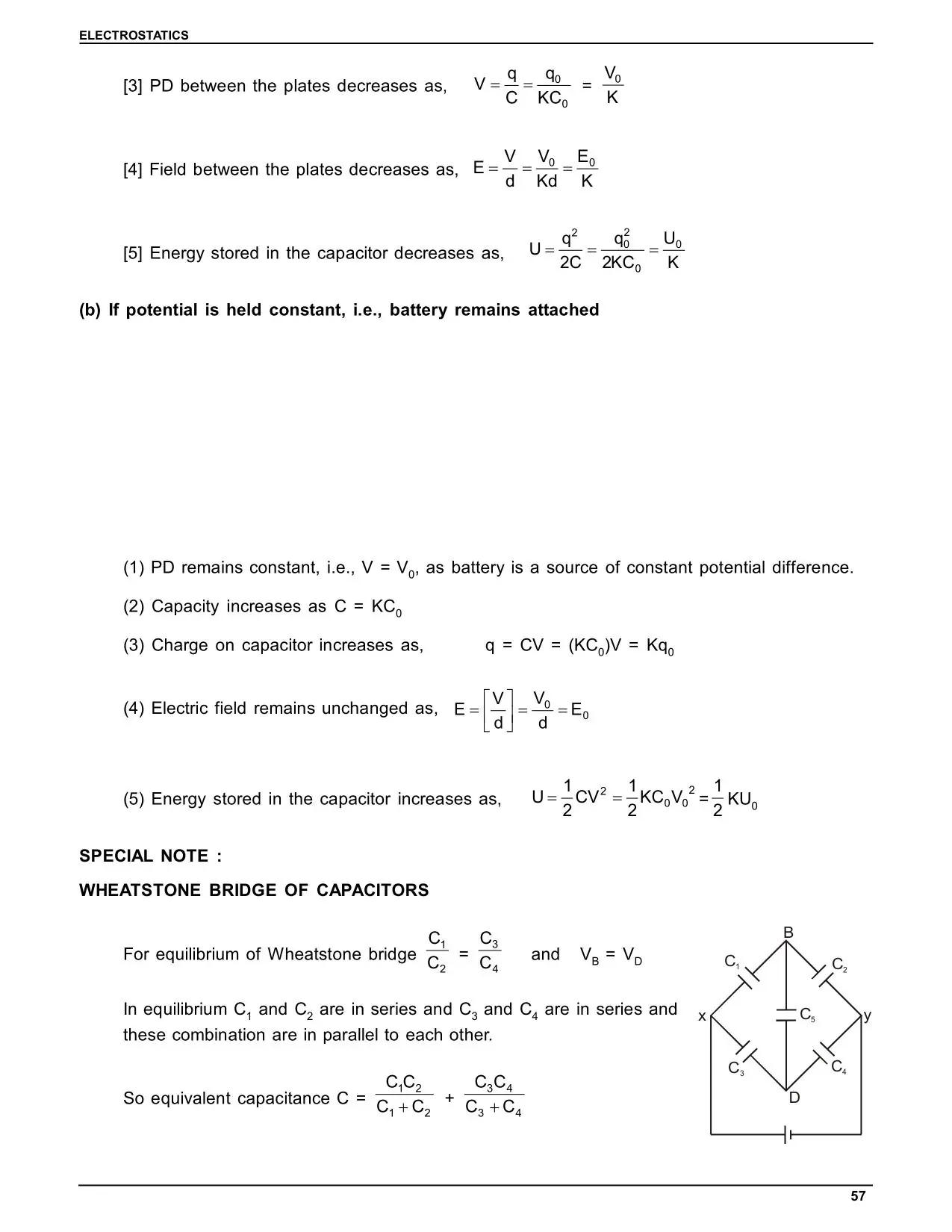
Get complete Electrostatics: Electric Charges and Fields class 12 physics chapter 1 notes. Electric Charge is that physical property of matter due to which the other matter experiences a force when matter is placed in an electromagnetic field. Electric charge is also known as Charge, Electrical Charge, and Electrostatic Charge. It is denoted by the symbol ‘q’. It is a scalar quantity, as charge has only magnitude and no direction. The two types of charges exist in nature: Positive and negative charges. Here are the detailed Physics Electric Charges and Fields Class 12 Notes. These notes provide an exclusive insight into electrostatics. Thus, the notes will be very helpful in preparation for entrance examinations like IIT JEE & NEET.
India's Best Exam Preparation for Class 12th - Download Now
Electrostatics: Electric Charges and Fields class 12 physics chapter 1 notes
Also read:
India's Best Exam Preparation for Class 12th - Download Now
- Class 12 chemistry chapter 1 notes
- Important questions for class 12 physics with answers
- Magnetic Effects of Electric Current Notes
- Current Electricity class 12 notes
- Class 12 English book
- Maths NCERT Exemplar Class 10
- NCERT Solutions for class 12 Maths
- Class 12th Physics Chapter 1 Notes
India's Best Exam Preparation for Class 12th - Download Now
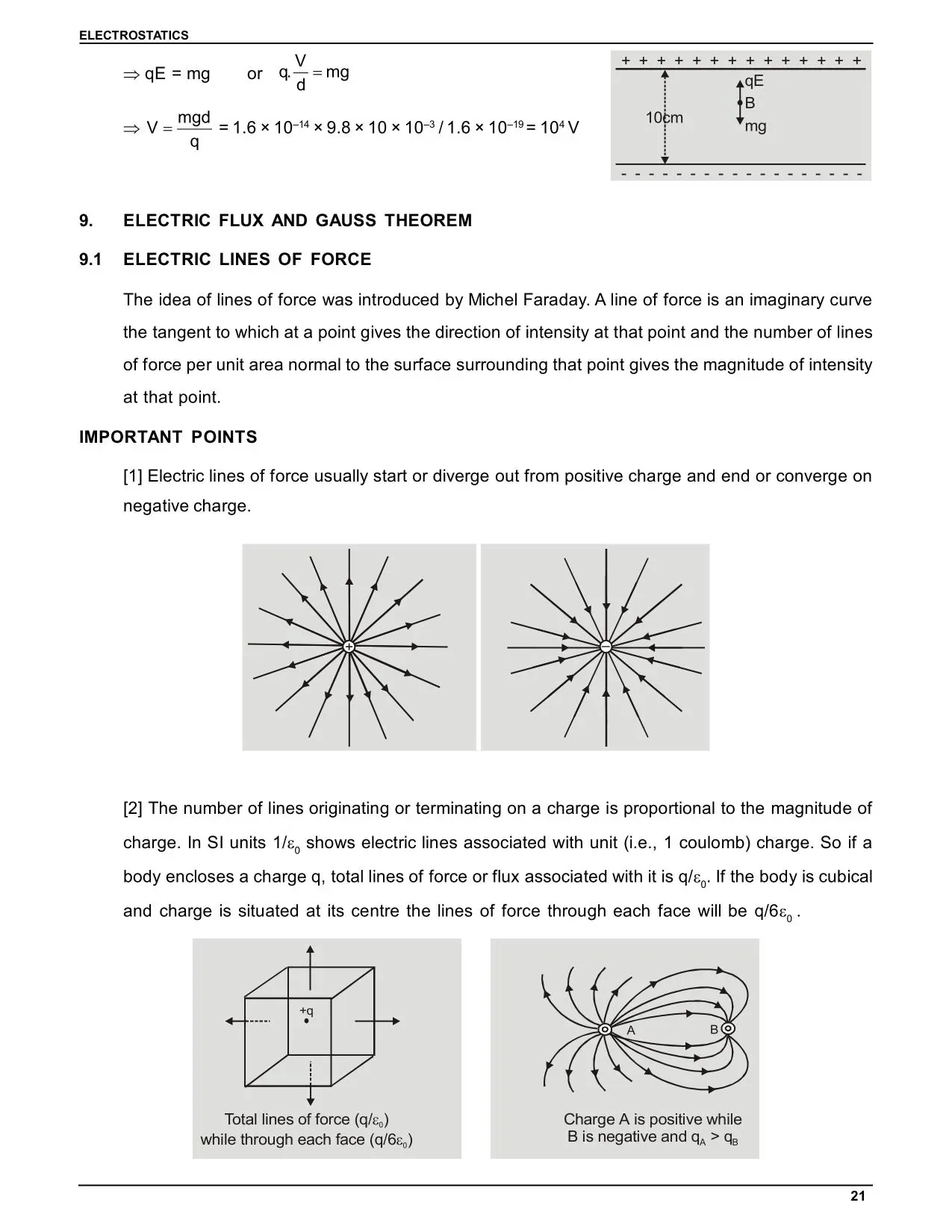
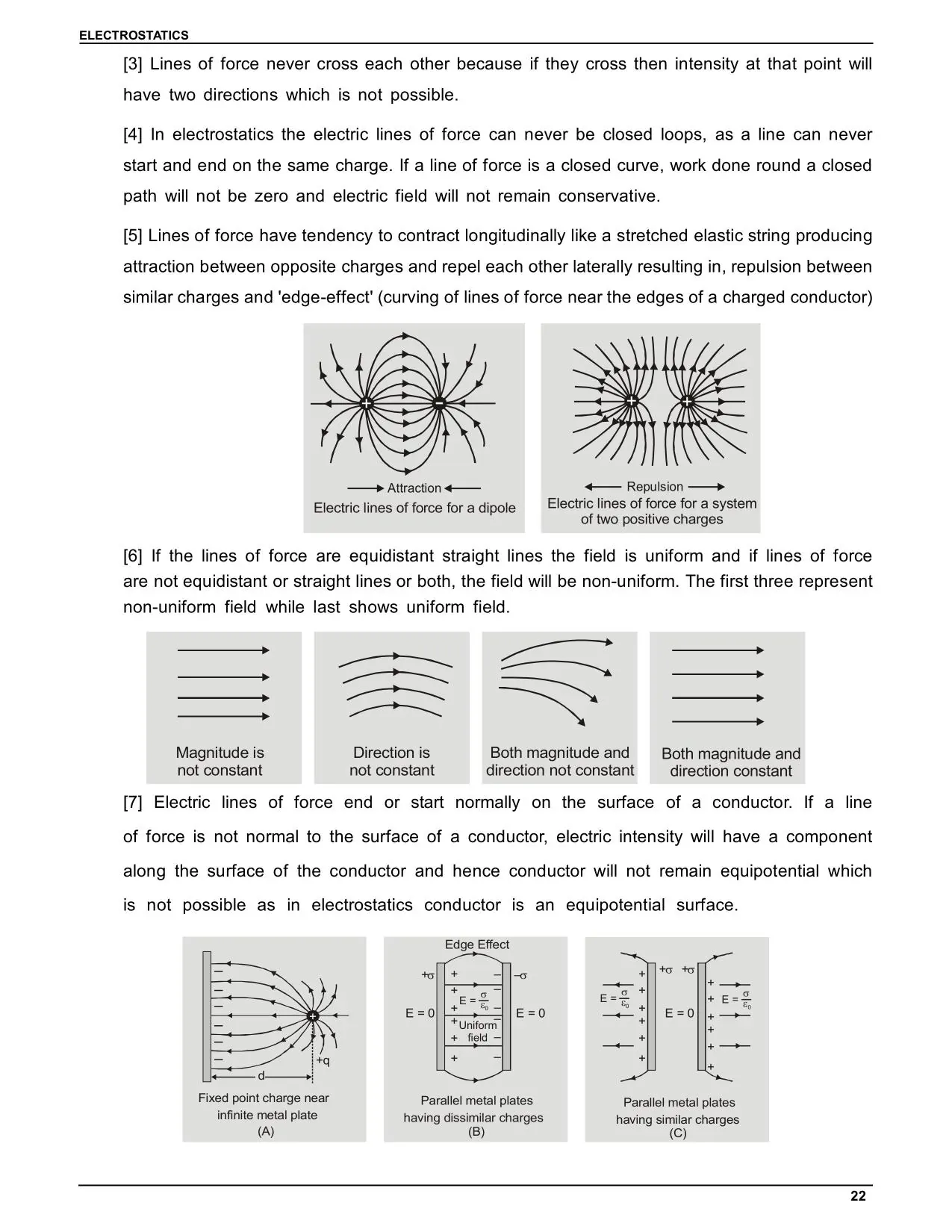
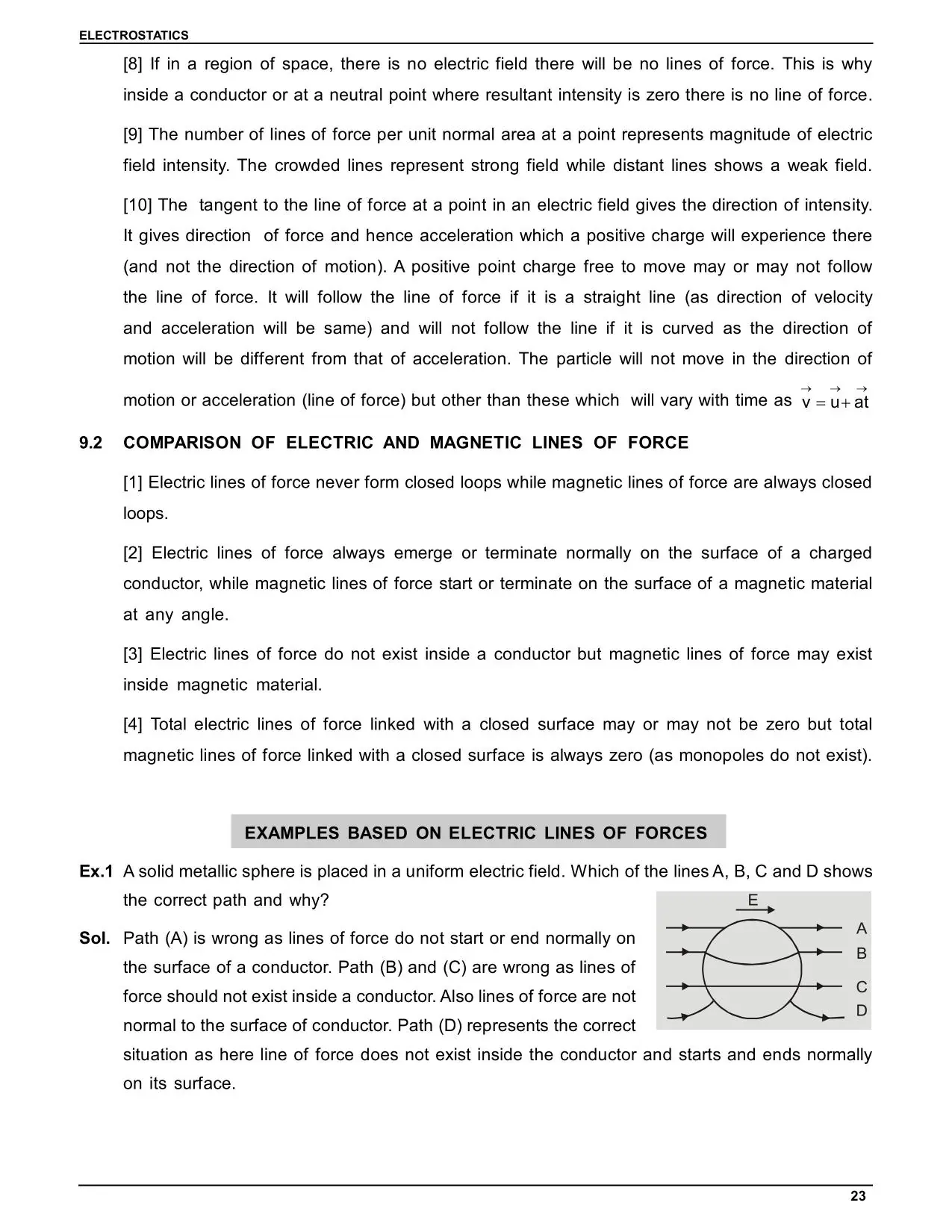
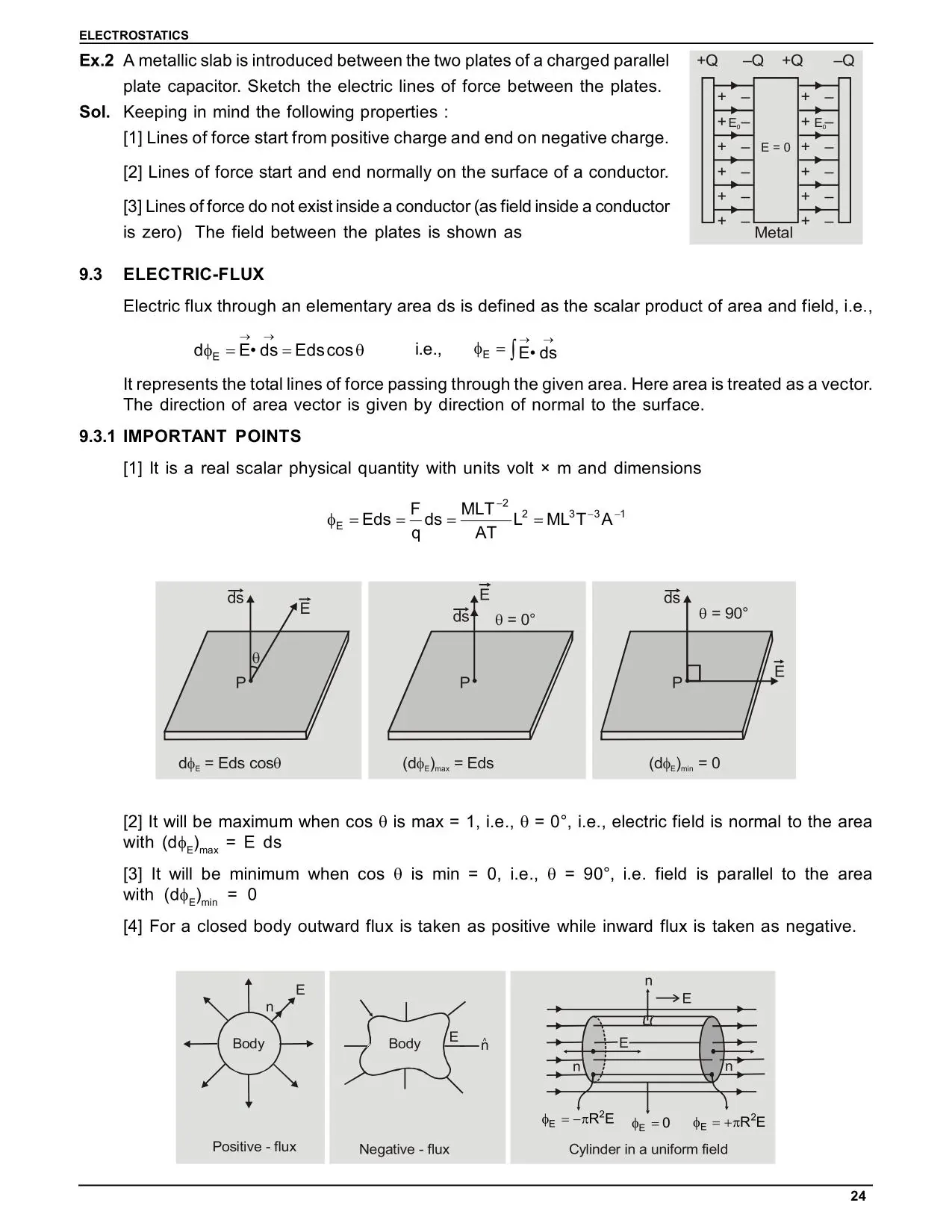
India's Best Exam Preparation for Class 12th - Download Now
India's Best Exam Preparation for Class 12th - Download Now
India's Best Exam Preparation for Class 12th - Download Now
India's Best Exam Preparation for Class 12th - Download Now
India's Best Exam Preparation for Class 12th - Download Now
eSaral has already come up with an amazing revision series of Physics where you can easily revise your chapter within minutes with all the important formulae and key points. This revision series is free for all. Click Here for Complete Physics Revision Series by Saransh Gupta Sir (AIR-41). About Saransh Gupta Sir: Computer Science Graduate from IIT Bombay. Cracked IIT-JEE with AIR-41 and AIEEE (JM) with AIR-71 in 2006. He is the author of the JEE Mentorship Book “StrateJEE”. He taught Physics for 5 years at Allen and was loved immensely by all the students. Many of his students bagged success with flying colours in JEE & NEET Exams. eSaral brings you detailed Class 11th Physics study material. eSaral provides a series of detailed chapter-wise notes for all the Subjects of class 11th and 12th. These notes will also help you in your IIT JEE & NEET preparations. Also read NCERT Class 12 Chapterwise Physics Book PDF, NCERT Class 12 Chapterwise Physics Book Hindi PDF, and NCERT Class 12 Chapterwise Physics Exemplar PDF. We hope these Physics Notes for Class 12 will help you understand the important topics and remember the key points from an exam point of view. Get Complete Physics Notes for Physics Class 12 for easy learning and understanding. For free video lectures and complete study material, download the eSaral APP. About eSaral: At eSaral, we are offering a complete platform for IIT-JEE & NEET preparation. The main mission behind eSaral is to provide education to each and every student in India by eliminating the Geographic and Economic factors, as a nation’s progress and development depend on the availability of quality education to everyone. With the blend of education & technology, the eSaral team made the learning personalized & adaptive for everyone.
India's Best Exam Preparation for Class 12th - Download Now
Frequently Asked Questions
What does Coulomb's Law state?
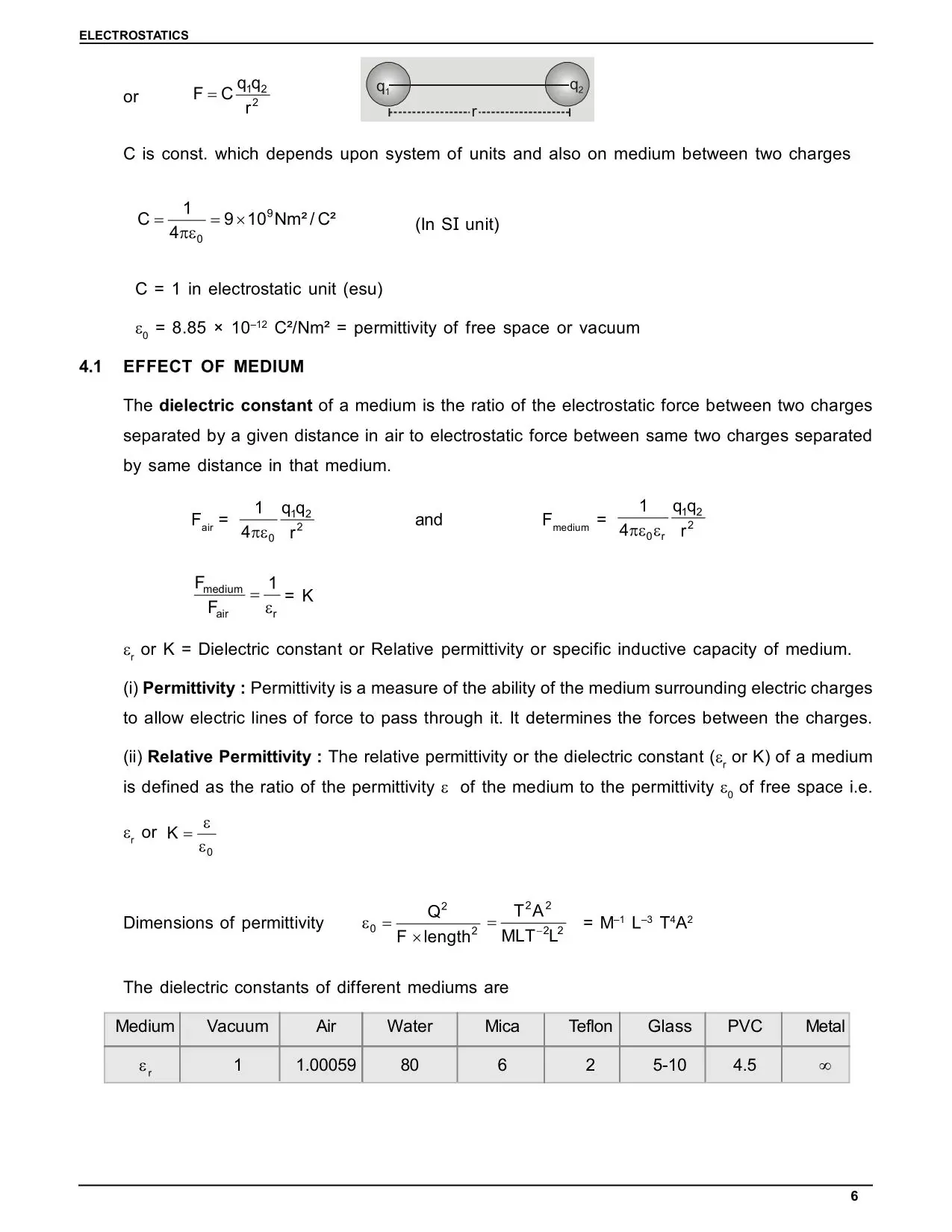
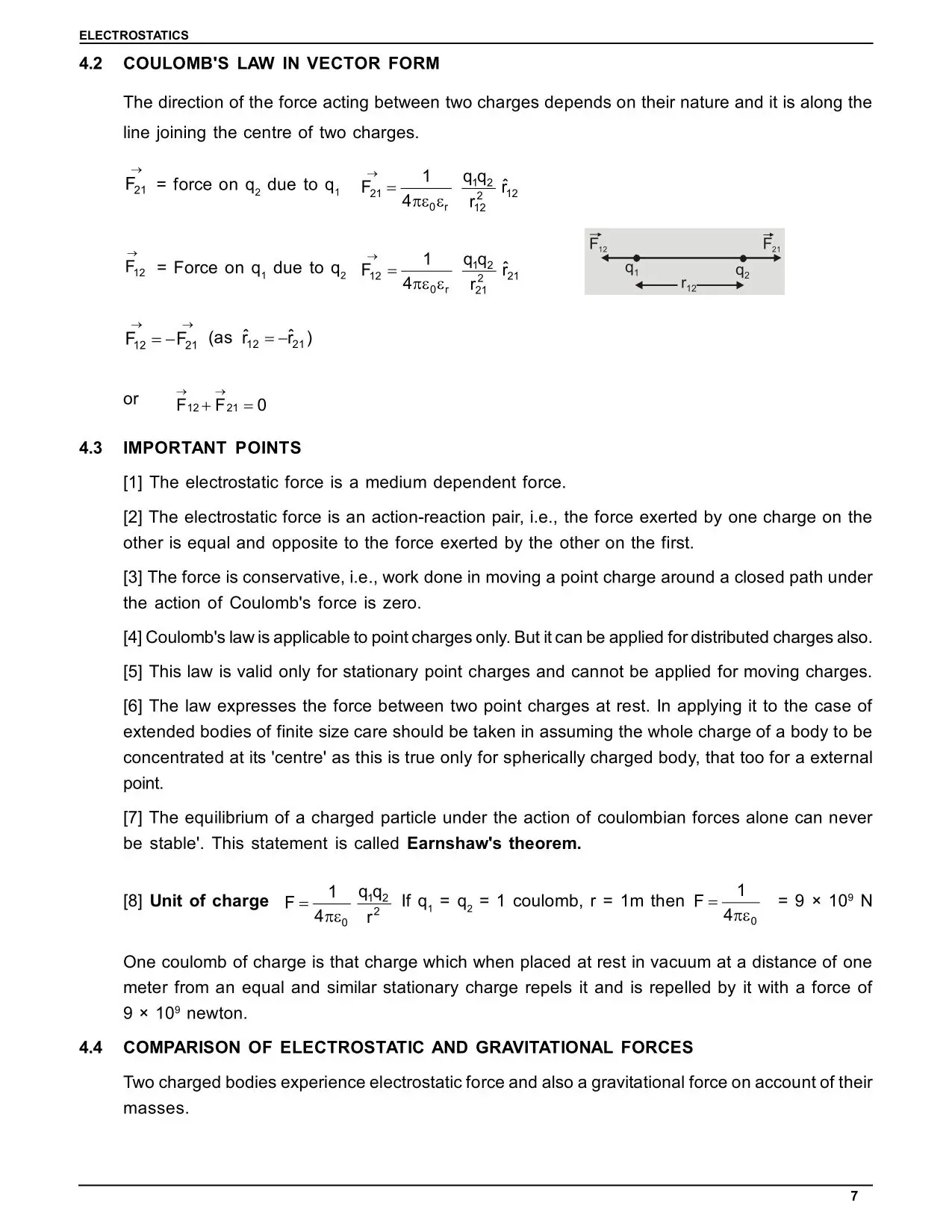
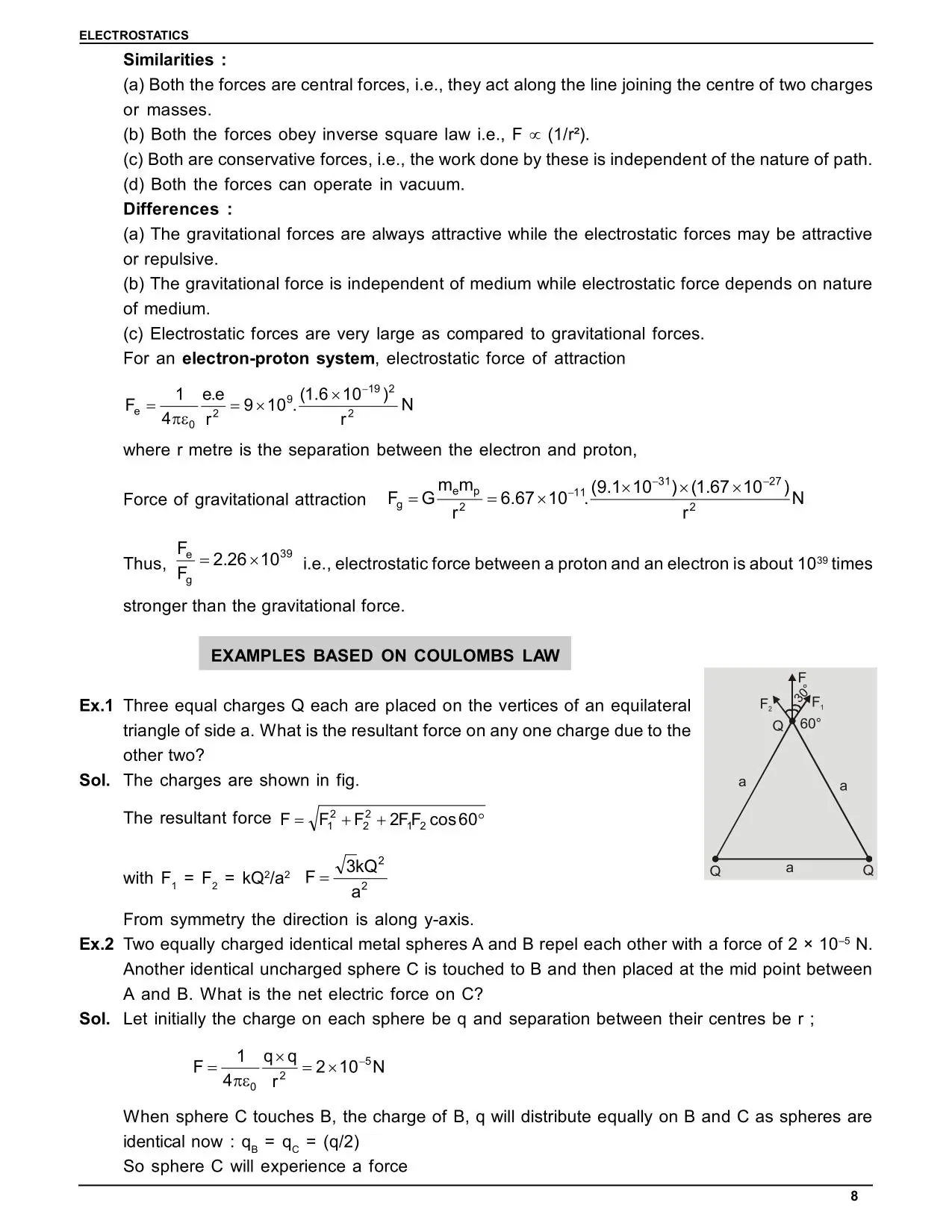
Coulomb's Law states that the electrostatic force between two point charges is directly proportional to the product of their charges and inversely proportional to the square of the distance between them. The formula is F = kq₁q₂/r², where k = 9 × 10⁹ N·m²/C². The force acts along the straight line joining the two charges.
What is meant by charging by induction?
Charging by induction is the process of electrifying a conductor without direct contact with a charged body. When a charged object is brought near a conductor, free electrons in the conductor redistribute — the side near the charge becomes oppositely charged, and the far side becomes similarly charged. The total charge on the conductor remains zero unless grounded.
What is an electric charge, and what are its types?
Electric charge is a fundamental property of matter that causes it to experience electromagnetic force. There are two types: positive charge (carried by protons) and negative charge (carried by electrons). Like charges repel and unlike charges attract. Charge is measured in Coulombs and is always conserved in an isolated system.
How much of Class 12 Chapter 1 appears in JEE Main?
Based on NTA's official syllabus and past JEE Main papers from 2019 to 2024, Chapter 1 typically contributes 4–6 marks per paper (1–2 questions). Gauss's Law applications and electric dipole problems are the most frequently tested topics. Coulomb's Law and superposition problems also appear regularly in numerical value answer (NVA) format.
What is Gauss's Law and when should you use it?
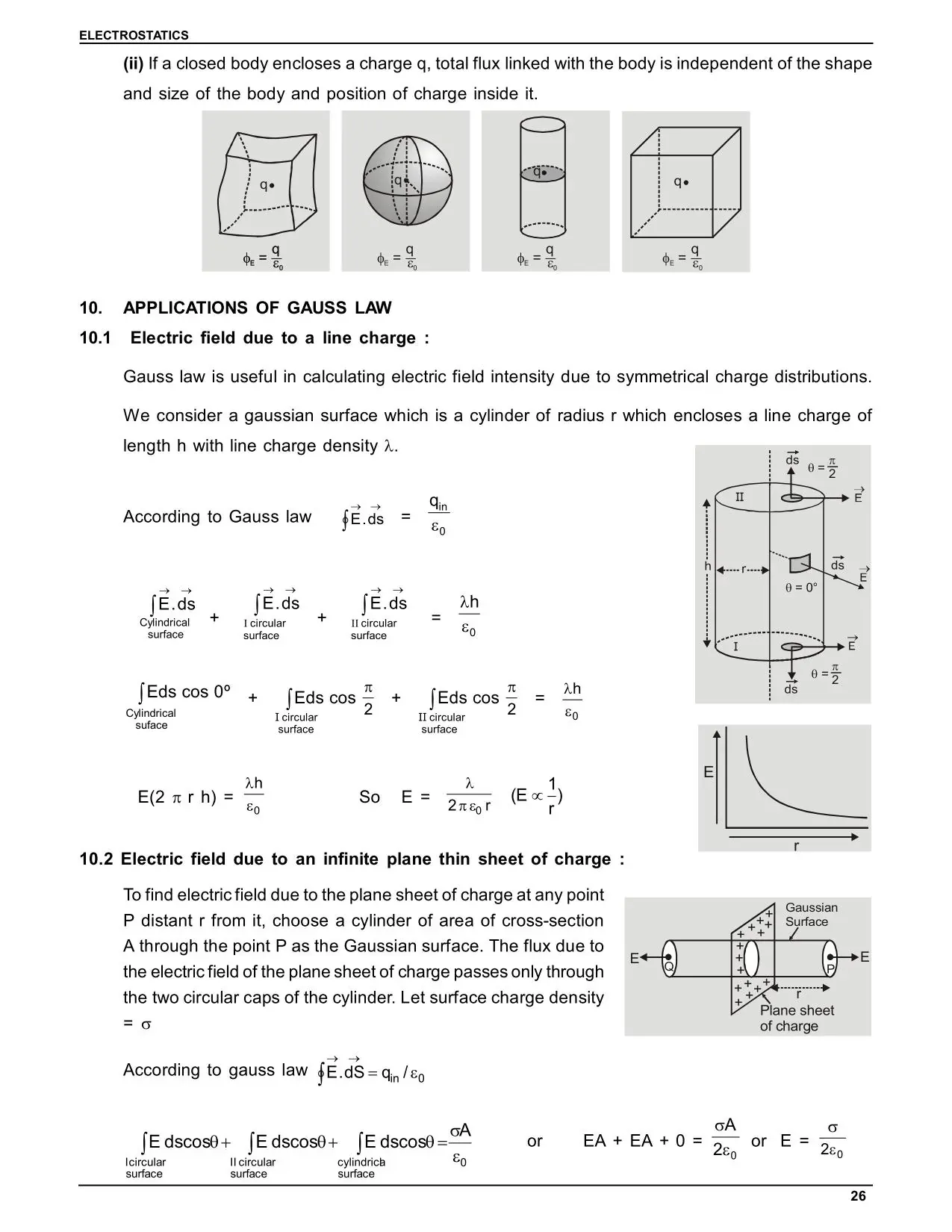
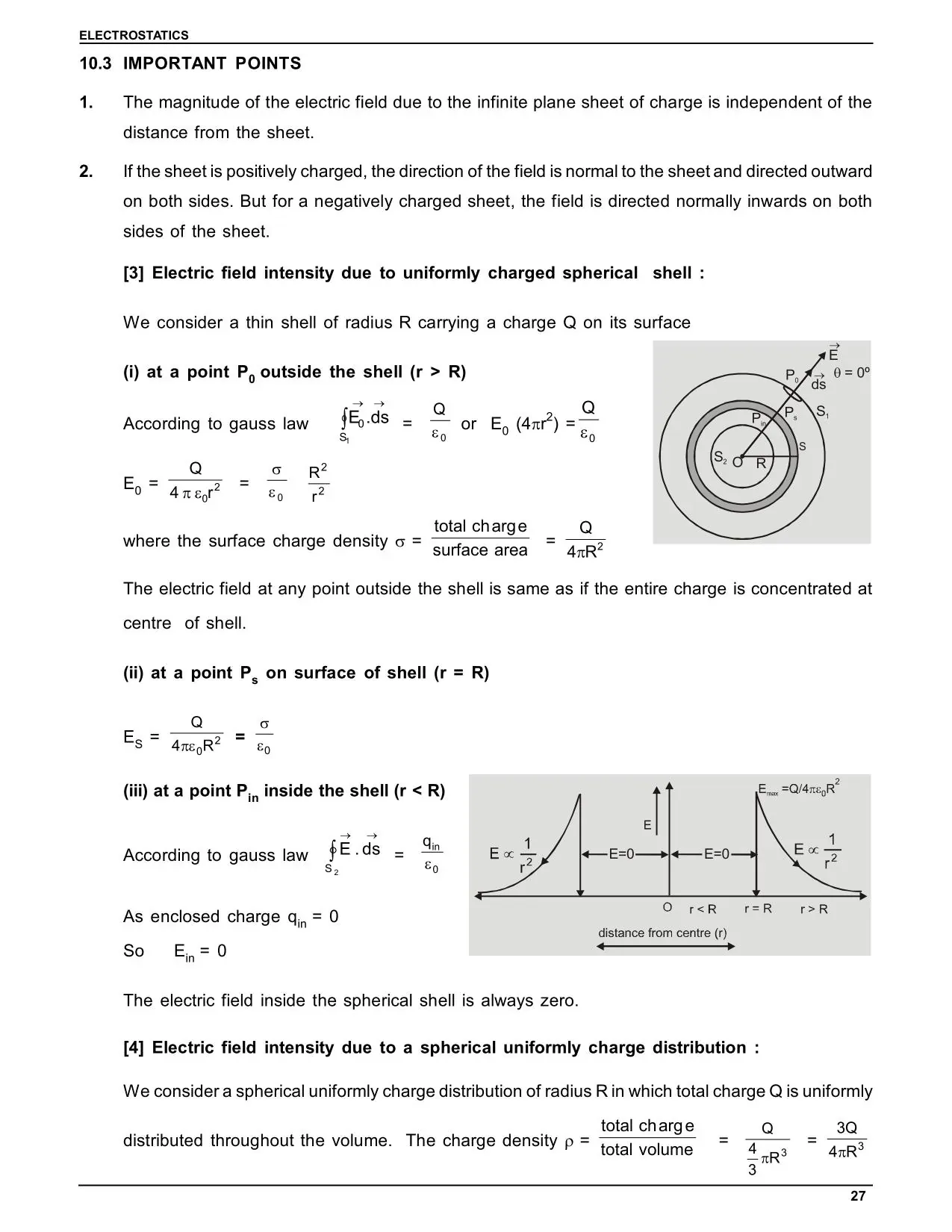
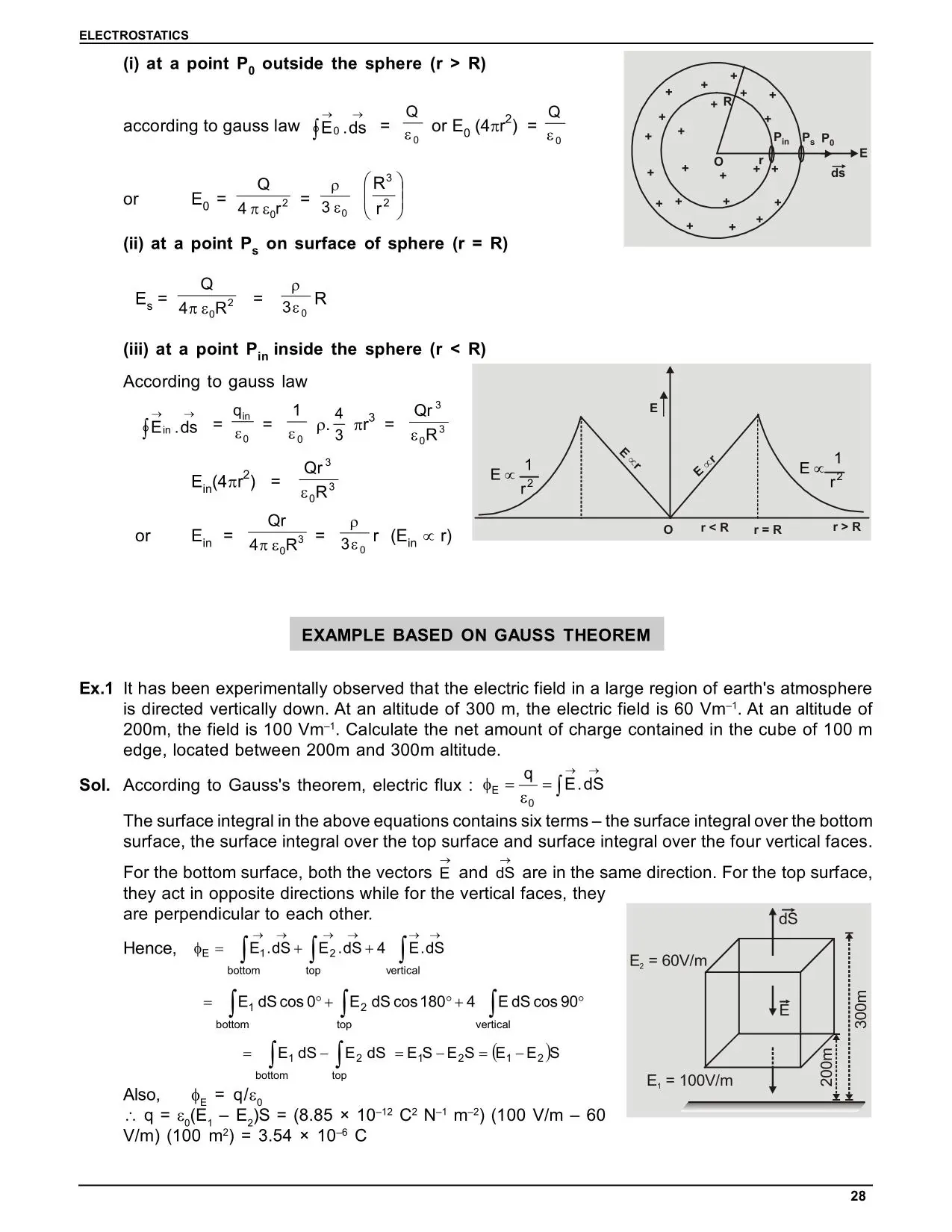
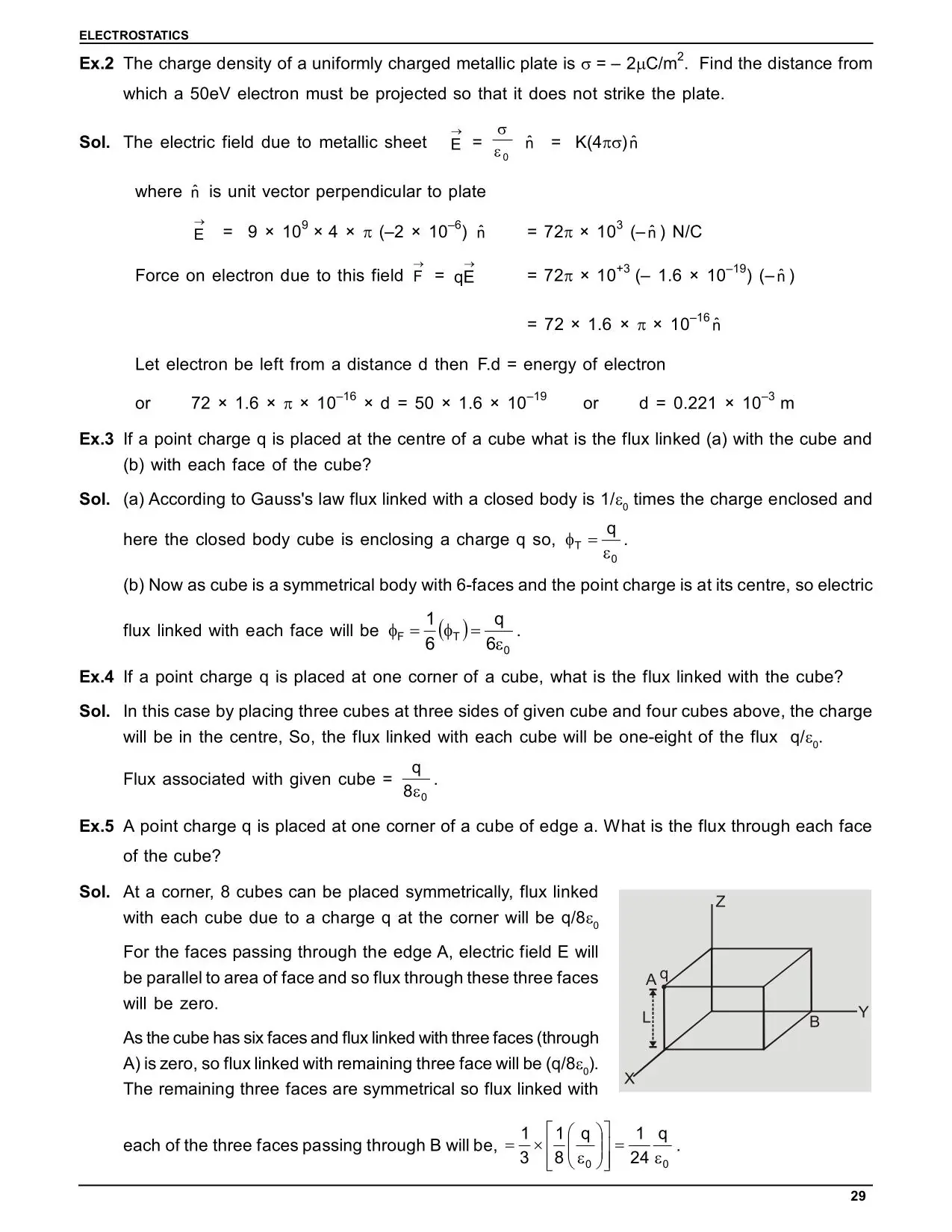
Gauss's Law states that the total electric flux through a closed surface equals the net enclosed charge divided by ε₀ (Φ = Q_enc/ε₀). Use it when the charge distribution has spherical, cylindrical, or planar symmetry — it gives the electric field with much less calculation than Coulomb's Law in those cases.
What is electric flux and what is its SI unit?
Electric flux is a scalar quantity that measures how many electric field lines pass through a given surface area. It is calculated as Φ = EA cosθ, where θ is the angle between the electric field and the normal to the surface. The SI unit of electric flux is N·m²/C (or equivalently, V·m).
Team eSaral
eSaral Academic and Editorial Team
Team eSaral is the collective author profile for educational content created by eSaral’s teachers and academic contributors. The team draws on expertise from IIT graduates, doctors, experienced educators and subject specialists to develop resources for JEE, NEET and school students. Our articles aim to explain concepts clearly and help students study with confidence.
Related Posts

Plant Cell Diagram: Labelled Structure, Parts and Functions
Simple, labelled plant cell diagram with parts and functions. Covers plant cell structure for Class 6, 7, 8, 9, 10 and 11 students, CBSE-aligned.

Saransh Gupta Sir's Visit to IIT Patna: Hostel Life, Placements & Lessons for JEE Aspirants
Inside Saransh Gupta Sir's IIT Patna visit — hostel life, the library, placements, internships, and real advice for JEE aspirants from students living the IIT dream.
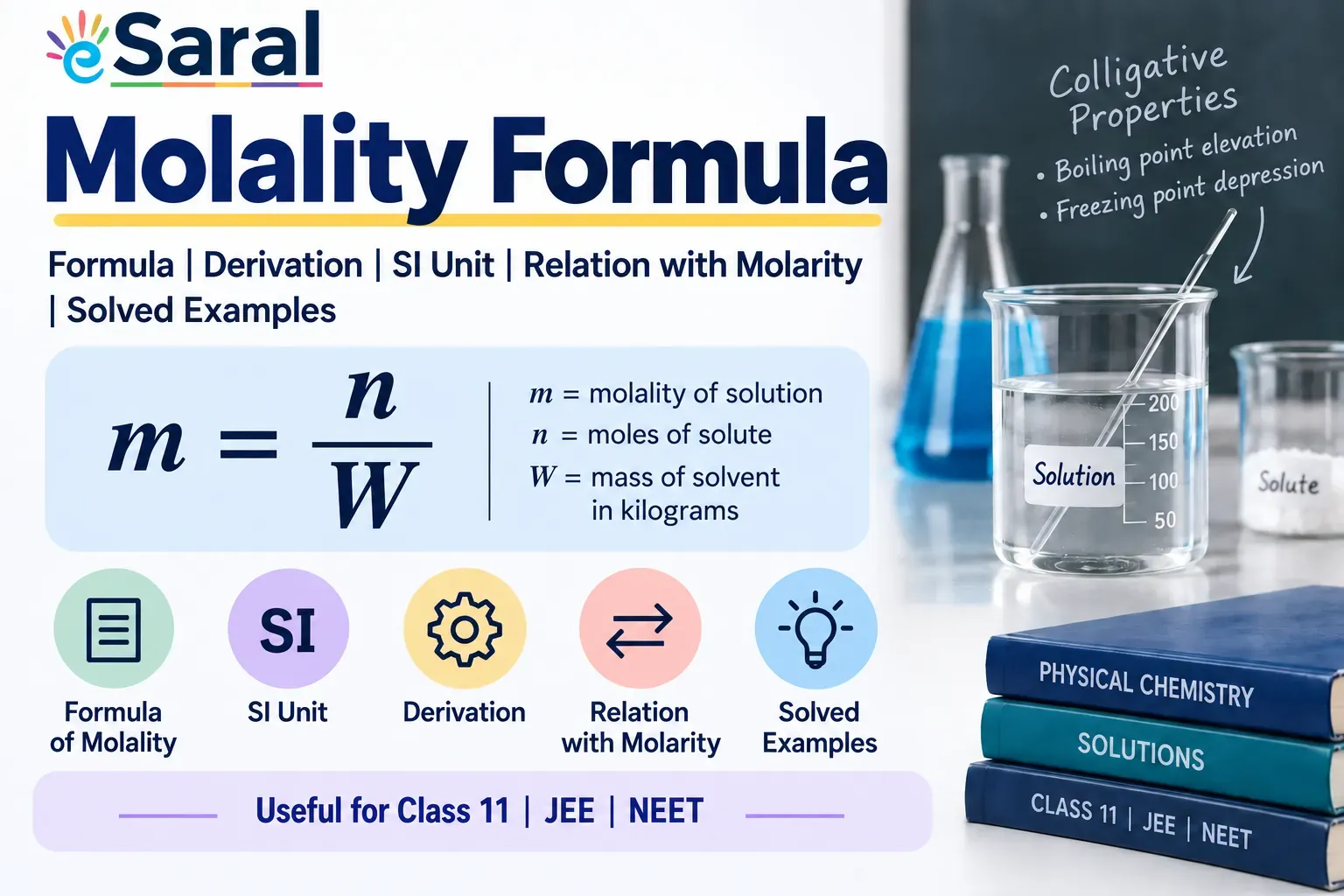
Molality Formula: Formula for Molality, Derivation & Solved Examples
Molality formula is $m = \dfrac{n}{W}$. Learn the formula of molality, its SI unit, derivation, relation with molarity, and solved examples for Class 11, JEE and NEET.

BITSAT Previous Year Question Paper PDF
Download BITSAT previous year question papers PDF. Get year-wise BITSAT PYQs, memory-based papers, exam pattern, and preparation tips to improve your BITSAT preparation.

Teachers’ Day 2026 at eSaral Gurukul: Celebrating the Bond Between Students, Teachers & Mentors
See how Teachers’ Day 2026 was celebrated at eSaral Gurukul, reflecting the bond among students, teachers, and mentors, and the role of guidance beyond academics.

JEE Advanced Attempts: Can You Give It a Third Time? Rules Explained
JEE Advanced attempts: current rule is 2 consecutive years only: full eligibility criteria, the 2025 third-attempt controversy, and the latest 2026 petition news.

Best JEE Preparation App
Best JEE preparation app for Main & Advanced: AI mock tests, live doubt-solving, thousands of practice questions. JEE preparation app for droppers & Class 11-12.
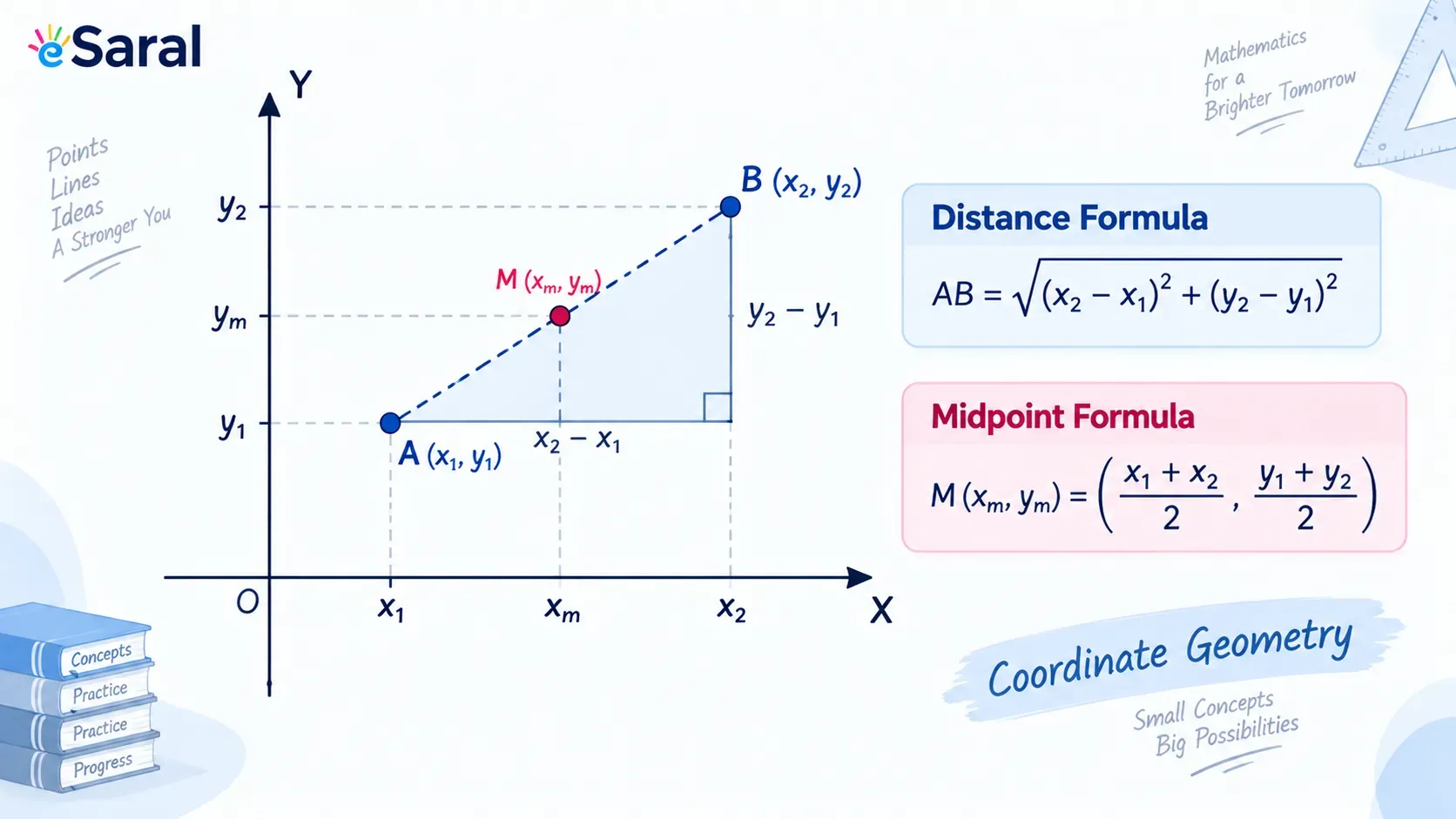
Coordinate Geometry Class 10: Formulas, Notes & Solved Examples
Coordinate geometry class 10: complete CBSE formulas — distance, section, midpoint and area of triangle — with derivation, notes and solved examples.
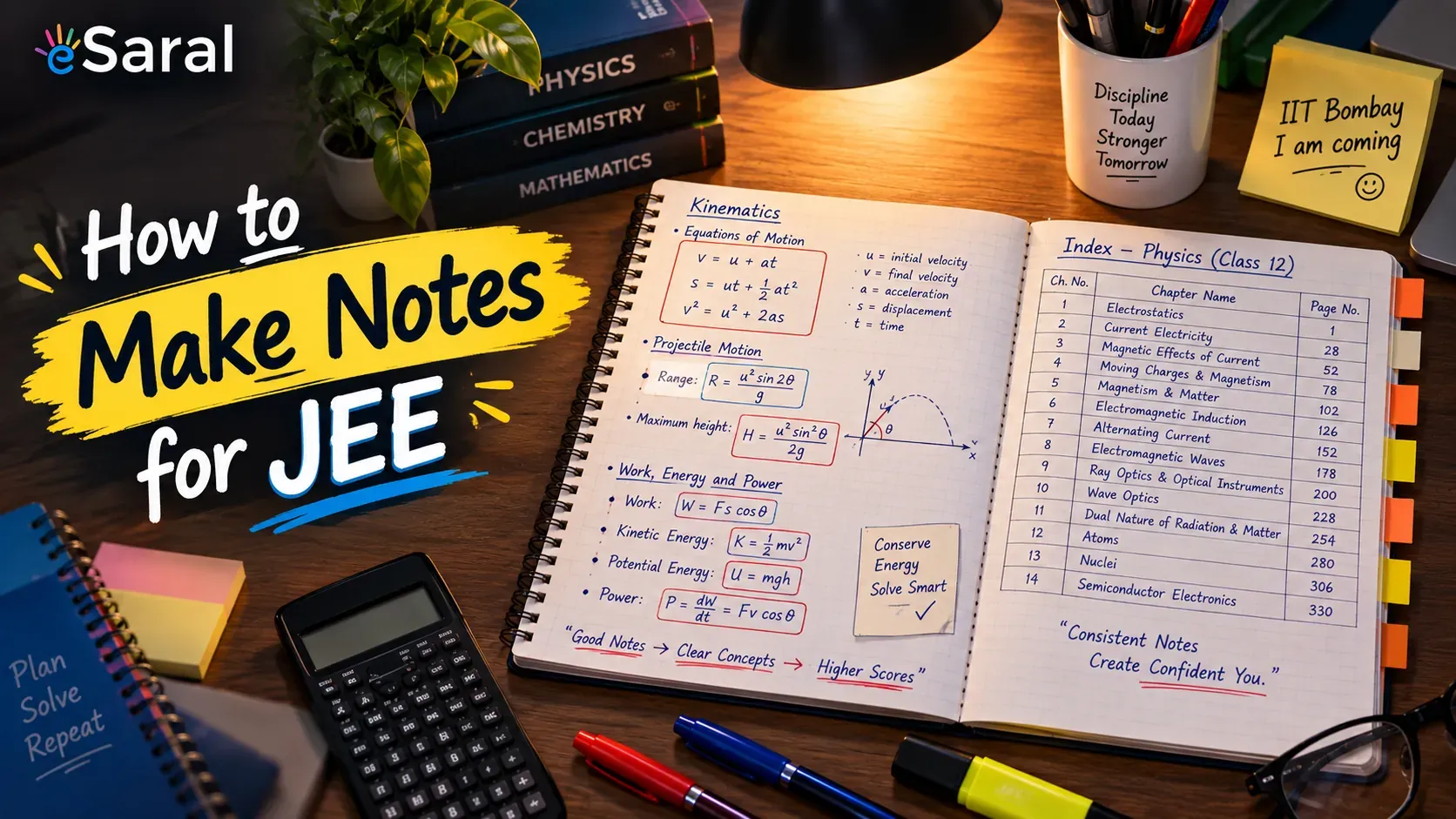
How to make Notes For JEE Smart Notes Strategy of an AIR 41
Learn how to make notes for JEE the way toppers do — indexing, shorthand, and smart short notes for JEE that cut revision time to just 5–7 days.
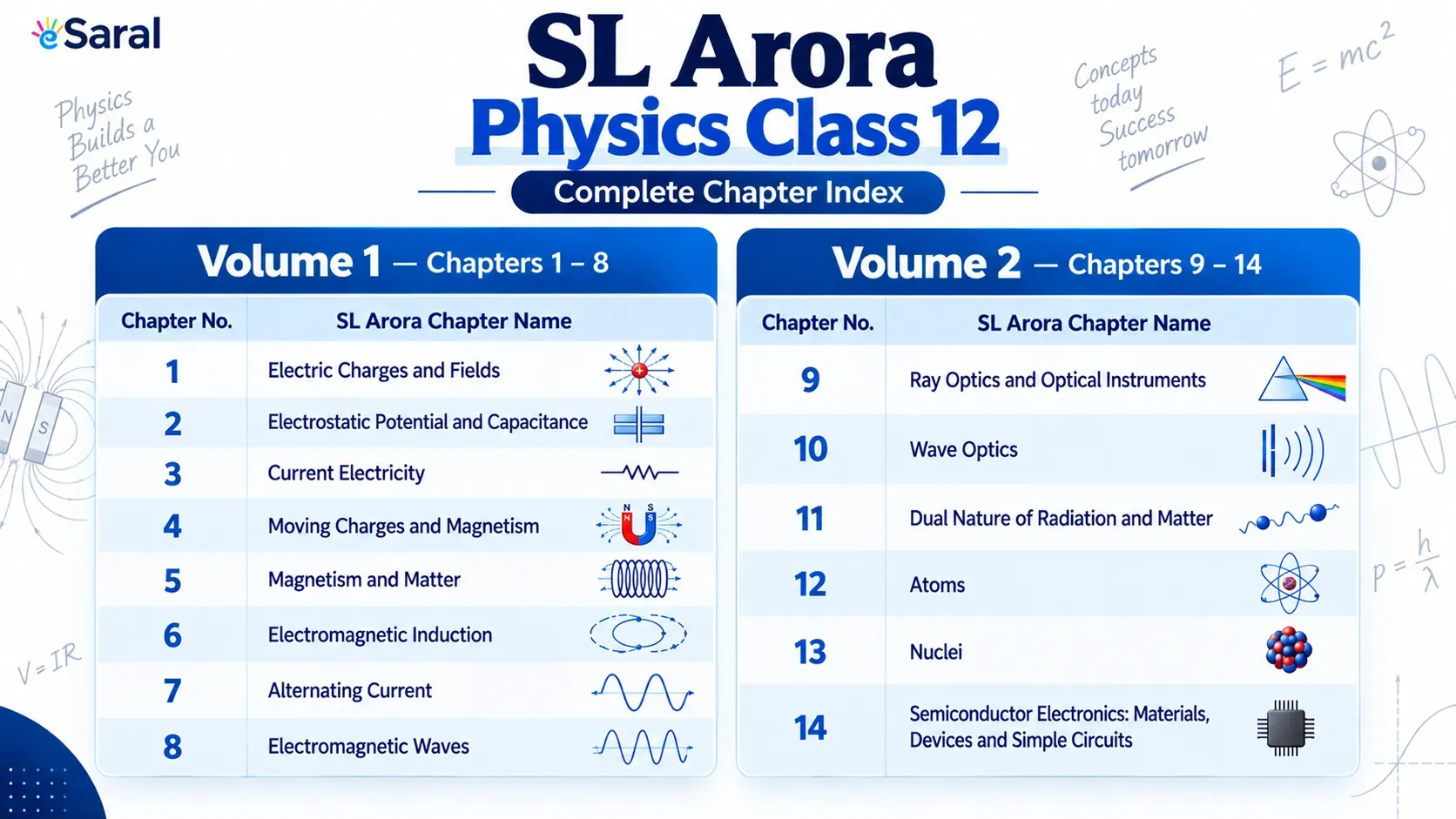
SL Arora Physics Class 12 Index – Chapter List for Volume 1 & 2
SL Arora Physics Class 12 index — complete chapter list for Volume 1 & 2, mapped to NCERT solutions for board, JEE Main, and NEET preparation.