
Inverse Trigonometric Function Notes for Class 12 and IIT JEE
eSaral › Class 12 › Inverse Trigonometric Function Notes

🚀 Checkout eSaral Courses
What Are Inverse Trigonometric Functions?
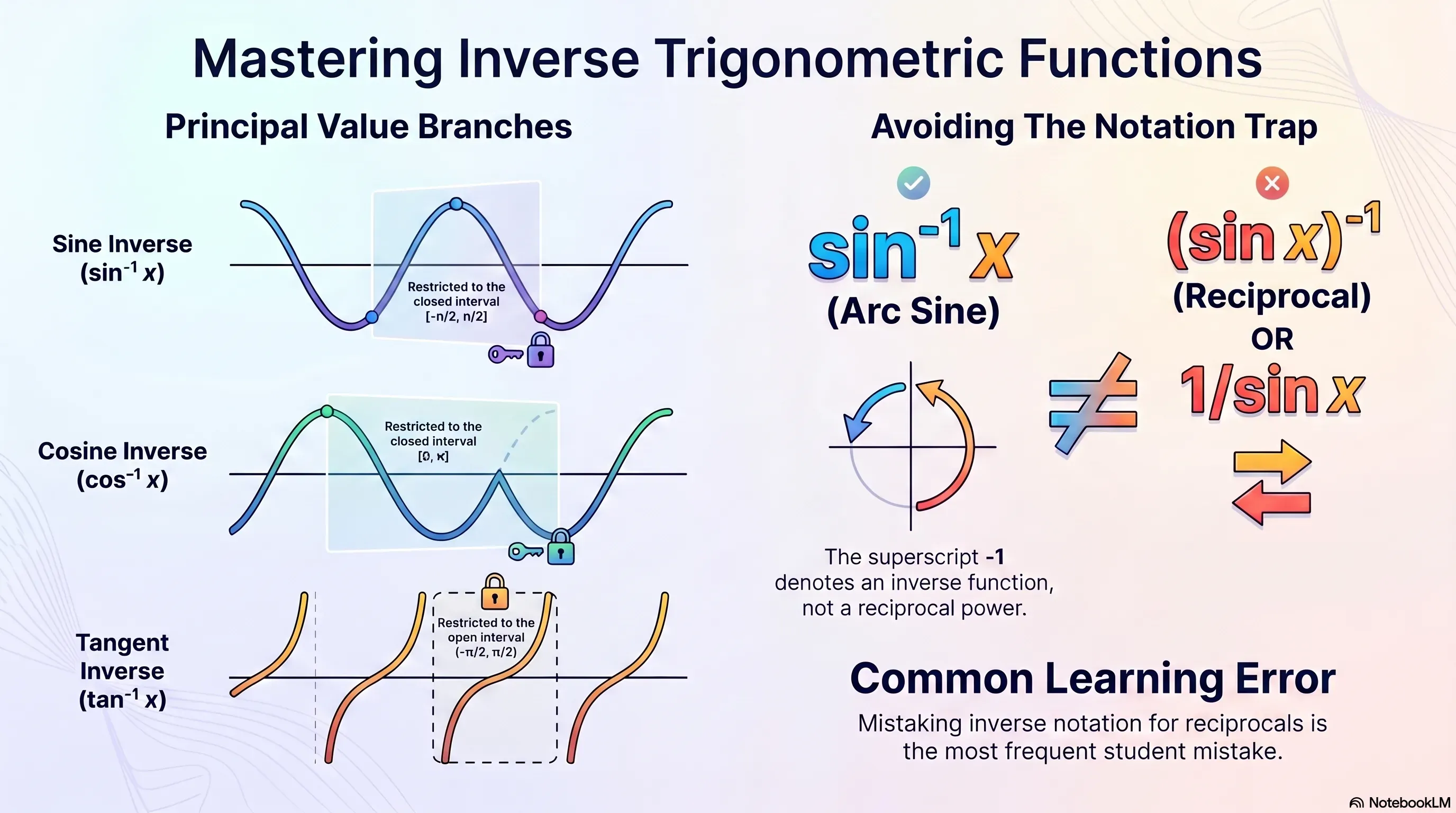
Trigonometric functions like sin, cos, and tan are many-one in their natural domains, which
means their inverses do not exist unless the domain is restricted. Once we restrict each function
to a carefully chosen principal value branch, the inverse becomes well-defined.
For example:
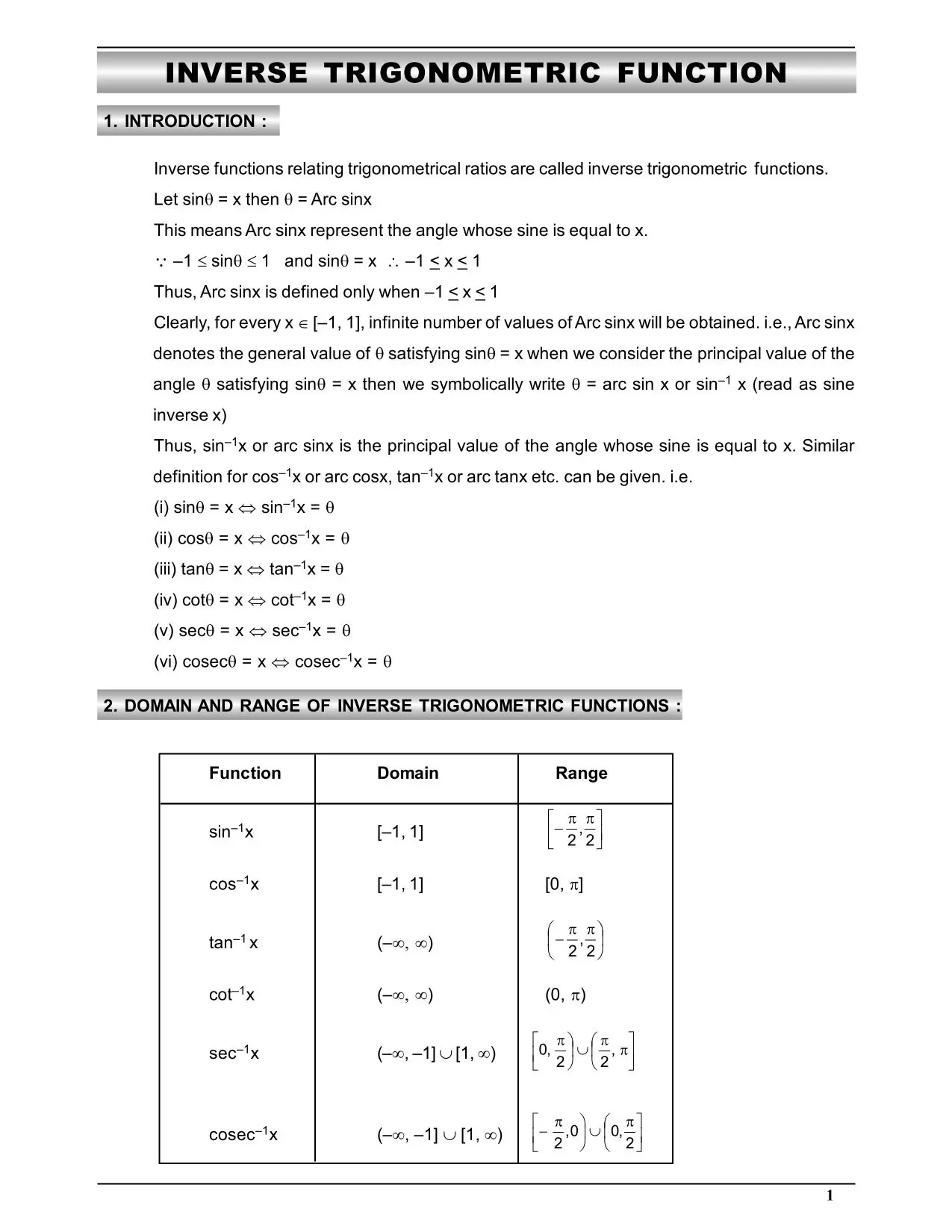
- sin x is restricted to [−π/2, π/2] → its inverse is sin⁻¹ x
- cos x is restricted to [0, π] → its inverse is cos⁻¹ x
- tan x is restricted to (−π/2, π/2) → its inverse is tan⁻¹ x
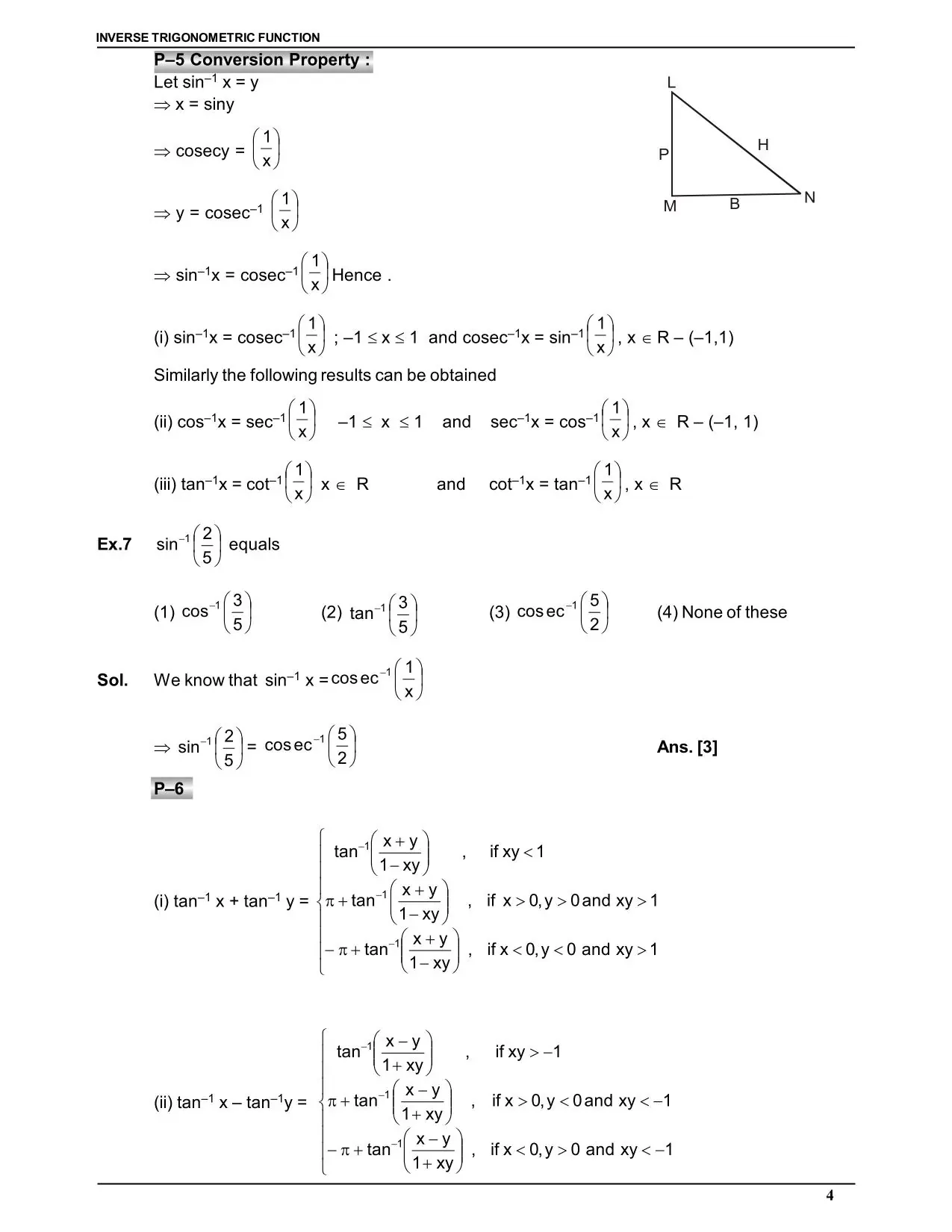
The notation sin⁻¹ x (read as "arc sine of x") does not mean (sin x)⁻¹ = 1/sin x. This is one One
of the most common errors in early learning.
Inverse trig functions assume you already know the basic ratios cold — the trigonometric formulas class 11 page is a quick way to check before starting.
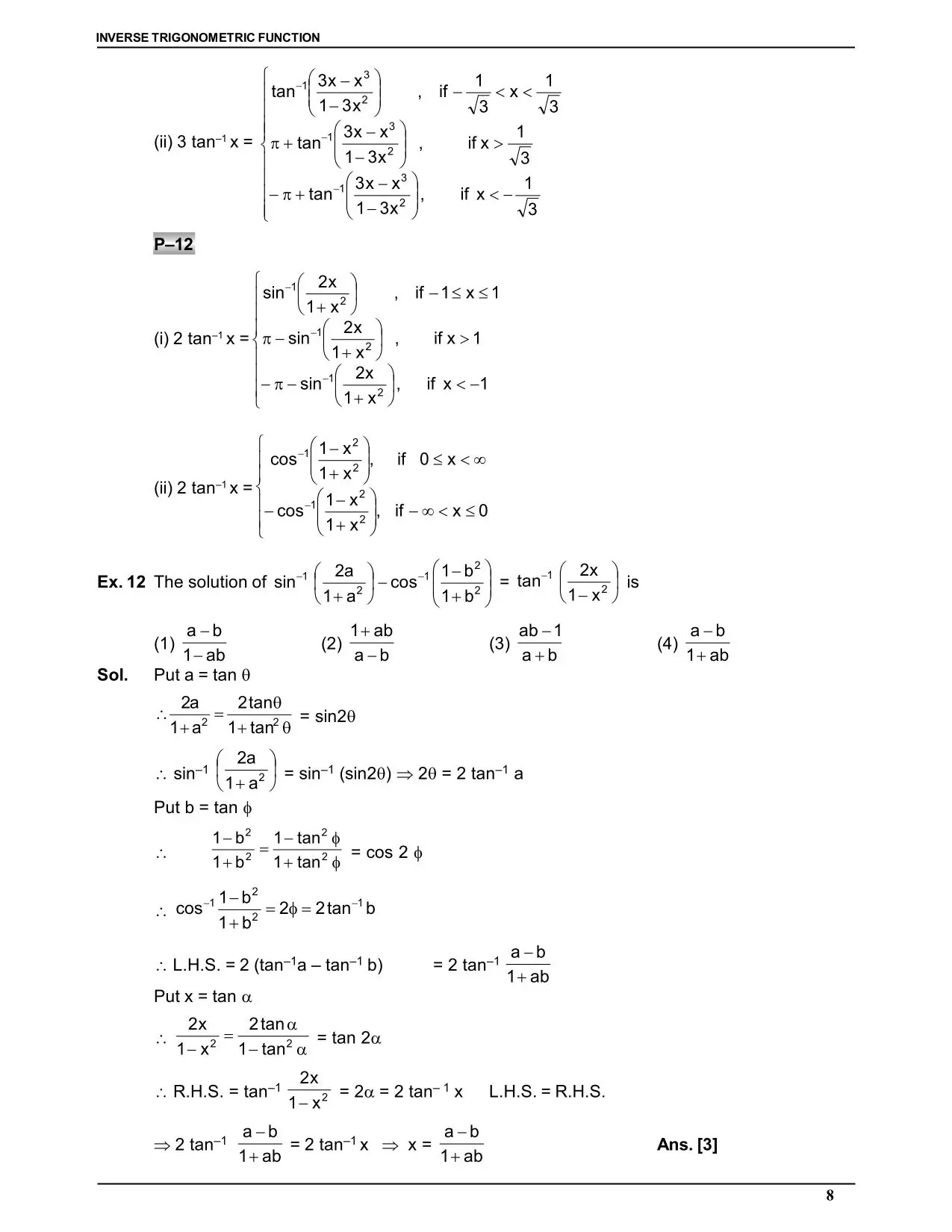
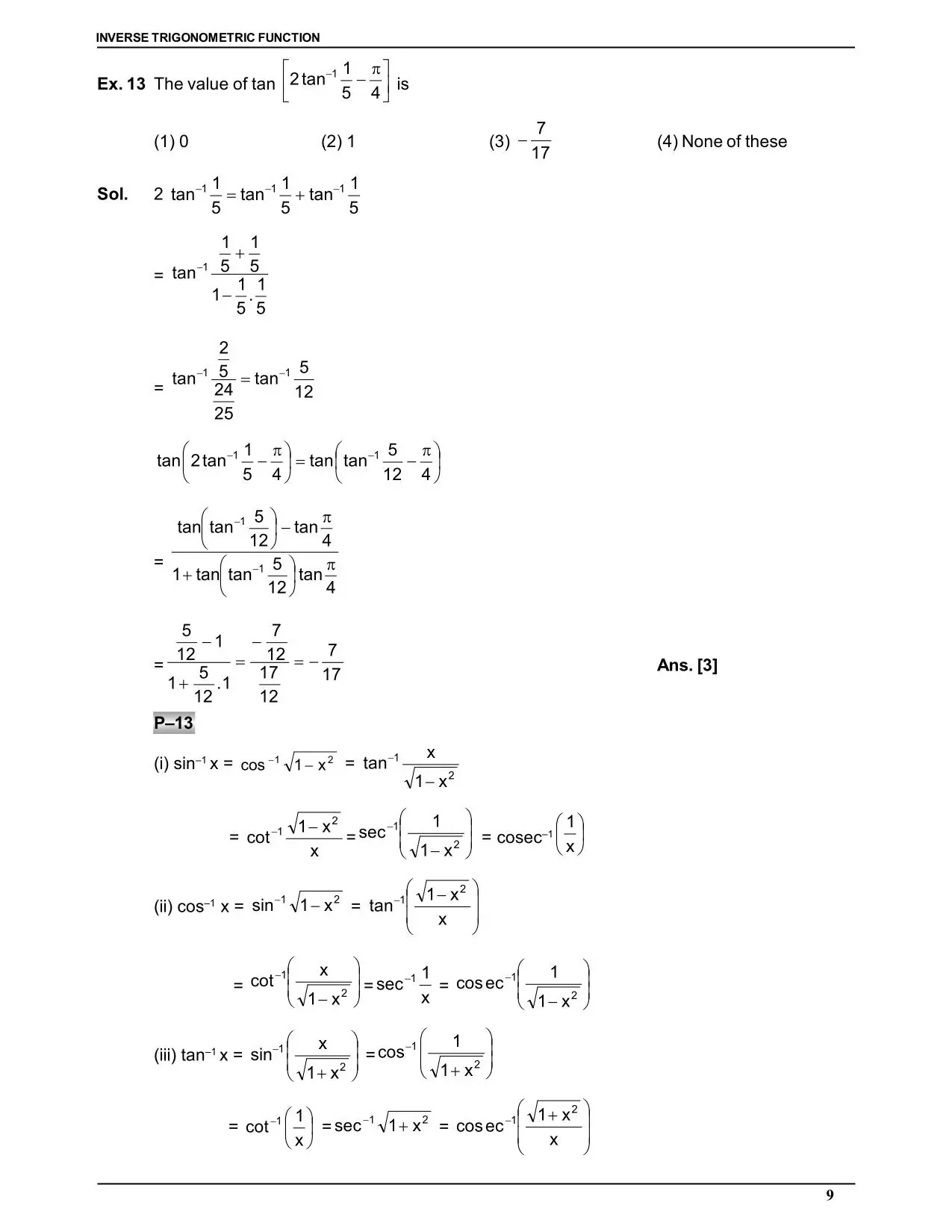
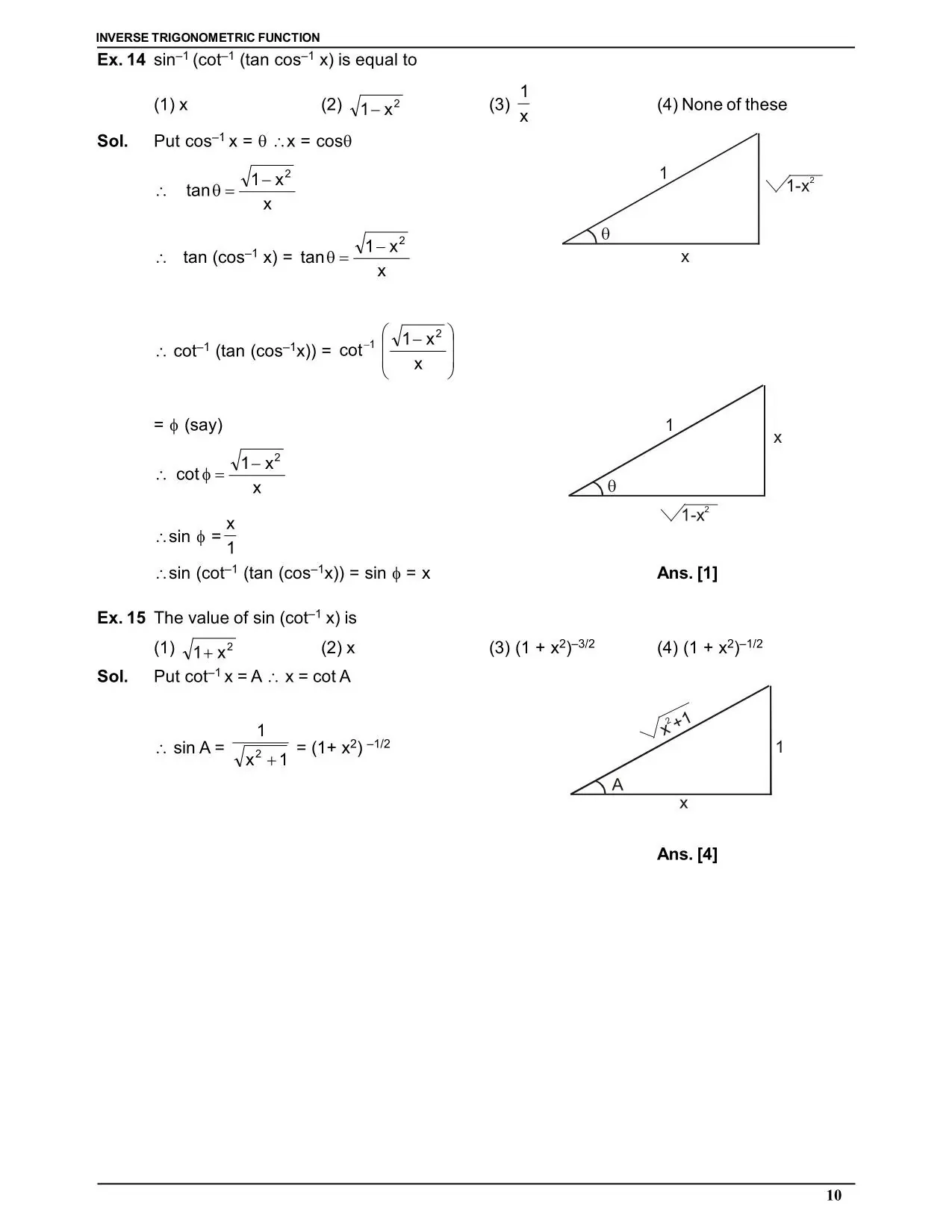
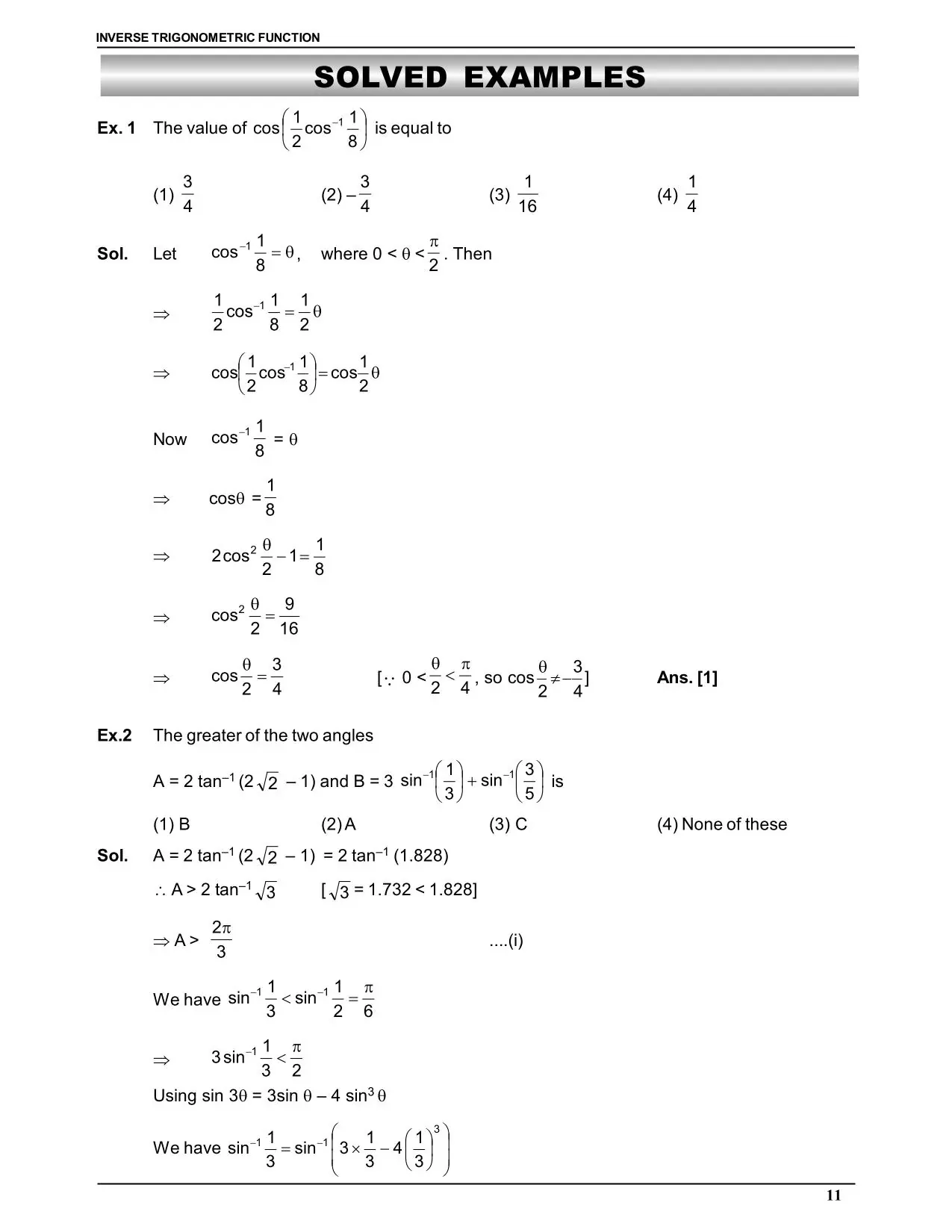
Inverse Trigonometric Function Notes
Frequently Asked Questions
What is the principal value of sin⁻¹(−1/2)?
sin⁻¹(−1/2) = −π/6. The principal value branch of sin⁻¹ is [−π/2, π/2]. Since sin(−π/6) = −1/2
and −π/6 lies in this range, the answer is −π/6. The common mistake is giving 7π/6, which lies
outside the principal value branch and is therefore not accepted.
Is sin⁻¹ x the same as (sin x)⁻¹?
No. sin⁻¹ x means the angle whose sine equals x — it is the inverse function (also called
arcsin x). (sin x)⁻¹ means 1/sin x = cosec x. These are completely different expressions.
Confusing them leads to systematic errors across the entire chapter and in calculus derivations.
Why is the range of cos⁻¹ x equal to [0, π] and not [−π/2, π/2]?
The range [0, π] is chosen because cos x is one-one (strictly decreasing) on this interval,
making the inverse well-defined. On [−π/2, π/2], cos x is not one-one — it takes the same
value on both positive and negative angles (e.g., cos(π/3) = cos(−π/3)), so the inverse
would not be a function.
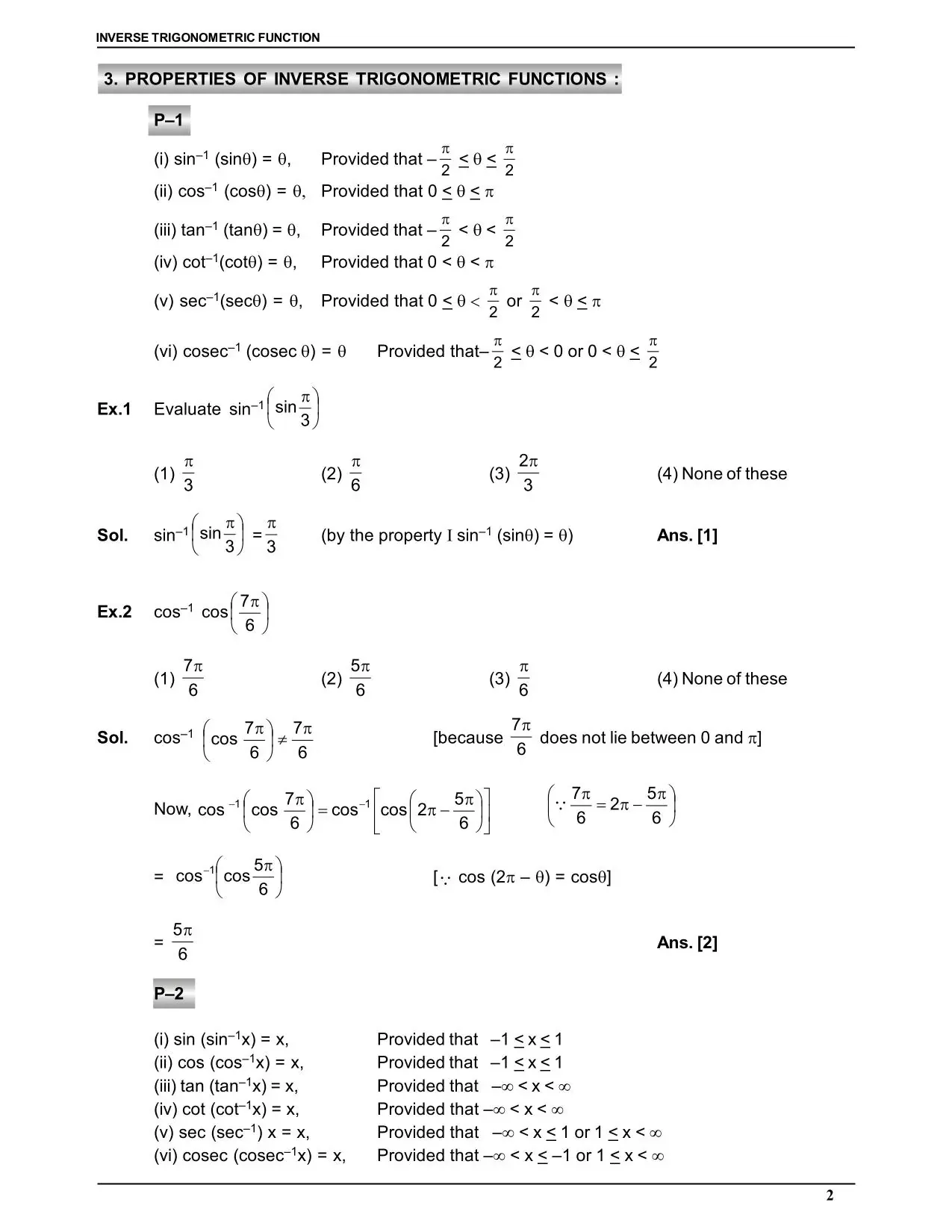
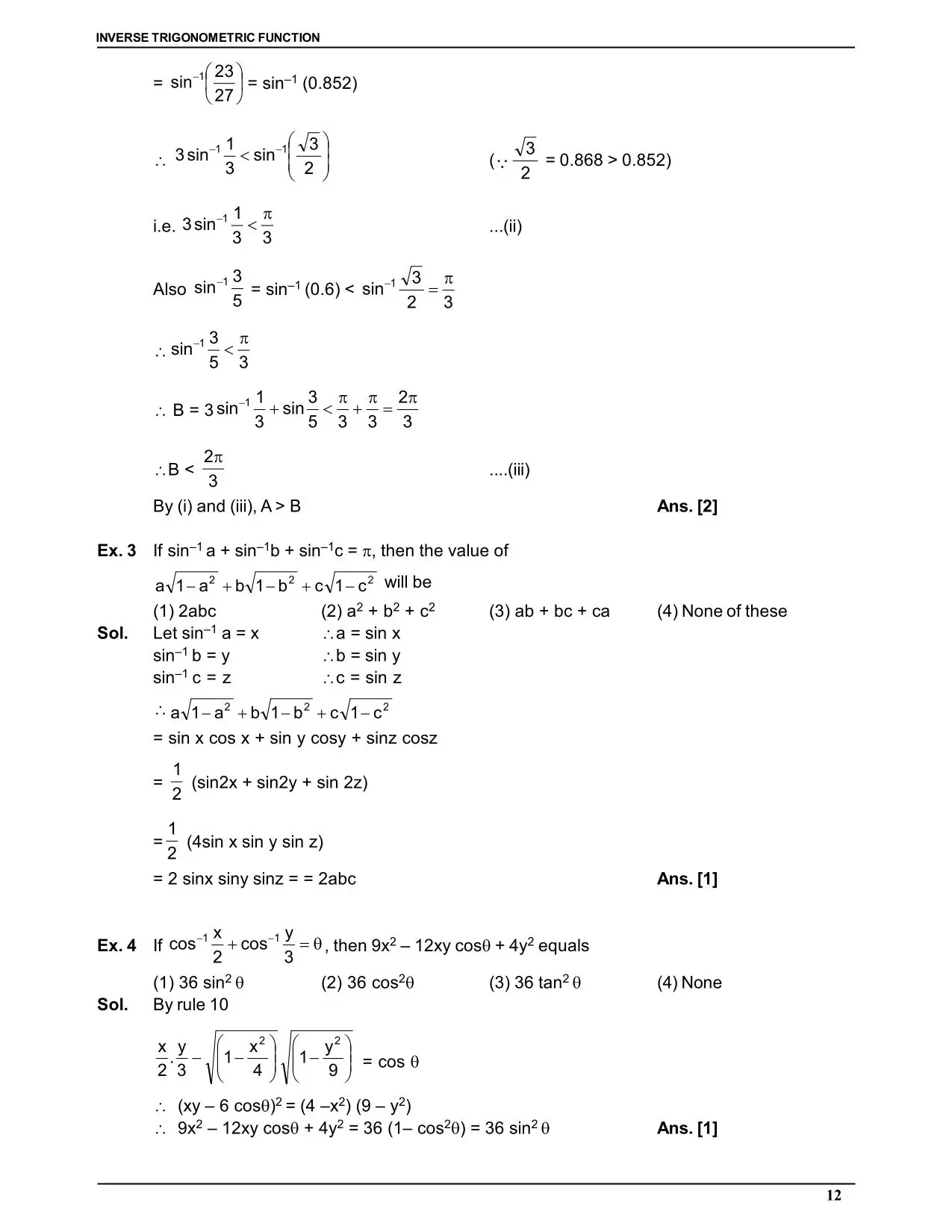
What is the value of sin⁻¹(sin(5π/6))?
The answer is π/6, not 5π/6. Since 5π/6 ∉ [−π/2, π/2], you cannot directly cancel.
First evaluate sin(5π/6) = sin(π − π/6) = sin(π/6) = 1/2. Then sin⁻¹(1/2) = π/6.
This type of "trap" question appears in JEE Main regularly.
How many marks does Inverse Trigonometry carry in CBSE Class 12 Maths?
Inverse Trigonometry (Chapter 2) typically carries 8–10 marks in CBSE Class 12 board exams.
It includes short-answer questions on principal values, simplification of expressions, and
long-answer proof-based questions. The chapter is also combined with calculus in some proofs,
making it a double-value chapter for board preparation.
---