
Chapterwise JEE Test Series

Boost Your JEE Preparation Today! India's 1st AI-Powered JEE Test Series
Chapterwise Test vs Full Length Mock Test
| Feature | Chapterwise Test | Full-Length Mock Test |
|---|---|---|
| Scope | Single chapter | Entire JEE Main syllabus |
| Question count | 15–30 questions | 75–90 questions |
| Duration | 20–45 minutes | 180 minutes |
| Best used for | Diagnosing chapter-level gaps | Simulating exam-day performance |
| Ideal frequency | After finishing each chapter | Monthly, after syllabus revision |
What Is a JEE Chapterwise Test Series?
A chapterwise test series is a collection of short, focused mock tests, each covering only one chapter from Physics, Chemistry, or Maths, following the exact JEE Main syllabus. Instead of a 90-question full paper, each chapter test typically has 15–30 questions strictly from that chapter.
What Does a Typical JEE Chapter Test Cover?
Each chapter test in a well-built series matches the JEE Main question pattern — a mix of single-correct, numerical value, and multi-concept questions — at the same difficulty level students will face on exam day. This keeps chapter practice realistic instead of easier or harder than the actual paper.
Why Chapter-Wise Tests Matter for JEE Preparation
Full-length mocks are essential for stamina and time management, but they are weak diagnostic tools on their own. A student can guess two numerical-value questions correctly in a weak chapter and never realise that chapter still needs work.
Subject-Wise Chapter Priority for JEE Main
Not every chapter carries equal weight in the actual JEE Main paper. Prioritising chapter tests by weightage makes limited preparation time far more efficient, and this priority list should also inform how a student reviews the official JEE Main Syllabus.
| Subject | High-Weightage Chapter Groups (Indicative) | Approx. Share of Subject Marks |
|---|---|---|
| Physics | Mechanics, Electrodynamics, Modern Physics, Optics | Roughly half of Physics marks |
| Chemistry | Physical Chemistry basics, Coordination Compounds, Organic reaction mechanisms, Equilibrium | Roughly half of Chemistry marks |
| Maths | Calculus, Coordinate Geometry, Algebra, Vectors & 3D | Over half of Maths marks |
How Do Chapter Tests Improve JEE Main Physics and Maths Scores?
Physics and Maths in JEE Main reward speed and formula application far more than pure recall, so chapter-wise tests let a student isolate exactly which formulas or problem types are slowing them down, chapter by chapter, before that slowdown shows up as lost time in a full mock.
In eSaral's own JEE batches, students who cleared each chapter test above 80% accuracy before moving to full mocks reported far fewer "silly mistake" errors in later full-length papers, largely because chapter-level calculation habits had already been corrected early.
Chapter tests also build exam temperament in smaller, safer doses. A 20–30 minute test creates focused pressure without the fatigue of a 3-hour paper, so a student can fail, review, and retry the same chapter multiple times within one study session.
💡 Expert Tip from the eSaral Academic Team: Start your chapterwise test series with the highest-weightage chapters in each subject first. A strong grip on 8–10 high-weightage chapters moves your JEE Main percentile faster than spreading equal effort across all chapters in the syllabus.
How Is a Chapterwise Test Series Different From a Full JEE Main Mock?
They serve two different jobs in a JEE preparation timeline, and neither fully replace the other.
Chapterwise tests answer the question: "Do I actually understand this chapter well enough to solve JEE-level problems from it?"
Full-length mocks answer the question: "Can I perform under real exam conditions across the whole syllabus, with limited time?"
Should You Skip Full JEE Main Mocks If You're Doing Chapter Tests?
No — chapter tests and full-length JEE Main mocks are complementary, not substitutes. Chapter tests build the conceptual foundation, while full mocks train pacing, question selection, and negative-marking strategy across 75+ questions in three hours, which chapter tests cannot simulate..
A well-sequenced NEET timeline typically looks like this:
Finish a chapter in class or self-study.
Attempt a chapterwise test on that chapter within 2–3 days.
Review every wrong answer against the exact concept or formula it tested.
Retake a shorter chapter test after a week to confirm retention.
Once 8–10 chapters are covered, attempt a full-length JEE Main mock combining them.
How to Use a Chapterwise Test Series Effectively
Simply attempting tests without a review system wastes most of their value. Here is a practical routine.
How Should You Review a Chapter Test After Attempting It?
Review a chapter test by sorting mistakes into three buckets — concept gap, silly mistake, or guesswork — and revisiting only the concepts connected to concept-gap errors. This targeted review is what actually raises your score on a retest, not simply attempting more questions.
Concept gap — go back to the exact formula derivation or concept and re-solve a few basic examples before moving on.
Silly mistake — note the pattern (sign error, unit error, misreading the question) in a small mistake log.
Guesswork — treat this the same as a concept gap; a lucky guess on a numerical-value question hides a real weakness.
Retake the same chapter test (or a similar one) after 5–7 days. If accuracy has not improved, the chapter needs a full re-solve of examples, not just more practice questions.
Common Mistakes Students Make With Chapter Tests
Even motivated JEE aspirants dilute the benefit of chapter tests through a few repeated habits.
Testing too early. Attempting a chapter test before finishing all sub-topics in the chapter turns it into a guessing exercise instead of a diagnostic one.
Skipping the review. Moving to the next chapter test immediately after finishing one, without reviewing wrong answers, means the same calculation habits repeat across chapters.
Ignoring low-weightage chapters entirely. Small chapters are often exactly where a rushed student loses easy marks, since low weightage does not mean zero weightage in JEE Main.
Never retesting. A single attempt at a chapter test only measures where a student stood on that day — not whether the gap has actually closed.
How eSaral's Chapterwise Test Series Helps JEE Aspirants
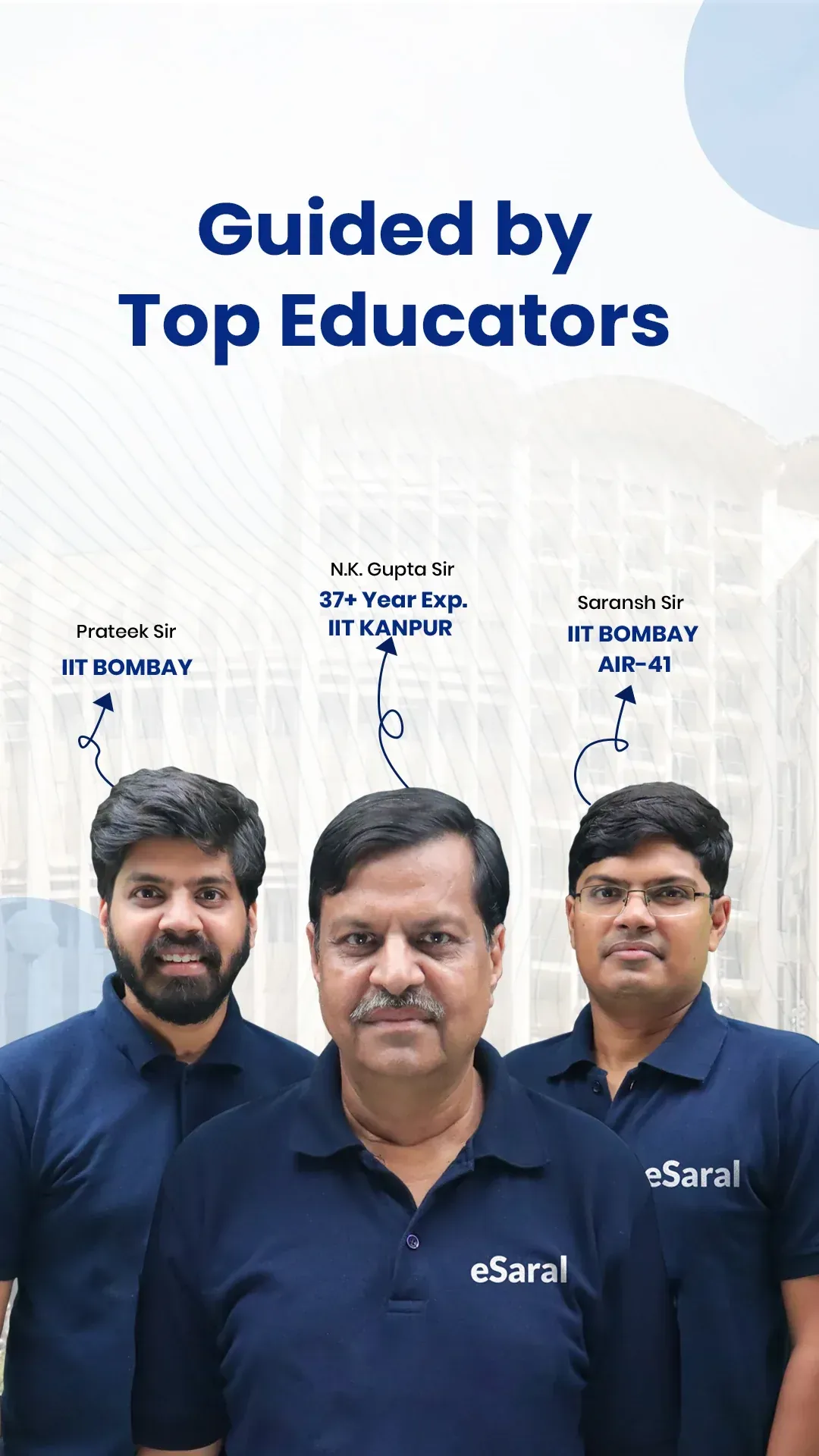
eSaral's JEE chapterwise test series is built by faculty with an IIT Bombay academic background, so each test follows JEE Main-level difficulty and the official syllabus weightage rather than generic difficulty guessing. Every test comes with a detailed solution and an accuracy report, so a student can see exactly which topic within a chapter needs another look, not just an overall score.
JEE ki taiyari mein concept clarity aur speed dono zaroori hain — and that is exactly what chapter-by-chapter testing is designed to build, one topic at a time, before the pressure of a full JEE Main mock enters the picture.
If you want a structured, chapter-by-chapter testing routine with detailed performance analysis instead of piecing together tests from scattered sources, eSaral's JEE test series is worth exploring as part of your preparation.
90+

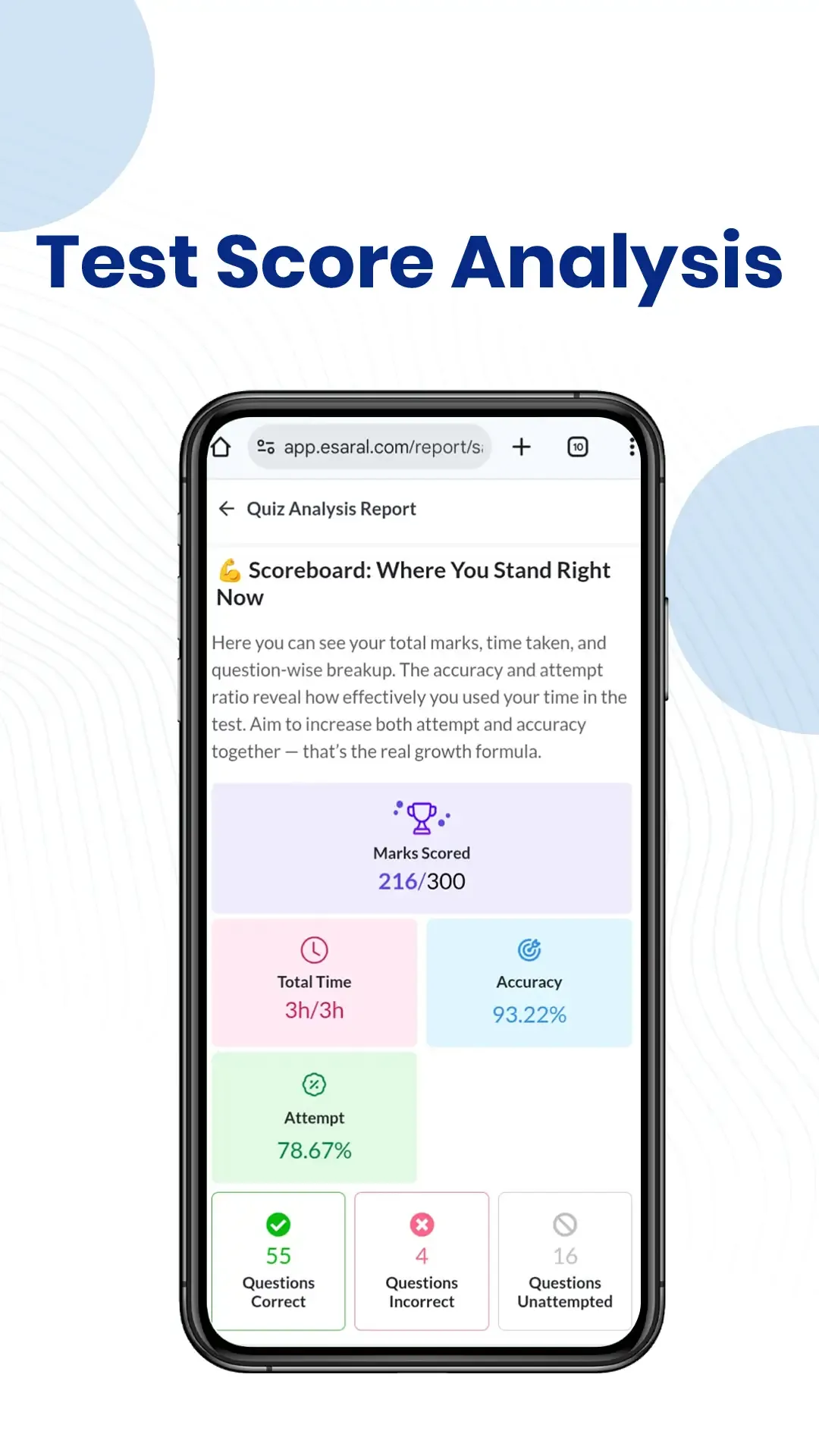
Your Performance, Decoded by eSaral
Every answer you attempt tells a story — our AI helps you read it.
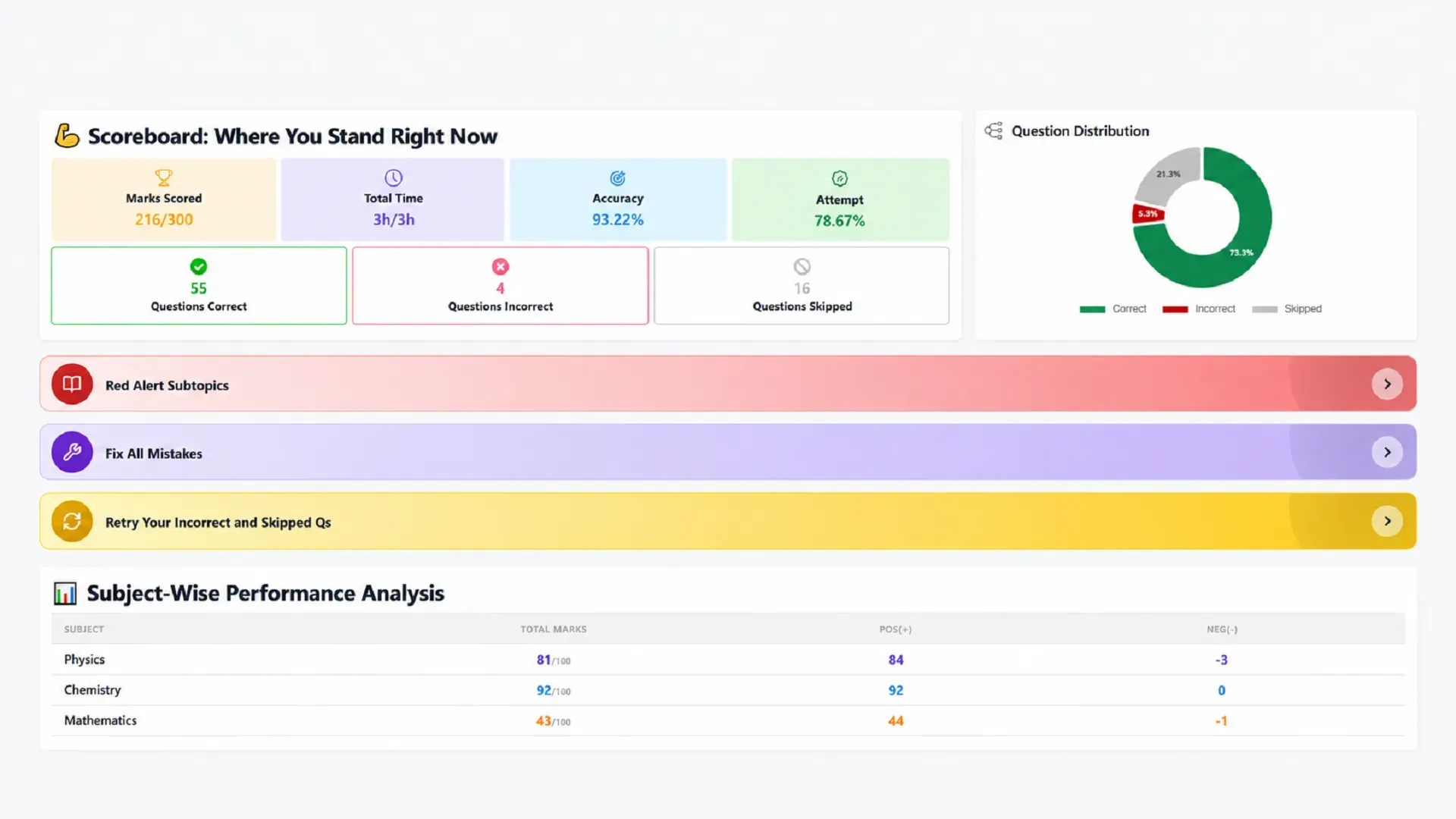
Every Test Tells You What To Improve Next.
What's Inside Your AI Report
Every answer you attempt tells a story — our AI helps you read it.
eSaral Learning App
Best Exam Prep App For JEE | NEET | Class 8, 9, 10
Download the eSaral Learning App & Boost you Exam preparation anytime, anywhere!
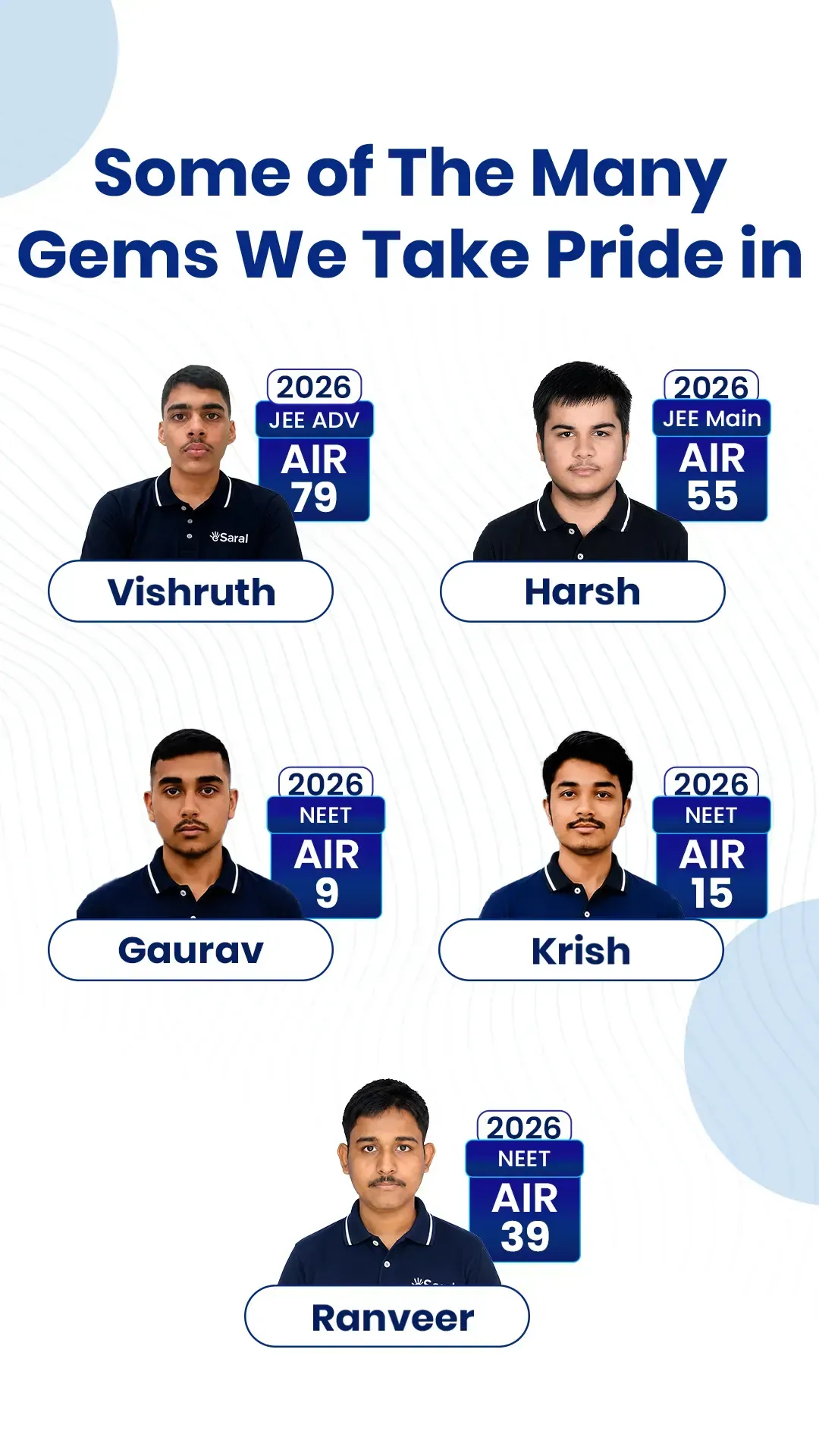
eSaral Results That Inspire
Year after year, eSaralites prove that with Kota's legendary educators, personal 1-on-1 mentorship, and smart practice, extraordinary ranks are achieved from home.
What Students Say About eSaral
Real experiences from students and families who felt supported through teaching, mentorship, doubt solving and regular guidance.
Got Questions? We Have Answers.
Clear, honest details to help students and parents make the best decision for competitive exam preparation.
A chapter-wise test series for JEE is a set of short mock tests, each limited to one Physics, Chemistry, or Maths chapter from the JEE Main syllabus. It helps students check chapter-level understanding before attempting full-length JEE Main mock papers.
Have a question specific to your child's syllabus or city?