
India's 1st AI-Powered JEE Test Series
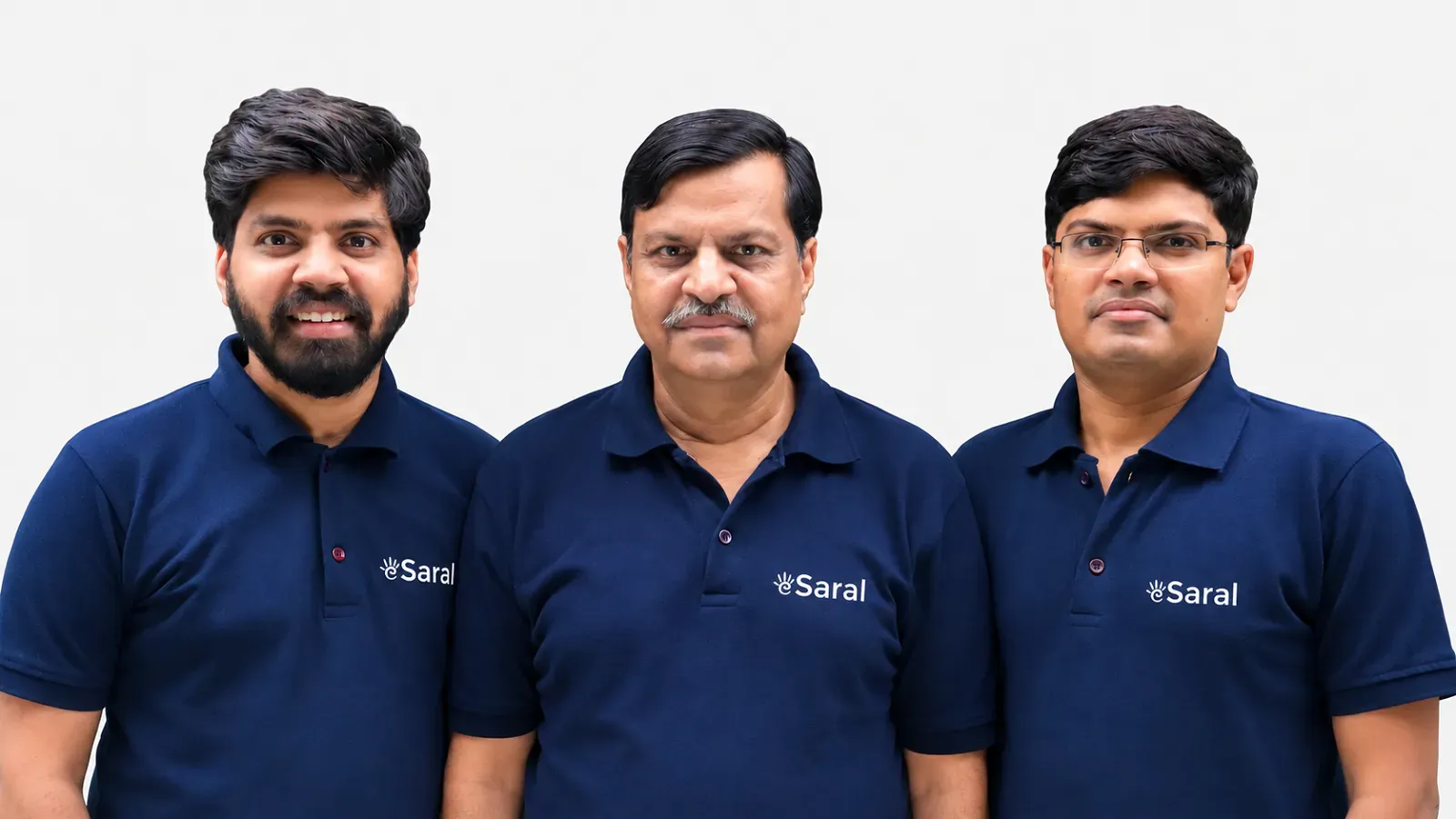
JEE Test Series with Most Relevant Tests. 1600+ selections in JEE Advanced 2026
JEE Test Series
Choose your target year to explore the complete AI-powered test series.
| Features | ||
|---|---|---|
| Total Tests | 260+ Tests | 410+ Tests |
| JEE Main Chapterwise Tests | 92 Tests | 92 Tests |
| JEE Advanced Chapterwise Tests | — | 94 Tests |
| Part Syllabus Tests | 8 Tests | 24 Tests |
| Quarter & Half Syllabus Tests | 4 Tests | 8 Tests |
| Full Tests | 8 Tests | 42 Tests |
| Practice Tests | 10 Tests | 23 Tests |
| Subjectwise Tests | 3 Tests | 3 Tests |
| PYQ Tests | 133 Tests | 133 Tests |
| Validity | Till JEE Main (Jan 2027) | Till JEE Adv. 2027 |
| Test Schedule | Download | Download |
What Makes a Good JEE Test Series in 2027?
A good JEE test series is judged by three things: how closely it matches the real exam pattern, how quickly you get actionable feedback, and whether it fits your existing study schedule.
How Close Should JEE Mock Test Series Be to the Real JEE Pattern?
Papers should mirror the NTA marking scheme, question distribution, and difficulty curve of recent JEE Main and JEE Advanced papers — not generic practice questions. eSaral's series is benchmarked against the JEE Main 2026 question paper and past JEE Advanced question papers so students face familiar formats before exam day.
Expert Tip: Attempting a test that's harder than the real exam builds false anxiety. Attempting one that's easier builds false confidence. Match the pattern, not just the difficulty label.
Does JEE Test Series Cover Both Chapter-Wise and Full-Syllabus Practice?
Yes — a complete series needs three test types:
Chapter-wise Tests: Spot weak topics early; attempt them right after finishing each chapter.
Part-syllabus Tests: Check retention across 3–4 chapters; attempt them during mid-preparation.
Full-syllabus Tests: Build real-exam stamina; attempt them mainly in the last 3–4 months.
JEE Main vs JEE Advanced: What Each Test Series Covers
JEE Main and JEE Advanced test different things — Main rewards speed and accuracy across a broad syllabus, Advanced rewards depth and multi-concept problem solving.
eSaral's series includes 100+ dedicated JEE Main tests and 200+ JEE Advanced tests, kept separate rather than combined, so students can train for each exam's specific format. Before starting, it helps to check the JEE Main syllabus, exam date, and eligibility criteria so your test schedule lines up with the actual exam calendar.
260+
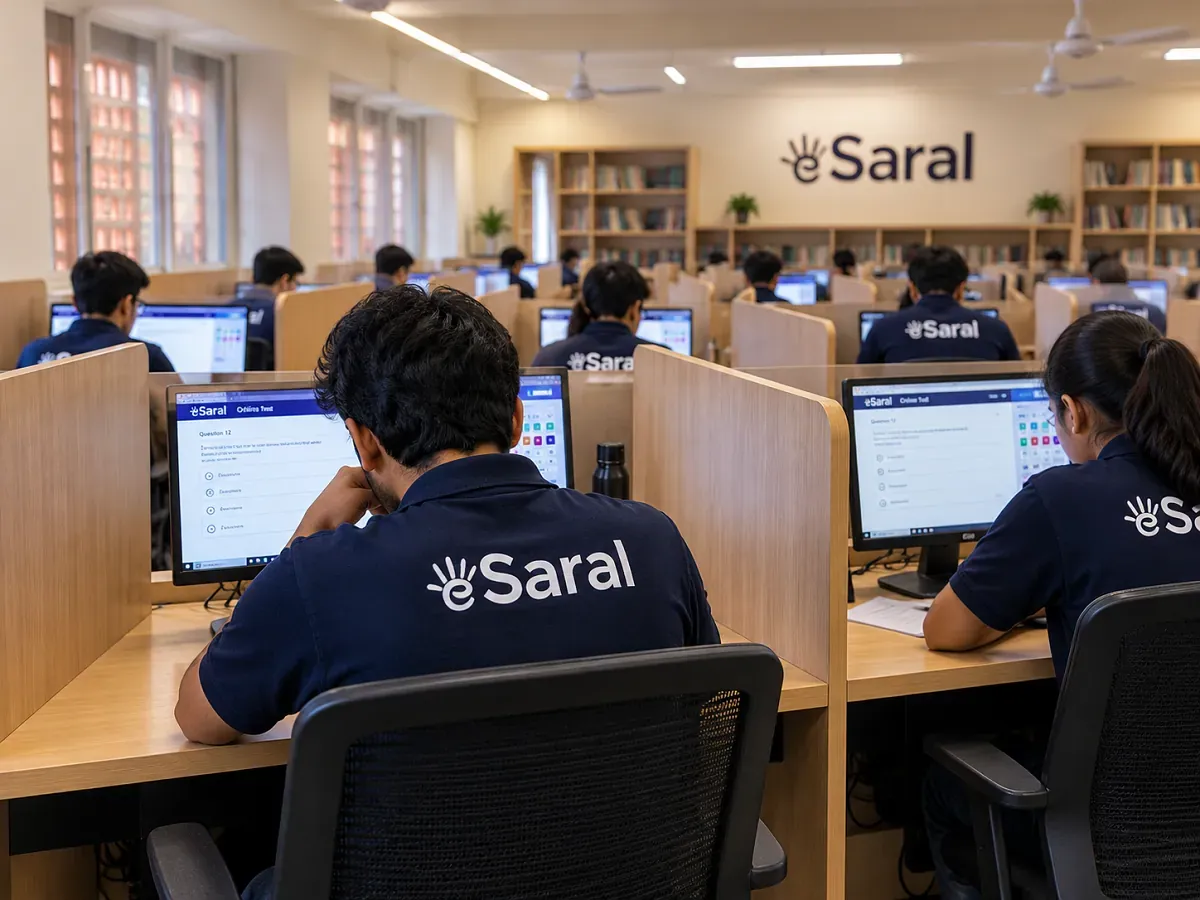
Your Performance, Decoded by eSaral
Every answer you attempt tells a story — our AI helps you read it.
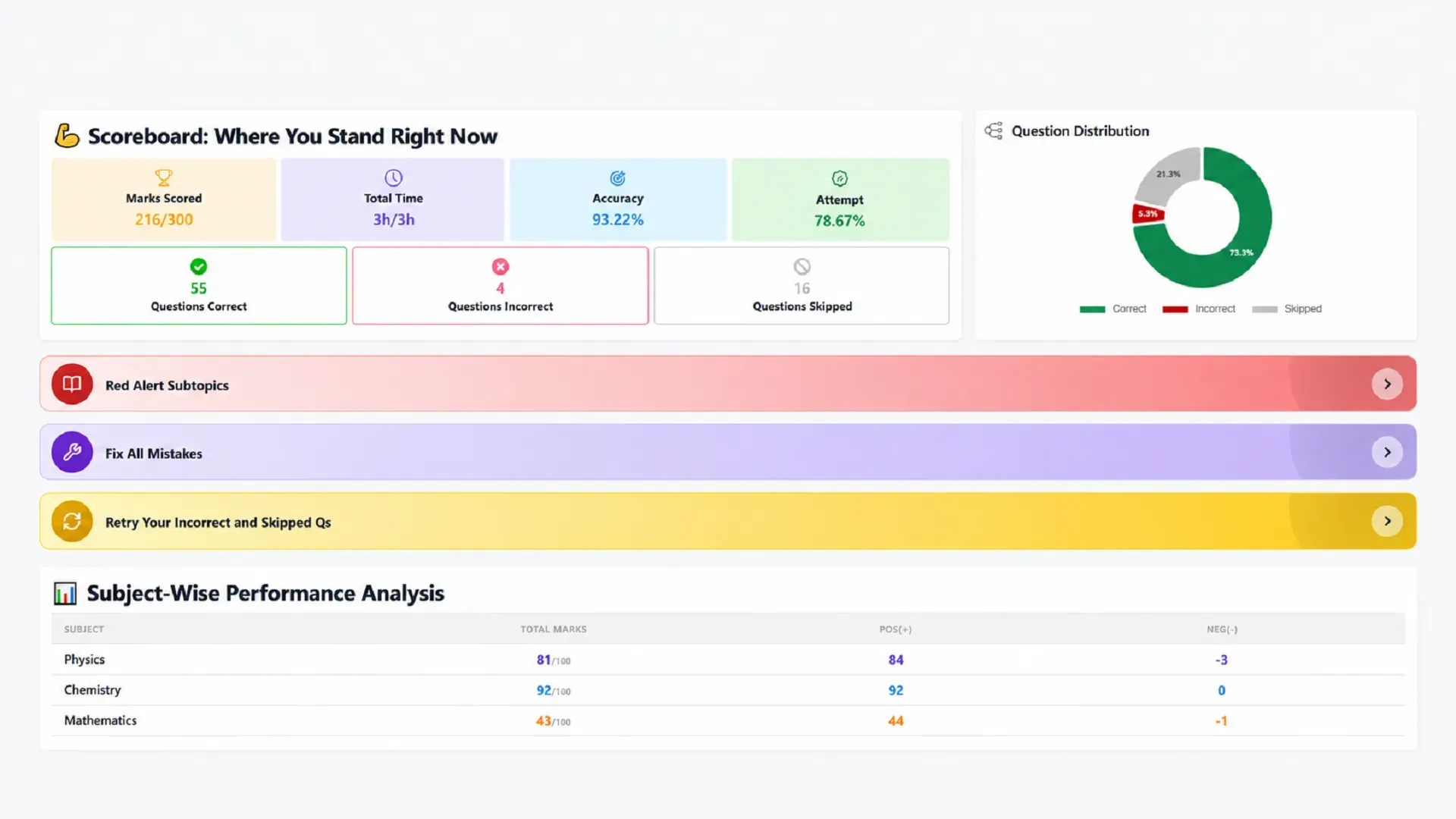
Every Test Tells You What To Improve Next.
What's Inside Your AI Report
Every answer you attempt tells a story — our AI helps you read it.
How Does the JEE Advanced Test Series Differ from the JEE Main Test Series?
JEE Advanced tests use a mix of MCQs, numerical-value questions, and multiple-correct formats that penalise guesswork more heavily than JEE Main. Students preparing for Advanced should also track how scores translate to rank — the JEE Advanced marks vs rank data and IIT Bombay cutoff trends are useful benchmarks while reviewing full-syllabus test results, alongside a look at top NIT colleges for Main-based admissions.
How the AI Performance Report Works
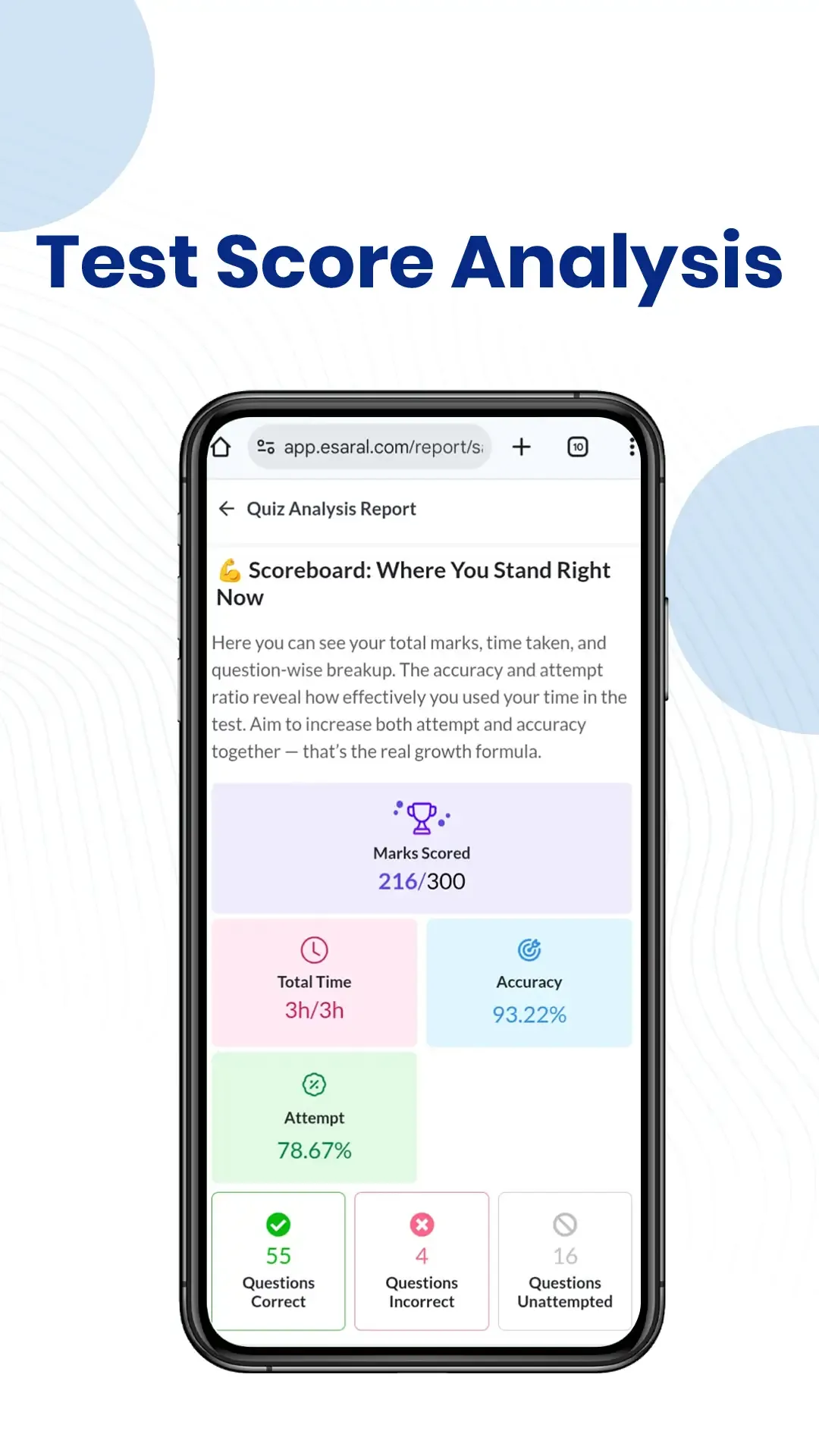
A normal scorecard tells you what you scored. eSaral's AI performance report tells you why — breaking down accuracy, attempt speed, and chapter-wise strength across a 20-page analysis after every test.
What Does the 20-Page Report Actually Show?
Subject-wise and chapter-wise accuracy
Time spent per question vs ideal time
Silly mistakes vs conceptual mistakes (separated)
Rank-trend view across your last several tests
Recommended chapters to revise before the next test
Should You Skip Full JEE Main Mocks If You're Doing Chapter Tests?
No — chapter tests and full-length JEE Main mocks are complementary, not substitutes. Chapter tests build the conceptual foundation, while full mocks train pacing, question selection, and negative-marking strategy across 75+ questions in three hours, which chapter tests cannot simulate.
A well-sequenced JEE timeline typically looks like this:
Finish a chapter in class or self-study.
Attempt a chapter-wise test on that chapter within 2–3 days.
Review every wrong answer against the exact concept or formula it tested.
Retake a shorter chapter test after a week to confirm retention.
Once 8–10 chapters are covered, attempt a full-length JEE Main mock combining them.
Expert Tip: Two students can score the same marks for completely different reasons — one ran out of time, the other made conceptual errors. The report exists to tell you which one you are.
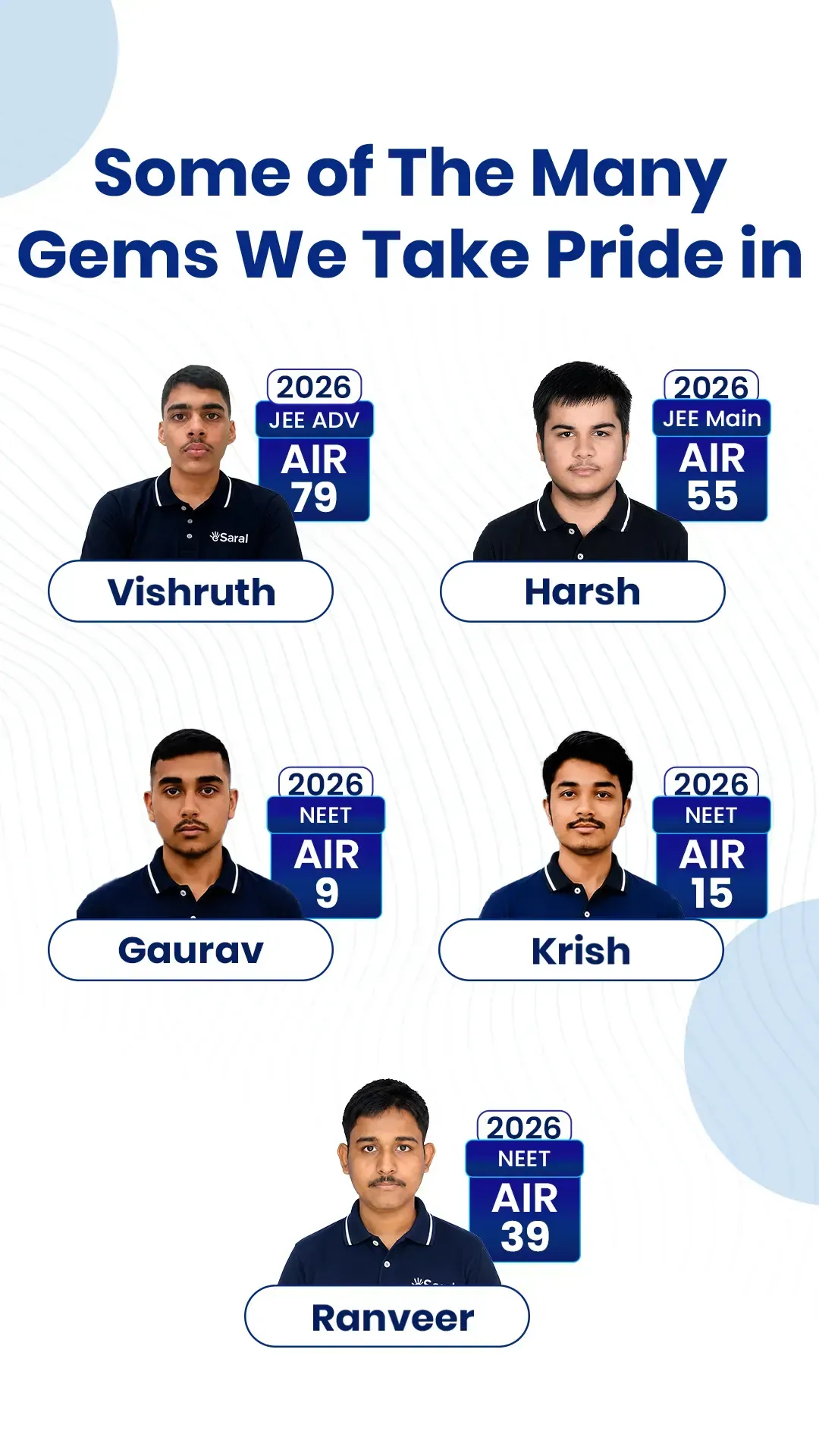
eSaral Results That Inspire
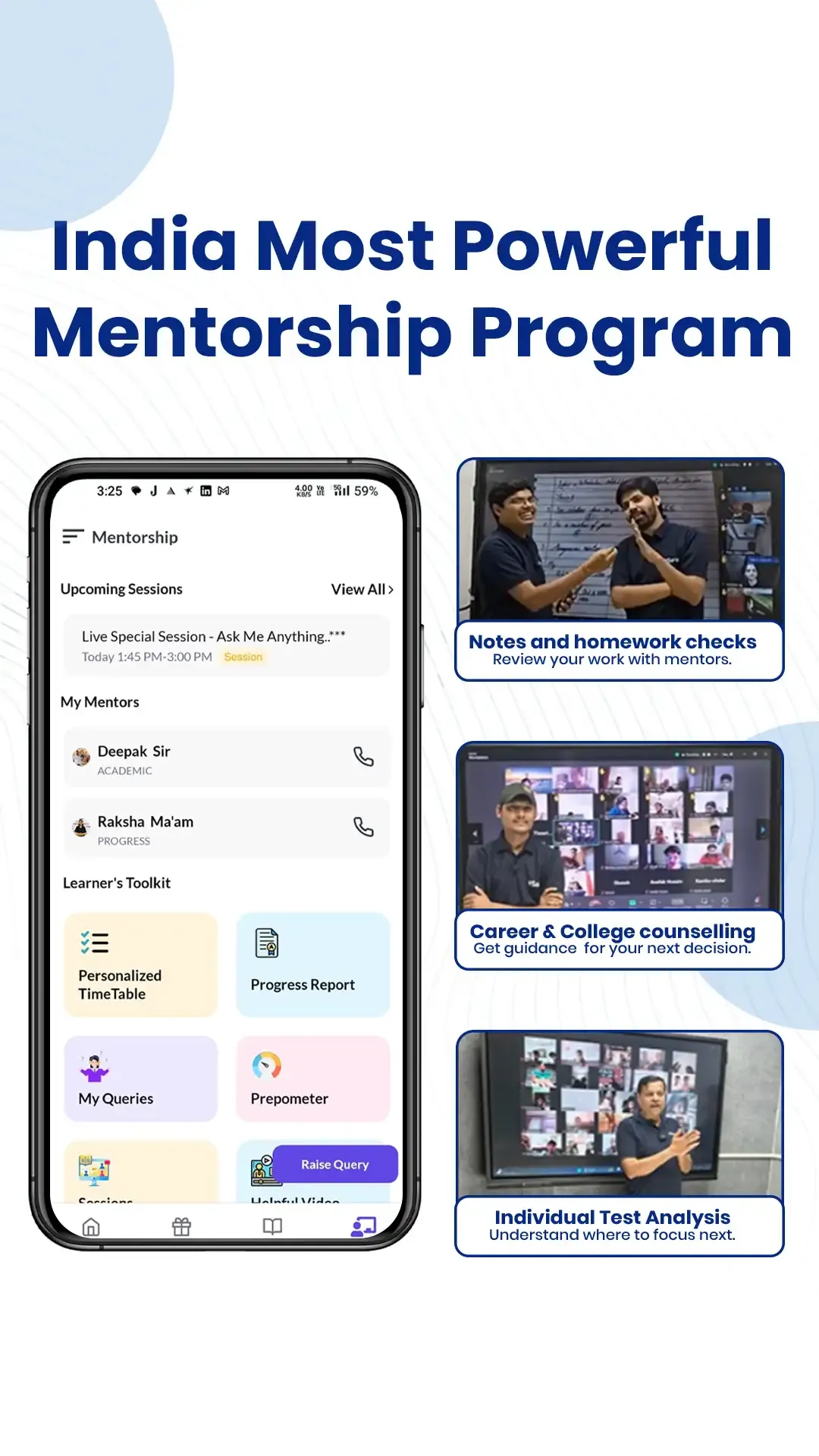
Year after year, eSaralites prove that with Kota's legendary educators, personal 1-on-1 mentorship, and smart practice, extraordinary ranks are achieved from home.
Should Class 12 Students Follow the Same Test Series as Droppers?
No — the schedule differs. Class 12 students need a test plan that runs alongside board exam prep, while droppers need a full-syllabus repeat plan without board-exam interruptions. eSaral's datewise plan adjusts for both, so a Class 12 student balancing boards and a dropper on a full revision cycle each get a pace suited to their situation.
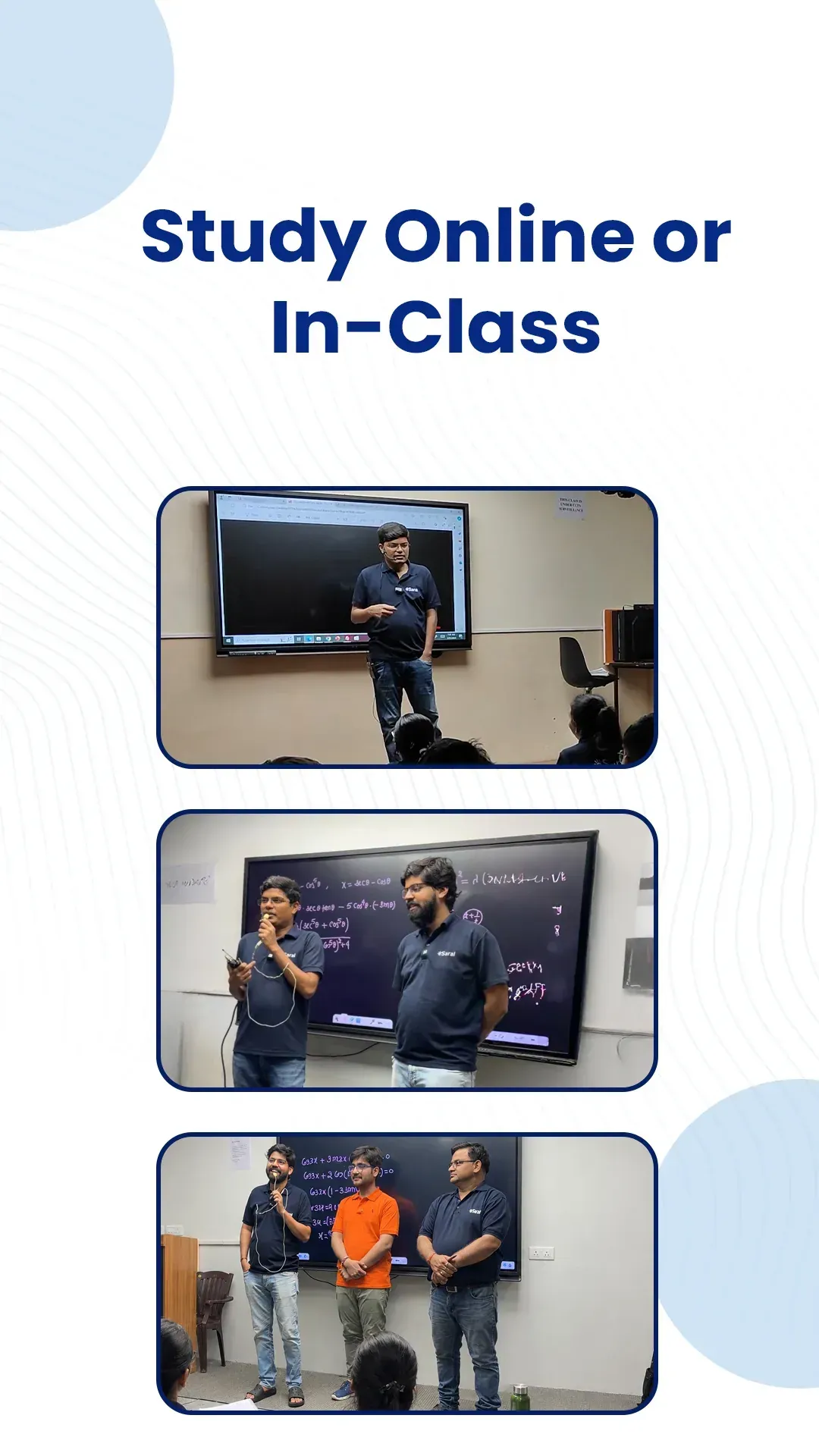
If you're deciding between course formats to pair with your test series, eSaral's JEE online and offline courses page compares batch structures, and dropper-specific batches like JEE Warrior, JEE Prahaar, and JEE Brahmos are built specifically around a full-syllabus test cycle.
How the Datewise Test Schedule Works
Tests are released in step with your syllabus progress rather than all at once, so you're never testing a chapter you haven't studied yet — and never left without a test for chapters you've just finished.
Typical progression across a preparation cycle:
Months 1–4: Chapter-wise tests after each topic
Months 5–7: Part-syllabus tests covering 3–4 chapters together
Last 3–4 months: Full-syllabus tests under real exam timing
Why Choose eSaral's JEE Test Series for 2027 and 2028?
eSaral's JEE Test Series is India's first AI-powered test series, purpose-built for students targeting JEE Main and JEE Advanced 2027–2028. With 400+ total tests, a date-wise release schedule mapped to syllabus progress, and detailed text-plus-video solutions, this JEE Test Series is designed to remove the guesswork from mock test prep.
After every test, students don't just get a score; they get a 20-page performance report that shows whether a mistake was conceptual or silly, and exactly which chapter to revise next. Whether you're a Class 12 student balancing board exams with JEE prep, or a dropper following a full-syllabus revision cycle, eSaral's JEE Test Series adjusts to both situations.
What sets this JEE Test Series apart is that JEE Main and JEE Advanced tests are kept separate, so students can practice according to each exam's specific pattern (speed vs. depth) rather than a combined, generic test format.
Common Mock Test Mistakes Students Make
Not reviewing the solution the same day — the 20-page report loses its value if you move to the next test before fixing the last one's mistakes
Skipping chapter-wise tests and jumping straight to full-syllabus — this hides exactly which chapter is weak
Ignoring time-per-question data — a right answer that took twice the ideal time is still a problem to fix
Ignoring negative marking practice — especially critical for JEE Advanced's multi-correct format
eSaral Learning App
Best Exam Prep App For JEE | NEET | Class 8, 9, 10
Download the eSaral Learning App & Boost you Exam preparation anytime, anywhere!
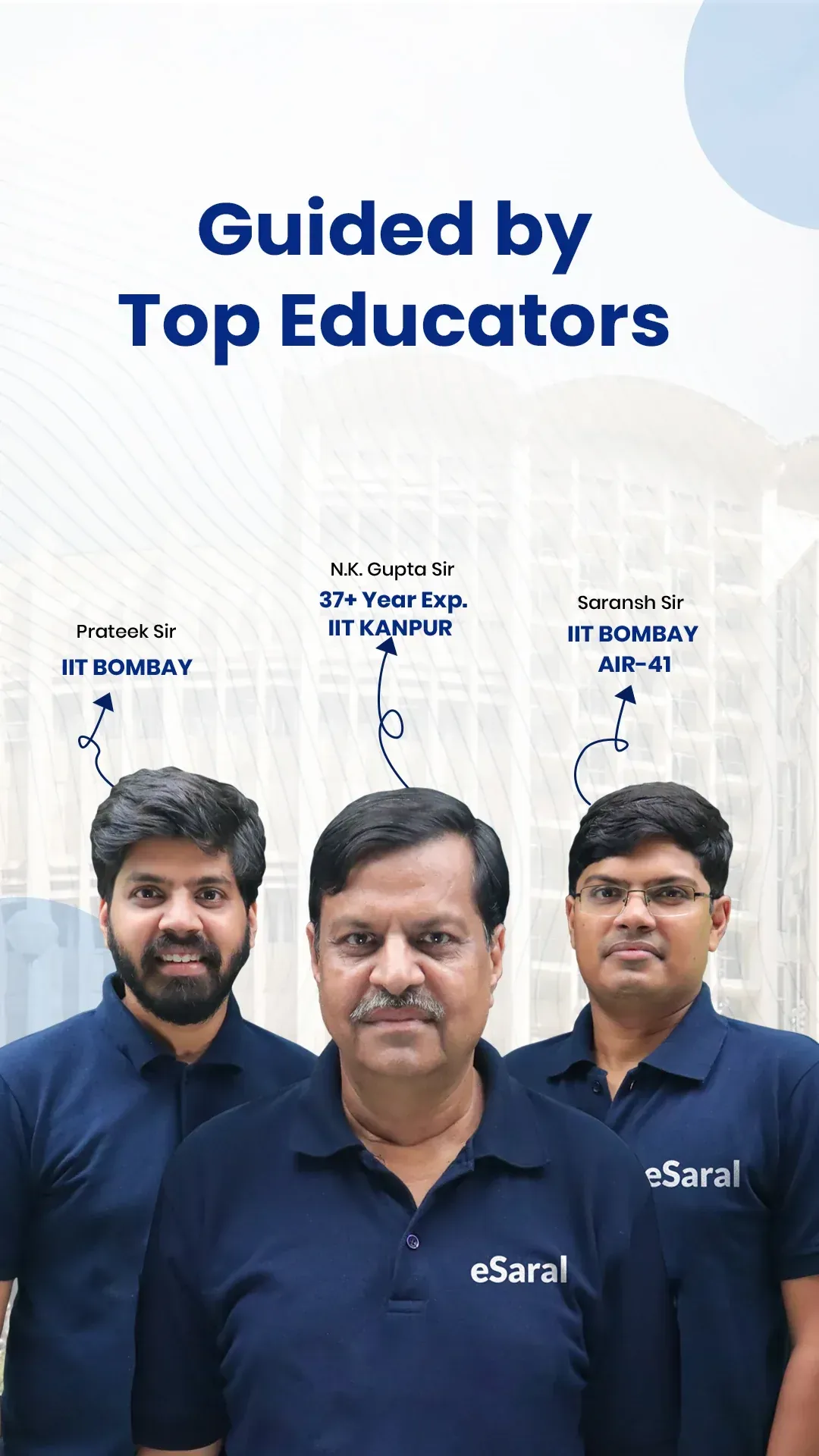
What Students Say About eSaral
Real experiences from students and families who felt supported through teaching, mentorship, doubt solving and regular guidance.
Got Questions? We Have Answers.
Clear, honest details to help students and parents make the best decision for competitive exam preparation.
eSaral's JEE Mock test series includes 200+ tests for JEE Advanced and 100+ tests for JEE Main, covering chapter-wise, part-syllabus, and full-syllabus formats aligned to the latest exam pattern.
Have a question specific to your child's syllabus or city?