
JEE Advanced Marks vs Rank 2026, 2025 2024, 2023

eSaral Academic and Editorial Team
Summary
JEE Advanced marks vs rank data shows that scoring 285–340 out of 360 places you in the top 100 ranks (CRL). A score above 150 typically secures a rank under 5,000. For SC/ST categories, the minimum qualifying marks are significantly lower — ranging from 40 to 90 marks depending on the year.
eSaral › JEE › JEE Main ›JEE Advanced Marks vs Rank 2026, 2025 2024, 2023

🚀 Checkout eSaral Courses
The analysis of JEE Advanced 2026 marks vs rank gives you an idea of the marks required for a higher rank in IIT JEE. For B.Tech admission in IITs through JEE Advanced, a rank below 5000 is considered good marks. Given the high level of competition and previous year’s statistics, to hold a rank below 5000, students need a minimum score of 150+ in JEE Advanced.
You can find the expected 2026 and last year JEE Advanced marks vs rank on this page. After the exam results, IIT Madras will also release category-wise rank lists based on the overall and subject-wise passing marks criteria. For instance, the minimum percentage of marks required to be included in the JEE Advanced rank list (CRL) are 10% in each subject (PCM) and 35% in aggregate.
Soon after the conclusion of the exam, you look for the JEE Advanced rank predictor to know your expected rank based on the calculated scores. Now, you can easily predict not only your rank but also the list of the most eligible IITs based on your scores in the JEE exams.
The JEE Advanced 2026 Marking Scheme for Ranking
JEE Advanced 2026 — Marking Scheme
Subject | Per Paper | Total |
|---|---|---|
Physics | 60 | 120 |
Mathematics | 60 | 120 |
Chemistry | 60 | 120 |
Total | 180 | 360 |
JEE Advanced 2026 – Expected Qualifying Cutoff
Rank List | Min % Subject | Min Aggregate % | Approx. Min Marks |
|---|---|---|---|
CRL – General | ~6.83% | ~20.5% | ~74 marks |
GEN-EWS | ~6.25% | ~18.5% | ~67 marks |
OBC-NCL | ~6.25% | ~18.5% | ~67 marks |
SC | ~2.9% | ~10.1% | ~37 marks |
ST | ~2.9% | ~10.1% | ~37 marks |
PwD (all) | ~2.9% | ~10.1% | ~37 marks |
Preparatory Course | — | ~5.14% | ~19 marks |
JEE Advanced 2026 – Expected Marks vs Rank
Marks (out of 360) | Expected CRL Rank | IIT Admission Possibility |
|---|---|---|
320+ | Top 50 | IIT Bombay CS, IIT Delhi CS, IIT Madras CS |
300–319 | 51–200 | IIT Bombay / Delhi / Madras – core branches |
270–299 | 201–500 | Top 5 IITs – CS, EE, Engineering Physics |
240–269 | 501–1000 | IIT Kanpur CS, IIT Kharagpur CSE, IIT Roorkee EE |
210–239 | 1,001–2,000 | Older IITs – EE, Mechanical, Civil |
185–209 | 2,001–3,500 | Older IITs non-core, newer IITs CSE |
160–184 | 3,501–5,500 | Mid-tier and newer IITs |
130–159 | 5,501–9,000 | Newer IITs – Chemical, Metallurgy, Civil |
100–129 | 9,001–15,000 | Newer IITs + limited for the General category |
74–99 | 15,000–23,000 | Qualifies for rank list – IIT seat unlikely (General) |
JEE Advanced Marks vs Rank 2025
Marks Scored by Candidate | JEE Advanced 2025 AIR (All India Rank) |
|---|---|
278+ | 1 to 101 |
262 to 234 | 201 to 500 |
234 to 208 | 501 to 1000 |
208 to 193 | 1001 to 1500 |
193 to 181 | 1501 to 2000 |
179 to 172 | 2001 to 2500 |
172 to 165 | 2501 to 3000 |
165 to 154 | 3001 to 4000 |
154 to 149 | 4001 to 4500 |
149 to 145 | 4501 to 5000 |
145 to 135 | 5001 to 6701 |
135 to 120 | 6801 to 9901 |
120 to 110 | 10001 to 13001 |
109 to 105 | 13101 to 14901 |
104 to 100 | 15001 to 17001 |
99 to 94 | 17101 to 19901 |
94 to 86 | 20001 to 24901 |
85 to 80 | 25001 to 29101 |
79 to 74 | 29201 to 33801 |
JEE Advanced Qualifying Cutoff Trend (2020–2025)
2025 | 20.5% | 74 marks | 18.5% | 10.28% |
2024 | 30.34% | 109 marks | 27.30% | 15.17% |
2023 | 23.89% | 86 marks | 21.50% | 11.95% |
2022 | 24.17% | 87 marks | 22.25% | 12.38% |
2021 | 18.33% | 65 marks | 23.75% | 13.75% |
2020 | 18.85% | 69 marks | 16.97% | 9.43% |
JEE Advanced Marks vs Rank 2024
Candidates can refer to the JEE Advanced marks vs rank 2024 analysis below. The data is prepared after a thorough analysis of the previous year's statistics and 2024 current trends.
JEE Advanced Rank (CRL) | JEE Advanced Marks |
1-101 | 340-285 |
101-201 | 280-270 |
201-501 | 265-240 |
501-1001 | 239-220 |
1001-1101 | 219-215 |
1101-1501 | 200+ |
1501-2001 | 200-190 |
2001-2501 | 190-180 |
2501-3001 | 175+ |
3001-3501 | 165+ |
3501-4001 | 85+ |
4001-4501 | 80+ |
4501-5001 | 75+ |
JEE Advanced Marks vs Rank Category Wise 2024
IIT Madras will release the details of JEE Advanced marks vs rank category-wise as soon as the results. We have given the category-wise JEE Advanced 2024 expected marks vs rank below based on the analysis of previous year reports.
JEE Advanced Rank 2024 | Aggregate Marks in GEN-EWS | Aggregate Marks in OBC-NCL | Aggregate Marks in SC | Aggregate Marks in ST |
1-101 | 320-210 | 320-240 | 310-160 | 270-120 |
101-201 | 190+ | 240-210 | 135+ | 100+ |
201-501 | 160+ | 210-175 | 105+ | 70+ |
501-1001 | 140+ | 175-150 | 90+ | 55+ |
1001-1101 | 130+ | 145+ | 85+ | 50+ |
1101-1501 | 120+ | 140+ | 75+ | 45+ |
1501-2001 | 110+ | 130+ | 70+ | 40+ |
2001-2501 | 105+ | 120+ | 60+ | - |
2501-3001 | 100+ | 115+ | 55+ | - |
3001-3501 | 90+ | 110+ | 52+ | - |
3501-4001 | 85+ | 105+ | 48+ | - |
4001-4501 | 80+ | 100+ | 45+ | - |
4501-5001 | 75+ | 95+ | 40-45 | - |
JEE Advanced 2023 — CRL Marks vs Rank
CRL Rank | Score Range |
|---|---|
1–501 | 314–192 |
601–1,001 | 186–170 |
1,101–1,501 | 167–156 |
1,601–2,001 | 153–146 |
2,101–2,501 | 144–138 |
2,601–3,001 | 137–132 |
3,101–3,501 | 131–126 |
3,601–4,001 | 125–122 |
4,101–4,501 | 121–118 |
4,601–5,001 | 118–115 |
5,101–5,501 | 114–112 |
5,601–6,001 | 111–109 |
6,101–6,501 | 108–107 |
6,601–7,001 | 106–104 |
7,101–7,501 | 104–102 |
7,601–8,001 | 101–100 |
8,101–8,501 | 99–98 |
8,601–9,001 | 97–96 |
9,101–9,501 | 95–94 |
9,601–10,001 | 94–92 |
10,101–10,501 | 92–91 |
10,601–11,001 | 90–89 |
11,101–11,501 | 89–87 |
11,601–12,001 | 87–86 |
12,101–12,501 | 86–85 |
12,601–13,001 | 84–83 |
13,101–13,501 | 83–82 |
13,601–14,001 | 82–81 |
14,101–14,501 | 80–79 |
14,601–15,001 | 79–78 |
15,101–15,501 | 78–77 |
15,601–16,001 | 77–76 |
16,101–16,501 | 76–75 |
16,601–17,001 | 75–74 |
17,101–17,501 | 74–73 |
17,601–18,001 | 73–72 |
18,101–18,501 | 72–71 |
18,601–19,001 | 71–70 |
19,101–19,501 | 70–69 |
19,601–20,001 | 69–68 |
20,101–20,501 | 68–67 |
20,601–21,101 | 67–67 |
21,101–21,501 | 66–66 |
21,601–22,001 | 65–65 |
22,101–22,501 | 65–64 |
22,601–23,001 | 64–63 |
23,101–23,501 | 63–63 |
23,601–24,001 | 62–62 |
24,101–24,601 | 62–61 |
24,601–25,001 | 61–60 |
25,101–25,301 | 60–60 |
Along with JEE Advanced 2026 Marks vs Rank, refer to the JEE Advanced exam paper for the complete paper context.
JEE Advanced 2023 — CRL Marks vs Rank Category-wise
Rank | CRL | GEN-EWS | OBC-NCL | SC | ST |
|---|---|---|---|---|---|
Total qualified → | 26,321 | 5,371 | 9,050 | 5,004 | 1,645 |
Rank 1 | 341 | 323 | 320 | 310 | 265 |
Top 100 | 284 | 213 | 234 | 157 | 119 |
Top 200 | 269 | 190 | 213 | 135 | 97 |
Top 300 | 257 | 176 | 196 | 123 | 85 |
Top 500 | 242 | 159 | 176 | 107 | 72 |
Top 1,000 | 219 | 136 | 152 | 87 | 55 |
Top 1,500 | 203 | 122 | 139 | 75 | 45 |
Top 2,000 | 191 | 112 | 130 | 68 | — |
Top 3,000 | 174 | 98 | 116 | 56 | — |
Top 5,000 | 153 | 79 | 98 | 43 | — |
Top 7,000 | 140 | — | 86 | — | — |
Top 10,000 | 125 | — | — | — | — |
Cutoff (last rank) | 86 | 77 | 77 | 43 | 43 |
Min per subject | 8 | 7 | 7 | 4 | 4 |
After reviewing the marks-to-rank data, explore the JEE Advanced exam paper to practise the papers and better understand the score levels involved.
JEE Advanced Marks vs Rank 2022, 2021, 2020
Frequently Asked Questions
What is the minimum score to qualify the JEE Advanced rank list for General category?
For the Common Rank List (CRL), you must score at least 10% in each subject (Physics, Chemistry, Mathematics) and 35% in aggregate — which translates to 12 marks per subject and 126 marks total out of 360. Missing either threshold means exclusion from the rank list even if your total score is high.
Is 150 marks a good score in JEE Advanced?
Yes, 150 marks is a competitive score. Based on 2023 data, a score of 150–160 typically places you between rank 1,500 and 2,500 in the CRL — which is within range for several older IITs and NITs. However, for premium branches at IIT Bombay or IIT Delhi, you need 200+ marks.
What marks are needed to get a rank under 1,000 in JEE Advanced?
To secure a rank under 1,000 in the Common Rank List (CRL), you generally need 220–239 marks out of 360 based on 2024 analysis. In harder years like 2021, the threshold dropped to approximately 160–177. The exact cutoff shifts with paper difficulty and the overall candidate performance that year.
What rank do I need to get into IIT Bombay Computer Science?
IIT Bombay CSE (Computer Science and Engineering) is historically the most competitive branch. Based on JoSAA counselling data from recent years, you need a CRL rank of approximately 60–80 to secure admission to IIT Bombay CSE in the open category. For other top branches like Electrical Engineering at IIT Bombay, the cutoff is around CRL 200–300.
Does JEE Advanced use normalisation across Paper 1 and Paper 2?
JEE Advanced does not use the inter-session normalisation applied in JEE Main. However, it follows a combined aggregate scoring method — your Paper 1 and Paper 2 marks are added subject-wise, and the aggregate determines your rank. There is no separate Paper 1 or Paper 2 rank list.
How does the JEE Advanced category-wise rank list work?
IIT Madras generates separate rank lists for CRL, GEN-EWS, OBC-NCL, SC, ST, and PwD categories. A candidate can appear in multiple lists simultaneously. Category-wise lists have lower minimum percentage thresholds — for SC and ST candidates, the aggregate minimum is 17.5% (approximately 63 marks out of 360), compared to 35% for the general CRL.
Team eSaral
eSaral Academic and Editorial Team
Team eSaral is the collective author profile for educational content created by eSaral’s teachers and academic contributors. The team draws on expertise from IIT graduates, doctors, experienced educators and subject specialists to develop resources for JEE, NEET and school students. Our articles aim to explain concepts clearly and help students study with confidence.
Related Posts
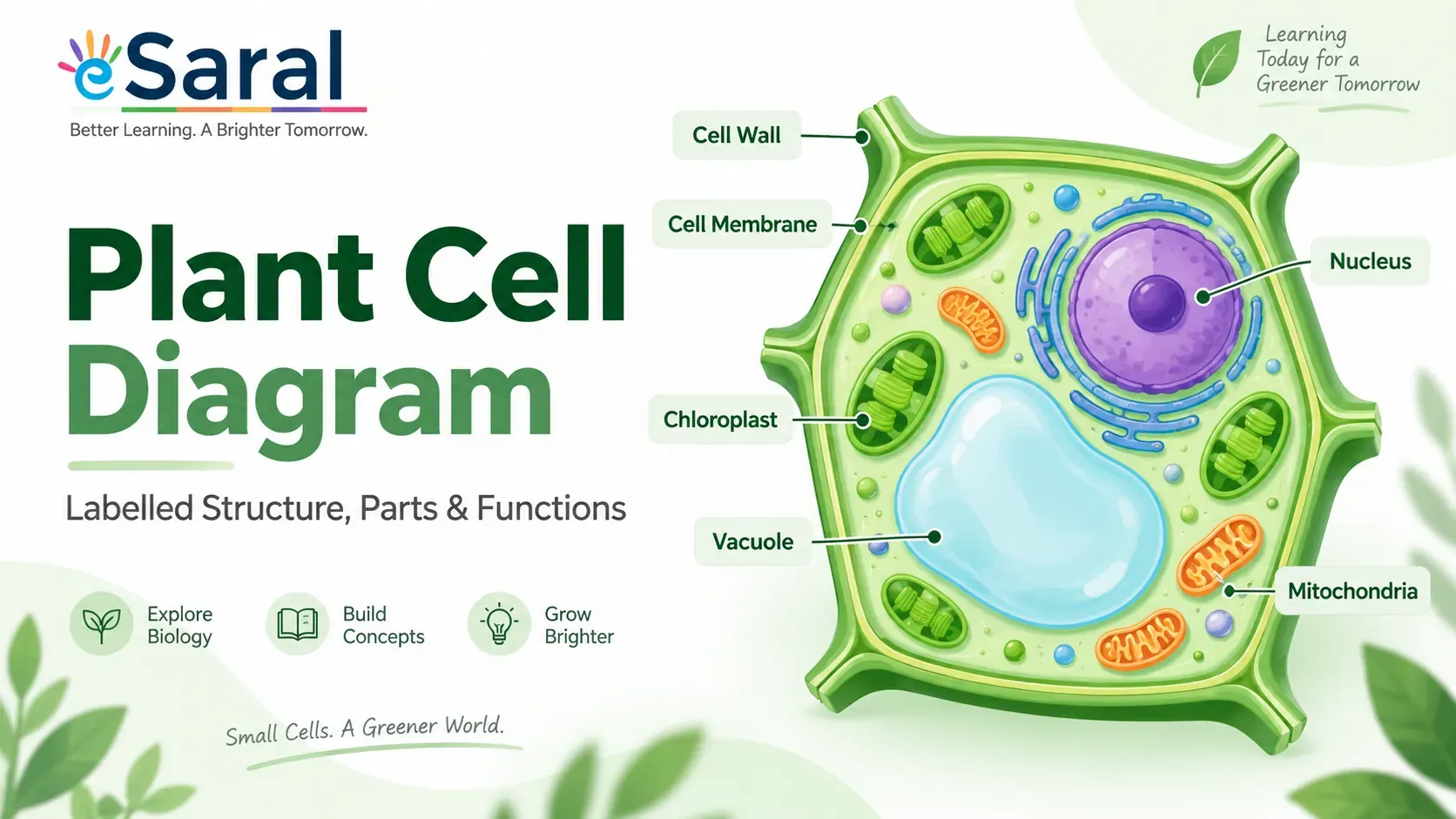
Plant Cell Diagram: Labelled Structure, Parts and Functions
Simple, labelled plant cell diagram with parts and functions. Covers plant cell structure for Class 6, 7, 8, 9, 10 and 11 students, CBSE-aligned.

Saransh Gupta Sir's Visit to IIT Patna: Hostel Life, Placements & Lessons for JEE Aspirants
Inside Saransh Gupta Sir's IIT Patna visit — hostel life, the library, placements, internships, and real advice for JEE aspirants from students living the IIT dream.
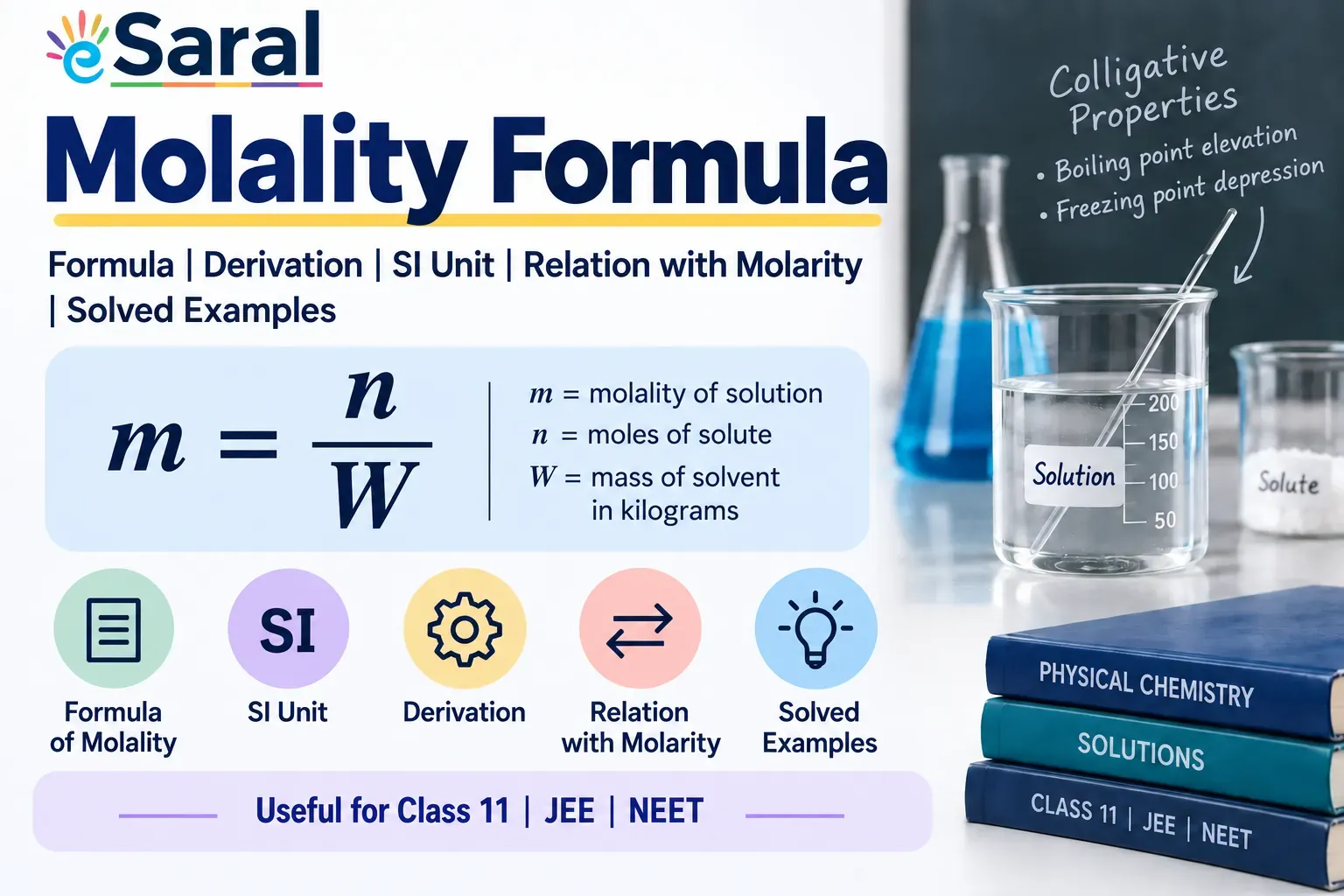
Molality Formula: Formula for Molality, Derivation & Solved Examples
Molality formula is $m = \dfrac{n}{W}$. Learn the formula of molality, its SI unit, derivation, relation with molarity, and solved examples for Class 11, JEE and NEET.
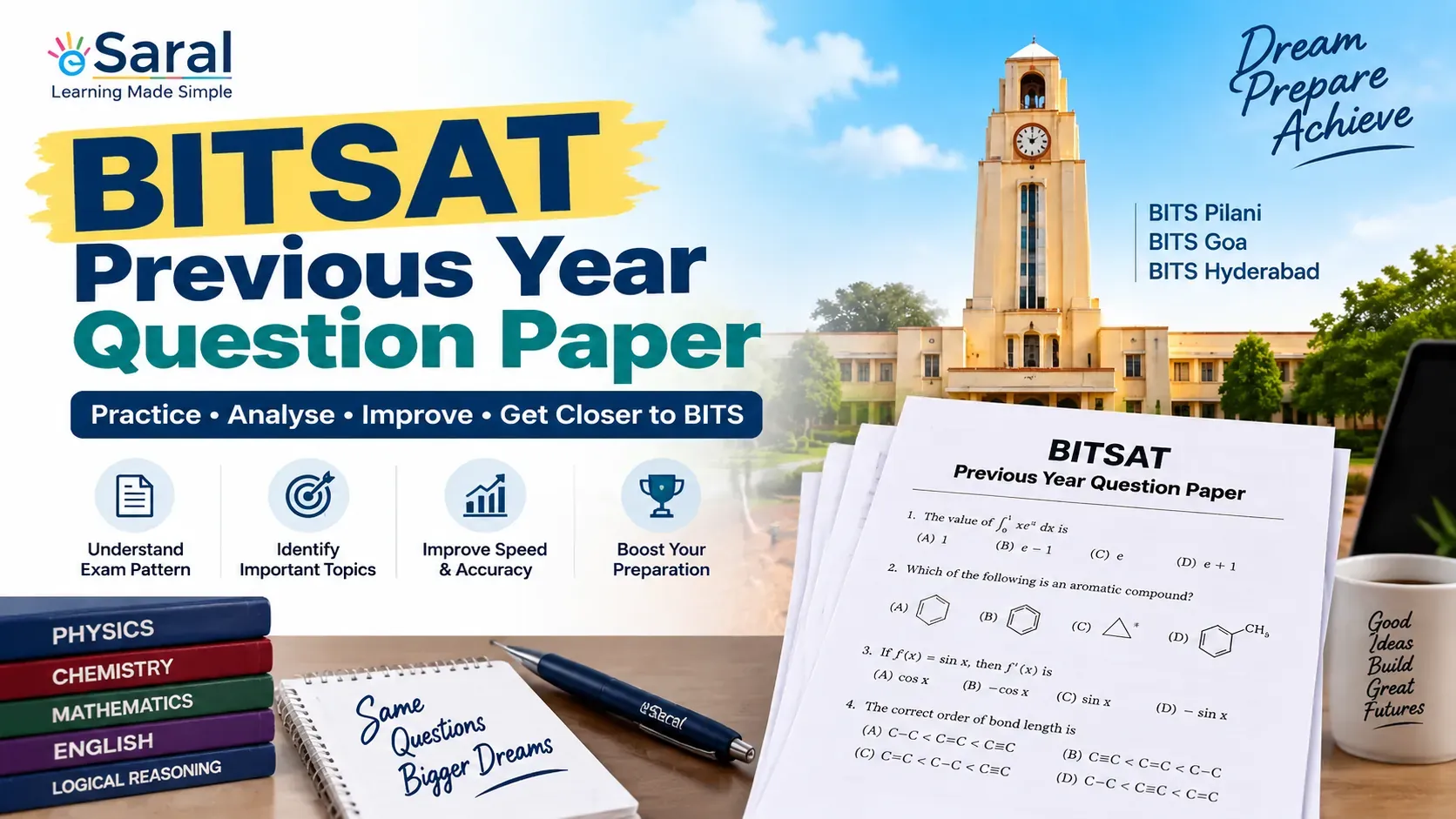
BITSAT Previous Year Question Paper PDF
Download BITSAT previous year question papers PDF. Get year-wise BITSAT PYQs, memory-based papers, exam pattern, and preparation tips to improve your BITSAT preparation.

Teachers’ Day 2026 at eSaral Gurukul: Celebrating the Bond Between Students, Teachers & Mentors
See how Teachers’ Day 2026 was celebrated at eSaral Gurukul, reflecting the bond among students, teachers, and mentors, and the role of guidance beyond academics.
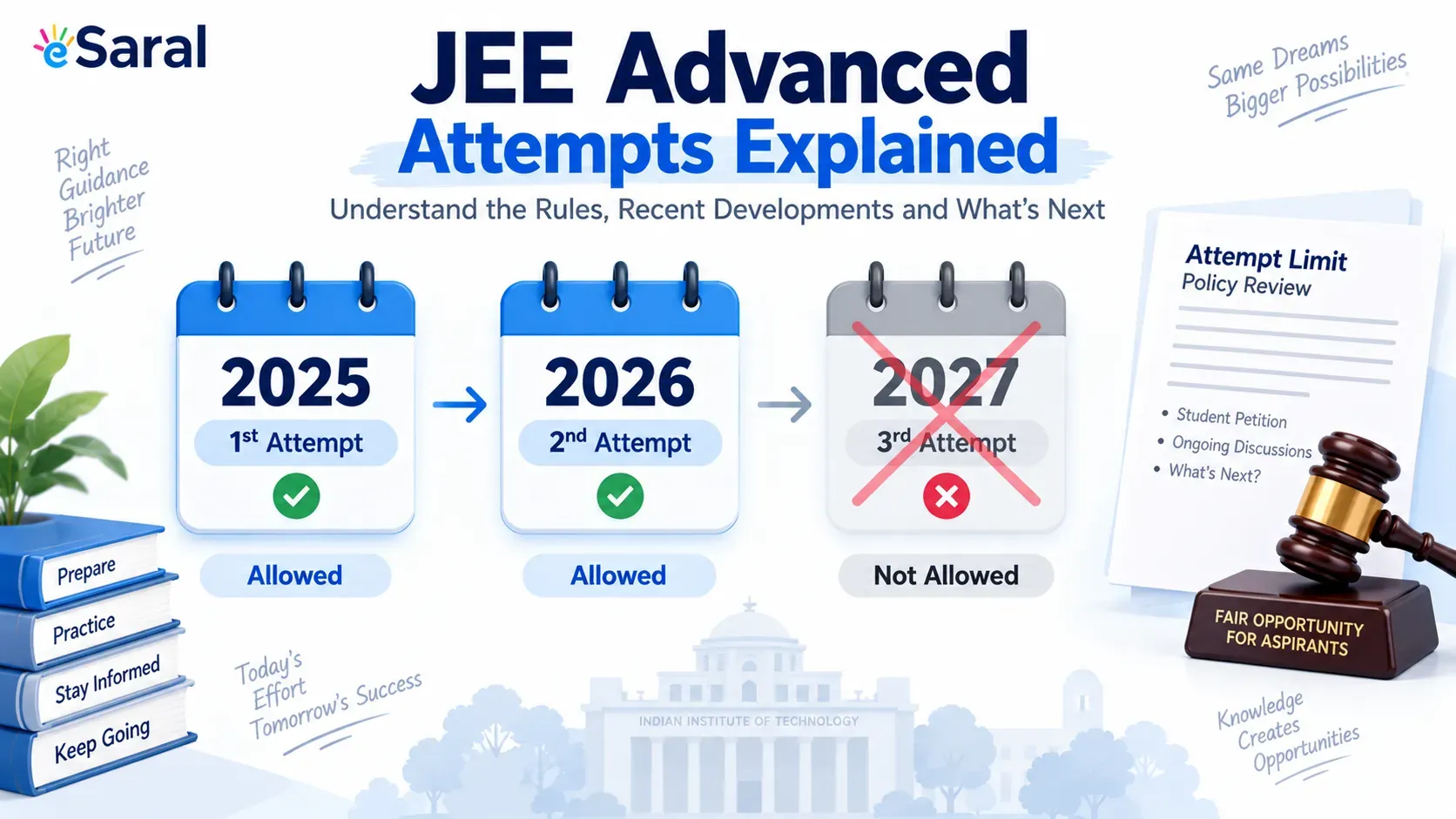
JEE Advanced Attempts: Can You Give It a Third Time? Rules Explained
JEE Advanced attempts: current rule is 2 consecutive years only: full eligibility criteria, the 2025 third-attempt controversy, and the latest 2026 petition news.

Best JEE Preparation App
Best JEE preparation app for Main & Advanced: AI mock tests, live doubt-solving, thousands of practice questions. JEE preparation app for droppers & Class 11-12.
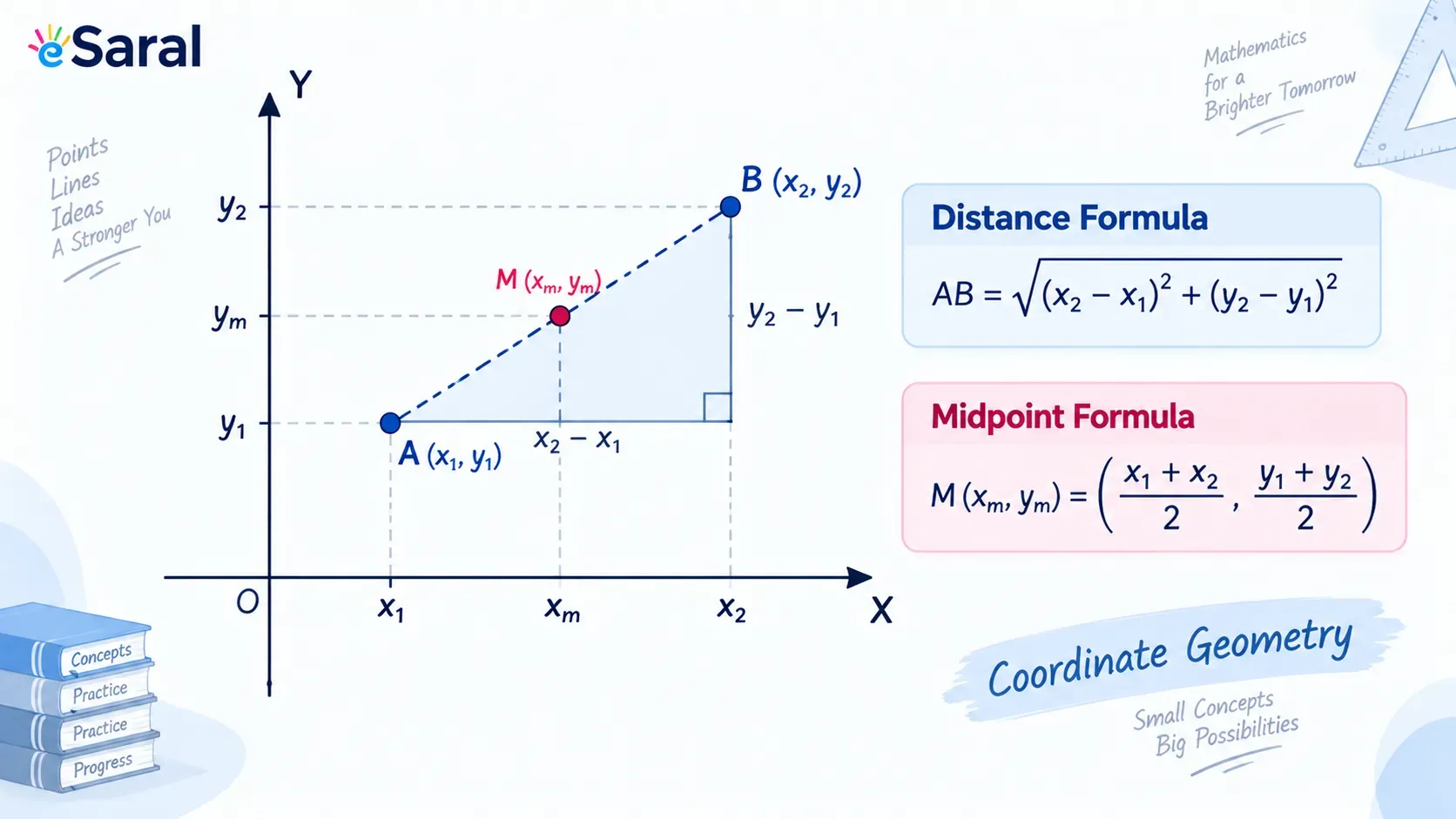
Coordinate Geometry Class 10: Formulas, Notes & Solved Examples
Coordinate geometry class 10: complete CBSE formulas — distance, section, midpoint and area of triangle — with derivation, notes and solved examples.

How to make Notes For JEE Smart Notes Strategy of an AIR 41
Learn how to make notes for JEE the way toppers do — indexing, shorthand, and smart short notes for JEE that cut revision time to just 5–7 days.
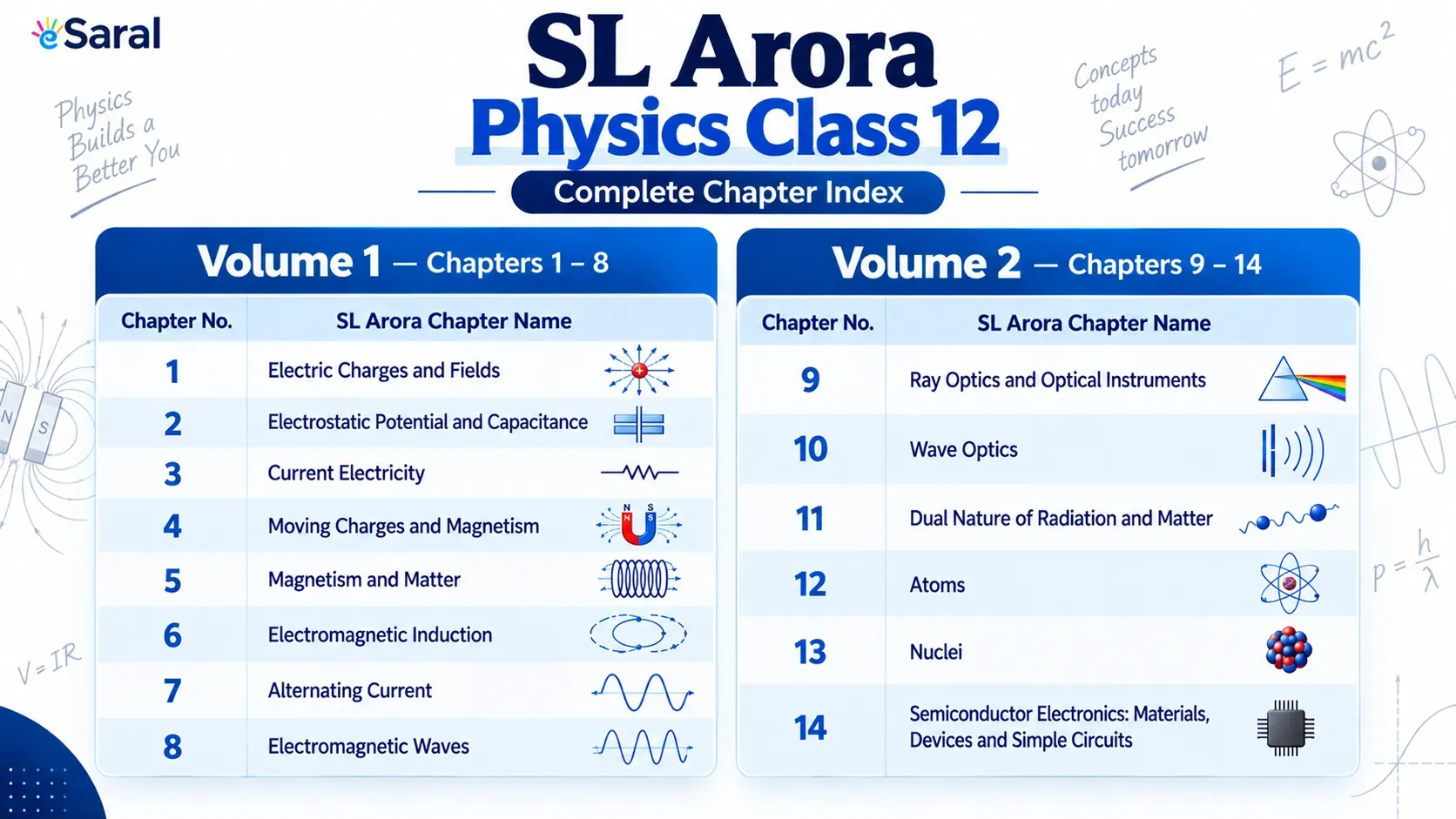
SL Arora Physics Class 12 Index – Chapter List for Volume 1 & 2
SL Arora Physics Class 12 index — complete chapter list for Volume 1 & 2, mapped to NCERT solutions for board, JEE Main, and NEET preparation.