
JEE Main January 2020 Question Paper (Session 1)
About JEE Main 2020 Exam (Session 1)
Joint Entrance Exam Main, commonly known as the JEE Main, is India's premier engineering entrance exam. It is used to identify candidates for admission to undergraduate engineering programs at top engineering colleges in India, such as National Institute of Technology (NITs) and Indian Institutes of Information Technology (IIITs), among others. The JEE Main exam 2020 (Session 1) is administered by the National Testing Agency (NTA).
Some information about the JEE Main 2020 Exam, particularly Session 1 is given below:
Exam Dates: JEE Main 2020 had two sessions, with the first session scheduled to be held from January 6 to January 9, 2020.
Mode of Examination: The JEE Main exam is conducted in two modes - Computer-Based Test (CBT) and Pen and Paper-based Test (PBT). Session 1 would have had candidates appearing for the CBT mode.
Subjects: The exam tests candidates in three main subjects: Physics, Chemistry, and Mathematics. Each subject carries equal weightage in the examination.
Exam Dates in January-2020 (Session 1)
Events | Dates |
Registration for JEE Main 2020 | September 3 - 30 , 2019 |
Last Date to Pay Application Fee, Upload Signature and Photograph | October 1, 2019 |
Correction Period of Application Form of JEE Main | October 11 to 17, 2019 |
Declaration of Date and Shift for Examination | December 6, 2019 |
Declaration of Exam City for Paper I and II | December 6, 2019 |
Availability of JEE Main Admit Card | December 6, 2019 |
JEE Main 2020 | January 6 - 11, 2020 |
Announcement of JEE Main January 2020 Result | January 31, 2020 |
JEE Main 2020 (Session 1) - Exam Pattern
Mode of Examination | Computer Based Test |
Exam Duration | 3 Hours |
Subject | Physics, Chemistry, Maths |
Total questions | 75 (Each Subject 25 questions) |
Types of questions | 20 Objective questions having 4 options each with only 1 correct option 5 Numerical questions with numerical value as answer |
Marking Scheme | 4 marks for a correct answer; -1 for an incorrect answer (only for MCQs) |
Maximum Marks | 300 marks |
Medium of paper | English or Hindi (Candidates from Gujarat, Daman & Diu and Dadra and Nagar Haveli can opt for Gujarati as well) |
JEE Main Eligibility Criteria
Here are the eligibility criteria for JEE Mains 2020 released by the National Testing Agency (NTA). Please note that candidates who are applying for the JEE Main 2020 must first check the eligibility criteria. If a candidate fails to meet the eligibility criteria, they will be declared ineligible and will not be eligible to sit for the examination.
Tips for Solving JEE Main January 2020 Question Paper (Session 1)
The JEE Main question paper (session 1) is one of the most difficult question papers in the exam. However, it can also be one of the most rewarding.
Here are some tips on how to solve JEE Main question papers (session 1):
1. Understand the exam Pattern: You need to understand the pattern of the exam. This means that you need to know how many questions there are in the paper, how many sections there are, and what the marking scheme is. This will help you in managing your time better.
2. Time Management: Set a limit for how much time you want to spend on each section. This will depend on your level of comfort and your proficiency in the subject. Stick to these limits to ensure that you attempt all the questions.
3. Start with Strong Areas: Start with the section that you are comfortable with first. This will give you more confidence and you will be able to earn more marks faster.
4. Read Instructions: Read all the instructions in the question papers carefully. It is important to understand all the rules and guidelines mentioned in the question papers.
Why Should you solve the JEE Main January 2020 Question Paper (Session 1)?
JEE Main January 2020 (Session 1) Question Paper can be very helpful for the following reasons:
Practice & Familiarity: Solving previous year’s JEE Main question papers, especially from the same year and session, will give you a good idea of the actual JEE Main exam. This will help you understand the pattern, type of questions, and difficulty level of the JEE Main exam that you may face on the day of the JEE Main exam.
Time Management: Trying to solve the JEE Main Question Paper under timed conditions will help you practice good time management. As JEE Main has a duration of 3 hours, learning how to divide your time into different sections will help you succeed.
Self Assessment: Solving JEE Main 2020 (Session 1) question paper will help you evaluate your current level of JEE Main preparation. This assessment will help you determine your strengths and weaknesses across different subjects and topics, which can be used as a guide for your future study plan & revision strategy for the JEE Main preparation.
Frequently Asked Questions
Question 1: Why should I solve the JEE Main 2020 Session 1 question paper?
Answer 1: Solving the JEE Main 2020 Session 1 question paper allows you to practice, know your preparation level, understand the exam pattern, and identify your strengths and weaknesses. It's an essential part of your JEE Main preparation.
Question 2: Should I time myself while solving the JEE Main 2020 Session 1 Question Paper?
Answer 2: Yes, it’s a good idea to set a timer while solving the JEE Main 2020 Session 1 Question Paper to replicate the exam environment. Time management plays an important role in the JEE Main preparation.
Team eSaral
Related Posts
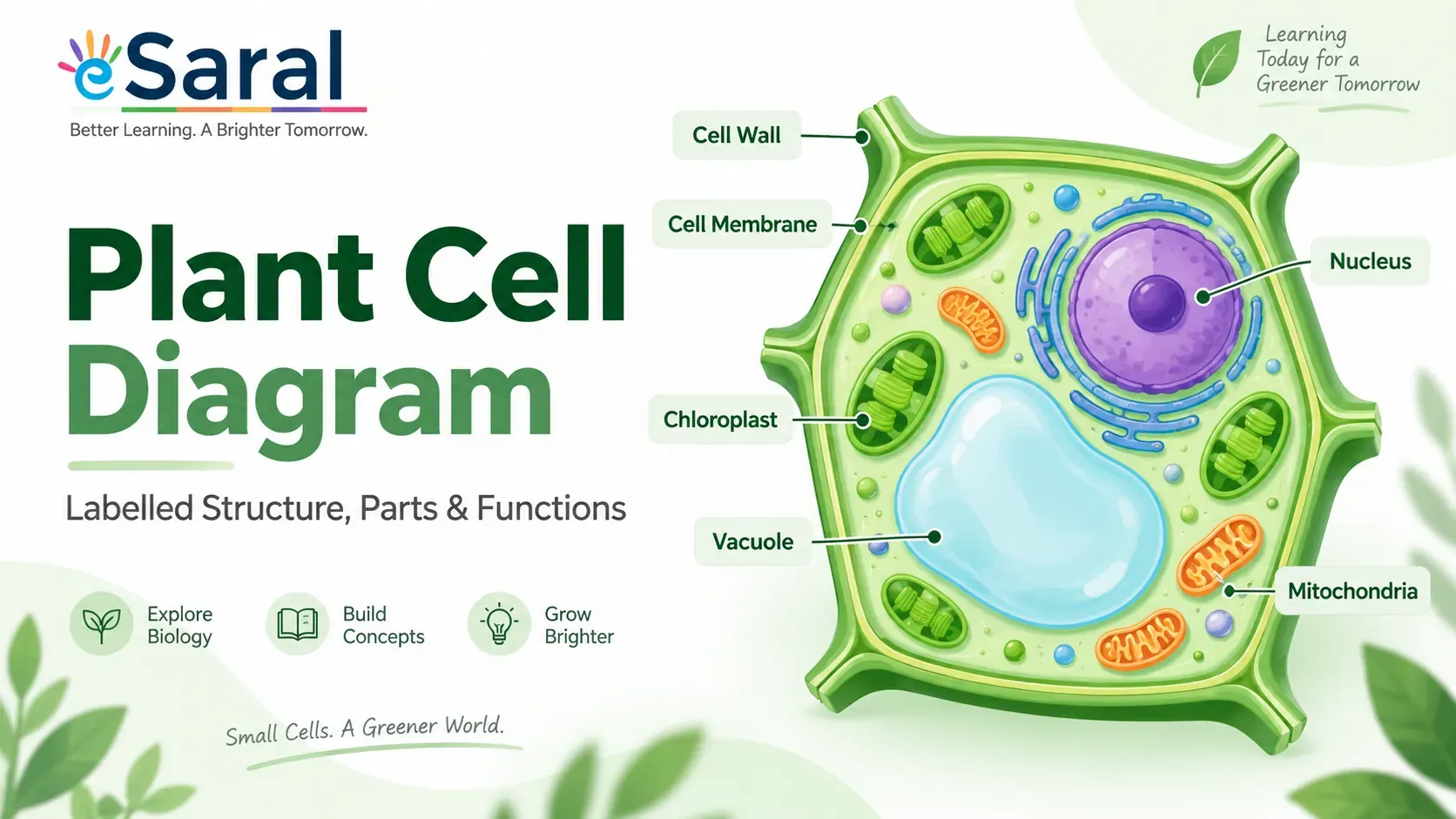
Plant Cell Diagram: Labelled Structure, Parts and Functions
Simple, labelled plant cell diagram with parts and functions. Covers plant cell structure for Class 6, 7, 8, 9, 10 and 11 students, CBSE-aligned.

Saransh Gupta Sir's Visit to IIT Patna: Hostel Life, Placements & Lessons for JEE Aspirants
Inside Saransh Gupta Sir's IIT Patna visit — hostel life, the library, placements, internships, and real advice for JEE aspirants from students living the IIT dream.
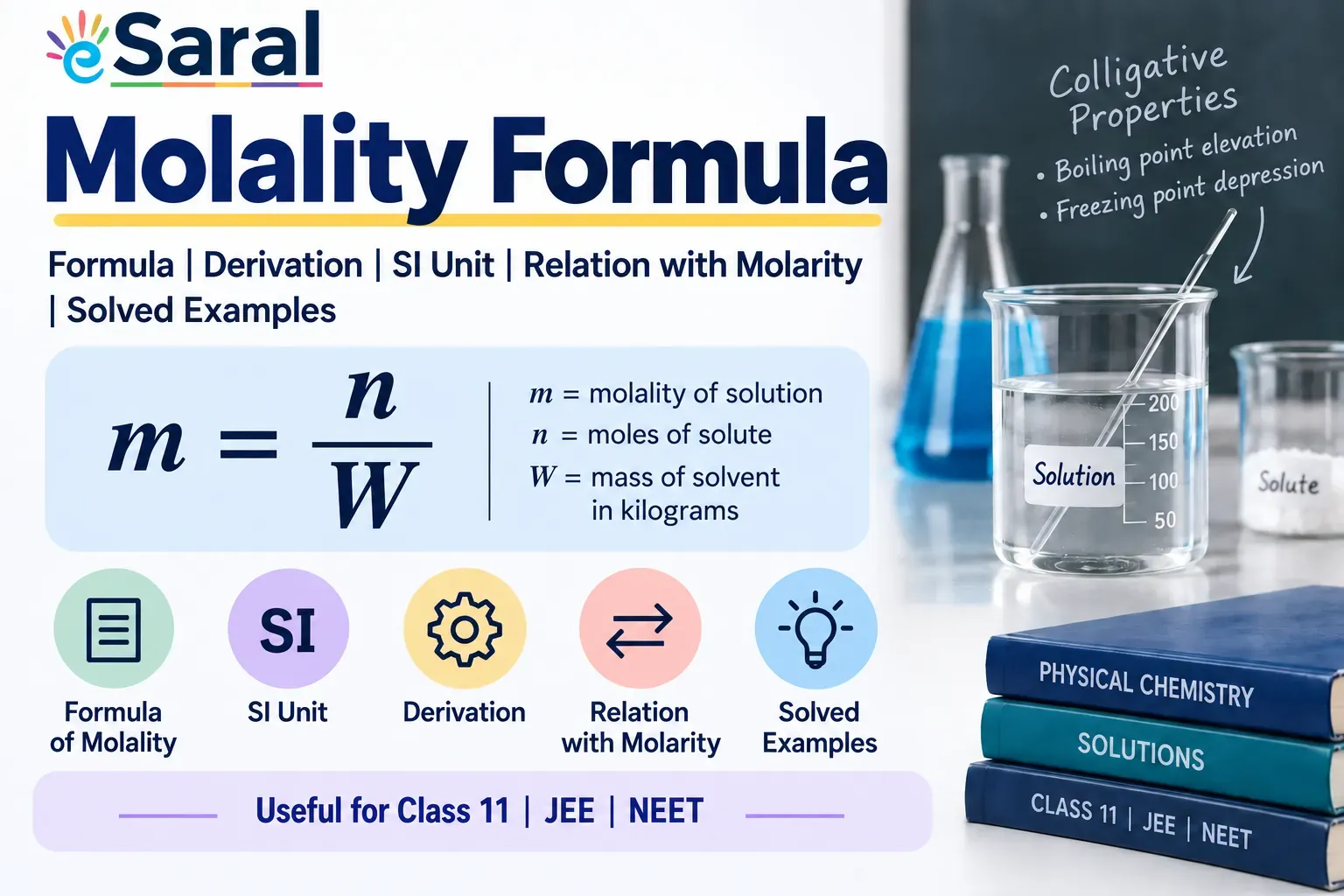
Molality Formula: Formula for Molality, Derivation & Solved Examples
Molality formula is $m = \dfrac{n}{W}$. Learn the formula of molality, its SI unit, derivation, relation with molarity, and solved examples for Class 11, JEE and NEET.
BITSAT Previous Year Question Paper PDF
Download BITSAT previous year question papers PDF. Get year-wise BITSAT PYQs, memory-based papers, exam pattern, and preparation tips to improve your BITSAT preparation.

Teachers’ Day 2026 at eSaral Gurukul: Celebrating the Bond Between Students, Teachers & Mentors
See how Teachers’ Day 2026 was celebrated at eSaral Gurukul, reflecting the bond among students, teachers, and mentors, and the role of guidance beyond academics.
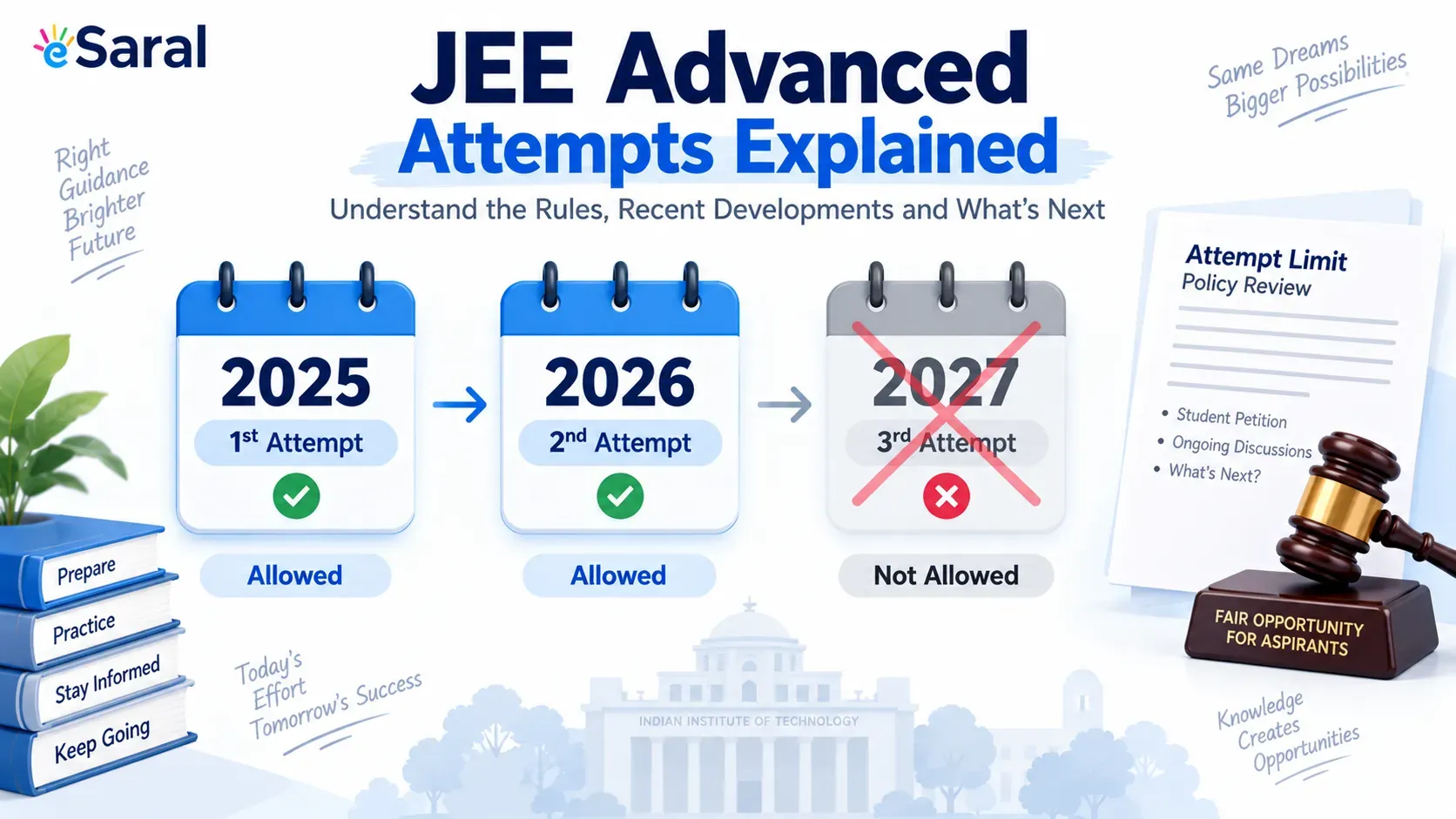
JEE Advanced Attempts: Can You Give It a Third Time? Rules Explained
JEE Advanced attempts: current rule is 2 consecutive years only: full eligibility criteria, the 2025 third-attempt controversy, and the latest 2026 petition news.

Best JEE Preparation App
Best JEE preparation app for Main & Advanced: AI mock tests, live doubt-solving, thousands of practice questions. JEE preparation app for droppers & Class 11-12.
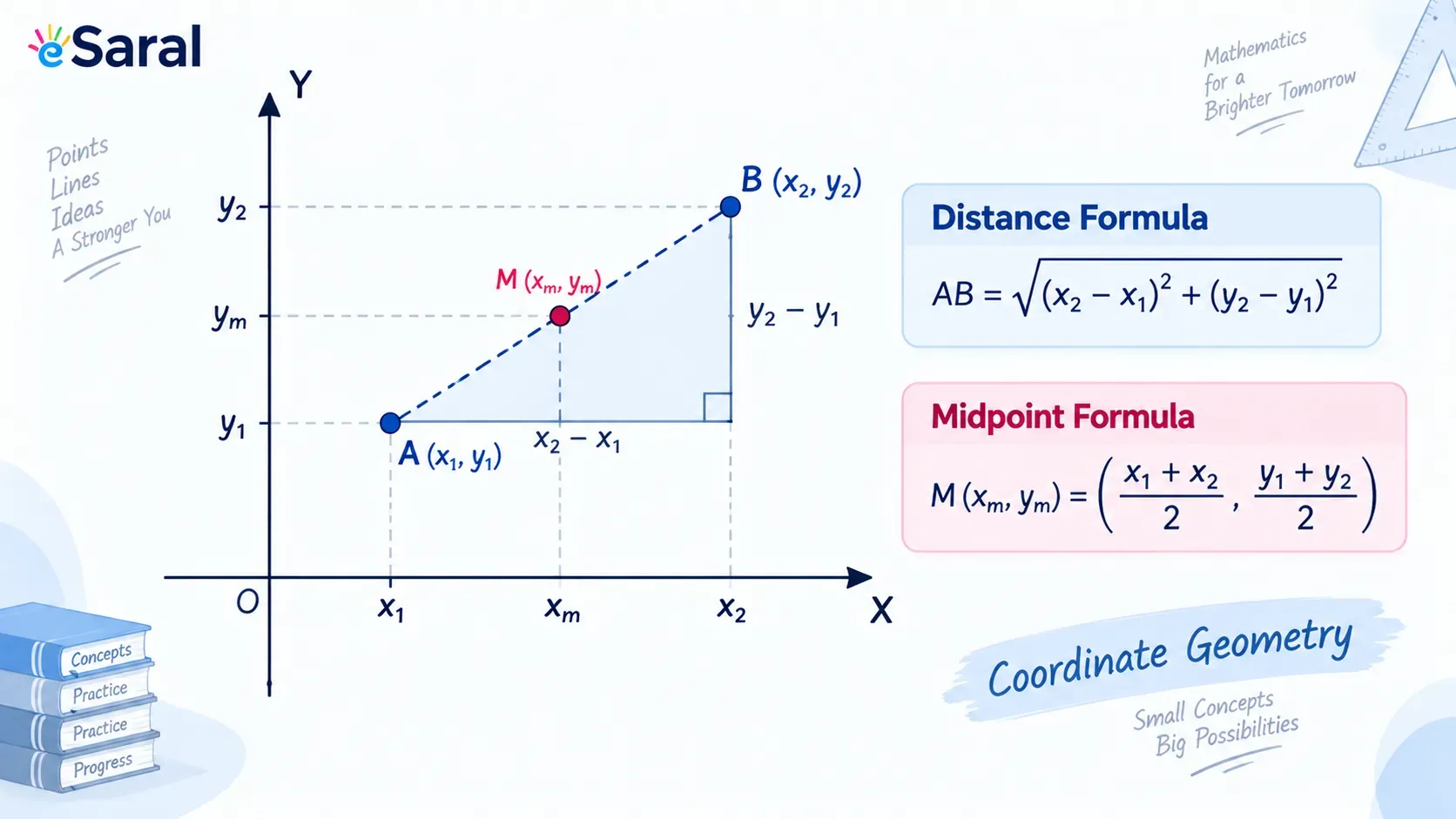
Coordinate Geometry Class 10: Formulas, Notes & Solved Examples
Coordinate geometry class 10: complete CBSE formulas — distance, section, midpoint and area of triangle — with derivation, notes and solved examples.
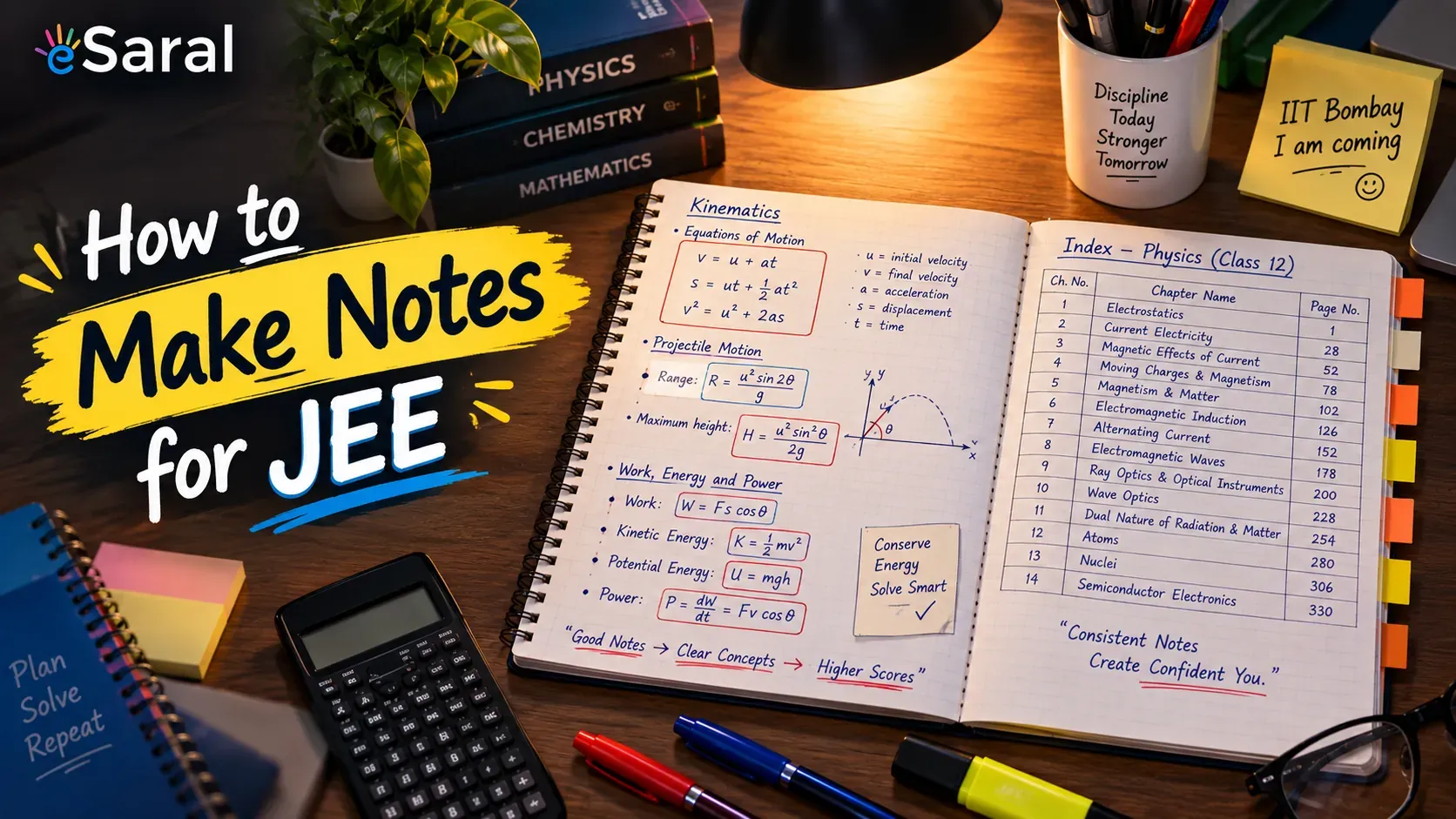
How to make Notes For JEE Smart Notes Strategy of an AIR 41
Learn how to make notes for JEE the way toppers do — indexing, shorthand, and smart short notes for JEE that cut revision time to just 5–7 days.
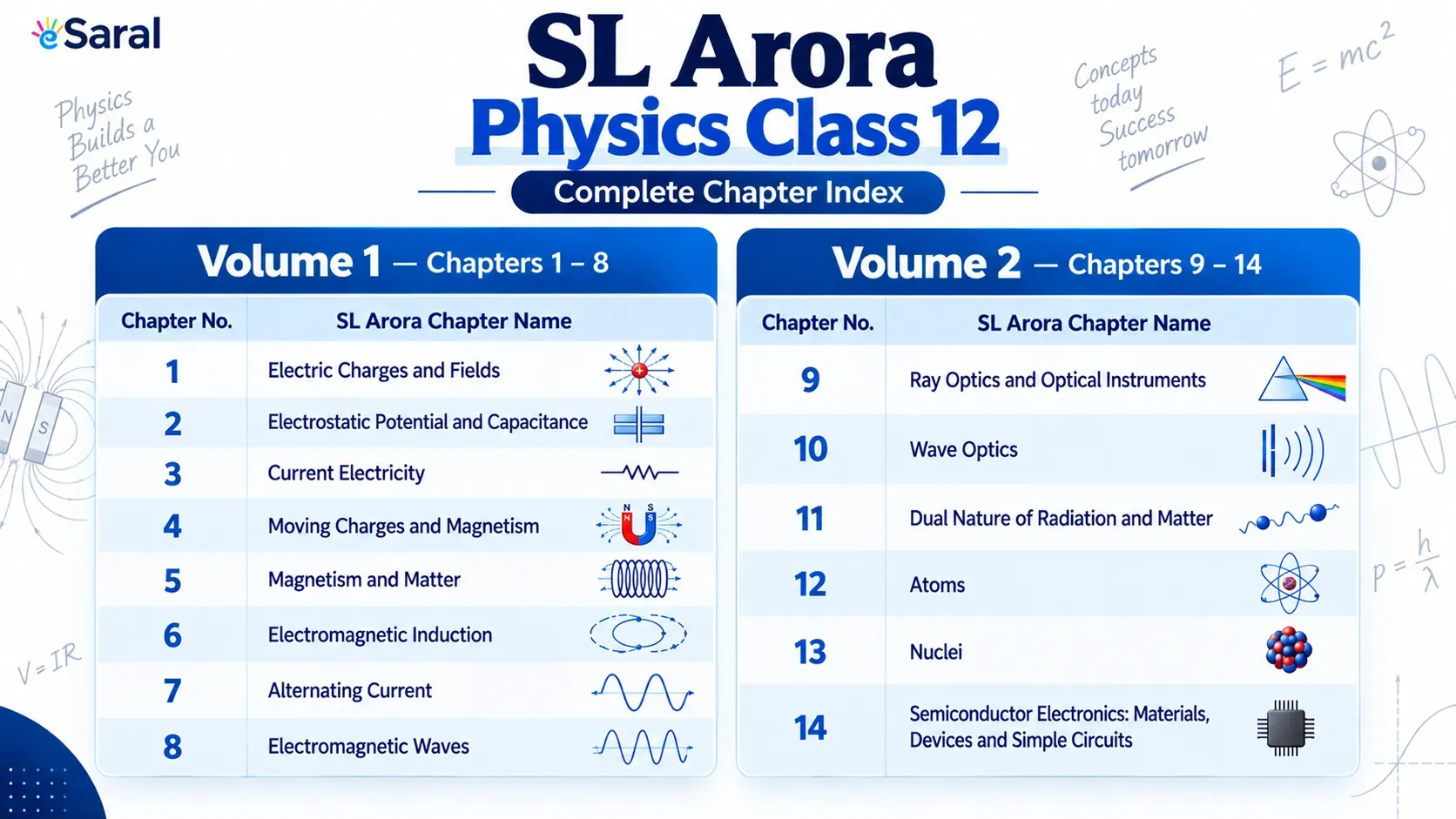
SL Arora Physics Class 12 Index – Chapter List for Volume 1 & 2
SL Arora Physics Class 12 index — complete chapter list for Volume 1 & 2, mapped to NCERT solutions for board, JEE Main, and NEET preparation.