
Monotonicity - JEE Advanced Previous Year Questions with Solutions

eSaral Academic and Editorial Team
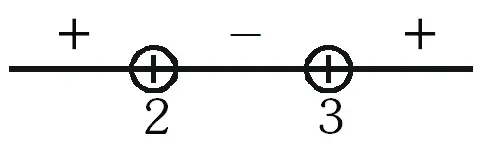
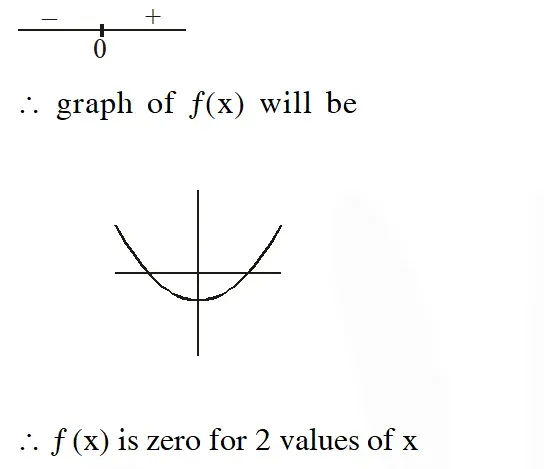
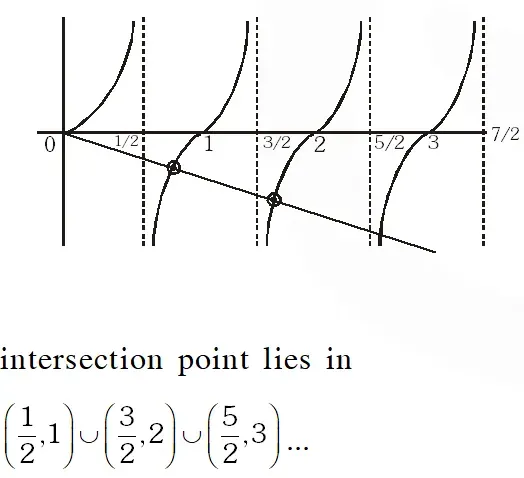
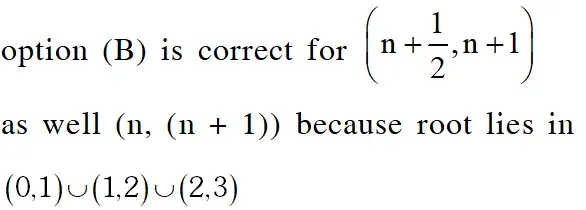
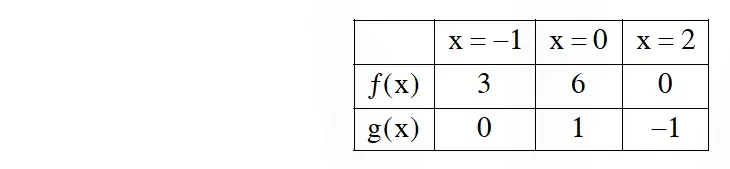
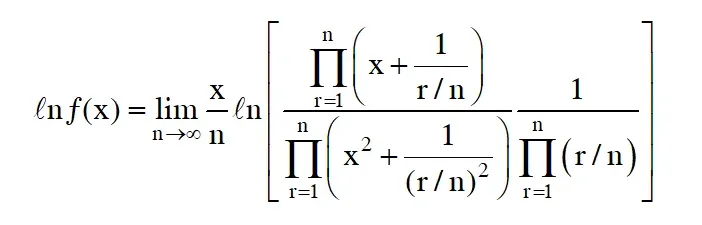
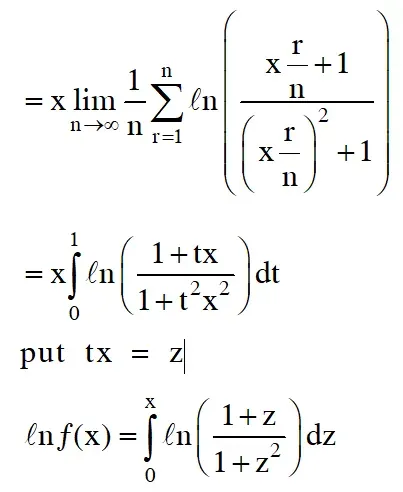
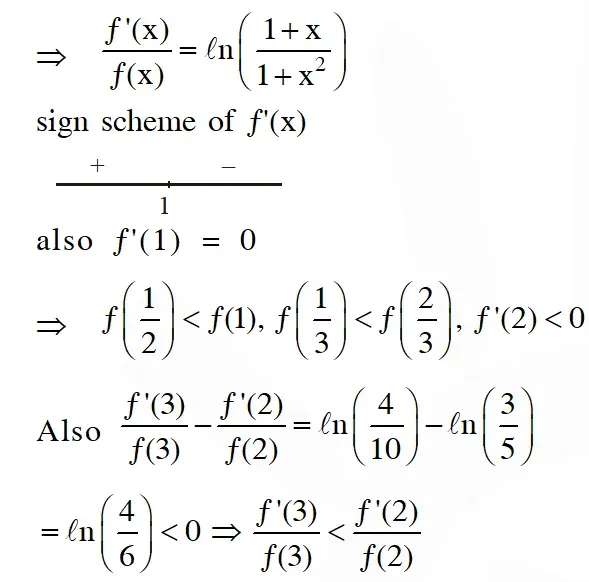
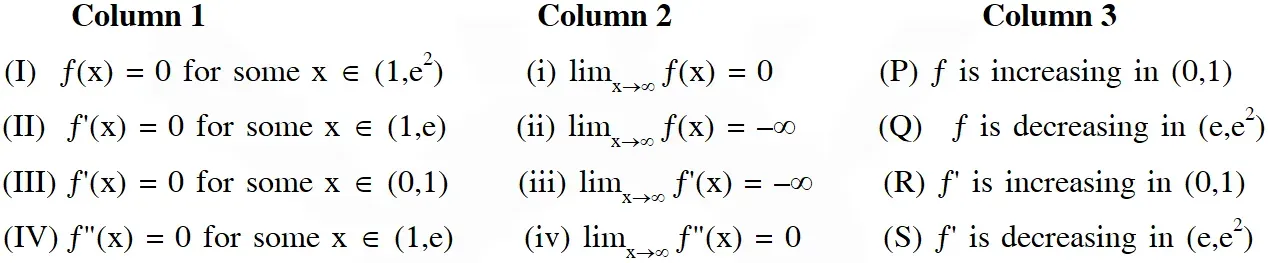
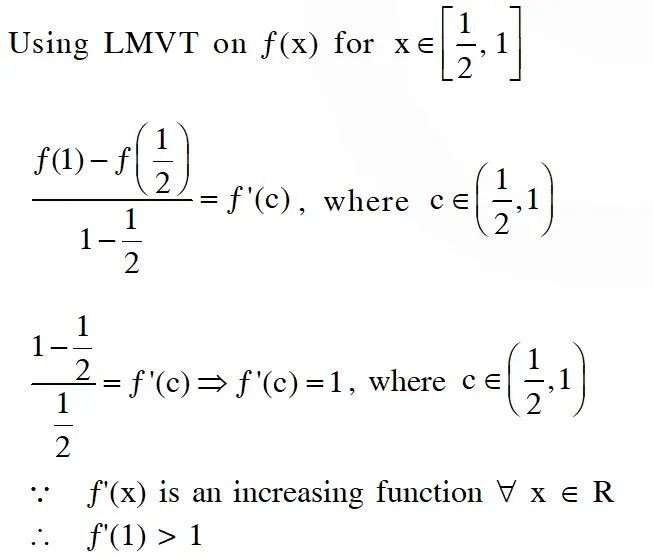
JEE Advanced Previous Year Questions of Math with Solutions are available at eSaral. Practicing JEE Advanced Previous Year Papers Questions of mathematics will help the JEE aspirants in realizing the question pattern as well as help in analyzing weak & strong areas. eSaral helps the students in clearing and understanding each topic in a better way. eSaral also provides complete chapter-wise notes of Class 11th and 12th both for all subjects. Besides this, eSaral also offers NCERT Solutions, Previous year questions for JEE Main and Advance, Practice questions, Test Series for JEE Main, JEE Advanced and NEET, Important questions of Physics, Chemistry, Math, and Biology and many more. Download eSaral app for free study material and video tutorials. [esquestion] For the function $f(x)=x \cos \frac{1}{x}, x \geq 1$ (A) for at least one $x$ in the interval $[1, \infty), f(x+2)-f(x)<2$ (B) $\lim _{x \rightarrow \infty} f^{\prime}(x)=1$ (C) for all $x$ in the interval $[1, \infty), f(x+2)-f(x)>2$ (D) $f^{\prime}(x)$ is strictly decreasing in the interval $[1, \infty)$ #tag# [JEE 2009, 4] #sol# (B,C,D) $\mathrm{f}(\mathrm{x})=\mathrm{x} \cos \frac{1}{\mathrm{x}}, \mathrm{x} \geq 1$ $\mathrm{f}^{\prime}(\mathrm{x})=\cos \frac{1}{\mathrm{x}}+\frac{1}{\mathrm{x}} \sin \frac{1}{\mathrm{x}}$ $\lim _{x \rightarrow \infty} \mathrm{f}^{\prime}(\mathrm{x})=1$ $\mathrm{Now} \quad \mathrm{f}^{\prime \prime}(\mathrm{x})=-\sin \frac{1}{\mathrm{x}} \times-\frac{1}{\mathrm{x}^{2}}-\frac{1}{\mathrm{x}^{2}} \sin \frac{1}{\mathrm{x}}+\frac{1}{\mathrm{x}} \cos \frac{1}{\mathrm{x}} \times-\frac{1}{\mathrm{x}^{2}}$ $\therefore \mathrm{f}^{\prime}(\mathrm{x}+2)<\mathrm{f}^{\prime}(\mathrm{x})$ $\therefore \mathrm{f}^{\prime}(\mathrm{x}+2)<\mathrm{f}^{\prime}(\mathrm{x})$ Also $\lim _{\mathrm{x} \rightarrow \infty} \mathrm{f}(\mathrm{x}+2)-\mathrm{f}(\mathrm{x})$ $=\lim _{x \rightarrow \infty}\left[(x+2) \cos \frac{1}{(x+2)}-x \cos \frac{1}{x}\right]=2$ $\therefore f(x+2)-f(x)>2 \quad \forall x \geq 1$ [/esquestion] [esquestion] Let $f$ be a real-valued function defined on the interval $(0, \infty)$ by $\mathrm{f}(\mathrm{x})=\ell \mathrm{nx}+\int_{0}^{\mathrm{x}} \sqrt{1+\sin \mathrm{t} \mathrm{d} \mathrm{t}} \cdot$ Then which of the following statement (s) is/(are) true? (A) $\mathrm{f}^{\prime \prime}(\mathrm{x})$ exists for all $\mathrm{x} \in(0, \infty)$ (B) $\mathrm{f}^{\prime}(\mathrm{x})$ exists for all $\mathrm{x} \in(0, \infty)$ and $\mathrm{f}^{\prime}$ is continuous on $(0, \infty),$ but not differentiable on $(0, \infty)$ (C) there exists $\alpha>1$ such that $\left|\mathrm{f}^{\prime}(\mathrm{x})\right|<|\mathrm{f}(\mathrm{x})|$ for all $\mathrm{x} \in(\alpha, \infty)$ (D) there exists $\beta>0$ such that $|\mathrm{f}(\mathrm{x})|+\left|\mathrm{f}^{\prime}(\mathrm{x})\right| \leq \beta$ for all $\mathrm{x} \in(0, \infty)$ #tag# [JEE 10, 3M] #sol# (B,C) $\mathrm{f}(\mathrm{x})=\ln \mathrm{x}+\int_{0}^{\mathrm{x}} \sqrt{1+\sin \mathrm{t}} \mathrm{d} \mathrm{t}$ $\mathrm{f}^{\prime}(\mathrm{x})=\frac{1}{\mathrm{x}}+\sqrt{1+\sin \mathrm{x}}$ $\mathrm{f}^{\prime}(\mathrm{x})=\frac{1}{\mathrm{x}}+\sqrt{2}\left|\cos \left(\frac{\mathrm{x}}{2}-\frac{\pi}{4}\right)\right|$ $\because\left|\cos \left(\frac{\mathrm{x}}{2}-\frac{\pi}{4}\right)\right|$ is non-derivable $\therefore \mathrm{f}^{\prime}(\mathrm{x})$ is non-derivable but continuous. hence option (A) is incorrect \& option (B) is correct. For option $\mathrm{C}$ $\mathrm{f}(\mathrm{x})=(\ell \mathrm{nx})+\int_{0}^{\mathrm{x}}(\sqrt{1+\sin \mathrm{x}}) \mathrm{d} \mathrm{x}$ since $\mathrm{f}(\mathrm{x})$ is positive increasing function for all $\mathrm{x}>1$ $\Rightarrow|\mathrm{f}(\mathrm{x})|=\mathrm{f}(\mathrm{x}) \&\left|\mathrm{f}^{\prime}(\mathrm{x})\right|=\mathrm{f}^{\prime}(\mathrm{x})$ Let $\mathrm{f}(\mathrm{x})=\mathrm{y}$ $\mathrm{f}^{\prime}(\mathrm{x})-\mathrm{f}(\mathrm{x})=\frac{1}{\mathrm{x}}-\ell \mathrm{nx}+\sqrt{1+\sin \mathrm{x}}-\int_{0}^{\mathrm{x}} \sqrt{1+\sin \mathrm{t}} \mathrm{d} \mathrm{t}$ $\mathrm{f}^{(\mathrm{x})}-\mathrm{f}(\mathrm{x})=\frac{1}{\mathrm{x}}-\ln \mathrm{x}+\sqrt{1+\sin \mathrm{x}}-\sqrt{2} \int_{0}^{\mathrm{x}}\left(\frac{\mathrm{t}}{2}-\frac{\pi}{4}\right) \| \mathrm{dt}$ $\frac{1}{\mathrm{x}}-\ln \mathrm{x}<0 ;$ when $\alpha>\mathrm{e}$ $0 \leq \sqrt{1+\sin \mathrm{x}} \leq \sqrt{2}$ $\int_{0}^{\mathrm{x}}\left|\cos \left(\frac{\mathrm{t}}{2}-\frac{\pi}{4}\right)\right| \mathrm{dt}>\sqrt{2} \forall \alpha>\frac{3 \pi}{2}$ $\Rightarrow \mathrm{f}^{\prime}(\mathrm{x})-\mathrm{f}(\mathrm{x})<0 \quad \forall \quad \alpha>\frac{3 \pi}{2}>1$ Hence option (C) is correct. For option (D) $|\mathrm{f}(\mathrm{x})|+\left|\mathrm{f}^{\prime}(\mathrm{x})\right| \rightarrow \infty$ when $\mathrm{x} \rightarrow \infty$ Therefore option (D) is incorrect. Alternate : $\mathrm{f}(\mathrm{x})=\ln \mathrm{x}+\int_{0}^{\mathrm{x}} \sqrt{1+\sin \mathrm{t}} \mathrm{dt}$ $\mathrm{f}^{\prime}(\mathrm{x})=\frac{1}{\mathrm{x}}+\sqrt{1+\sin \mathrm{x}}$ ........(i) for $\mathrm{x}>1$ $\frac{1}{\mathrm{x}}+\sqrt{1+\sin \mathrm{x}}<1+\sqrt{2}$ but $\ell \mathrm{nx}+\int_{0}^{\mathrm{x}} \sqrt{1+\sin \mathrm{t}} \mathrm{dt}$ will always be more than $1+\sqrt{2}$ for some $\alpha>1$ $\because \int_{0}^{x} \sqrt{1+\sin t}>0 \quad \& \quad \ln x$ is increasing in $(1, \infty)$ $\Rightarrow \quad \mathrm{f}(\mathrm{x})>\mathrm{f}^{\prime}(\mathrm{x}) \forall \alpha>1$ $\therefore(\mathrm{C})$ is correct $\mathrm{f}^{\prime \prime}(\mathrm{x})=-\frac{1}{\mathrm{x}^{2}}+\frac{\cos \mathrm{x}}{2 \sqrt{1+\sin \mathrm{x}}}$ $\Rightarrow \mathrm{f}$ is not derivable on $(0, \infty)$ at $\frac{3 \pi}{2}, \frac{7 \pi}{2}$ $\therefore$ (B) is also correct $\mathrm{f}(\mathrm{x})$ is unbounded near $\mathrm{x}=0$ in $(0,1)$ hence $|\mathrm{f}(\mathrm{x})|$ can never be made less than a finite number hence $|\mathrm{f}(\mathrm{x})|+\left|\mathrm{f}^{\prime}(\mathrm{x})\right|$ can never be less than $\beta$ [/esquestion] [esquestion] Let $f:(0,1) \rightarrow \mathrm{R}$ be defined by $f(\mathrm{x})=\frac{\mathrm{b}-\mathrm{x}}{1-\mathrm{bx}},$ where b is a constant such that $0<\mathrm{b}<1 .$ Then (A) $f$ is not invertible on $(0,1)$ (B) $f \neq f^{-1}$ on $(0,1)$ and $f^{\prime}(b)=\frac{1}{f^{\prime}(0)}$ (C) $f=f^{-1}$ on $(0,1)$ and $f^{\prime}(b)=\frac{1}{f^{\prime}(0)}$ (D) $f^{-1}$ is differentiable on $(0,1)$ #tag# [JEE 2011, 4M] #sol# (A) $f:(0,1) \rightarrow \mathrm{R}$ $f(\mathrm{x})=\frac{\mathrm{b}-\mathrm{x}}{1-\mathrm{bx}}$ $\mathrm{b} \in(0,1)$ $\Rightarrow \quad f^{\prime}(x)=\frac{b^{2}-1}{(b x-1)^{2}}$ $\Rightarrow f^{\prime}(x)<0 \forall x \in(0,1)$ hence $f(x)$ is decreasing function hence its range $(-1, b)$ $\Rightarrow$ co-domain $\neq$ range $\Rightarrow f(x)$ is non-invertible function [/esquestion] [esquestion] The number of distinct real roots of $x^{4}-4 x^{3}+12 x^{2}+x-1=0$ is #tag# [JEE 2011, 4M] #sol# 2 Let $f(x)=x^{4}-4 x^{3}+12 x^{2}+x-1$ $f^{\prime}(x)=4 x^{3}-12 x^{2}+24 x$ $f^{\prime \prime}(x)=12 x^{2}-24 x+24$ $=12\left(x^{2}-2 x+2\right)>0$ $\Rightarrow f^{\prime}(x)$ is strictly increasing function $\because f^{\prime}(x)$ is cubic polynomial hence number of roots of $f^{\prime}(x)=0$ is 1 $\Rightarrow$ Number of maximum roots of $f(x)=0$ are 2 Now $f(0)=-1, f(1)=9, f(-1)=15$ $\Rightarrow f(x)$ has exactly 2 distinct real roots. [/esquestion] Paragraph for Question 5 and 6 Let $f(\mathrm{x})=(1-\mathrm{x})^{2} \sin ^{2} \mathrm{x}+\mathrm{x}^{2}$ for all $\mathrm{x} \in \mathbb{R},$ and let $\mathrm{g}(\mathrm{x})=\int_{1}^{\mathrm{x}}\left(\frac{2(\mathrm{t}-1)}{\mathrm{t}+1}-\ell \mathrm{nt}\right) f(\mathrm{t}) \mathrm{d} \mathrm{t}$ for all $\mathrm{x} \in$ $(1, \infty)$ [esquestion] Consider the statements : $\mathbf{P}:$ There exists some $\mathrm{x} \in \mathbb{R}$ such that $f(\mathrm{x})+2 \mathrm{x}=2\left(1+\mathrm{x}^{2}\right)$ $\mathrm{Q}:$ There exists some $\mathrm{x} \in \mathbb{R}$ such that $2 f(\mathrm{x})+1=2 \mathrm{x}(1+\mathrm{x})$ $\quad$ Then (A) both P and Q are true (B) P is true and Q is false (C) P is false and Q is true (D) both P and Q are false #tag# [JEE 2012, 3M, –1M] #sol# (C) $f(x)=(1-x)^{2} \sin ^{2} x+x^{2}$ $P: f(x)+2 x=2\left(1+x^{2}\right)$ $\Rightarrow(1-x)^{2} \sin ^{2} x+x^{2}+2 x=2+2 x^{2}$ $\Rightarrow(1-x)^{2} \sin ^{2} x-x^{2}+2 x-2=0$ $(1-x)^{2} \cos ^{2} x+1=0$ which is not possible. $\therefore \mathrm{P}$ is false. $\mathrm{Q}: 2 f(\mathrm{x})+1=2 \mathrm{x}(1+\mathrm{x})$ $2 \mathrm{x}^{2}+2(1-\mathrm{x})^{2} \sin ^{2} \mathrm{x}+1=2 \mathrm{x}^{2}+2 \mathrm{x}$ $2(1-\mathrm{x})^{2} \sin ^{2} \mathrm{x}-2 \mathrm{x}+1=0$ Let $\mathrm{h}(\mathrm{x})=2(1-\mathrm{x})^{2} \sin ^{2} \mathrm{x}-2 \mathrm{x}+1$ clearly $\mathrm{h}(1)=-1$ and $\mathrm{h}(\mathrm{x})=2\left(\mathrm{x}^{2}-2 \mathrm{x}+1\right) \sin ^{2} \mathrm{x}-2 \mathrm{x}+1$ $=\mathrm{x}^{2}\left[2\left(1-\frac{2}{\mathrm{x}}+\frac{1}{\mathrm{x}^{2}}\right) \cdot \sin ^{2} \mathrm{x}-\frac{2}{\mathrm{x}}+\frac{1}{\mathrm{x}^{2}}\right]$ $\therefore \mathrm{h}(\mathrm{x}) \rightarrow \infty$ as $\mathrm{x} \rightarrow \infty$ $\therefore$ By intermediate value theorem $\mathrm{h}(\mathrm{x})=0$ has a root which is greater than 1 Hence $\mathrm{Q}$ is true. [/esquestion] [esquestion] Which of the following is true ? (A) $\mathrm{g}$ is increasing on $(1, \infty)$ (B) $\mathrm{g}$ is decreasing on $(1, \infty)$ (C) $\mathrm{g}$ is increasing on $(1,2)$ and decreasing on $(2, \infty)$ (D) $\mathrm{g}$ is decreasing on $(1,2)$ and increasing on $(2, \infty)$ #tag# [JEE 2012, 3M, –1M] #sol# (B) $\mathrm{g}(\mathrm{x})=\int_{1}^{\mathrm{x}}\left(\frac{2(\mathrm{t}-1)}{(\mathrm{t}+1)}-\ell \mathrm{nt}\right) f(\mathrm{t}) \mathrm{dt}$ $g^{\prime}(x)=\left(\frac{2(x-1)}{x+1}-\ln x\right) f(x)$ $f(\mathrm{x})>0 \quad \forall \mathrm{x} \in \mathrm{R}$ Suppose. $h(x)=\frac{2(x-1)}{x+1}-\ln x$ $h(x)=2-\left(\frac{4}{x+1}+\ln x\right)$ $h^{\prime}(x)=\frac{4}{(x+1)^{2}}-\frac{1}{x}$ $h^{\prime}(x)=-\frac{(x-1)^{2}}{x(x+1)^{2}}$ $h^{\prime}(x)<0$ So h(x) is decreasing so h(x) is decreasing so h(x) $<0 \quad$ (1). $\quad \forall x>1$ h(x) $<0 \quad \forall x>1$ $\{h(1)=0\}$ So $g^{\prime}(x)=h(x) f(x)$ $g^{\prime}(x)<0 \quad \forall x>1$ $\mathrm{g}(\mathrm{x})$ is decreasing in $(1, \infty)$ [/esquestion] [esquestion] If $f(\mathrm{x})=\int_{0}^{\mathrm{x}} \mathrm{e}^{\mathrm{t}^{2}}(\mathrm{t}-2)(\mathrm{t}-3) \mathrm{dt}$ for all $\mathrm{x} \in(0, \infty),$ then $-$ (A) $f$ has a local maximum at $x=2$ (B) $f$ is decreasing on $(2,3)$ (C) there exists some $c \in(0, \infty)$ such that $f^{\prime \prime}(c)=0$ (D) $f$ has a local minimum at $x=3$ #tag# [JEE 2012, 4M] #sol# (A,B,C,D) $f(\mathrm{x})=\int_{0}^{\mathrm{x}} e^{\mathrm{t}^{2}}(\mathrm{t}-2)(\mathrm{t}-3) \mathrm{dt}$ $\Rightarrow f^{\prime}(x)=e^{x^{2}}(x-2)(x-3)$ $\therefore f^{\prime}(2)=f^{\prime}(3)=0$ $\Rightarrow f^{\prime \prime}(\mathrm{c})=0$ for same $\mathrm{c} \in(2,3)$ (by Rolle's theorem) [/esquestion] [esquestion] The number of points in $(-\infty, \infty),$ for which $\mathrm{x}^{2}-\mathrm{x} \sin \mathrm{x}-\cos \mathrm{x}=0,$ is (A) 6 (B) 4 (C) 2 (D) 0 #tag# [JEE 2013, 2M] #sol# (C) $f(x)=x^{2}-x \sin x-\cos x$ $\quad f^{\prime}(x)=2 x-x \cos x-\sin x+\sin x$ $\quad=x(2-\cos x)$ [/esquestion] [esquestion] Let $f(\mathrm{x})=\mathrm{x} \sin \pi \mathrm{x}, \mathrm{x}>0 .$ Then for all natural numbers $\mathrm{n}, f^{\prime}(\mathrm{x})$ vanishes at – (A) a unique point in the interval $\left(\mathrm{n}, \mathrm{n}+\frac{1}{2}\right)$ (B) a unique point in the interval $\left(\mathrm{n}+\frac{1}{2}, \mathrm{n}+1\right)$ (C) a unique point in the interval $(\mathrm{n}, \mathrm{n}+1)$ (D) two points in the interval $(\mathrm{n}, \mathrm{n}+1)$ #tag# [JEE 2013, 4M, –1M] #sol# (B,C) $f^{\prime}(\mathrm{x})=\sin \pi \mathrm{x}+\pi \mathrm{x} \cos \pi \mathrm{x}=0$ $\tan \pi \mathrm{x}=-\pi \mathrm{x}$ $\mathrm{y}=\tan \mathrm{x} \pi \& \mathrm{y}=-\pi \mathrm{x}$ [/esquestion] [esquestion] Let $f, \mathrm{g}:[-1,2] \rightarrow \square$ be continuous function which are twice differentiable on the interval $(-1,2) .$ Let the values of $f$ and $\mathrm{g}$ at the points $-1,0$ and 2 be as given in the following table : In each of the intervals (–1, 0) and (0, 2) the function (ƒ – 3g)'' never vanishes. Then the correct statement(s) is(are) (A) $f^{\prime}(x)-3 g^{\prime}(x)=0$ has exactly three solutions in $(-1,0) \cup(0,2)$ (B) $f^{\prime}(x)-3 g^{\prime}(x)=0$ has exactly one solution in $(-1,0)$ (C) $f^{\prime}(x)-3 g^{\prime}(x)=0$ has exactly one solutions in $(0,2)$ (D) $f^{\prime}(x)-3 g^{\prime}(x)=0$ has exactly two solutions in $(-1,0)$ and exactly two solutions in $(0,2)$ #tag# [JEE 2015, 4M, –2M] #sol# (B,C) Let $F(x)=f(x)-3 g(x)$ $\therefore F(-1)=3 ; F(0)=3 \& F(2)=3$ $\therefore F^{\prime}(x)$ will vanish at least twice in $(-1,0) \cup(0,2)$ $\because F^{\prime \prime}(x)>0$ or $<0 \forall x \in(-1,0) \cup(0,2)$ so there will be exactly one solution in $(-1,0)$ and one in $(0,2)$ Alter Let $\mathrm{H}(\mathrm{x})=\mathrm{f}(\mathrm{x})-3 \mathrm{g}(\mathrm{x})$ $\mathrm{H}(-1)=\mathrm{H}(0)=\mathrm{H}(2)=3$ applying Rolle's theorem in interval $[-1,0]$ $\mathrm{H}(\mathrm{x})=\mathrm{f}(\mathrm{x})-3 \mathrm{g}^{\prime}(\mathrm{x})=0$ for at least one c $\mathrm{c} \in(-1,0)$ As $\mathrm{H}^{\prime \prime}(\mathrm{x})$ never vanises in the interval $\Rightarrow$ exactly one $\mathrm{c} \in(-1,0)$ for which $\mathrm{H}^{\prime}(\mathrm{x})=0$ similarily apply rolle's theorems in the interval $[0,2]$ $\mathrm{H}^{\prime}(\mathrm{x})=0$ has exactly one solution in $(0,2)$ [/esquestion] [esquestion] The total number of distinct $\mathrm{x} \in[0,1]$ for which $\int_{0}^{x} \frac{\mathrm{t}^{2}}{1+\mathrm{t}^{4}} \mathrm{dt}=2 \mathrm{x}-1$ is #tag# [JEE(Advanced) 2016] #sol# 1 Let $f(\mathrm{x})=\int_{0}^{\mathrm{x}} \frac{\mathrm{t}^{2}}{1+\mathrm{t}^{4}} \mathrm{dt}-2 \mathrm{x}+1$ $\Rightarrow f^{\prime}(x)=\frac{x^{2}}{1+x^{4}}-2$ as $\quad \frac{1+x^{4}}{x^{2}} \geq 2$ $\Rightarrow \frac{\mathrm{x}^{2}}{1+\mathrm{x}^{4}} \leq \frac{1}{2}$ $\Rightarrow f^{\prime}(x) \leq-\frac{3}{2}$ $\Rightarrow f(\mathrm{x})$ is continuous and decreasing $f(0)=1$ and $f(1)=\int_{0}^{1} \frac{t^{2}}{1+t^{4}} d t-2 \leq-\frac{3}{2}$ by IVT $f(x)=0$ possesses exactly one solution in $[0,1]$ [/esquestion] [esquestion] Let $f(\mathrm{x})=\lim _{\mathrm{n} \rightarrow \infty}\left(\frac{\mathrm{n}^{\mathrm{n}}(\mathrm{x}+\mathrm{n})\left(\mathrm{x}+\frac{\mathrm{n}}{2}\right) \ldots .\left(\mathrm{x}+\frac{\mathrm{n}}{\mathrm{n}}\right)}{\mathrm{n} !\left(\mathrm{x}^{2}+\mathrm{n}^{2}\right)\left(\mathrm{x}^{2}+\frac{\mathrm{n}^{2}}{4}\right) \dots .\left(\mathrm{x}^{2}+\frac{\mathrm{n}^{2}}{\mathrm{n}^{2}}\right)}\right)^{\mathrm{x} / \mathrm{n}},$ for all $\mathrm{x}>0 .$ Then (A) $f\left(\frac{1}{2}\right) \geq f(1)$ (B) $f\left(\frac{1}{3}\right) \leq f\left(\frac{2}{3}\right)$ (C) $f^{\prime}(2) \leq 0$ (D) $\frac{f^{\prime}(3)}{f(3)} \geq \frac{f^{\prime}(2)}{f(2)}$ #tag# [JEE(Advanced) 2016] #sol# (B,C) [/esquestion] [esquestion] Let $f: \square \rightarrow(0,1)$ be a continuous function. Then, which of the following function(s) has (have) the value zero at some point in the interval $(0,1) ?$ (A) $\mathrm{e}^{\mathrm{x}}-\int_{0}^{\mathrm{x}} f(\mathrm{t}) \sin \mathrm{td} \mathrm{t}$ (B) $\mathrm{x}^{9}-f(\mathrm{x})$ (C) $f(\mathrm{x})+\int_{0}^{\frac{\pi}{2}} f(\mathrm{t}) \sin \mathrm{td} \mathrm{t}$ (D) $\quad x-\int_{0}^{\frac{\pi}{2}-x} f(t) \cos t d t$ #tag# [JEE(Advanced) 2017] #sol# (B,D) For option (A), Let $g(x)=e^{x}-\int_{0}^{x} f(t) \sin t d t$ $\therefore g^{\prime}(x)=e^{x}-(f(x) \cdot \sin x)>0 \forall x \in(0,1)$ $\Rightarrow g(x)=e^{x}-(f(x) \cdot \sin x)>0 \forall x \in(0,1)$ $\Rightarrow g(x)$ is strictly incrasing function. Also, $g(0)=1$ $\Rightarrow \mathrm{g}(\mathrm{x})>1 \forall \mathrm{x} \in(0,1)$ $\therefore$ option $(\mathrm{A})$ is not possible. For option $(\mathrm{B}),$ let $\mathrm{k}(\mathrm{x})=\mathrm{x}^{9}-f(\mathrm{x})$ Now, $\mathrm{k}(0)=-f(0)<0(\mathrm{As} f \in(0,1))$ Also, $\mathrm{k}(1)=1-f(1)>0(\mathrm{As} f \in(0,1))$ $\Rightarrow \mathrm{k}(0) . \mathrm{k}(1)<0$ So, option(B) is correct. For option (C), let $\mathrm{T}(\mathrm{x})=f(\mathrm{x})+\int_{0}^{\frac{\pi}{2}} f(\mathrm{t}) \cdot \sin \mathrm{t} \mathrm{dt}$ $\Rightarrow \mathrm{T}(\mathrm{x})>0 \forall \mathrm{x} \in(0,1) \text { (As } f \in(0,1))$ so, option(C) is not possible. For option (D) Let $\mathrm{M}(\mathrm{x})=\mathrm{x}-\int_{0}^{\frac{\pi}{2}-\mathrm{x}} f(\mathrm{t}) \cos \mathrm{t} \mathrm{dt}$ $\therefore \mathrm{M}(0)=0-\int_{0}^{\pi / 2} f(\mathrm{t}) \cdot \cos \mathrm{t} \mathrm{dt}<0$ Also, $\mathrm{M}(1)=1-\int_{0}^{\frac{\pi}{2}-1} f(\mathrm{t}) \cdot \cos \mathrm{td} \mathrm{t}>0$ $\Rightarrow \mathrm{M}(0) \cdot \mathrm{M}(1)<0$ $\therefore$ option (D) is correct. [/esquestion] Let $\mathrm{f}(\mathrm{x})=\mathrm{x}+\log _{\mathrm{e}} \mathrm{x}-\mathrm{x} \log _{\mathrm{e}} \mathrm{x}, \mathrm{x} \in(0,0)$ $*$ Column 1 contains information about zeros of $f(\mathrm{x}), f^{\prime}(\mathrm{x})$ and $f^{\prime \prime}(\mathrm{x})$ $*$ Column 2 contains information about the limiting behavior of $f(\mathrm{x}), f^{\prime}(\mathrm{x})$ and $$ f^{\prime \prime}(\mathrm{x}) \text { at infinity. } $$ $*$ Column 3 contains information about increasing/decreasing nature of $f(\mathrm{x})$ an $$ f^{\prime}(\mathrm{x}) $$ [esquestion] Which of the following options is the only CORRECT combination ? (A) (IV) (i) (S) (B) (I) (ii) (R) (C) (III) (iv) (P) (D) (II) (iii) (S) #tag# [JEE(Advanced) 2017] #sol# (D) [/esquestion] [esquestion] Which of the following options is the only CORRECT combination ? (A) (III) (iii) (R) (B) (I) (i) (P) (C) (IV) (iv) (S) (D) (II) (ii) (Q) #tag# [JEE(Advanced) 2017] #sol# (D) [/esquestion] [esquestion] Which of the following options is the only INCORRECT combination ? (A) (II) (iii) (P) (B) (II) (iv) (Q) (C) (I) (iii) (P) (D) (III) (i) (R) #tag# [JEE(Advanced) 2017] #sol# (D) [/esquestion] [esquestion] If $f: \square \rightarrow \square$ is a twice differentiable function such that $f^{\prime \prime}(x)>0$ for all $x \in \square,$ and $f\left(\frac{1}{2}\right)=\frac{1}{2}, f(1)=1,$ then (A) $0<f^{\prime}(1) \leq \frac{1}{2}$ (B) $f^{\prime}(1) \leq 0$ (C) $f^{\prime}(1)>1$ (D) $\frac{1}{2}<f^{\prime}(1) \leq 1$ #tag# [JEE(Advanced) 2017] #sol# (C) [/esquestion]
Monotonicity - JEE Advanced PYQs (Maths) can be viewed in its broader exam context through the JEE Advanced PYQ archive.
Team eSaral
eSaral Academic and Editorial Team
Team eSaral is the collective author profile for educational content created by eSaral’s teachers and academic contributors. The team draws on expertise from IIT graduates, doctors, experienced educators and subject specialists to develop resources for JEE, NEET and school students. Our articles aim to explain concepts clearly and help students study with confidence.
Related Posts

BITSAT 2027: Registration Date, Exam Date, Syllabus, Eligibility, Pattern & Fees
BITSAT 2027 exam dates, registration timeline, eligibility criteria, exam pattern, marking scheme, syllabus and fees in one page.

BITSAT Previous Year Question Paper PDF (2017-2026)
Download BITSAT previous year question papers PDF from 2017 to 2026,session-wise. Memory-based papers,exam pattern, paper analysis and how to practise

CBSE Class 10 Date Sheet 2027: Expected Exam Dates, Release Date, Admit Card & Result Timeline
CBSE Class 10 date sheet 2027 is awaited. See the expected exam dates, release window, how to download the PDF, admit card and result timelines.

NCERT Physics Class 10 Book PDF in Hindi 2026-27 – भौतिक विज्ञान के 4 अध्याय (Free Download)
NCERT Physics Class 10 book PDF in Hindi 2026-27: download all 4 chapters (अध्याय 9–12) free, with topics and important formulas.

NCERT Biology Class 9 Book Anveshan PDF in Hindi - जीव विज्ञान कक्षा 9 पुस्तक अन्वेषण PDF
Download NCERT Biology Class 9 book PDF in Hindi chapterwise for 2026-27: Cell, Tissues, Reproduction and Diversity. Free PDFs.

Essay On Artificial Intelligence in English (100,150, 200, 250, 300, 500 Words)
This is in contrast to the natural intelligence of humans. With Artificial Intelligence, machines can perform

Essay on 78th India Independence Day in English for Student (100, 150, 200, 250, 300, 500 Words)
Read the best essays on India's Independence Day in English. Short & long essays (100, 150, 200, 250, 300, 500 words) perfect for school exams
NCERT Class 11 English Snapshots book - Free PDF download- Esaral
Download NCERT Class 11 English Snapshots book PDF for free. Get all 8 chapters, chapter-wise. Start your prep today!
NCERT Class 10 biology book pdf - Free PDF Download - eSaral
NCERT Class 10 Biology book PDF 2026-27: all 5 chapters (Life Processes to Our Environment) in English & Hindi, with CBSE syllabus, marks & practical

Essay on Global Warming in English (100,150, 200, 250, 300, 500 Words)
Global warming means the Earth is getting hotter. This happens because of things like pollution from cars and factories.