
Moving Charges and Magnetism Class 12 Notes for CBSE, JEE and NEET: Formulas, Examples and Handwritten Notes

eSaral Academic and Editorial Team
Summary
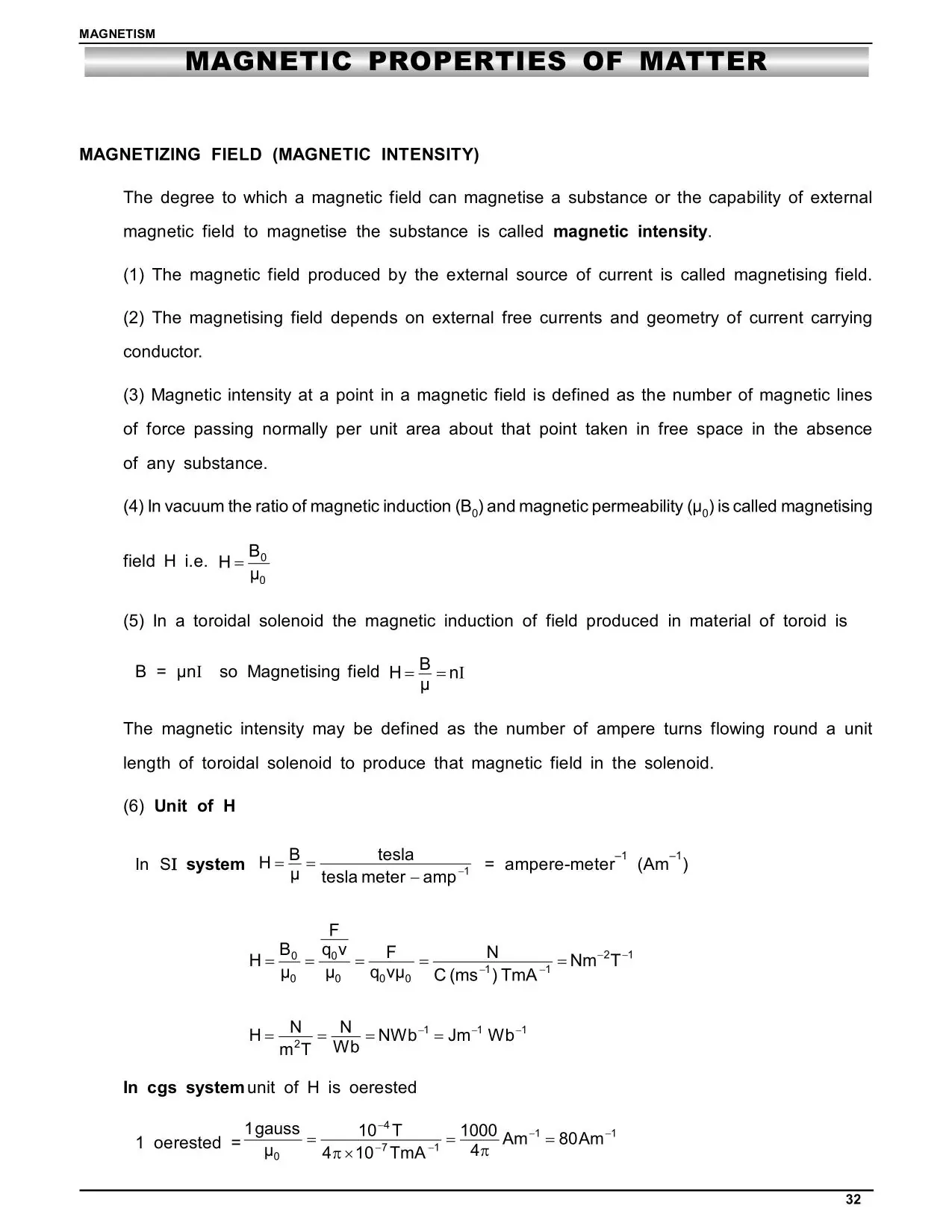
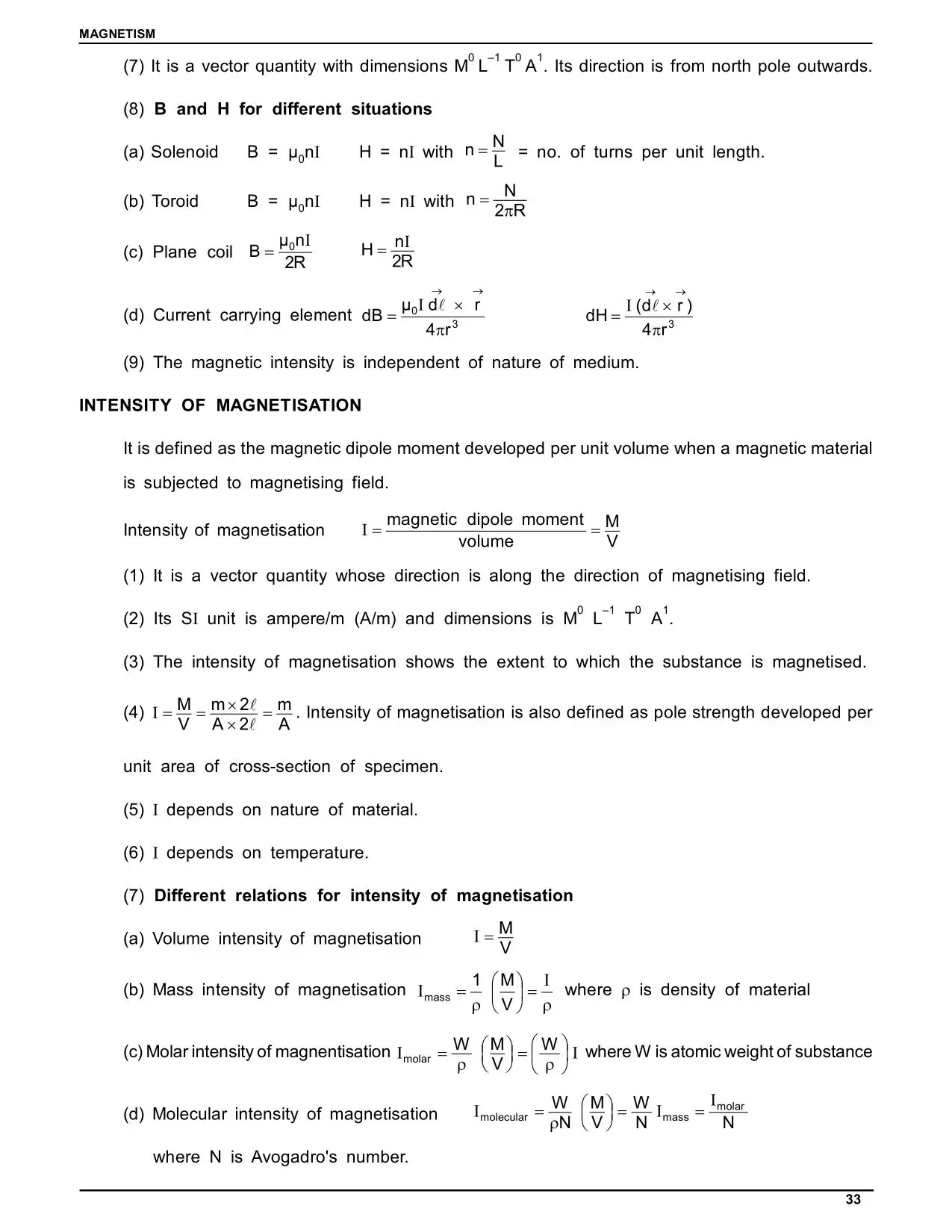
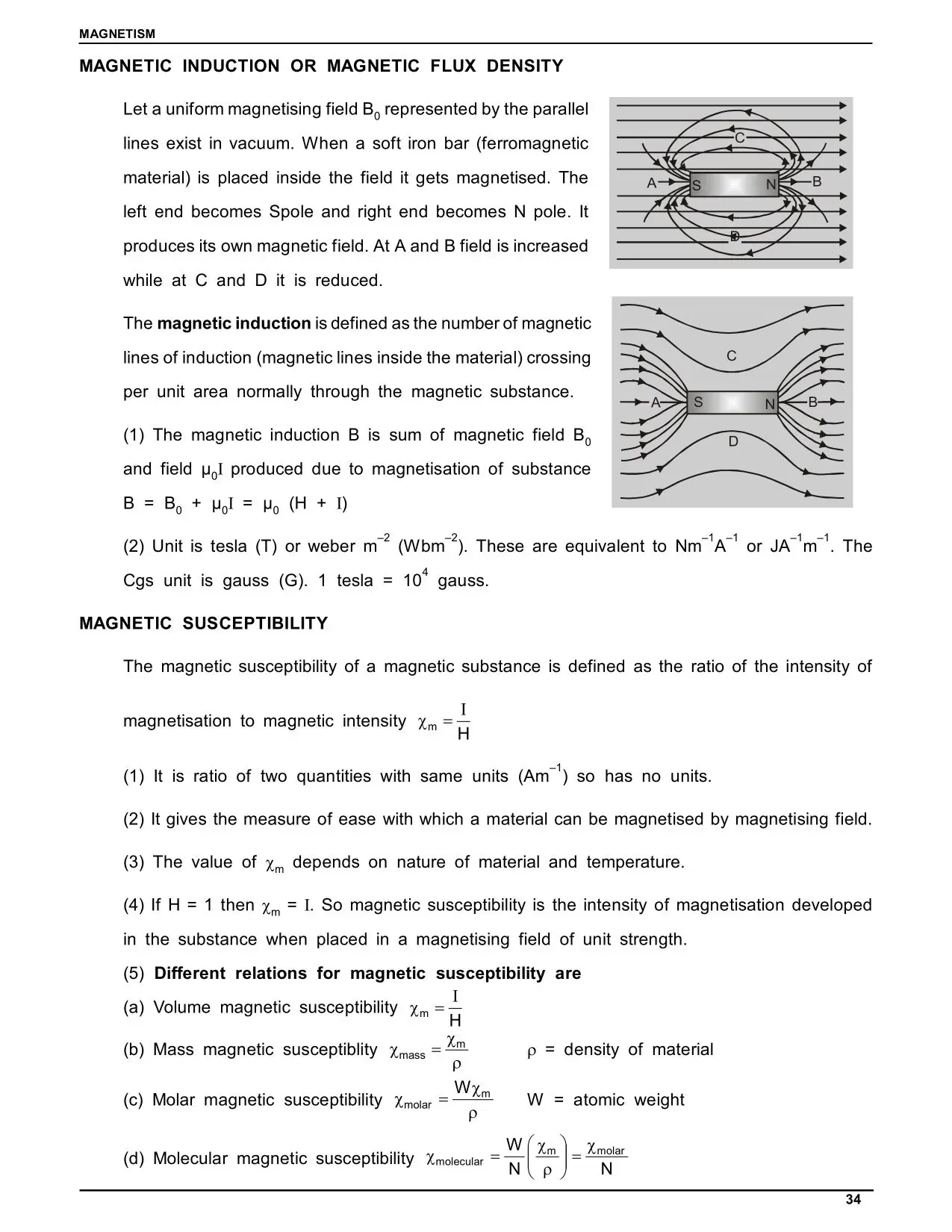
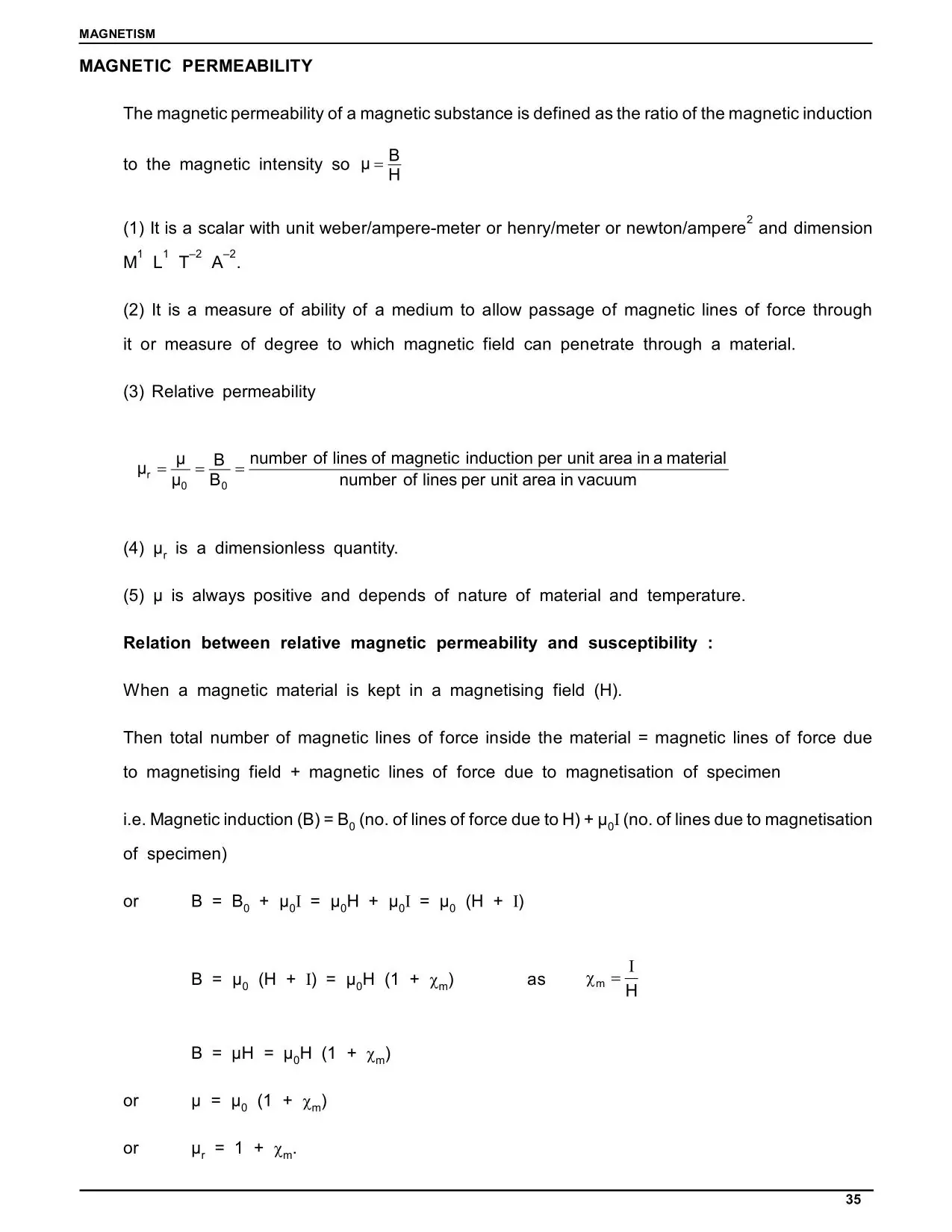
Moving Charges and Magnetism Class 12 notes cover Chapter 4 of NCERT Physics: the Lorentz force, motion of a charged particle in a magnetic field, the Biot–Savart law, Ampere’s law, force on current-carrying conductors, torque on a current loop and the moving coil galvanometer. This page gives key formulas, solved examples and handwritten notes for CBSE boards, JEE and NEET.
Moving Charges and Magnetism Class 12 Notes: Chapter Overview
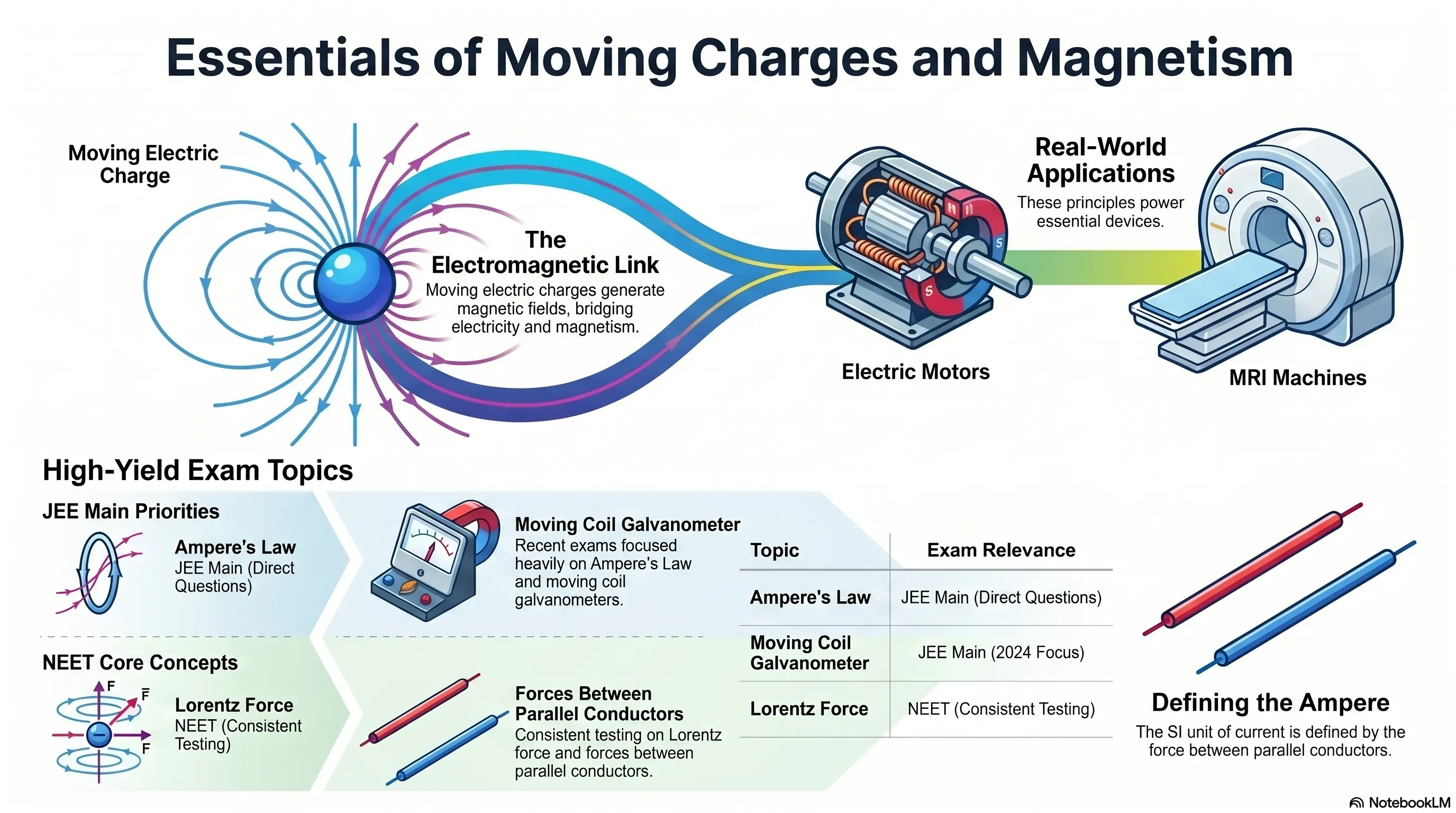
In these Moving Charges and Magnetism Class 12 notes, the chapter is Chapter 4 of NCERT Class 12 Physics (Part 1). It shows that a moving charge produces a magnetic field and that a magnetic field exerts a force on a moving charge. This link between electricity and magnetism explains devices such as electric motors and the galvanometer.
The chapter covers:
- Magnetic force on a moving charge, and the Lorentz force in electric and magnetic fields
- Motion of a charged particle in a magnetic field
- Biot–Savart law and the magnetic field of a circular current loop
- Ampere’s circuital law, with the straight wire, solenoid and toroid
- Force on a current-carrying conductor, and the force between two parallel currents
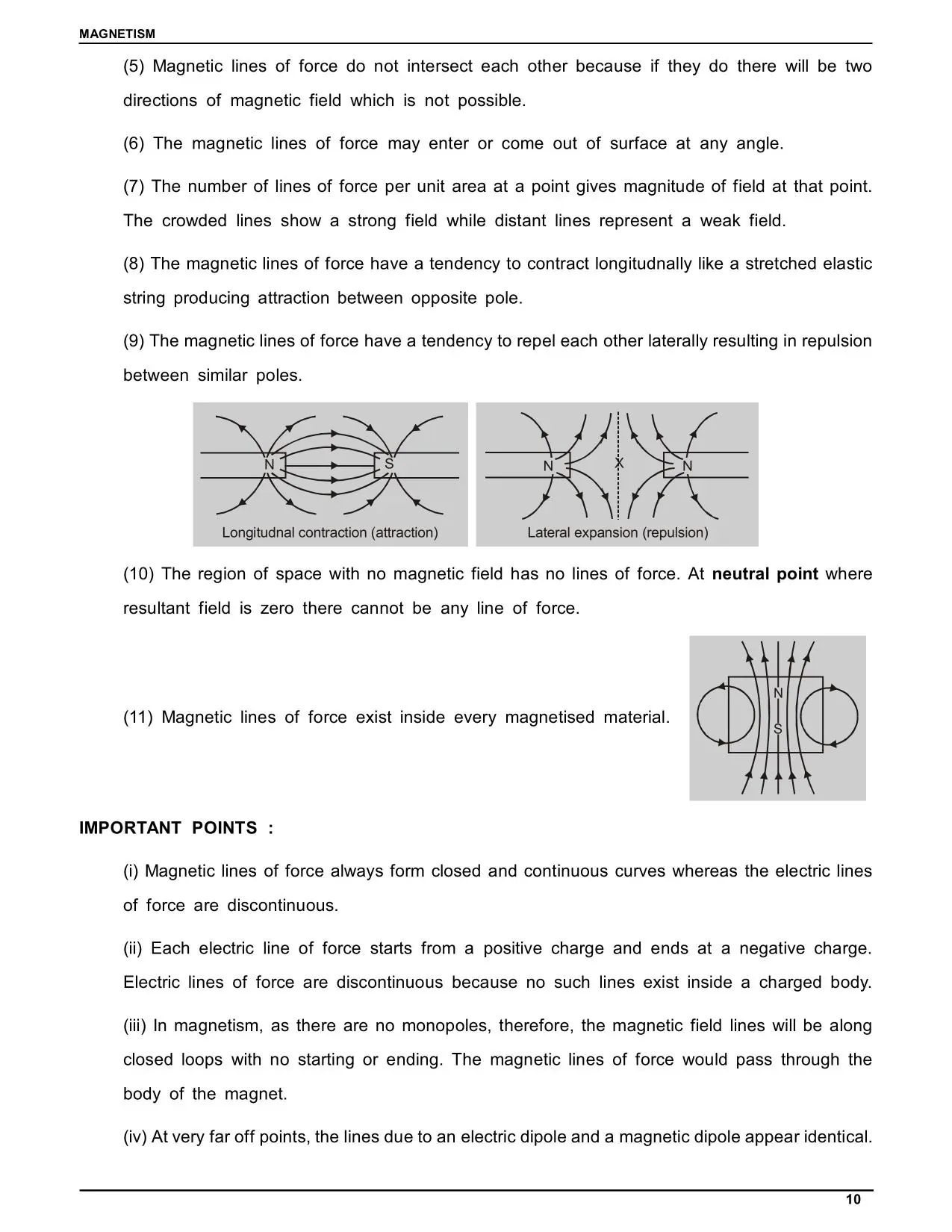
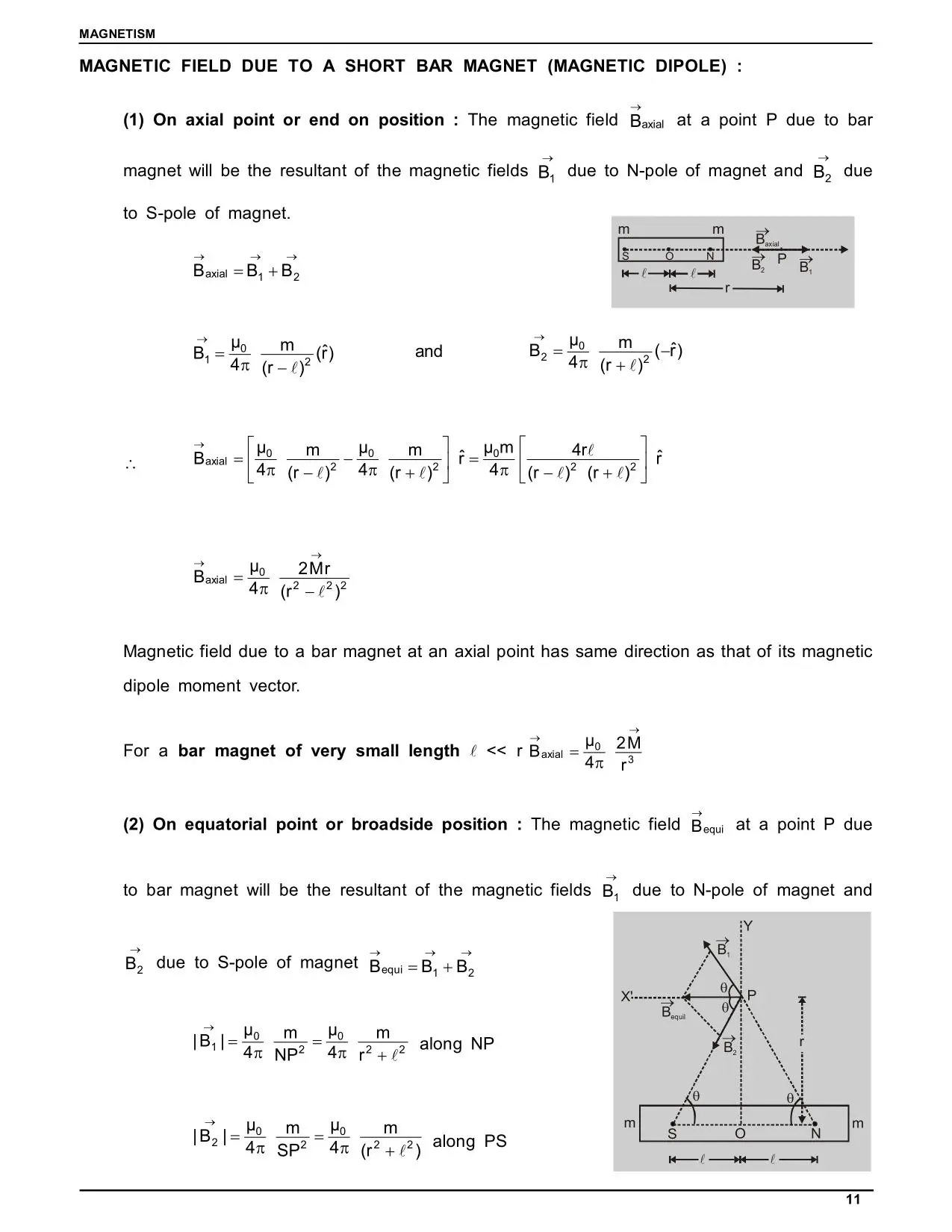
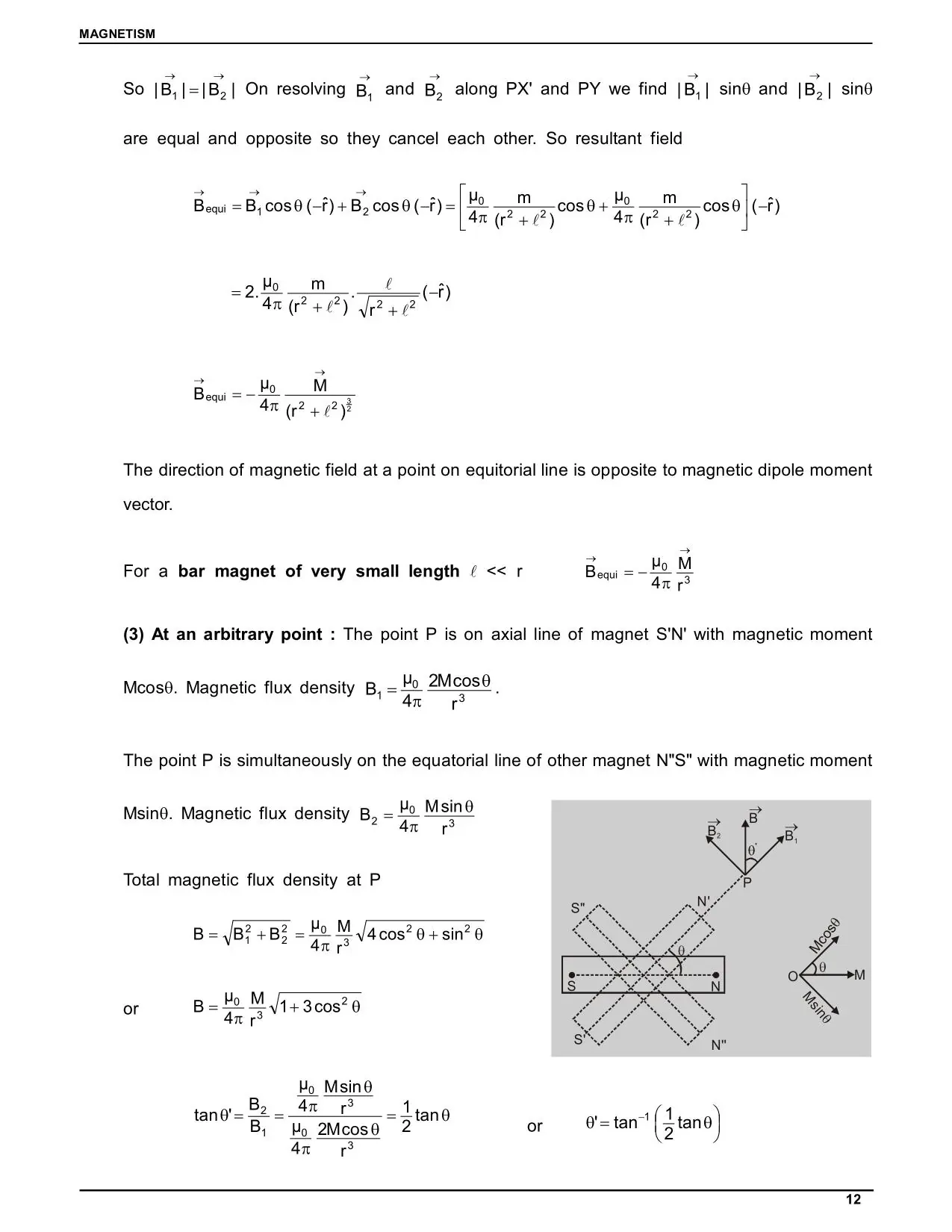
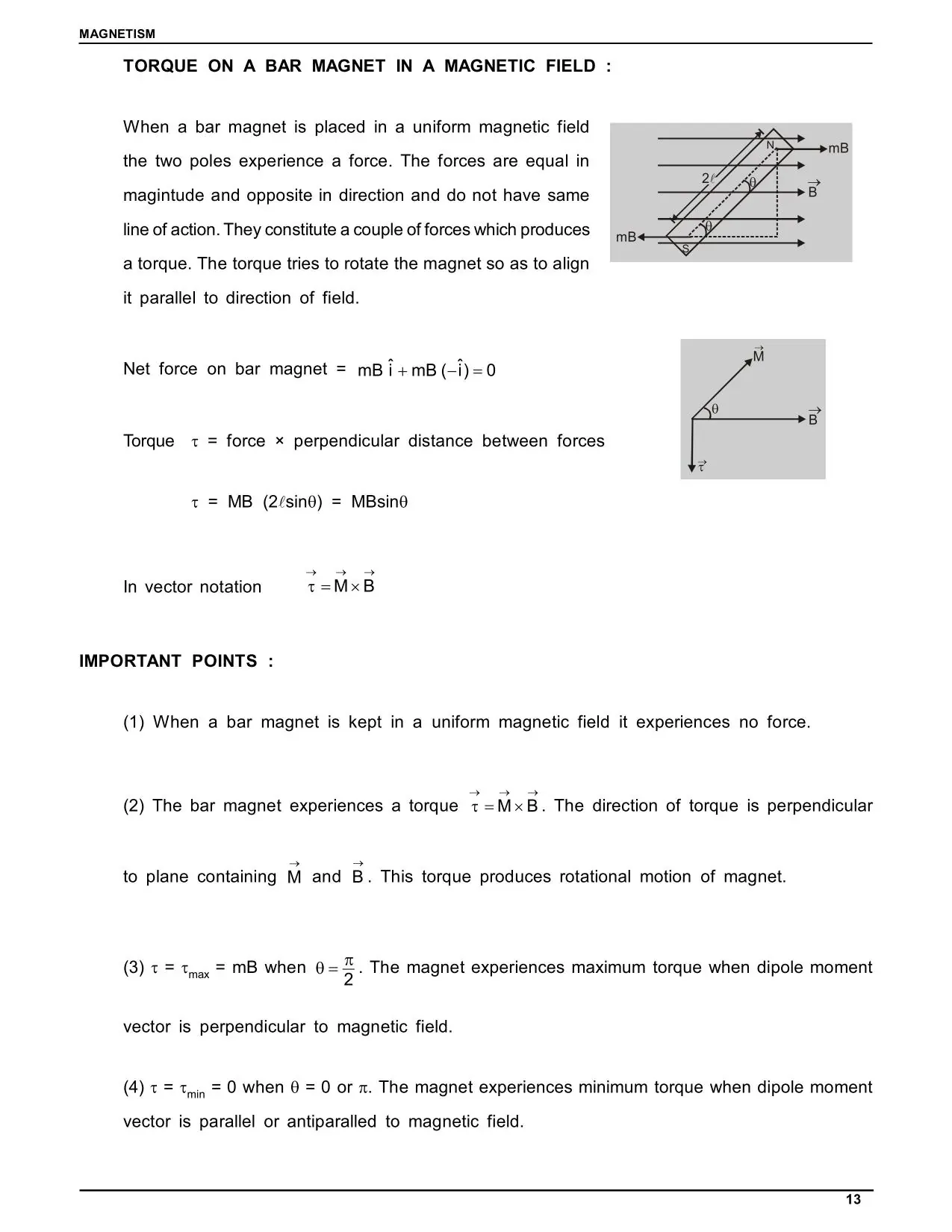
- Torque on a current loop, magnetic dipole moment and the moving coil galvanometer
Syllabus note: the cyclotron was removed from the CBSE board syllabus in the earlier rationalisation, and the treatment of the solenoid and toroid is qualitative. Check the latest CBSE syllabus for boards, and the NTA and NMC syllabi for JEE and NEET.
Key Formulas in Moving Charges and Magnetism Class 12 Notes
Concept | Formula | Notes |
|---|---|---|
Magnetic force on a moving charge | F = qvB sin θ (F = q v × B) | Perpendicular to both v and B |
Lorentz force | F = q(E + v × B) | In electric and magnetic fields together |
Radius of the circular path | r = mv/(qB) | v perpendicular to B |
Time period and frequency | T = 2πm/(qB), f = qB/(2πm) | Independent of the speed |
Helical path | r = mv sin θ/(qB), pitch = 2πm v cos θ/(qB) | v at angle θ to B |
Velocity selector | v = E/B | Net force on the charge is zero |
Biot–Savart law | dB = (μ₀/4π) I dl sin θ / r² | μ₀ = 4π × 10⁻⁷ T m A⁻¹ |
Centre of a circular loop | B = μ₀I/(2R) | N turns: B = μ₀NI/(2R) |
On the axis of a circular loop | B = μ₀IR²/[2(R² + x²)^(3/2)] | |
Infinite straight wire | B = μ₀I/(2πr) | |
Ampere’s law | ∮ B·dl = μ₀ I (enclosed) | |
Long solenoid (inside) | B = μ₀nI | n is the number of turns per metre |
Toroid | B = μ₀NI/(2πr) | |
Force on a conductor | F = BIL sin θ | |
Force between parallel wires | F/L = μ₀I₁I₂/(2πd) | Attractive for parallel currents |
Torque on a loop | τ = NIAB sin θ = m × B | Magnetic moment m = NIA |
Galvanometer deflection | φ = (NAB/k) I | k is the torsional constant |
Conversion to ammeter | S = I_g G/(I − I_g) | Shunt in parallel |
Conversion to voltmeter | R = V/I_g − G | Resistance in series |
Motion of a Charged Particle in a Magnetic Field: Moving Charges and Magnetism Class 12 Notes
The magnetic force on a charge is always perpendicular to its velocity, so it does no work and does not change the speed. It only changes the direction.
- v perpendicular to B: the charge moves in a circle of radius r = mv/(qB).
- v parallel to B: the force is zero, and the charge moves in a straight line.
- v at an angle to B: the charge moves in a helix.
- Velocity selector: in crossed E and B fields, charges with v = E/B pass undeflected.
Cyclotron (JEE): the frequency f = qB/(2πm) does not depend on the speed of the particle, so a fixed-frequency alternating voltage can accelerate it each half cycle. The maximum kinetic energy is q²B²R²/(2m), where R is the radius of the dees.
Magnetic Field Due to Current in Moving Charges and Magnetism Class 12 Notes
Law | Use | Limitation |
|---|---|---|
Biot–Savart law | Any current distribution, such as loops, arcs and finite wires | Needs integration |
Ampere’s circuital law | Symmetric cases, such as an infinite straight wire, a long solenoid and a toroid | Needs high symmetry |
Use the right-hand thumb rule: if the thumb points along the current, the curled fingers give the direction of the magnetic field around a straight wire.
Force on Current-Carrying Conductors and Parallel Wires in Moving Charges and Magnetism Class 12 Notes
A conductor of length L carrying current I in a field B experiences a force F = BIL sin θ. Its direction comes from the Fleming’s left-hand rule.
Two long parallel wires with currents in the same direction attract each other, and with currents in opposite directions they repel each other. The force per unit length is μ₀I₁I₂/(2πd).
Note on the ampere: NCERT explains the ampere through the force between two parallel wires. Since the 2019 revision of the SI, the ampere is defined by fixing the value of the elementary charge, but the parallel-wire relation is still used in exam problems.
Torque on a Current Loop and the Galvanometer in Moving Charges and Magnetism Class 12 Notes
A loop with N turns, area A and current I in a field B experiences a torque τ = NIAB sin θ. Its magnetic dipole moment is m = NIA.
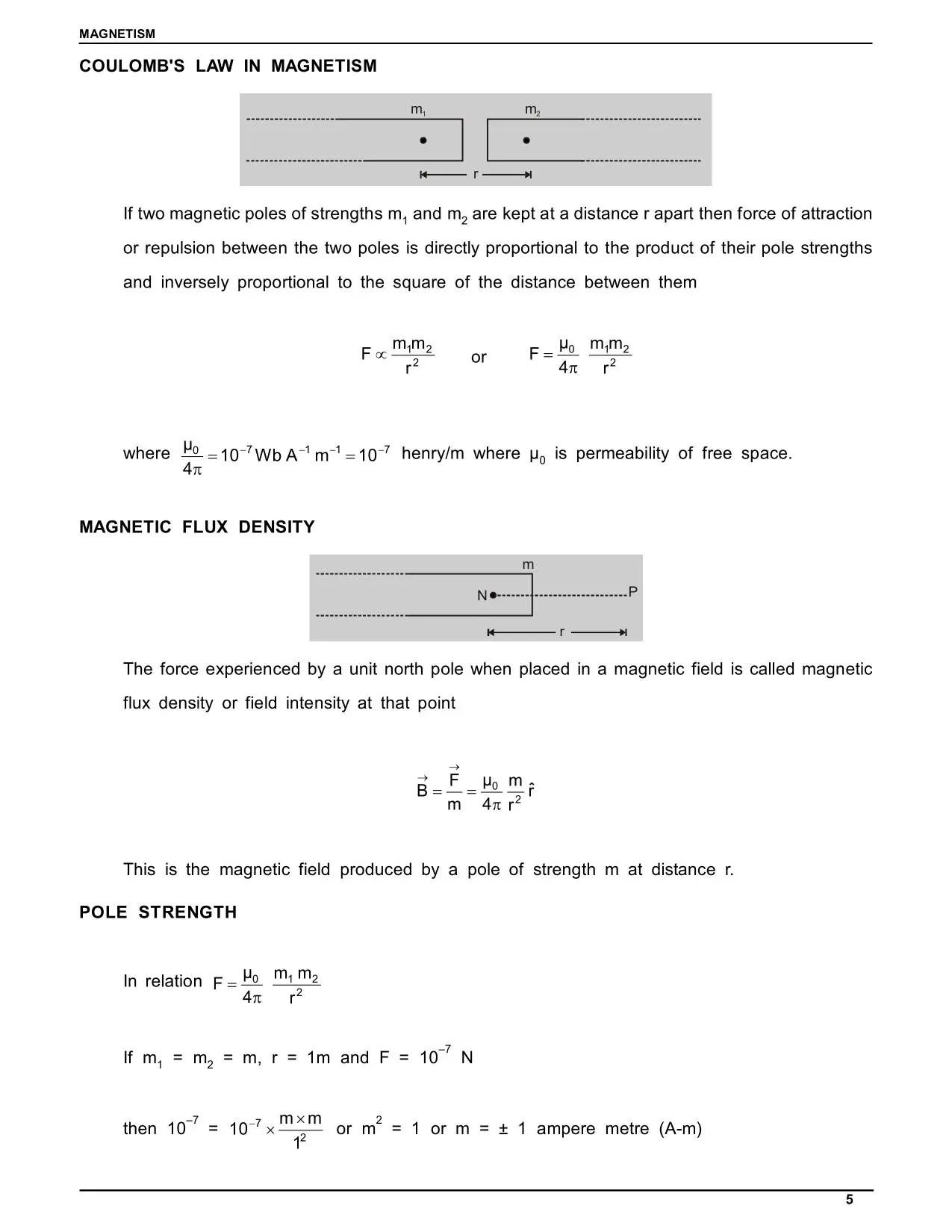
In a moving coil galvanometer, the magnetic torque on the coil is balanced by a spring torque, so the deflection is φ = (NAB/k) I. The current sensitivity is φ/I = NAB/k, and the voltage sensitivity is φ/V = NAB/(kR). A radial magnetic field and a soft iron core keep the deflection proportional to the current.
- Ammeter: a small shunt resistance S = I_g G/(I − I_g) is connected in parallel with the galvanometer.
- Voltmeter: a large resistance R = V/I_g − G is connected in series with the galvanometer.
Solved Examples from Moving Charges and Magnetism Class 12 Notes
Example 1 (circular path): An electron (m = 9.1 × 10⁻³¹ kg, q = 1.6 × 10⁻¹⁹ C) moves at 2 × 10⁶ m/s perpendicular to a magnetic field of 0.01 T. Find the radius of its path.
r = mv/(qB) = (9.1 × 10⁻³¹ × 2 × 10⁶)/(1.6 × 10⁻¹⁹ × 0.01) ≈ 1.1 × 10⁻³ m (about 1.1 mm).
Example 2 (circular loop): Find the magnetic field at the centre of a circular loop of radius 10 cm that carries a current of 5 A.
B = μ₀I/(2R) = (4π × 10⁻⁷ × 5)/(2 × 0.1) ≈ 3.14 × 10⁻⁵ T.
Example 3 (parallel wires): Two long parallel wires carry currents of 10 A and 5 A in the same direction, 10 cm apart. Find the force per unit length.
F/L = μ₀I₁I₂/(2πd) = (2 × 10⁻⁷ × 10 × 5)/0.1 = 1 × 10⁻⁴ N/m, and the wires attract each other.
Example 4 (solenoid): A long solenoid has 500 turns per metre and carries 2 A. Find the field inside.
B = μ₀nI = 4π × 10⁻⁷ × 500 × 2 ≈ 1.26 × 10⁻³ T.
Example 5 (galvanometer): A galvanometer has a resistance of 50 Ω and gives full-scale deflection for 5 mA. Find the shunt needed for a 0–1 A ammeter, and the series resistance for a 0–10 V voltmeter.
Shunt S = I_gG/(I − I_g) = (0.005 × 50)/(1 − 0.005) ≈ 0.25 Ω. Series resistance R = V/I_g − G = 10/0.005 − 50 = 1950 Ω.
Moving Charges and Magnetism Class 12 Notes
India's Best Exam Preparation for Class 12th - Download Now
India's Best Exam Preparation for Class 12th - Download Now
India's Best Exam Preparation for Class 12th - Download Now
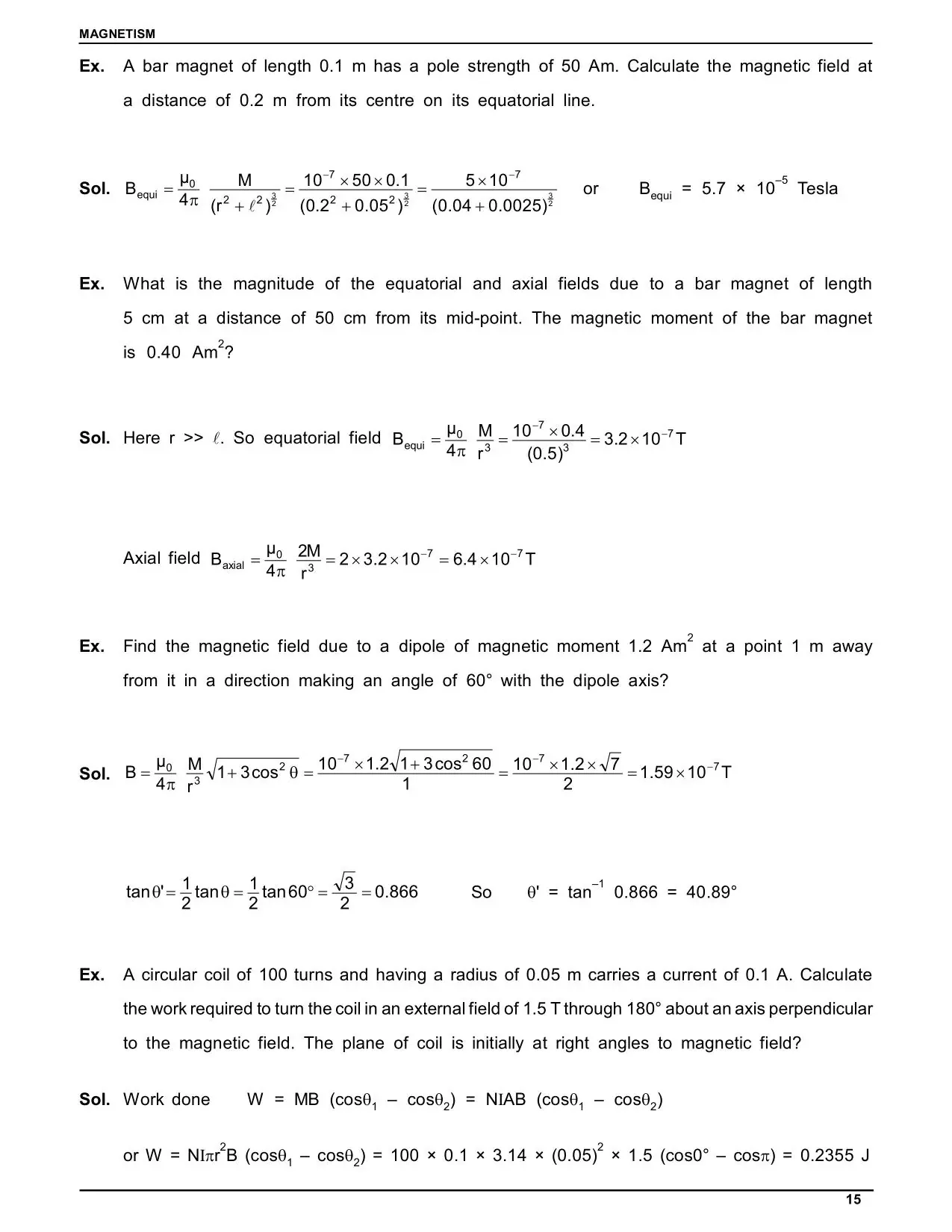
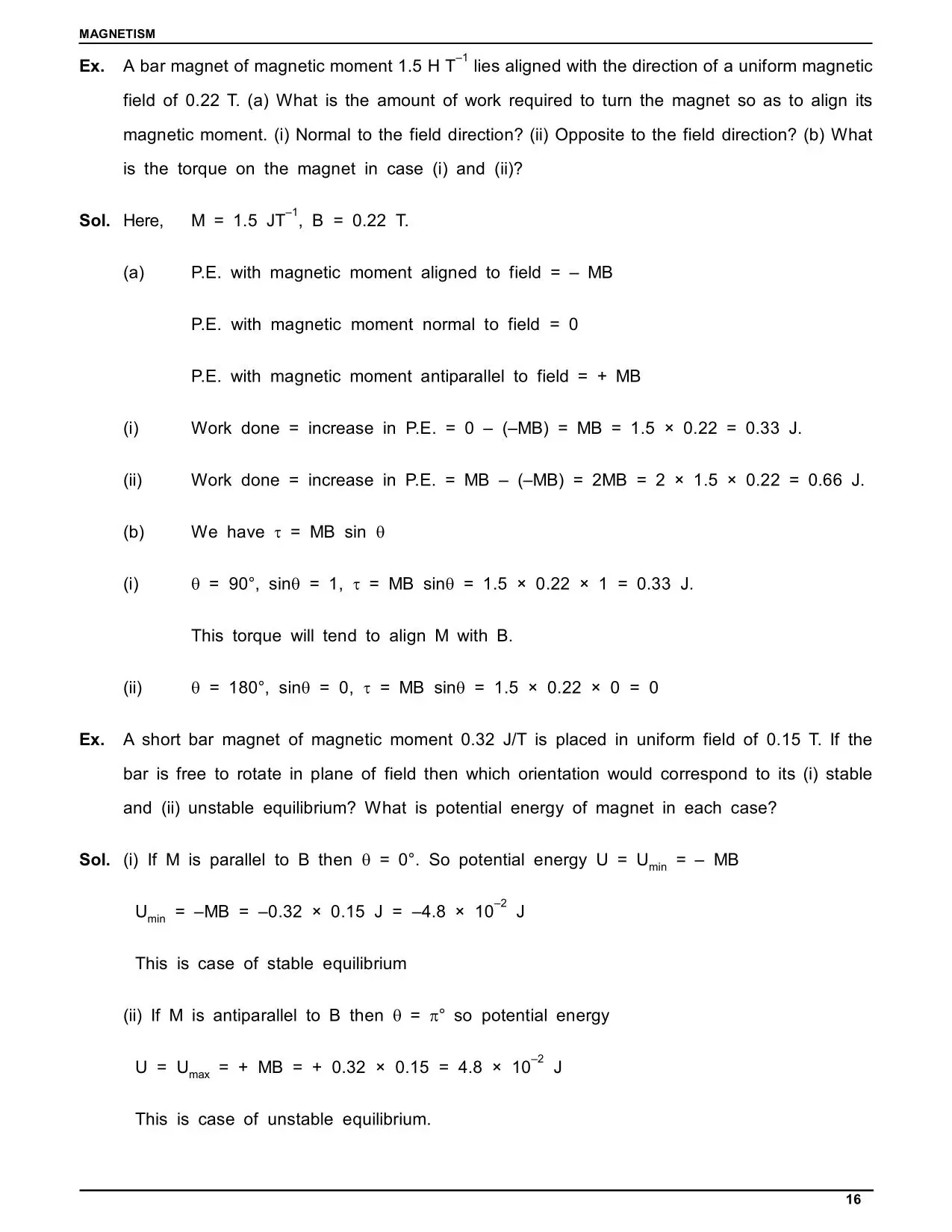
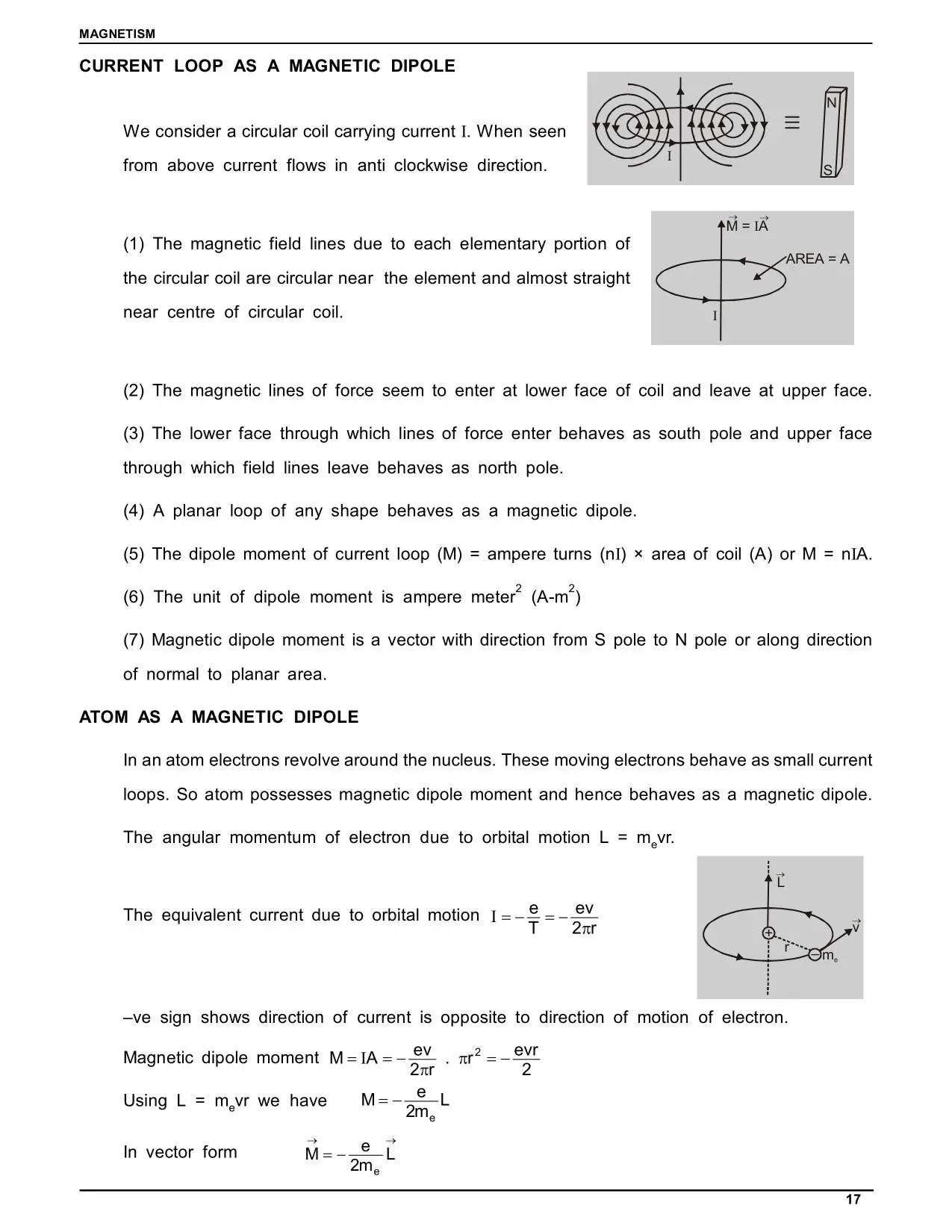
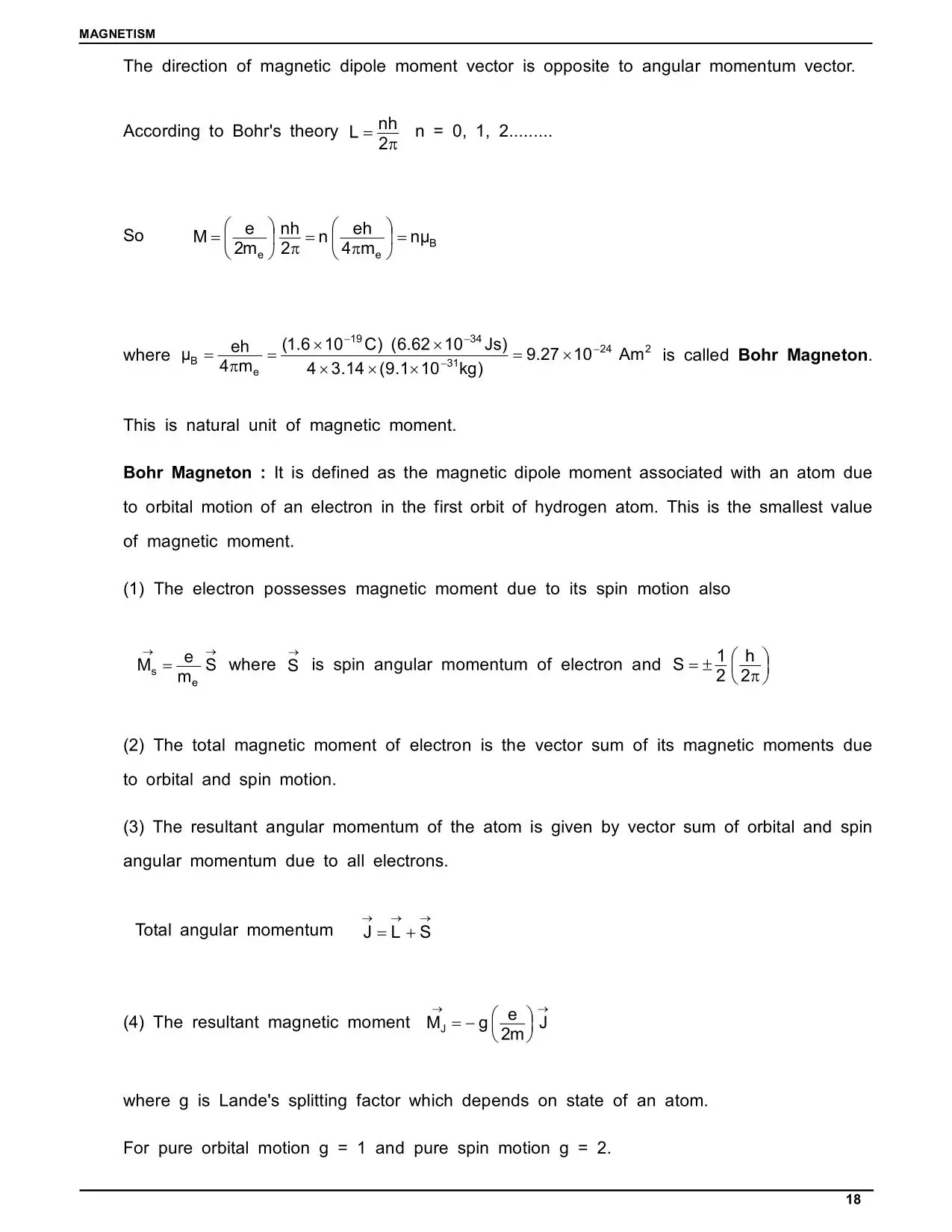
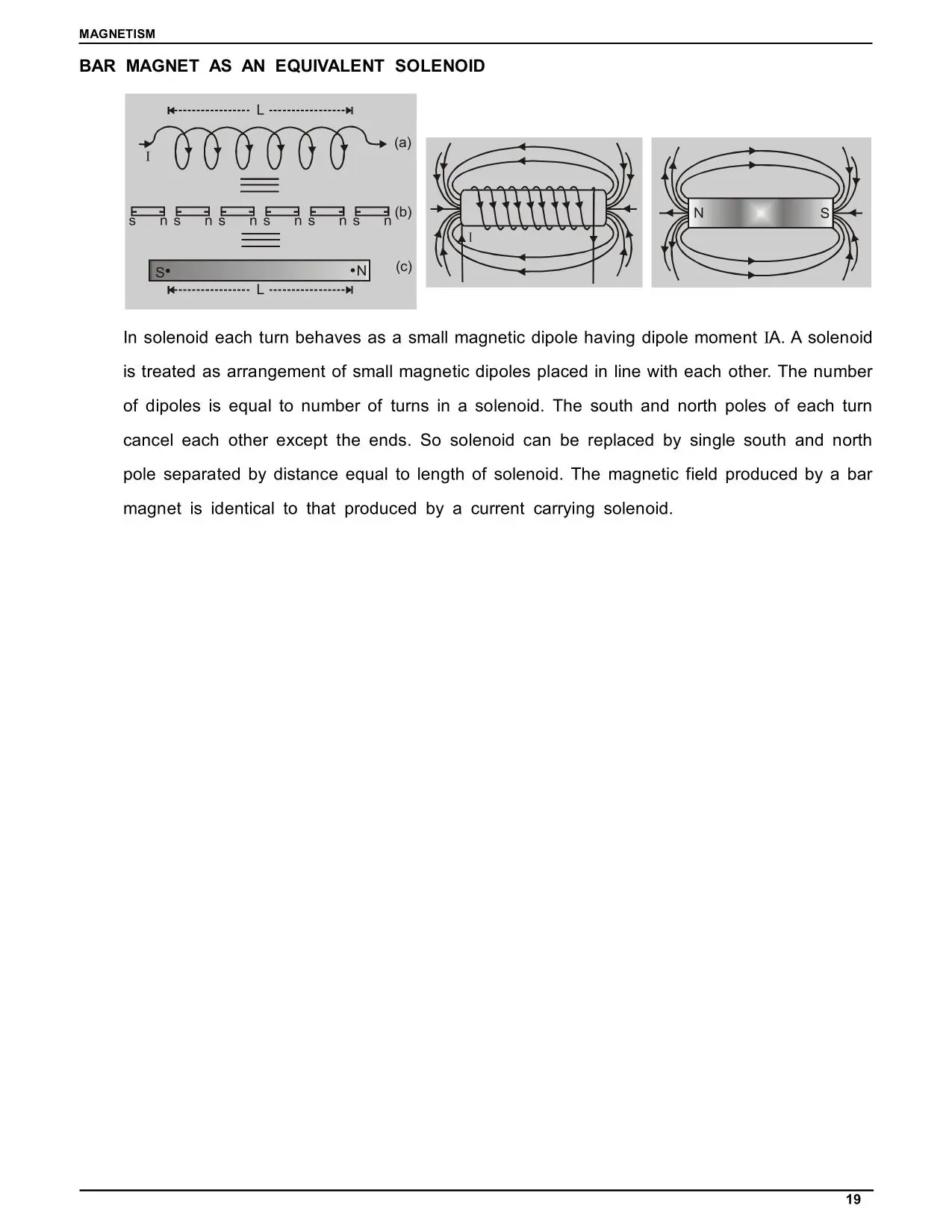
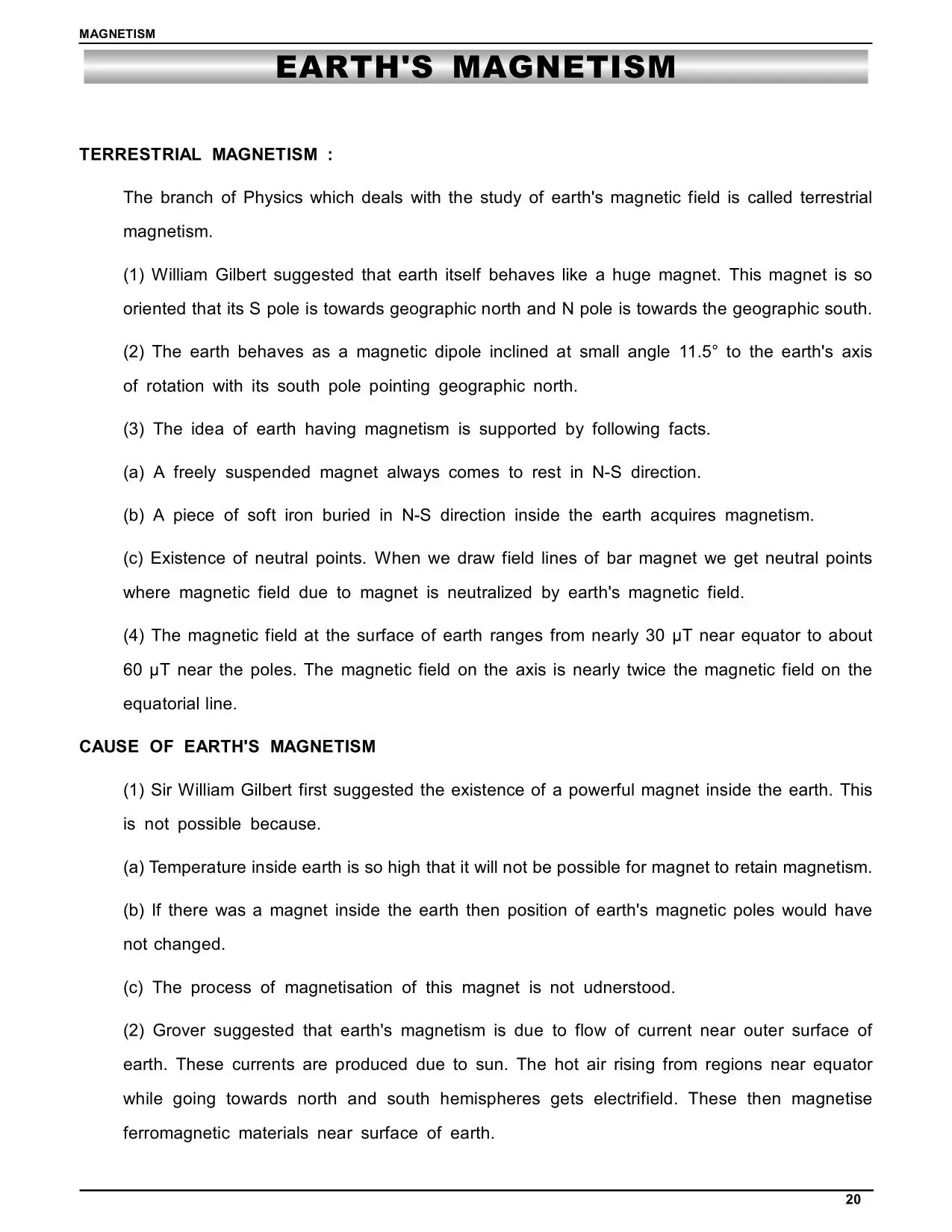
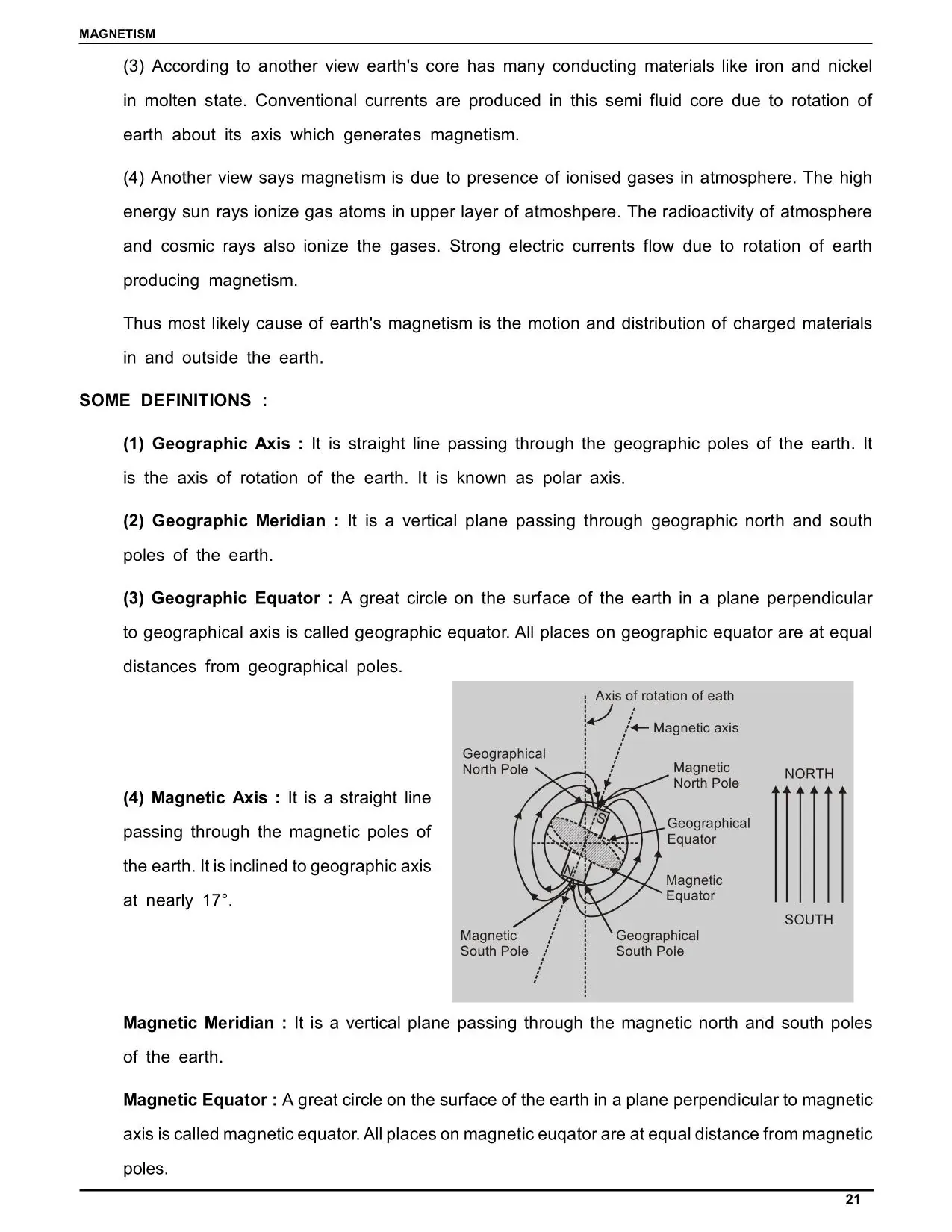
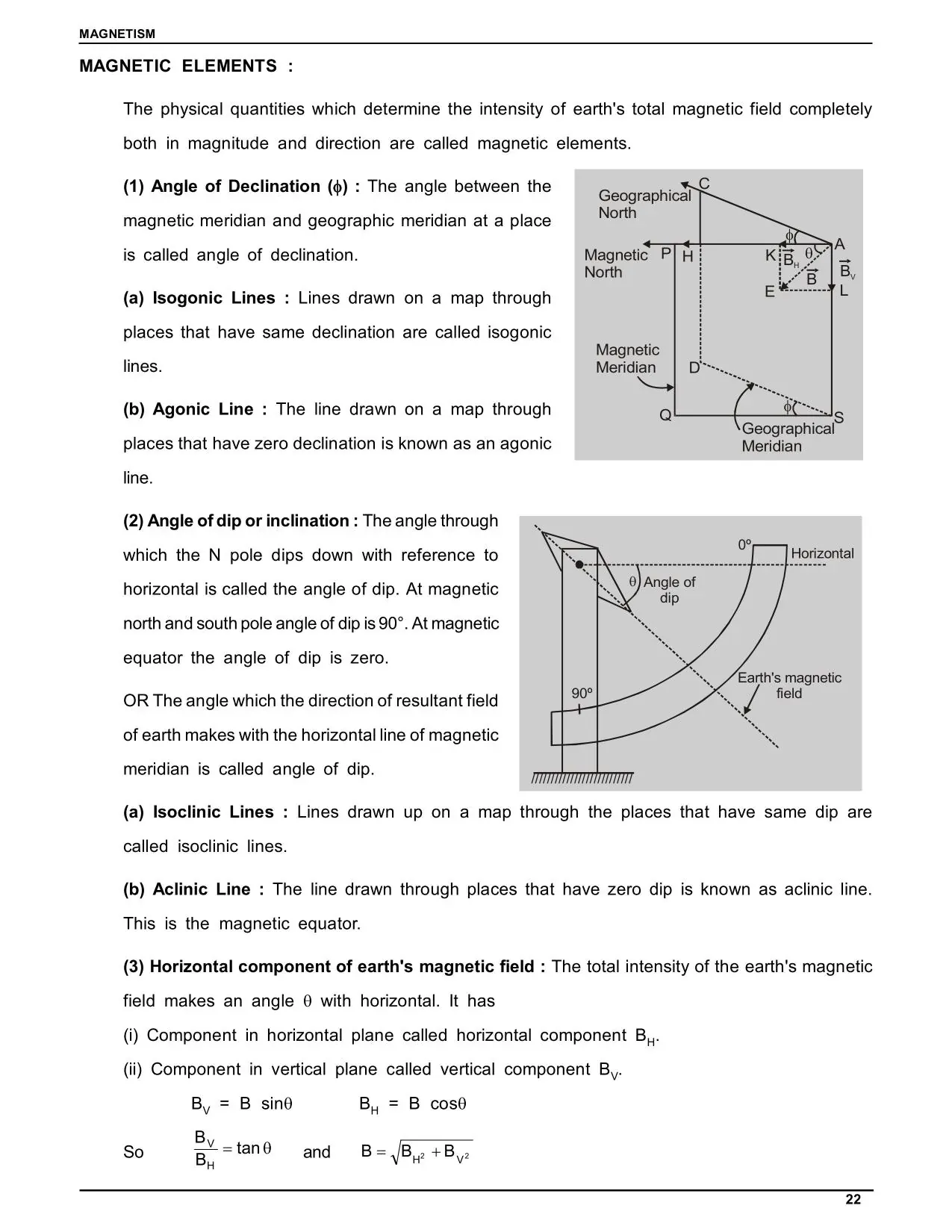
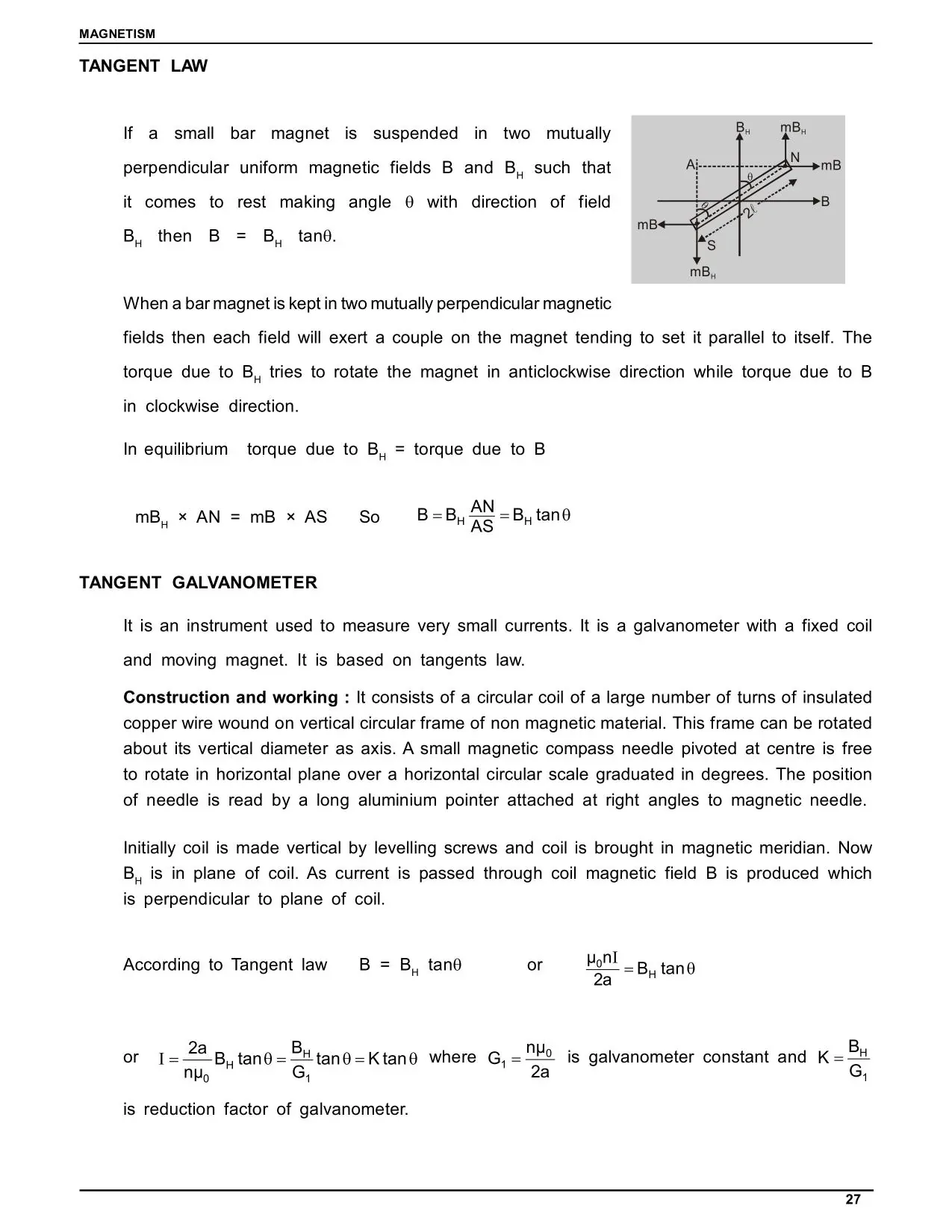
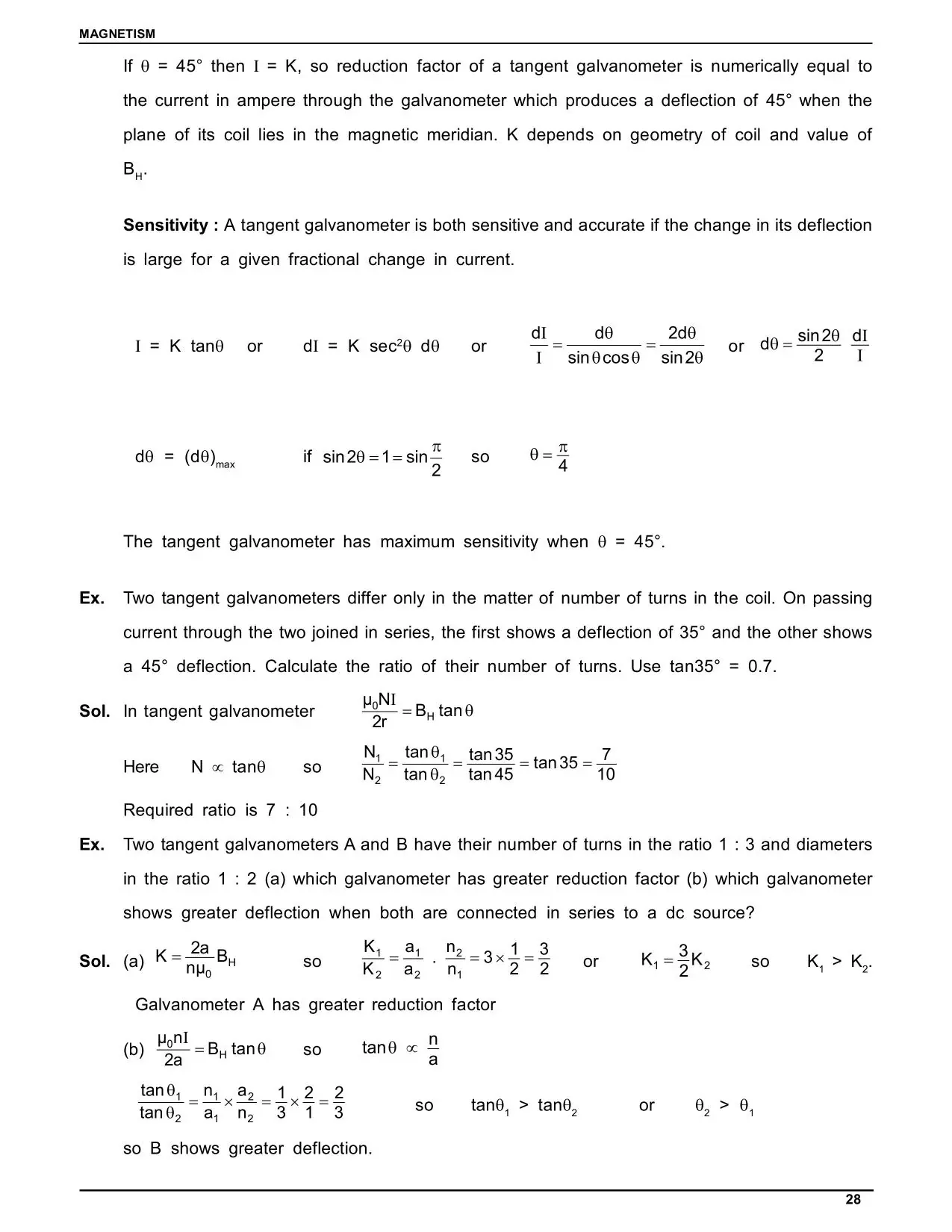
India's Best Exam Preparation for Class 12th - Download Now
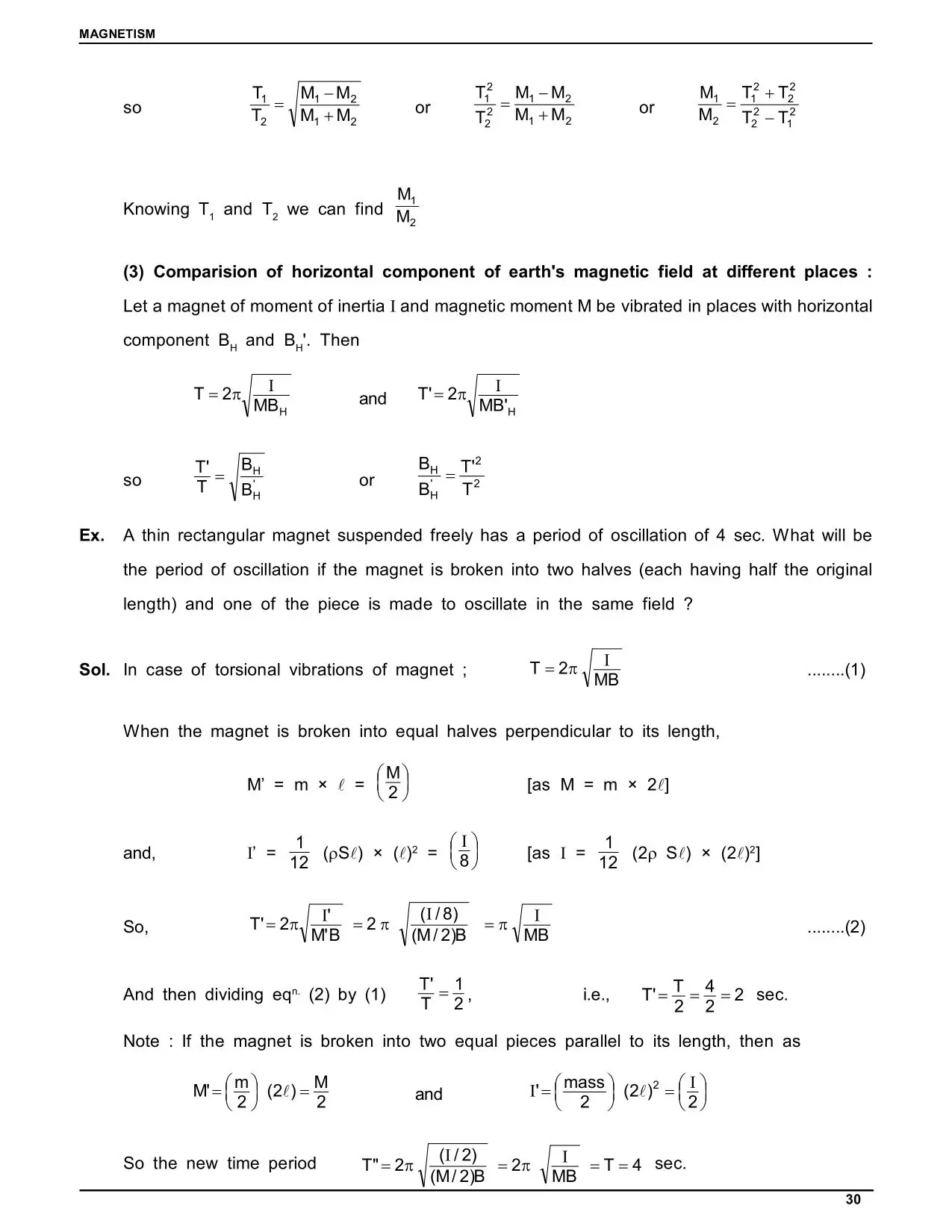
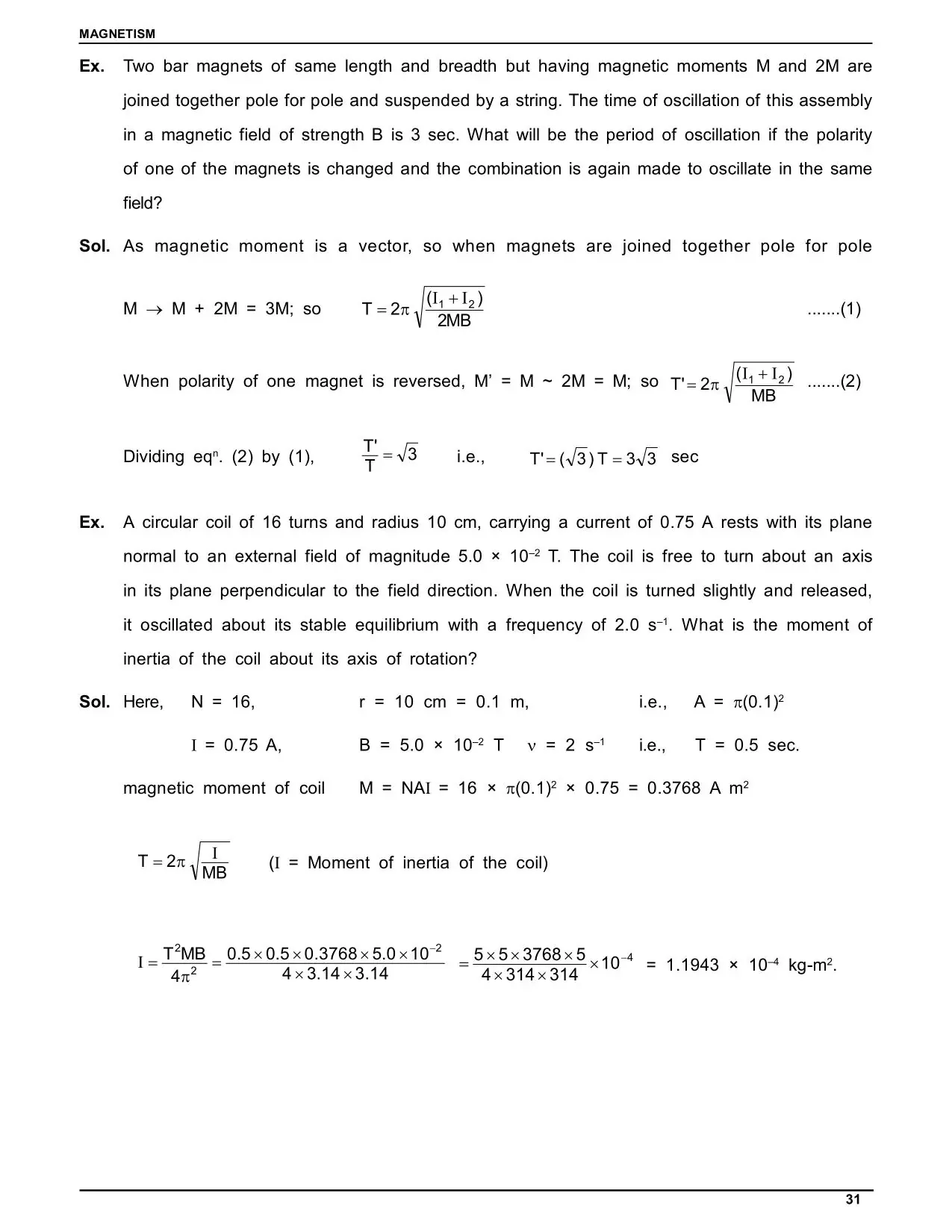
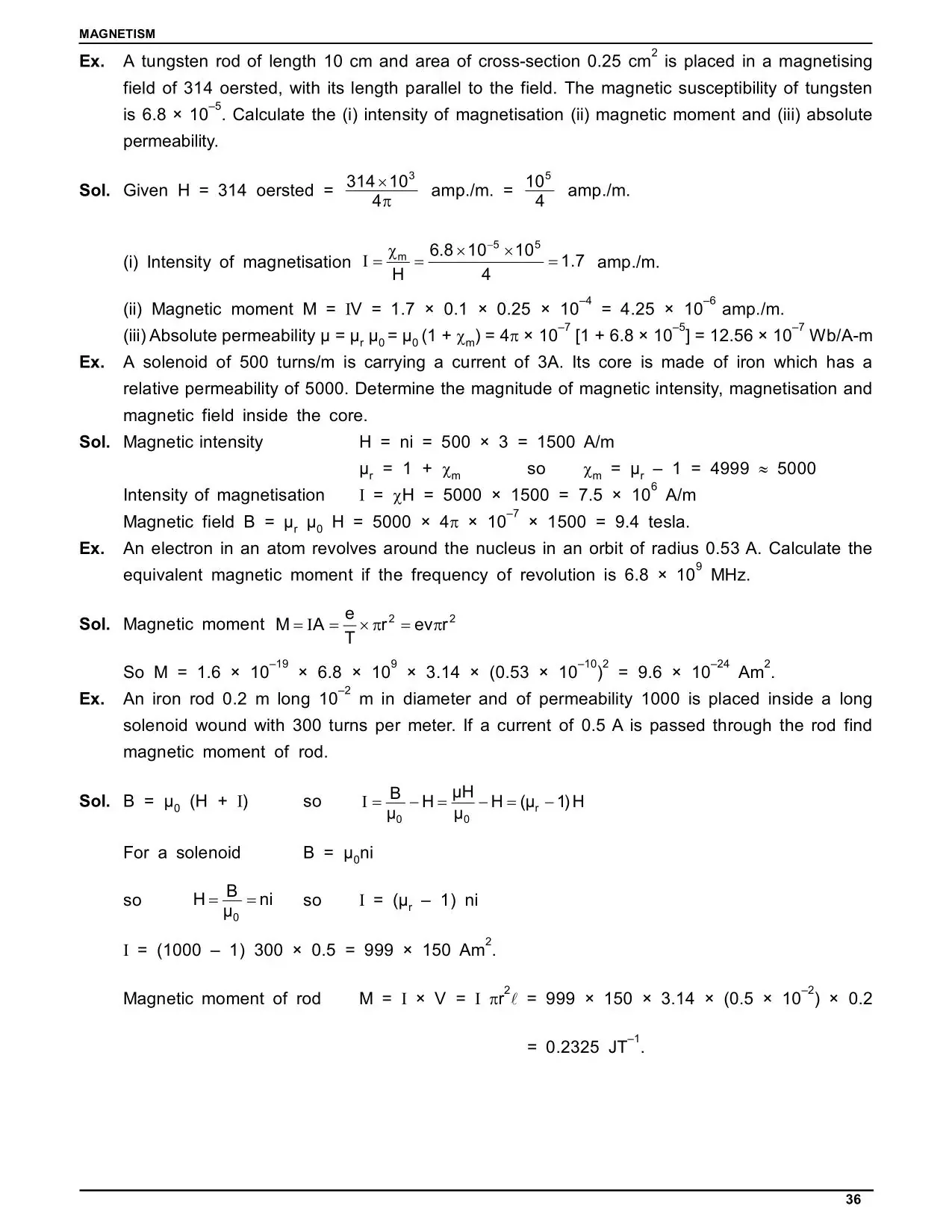
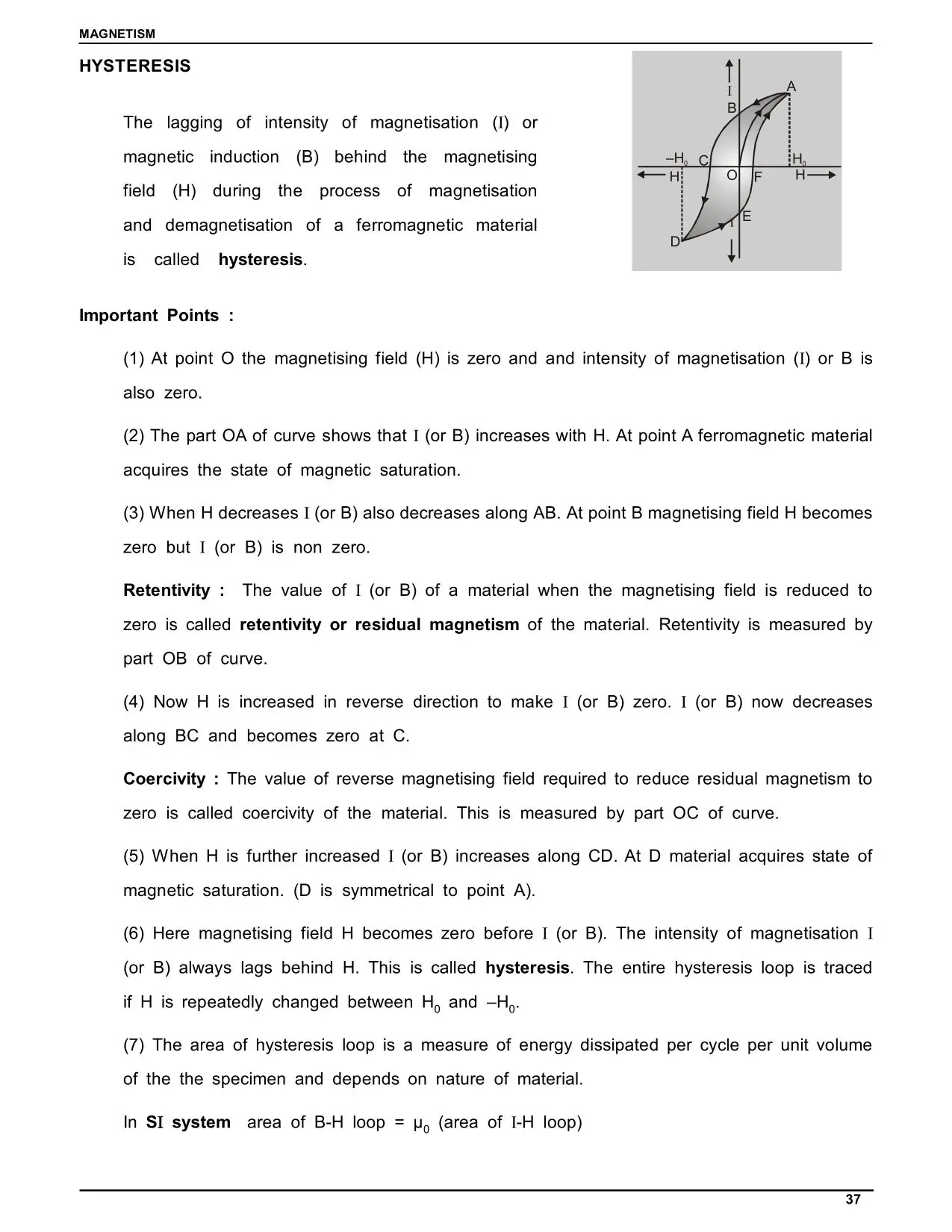
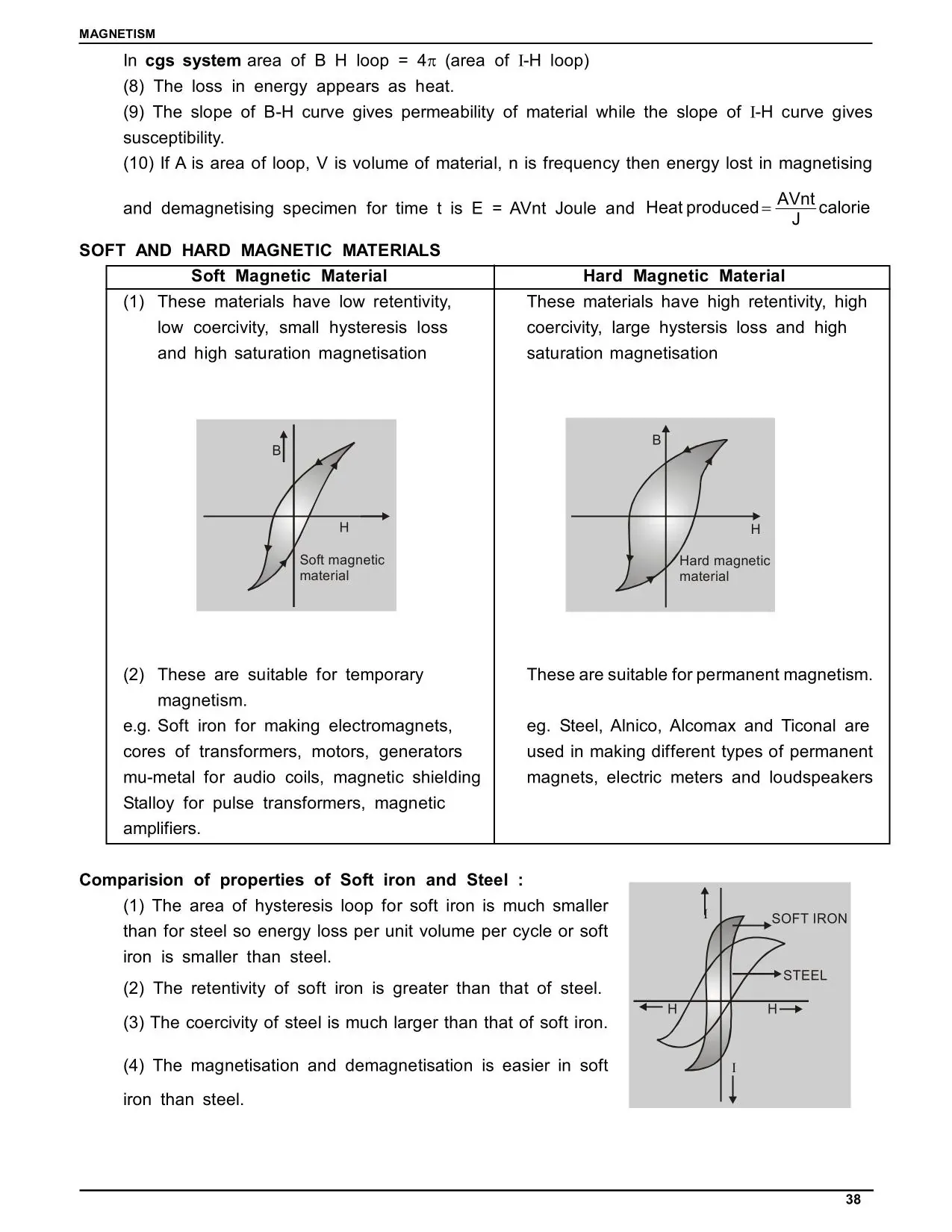
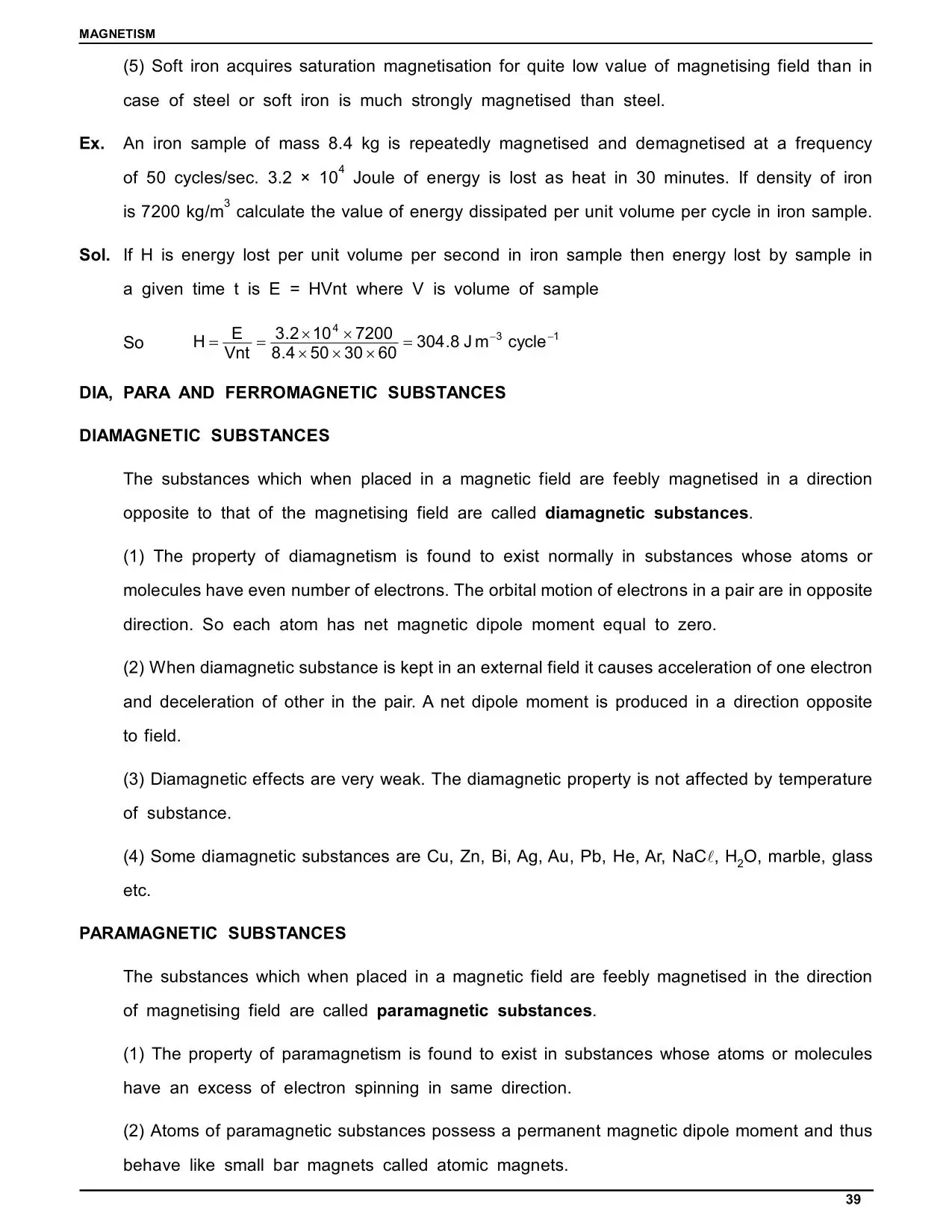
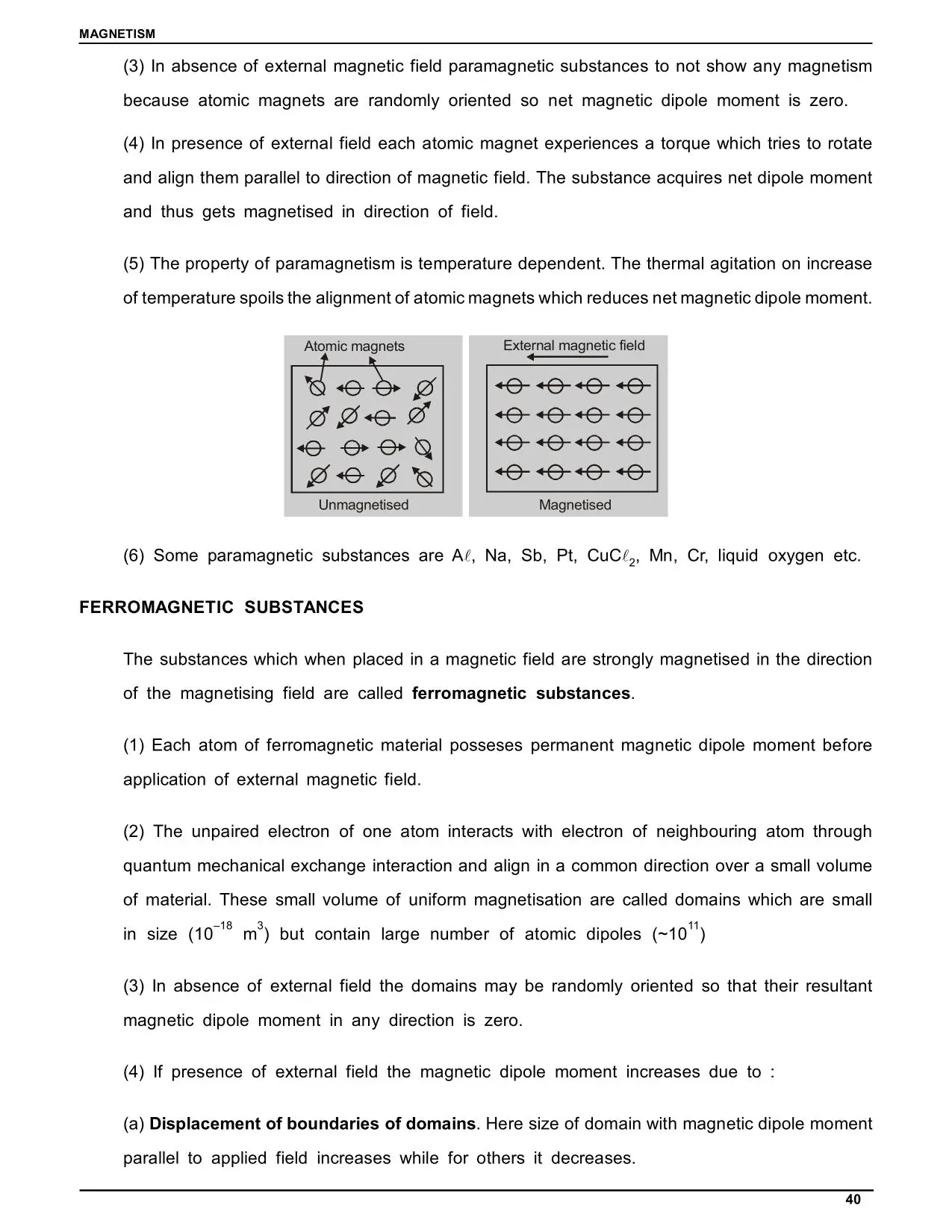
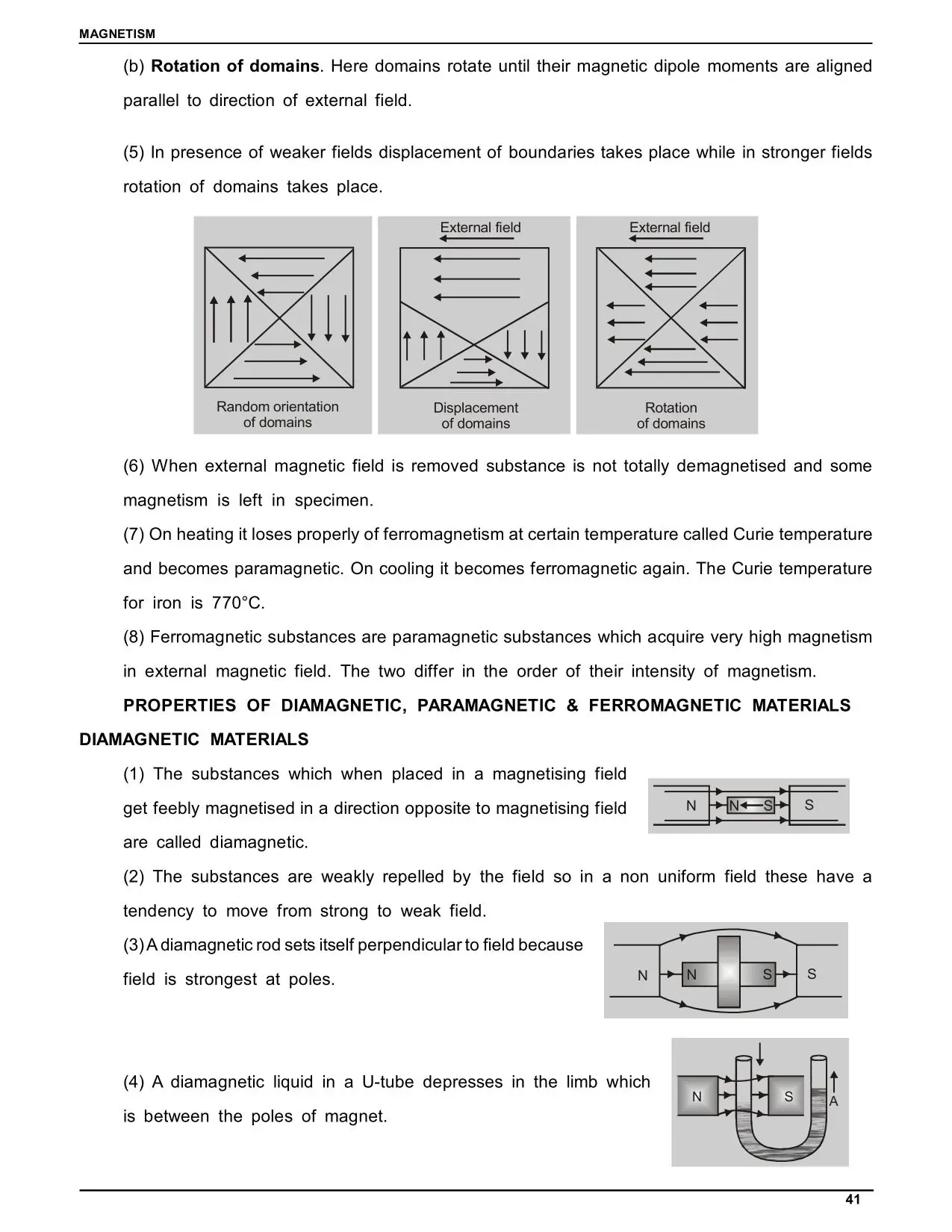
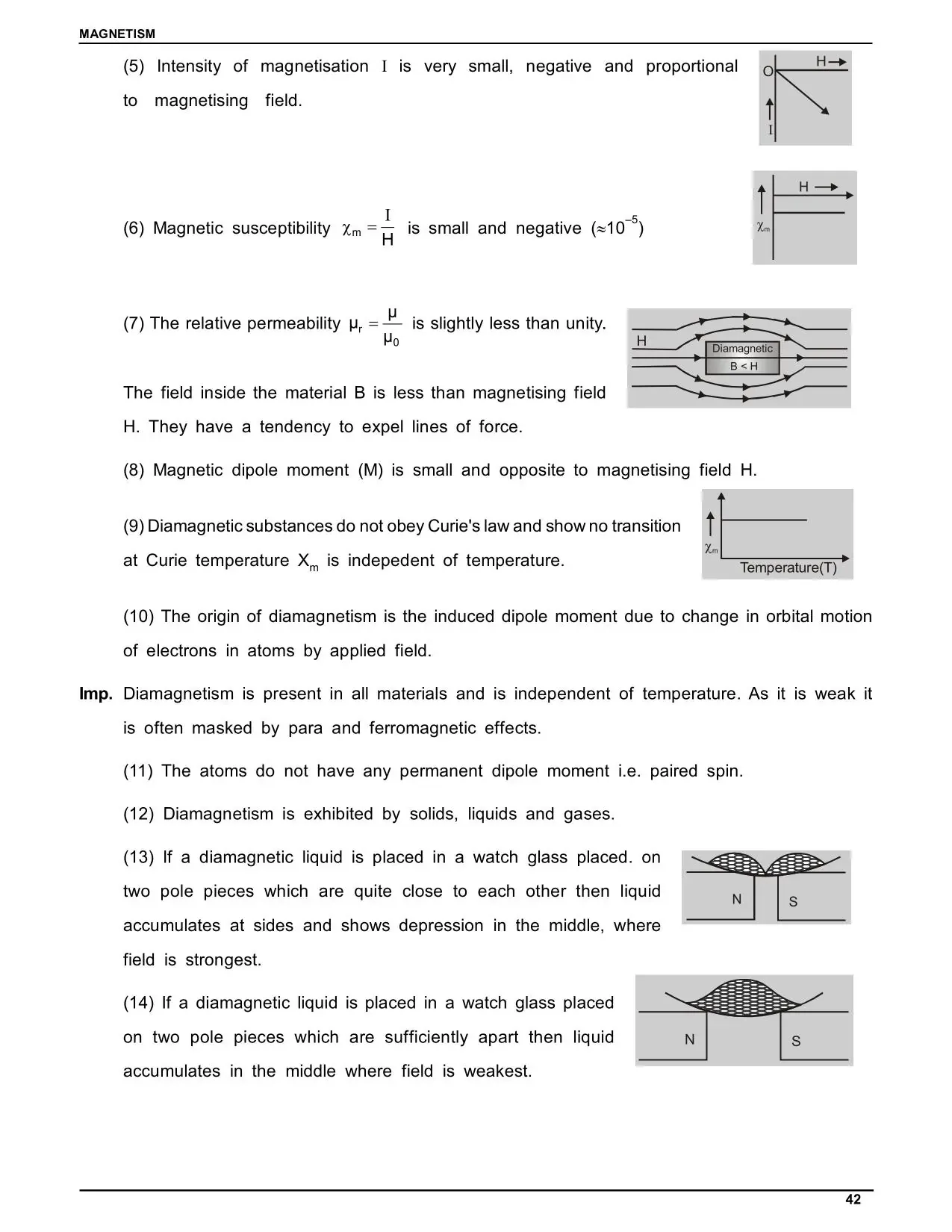
India's Best Exam Preparation for Class 12th - Download Now
eSaral
Common Mistakes in Moving Charges and Magnetism Class 12 Notes Problems
Mistake | Correct approach |
|---|---|
Saying that the magnetic force increases the speed | The force is perpendicular to the velocity, so it changes only the direction |
Using the wrong direction of force for a negative charge | Reverse the direction found by the right-hand rule for a positive charge |
Using Ampere’s law without symmetry | Use the Biot–Savart law when the symmetry is not high |
Confusing the shunt and the series resistance | The shunt is in parallel (ammeter) and the series resistance is in series (voltmeter) |
Forgetting the number of turns N | Include N in the loop field, the torque and the galvanometer formulas |
What Do CBSE, JEE and NEET Ask from Moving Charges and Magnetism Class 12 Notes?
Topic | CBSE boards | JEE Main | NEET |
|---|---|---|---|
Lorentz force, circular motion of charges | Yes | Yes | Yes |
Biot–Savart law, loop and wire fields | Yes | Yes | Yes |
Ampere’s law, solenoid and toroid | Yes (qualitative for solenoid and toroid) | Yes | Yes |
Force on conductors, parallel wires | Yes | Yes | Yes |
Torque on a loop, galvanometer | Yes | Yes | Yes |
Cyclotron | Removed from the board syllabus | Check the NTA syllabus | Check the NMC syllabus |
The number of questions varies every year, so use previous year questions to see the trend.
How to Study Moving Charges and Magnetism Class 12 Notes
- Read the NCERT chapter first, and solve the examples and exercises. eSaral’s NCERT Solutions for Class 12 Physics can help you check your answers.
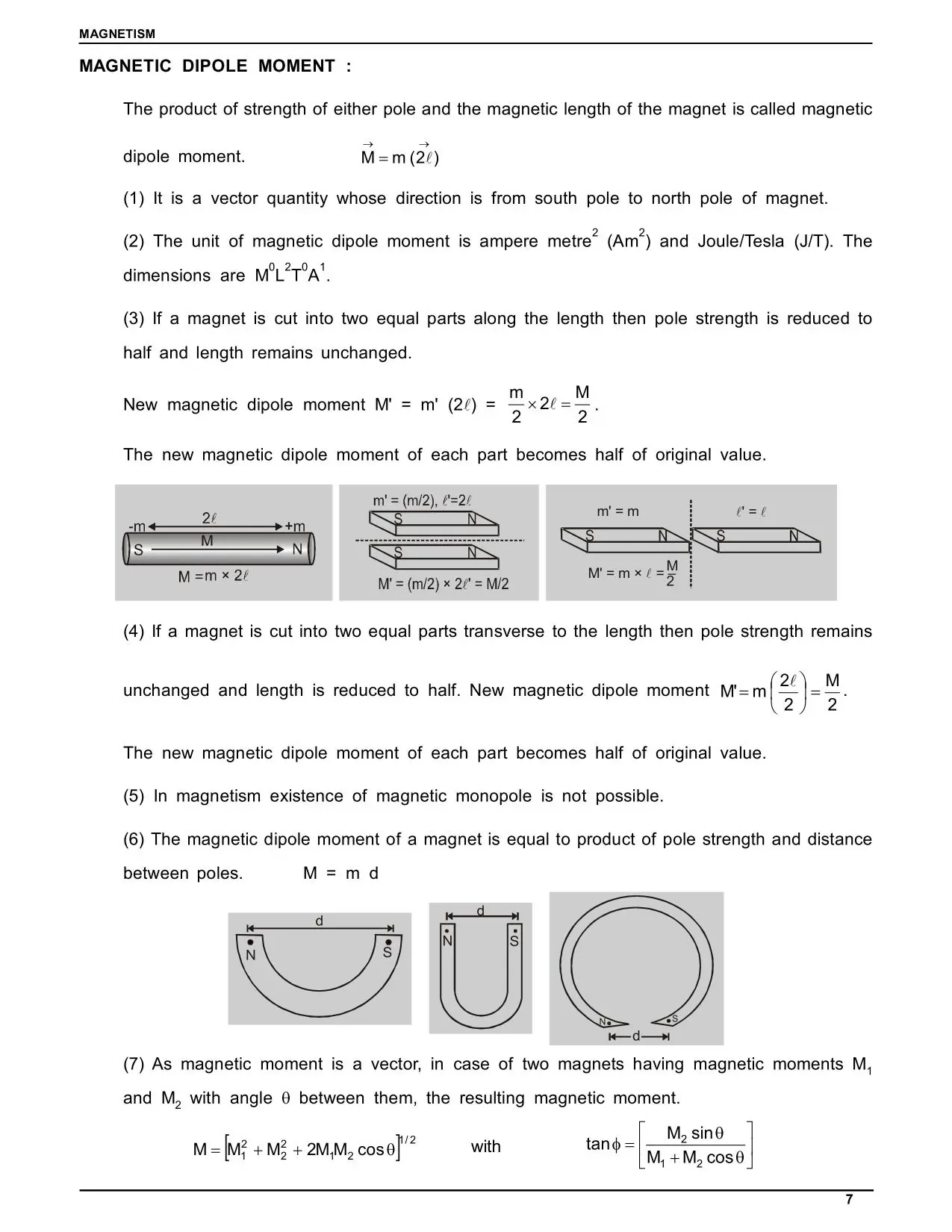
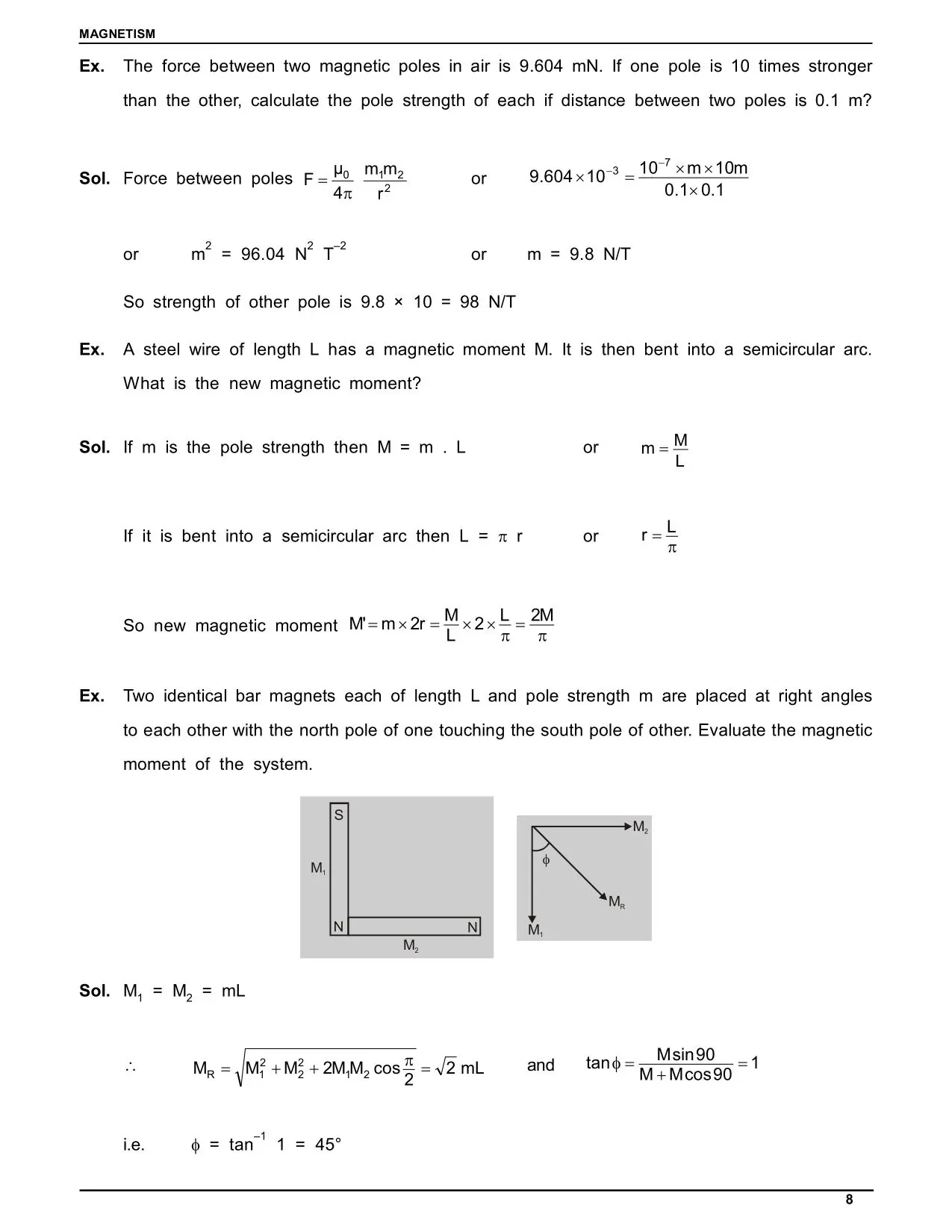
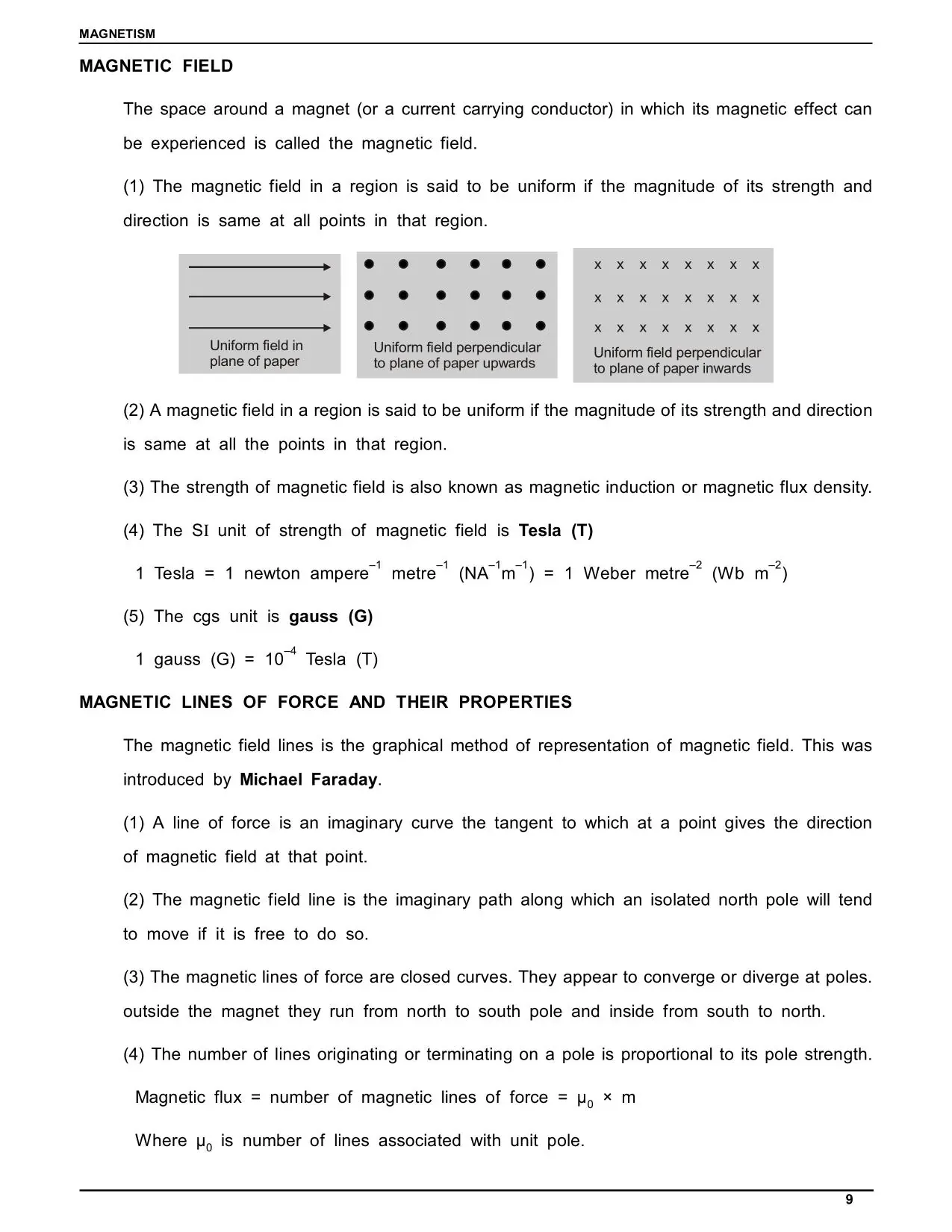
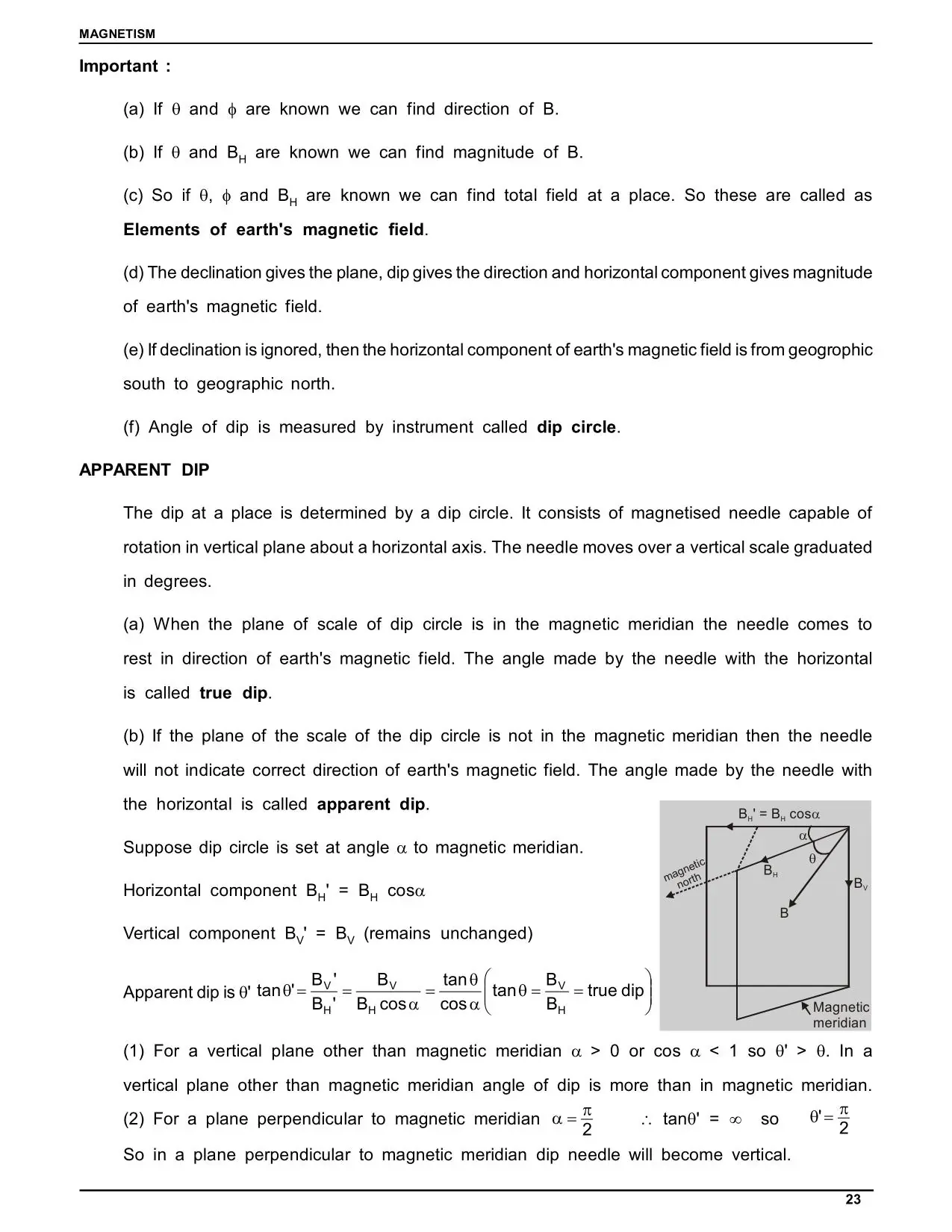
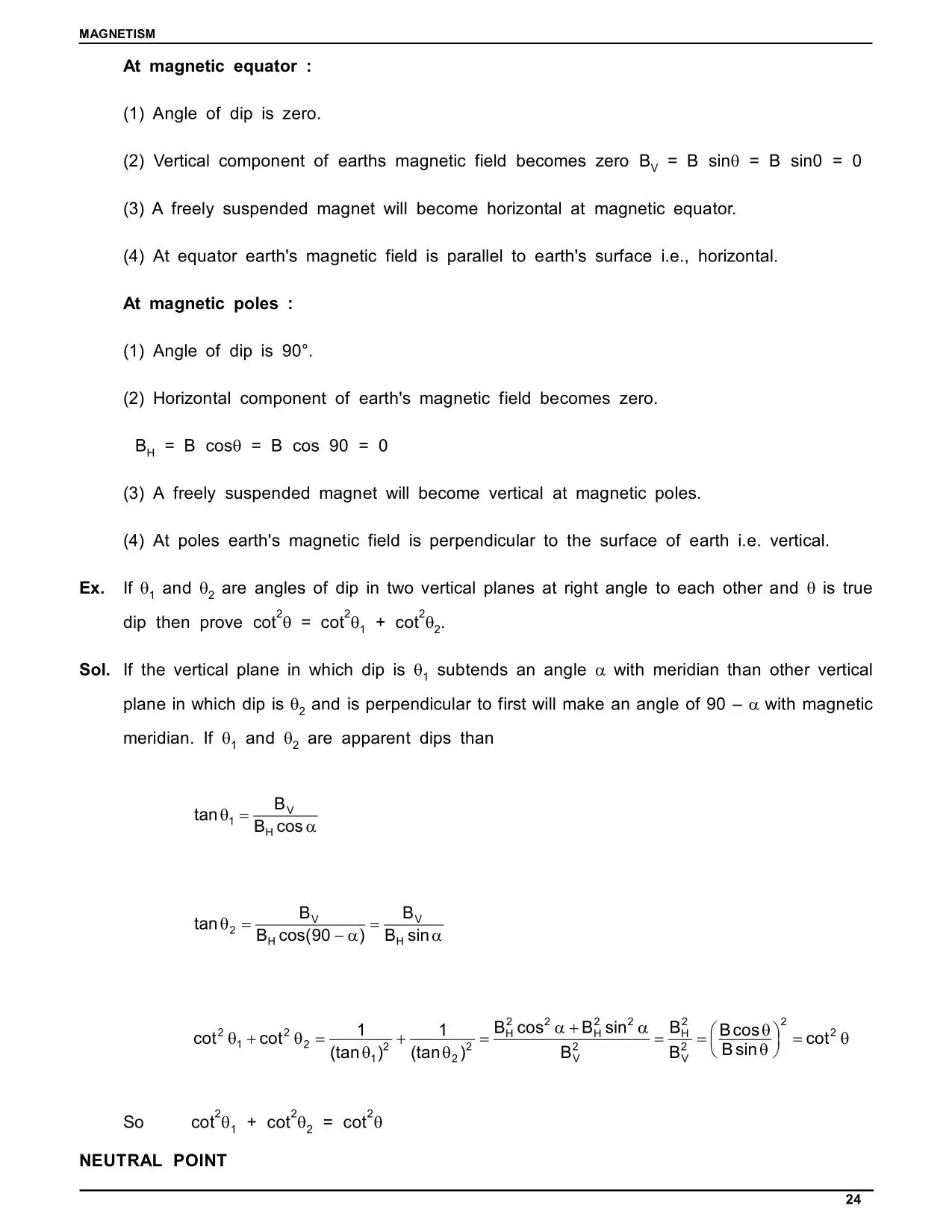
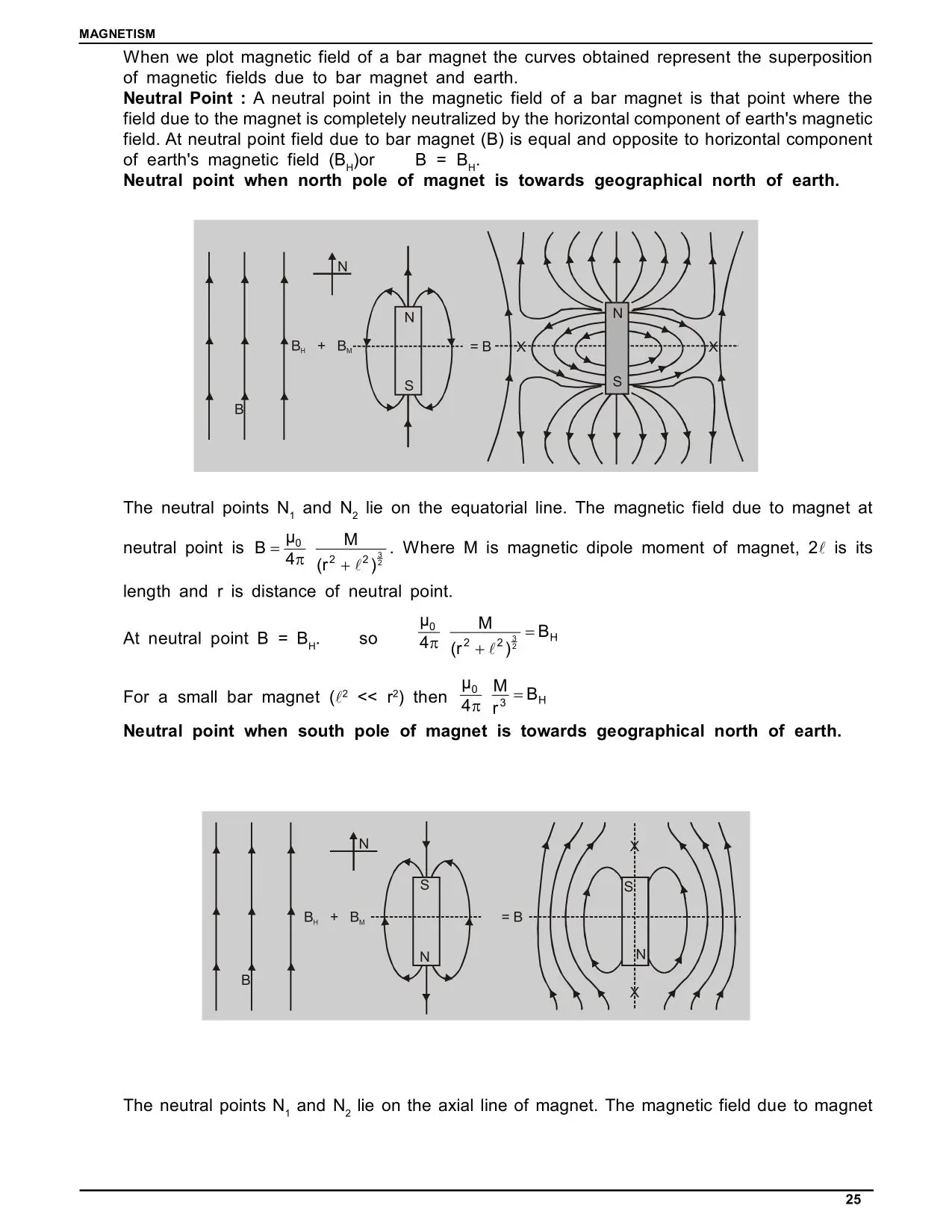
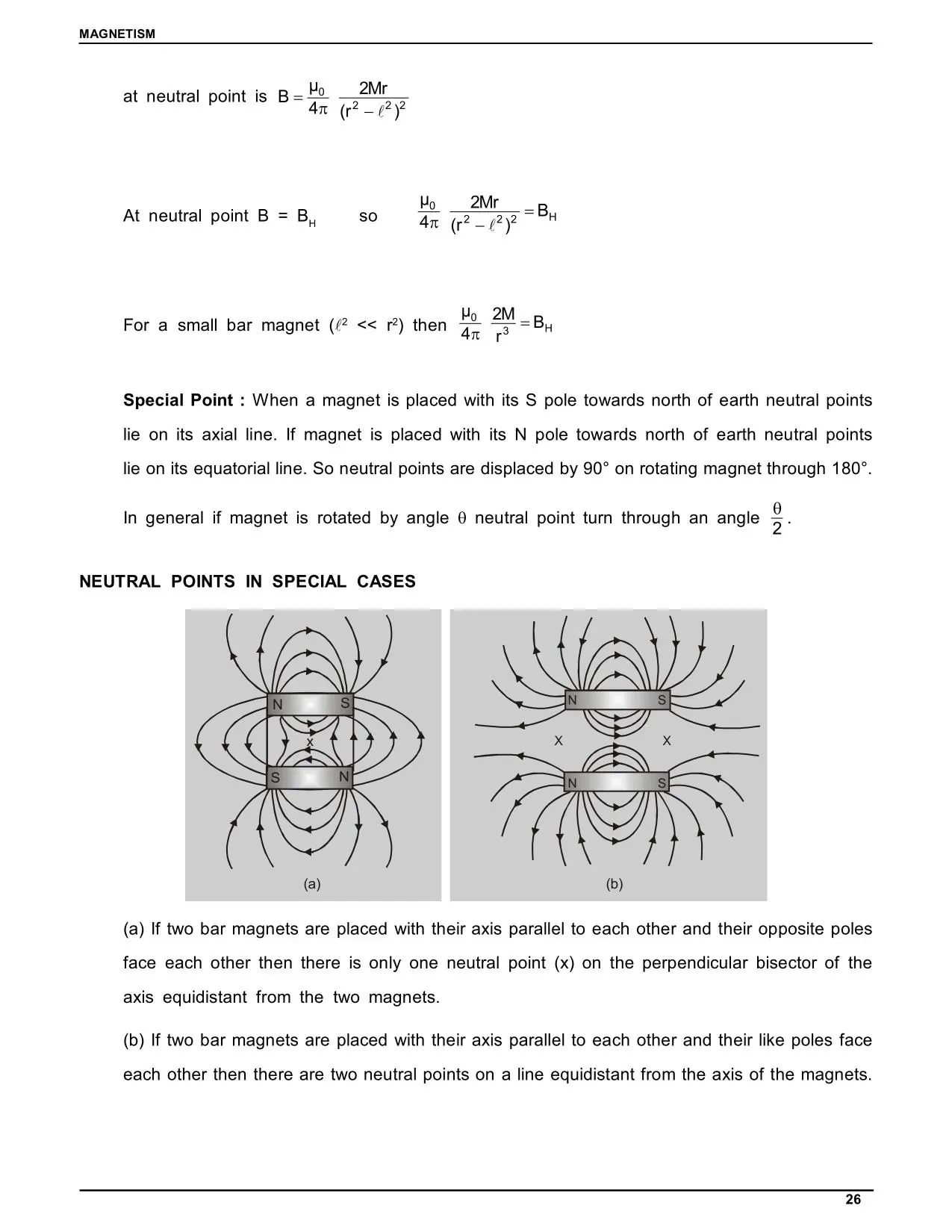
- Revise from the formula table and the handwritten notes above.
- Practise the right-hand and left-hand rules from the Moving Charges and Magnetism Class 12 notes, because many mistakes come from directions.
- Revise the chapter with eSaral’s Class 12 Physics revision notes before the exam. You can also download the textbook from the NCERT Class 12 books page.
Frequently Asked Questions
What is Moving Charges and Magnetism in Class 12?
Moving Charges and Magnetism is Chapter 4 of NCERT Class 12 Physics. It explains how moving charges produce magnetic fields and how a magnetic field exerts a force on a moving charge or a current. It covers the Lorentz force, the Biot–Savart law, Ampere’s law, force on conductors, torque on a loop and the moving coil galvanometer.
What is the Biot–Savart law, and why is it important for JEE?
In Moving Charges and Magnetism Class 12 notes, the Biot–Savart law gives the magnetic field of a small current element, dB = (μ₀/4π)(I dl sin θ/r²). It is used to find the fields of circular loops, arcs and finite wires, and JEE problems often combine several such fields by vector addition.
What is the difference between the Biot–Savart law and Ampere’s law?
In Moving Charges and Magnetism Class 12 notes, the Biot–Savart law works for any current distribution, but it needs integration. Ampere’s circuital law, ∮B·dl = μ₀I, is easier to use, but only when the symmetry is high, as for an infinite straight wire, a long solenoid or a toroid.
How many questions come from Moving Charges and Magnetism Class 12 notes in JEE Main and NEET?
Both exams ask questions from this chapter, usually on the Lorentz force, the magnetic field of loops and wires, the force between parallel wires and the galvanometer. The count changes from year to year, so check previous years’ papers.
What is the cyclotron frequency?
In Moving Charges and Magnetism Class 12 notes, it is f = qB/(2πm), the frequency of revolution of a charged particle in a magnetic field. It is derived from qvB = mv²/r, which gives r = mv/(qB), and T = 2πr/v. It does not depend on the speed of the particle. The cyclotron is relevant for JEE, but it was removed from the CBSE board syllabus.
How is the ampere defined?
NCERT explains the ampere as the current that, in two long parallel wires 1 m apart, gives a force of 2 × 10⁻⁷ N per metre of length. Since 2019, the SI defines the ampere by fixing the value of the elementary charge, but exam problems still use the parallel-wire relation.
How do you convert a galvanometer into an ammeter and a voltmeter?
For an ammeter, connect a small shunt S = I_gG/(I − I_g) in parallel with the galvanometer. For a voltmeter, connect a large resistance R = V/I_g − G in series. These formulas are part of the Moving Charges and Magnetism Class 12 notes on eSaral.
Why does a magnetic force do no work on a moving charge?
In Moving Charges and Magnetism Class 12 notes, the magnetic force is always perpendicular to the velocity, so the work done is zero and the speed (and kinetic energy) stays constant. Only the direction of motion changes.
Where can I find notes and solutions for this chapter on eSaral?
eSaral has Moving Charges and Magnetism Class 12 notes on this page, the NCERT book for Class 12, chapter-wise revision notes and step-by-step NCERT solutions, all linked on this page.
Team eSaral
eSaral Academic and Editorial Team
Team eSaral is the collective author profile for educational content created by eSaral’s teachers and academic contributors. The team draws on expertise from IIT graduates, doctors, experienced educators and subject specialists to develop resources for JEE, NEET and school students. Our articles aim to explain concepts clearly and help students study with confidence.
Related Posts

BITSAT 2027: Registration Date, Exam Date, Syllabus, Eligibility, Pattern & Fees
BITSAT 2027 exam dates, registration timeline, eligibility criteria, exam pattern, marking scheme, syllabus and fees in one page.

BITSAT Previous Year Question Paper PDF (2017-2026)
Download BITSAT previous year question papers PDF from 2017 to 2026,session-wise. Memory-based papers,exam pattern, paper analysis and how to practise

CBSE Class 10 Date Sheet 2027: Expected Exam Dates, Release Date, Admit Card & Result Timeline
CBSE Class 10 date sheet 2027 is awaited. See the expected exam dates, release window, how to download the PDF, admit card and result timelines.

NCERT Physics Class 10 Book PDF in Hindi 2026-27 – भौतिक विज्ञान के 4 अध्याय (Free Download)
NCERT Physics Class 10 book PDF in Hindi 2026-27: download all 4 chapters (अध्याय 9–12) free, with topics and important formulas.

NCERT Biology Class 9 Book Anveshan PDF in Hindi - जीव विज्ञान कक्षा 9 पुस्तक अन्वेषण PDF
Download NCERT Biology Class 9 book PDF in Hindi chapterwise for 2026-27: Cell, Tissues, Reproduction and Diversity. Free PDFs.

Essay On Artificial Intelligence in English (100,150, 200, 250, 300, 500 Words)
This is in contrast to the natural intelligence of humans. With Artificial Intelligence, machines can perform

Essay on 78th India Independence Day in English for Student (100, 150, 200, 250, 300, 500 Words)
Read the best essays on India's Independence Day in English. Short & long essays (100, 150, 200, 250, 300, 500 words) perfect for school exams
NCERT Class 11 English Snapshots book - Free PDF download- Esaral
Download NCERT Class 11 English Snapshots book PDF for free. Get all 8 chapters, chapter-wise. Start your prep today!
NCERT Class 10 biology book pdf - Free PDF Download - eSaral
NCERT Class 10 Biology book PDF 2026-27: all 5 chapters (Life Processes to Our Environment) in English & Hindi, with CBSE syllabus, marks & practical

Essay on Global Warming in English (100,150, 200, 250, 300, 500 Words)
Global warming means the Earth is getting hotter. This happens because of things like pollution from cars and factories.