
NCERT Solutions for Class 11 Biology chapter 13 Photosynthesis in Higher Plants PDF - eSaral

eSaral Academic and Editorial Team
NCERT Solutions for Class 11 Biology chapter 13 Photosynthesis in Higher Plants PDF
Hey, are you a class 11 student and looking for ways to download NCERT Solutions for Class 11 Biology chapter 13 Photosynthesis in Higher Plants PDF? If yes. Then read this post till the end.
In this article, we have listed NCERT Solutions for Class 11 Biology chapter 13 Photosynthesis in Higher Plants PDF that are prepared by Kota’s top Doctor’s Faculties by keeping Simplicity in mind.
If you want to learn and understand class 11 Biology chapter 13 "Photosynthesis in Higher Plants" in an easy way then you can use these solutions PDF.
NCERT Solutions helps students to Practice important concepts of subjects easily. Class 11 Biology solutions provide detailed explanations of all the NCERT questions that students can use to clear their doubts instantly.
If you want to score high in your class 11 Biology Exam then it is very important for you to have a good knowledge of all the important topics, so to learn and practice those topics you can use eSaral NCERT Solutions.
In this article, we have listed NCERT Solutions for Class 11 Biology chapter 13 Photosynthesis in Higher Plants PDF that you can download to start your preparations anytime.
So, without wasting more time Let’s start.
Download NCERT Solutions for Class 11 Biology chapter 13 Photosynthesis in Higher Plants PDF
Question 1. By looking at a plant externally can you tell whether a plant is $\mathrm{C} 3$ or C4? Why and how?
Solution. C3 plants include sunflower, wheat, spinach, cotton and sugarcane and C4 plants includes pineapple, amaranth, maize etc. Both categories of plants include crop plants, fruits and flowering plants, which makes it very difficult to distinguish between C3 and C4 plants by only looking at the external appearance.
Question 2. By looking at which internal structure of a plant can you tell whether a plant is C3 or C4? Explain.
Solution. -If we will do the microscopic study of the tissues of C3 and C4 plant, then we will be able to classify the plants into $\mathrm{C} 3$ and $\mathrm{C} 4$.
-C3 plants and C4 plants can be distinguished on the basis of Kranz anatomy. C4 plants have Kranz anatomy, which means they have a wreath-like arrangement around the bundle sheath cells. Also, vascular bundles are surrounded by the bundle sheath cells. In leaves, mesophyll cells are not differentiated in the spongy layer and palisade layer. There is a lesser intracellular space and mesophyll have chloroplast. When the leaf tissue of C3 plants is viewed under a microscope. The mesophyll cells of leaves are distinguished into palisade and spongy parenchyma. If we will do the microscopic study of the tissues of $\mathrm{C} 3$ and $\mathrm{C} 4$ plant, then we will be able to classify the plants into $\mathrm{C} 3$ and $\mathrm{C} 4$.
Question 3. Even though a very few cells in a C4 plant carry out the biosynthetic - Calvin pathway, yet they are highly productive. Can you discuss why?
Solution. - In C4 plants, the dark reaction that is Calvin cycle occurs in bundle sheath cells. Though it has a few numbers of cells being involved in the Calvin cycle, C 4 plants have a high rate of photosynthesis due to the following factors:
-Rapid supply of CO2 from mesophyll cells taking part in initial carbon dioxide fixation.
- Since there is no photolysis of water in the bundle sheath cells hence photorespiration is also absent in them.
-Photosynthates are rapidly withdrawn by the bundle sheath cells as they are present in the bundle sheath cells.
- Photosynthesis continues even when stomata are closed due to fixation of $\operatorname{CO} 2$ released during respiration.
Question 4. RuBisCO is an enzyme that acts both as a carboxylase and oxygenase. Why do you think RuBisCO carries out more carboxylation in C4 plants?
Solution. -RuBisCo is referred to as the Ribulose-1,5-bisphosphate carboxylase oxygenase it is one of the most abundant enzymes present in the biosphere. RuBisCO is comparatively more affinitive for CO2 than for O2. It is the relative concentration of $O 2$ and CO2, which determines whether oxygen will bind or carbon dioxide will bind to the enzyme.That is RuBisCO functions as oxygenase only when there is a higher concentration of oxygen and a lower concentration of carbon dioxide. Also C4 plants, the enzyme RuBisCO is not present in the chloroplast of mesophyll cells. It is present only in bundle sheath chloroplasts which are receiving the supply of CO2 continuously even when the stomata are closed. during the decarboxylation of malic acid into pyruvic acid. Hence, RuBisCO usually acts as carboxylase rather than oxygenase.
Question 5. Suppose there were plants that had a high concentration of Chlorophyll b but lacked chlorophyll a, would it carry out photosynthesis. Then why do plants have chlorophyll $\mathrm{b}$ and other accessory pigments?
Solution. If chlorophyll a is absent in the plant then photosynthesis will not occur if chlorophyll a is absent from the system as chlorophyll is the primary pigment which is involved in the absorption of different wavelength of the visible spectrum that is it functions in the trapping of light for photosynthesis further they convert light energy into chemical energy. Plants have accessory pigments such as chlorophyll, xanthophyll and carotenoids these pigments absorb the light energy and pass it on to the chlorophyll molecule. The accessory pigments also prevent the enzymes from photooxidation.
Question 6. Why is the colour of a leaf kept in the dark frequently yellow, or pale green? Which pigment do you think is more stable?
Solution. When leaves are kept in dark, then the photosynthesis stops the green-colored chlorophyll molecule is degraded in the absence of light. The accessory pigments such as xanthophyll and carotenoids become prominent, which are yellow in colour; hence, the colour of leaves changes into yellow from green.
Question 7. Look at leaves of the same plant on the shady side and compare it with the leaves on the sunny side. Or, compare the potted plants kept in the sunlight with those in the shade. Which of them has leaves that are darker green? Why?
Solution. The chlorophyll content will be more in the shady side of the leaves because the side of the leaf not exposed in sunlight will have more aggregation and concentration of chlorophyll molecule hence it is darker. whereas the leaves exposed in sunlight will lose chlorophyll due to photo-oxidation of the chlorophyll molecule; hence the leaf exposed in sunlight will have a lighter colour.
Question 8. Figure shows the effect of light on the rate of photosynthesis. Based on the graph, answer the following questions:
(a) At which point/s (A, B or C) in the curve is light a limiting factor?
(b) What could be the limiting factor/s in region A?
(c) What do $\mathrm{C}$ and $\mathrm{D}$ represent on the curve?
Solution. a) Light is the limiting factor because the rate of photosynthesis is increasing with the intensity of light at the point an and 50 per cent at $\mathrm{B}$.
b) Besides light, other limiting factors will be $\mathrm{CO} 2$ and $\mathrm{H} 2 \mathrm{O}$.
c) C represents a stage beyond which light is not a limiting factor and $D$ is the line beyond which the intensity of light does not affect the rate of photosynthesis.
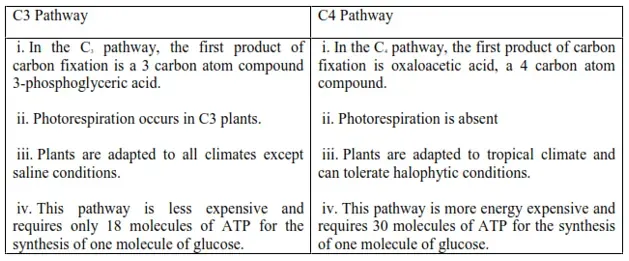
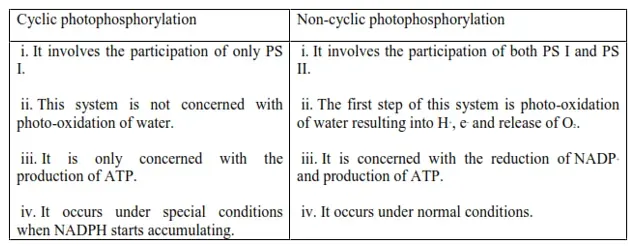
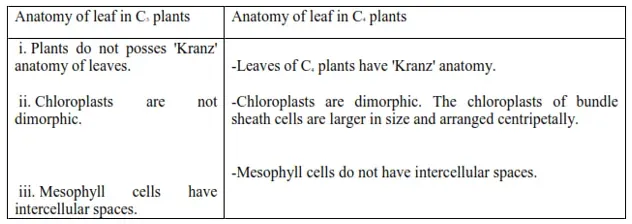
Question 9. Give comparison between the following:
(a) $\mathbf{C}_{ }$and $\mathbf{C}_{4}$ pathways (b) Cyclic and non-cyclic photophosphorylation
(c) Anatomy of leaf in $\mathrm{C}_{3}$ and $\mathrm{C}$. Plants
Solution. (a) $\mathrm{C}$ and $\mathrm{C}$. pathways:
(b) Cyclic and non-cyclic photophosphorylation:
(c) Anatomy of leaf in $\mathrm{C}$ and $\mathrm{C}_{+}$plants:
Also Read,
Class 11 Chemistry Notes pdf Download.
Class 11 Biology Book Chapterwise pdf Download.
Class 11 Biology Exemplar Chapterwise pdf Download.
If you have any Confusion related to NCERT Solutions for Class 11 Biology chapter 13 Photosynthesis in Higher Plants PDF then feel free to ask in the comments section down below.
This topic assumes you already know glucose's exact molecular makeup — the chemical formula of glucose page confirms it in one line before you go further.
This chapter's most-asked NCERT exercise isn't a written question at all — it's Table 13.1, comparing C3 and C4 plants. See it filled in and explained here: Table 13.1 Biology Class 11 Solutions.
This is one chapter's worth of solutions — the same set for every chapter in the book is collected in one place here: ncert biology class 11 solutions.
To watch Free Learning Videos on Class 11 Biology by Kota’s top Doctor’s Faculties Install the eSaral App
Team eSaral
eSaral Academic and Editorial Team
Team eSaral is the collective author profile for educational content created by eSaral’s teachers and academic contributors. The team draws on expertise from IIT graduates, doctors, experienced educators and subject specialists to develop resources for JEE, NEET and school students. Our articles aim to explain concepts clearly and help students study with confidence.
Related Posts
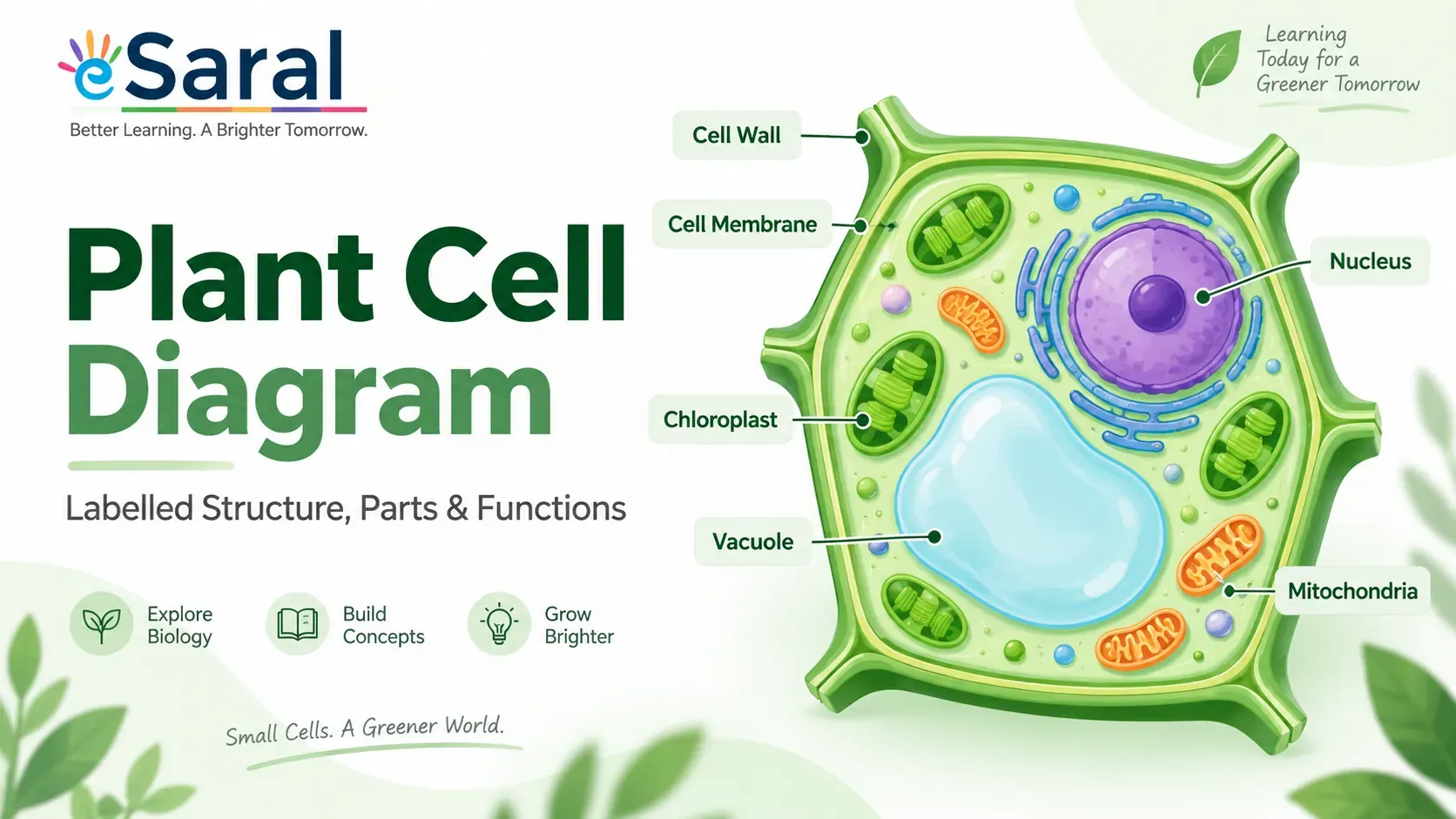
Plant Cell Diagram: Labelled Structure, Parts and Functions
Simple, labelled plant cell diagram with parts and functions. Covers plant cell structure for Class 6, 7, 8, 9, 10 and 11 students, CBSE-aligned.
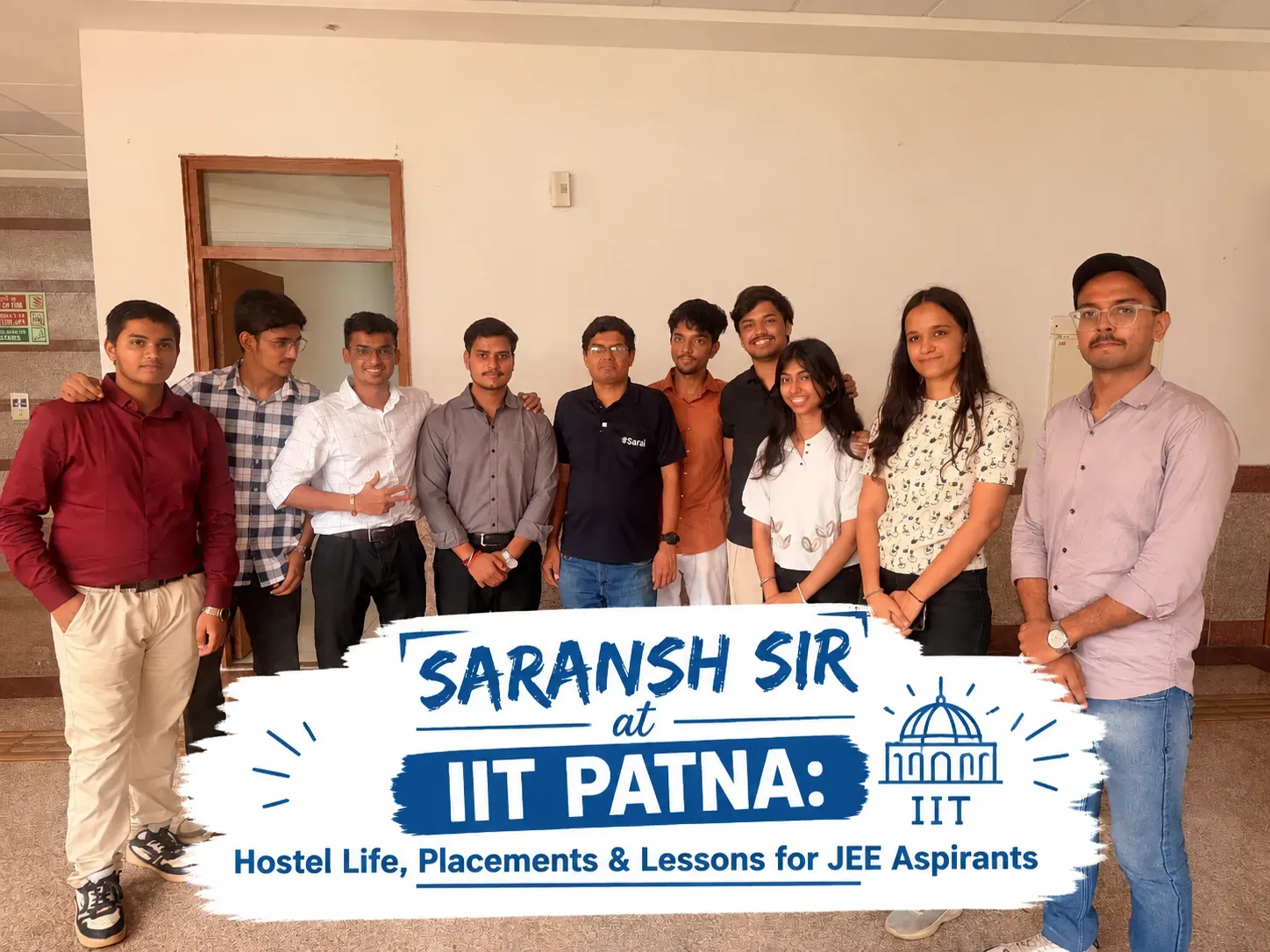
Saransh Gupta Sir's Visit to IIT Patna: Hostel Life, Placements & Lessons for JEE Aspirants
Inside Saransh Gupta Sir's IIT Patna visit — hostel life, the library, placements, internships, and real advice for JEE aspirants from students living the IIT dream.
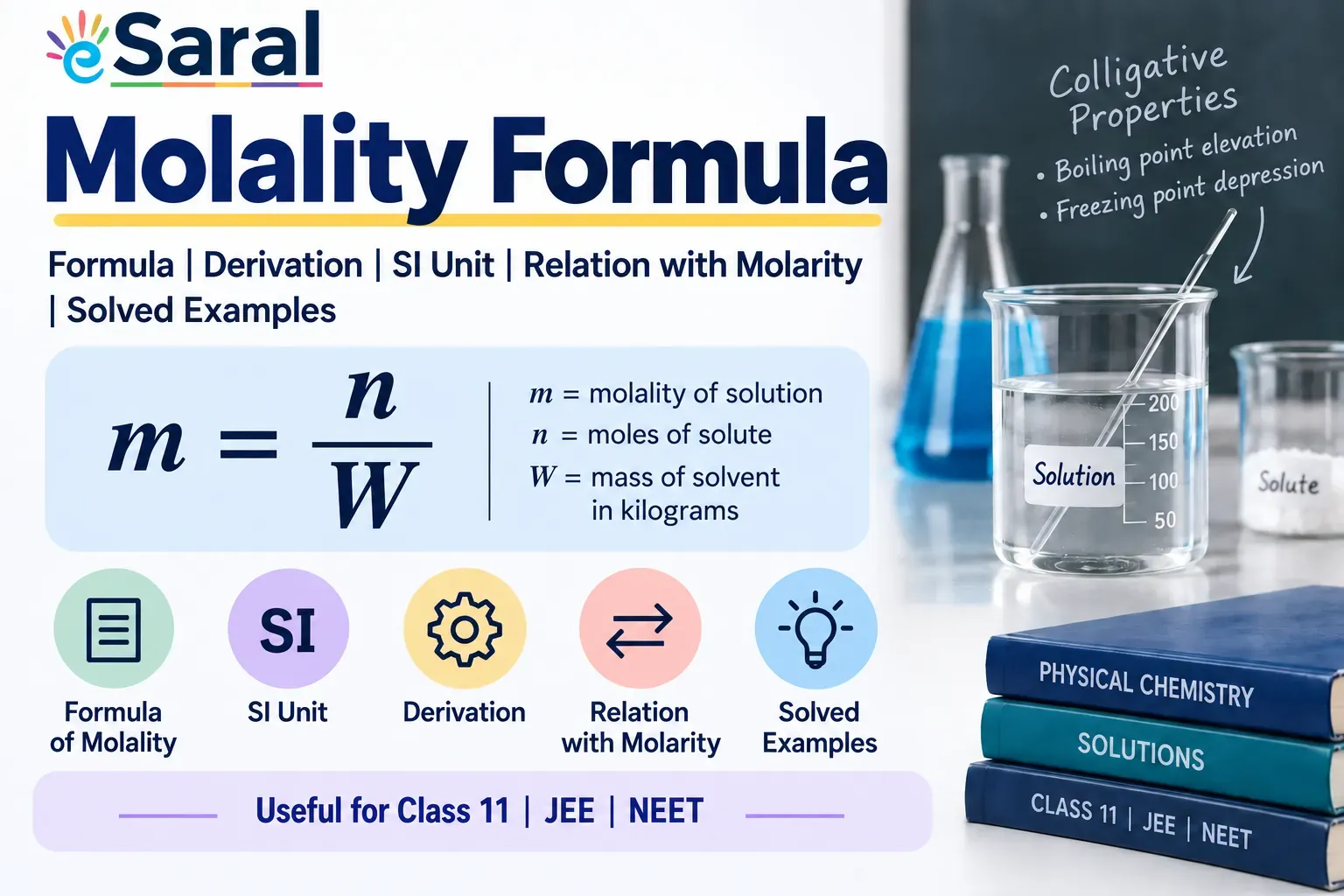
Molality Formula: Formula for Molality, Derivation & Solved Examples
Molality formula is $m = \dfrac{n}{W}$. Learn the formula of molality, its SI unit, derivation, relation with molarity, and solved examples for Class 11, JEE and NEET.
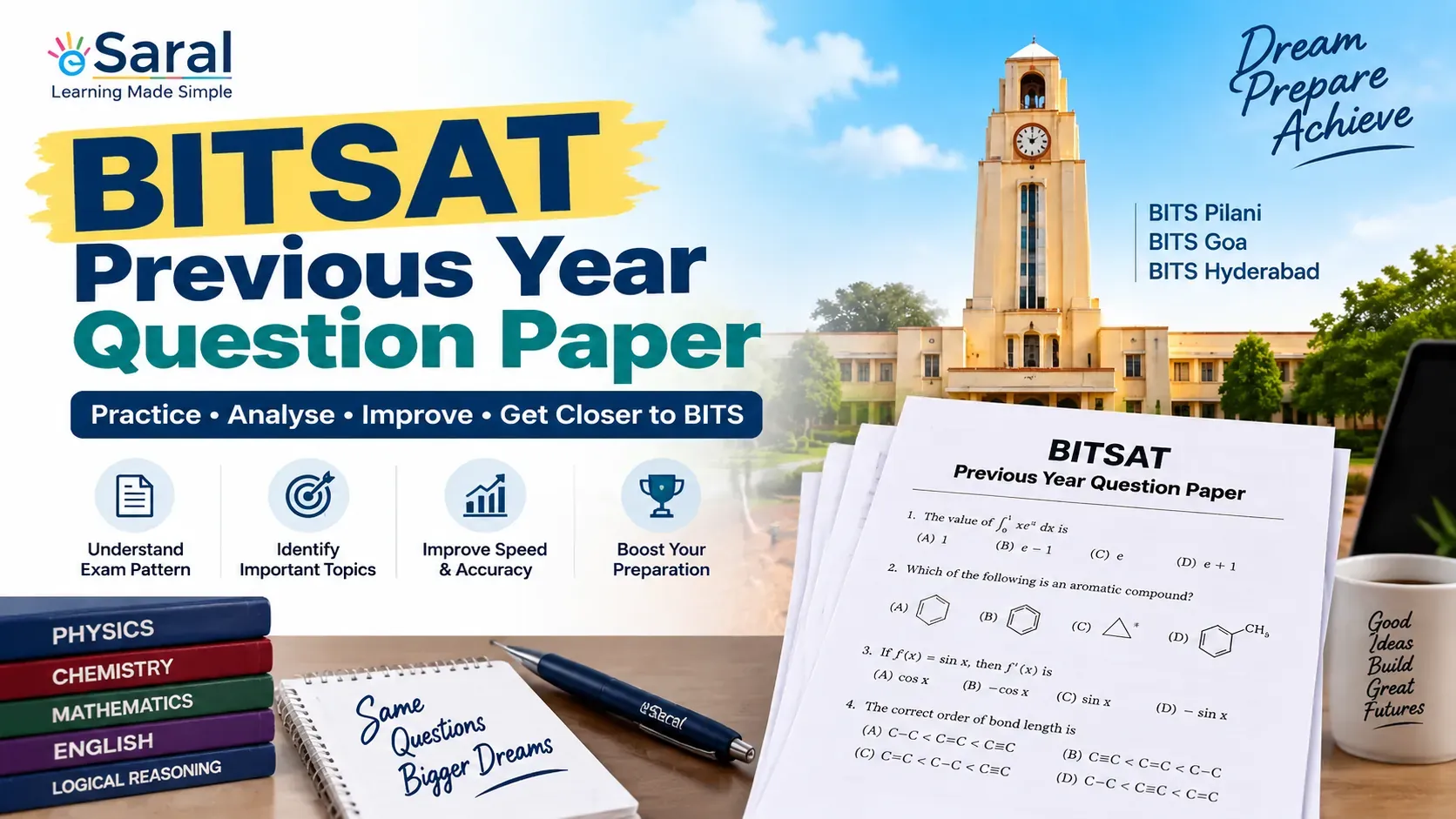
BITSAT Previous Year Question Paper PDF
Download BITSAT previous year question papers PDF. Get year-wise BITSAT PYQs, memory-based papers, exam pattern, and preparation tips to improve your BITSAT preparation.

Teachers’ Day 2026 at eSaral Gurukul: Celebrating the Bond Between Students, Teachers & Mentors
See how Teachers’ Day 2026 was celebrated at eSaral Gurukul, reflecting the bond among students, teachers, and mentors, and the role of guidance beyond academics.
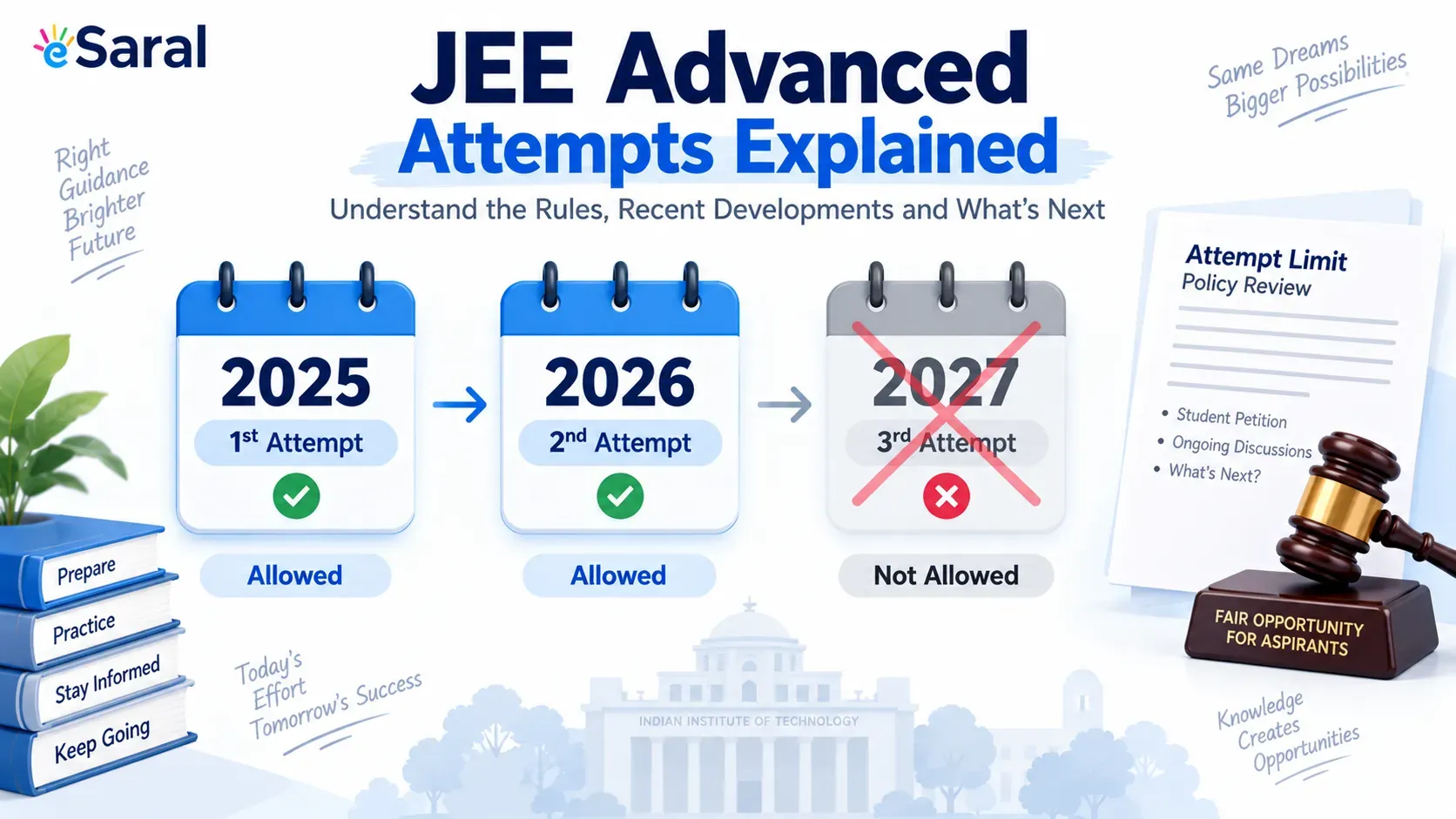
JEE Advanced Attempts: Can You Give It a Third Time? Rules Explained
JEE Advanced attempts: current rule is 2 consecutive years only: full eligibility criteria, the 2025 third-attempt controversy, and the latest 2026 petition news.

Best JEE Preparation App
Best JEE preparation app for Main & Advanced: AI mock tests, live doubt-solving, thousands of practice questions. JEE preparation app for droppers & Class 11-12.
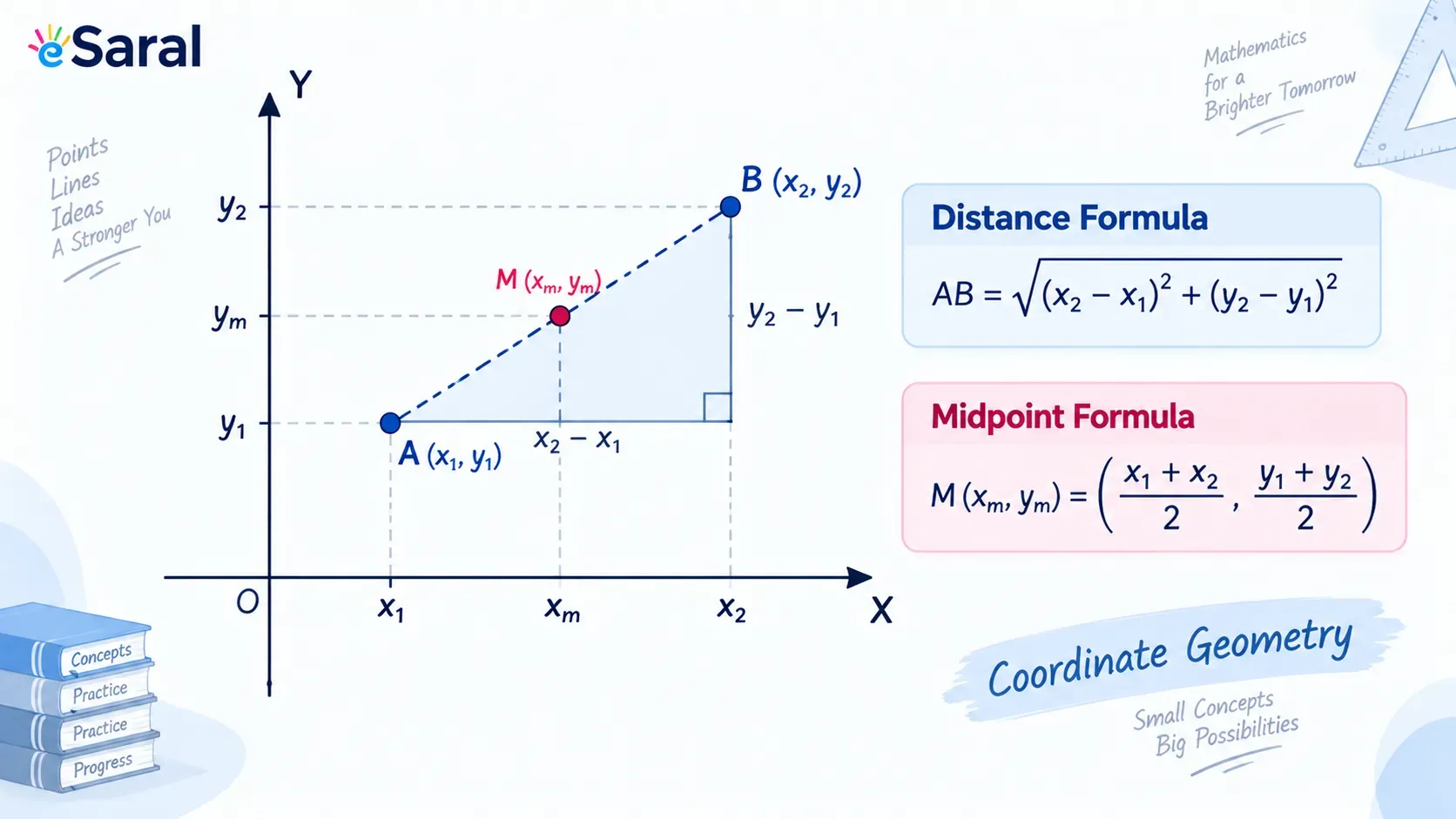
Coordinate Geometry Class 10: Formulas, Notes & Solved Examples
Coordinate geometry class 10: complete CBSE formulas — distance, section, midpoint and area of triangle — with derivation, notes and solved examples.
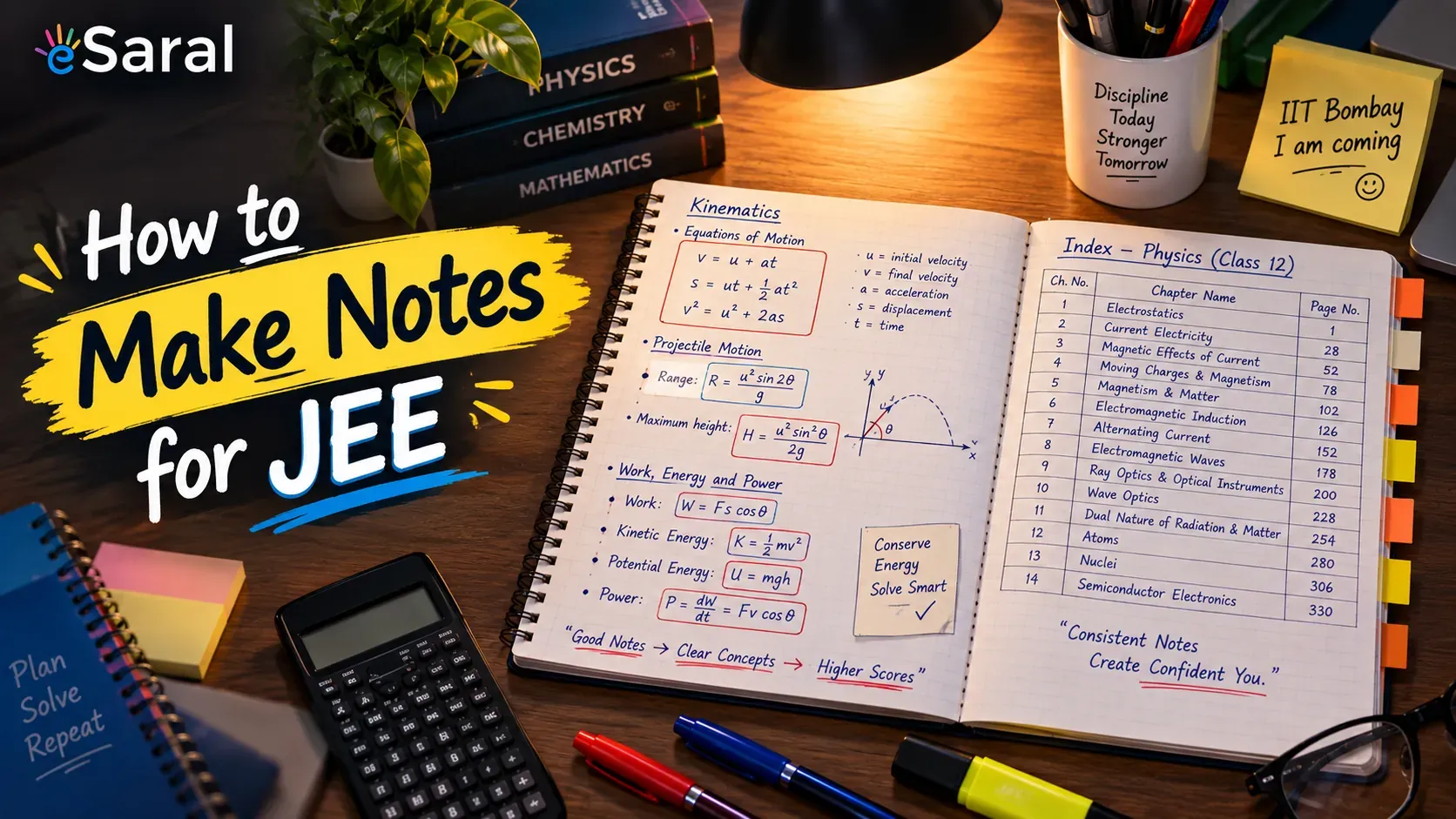
How to make Notes For JEE Smart Notes Strategy of an AIR 41
Learn how to make notes for JEE the way toppers do — indexing, shorthand, and smart short notes for JEE that cut revision time to just 5–7 days.
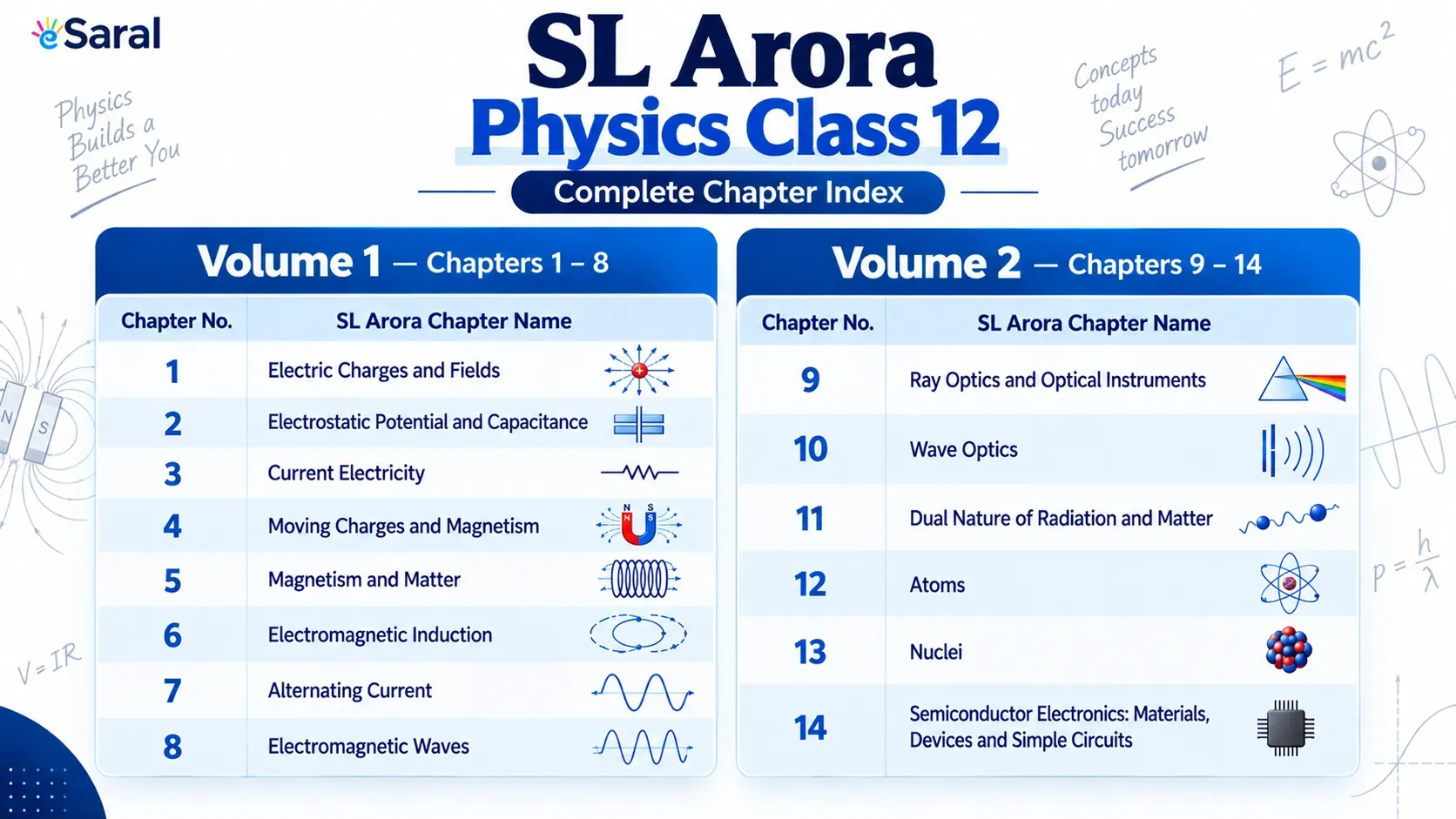
SL Arora Physics Class 12 Index – Chapter List for Volume 1 & 2
SL Arora Physics Class 12 index — complete chapter list for Volume 1 & 2, mapped to NCERT solutions for board, JEE Main, and NEET preparation.