
Sequence and Series Class 11 Notes for IIT JEE

eSaral Academic and Editorial Team
Summary
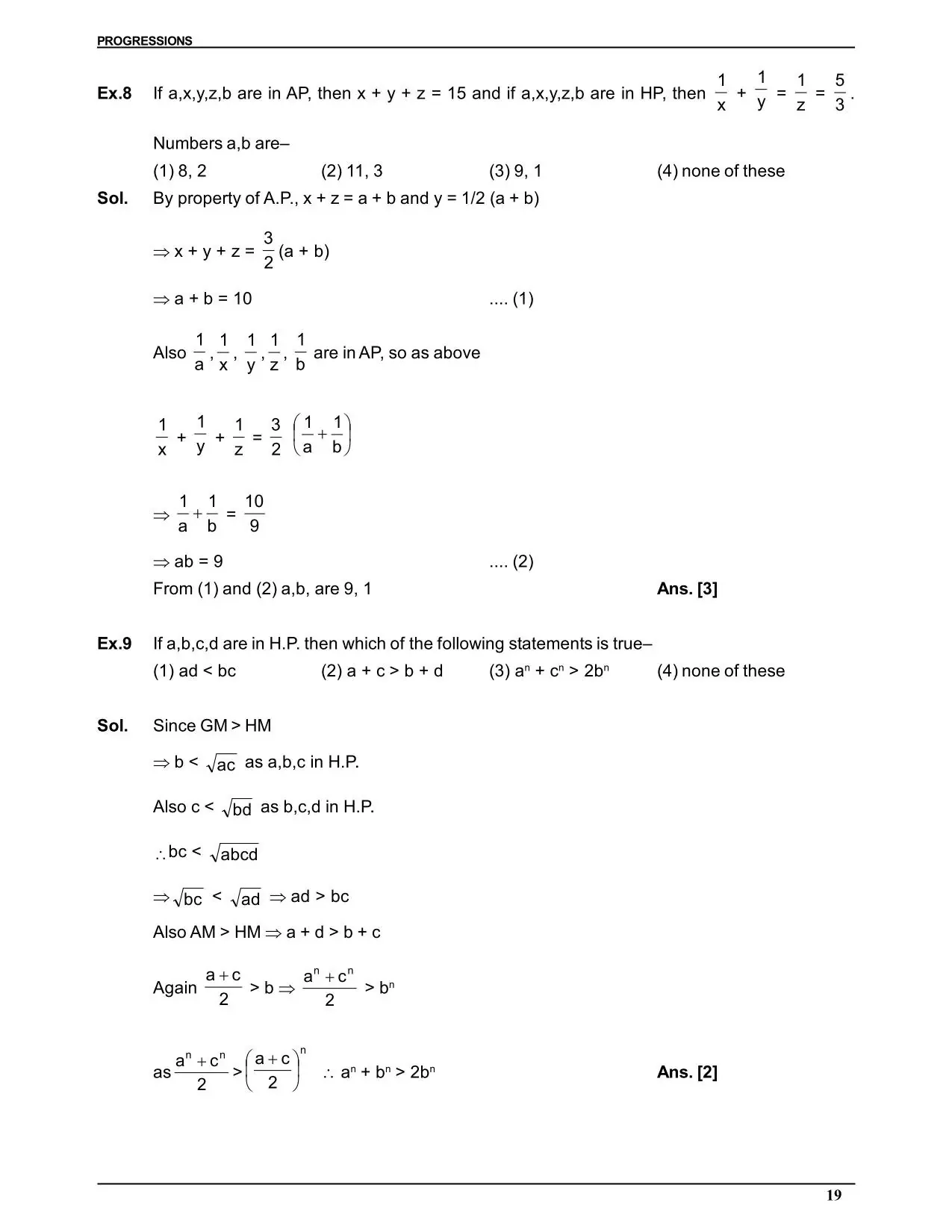
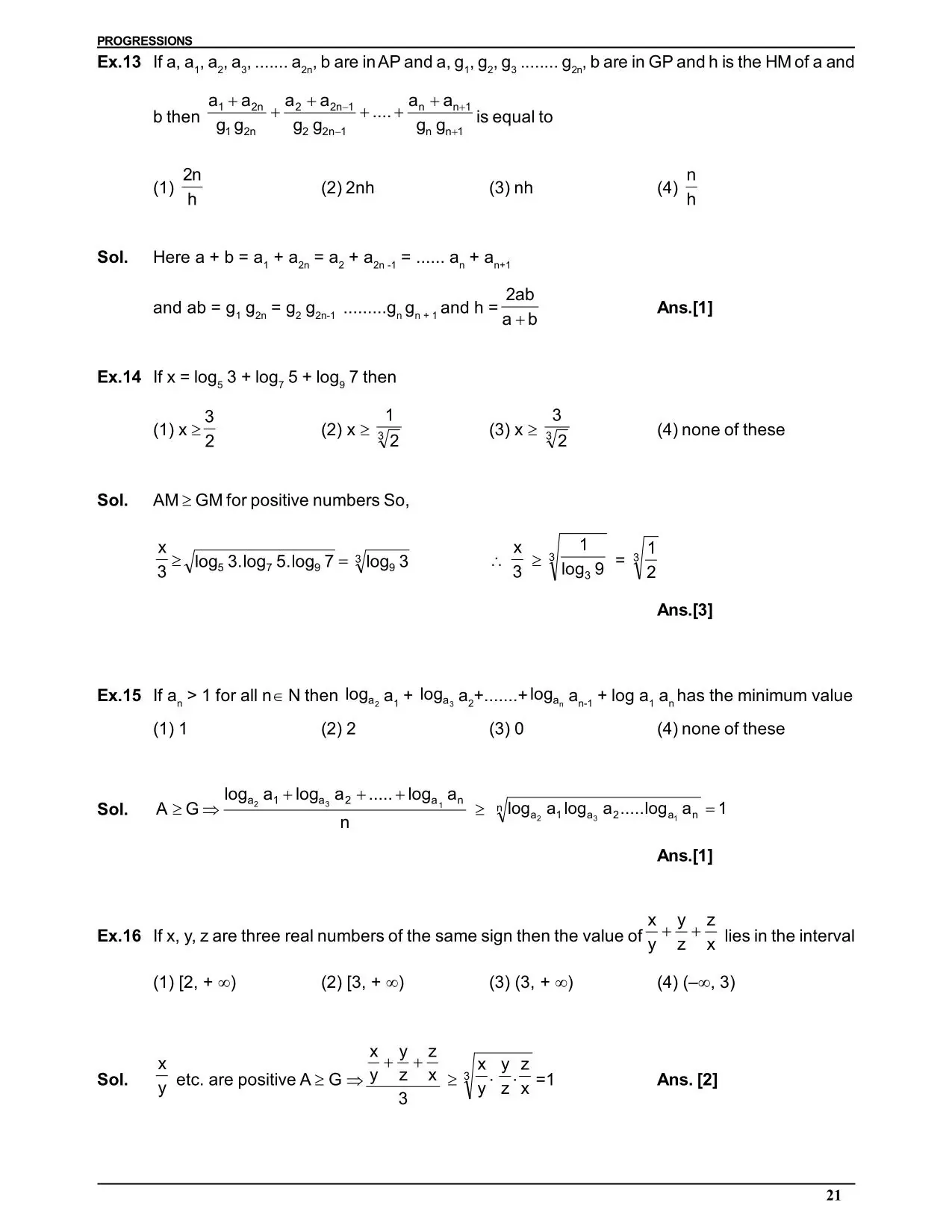
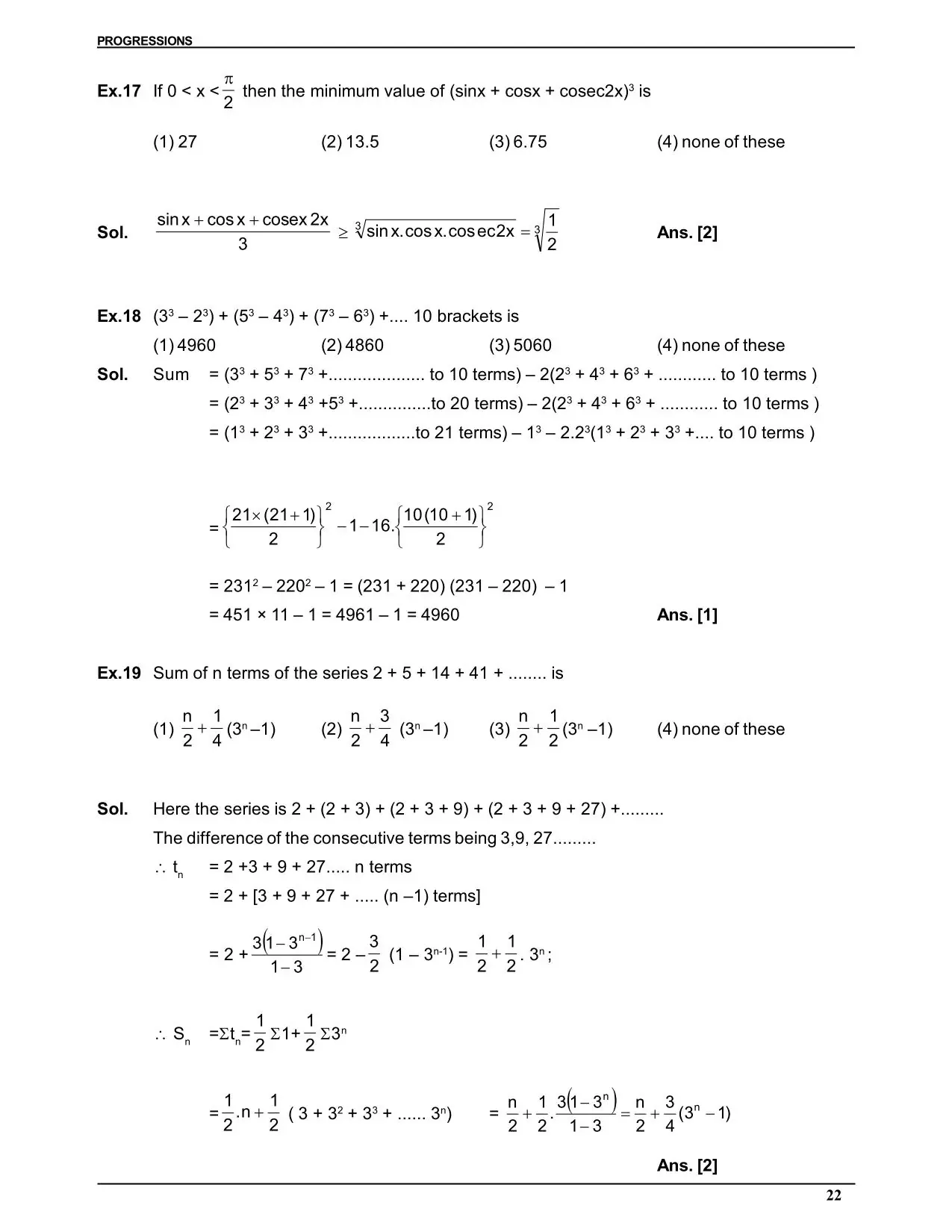
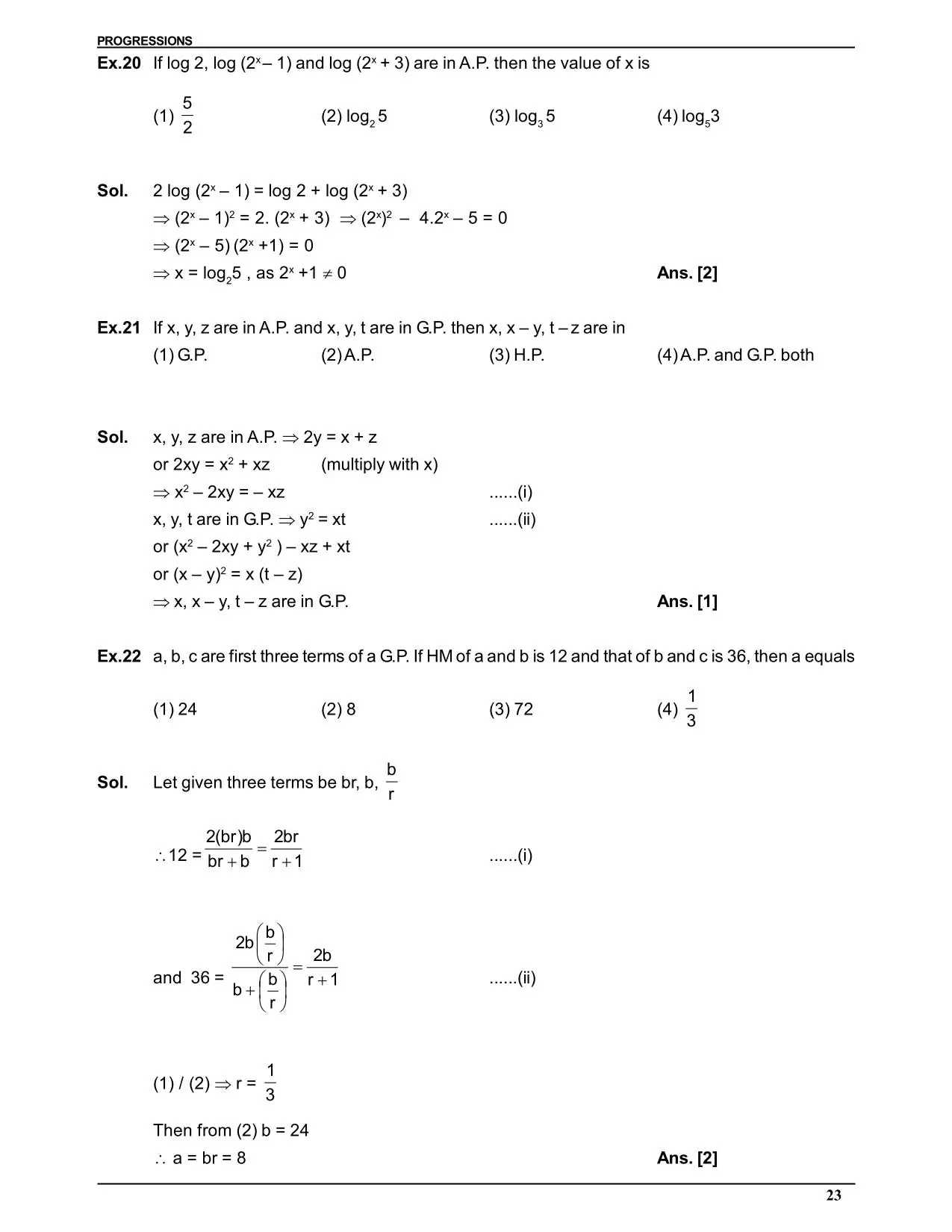
Sequence and Series Class 11 notes cover sequences and series, arithmetic progression (AP), geometric progression (GP), harmonic progression (HP), arithmetic, geometric and harmonic means, the AM–GM–HM relation and the sums of special series. This page gives the formulas, solved examples and handwritten notes for CBSE boards and JEE Main.
In the current NCERT Class 11 Mathematics book, this topic is Chapter 8, Sequences and Series (it was Chapter 9 in older books). The NCERT chapter covers AP, GP, the relation between AM and GM, and the sums of special series. Harmonic progression is not part of the NCERT chapter, but it appears in JEE problems. These Sequence and Series Class 11 Notes cover all of these in one place. For the textbook, see eSaral’s NCERT Class 11 Maths book page, and for all the chapters, see the Class 11 Maths notes.
Sequence and Series Class 11 Notes: Chapter Overview and Syllabus
- Sequences and series, and the general term
- Arithmetic progression (AP) and arithmetic mean
- Geometric progression (GP), geometric mean and the sum of an infinite GP
- Relation between AM and GM, and the harmonic progression and mean (HP and HM)
- Sums of special series: Σn, Σn² and Σn³
- Arithmetico-geometric series (extra reading for JEE)
Check the latest syllabi of CBSE and JEE for the exact list. HP and HM are not in the NCERT chapter, so check the NTA syllabus for JEE Main.
Tip from the eSaral Maths team: Most progression problems become easy if you choose the terms in a smart way. For three terms in AP, take a − d, a, a + d. For three terms in GP, take a/r, a, ar. The sum or the product then simplifies.
India's Best Exam Preparation for Class 11th - Download Now
Sequence and Series Class 11 Notes
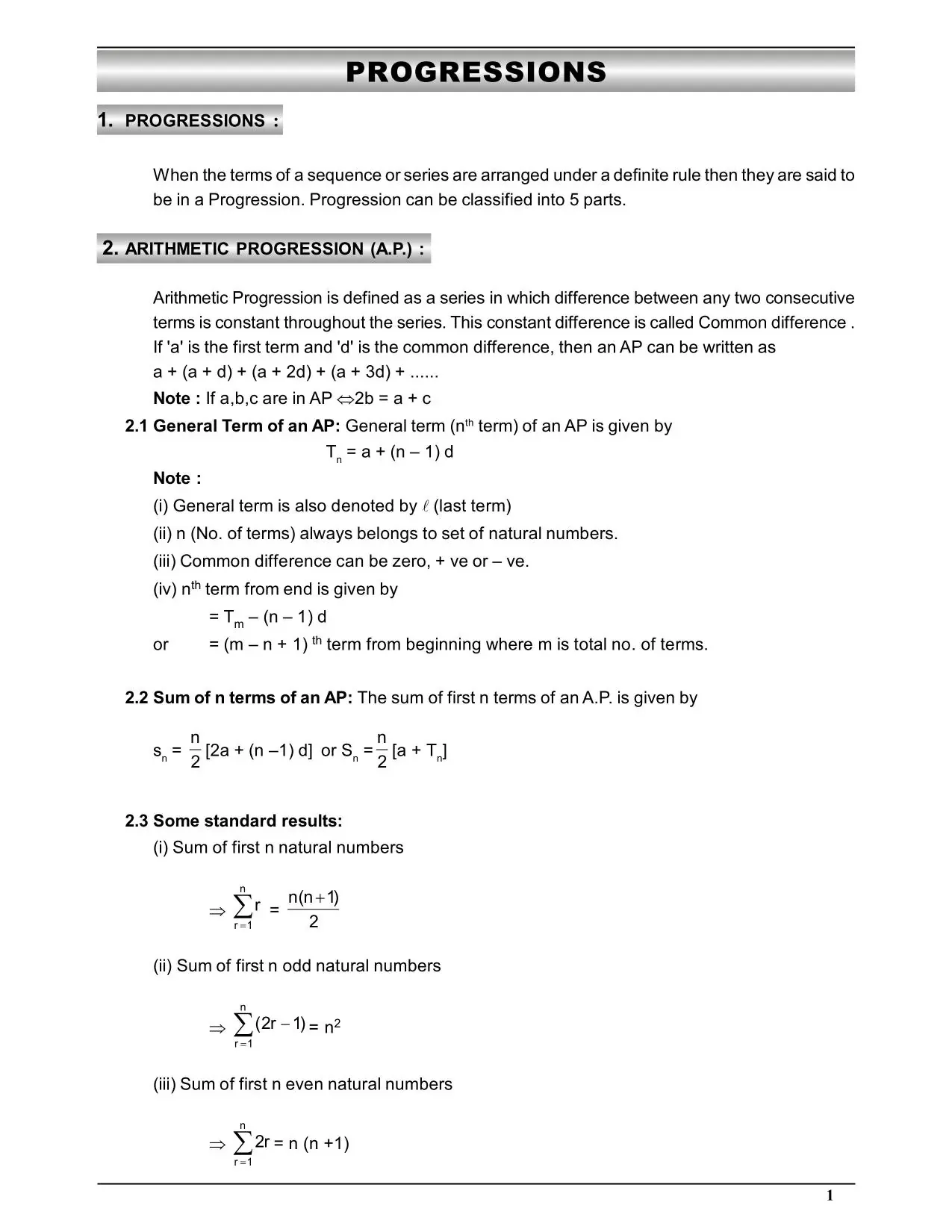
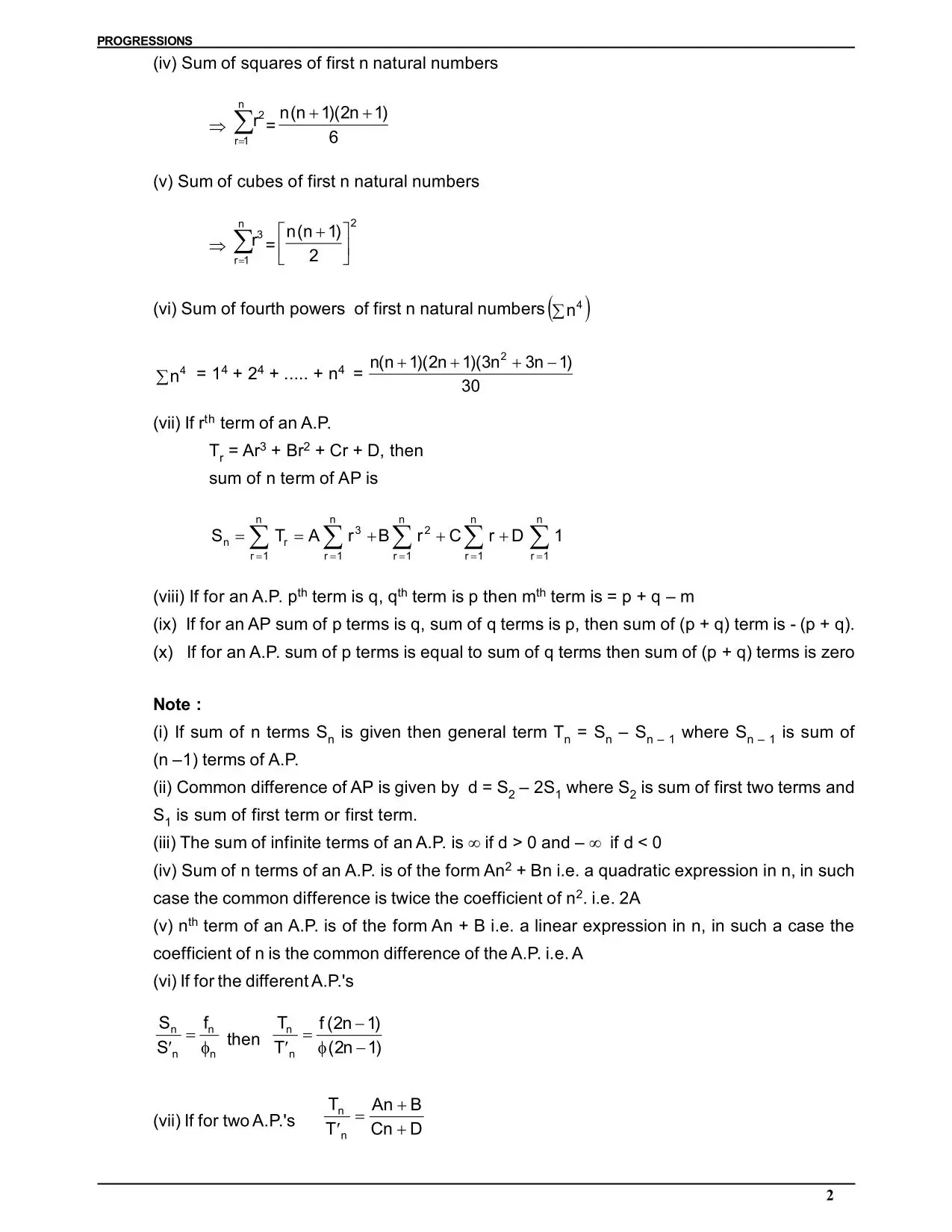
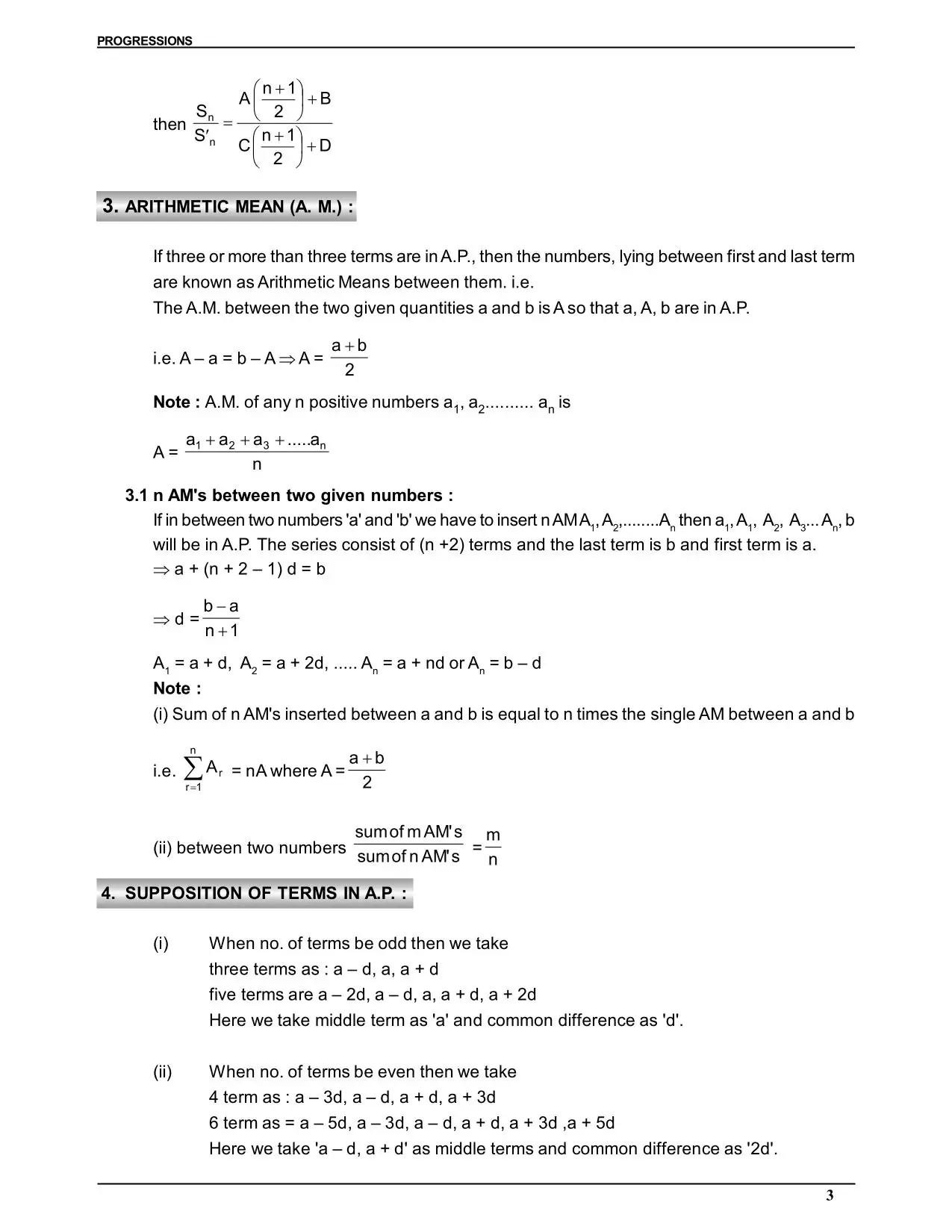
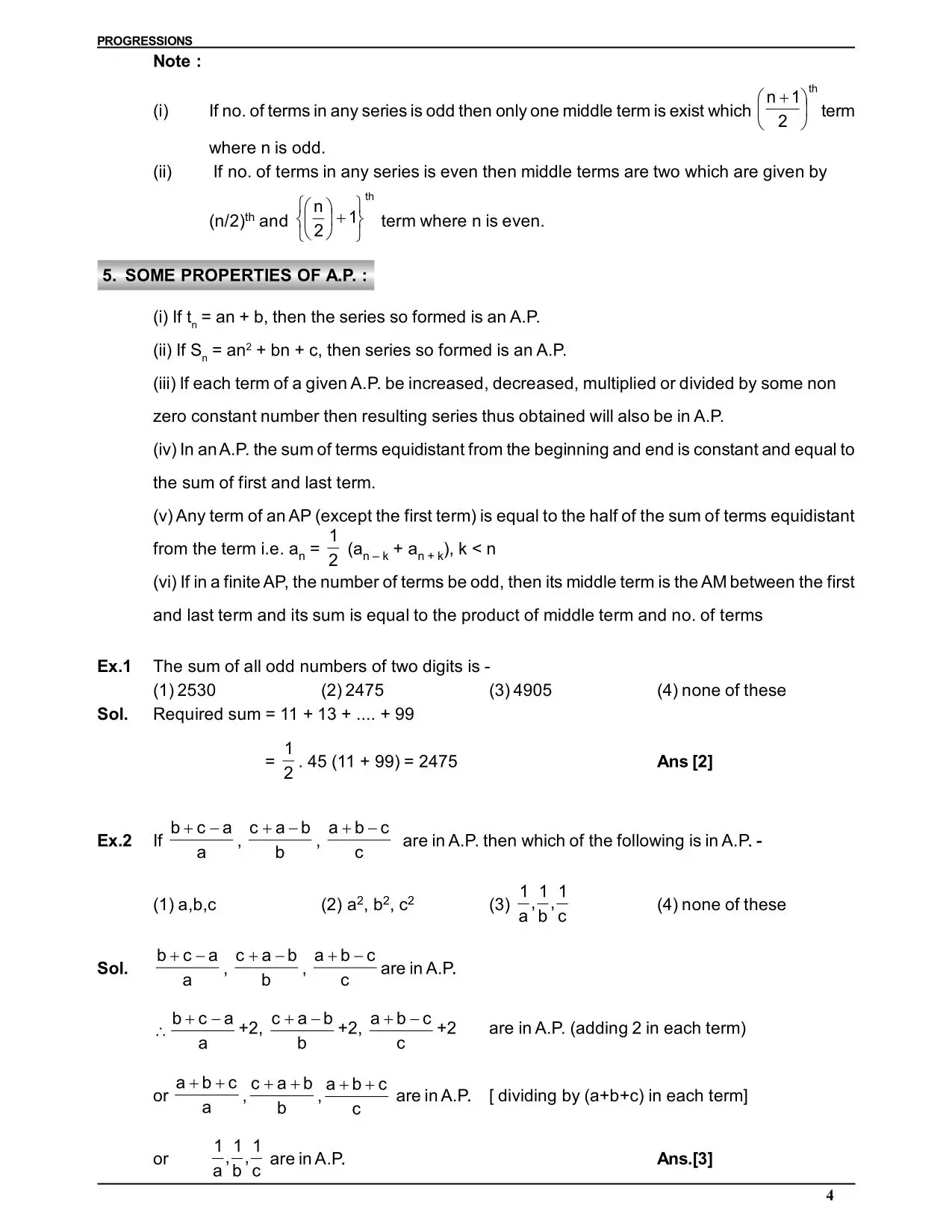
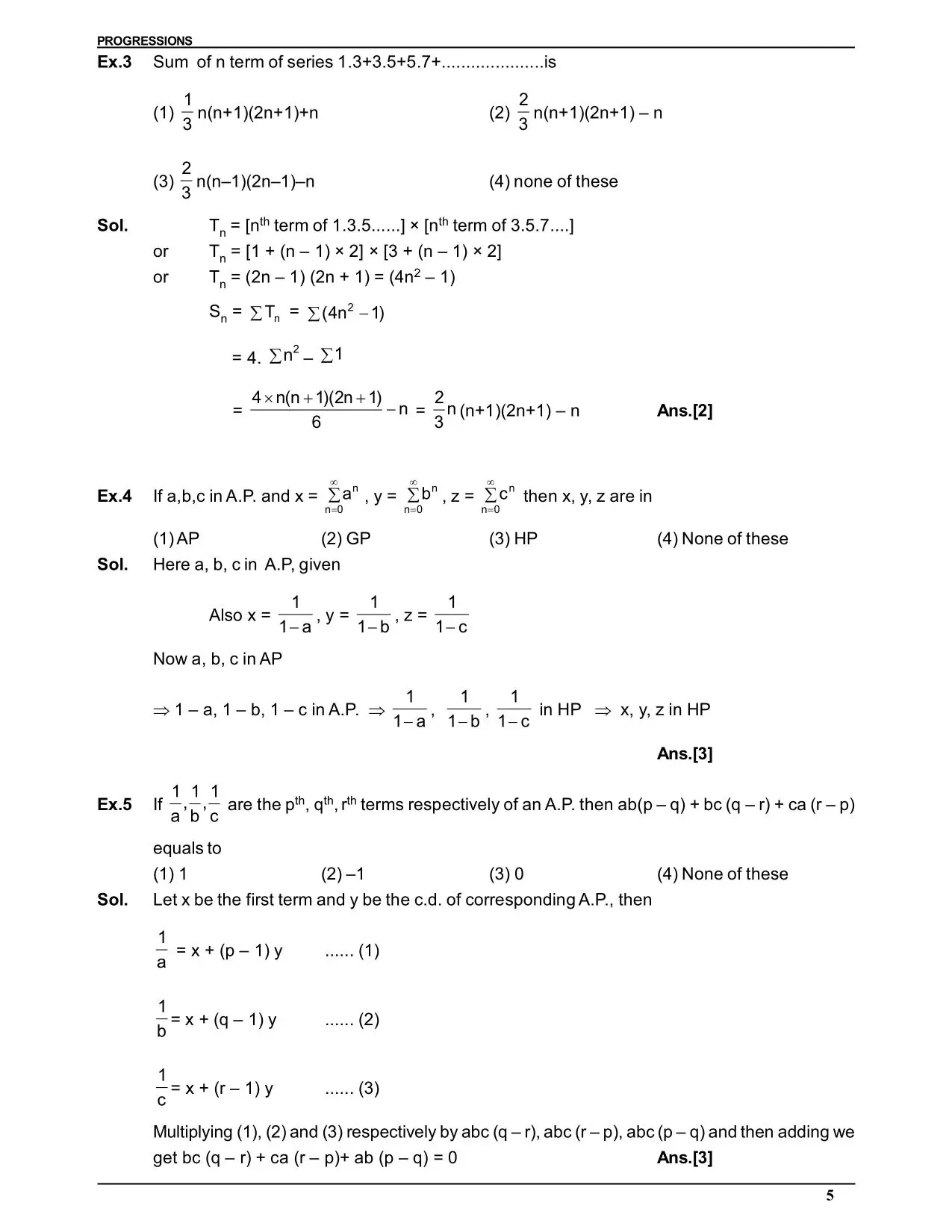
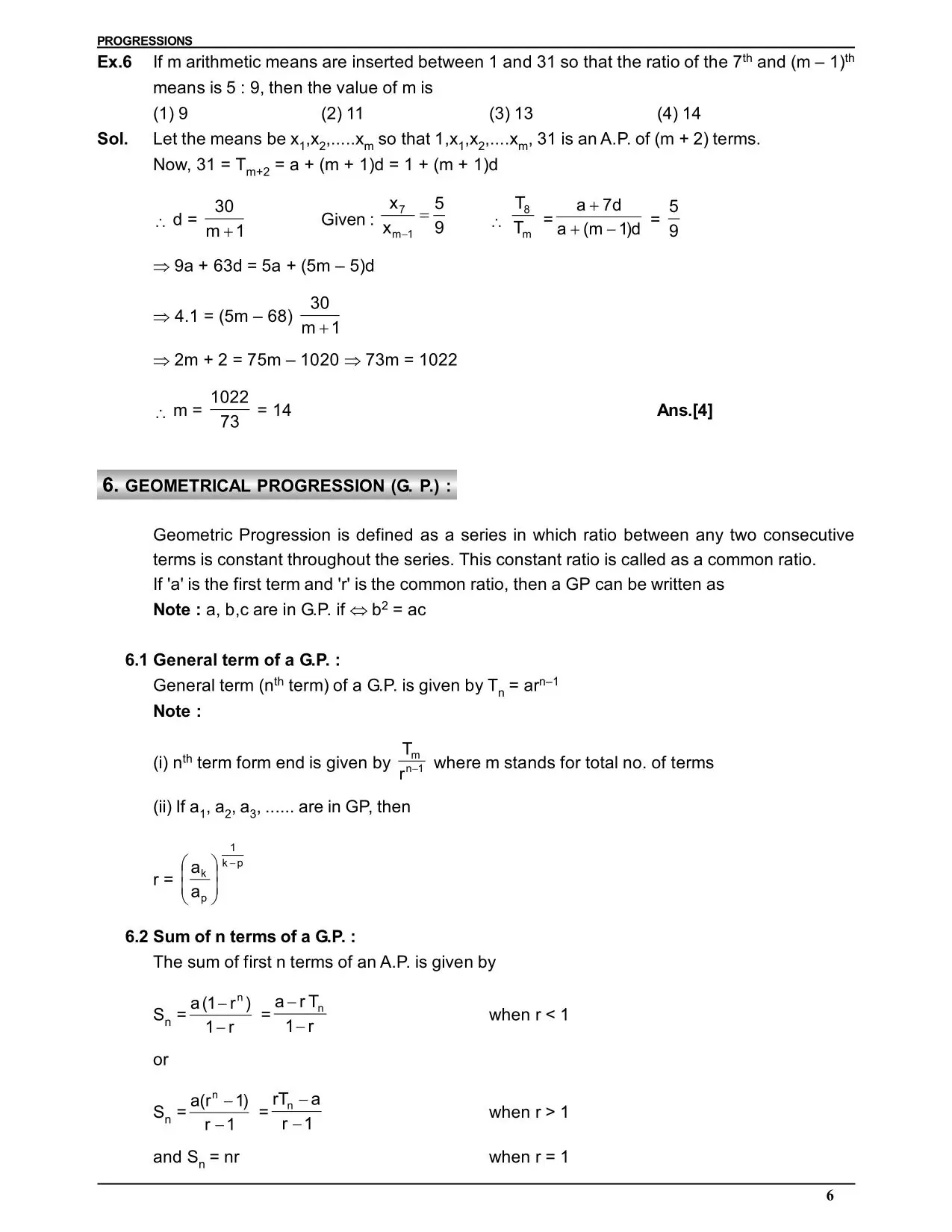
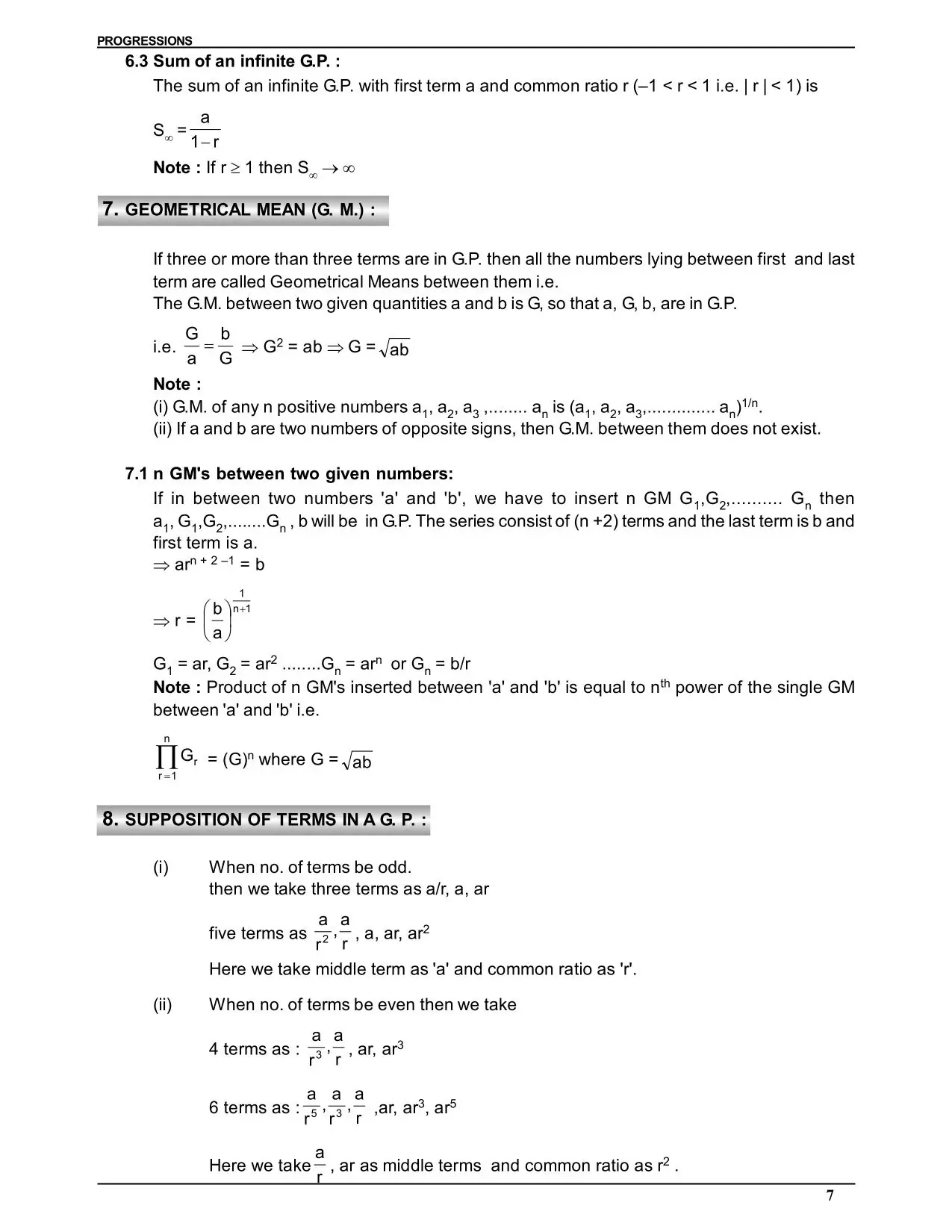
India's Best Exam Preparation for Class 11th - Download Now
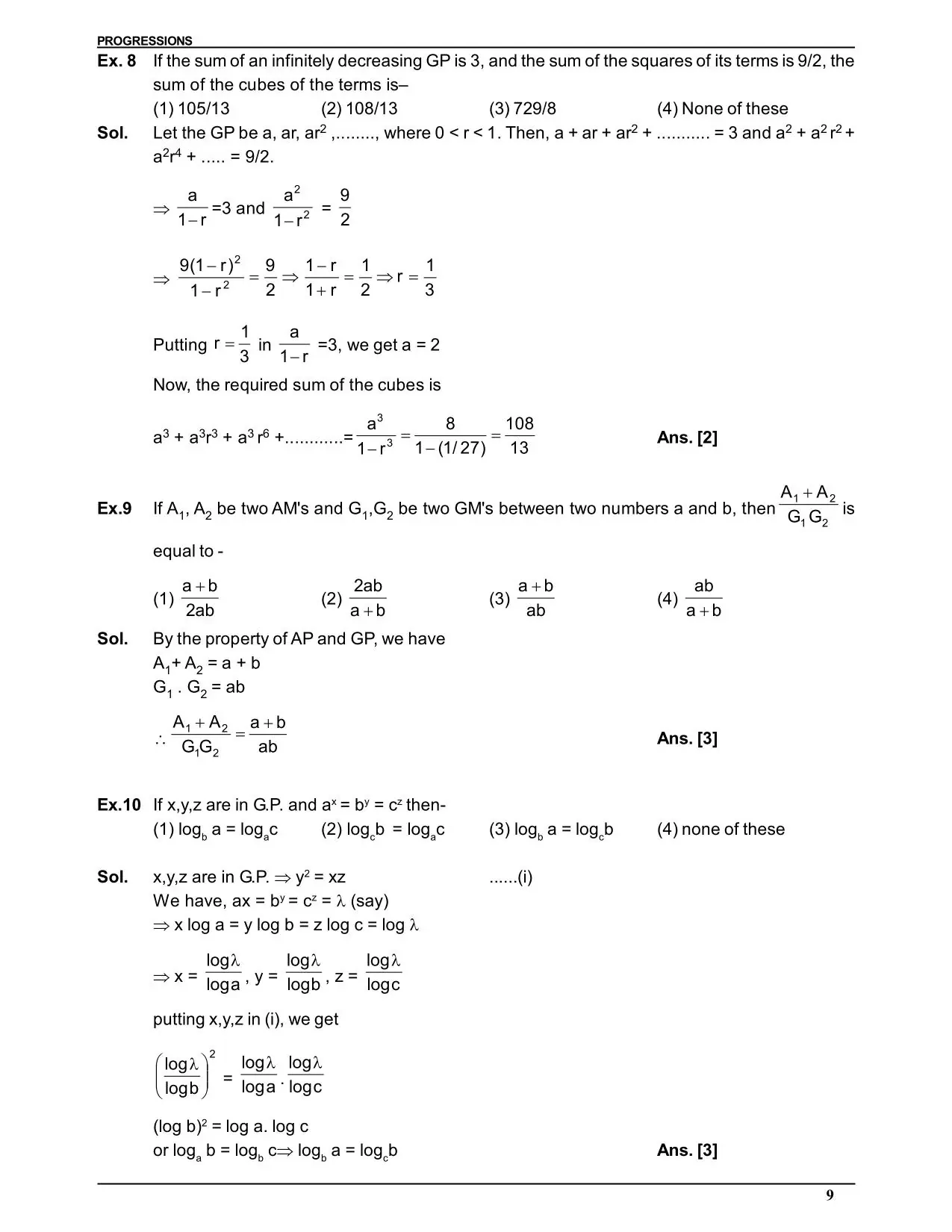
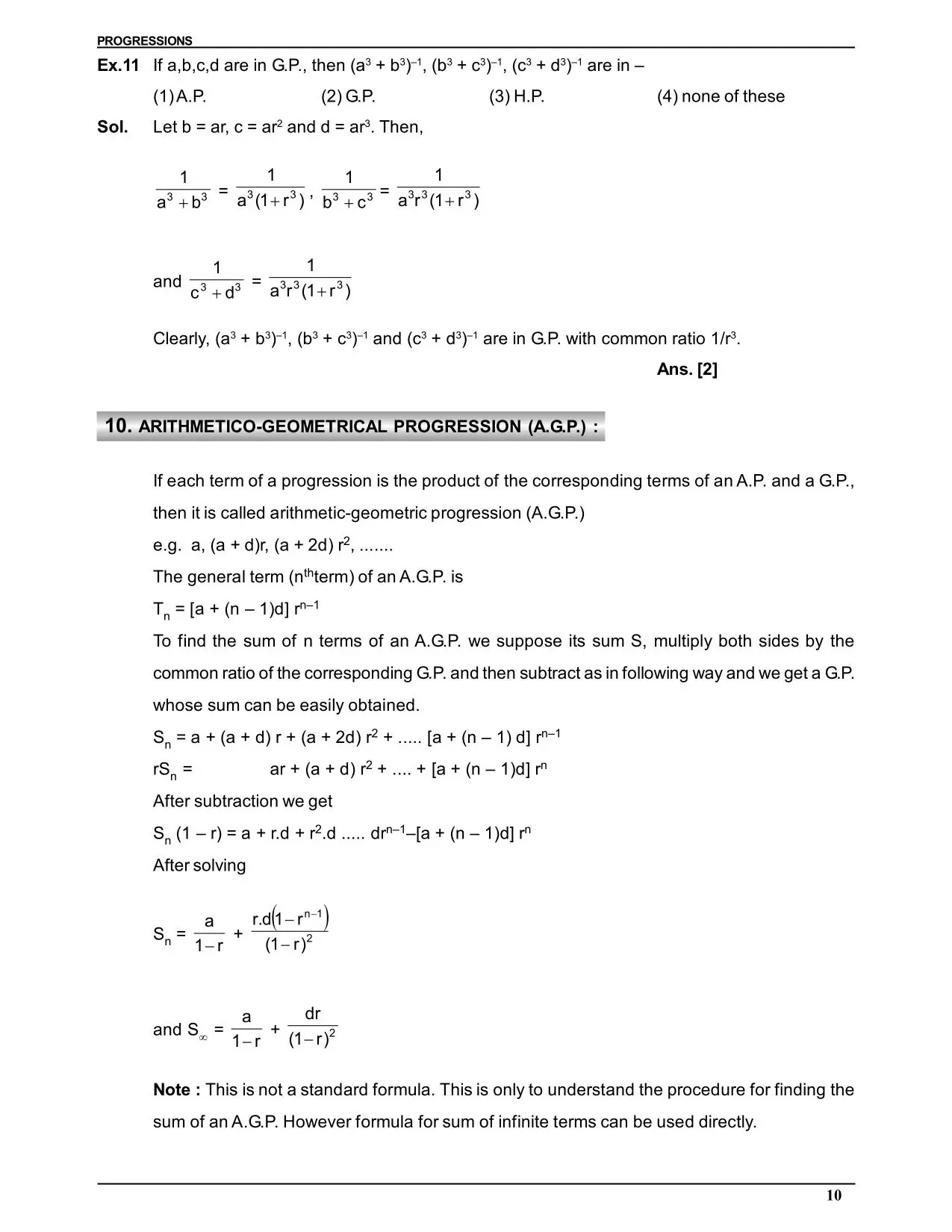
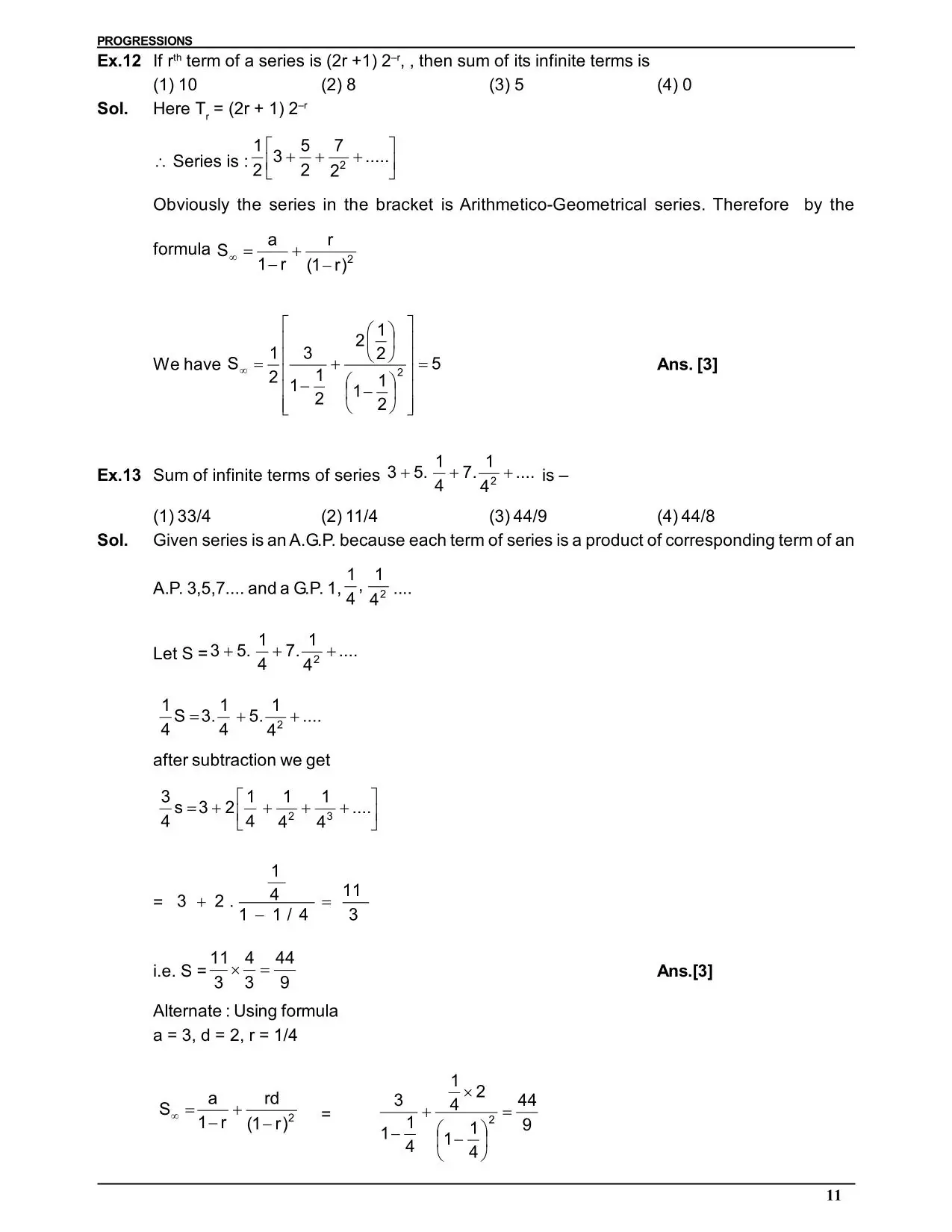
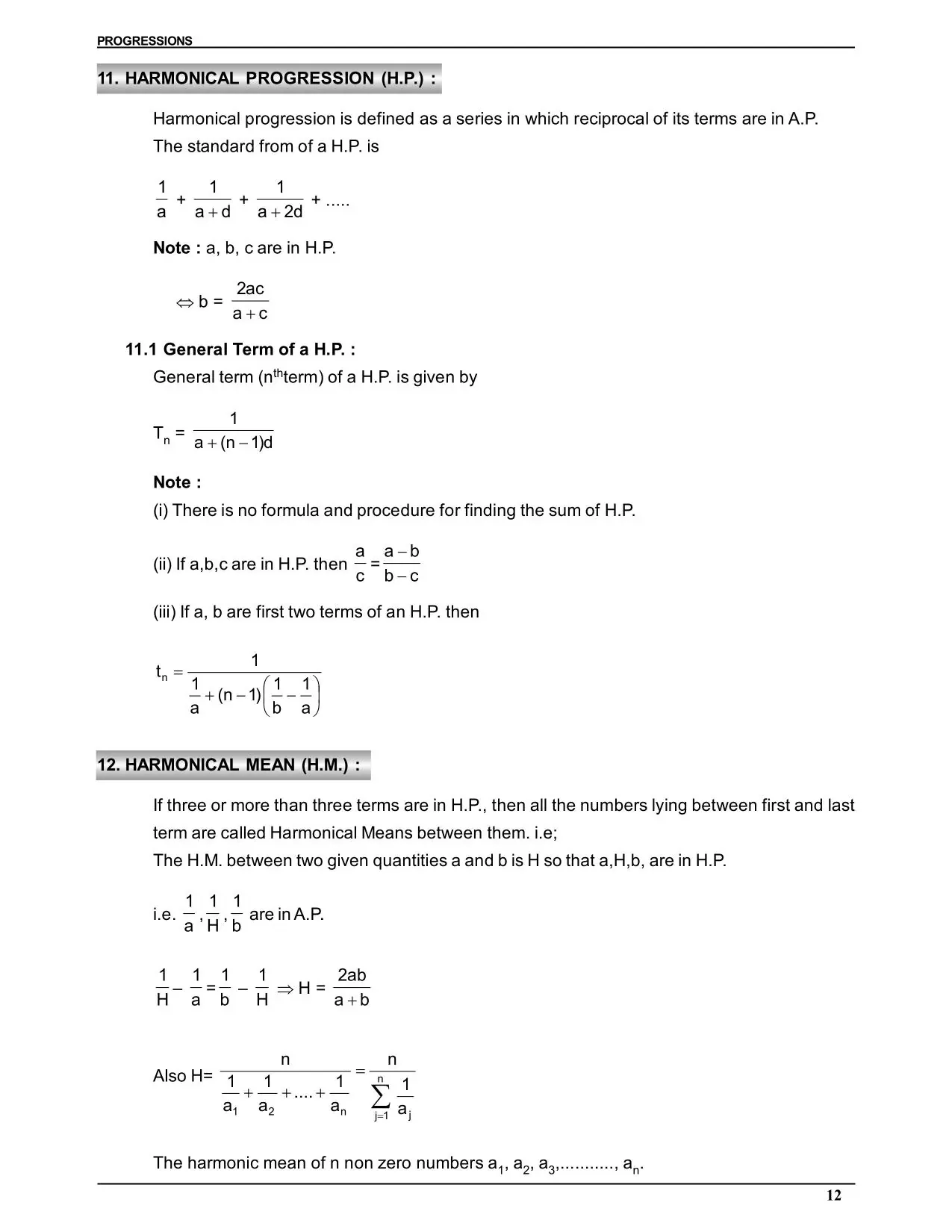
India's Best Exam Preparation for Class 11th - Download Now
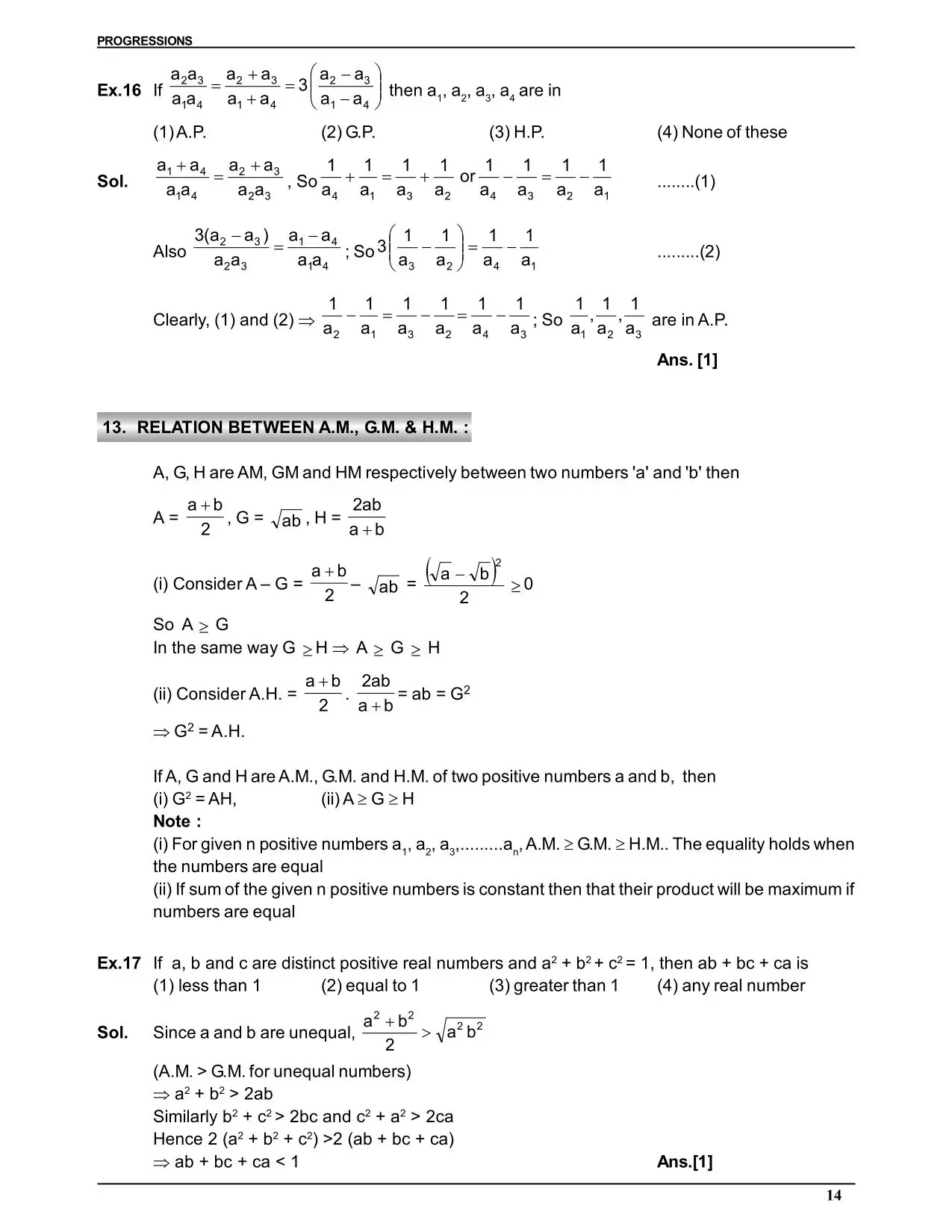
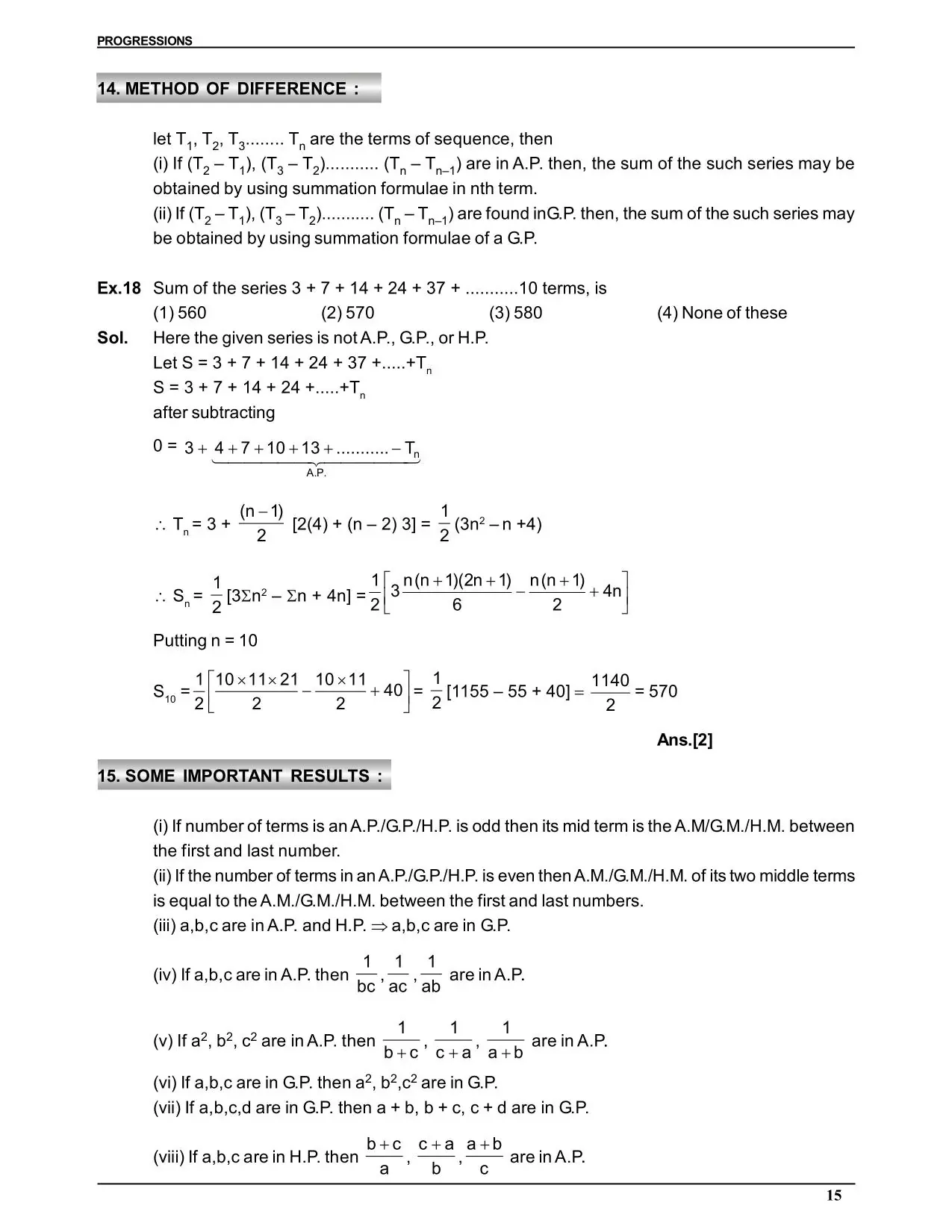
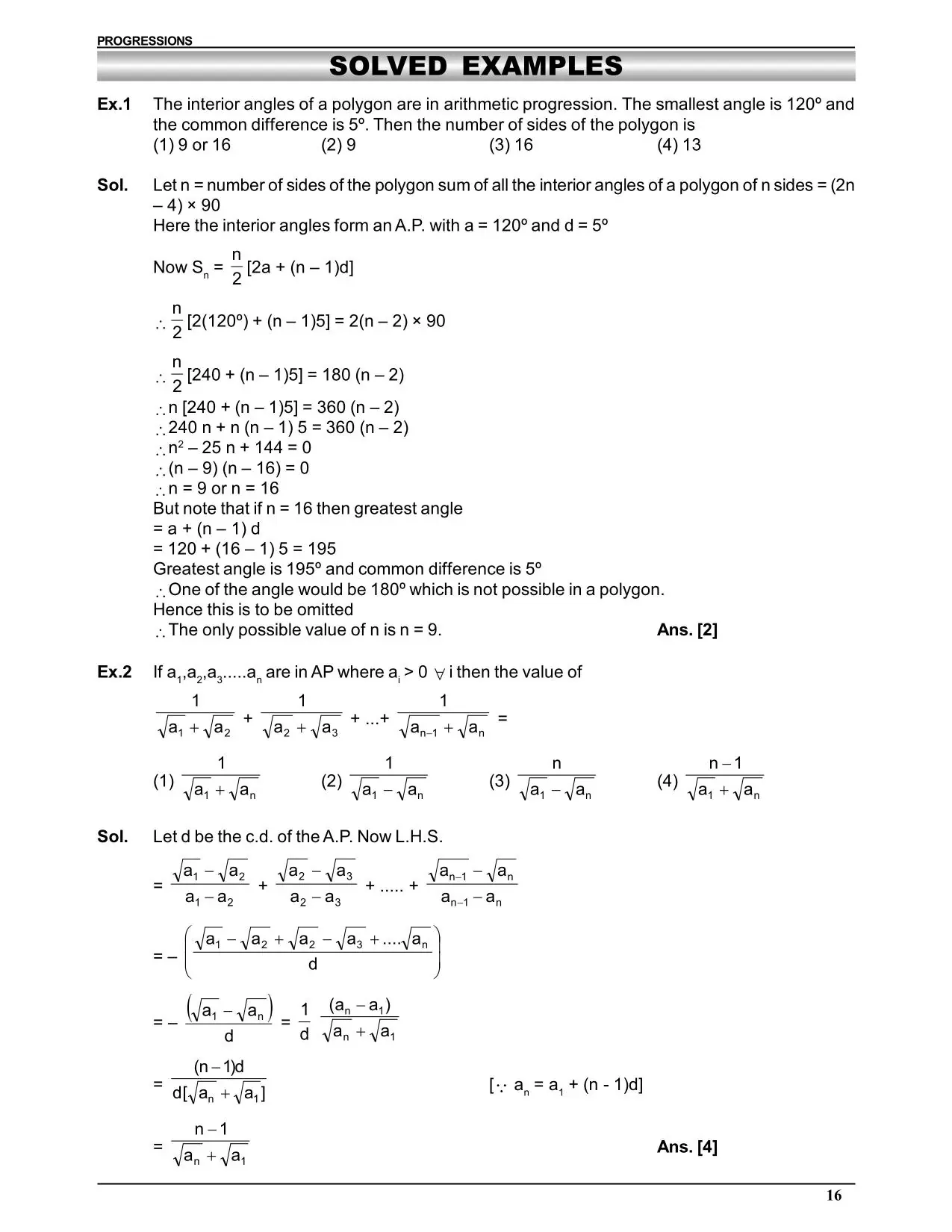
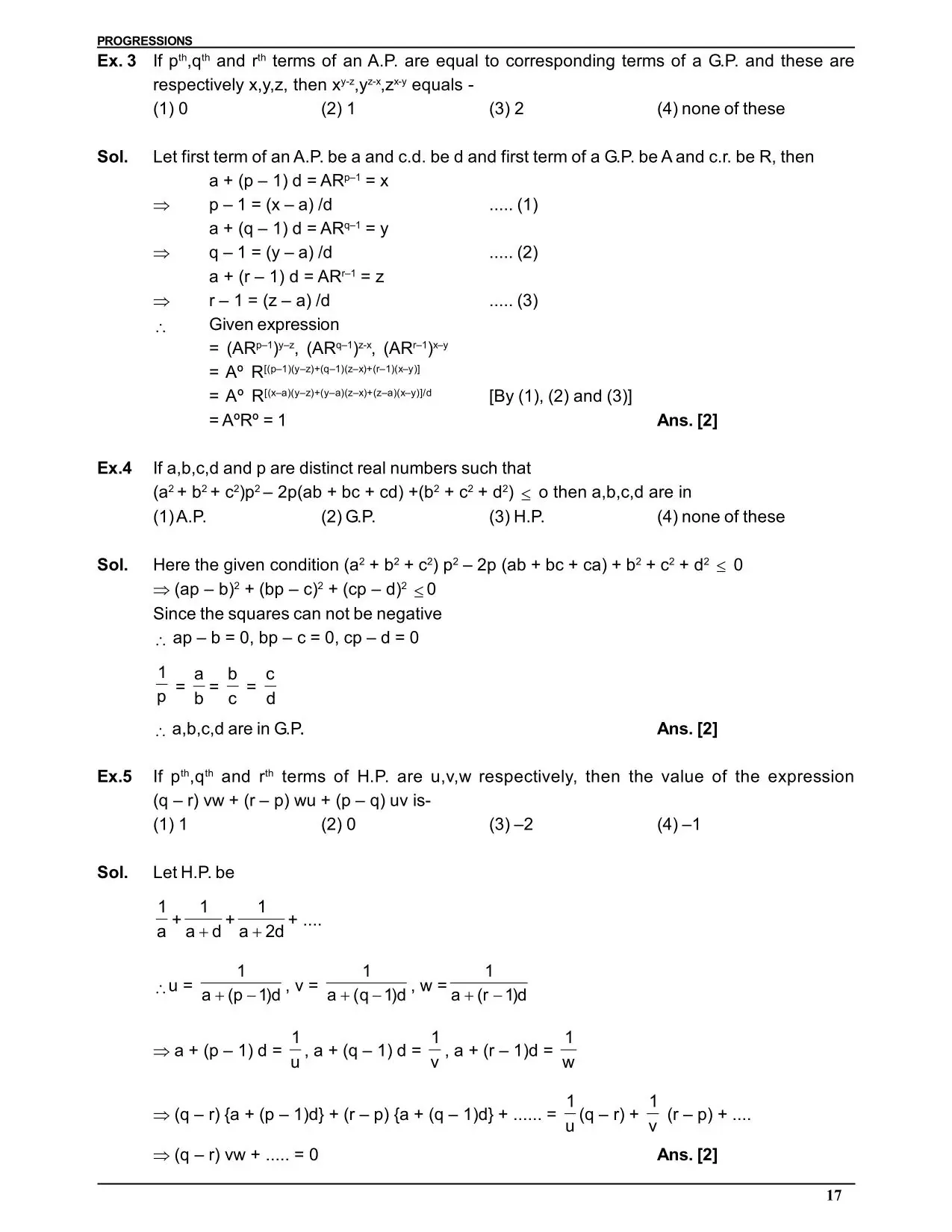
India's Best Exam Preparation for Class 11th - Download Now
India's Best Exam Preparation for Class 11th - Download Now
India's Best Exam Preparation for Class 11th - Download Now
Sequence vs Series in Sequence and Series Class 11 Notes
A sequence is an ordered list of numbers that follows a rule, such as 2, 4, 6, 8. A series is the sum of the terms of a sequence, such as 2 + 4 + 6 + 8 = 20. Every series comes from a sequence. In exams, problems on a sequence ask for the nth term (Tₙ), and problems on a series ask for the sum (Sₙ).
Arithmetic Progression (AP) in Sequence and Series Class 11 Notes
An AP is a sequence in which the difference between consecutive terms is constant. This constant is the common difference (d).
Quantity | Formula |
|---|---|
nth term | Tₙ = a + (n − 1)d |
Sum of n terms | Sₙ = (n/2)[2a + (n − 1)d] = (n/2)(a + l), where l is the last term |
Term from the sum | Tₙ = Sₙ − Sₙ₋₁ |
Condition for a, b, c in AP | 2b = a + c |
Arithmetic mean of a and b | A = (a + b)/2 |
Inserting n AMs between a and b | d = (b − a)/(n + 1) |
Useful choices of terms: three terms a − d, a, a + d; four terms a − 3d, a − d, a + d, a + 3d. The sum of the n AMs inserted between a and b equals n times the AM of a and b.
Geometric Progression (GP) in Sequence and Series Class 11 Notes
A GP is a sequence in which the ratio of consecutive terms is constant. This constant is the common ratio (r).
Quantity | Formula |
|---|---|
nth term | Tₙ = arⁿ⁻¹ |
Sum of n terms (r ≠ 1) | Sₙ = a(rⁿ − 1)/(r − 1) = a(1 − rⁿ)/(1 − r) |
Sum of n terms (r = 1) | Sₙ = na |
Sum to infinity (|r| < 1) | S∞ = a/(1 − r) |
Condition for a, b, c in GP | b² = ac |
Geometric mean of a and b | G = √(ab) |
Inserting n GMs between a and b | r = (b/a)^(1/(n + 1)) |
Useful choices of terms: three terms a/r, a, ar; five terms a/r², a/r, a, ar, ar². The infinite sum exists only if |r| < 1. If |r| ≥ 1, the series does not converge.
Harmonic Progression (HP) and Harmonic Mean in Sequence and Series Class 11 Notes
A sequence is in HP if the reciprocals of its terms are in AP. To solve an HP problem, take the reciprocals, solve it as an AP, and then take the reciprocal again.
- nth term of an HP: Tₙ = 1/[a′ + (n − 1)d′], where a′ and d′ belong to the AP of reciprocals.
- Harmonic mean of a and b: H = 2ab/(a + b).
Relation Between AM, GM and HM in Sequence and Series Class 11 Notes
For positive numbers, AM ≥ GM ≥ HM, and equality holds only when all the numbers are equal. For two positive numbers a and b:
- A = (a + b)/2, G = √(ab), H = 2ab/(a + b)
- G² = A × H, so the three means are in GP
- A ≥ G ≥ H
The relation G² = A × H holds for two numbers only, not for more than two.
Sums of Special Series in Sequence and Series Class 11 Notes
Series | Sum |
|---|---|
1 + 2 + 3 + … + n (Σn) | n(n + 1)/2 |
1² + 2² + … + n² (Σn²) | n(n + 1)(2n + 1)/6 |
1³ + 2³ + … + n³ (Σn³) | [n(n + 1)/2]² |
Arithmetico-Geometric Series (JEE)
For the series a + (a + d)r + (a + 2d)r² + …, the sum to infinity for |r| < 1 is S∞ = a/(1 − r) + dr/(1 − r)². To find a finite sum, multiply the series by r, subtract and use the GP formula.
Solved Examples from Sequence and Series Class 11 Notes
Example 1 (AP): The 3rd term of an AP is 7 and the 7th term is 15. Find T₁₀ and S₁₀.
a + 2d = 7 and a + 6d = 15, so 4d = 8, d = 2 and a = 3. T₁₀ = 3 + 9 × 2 = 21. S₁₀ = (10/2)(3 + 21) = 120.
Example 2 (GP): Find the sum of the first 6 terms of 2, 6, 18, …
a = 2 and r = 3. S₆ = 2(3⁶ − 1)/(3 − 1) = 3⁶ − 1 = 728.
Example 3 (infinite GP): Express 0.666… as a fraction.
0.666… = 0.6 + 0.06 + 0.006 + …, a GP with a = 0.6 and r = 0.1. S∞ = 0.6/(1 − 0.1) = 2/3.
Example 4 (inserting means): Insert 3 AMs between 2 and 10, and 3 GMs between 1 and 16.
For AMs: d = (10 − 2)/4 = 2, so the means are 4, 6, 8. For GMs: r = 16^(1/4) = 2, so the means are 2, 4, 8.
Example 5 (AM, GM and HM): For the numbers 4 and 9, find A, G and H and verify G² = A × H.
A = 6.5, G = √36 = 6 and H = 2 × 36/13 = 72/13. A × H = 6.5 × 72/13 = 36 = G².
Example 6 (special series): Find 1² + 2² + … + 10² and 1³ + 2³ + … + 10³.
Σn² = 10 × 11 × 21/6 = 385. Σn³ = (10 × 11/2)² = 55² = 3025.
Example 7 (arithmetico-geometric series): Find 1 + 2/2 + 3/4 + 4/8 + … to infinity.
Here a = 1, d = 1 and r = 1/2. S∞ = 1/(1 − 1/2) + (1 × 1/2)/(1 − 1/2)² = 2 + 2 = 4.
Common Mistakes in Sequence and Series Class 11 Notes Problems
Mistake | Correct approach |
|---|---|
Using Tₙ = a + nd | The nth term is a + (n − 1)d |
Using the sum to infinity when |r| ≥ 1 | S∞ = a/(1 − r) only when |r| < 1 |
Treating an HP as an AP | Take reciprocals first, solve as an AP, and then take the reciprocal again |
Using G² = A × H for more than two numbers | The relation holds for two numbers only |
Wrong number of means | Inserting n means gives n + 1 gaps: d = (b − a)/(n + 1) |
Forgetting the case r = 1 in the GP sum | For r = 1, Sₙ = na |
How to Study Sequence and Series Class 11 Notes
- Read the NCERT chapter first, and solve the examples and exercises. Check your answers with eSaral’s NCERT Solutions for Class 11 Maths Chapter 8.
- Write a one-page formula sheet for AP, GP, HP, the means and the special series.
- Practise problems with the smart choices of terms (a − d, a, a + d and a/r, a, ar).
- Revise the other Class 11 formula sheets too, such as the trigonometry formulas for Class 11, and then solve eSaral’s JEE Main chapter-wise PYQs on this chapter.
eSaral helps the students by providing them an easy way to understand concepts and attractive study material for IIT JEE, which includes the video lectures & Study Material designed by expert IITian Faculties of KOTA. eSaral provides a series of detailed chapter-wise notes for all the Subjects of class 11th and 12th. These notes will also help you in your IIT JEE preparation. We hope these Mathematics Notes for Class 11 will be helpful for you to understand the important topics and help in remembering the key points from an exam point of view. Get Mathematics Notes for free video lectures and complete Course material for Class 10, JEE, and NEET. Download the eSaral APP. About eSaral: At eSaral, we are offering a complete platform for IIT-JEE & NEET preparation. The main mission behind eSaral is to provide education to each student in India by eliminating the Geographic and Economic factors, as a nation’s progress and development depend on the availability of quality education to each and every one. With the blend of education & technology, the eSaral team made the learning personalized & adaptive for everyone. eSaral Making Learning affordable, Accessible, and thoughtful for all.
Worth cross-linking to the trigonometry formula page here too, since students often bookmark formula sheets chapter by chapter.
Frequently Asked Questions
How do you find the nth term of a GP?
The nth term of a GP is Tₙ = arⁿ⁻¹, where a is the first term and r is the common ratio. Find r by dividing any term by the term before it, and check that the ratio is the same throughout. These Sequence and Series Class 11 notes on eSaral include examples.
What are the most important formulas in sequence and series for JEE Main?
The key formulas are Tₙ and Sₙ of an AP, Tₙ and Sₙ of a GP including the infinite GP, the relation AM ≥ GM ≥ HM, and Σn, Σn² and Σn³. In the Sequence and Series Class 11 Notes, learn these first, and then practise inserting means and special series.
What is the difference between a sequence and a series?
A sequence is an ordered list of numbers that follows a rule, such as 2, 4, 6, 8. A series is the sum of the terms, such as 2 + 4 + 6 + 8 = 20. Sequence problems usually ask for Tₙ, and series problems ask for Sₙ.
How do you insert n arithmetic means between two numbers?
For n AMs between a and b, the common difference is d = (b − a)/(n + 1), and the means are a + d, a + 2d, …, a + nd. For example, 3 AMs between 2 and 10: d = 2, so the means are 4, 6 and 8.
What is the sum of an infinite GP, and when does it exist?
The sum is S∞ = a/(1 − r), and it exists only when |r| < 1. If |r| ≥ 1, the series diverges. For example, 1 + 1/2 + 1/4 + … = 2.
Is harmonic progression in the Class 11 syllabus?
HP is not in the NCERT Sequences and Series chapter, so it is not needed for CBSE boards. It is useful for JEE problems on AM, GM and HM. In Sequence and Series Class 11 notes, the standard method is to take the reciprocals and solve the problem as an AP. Check the NTA syllabus for the exact JEE Main list.
What is the relation between AM, GM and HM?
For positive numbers, AM ≥ GM ≥ HM. For two numbers a and b, G² = A × H, so the three means are in GP. Equality holds only when the numbers are equal.
Which chapter number is Sequence and Series in Class 11 Maths?
In the current NCERT Class 11 Mathematics book, it is Chapter 8, Sequences and Series. In older books, it was Chapter 9. These Sequence and Series Class 11 notes follow the chapter name.
Where can I find more Class 11 Maths notes on eSaral?
eSaral has chapter-wise Class 11 Maths notes, NCERT solutions and chapter-wise JEE Main PYQs, linked with these Sequence and Series Class 11 Notes on this page.
Team eSaral
eSaral Academic and Editorial Team
Team eSaral is the collective author profile for educational content created by eSaral’s teachers and academic contributors. The team draws on expertise from IIT graduates, doctors, experienced educators and subject specialists to develop resources for JEE, NEET and school students. Our articles aim to explain concepts clearly and help students study with confidence.
Related Posts

BITSAT 2027: Registration Date, Exam Date, Syllabus, Eligibility, Pattern & Fees
BITSAT 2027 exam dates, registration timeline, eligibility criteria, exam pattern, marking scheme, syllabus and fees in one page.

BITSAT Previous Year Question Paper PDF (2017-2026)
Download BITSAT previous year question papers PDF from 2017 to 2026,session-wise. Memory-based papers,exam pattern, paper analysis and how to practise

CBSE Class 10 Date Sheet 2027: Expected Exam Dates, Release Date, Admit Card & Result Timeline
CBSE Class 10 date sheet 2027 is awaited. See the expected exam dates, release window, how to download the PDF, admit card and result timelines.

NCERT Physics Class 10 Book PDF in Hindi 2026-27 – भौतिक विज्ञान के 4 अध्याय (Free Download)
NCERT Physics Class 10 book PDF in Hindi 2026-27: download all 4 chapters (अध्याय 9–12) free, with topics and important formulas.

NCERT Biology Class 9 Book Anveshan PDF in Hindi - जीव विज्ञान कक्षा 9 पुस्तक अन्वेषण PDF
Download NCERT Biology Class 9 book PDF in Hindi chapterwise for 2026-27: Cell, Tissues, Reproduction and Diversity. Free PDFs.

Essay On Artificial Intelligence in English (100,150, 200, 250, 300, 500 Words)
This is in contrast to the natural intelligence of humans. With Artificial Intelligence, machines can perform

Essay on 78th India Independence Day in English for Student (100, 150, 200, 250, 300, 500 Words)
Read the best essays on India's Independence Day in English. Short & long essays (100, 150, 200, 250, 300, 500 words) perfect for school exams
NCERT Class 11 English Snapshots book - Free PDF download- Esaral
Download NCERT Class 11 English Snapshots book PDF for free. Get all 8 chapters, chapter-wise. Start your prep today!
NCERT Class 10 biology book pdf - Free PDF Download - eSaral
NCERT Class 10 Biology book PDF 2026-27: all 5 chapters (Life Processes to Our Environment) in English & Hindi, with CBSE syllabus, marks & practical

Essay on Global Warming in English (100,150, 200, 250, 300, 500 Words)
Global warming means the Earth is getting hotter. This happens because of things like pollution from cars and factories.