
Carbonyl Compound - JEE Advanced Previous Year Questions with Solutions

eSaral Academic and Editorial Team
Summary
Practice JEE Advanced previous year questions on Carbonyl Compounds covering Grignard reactions, aldol condensation, ozonolysis, haloform reaction, aromatic transformations, and reaction mechanisms with detailed solutions for exam-oriented preparation.
eSaral › JEE › JEE Main ›Carbonyl Compound - JEE Advanced Previous Year Questions with Solutions

🚀 Checkout eSaral Courses
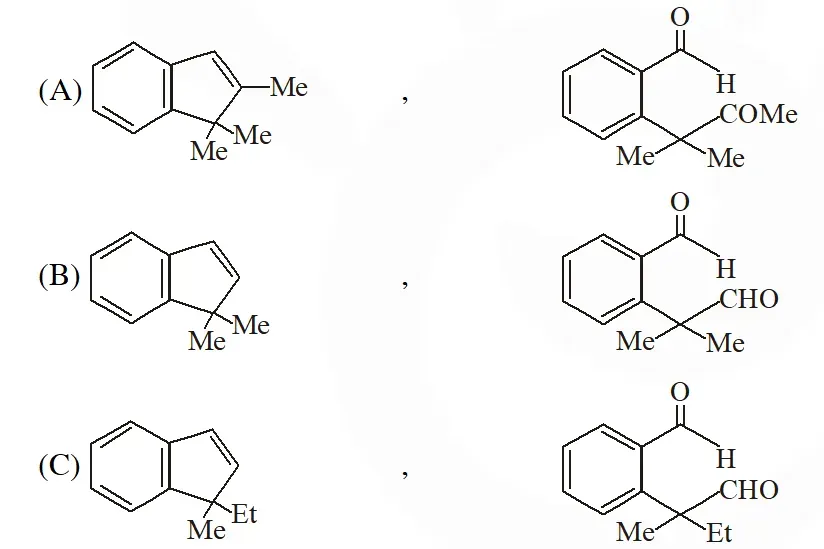
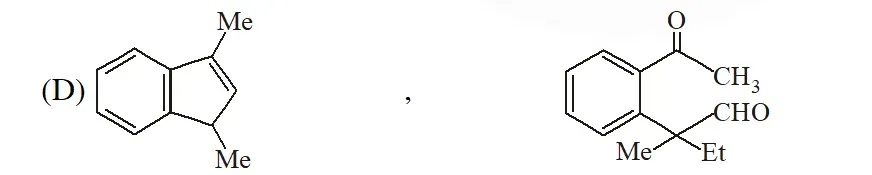
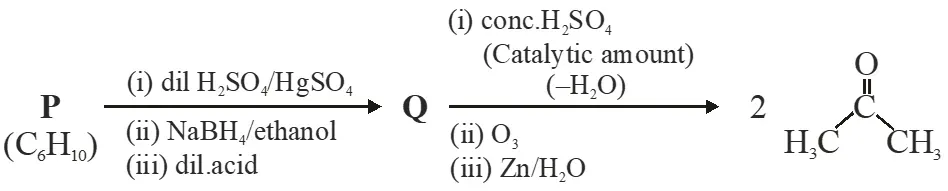
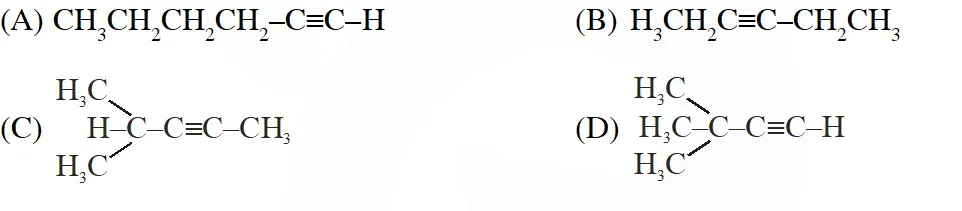
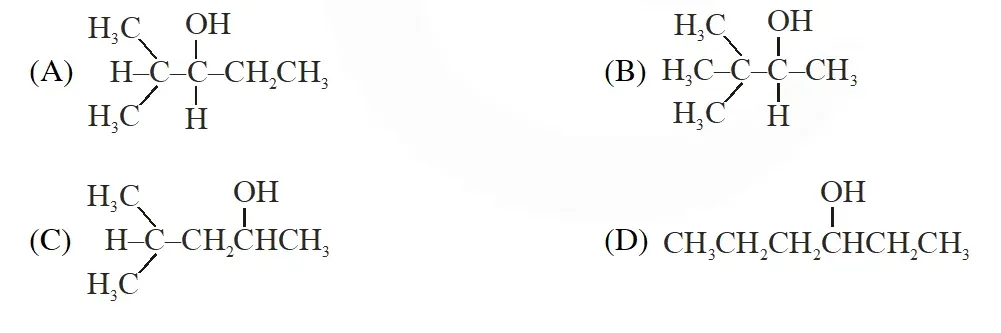
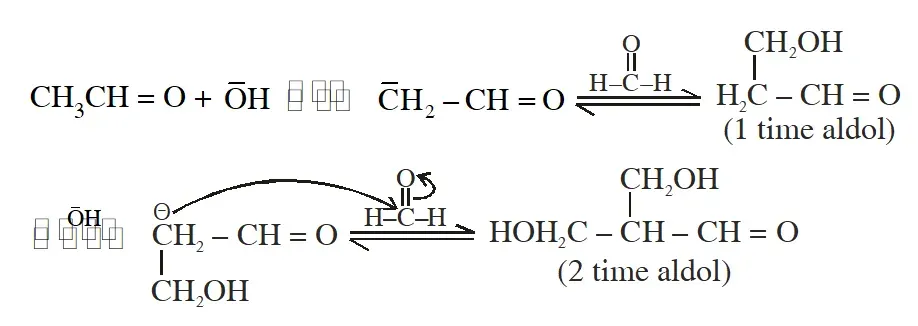
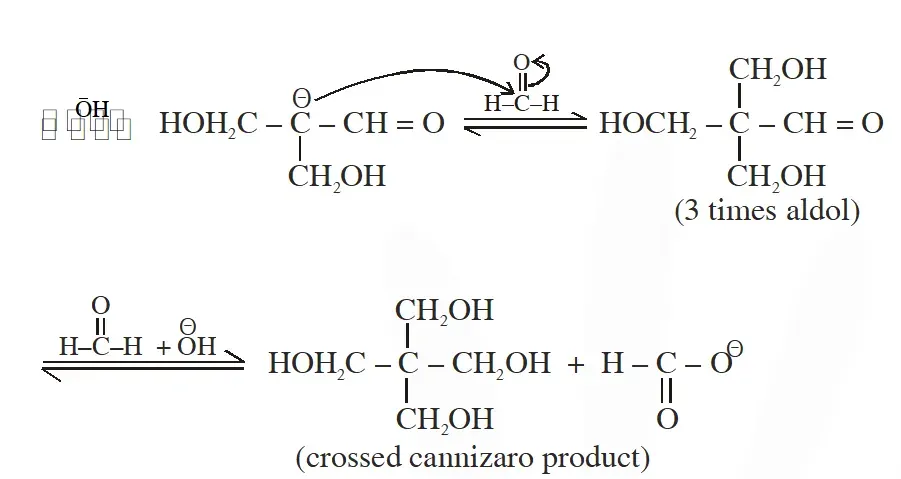
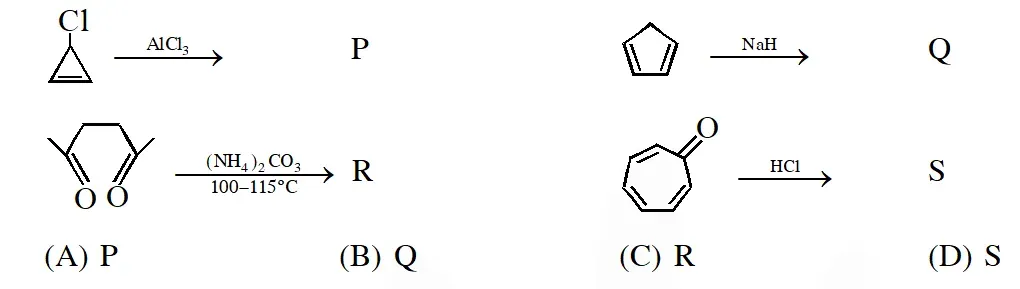
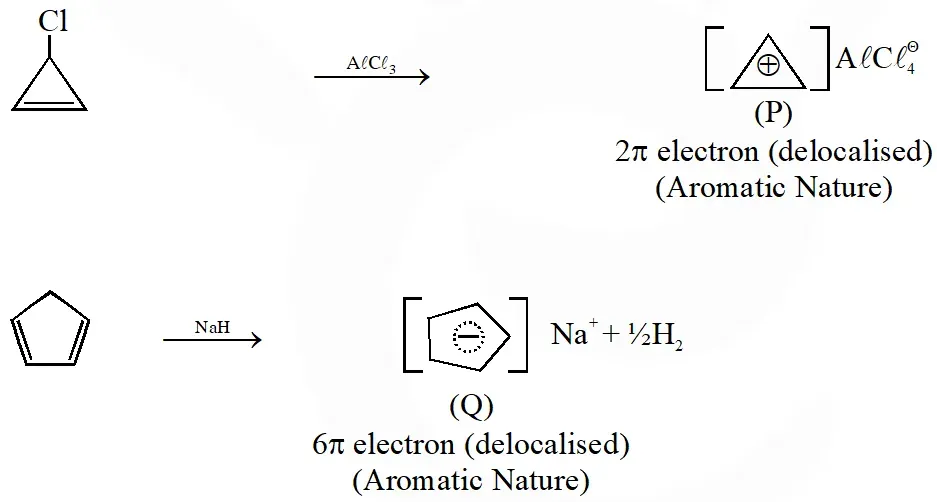
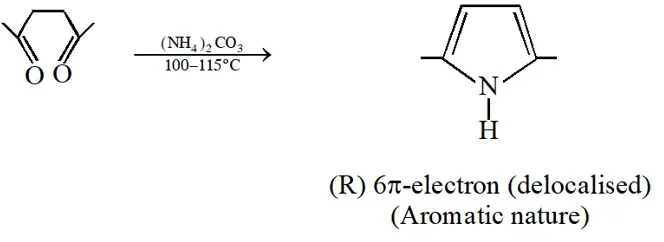
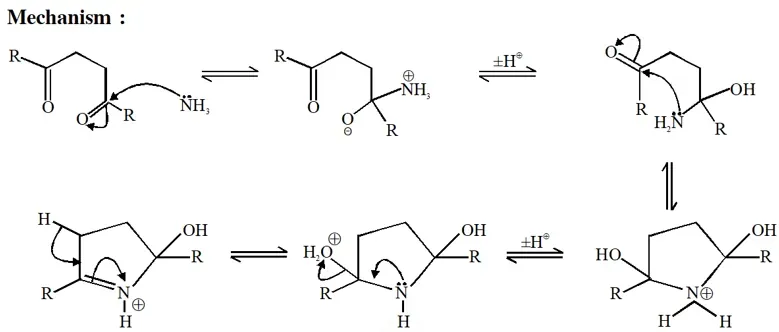
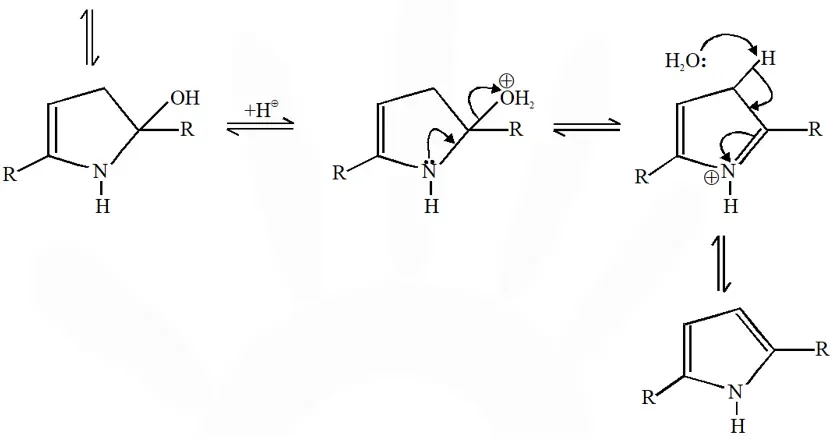
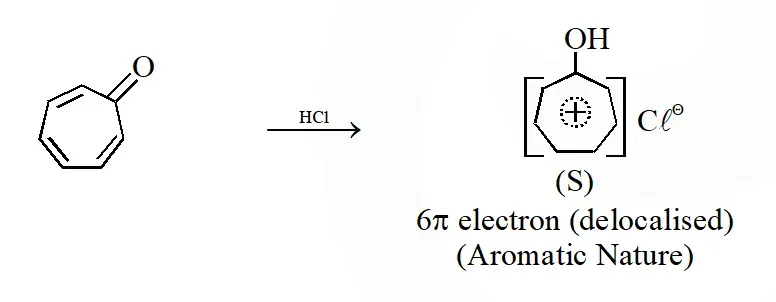
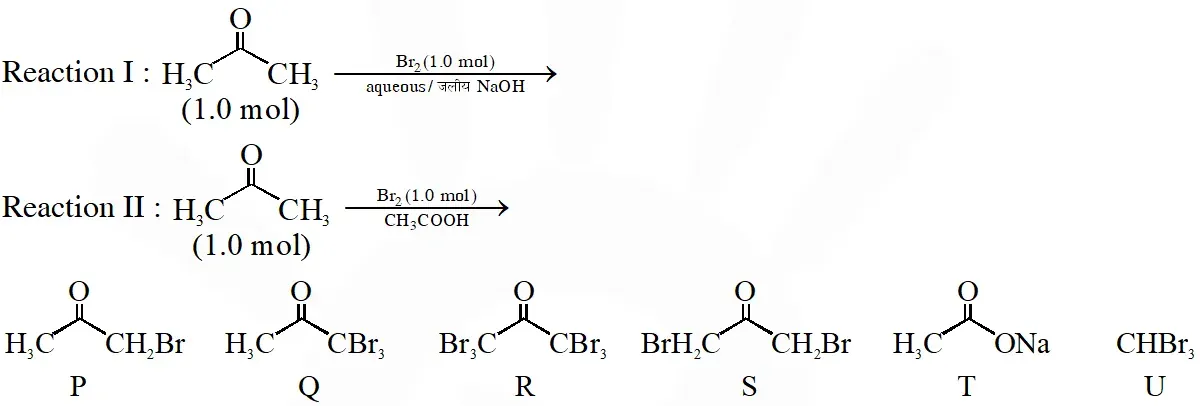
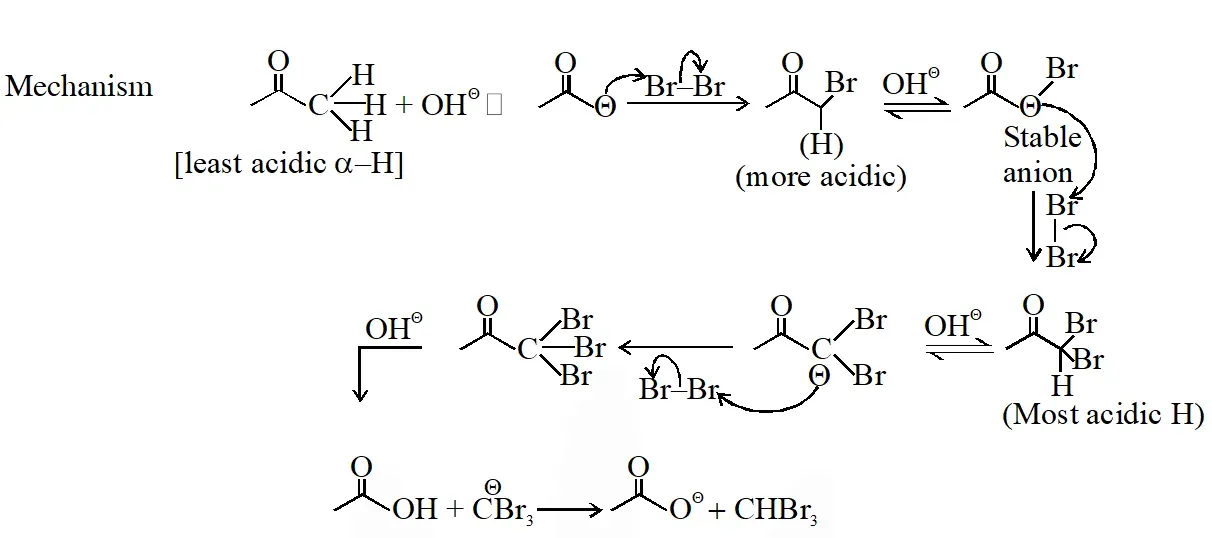
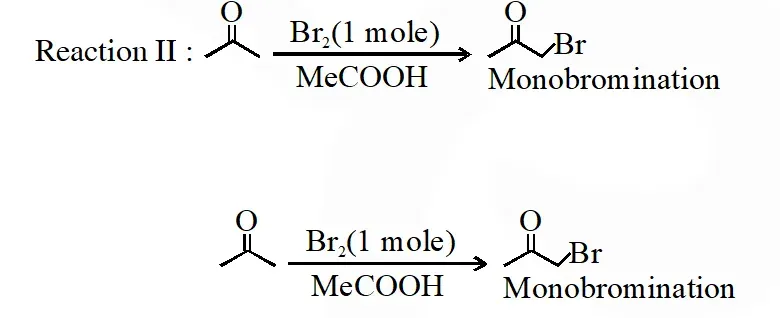
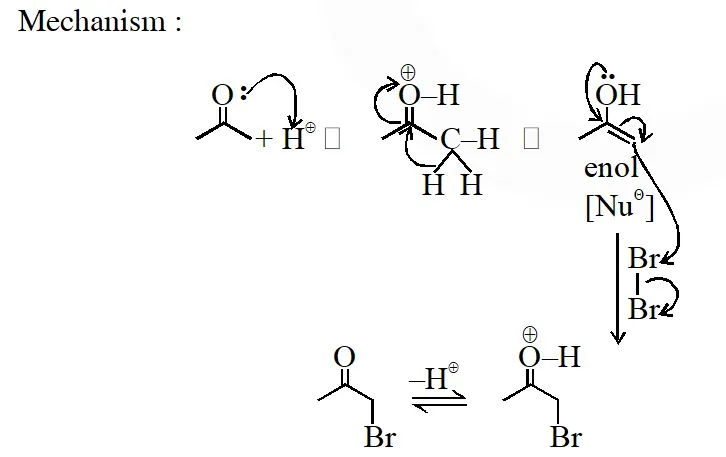
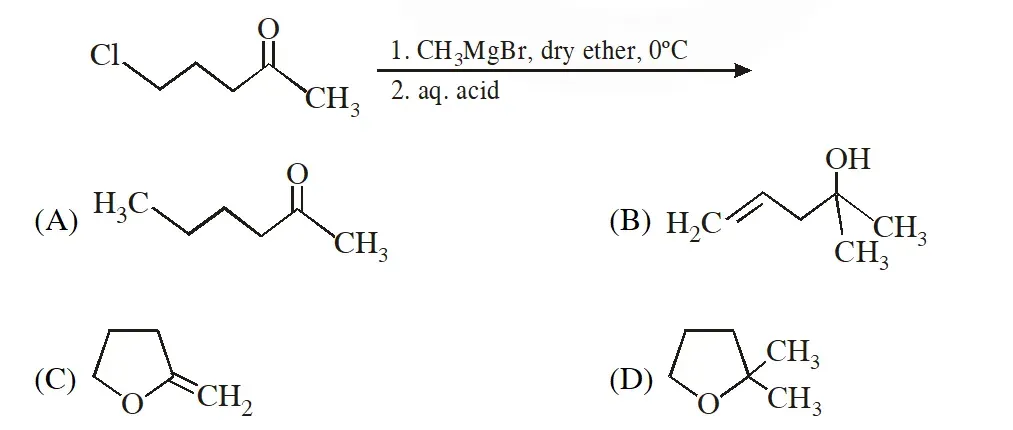
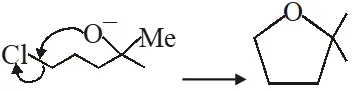
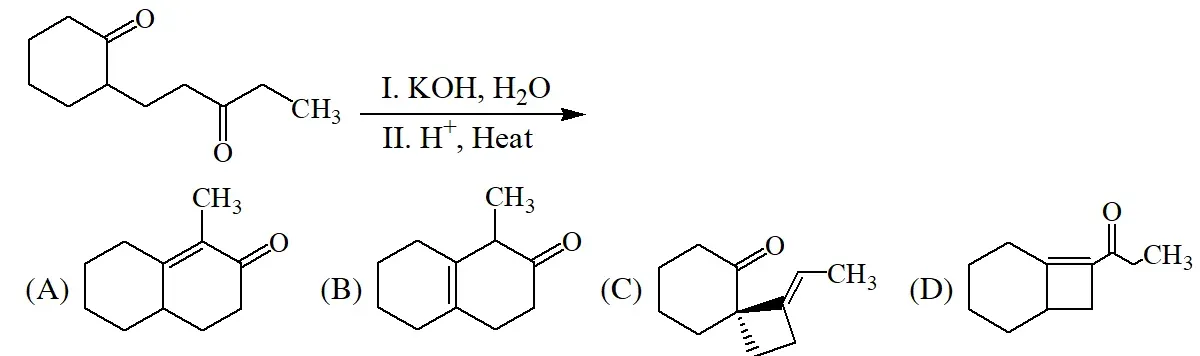
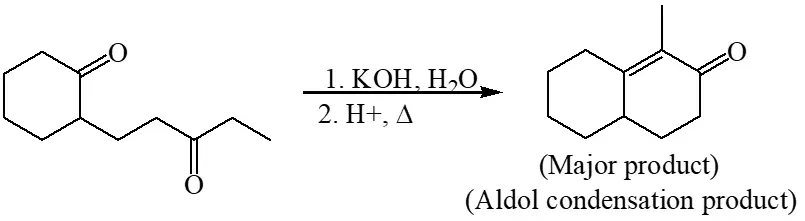
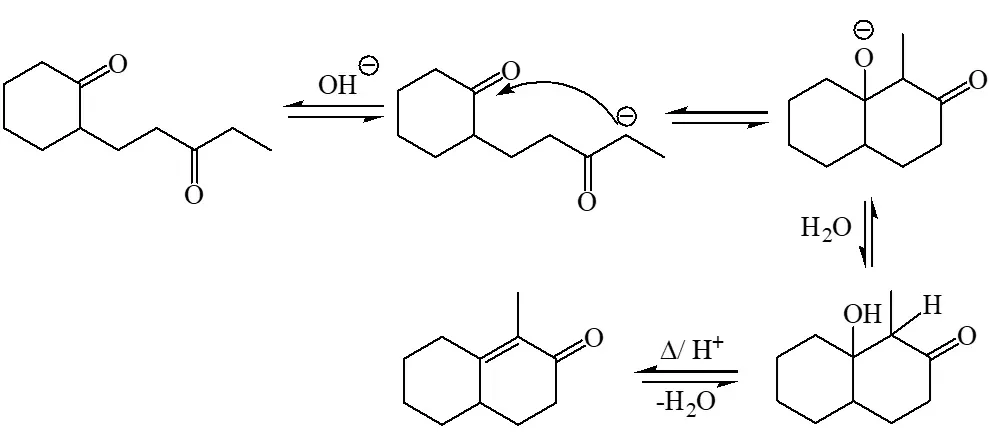
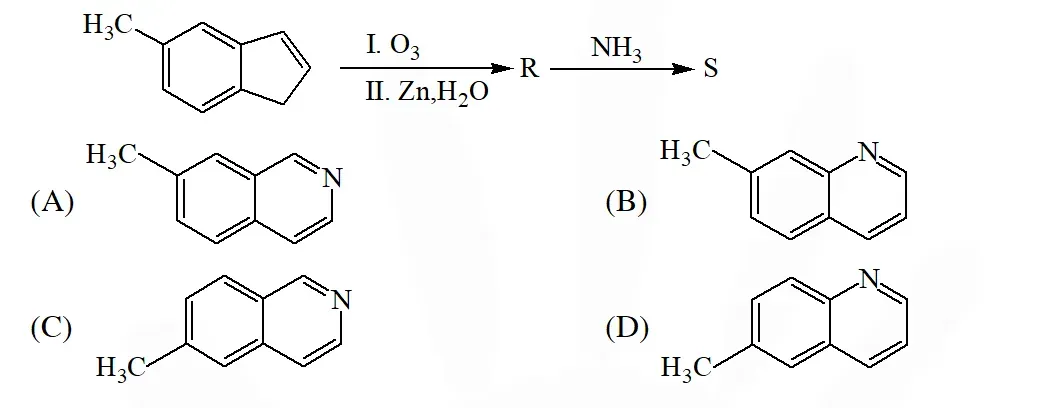
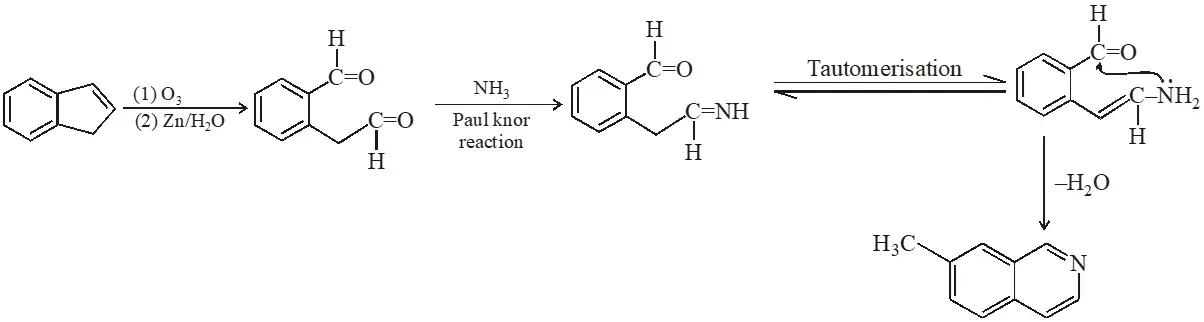
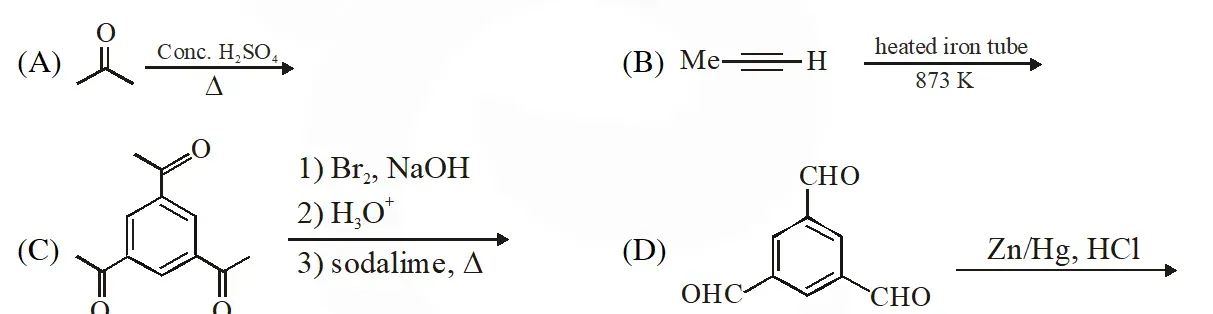
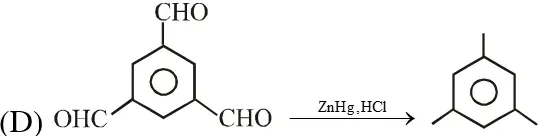
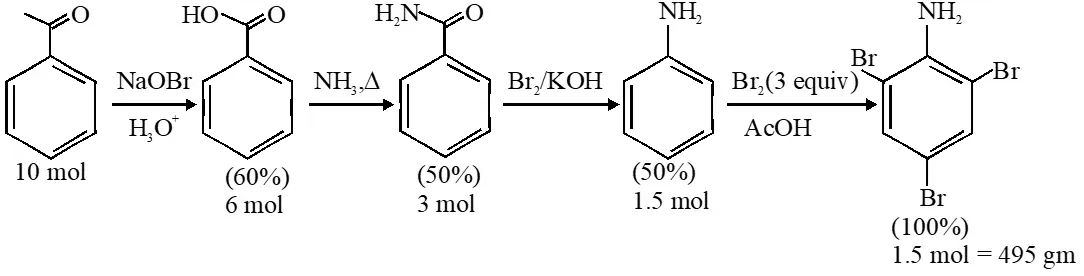
Simulator Previous Years JEE Advance Questions Paragraph for Question Nos. 1 to 3 A carbonyl compound P, which gives positive iodoform test, undergoes reaction with MeMgBr followed by dehydration to give an olefin Q. Ozonolysis of Q leads to a dicarbonyl compound R, which undergoes intramolecular aldol reaction to give predominantly S. [esquestion] The structure of the carbonyl compound P is #tag# [IIT 2009] #sol# (B) [/esquestion] [esquestion] The structure of the products Q and R, respectively, are #tag# [IIT 2009] #sol# (A) [/esquestion] [esquestion] The structure of the product S is #tag# [IIT 2009] #sol# (B) [/esquestion] Paragraph for Questions Nos. 4 to 5 An acyclic hydrocarbon P, having molecular formula $\mathrm{C}_{6} \mathrm{H}_{10}$, gave acetone as the only organic product through the following sequence of reactions, in the which Q is an intermediate organic compound. [esquestion] The structure of compound P is - #tag# [IIT 2011] #sol# (D) [/esquestion] [esquestion] The structure of the compound Q is – #tag# [IIT 2011] #sol# (B) [/esquestion] [esquestion] The number of aldol reaction(s) that occurs in the given transformation is #tag# [IIT 2012] #sol# (C) [/esquestion] [esquestion] Among P, Q, R and S, the aromatic compound(s) is / are : #tag# [IIT 2013] #sol# (A,B,C,D) [/esquestion] [esquestion] After completion of the reactions (I and II), the organic compound(s) in the reaction mixtures is(are) (A) Reaction I : P and Reaction II : P (B) Reaction I : U, acetone and Reaction II : Q acetone (C) Reaction I : T, U, acetone and Reaction II : P (D) Reaction I : R, acetone and Reaction II : S acetone #tag# [IIT 2013] #sol# (C) In basic medium halogenation dose not stop with replacement of just one hydrogen and poly halogenation takes place because -haloketones are more reactive towards base and haloform reaction takes place In above reaction $\mathrm{Br}_{2}$ is limiting agents. [/esquestion] [esquestion] The major product in the following reaction is #tag# [IIT 2014] #sol# (D) (i) Grignard prefer to give nucleophilic addition on polar $\pi$-bond and form anion intermediate. (ii) In next step anion give intramolecular nucleophilic substitution reaction & form 5 membered ring. [/esquestion] [esquestion] The major product of the following reaction is – #tag# [IIT 2015] #sol# (A) Mechanism : [/esquestion] [esquestion] In the following reactions, the product S is – #tag# [IIT 2015] #sol# (A) [/esquestion] [esquestion] The reaction(s) leading to the formation of 1,3,5-trimethylbenzene is (are) #tag# [JEE Adv. 2018] #sol# (A,B,D) [/esquestion] [esquestion] In the following reaction sequence, the amount of D (in g) formed from 10 moles of acetophenone is____. (Atomic weight in g mol–1: H = 1, C = 12, N = 14, O = 16, Br = 80. The yield (%) corresponding to the product in each step is given in the parenthesis) #tag# [JEE Adv. 2018] #sol# 495 [/esquestion]











Once Carbonyl Compounds - JEE Advanced PYQs (Chemistry) is complete, practise the topic within real timed papers from the JEE Advanced exam paper.
Frequently Asked Questions
How many questions come from carbonyl compounds in JEE Advanced?
Carbonyl compounds typically contribute 2–4 questions (6–12 marks) in JEE Advanced each year. The chapter often appears as a paragraph-based set with 2–3 linked questions or as multiple-correct-type questions. From 2009 to 2018, it appeared in 7 out of 10 years, making it one of the most reliable chapters for scoring marks in Organic Chemistry.
Which reactions from carbonyl compounds are most important for JEE Advanced?
The five most important reactions are: (1) Aldol condensation (including intramolecular), (2) Iodoform/haloform reaction, (3) Ozonolysis, (4) Grignard reaction with carbonyl compounds, and (5) Nucleophilic addition-elimination. JEE Advanced tests these through multi-step synthesis problems where you must trace the structure of intermediates and final products.
Is the iodoform test directly asked in JEE Advanced?
Yes. The iodoform test has appeared both as a direct identification clue (JEE Advanced 2009) and as a conceptual question. You must know that it is positive for methyl ketones (CH₃COR), acetaldehyde (CH₃CHO), and secondary alcohols oxidisable to methyl ketones. The yellow precipitate CHI₃ (iodoform) is the characteristic product.
What is the difference between the aldol reaction and aldol condensation for JEE Advanced?
The aldol reaction gives a β-hydroxy carbonyl compound (aldol product). The aldol condensation goes one step further — the β-hydroxy compound undergoes dehydration to give an α,β-unsaturated carbonyl compound (conjugated enone). JEE Advanced questions often test intramolecular versions of both, where a 5- or 6-membered ring is formed. Always check whether dehydration has occurred in the given conditions.
How should I prepare carbonyl compounds for JEE Advanced from scratch?
Start with NCERT Solutions for Class 12 Chemistry to build your foundation, then solve chapter-wise JEE Advanced previous year questions. Focus on understanding reaction mechanisms rather than memorising products. eSaral's IIT Bombay faculty — with verified All India Ranks — teach each mechanism with electron-pushing diagrams and connect every reaction to past exam patterns.
Team eSaral
eSaral Academic and Editorial Team
Team eSaral is the collective author profile for educational content created by eSaral’s teachers and academic contributors. The team draws on expertise from IIT graduates, doctors, experienced educators and subject specialists to develop resources for JEE, NEET and school students. Our articles aim to explain concepts clearly and help students study with confidence.
Related Posts

BITSAT 2027: Registration Date, Exam Date, Syllabus, Eligibility, Pattern & Fees
BITSAT 2027 exam dates, registration timeline, eligibility criteria, exam pattern, marking scheme, syllabus and fees in one page.

BITSAT Previous Year Question Paper PDF (2017-2026)
Download BITSAT previous year question papers PDF from 2017 to 2026,session-wise. Memory-based papers,exam pattern, paper analysis and how to practise

CBSE Class 10 Date Sheet 2027: Expected Exam Dates, Release Date, Admit Card & Result Timeline
CBSE Class 10 date sheet 2027 is awaited. See the expected exam dates, release window, how to download the PDF, admit card and result timelines.

NCERT Physics Class 10 Book PDF in Hindi 2026-27 – भौतिक विज्ञान के 4 अध्याय (Free Download)
NCERT Physics Class 10 book PDF in Hindi 2026-27: download all 4 chapters (अध्याय 9–12) free, with topics and important formulas.

NCERT Biology Class 9 Book Anveshan PDF in Hindi - जीव विज्ञान कक्षा 9 पुस्तक अन्वेषण PDF
Download NCERT Biology Class 9 book PDF in Hindi chapterwise for 2026-27: Cell, Tissues, Reproduction and Diversity. Free PDFs.

Essay On Artificial Intelligence in English (100,150, 200, 250, 300, 500 Words)
This is in contrast to the natural intelligence of humans. With Artificial Intelligence, machines can perform

Essay on 78th India Independence Day in English for Student (100, 150, 200, 250, 300, 500 Words)
Read the best essays on India's Independence Day in English. Short & long essays (100, 150, 200, 250, 300, 500 words) perfect for school exams
NCERT Class 11 English Snapshots book - Free PDF download- Esaral
Download NCERT Class 11 English Snapshots book PDF for free. Get all 8 chapters, chapter-wise. Start your prep today!
NCERT Class 10 biology book pdf - Free PDF Download - eSaral
NCERT Class 10 Biology book PDF 2026-27: all 5 chapters (Life Processes to Our Environment) in English & Hindi, with CBSE syllabus, marks & practical

Essay on Global Warming in English (100,150, 200, 250, 300, 500 Words)
Global warming means the Earth is getting hotter. This happens because of things like pollution from cars and factories.