
Carboxylic Acid & its Derivatives Notes for Class 12, IIT JEE & NEET

eSaral Academic and Editorial Team
Summary
Carboxylic Acids and Their Derivatives are important organic compounds containing the –COOH functional group, with notes covering their structure, properties, reactions, preparation methods, and JEE/NEET-focused concepts for quick revision.
eSaral › Class 12 >Carboxylic Acid & its Derivatives Notes for Class 12

What Are Carboxylic Acids?
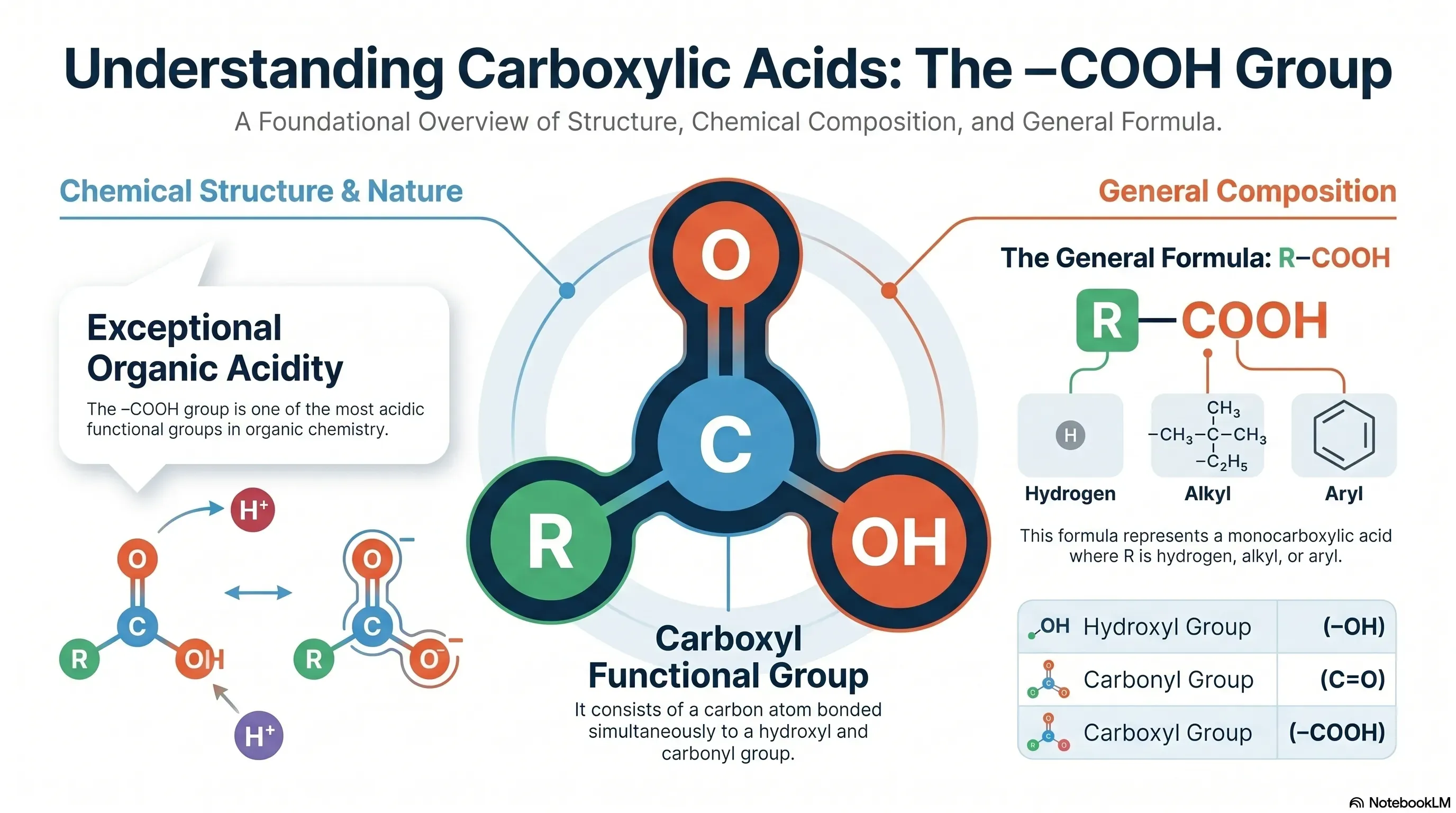
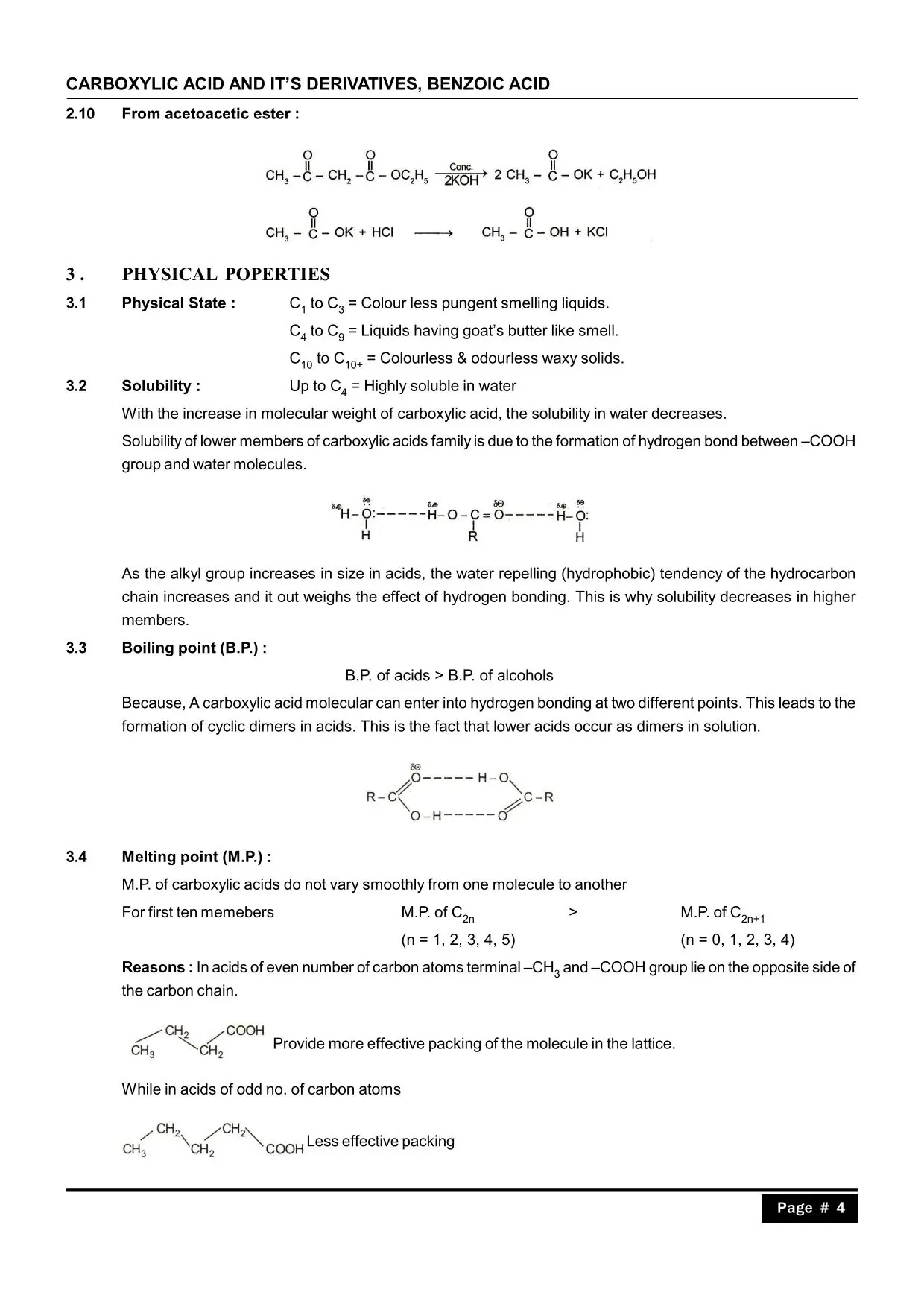
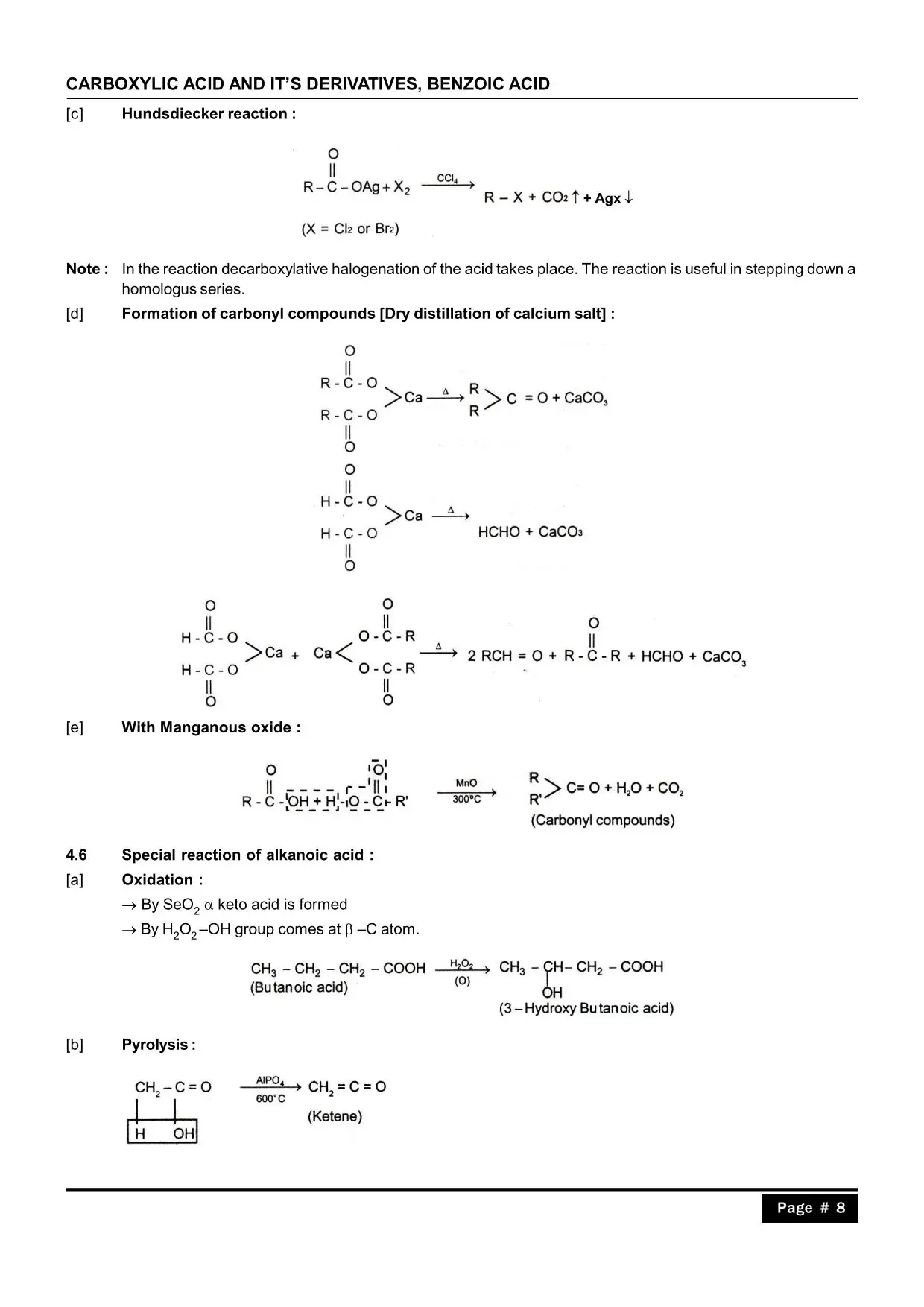
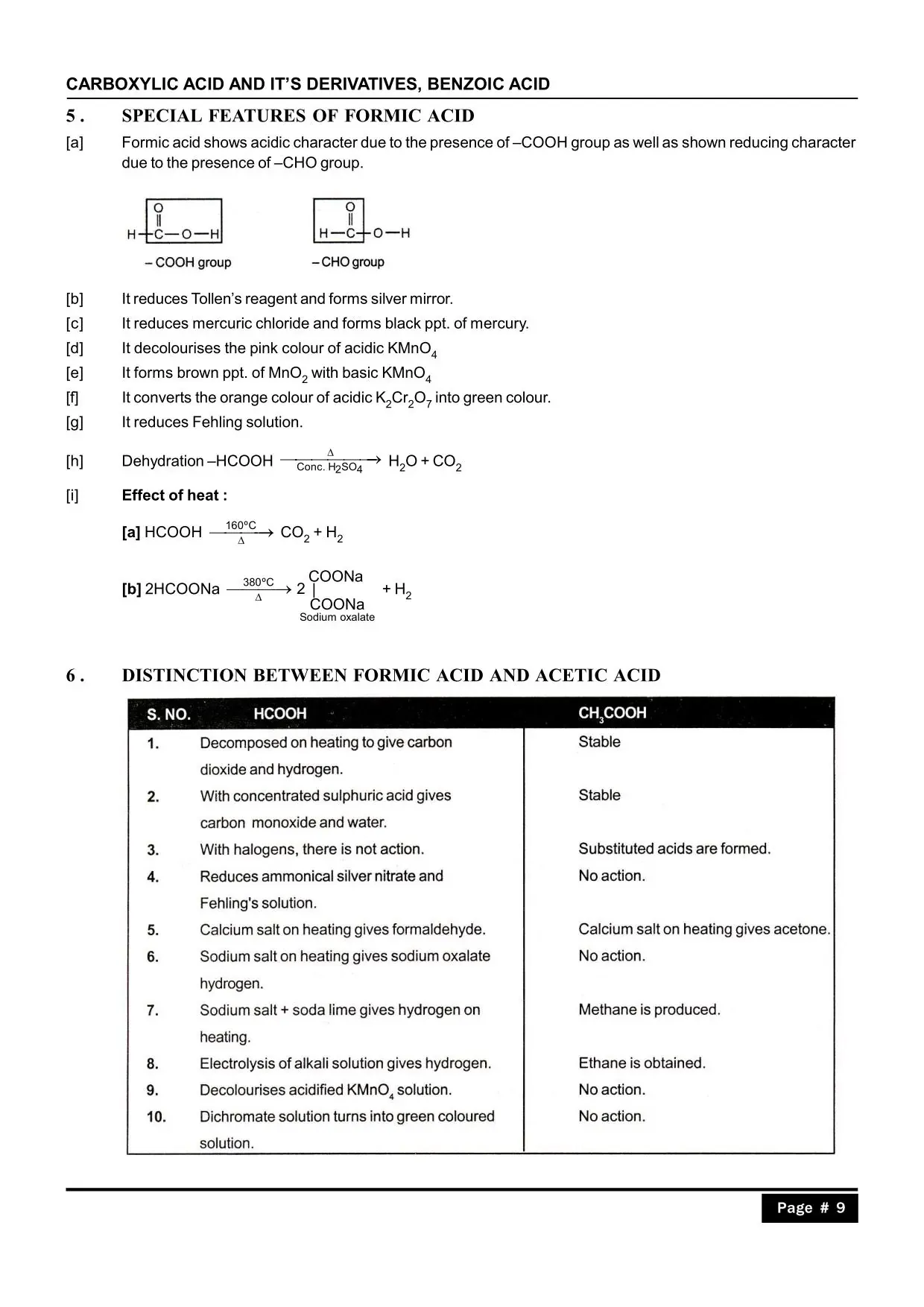
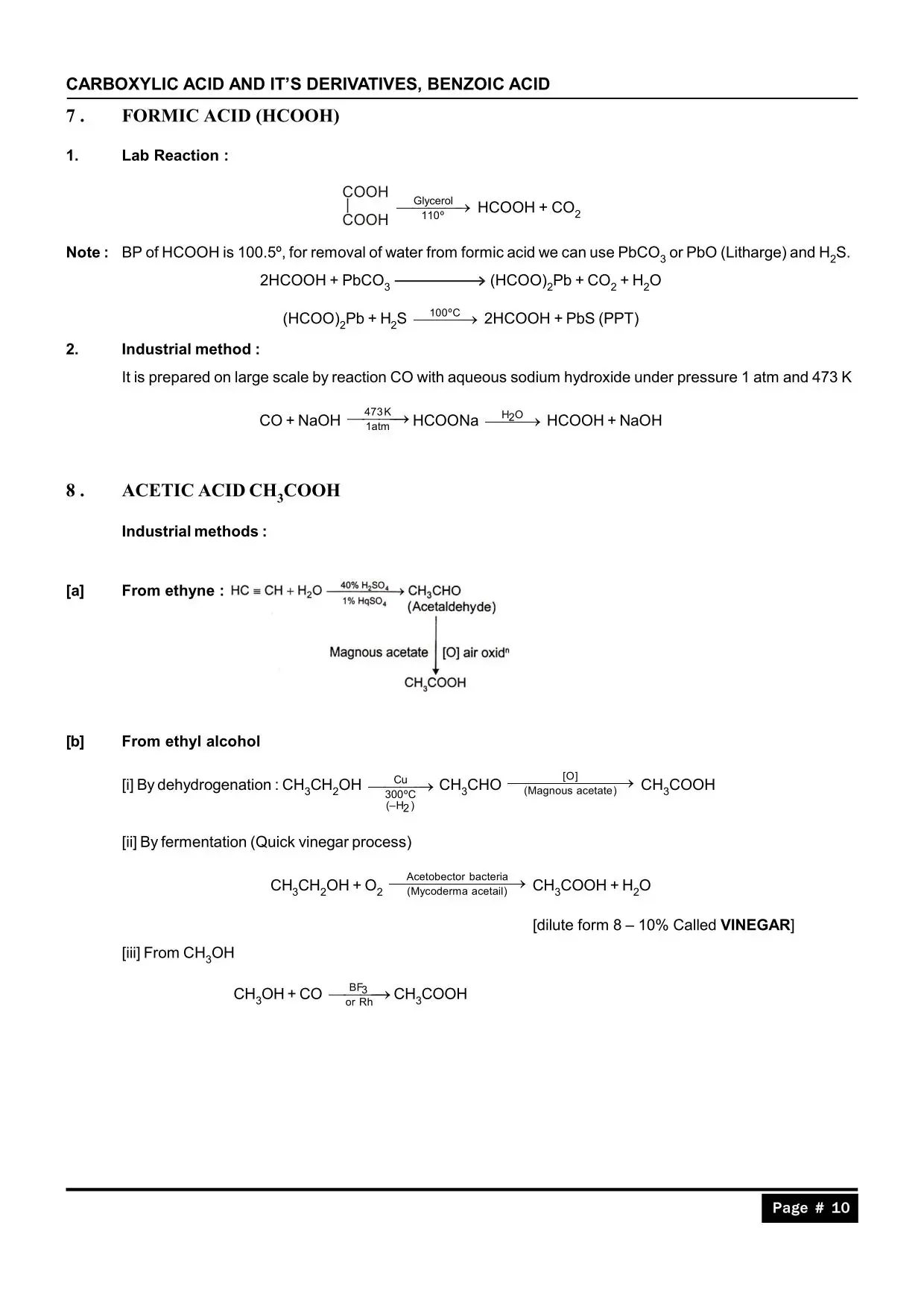
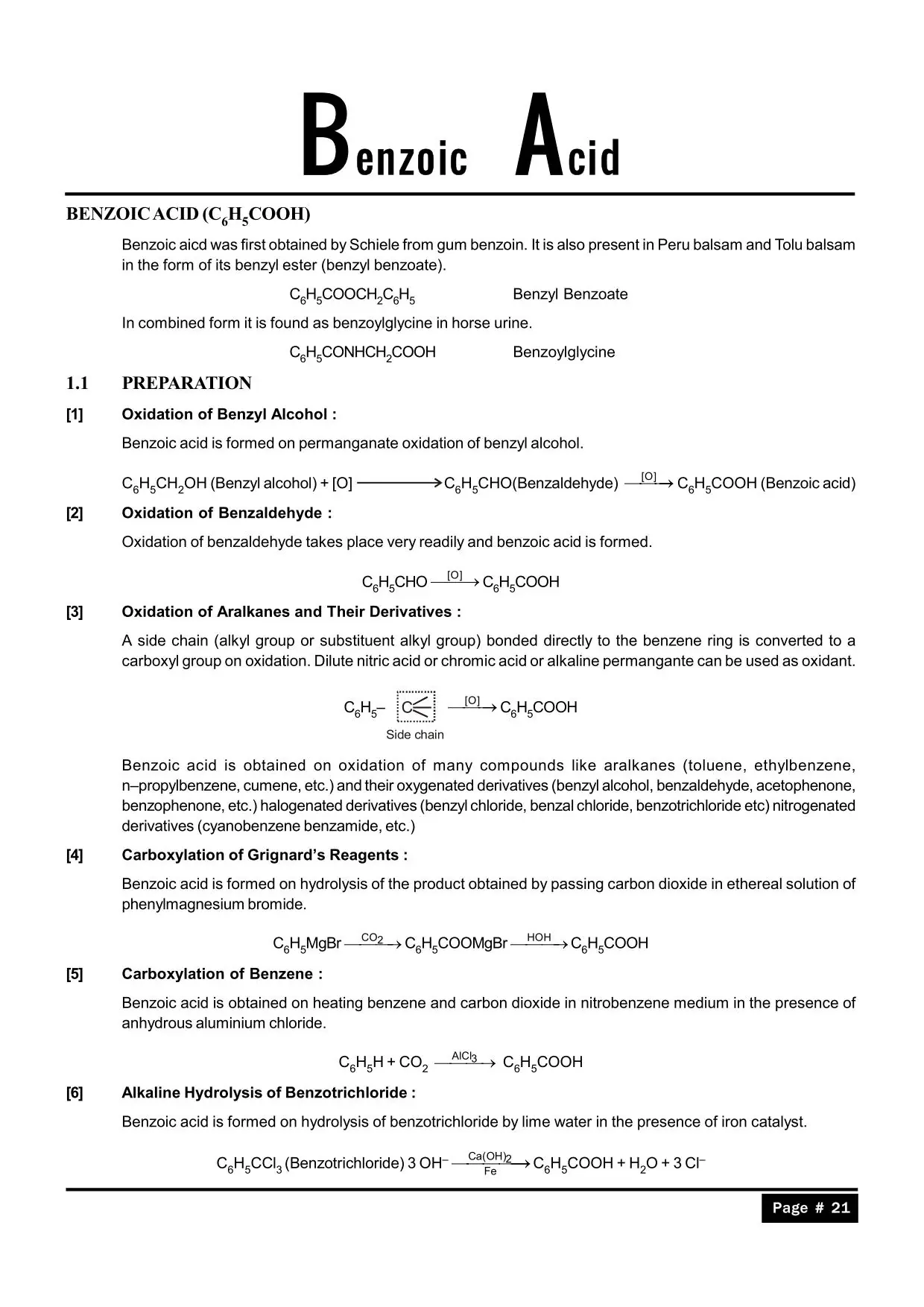
Carboxylic acids are organic compounds that contain the carboxyl functional group, written as –COOH. The carbon of the –COOH group is bonded to a hydroxyl group (–OH) and a carbonyl group (C=O) simultaneously, making it one of the most acidic functional groups in organic chemistry.
The general formula for a monocarboxylic acid is R–COOH, where R is a hydrogen atom or an alkyl/aryl group.
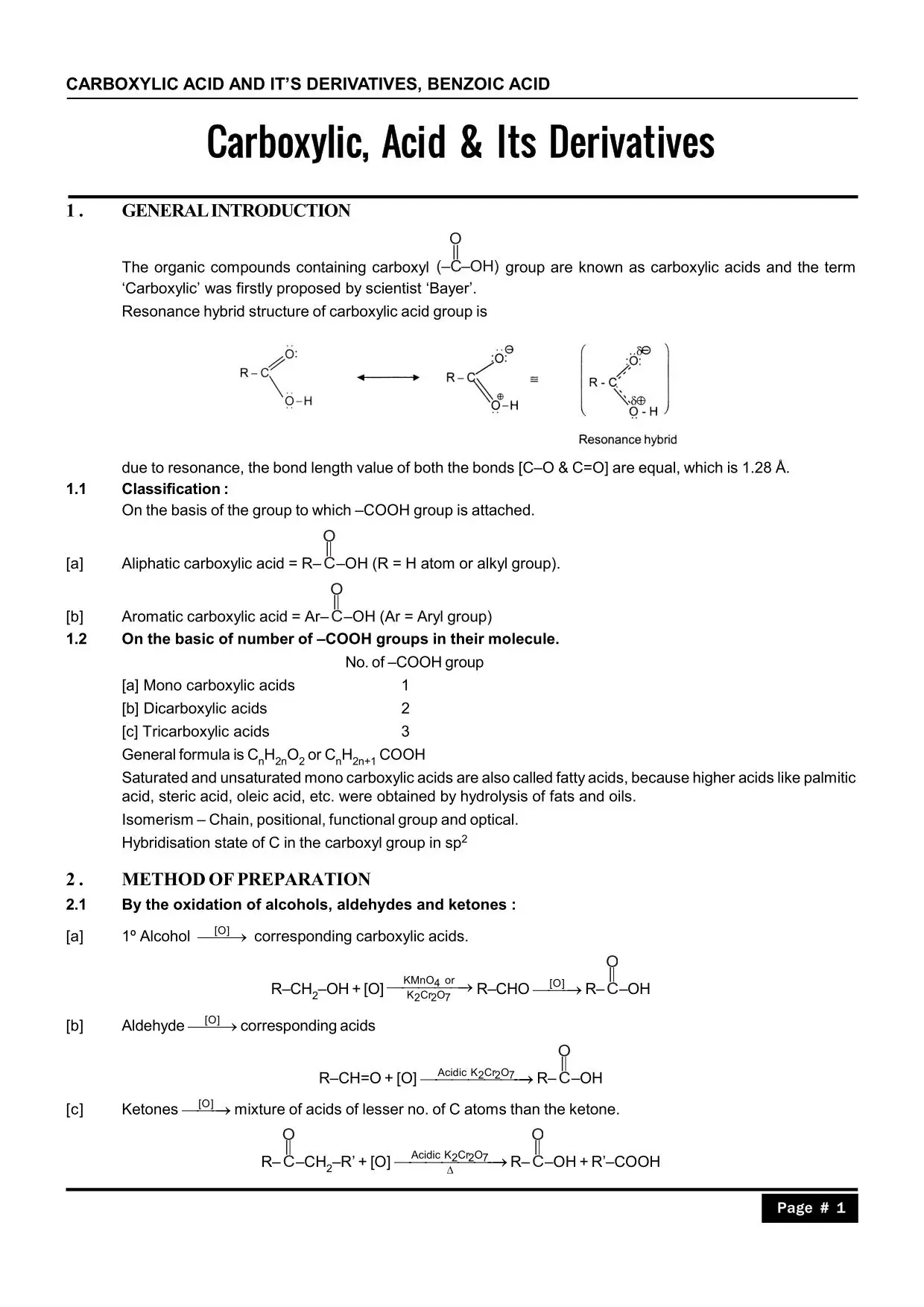
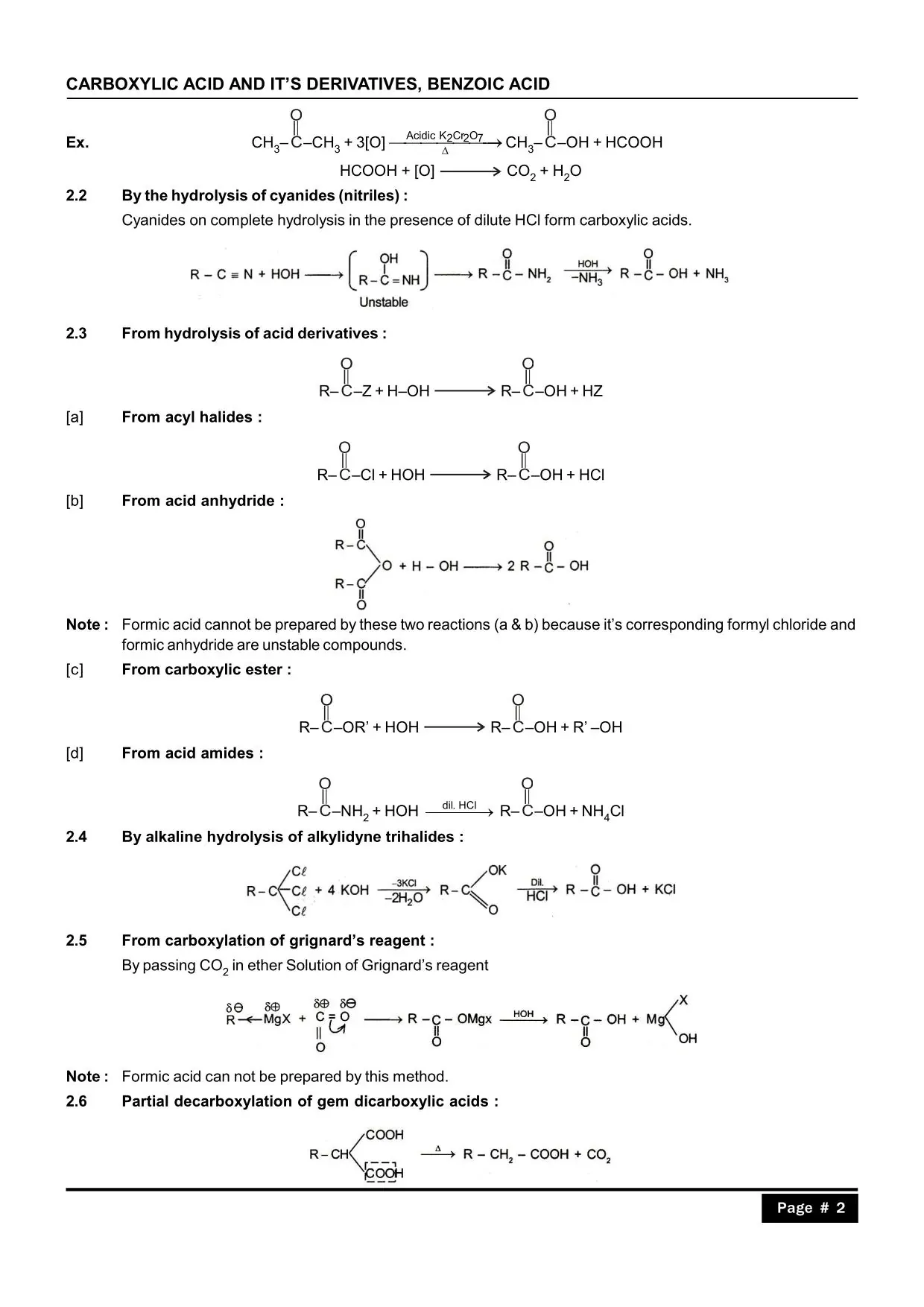
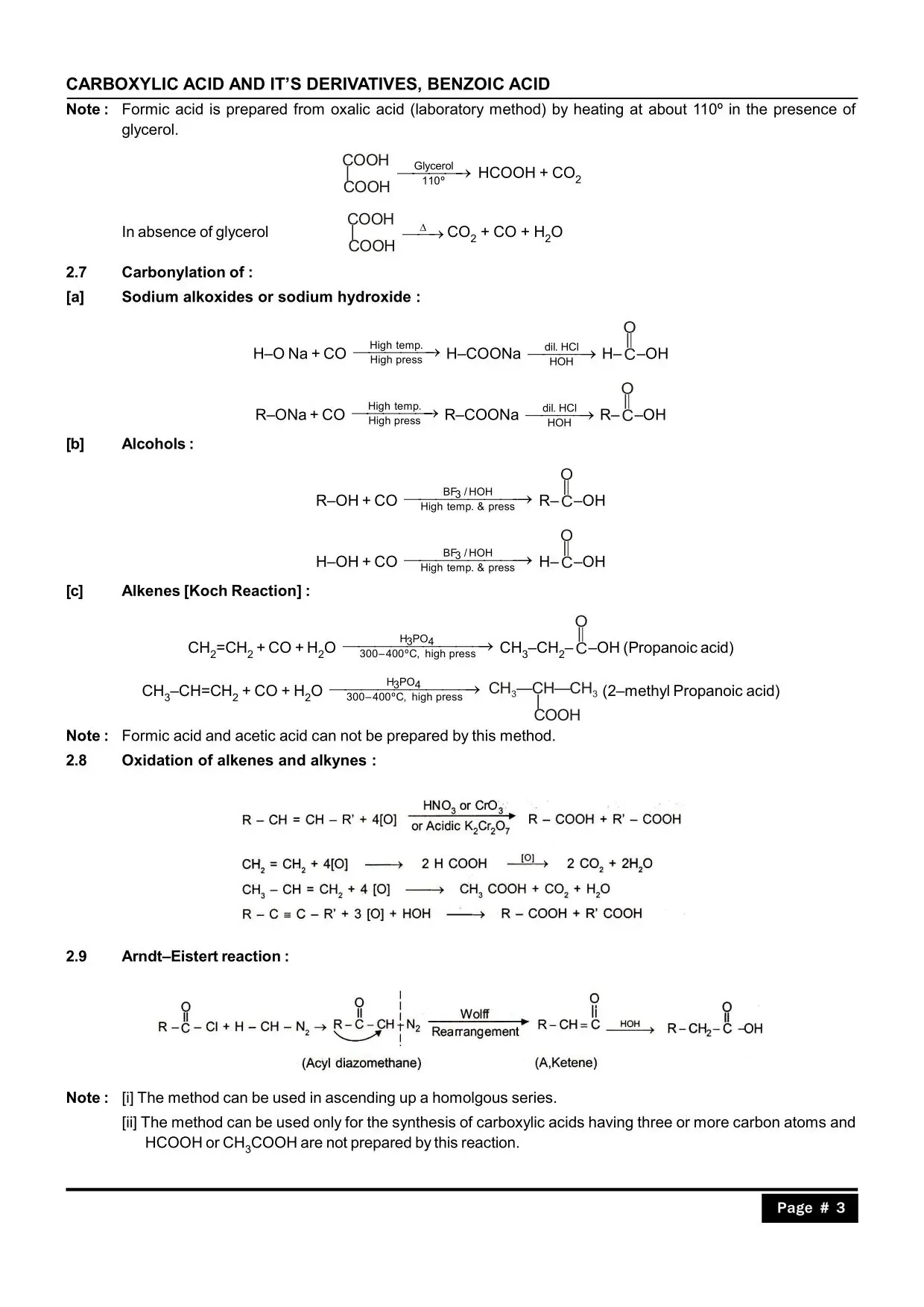
Carboxylic Acid & its Derivatives Notes
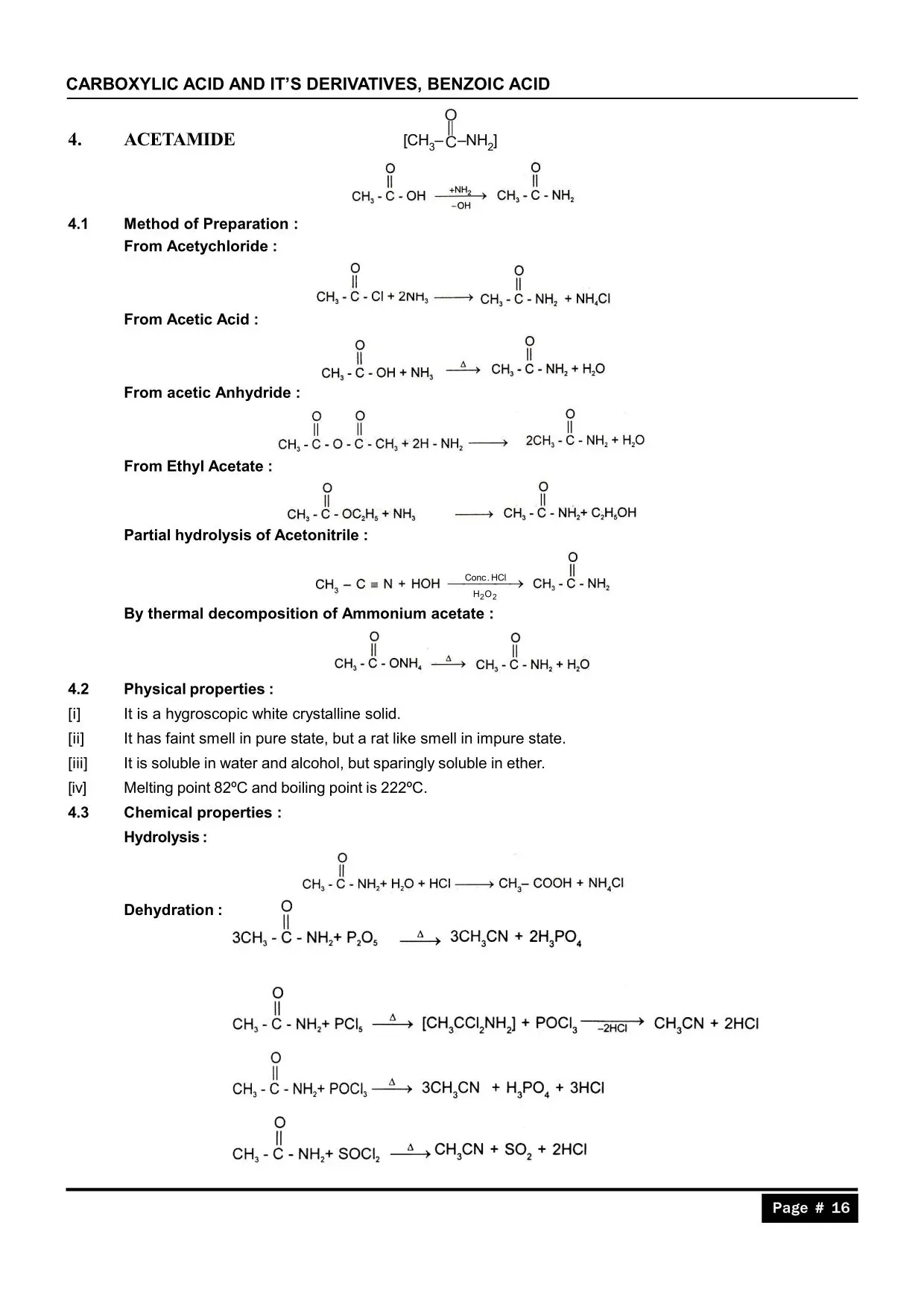
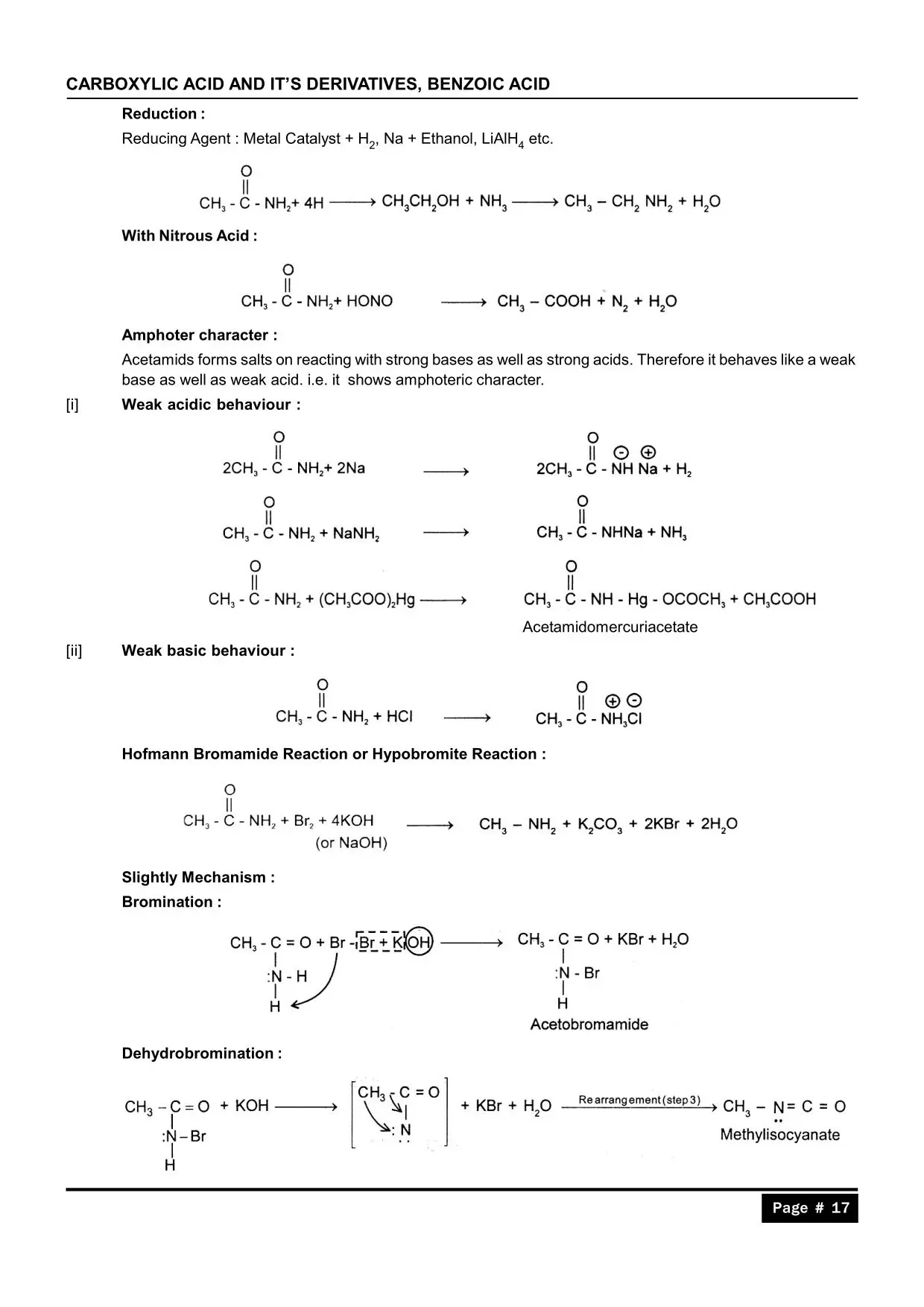
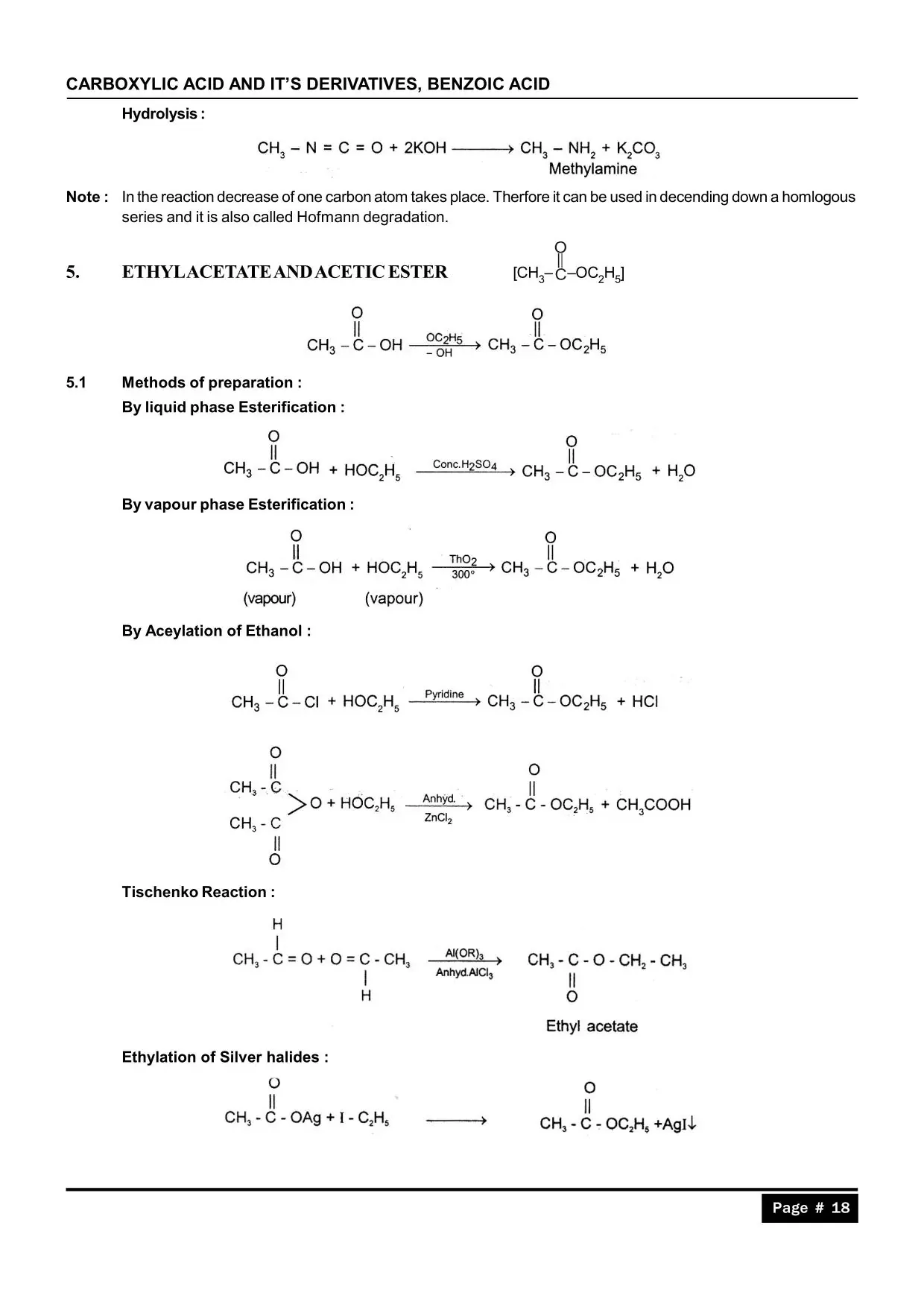
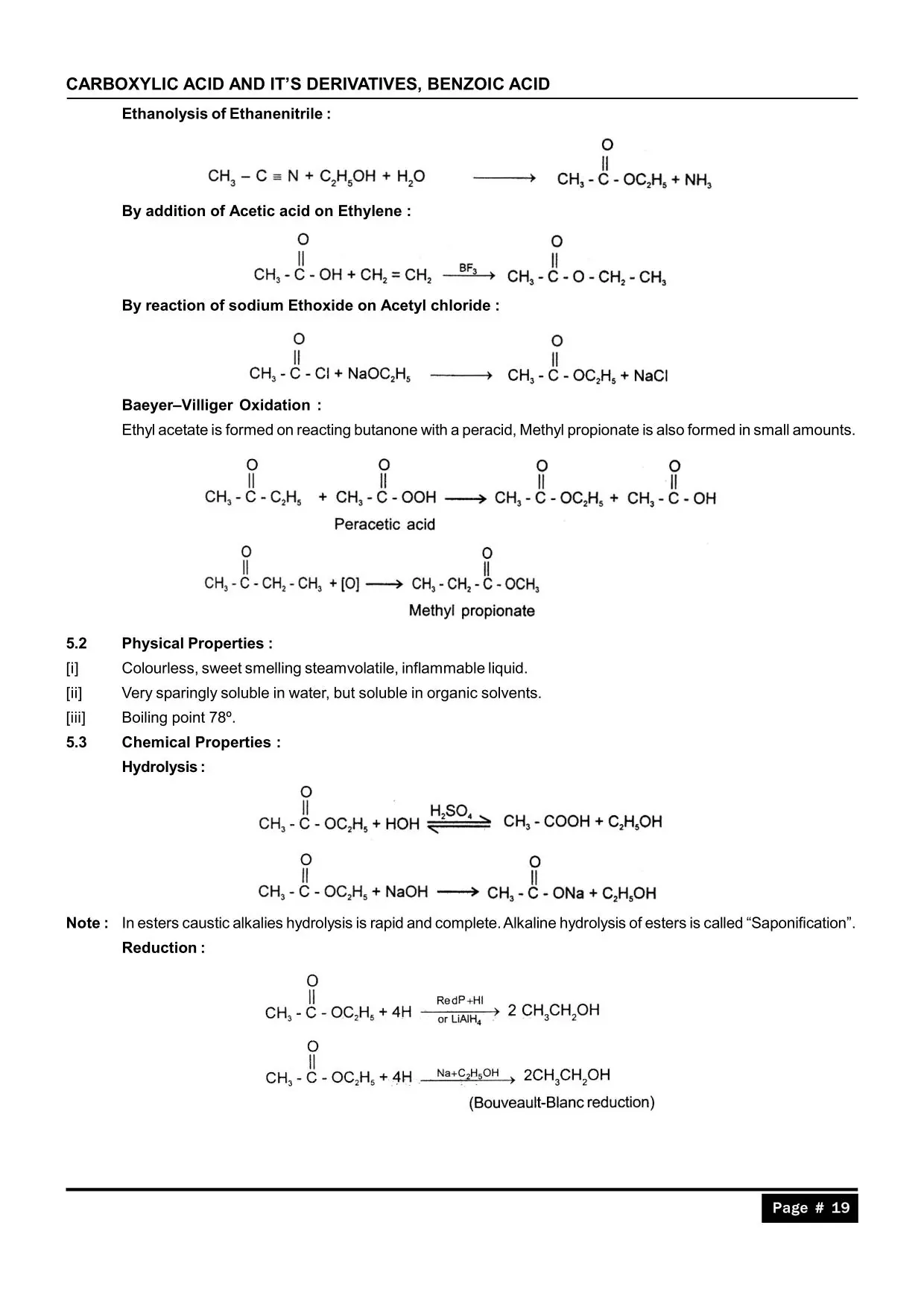
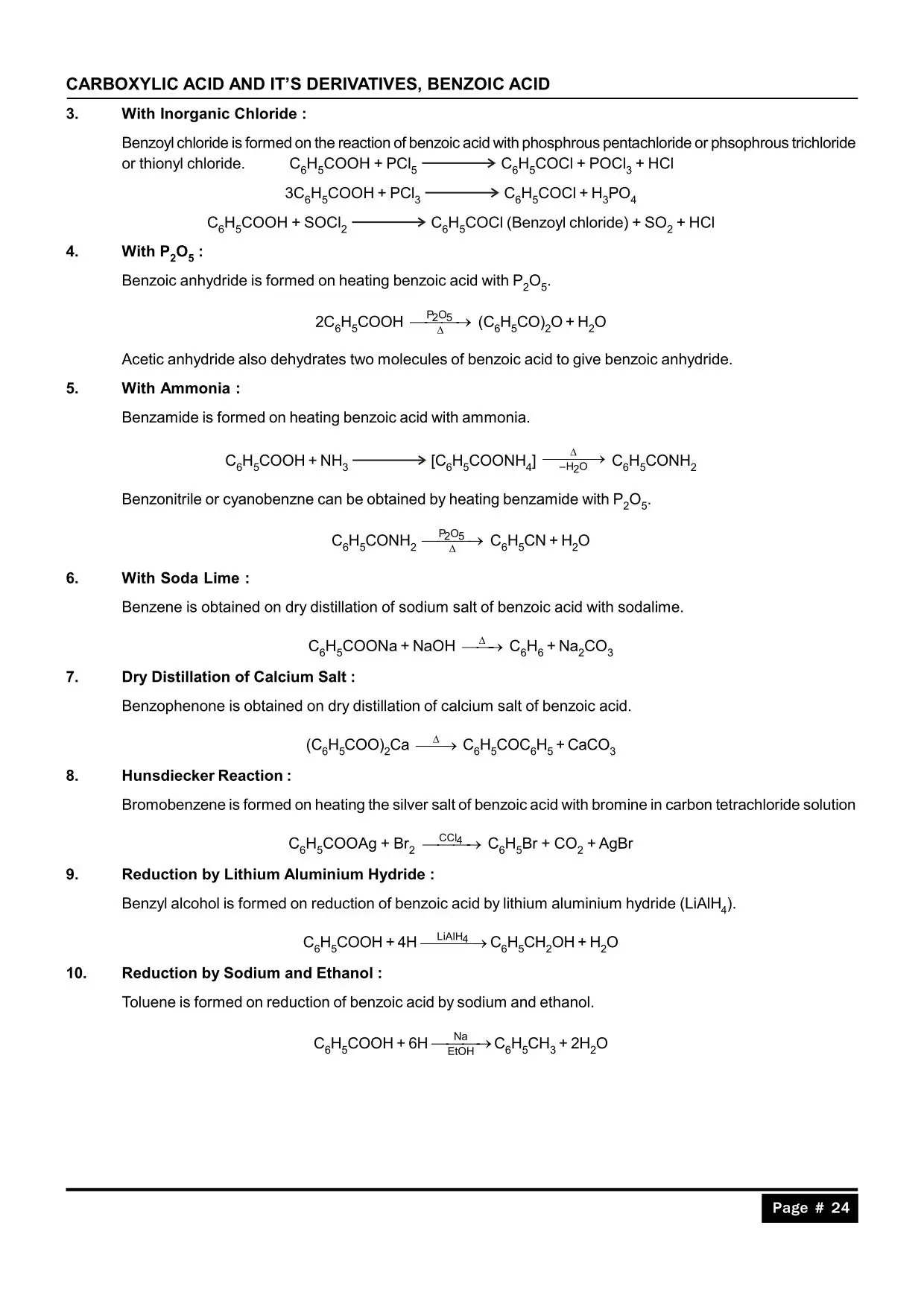
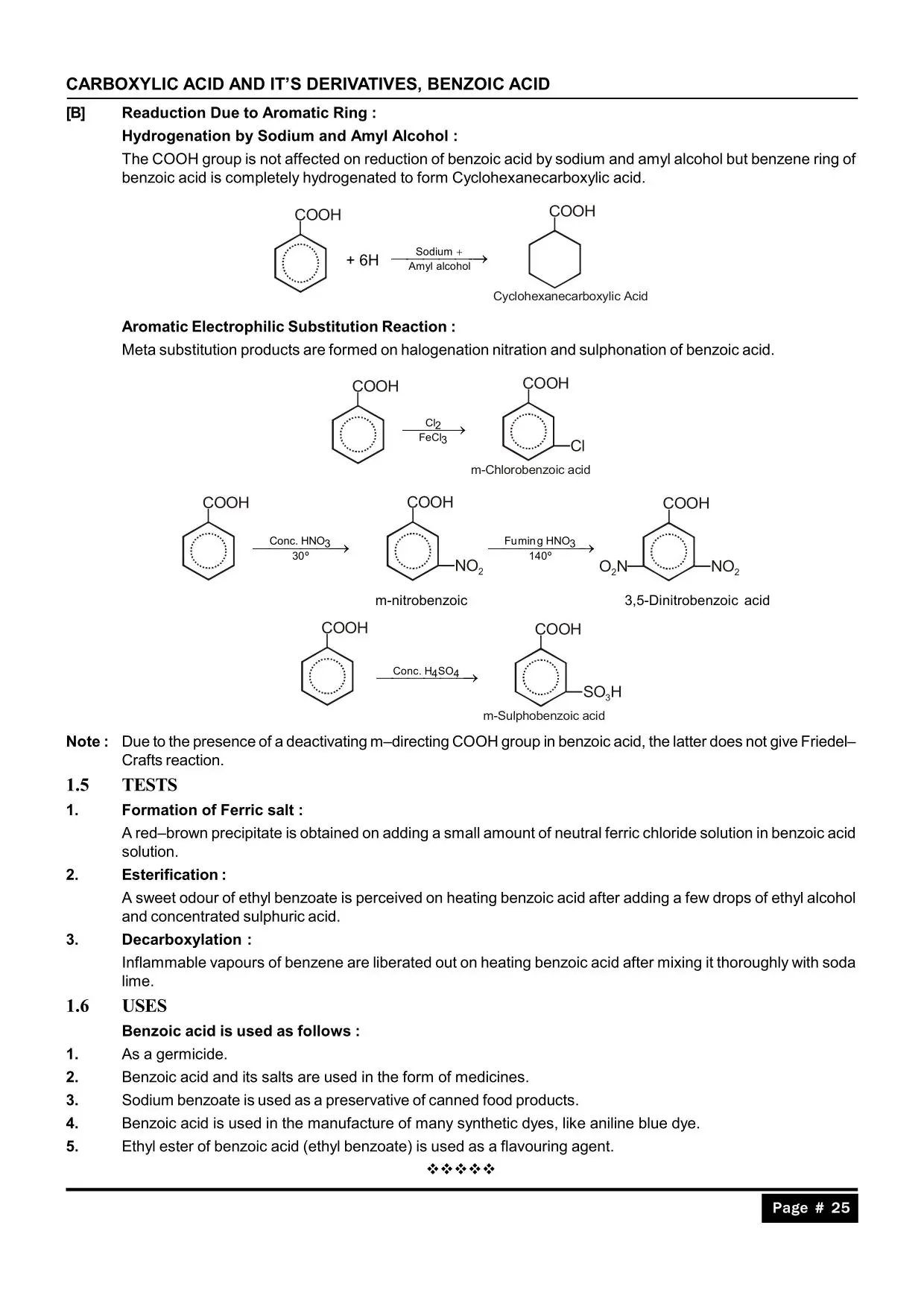
Frequently Asked Questions
What is a carboxylic acid and why is it acidic?
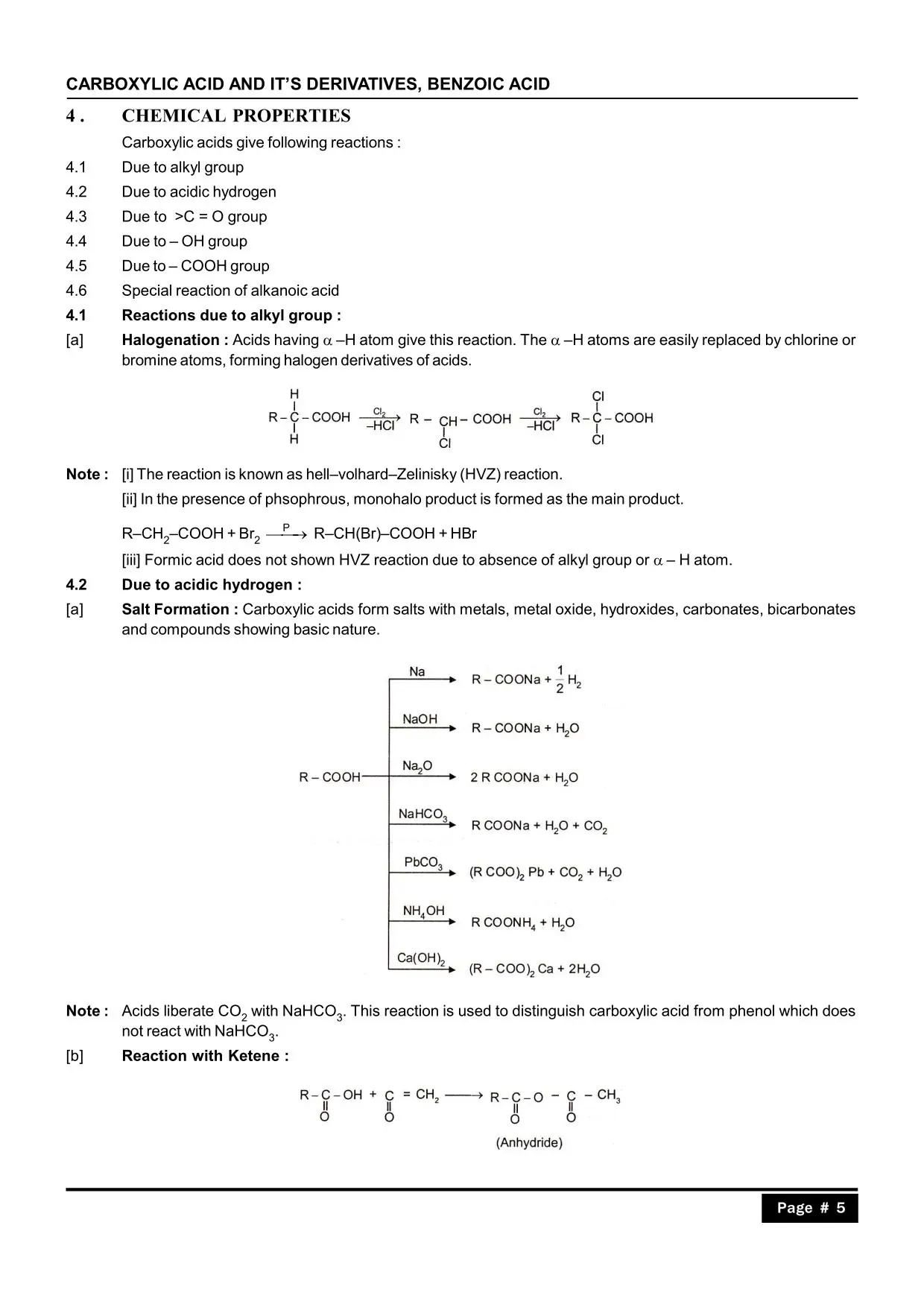
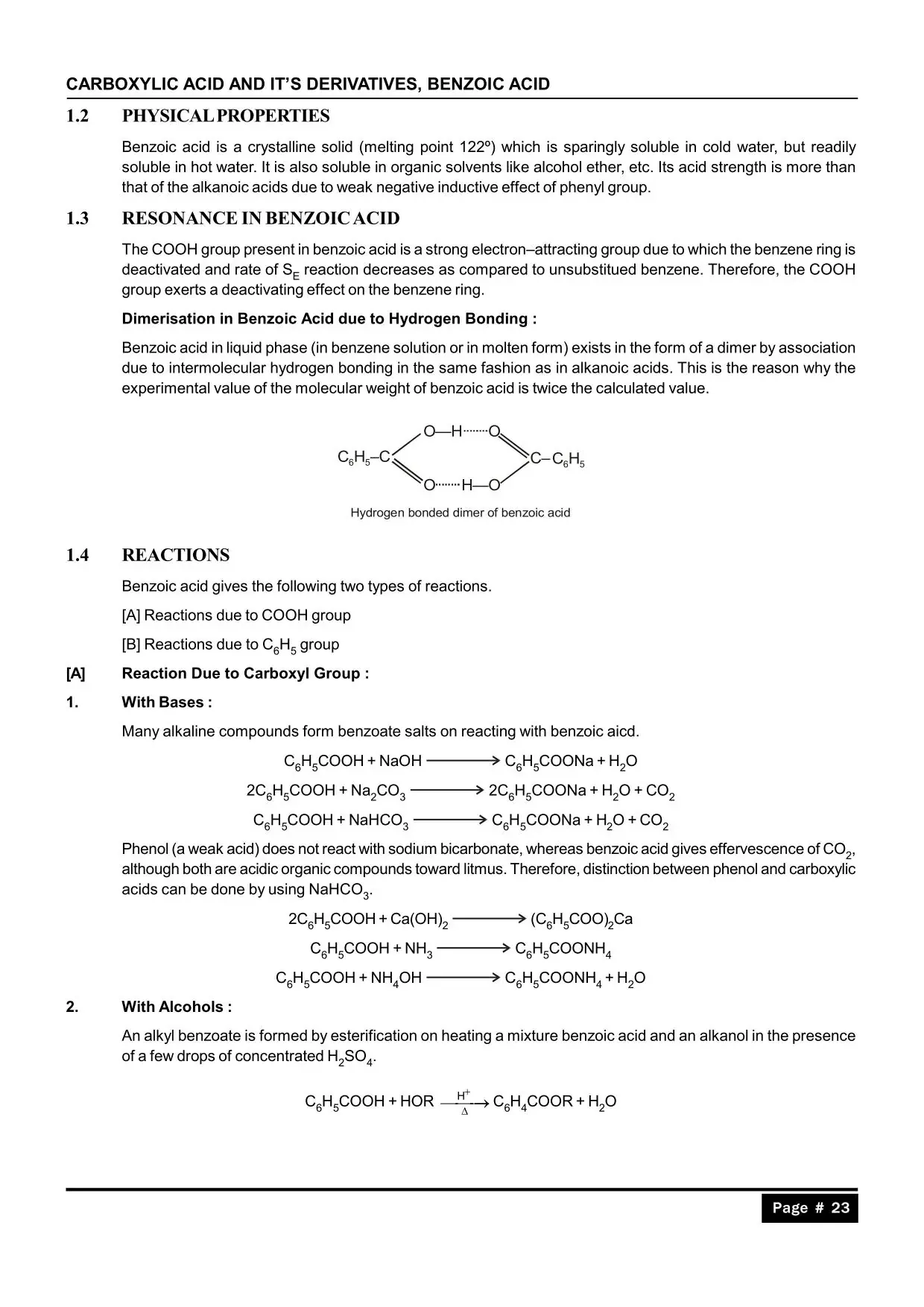
A carboxylic acid is an organic compound containing the –COOH (carboxyl) functional group. It is acidic because the carboxylate anion (RCOO⁻) formed after proton loss is stabilised by resonance — the negative charge delocalises equally over both oxygen atoms. This resonance stabilisation makes carboxylic acids significantly more acidic than alcohols or phenols.
What are the four main derivatives of carboxylic acid?
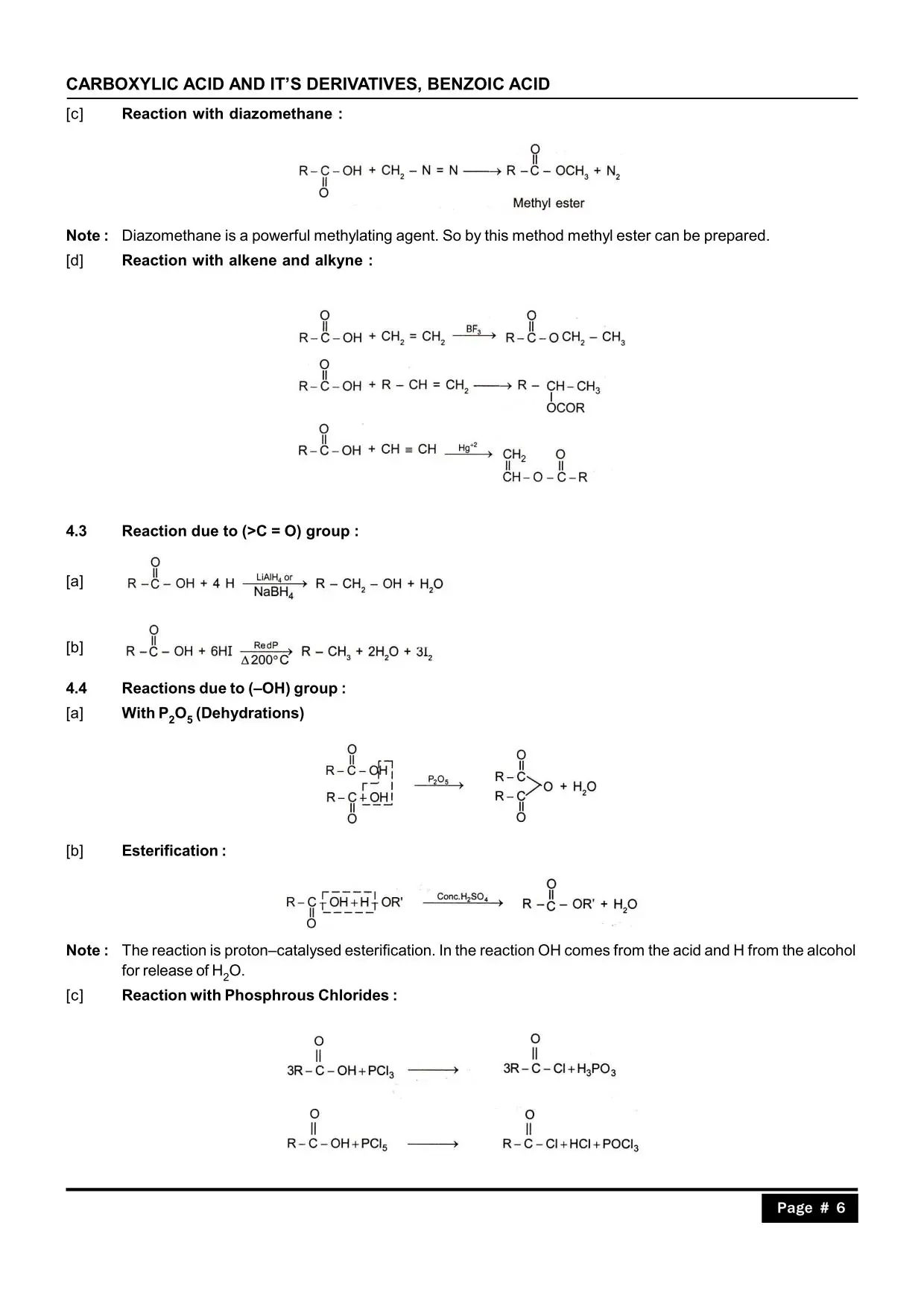
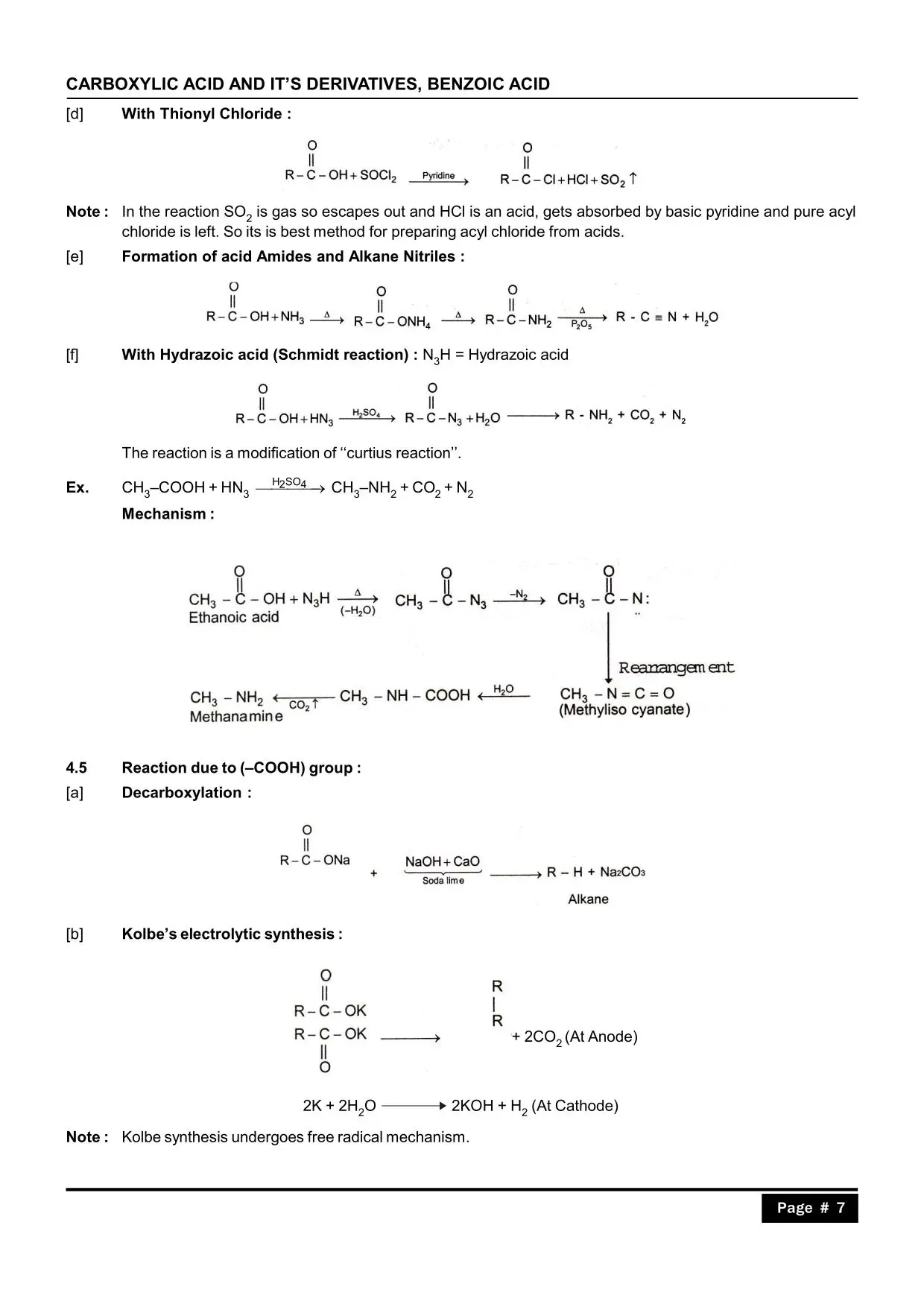
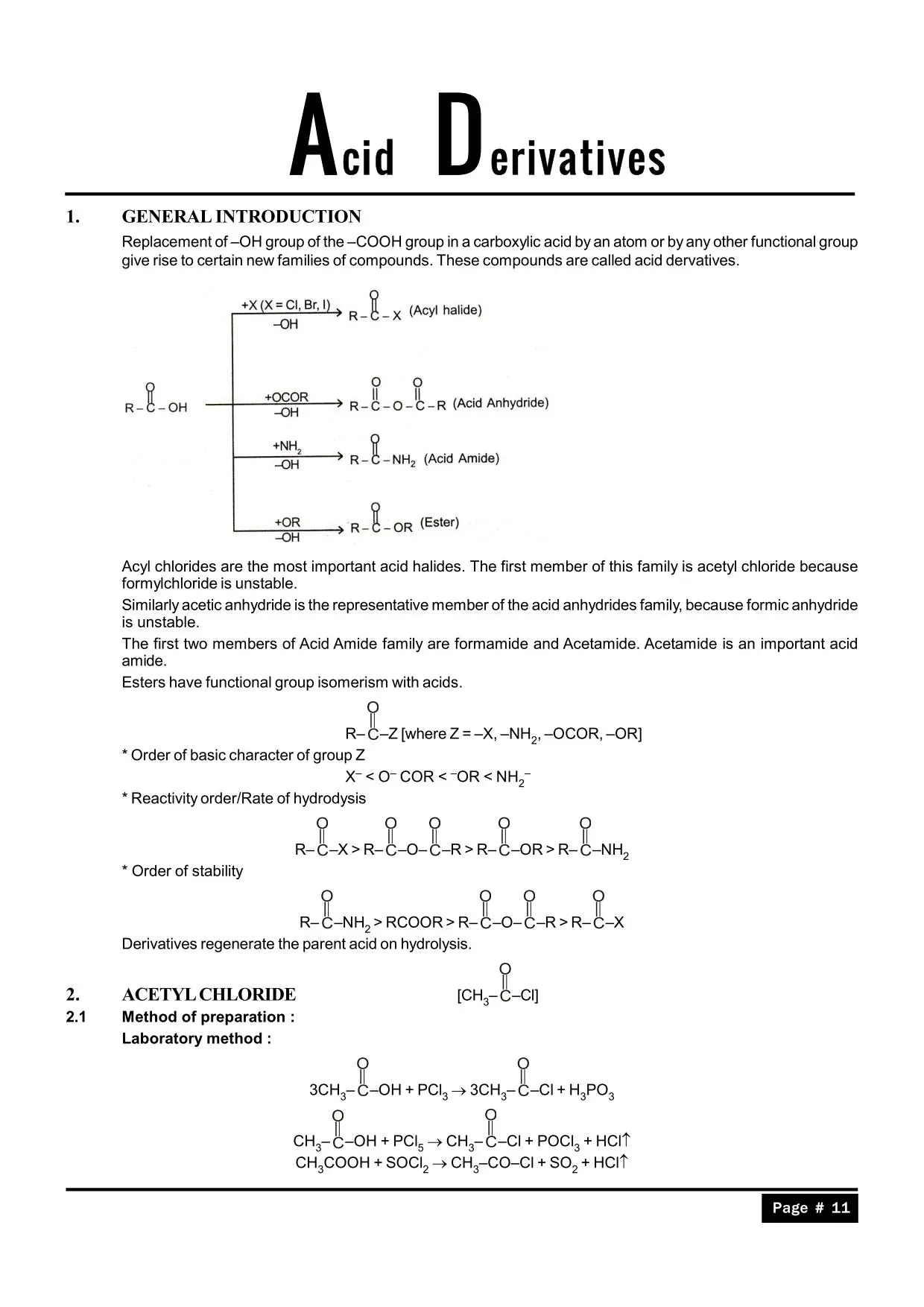
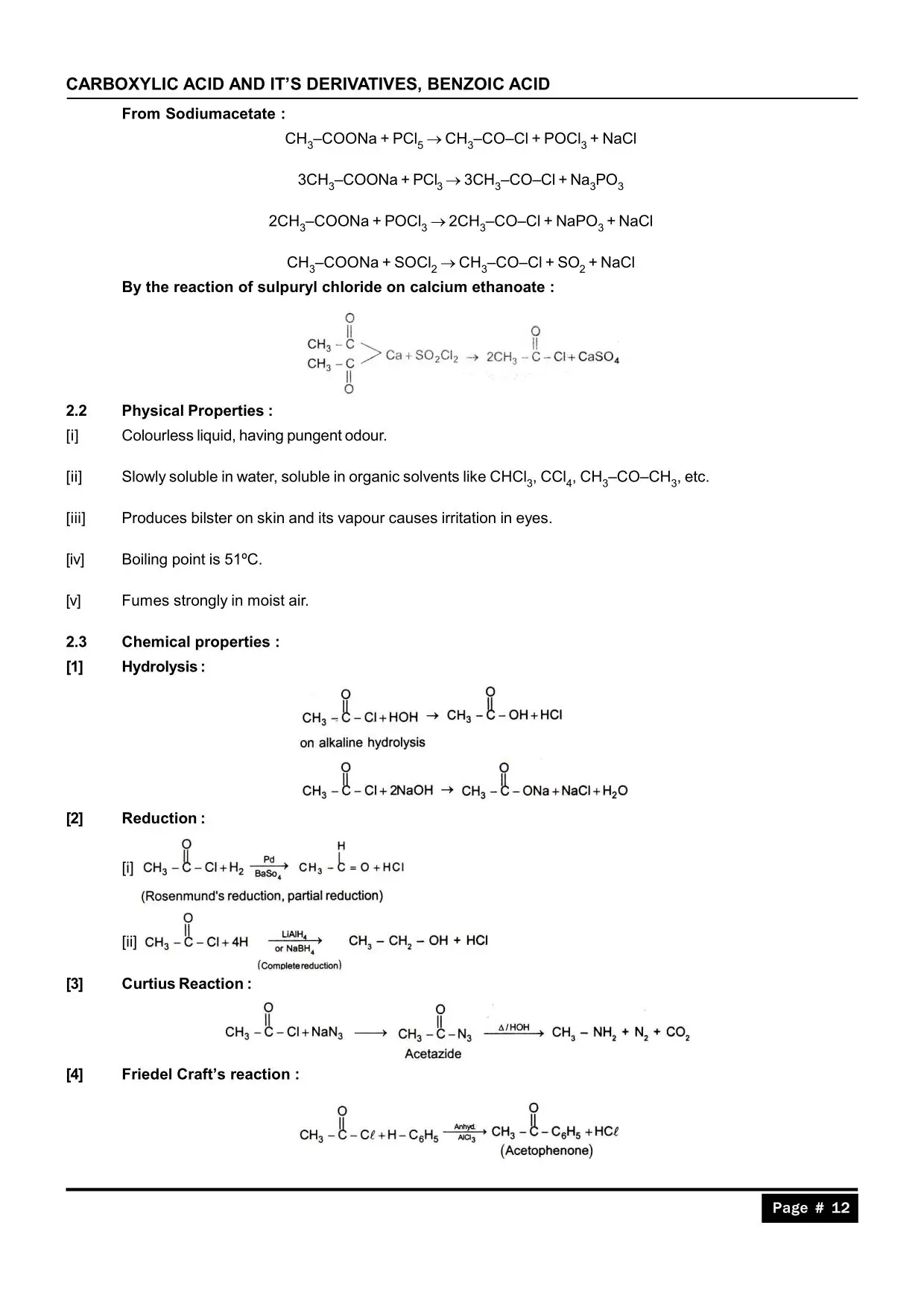
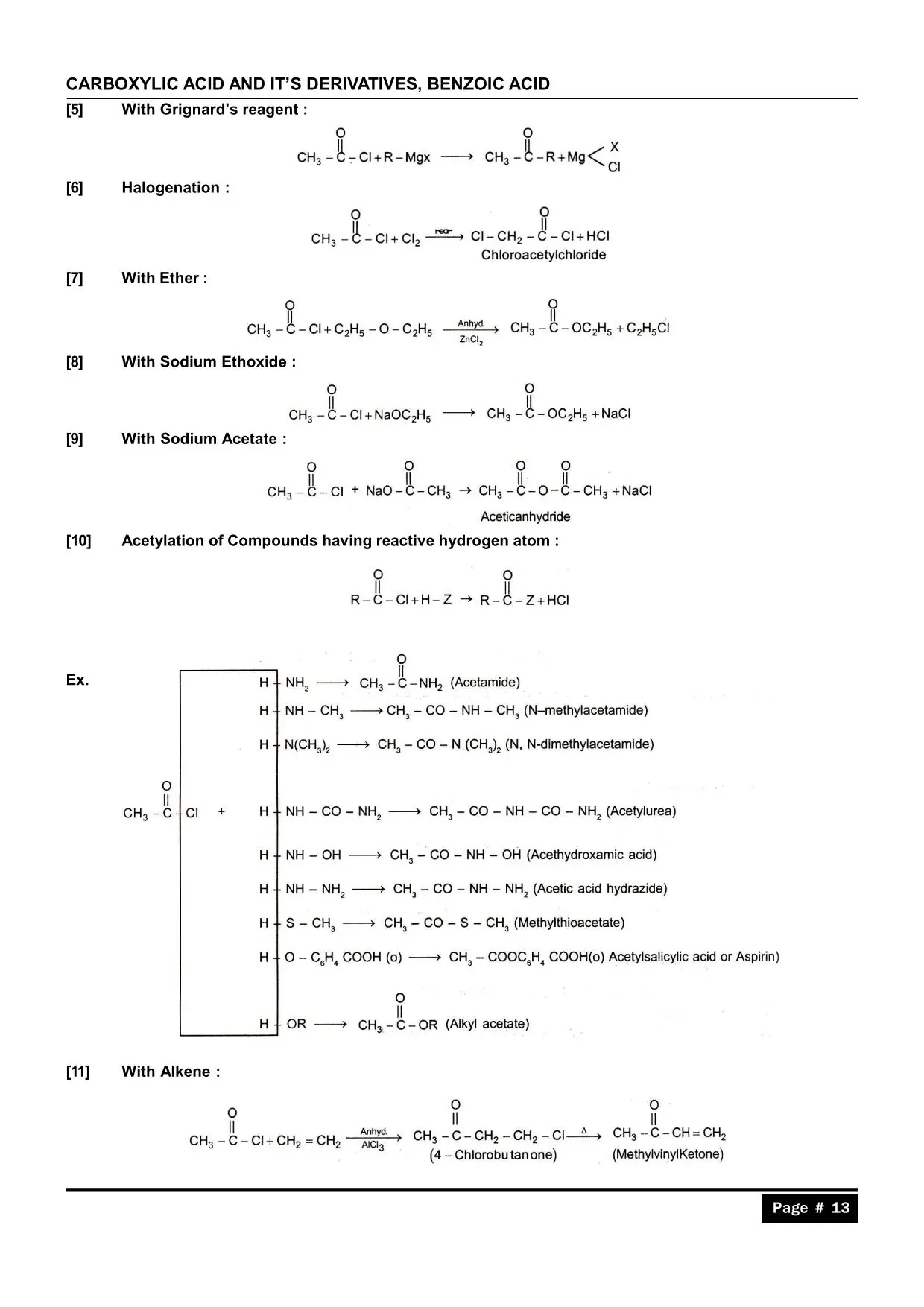
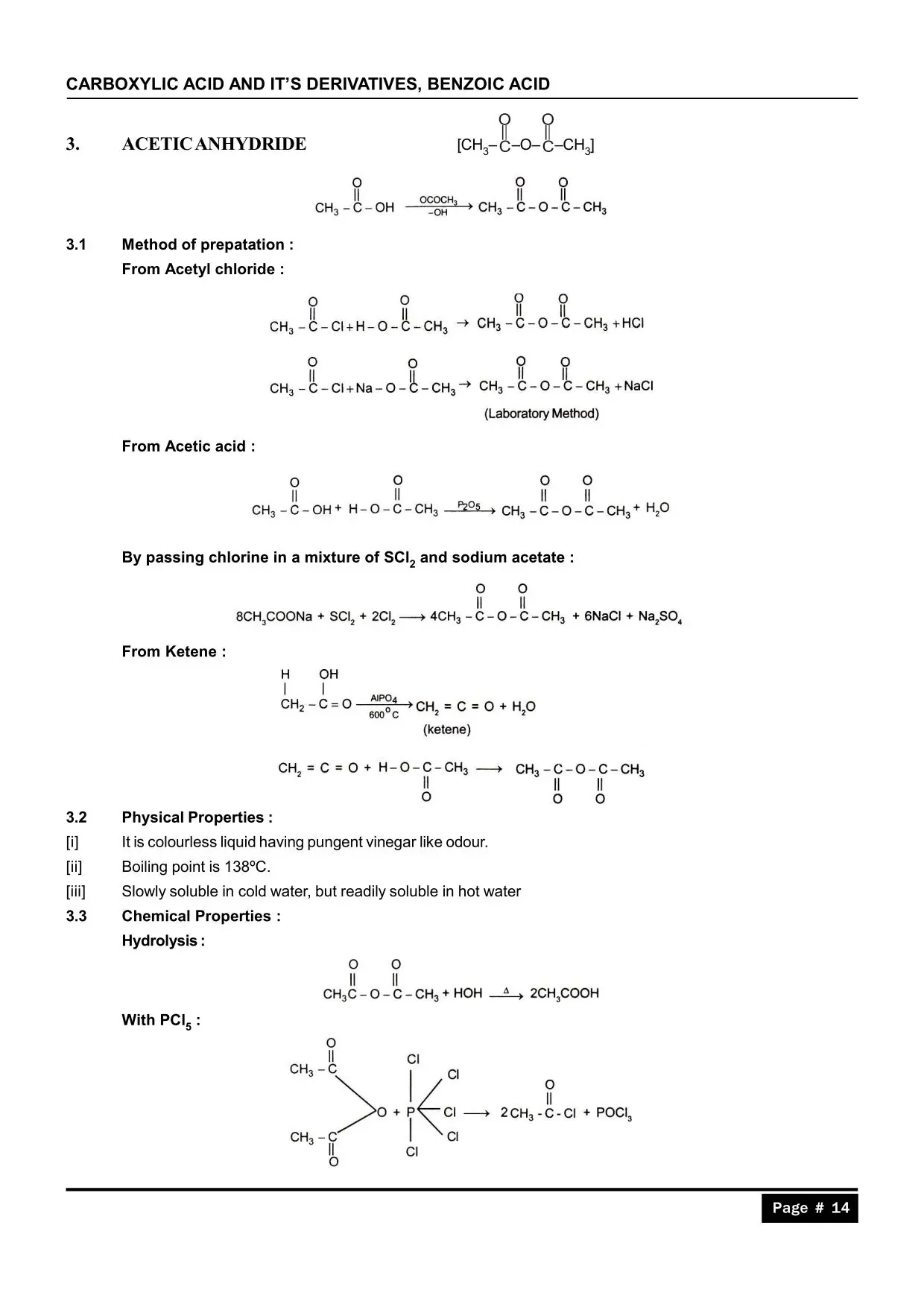
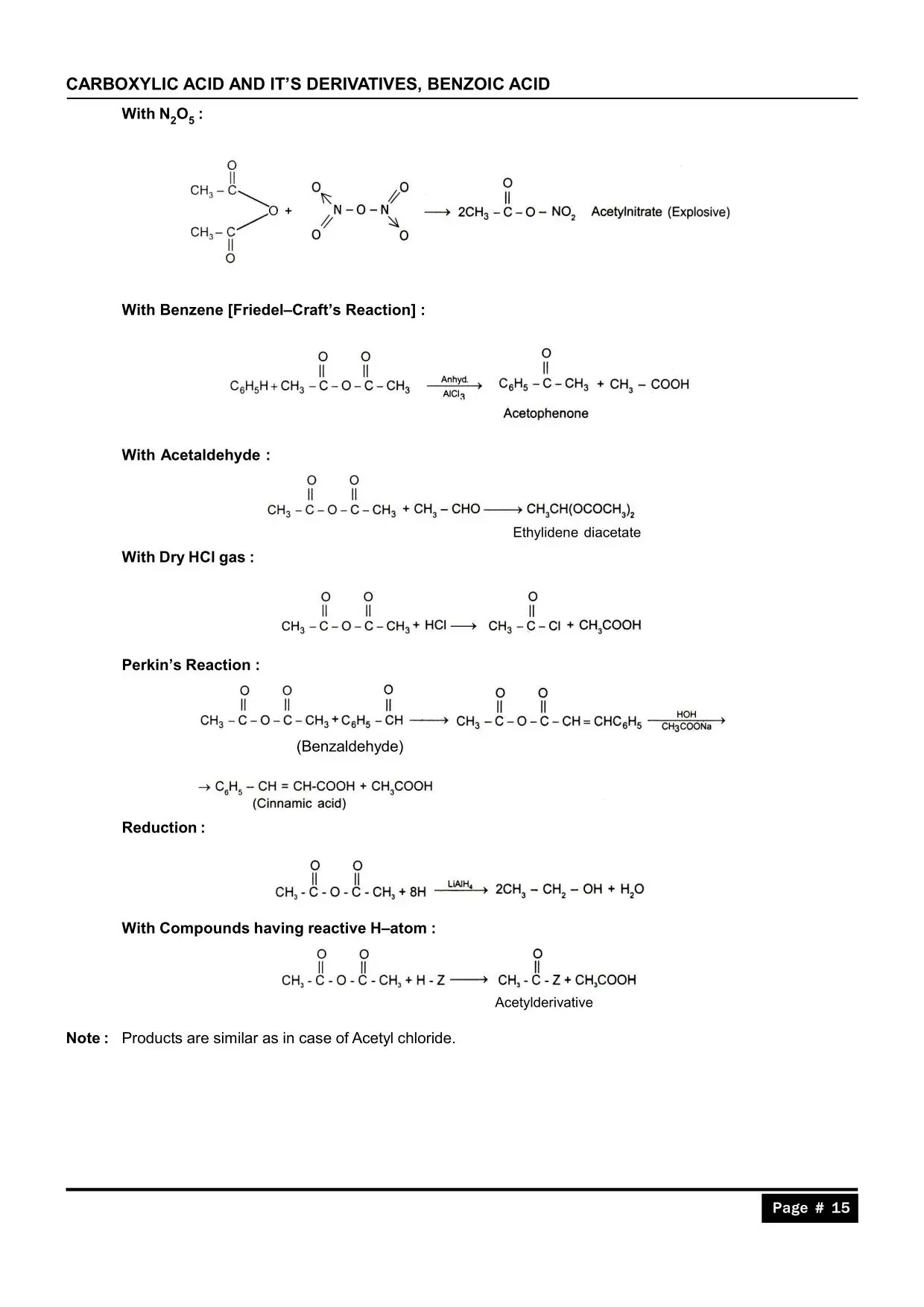
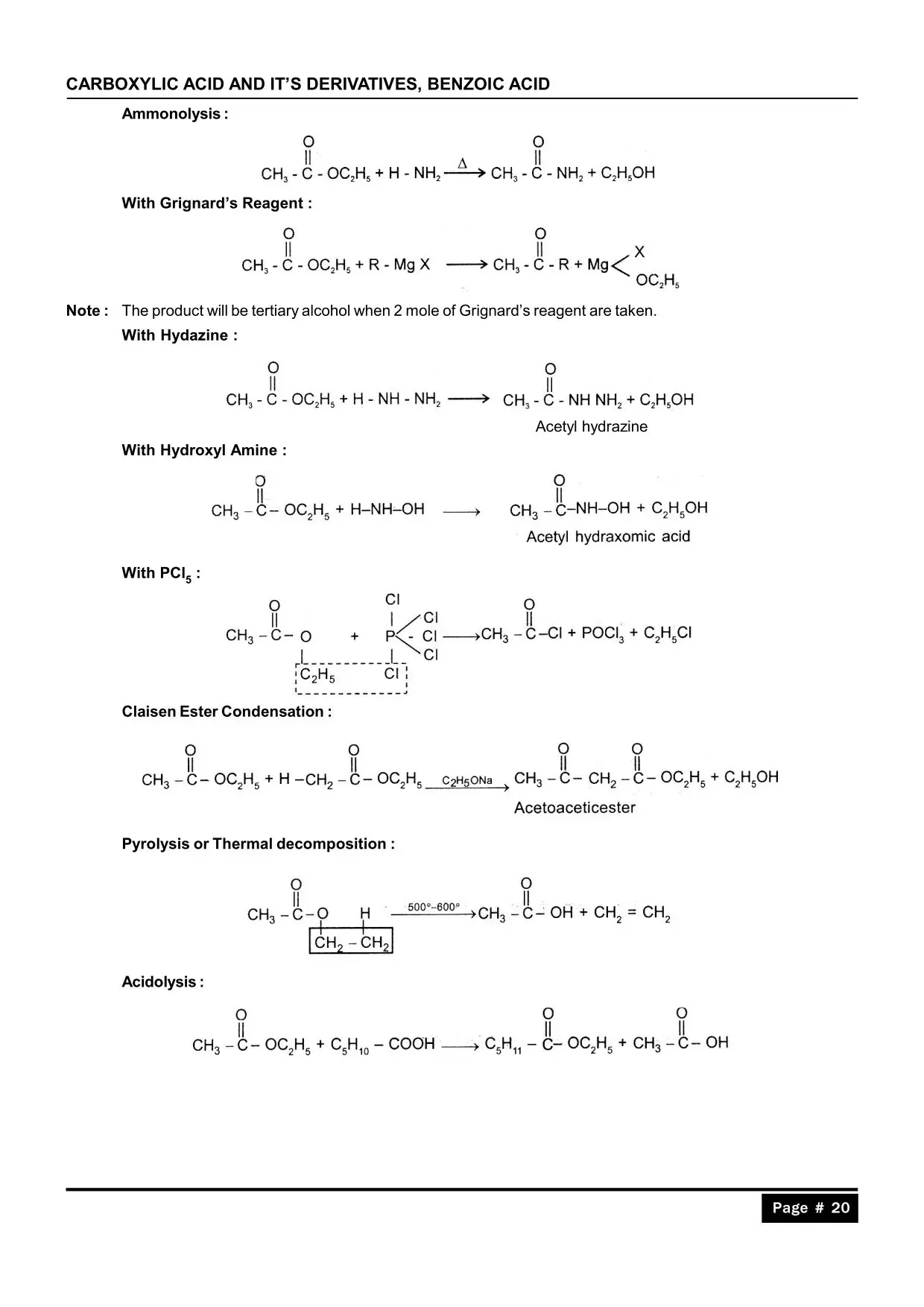
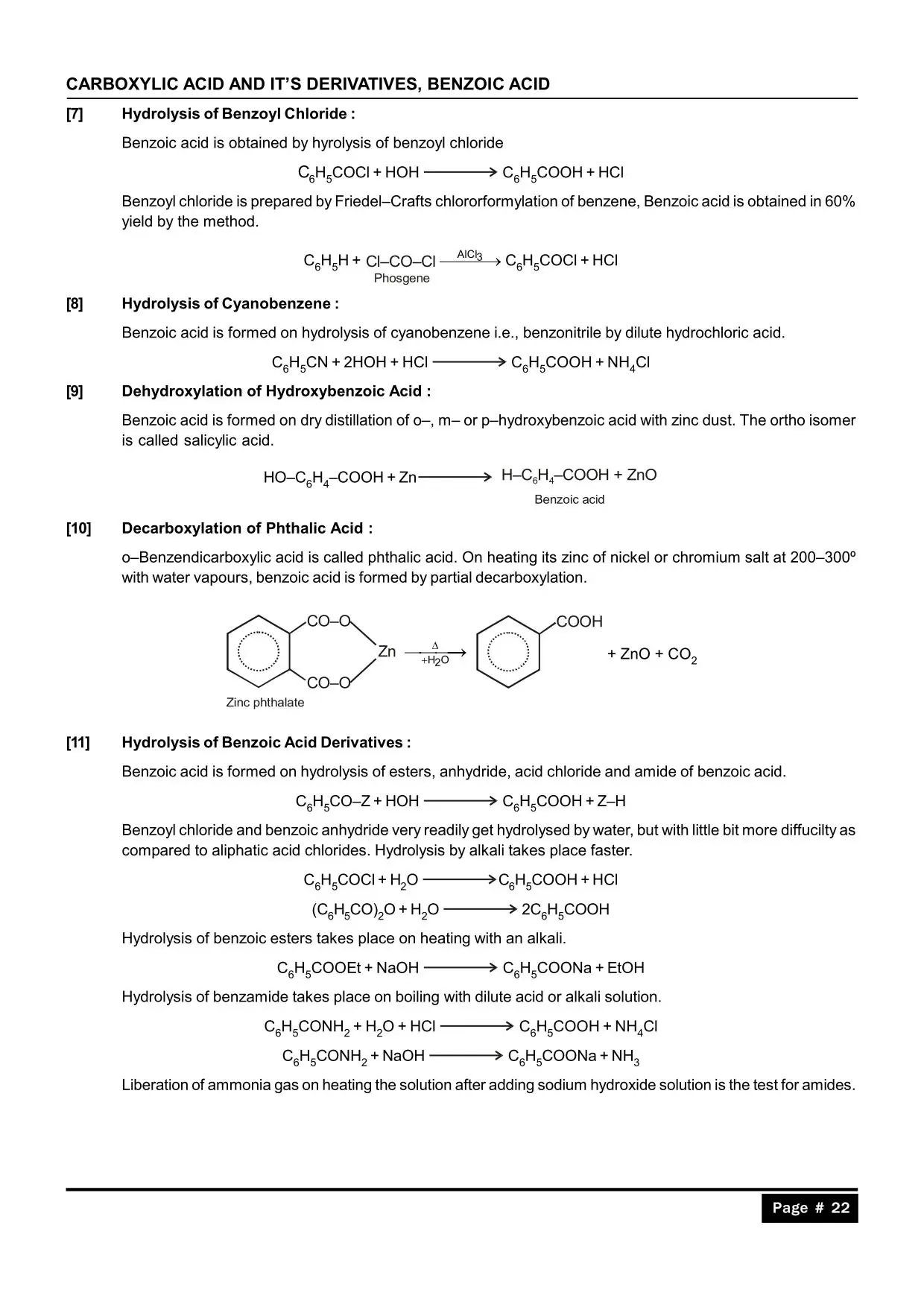
The four main derivatives are acid chlorides (RCOCl), acid anhydrides (RCO–O–OCR), esters (RCOOR'), and amides (RCONH₂). All are formed by replacing the –OH group of the carboxyl group with Cl, OCOR, OR', or NH₂ respectively. They all undergo nucleophilic acyl substitution, but at different rates depending on leaving group ability.
Which carboxylic acid derivative is most reactive?
Acid chlorides (acyl chlorides) are the most reactive carboxylic acid derivatives. The chloride ion (Cl⁻) is an excellent leaving group, which makes the tetrahedral intermediate collapse rapidly. The reactivity order is: acid chloride > anhydride > ester > amide. This order appears frequently in JEE Main multiple-choice questions.
What is the Hell–Volhard–Zelinsky (HVZ) reaction?
The HVZ reaction introduces a halogen at the α-carbon of a carboxylic acid using Cl₂ or Br₂ in the presence of red phosphorus. It works only on carboxylic acids that have at least one α-hydrogen. The mechanism proceeds through an acyl halide intermediate. It does not work on formic acid (no α-H) or on esters and amides.
How does acidity change with substituents on carboxylic acids — and why does this matter for JEE?
Electron-withdrawing groups (–F, –Cl, –NO₂, –CN) on the α-carbon increase acidity by stabilising the carboxylate anion through inductive withdrawal of electron density. Electron-donating groups (–CH₃, –C₂H₅) decrease acidity. For example, trichloroacetic acid (pKa ~0.66) is far stronger than acetic acid (pKa ~4.75). JEE Main regularly asks students to arrange acids in order of increasing pKa.
Team eSaral
eSaral Academic and Editorial Team
Team eSaral is the collective author profile for educational content created by eSaral’s teachers and academic contributors. The team draws on expertise from IIT graduates, doctors, experienced educators and subject specialists to develop resources for JEE, NEET and school students. Our articles aim to explain concepts clearly and help students study with confidence.
Related Posts
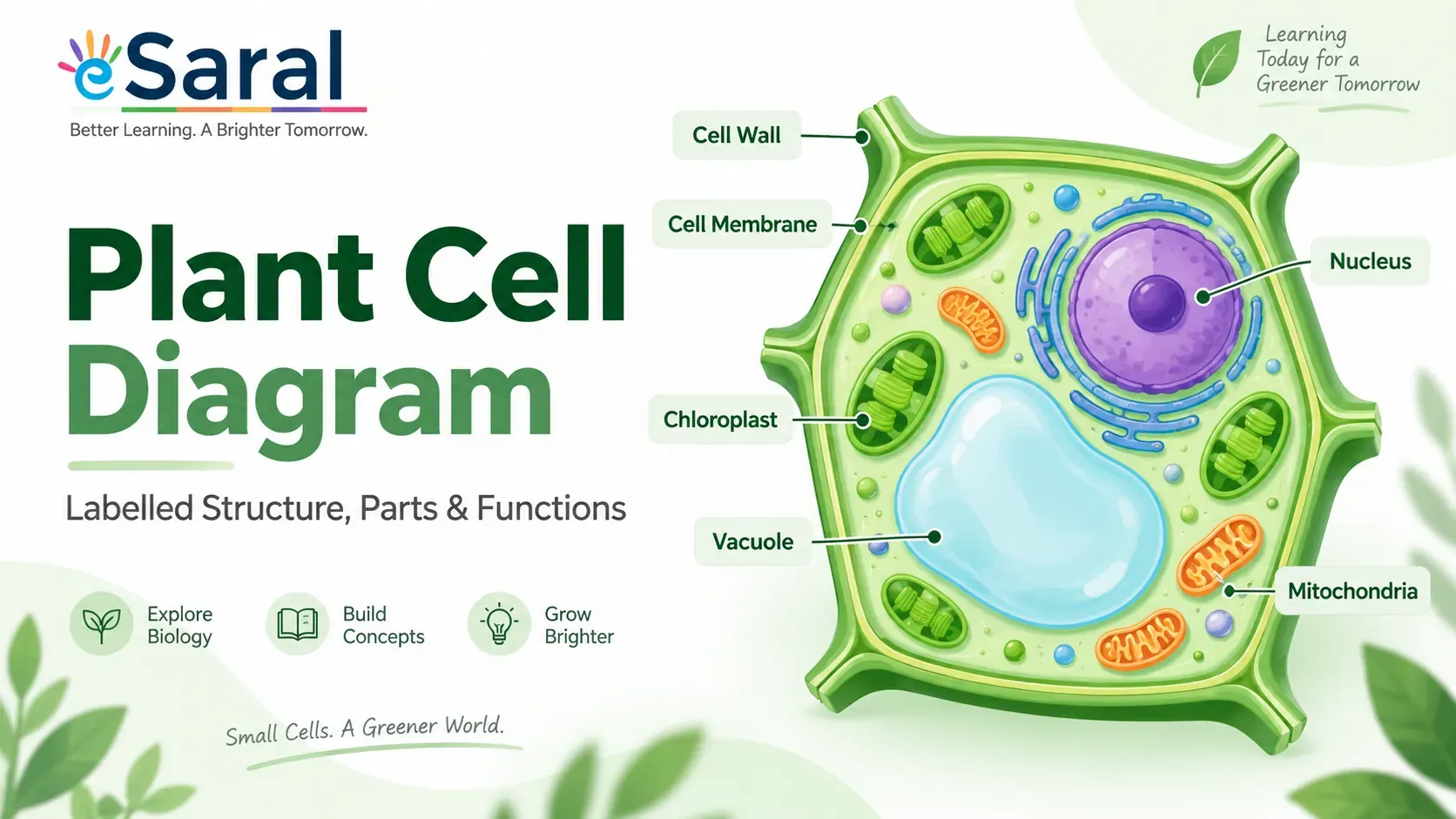
Plant Cell Diagram: Labelled Structure, Parts and Functions
Simple, labelled plant cell diagram with parts and functions. Covers plant cell structure for Class 6, 7, 8, 9, 10 and 11 students, CBSE-aligned.

Saransh Gupta Sir's Visit to IIT Patna: Hostel Life, Placements & Lessons for JEE Aspirants
Inside Saransh Gupta Sir's IIT Patna visit — hostel life, the library, placements, internships, and real advice for JEE aspirants from students living the IIT dream.
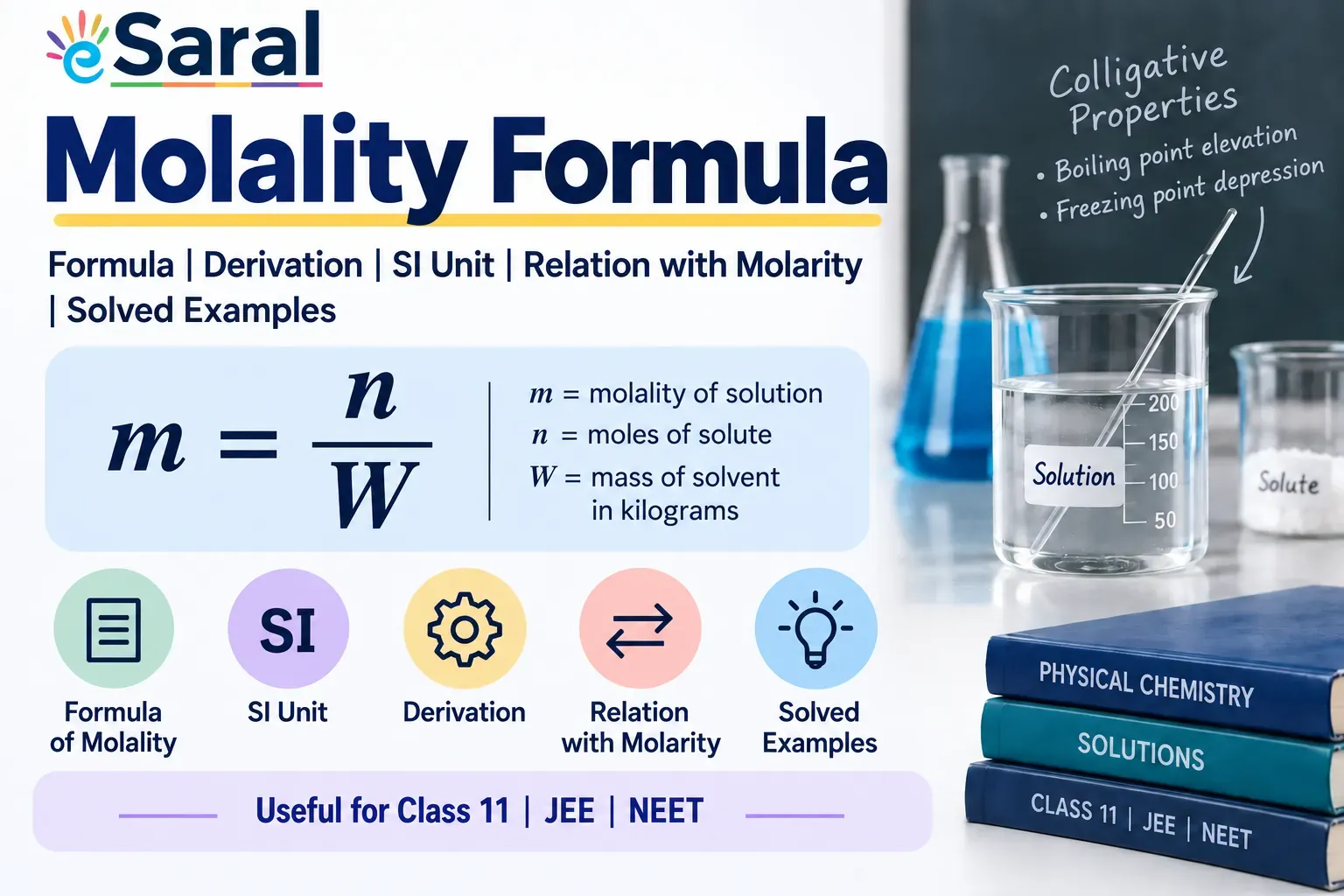
Molality Formula: Formula for Molality, Derivation & Solved Examples
Molality formula is $m = \dfrac{n}{W}$. Learn the formula of molality, its SI unit, derivation, relation with molarity, and solved examples for Class 11, JEE and NEET.
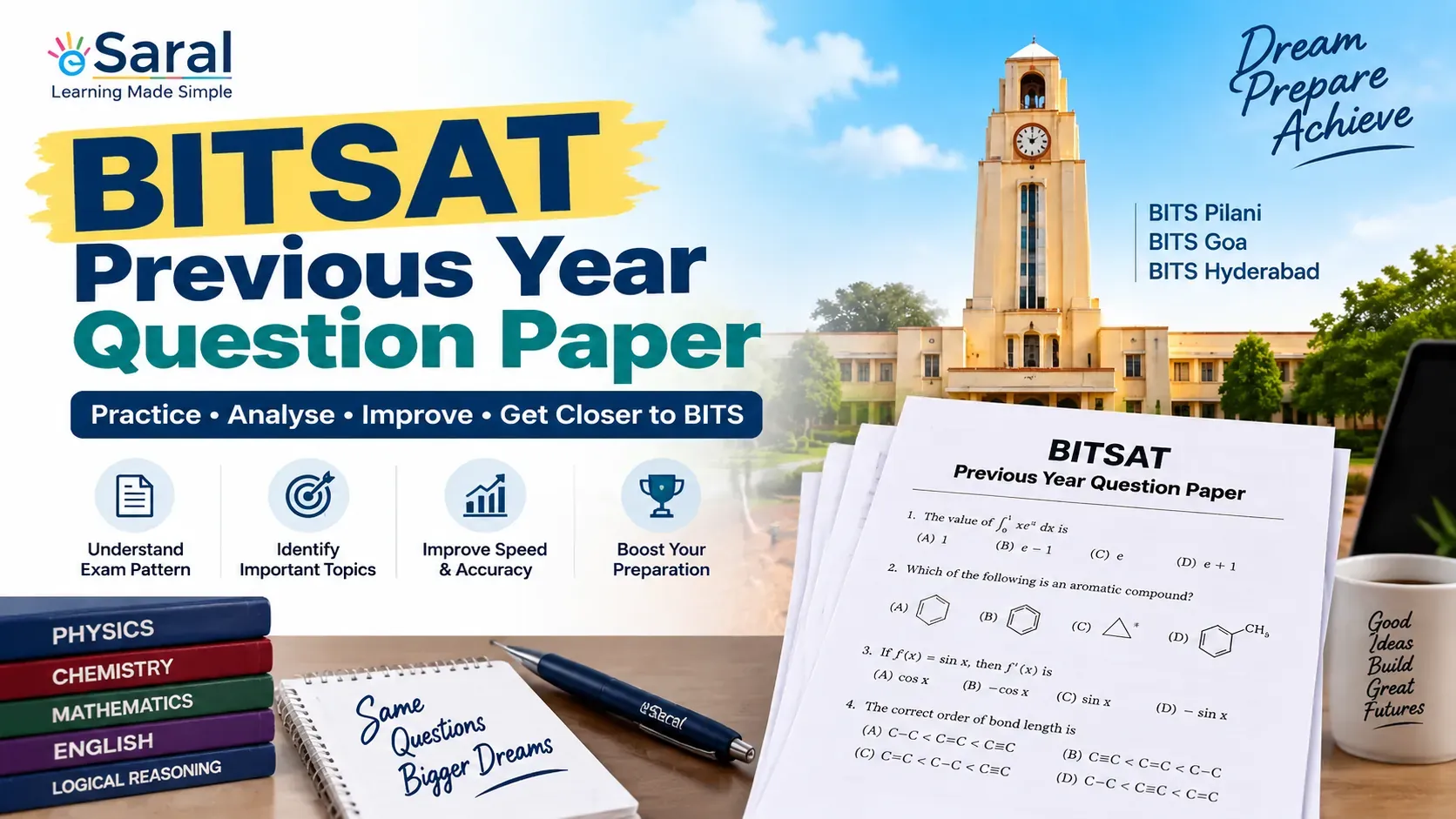
BITSAT Previous Year Question Paper PDF
Download BITSAT previous year question papers PDF. Get year-wise BITSAT PYQs, memory-based papers, exam pattern, and preparation tips to improve your BITSAT preparation.

Teachers’ Day 2026 at eSaral Gurukul: Celebrating the Bond Between Students, Teachers & Mentors
See how Teachers’ Day 2026 was celebrated at eSaral Gurukul, reflecting the bond among students, teachers, and mentors, and the role of guidance beyond academics.
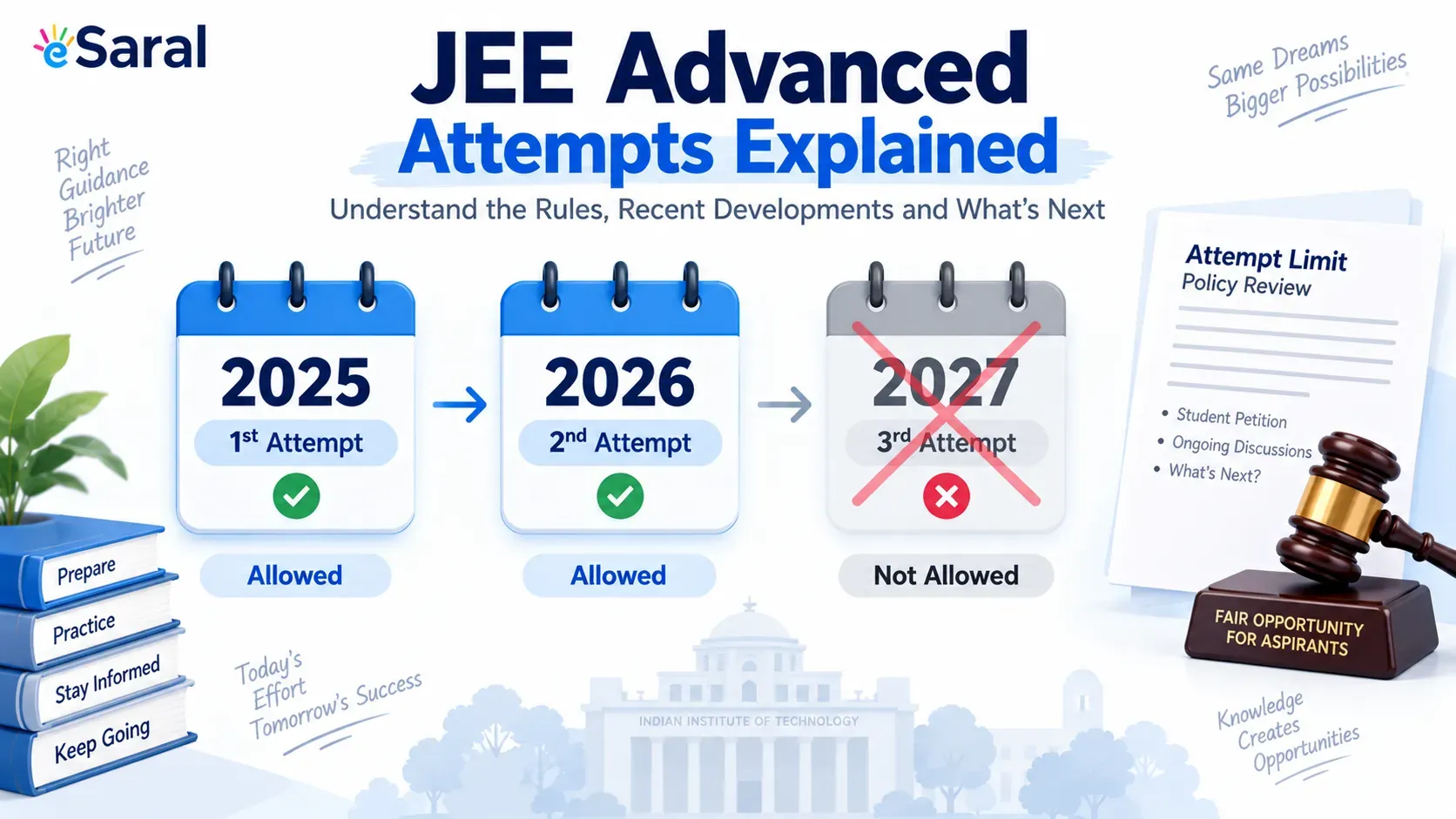
JEE Advanced Attempts: Can You Give It a Third Time? Rules Explained
JEE Advanced attempts: current rule is 2 consecutive years only: full eligibility criteria, the 2025 third-attempt controversy, and the latest 2026 petition news.

Best JEE Preparation App
Best JEE preparation app for Main & Advanced: AI mock tests, live doubt-solving, thousands of practice questions. JEE preparation app for droppers & Class 11-12.
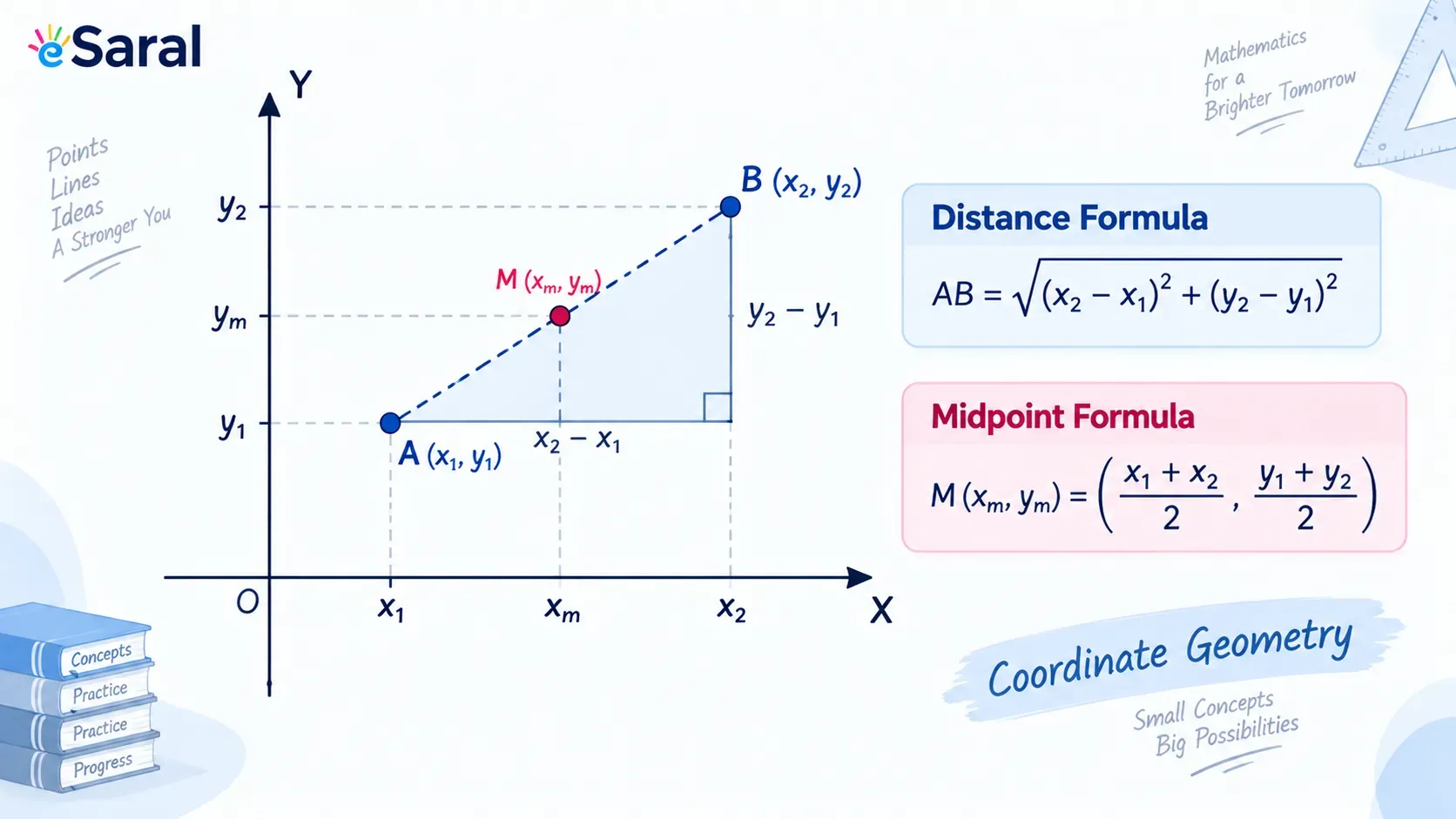
Coordinate Geometry Class 10: Formulas, Notes & Solved Examples
Coordinate geometry class 10: complete CBSE formulas — distance, section, midpoint and area of triangle — with derivation, notes and solved examples.
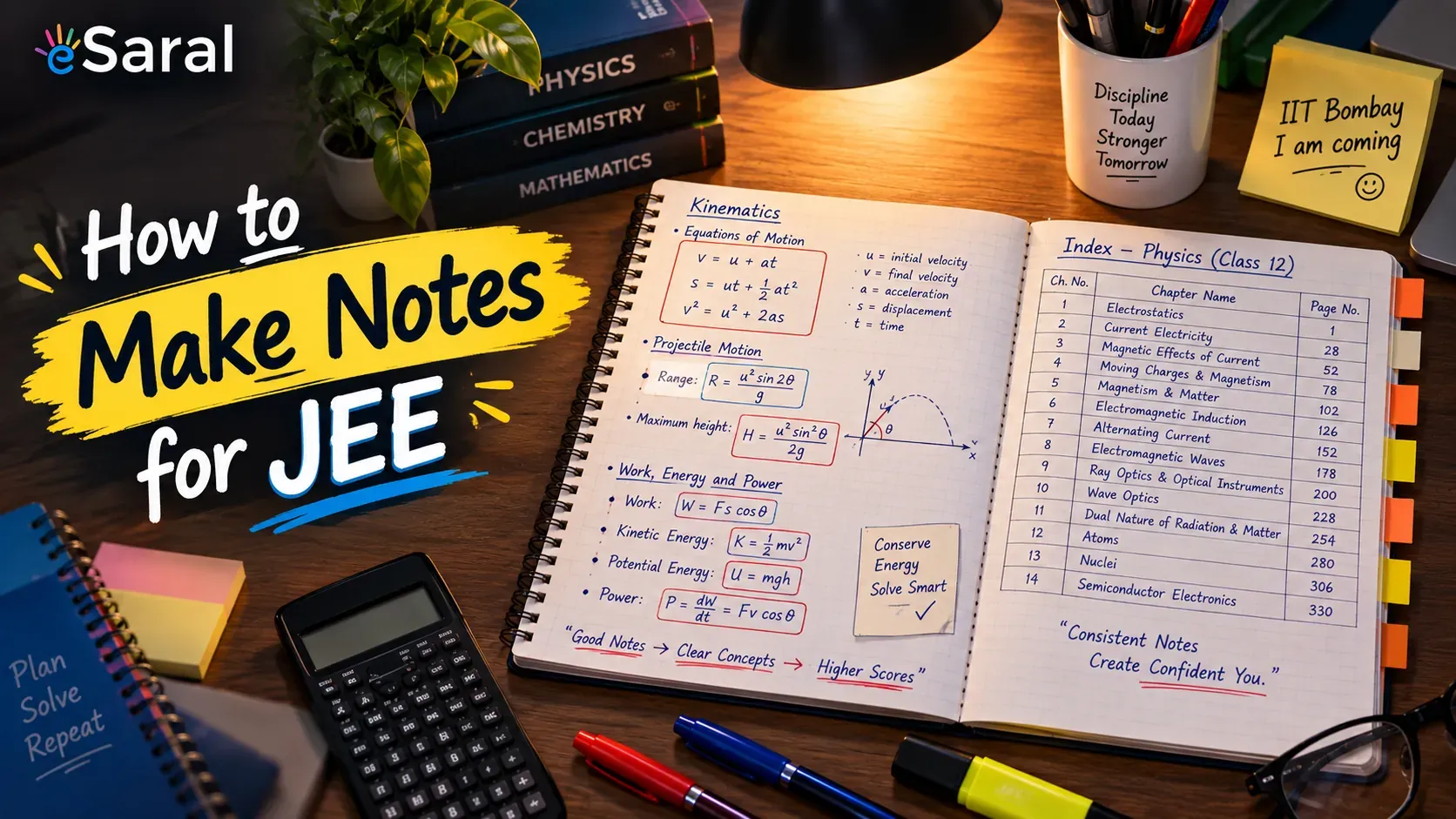
How to make Notes For JEE Smart Notes Strategy of an AIR 41
Learn how to make notes for JEE the way toppers do — indexing, shorthand, and smart short notes for JEE that cut revision time to just 5–7 days.
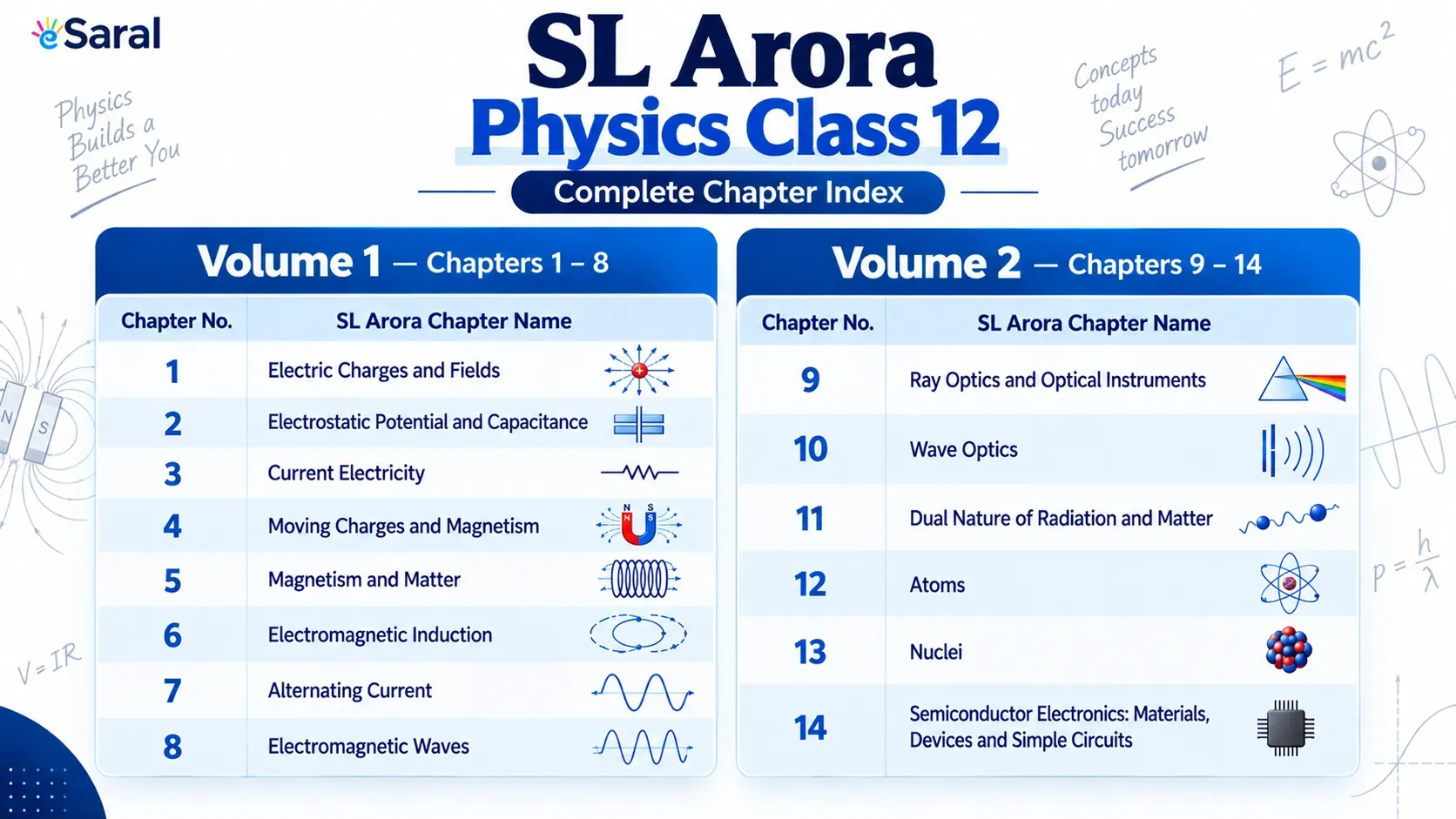
SL Arora Physics Class 12 Index – Chapter List for Volume 1 & 2
SL Arora Physics Class 12 index — complete chapter list for Volume 1 & 2, mapped to NCERT solutions for board, JEE Main, and NEET preparation.