
Essay on Environmental Pollution in English – 10 Lines, 100 to 500 Words

eSaral Academic and Editorial Team
Summary
An essay on environmental pollution explains how harmful substances released mainly by human activities contaminate the air, water and soil and create noise and other forms of pollution. It covers the types, causes and effects of environmental pollution and the steps that governments and individuals can take to control it. This page gives an essay on environmental pollution in English in 10 lines and in 100, 150, 200, 250, 300, 400 and 500 words, along with a paragraph and a short speech.
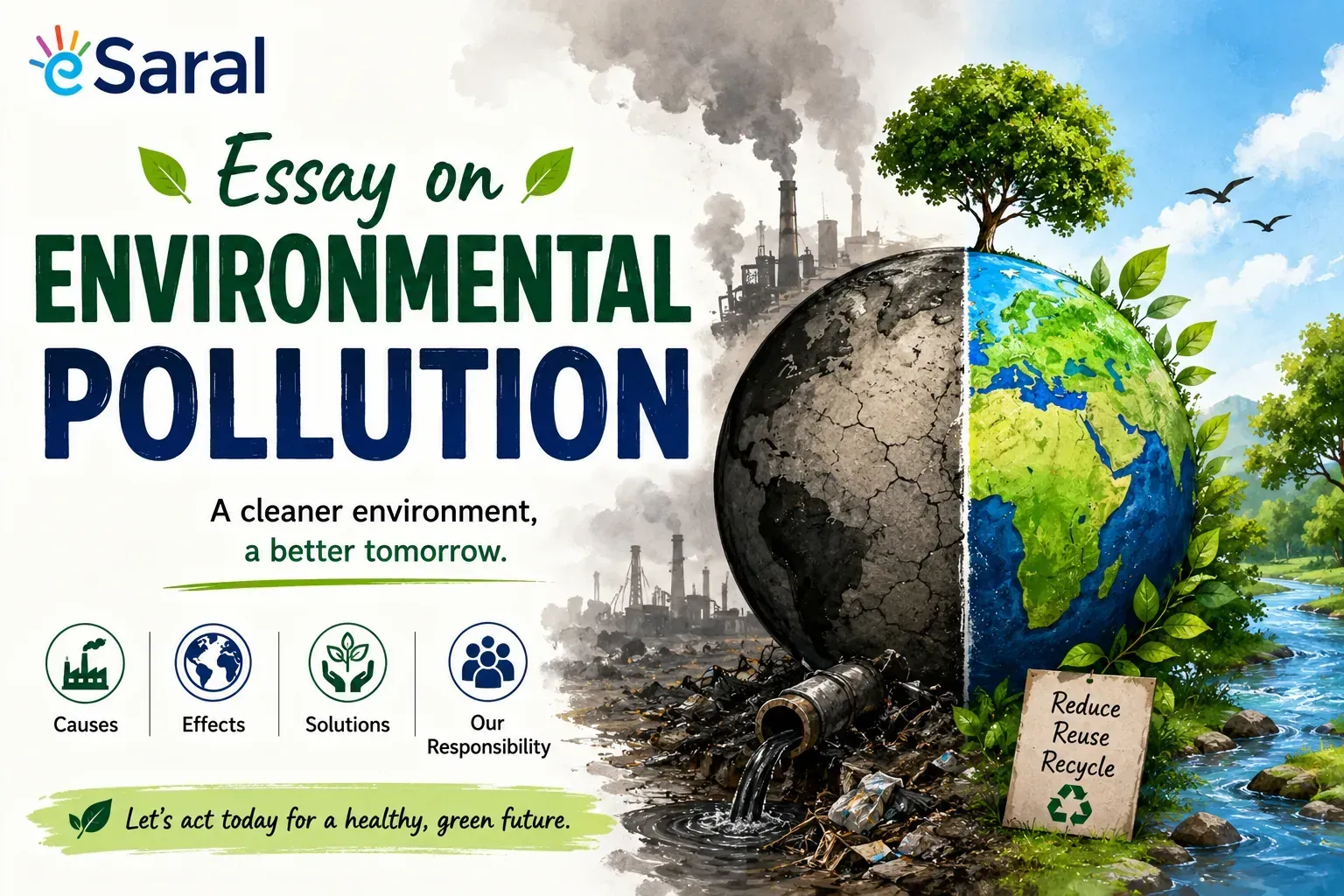
The environment includes everything around us: air, water, land, plants, animals and people. Environmental pollution happens when harmful materials, called pollutants, are added to the environment faster than nature can break them down or remove them. Smoke from vehicles and factories, untreated sewage, plastic waste, chemical fertilisers and loud noise are common examples.
An essay on environmental pollution is a common topic in school exams, essay competitions and debates. Each essay on environmental pollution below, also searched as an environmental pollution essay in English, is written in simple English for Classes 3 to 12 and counted to stay close to its word limit.
How to Write an Essay on Environmental Pollution
Follow this simple format for any essay on environmental pollution, whatever the word limit.
Part | What to Write |
|---|---|
Introduction | Define environmental pollution and name its main types |
Body | Explain the causes and effects of each type, with simple examples |
Conclusion | End the essay on environmental pollution with practical ways to control it |
Types, Causes and Effects of Environmental Pollution
Type of Pollution | Main Causes | Main Effects |
|---|---|---|
Air pollution | Vehicle exhaust, factories, burning coal, crop residue and waste, construction dust | Breathing problems such as asthma, heart and lung diseases, smog, acid rain, global warming |
Water pollution | Untreated sewage, industrial waste, fertilisers and pesticides, plastic, oil spills | Water-borne diseases like cholera and typhoid, death of fish, unsafe drinking water |
Soil (land) pollution | Excess fertilisers and pesticides, plastic and solid waste, industrial and mining waste | Lower soil fertility, poisonous chemicals entering food, harm to soil organisms |
Noise pollution | Traffic, loudspeakers, construction, factories, firecrackers | Stress, poor sleep, headaches, hearing loss with long exposure |
Thermal pollution | Hot water released from power plants and factories | Less oxygen in water, harm to aquatic life |
Light pollution | Excessive outdoor lighting in cities | Disturbed sleep, confusion in birds and insects, fewer stars visible at night |
Use this table as a quick plan for any essay on environmental pollution that asks about types, causes or effects.
10 Lines on Environmental Pollution
Younger students can write these 10 lines instead of a full essay on environmental pollution.
- Environmental pollution means making the air, water and soil dirty and harmful.
- The main types are air, water, soil and noise pollution.
- Smoke from vehicles and factories pollutes the air.
- Sewage and factory waste pollute rivers and lakes.
- Plastic and chemical fertilisers pollute the soil.
- Loud horns and loudspeakers cause noise pollution.
- Pollution causes diseases like asthma, cholera and typhoid.
- It also harms plants, animals and birds.
- We can reduce pollution by planting trees, using less plastic and saving electricity.
- A clean environment is necessary for a healthy life.
Long and Short Essay on Environmental Pollution
Pick the essay on environmental pollution that matches your word limit.
Short Essay on Environmental Pollution in 100 Words
This short essay on environmental pollution suits Classes 3 to 5.
Environmental pollution means adding harmful things to the air, water and soil. The main types of pollution are air pollution, water pollution, soil pollution and noise pollution.
Smoke from vehicles and factories makes the air dirty. Sewage, garbage and chemicals pollute rivers and lakes. Plastic and too many chemical fertilisers spoil the soil. Loud horns and loudspeakers cause noise pollution.
Pollution makes people and animals sick. It causes breathing problems and water-borne diseases.
We can reduce pollution by planting trees, using public transport, avoiding plastic and throwing waste in dustbins. A clean environment keeps everyone healthy.
Essay on Environmental Pollution in 150 Words
This 150-word essay on environmental pollution suits Classes 4 to 6.
Environmental pollution is the contamination of air, water and soil by harmful substances called pollutants. Most pollution is caused by human activities, and it affects the health of people, animals and plants.
Air pollution is caused by smoke from vehicles, factories, power plants and the burning of waste. It leads to breathing problems like asthma and contributes to global warming. Water pollution occurs when sewage, industrial waste and chemicals are released into rivers and lakes, causing diseases like cholera and typhoid and killing fish. Soil pollution is caused by plastic, garbage and the overuse of fertilisers and pesticides, which reduces soil fertility. Noise from traffic and loudspeakers disturbs sleep and causes stress.
We can reduce environmental pollution by planting trees, using public transport, saving electricity, avoiding single-use plastic and disposing of waste properly. Everyone, from children to governments, must work together to keep the environment clean and healthy.
Essay on Environmental Pollution in 200 Words
This essay on environmental pollution suits Classes 5 to 7.
Environmental pollution is one of the most serious problems facing the world today. It means the addition of harmful substances to the environment, which damages the air we breathe, the water we drink and the soil that grows our food.
Types and causes
The main types of environmental pollution are air, water, soil and noise pollution. Air pollution comes from vehicle exhaust, factories, power plants and the burning of crop residue and garbage. Water pollution is caused by untreated sewage, industrial waste and farm chemicals. Soil pollution results from plastic waste, chemical fertilisers and pesticides. Noise pollution is caused by traffic, construction and loudspeakers.
Effects
Polluted air causes asthma, lung infections and heart problems. Polluted water spreads diseases like cholera, typhoid and diarrhoea. Polluted soil reduces crop yields and allows harmful chemicals to enter our food. Pollution also harms wildlife, damages buildings and monuments, and adds to climate change. Children and elderly people are usually affected the most.
Conclusion
Environmental pollution can be reduced if we all act responsibly. Planting trees, using public transport, saving energy, recycling waste and avoiding single-use plastic are simple steps. Governments must also make and enforce strict rules for industries. A clean environment is our right and our responsibility.
Essay on Environmental Pollution in 250 Words
This essay on environmental pollution uses sub-headings, which suit Classes 6 to 8.
Introduction
Environmental pollution is the contamination of the natural environment by harmful substances, mainly as a result of human activities. It affects the air, water and soil and harms the health of every living being. With growing population, industries and vehicles, pollution has become a major challenge for India and the world. Many Indian cities face poor air quality, especially in winter.
Air and water pollution
Air pollution is caused by smoke from vehicles, factories and power plants, the burning of crop residue and waste, and dust from construction. It causes breathing problems, heart disease and smog. Water pollution occurs when sewage, industrial waste and farm chemicals enter rivers, lakes and seas. It spreads water-borne diseases and kills aquatic life.
Soil and noise pollution
Soil pollution is caused by the overuse of chemical fertilisers and pesticides, plastic waste and industrial waste. It reduces soil fertility and allows chemicals to enter food crops. Noise pollution from traffic, construction and loudspeakers causes stress, sleep problems and, with long exposure, hearing loss. Birds and animals are also disturbed by loud noise.
Control of environmental pollution
Pollution can be controlled through joint efforts. Industries should treat waste and reduce emissions. Cities should improve public transport and waste management. Farmers can use organic manure and fewer pesticides. As individuals, we can plant trees, save electricity, avoid single-use plastic, segregate waste at home and avoid burning garbage.
Conclusion
Environmental pollution affects our health and the future of our planet. If every person, industry and government takes responsibility, we can make our surroundings cleaner and healthier for future generations.
Essay on Environmental Pollution in 300 Words
This essay on environmental pollution suits Classes 7 to 9.
Introduction
The environment provides us with clean air, water and fertile land. Environmental pollution is the introduction of harmful substances into this environment in amounts that damage living beings and natural systems. It is caused mostly by human activities and has become one of the biggest challenges of modern times.
Causes of environmental pollution
The main causes of environmental pollution are:
- Burning fossil fuels: Vehicles, factories and power plants that burn coal, petrol and diesel release smoke, soot and gases like sulphur dioxide and nitrogen oxides.
- Industrial waste: Many industries release chemicals and heavy metals into the air, water and soil.
- Agriculture: Overuse of fertilisers and pesticides pollutes soil and water.
- Poor waste management: Plastic, garbage and untreated sewage pollute land and water bodies.
- Deforestation: Cutting forests reduces the natural absorption of carbon dioxide and leads to soil erosion.
Effects of environmental pollution
Polluted air causes asthma, bronchitis and heart diseases. Polluted water spreads cholera, typhoid and diarrhoea. Chemicals in soil enter crops and our food. Pollution harms wildlife and contributes to acid rain and global warming. Noise pollution causes stress and disturbs sleep. Smog in winter reduces visibility and makes breathing difficult, especially for children and elderly people.
Steps to control pollution
- Use public transport, bicycles or electric vehicles where possible.
- Save electricity and use renewable energy like solar power.
- Treat industrial waste and sewage before release.
- Reduce, reuse and recycle, and avoid single-use plastic.
- Plant trees and protect forests.
- Do not burn garbage, leaves or crop residue.
In India, laws such as the Environment (Protection) Act, 1986 and programmes like the National Clean Air Programme help control pollution.
Conclusion
Environmental pollution harms our health, nature and future. By changing our habits and supporting strong rules, we can protect the environment for ourselves and for future generations.
Essay on Environmental Pollution in 400 Words
This detailed essay on environmental pollution suits Classes 8 to 10.
Introduction
Everything around us, including air, water, land, plants and animals, makes up our environment. Environmental pollution is the addition of harmful substances, called pollutants, to the environment at levels that damage health and natural systems. Pollution can be natural, such as dust storms and volcanic ash, but most of today's pollution comes from human activities. As cities grow and more vehicles come on the roads, the problem becomes more serious.
Types of environmental pollution
The main types of environmental pollution are air, water, soil and noise pollution. Thermal pollution, caused by hot water from power plants, and light pollution, caused by excessive outdoor lighting, are other forms.
Causes
Air pollution is caused by vehicle exhaust, factories, coal-based power plants, burning of crop residue and garbage, and construction dust. Water pollution comes from untreated sewage, industrial effluents, farm runoff, plastic waste and oil spills. Soil pollution is caused by the excessive use of fertilisers and pesticides, dumping of solid and plastic waste, and mining. Noise pollution comes from traffic, loudspeakers, construction work and firecrackers.
Effects
The effects of environmental pollution are serious. The World Health Organization (WHO) estimates that outdoor and household air pollution together are linked to about 7 million premature deaths worldwide each year. Polluted air causes asthma, lung infections and heart diseases. Polluted water spreads cholera, typhoid and other water-borne diseases and harms fish and other aquatic life. Soil pollution reduces fertility and allows harmful chemicals to enter our food. Pollution also contributes to acid rain, smog and climate change, and it threatens many plant and animal species.
Control of environmental pollution
Controlling environmental pollution requires effort at every level. Governments must set and enforce pollution standards, improve public transport and promote clean energy. In India, the Environment (Protection) Act, 1986, the Air and Water Acts, and the National Clean Air Programme are important steps. Industries must treat their waste and adopt cleaner technologies. Farmers can use organic manure and integrated pest management. Cities can improve sewage treatment and waste collection, and stop the burning of garbage in the open.
As individuals, we can use public transport, walk or cycle for short distances, save electricity, segregate household waste, avoid single-use plastic, avoid burning garbage and plant trees.
Conclusion
Environmental pollution is a serious problem, but it can be reduced. If governments, industries and citizens work together, we can protect our air, water and soil and build a healthier future.
Essay on Environmental Pollution in 500 Words
This long essay on environmental pollution suits Classes 9 to 12, essay competitions and debates.
Introduction
A clean environment is essential for life. We depend on it for the air we breathe, the water we drink and the food we eat. Environmental pollution is the contamination of this environment by harmful substances in quantities that damage living beings and natural processes. Since the Industrial Revolution, the growth of industries, cities and vehicles has greatly increased pollution, making it a major concern for India and the world.
Types of environmental pollution
- Air pollution: Caused by vehicle exhaust, factories, coal-based power plants, burning of crop residue and waste, and construction dust. Fine particles (PM2.5 and PM10) and gases like sulphur dioxide and nitrogen dioxide harm health.
- Water pollution: Caused by untreated sewage, industrial effluents, fertilisers and pesticides from farms, plastic waste and oil spills.
- Soil pollution: Caused by excessive use of agricultural chemicals, dumping of plastic and solid waste, and industrial and mining waste.
- Noise pollution: Caused by traffic, loudspeakers, construction, aircraft and firecrackers.
- Thermal and light pollution: Caused by hot water released from industries and excessive artificial lighting.
Effects of environmental pollution
Pollution affects health, nature and the economy, and poor families living near factories or busy roads often suffer the most. According to the WHO, outdoor and household air pollution together are linked to about 7 million premature deaths every year worldwide. Air pollution causes asthma, lung infections, heart disease and smog. Water pollution causes cholera, typhoid and diarrhoea and kills aquatic life. Soil pollution lowers crop yields and allows toxic chemicals to enter the food chain. Noise pollution causes stress, sleep problems and, with long exposure, hearing loss. Greenhouse gases released by burning fossil fuels also contribute to global warming and climate change.
Steps taken in India
India has passed laws such as the Water Act, 1974, the Air Act, 1981 and the Environment (Protection) Act, 1986 to control pollution. The National Clean Air Programme, launched in 2019, aims to improve air quality in cities, and identified single-use plastic items were banned from 1 July 2022. Campaigns like Swachh Bharat Abhiyan have also raised awareness about cleanliness and waste management. Pollution control boards at the central and state levels monitor air and water quality and can take action against polluting industries.
What we can do
Laws alone cannot solve the problem. Each of us can help by:
- using public transport, cycling or walking for short distances,
- switching off lights and fans when not in use,
- segregating dry and wet waste at home,
- avoiding single-use plastic and carrying cloth bags,
- not burning garbage or leaves,
- planting and caring for trees,
- spreading awareness among family and friends,
- choosing products with less packaging and repairing things instead of throwing them away.
Conclusion
Environmental pollution is a serious threat to health and nature, but it is a problem created by human activities, and it can be reduced by human effort. With strong laws, cleaner technology and responsible citizens, we can protect our environment and leave a cleaner, healthier planet for future generations.
Paragraph on Environmental Pollution
A paragraph is a shorter, single-block version of the essay on environmental pollution, usually 80 to 120 words.
Environmental pollution is the contamination of air, water and soil by harmful substances, mainly due to human activities. Smoke from vehicles and factories pollutes the air, sewage and industrial waste pollute rivers, and plastic and chemical fertilisers pollute the soil. Noise from traffic and loudspeakers also disturbs people. Pollution causes diseases like asthma, cholera and typhoid, harms animals and plants and contributes to climate change. We can reduce environmental pollution by planting trees, using public transport, saving electricity, avoiding single-use plastic and disposing of waste properly. A clean environment is essential for a healthy life.
Speech on Environmental Pollution
You can turn any essay on environmental pollution into a speech by adding a greeting at the start and a thank-you at the end.
Good morning to our respected Principal, teachers and my dear friends. Today, I would like to speak on environmental pollution.
Look around our city. The air is often full of smoke and dust, rivers carry garbage and plastic, and loud horns fill our streets. This is environmental pollution, and it affects every one of us. It causes breathing problems, spreads diseases and harms animals and plants.
But friends, pollution is caused by human activities, which means we can also reduce it. Let us walk or cycle for short distances, switch off lights and fans when we leave a room, separate dry and wet waste at home, say no to single-use plastic and plant trees in our neighbourhood.
Small actions by many people can make a big difference. Let us start today and keep our environment clean. Thank you.
For essays on specific types of pollution, read the Essay on Water Pollution, and for a general overview, see the Essay on Pollution.
Frequently Asked Questions
How do I write an essay on environmental pollution?
Start with a definition and the main types of pollution. In the body, explain the causes and effects of air, water, soil and noise pollution with simple examples. End your essay on environmental pollution with practical steps that governments and individuals can take to control it.
What are the types of environmental pollution?
The main types are air, water, soil (land) and noise pollution. Thermal pollution and light pollution are other forms.
What are the main causes of environmental pollution?
The main causes are burning of fossil fuels in vehicles, factories and power plants, industrial waste, overuse of fertilisers and pesticides, untreated sewage, plastic and solid waste, deforestation and burning of garbage and crop residue.
What are the effects of environmental pollution?
Environmental pollution causes breathing problems, heart and lung diseases, water-borne diseases, lower soil fertility, harm to wildlife, acid rain, smog and global warming.
How can we control environmental pollution?
Use public transport, save electricity, use renewable energy, plant trees, avoid single-use plastic, segregate and recycle waste, and treat industrial waste and sewage. Strict enforcement of pollution laws is also needed. eSaral's science notes explain these topics in detail for students.
What are 10 lines on environmental pollution?
Ten lines should cover the meaning, the main types, two or three causes, the effects on health and nature, and simple ways to reduce pollution. A ready set of 10 lines is given on this eSaral page, along with an essay on environmental pollution in every common word limit.
Team eSaral
eSaral Academic and Editorial Team
Team eSaral is the collective author profile for educational content created by eSaral’s teachers and academic contributors. The team draws on expertise from IIT graduates, doctors, experienced educators and subject specialists to develop resources for JEE, NEET and school students. Our articles aim to explain concepts clearly and help students study with confidence.
Related Posts

BITSAT 2027: Registration Date, Exam Date, Syllabus, Eligibility, Pattern & Fees
BITSAT 2027 exam dates, registration timeline, eligibility criteria, exam pattern, marking scheme, syllabus and fees in one page.

BITSAT Previous Year Question Paper PDF (2017-2026)
Download BITSAT previous year question papers PDF from 2017 to 2026,session-wise. Memory-based papers,exam pattern, paper analysis and how to practise

CBSE Class 10 Date Sheet 2027: Expected Exam Dates, Release Date, Admit Card & Result Timeline
CBSE Class 10 date sheet 2027 is awaited. See the expected exam dates, release window, how to download the PDF, admit card and result timelines.

NCERT Physics Class 10 Book PDF in Hindi 2026-27 – भौतिक विज्ञान के 4 अध्याय (Free Download)
NCERT Physics Class 10 book PDF in Hindi 2026-27: download all 4 chapters (अध्याय 9–12) free, with topics and important formulas.

NCERT Biology Class 9 Book Anveshan PDF in Hindi - जीव विज्ञान कक्षा 9 पुस्तक अन्वेषण PDF
Download NCERT Biology Class 9 book PDF in Hindi chapterwise for 2026-27: Cell, Tissues, Reproduction and Diversity. Free PDFs.

Essay On Artificial Intelligence in English (100,150, 200, 250, 300, 500 Words)
This is in contrast to the natural intelligence of humans. With Artificial Intelligence, machines can perform

Essay on 78th India Independence Day in English for Student (100, 150, 200, 250, 300, 500 Words)
Read the best essays on India's Independence Day in English. Short & long essays (100, 150, 200, 250, 300, 500 words) perfect for school exams
NCERT Class 11 English Snapshots book - Free PDF download- Esaral
Download NCERT Class 11 English Snapshots book PDF for free. Get all 8 chapters, chapter-wise. Start your prep today!
NCERT Class 10 biology book pdf - Free PDF Download - eSaral
NCERT Class 10 Biology book PDF 2026-27: all 5 chapters (Life Processes to Our Environment) in English & Hindi, with CBSE syllabus, marks & practical

Essay on Global Warming in English (100,150, 200, 250, 300, 500 Words)
Global warming means the Earth is getting hotter. This happens because of things like pollution from cars and factories.