
Essay on Pollution in English: 100, 150, 200, 250, 300 and 500 Words

eSaral Academic and Editorial Team
Summary
An essay on pollution should define pollution, explain its main types (air, water, soil, noise and plastic), its causes and effects on health and nature, and the solutions that governments, industries and individuals can adopt. This page gives six ready versions of an essay on pollution, from 100 to 500 words, with a types-of-pollution table, a writing guide and FAQs for students.
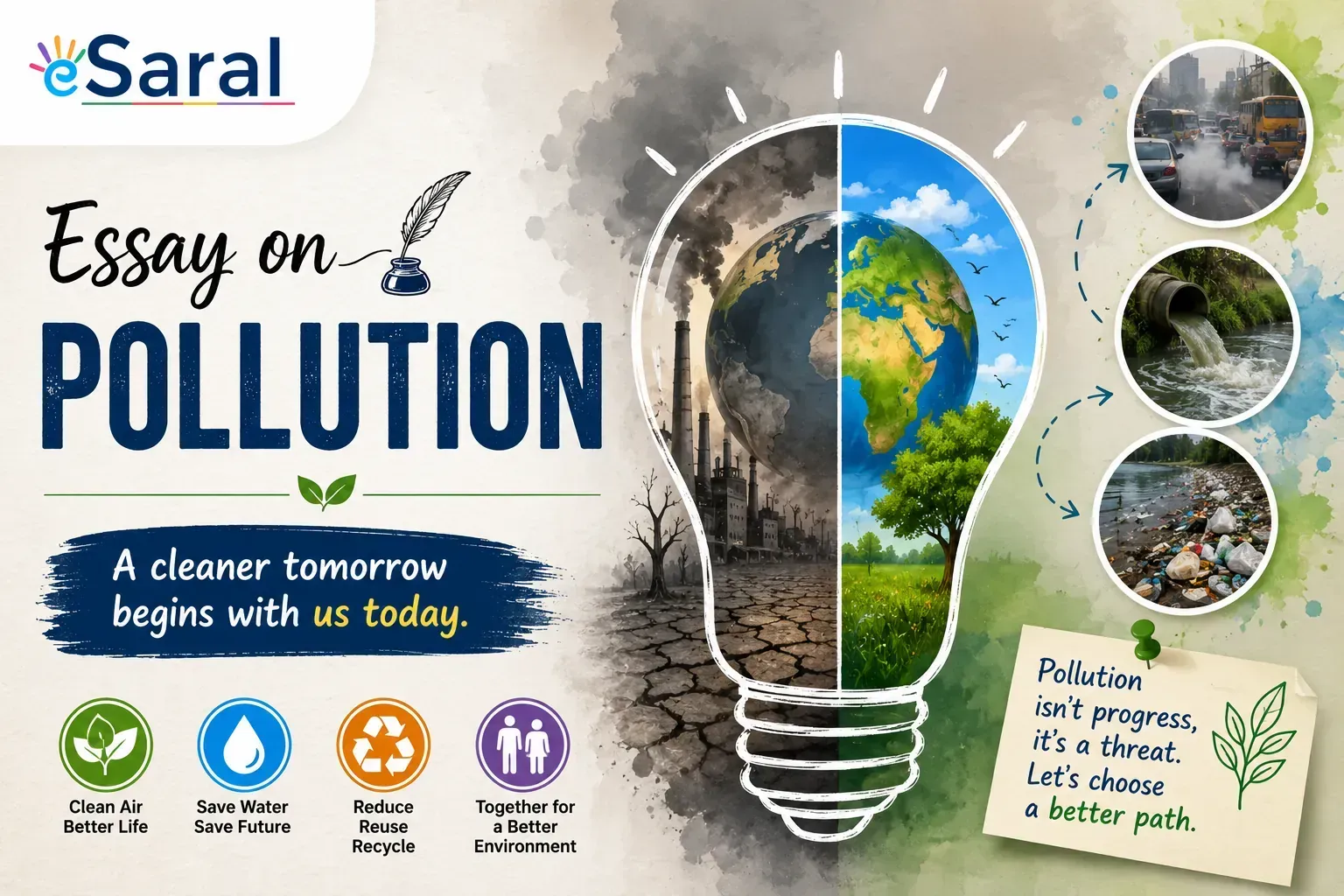
Pollution is the addition of harmful substances to air, water or soil in amounts that nature cannot easily absorb. It is a regular topic in school English exams and project work, and a strong essay on pollution explains types, causes, effects and solutions in a clear order. This essay on pollution page is written for students from Class 5 to 12 and includes six ready essays, a quick reference table and answers to common questions.
Why Is an Essay on Pollution Important for Exams?
An essay on pollution tests your ability to explain a real issue with cause, effect and solution. A good essay on pollution shows that you understand how human activity affects health and the environment and that you can suggest practical steps.
The topic links with what you study in school. Class 10 Science has a chapter on “Our Environment”, which discusses waste and its effects, and the Constitution lists protecting and improving the natural environment among citizens’ Fundamental Duties. Mentioning such points adds depth to your essay on pollution.
Types of Pollution at a Glance
Type | Main causes | Main effects |
|---|---|---|
Air pollution | Vehicles, factories, power plants, burning of waste and crop residue | Asthma, smog, climate change |
Water pollution | Sewage, industrial waste, plastic, fertiliser runoff | Water-borne diseases, harm to aquatic life |
Soil pollution | Excess fertilisers and pesticides, garbage dumping | Lower soil fertility, contaminated food |
Noise pollution | Traffic, loudspeakers, construction | Stress, sleep loss, hearing problems |
Light pollution | Excess artificial lighting | Disturbed sleep and wildlife |
Plastic pollution | Single-use plastic and poor waste disposal | Blocked drains, harm to animals |
Use this table to plan any essay on pollution. For more detail on two major types, read eSaral’s essays on air pollution and water pollution.
How to Write an Essay on Pollution
Use the Cause → Effect → Solution structure for any essay on pollution:
- Introduction: Define pollution in one or two sentences.
- Types: Name the main types and give one example of each.
- Causes: Pick two or three main causes.
- Effects: Explain the effects on health, wildlife and climate. You can link this to our essay on global warming.
- Solutions: Include actions by the government, industries and individuals.
- Conclusion: End with a message of responsibility and hope.
Keep sentences short, use specific examples, and avoid unverified statistics. For a 100-word essay, include one type, one effect and one solution.
Essay on Pollution in 100 to 500 Words
Essay on Pollution (100 Words)
Pollution is the addition of harmful substances to air, water or soil that damages nature and human health. Smoke from vehicles and factories pollutes the air, sewage and chemicals pollute rivers, and plastic waste spoils the land. Pollution causes breathing problems, water-borne diseases and harm to wildlife. Most of it is caused by human activities, so we can also reduce it. We should use public transport, avoid single-use plastic, save water and electricity, and plant trees. Governments must enforce strict rules for industries. If everyone acts responsibly, we can leave a cleaner and healthier planet for future generations to enjoy.
Essay on Pollution (150 Words)
Pollution is the release of harmful substances into the environment in quantities that nature cannot easily absorb. It affects the air we breathe, the water we drink and the soil that grows our food.
The main causes are smoke from vehicles and factories, untreated sewage and industrial waste, chemical fertilisers and pesticides, and plastic waste. Loud noise from traffic and loudspeakers is another form of pollution.
The effects are serious. Polluted air causes asthma and other breathing problems. Dirty water spreads diseases such as diarrhoea and typhoid. Polluted soil reduces crop yield, and plastic waste harms animals.
We can reduce pollution by using public transport, planting trees, saving energy, separating waste and avoiding single-use plastic. Industries must treat their waste before releasing it. Every citizen has a duty to protect the environment, and small habits practised by many people can make a big difference. Governments, industries and families must all play their part.
Essay on Pollution (200 Words)
Pollution means the presence of harmful substances in the environment that damage living things and natural resources. It is one of the biggest problems of modern life, especially in growing cities.
Types of pollution
Air pollution comes from vehicles, factories, burning of waste and crop residue. Water pollution is caused by sewage, industrial waste and plastic dumped into rivers and lakes. Soil pollution results from excessive chemical fertilisers, pesticides and garbage. Noise pollution comes from traffic, loudspeakers and construction.
Effects
Polluted air causes coughing, asthma and heart problems. Contaminated water spreads diseases and harms fish and other aquatic life. Polluted soil gives lower crop yields and can bring harmful chemicals into our food. Loud noise causes stress, poor sleep and hearing problems.
Solutions
We can reduce pollution by using public transport or bicycles, planting trees, saving water and electricity, and recycling waste. Farmers can use organic manure and fewer chemicals. Industries should install treatment plants, and the government must enforce environmental laws strictly. Schools can also teach children to keep their surroundings clean.
Pollution is mostly man-made, so we have the power to control it. By acting responsibly today, we protect our health and the future of the planet.
Essay on Pollution (250 Words)
Pollution is the contamination of the natural environment by harmful substances. It has increased rapidly with industrialisation, urbanisation and the growth in the use of vehicles and plastic.
Causes
Factories and vehicles release smoke and gases such as carbon monoxide and sulphur dioxide. Sewage and industrial waste flow into rivers, and chemical fertilisers wash into water bodies from farms. Garbage dumped in the open and plastic bags clog drains and spoil the soil. Loud traffic and loudspeakers cause noise pollution.
Effects on health and nature
Air pollution leads to asthma, bronchitis and eye irritation, and it creates smog in many cities in winter. Polluted water spreads diseases such as cholera and typhoid. Animals swallow plastic and chemicals, and many species lose their habitats. Greenhouse gases from burning fuel contribute to global warming.
What can be done
Governments can set emission standards, treat sewage and encourage clean energy. Strong public transport and metro systems can reduce the number of private vehicles on the road. Industries must follow the law and treat waste before discharge. Citizens can use public transport, avoid burning waste, carry cloth bags and plant trees. Proper waste segregation at home also helps recycling. Schools can run awareness drives and cleanliness campaigns.
Conclusion
Pollution is a serious threat, but it is not unstoppable. Because most of it comes from human activity, the solutions are also in our hands. If the government, industries and citizens work together, we can protect the air, water and soil that all living beings depend on.
Essay on Pollution (300 Words)
Pollution is the introduction of harmful substances into the environment that damage air, water, soil and living beings. Although some pollution occurs naturally, for example through volcanic eruptions, most of today’s pollution is caused by human activities.
Main types of pollution
Air pollution is caused by smoke from vehicles, factories, power plants and the burning of waste. Water pollution happens when sewage, industrial effluents, plastics and chemicals enter rivers, lakes and oceans. Soil pollution occurs from chemical fertilisers, pesticides and dumped garbage. Noise pollution comes from traffic, loudspeakers and construction. Light pollution, caused by too much artificial light, disturbs sleep and wildlife.
Effects of pollution
Air pollution causes asthma, lung disease and eye irritation, and contributes to climate change. Polluted water spreads diseases such as diarrhoea, cholera and typhoid and kills fish and other aquatic life. Contaminated soil lowers crop yield and enters the food chain. Noise causes stress, headaches and loss of hearing. Plastic waste blocks drains and harms animals that swallow it.
Solutions
Governments can set and enforce emission standards, improve public transport, treat sewage and support clean energy. In India, laws such as the Air Act, the Water Act and the Environment Protection Act aim to control pollution, and programmes such as Swachh Bharat Mission and Namami Gange work towards cleaner surroundings.
Individuals can also help. We can walk or cycle for short trips, switch off unused appliances, avoid single-use plastic, separate wet and dry waste, plant trees and spread awareness. Schools and communities can organise tree-planting drives and clean-up campaigns to build good habits. Even small steps matter when millions follow them.
Conclusion
Pollution harms every living being, rich or poor. Controlling it requires cooperation between governments, industries and citizens. If we change our habits today, we can ensure a cleaner, healthier and safer world tomorrow.
Essay on Pollution (500 Words)
Pollution is one of the most serious challenges facing the world today. It means the addition of harmful substances to the environment at a rate faster than nature can clean them up. These substances, called pollutants, may be gases, chemicals, plastic, sewage or even sound and light. Pollution threatens human health, wildlife and the balance of nature.
Types of Pollution
Air pollution is caused by smoke and gases from vehicles, factories, power plants and burning of waste or crop residue. Tiny particles in the air can enter the lungs and cause serious illness.
Water pollution occurs when sewage, industrial waste, oil, plastics and chemicals enter rivers, lakes and oceans. Fertilisers and pesticides from farms also wash into water bodies.
Soil pollution happens when chemicals, plastic and garbage are dumped on land. It reduces the fertility of the soil and can contaminate crops.
Noise pollution is caused by traffic, loudspeakers, aircraft and construction. Constant loud noise affects sleep, concentration and hearing.
Light pollution results from excessive artificial lighting, which disturbs sleep and confuses birds and insects.
Causes of Pollution
The growth of industries and cities, the increase in the number of vehicles, the use of fossil fuels, careless disposal of waste and the widespread use of single-use plastic are the main causes. Deforestation makes matters worse, because there are fewer trees to absorb carbon dioxide and filter the air.
Effects of Pollution
Air pollution causes asthma, bronchitis and heart problems, and creates smog in many cities. Polluted water spreads diseases such as cholera, typhoid and diarrhoea. Aquatic animals die when rivers and seas become toxic, and birds and animals are harmed by plastic waste. Greenhouse gases released by burning fuels lead to global warming and climate change. Polluted soil gives lower crop yields and may carry harmful chemicals into our food.
Measures to Control Pollution
In India, the Water Act (1974), the Air Act (1981) and the Environment Protection Act (1986) provide the legal framework to control pollution. The National Clean Air Programme, the Namami Gange programme and the Swachh Bharat Mission aim to reduce air and water pollution and improve cleanliness. Cleaner fuels and stricter vehicle emission norms such as BS-VI also help.
Citizens can contribute too. We can use public transport or cycle, plant and protect trees, save water and electricity, use cloth bags instead of plastic, separate waste and compost kitchen waste. Industries must treat waste and follow the law, and farmers can use organic and balanced fertilisers.
Our Duty
The Constitution of India lists protecting and improving the natural environment as a fundamental duty of every citizen. This means that clean air and water are not only the government’s responsibility but also ours.
Conclusion
Pollution is mainly the result of human activity, which means it can also be reduced by human effort. If governments enforce the law, industries act responsibly and individuals change their daily habits, we can protect nature and the health of future generations. A clean environment is the greatest gift we can leave behind.
Pollution Control Laws and Measures in India
You can use these points in longer essays on pollution:
- Water (Prevention and Control of Pollution) Act, 1974: Controls pollution of rivers and other water bodies.
- Air (Prevention and Control of Pollution) Act, 1981: Sets standards to control air pollution.
- Environment (Protection) Act, 1986: Gives the government wide powers to protect the environment.
- National Clean Air Programme: Aims to reduce air pollution in cities.
- Namami Gange Programme: Works to clean the river Ganga.
- Swachh Bharat Mission: Promotes sanitation and cleanliness.
Frequently Asked Questions
What is pollution in simple words for students?
Pollution means the presence of harmful substances in the air, water or soil that damage living things and natural resources. It is mostly caused by human activities such as burning fuel, dumping waste and using chemicals. A short essay on pollution should begin with this idea.
How do I start an essay on pollution?
Start with a clear definition and a line on why the issue matters, for example, “Pollution is the release of harmful substances into the environment, and it affects the air we breathe, the water we drink and the soil that grows our food.” Avoid beginning with a question. The essays on pollution on this eSaral page use this direct opening.
What are the main types of pollution for a school essay?
The main types are air, water, soil and noise pollution. Light and plastic pollution can be added in longer essays. In an essay on pollution, explain each type with its causes, effects and one solution.
What are the causes of pollution for a 200-word essay?
In an essay on pollution of 200 words, mention two or three main causes, such as smoke from vehicles and factories, sewage and industrial waste in water, and excess chemical fertilisers and plastic waste on land. Give one effect for each cause and then move to solutions.
What are the effects of pollution on human health?
Air pollution can cause asthma, bronchitis and eye irritation. Polluted water spreads diseases such as cholera, typhoid and diarrhoea. Noise pollution can cause stress, poor sleep and hearing problems. Contaminated food from polluted soil can also harm health. Include these effects in your essay on pollution.
What are the best solutions to pollution for a school essay?
Use public transport or cycle, plant trees, save water and energy, avoid single-use plastic, separate and recycle waste, and treat industrial waste before discharge. Governments must enforce environmental laws strictly. These points make a strong end to an essay on pollution.
Is the essay on pollution asked in school exams?
Pollution is a very common topic in school writing tasks, and it also appears in project work for Science and Social Science. Topics differ across boards and classes, so check your syllabus and previous papers. Practising essays of 150, 250 and 500 words prepares you for different word limits.
Which Indian laws and schemes help control pollution?
The Water Act (1974), the Air Act (1981) and the Environment (Protection) Act (1986) are the main laws. Programmes such as the National Clean Air Programme, Namami Gange and the Swachh Bharat Mission support cleaner air, water and surroundings. Naming one or two of them strengthens an essay on pollution.
Where can I find more essays for school students?
eSaral has many school essays in its English essays section, including topics on the environment, society and national events, similar to this essay on pollution, with short and long versions for different classes.
Team eSaral
eSaral Academic and Editorial Team
Team eSaral is the collective author profile for educational content created by eSaral’s teachers and academic contributors. The team draws on expertise from IIT graduates, doctors, experienced educators and subject specialists to develop resources for JEE, NEET and school students. Our articles aim to explain concepts clearly and help students study with confidence.
Related Posts

BITSAT 2027: Registration Date, Exam Date, Syllabus, Eligibility, Pattern & Fees
BITSAT 2027 exam dates, registration timeline, eligibility criteria, exam pattern, marking scheme, syllabus and fees in one page.

BITSAT Previous Year Question Paper PDF (2017-2026)
Download BITSAT previous year question papers PDF from 2017 to 2026,session-wise. Memory-based papers,exam pattern, paper analysis and how to practise

CBSE Class 10 Date Sheet 2027: Expected Exam Dates, Release Date, Admit Card & Result Timeline
CBSE Class 10 date sheet 2027 is awaited. See the expected exam dates, release window, how to download the PDF, admit card and result timelines.

NCERT Physics Class 10 Book PDF in Hindi 2026-27 – भौतिक विज्ञान के 4 अध्याय (Free Download)
NCERT Physics Class 10 book PDF in Hindi 2026-27: download all 4 chapters (अध्याय 9–12) free, with topics and important formulas.

NCERT Biology Class 9 Book Anveshan PDF in Hindi - जीव विज्ञान कक्षा 9 पुस्तक अन्वेषण PDF
Download NCERT Biology Class 9 book PDF in Hindi chapterwise for 2026-27: Cell, Tissues, Reproduction and Diversity. Free PDFs.

Essay On Artificial Intelligence in English (100,150, 200, 250, 300, 500 Words)
This is in contrast to the natural intelligence of humans. With Artificial Intelligence, machines can perform

Essay on 78th India Independence Day in English for Student (100, 150, 200, 250, 300, 500 Words)
Read the best essays on India's Independence Day in English. Short & long essays (100, 150, 200, 250, 300, 500 words) perfect for school exams
NCERT Class 11 English Snapshots book - Free PDF download- Esaral
Download NCERT Class 11 English Snapshots book PDF for free. Get all 8 chapters, chapter-wise. Start your prep today!
NCERT Class 10 biology book pdf - Free PDF Download - eSaral
NCERT Class 10 Biology book PDF 2026-27: all 5 chapters (Life Processes to Our Environment) in English & Hindi, with CBSE syllabus, marks & practical

Essay on Global Warming in English (100,150, 200, 250, 300, 500 Words)
Global warming means the Earth is getting hotter. This happens because of things like pollution from cars and factories.