
Essay on Water Pollution in English – 10 Lines, 100 to 500 Words

eSaral Academic and Editorial Team
Summary
An essay on water pollution explains how harmful substances such as sewage, industrial waste, chemicals, plastics and farm runoff make rivers, lakes, seas and groundwater unsafe for people, animals and plants. It covers the causes, types, effects and prevention of water pollution. This page gives an essay on water pollution in English in 10 lines and in 100, 150, 200, 250, 300, 400 and 500 words, along with a paragraph, a short speech and a sample conclusion for students.
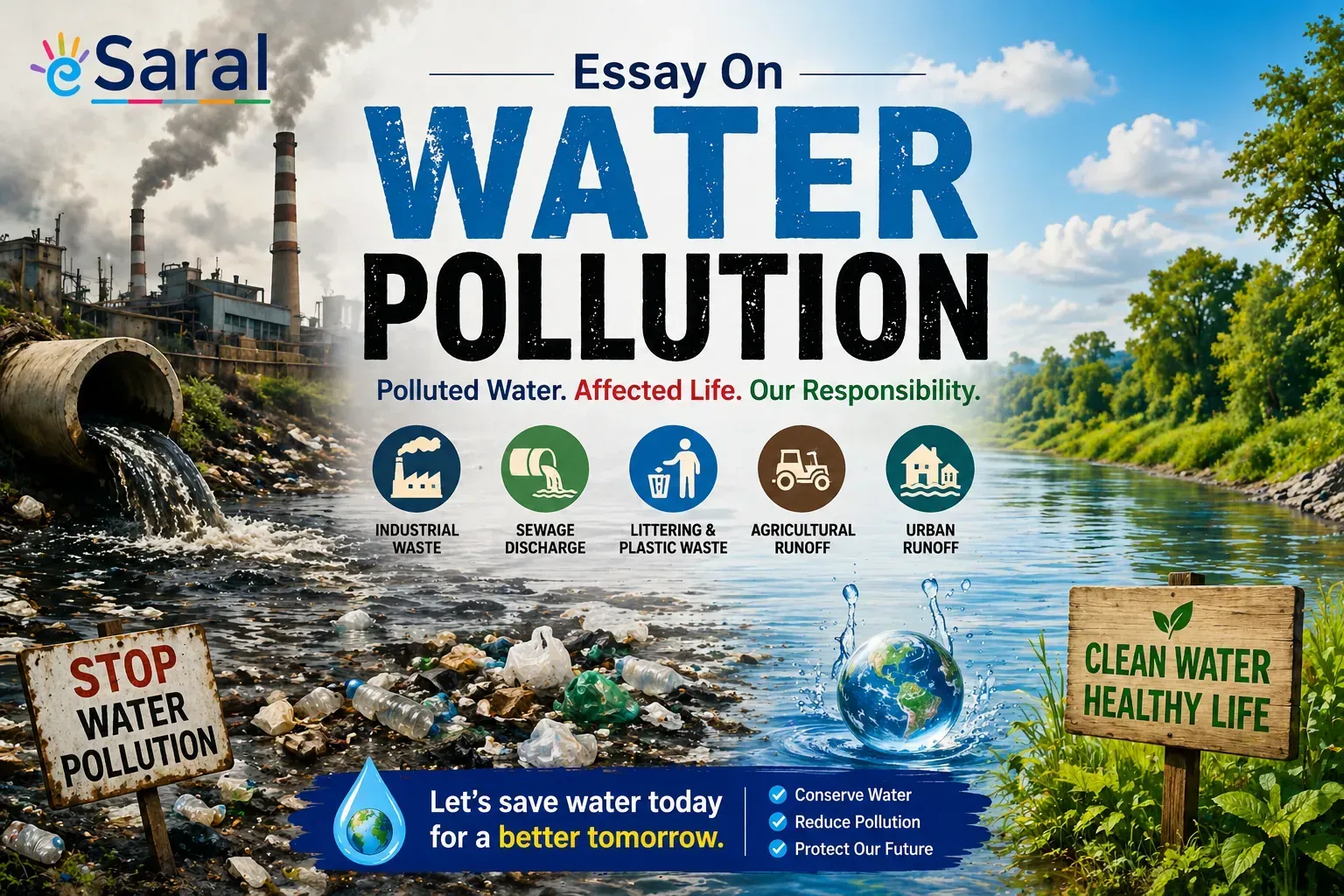
Water is the basis of all life. We need it for drinking, cooking, farming and industry, and countless plants and animals live in it. Although about 71% of the Earth's surface is covered with water, only about 2.5% of all water is fresh, and most of that is locked in glaciers, ice caps and underground. When this limited fresh water becomes polluted, it threatens health, food and the environment.
An essay on water pollution is one of the most common environment topics in school exams and competitions. Each essay on water pollution below, also searched as a water pollution essay in English, is written in simple English for Classes 3 to 12.
How to Write an Essay on Water Pollution
Follow this simple format for any essay on water pollution, whatever the word limit.
Part | What to Write |
|---|---|
Introduction | Define water pollution and explain why clean water is important |
Body | Write about the causes, types and effects of water pollution, with examples |
Conclusion | End the essay on water pollution with ways to prevent it and a message of responsibility |
Causes, Effects and Prevention of Water Pollution at a Glance
Causes of Water Pollution | Effects of Water Pollution | How to Prevent Water Pollution |
|---|---|---|
Untreated sewage from towns and cities | Water-borne diseases like cholera, typhoid, diarrhoea and jaundice | Treat sewage before it reaches rivers |
Industrial waste with chemicals and heavy metals (lead, mercury) | Poisoning of fish and other aquatic life | Strict laws and effluent treatment plants for industries |
Fertilisers and pesticides washed from farms | Eutrophication: algae growth that uses up oxygen in water | Use fewer chemicals and more organic farming |
Plastic and household garbage thrown into water | Plastic harms fish, turtles and birds | Reduce, reuse and recycle plastic |
Oil spills from ships | Oil layers kill sea birds and marine life | Safer shipping and quick clean-up |
Bathing, washing and dumping idols and waste in rivers | Unsafe drinking water and shortage of clean water | Public awareness and river clean-up drives |
Hot water from power plants (thermal pollution) | Less oxygen in water, harming aquatic life | Cool water before release |
Use this table as a quick plan for the body of any essay on water pollution.
10 Lines on Water Pollution
Younger students can write these 10 lines instead of a full essay on water pollution.
- Water pollution means making water dirty and harmful by adding waste and chemicals to it.
- Rivers, lakes, ponds, seas and groundwater can all become polluted.
- Sewage from homes and waste from factories are major causes of water pollution.
- Fertilisers and pesticides from farms are washed into rivers by rain.
- Plastic bags and bottles thrown into water harm fish and other animals.
- Drinking polluted water causes diseases like cholera, typhoid and diarrhoea.
- Polluted water kills fish and other aquatic life.
- We should never throw garbage, plastic or oil into water bodies.
- Factories must treat their waste before releasing it.
- Clean water is life, so we must all work together to keep it clean.
Long and Short Essay on Water Pollution
Pick the essay on water pollution that matches your word limit. Each sample has been counted to stay close to its limit.
Short Essay on Water Pollution in 100 Words
This short essay on water pollution suits Classes 3 to 5.
Water pollution happens when harmful things like garbage, sewage and chemicals get mixed into rivers, lakes, seas and underground water. It makes water unsafe for people, animals and plants.
The main causes of water pollution are waste from factories, dirty water from homes, chemicals from farms and plastic thrown into water. Drinking polluted water can cause diseases like cholera, typhoid and diarrhoea. It also kills fish and other water animals.
We can reduce water pollution by not throwing waste into water bodies, using less plastic and saving water. Clean water is precious, and we must protect it.
Essay on Water Pollution in 150 Words
This 150-word essay on water pollution suits Classes 4 to 6.
Water is essential for all living beings. Water pollution means the contamination of water bodies such as rivers, lakes, ponds, oceans and groundwater by harmful substances. It makes water unfit for drinking, cooking, bathing and farming.
Most water pollution is caused by human activities. Cities release untreated sewage into rivers. Factories discharge chemical waste, oil and heavy metals. Rainwater carries fertilisers and pesticides from farms into rivers and lakes. People also throw plastic, garbage and religious offerings into water bodies.
Polluted water spreads diseases like cholera, typhoid, dysentery and jaundice. It kills fish, harms birds and animals, and damages the whole aquatic ecosystem. It also reduces the amount of clean water available for people.
To stop water pollution, factories must treat their waste, and cities must treat sewage. We should avoid plastic, never dump garbage in water and spread awareness. Clean water means a healthy life for all.
Essay on Water Pollution in 200 Words
This essay on water pollution suits Classes 5 to 7.
Water is one of the most important natural resources. Only a small part of the Earth's water is fresh and usable, so keeping it clean is very important. Water pollution is the contamination of water bodies by harmful substances, which makes water unsafe for living beings.
Causes of water pollution
The biggest causes of water pollution are human activities. Many towns release untreated sewage into rivers. Factories discharge toxic chemicals and heavy metals like lead and mercury into nearby water bodies. Fertilisers and pesticides used in farms are washed into rivers and ponds by rain. Plastic waste, oil spills from ships and dumping of garbage also pollute water.
Effects of water pollution
Polluted water causes diseases like cholera, typhoid, diarrhoea and jaundice, especially among children. Fertilisers in water cause too much algae to grow, which uses up oxygen and kills fish. Plastic harms turtles, birds and other animals. Polluted water also affects farming, as crops grown with it may contain harmful chemicals.
Prevention
We can prevent water pollution by treating sewage and industrial waste, using fewer chemicals in farming, reducing plastic use and never throwing waste into water. Saving water also helps. Planting trees along riverbanks reduces soil runoff. Clean water is everyone's right and everyone's responsibility.
Essay on Water Pollution in 250 Words
This essay on water pollution uses sub-headings, which suit Classes 6 to 8.
Introduction
Water covers about 71% of the Earth's surface, but only about 2.5% of it is fresh water, and most of that is frozen in glaciers or stored underground. This makes clean fresh water precious. Water pollution occurs when harmful substances enter water bodies and make the water unsafe for drinking and for aquatic life.
Causes
Most water pollution comes from human activities. Untreated sewage from homes, waste from factories, and chemicals from farms are the main sources. Industries often release dyes, acids and heavy metals into rivers. Rain washes fertilisers and pesticides into streams and ponds. Plastic bottles, bags and garbage thrown into water, and oil spills from ships, add to the problem. In many places, people also bathe animals, wash clothes and immerse idols in rivers.
Effects
Polluted water spreads diseases like cholera, typhoid, dysentery and hepatitis. Chemicals and heavy metals can enter our bodies through water and food and cause serious long-term illnesses. Extra nutrients from fertilisers lead to algal blooms, which reduce oxygen in water and kill fish. Plastic waste harms marine animals.
Prevention
Sewage and industrial waste must be treated before release. Farmers can use organic manure and fewer pesticides. We should reduce plastic use, dispose of waste properly and join clean-up drives. India's Water (Prevention and Control of Pollution) Act, 1974, and the Namami Gange programme for cleaning the Ganga are steps in this direction.
Conclusion
Water pollution threatens life on Earth. Protecting our water bodies is the duty of every citizen.
Essay on Water Pollution in 300 Words
This essay on water pollution suits Classes 7 to 9.
Introduction
Water is often called the elixir of life. Every living being needs water to survive. Yet water pollution has become one of the most serious environmental problems in India and the world. Water pollution is the contamination of rivers, lakes, seas and groundwater by harmful substances, which makes the water unfit for use.
Causes of water pollution
Most water pollution is man-made. The major causes are:
- Sewage: Many towns and cities release untreated or partly treated sewage into rivers.
- Industrial waste: Factories discharge chemicals, dyes, acids and heavy metals such as lead, mercury and arsenic.
- Agricultural runoff: Fertilisers and pesticides from farms are washed into water bodies by rain.
- Plastic and solid waste: Garbage and plastic are often dumped into rivers, lakes and seas.
- Oil spills: Accidents involving ships and oil pipelines release oil into the sea.
Effects of water pollution
Polluted water is a major cause of water-borne diseases like cholera, typhoid, diarrhoea and jaundice. Heavy metals can damage the brain, kidneys and nerves. Excess nutrients cause eutrophication, in which algae grow rapidly and use up the oxygen in water, killing fish. Polluted water also harms farming and reduces the supply of safe drinking water. Fishermen lose their income when fish die, and cleaning polluted water for drinking costs a lot of money.
How to prevent water pollution
Sewage and industrial waste must be treated before being released. Farmers should use fertilisers and pesticides carefully. We should avoid single-use plastic, never throw waste into water bodies and join local clean-up drives. The government enforces laws like the Water (Prevention and Control of Pollution) Act, 1974, and runs programmes like Namami Gange to clean rivers.
Conclusion
Clean water is essential for health and life. If every person, industry and government works together, we can stop water pollution and protect this precious resource for future generations.
Essay on Water Pollution in 400 Words
This detailed essay on water pollution suits Classes 8 to 10.
Introduction
Water is the most important natural resource on Earth. Although water covers about 71% of the planet's surface, only about 2.5% of it is fresh water, and most of that is frozen in ice or stored underground. Only a small part is available in rivers and lakes for human use. Water pollution, the contamination of water bodies by harmful substances, is reducing this limited supply and endangering life.
Types of water pollution
Water pollution can be of several types. Surface water pollution affects rivers, lakes and ponds. Groundwater pollution occurs when chemicals, sewage or pesticides seep into the soil and reach underground water. Marine pollution affects seas and oceans, mainly through plastic and oil. Thermal pollution occurs when hot water from power plants and factories is released into rivers, reducing oxygen levels. Each type harms living beings in a different way, but all of them make water unsafe.
Causes of water pollution
The main causes of water pollution are untreated sewage, industrial effluents, agricultural runoff, plastic and solid waste, and oil spills. In India, many rivers receive sewage and industrial waste from the cities on their banks. Religious and social practices like idol immersion and washing clothes in rivers also add pollutants. Leaking landfills and septic tanks can slowly pollute groundwater, which many villages depend on for drinking.
Effects of water pollution
The effects of water pollution are serious. Polluted water spreads diseases like cholera, typhoid, dysentery, hepatitis and diarrhoea, which can be deadly for young children. Heavy metals such as lead and mercury enter the food chain through fish and crops and cause long-term health problems. Fertilisers in water cause eutrophication, leading to dead zones where fish cannot survive. Plastic waste kills turtles, whales and seabirds. Water pollution also hurts farmers, fishermen and the economy.
Prevention of water pollution
Water pollution can be prevented through joint efforts, and every essay on water pollution should end with these solutions. Industries must install effluent treatment plants, and cities must build sewage treatment plants. Farmers can switch to organic manure and use pesticides carefully. Citizens should avoid plastic, dispose of waste properly and never throw garbage into water. India's Water (Prevention and Control of Pollution) Act, 1974, created pollution control boards to monitor water quality, and the Namami Gange programme aims to clean and protect the river Ganga.
Conclusion
Water pollution is a threat to health, nature and the future. Clean water is not just a need but a right. By acting responsibly, supporting clean-up drives and spreading awareness, each of us can help keep our water bodies clean and safe.
Essay on Water Pollution in 500 Words
This long essay on water pollution suits Classes 9 to 12, essay competitions and debates.
Introduction
"Water is life" is not just a slogan; it is a fact. All living beings depend on water for survival. Humans need it for drinking, cooking, cleaning, farming and industry. Yet, this precious resource is being polluted at an alarming rate. Water pollution is the contamination of water bodies such as rivers, lakes, oceans and groundwater by harmful substances, making the water unsafe for living beings and harmful to the environment.
Why clean water matters
About 71% of the Earth is covered with water, but only about 2.5% of it is fresh water. Most of this fresh water is locked in glaciers and ice caps or stored deep underground. Only a tiny portion is available in rivers and lakes. With a growing population and expanding cities, the demand for clean water is increasing, while pollution is reducing its availability.
Causes of water pollution
Water pollution is mainly caused by human activities. Untreated sewage from homes and cities is one of the largest sources of pollution in Indian rivers. Factories discharge chemicals, dyes and heavy metals like lead, mercury and arsenic into water bodies. In farms, fertilisers and pesticides are washed into rivers and seep into groundwater. Plastic bags, bottles and other solid waste are dumped into water bodies. Oil spills from ships and pipelines pollute seas, and hot water released by power plants causes thermal pollution. Natural causes, such as floods carrying soil and debris, also add to the problem. In some regions, groundwater naturally contains arsenic or fluoride, which becomes dangerous when people drink it for many years.
Effects of water pollution
The effects of water pollution are widespread. Polluted water spreads diseases like cholera, typhoid, dysentery, hepatitis and diarrhoea, which are especially dangerous for children. Toxic chemicals and heavy metals enter the food chain through fish and crops, causing long-term damage to the nervous system and organs. Excess nutrients from fertilisers cause eutrophication, in which algae grow rapidly, use up the oxygen in water and kill fish. Plastic waste chokes turtles, whales and birds. Polluted water also damages farming and fishing and increases the cost of water treatment. Families who cannot afford clean water are forced to use unsafe sources, so water pollution hits the poor the hardest.
Steps to prevent water pollution
Preventing water pollution needs action at every level. Industries must treat their waste in effluent treatment plants, and cities must build enough sewage treatment plants. Farmers can use organic manure, compost and integrated pest management. Laws like the Water (Prevention and Control of Pollution) Act, 1974, must be strictly enforced, and programmes like Namami Gange for cleaning the Ganga deserve public support. As citizens, we can avoid single-use plastic, never pour oil or chemicals down drains, dispose of medicines safely, save water and take part in clean-up drives.
Conclusion
Water pollution is a silent danger that threatens health, nature and the future of our planet. Clean water is the foundation of a healthy life and a strong nation. If governments, industries and citizens work together with awareness and responsibility, we can protect our rivers, lakes and oceans for future generations.
Paragraph on Water Pollution
A paragraph is a shorter, single-block version of the essay on water pollution, usually 80 to 120 words.
Water pollution is the contamination of rivers, lakes, oceans and groundwater by harmful substances such as sewage, industrial chemicals, fertilisers, pesticides, plastic and oil. It is mostly caused by human activities. Polluted water spreads diseases like cholera, typhoid and diarrhoea, kills fish and harms other aquatic life. It also reduces the supply of safe drinking water. Water pollution can be prevented by treating sewage and industrial waste, using fewer chemicals in farming, avoiding plastic and never throwing garbage into water bodies. Clean water is essential for life, and it is our duty to protect it.
Speech on Water Pollution
You can turn any essay on water pollution into a speech by adding a greeting at the start and a thank-you at the end.
Good morning to our respected Principal, teachers and my dear friends. Today, I would like to speak on water pollution.
Water is life. We cannot live without it. Yet, every day, sewage, factory waste, chemicals and plastic are being dumped into our rivers, lakes and seas. This polluted water causes diseases like cholera and typhoid and kills fish and other water animals.
Friends, each of us can help stop water pollution. Let us never throw garbage or plastic into water bodies, avoid wasting water and tell our families and neighbours about the dangers of pollution. Let us also support clean-up drives in our area.
If we protect water today, water will protect us tomorrow. Thank you.
Conclusion on Water Pollution
You can end any essay on water pollution with a conclusion like this:
"Water pollution is one of the greatest threats to life on Earth. Clean water is essential for our health, food and environment. If governments, industries and citizens work together to treat waste, reduce plastic and spread awareness, we can keep our rivers, lakes and oceans clean for future generations."
For a broader essay on all types of pollution, read the Essay on Pollution. Read More Essays in English for School Students
Frequently Asked Questions
How do I write an essay on water pollution?
Start with the meaning of water pollution and why clean water matters. In the body, explain the causes (sewage, industrial waste, farm chemicals, plastic, oil spills), the effects on health and aquatic life, and ways to prevent it. End your essay on water pollution with a strong message about protecting water.
What are the main causes of water pollution?
The main causes are untreated sewage, industrial waste containing chemicals and heavy metals, fertilisers and pesticides from farms, plastic and household garbage, oil spills and thermal pollution from power plants.
What are the effects of water pollution?
Water pollution spreads diseases like cholera, typhoid, dysentery and diarrhoea, poisons fish and other aquatic life, causes algal blooms that reduce oxygen in water, harms farming and fishing, and reduces the supply of safe drinking water.
How can we prevent water pollution?
Treat sewage and industrial waste before releasing it, use fewer fertilisers and pesticides, avoid single-use plastic, never throw garbage or oil into water bodies, and support clean-up drives and laws like the Water (Prevention and Control of Pollution) Act, 1974.
What are 10 lines on water pollution?
Ten lines should cover the meaning of water pollution, its main causes, its effects on health and aquatic life, and simple ways to prevent it. A ready set of 10 lines is given on this eSaral page, along with an essay on water pollution in every common word limit.
What are the types of water pollution?
The main types are surface water pollution, groundwater pollution, marine (ocean) pollution and thermal pollution. Students preparing for science exams can also study the topic in eSaral's NCERT-based notes, as water pollution is part of the school Science and Biology syllabus.
Team eSaral
eSaral Academic and Editorial Team
Team eSaral is the collective author profile for educational content created by eSaral’s teachers and academic contributors. The team draws on expertise from IIT graduates, doctors, experienced educators and subject specialists to develop resources for JEE, NEET and school students. Our articles aim to explain concepts clearly and help students study with confidence.
Related Posts

BITSAT 2027: Registration Date, Exam Date, Syllabus, Eligibility, Pattern & Fees
BITSAT 2027 exam dates, registration timeline, eligibility criteria, exam pattern, marking scheme, syllabus and fees in one page.

BITSAT Previous Year Question Paper PDF (2017-2026)
Download BITSAT previous year question papers PDF from 2017 to 2026,session-wise. Memory-based papers,exam pattern, paper analysis and how to practise

CBSE Class 10 Date Sheet 2027: Expected Exam Dates, Release Date, Admit Card & Result Timeline
CBSE Class 10 date sheet 2027 is awaited. See the expected exam dates, release window, how to download the PDF, admit card and result timelines.

NCERT Physics Class 10 Book PDF in Hindi 2026-27 – भौतिक विज्ञान के 4 अध्याय (Free Download)
NCERT Physics Class 10 book PDF in Hindi 2026-27: download all 4 chapters (अध्याय 9–12) free, with topics and important formulas.

NCERT Biology Class 9 Book Anveshan PDF in Hindi - जीव विज्ञान कक्षा 9 पुस्तक अन्वेषण PDF
Download NCERT Biology Class 9 book PDF in Hindi chapterwise for 2026-27: Cell, Tissues, Reproduction and Diversity. Free PDFs.

Essay On Artificial Intelligence in English (100,150, 200, 250, 300, 500 Words)
This is in contrast to the natural intelligence of humans. With Artificial Intelligence, machines can perform

Essay on 78th India Independence Day in English for Student (100, 150, 200, 250, 300, 500 Words)
Read the best essays on India's Independence Day in English. Short & long essays (100, 150, 200, 250, 300, 500 words) perfect for school exams
NCERT Class 11 English Snapshots book - Free PDF download- Esaral
Download NCERT Class 11 English Snapshots book PDF for free. Get all 8 chapters, chapter-wise. Start your prep today!
NCERT Class 10 biology book pdf - Free PDF Download - eSaral
NCERT Class 10 Biology book PDF 2026-27: all 5 chapters (Life Processes to Our Environment) in English & Hindi, with CBSE syllabus, marks & practical

Essay on Global Warming in English (100,150, 200, 250, 300, 500 Words)
Global warming means the Earth is getting hotter. This happens because of things like pollution from cars and factories.