
Function - JEE Main Previous Year Question with Solutions

eSaral › JEE › JEE Main ›Function - JEE Main Previous Year Question with Solutions

🚀 Checkout eSaral Courses
After solving Functions, continue with other Maths chapters through the JEE Mains PYQs chapter wise archive.
Once Functions feels comfortable, benchmark yourself against a real paper using our previous years JEE Main question papers.
Download eSaral app for free study material and video tutorials.
Frequently Asked Questions
How many questions from Functions appear in JEE Main?
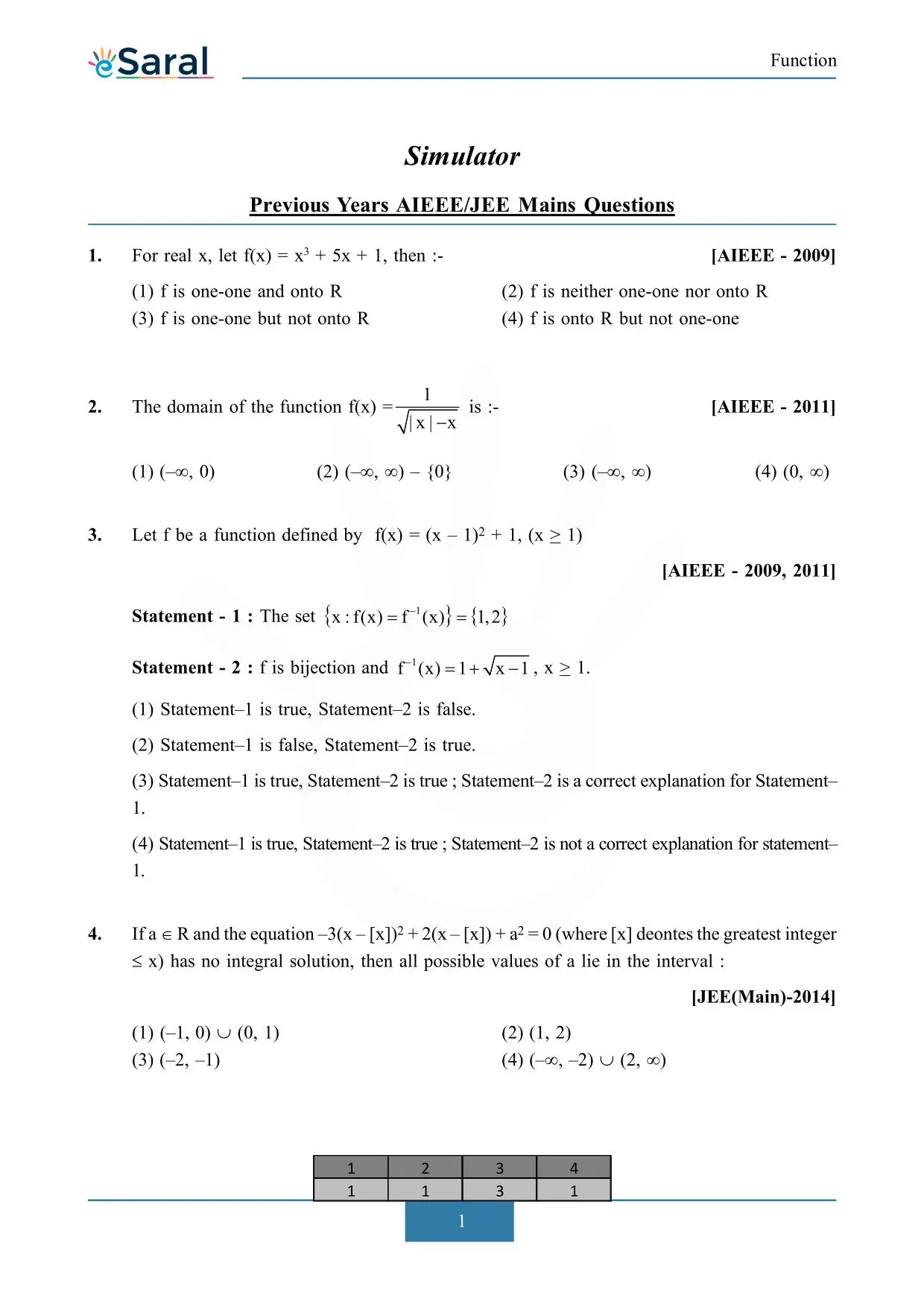
JEE Main typically has 2–3 questions from Functions per paper, based on NTA's official paper releases from 2019 to 2024. The exact count varies by session, but this topic has appeared in every session without exception. Domain and Range is consistently the most-tested sub-topic, followed by Bijective functions and Composition.
Which subtopics of Functions are most important for JEE Main?
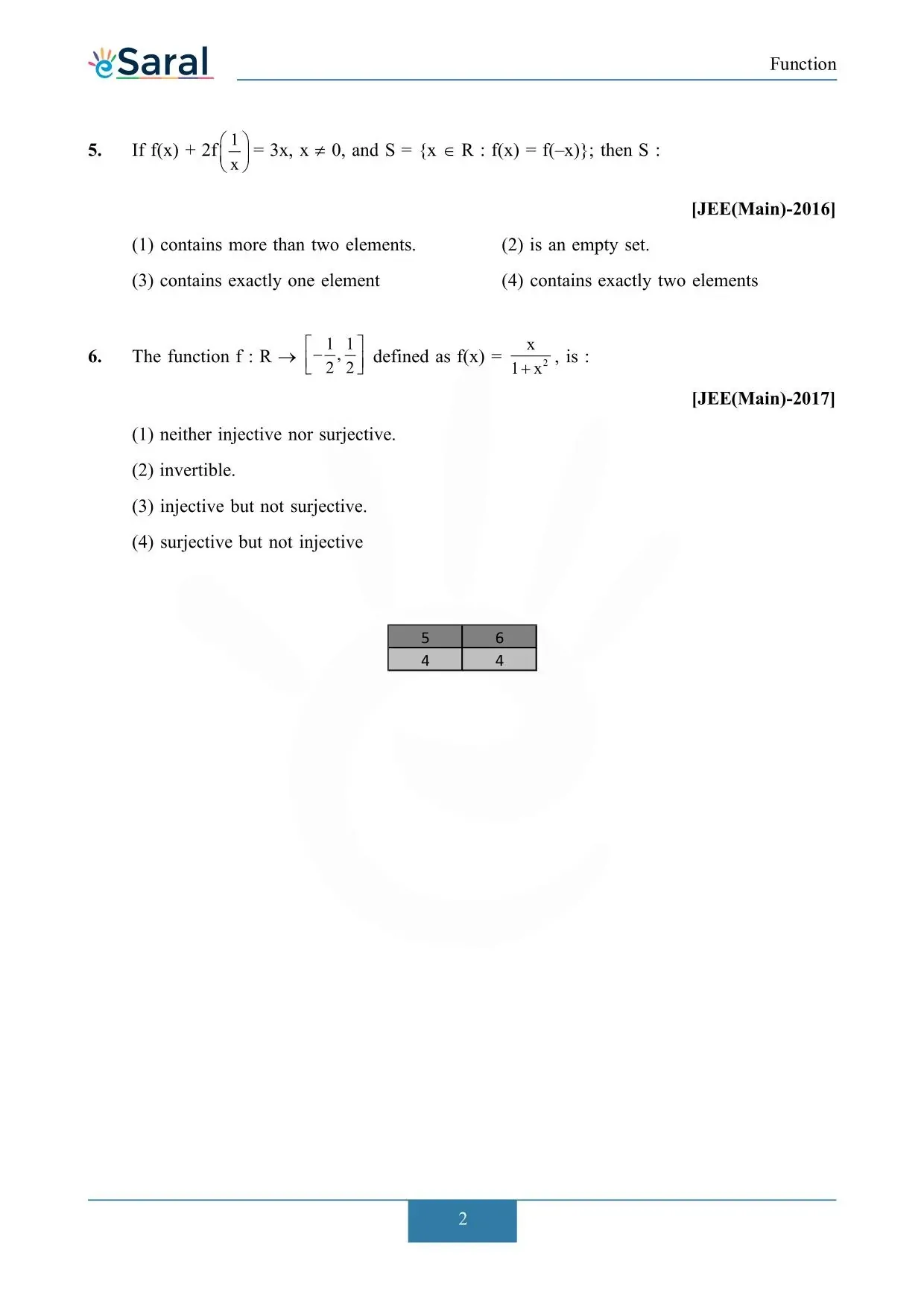
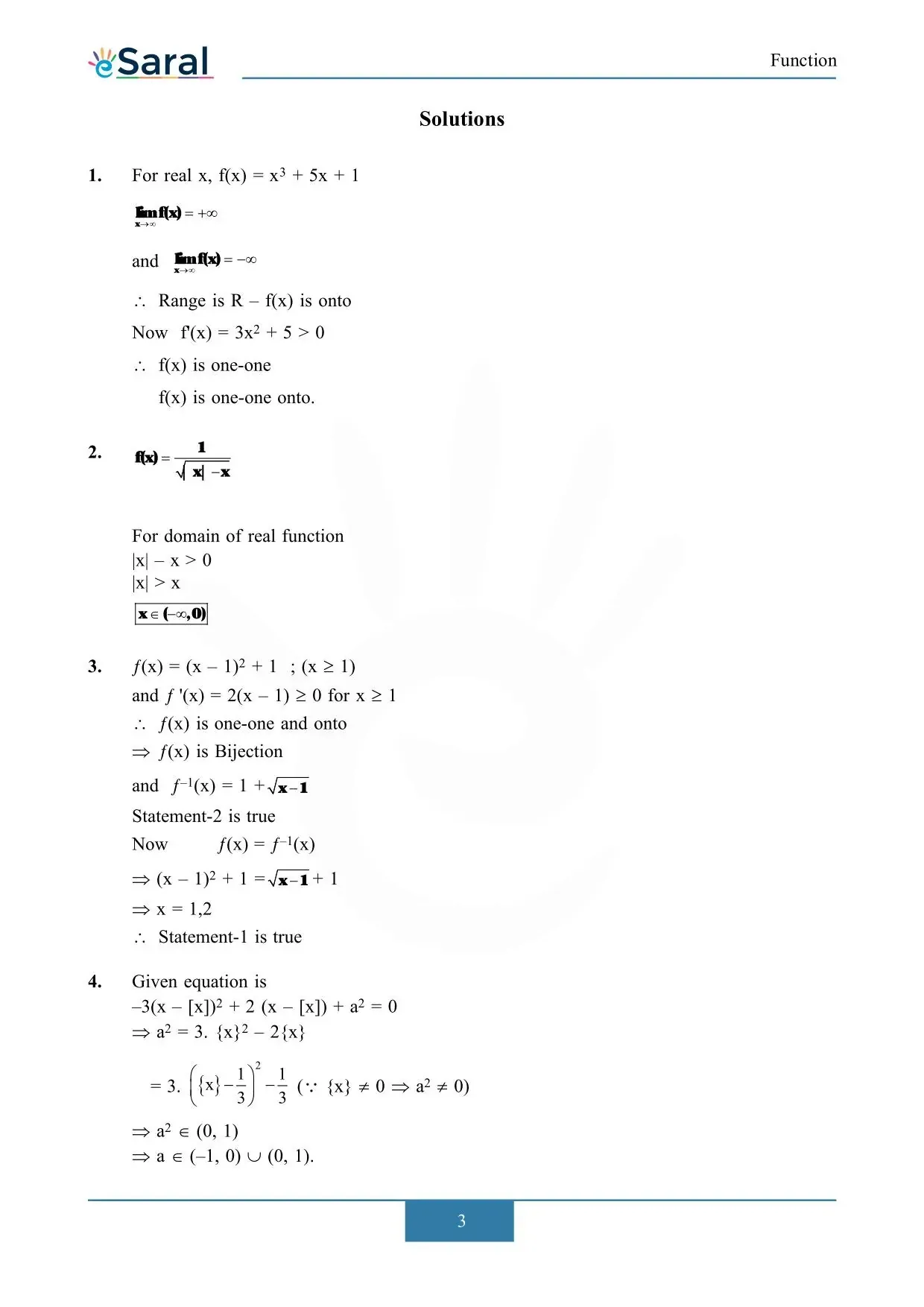
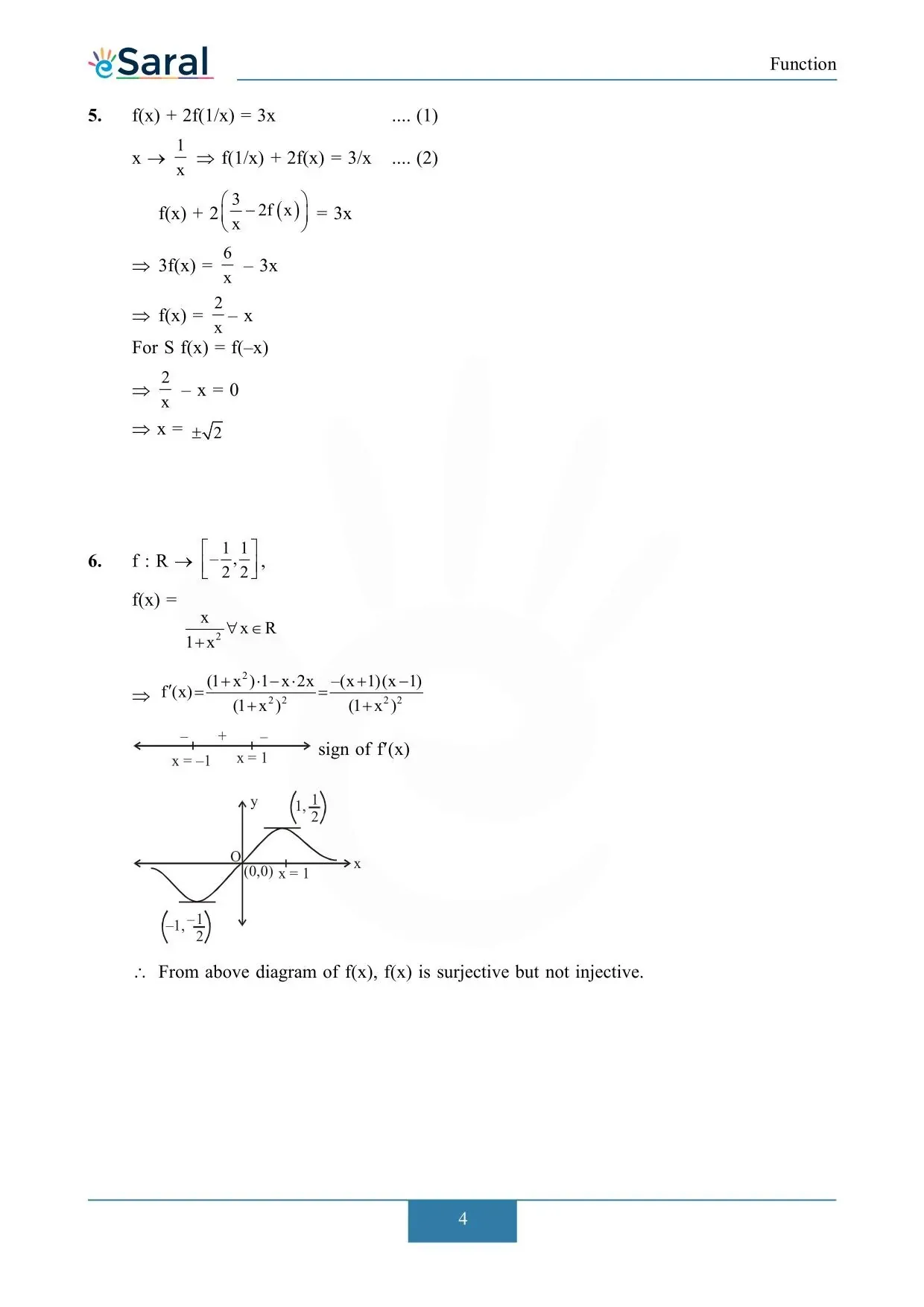
The most important sub-topics, in order of frequency, are: Domain and Range, Types of Functions (injective/surjective/bijective), Composition of Functions, Inverse of a Function, and Odd/Even Functions. Functional equations and periodic functions are lower-frequency but can appear at higher difficulty in later sessions.
How do I find the domain of a function for JEE Main problems?
Write down every restriction the expression imposes — square roots require the expression inside to be ≥ 0, logarithms require the argument to be > 0, and fractions require the denominator to be ≠ 0. Apply all conditions simultaneously and take the intersection of all valid sets. Always verify by testing boundary values.
Is the Functions chapter part of the JEE Main 2025 syllabus?
Yes. Functions is part of the Sets, Relations and Functions unit in the JEE Main 2025 Mathematics syllabus, as listed on the official NTA website (nta.ac.in). This unit is classified under Class 11 Mathematics and carries significant weightage across both Paper sessions.
What is the difference between domain and range in a function?
The domain is the complete set of valid input values (x-values) for which the function is defined. The range is the set of all actual output values (y-values) that the function produces for those inputs. The codomain is the set within which the range falls, but range and codomain are equal only for onto (surjective) functions.