
Human Reproduction - NEET Previous Year Questions with Complete Solutions

eSaral Academic and Editorial Team
Summary
Human Reproduction is one of the highest-weightage chapters in NEET Biology, contributing 2–4 questions almost every year. NTA asks questions on gametogenesis, fertilisation, embryonic development, and the male/female reproductive systems. Practising previous year questions (PYQs) from this chapter with solutions is the fastest way to identify the exact question types NTA repeats.
Home » NEET » Human Reproduction NEET Previous Year Questions

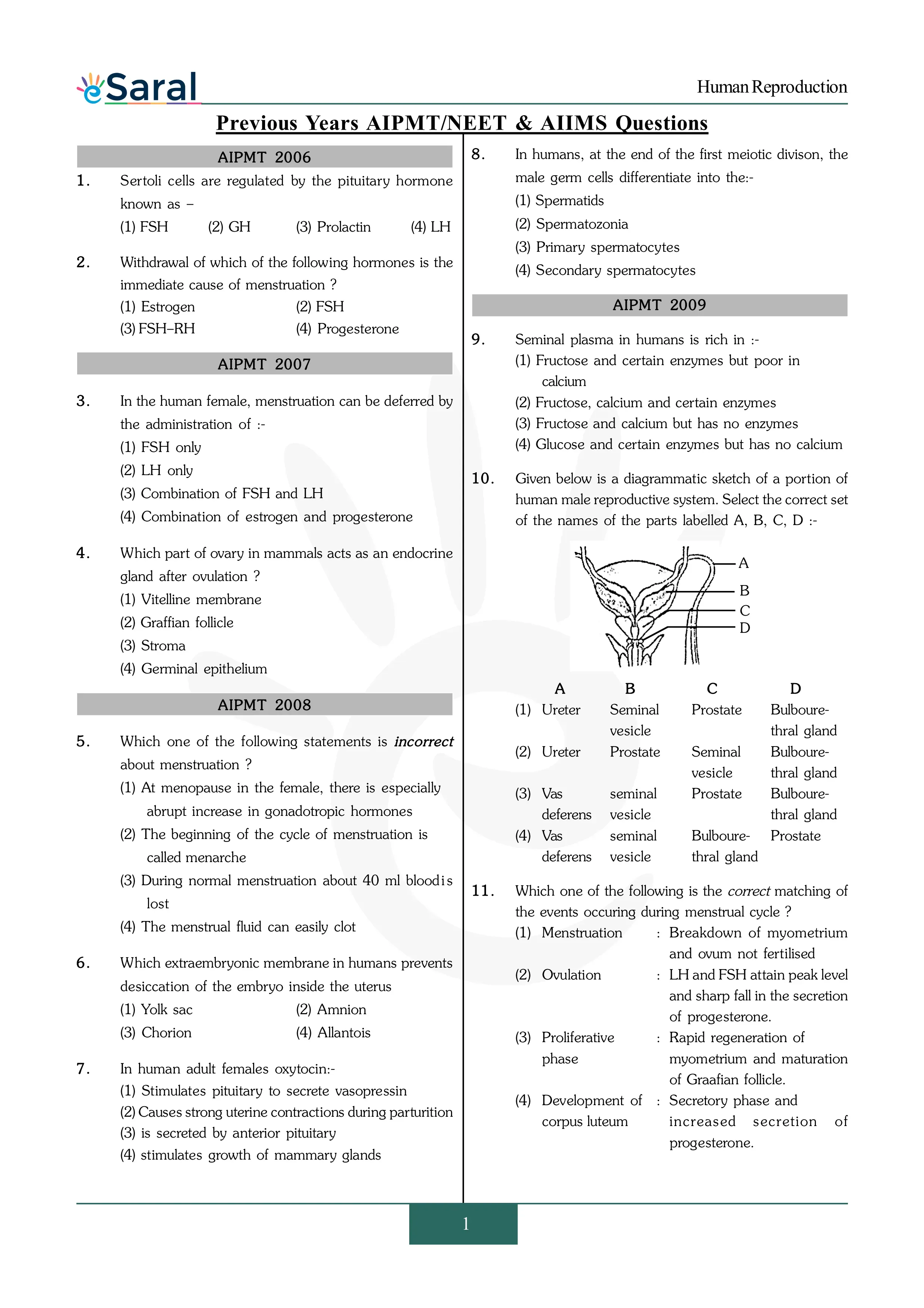
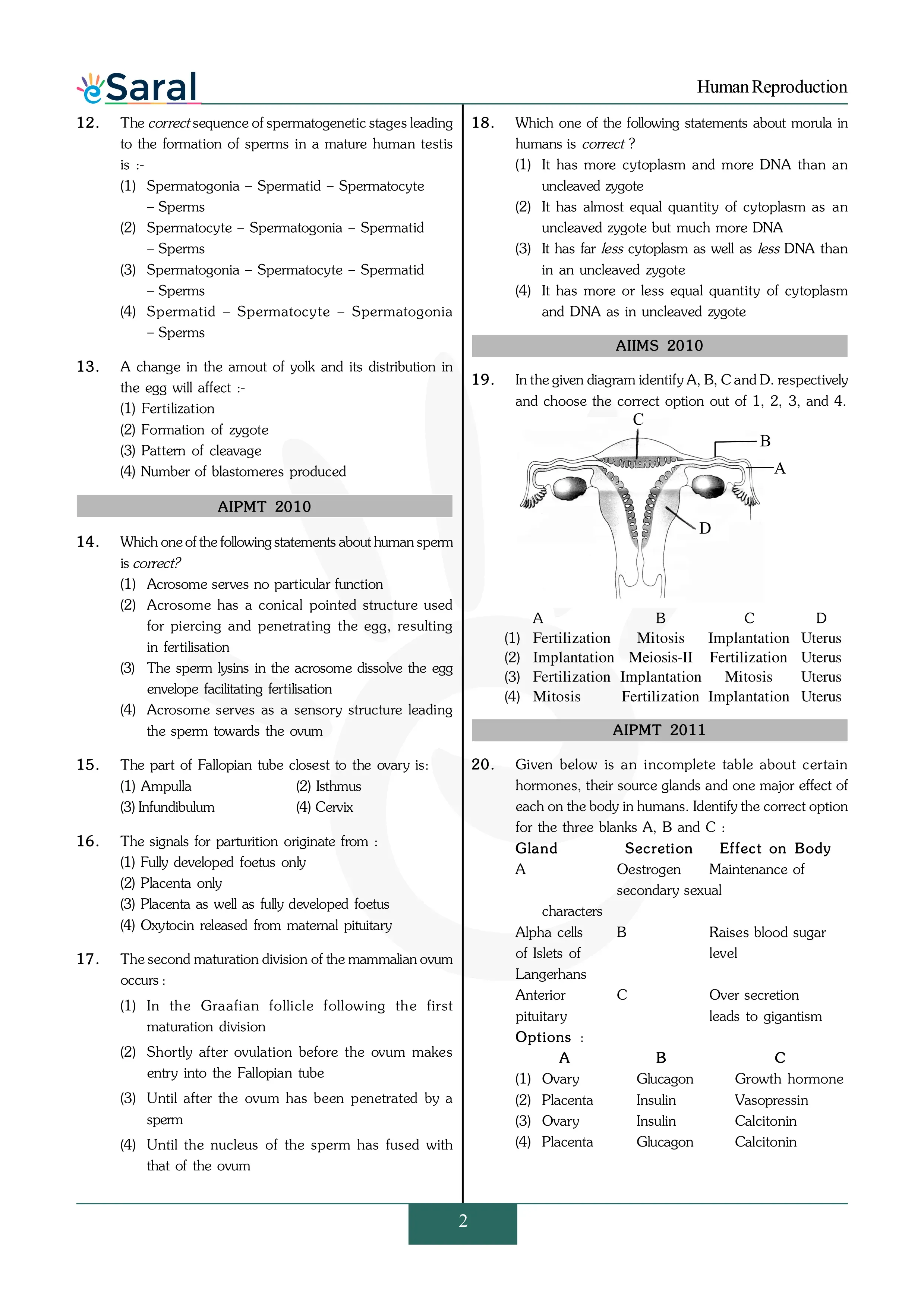
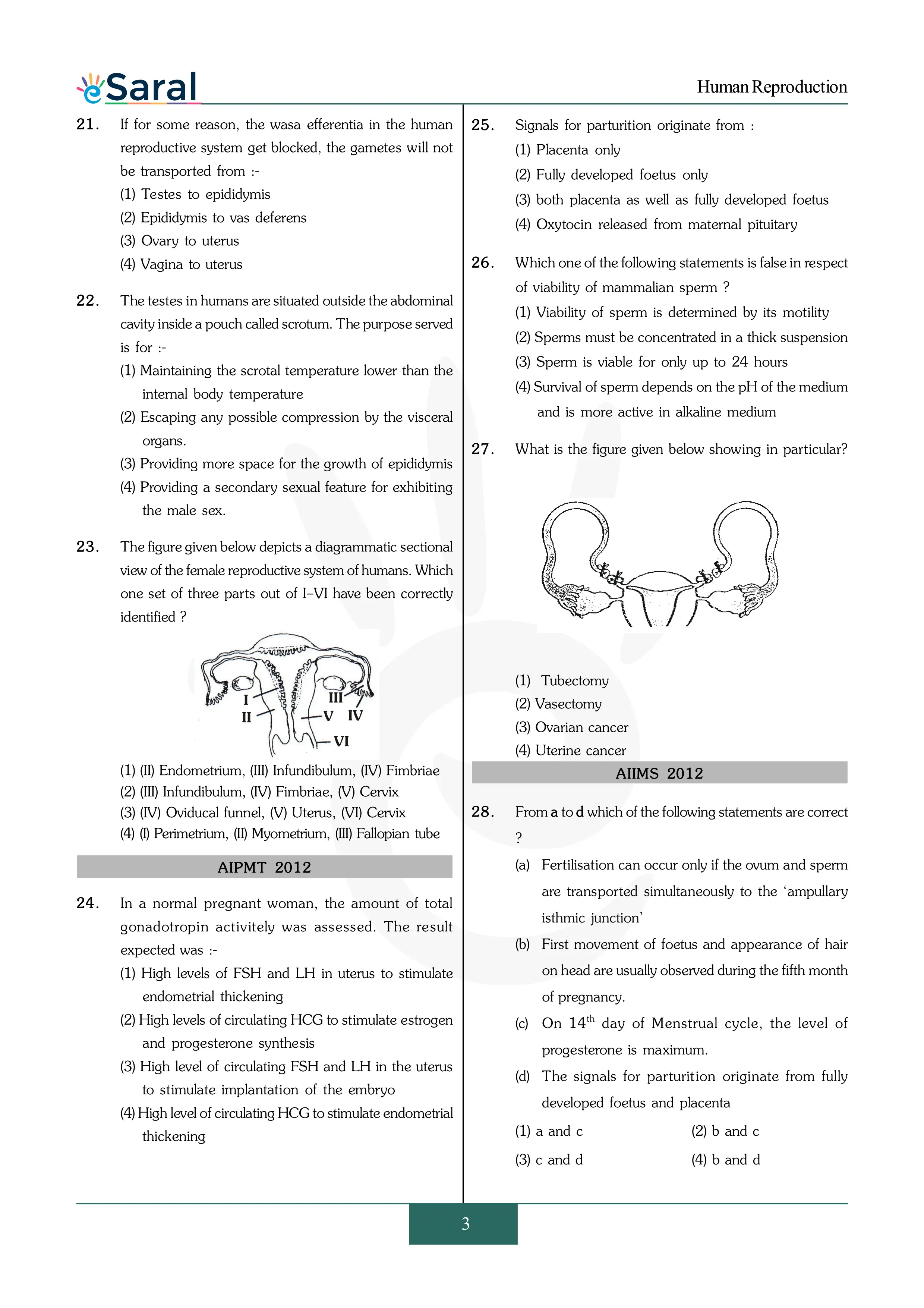
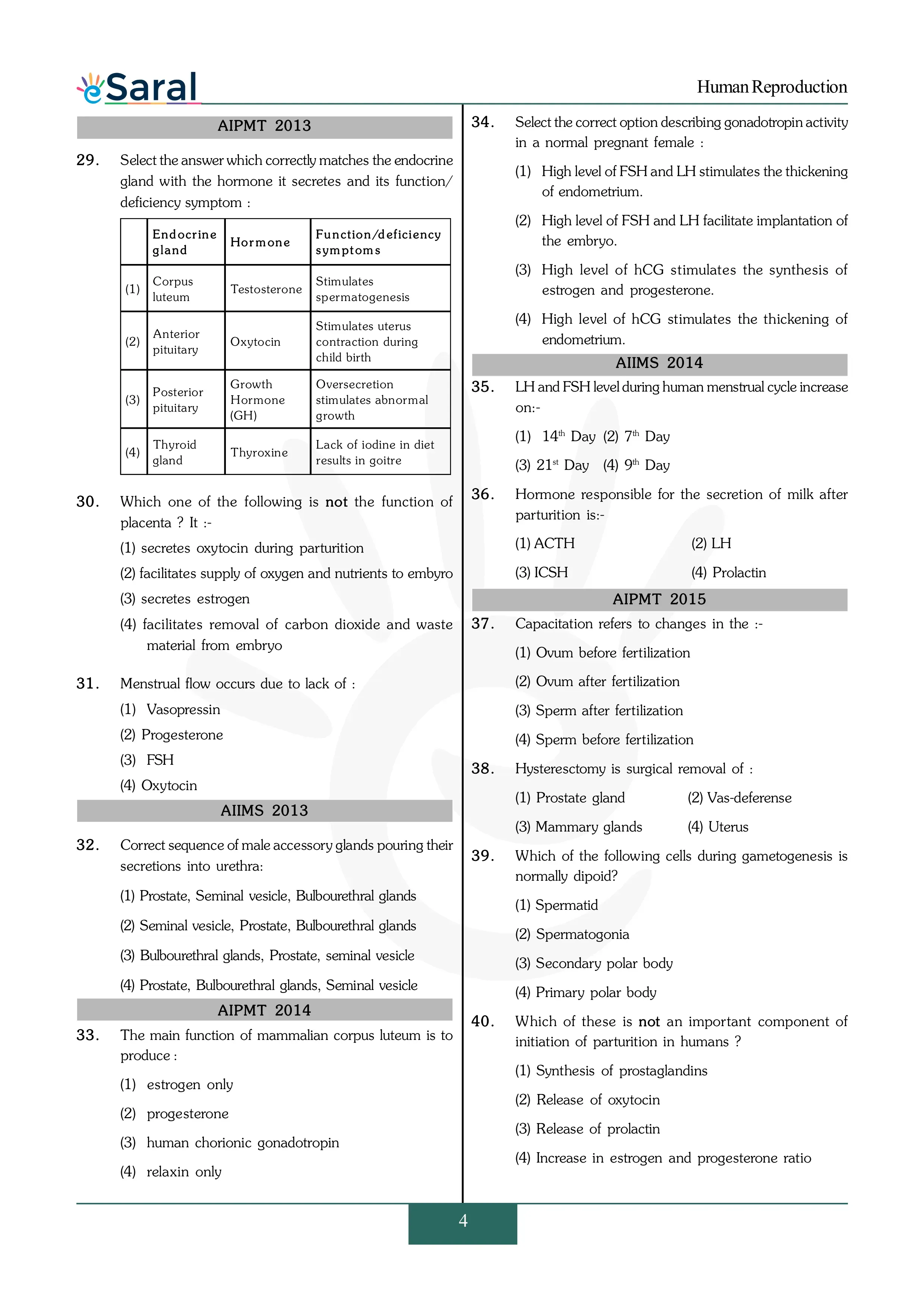
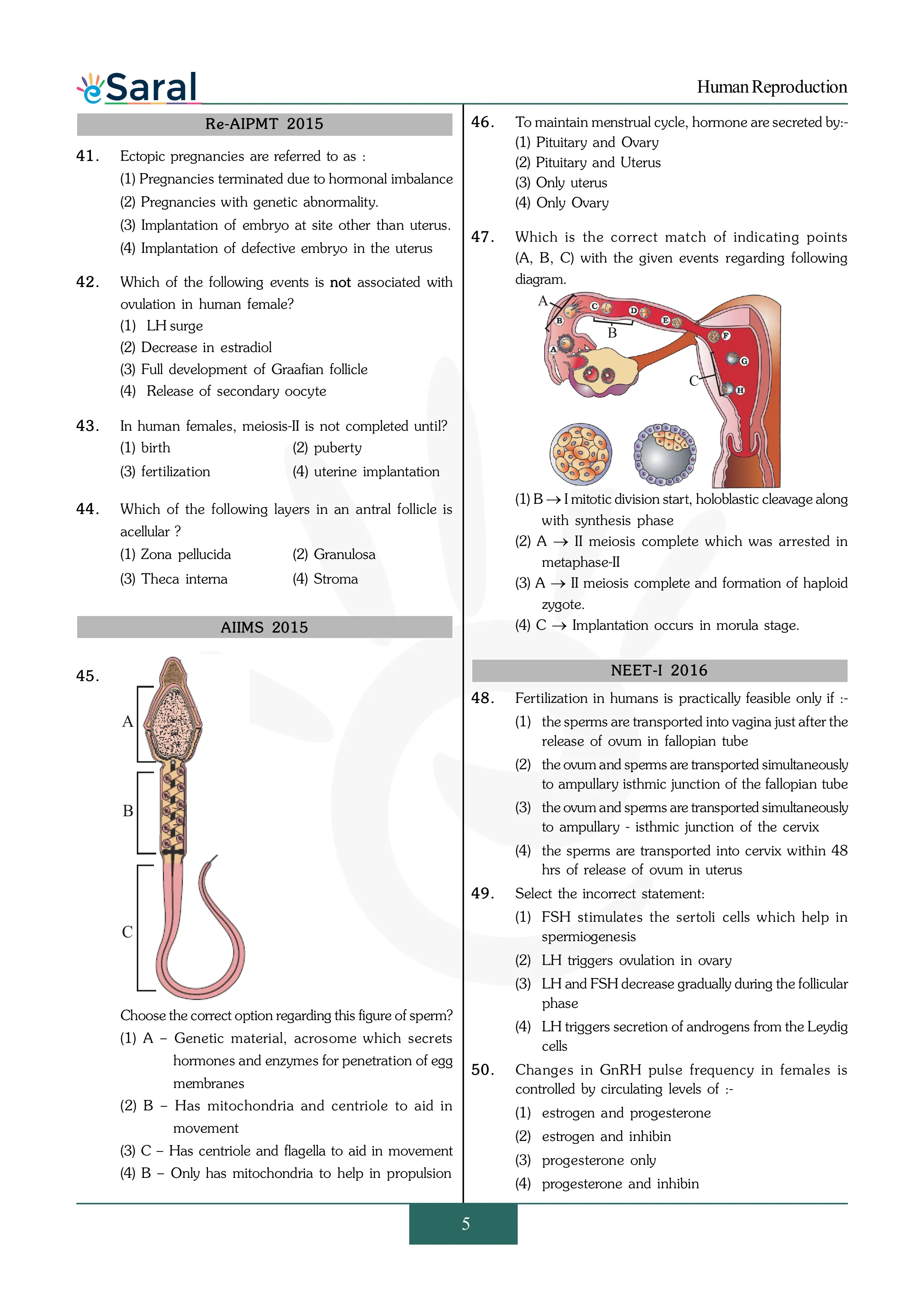
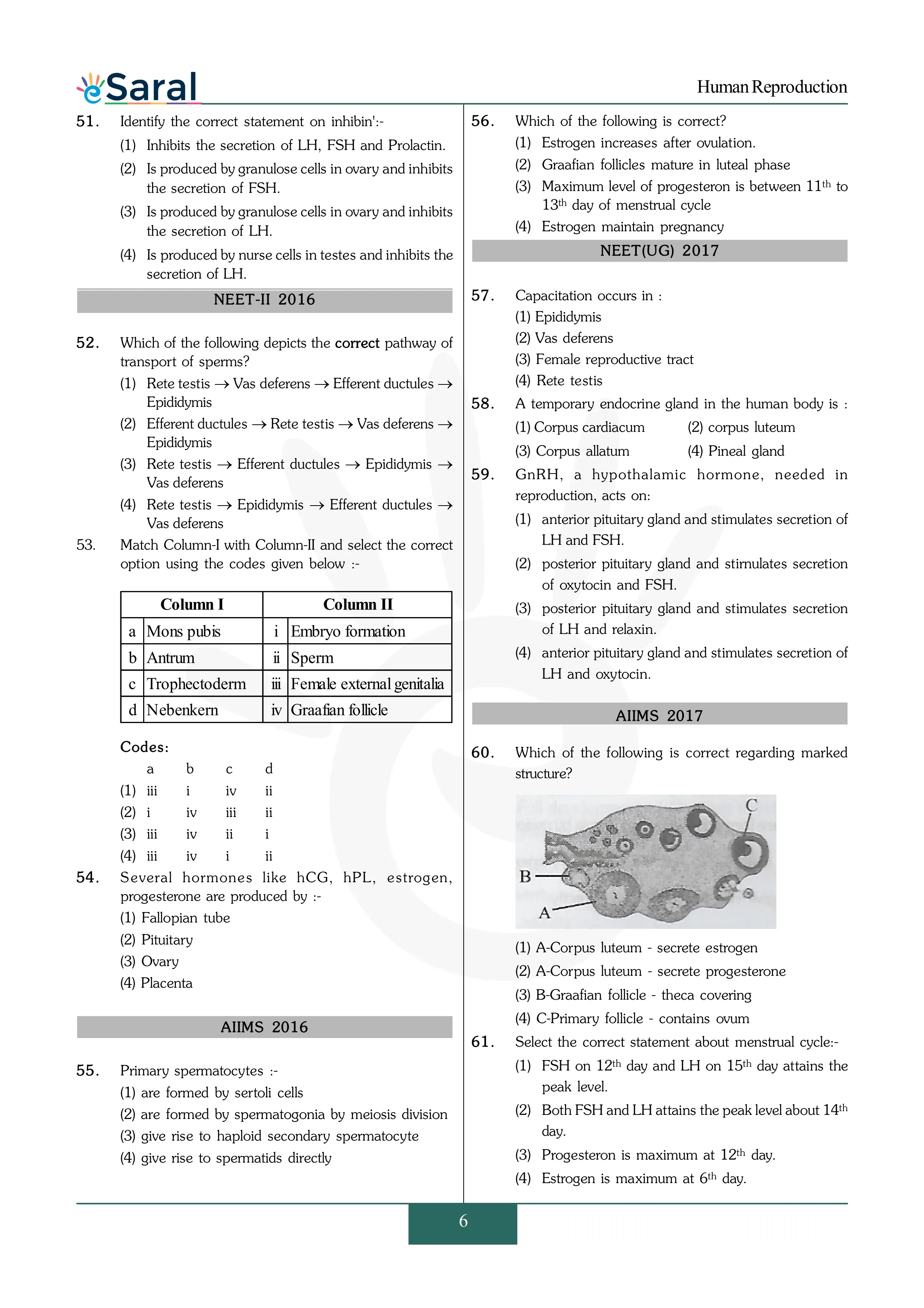
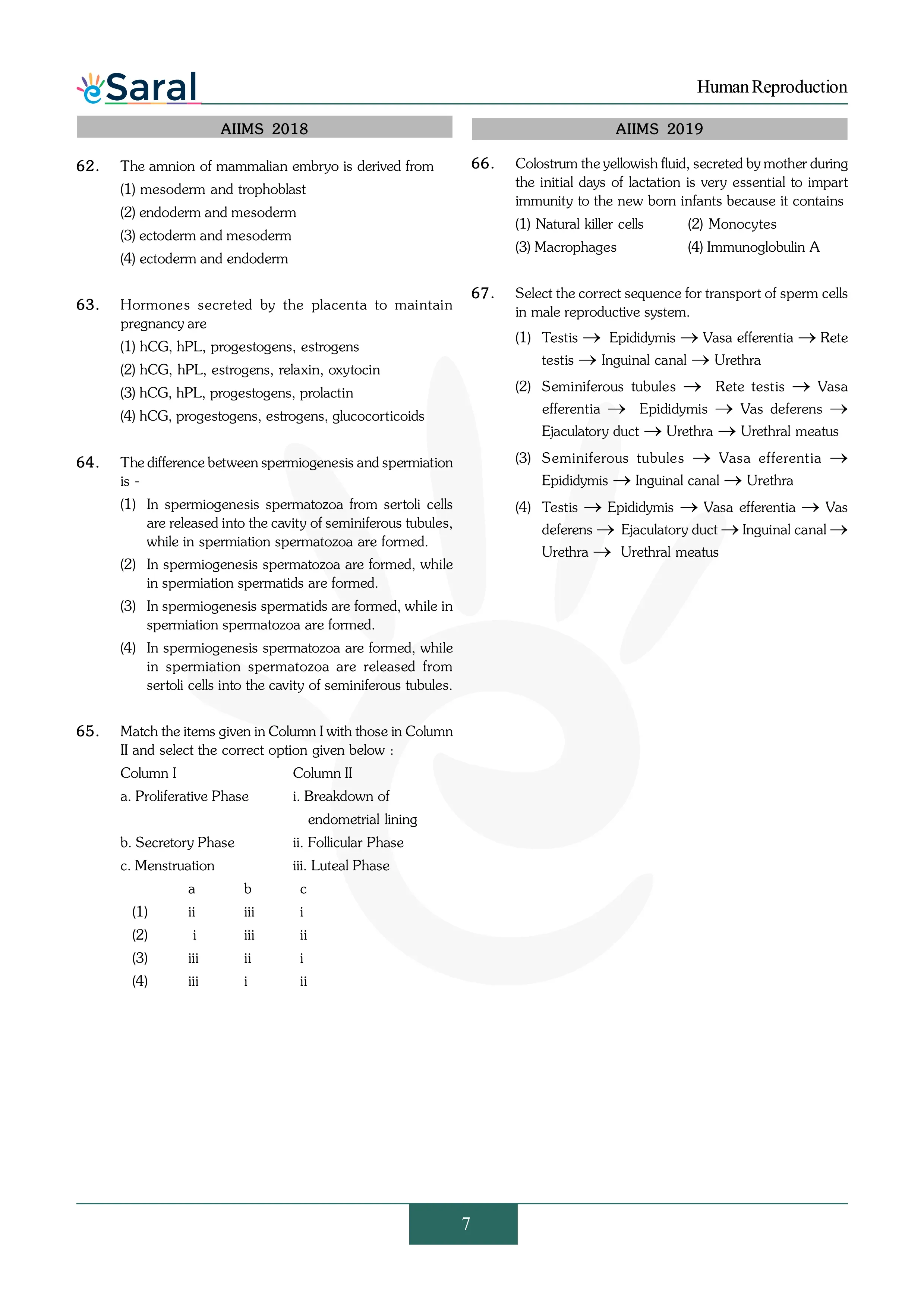
Here you will get Complete Human Reproduction NEET Previous Year Questions with complete and detailed solutions.
Get complete NEET previous year questions for Physics, Chemistry, and Biology.
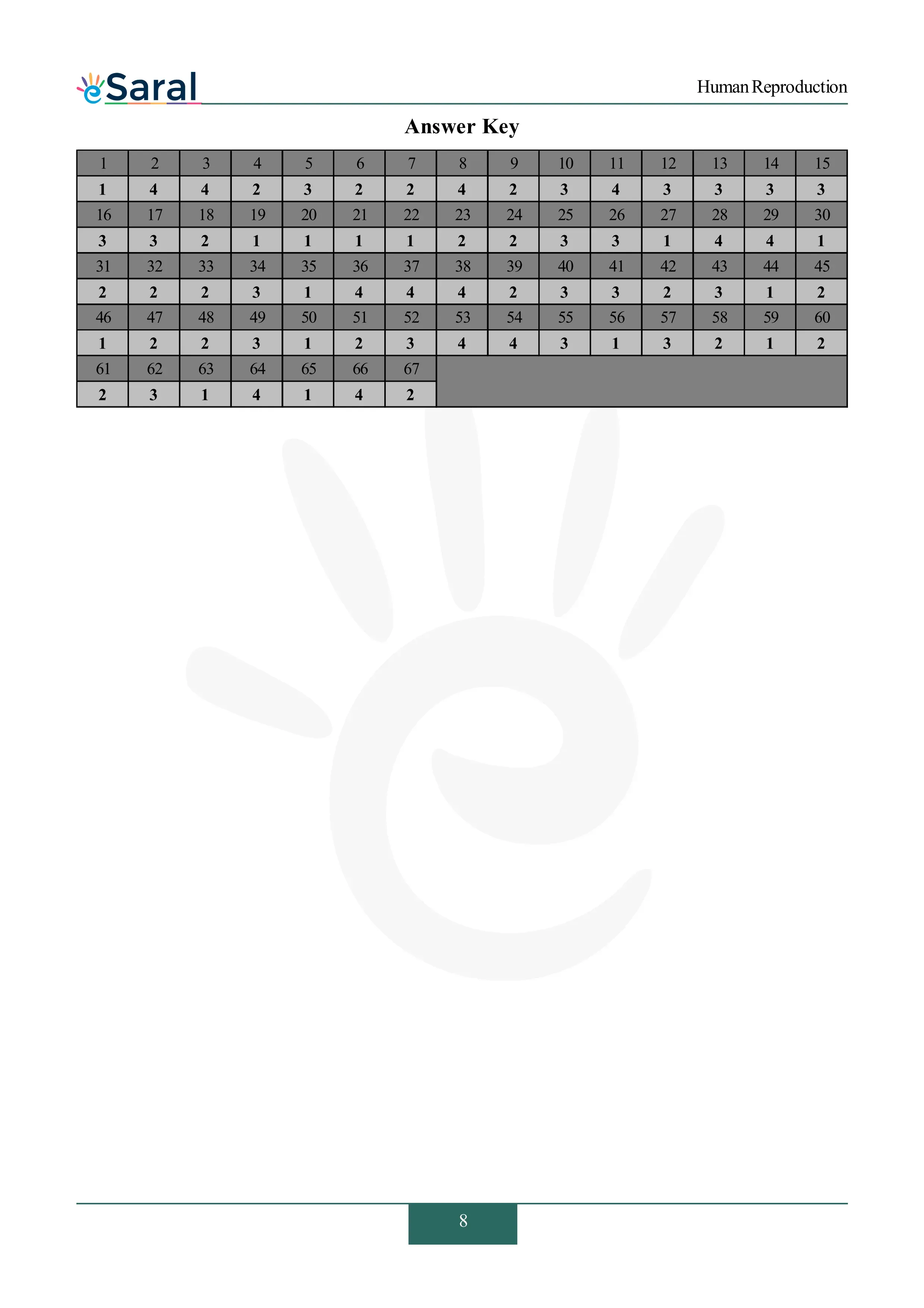
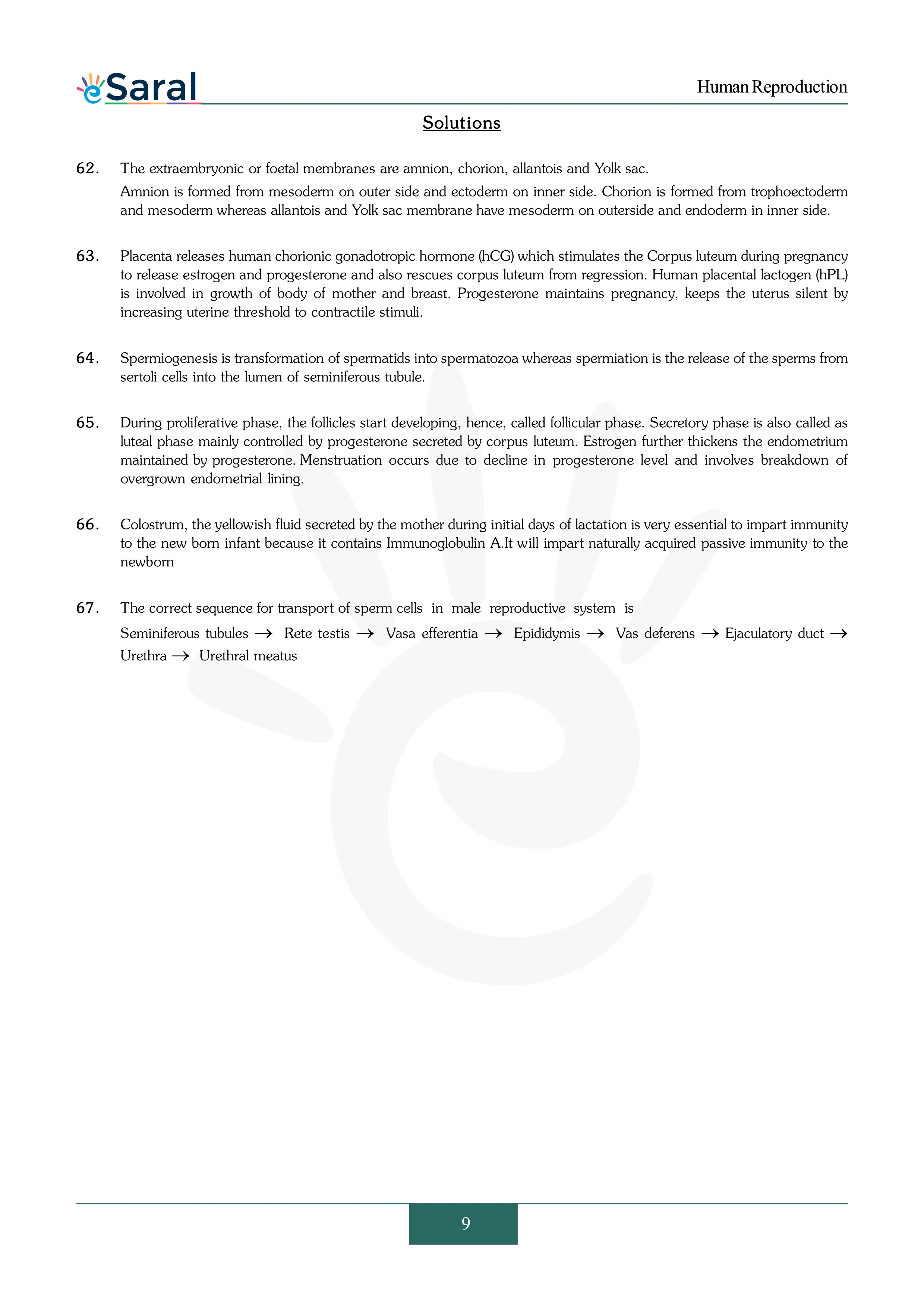
You will find all the solutions at the end of this page:
Frequently Asked Questions
Is Human Reproduction difficult for NEET?
Human Reproduction is considered a medium-difficulty chapter. The concepts are factual and diagram-based rather than calculation-heavy, which means marks are straightforward to secure with systematic NCERT reading. The difficulty lies in the fine details — exact cell names in gametogenesis, precise days in the menstrual cycle, and correct terminology for embryonic stages. PYQ practice closes this gap quickly
Which topic in Human Reproduction is most important for NEET?
Gametogenesis — specifically spermatogenesis and oogenesis — is the most frequently tested topic. It accounts for approximately 6–8 questions across NEET papers from 2017 to 2024. The menstrual cycle and its hormonal regulation is the second most important subtopic. Together, these two areas make up nearly 40% of all Human Reproduction questions asked in NEET.
How many questions come from Human Reproduction in NEET every year?
Human Reproduction typically contributes 2–4 questions per NEET paper. Over the past eight years (2017–2024), the chapter has appeared in every single NEET paper without exception. Combined with other chapters in the Reproduction unit, this unit contributes 6–8 questions, making it one of the highest-scoring Biology units for well-prepared students.
Can I score full marks in Human Reproduction if I only study PYQs?
PYQs alone are not sufficient. They cover recurring patterns but NTA occasionally introduces a question from a rarely tested NCERT line. The correct approach is: NCERT reading first (full chapter, including exercises and diagrams) → PYQs for pattern recognition → revision of errors traced back to NCERT. Students who follow this three-step loop in eSaral's structured doubt-solving sessions consistently clear this chapter with zero errors.
What is the best way to remember the menstrual cycle for NEET?
Draw the menstrual cycle as a timeline from Day 1 to Day 28, labelling the phase name, the dominant hormone, the ovarian event, and the uterine event for each phase. Practice drawing this from memory daily for one week. Associating the hormone curve (rising oestrogen, LH surge, rising progesterone, then fall) with what is happening physically in the ovary and uterus at each point prevents the most common errors.
Are NEET Human Reproduction questions directly from NCERT?
Yes. Virtually every answer to a Human Reproduction NEET question can be traced back to a sentence, diagram, or table in Class 12 NCERT Biology, Chapter 3. NTA's official question-setting policy (confirmed on the NTA website) states that NEET questions are based on the NCERT syllabus. This is why reading NCERT line-by-line — not just summary notes — is non-negotiable for this chapter.
Team eSaral
eSaral Academic and Editorial Team
Team eSaral is the collective author profile for educational content created by eSaral’s teachers and academic contributors. The team draws on expertise from IIT graduates, doctors, experienced educators and subject specialists to develop resources for JEE, NEET and school students. Our articles aim to explain concepts clearly and help students study with confidence.
Related Posts

BITSAT 2027: Registration Date, Exam Date, Syllabus, Eligibility, Pattern & Fees
BITSAT 2027 exam dates, registration timeline, eligibility criteria, exam pattern, marking scheme, syllabus and fees in one page.

BITSAT Previous Year Question Paper PDF (2017-2026)
Download BITSAT previous year question papers PDF from 2017 to 2026,session-wise. Memory-based papers,exam pattern, paper analysis and how to practise

CBSE Class 10 Date Sheet 2027: Expected Exam Dates, Release Date, Admit Card & Result Timeline
CBSE Class 10 date sheet 2027 is awaited. See the expected exam dates, release window, how to download the PDF, admit card and result timelines.

NCERT Physics Class 10 Book PDF in Hindi 2026-27 – भौतिक विज्ञान के 4 अध्याय (Free Download)
NCERT Physics Class 10 book PDF in Hindi 2026-27: download all 4 chapters (अध्याय 9–12) free, with topics and important formulas.

NCERT Biology Class 9 Book Anveshan PDF in Hindi - जीव विज्ञान कक्षा 9 पुस्तक अन्वेषण PDF
Download NCERT Biology Class 9 book PDF in Hindi chapterwise for 2026-27: Cell, Tissues, Reproduction and Diversity. Free PDFs.

Essay On Artificial Intelligence in English (100,150, 200, 250, 300, 500 Words)
This is in contrast to the natural intelligence of humans. With Artificial Intelligence, machines can perform

Essay on 78th India Independence Day in English for Student (100, 150, 200, 250, 300, 500 Words)
Read the best essays on India's Independence Day in English. Short & long essays (100, 150, 200, 250, 300, 500 words) perfect for school exams
NCERT Class 11 English Snapshots book - Free PDF download- Esaral
Download NCERT Class 11 English Snapshots book PDF for free. Get all 8 chapters, chapter-wise. Start your prep today!
NCERT Class 10 biology book pdf - Free PDF Download - eSaral
NCERT Class 10 Biology book PDF 2026-27: all 5 chapters (Life Processes to Our Environment) in English & Hindi, with CBSE syllabus, marks & practical

Essay on Global Warming in English (100,150, 200, 250, 300, 500 Words)
Global warming means the Earth is getting hotter. This happens because of things like pollution from cars and factories.