
Ionic Equilibrium Class 11 Notes for IIT JEE & NEET

eSaral Academic and Editorial Team
Summary
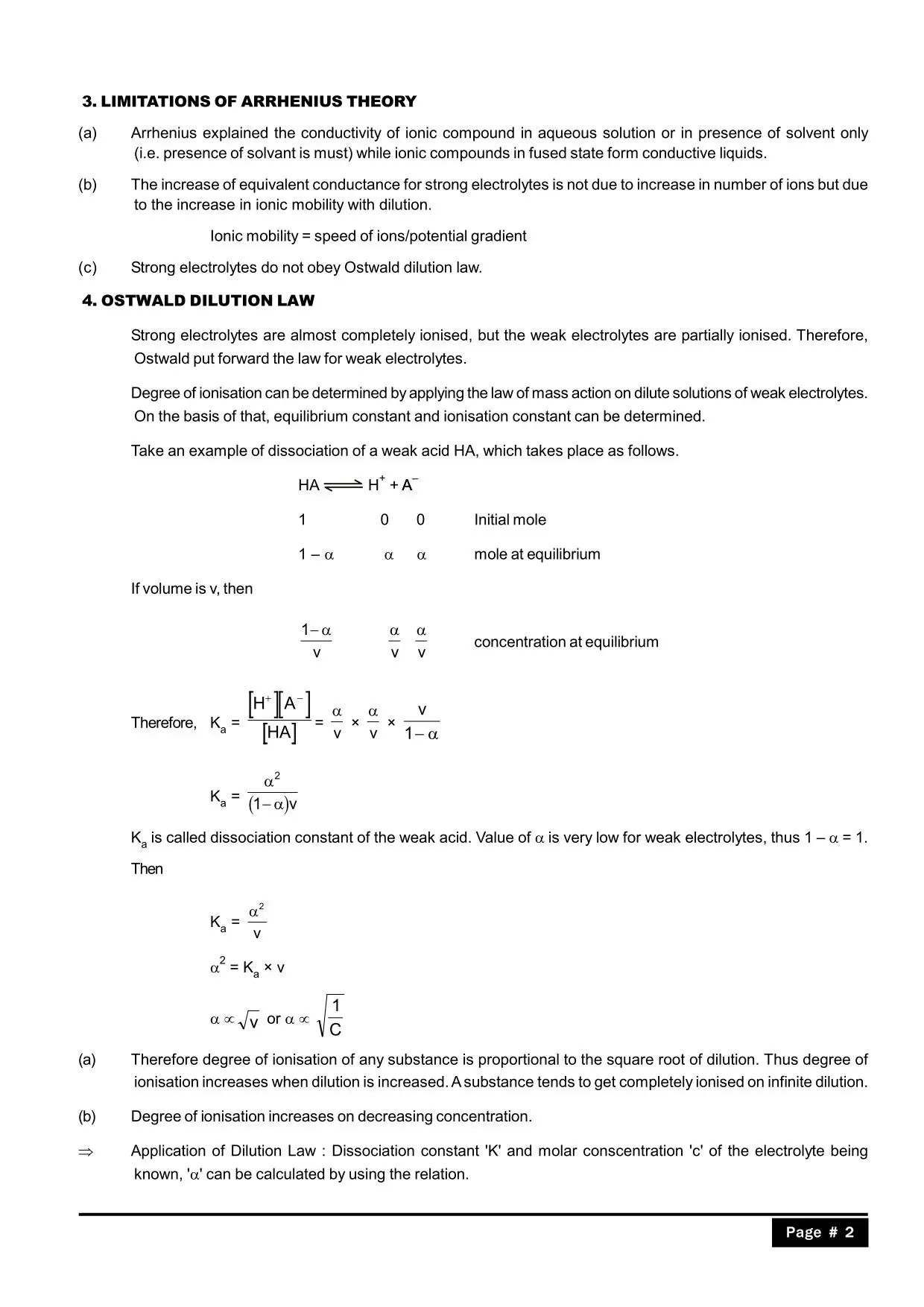
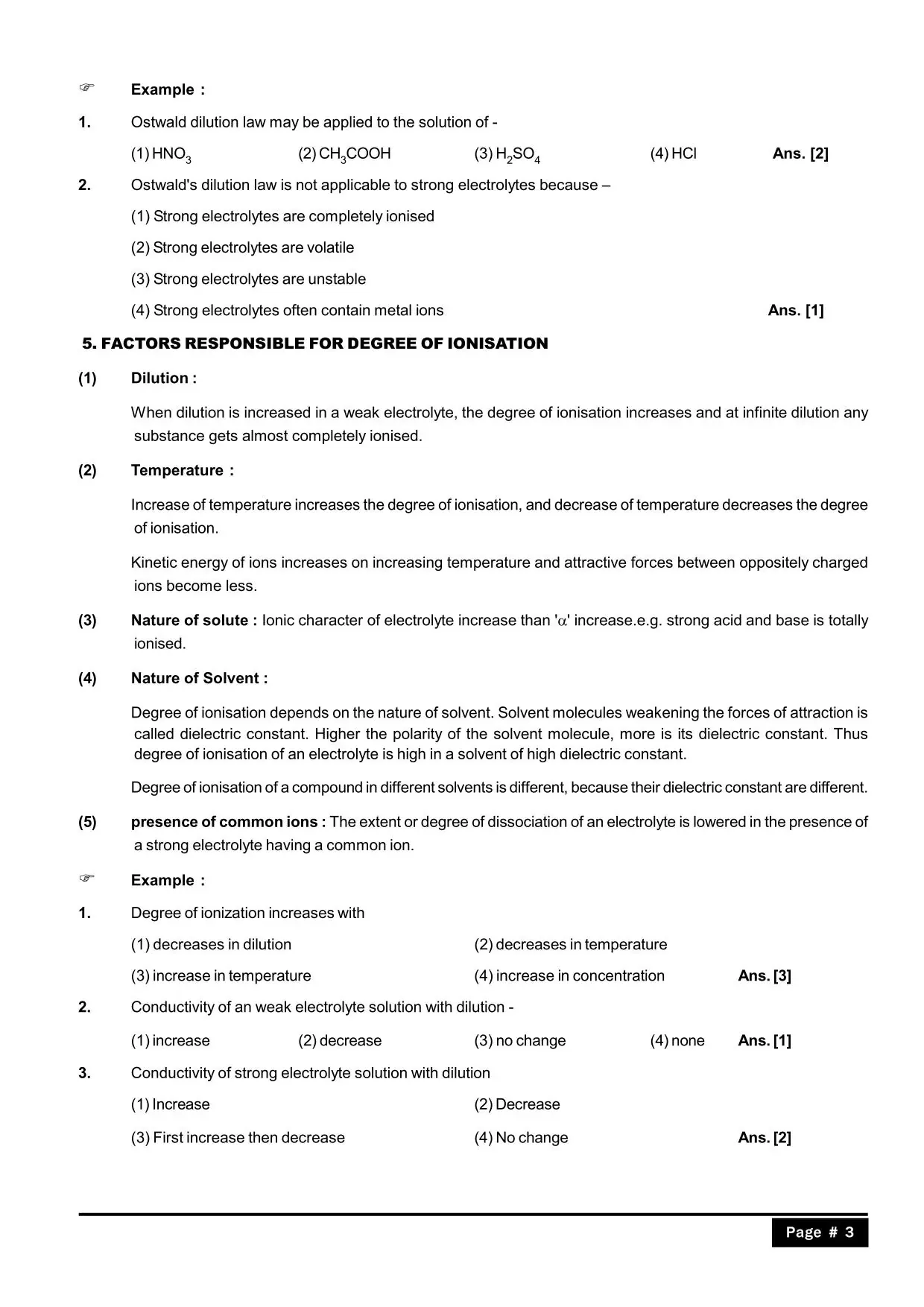
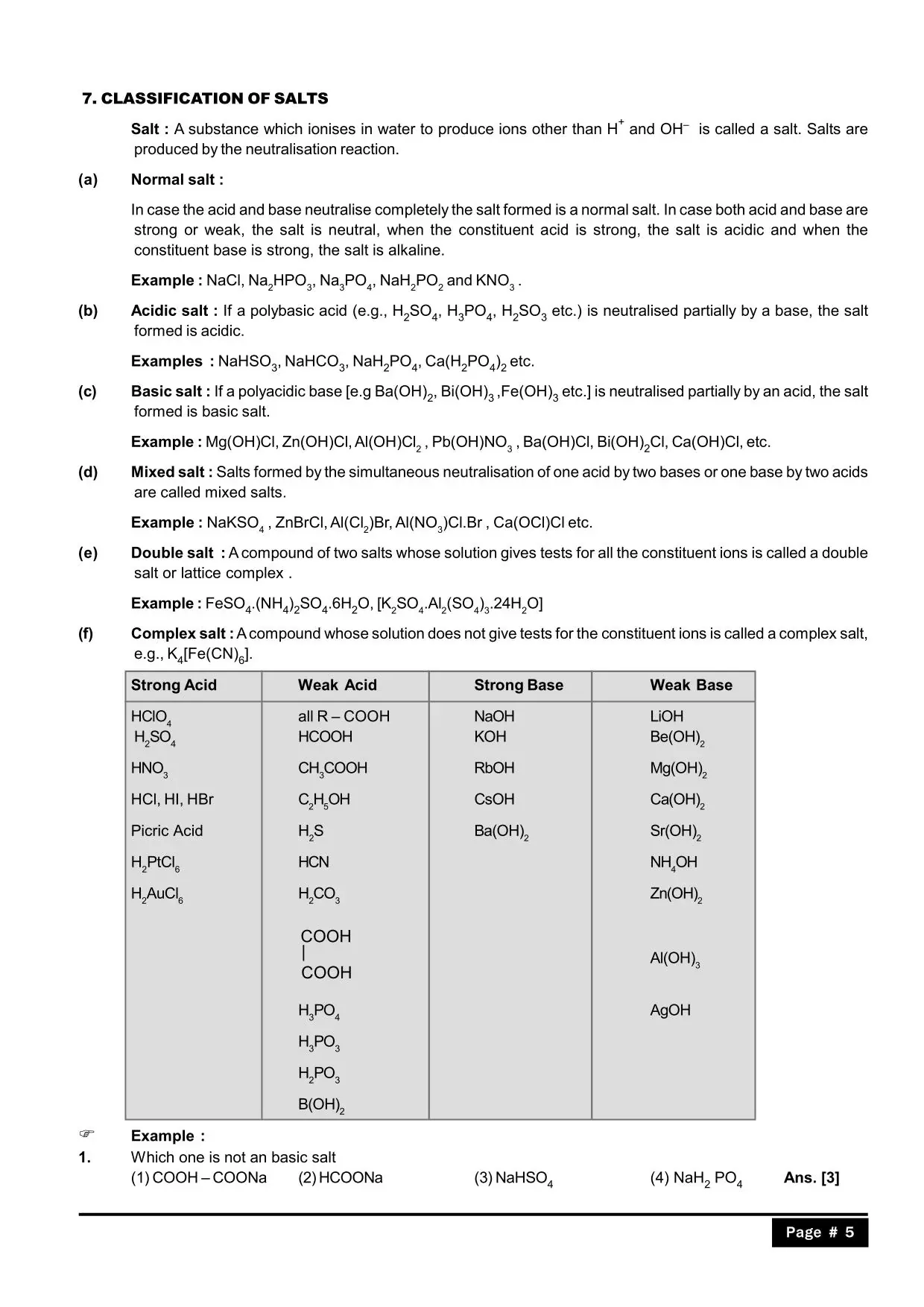
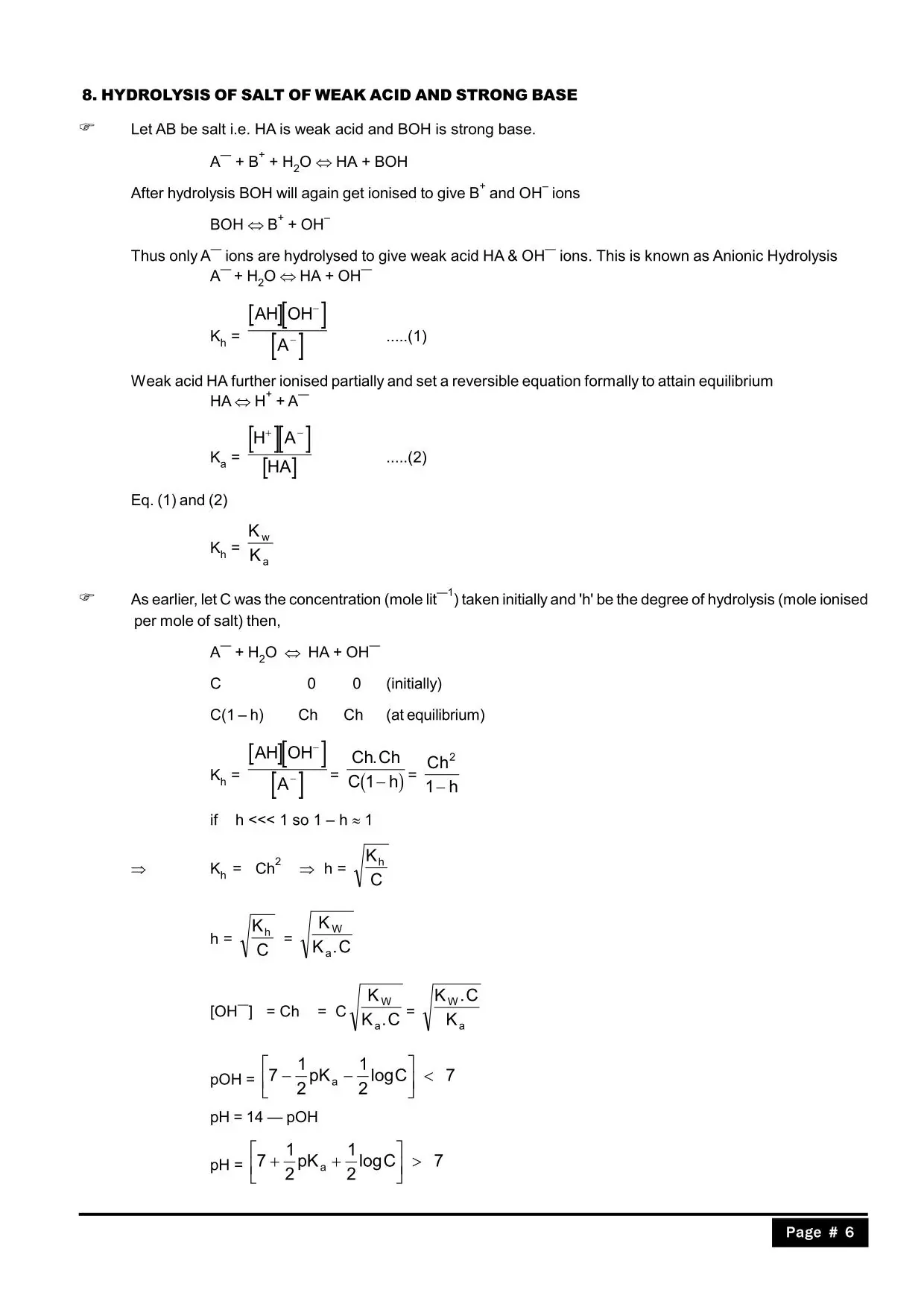
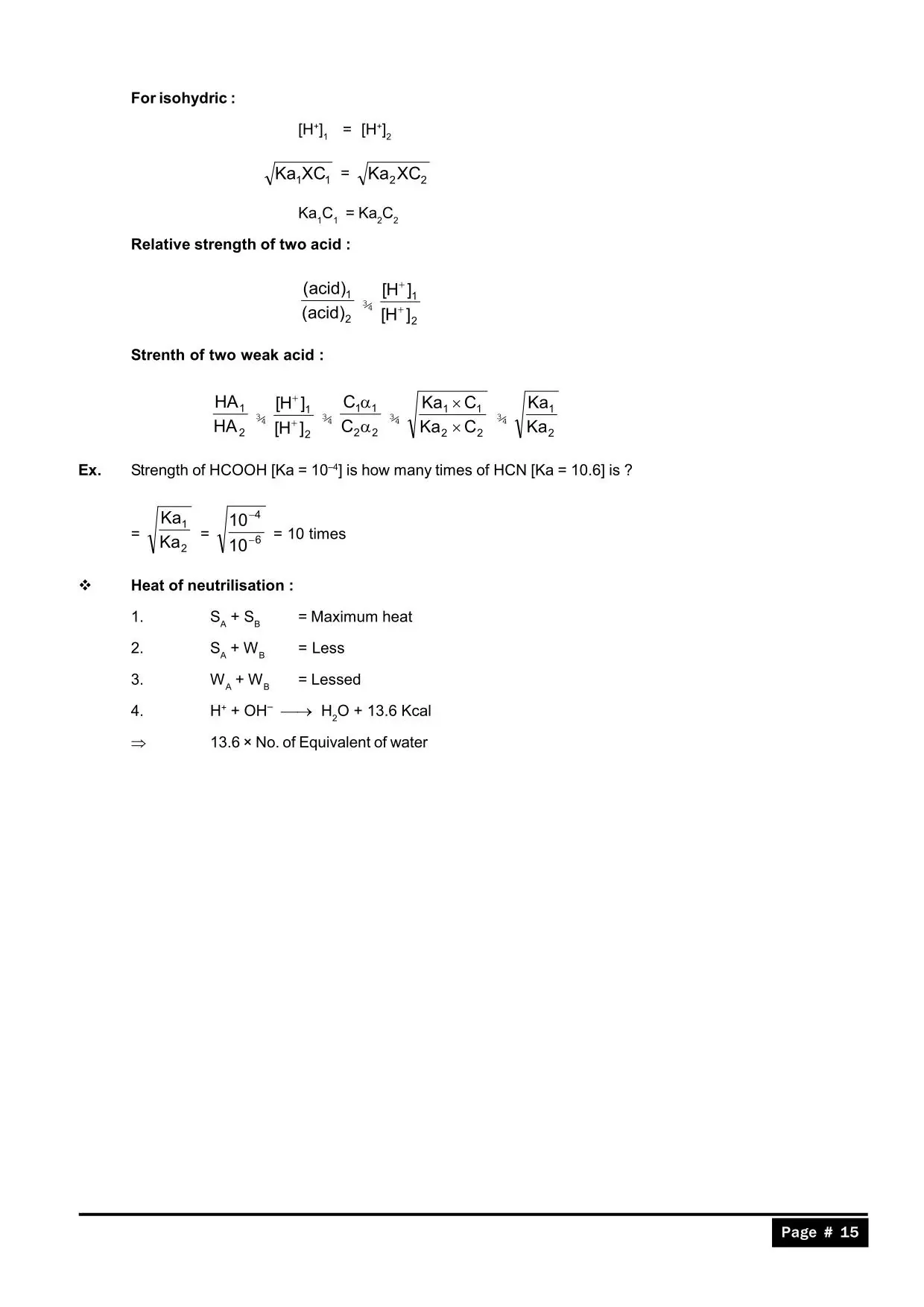
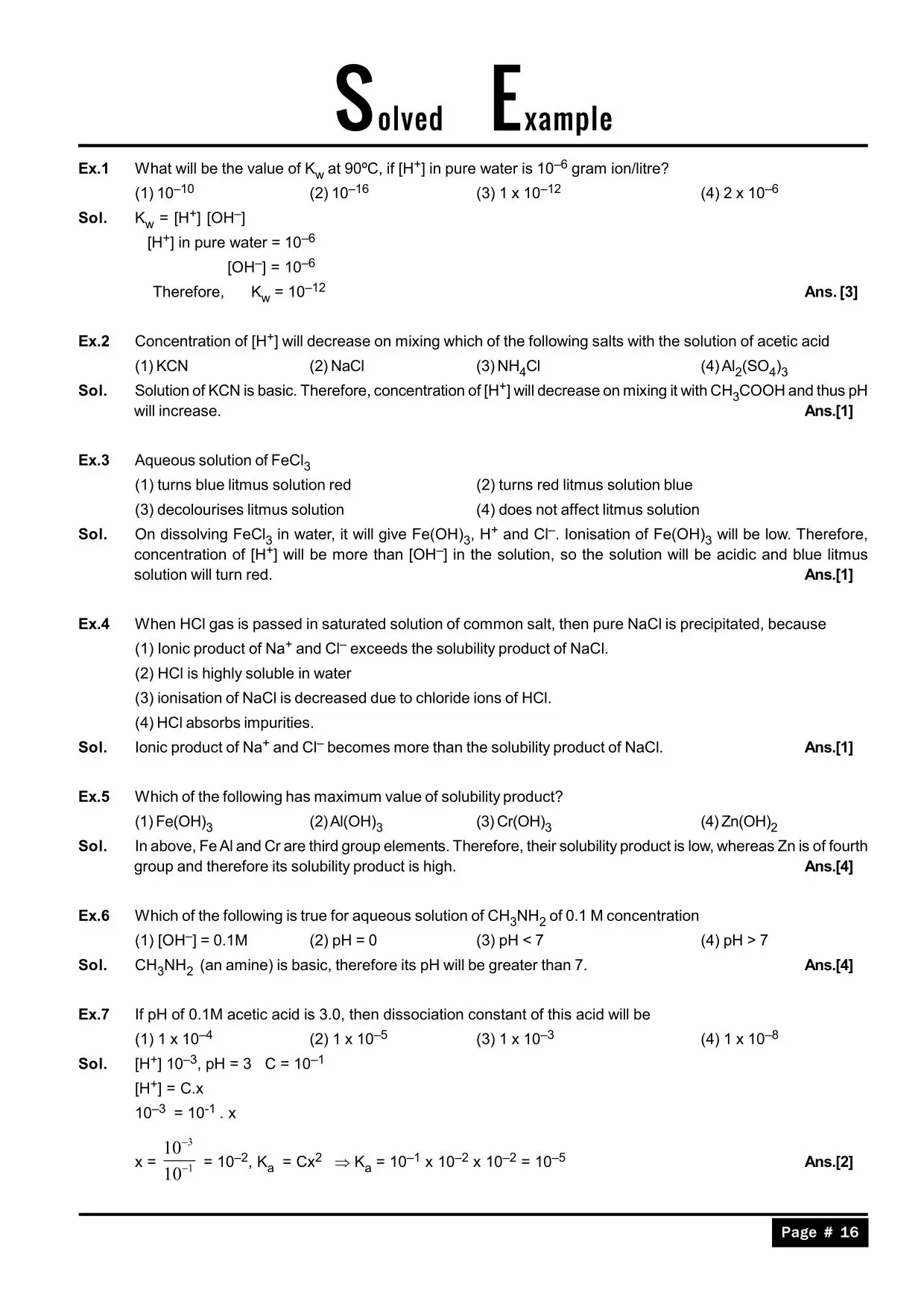
Ionic equilibrium refers to the equilibrium established between ions and unionised molecules when a weak electrolyte partially dissociates in solution. Key concepts include Arrhenius, Brønsted-Lowry, and Lewis theories; ionisation constants (Ka, Kb); pH calculations; buffer solutions; salt hydrolysis; and solubility product (Ksp) — all high-weightage topics in IIT JEE and NEET.

eSaral › Class 11 Chemistry Notes › Ionic Equilibrium Notes for IIT JEE & NEET

Get detailed study material for Class 11 Chemistry to prepare for Boards as well as competitive exams like IIT JEE, NEET, etc. eSaral offers you complete Ionic Equilibrium Class 11 Notes for IIT JEE & NEET Exam Preparation. eSaral helps the students in clearing and understanding each topic in a better way. eSaral is providing complete chapter notes of Class 11th and 12th both of Physics, Chemistry & Mathematics. Besides this, eSaral also offers NCERT Solutions, Previous year questions for JEE Main and Advance, Practice questions, Test Series for JEE Main, JEE Advanced and NEET, Important questions of Physics, Chemistry, Math, and Biology and many more. Download eSaral app for free study material and video tutorials. .
India's Best Exam Preparation for Class 11th - Download Now
India's Best Exam Preparation for Class 11th - Download Now
India's Best Exam Preparation for Class 11th - Download Now
India's Best Exam Preparation for Class 11th - Download Now
India's Best Exam Preparation for Class 11th - Download Now
India's Best Exam Preparation for Class 11th - Download Now
India's Best Exam Preparation for Class 11th - Download Now
India's Best Exam Preparation for Class 11th - Download Now
eSaral helps the students by providing you an easy way to understand concepts and attractive study material for IIT JEE, which includes the chemistry video lectures by top expert IITian Faculties of KOTA. We are also providing a quick revision for Chemistry to help the students revise the chapter quickly. eSaral brings complete notes for Class 11 Chemistry. eSaral provides a series of detailed chapter-wise notes for all the Subjects of class 11th and 12th. These notes will also help you in your IIT JEE & NEET preparations. We hope these Chemistry Notes for Class 11 will help you understand the important topics and help in remembering the key points from an exam point of view. Get Complete Class 11 Chemistry Notes for easy learning and understanding. For free video lectures and complete study material, download the eSaral APP. About eSaral: At eSaral, we are offering a complete platform for IIT-JEE & NEET preparation. The main mission behind eSaral is to provide education to each and every student in India by eliminating the Geographic and Economic factors, as a nation’s progress and development depend on the availability of quality education to each one. With the blend of education & technology, the eSaral team made the learning personalized & adaptive for everyone.
Frequently Asked Questions
What is the Henderson-Hasselbalch equation and when is it used?
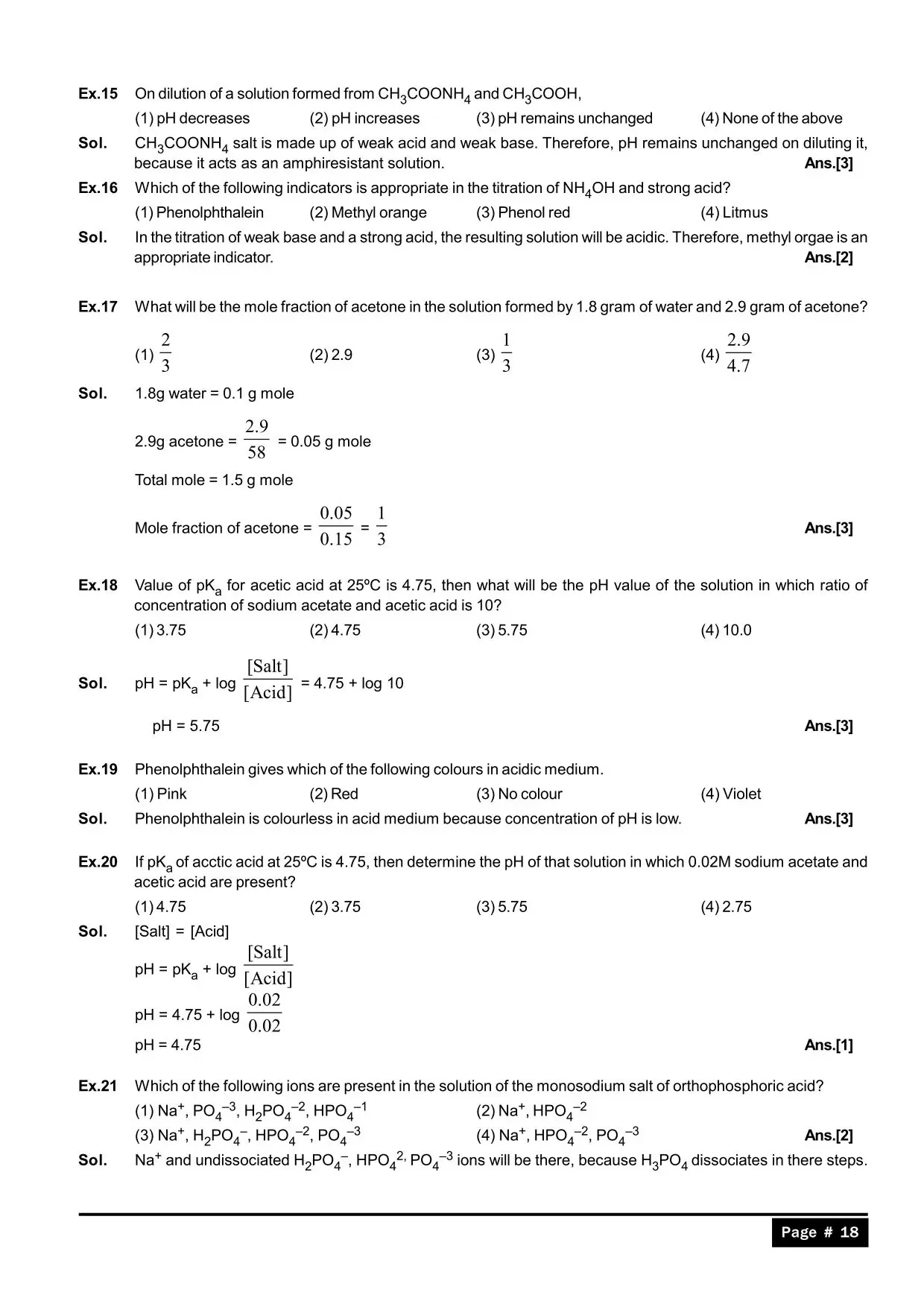
The Henderson-Hasselbalch equation is pH = pKa + log([Salt]/[Acid]). It is used to calculate the pH of a buffer solution quickly without solving a full equilibrium expression. It is valid when the ratio [Salt]/[Acid] is between 0.1 and 10 — that is, within one pH unit of pKa.
How is ionic equilibrium different from chemical equilibrium?
Chemical equilibrium covers reversible reactions in general (including gas-phase reactions). Ionic equilibrium is a specific subset that deals only with the dissociation of weak electrolytes in solution and the equilibria involving ions. All ionic equilibria follow the same Le Chatelier's principle but use concentration-based expressions since solutions are involved.
What is ionic equilibrium in Class 11 Chemistry?
Ionic equilibrium is the dynamic equilibrium between ions and unionised molecules formed when a weak electrolyte partially dissociates in solution. It covers acid-base theories, pH, Ka, Kb, Kw, buffer solutions, salt hydrolysis, and solubility product. This chapter appears in NCERT Class 11 Chemistry Part 1, Chapter 7
What is the common ion effect in ionic equilibrium?
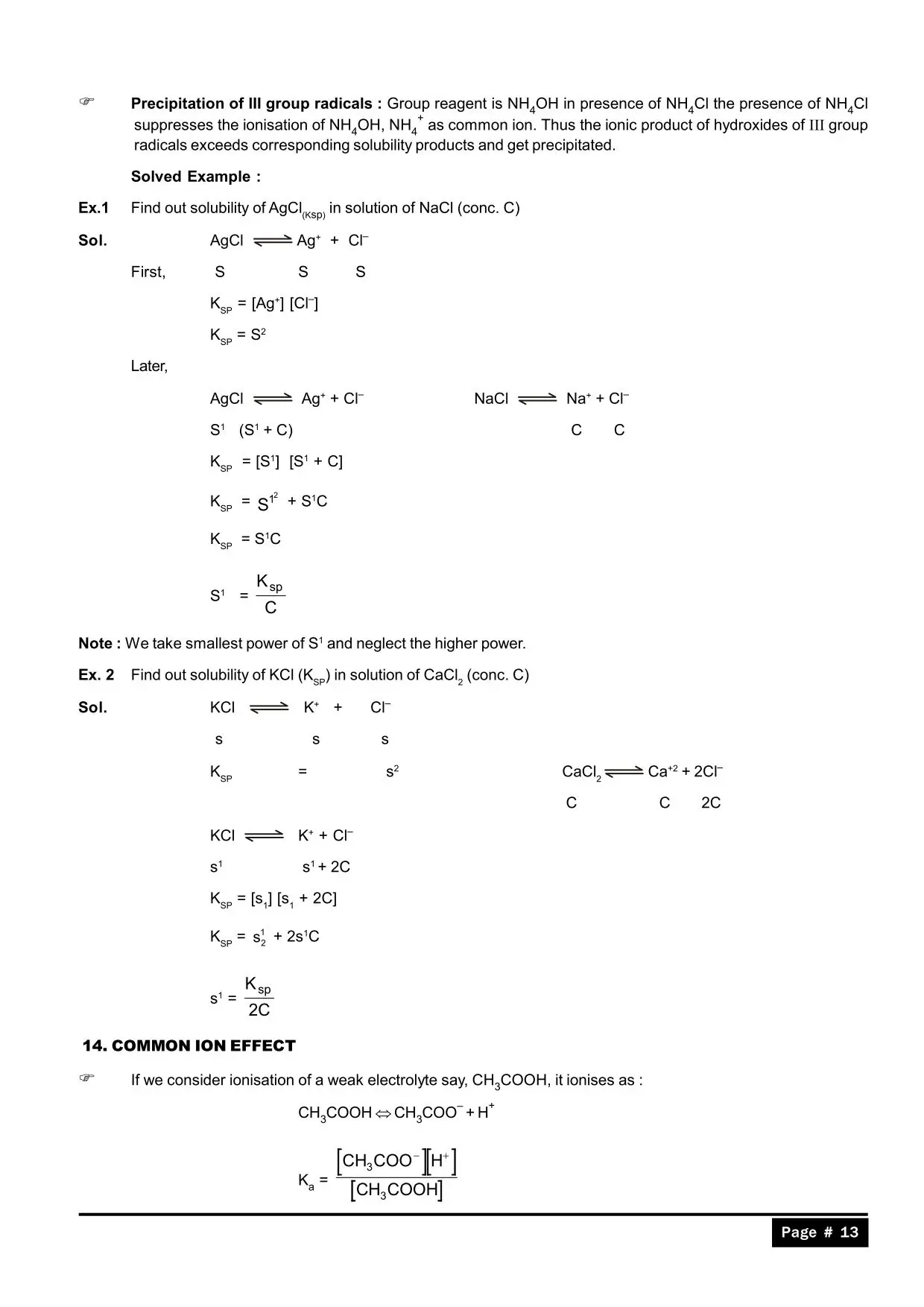
The common ion effect is the decrease in solubility (or degree of dissociation) of a weak electrolyte when a strong electrolyte sharing a common ion is added to the solution. For example, adding NaCl to a saturated AgCl solution increases [Cl⁻], shifting the equilibrium left and reducing AgCl solubility. It is a direct application of Le Chatelier's principle.
What is Ksp and how is it calculated from solubility?
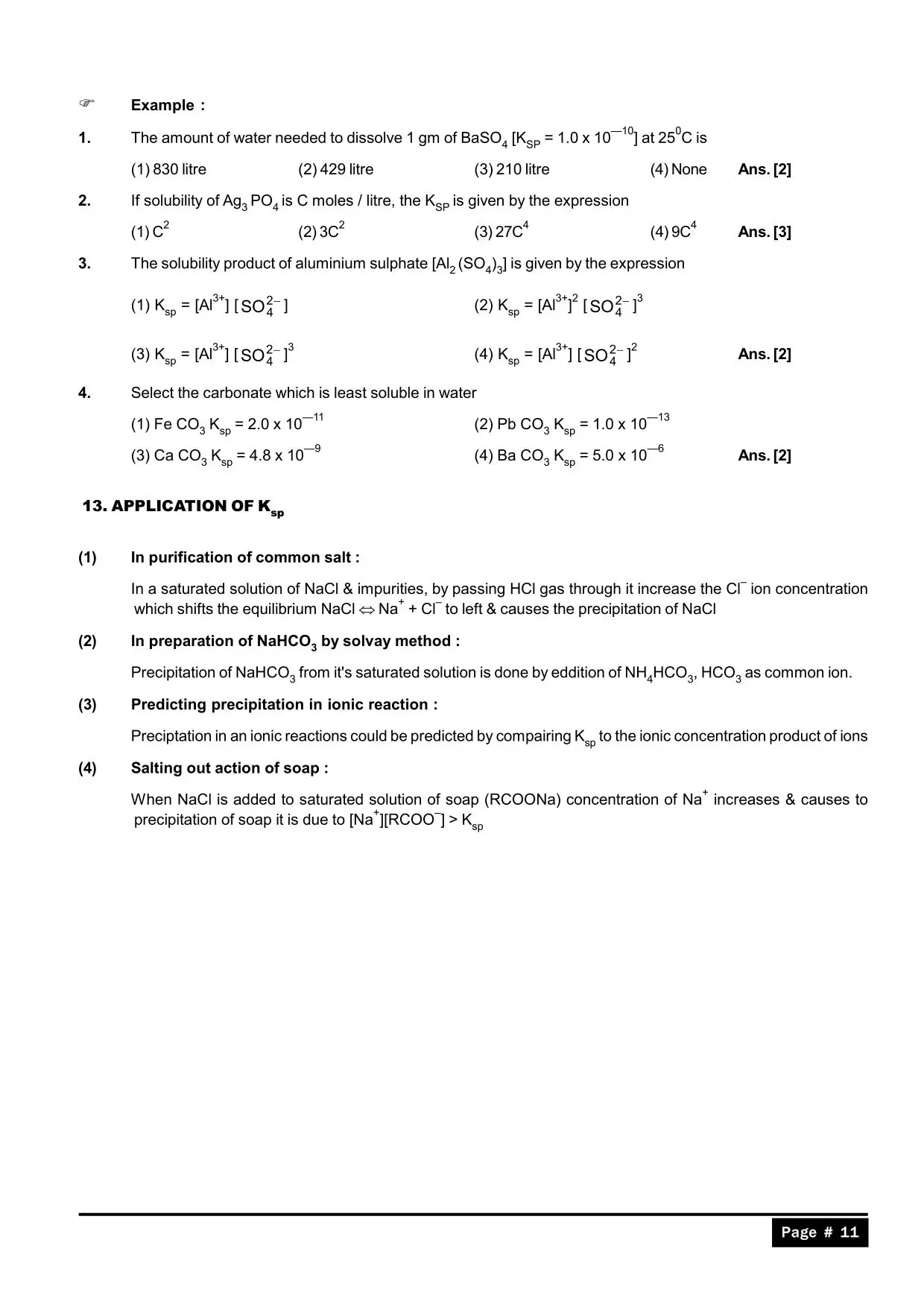
Ksp (solubility product) is the equilibrium constant for the dissolution of a sparingly soluble salt. For a salt AxBy dissolving into x A^(y+) and y B^(x-) ions, Ksp = [A]^x [B]^y. If the molar solubility is s, then for AgCl: Ksp = s². For PbCl₂: Ksp = 4s³. Knowing the salt formula directly gives you the Ksp–s relationship.
How many marks does Ionic Equilibrium carry in JEE Main?
Ionic Equilibrium, combined with Chemical Equilibrium, typically contributes 4–8 marks in JEE Main (1–2 questions per paper). According to NTA's subject-wise paper analysis, this topic has appeared in every JEE Main session from 2019 to 2024 without exception, making it one of the most reliable scoring areas in Physical Chemistry.
Team eSaral
eSaral Academic and Editorial Team
Team eSaral is the collective author profile for educational content created by eSaral’s teachers and academic contributors. The team draws on expertise from IIT graduates, doctors, experienced educators and subject specialists to develop resources for JEE, NEET and school students. Our articles aim to explain concepts clearly and help students study with confidence.
Related Posts

Plant Cell Diagram: Labelled Structure, Parts and Functions
Simple, labelled plant cell diagram with parts and functions. Covers plant cell structure for Class 6, 7, 8, 9, 10 and 11 students, CBSE-aligned.

Saransh Gupta Sir's Visit to IIT Patna: Hostel Life, Placements & Lessons for JEE Aspirants
Inside Saransh Gupta Sir's IIT Patna visit — hostel life, the library, placements, internships, and real advice for JEE aspirants from students living the IIT dream.
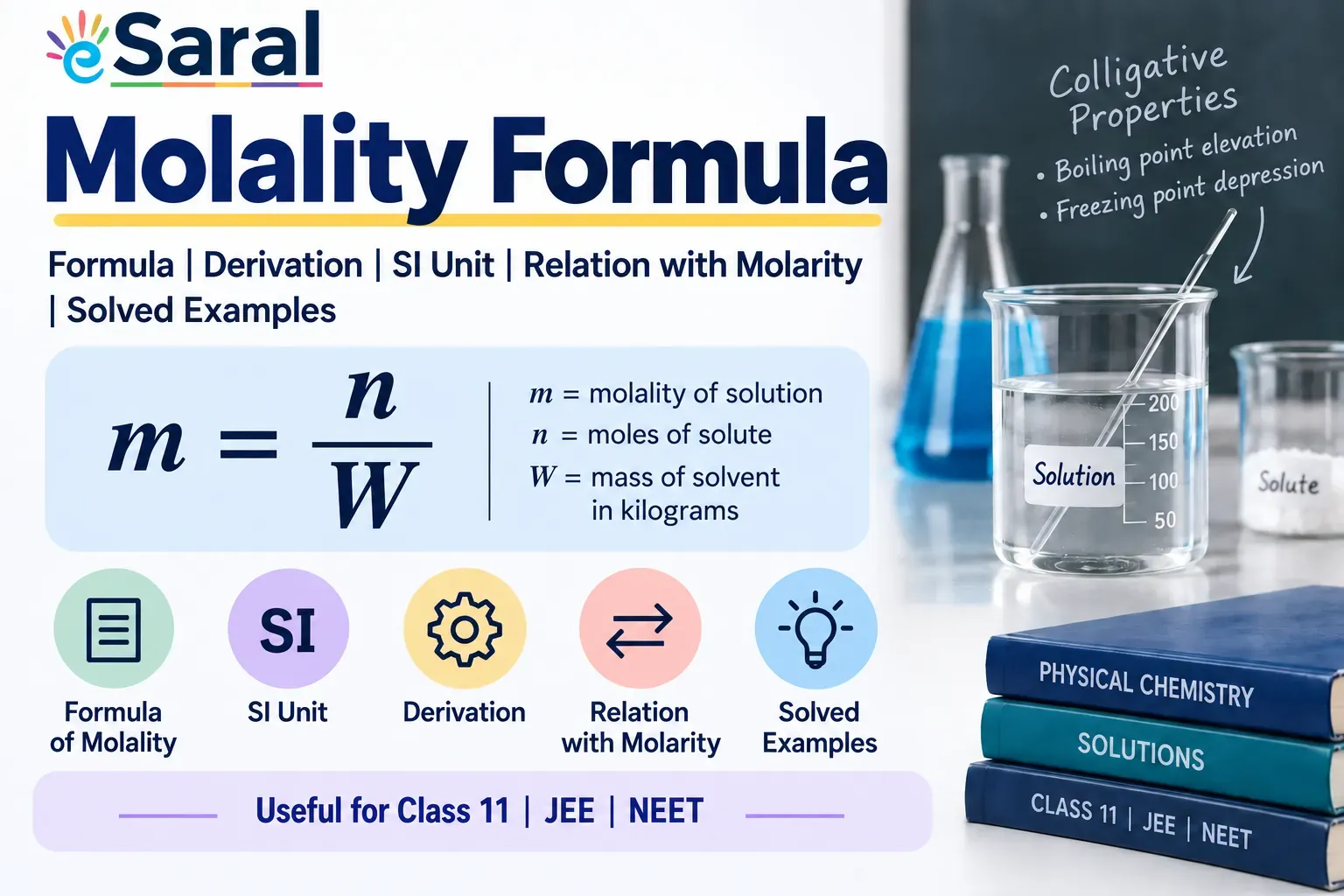
Molality Formula: Formula for Molality, Derivation & Solved Examples
Molality formula is $m = \dfrac{n}{W}$. Learn the formula of molality, its SI unit, derivation, relation with molarity, and solved examples for Class 11, JEE and NEET.
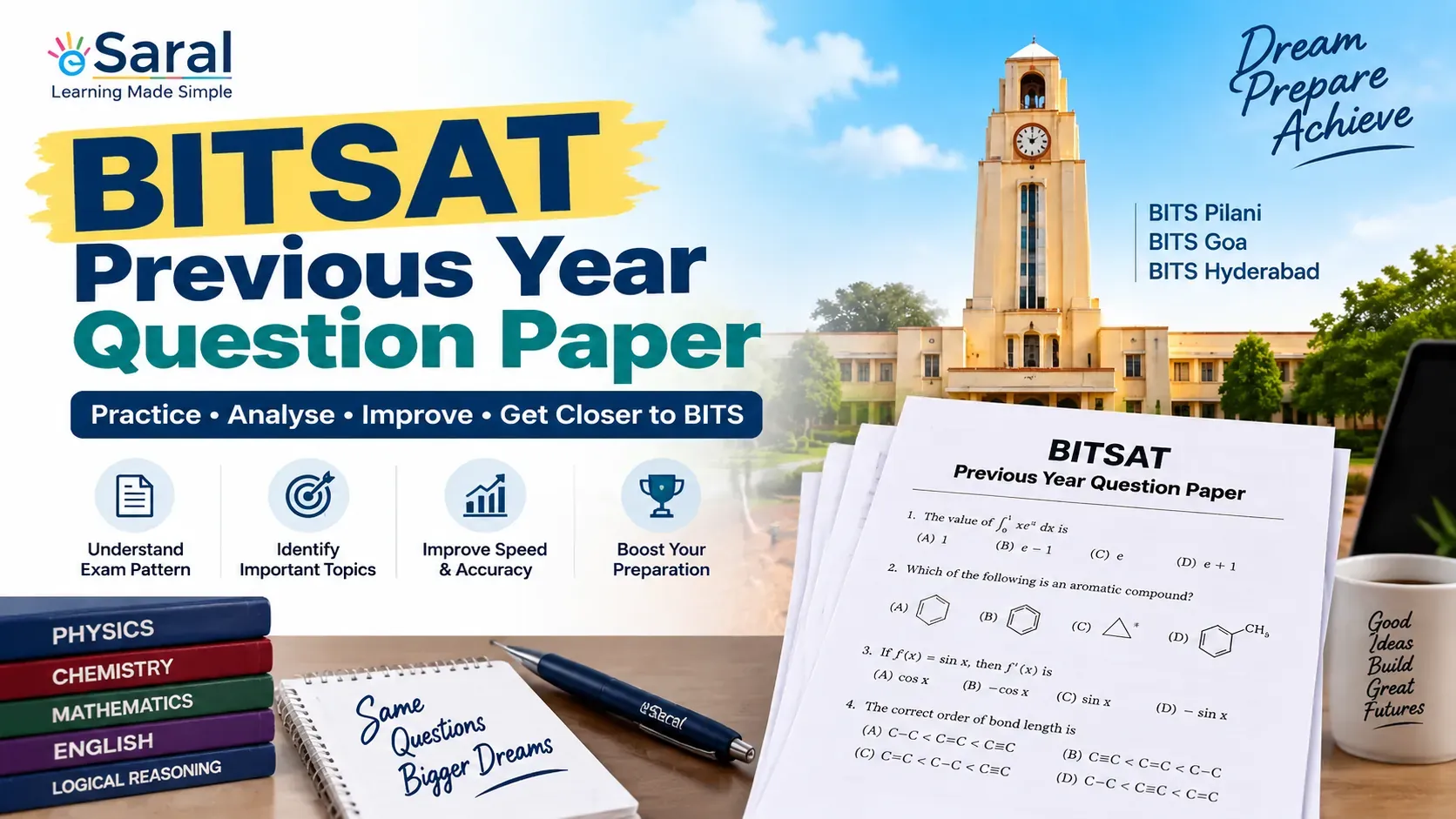
BITSAT Previous Year Question Paper PDF
Download BITSAT previous year question papers PDF. Get year-wise BITSAT PYQs, memory-based papers, exam pattern, and preparation tips to improve your BITSAT preparation.

Teachers’ Day 2026 at eSaral Gurukul: Celebrating the Bond Between Students, Teachers & Mentors
See how Teachers’ Day 2026 was celebrated at eSaral Gurukul, reflecting the bond among students, teachers, and mentors, and the role of guidance beyond academics.
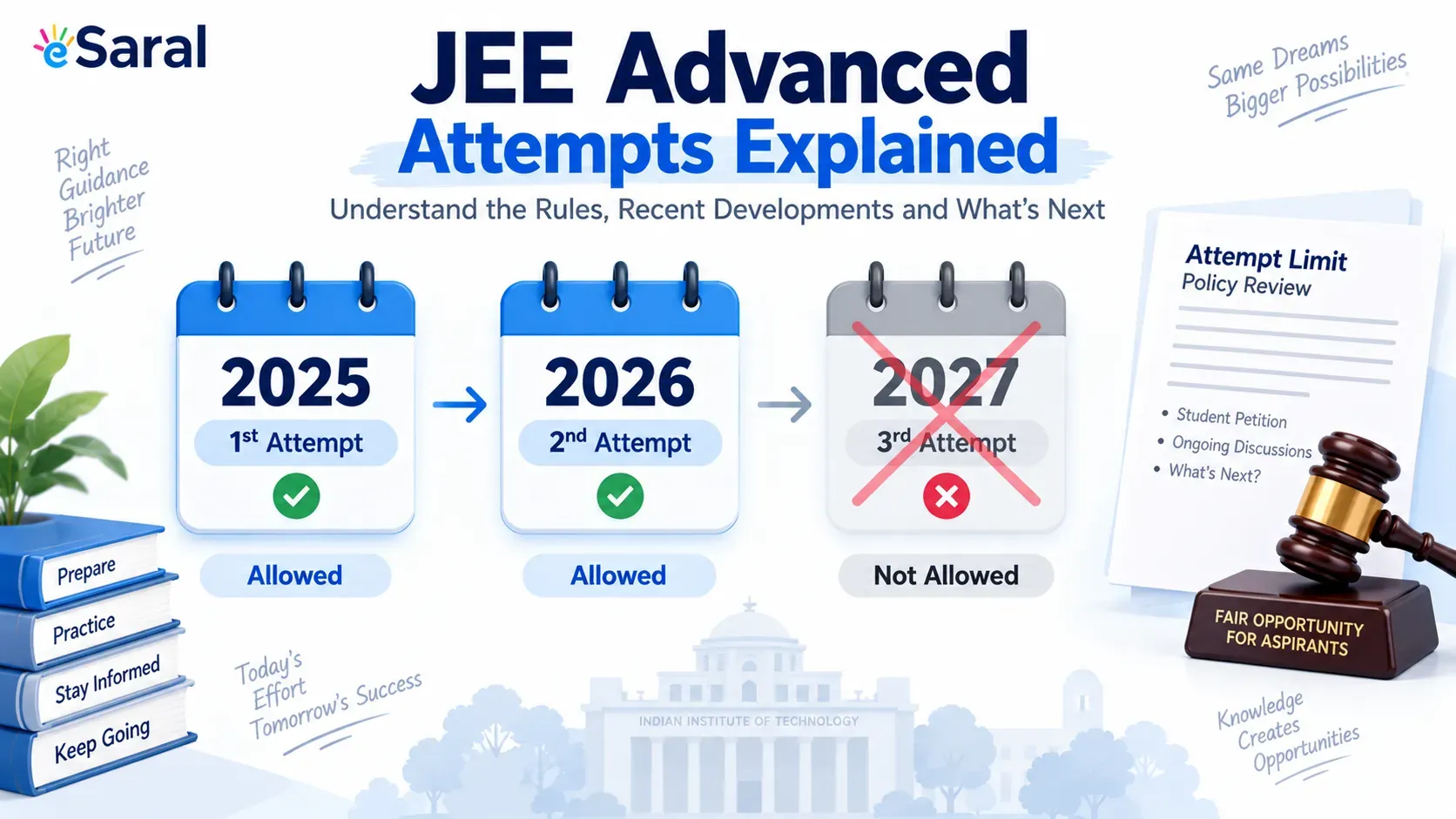
JEE Advanced Attempts: Can You Give It a Third Time? Rules Explained
JEE Advanced attempts: current rule is 2 consecutive years only: full eligibility criteria, the 2025 third-attempt controversy, and the latest 2026 petition news.

Best JEE Preparation App
Best JEE preparation app for Main & Advanced: AI mock tests, live doubt-solving, thousands of practice questions. JEE preparation app for droppers & Class 11-12.
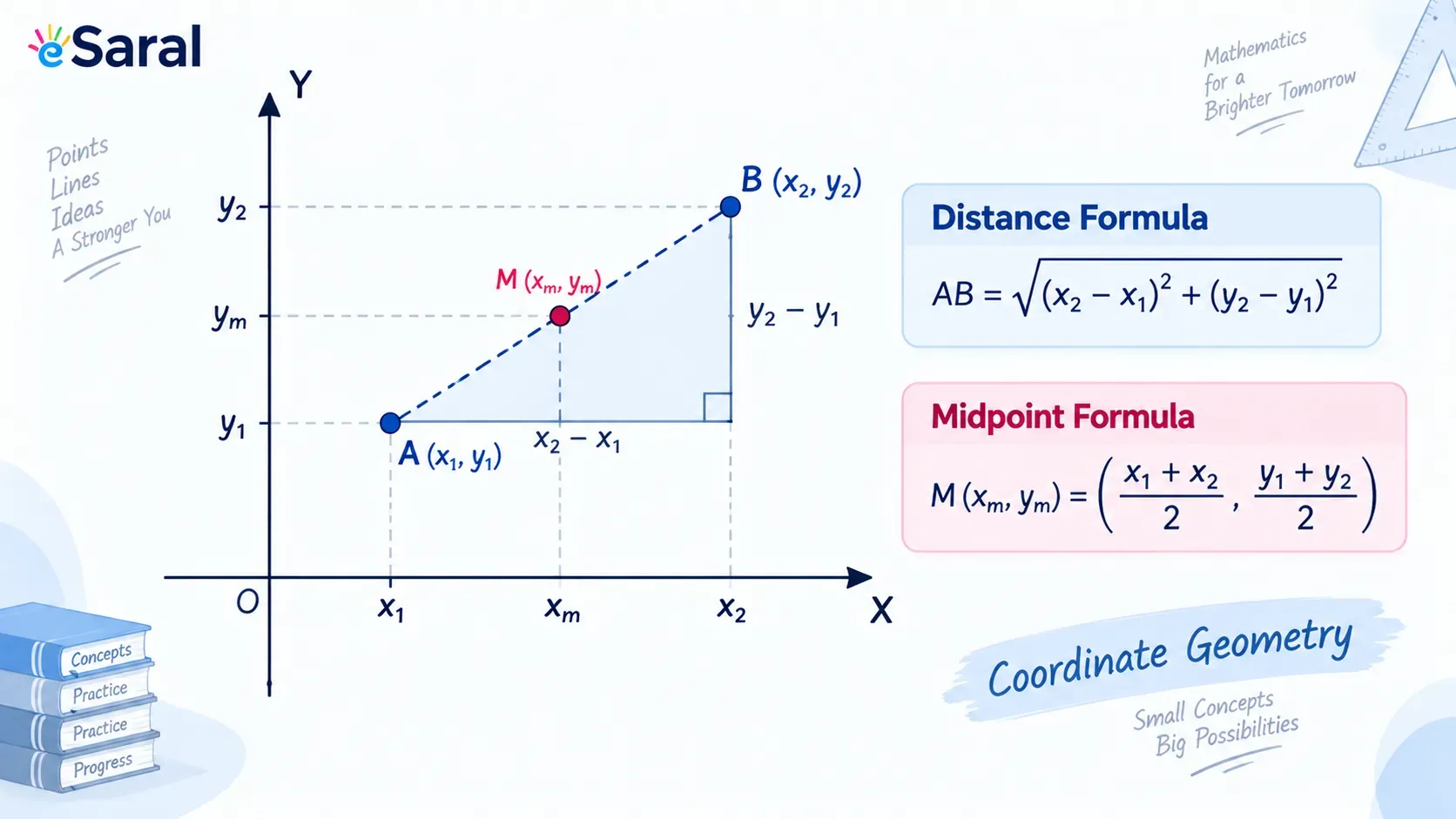
Coordinate Geometry Class 10: Formulas, Notes & Solved Examples
Coordinate geometry class 10: complete CBSE formulas — distance, section, midpoint and area of triangle — with derivation, notes and solved examples.
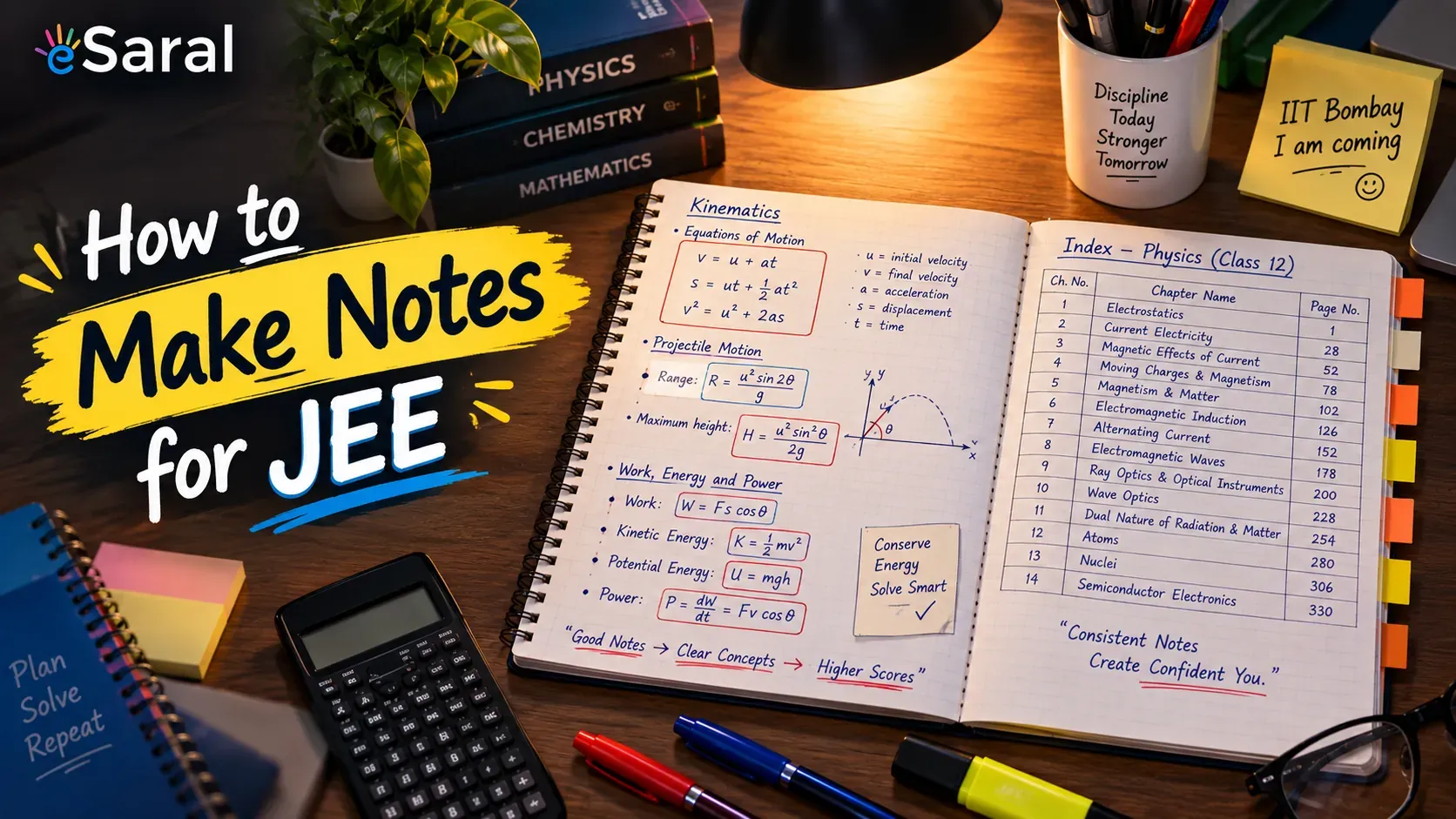
How to make Notes For JEE Smart Notes Strategy of an AIR 41
Learn how to make notes for JEE the way toppers do — indexing, shorthand, and smart short notes for JEE that cut revision time to just 5–7 days.
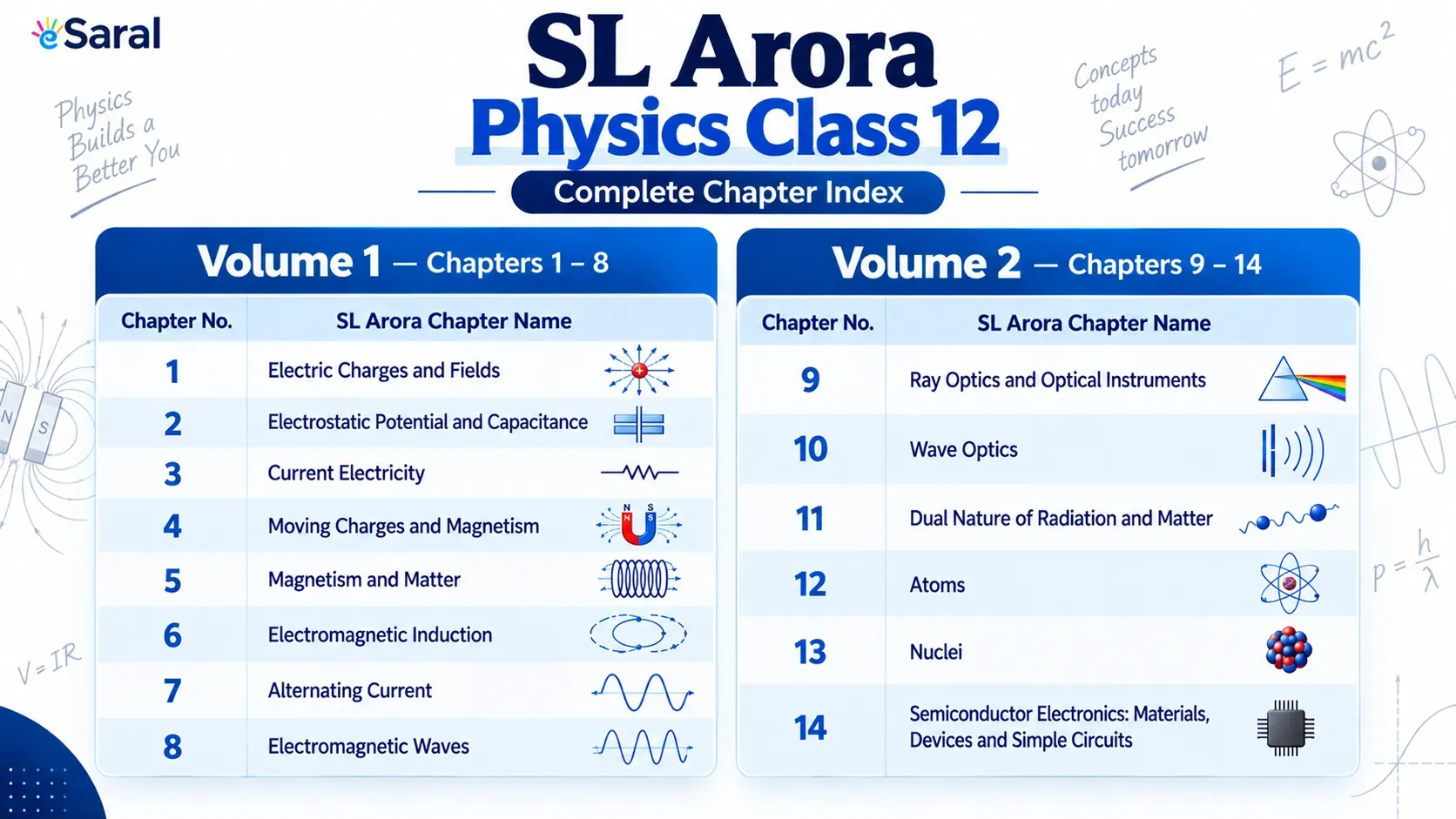
SL Arora Physics Class 12 Index – Chapter List for Volume 1 & 2
SL Arora Physics Class 12 index — complete chapter list for Volume 1 & 2, mapped to NCERT solutions for board, JEE Main, and NEET preparation.