
Engineering Entrance Exams in India : Complete List, Eligibility & Preparation Guide

eSaral Academic and Editorial Team
Summary
<p>India has over 15 engineering entrance exams. JEE Main, conducted by NTA, is the most important, giving access to IITs, NITs, and IIITs. Other major exams include JEE Advanced, BITSAT, VITEEE, SRMJEEE, MHT CET, WBJEE, COMEDK UGET, and KCET. Students targeting IITs must clear JEE Main (top 2,50,000 rank) to become eligible for JEE Advanced. Preparation should ideally begin in Class 11, as the Class 11 syllabus forms over 45% of JEE Main.</p>
eSaral › JEE › JEE Main ›Engineering Entrance Exams in India

Significance of Engineering Entrance Exams in 2026
Every year, over 12 lakh students register for JEE Main alone — and that number grows annually. With India's IITs, NITs, and IIITs consistently ranked among Asia's top technical institutions, the competition for engineering seats has never been more intense.
Understanding which exams to target, when to apply, and how each exam is structured can save a student months of misdirected preparation. This guide covers every major engineering entrance exam in India for 2026, so you can plan strategically from Day 1.
💡 Expert Tip by Saransh Gupta, IIT Bombay AIR-41: "Most students make the mistake of preparing for JEE and 'also appearing' for BITSAT or VITEEE without a plan. The smarter approach: build your JEE foundation first. It covers 80–90% of what every other engineering entrance exam tests. A strong JEE preparation is your best insurance policy."
Complete List of Engineering Entrance Exams in India 2026
Here is a consolidated overview of the top 10 engineering entrance exams in India, sorted by national importance:
S.No | Exam | Conducting Body | Level |
|---|---|---|---|
1 | JEE Main | National Testing Agency (NTA) | National |
2 | JEE Advanced | IITs (on rotation) | National |
3 | BITSAT | BITS Pilani | National (Private) |
4 | VITEEE | VIT University | National (Private) |
5 | SRMJEEE | SRM Institute of Science & Technology | National (Private) |
6 | MET (Manipal) | Manipal Academy of Higher Education | National (Private) |
7 | COMEDK UGET | Consortium of Medical Engineering & Dental Colleges, Karnataka | State |
8 | MHT CET | Directorate of Technical Education, Maharashtra | State |
9 | WBJEE | West Bengal Joint Entrance Examinations Board | State |
10 | AP EAMCET | JNTU Anantapur | State |
11 | KIITEE | Kalinga Institute of Industrial Technology | University |
12 | KCET | Karnataka Examinations Authority | State |
JEE Main 2026 — Everything You Need to Know
What Is JEE Main and Who Conducts It?
JEE Main is India's most important engineering entrance exam. It is conducted twice a year — the January session and the April session — by the National Testing Agency (NTA). A qualifying score in JEE Main is the mandatory first step to get into:
- IITs (Indian Institutes of Technology)
- NITs (National Institutes of Technology)
- IIITs (Indian Institutes of Information Technology)
- CFTIs (Centrally Funded Technical Institutes)
The best of the two session scores is used for ranking and JEE Advanced eligibility.
JEE Main 2026 Exam Pattern
Parameter | Details |
|---|---|
Mode | Online (Computer-Based Test) |
Duration | 3 hours |
Subjects | Physics, Chemistry, Mathematics |
Question Types | MCQs + Numerical Value Questions |
Total Marks | 300 |
Marking (MCQ) | +4 correct, −1 wrong |
Marking (Numerical) | +4 correct, 0 wrong |
Sessions per year | 2 (January + April) |
Who Is Eligible for JEE Main?
To appear for JEE Main 2026, a student must:
- Have passed or be appearing in Class 12 (or equivalent) with Physics, Chemistry, and Mathematics
- Have secured at least 75% aggregate marks in Class 12 (65% for SC/ST)
- Have been born on or after October 1, 2000 (general category)
💡 Expert Tip by eSaral Academic Team: "JEE Main preparation must start no later than Class 11. The Mathematics syllabus from Class 11 — Trigonometry, Coordinate Geometry, Sequences & Series — carries significant weight. Students who skip Class 11 Math fundamentals pay a heavy price in their final score."
JEE Advanced 2026 — Eligibility, Pattern & Syllabus
What Is JEE Advanced?
JEE Advanced is the second stage of the IIT admission process. Only students who clear JEE Main and finish within the top 2,50,000 ranks are eligible to attempt JEE Advanced. It is widely considered one of the most intellectually demanding undergraduate entrance exams in the world.
JEE Advanced 2026 Exam Pattern
Parameter | Details |
|---|---|
Mode | Online (Computer-Based Test) |
Papers | 2 papers (Paper 1 + Paper 2, both compulsory) |
Duration per paper | 3 hours |
Subjects | Physics, Chemistry, Mathematics |
Marking | +3 correct, −1 wrong (varies by question type) |
Conducted by | IITs (rotates annually) |
How Is JEE Advanced Different from JEE Main?
JEE Main tests conceptual understanding at the NCERT level, extended to application. JEE Advanced tests deep conceptual clarity, multi-step reasoning, and problem-solving under pressure. Questions in JEE Advanced regularly combine two or three concepts from different chapters. A student can score 99 percentile in JEE Main and still struggle with JEE Advanced without deliberate advanced preparation.
.webp?2026-09-24T07%3A57%3A06.247Z)
Other Major Engineering Entrance Exams Explained
BITSAT — Birla Institute of Technology and Science Admission Test
BITSAT is conducted by BITS Pilani for admissions to its campuses in Pilani, Goa, and Hyderabad. BITS is consistently ranked among India's top private engineering institutions. The exam is conducted online and covers Physics, Chemistry, Mathematics/Biology, English Proficiency, and Logical Reasoning.
Parameter | Details |
|---|---|
Duration | 3 hours |
Total Marks | 450 |
Marking | +3 correct, −1 wrong |
Language | English only |
VITEEE — VIT Engineering Entrance Examination
Conducted by VIT University (Vellore) for admissions to its B.Tech programmes. Applications and dates are published on vit.ac.in. The exam covers Physics, Chemistry, Mathematics/Biology, English, and Aptitude.
SRMJEEE — SRM Joint Engineering Entrance Examination
Conducted by SRM Institute of Science & Technology for its campuses in Kattankulathur, Ramapuram, Delhi-NCR, and Vadapalani. The exam is held online at over 100 centres across India.
MHT CET — Maharashtra Common Entrance Test
Conducted by the Directorate of Technical Education, Maharashtra, for BE/B.Tech and pharmacy admissions in Maharashtra.
Parameter | Details |
|---|---|
Papers | Physics+Chemistry (50 marks each) + Mathematics (100 marks) |
Duration | 90 minutes per paper |
Mode | Online |
Negative marking | None |
WBJEE — West Bengal Joint Entrance Examination
Conducted by the West Bengal Joint Entrance Examinations Board for government and private engineering colleges in West Bengal. Unlike most exams, WBJEE is offline (OMR-based).
Paper | Subjects | Marks |
|---|---|---|
Paper 1 | Mathematics | 100 |
Paper 2 | Physics + Chemistry | 50 + 50 = 100 |
COMEDK UGET
Conducted for engineering and architecture admissions in Karnataka's private colleges. The exam has 180 questions for 180 marks with no negative marking, covering Physics, Chemistry, and Mathematics.
KCET — Karnataka Common Entrance Test
State-level exam for BE/B.Tech admissions in Karnataka. Papers contain 60 marks each for Physics, Chemistry, and Mathematics, with a 1 hour 20 minute time limit and no negative marking.
How to Choose the Right Engineering Entrance Exam for You
Not every student needs to attempt every exam. Use this decision framework:
If your target is IIT: Focus 100% on JEE Main + JEE Advanced. Attempting other exams is fine as a backup, but should never distract from JEE preparation.
If your target is NIT/IIIT: JEE Main is the only exam you need. A 97+ percentile in JEE Main is typically sufficient for top NITs in core branches.
If your target includes top private colleges:, add BITSAT (for BITS Pilani) and VITEEE (for VIT) alongside your JEE preparation. The syllabi overlap significantly.
If you are in Maharashtra or West Bengal: appear for MHT CET or WBJEE alongside JEE Main — these state exams are low-effort additions for JEE-prepared students.
How to Prepare for Engineering Entrance Exams in 2026
Step 1 — Start with NCERT and Build from the Ground Up
For JEE Main, NCERT is the base for Chemistry (especially Physical and Inorganic). Physics and Mathematics require going beyond NCERT, but concepts must be airtight at the NCERT level first.
Step 2 — Follow a Subject-Wise Timetable
Divide your weekly study hours across Physics, Chemistry, and Mathematics. Avoid spending disproportionate time on one subject. According to eSaral's 2026 batch data, students who maintained a 40:30:30 split (Math:Physics:Chemistry) in study hours saw the most balanced score improvements.
Step 3 — Solve Previous Year Papers Systematically
JEE Main papers from the last 5 years are the single most reliable indicator of the exam pattern. For JEE Advanced, solving the previous 10 years' papers is non-negotiable.
Step 4 — Take Full-Length Mock Tests Under Exam Conditions
Simulation matters. A student who has completed 20 full-length timed mock tests enters the exam room with a significant psychological advantage over one who has not.
Step 5 — Clear Doubts Within 24 Hours
Unresolved doubts compound. If a concept from Chapter 3 is unclear, Chapter 7 — which builds on it — becomes guesswork. Use a structured doubt-solving system, whether from your coaching institute or an online platform.
Frequently Asked Questions
Which engineering entrance exam is most important in India?
JEE Main is the most important engineering entrance exam in India. It is the gateway to IITs, NITs, IIITs, and CFTIs. Conducted twice a year by NTA, JEE Main is attempted by over 12 lakh students annually. Students who rank in the top 2,50,000 also become eligible for JEE Advanced, which determines IIT admissions.
How many engineering entrance exams are there in India in 2025?
There are over 15 engineering entrance exams in India in 2025, ranging from national-level exams like JEE Main and JEE Advanced to state-level exams like MHT CET, WBJEE, KCET, and AP EAMCET, and private university exams like BITSAT, VITEEE, and SRMJEEE. Most students appear for 2–4 exams based on their target colleges.
What is the difference between JEE Main and JEE Advanced?
JEE Main is the first stage — any Class 12 student with PCM can appear. JEE Advanced is the second stage, open only to students who rank in the top 2,50,000 in JEE Main. JEE Advanced is significantly harder, testing deep conceptual reasoning rather than direct application. JEE Advanced scores determine IIT admissions; JEE Main scores are used for NIT and IIIT admissions.
Which is easier — BITSAT or JEE Main?
BITSAT is generally considered comparable to JEE Main in difficulty but with a different structure — it includes English Proficiency and Logical Reasoning sections alongside Physics, Chemistry, and Mathematics. BITSAT requires higher accuracy and speed since there are no negative marks for unattempted questions and the paper is longer (150 questions in 3 hours).
Can a student appear for multiple engineering entrance exams?
Yes, and most serious aspirants do. A student targeting IITs should primarily focus on JEE Main and JEE Advanced. Appearing additionally for BITSAT, VITEEE, and their state-level exam (like MHT CET or WBJEE) is common practice since the syllabi overlap significantly with JEE preparation.
When should I start preparing for engineering entrance exams?
Ideally, JEE preparation should begin at the start of Class 11. The Class 11 syllabus forms approximately 45% of JEE Main and over 50% of JEE Advanced. Students who begin in Class 12 can still qualify for NITs and private colleges, but IIT-level preparation requires the full two-year foundation.
Team eSaral
eSaral Academic and Editorial Team
Team eSaral is the collective author profile for educational content created by eSaral’s teachers and academic contributors. The team draws on expertise from IIT graduates, doctors, experienced educators and subject specialists to develop resources for JEE, NEET and school students. Our articles aim to explain concepts clearly and help students study with confidence.
Related Posts
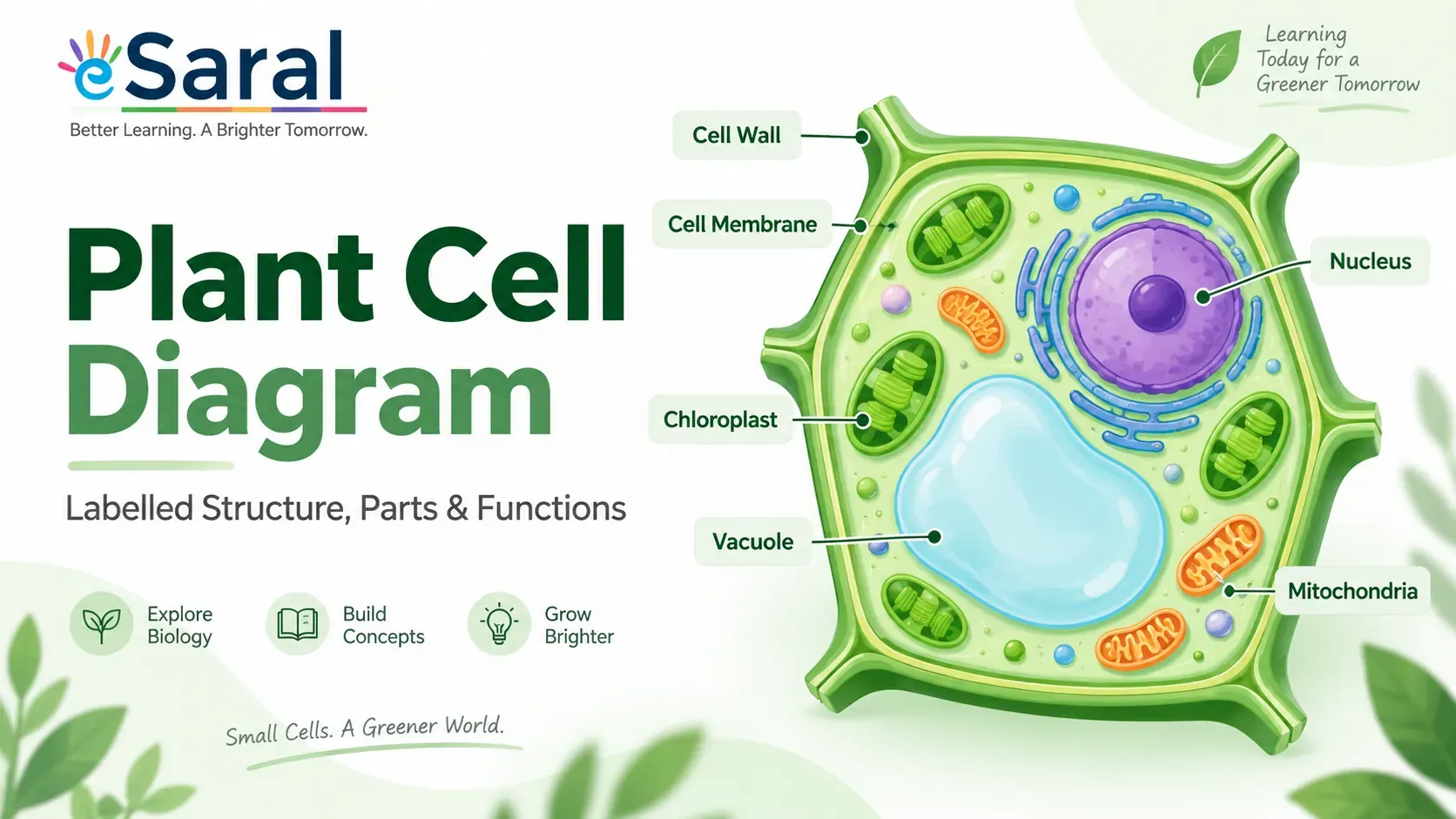
Plant Cell Diagram: Labelled Structure, Parts and Functions
Simple, labelled plant cell diagram with parts and functions. Covers plant cell structure for Class 6, 7, 8, 9, 10 and 11 students, CBSE-aligned.
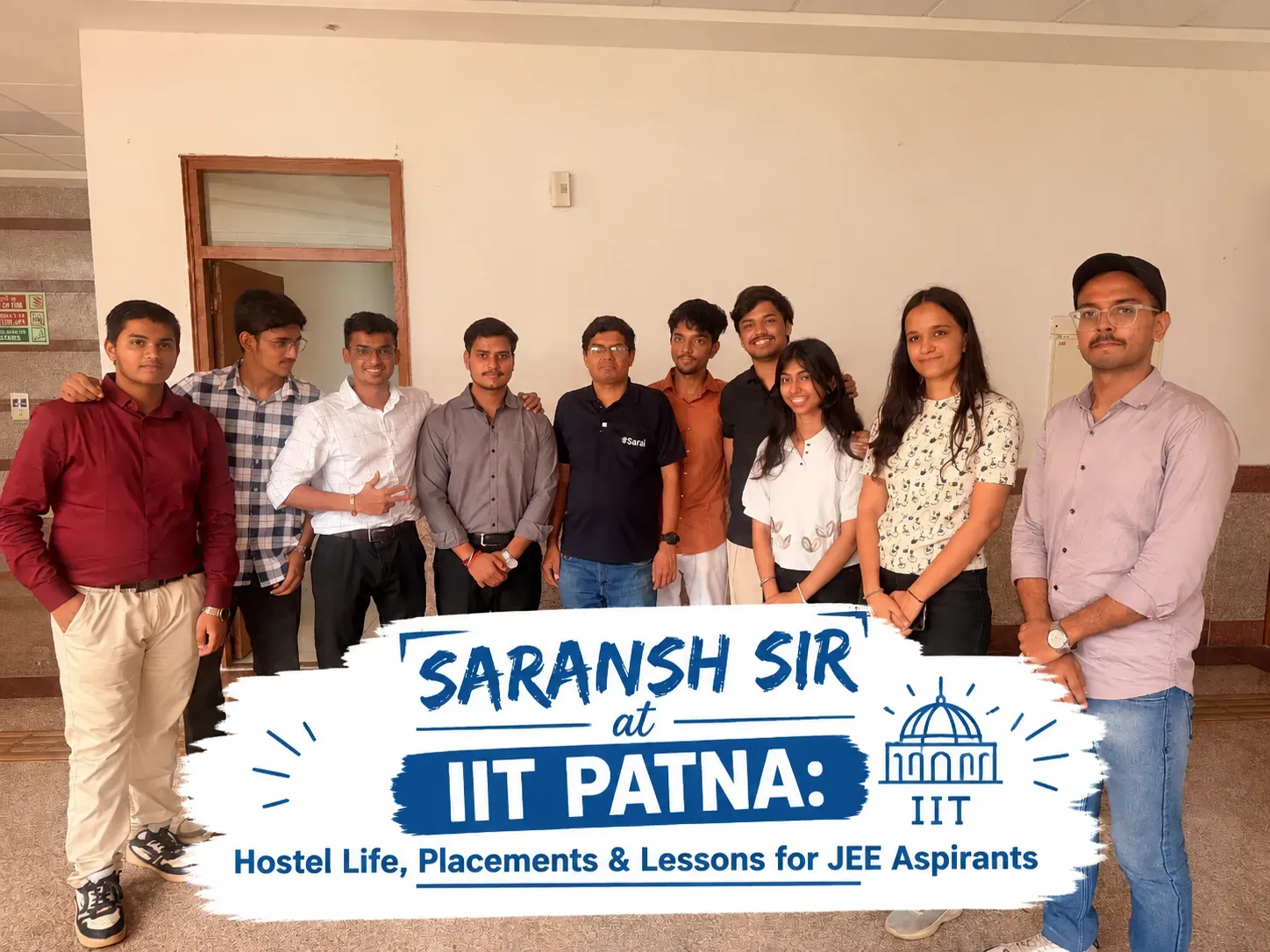
Saransh Gupta Sir's Visit to IIT Patna: Hostel Life, Placements & Lessons for JEE Aspirants
Inside Saransh Gupta Sir's IIT Patna visit — hostel life, the library, placements, internships, and real advice for JEE aspirants from students living the IIT dream.
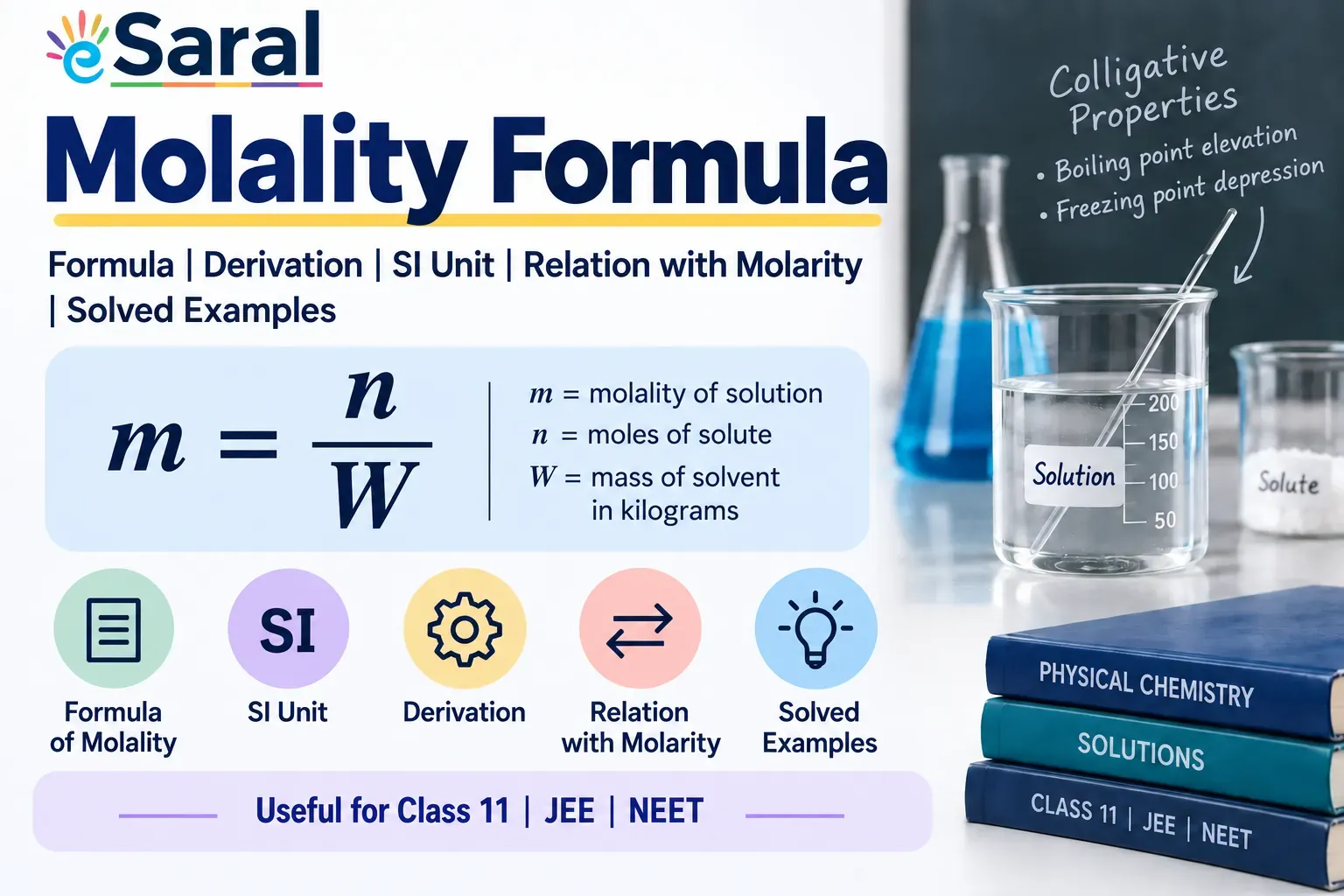
Molality Formula: Formula for Molality, Derivation & Solved Examples
Molality formula is $m = \dfrac{n}{W}$. Learn the formula of molality, its SI unit, derivation, relation with molarity, and solved examples for Class 11, JEE and NEET.
BITSAT Previous Year Question Paper PDF
Download BITSAT previous year question papers PDF. Get year-wise BITSAT PYQs, memory-based papers, exam pattern, and preparation tips to improve your BITSAT preparation.

Teachers’ Day 2026 at eSaral Gurukul: Celebrating the Bond Between Students, Teachers & Mentors
See how Teachers’ Day 2026 was celebrated at eSaral Gurukul, reflecting the bond among students, teachers, and mentors, and the role of guidance beyond academics.
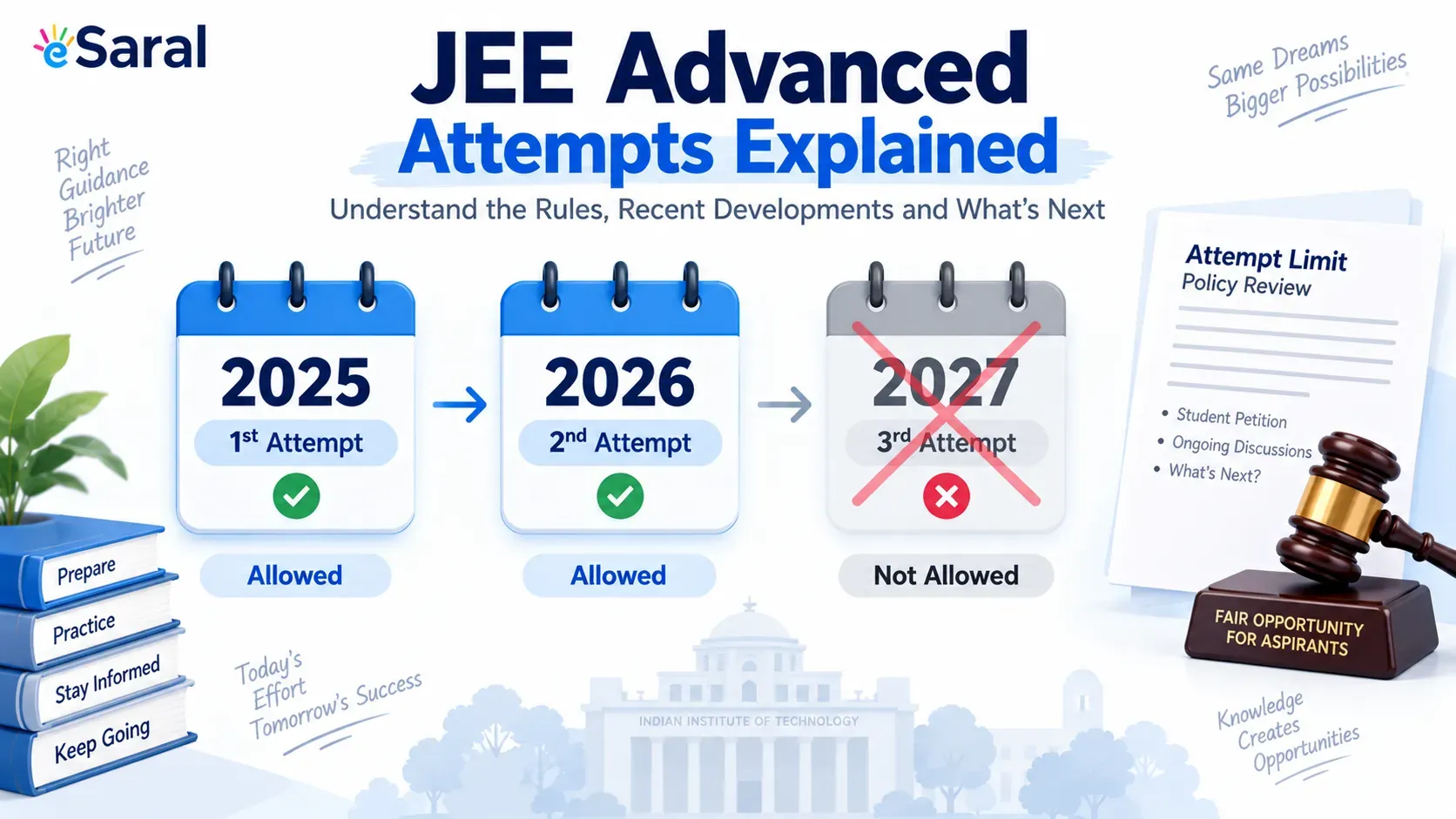
JEE Advanced Attempts: Can You Give It a Third Time? Rules Explained
JEE Advanced attempts: current rule is 2 consecutive years only: full eligibility criteria, the 2025 third-attempt controversy, and the latest 2026 petition news.
Best JEE Preparation App
Best JEE preparation app for Main & Advanced: AI mock tests, live doubt-solving, thousands of practice questions. JEE preparation app for droppers & Class 11-12.
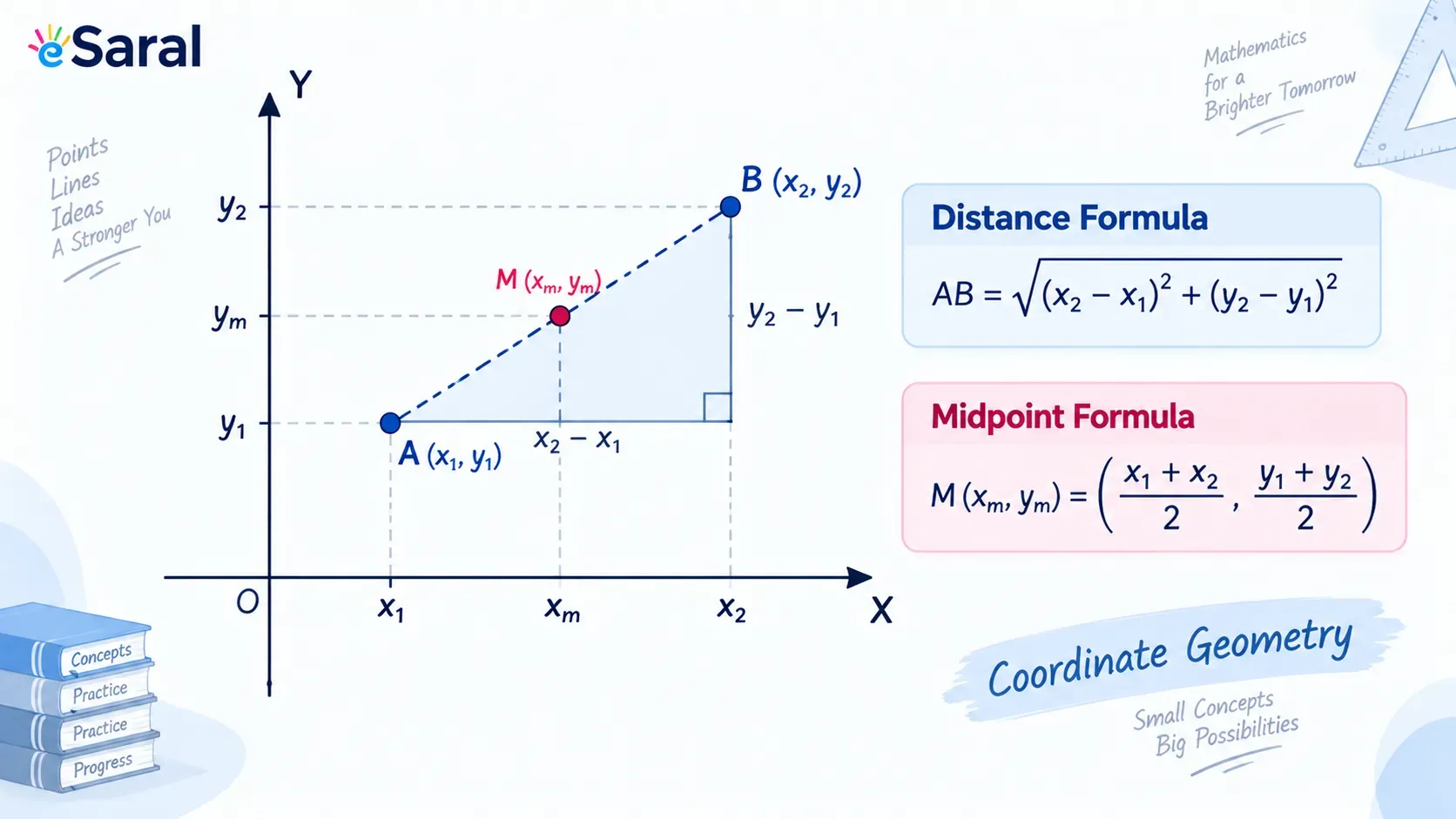
Coordinate Geometry Class 10: Formulas, Notes & Solved Examples
Coordinate geometry class 10: complete CBSE formulas — distance, section, midpoint and area of triangle — with derivation, notes and solved examples.
How to make Notes For JEE Smart Notes Strategy of an AIR 41
Learn how to make notes for JEE the way toppers do — indexing, shorthand, and smart short notes for JEE that cut revision time to just 5–7 days.
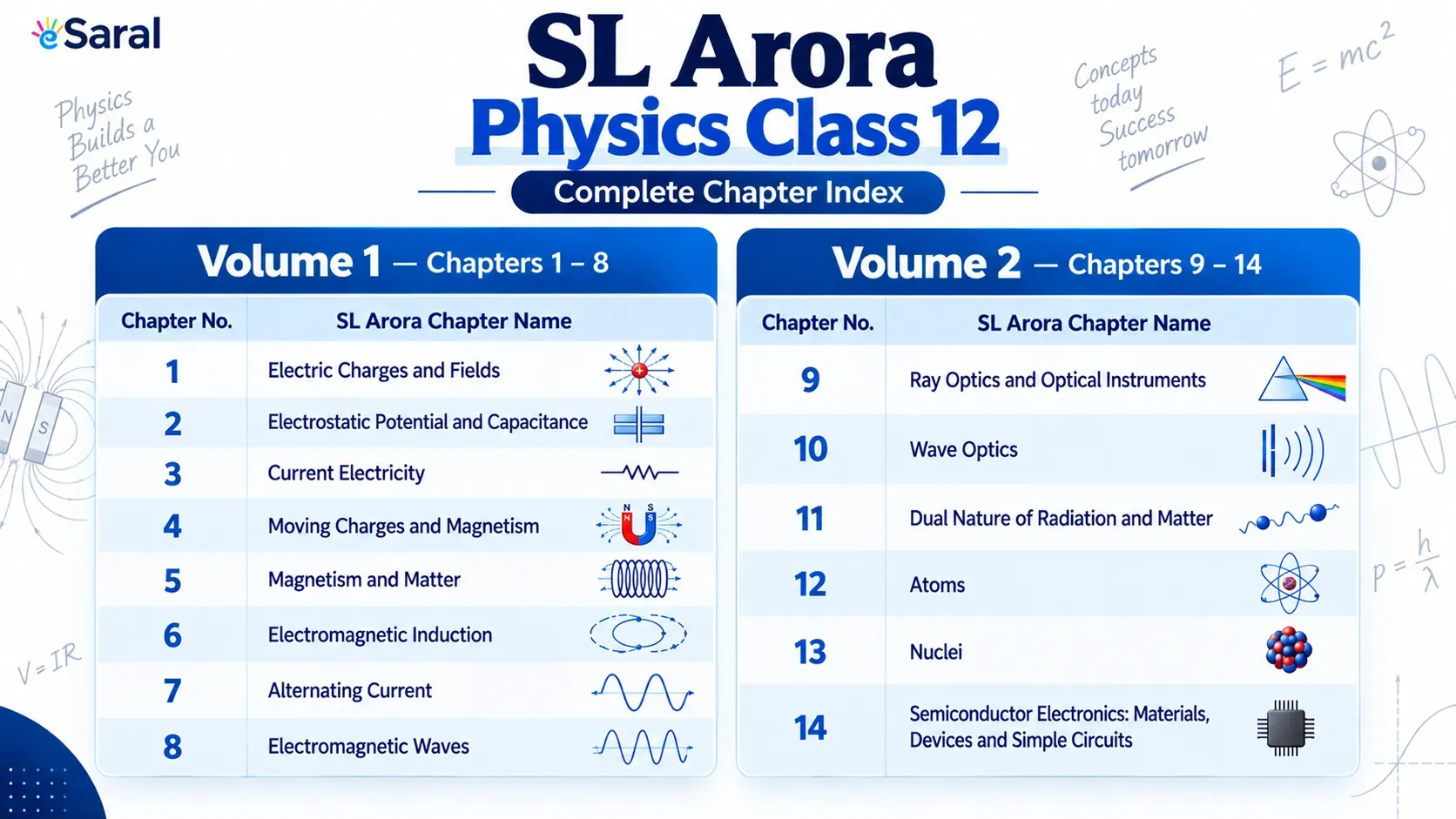
SL Arora Physics Class 12 Index – Chapter List for Volume 1 & 2
SL Arora Physics Class 12 index — complete chapter list for Volume 1 & 2, mapped to NCERT solutions for board, JEE Main, and NEET preparation.