
What is JEE Main Exam, Importance of JEE Main, Eligibility Criteria, Exam Format and More

eSaral Academic and Editorial Team
Summary
<p>Understand JEE Main with complete details on its importance, eligibility, exam pattern, syllabus, application process, and preparation strategy to secure admission in top engineering colleges.</p>
.webp?2026-09-24T07%3A59%3A26.769Z)
eSaral › JEE › JEE Main ›What is JEE Main Exam, Importance of JEE Main, Eligibility Criteria, Exam Format

What Is JEE Main and Why Does It Matter?
JEE Main — short for Joint Entrance Examination Main — is India's most widely taken engineering entrance exam. Conducted by the National Testing Agency (NTA), it is held twice a year (typically January and April). Every year, over 10 lakh students sit for JEE Main, making it one of the most competitive academic events in the country.
JEE Main serves two critical roles:
Role 1 — Direct Admission: A strong JEE Main percentile earns you direct admission to NITs, IIITs, and other government-funded technical institutions through the JoSAA counselling process.
Role 2 — JEE Advanced Qualifier: Students who clear the JEE Main cut-off become eligible to appear for JEE Advanced — the separate exam for IIT admission. Without qualifying for JEE Main, no student can sit for JEE Advanced.
💡 Expert Tip by Saransh Gupta, IIT Bombay AIR-41: "JEE Main is your first filter and your confidence builder. Students who take both sessions seriously — January and April — consistently improve their percentile between sessions. Never treat the January attempt as a 'practice run' that doesn't count."
JEE Main vs JEE Advanced — Quick Comparison
Parameter | JEE Main | JEE Advanced |
|---|---|---|
Conducted By | NTA | IITs (on rotation) |
Purpose | NITs, IIITs, JEE Advanced qualifier | IIT admission |
Frequency | Twice a year | Once a year |
Eligibility | Class 12 passed/appearing | JEE Main qualified (top ~2.5 lakh) |
Attempts | 6 (3 years × 2 per year) | 2 (2 consecutive years) |
Exam Mode | Computer-Based Test | Computer-Based Test |
Difficulty | Moderate | High |
For JEE Advanced eligibility details, check eSaral's JEE Advanced eligibility guide.
JEE Main Eligibility Criteria 2026
Before filling out the application form, verify that you meet every eligibility condition. Applying without meeting the criteria leads to disqualification even after appearing in the exam.
Age Limit
There is no age limit for JEE Main 2026. Any candidate, regardless of age, can apply as long as they meet the academic qualification requirements.
Academic Qualification
Condition | Requirement |
|---|---|
Qualifying Exam | Class 12 or equivalent (Science stream) |
Subjects Required | Physics, Chemistry, Mathematics (mandatory) |
Passing Years | Passed in 2024, 2025, OR appearing in 2026 |
Minimum Marks | No minimum percentage set by NTA (but individual institutes set their own cutoffs) |
Attempts Allowed
Candidates may appear in JEE Main for 3 consecutive years starting from the year they pass Class 12. Since JEE Main is held twice a year, this means a maximum of 6 total attempts.
Year | Attempt 1 (January) | Attempt 2 (April) |
|---|---|---|
Year 1 | ✅ | ✅ |
Year 2 | ✅ | ✅ |
Year 3 | ✅ | ✅ |
Total |
| 6 Attempts |
For the complete eligibility breakdown including state-specific requirements, visit eSaral's JEE Main eligibility criteria page.
JEE Main Exam Pattern 2026 — Paper 1 & Paper 2
JEE Main has two papers. Most engineering aspirants appear for Paper 1 (B.Tech/B.E.). Architecture and planning students appear for Paper 2.
Paper 1 — B.Tech / B.E.
Parameter | Details |
|---|---|
Mode | Computer-Based Test (CBT) |
Duration | 3 hours (4 hours for PwD candidates) |
Subjects | Physics, Chemistry, Mathematics |
Total Questions | 90 (30 per subject) |
MCQs per Subject | 20 (with negative marking) |
Numerical Questions per Subject | 10 (attempt any 5, no negative marking) |
Correct MCQ | +4 marks |
Wrong MCQ | −1 mark |
Unattempted MCQ | 0 marks |
Numerical — Correct | +4 marks |
Numerical — Wrong/Unattempted | 0 marks |
Total Maximum Marks | 300 |
Paper 2 — B.Arch / B.Planning
Paper 2 is split into two sub-papers. Candidates can appear for either or both.
Sub-Paper | Sections | Mode | Marks |
|---|---|---|---|
Paper 2A (B.Arch) | Mathematics + Aptitude + Drawing | CBT + Pen-Paper (Drawing) | 400 |
Paper 2B (B.Planning) | Mathematics + Aptitude + Planning | CBT | 400 |
Paper 2 Marking Scheme:
- Mathematics and Aptitude sections: +4 for correct, −1 for wrong MCQs
- Drawing Test: 50 marks per question (2 questions = 100 marks total)
Language Options
JEE Main 2026 is available in 13 languages: English, Hindi, Gujarati, Marathi, Bengali, Telugu, Tamil, Urdu, Kannada, Odia, Punjabi, Assamese, and Malayalam. Candidates can choose their preferred language during registration.
JEE Main Syllabus 2026 — Subject-Wise Overview
The JEE Main syllabus is based on the NCERT Class 11 and 12 curriculum. Here is a subject-wise topic overview:
Physics Topics
Unit | Key Chapters | Priority |
|---|---|---|
Mechanics | Kinematics, Laws of Motion, Work-Energy, Rotational Dynamics, Gravitation | 🔴 High |
Electrodynamics | Electric Charges, Current Electricity, EM Induction, EM Waves | 🔴 High |
Optics | Ray Optics, Wave Optics, Interference, Diffraction | 🔴 High |
Modern Physics | Dual Nature, Atoms & Nuclei, Semiconductors | 🔴 High |
Thermodynamics | Laws of Thermodynamics, Kinetic Theory of Gases | 🟡 Medium |
Waves & Oscillations | SHM, Wave Motion, Sound Waves | 🟡 Medium |
Chemistry Topics
Branch | Key Chapters | Priority |
|---|---|---|
Physical Chemistry | Atomic Structure, Chemical Kinetics, Thermodynamics, Equilibrium, Mole Concept | 🔴 High |
Inorganic Chemistry | Periodic Table, Chemical Bonding, Coordination Compounds, p-Block Elements | 🔴 High |
Organic Chemistry | Hydrocarbons, Reaction Mechanisms, Functional Groups, Named Reactions | 🔴 High |
Mathematics Topics
Area | Key Chapters | Priority |
|---|---|---|
Calculus | Limits, Differentiation, Integration, Differential Equations | 🔴 High |
Coordinate Geometry | Straight Lines, Circles, Parabola, Ellipse, Hyperbola | 🔴 High |
Algebra | Complex Numbers, Matrices, Determinants, Binomial Theorem, Sequences | 🔴 High |
Vectors & 3D | Vector Algebra, Lines and Planes in 3D | 🟡 Medium |
Trigonometry | Functions, Identities, Equations, Inverse Trig | 🟡 Medium |
Statistics & Probability | Probability Distributions, Bayes' Theorem | 🟡 Medium |
For the complete chapter-by-chapter breakdown with weightage data, see the JEE Main syllabus 2026 guide.
How to Apply for JEE Main 2026 — Step-by-Step
JEE Main registration is done entirely online through the NTA official portal (jeemain.nta.ac.in). Follow these steps carefully — errors in the application form can cause problems on exam day.
Step 1 — Check Eligibility Before starting the form, verify your eligibility: Class 12 status, subjects studied, and attempt count.
Step 2 — Register and Create a Login Visit the NTA JEE Main portal. Click "New Registration." Enter your name, email ID, and mobile number. A system-generated application number will be created — note it down immediately.
Step 3 — Fill the Application Form Enter your personal details (name, date of birth, gender, category), academic background (Class 12 board, year of passing, subjects), and exam preferences (paper choice, exam city preferences, language).
Step 4 — Upload Scanned Documents Upload the following as per NTA's specifications:
Document | Format | Size Limit |
|---|---|---|
Passport-size photograph | JPG/JPEG | 10–200 KB |
Signature | JPG/JPEG | 4–30 KB |
Class 10 certificate (for DOB proof) | JPG/JPEG | 50–300 KB |
Step 5 — Pay the Application Fee Pay online via Credit Card, Debit Card, Net Banking, or UPI. Fee payment is the final step — your application is not submitted until payment is confirmed.
Step 6 — Download Confirmation Page After successful payment, download and print the confirmation page. Keep your application number safe for all future references.
JEE Main Application Fee 2026
Category | Male Candidates | Female Candidates |
|---|---|---|
General / OBC-NCL / Gen-EWS | ₹1,000 | ₹800 |
SC / ST / PwD / Transgender | ₹500 | ₹500 |
Note: Fees for candidates appearing from centres outside India are higher. Check the official NTA notification for current-year fee amounts as these may be revised.
JEE Main Admit Card — How to Download
The JEE Main admit card is released online approximately 2–3 weeks before the exam date. It is mandatory to carry a printed copy to the exam centre — entry is not permitted without it.
How to Download Your JEE Main Admit Card
- Visit the official NTA JEE Main website
- Click on the "Download Admit Card" link
- Enter your Application Number and Date of Birth
- Enter the security PIN displayed on screen
- Your admit card will appear — verify all details
- Download and print at least 2 copies
Details Printed on the JEE Main Admit Card
Field | Details |
|---|---|
Candidate Name | As entered in the application |
Application & Roll Number | Exam-specific identifiers |
Date of Birth | As per Class 10 records |
Photograph & Signature | As uploaded |
Category & Gender | As registered |
Father's & Mother's Name | As entered |
Exam Date, Shift & Reporting Time | Assigned by NTA |
Exam Centre Address | Assigned by NTA |
Gate Closing Time | Specific to each shift |
Exam Instructions | Rules for the exam day |
Check your JEE Main exam date 2026 to know exactly when the admit card will be released for your session.
Exam Day Guidelines for JEE Main
Reporting Time
JEE Main is conducted in two shifts:
Shift | Report By | Gate Closes |
|---|---|---|
Morning Shift | 7:00 AM – 7:30 AM | 8:30 AM |
Afternoon Shift | 1:00 PM – 1:30 PM | 2:30 PM |
Arrive at least 60 minutes before the gate closing time. The verification process — biometrics, ID check, seat allotment — takes time. Late arrivals are not permitted entry under any circumstances.
Documents to Carry
- Printed JEE Main Admit Card (mandatory)
- Original Aadhaar Card (or any government photo ID)
- One additional passport-size photograph (same as uploaded)
- PwD certificate (if applicable)
What Is Not Allowed in the Exam Hall
- Mobile phones, smartwatches, or any electronic device
- Calculators, geometry sets, or rulers
- Textbooks, notes, or written material
- Wallets, bags, or extra stationery beyond what is provided
💡 Expert Tip by Saransh Gupta, IIT Bombay AIR-41: "Eat a light meal before the exam. Heavy food causes drowsiness during the afternoon session. Also, carry a water bottle — exam halls can get warm, and staying hydrated sharpens focus significantly."
Reservation Policy and Category Quotas
JEE Main seats at centrally funded institutions (NITs, IIITs, CFTIs) follow the Government of India's reservation policy:
Category | Reservation Percentage |
|---|---|
OBC-NCL (Other Backwards Classes — Non-Creamy Layer) | 27% |
SC (Scheduled Caste) | 15% |
ST (Scheduled Tribe) | 7.5% |
PwD (Persons with Disabilities) | 5% (horizontal, across all categories) |
General / Unreserved | Remaining seats |
NIT Home State Quota
NITs allocate 50% of seats to students from the home state (the state where the NIT is located). The remaining 50% are open to candidates from all other states (Other State Quota).
This matters strategically — candidates from smaller states with fewer NITs may find the Other State Quota more competitive than the home state quota at certain institutions.
Top Colleges Accepting JEE Main Score {#colleges}
A strong JEE Main percentile opens doors to some of India's finest engineering institutions. Here is an overview of the top colleges that accept JEE Main scores:
Institute Type | Examples | Approx. Seats |
|---|---|---|
National Institutes of Technology (NITs) | NIT Trichy, NIT Warangal, NIT Surathkal, NIT Calicut | 23,000+ |
IIITs (Indian Institutes of Information Technology) | IIIT Hyderabad, IIIT Allahabad, IIIT Bangalore | 7,000+ |
Other CFTIs | DTU Delhi, NSIT Delhi, BITS Mesra | 5,000+ |
State Government Colleges | Varies by state counselling | Varies |
Private Institutes (Score-based) | VIT, Manipal, SRM | Varies |
For branch-wise and round-wise cut-offs at IIT Bombay specifically, see IIT Bombay cut-off data. For a ranked list of the best NITs, see top NIT colleges guide.
JEE Main Preparation Tips by IIT Faculty {#preparation}
Where Should You Begin?
Start with the JEE Main syllabus and exam pattern — both are available above and at the official NTA portal. Understanding what is tested before you begin studying prevents weeks of wasted effort on irrelevant topics.
The Four Pillars of JEE Main Preparation
Pillar 1 — Study Resources
Resource Type | Best Use |
|---|---|
NCERT Textbooks (Class 11 & 12) | Foundation for all three subjects — non-negotiable |
Reference Books (HC Verma, DC Pandey, VK Jaiswal) | JEE-level problem practice after NCERT |
Previous Year Question Papers | Understanding real exam question patterns |
Online Video Lectures (eSaral IIT Faculty) | Concept clarity with visual explanations |
Test Series & Mock Tests | Speed, accuracy, and exam temperament |
Pillar 2 — Time Management
Divide your daily study time strategically across subjects. Most JEE toppers follow a 6–8 hours per day schedule, split roughly as:
- Mathematics: 2.5 hours (daily problem solving)
- Physics: 2 hours (concept + numericals)
- Chemistry: 1.5–2 hours (theory + reactions)
- Revision / Mock analysis: 1 hour
Pillar 3 — Mock Tests
Mock tests are the single highest-return activity in the final 3 months before JEE Main. They build:
- Familiarity with the CBT interface
- Time management under pressure
- Confidence to attempt numerical questions
- Self-assessment data to fix weak chapters
Solve a minimum of 30 full-length mock tests before the exam. After every mock, spend equal time analysing errors — this is where the real learning happens.
Pillar 4 — Previous Year Papers
Download and solve JEE Main papers from 2019, 2020, 2021, 2022, and 2023. Previous year papers reveal exactly which chapter types repeat, which question formats dominate, and how difficulty is distributed across subjects.
For a reader new to the exam, this overview page can point to the JEE Main previous year question paper page as the natural next resource to explore.
How eSaral Supports JEE Main Preparation
eSaral's JEE preparation platform — taught by IIT Bombay and IIT Delhi faculty including Saransh Gupta (AIR-41) and Prateek Gupta — offers:
Feature | Description |
|---|---|
Animated Video Lectures | Complex concepts taught visually for faster retention |
Structured Study Material | Chapter-wise notes aligned to JEE Main weightage |
DoST — Doubt Solving Tool | 5-layer doubt resolution system for quick answers |
Test Series | Full-length JEE Main mock tests with detailed analysis |
Topper Results | Proven track record of students qualifying for JEE Main and Advanced |
Explore eSaral's JEE online and offline courses to find the batch that fits your preparation stage.
Frequently Asked Questions
What is JEE Main and who conducts it?
JEE Main (Joint Entrance Examination Main) is India's national-level engineering entrance exam conducted twice a year by the National Testing Agency (NTA). It is the qualifying exam for admission to NITs, IIITs, and other centrally funded institutions. It also serves as the mandatory qualifier for JEE Advanced, which is the gateway to IITs.
What is the eligibility criteria for JEE Main 2026?
There is no age limit for JEE Main 2026. Candidates who have passed Class 12 with Physics, Chemistry, and Mathematics in 2024, 2025, or are appearing in 2026 are eligible. Candidates can attempt JEE Main a maximum of 6 times over 3 consecutive years (2 sessions per year). Individual colleges may have their own minimum marks criteria for admission.
How many attempts are allowed in JEE Main?
JEE Main allows up to 6 attempts across 3 consecutive years — 2 attempts per year (January and April sessions). The 3-year window starts from the year the candidate passes Class 12. Students who first appear in Class 12 board exams can attempt JEE Main in Years 1, 2, and 3 after passing.
What is the JEE Main exam pattern for Paper 1?
JEE Main Paper 1 (B.Tech) is a 3-hour Computer Based Test with 90 questions across Physics, Chemistry, and Mathematics — 30 per subject. Each subject has 20 MCQs (+4/−1 marking) and 10 Numerical Value Questions (+4/0 marking, attempt any 5). The total maximum score is 300 marks.
Which colleges accept JEE Main scores for admission?
JEE Main scores are accepted by NITs (31 institutions), IIITs (26 institutions), and other centrally funded technical institutions (CFTIs) for B.Tech admissions through JoSAA counselling. Many state government colleges and private universities — including VIT, Manipal, and DTU — also accept JEE Main scores for their own counselling rounds.
Is there a negative marking in JEE Main?
Yes, negative marking applies to MCQ questions in JEE Main. Each wrong MCQ answer deducts 1 mark (−1). Unattempted MCQs receive 0 marks. Numerical Value Questions do not carry negative marking — wrong or unattempted numericals receive 0 marks. Students should attempt MCQs only when their confidence level is above 70%.
Team eSaral
eSaral Academic and Editorial Team
Team eSaral is the collective author profile for educational content created by eSaral’s teachers and academic contributors. The team draws on expertise from IIT graduates, doctors, experienced educators and subject specialists to develop resources for JEE, NEET and school students. Our articles aim to explain concepts clearly and help students study with confidence.
Related Posts
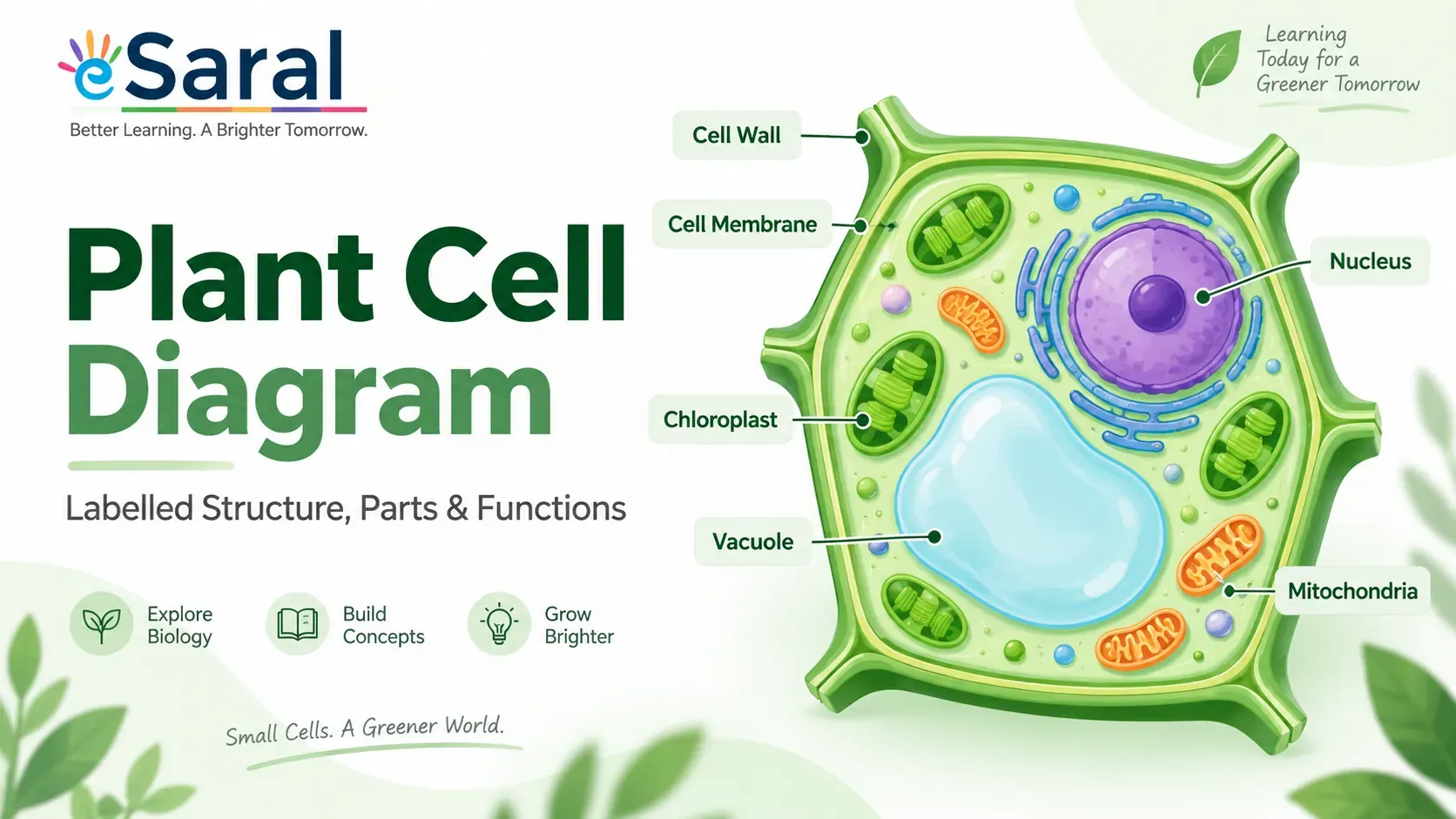
Plant Cell Diagram: Labelled Structure, Parts and Functions
Simple, labelled plant cell diagram with parts and functions. Covers plant cell structure for Class 6, 7, 8, 9, 10 and 11 students, CBSE-aligned.
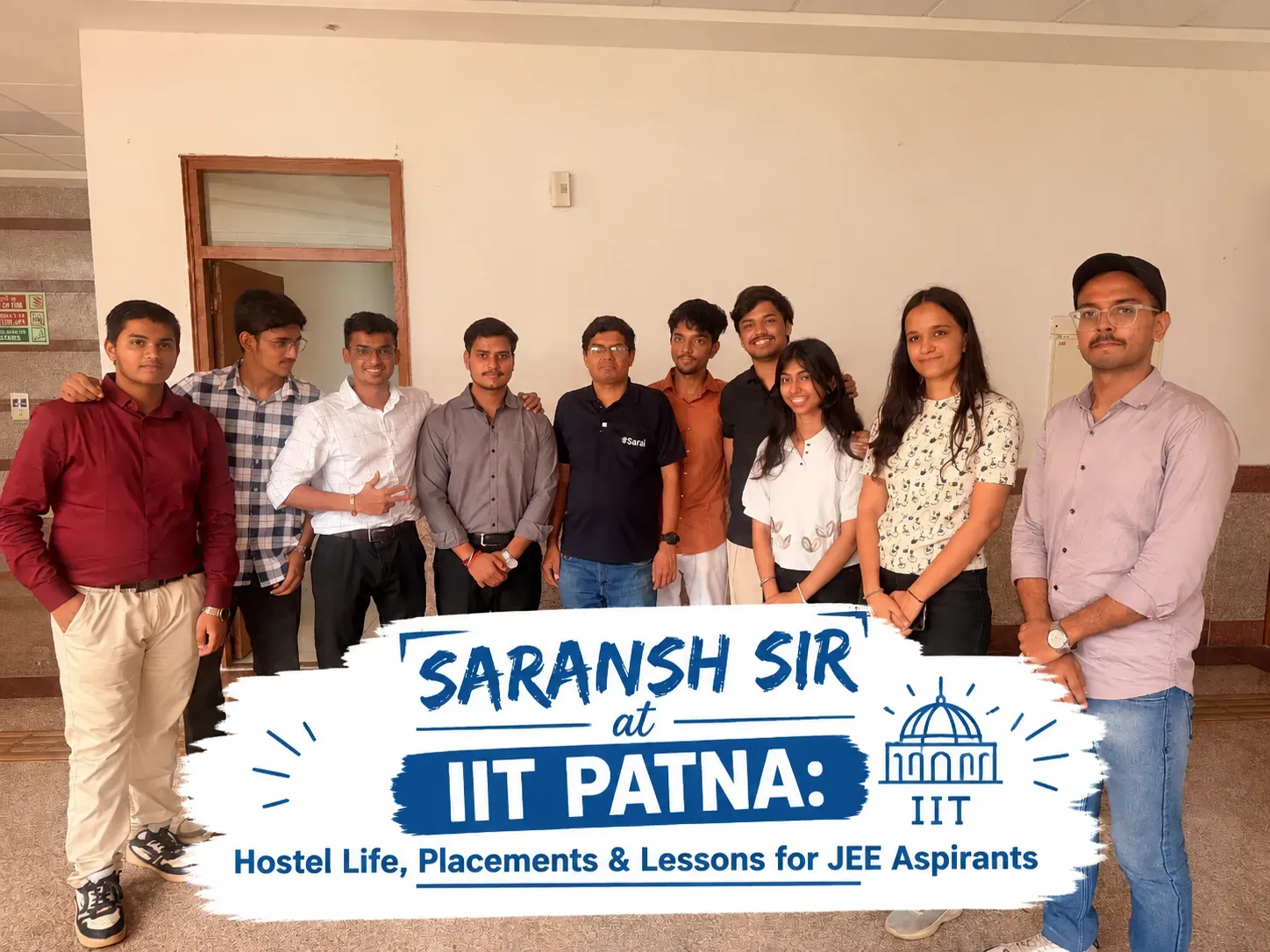
Saransh Gupta Sir's Visit to IIT Patna: Hostel Life, Placements & Lessons for JEE Aspirants
Inside Saransh Gupta Sir's IIT Patna visit — hostel life, the library, placements, internships, and real advice for JEE aspirants from students living the IIT dream.
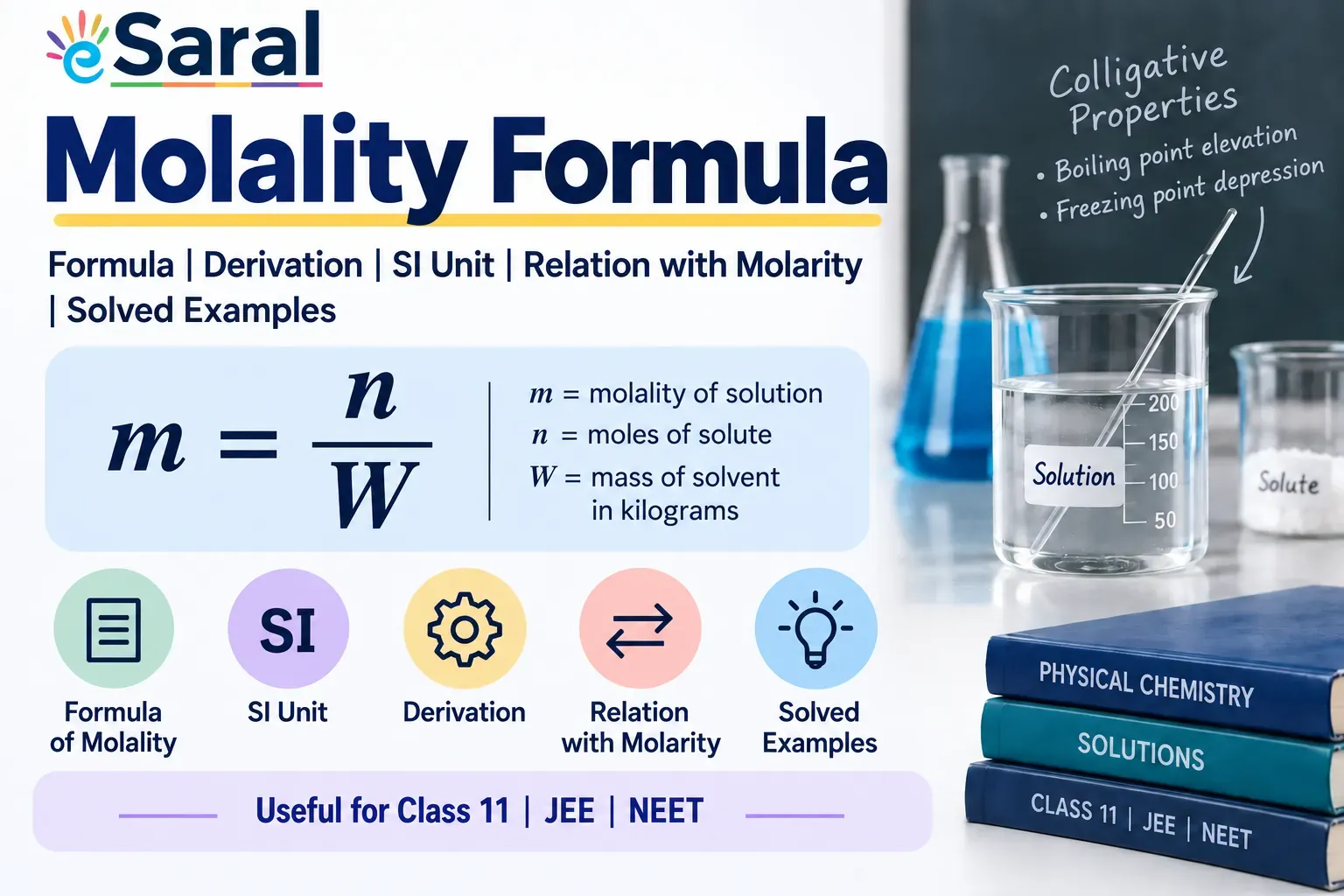
Molality Formula: Formula for Molality, Derivation & Solved Examples
Molality formula is $m = \dfrac{n}{W}$. Learn the formula of molality, its SI unit, derivation, relation with molarity, and solved examples for Class 11, JEE and NEET.
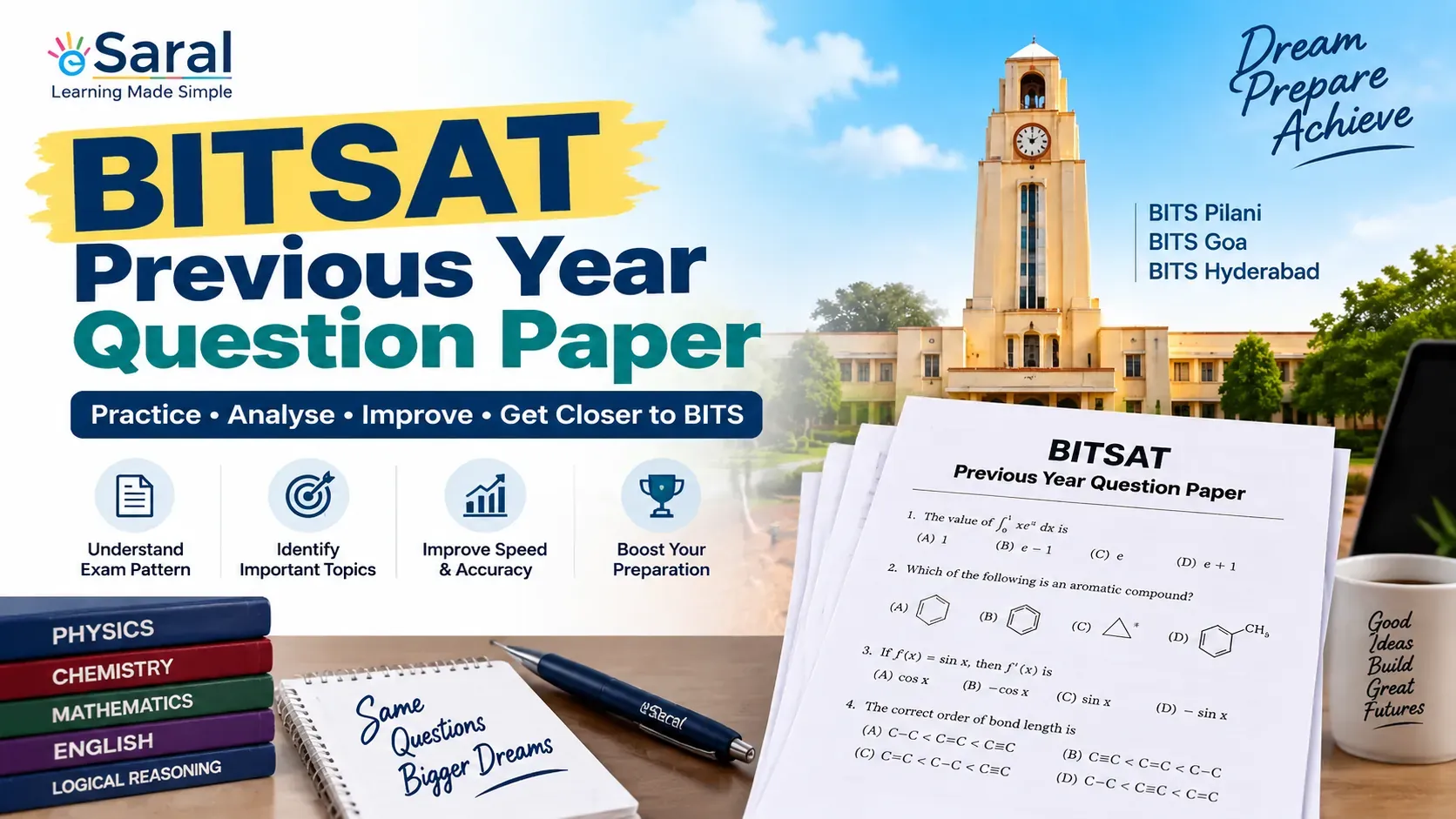
BITSAT Previous Year Question Paper PDF
Download BITSAT previous year question papers PDF. Get year-wise BITSAT PYQs, memory-based papers, exam pattern, and preparation tips to improve your BITSAT preparation.

Teachers’ Day 2026 at eSaral Gurukul: Celebrating the Bond Between Students, Teachers & Mentors
See how Teachers’ Day 2026 was celebrated at eSaral Gurukul, reflecting the bond among students, teachers, and mentors, and the role of guidance beyond academics.
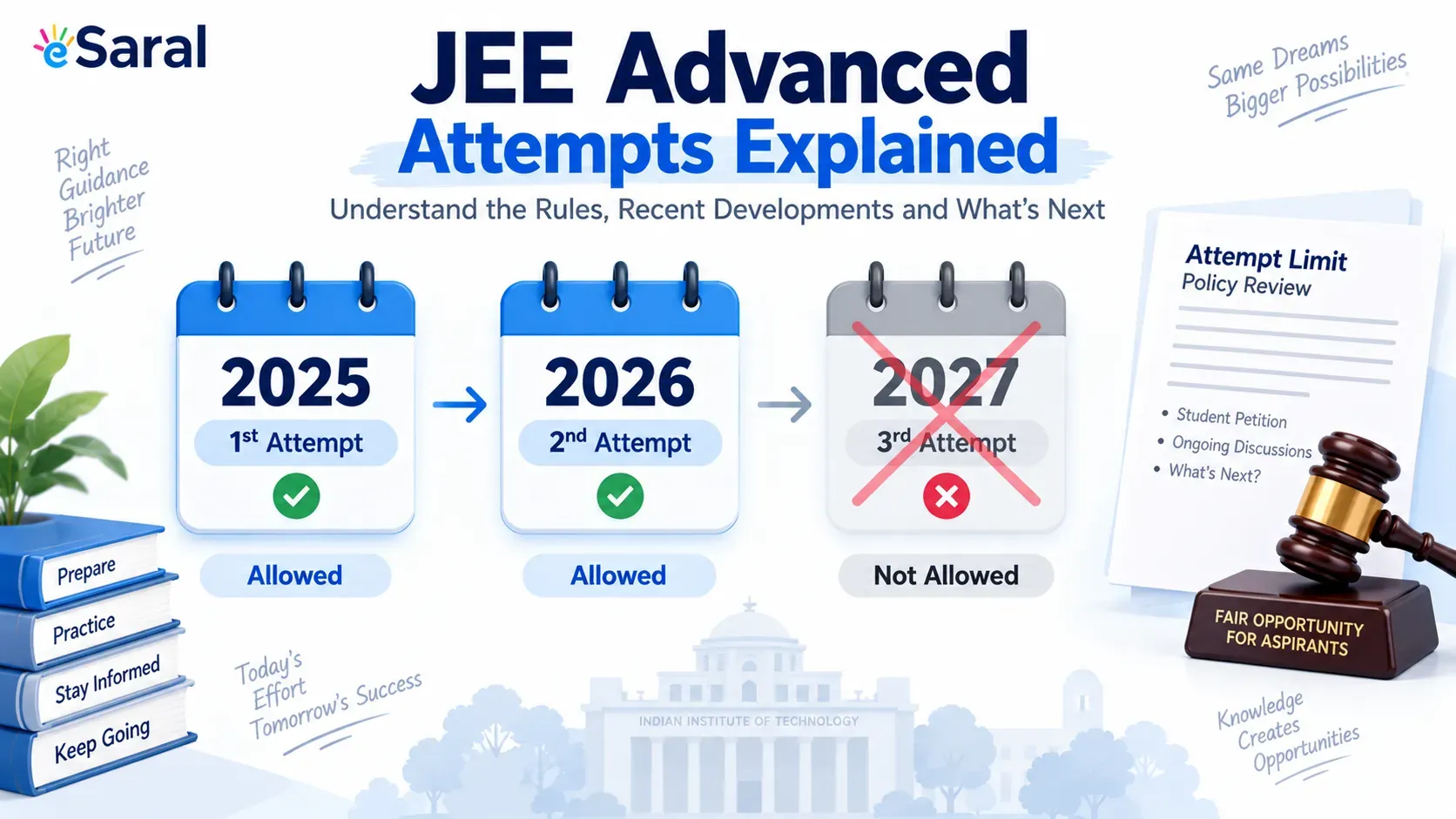
JEE Advanced Attempts: Can You Give It a Third Time? Rules Explained
JEE Advanced attempts: current rule is 2 consecutive years only: full eligibility criteria, the 2025 third-attempt controversy, and the latest 2026 petition news.
Best JEE Preparation App
Best JEE preparation app for Main & Advanced: AI mock tests, live doubt-solving, thousands of practice questions. JEE preparation app for droppers & Class 11-12.
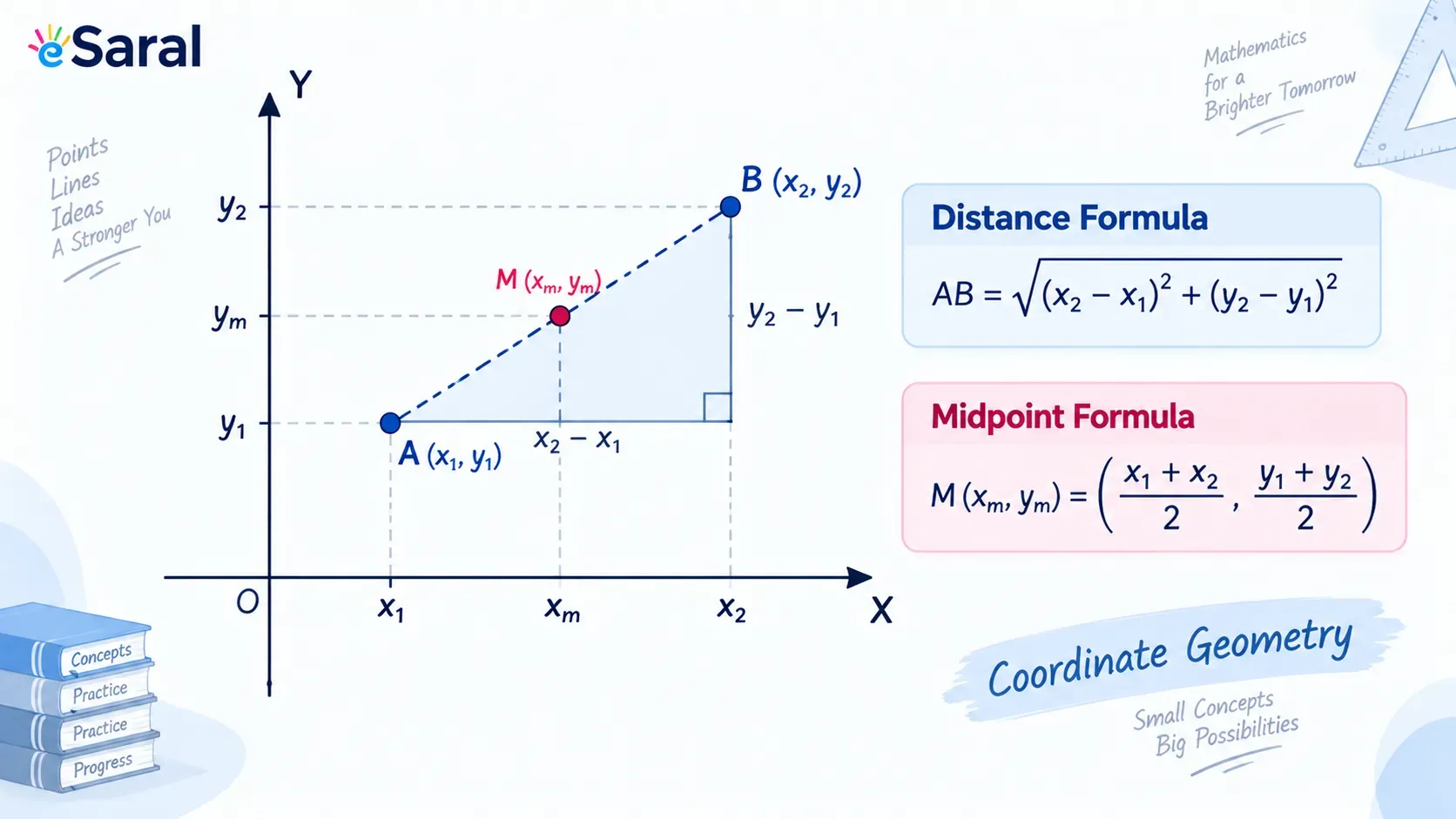
Coordinate Geometry Class 10: Formulas, Notes & Solved Examples
Coordinate geometry class 10: complete CBSE formulas — distance, section, midpoint and area of triangle — with derivation, notes and solved examples.
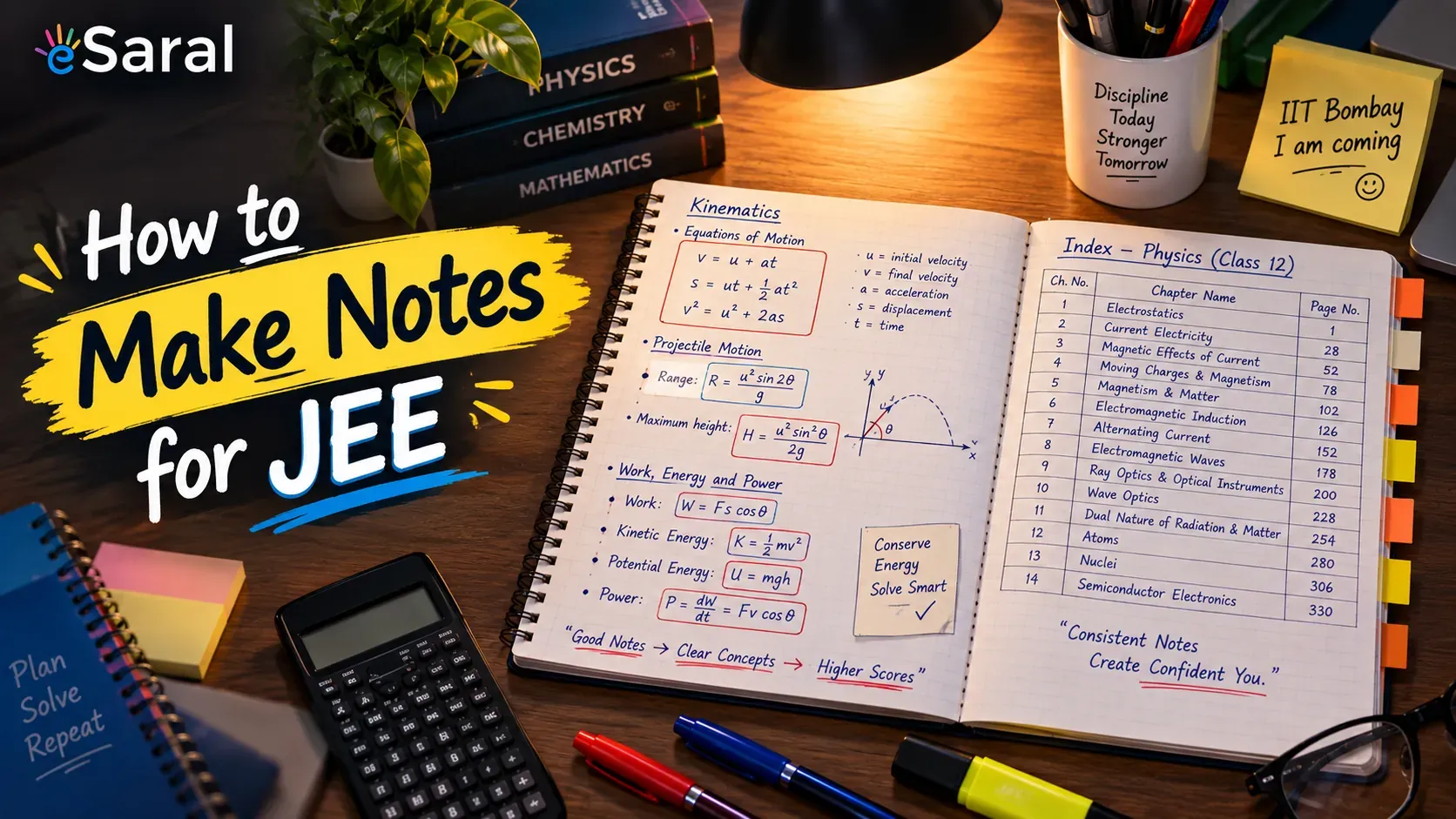
How to make Notes For JEE Smart Notes Strategy of an AIR 41
Learn how to make notes for JEE the way toppers do — indexing, shorthand, and smart short notes for JEE that cut revision time to just 5–7 days.
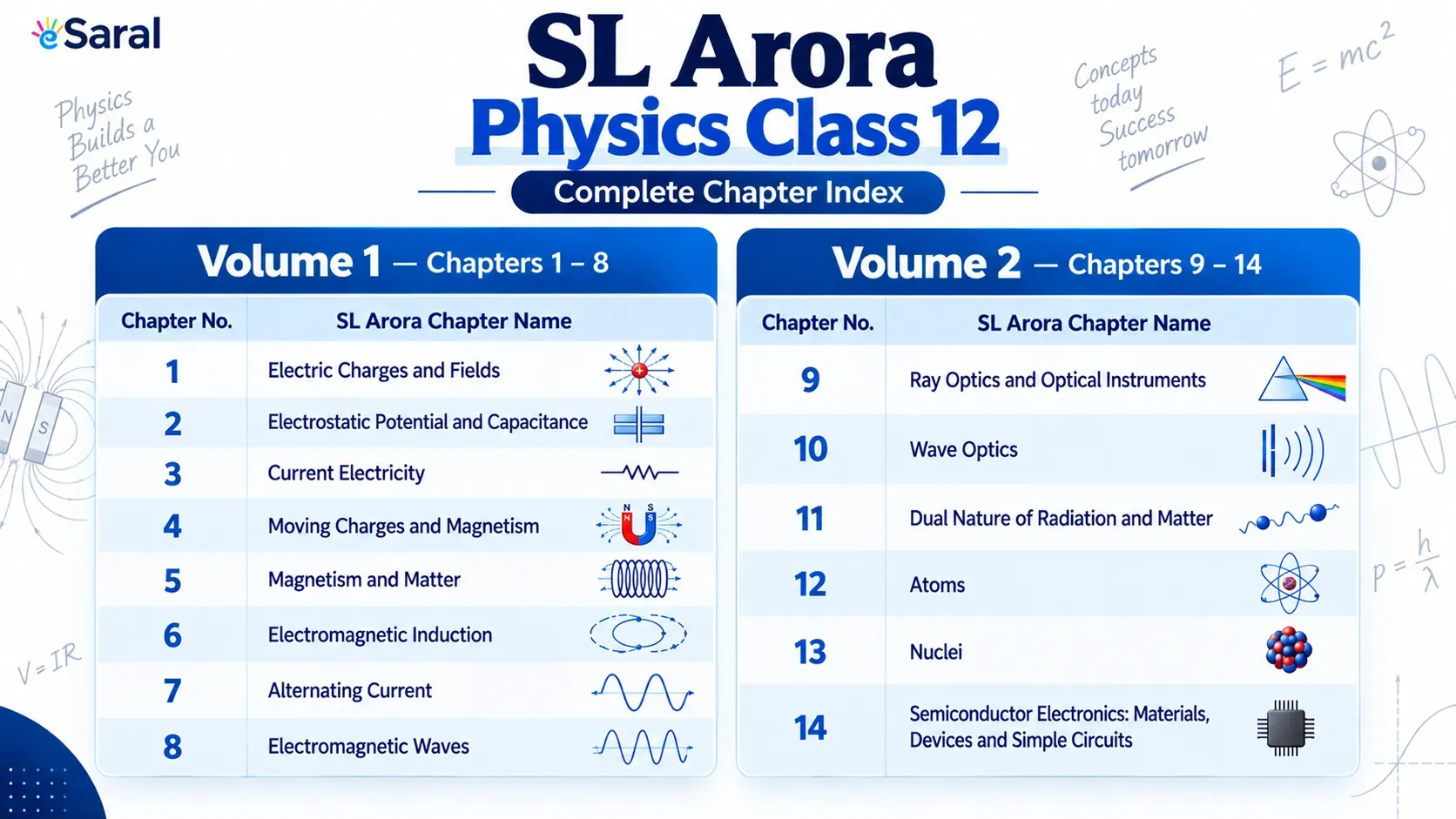
SL Arora Physics Class 12 Index – Chapter List for Volume 1 & 2
SL Arora Physics Class 12 index — complete chapter list for Volume 1 & 2, mapped to NCERT solutions for board, JEE Main, and NEET preparation.