
NEET Zoology Syllabus (Latest) PDF– Chapter-wise Topics, Weightage & Expert Tips

eSaral Academic and Editorial Team
Summary
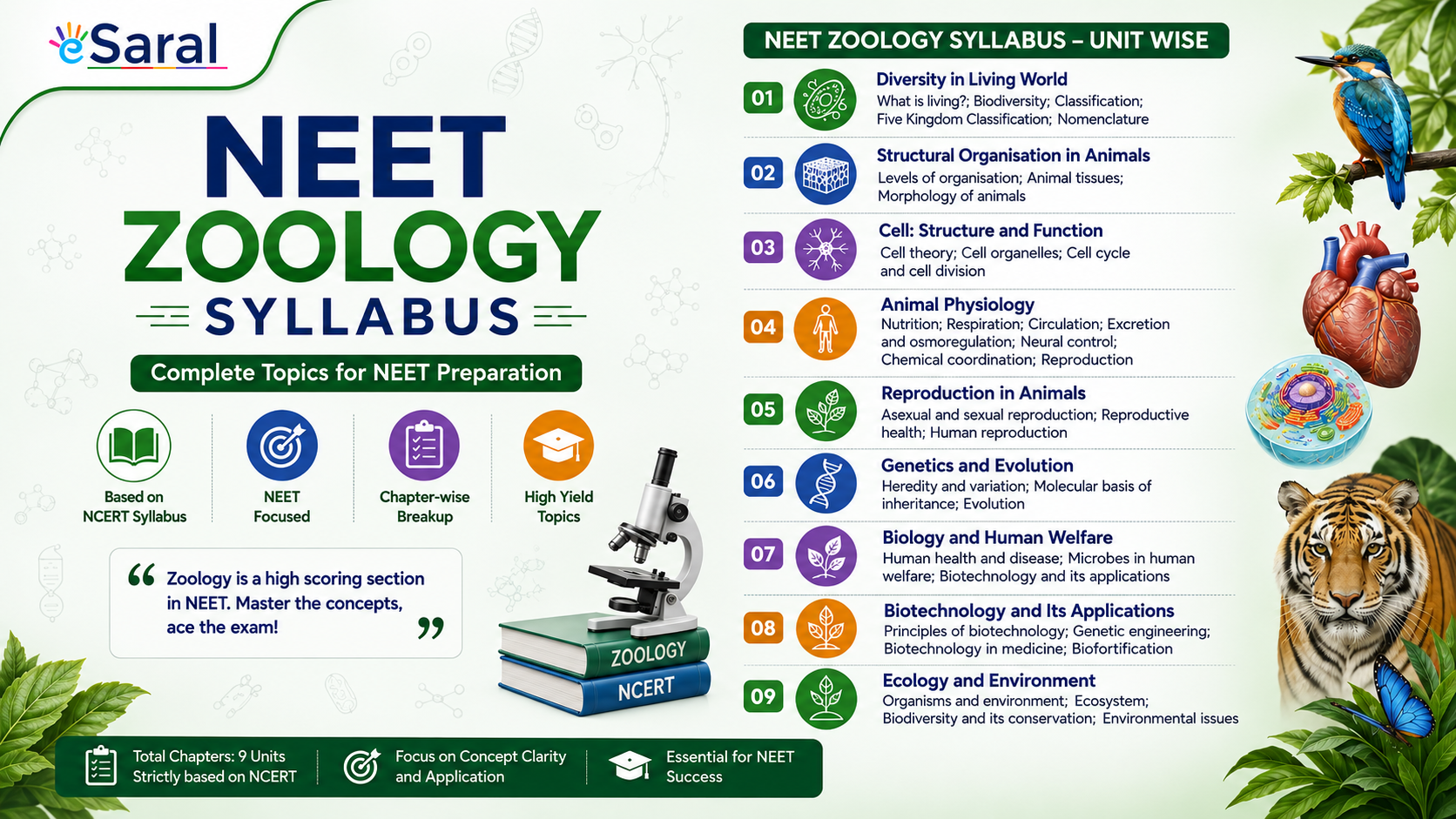
The NEET zoology syllabus 2027 is the animal and human-biology half of the NMC Biology syllabus, worth 45 questions and 180 marks. It covers Animal Kingdom, animal tissues and the frog, all of Human Physiology, Human Reproduction, Reproductive Health, Evolution, and Human Health and Disease. NMC has not issued a separate 2027 syllabus, so the 2026 list (notified 22 December 2025, unchanged from 2025) is what you prepare from.
What Is in the NEET Zoology Syllabus 2027?
NMC lists Biology as one subject with 10 units, so zoology is the animal-side share of those units. The grouping below is the one used across our Biology, Zoology and Botany pages, so a topic is never counted in two places.
Unit | Zoology covers | Where the rest is |
|---|---|---|
1. Diversity in the Living World | Animal Kingdom | Living World, Biological Classification and Plant Kingdom: Botany page |
2. Structural Organisation in Animals and Plants | Animal tissues and the frog | Flowering plants and plant families: Botany page |
3. Cell Structure and Function | Shared | |
4. Plant Physiology | None | |
5. Human Physiology | All six topics | Fully on this page |
6. Reproduction | Human Reproduction and Reproductive Health | Flowering plants: Botany page |
7. Genetics and Evolution | Evolution | Heredity and molecular basis: Biology page |
8. Biology and Human Welfare | Health and Disease | Microbes in human welfare: Botany page |
9. Biotechnology and Its Applications | Shared | |
10. Ecology and Environment | Shared |
Detail | NEET Zoology 2027 |
|---|---|
Questions and marks | 45 compulsory questions, 180 marks (half of Biology, 25% of 720) |
Marking | +4 for a correct answer, −1 for a wrong answer |
Core zoology chapters | 12 (8 from Class 11, 4 from Class 12), plus the animal side of shared units |
Syllabus prescribed by | National Medical Commission (NMC) |
Exam conducted by | National Testing Agency (NTA) |
Has anything changed for 2027? Not officially. The 2026 syllabus was unchanged from 2025, and the live status is tracked on the main NEET syllabus 2027 page. The paper layout is in the NEET exam pattern guide. Official sources: nmc.org.in and neet.nta.nic.in.
Class 11 Zoology Syllabus for NEET 2027: Animal Kingdom, Animal Tissues and Human Physiology
Class 11 supplies 8 of the 12 core zoology chapters. Topics are paraphrased from the official NMC unit text; the “Revise with” lines are study cues, not syllabus items.
Animal Kingdom (Unit 1)
- Classification of animals: non-chordates up to phylum level and chordates up to class level, with three to five salient features and at least two examples for each group
- NCERT groups to cover: Porifera, Cnidaria, Ctenophora, Platyhelminthes, Aschelminthes, Annelida, Arthropoda, Mollusca, Echinodermata, Hemichordata; then Cyclostomata, Chondrichthyes, Osteichthyes, Amphibia, Reptilia, Aves and Mammalia
- Revise with: one comparison table covering symmetry, coelom type, germ layers, body organisation and example animals
Structural Organisation in Animals (Unit 2)
- Animal tissues (epithelial, connective, muscular and neural tissue in NCERT)
- Frog: brief account of morphology and of the digestive, circulatory, respiratory, nervous and reproductive systems (see what to study in the frog)
- Revise with: tissue-type tables with location and function
Breathing and Exchange of Gases (Unit 5)
- Respiratory organs in animals (recall only); human respiratory system
- Mechanism and regulation of breathing; exchange and transport of gases; respiratory volumes
- Disorders: asthma, emphysema, occupational respiratory disorders
- Revise with: the respiratory volumes and capacities table
Body Fluids and Circulation (Unit 5)
- Blood composition, blood groups, coagulation; lymph and its function
- Human heart and blood vessels; cardiac cycle, cardiac output, ECG; double circulation; regulation of cardiac activity
- Disorders: hypertension, coronary artery disease, angina pectoris, heart failure
- Revise with: the cardiac cycle diagram matched to an ECG trace
Excretory Products and Their Elimination (Unit 5)
- Modes of excretion: ammonotelism, ureotelism, uricotelism
- Human excretory system, urine formation, osmoregulation
- Regulation of kidney function: renin–angiotensin, atrial natriuretic factor, ADH and diabetes insipidus; role of other organs
- Disorders: uraemia, renal failure, renal calculi, nephritis; dialysis and the artificial kidney
- Revise with: nephron diagram and a hormone-effect table
Locomotion and Movement (Unit 5)
- Types of movement: ciliary, flagellar, muscular
- Skeletal muscle: contractile proteins and contraction; skeletal system and its functions; joints
- Disorders: myasthenia gravis, tetany, muscular dystrophy, arthritis, osteoporosis, gout
- Revise with: sarcomere diagram, the sliding filament sequence and a joints table
Neural Control and Coordination (Unit 5)
- Neuron and nerves; human nervous system: central, peripheral and visceral
- Generation and conduction of a nerve impulse
- Revise with: neuron structure and impulse conduction stages; brain parts and their functions
Chemical Coordination and Integration (Unit 5)
- Endocrine glands and hormones: hypothalamus, pituitary, pineal, thyroid, parathyroid, adrenal, pancreas, gonads
- Mechanism of hormone action (elementary); hormones as messengers and regulators
- Hypo- and hyperactivity disorders, in brief: dwarfism, acromegaly, cretinism, goitre, exophthalmic goitre, diabetes, Addison’s disease
- Revise with: a gland–hormone–function–disorder table
Class 12 Zoology Syllabus for NEET 2027: Reproduction, Evolution and Human Health
Human Reproduction (Unit 6)
- Male and female reproductive systems; microscopic anatomy of testis and ovary
- Gametogenesis: spermatogenesis and oogenesis; menstrual cycle
- Fertilisation, embryo development up to blastocyst, implantation
- Pregnancy and placenta, parturition and lactation (elementary idea)
- Revise with: hormone levels across the menstrual cycle; stage-wise gametogenesis diagrams
Reproductive Health (Unit 6)
- Need for reproductive health; prevention of sexually transmitted diseases
- Birth control: need, methods, contraception; medical termination of pregnancy
- Amniocentesis; infertility and assisted reproductive technologies: IVF, ZIFT, GIFT (general awareness)
- Revise with: a contraceptive methods table grouped by type
Evolution (Unit 7)
- Origin of life; evidence for evolution from palaeontology, comparative anatomy, embryology and molecular biology
- Darwin’s contribution and the modern synthetic theory
- Mechanisms: mutation and recombination, natural selection and its types, gene flow, genetic drift
- Hardy–Weinberg principle; adaptive radiation; human evolution
- Revise with: the Hardy–Weinberg equations and a human-evolution timeline table
Human Health and Disease (Unit 8)
- Pathogens and parasites causing malaria, filariasis, ascariasis, typhoid, pneumonia, common cold, amoebiasis, ringworm, dengue and chikungunya
- Basic immunology and vaccines; cancer; HIV and AIDS
- Revise with: a disease–pathogen–vector–symptom table
Microbes in human welfare, the second part of Unit 8, is covered on the NEET Botany syllabus page.
Zoology Side of the Shared Units: Cell, Genetics, Biotechnology and Ecology
Four units are counted on both sides, so their full topic text lives on the Biology page. Use this table to see which parts tend to be animal- or human-focused, then study them from the NEET Biology syllabus 2027.
Shared unit | Animal and human hooks to revise |
|---|---|
Unit 3: Cell Structure and Function | Animal cell vs plant cell, cilia, flagella and centrioles, biomolecules and enzymes, cell cycle, mitosis and meiosis |
Unit 7: Heredity and Molecular Basis of Inheritance | Sex determination in humans, haemophilia and colour blindness, thalassaemia, Down’s, Turner’s and Klinefelter’s syndromes, DNA replication, transcription and translation |
Unit 9: Biotechnology and Its Applications | Human insulin and vaccine production, gene therapy, transgenic animals, biosafety, biopiracy and patents |
Unit 10: Ecology and Environment | Population interactions and attributes, energy flow in ecosystems, endangered animals, Red Data Book, biosphere reserves, national parks and sanctuaries |
Frog in the NEET Zoology Syllabus: What to Study
Study the frog as a brief account of its body and five organ systems. The cockroach was replaced by the frog; the full change summary is in the Biology page section on the cockroach and frog.
Part of the frog account | What to learn |
|---|---|
Morphology | Habitat, external features, body regions, skin, sexual dimorphism |
Digestive system | Alimentary canal parts, digestive glands, food passage |
Circulatory system | Heart chambers, blood flow, type of circulation |
Respiratory system | Modes of respiration: skin, buccal cavity and lungs |
Nervous system | Brain parts and cranial nerves in brief |
Reproductive system | Male and female organs, fertilisation, development |
The official unit line reads “insect (Frog)”, but the frog is an amphibian. Use the frog section of the Structural Organisation in Animals chapter, and skip the cockroach.
Which Zoology Topics Are Removed from the NEET Zoology Syllabus 2027?
No zoology unit was dropped, but several chapters and topics are no longer listed.
Topic students ask about | In NEET 2027 syllabus? | What stays |
|---|---|---|
Cockroach | No | Replaced by the frog (Unit 2) |
Digestion and absorption | No | Breathing, circulation, excretion, locomotion, neural and chemical coordination |
Sense organs (structure of eye and ear) and reflex action | No | Neuron, nerves and nerve impulse conduction |
Adolescence, drug and alcohol abuse, tobacco abuse | No | Not in the Unit 8 text of the NMC 2026 syllabus; pathogens, immunology, cancer and HIV stay |
Animal husbandry and apiculture | No | Removed with the food-production strategies topics |
Taxonomic aids such as zoos and museums | No | Taxonomic hierarchy and binomial nomenclature stay |
Frog | Yes | Brief account only (Unit 2) |
Newly emphasised on the zoology side: the frog, and dengue and chikungunya in Unit 8. Because sources occasionally differ on small points, confirm against the official syllabus PDF.
NEET Zoology Chapters Mapped to NCERT
Zoology has 12 core NCERT chapters, 8 in Class 11 and 4 in Class 12. Chapter titles differ slightly between NCERT editions, so follow the unit text rather than the title.
Class | NMC unit | NCERT chapter |
|---|---|---|
11 | 1. Diversity in the Living World | Animal Kingdom |
11 | 2. Structural Organisation | Structural Organisation in Animals |
11 | 5. Human Physiology | Breathing and Exchange of Gases |
11 | 5. Human Physiology | Body Fluids and Circulation |
11 | 5. Human Physiology | Excretory Products and their Elimination |
11 | 5. Human Physiology | Locomotion and Movement |
11 | 5. Human Physiology | Neural Control and Coordination |
11 | 5. Human Physiology | Chemical Coordination and Integration |
12 | 6. Reproduction | Human Reproduction |
12 | 6. Reproduction | Reproductive Health |
12 | 7. Genetics and Evolution | Evolution |
12 | 8. Biology and Human Welfare | Human Health and Disease |
Shared chapters (Biomolecules, Cell Cycle and Cell Division, Principles of Inheritance and Variation, Molecular Basis of Inheritance, the two Biotechnology chapters, and the three Ecology chapters) are listed in the Biology page NCERT mapping. Keep the NCERT books and NCERT Solutions for Class 11 and Class 12 open as you work.
NEET Zoology Chapter-Wise Importance: Which Chapters Matter Most?
Evolution and Human Reproduction stood out among zoology chapters in the 2026 analyses. Use this to order your revision, never to skip a chapter. The wider Biology picture is in the Biology chapter-wise weightage section.
Zoology chapter | 3 May 2026 paper (eSaral analysis) | Re-NEET, 21 June 2026 (BrilliantPala analysis) |
|---|---|---|
Evolution | 6 | 6 |
Human Reproduction | Not in the top list | 6 |
Locomotion and Movement | 2 to 5 | 5 |
Counts differ slightly between analyses because the papers were set in several codes, and they reflect 2026 only, not a fixed rule. For the other chapters, group your revision by how they are asked:
Group | Chapters | How to revise |
|---|---|---|
Top in the 2026 analyses | Evolution, Human Reproduction, Locomotion and Movement | Revise first and repeat often; solve previous year questions chapter by chapter |
Diagram and process chapters | Body Fluids and Circulation, Excretory Products, Neural Control, Chemical Coordination, Breathing, Structural Organisation in Animals | Redraw each diagram and rewrite each process as steps |
Fact and table chapters | Animal Kingdom, Reproductive Health, Human Health and Disease | Build comparison tables and revise them weekly |
Read the full NEET 2026 paper analysis, then practise with chapter-wise NEET PYQs with solutions and NEET important questions.
How to Study NEET Zoology for NEET 2027
Read each zoology NCERT chapter line by line, redraw every diagram, and finish with chapter-wise previous year questions. Zoology rewards precise recall of NCERT lines, tables, and labelled diagrams, so accuracy matters more than speed.
Order | Chapters | How to study |
|---|---|---|
1 | Animal Kingdom, Structural Organisation in Animals | Make one phyla comparison table and one tissue table; learn the frog account as a short summary per system. |
2 | The six Human Physiology chapters | One chapter at a time: diagram first, then process steps, then disorders. Keep a hormone and disorder sheet. |
3 | Human Reproduction, Reproductive Health | Practise gametogenesis and menstrual-cycle diagrams; group contraceptive methods by type. |
4 | Human Health and Disease, Evolution | Disease–pathogen–vector tables for health; for evolution, evidences, Hardy–Weinberg and the human-evolution table. |
5 | Shared units from the Biology page | Revise the animal and human hooks listed above, then solve PYQs. |
Fit this into the NEET 2027 syllabus plan and the wider Biology study plan. Revise with NEET revision notes, revision videos, mind maps, and NEET previous year papers. For an expert-led daily structure, see eSaral NEET courses and the NEET test series.
Frequently Asked Questions
What is the NEET zoology syllabus 2027?
It is the animal and human-biology part of the NMC Biology syllabus: Animal Kingdom, animal tissues and the frog, Human Physiology, Human Reproduction, Reproductive Health, Evolution and Human Health and Disease, plus the animal-side topics of shared units. Zoology carries 45 questions and 180 marks. NMC has not issued a separate 2027 notice as of 24 October 2026.
How many questions come from zoology in NEET?
45 compulsory questions worth 180 of 720 marks, which is half of the 90 Biology questions. Each correct answer earns +4 and each wrong answer costs −1.
Which chapters are in the NEET zoology syllabus?
Twelve NCERT chapters are zoology-owned: Animal Kingdom, Structural Organisation in Animals, Breathing and Exchange of Gases, Body Fluids and Circulation, Excretory Products and their Elimination, Locomotion and Movement, Neural Control and Coordination, Chemical Coordination and Integration, Human Reproduction, Reproductive Health, Evolution, and Human Health and Disease. Cell, genetics, biotechnology and ecology units are shared with Botany.
Is NEET zoology only from Class 11 or Class 12?
Both. Eight zoology chapters come from Class 11 (Animal Kingdom, Structural Organisation in Animals and the six Human Physiology chapters) and four from Class 12 (Human Reproduction, Reproductive Health, Evolution, and Human Health and Disease).
Is human physiology part of NEET zoology?
Yes. All six topics of Unit 5 belong to Zoology: breathing, body fluids and circulation, excretion, locomotion and movement, neural control and coordination, and chemical coordination. Digestion and absorption is no longer in the syllabus.
Is digestion and absorption in the NEET syllabus 2027?
No. It is not listed in the NMC NEET (UG) 2026 syllabus, and no separate 2027 syllabus has been issued. The frog account still mentions the digestive system as one of its organ systems, as a brief account only.
How much of the frog should I study for NEET?
Study the frog as a brief account only: its external features and the structure and working of its digestive, circulatory, respiratory, nervous and reproductive systems. The official unit line says insect (Frog), but the frog is an amphibian. Skip the cockroach.
Which zoology chapters are most important for NEET?
In the 2026 analyses, Evolution had 6 questions in both papers, Human Reproduction had 6 in the Re-NEET analysis, and Locomotion and Movement had between 2 and 5 on 3 May and 5 in the Re-NEET. Counts vary by paper code, so use them to order revision, not to skip chapters.
How to study zoology for NEET 2027?
Read each zoology NCERT chapter line by line, redraw every diagram and flowchart, make comparison tables for animal phyla, hormones and disorders, then solve chapter-wise previous year questions. Finish the zoology-owned chapters first and then revise the shared units from the Biology page.
NEET Zoology mein kaun se chapters aate hain?
NEET Zoology mein 12 chapters aate hain: Animal Kingdom, Structural Organisation in Animals, Breathing, Body Fluids and Circulation, Excretory Products, Locomotion and Movement, Neural Control, Chemical Coordination, Human Reproduction, Reproductive Health, Evolution aur Human Health and Disease. Cell, genetics, biotechnology aur ecology shared units hain.
Team eSaral
eSaral Academic and Editorial Team
Team eSaral is the collective author profile for educational content created by eSaral’s teachers and academic contributors. The team draws on expertise from IIT graduates, doctors, experienced educators and subject specialists to develop resources for JEE, NEET and school students. Our articles aim to explain concepts clearly and help students study with confidence.
Related Posts
NEET Registration 2027: Last Date, Process, Form, Admit Card & Exam Date
NEET registration 2027 live updates: NEET registration process, NEET registration last date, NEET form fee, admit card for NEET, and NEET exam date.
NEET Biology Syllabus 2027: 10 Units, Botany–Zoology Split & Weightage
NEET Biology Syllabus 2027: chapter-wise weightage and preparation tips. Complete NCERT-based guide with eSaral courses to boost your NEET score.
NEET Chemistry Syllabus
Check the NEET Chemistry syllabus 2027 unit-wise for Class 11 & 12. Get NCERT-focused tips to finish on time and score higher.
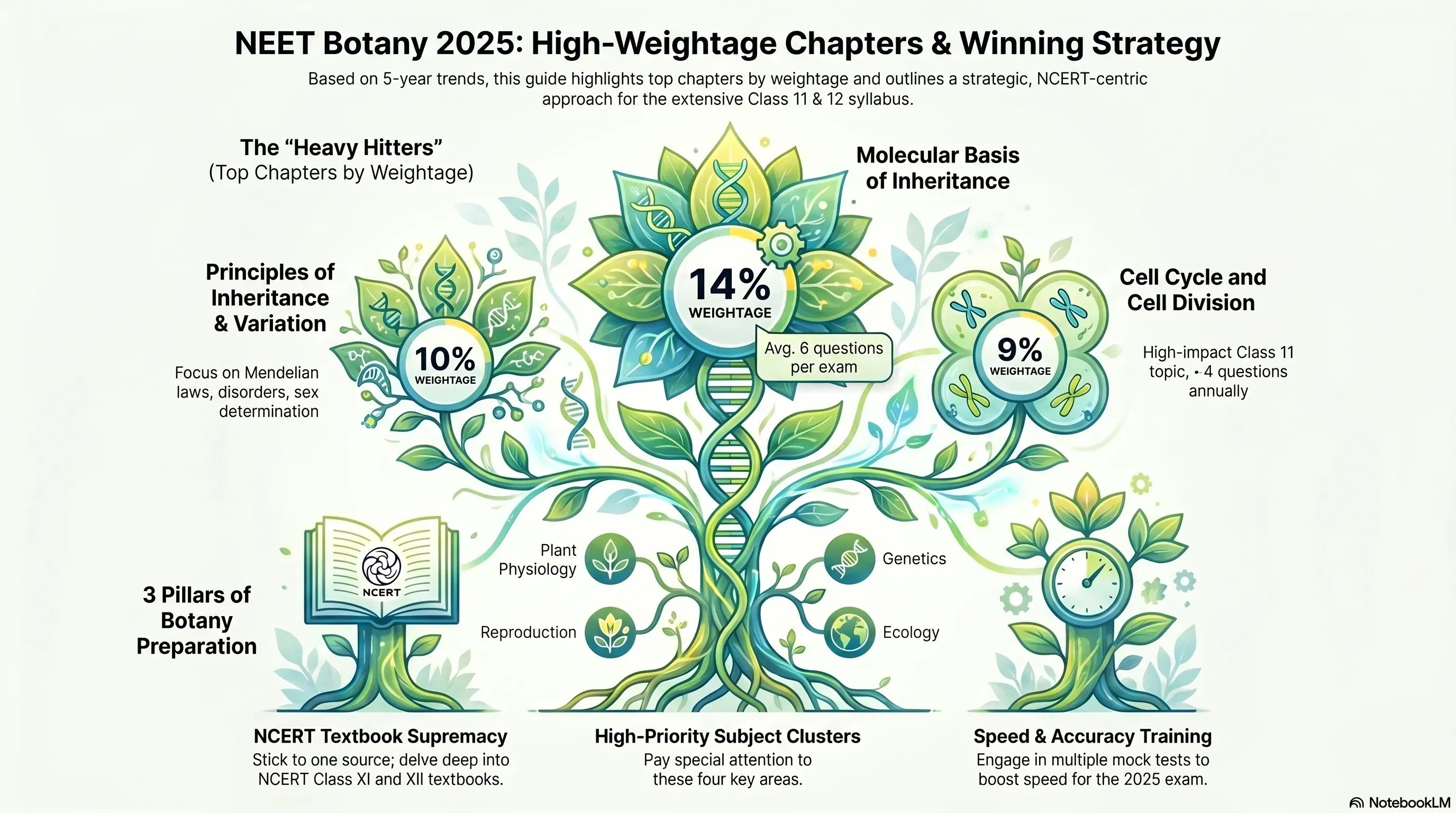
NEET Botany Syllabus 2027: Chapter-Wise List & Weightage
NEET Botany syllabus 2027: 45 questions, 180 marks, Class 11 and 12 chapter list, 2026 weightage and study plan.
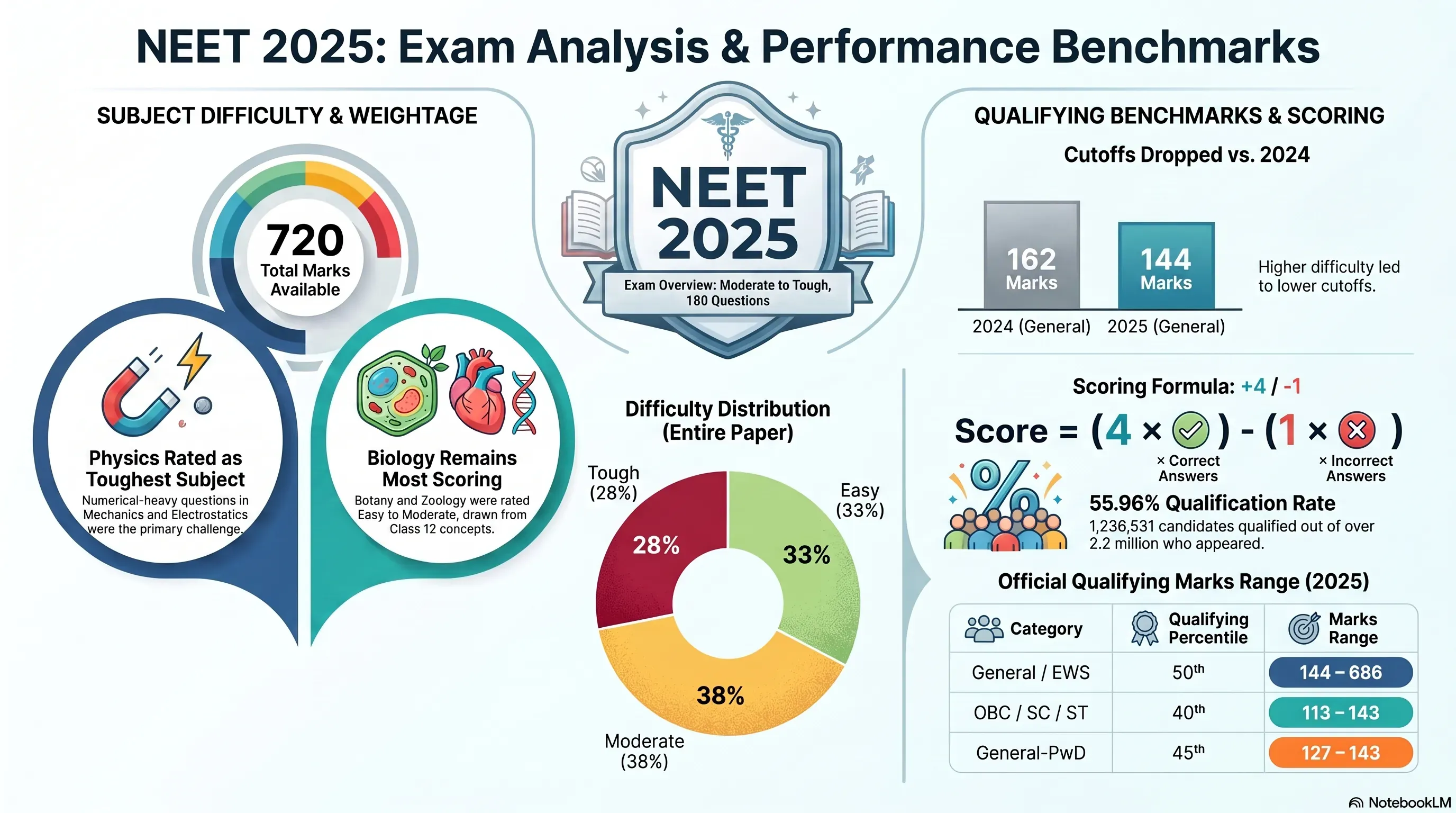
NEET 2025 Question Paper with Solution: Download PDF & Answer Key
Download the NEET 2025 question paper PDF with solutions for codes 45- 48,with the answer key,subject-wise analysis and the final categorywise cutoff.
NEET Physics Syllabus 2027 : Unit-Wise Topics & Weightage
NEET Physics Syllabus 2027 PDF: chapter-wise topics for Classes 11 & 12, plus the best preparation tips. Check important topics & start preparation.
NEET Syllabus 2027: Subject-Wise Chapters & Official PDF
Check the NEET syllabus 2027 unit-wise: Physics, Chemistry, Biology chapters, official PDF and weightage. Updated Oct 2026 as per NMC
NEET 2026 Question Paper with Solution: Re-NEET PDF, Answer Key, Analysis and Cutoff
NEET 2026 question paper with solution PDF for Re-NEET (21 June) Codes 50, 60, 70 and 80, plus the May 3 paper, answer key, analysis and cutoff.

NEET 2024 Question Papers With Solutions - Free PDF Download
Download NEET 2024 Question Paper PDF with solutions — subject-wise, free. Includes exam pattern, marking scheme, and 6-year PYQ archive.
Re-NEET 2026 Question Paper with Solution: PDF Download, Answer Key & Paper Analysis (June 21)
Download Re-NEET 2026 question paper PDF with solutions for all codes. Get answer key, subject-wise paper analysis, expected cutoff