
NLM (Laws of Motion) - NEET Previous Year Questions with Complete Solutions

eSaral Academic and Editorial Team
Summary
Laws of Motion (NLM) NEET previous year questions cover Newton's three laws, friction, impulse, pseudo force, and connected bodies. NEET typically asks 2–4 questions from this chapter every year. All PYQs with step-by-step solutions are available below — organised year-wise and topic-wise — to help you revise efficiently and target full marks in this chapter.
eSaral › NEET Physics › NLM Laws of Motion Previous Year Questions with Complete Solutions

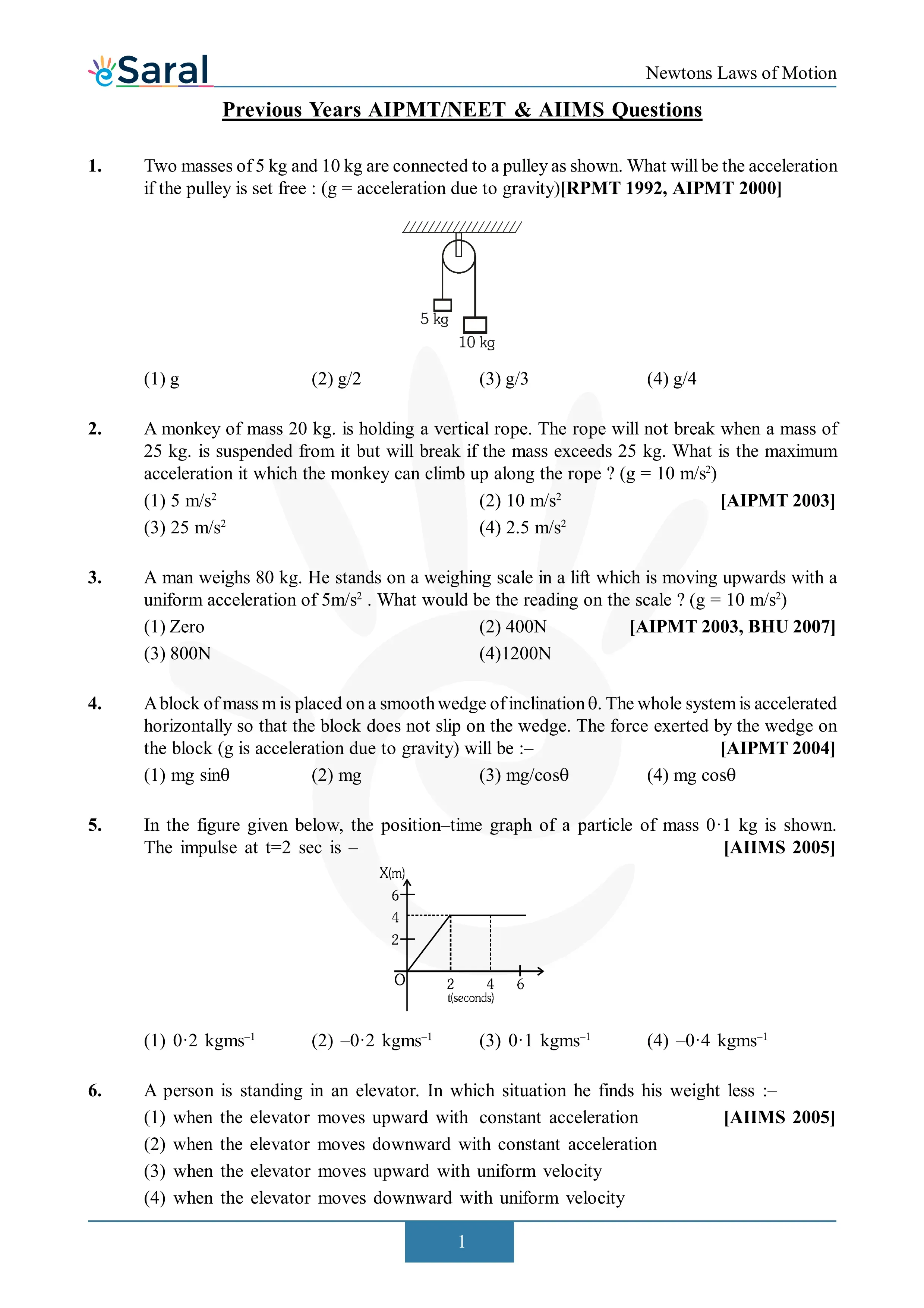
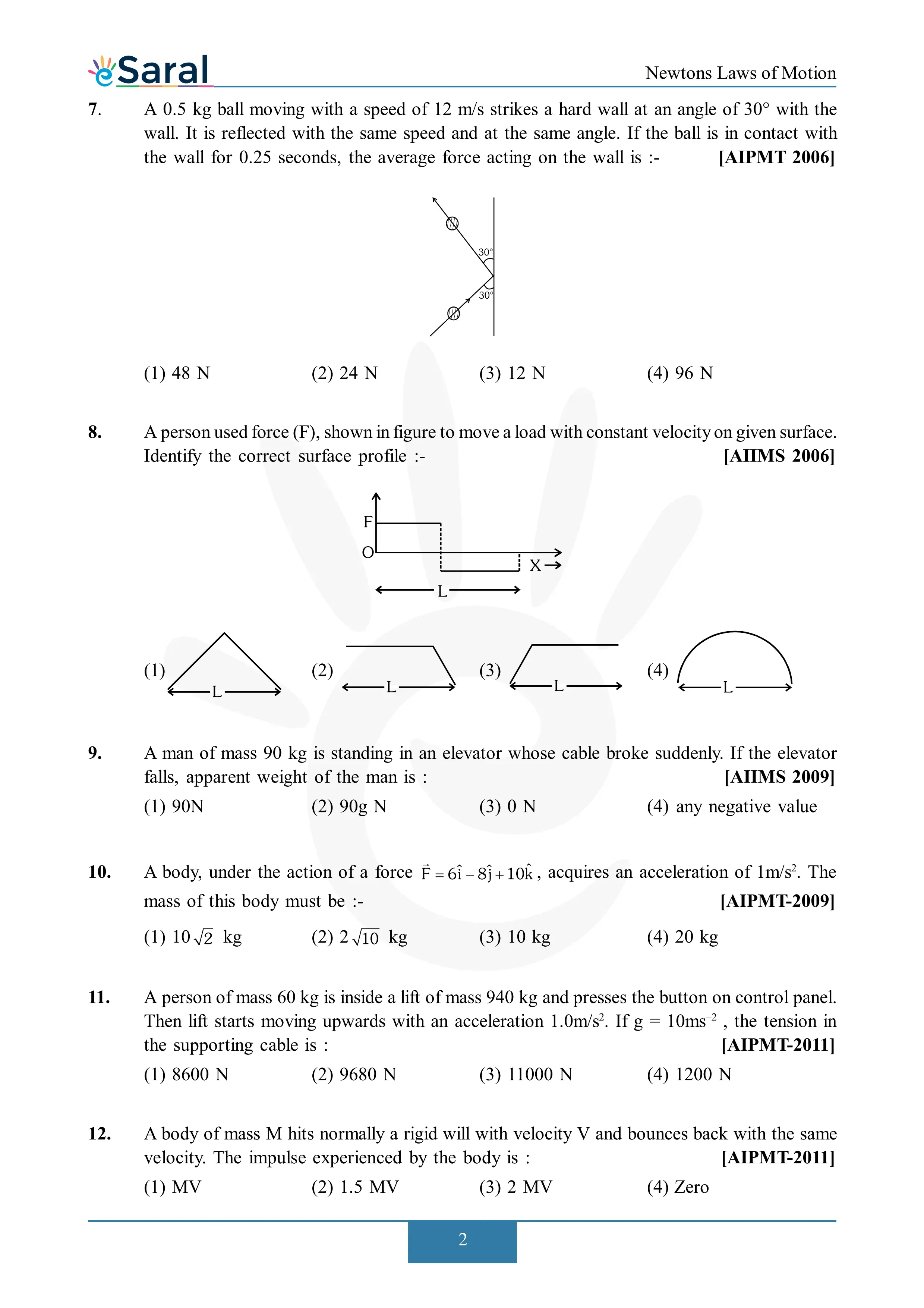
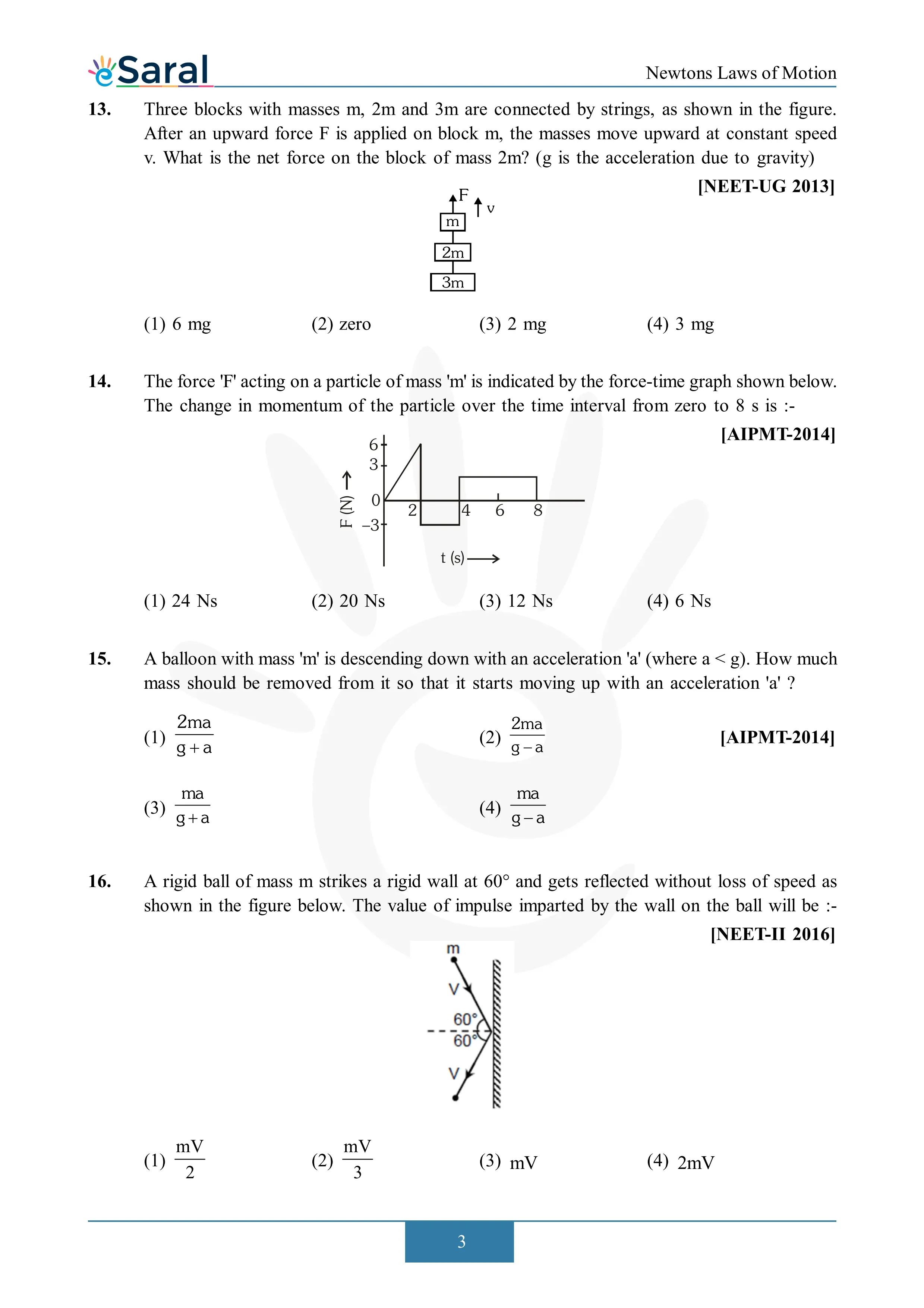
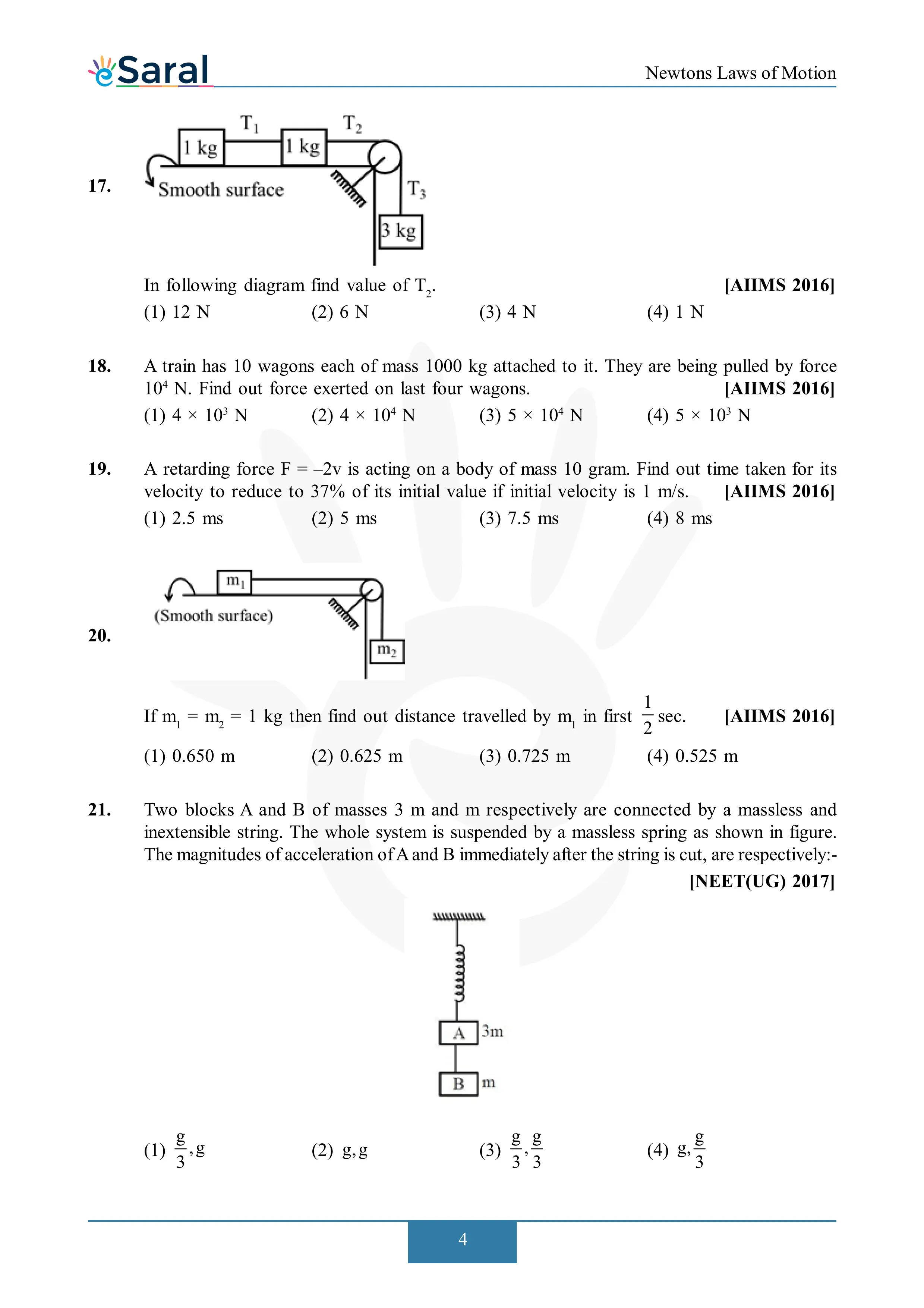
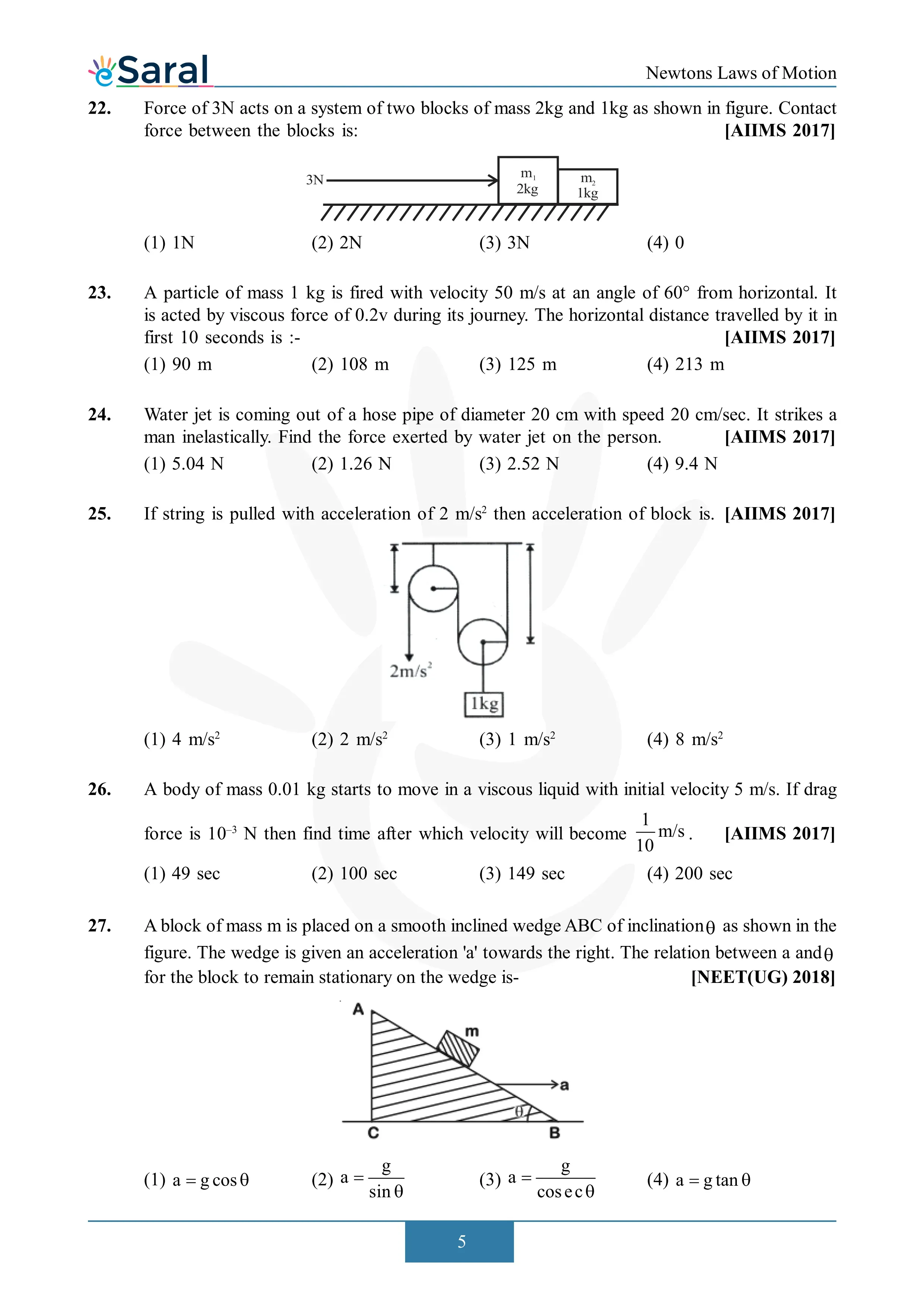
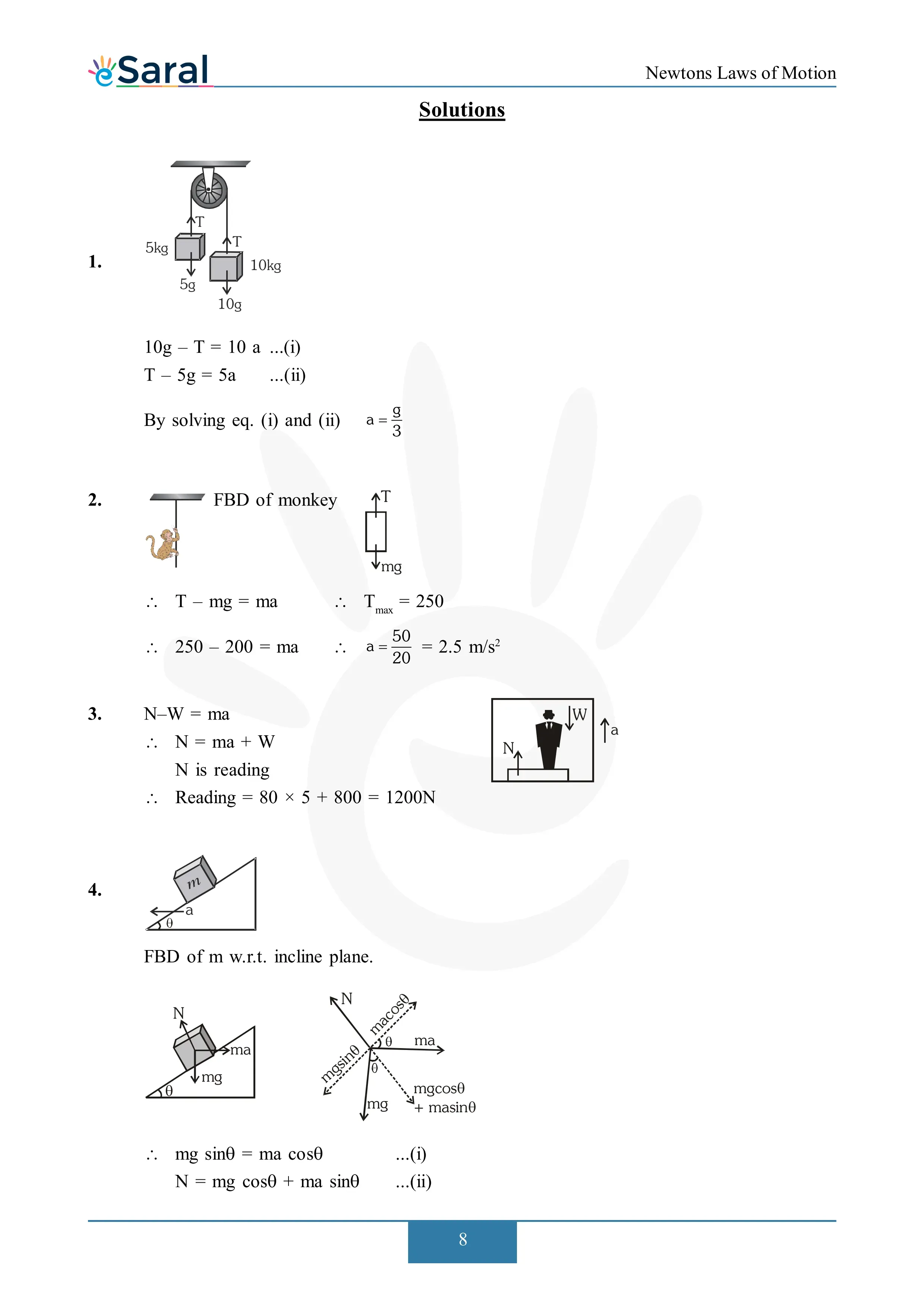
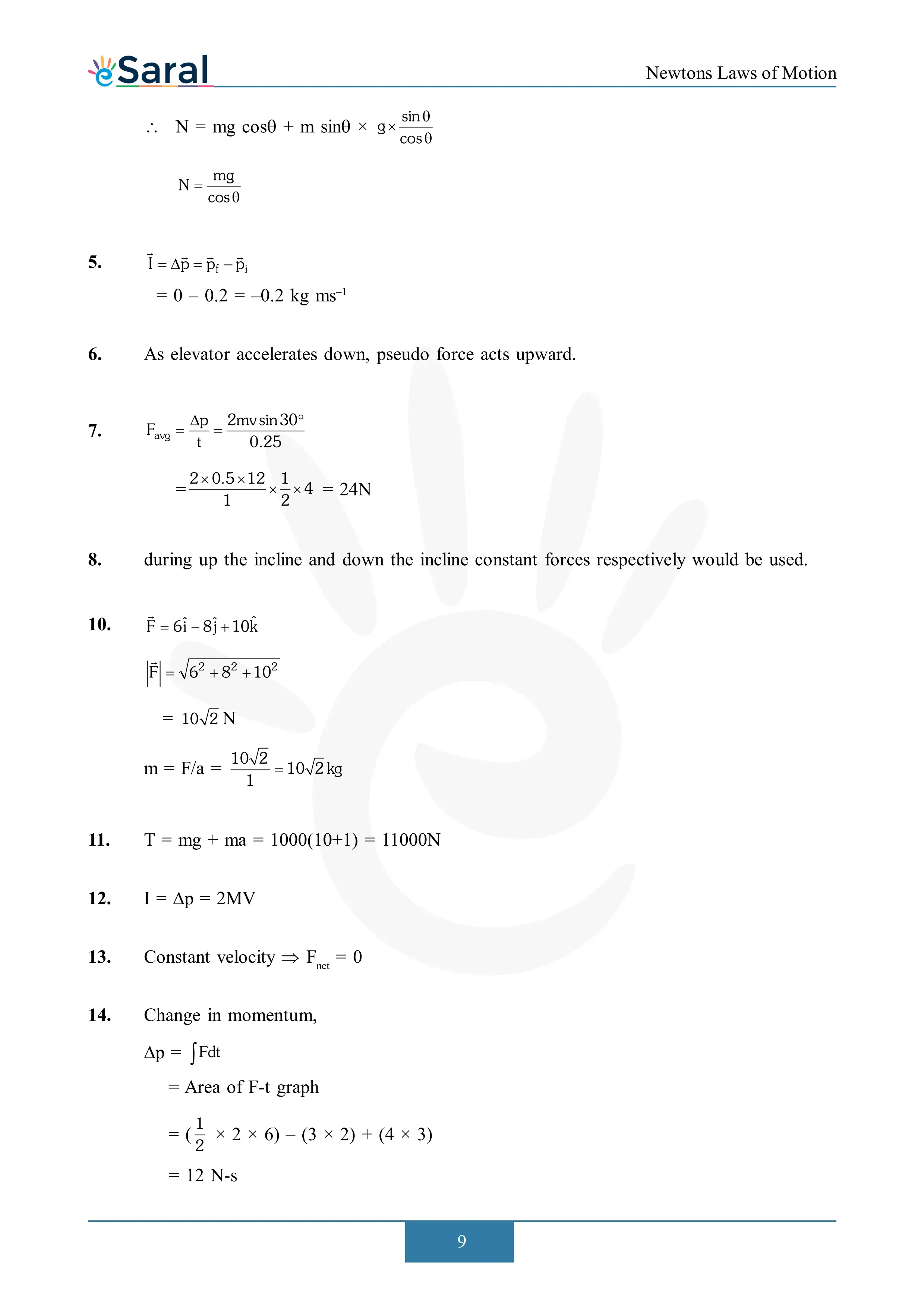
Here you will get Complete Laws of Motion (NLM) NEET Previous Year Questions with complete and detailed solutions. Get complete NEET previous year questions for Physics, Chemistry, and Biology. You will find all the solutions at the end of this page:


Next Steps for Your NEET Physics Preparation
- 📘 Review NCERT theory: NCERT Solutions for Class 11 Physics — Chapter 5
- 📖 Download the NCERT book: NCERT Books Class 11
- 📲 For structured NEET preparation with Kota-quality teaching delivered online, download the eSaral app — where IIT Bombay faculty (including AIR-41) teach live sessions, and our 5-layer doubt-solving system ensures no question goes unanswered.
Bookmark this page and return after each study session to re-test yourself on the questions you found difficult. Consistent PYQ practice over 4–6 weeks will make Laws of Motion one of your most reliable scoring chapters in NEET.
Frequently Asked Questions
Is Laws of Motion important for NEET 2025 and 2026?
Yes, Laws of Motion is a core chapter in the NEET Physics syllabus as defined by NTA. It has appeared in every NEET paper since 2013 without exception. Its concepts also underpin Rotational Motion, Work-Energy Theorem, and Fluid Mechanics, so skipping or under-preparing this chapter has a multiplier effect on your overall Physics score.
Where can I find NLM NEET PYQs with complete solutions?
The complete set of NLM (Laws of Motion) NEET previous year questions with detailed, step-by-step solutions is available on this page and as a downloadable PDF via the eSaral app. Solutions are prepared by IIT Bombay faculty and cover all NEET papers from 2013 onward, including questions on friction, Atwood machines, pseudo force, and impulse.
How many questions come from Laws of Motion in NEET?
NEET typically includes 2 to 4 questions from the Laws of Motion chapter each year. Based on NTA's official papers from 2013 to 2024, friction and Newton's second law applications are the most frequently tested subtopics. Planning for at least 3 questions from this chapter is a safe strategy.
How is Laws of Motion different from Momentum Conservation in NEET?
Laws of Motion questions focus on force analysis, free body diagrams, friction, and acceleration using F = ma. Momentum Conservation questions focus on collisions, explosions, and the principle that total momentum is conserved when no external force acts. Some questions blend both concepts — particularly impulse problems — so both chapters should be studied together.
Which topics in Laws of Motion carry the most marks in NEET?
Friction (static and kinetic) and Newton's second law applications together account for approximately 60% of all NLM questions in NEET. Connected body problems (Atwood machine, block-on-incline systems) and circular motion dynamics (banking of roads, conical pendulum) are the next most important subtopics by frequency.
What is the best way to revise Laws of Motion before NEET?
Start with NCERT Chapter 5 theory, then solve all PYQs from the last 10 years under timed conditions. Categorise your errors into concept gaps versus calculation mistakes and revise accordingly. Completing 30–35 NLM PYQs is usually sufficient to cover the full range of question patterns that appear in NEET.
Team eSaral
eSaral Academic and Editorial Team
Team eSaral is the collective author profile for educational content created by eSaral’s teachers and academic contributors. The team draws on expertise from IIT graduates, doctors, experienced educators and subject specialists to develop resources for JEE, NEET and school students. Our articles aim to explain concepts clearly and help students study with confidence.
Related Posts

BITSAT 2027: Registration Date, Exam Date, Syllabus, Eligibility, Pattern & Fees
BITSAT 2027 exam dates, registration timeline, eligibility criteria, exam pattern, marking scheme, syllabus and fees in one page.

BITSAT Previous Year Question Paper PDF (2017-2026)
Download BITSAT previous year question papers PDF from 2017 to 2026,session-wise. Memory-based papers,exam pattern, paper analysis and how to practise

CBSE Class 10 Date Sheet 2027: Expected Exam Dates, Release Date, Admit Card & Result Timeline
CBSE Class 10 date sheet 2027 is awaited. See the expected exam dates, release window, how to download the PDF, admit card and result timelines.

NCERT Physics Class 10 Book PDF in Hindi 2026-27 – भौतिक विज्ञान के 4 अध्याय (Free Download)
NCERT Physics Class 10 book PDF in Hindi 2026-27: download all 4 chapters (अध्याय 9–12) free, with topics and important formulas.

NCERT Biology Class 9 Book Anveshan PDF in Hindi - जीव विज्ञान कक्षा 9 पुस्तक अन्वेषण PDF
Download NCERT Biology Class 9 book PDF in Hindi chapterwise for 2026-27: Cell, Tissues, Reproduction and Diversity. Free PDFs.

Essay On Artificial Intelligence in English (100,150, 200, 250, 300, 500 Words)
This is in contrast to the natural intelligence of humans. With Artificial Intelligence, machines can perform

Essay on 78th India Independence Day in English for Student (100, 150, 200, 250, 300, 500 Words)
Read the best essays on India's Independence Day in English. Short & long essays (100, 150, 200, 250, 300, 500 words) perfect for school exams
NCERT Class 11 English Snapshots book - Free PDF download- Esaral
Download NCERT Class 11 English Snapshots book PDF for free. Get all 8 chapters, chapter-wise. Start your prep today!
NCERT Class 10 biology book pdf - Free PDF Download - eSaral
NCERT Class 10 Biology book PDF 2026-27: all 5 chapters (Life Processes to Our Environment) in English & Hindi, with CBSE syllabus, marks & practical

Essay on Global Warming in English (100,150, 200, 250, 300, 500 Words)
Global warming means the Earth is getting hotter. This happens because of things like pollution from cars and factories.