
Photosynthesis in Higher Plants - NEET Previous Year Questions with Complete Solutions

eSaral Academic and Editorial Team
Summary
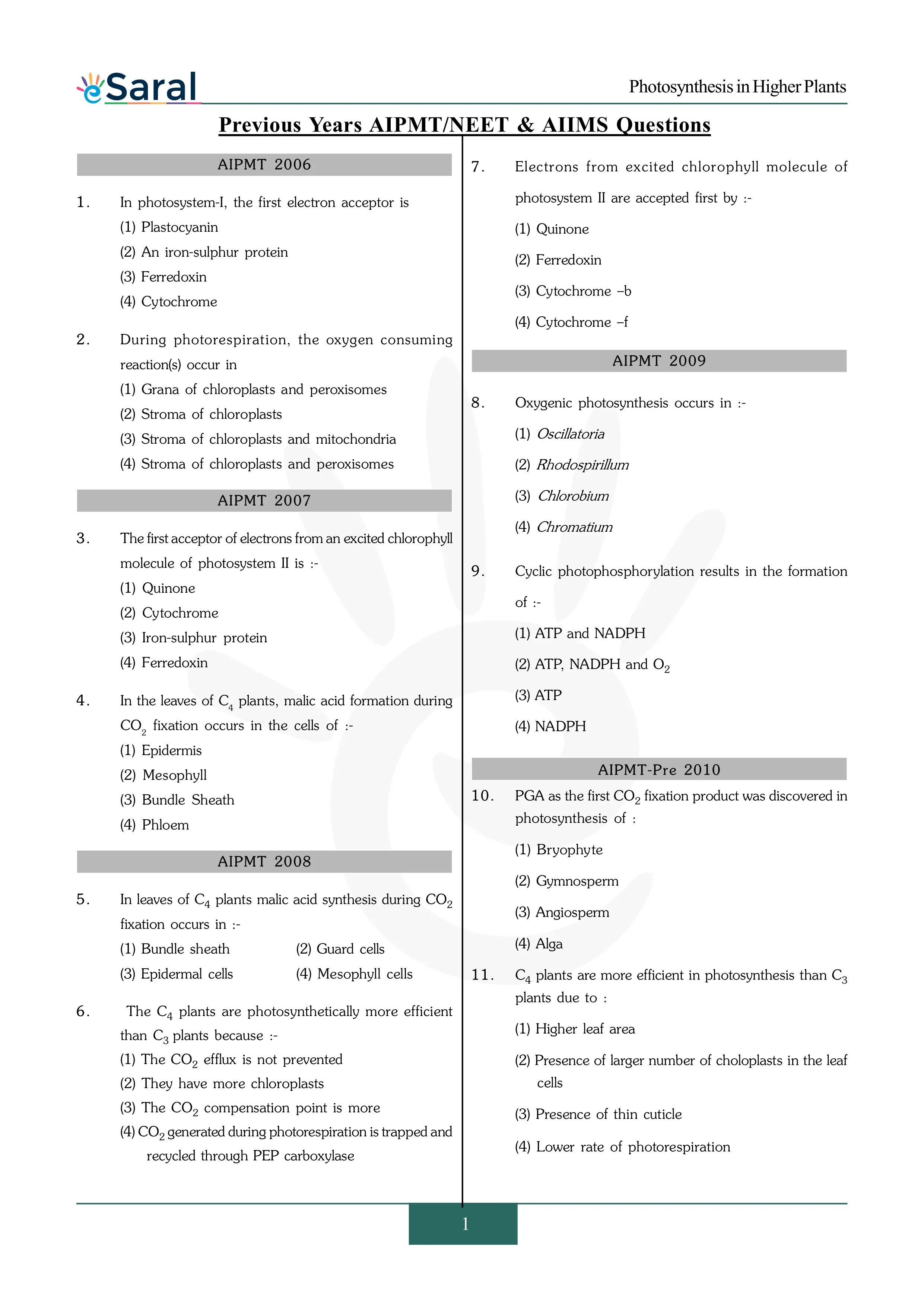
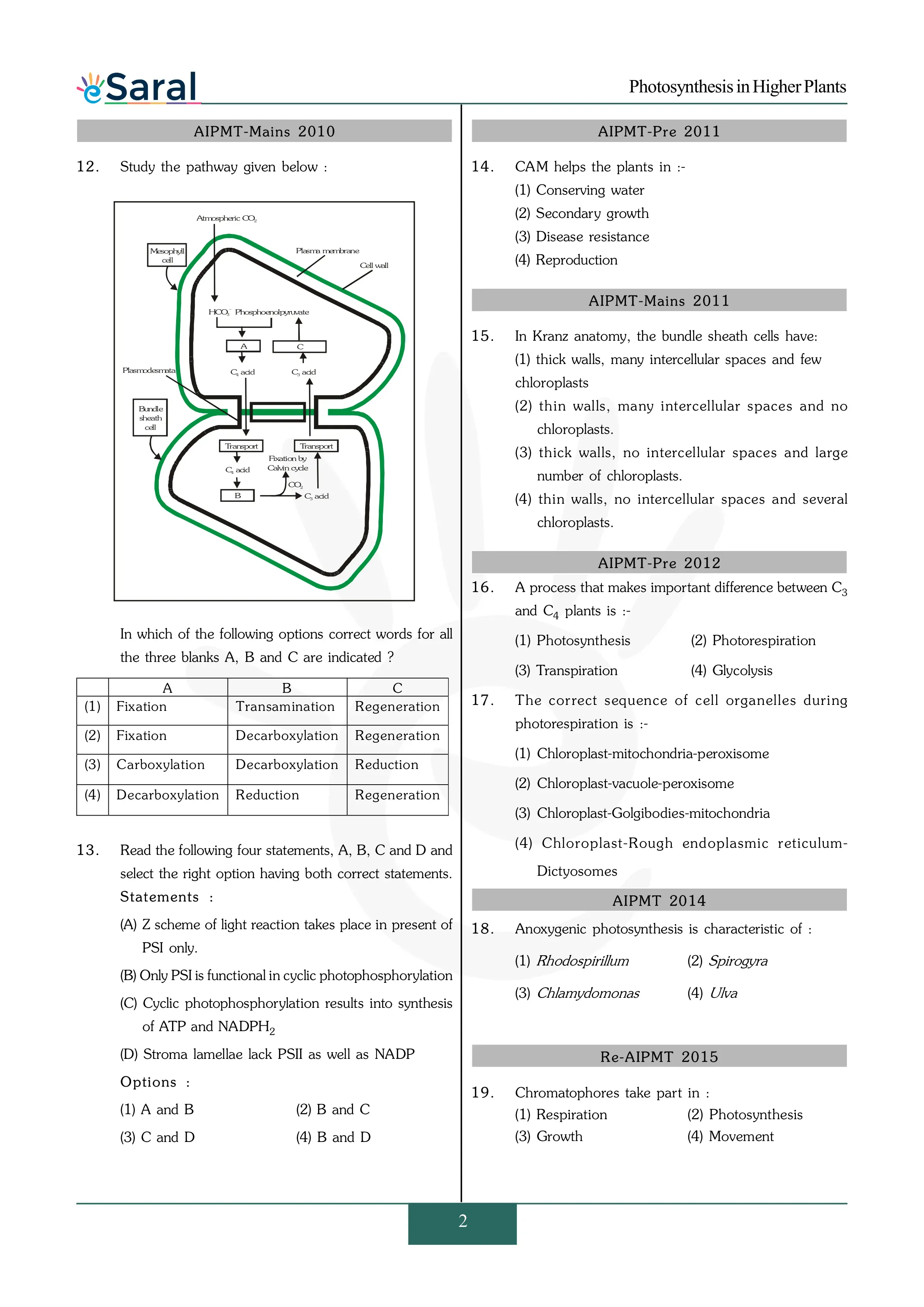
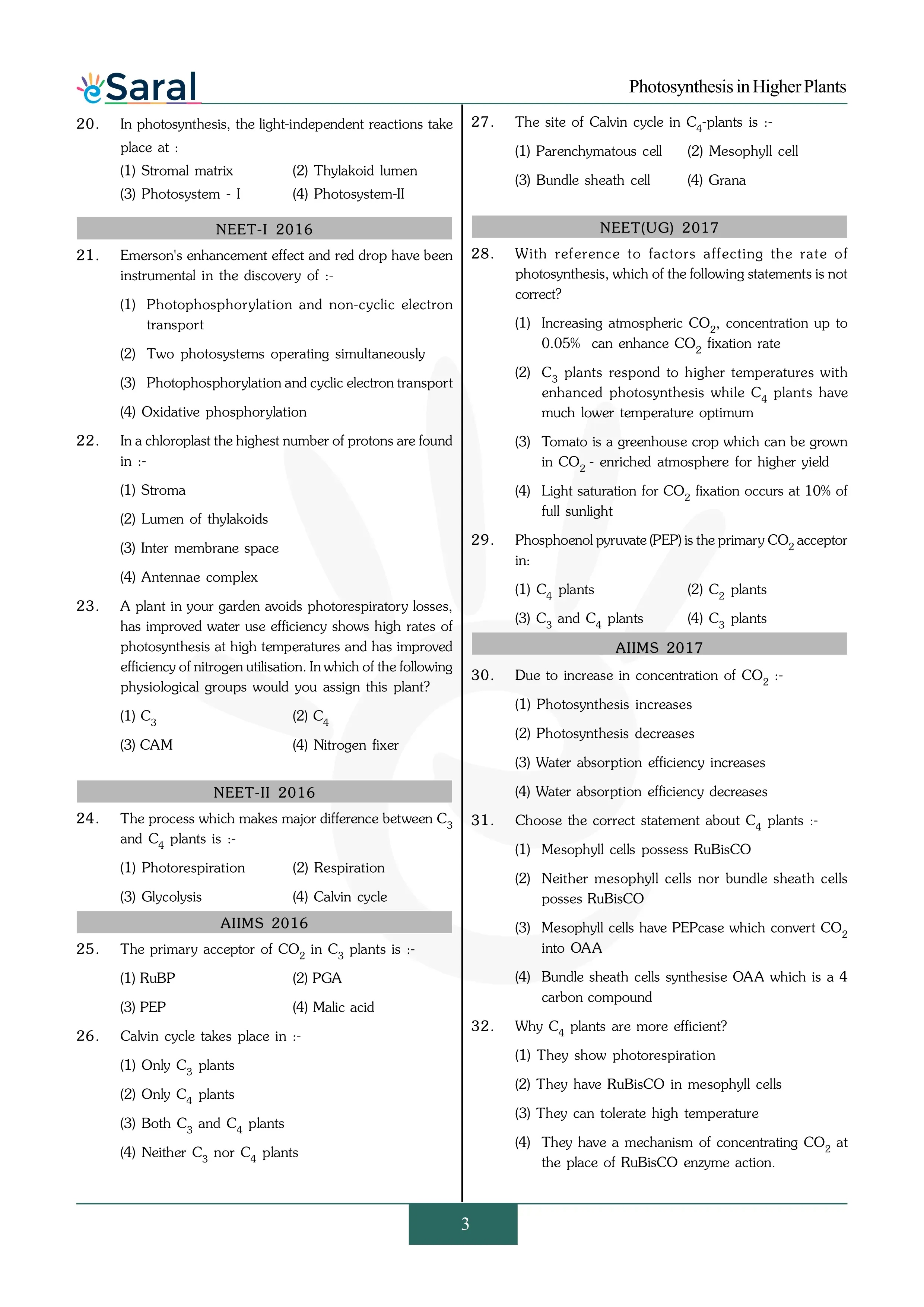
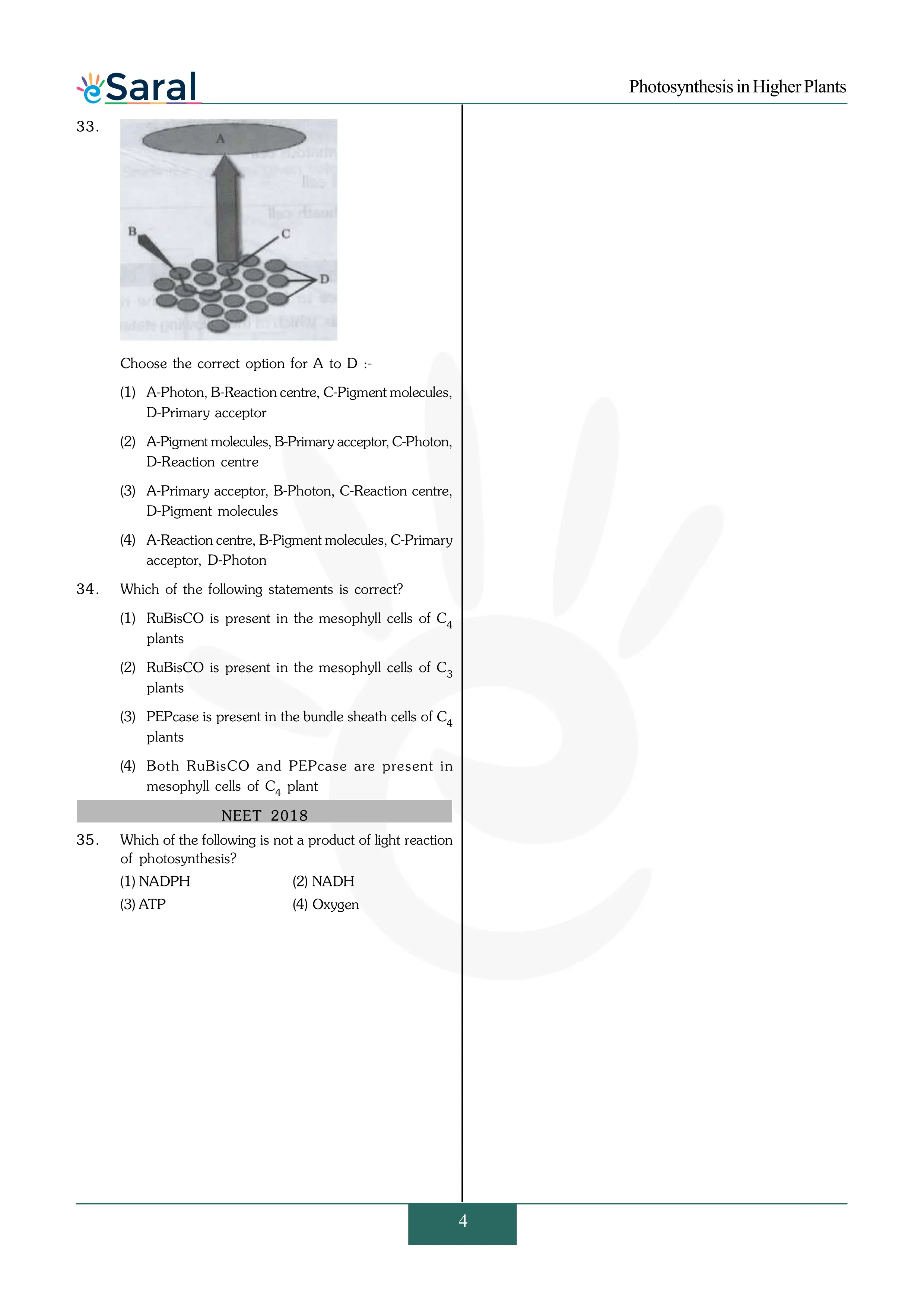
Photosynthesis in Higher Plants (NCERT Class 11, Chapter 13) contributes 3–5 questions in NEET every year, based on NTA's official question distribution. These questions test light reactions, the Calvin cycle, C3/C4 pathways, and photorespiration. Practising previous year questions with detailed solutions is the fastest way to identify high-weightage areas and avoid repeated errors.

eSaral › NEET › Biology › Photosynthesis in Higher Plants Previous Year Questions with Complete Solutions
Here you will get Complete Photosynthesis in Higher Plants NEET Previous Year Questions with complete and detailed solutions.

It's easy to gloss over the exact formula while reading through this — the chemical formula of glucose page spells it out clearly.
Before the written exercises, NCERT tucks in Table 13.1 as an in-text activity most students skip past. It's solved in full here: Table 13.1 Biology Class 11 Solutions.
Get complete NEET previous year questions for Physics, Chemistry, and Biology.
You will find all the solutions at the end of this page:


Frequently Asked Questions
What is the difference between cyclic and non-cyclic photophosphorylation?
Non-cyclic photophosphorylation involves both PSI and PSII, produces ATP, NADPH, and O₂, and is the standard pathway. Cyclic photophosphorylation involves only PSI, produces only ATP (no NADPH, no O₂), and electrons cycle back to the same chlorophyll molecule. NEET frequently tests which products are generated by each pathway, so memorise this distinction clearly.
What is the first stable product of carbon fixation in C3 plants?
The first stable product of CO₂ fixation in C3 plants is 3-Phosphoglycerate (3-PGA), a 3-carbon compound. CO₂ combines with RuBP (a 5-carbon molecule) via the enzyme RuBisCO to form an unstable 6-carbon intermediate that immediately splits into two molecules of 3-PGA. This reaction is the defining step of the Calvin cycle.
How many questions come from Photosynthesis in Higher Plants in NEET?
NEET typically includes 3 to 5 questions from Photosynthesis in Higher Plants every year. This is based on NTA's official question papers from 2013 to 2024. The chapter falls under the Plant Physiology unit, which as a whole accounts for roughly 12–15% of total Biology marks. Consistent practice of PYQs from this chapter directly improves your NEET Biology score
What is the role of PEP Carboxylase in photosynthesis?
PEP Carboxylase (PEPCase) is the primary carboxylation enzyme in C4 plants. It fixes CO₂ in mesophyll cells by combining it with PEP (Phosphoenolpyruvate) to form Oxaloacetate (OAA), a 4-carbon compound. PEPCase has a much higher affinity for CO₂ than RuBisCO and does not react with O₂, which is why C4 plants have negligible photorespiration and higher photosynthetic efficiency at high temperatures.
What is Kranz anatomy and why does it matter for NEET?
Kranz anatomy refers to the wreath-like arrangement of bundle sheath cells around vascular bundles, found exclusively in C4 plants like maize and sugarcane. These cells contain large chloroplasts and high concentrations of RuBisCO. CO₂ is first fixed in mesophyll cells (as OAA) and then pumped into bundle sheath cells, preventing photorespiration. Any NEET question mentioning Kranz anatomy points to a C4 plant answer.
Which organelles are involved in photorespiration?
Photorespiration occurs across three organelles: chloroplasts, peroxisomes, and mitochondria. It begins when RuBisCO binds O₂ instead of CO₂, forming phosphoglycolate. This wasteful process consumes O₂ and releases CO₂ without generating ATP or sugar. It occurs predominantly in C3 plants and is essentially absent in C4 plants due to their CO₂ concentrating mechanism.
Team eSaral
eSaral Academic and Editorial Team
Team eSaral is the collective author profile for educational content created by eSaral’s teachers and academic contributors. The team draws on expertise from IIT graduates, doctors, experienced educators and subject specialists to develop resources for JEE, NEET and school students. Our articles aim to explain concepts clearly and help students study with confidence.
Related Posts
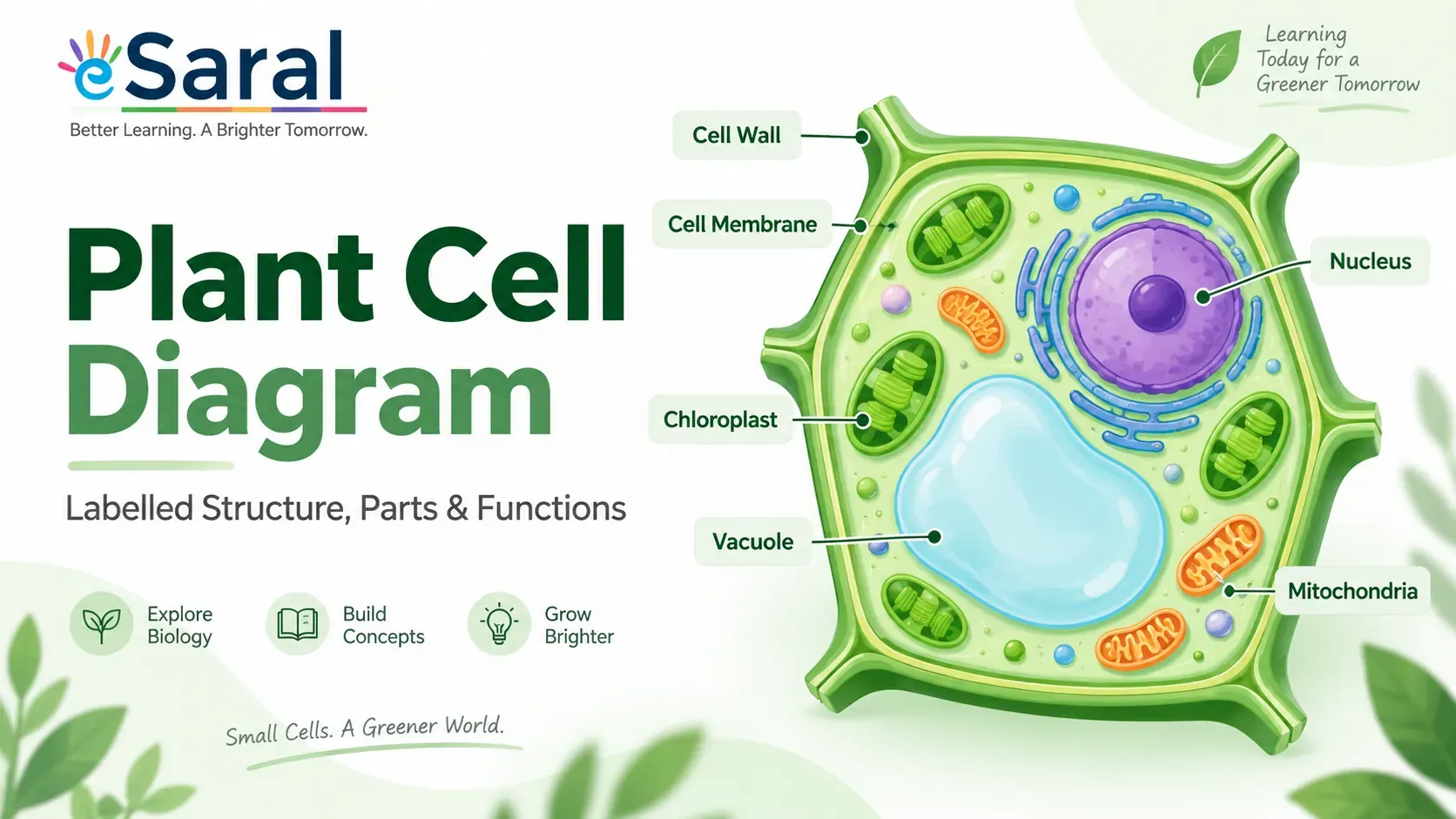
Plant Cell Diagram: Labelled Structure, Parts and Functions
Simple, labelled plant cell diagram with parts and functions. Covers plant cell structure for Class 6, 7, 8, 9, 10 and 11 students, CBSE-aligned.
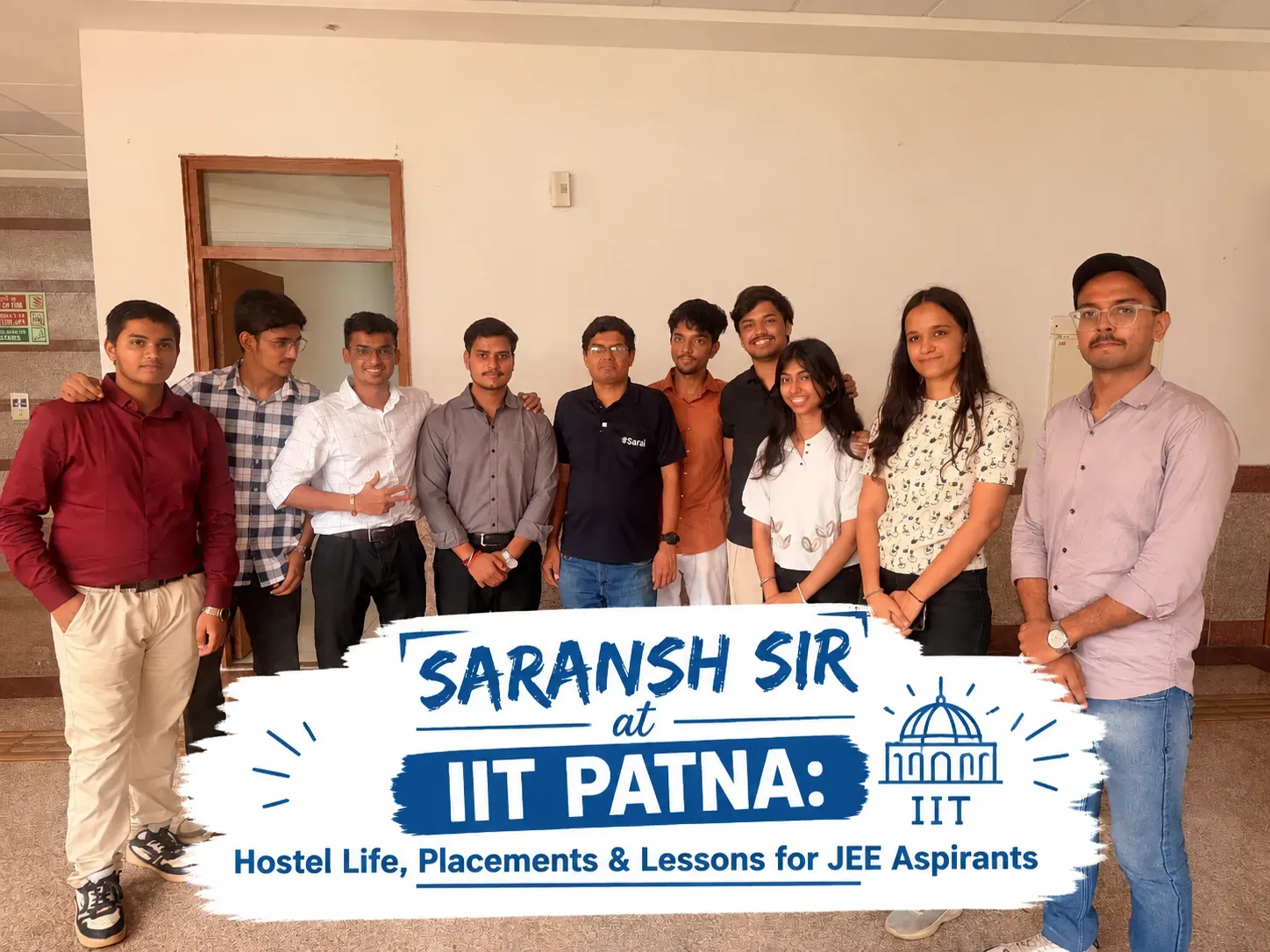
Saransh Gupta Sir's Visit to IIT Patna: Hostel Life, Placements & Lessons for JEE Aspirants
Inside Saransh Gupta Sir's IIT Patna visit — hostel life, the library, placements, internships, and real advice for JEE aspirants from students living the IIT dream.
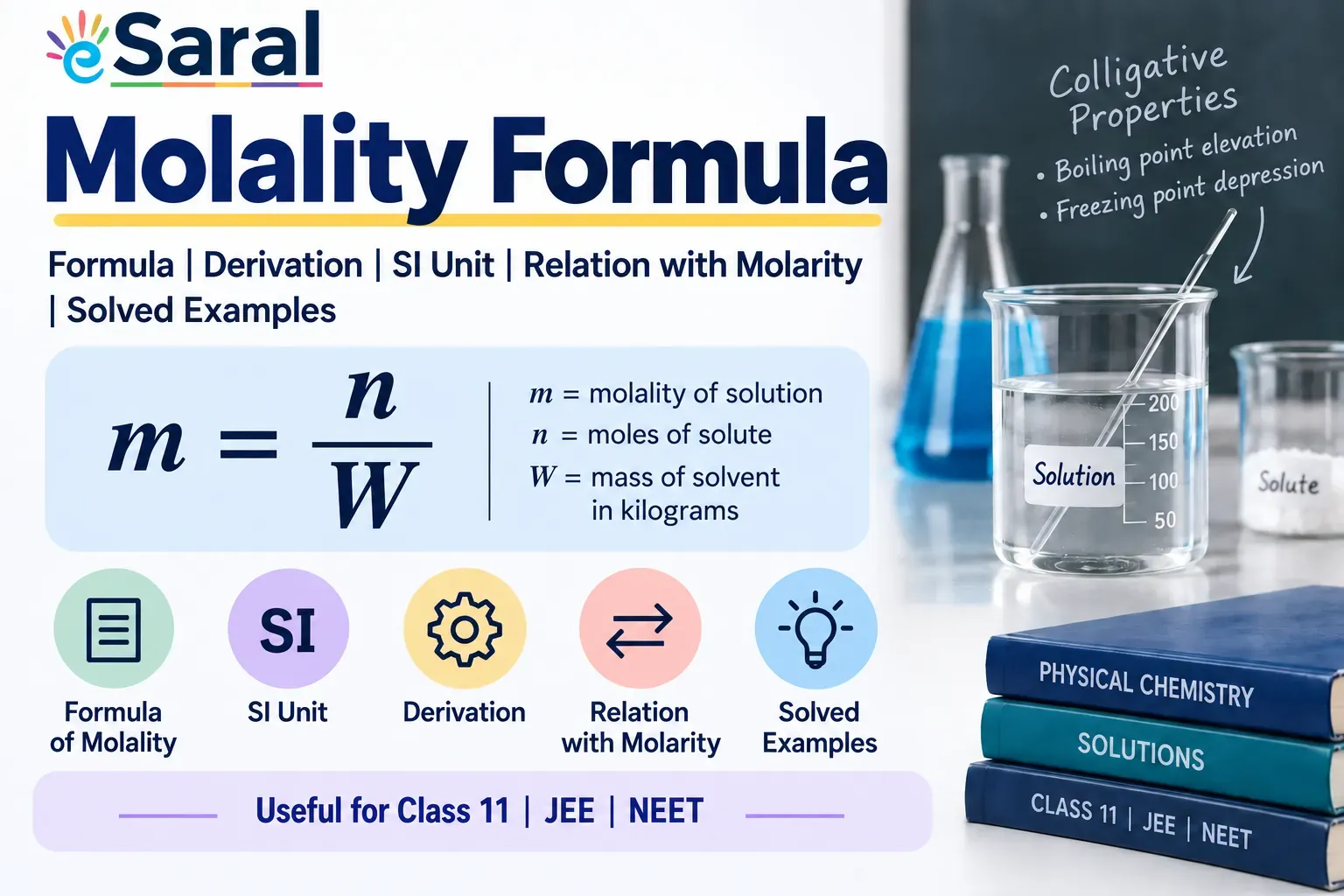
Molality Formula: Formula for Molality, Derivation & Solved Examples
Molality formula is $m = \dfrac{n}{W}$. Learn the formula of molality, its SI unit, derivation, relation with molarity, and solved examples for Class 11, JEE and NEET.
BITSAT Previous Year Question Paper PDF
Download BITSAT previous year question papers PDF. Get year-wise BITSAT PYQs, memory-based papers, exam pattern, and preparation tips to improve your BITSAT preparation.

Teachers’ Day 2026 at eSaral Gurukul: Celebrating the Bond Between Students, Teachers & Mentors
See how Teachers’ Day 2026 was celebrated at eSaral Gurukul, reflecting the bond among students, teachers, and mentors, and the role of guidance beyond academics.
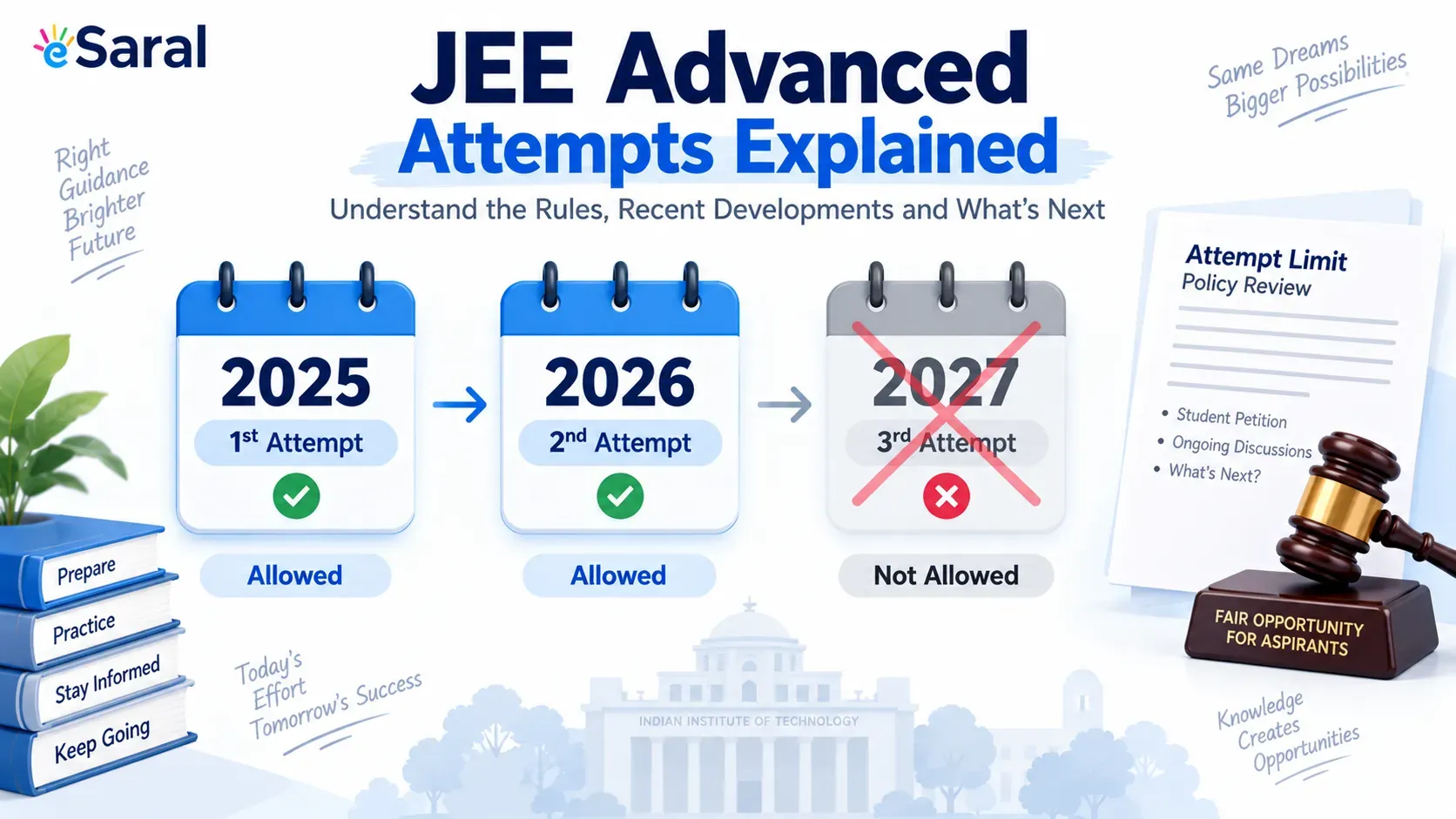
JEE Advanced Attempts: Can You Give It a Third Time? Rules Explained
JEE Advanced attempts: current rule is 2 consecutive years only: full eligibility criteria, the 2025 third-attempt controversy, and the latest 2026 petition news.

Best JEE Preparation App
Best JEE preparation app for Main & Advanced: AI mock tests, live doubt-solving, thousands of practice questions. JEE preparation app for droppers & Class 11-12.
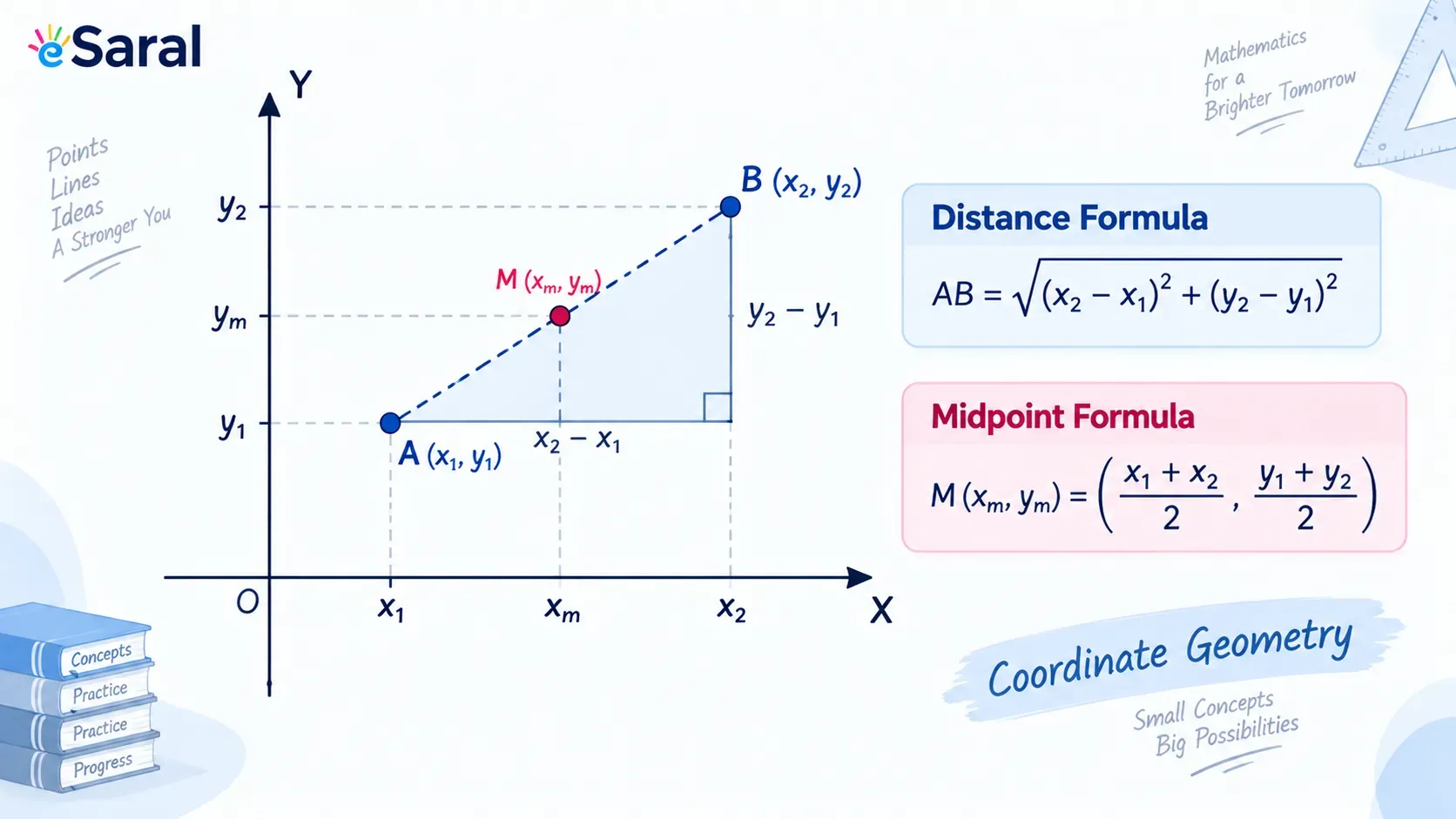
Coordinate Geometry Class 10: Formulas, Notes & Solved Examples
Coordinate geometry class 10: complete CBSE formulas — distance, section, midpoint and area of triangle — with derivation, notes and solved examples.
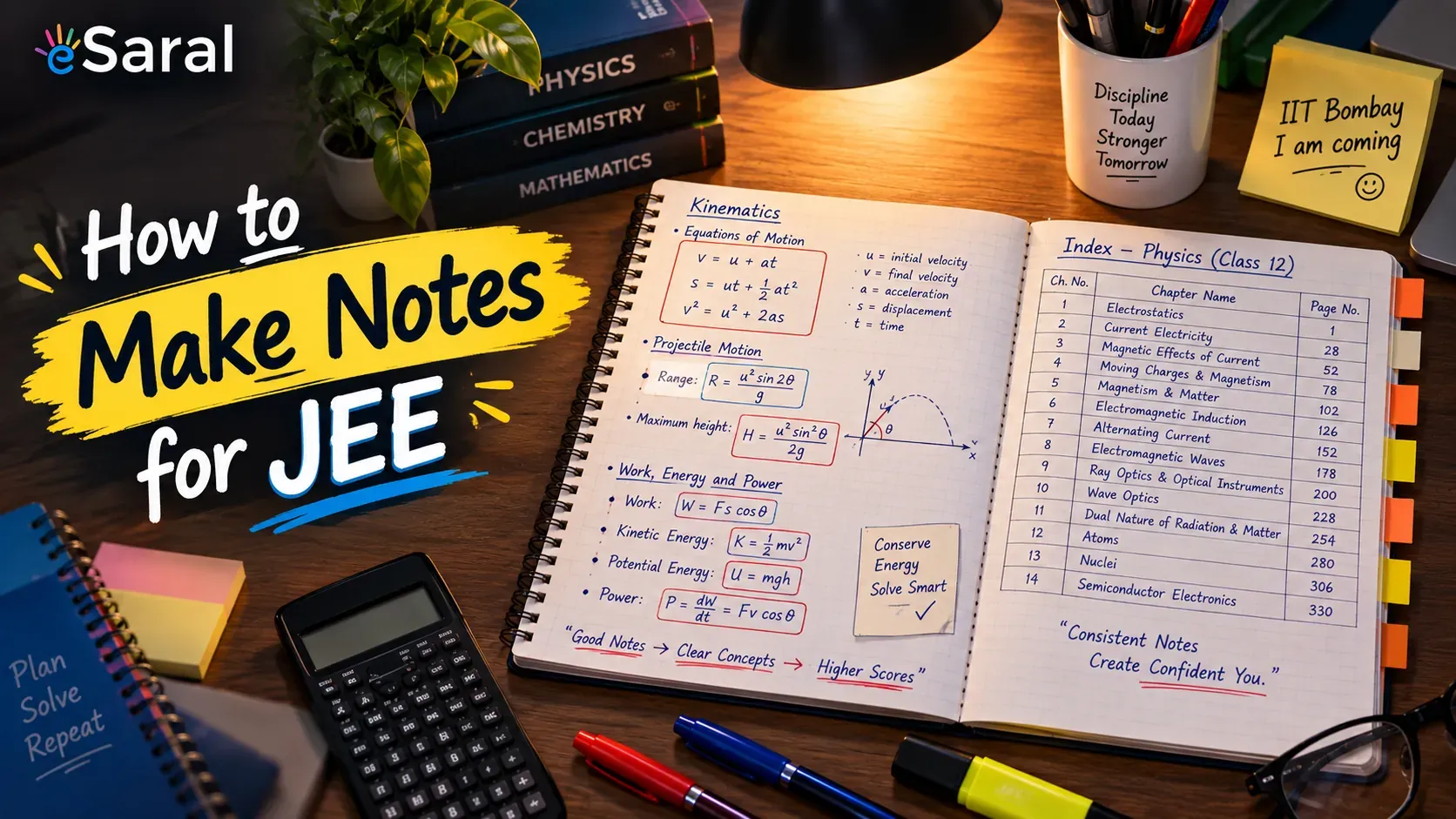
How to make Notes For JEE Smart Notes Strategy of an AIR 41
Learn how to make notes for JEE the way toppers do — indexing, shorthand, and smart short notes for JEE that cut revision time to just 5–7 days.
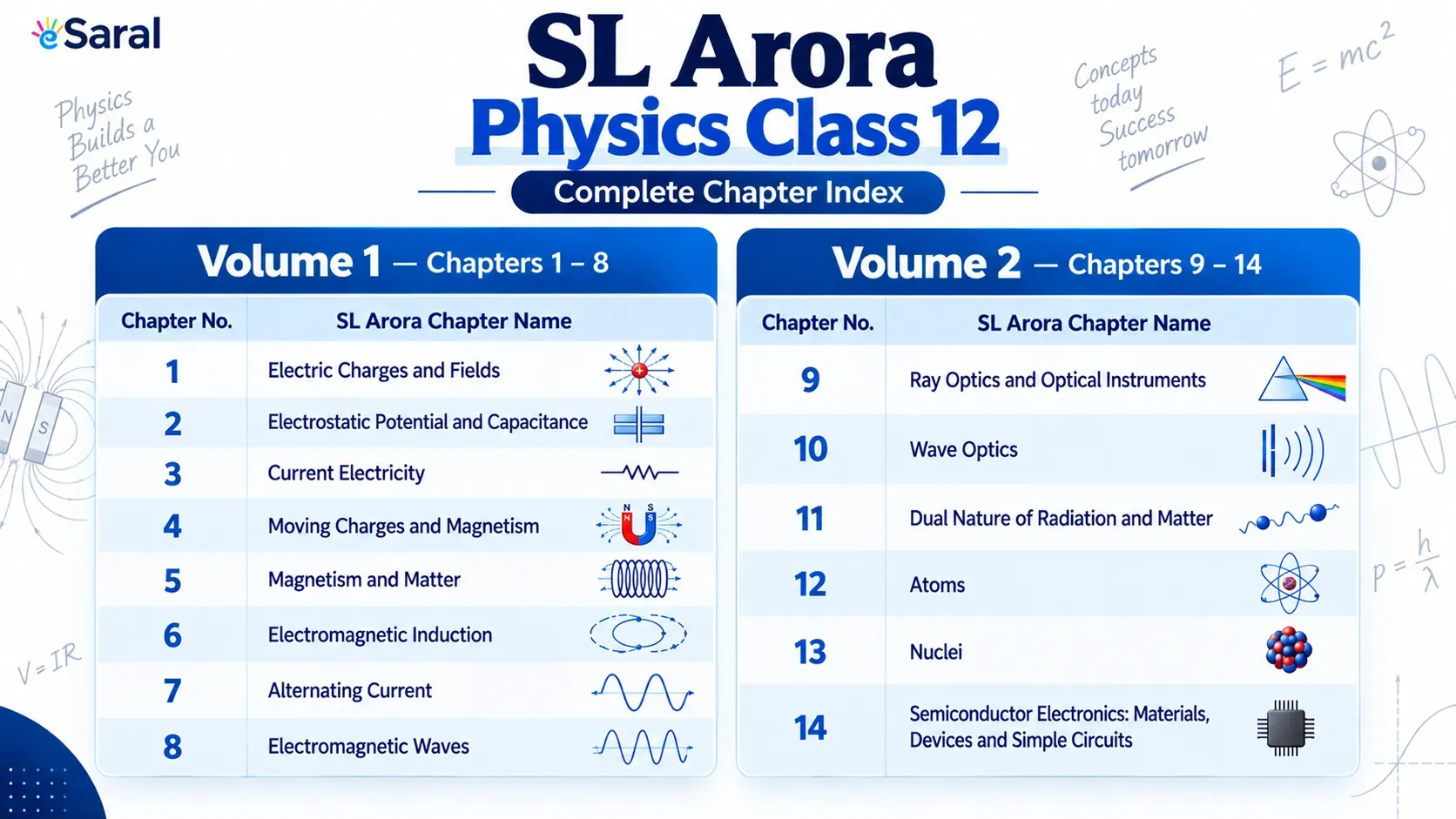
SL Arora Physics Class 12 Index – Chapter List for Volume 1 & 2
SL Arora Physics Class 12 index — complete chapter list for Volume 1 & 2, mapped to NCERT solutions for board, JEE Main, and NEET preparation.