
The Age of Industrialisation Class 10 Notes

eSaral Academic and Editorial Team
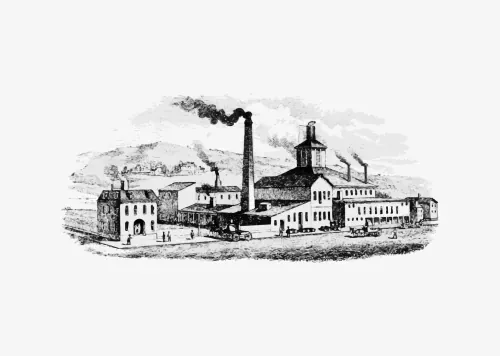
The Age of Industrialisation was a significant turning point in the history of the world that brought about sweeping changes in the economic, social, and political landscapes of several countries. The introduction of machines, factories, and new technologies during this period transformed the traditional agrarian societies into modern industrial economies. In Class 10, students learn about this era through "The Age of Industrialisation Class 10 Notes," which provide a comprehensive overview of the key developments, important events, and significant figures of this period. These notes cover essential topics such as the impact of industrialisation on India, the emergence of new technologies and innovations, the role of factories and workers, and the growth of industries in different regions. By studying these notes, students gain a better understanding of the Age of Industrialisation and its impact on the world.
Key Concepts -The Age of Industrialisation Class 10 Notes
- Craftsmen or merchants follow the same craft to protect the members' interest and supervise the standard of the work as part of an association.
- Soaking raw hide in a liquid containing tannic acid is used to convert it into leather, in the process known as tanning.
- Chopping and mixing food to make jam, juices, etc. is a technique used in food processing.
- During the reign of Queen Victoria, Britain was known as Victorian Britain.
- A place where beer is brewed commercially is a brewery, and the process involves infusion, boiling, and fermentation.
- A person who lacks a settled home or regular work is a vagrant.
- The upper middle class is known as the bourgeoisie.
- Gomastha is an Indian term that refers to an agent who acts as a middleman between the merchant and weavers.
- A person who staples or sorts wool according to its fiber is called a stapler.
Industrialisation - The Age of Industrialisation Class 10 Notes
Production of goods with the help of machines in factories. The first industrialized Nation-Britain.
Features
Handmade goods to machine made goods in factories, cottage to factory, large scale production, started in England in later parts of 18th Century. In course of time, it affected all systems of production.
Before Industrial Revolution- The Age of Industrialisation Class 10 Notes
Proto-Industrialisation
- In the 17th century, merchants employed artisans to produce goods, and the artisans received raw materials from the merchants for production. The artisans' cottages served as factories.
- During this period, an association of producers consisting of trained craftspeople maintained control over production and restricted the entry of new traders.
- Factories emerged during this period.
Coming up of factories
- By the 1730s, early factories had emerged in England.
- The cotton mill was the first symbol of a new era.
- Many factories sprouted up in England during this time.
- A series of inventions took place in the form of carding, twisting, spinning, and rolling.
The pace of Industrial change - The Age of Industrialisation Class 10 Notes
- The cotton, iron, and steel industries were the most dynamic industries.
- Traditional industries could not be displaced by new ones.
- Technological changes occurred slowly.
- James Watt invented the steam engine, but it had no buyers for years.
- New technologies were slow to gain acceptance.
Hand labor and stream power
- There was no shortage of human labor in Victorian Britain.
- The demand for labor in many industries was seasonal.
- A range of products could only be produced with hand labor.
- There was a demand for intricate designs.
- The upper classes preferred items that were produced by hand.
Life of the worker:
- Abundance of labor affected the life of workers badly.
- Labour was seasonal.
- Fear of unemployment made workers hostile to new technology.
- Women labors protested against the introduction of the Spinning Jenny.
- Introduction of railways opened greater opportunities.
Industrialisation in the colonies:
- Textile industry was the center of industrialization in India.
Age of Indian textiles - The Age of Industrialisation Class 10 Notes
- Finer varieties of cotton from India were exported.
- A vibrant sea trade operated through pre-colonial ports.
What happened to weavers?
- East India Company appointed “gomasthas” to collect supply from weavers.
- Weavers lost bargaining power and lost lands for settling loans.
Gomasthas
The East India Company appointed Gomasthas as paid servants to supervise weavers, collect supplies, and examine the quality of cloth. The company aimed to establish a system of management and control to eliminate competition, control costs, and ensure regular supplies of cotton and silk. However, clashes between the weavers and the Gomasthas soon arose as the latter ill-treated the former. The Gomasthas did not allow company weavers to sell their produce to other buyers and forced them to sell their goods only to company officials. Once an order was placed, the weavers were given loans to purchase the raw material, but they had to hand over the cloth they produced to the Gomasthas only if they had accepted loans from the company.
When the American Civil War broke out, cutting off cotton supplies from the US, Britain's demand for raw cotton from India increased.
Manchester comes to India
In the 1950s, Britain started exporting Manchester cotton to India. The rise in Manchester imports caused a decline in Indian exports and the local market. Additionally, the supply of raw cotton in India decreased, and weavers were compelled to purchase cotton at high prices.
Factories come up
Different regions saw the establishment of various industries. The first cotton mill in India was set up in Bombay in 1854, and the first jute mill emerged in Bengal in 1855. During the 1830s-1840s, Dwarakanath Tagore established six joint-stock companies in Bengal, and capital was accumulated through other trade networks. Until the First World War, European managing agencies controlled large sectors of Indian industries.
Where did the workers come from?
- Most of the workers came from Indian villages.
Peculiarities of industrial growth
Early Indian cotton mills produced coarse cotton yarn. When the First World War broke out, there was a decline in Manchester imports to India. As a result, Indian factories supplied goods for the war needs.
Small scale industries predominated
Bengal and Bombay were the primary locations for most of the industries. Only a small portion of the total industrial labor worked in factories. The use of the fly shuttle increased handicraft production.
Market for goods
Advertisements play a crucial role in creating new consumers. When Manchester industrialists started selling cloth in India, they placed labels on the cloth bundles to familiarize buyers with the place of manufacture and the company's name. The label's bold lettering of "Made in Manchester" instilled confidence in the buyers to purchase the cloth. Moreover, the labels were beautifully illustrated with images of Indian gods and goddesses such as Krishna or Saraswati to make the manufacture from a foreign land seem more familiar to Indians. Manufacturers also printed calendars to popularize their products.
When Indian manufacturers advertised, they promoted a clear and loud nationalist message. They urged people to buy only 'Indian' products if they cared for the nation. Therefore, advertisements became a vehicle for the Swadeshi nationalist message.
Download the eSaral App for complete Class 10 Video lectures, Study material, revision and much more.
The Age of Industrialisation Class 10 Notes
Also read,
Class 10 NCERT Science notes -All Chapters
Team eSaral
eSaral Academic and Editorial Team
Team eSaral is the collective author profile for educational content created by eSaral’s teachers and academic contributors. The team draws on expertise from IIT graduates, doctors, experienced educators and subject specialists to develop resources for JEE, NEET and school students. Our articles aim to explain concepts clearly and help students study with confidence.
Related Posts

BITSAT 2027: Registration Date, Exam Date, Syllabus, Eligibility, Pattern & Fees
BITSAT 2027 exam dates, registration timeline, eligibility criteria, exam pattern, marking scheme, syllabus and fees in one page.

BITSAT Previous Year Question Paper PDF (2017-2026)
Download BITSAT previous year question papers PDF from 2017 to 2026,session-wise. Memory-based papers,exam pattern, paper analysis and how to practise

CBSE Class 10 Date Sheet 2027: Expected Exam Dates, Release Date, Admit Card & Result Timeline
CBSE Class 10 date sheet 2027 is awaited. See the expected exam dates, release window, how to download the PDF, admit card and result timelines.

NCERT Physics Class 10 Book PDF in Hindi 2026-27 – भौतिक विज्ञान के 4 अध्याय (Free Download)
NCERT Physics Class 10 book PDF in Hindi 2026-27: download all 4 chapters (अध्याय 9–12) free, with topics and important formulas.

NCERT Biology Class 9 Book Anveshan PDF in Hindi - जीव विज्ञान कक्षा 9 पुस्तक अन्वेषण PDF
Download NCERT Biology Class 9 book PDF in Hindi chapterwise for 2026-27: Cell, Tissues, Reproduction and Diversity. Free PDFs.

Essay On Artificial Intelligence in English (100,150, 200, 250, 300, 500 Words)
This is in contrast to the natural intelligence of humans. With Artificial Intelligence, machines can perform

Essay on 78th India Independence Day in English for Student (100, 150, 200, 250, 300, 500 Words)
Read the best essays on India's Independence Day in English. Short & long essays (100, 150, 200, 250, 300, 500 words) perfect for school exams
NCERT Class 11 English Snapshots book - Free PDF download- Esaral
Download NCERT Class 11 English Snapshots book PDF for free. Get all 8 chapters, chapter-wise. Start your prep today!
NCERT Class 10 biology book pdf - Free PDF Download - eSaral
NCERT Class 10 Biology book PDF 2026-27: all 5 chapters (Life Processes to Our Environment) in English & Hindi, with CBSE syllabus, marks & practical

Essay on Global Warming in English (100,150, 200, 250, 300, 500 Words)
Global warming means the Earth is getting hotter. This happens because of things like pollution from cars and factories.