
The Rise of Nationalism In Europe Class 10 Notes

eSaral Academic and Editorial Team
.webp?2026-09-24T07%3A48%3A28.109Z)
The Rise of Nationalism in Europe is a significant topic in the history of the continent, and it plays a crucial role in shaping the current political scenario in Europe. The concept of nationalism emerged in Europe during the 18th century and reached its peak in the 19th and early 20th centuries. In this article, we will discuss The Rise of Nationalism In Europe Class 10 Notes. These notes cover the essential aspects of the rise of nationalism in Europe, including the causes and consequences of this movement, the major events and leaders associated with it, and the impact of nationalism on the politics and society of Europe. By understanding these notes, students can gain a better insight into the significance of nationalism in shaping the history and current affairs of Europe.
Nation (State)
"We call a group of people, who share common descent, language, and history, inhabit a territory with defined limits, and form a society under one government, a nation."
Frederic Sorrieu and his visualization
In 1848, Frederic Sorrieu, a French artist, created a series of four prints that visualized his dream of a world consisting of "democratic and social republics."
The first print depicts the people of Europe and America marching in a long train and paying homage to the Statue of Liberty as they pass by it. A female figure carries the Charter of the Rights of Man in one hand and a torch of enlightenment in the other. The symbols of absolutist institutions lie shattered on the earth.
Sorrieu's utopian vision groups the people of the world into distinct nations identified by their flags and national costumes. The USA and Switzerland lead the procession, followed by France and Germany. Austria, the Kingdom of the Two Sicilies, Lombardy, Poland, England, Ireland, Hungary, and Russia follow Germany. From the heavens above, Christ, saints, and angels gaze down at the scene, symbolizing fraternity among the nations of the world.
The French Revolution and the idea of Nation
- The growth of nationalism in France occurred due to the introduction of various measures and practices that created a sense of collective identity among the people.
- The monarchy was replaced, and a republic was established, along with the creation of a new assembly.
- Napoleon rose to power and implemented reforms.
- The revolutionaries helped other people in Europe to become a nation.
The making of Nationalism in Europe
- Autonomous rulers governed the divided kingdoms, duchies, and cantons of Germany, Italy, and Switzerland.
- Different languages were used within these regions.
- The middle class rose to prominence.
- Industrialization in England led to the emergence of a working class and liberalism.
- Traditional institutions were preserved after the new conservatism emerged in 1815.
- Following Napoleon's defeat, European governments adopted conservative policies that were often autocratic. Revolutionaries, such as Mazzini with his Young Italy and Young Europe movements, fought for liberty and freedom.
Unification of Italy - The Rise of Nationalism In Europe Class 10 Notes
- Giuseppe Mazzini played a crucial role in the unification of Italy by forming a secret society named 'Young Italy' in Marseilles to spread his ideas.
- He believed that Italy could not remain divided into small states and needed to be united into a single republic.
- Despite unsuccessful uprisings in 1831 and 1848, the responsibility to unify Italy fell on Sardinia-Piedmont and its ruler, Emmanuel II.
- With Chief Minister Cavour's leadership, Sardinia-Piedmont succeeded in defeating the Austrian forces in 1859 with the help of Garibaldi.
- In 1860, they marched into South Italy and the Kingdom of the Two Sicilies, and with the assistance of local peasants, drove out the Spanish rulers.
- Victor Emmanuel II was declared the King of United Italy in 1861.
Unification of Germany
- In the 18th century, Germany was divided into several states, some of which disappeared during the Napoleonic wars, leaving 39 independent states at the end of the war. Prussia was the most powerful and dominated by big landlords called Junkers.
- Middle-class Germans widely shared nationalist feelings and attempted to unite the various regions of the German federation into a nation-state governed by an elected Parliament.
- In May 1848, a vast number of political associations gathered to vote for an all-German National Assembly, which proposed the unification of Germany as a constitutional monarchy under the King of Prussia as emperor at Frankfurt.
- The King of Prussia refused the offer and the liberal initiative of nation-building was quashed by the monarchy, military, and Junkers.
- Subsequently, under the leadership of Chief Minister Otto Von Bismarck, Prussia spearheaded the movement for German unification, aided by the Prussian army and bureaucracy.
- Over seven years, Bismarck fought three wars against Denmark, Austria, and France, emerging victorious each time. Prussia's victory over France completed the unification process.
- On January 18, 1871, an assembly consisting of German State princes, army representatives, key Prussian ministers, and Bismarck convened in the Palace of Versailles and declared Kaiser William, the Prussian King, the new German Emperor
Visualizing the Nation - The Rise of Nationalism In Europe Class 10 Notes
- Marianne and Germania were both female allegories that represented the nation in the 19th century.
- Artists used Marianne to represent France, and her characteristics were drawn from those of liberty and republic.
- Marianne's popularity as a national symbol led to the erection of statues in public squares and her image being marked on coins and stamps.
- Germania became the allegory of the German nation, and she wore a crown of oak leaves as German oak stands for heroism.
- The image of the mother figure as a symbol of nations was preferred over the idea of fatherland.
- The Frankfurt Parliament hung an image of Germania from the ceiling of St. Paul's Church as a symbol of the liberal revolution.
Napoleonic Code
- The government implemented the first major change by abolishing all privileges based on birth and establishing equality before the law, securing the right to property.
- They simplified the administrative divisions.
- The feudal system was abolished, and peasants were freed from serfdom and the abuse of manorial lords' manorial dues.
- Guild restrictions were removed in towns.
- They improved the transport and communication systems.
- Peasants, artisans, workers, and new businessmen were given a new sense of freedom.
- Businessmen and small-scale producers of goods realized that uniform laws, standardized weights and measures, and a common national currency would facilitate the movement and exchange of goods and capital from one region to another.
Nationalism and Imperialism - The Rise of Nationalism In Europe Class 10 Notes
- Nationalism became a narrow creed with limited ends in the last quarter of the 19th century.
- Intolerance in the Balkans became the sense of big power rivalry.
- Nationalism was aligned with imperialism, which was a cause of World War I.
- The idea of nationalism was now the same everywhere.
- The concept of the national state was accepted universally.
Download the eSaral App for complete Class 10 Video lectures, Study material, revision and much more.
The Rise of Nationalism In Europe Class 10 Notes
Also read
Team eSaral
eSaral Academic and Editorial Team
Team eSaral is the collective author profile for educational content created by eSaral’s teachers and academic contributors. The team draws on expertise from IIT graduates, doctors, experienced educators and subject specialists to develop resources for JEE, NEET and school students. Our articles aim to explain concepts clearly and help students study with confidence.
Related Posts
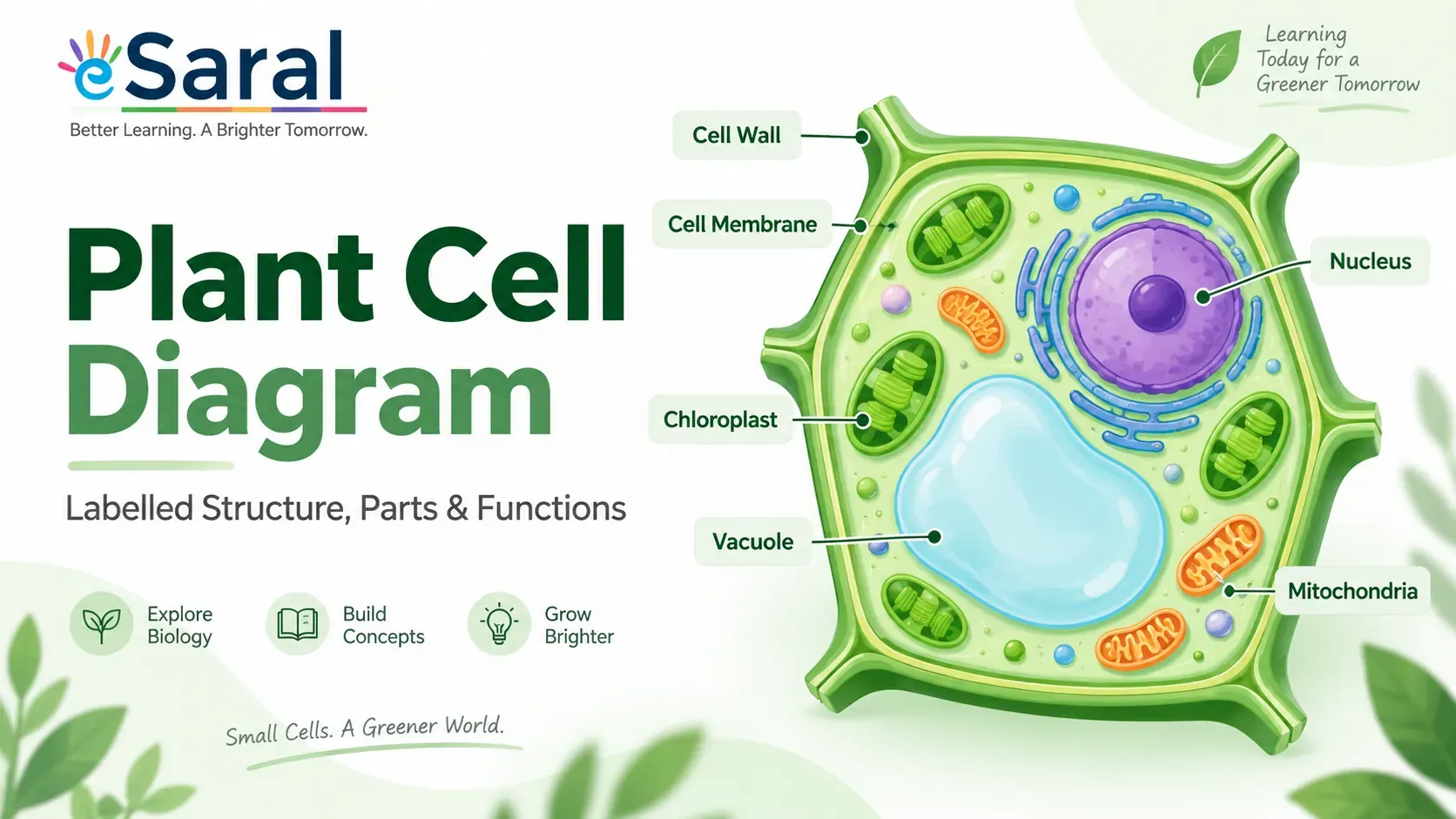
Plant Cell Diagram: Labelled Structure, Parts and Functions
Simple, labelled plant cell diagram with parts and functions. Covers plant cell structure for Class 6, 7, 8, 9, 10 and 11 students, CBSE-aligned.

Saransh Gupta Sir's Visit to IIT Patna: Hostel Life, Placements & Lessons for JEE Aspirants
Inside Saransh Gupta Sir's IIT Patna visit — hostel life, the library, placements, internships, and real advice for JEE aspirants from students living the IIT dream.
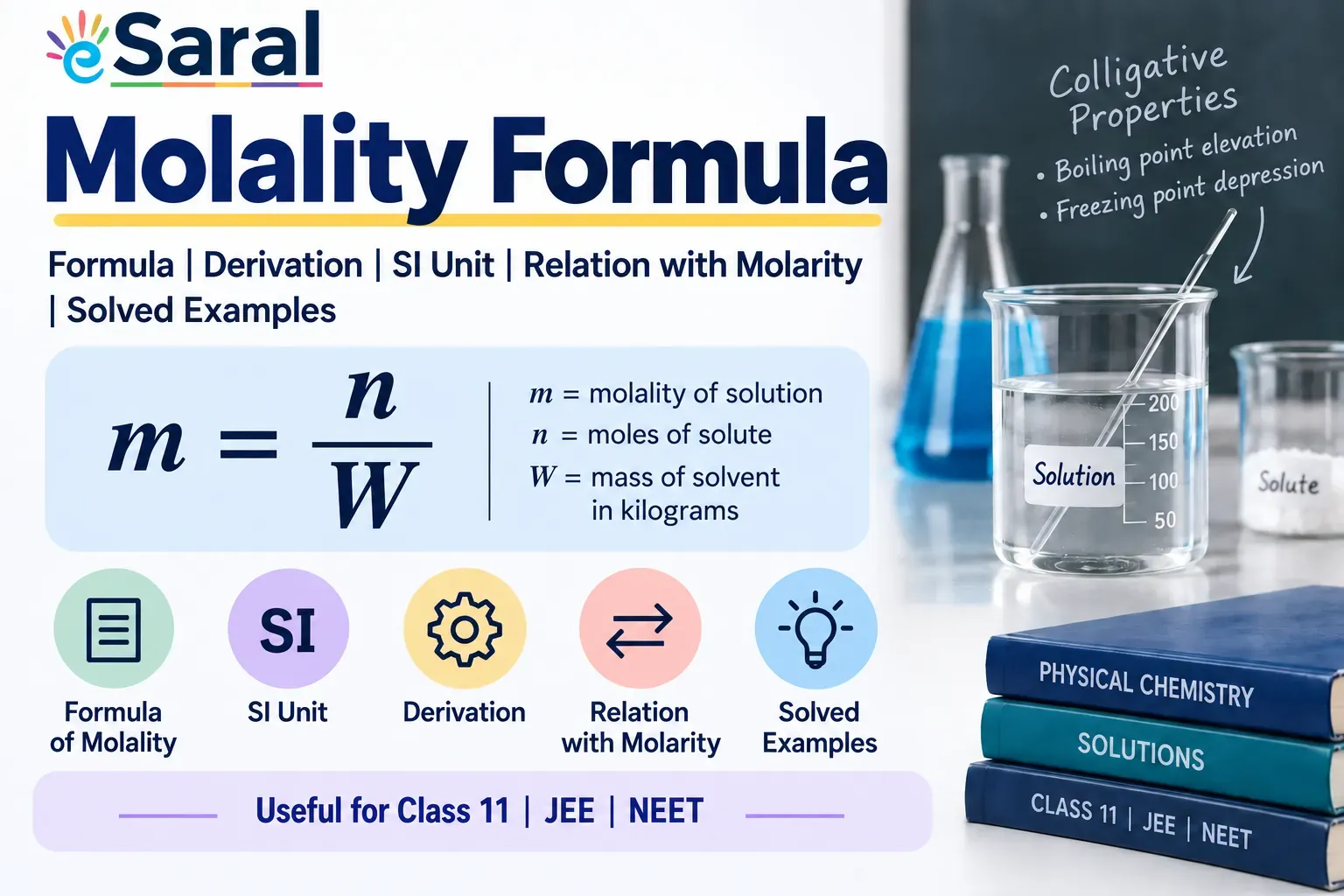
Molality Formula: Formula for Molality, Derivation & Solved Examples
Molality formula is $m = \dfrac{n}{W}$. Learn the formula of molality, its SI unit, derivation, relation with molarity, and solved examples for Class 11, JEE and NEET.

BITSAT Previous Year Question Paper PDF
Download BITSAT previous year question papers PDF. Get year-wise BITSAT PYQs, memory-based papers, exam pattern, and preparation tips to improve your BITSAT preparation.

Teachers’ Day 2026 at eSaral Gurukul: Celebrating the Bond Between Students, Teachers & Mentors
See how Teachers’ Day 2026 was celebrated at eSaral Gurukul, reflecting the bond among students, teachers, and mentors, and the role of guidance beyond academics.

JEE Advanced Attempts: Can You Give It a Third Time? Rules Explained
JEE Advanced attempts: current rule is 2 consecutive years only: full eligibility criteria, the 2025 third-attempt controversy, and the latest 2026 petition news.

Best JEE Preparation App
Best JEE preparation app for Main & Advanced: AI mock tests, live doubt-solving, thousands of practice questions. JEE preparation app for droppers & Class 11-12.
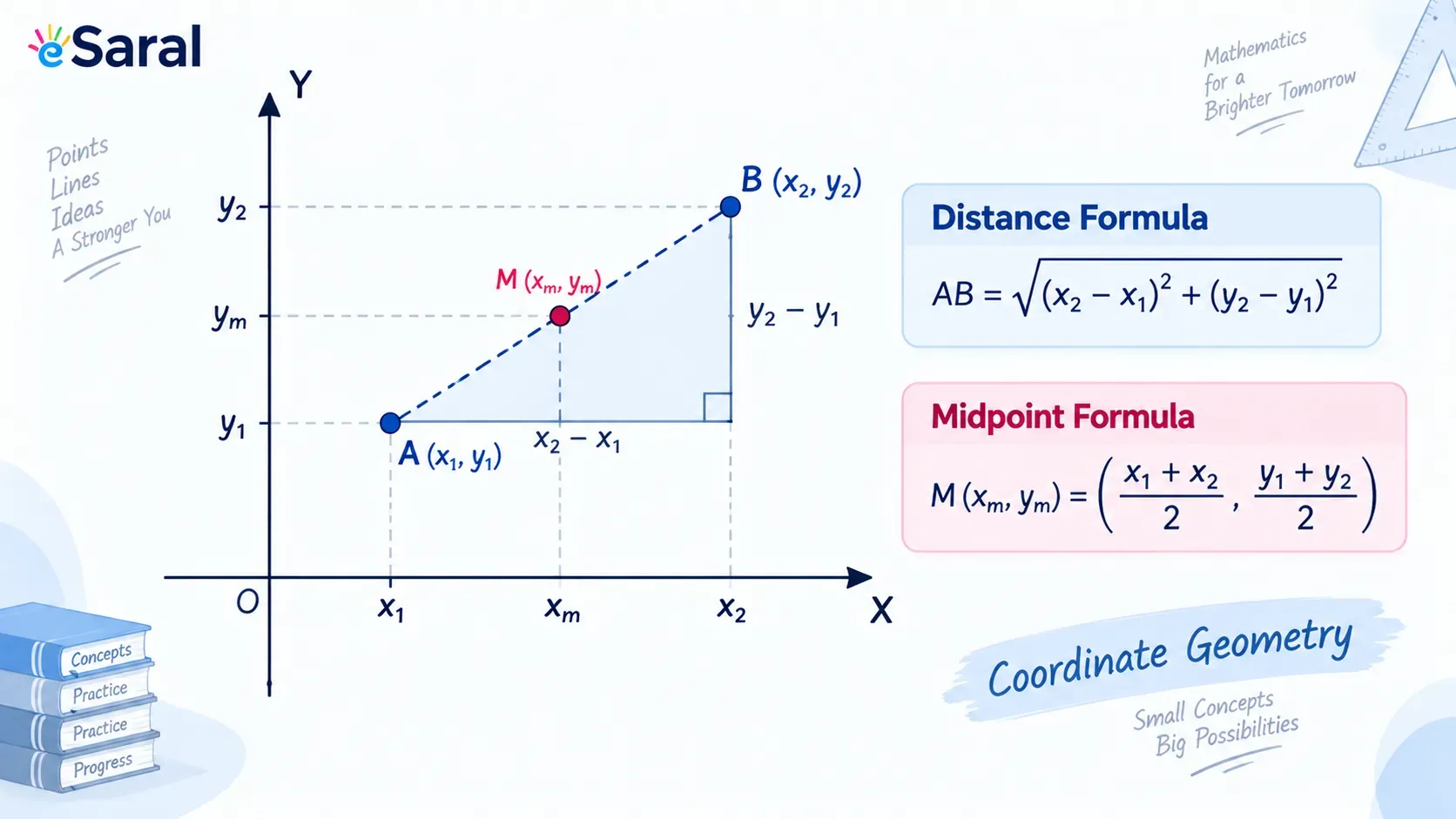
Coordinate Geometry Class 10: Formulas, Notes & Solved Examples
Coordinate geometry class 10: complete CBSE formulas — distance, section, midpoint and area of triangle — with derivation, notes and solved examples.

How to make Notes For JEE Smart Notes Strategy of an AIR 41
Learn how to make notes for JEE the way toppers do — indexing, shorthand, and smart short notes for JEE that cut revision time to just 5–7 days.
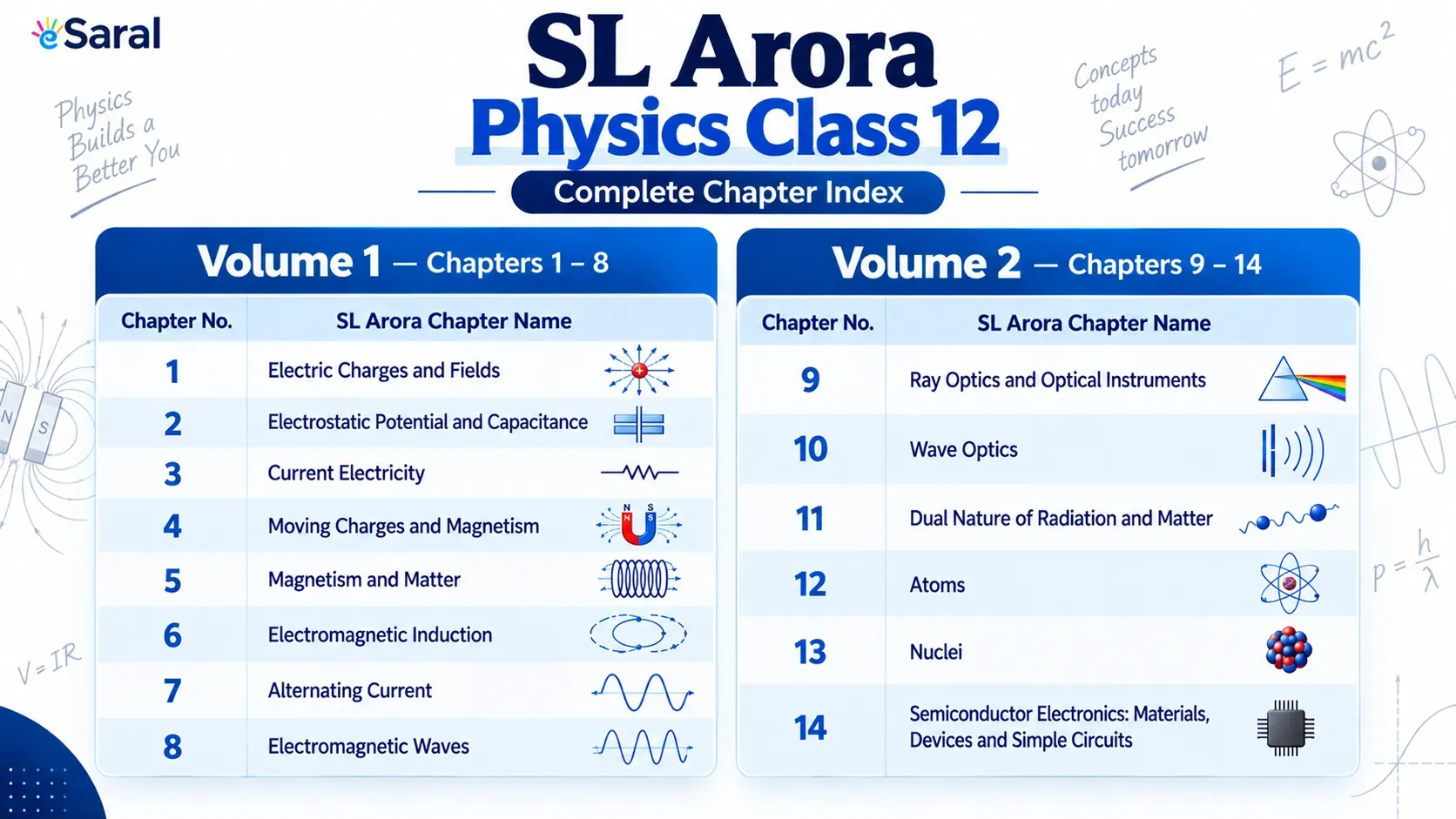
SL Arora Physics Class 12 Index – Chapter List for Volume 1 & 2
SL Arora Physics Class 12 index — complete chapter list for Volume 1 & 2, mapped to NCERT solutions for board, JEE Main, and NEET preparation.