
Footprints without feet chapter 2-the thief story class 10

eSaral Academic and Editorial Team
In "Footprints Without Feet" Chapter 2, Class 10 students are introduced to "The Thief" story. The narrative follows the life of a thief who makes a living by robbing people's homes. However, his luck runs out when he decides to break into the home of an intelligent and perceptive man who teaches him a valuable lesson. This engaging story is designed to provide students with important moral lessons while also improving their reading and comprehension skills. Through the eyes of the protagonist, students will explore themes of honesty, morality, and the consequences of one's actions.
Read and Find Out - Footprints without feet chapter 2-the thief story class 10
Page 8
Question 1.
Who does ‘I’ refer to in this story?
Answer:
I refers to Hari Singh, the narrator of the story who is a 15 year old experienced thief.
Question 2.
What is he “a fairly successful hand” at?
Answer:
He is a fairly successful hand at stealing. He is an experienced thief. He is so clean and swift in his work that he robs people without being caught.
Question 3.
What does he get from Anil in return for his work?
Answer:
In return of Hari Singh’s work, Anil gives him food and a place to live in.
Page 10 - Footprints without feet chapter 2-the thief story class 10
Question 4.
How does the thief think Anil will react to the theft?
Answer:
According to Hari, Anil would be sad not because of the loss of money but because of the loss of trust he had in Hari.
Question 5.
What does he say about the different reactions of people when they are robbed?
Answer:
Hari’s experience at theft had made him aware of differences in reactions of peofJle when they’re robbed. According to him, a greedy man shows fear; the rich, anger and a poor man, acceptance.
Question 6.
Does Anil realise that he has been robbed?
Answer:
Yes, Anil realised that he had been robbed, as he gave a fifty rupee note to Hari which was still damp due to the night’s rain.
Think About It
(Page 13)
Question 1.
What are Hari Singh’s reactions at the prospect of receiving an education? Do they change overtime? {Hint: compare, for example, the thought: ‘I knew that once I could write like an educated man there would be no limit to what I could achieve’ with these later thoughts:
‘Whole sentences, I knew, could one day bring me more than a few hundred rupees. It was a simple matter to steal and sometimes just as simple to be caught. But to be a really big man, a clever and respected man, was something else.’) What makes him return to Anil?
Answer:
Hari was very happy and grateful when he learned to write his name. He was very excited when Anil promised to teach him to write whole sentences as well. He knew that being an educated man will add to his abilities and he could achieve anything. But when he left Anil’s house, he realised that stealing was simply a crime to indulge himself but being educated was an entirely different thing. He knew the respect, reputation and possibilities that would come to him once he was educated. And so his urge to receive education compelled him to return to Anil. - Footprints without feet chapter 2-the thief story class 10
Question 2.
Why does Anil not hand the thief over to the police? Do you think most people would have done so? In what ways is Anil different from such employers?
Answer:
Unlike others, Anil does not handover Hari to the police on theft charges. He knew about the theft but he did not thrash him nor even mentioned it in front of Hari. He was glad that Hari had realised his mistake and the importance of education in life.
Anil wanted Hari to become a literate man and lead a respectful life. - Footprints without feet chapter 2-the thief story class 10
He is different from other such employers because he is very understanding. Hari’s return gave him the hope of a change in him.
Talk About It
(Page 13)
Question 1.
Do you think people like Anil and Hari Singh are found only in fiction, or are there such people in real life?
Answer:
People like Anil and Hari Singh are found only in fiction. Though exceptions might be there, these people are rarely found. Anil was a kind and considerate person who was concerned, about Hari’s education and future. And Hari was a thief whose heart changes after realising the importance of education for his future. People like these are imaginary in today’s world.
Question 2.
Do you think it is a significant detail i story that Anil is a struggling writer? this explain his behaviour in any way
Answer:
Yes, it is a significant detail that Anil is a struggling writer. His lifestyle was simple and used to spend according to his pocket at all time His struggle sometimes gave him a lot of income while at other times he used to worry about the next payment. Hari’s observation about the discontinuation in his work justifies his behave regarding money.
Question 3.
Have you met anyone like Hari Singh? Can you think and imagine the circumstances that can turn a fifteen year old boy into a thief?
Answer:
No, I haven’t met anyone like Hari Singh but the existence of such people is certain. A fifteen year old boy can be forced by circumstances to become a thief. It may be the need to feed the stomach, to satisfy illegal addiction, to maintain health, to fulfil luxurious demands etc
Question 4.
Where is the story set? (You can get clues from the names of the persons and places mentioned in it). Which language or languages are spoken in these places? Do you think the characters in the story spoke to each other in English?
Answer:
The story is set somewhere in Uttar Pradesh near Lucknow. We can say so because the story mentions that there is a railway station for Express train to Lucknow. The presence of sweet shops and bazaars also indicate it to be a decent-sized town. No, the characters in the story do not speak to each other in English but probably in Hindi. - Footprints without feet chapter 2-the thief story class 10
Team eSaral
eSaral Academic and Editorial Team
Team eSaral is the collective author profile for educational content created by eSaral’s teachers and academic contributors. The team draws on expertise from IIT graduates, doctors, experienced educators and subject specialists to develop resources for JEE, NEET and school students. Our articles aim to explain concepts clearly and help students study with confidence.
Related Posts

Plant Cell Diagram: Labelled Structure, Parts and Functions
Simple, labelled plant cell diagram with parts and functions. Covers plant cell structure for Class 6, 7, 8, 9, 10 and 11 students, CBSE-aligned.
Saransh Gupta Sir's Visit to IIT Patna: Hostel Life, Placements & Lessons for JEE Aspirants
Inside Saransh Gupta Sir's IIT Patna visit — hostel life, the library, placements, internships, and real advice for JEE aspirants from students living the IIT dream.
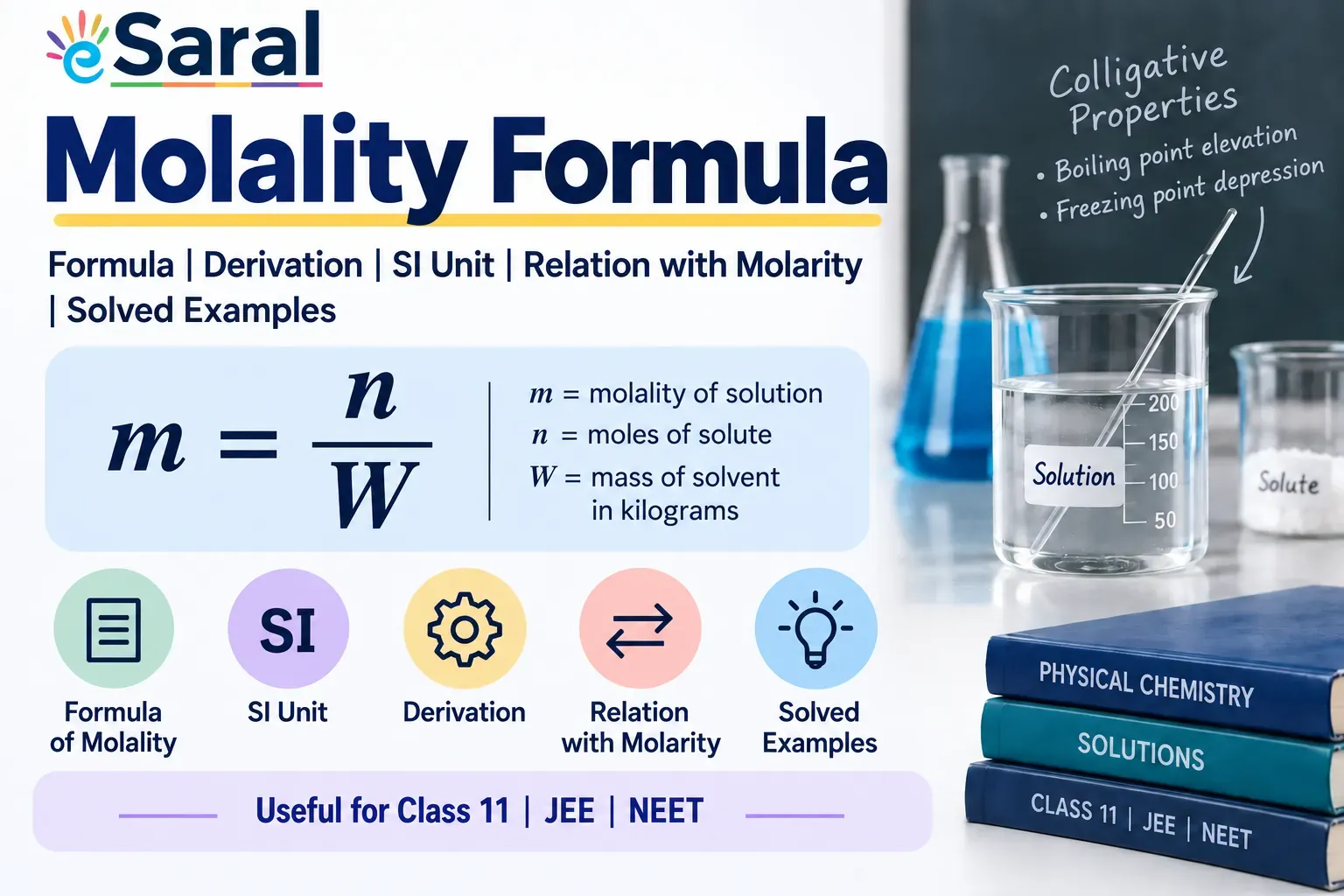
Molality Formula: Formula for Molality, Derivation & Solved Examples
Molality formula is $m = \dfrac{n}{W}$. Learn the formula of molality, its SI unit, derivation, relation with molarity, and solved examples for Class 11, JEE and NEET.
BITSAT Previous Year Question Paper PDF
Download BITSAT previous year question papers PDF. Get year-wise BITSAT PYQs, memory-based papers, exam pattern, and preparation tips to improve your BITSAT preparation.

Teachers’ Day 2026 at eSaral Gurukul: Celebrating the Bond Between Students, Teachers & Mentors
See how Teachers’ Day 2026 was celebrated at eSaral Gurukul, reflecting the bond among students, teachers, and mentors, and the role of guidance beyond academics.
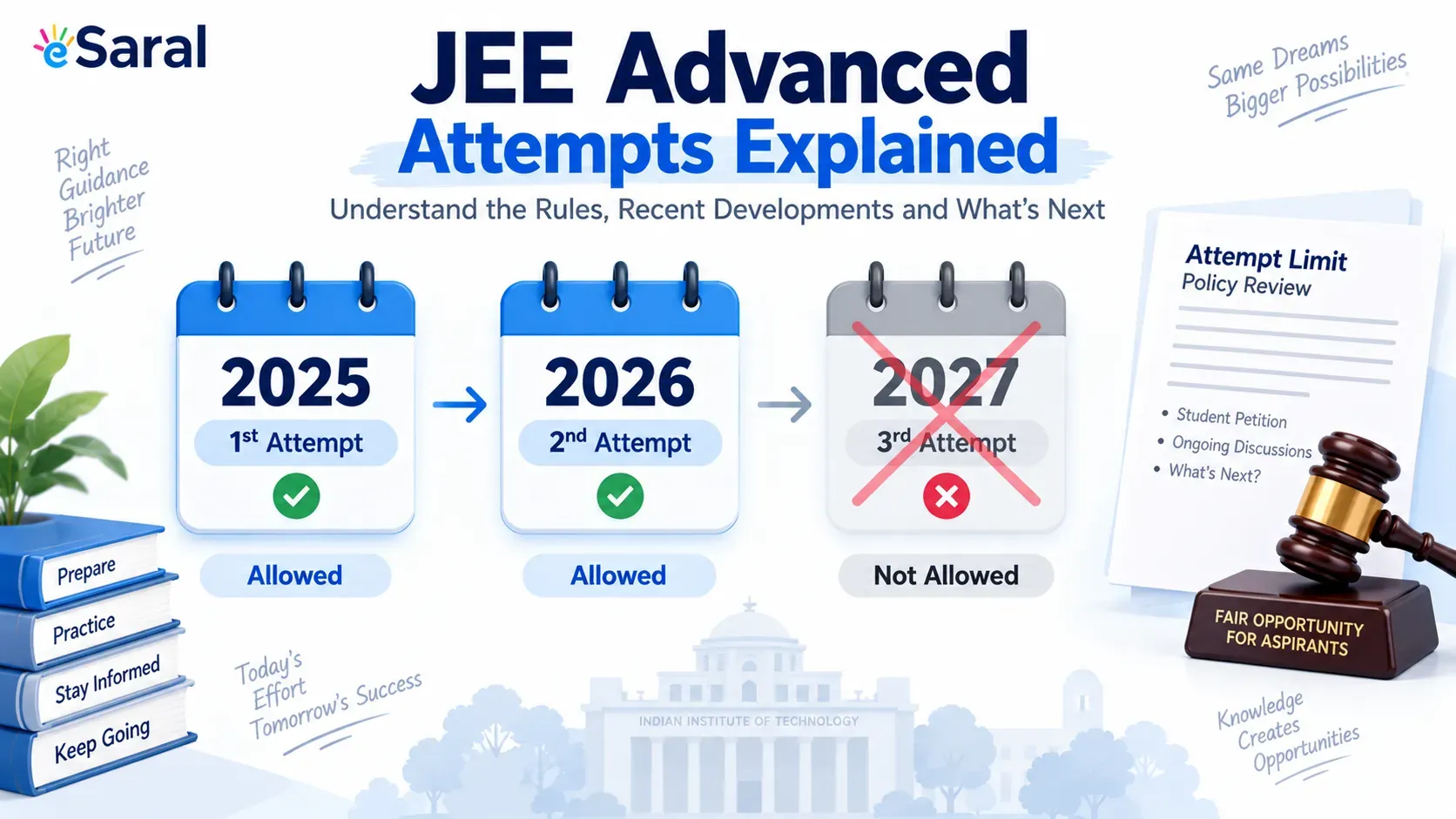
JEE Advanced Attempts: Can You Give It a Third Time? Rules Explained
JEE Advanced attempts: current rule is 2 consecutive years only: full eligibility criteria, the 2025 third-attempt controversy, and the latest 2026 petition news.

Best JEE Preparation App
Best JEE preparation app for Main & Advanced: AI mock tests, live doubt-solving, thousands of practice questions. JEE preparation app for droppers & Class 11-12.
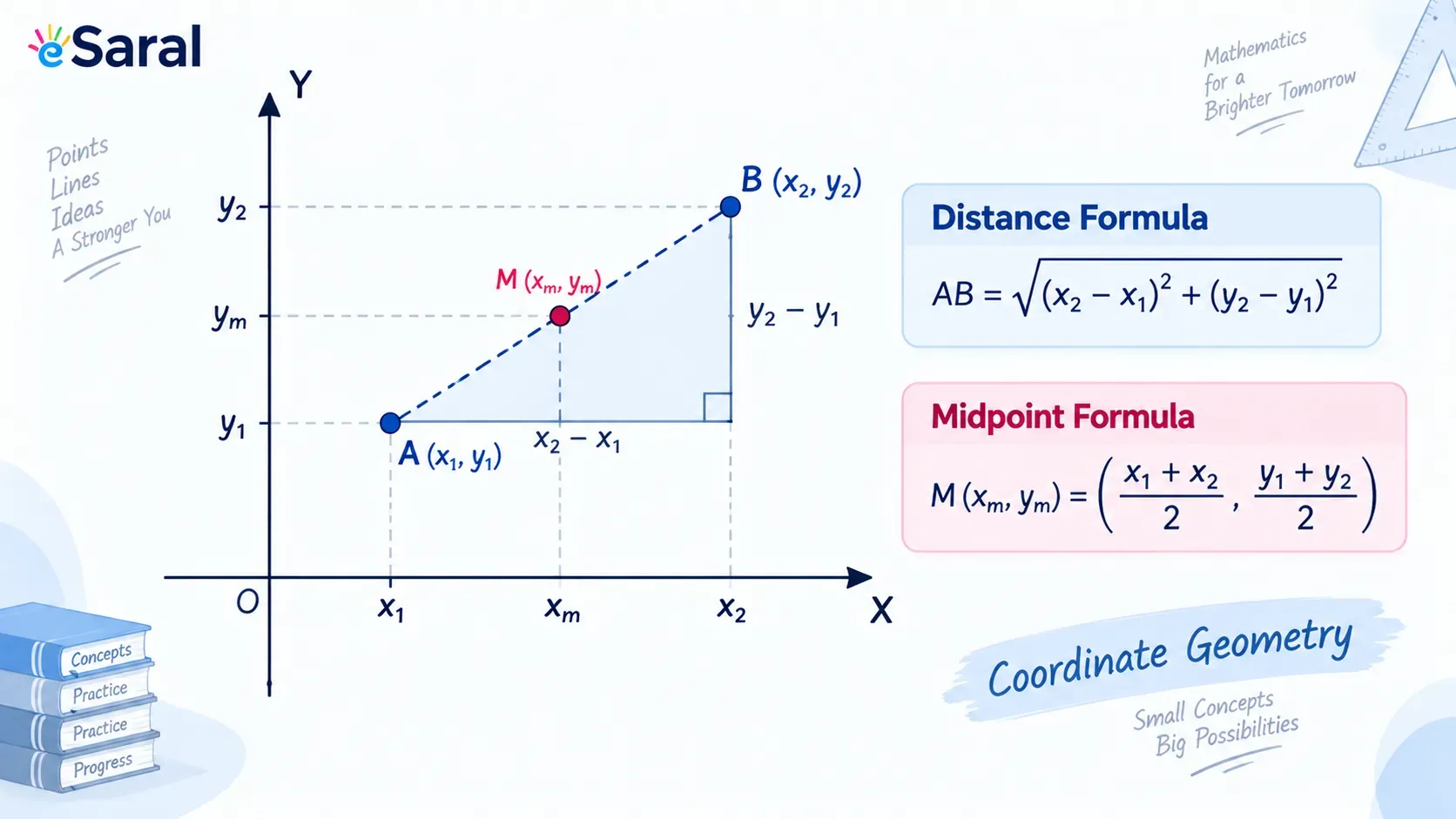
Coordinate Geometry Class 10: Formulas, Notes & Solved Examples
Coordinate geometry class 10: complete CBSE formulas — distance, section, midpoint and area of triangle — with derivation, notes and solved examples.
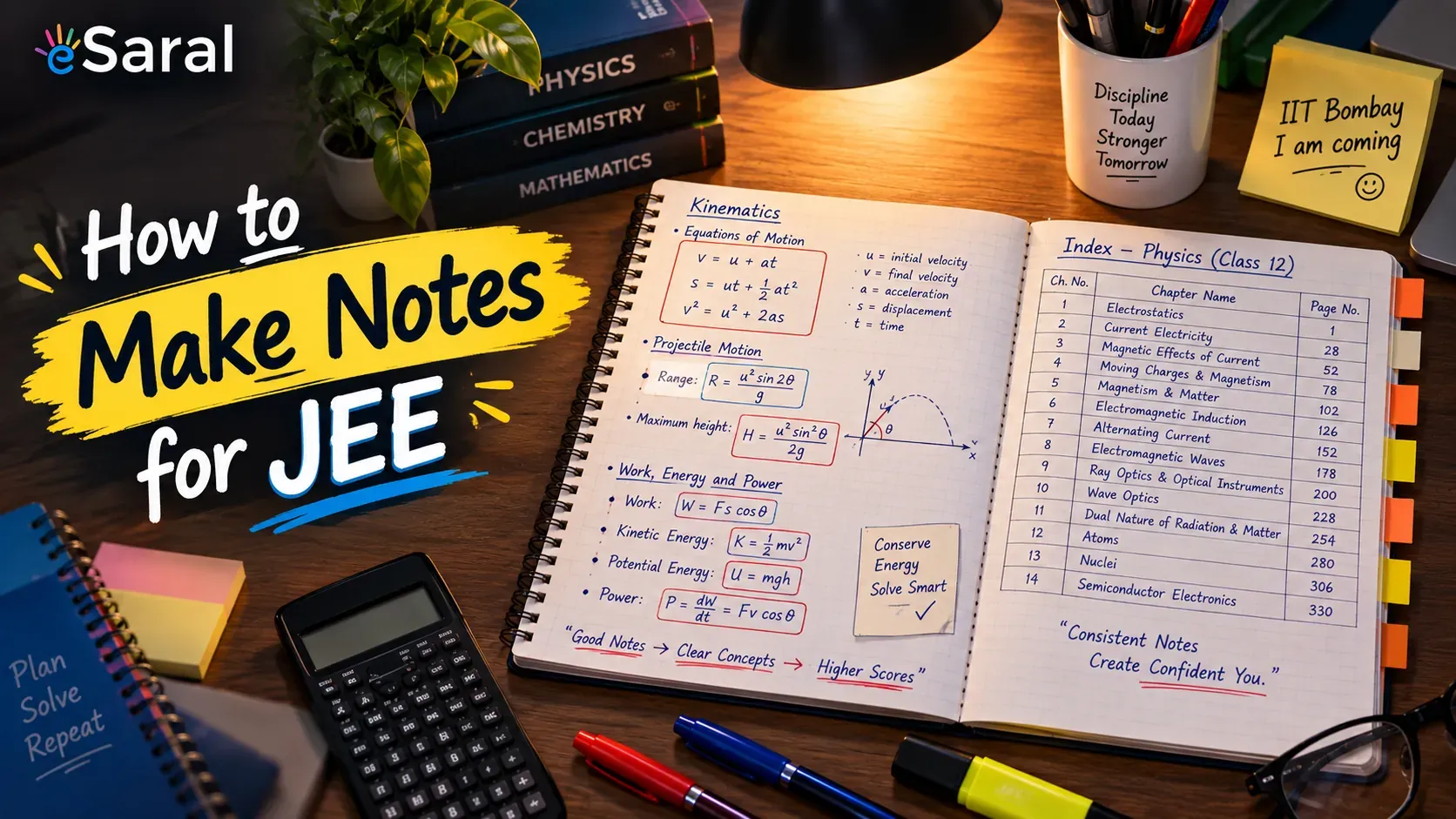
How to make Notes For JEE Smart Notes Strategy of an AIR 41
Learn how to make notes for JEE the way toppers do — indexing, shorthand, and smart short notes for JEE that cut revision time to just 5–7 days.
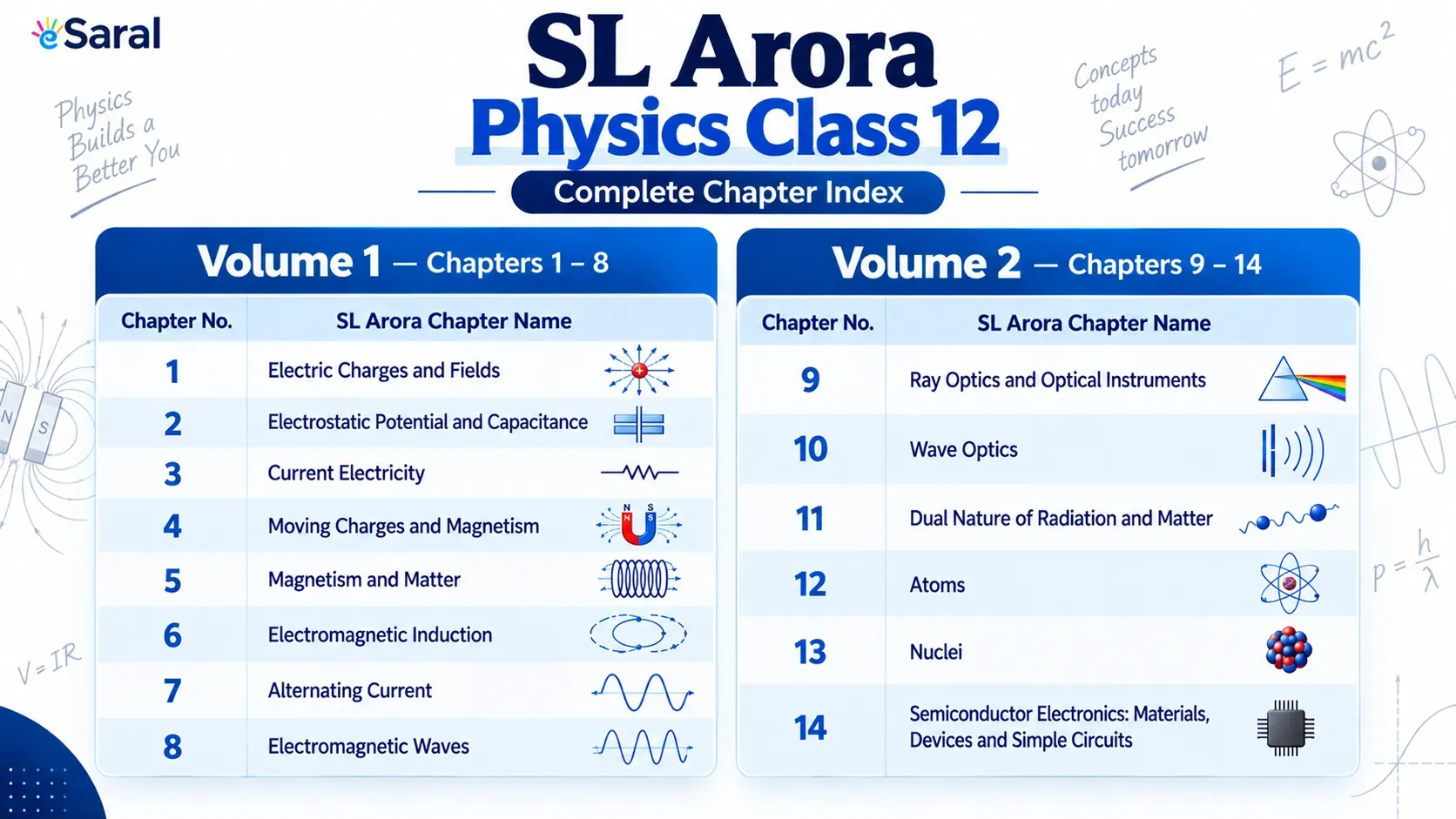
SL Arora Physics Class 12 Index – Chapter List for Volume 1 & 2
SL Arora Physics Class 12 index — complete chapter list for Volume 1 & 2, mapped to NCERT solutions for board, JEE Main, and NEET preparation.