
Mindmaps for Hydrocarbons Revision - Class 12, JEE , NEET

eSaral Academic and Editorial Team
Summary
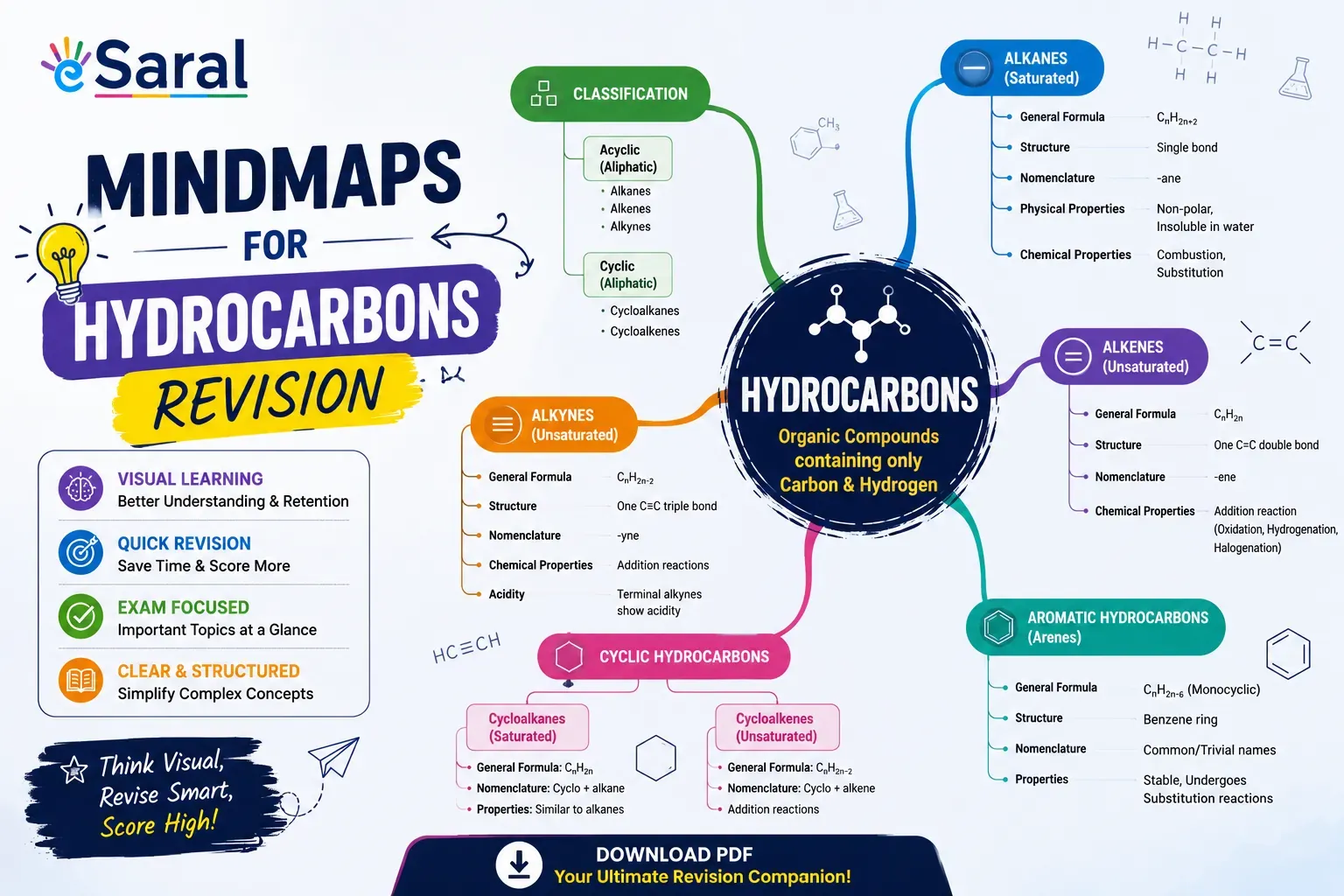
Hydrocarbons mind maps for Class 12, JEE, and NEET revision cover alkanes, alkenes, alkynes, and aromatic compounds in a single visual snapshot. Each map condenses preparation methods, physical properties, and key reaction mechanisms — letting students revise an entire chapter in under 30 minutes instead of re-reading dense NCERT text.
eSaral > Chemistry Mind Maps > Hydrocarbons Revision

CBSE class 11 hydrocarbons teach about alkanes, preparation of alkanes from unsaturated hydrocarbons, from alkyl halides, from carboxylic acids, physical and chemical properties of alkanes. Hydrocarbons topic gives knowledge about Alkenes, the nomenclature of alkenes, isomers, preparation of alkene using alkyne.
Here are the mind maps for to revise important reaction mechanisms, key concepts and more in hydrocarbons.
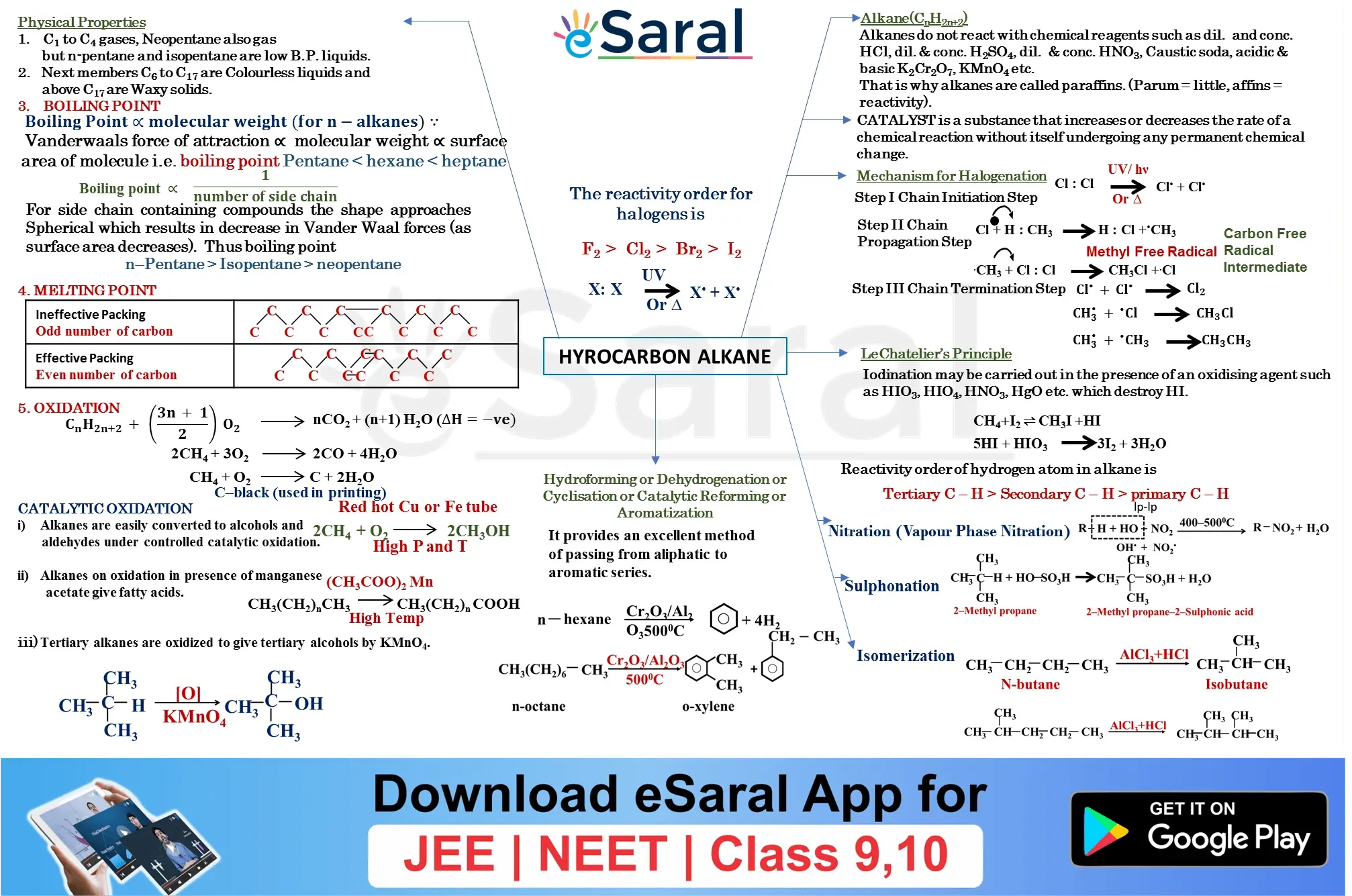
Mind Maps for Hydrocarbon Alkane
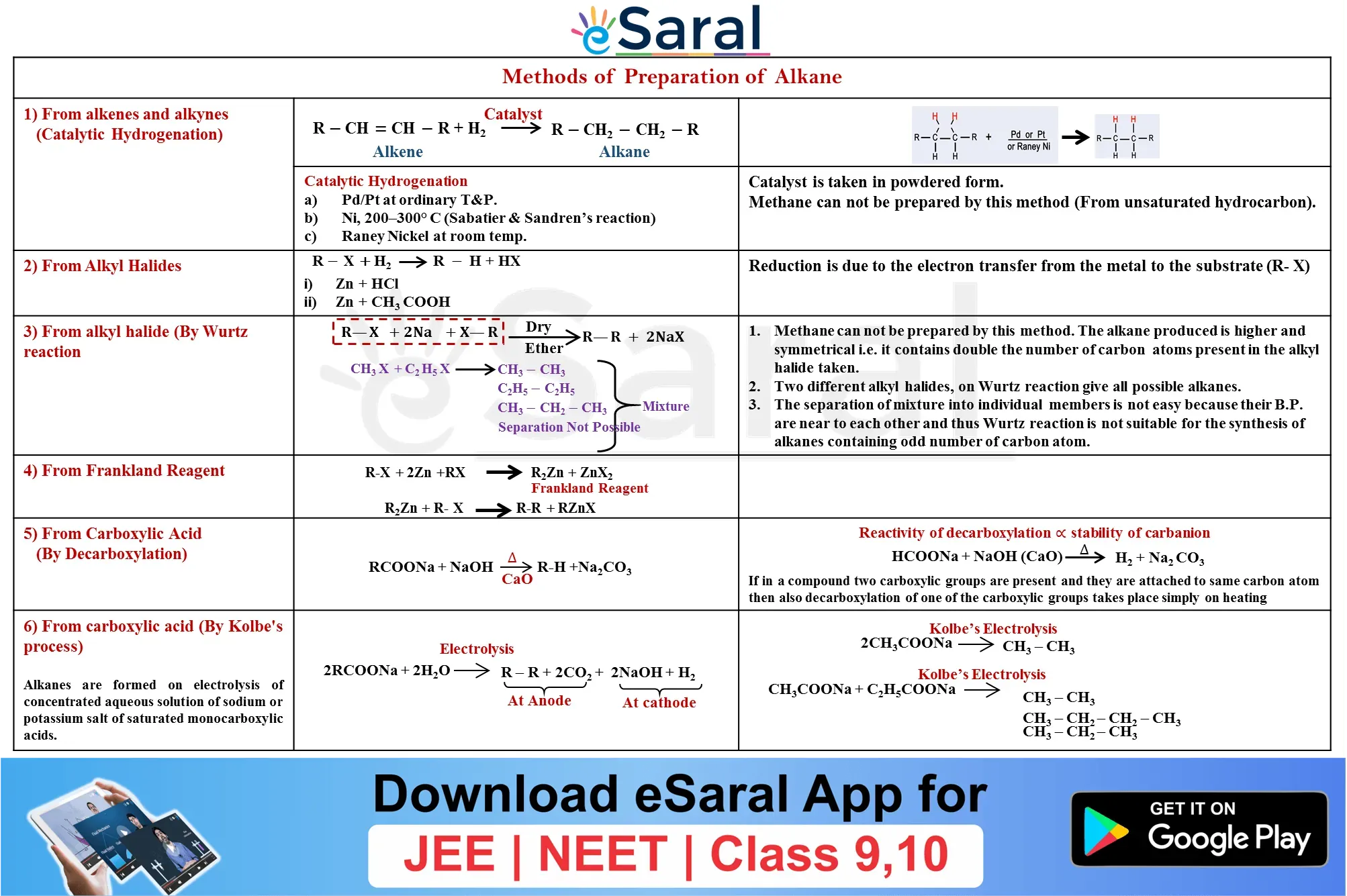
Preparation Method of Alkanes (MIND MAP)
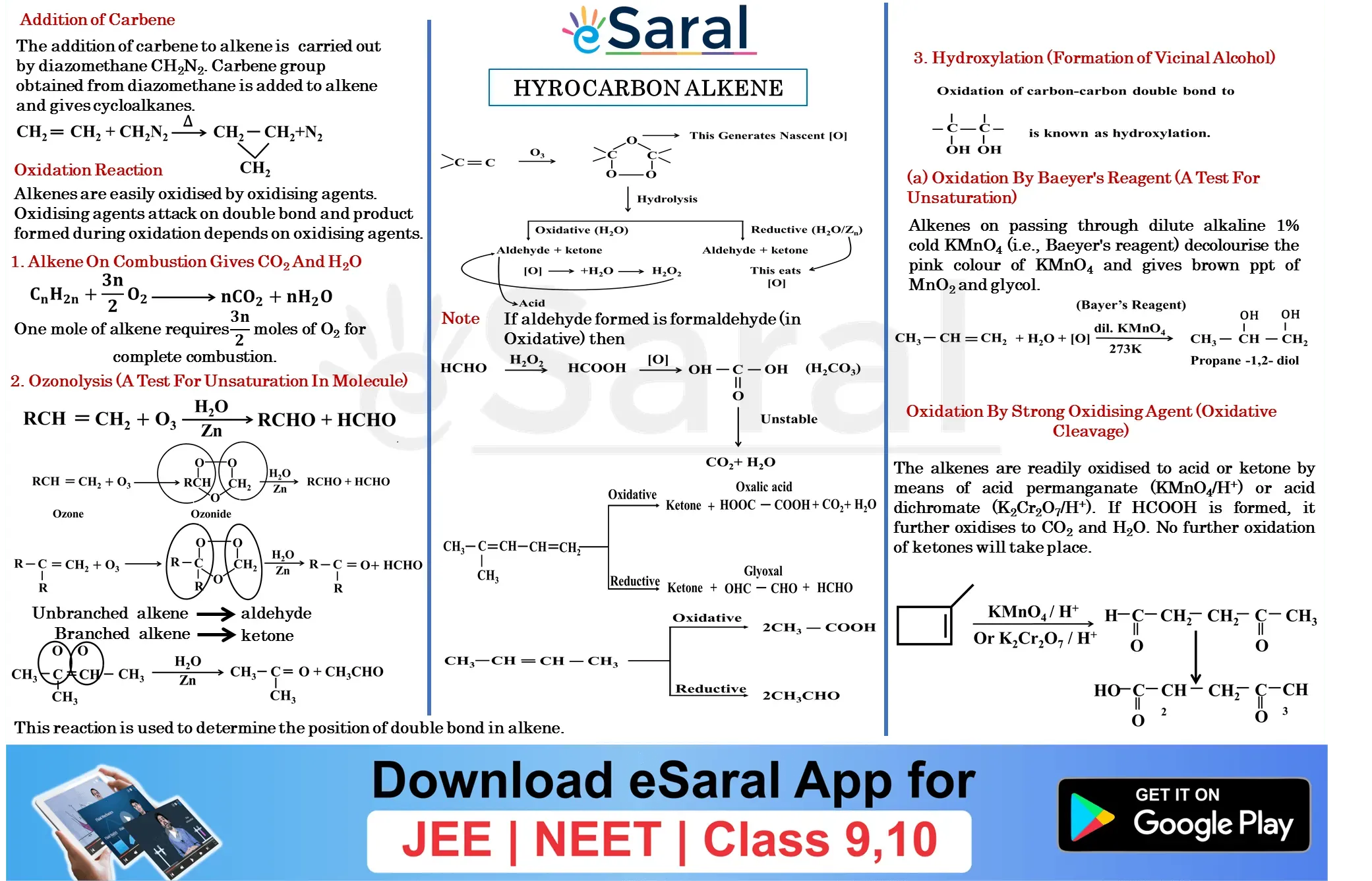
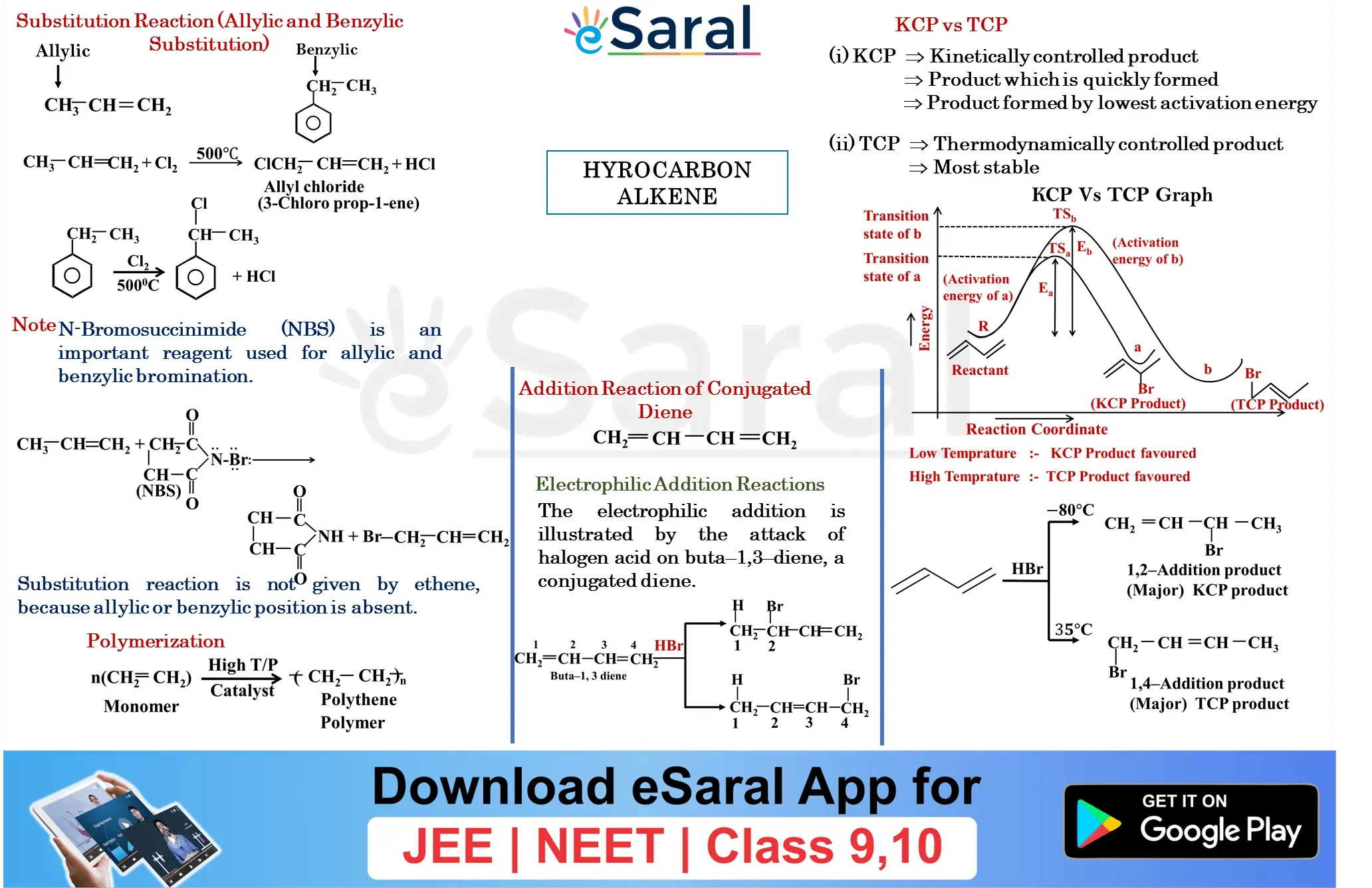
Hydrocarbon Alkene
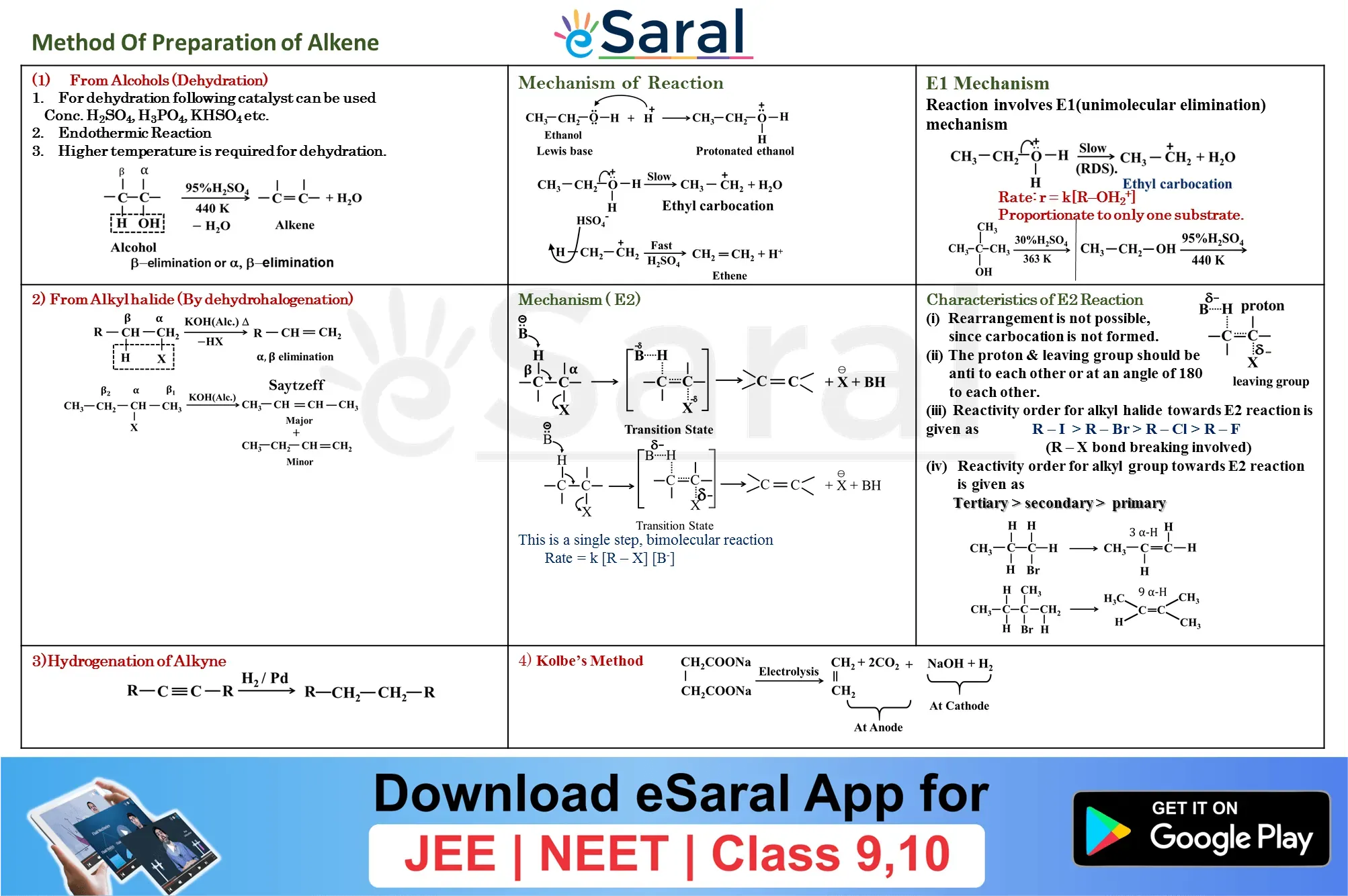
Hydrocarbons Alkene PART - 1
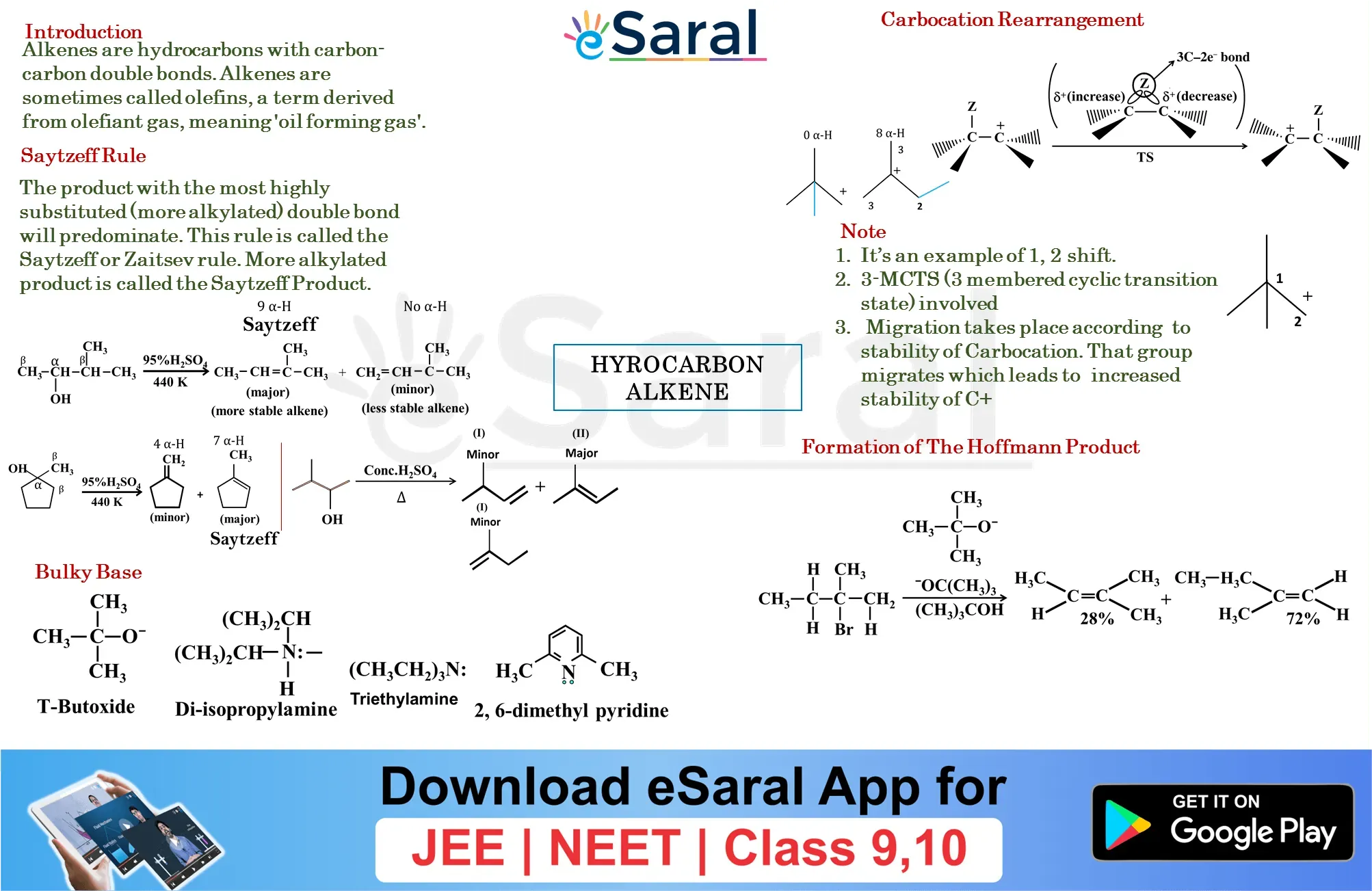
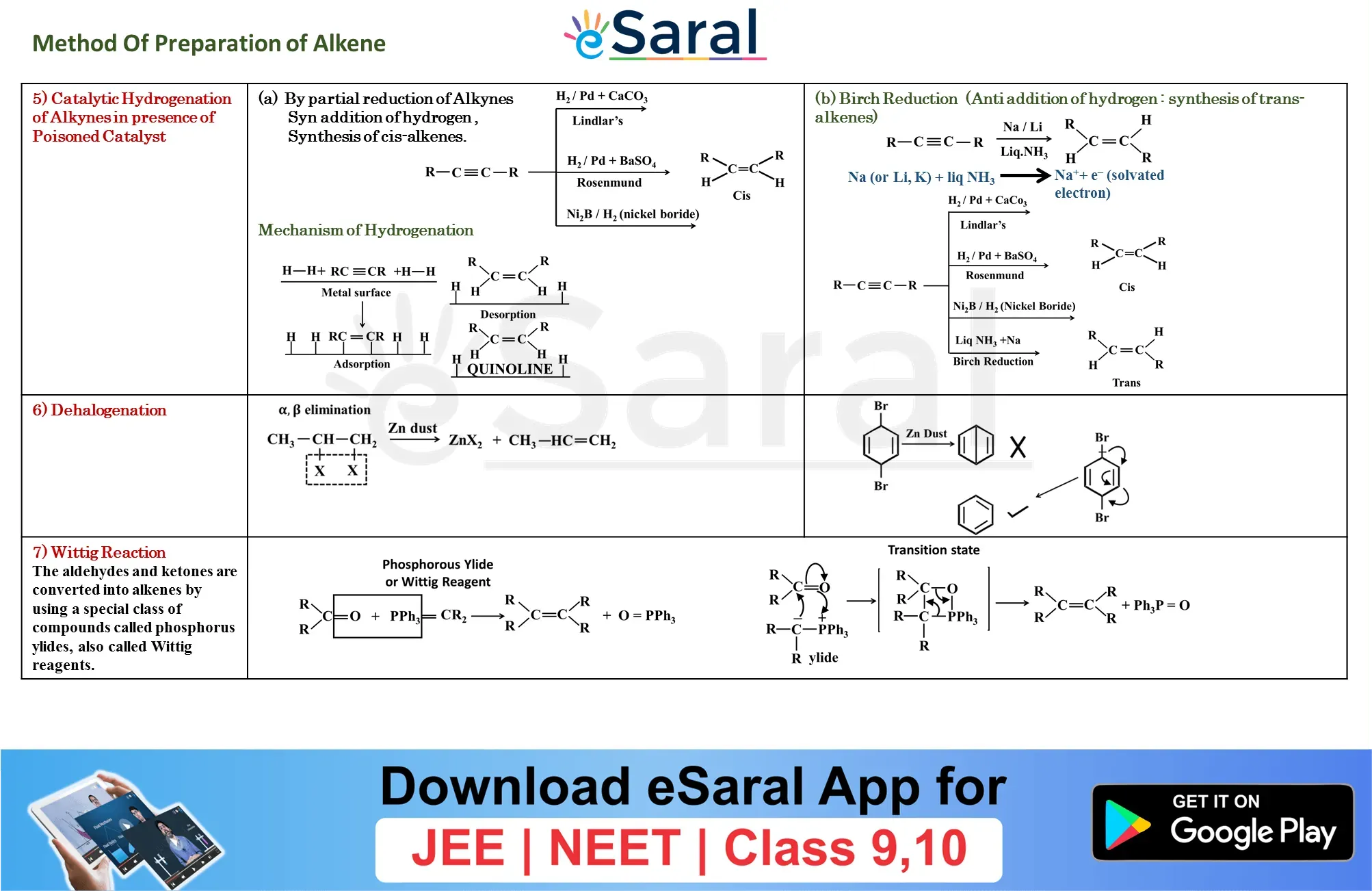
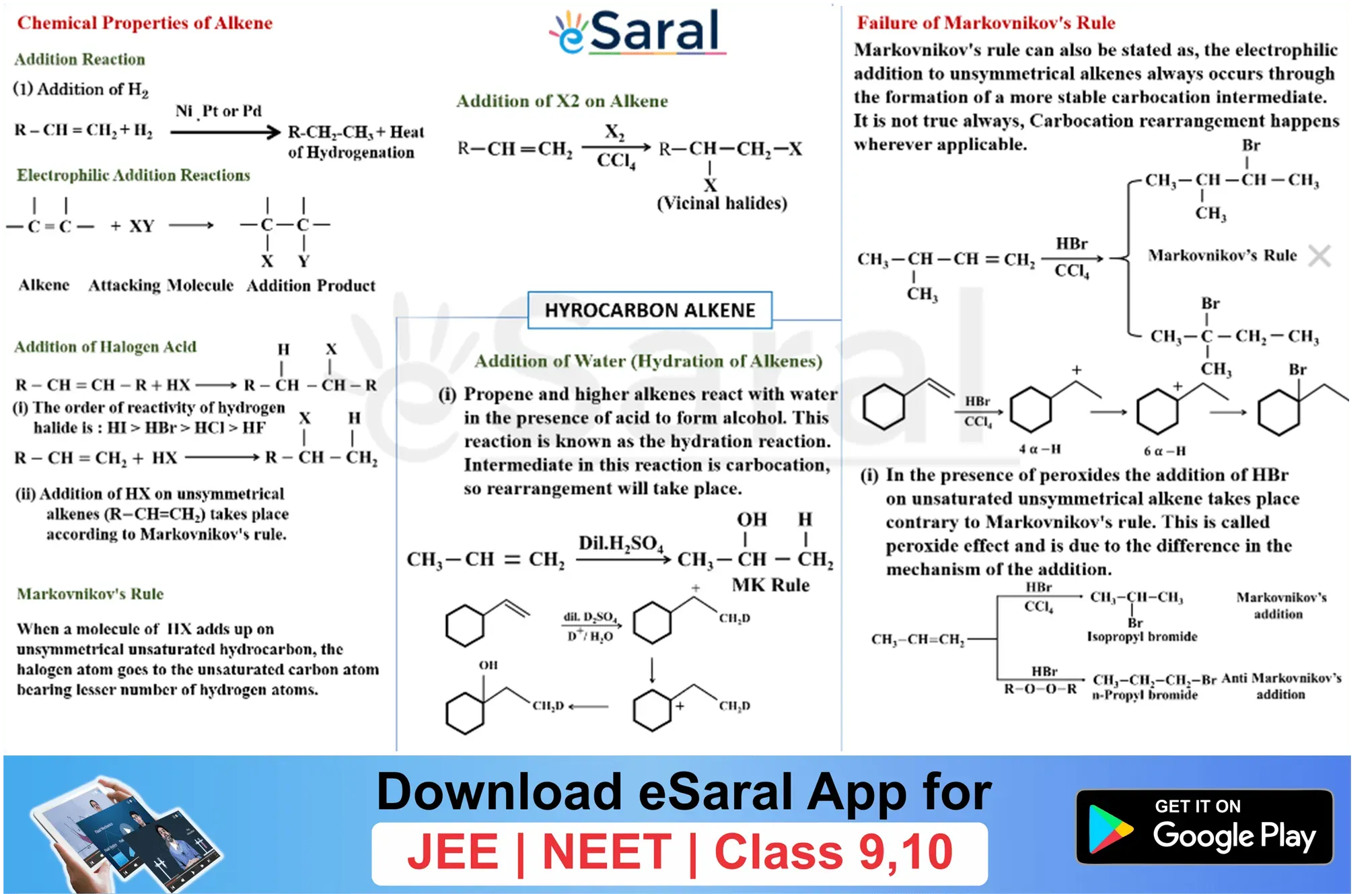
Hydrocarbons Alkene PART 2
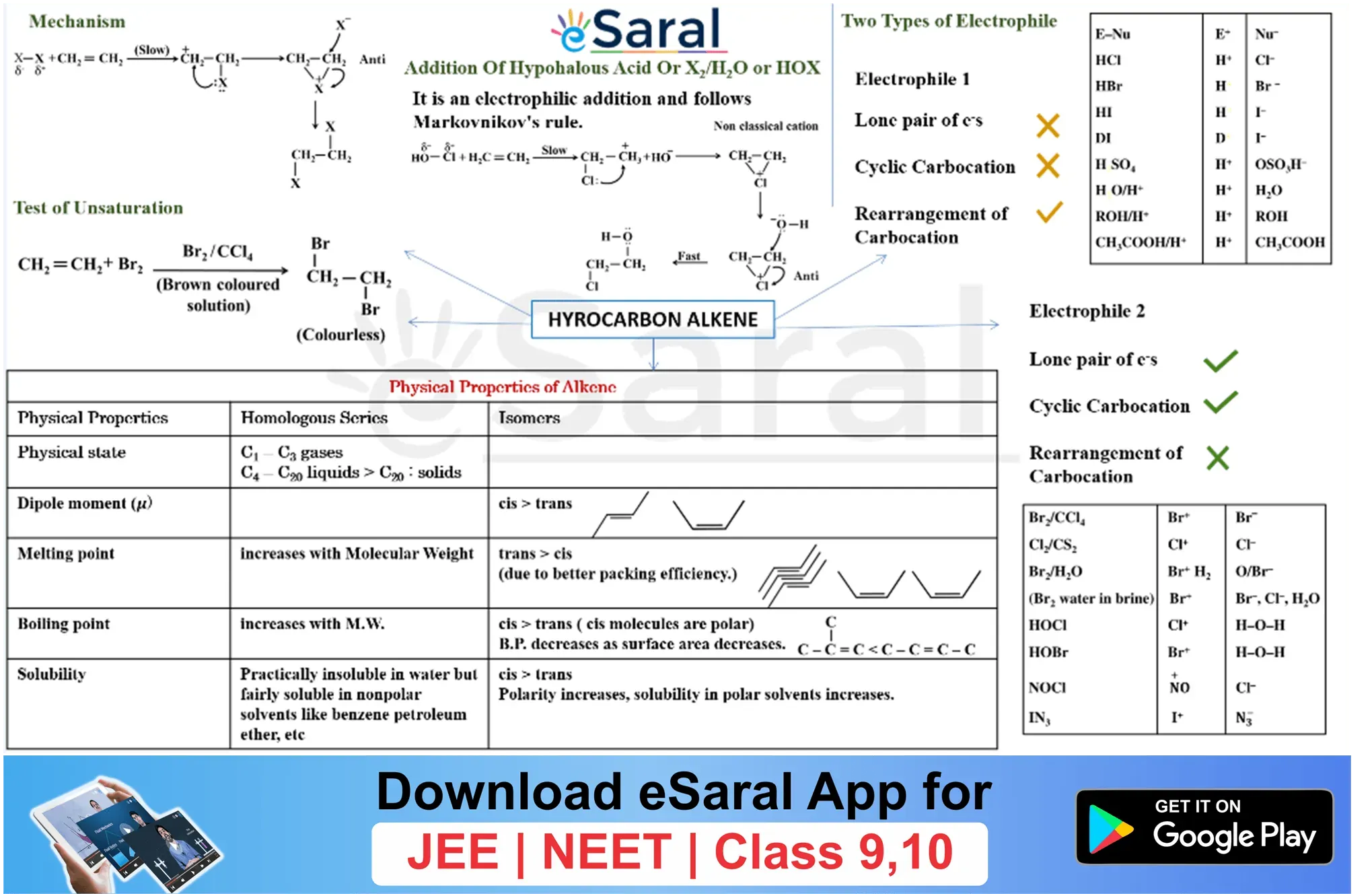
Hydocarbons Alkene PART-3
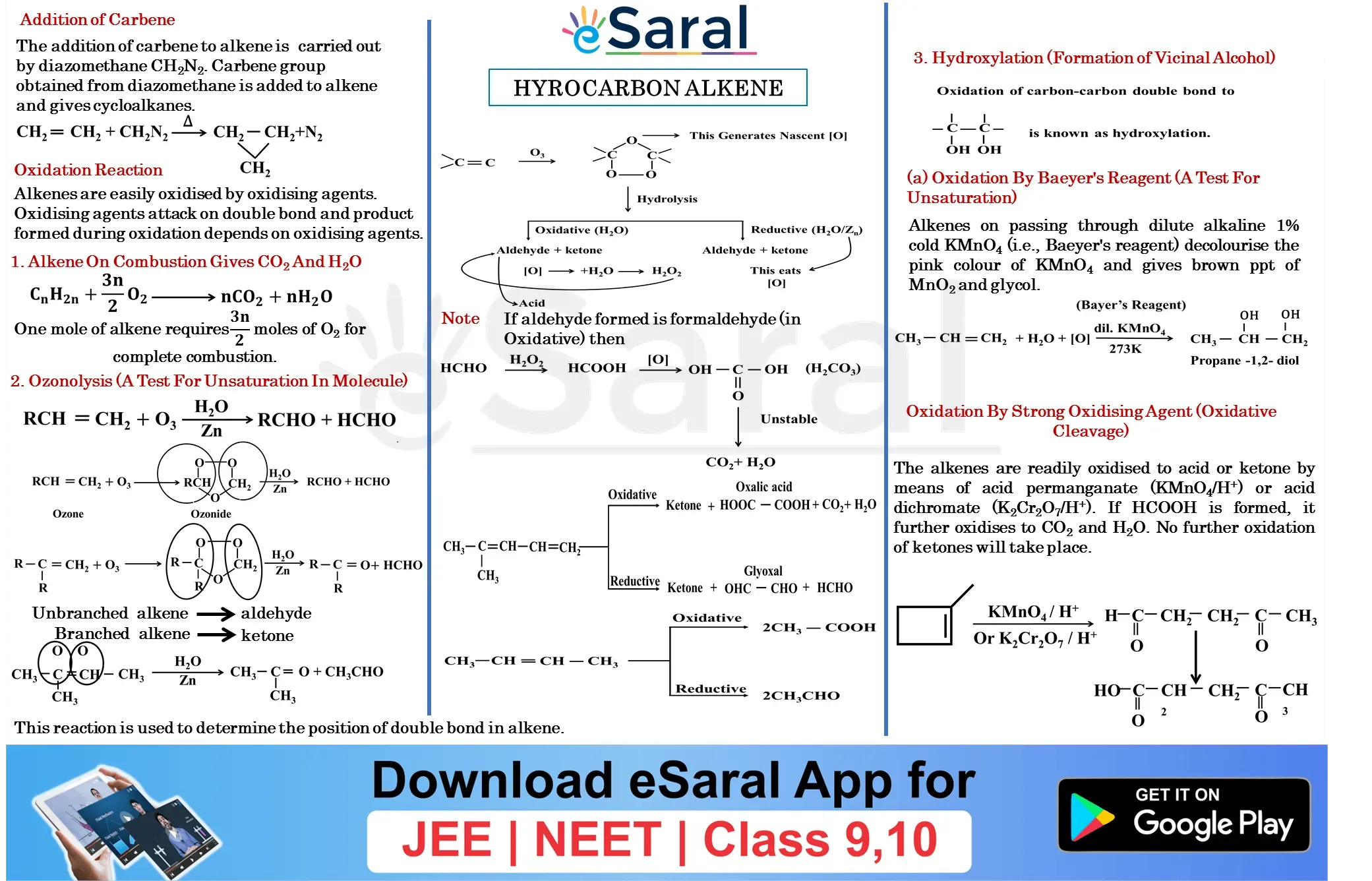
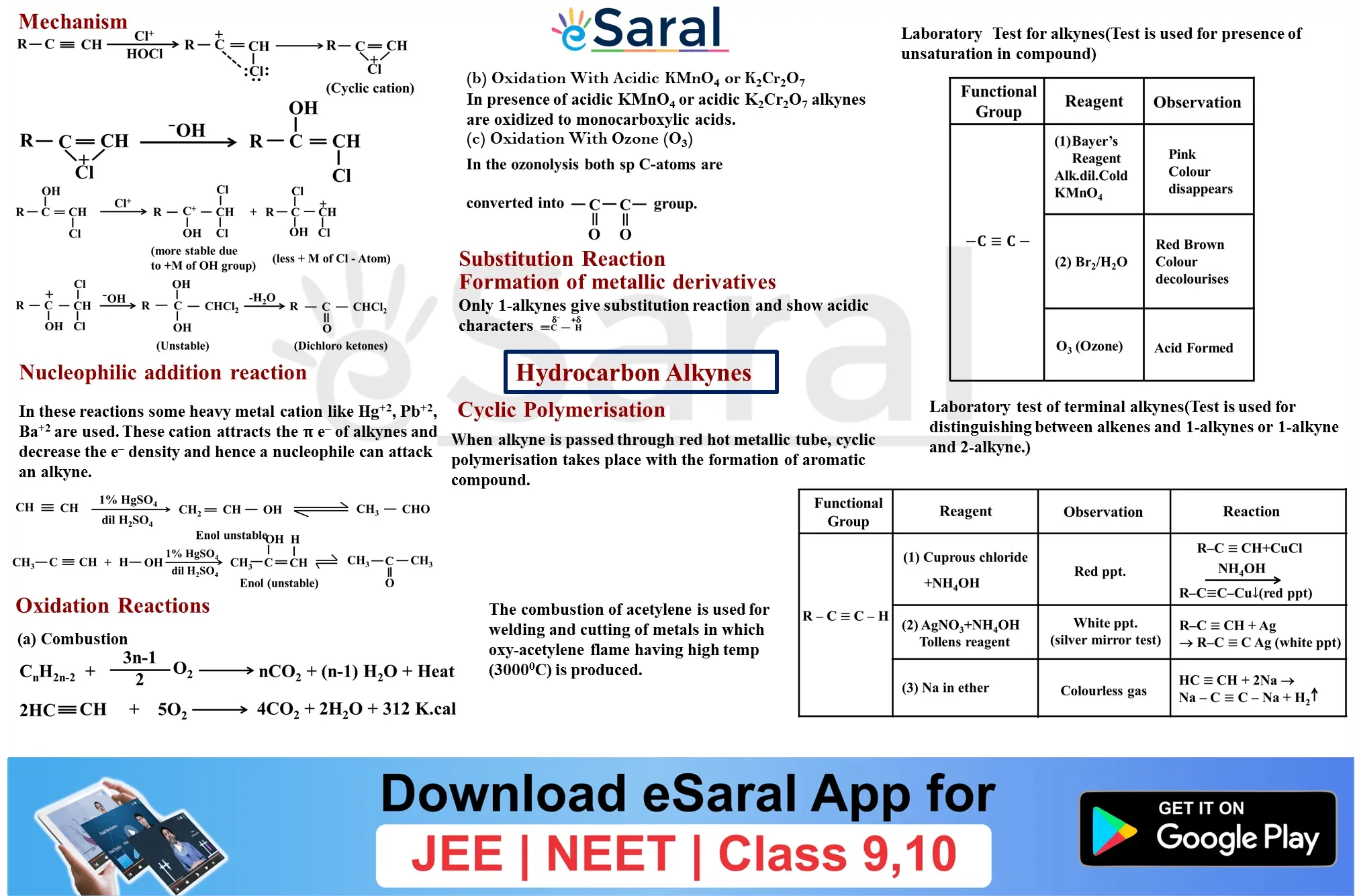
Hydrocarbon Alkyne
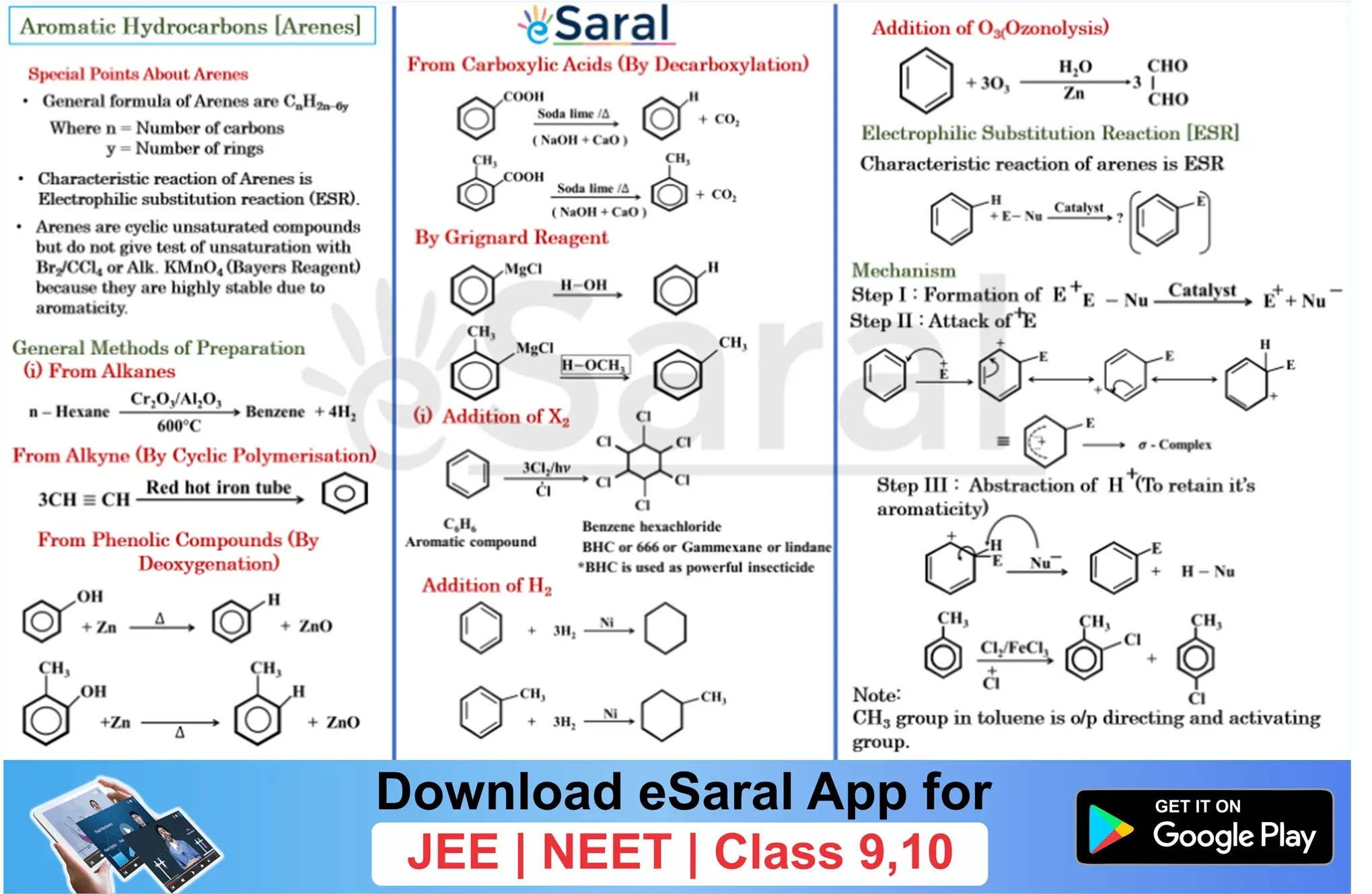
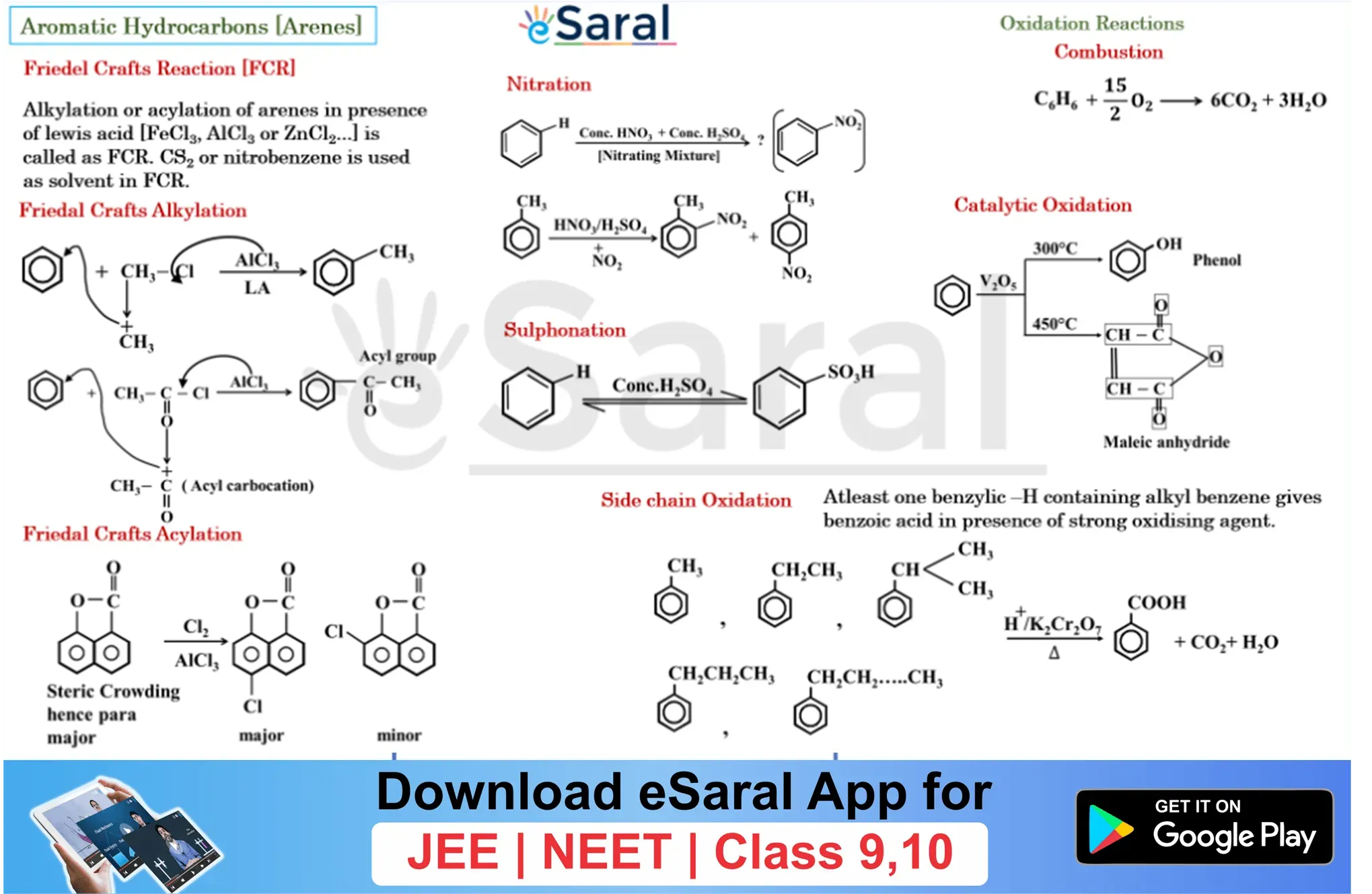
Aromatic Hydrocarbons
CLICK HERE for Complete Physics Revision | Class 11, 12, JEE, NEET
Frequently Asked Questions
What is the most commonly tested reaction from the alkene section in JEE?
Ozonolysis and Markovnikov's rule are the two most frequently tested alkene reactions in JEE Main. Questions either ask for the ozonolysis products of a given alkene or present the products and ask students to identify the parent alkene. Practising both forward and reverse ozonolysis problems is essential.
Is the hydrocarbons mind map enough for NEET revision?
Mind maps are excellent for last-stage revision but should not replace NCERT reading. NEET Chemistry is almost entirely NCERT-based, so read the chapter first, then use the mind map to check whether you remember every concept branch. Combining both methods takes under 3 hours for the full hydrocarbons chapter
How many questions from hydrocarbons appear in JEE Main each year?
JEE Main typically includes 6–10 questions from the hydrocarbons chapter across all sessions in a year. Alkenes and aromatic hydrocarbons each contribute 2–3 questions on average, making them the highest-priority sub-topics. NTA's official question papers from 2019–2024 confirm this trend consistently.
How is eSaral's approach to teaching hydrocarbons different from other platforms?
eSaral's chemistry faculty — trained at IIT Bombay and ranked among India's top competitive exam educators — teach reaction mechanisms the way JEE Advanced setters think, not just how NCERT presents them. The 5-layer doubt-solving system means no question goes unanswered between study sessions. Students who joined eSaral's dropper batch have cleared JEE with ranks inside the top 1,000, with the teaching approach built around the same Kota-quality rigour, delivered online at accessible prices.
What is the difference between Lindlar's catalyst and Na in liquid NH₃ in alkyne reactions?
Lindlar's catalyst reduces an alkyne to a cis (syn) alkene through syn addition of hydrogen. Sodium in liquid ammonia (Birch-type conditions) reduces an alkyne to a trans (anti) alkene via an anti addition mechanism. This distinction is a classic JEE MCQ trap and is highlighted clearly in the alkyne mind map.
Do I need to study aromatic hydrocarbons for NEET?
Yes. NEET includes 1–2 questions on aromatic hydrocarbons each year, focused on EAS reactions, directive influence, and basic aromaticity (Hückel's rule). The aromatic hydrocarbons mind map available on this page covers all NEET-relevant content in a single downloadable sheet.
Team eSaral
eSaral Academic and Editorial Team
Team eSaral is the collective author profile for educational content created by eSaral’s teachers and academic contributors. The team draws on expertise from IIT graduates, doctors, experienced educators and subject specialists to develop resources for JEE, NEET and school students. Our articles aim to explain concepts clearly and help students study with confidence.
Related Posts

BITSAT 2027: Registration Date, Exam Date, Syllabus, Eligibility, Pattern & Fees
BITSAT 2027 exam dates, registration timeline, eligibility criteria, exam pattern, marking scheme, syllabus and fees in one page.

BITSAT Previous Year Question Paper PDF (2017-2026)
Download BITSAT previous year question papers PDF from 2017 to 2026,session-wise. Memory-based papers,exam pattern, paper analysis and how to practise

CBSE Class 10 Date Sheet 2027: Expected Exam Dates, Release Date, Admit Card & Result Timeline
CBSE Class 10 date sheet 2027 is awaited. See the expected exam dates, release window, how to download the PDF, admit card and result timelines.

NCERT Physics Class 10 Book PDF in Hindi 2026-27 – भौतिक विज्ञान के 4 अध्याय (Free Download)
NCERT Physics Class 10 book PDF in Hindi 2026-27: download all 4 chapters (अध्याय 9–12) free, with topics and important formulas.

NCERT Biology Class 9 Book Anveshan PDF in Hindi - जीव विज्ञान कक्षा 9 पुस्तक अन्वेषण PDF
Download NCERT Biology Class 9 book PDF in Hindi chapterwise for 2026-27: Cell, Tissues, Reproduction and Diversity. Free PDFs.

Essay On Artificial Intelligence in English (100,150, 200, 250, 300, 500 Words)
This is in contrast to the natural intelligence of humans. With Artificial Intelligence, machines can perform

Essay on 78th India Independence Day in English for Student (100, 150, 200, 250, 300, 500 Words)
Read the best essays on India's Independence Day in English. Short & long essays (100, 150, 200, 250, 300, 500 words) perfect for school exams
NCERT Class 11 English Snapshots book - Free PDF download- Esaral
Download NCERT Class 11 English Snapshots book PDF for free. Get all 8 chapters, chapter-wise. Start your prep today!
NCERT Class 10 biology book pdf - Free PDF Download - eSaral
NCERT Class 10 Biology book PDF 2026-27: all 5 chapters (Life Processes to Our Environment) in English & Hindi, with CBSE syllabus, marks & practical

Essay on Global Warming in English (100,150, 200, 250, 300, 500 Words)
Global warming means the Earth is getting hotter. This happens because of things like pollution from cars and factories.