
Anatomy of Flowering Plants - NEET Previous Year Questions with Complete Solutions

eSaral Academic and Editorial Team
Summary
Anatomy of Flowering Plants (Class 11, Chapter 6) contributes 2–4 questions in NEET every year. High-weightage subtopics include secondary growth, vascular bundles, Casparian strip, and types of meristems. Solving previous year questions is the fastest way to identify recurring patterns and score full marks from this chapter.

eSaral › NEET › Biology › Anatomy of Flowering Plants Previous Year Questions with Complete Solutions
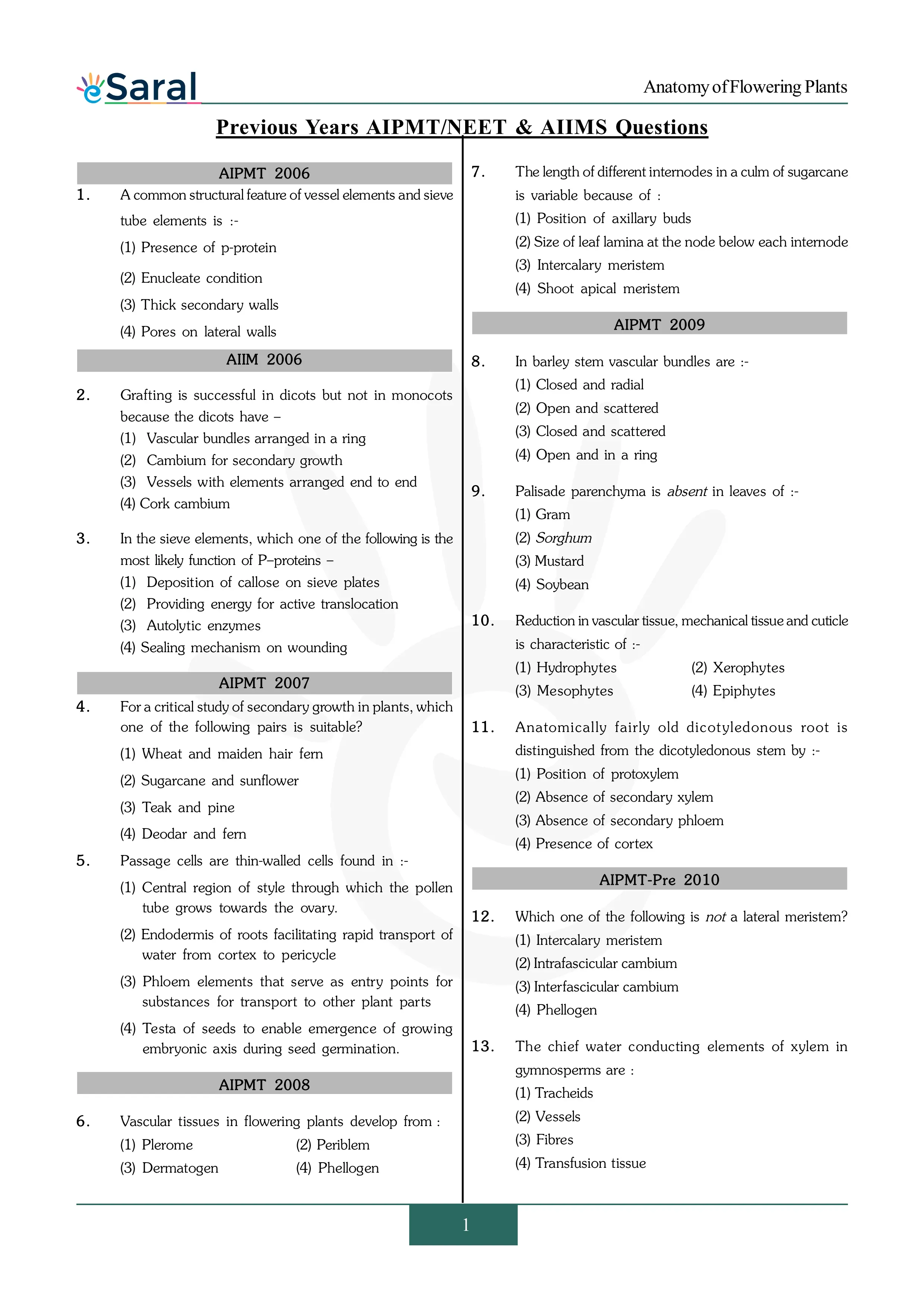
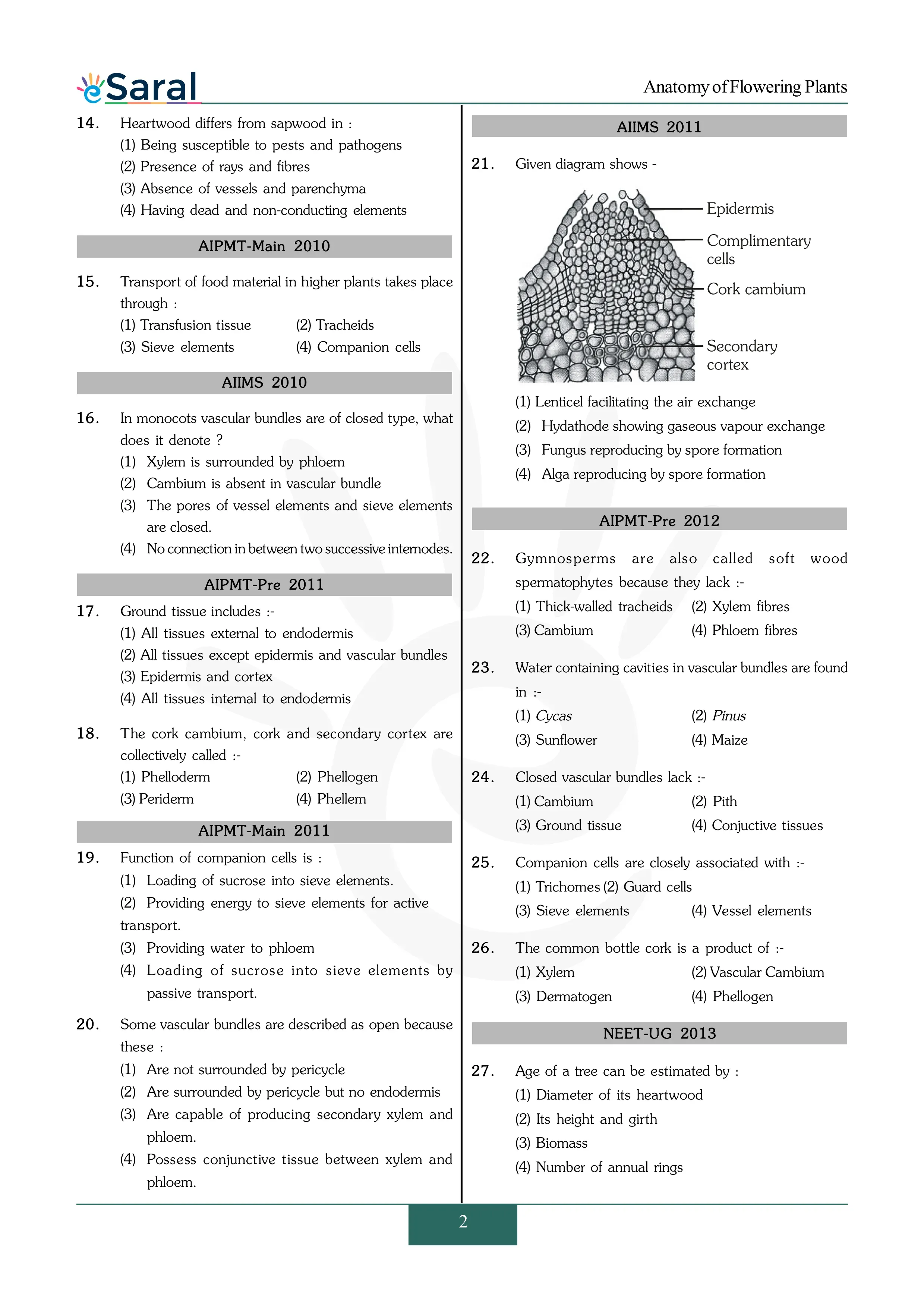
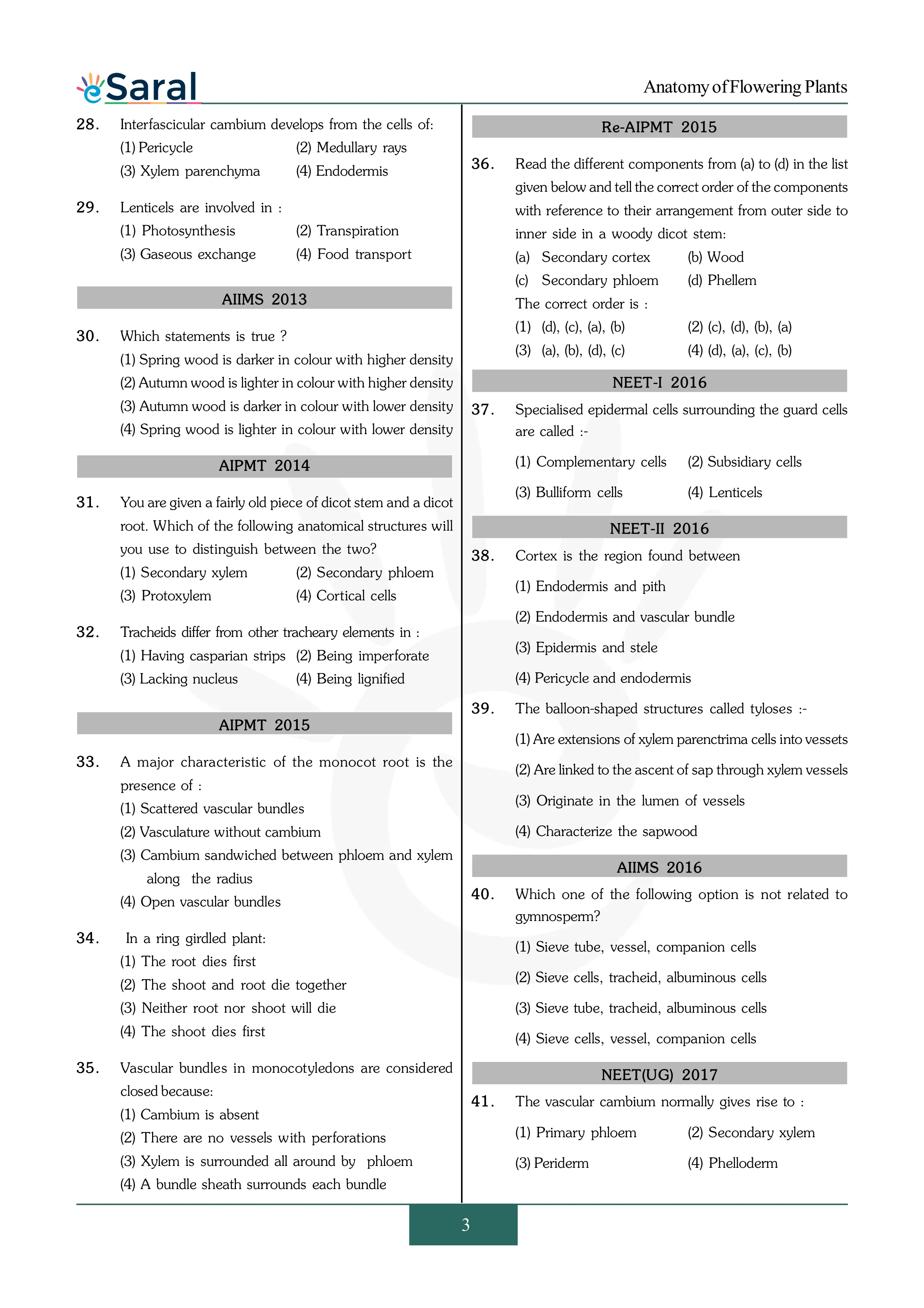
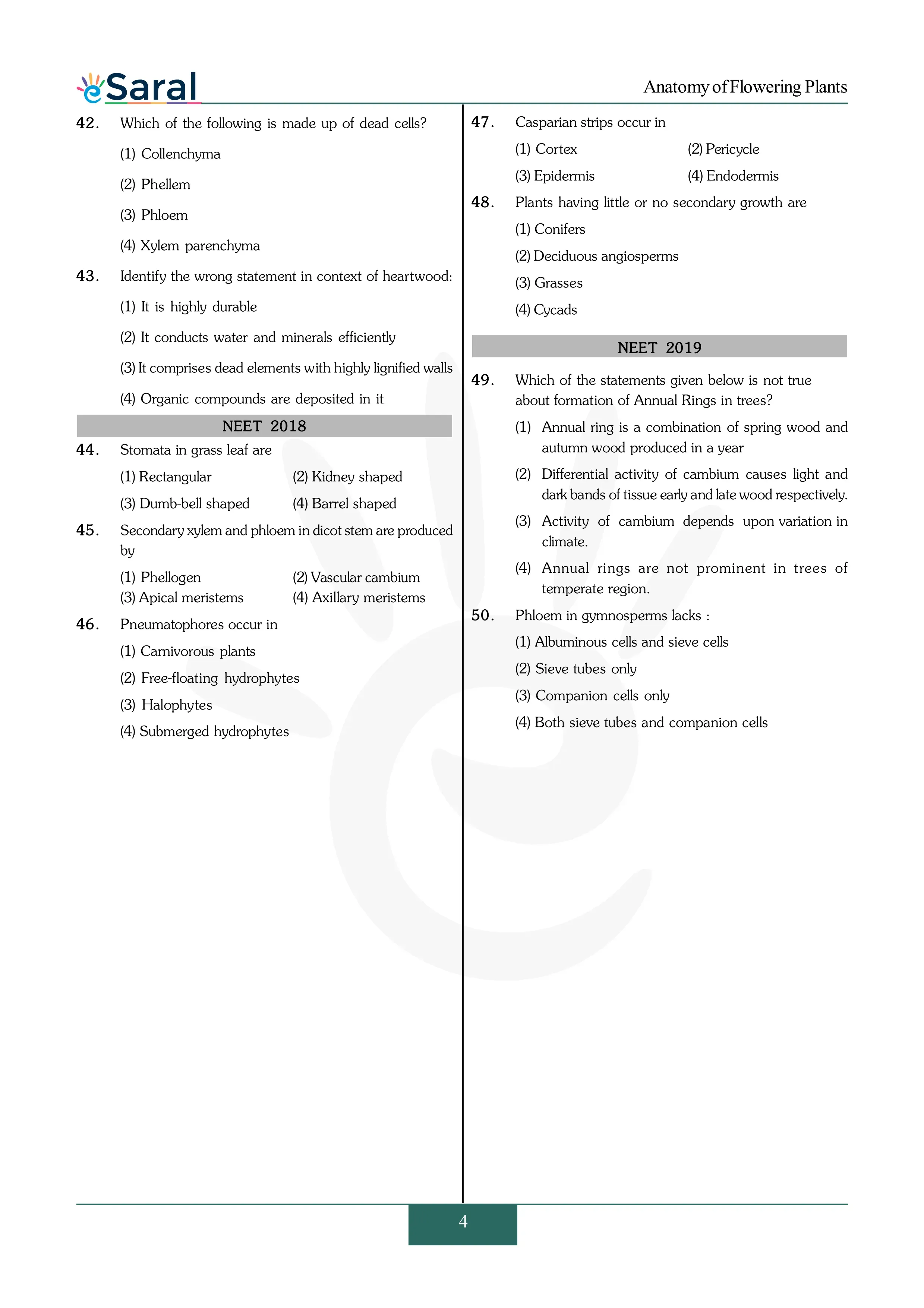
Here you will get Complete Anatomy of Flowering Plants NEET Previous Year Questions with complete and detailed solutions.

Get complete NEET previous year questions for Physics, Chemistry, and Biology.
You will find all the solutions at the end of this page:

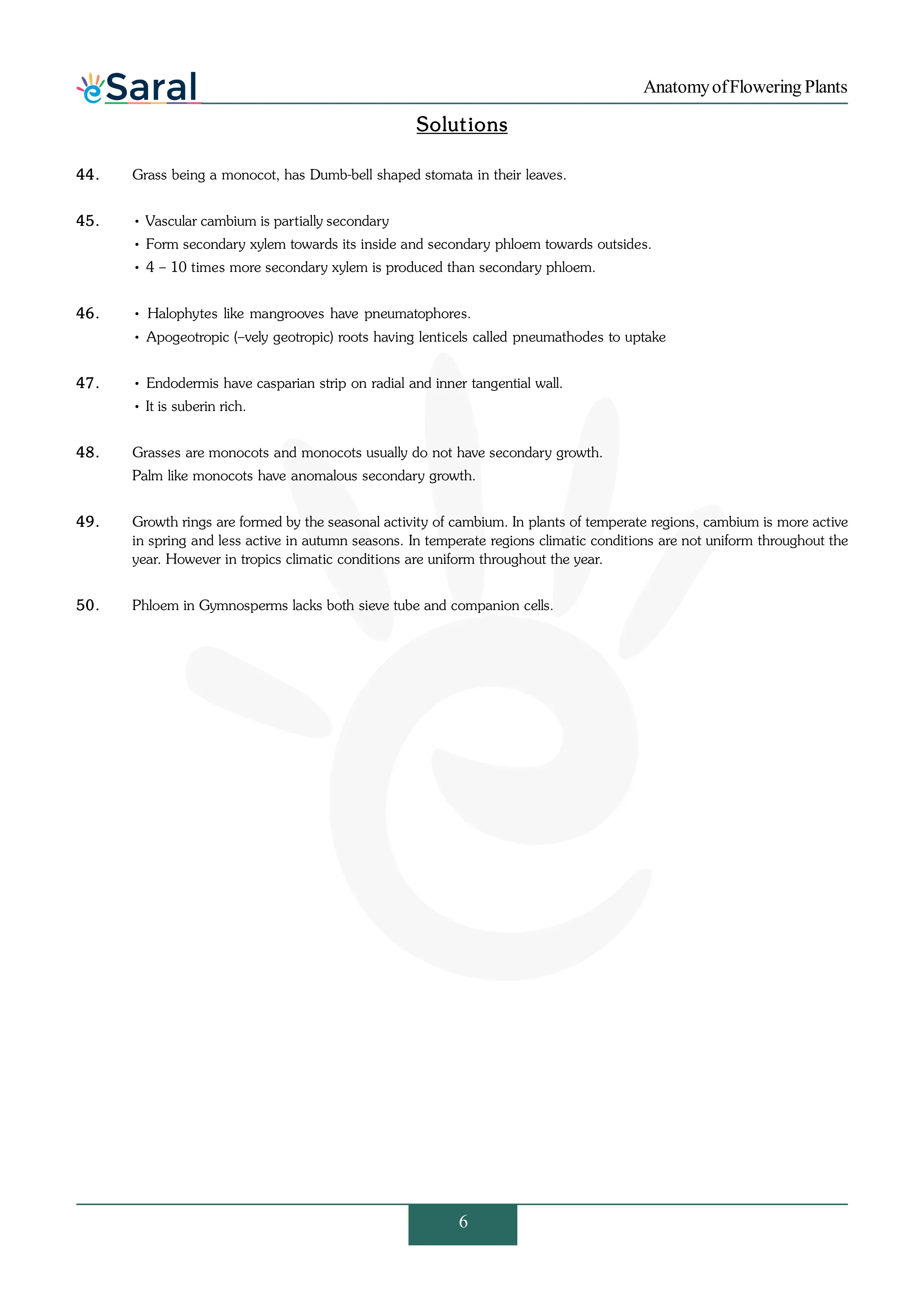
Frequently Asked Questions
What is the most important topic in Anatomy of Flowering Plants for NEET?
Secondary growth is the single most important topic, contributing approximately 8–10 questions over the last 14 years of NEET papers. Within secondary growth, focus on the role of vascular cambium, cork cambium, and the formation of annual rings. Vascular bundle types and the Casparian strip are the next highest-priority subtopic
Is Anatomy of Flowering Plants difficult for NEET?
No — it is considered a moderately easy chapter for NEET. Most questions are direct recall of NCERT diagrams and definitions. Students who practice previous year questions consistently and memorise T.S. diagrams of roots, stems, and leaves can score full marks from this chapter without needing extra reference books.
How many questions from Anatomy of Flowering Plants appear in NEET every year?
NEET typically includes 2 to 4 questions from this chapter annually. Based on official NTA papers from 2010 to 2024, the chapter has never been completely absent. Secondary growth, vascular bundles, and the Casparian strip are the most frequently tested subtopics and should be your first priority during revision.
What is the Casparian strip and why is it important for NEET?
The Casparian strip is a suberin-impregnated band on the radial and transverse walls of root endodermal cells. It blocks the apoplastic movement of water and solutes, forcing them through the symplastic pathway. For NEET, remember: suberin + endodermis + blocks apoplast — these three facts cover every past NEET question on this topic.
Can I score full marks in Anatomy of Flowering Plants just by reading NCERT?
Yes — NCERT Class 11 Biology is sufficient for this chapter in NEET. Every question from 2010–2024 has been traceable to a specific NCERT line, diagram, or definition. The key is not just reading, but being able to reproduce diagrams, recall specific structural differences, and apply the information to the question stem quickly. Pair reading with PYQ practice for best results.
What is the difference between open and closed vascular bundles?
Open vascular bundles contain cambium between the xylem and phloem, allowing secondary growth — found in dicot stems. Closed vascular bundles have no cambium and therefore cannot undergo secondary growth — found in monocot stems. This distinction is one of the most frequently tested facts from this chapter in NEET.
Team eSaral
eSaral Academic and Editorial Team
Team eSaral is the collective author profile for educational content created by eSaral’s teachers and academic contributors. The team draws on expertise from IIT graduates, doctors, experienced educators and subject specialists to develop resources for JEE, NEET and school students. Our articles aim to explain concepts clearly and help students study with confidence.
Related Posts
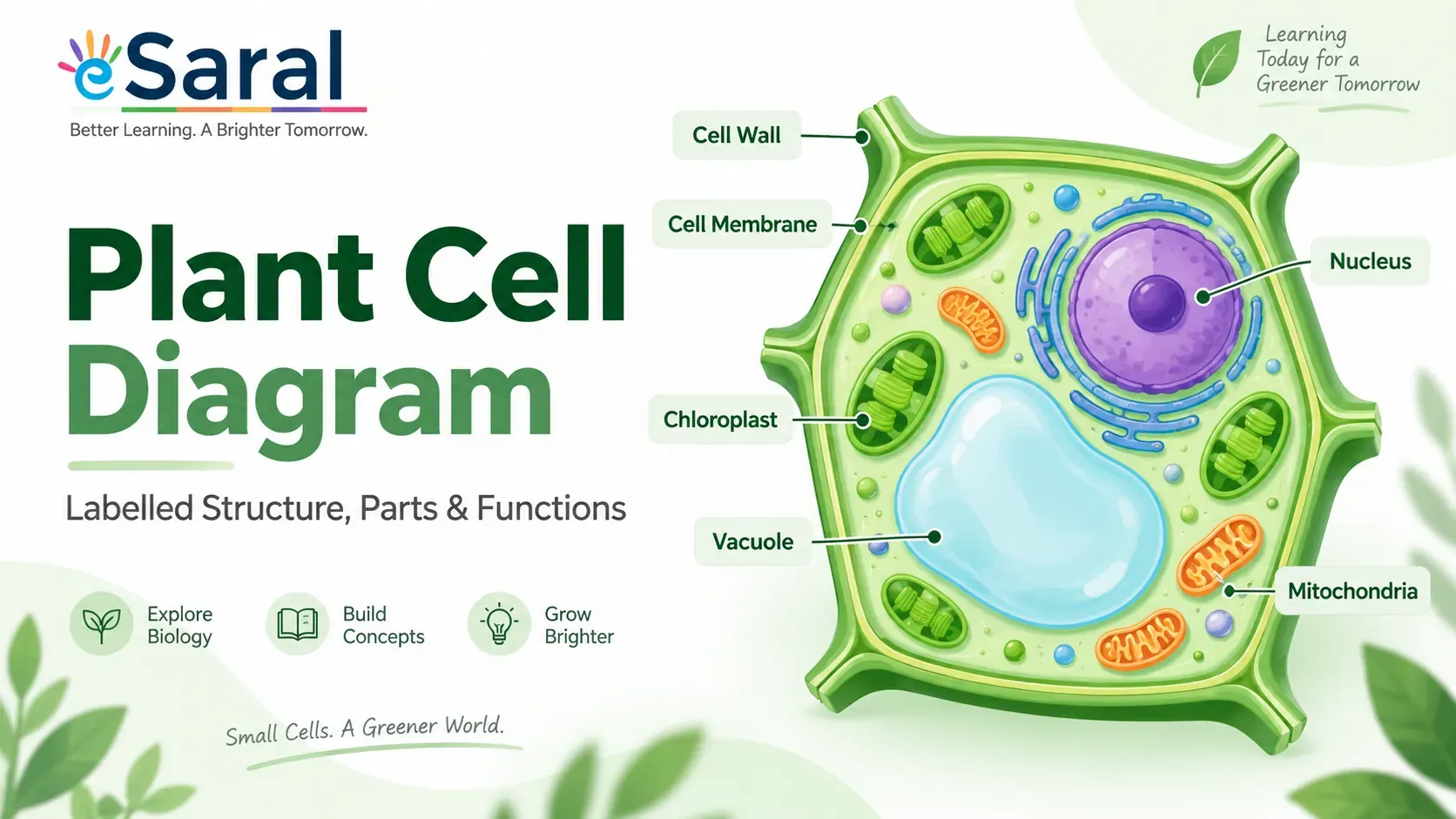
Plant Cell Diagram: Labelled Structure, Parts and Functions
Simple, labelled plant cell diagram with parts and functions. Covers plant cell structure for Class 6, 7, 8, 9, 10 and 11 students, CBSE-aligned.
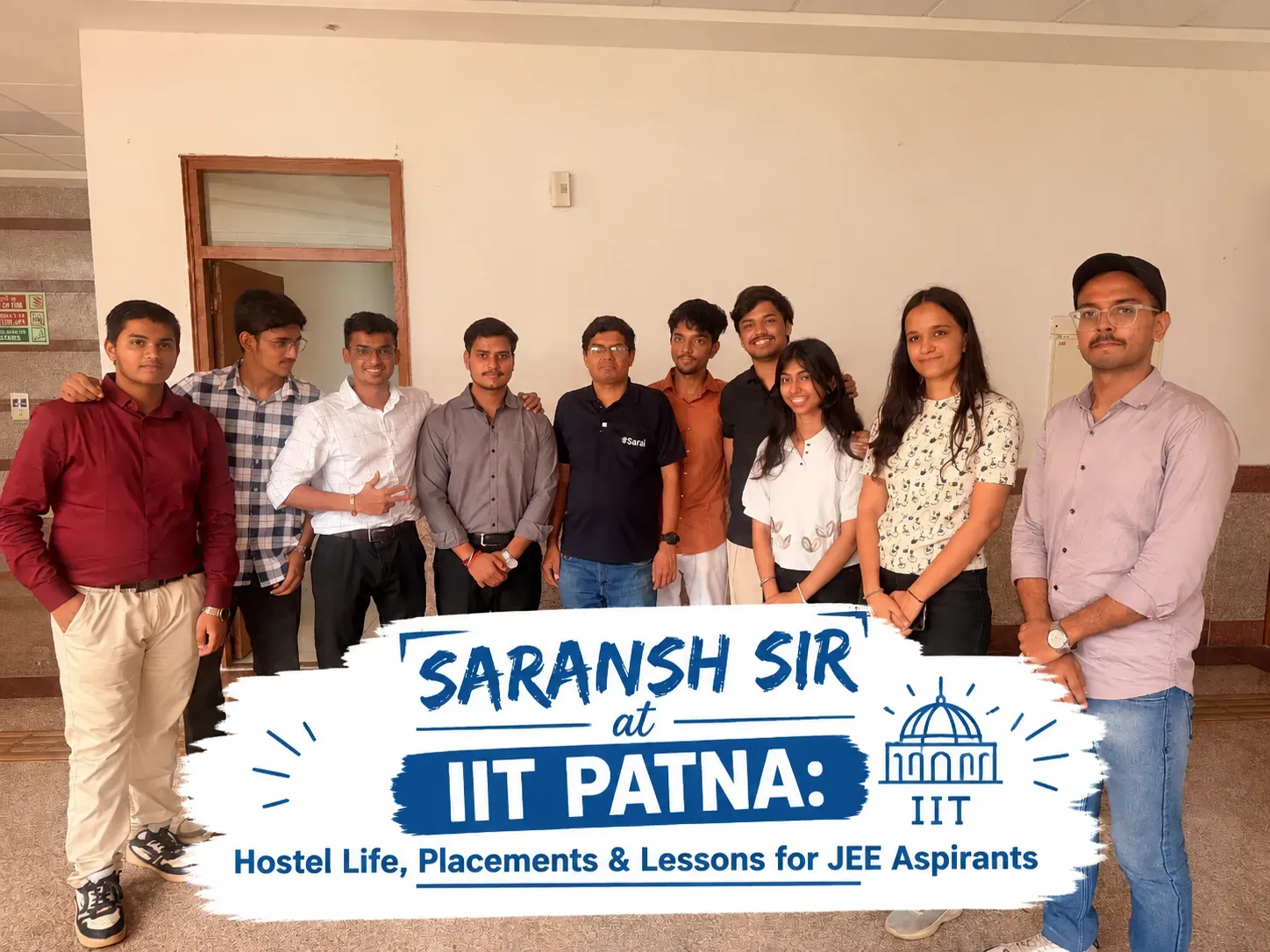
Saransh Gupta Sir's Visit to IIT Patna: Hostel Life, Placements & Lessons for JEE Aspirants
Inside Saransh Gupta Sir's IIT Patna visit — hostel life, the library, placements, internships, and real advice for JEE aspirants from students living the IIT dream.
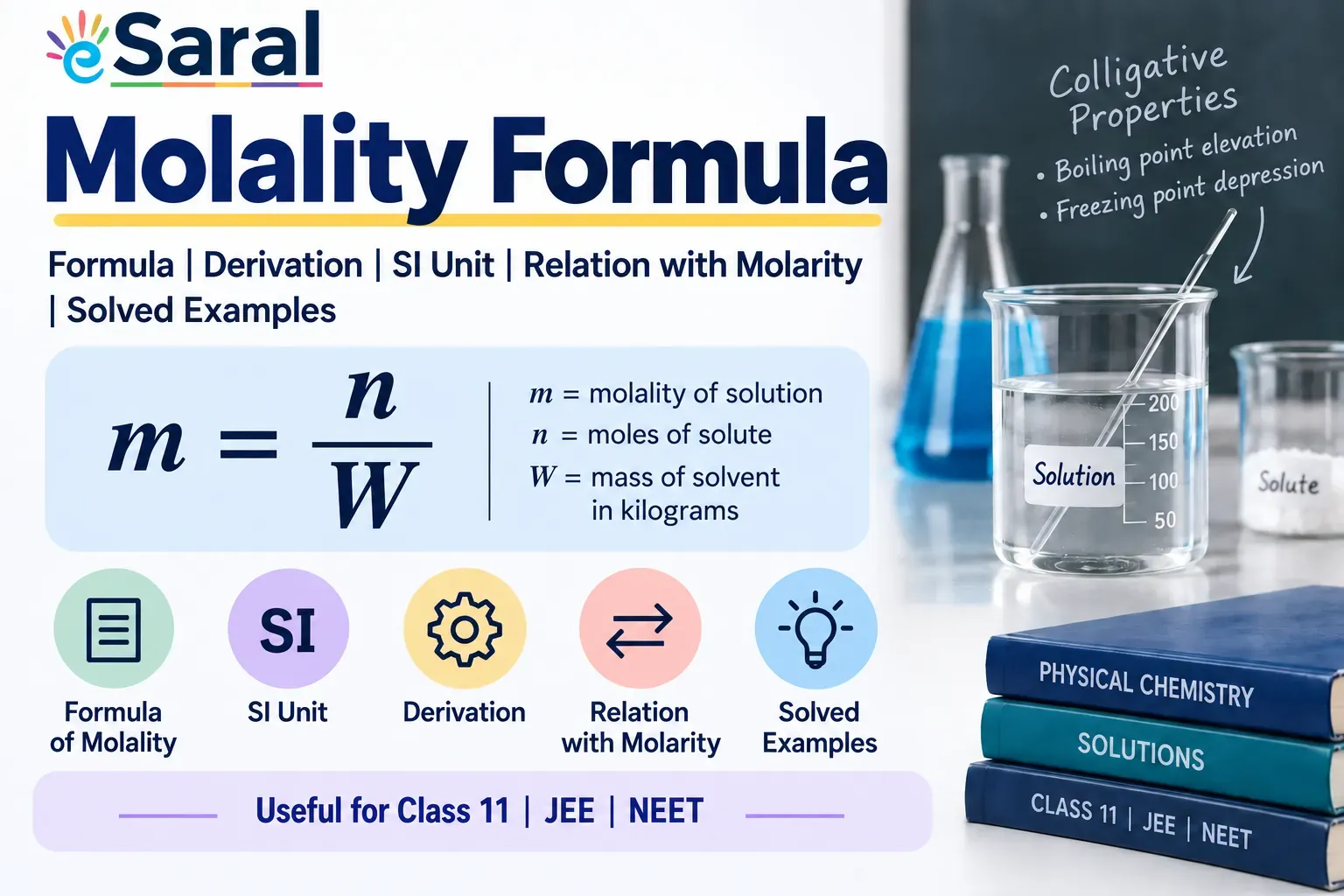
Molality Formula: Formula for Molality, Derivation & Solved Examples
Molality formula is $m = \dfrac{n}{W}$. Learn the formula of molality, its SI unit, derivation, relation with molarity, and solved examples for Class 11, JEE and NEET.
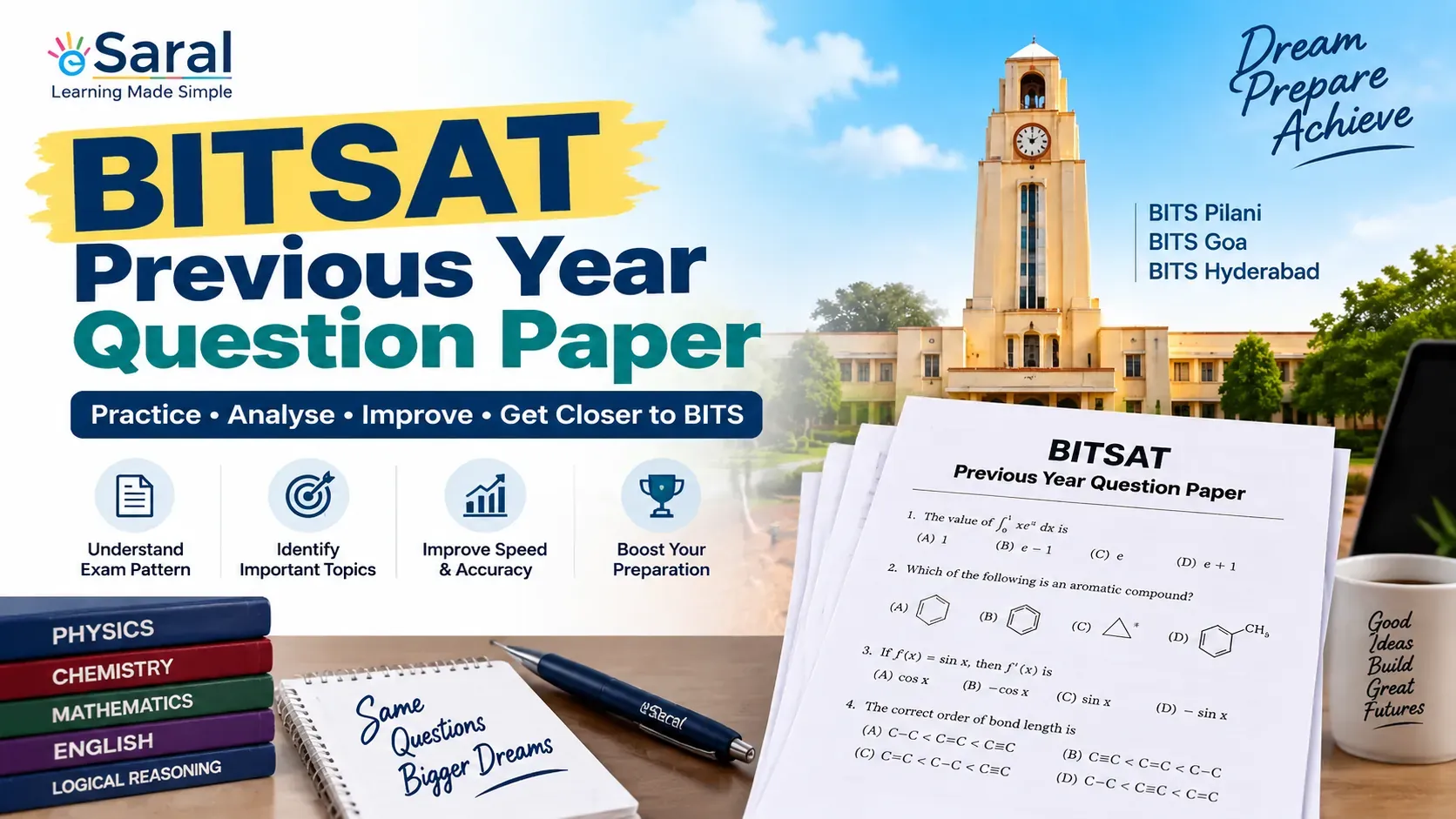
BITSAT Previous Year Question Paper PDF
Download BITSAT previous year question papers PDF. Get year-wise BITSAT PYQs, memory-based papers, exam pattern, and preparation tips to improve your BITSAT preparation.

Teachers’ Day 2026 at eSaral Gurukul: Celebrating the Bond Between Students, Teachers & Mentors
See how Teachers’ Day 2026 was celebrated at eSaral Gurukul, reflecting the bond among students, teachers, and mentors, and the role of guidance beyond academics.
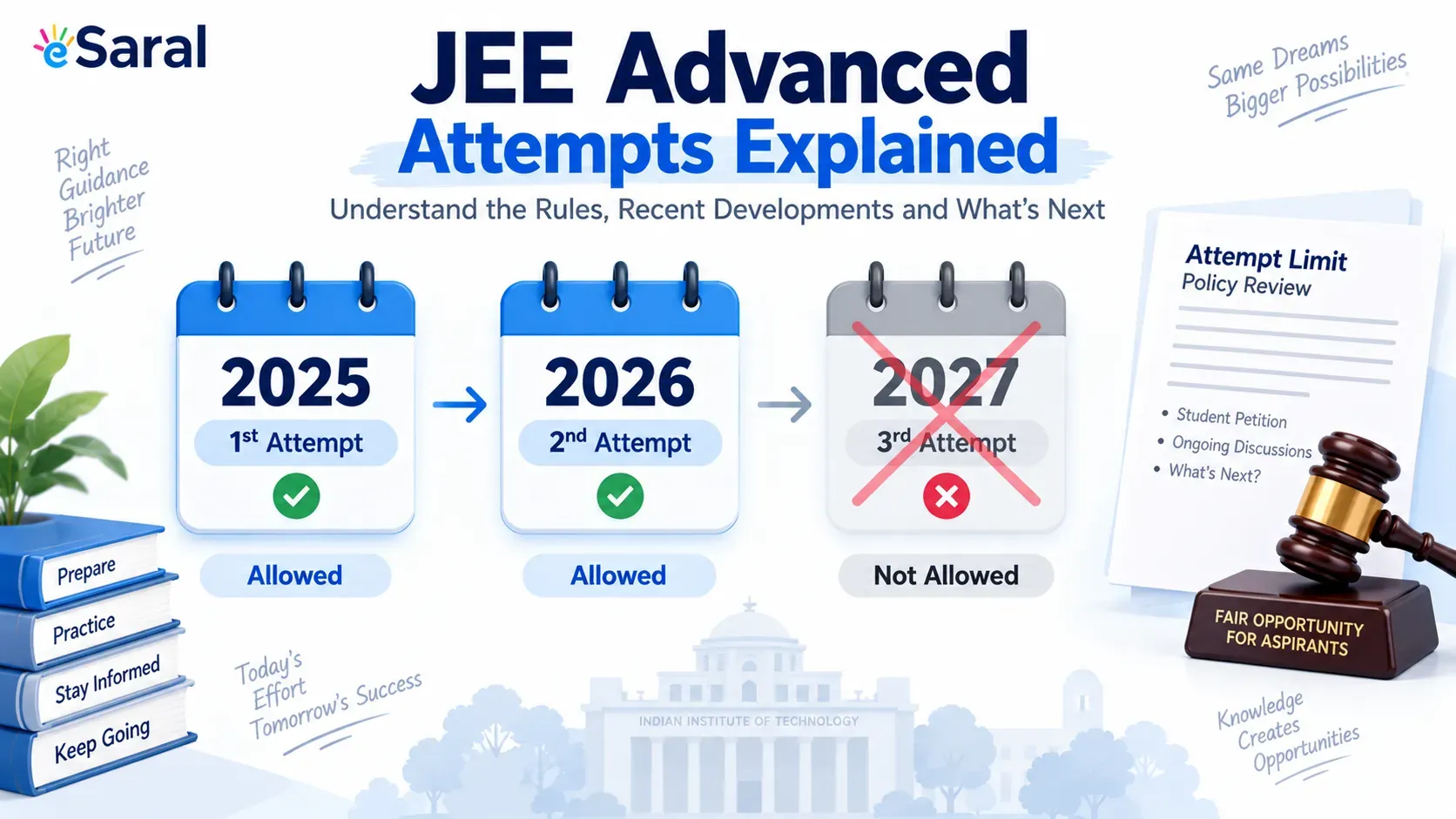
JEE Advanced Attempts: Can You Give It a Third Time? Rules Explained
JEE Advanced attempts: current rule is 2 consecutive years only: full eligibility criteria, the 2025 third-attempt controversy, and the latest 2026 petition news.

Best JEE Preparation App
Best JEE preparation app for Main & Advanced: AI mock tests, live doubt-solving, thousands of practice questions. JEE preparation app for droppers & Class 11-12.
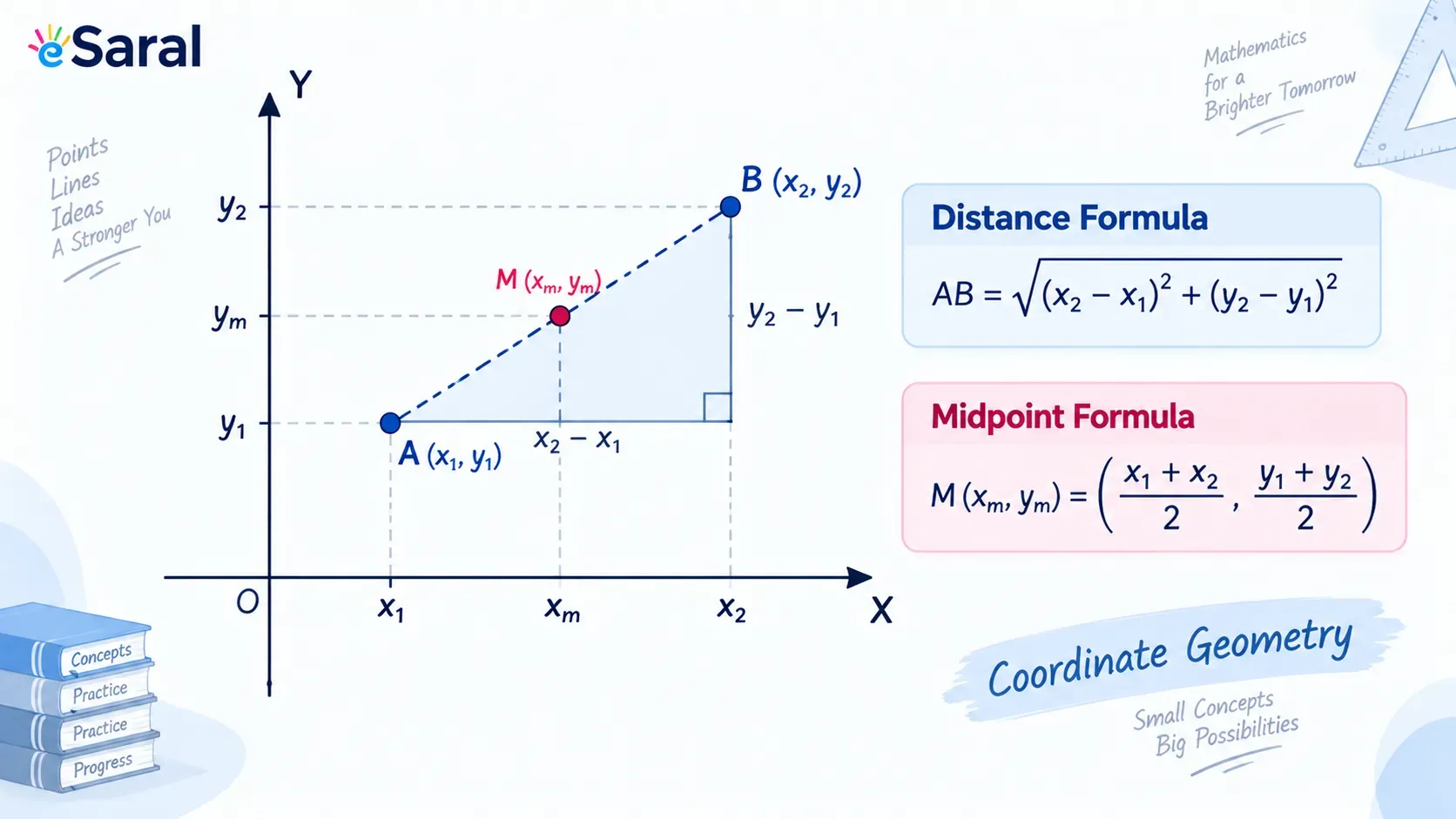
Coordinate Geometry Class 10: Formulas, Notes & Solved Examples
Coordinate geometry class 10: complete CBSE formulas — distance, section, midpoint and area of triangle — with derivation, notes and solved examples.
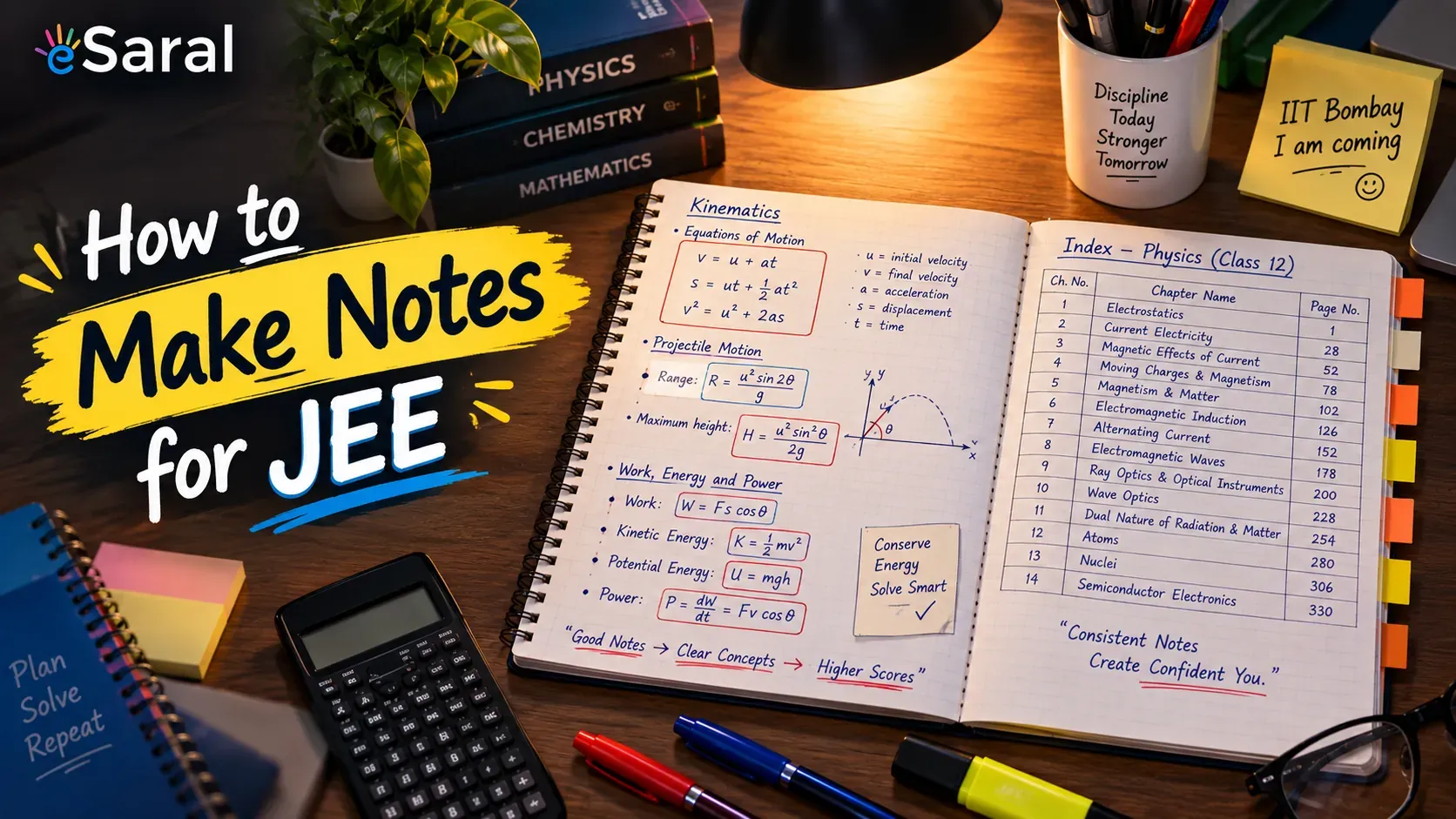
How to make Notes For JEE Smart Notes Strategy of an AIR 41
Learn how to make notes for JEE the way toppers do — indexing, shorthand, and smart short notes for JEE that cut revision time to just 5–7 days.
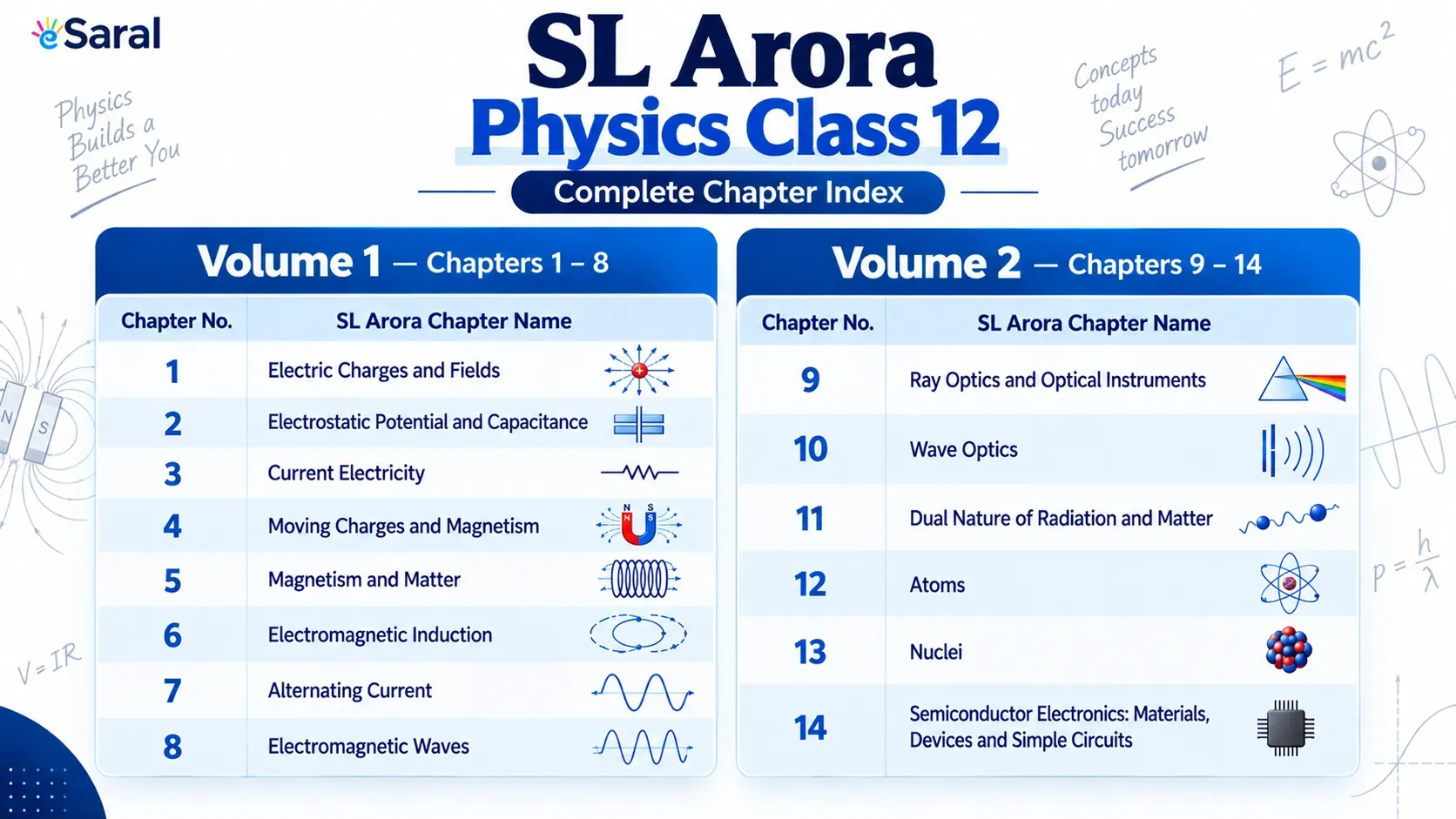
SL Arora Physics Class 12 Index – Chapter List for Volume 1 & 2
SL Arora Physics Class 12 index — complete chapter list for Volume 1 & 2, mapped to NCERT solutions for board, JEE Main, and NEET preparation.