
Body Fluids and Circulation - NEET Previous Year Questions with Complete Solutions

eSaral Academic and Editorial Team
Summary
Body Fluids and Circulation is one of the high-yield chapters in NEET-UG Biology, contributing 2–4 questions almost every year (NTA official analysis, 2017–2024). This chapter covers blood composition, the cardiac cycle, ECG interpretation, lymph, and circulatory disorders. Mastering the previous year's questions is one of the fastest ways to lock in marks on exam day.

eSaral › NEET › Biology › Body Fluids and Circulation Previous Year Questions with Complete Solutions

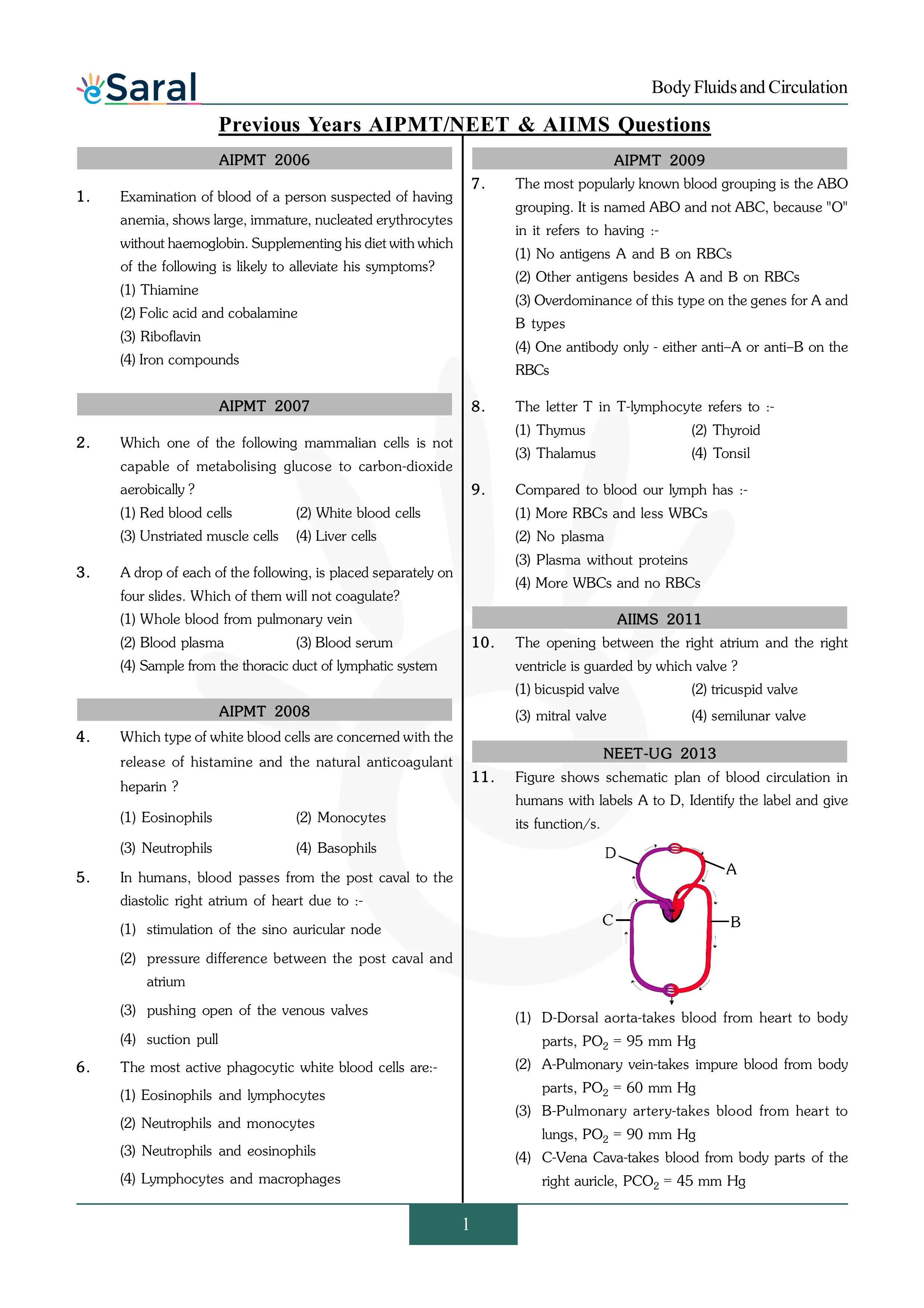
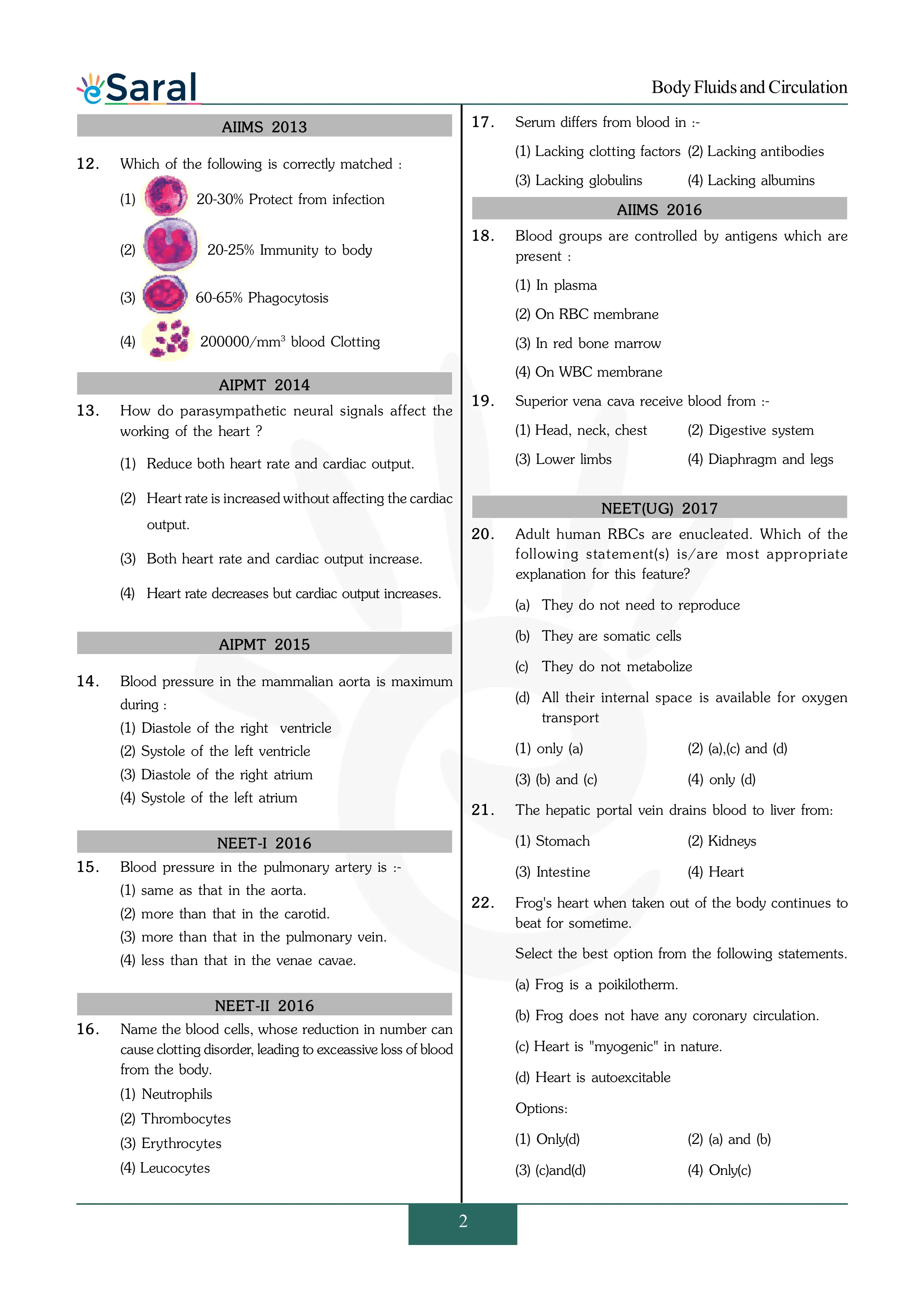
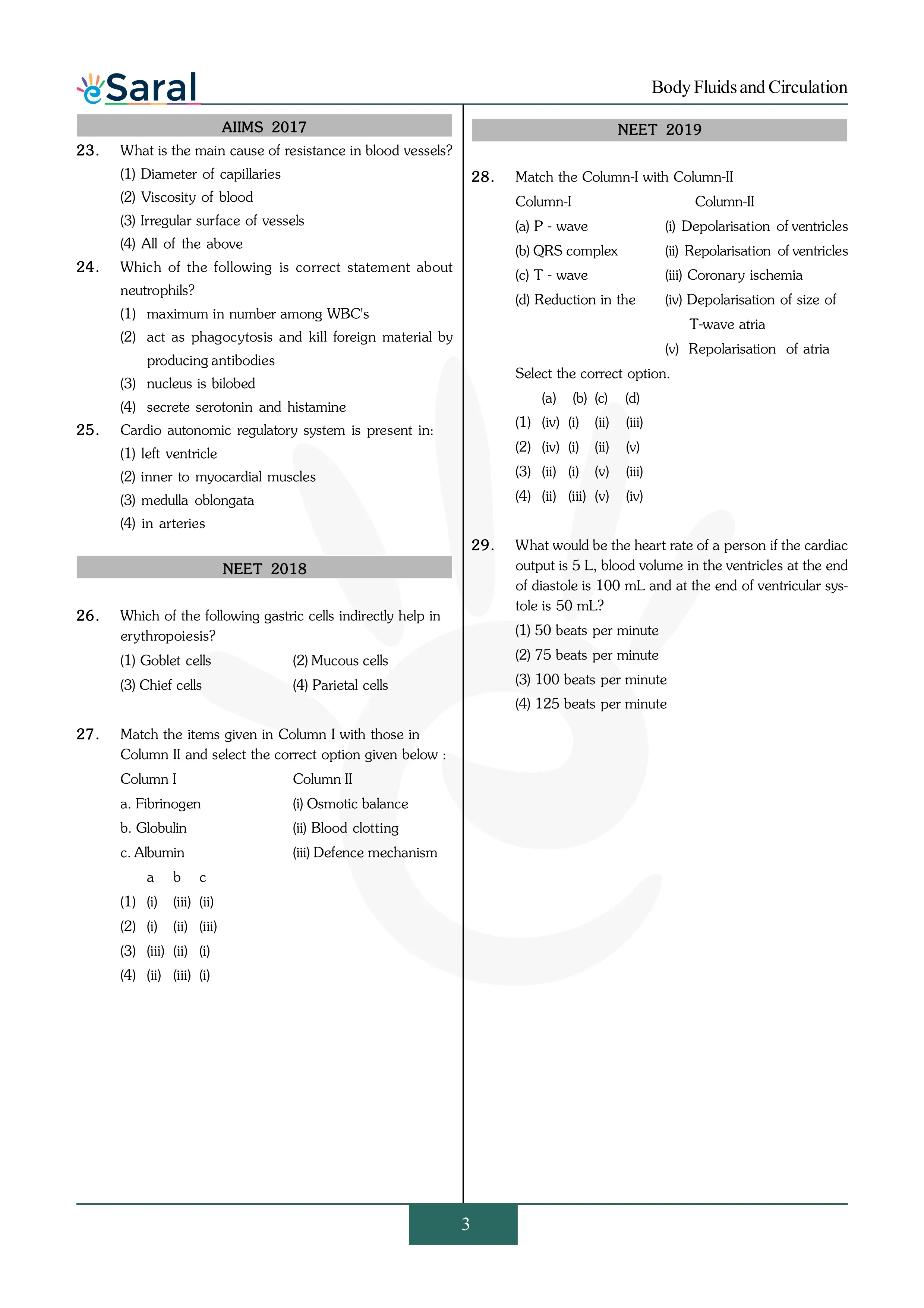
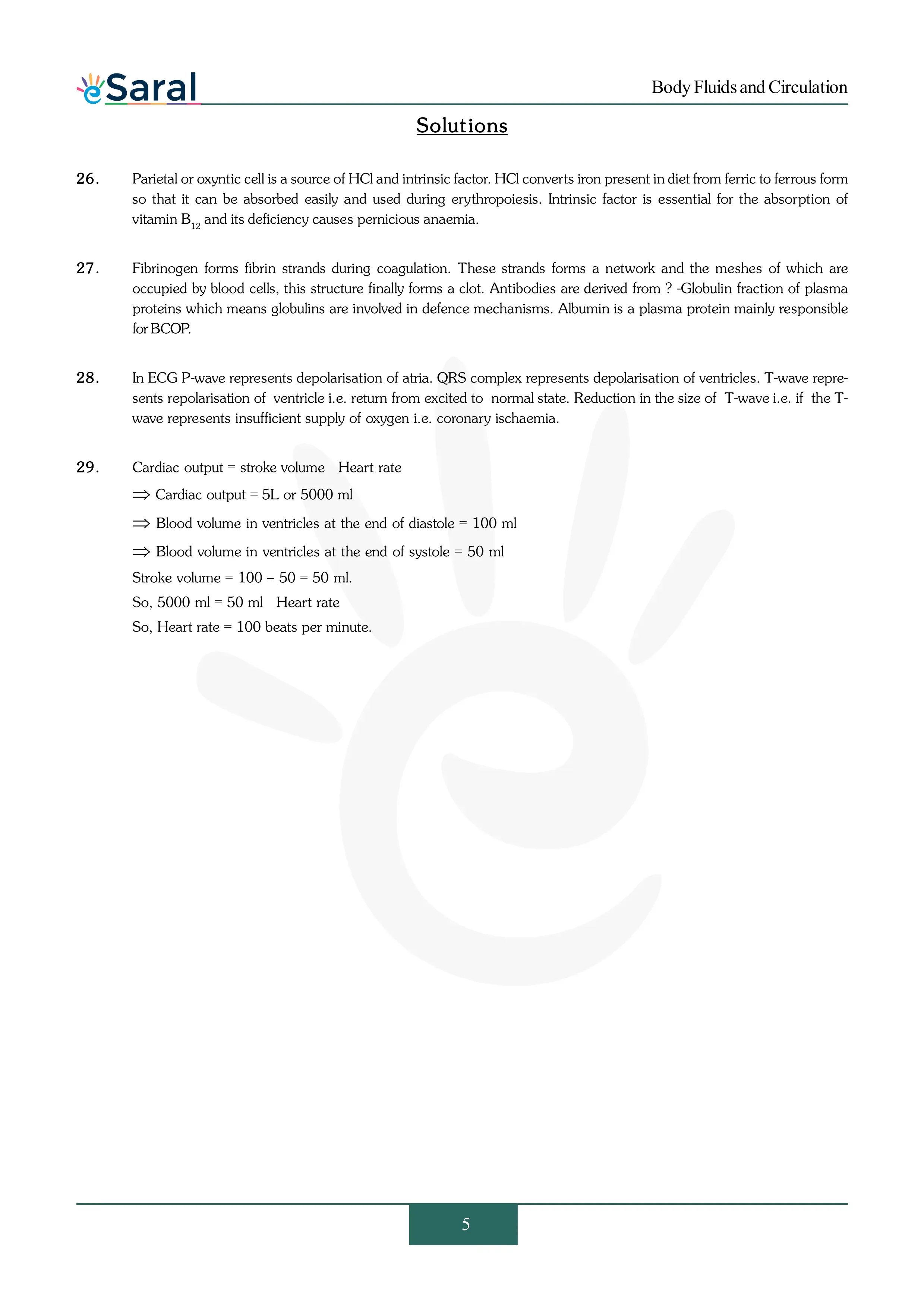
Here you will find Complete Body Fluids and Circulation NEET Previous Year Questions with detailed solutions.
Get complete NEET previous-year questions for Physics, Chemistry, and Biology.
You will find all the solutions at the end of this page

Frequently Asked Questions
Is Body Fluids and Circulation in Class 11 or Class 12 NEET syllabus?
Body Fluids and Circulation is a Class 11 chapter (Chapter 18, NCERT Biology Part II). It is included in the NTA NEET-UG Biology syllabus under the unit "Human Physiology." As per the revised NEET syllabus issued by NTA, this chapter remains fully examinable for NEET 2025 and NEET 2026.
Which topics from Body Fluids and Circulation are most important for NEET?
The most tested topics are: (1) cardiac cycle and heart sounds, (2) ECG waveform — P wave, QRS, T wave, (3) blood composition and plasma proteins, (4) ABO blood group system and Rh factor, and (5) lymph composition vs. plasma. These five areas cover approximately 70–75% of all questions asked from this chapter since 2013.
How many questions come from Body Fluids and Circulation in NEET?
On average, 2–3 questions appear from Body Fluids and Circulation in NEET-UG every year. In NEET 2021, the count rose to 4 questions. Based on NTA's question distribution since 2017, this chapter contributes roughly 8–12 marks across any 3-year preparation window, making it a reliable scoring chapter
Can I score full marks in Body Fluids and Circulation by solving only PYQs?
PYQs are necessary but not fully sufficient. Since NEET examiners sometimes introduce new application-level questions, pair PYQ practice with a thorough reading of the NCERT chapter. A reliable approach used by eSaral students: read NCERT → solve chapter test → solve 10 years of PYQs → revise flagged errors. This 4-step cycle typically takes 6–8 hours total for this chapter.
What is the difference between lymph and blood plasma in NEET Biology?
Lymph is essentially filtered blood plasma that has leaked out of capillaries into the interstitial spaces and returned via lymphatic vessels. The key differences NEET tests: lymph lacks RBCs, contains fewer proteins than plasma, and has a higher fat content after meals (due to lacteals absorbing dietary fats). Lymph also carries lymphocytes and plays a vital role in immunity.
What is the cardiac cycle duration and why does NEET ask about it?
The cardiac cycle lasts 0.8 seconds at a resting heart rate of 75 beats/minute. NEET tests this because it connects directly to cardiac output calculations and the relative duration of systole vs. diastole. Ventricular systole = 0.3 s, atrial systole = 0.1 s, and joint diastole = 0.4 s — remember these numbers as they appear in calculation-based MCQs.
Team eSaral
eSaral Academic and Editorial Team
Team eSaral is the collective author profile for educational content created by eSaral’s teachers and academic contributors. The team draws on expertise from IIT graduates, doctors, experienced educators and subject specialists to develop resources for JEE, NEET and school students. Our articles aim to explain concepts clearly and help students study with confidence.
Related Posts
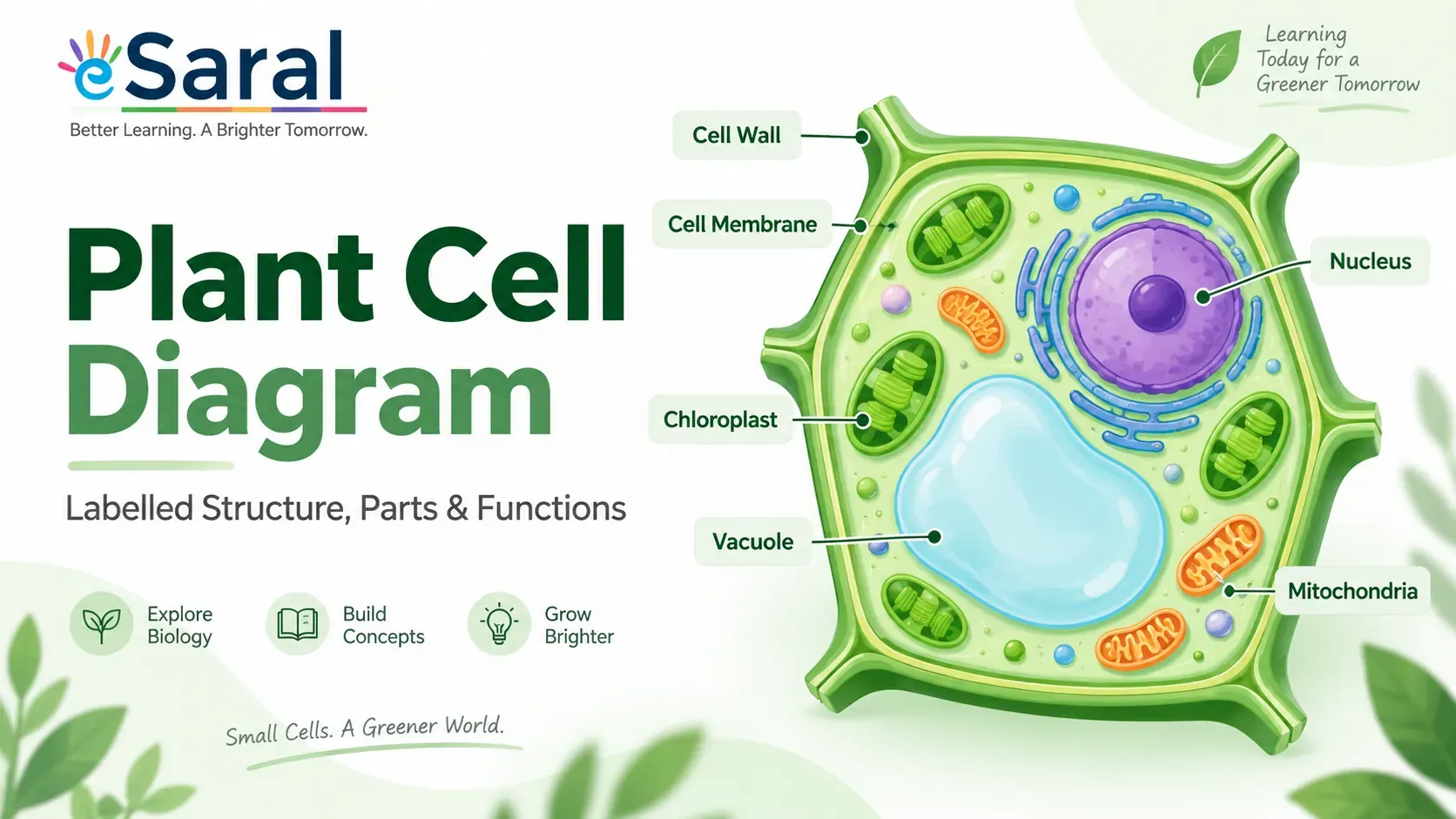
Plant Cell Diagram: Labelled Structure, Parts and Functions
Simple, labelled plant cell diagram with parts and functions. Covers plant cell structure for Class 6, 7, 8, 9, 10 and 11 students, CBSE-aligned.

Saransh Gupta Sir's Visit to IIT Patna: Hostel Life, Placements & Lessons for JEE Aspirants
Inside Saransh Gupta Sir's IIT Patna visit — hostel life, the library, placements, internships, and real advice for JEE aspirants from students living the IIT dream.
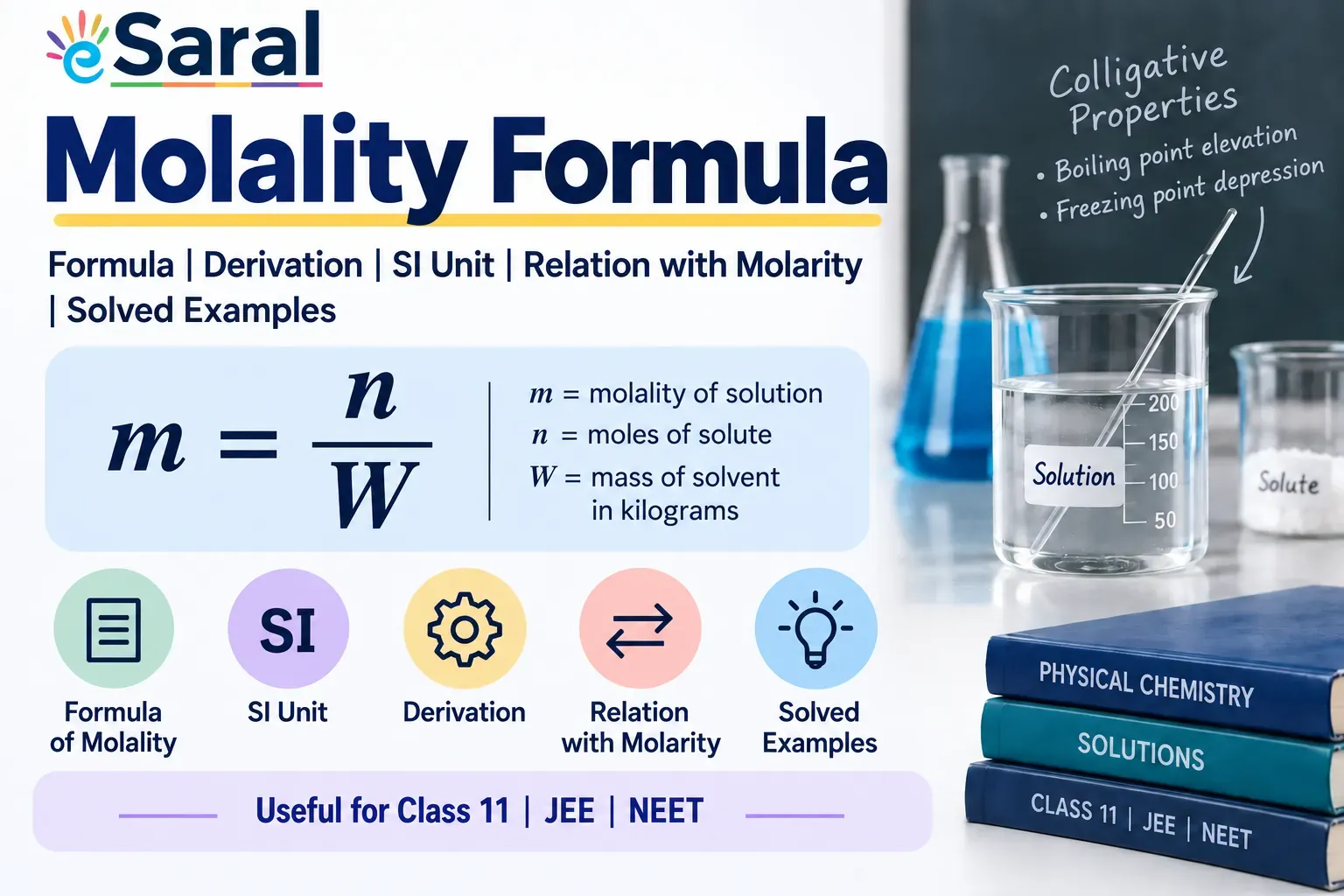
Molality Formula: Formula for Molality, Derivation & Solved Examples
Molality formula is $m = \dfrac{n}{W}$. Learn the formula of molality, its SI unit, derivation, relation with molarity, and solved examples for Class 11, JEE and NEET.
BITSAT Previous Year Question Paper PDF
Download BITSAT previous year question papers PDF. Get year-wise BITSAT PYQs, memory-based papers, exam pattern, and preparation tips to improve your BITSAT preparation.

Teachers’ Day 2026 at eSaral Gurukul: Celebrating the Bond Between Students, Teachers & Mentors
See how Teachers’ Day 2026 was celebrated at eSaral Gurukul, reflecting the bond among students, teachers, and mentors, and the role of guidance beyond academics.
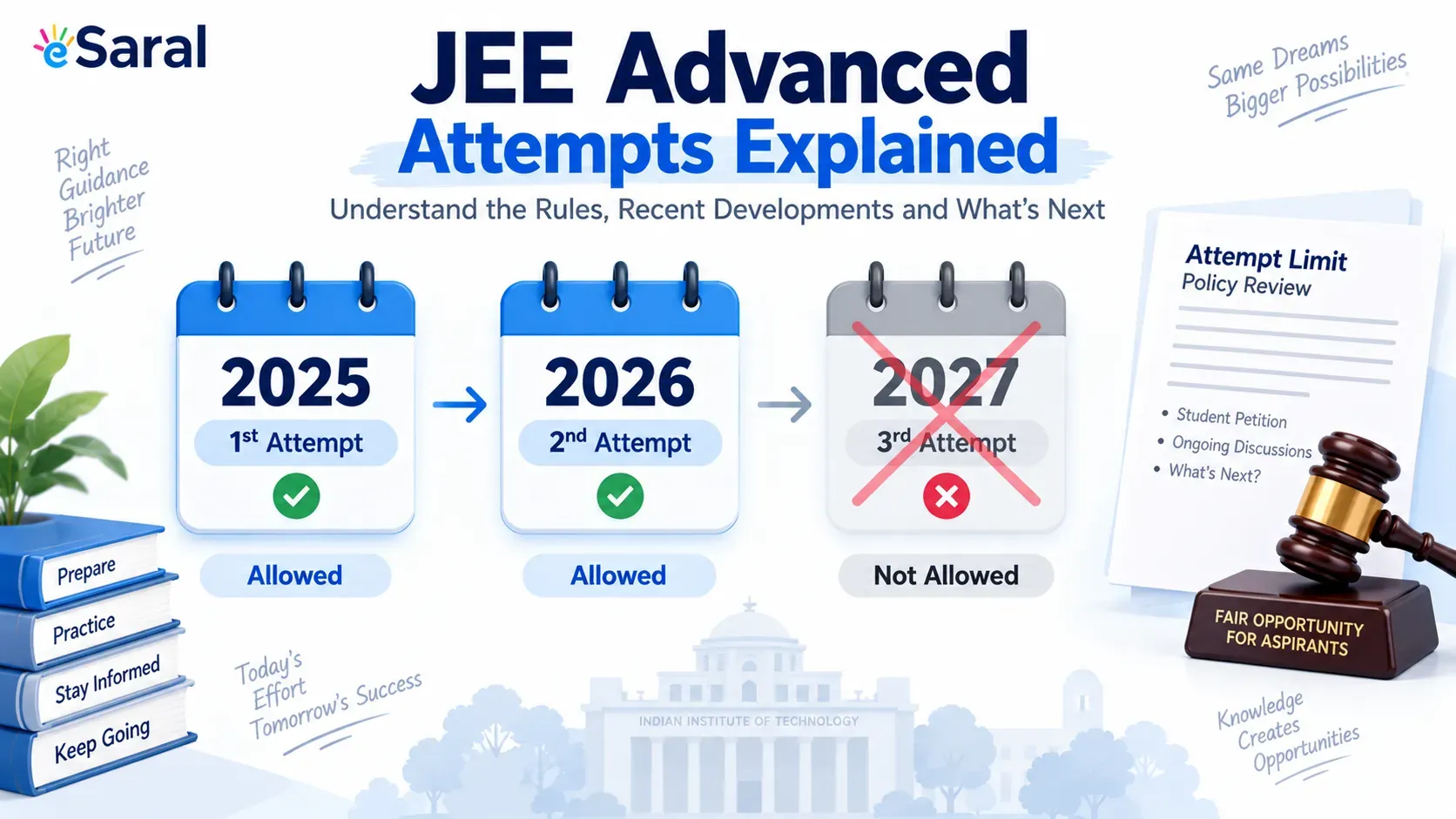
JEE Advanced Attempts: Can You Give It a Third Time? Rules Explained
JEE Advanced attempts: current rule is 2 consecutive years only: full eligibility criteria, the 2025 third-attempt controversy, and the latest 2026 petition news.

Best JEE Preparation App
Best JEE preparation app for Main & Advanced: AI mock tests, live doubt-solving, thousands of practice questions. JEE preparation app for droppers & Class 11-12.
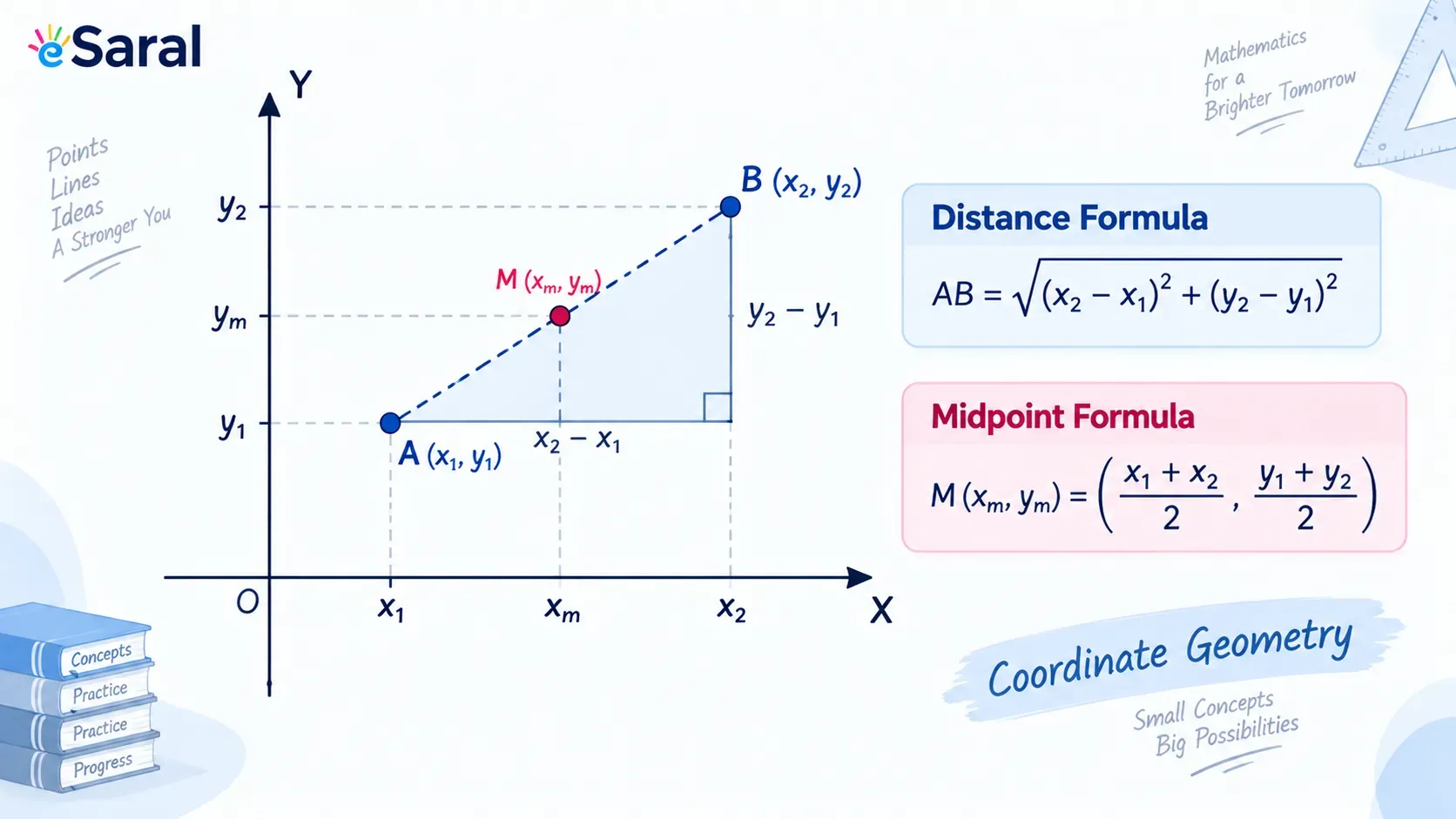
Coordinate Geometry Class 10: Formulas, Notes & Solved Examples
Coordinate geometry class 10: complete CBSE formulas — distance, section, midpoint and area of triangle — with derivation, notes and solved examples.
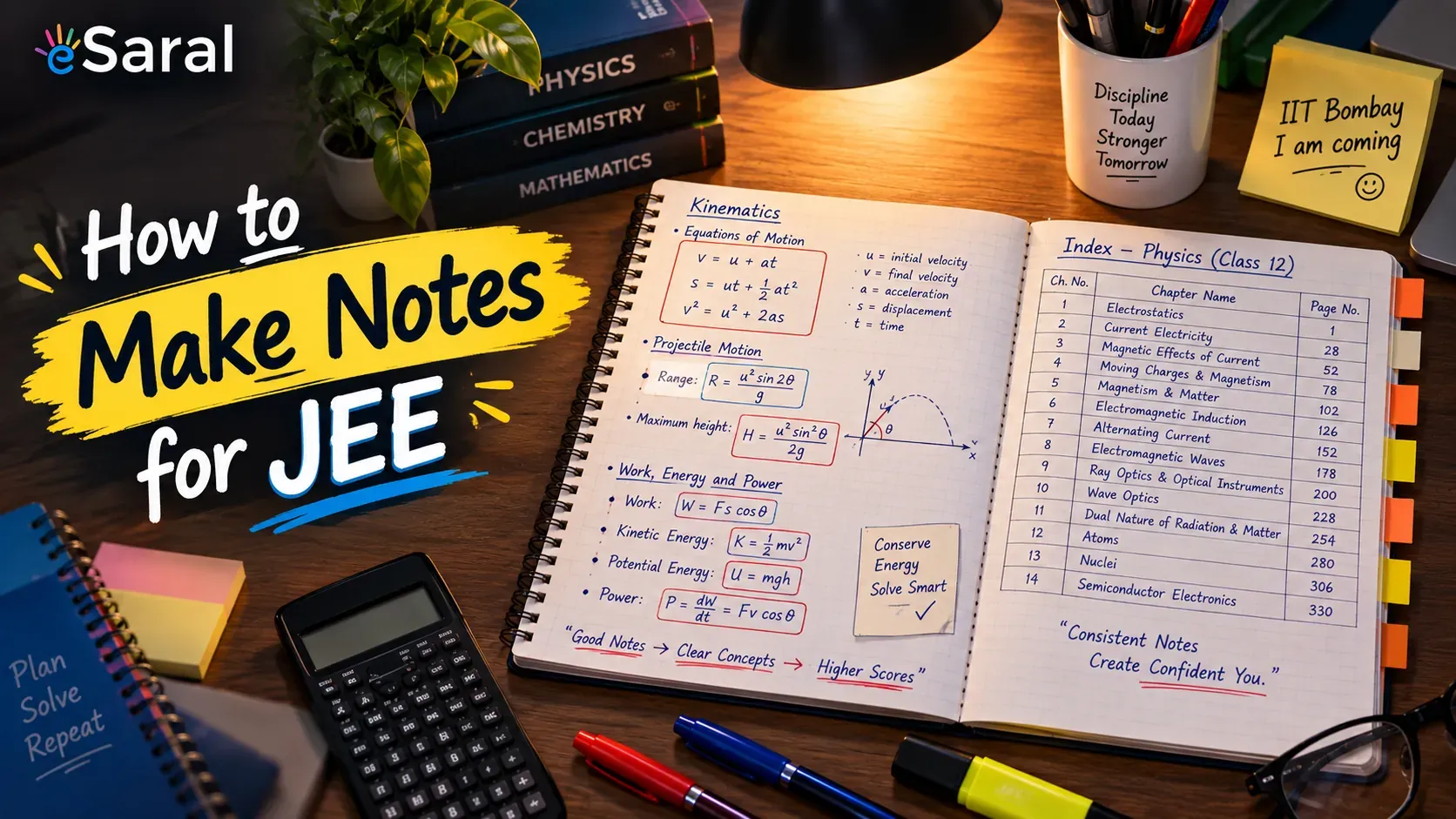
How to make Notes For JEE Smart Notes Strategy of an AIR 41
Learn how to make notes for JEE the way toppers do — indexing, shorthand, and smart short notes for JEE that cut revision time to just 5–7 days.
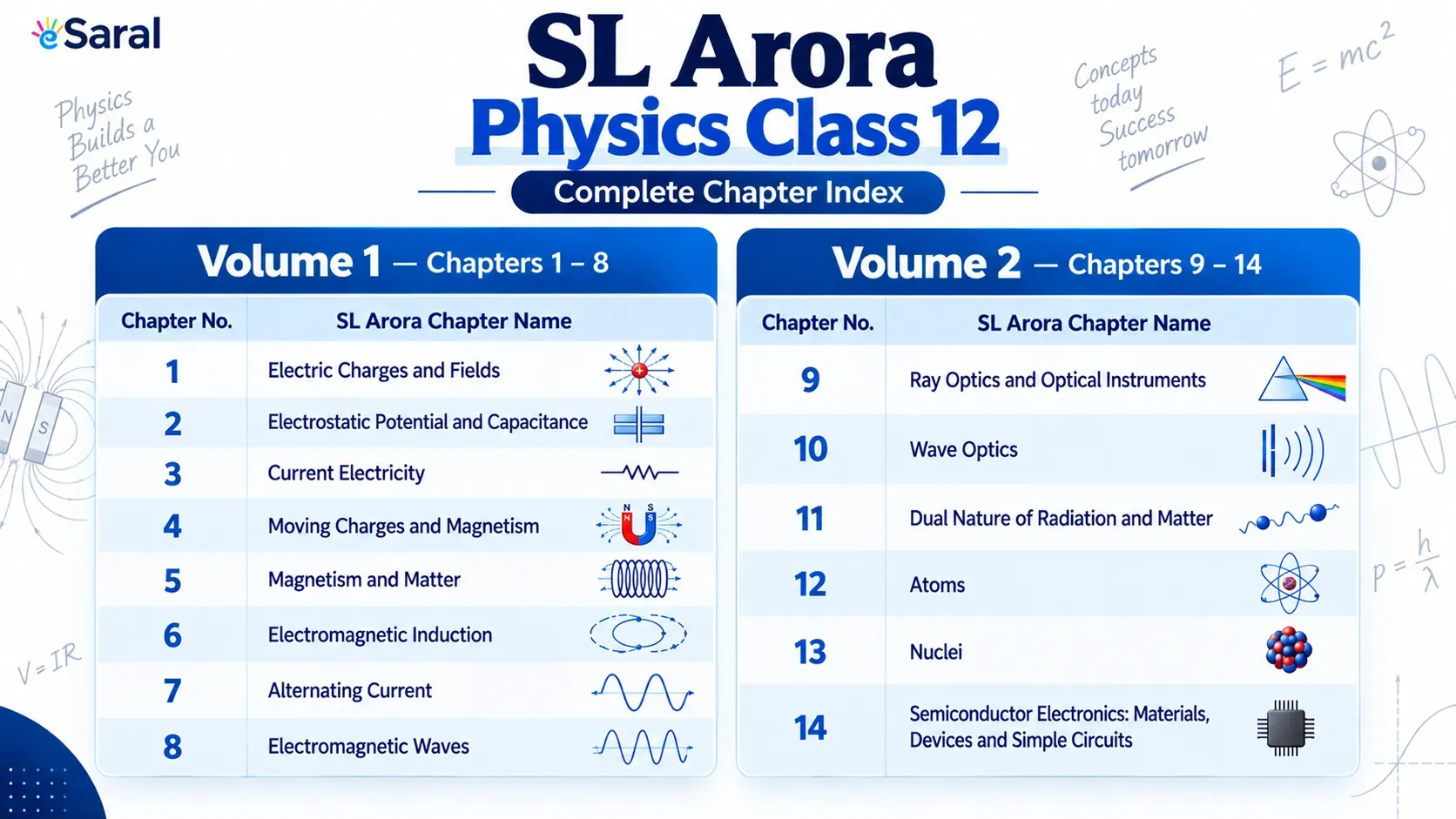
SL Arora Physics Class 12 Index – Chapter List for Volume 1 & 2
SL Arora Physics Class 12 index — complete chapter list for Volume 1 & 2, mapped to NCERT solutions for board, JEE Main, and NEET preparation.