
Important Questions for Class 10 Science Chapter 7 How do Organisms Reproduce? - PDF Download

eSaral Academic and Editorial Team
Science is an important and tough subject taught in school. In this chapter 7, you will study different processes of reproduction. Reproduction is an important activity of the organisms because, in this way, you can increase your population.
eSaral is a leading company that provides students with all the important study materials. Our expert teachers have prepared the Important Questions Class 10 Science Chapter 7 to help students in practice. They collected the questions from different sources such as the textbook exercise, CBSE syllabus, CBSE sample papers, NCERT examples and important reference books to make students note understandable. They have solved the questions, and experienced professionals have further checked the answers to make sure the best quality of the content. Thus, the Important Questions Class 10 Science Chapter 7 will help students boost their confidence.
We provide all the important study materials related to CBSE and NCERT here. You can download these important study materials on our official website. We provide CBSE syllabus, CBSE sample papers, CBSE past years’ question papers, CBSE revision notes, CBSE extra questions, NCERT books, NCERT exemplars, NCERT important questions, important formulas, and many more.
Important Topics & Sub-topics of How do Organisms Reproduce? Class 10 Science
Certainly! Let's delve into more detail on each topic and sub-topic:
1. Reproduction in Organisms:
- Types of Reproduction:
- Asexual Reproduction:
- Binary fission (e.g., amoeba).
- Budding (e.g., hydra).
- Fragmentation (e.g., Spirogyra).
- Spore formation (e.g., Rhizopus).
2. Sexual Reproduction in Flowering Plants:
- Flower Structure:
- Parts of a flower (sepals, petals, stamens, pistil).
- Pollination:
- Self-pollination.
- Cross-pollination.
- Fertilization:
- Process of pollen tube formation and fusion of male and female gametes.
- Seed Formation and Dispersal:
- Structure of a seed.
- Methods of seed dispersal.
3. Human Reproduction:
- Male Reproductive System:
- Structure and functions of testes, vas deferens, etc.
- Female Reproductive System:
- Structure and functions of ovaries, fallopian tubes, uterus, etc.
- Menstrual Cycle:
- Phases and hormonal regulation.
- Fertilization and Embryonic Development:
- Fusion of gametes and early stages of embryonic development.
- Pregnancy and Childbirth:
- Gestation period.
- Stages of childbirth.
4. Reproductive Health:
- Importance of Reproductive Health:
- Significance for overall well-being.
- Sexually Transmitted Diseases (STDs):
- Common STDs and preventive measures.
- Birth Control Methods:
- Different methods and their effectiveness.
5. Reproduction in Animals:
- Modes of Reproduction:
- Sexual and asexual reproduction.
- Life Cycle Patterns:
- Metamorphosis (e.g., frogs).
- Direct development (e.g., mammals).
- Examples of Reproductive Strategies:
- Oviparous and viviparous animals.
6. Reproductive Health and Awareness:
- Importance of Reproductive Health Education:
- Promoting awareness.
- Issues Related to Adolescence and Reproduction:
- Emotional and physical aspects.
7. Heredity and Evolution:
- Basics of Genetics:
- Genes, alleles, and chromosomes.
- Inheritance Patterns:
- Mendel's laws (law of segregation, law of independent assortment).
- Evolution and Evidences:
- Fossils, embryology, homologous structures.
Studying these topics in detail provides a comprehensive understanding of the mechanisms and significance of reproduction in various organisms, spanning both the plant and animal kingdoms.
Tips to Solve Class 10 Science Chapter 7 How do Organisms Reproduce?
Certainly! Here are some tips to help you effectively solve Class 10 Science Chapter 7, "How do Organisms Reproduce?":
1. Understand the Basics: Ensure a clear understanding of fundamental concepts like types of reproduction, sexual and asexual reproduction, and key terminology.
2. Visualize Processes: Use diagrams and flowcharts to visualize processes such as pollination, fertilization, and embryonic development. This can aid in better comprehension and retention.
3. Practice Diagram Drawing: Practice drawing labeled diagrams of reproductive organs, flower structures, and any other illustrations mentioned in the chapter. This is especially relevant for topics like human reproduction and plant reproduction.
4. Memorize Key Definitions: Memorize important definitions and terms related to reproduction. This can be crucial for answering theoretical questions and providing accurate explanations.
5. Solve Numerical Problems: If the chapter includes numerical problems, practice solving them. Understand the underlying concepts and formulas related to reproductive processes.
6. Create Concept Maps: Develop concept maps or charts to interconnect different sub-topics within the chapter. This helps in visualizing the relationships between concepts.
7. Review Life Cycles: Understand and review life cycles of organisms discussed in the chapter. Pay attention to the differences between life cycle patterns, such as metamorphosis and direct development.
8. Focus on Human Reproduction: Human reproduction is often a significant part of this chapter. Pay extra attention to the details of the male and female reproductive systems, menstrual cycle, and stages of pregnancy.
9. Practice Previous Year Papers: Solve previous years' question papers to understand the exam pattern and types of questions asked. This can also help in managing time during the actual exam.
10. Clarify Doubts: If you have any doubts or uncertainties, seek clarification from your teacher or classmates. Understanding the concepts thoroughly is key to performing well.
11. Time Management during Exam: Allocate time wisely during the exam. Start with questions you are most confident about to build momentum and ensure you have time for all sections.
12. Revise Regularly: Regular revision is crucial. Create a revision schedule leading up to the exam to reinforce your understanding of the chapter.
Remember, a combination of conceptual understanding, practical application, and effective revision will contribute to your success in solving questions related to Class 10 Science Chapter 7.
Benefits of Solving Class 10 Science Chapter 7 Important Questions with Answers
Practice is very important because it helps you in many ways, and helps them generate interest in the subject matter. The exercises given in the textbook have limited questions, and students must seek help from other sources to improve their exam preparation.There will be many benefits to solving the questions. The benefits of solving the Important Questions Class 10 Science Chapter 7 are-
- Our experts have collected the questions from different sources so that students can solve a wide variety of questions. They have collected the questions from the textbook, CBSE sample papers, CBSE previous years’ question papers and important reference books. Thus, you don’t have to search for questions in various sources, but they will find them in a single pdf. Thus, the Chapter 7 Class 10 Science Important Questions will help students solve different questions and boost their confidence for the exams.
- The experts have not only collected the questions, but they have solved the questions as well. They have written the answers following CBSE guidelines and explained each question in a simple way. Experienced professionals have further checked the answers to ensure the best quality of the content given to the students. So, you can follow the answers if you cannot solve the questions. Students can also check their answers against the ones provided by our expertsThus, the Chapter 7 Class 10 Science Important Questions will help to clear their doubts.
- Our team has tried to include every important concept of the chapter while making the question series. They have taken help from many sources to include as many questions as possible. You must practise questions to score better in exams because it will help you enhance your confidence and clarify their doubts. Solving questions will also help you generate interest in the subject matter. Thus, the Class 10 Science Chapter 7 Important Questions will help them take their preparation to another level.
Frequently Asked Questions
Question 1. What are the main concepts of Class 10 Science Chapter 7?
Answer: In this chapter 7, you will study different reproduction processes. Every organism reproduces to increase its own population. It is very important for the survival of the species. There are so many different reproduction processes that depend on the organism’s complexity. For instance, unicellular living beings use fissures to produce the same organism. The complexity of the reproductive system also increases with the complexity of organisms. Mammals and other developed living beings, including human beings, use the sexual reproduction process. You will also study human reproduction systems. You should practise questions from different sources to boost your exam preparation and can follow the Important Questions Class 10 Science Chapter 7 prepared by our experts.
Question 2. How can the question series help students?
Answer: The experts have made these important question series to help students in practise. They collected the questions from many different sources, such as the textbook exercise, CBSE sample papers, CBSE past years’ question papers, and important reference books. They have also solved the questions so that you can follow the answers. Experienced professionals have further checked the solutions to ensure the best quality of the content to the students. Thus, the Important Questions Class 10 Science Chapter 7 will help students boost their confidence, clarify their doubts, and improve their preparation for the exams.
Team eSaral
eSaral Academic and Editorial Team
Team eSaral is the collective author profile for educational content created by eSaral’s teachers and academic contributors. The team draws on expertise from IIT graduates, doctors, experienced educators and subject specialists to develop resources for JEE, NEET and school students. Our articles aim to explain concepts clearly and help students study with confidence.
Related Posts
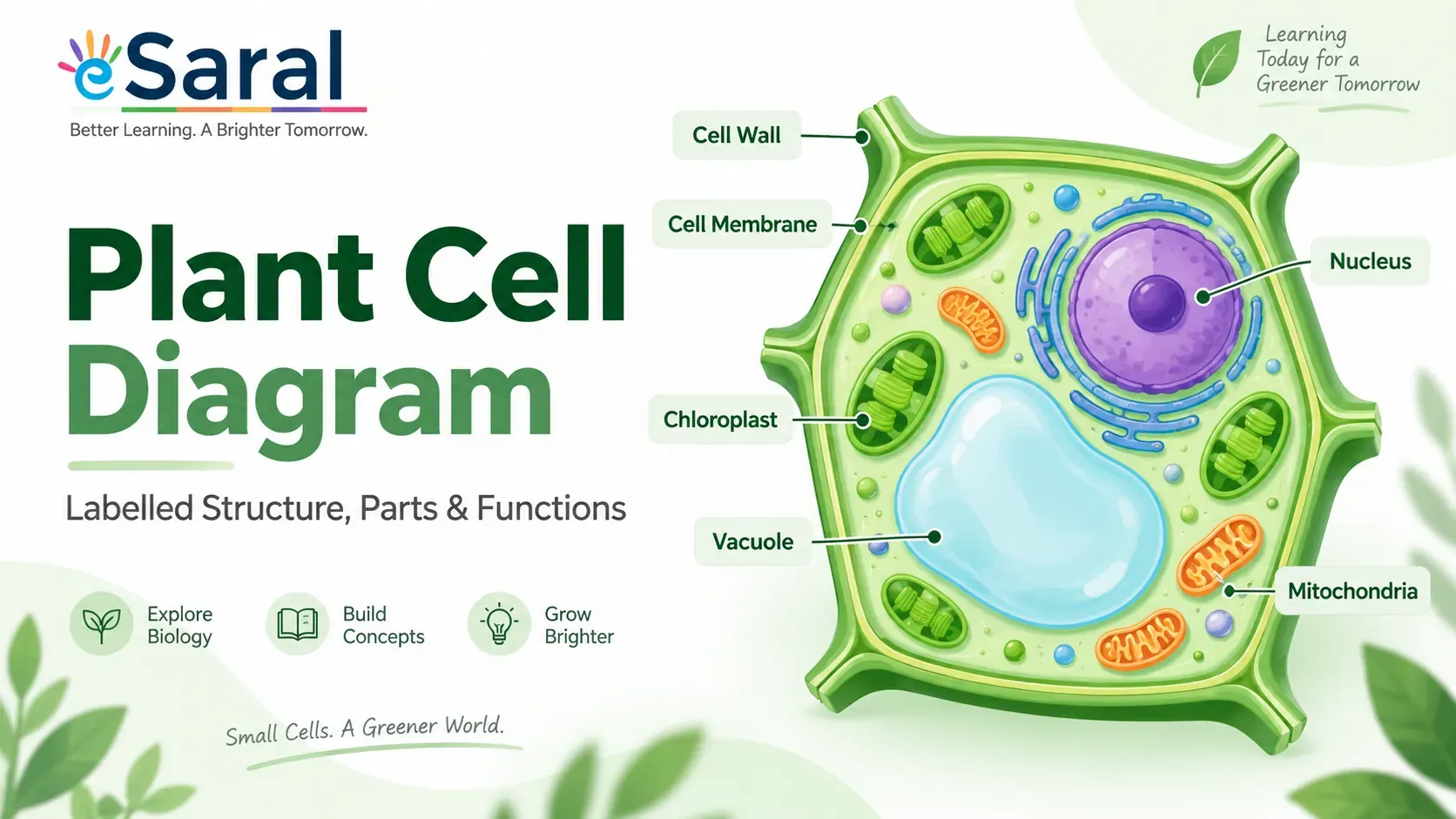
Plant Cell Diagram: Labelled Structure, Parts and Functions
Simple, labelled plant cell diagram with parts and functions. Covers plant cell structure for Class 6, 7, 8, 9, 10 and 11 students, CBSE-aligned.

Saransh Gupta Sir's Visit to IIT Patna: Hostel Life, Placements & Lessons for JEE Aspirants
Inside Saransh Gupta Sir's IIT Patna visit — hostel life, the library, placements, internships, and real advice for JEE aspirants from students living the IIT dream.
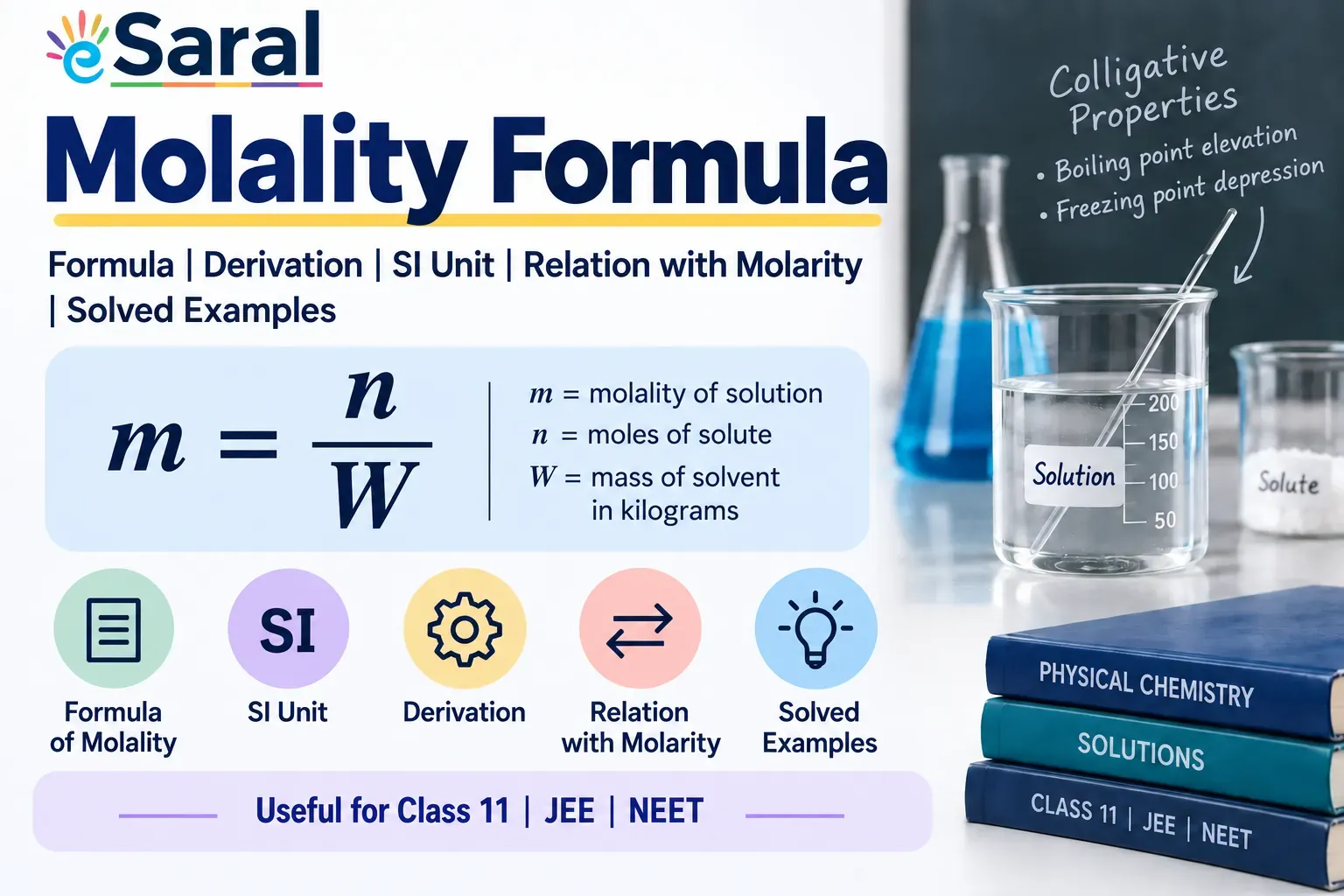
Molality Formula: Formula for Molality, Derivation & Solved Examples
Molality formula is $m = \dfrac{n}{W}$. Learn the formula of molality, its SI unit, derivation, relation with molarity, and solved examples for Class 11, JEE and NEET.
BITSAT Previous Year Question Paper PDF
Download BITSAT previous year question papers PDF. Get year-wise BITSAT PYQs, memory-based papers, exam pattern, and preparation tips to improve your BITSAT preparation.

Teachers’ Day 2026 at eSaral Gurukul: Celebrating the Bond Between Students, Teachers & Mentors
See how Teachers’ Day 2026 was celebrated at eSaral Gurukul, reflecting the bond among students, teachers, and mentors, and the role of guidance beyond academics.
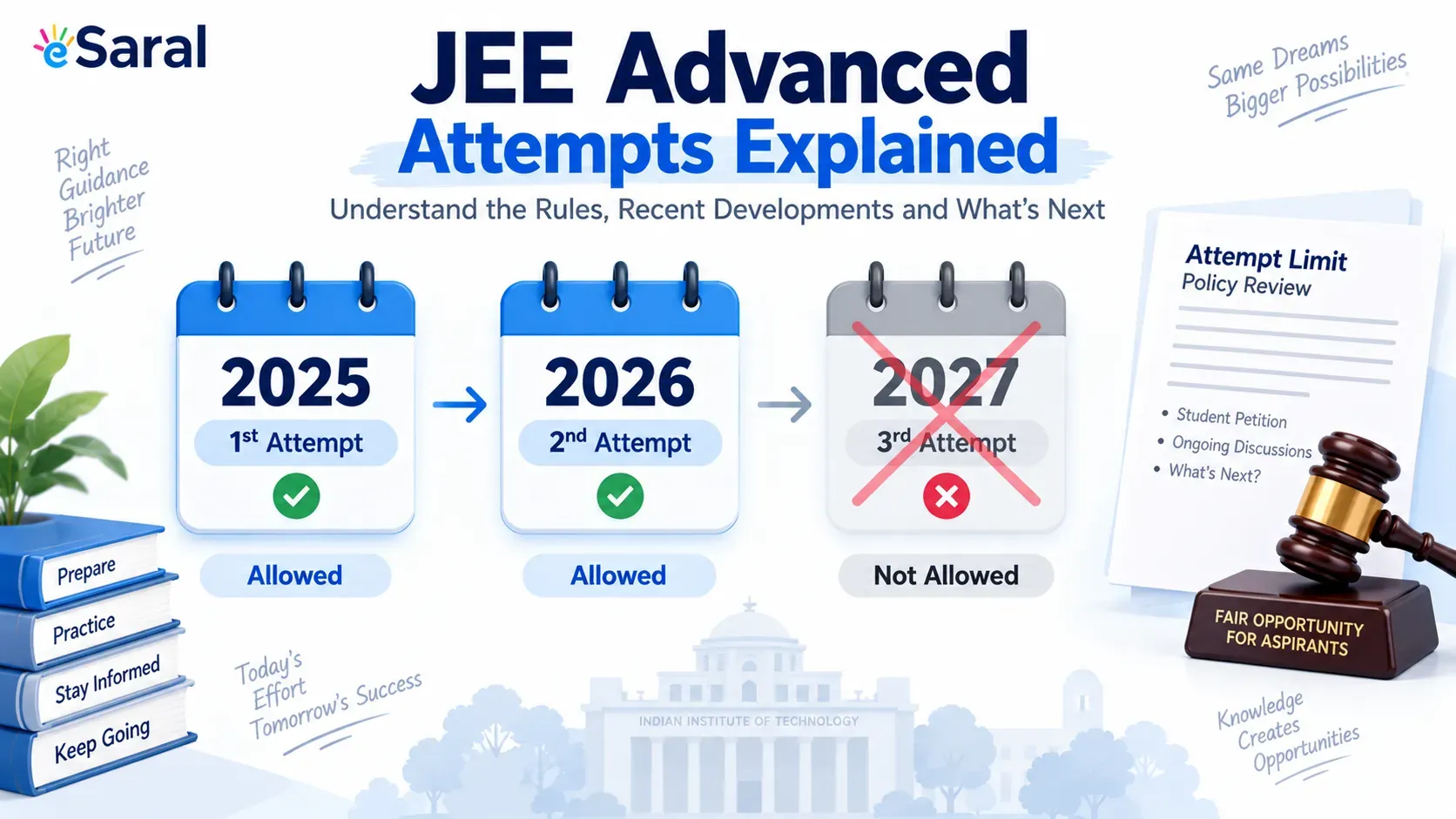
JEE Advanced Attempts: Can You Give It a Third Time? Rules Explained
JEE Advanced attempts: current rule is 2 consecutive years only: full eligibility criteria, the 2025 third-attempt controversy, and the latest 2026 petition news.

Best JEE Preparation App
Best JEE preparation app for Main & Advanced: AI mock tests, live doubt-solving, thousands of practice questions. JEE preparation app for droppers & Class 11-12.
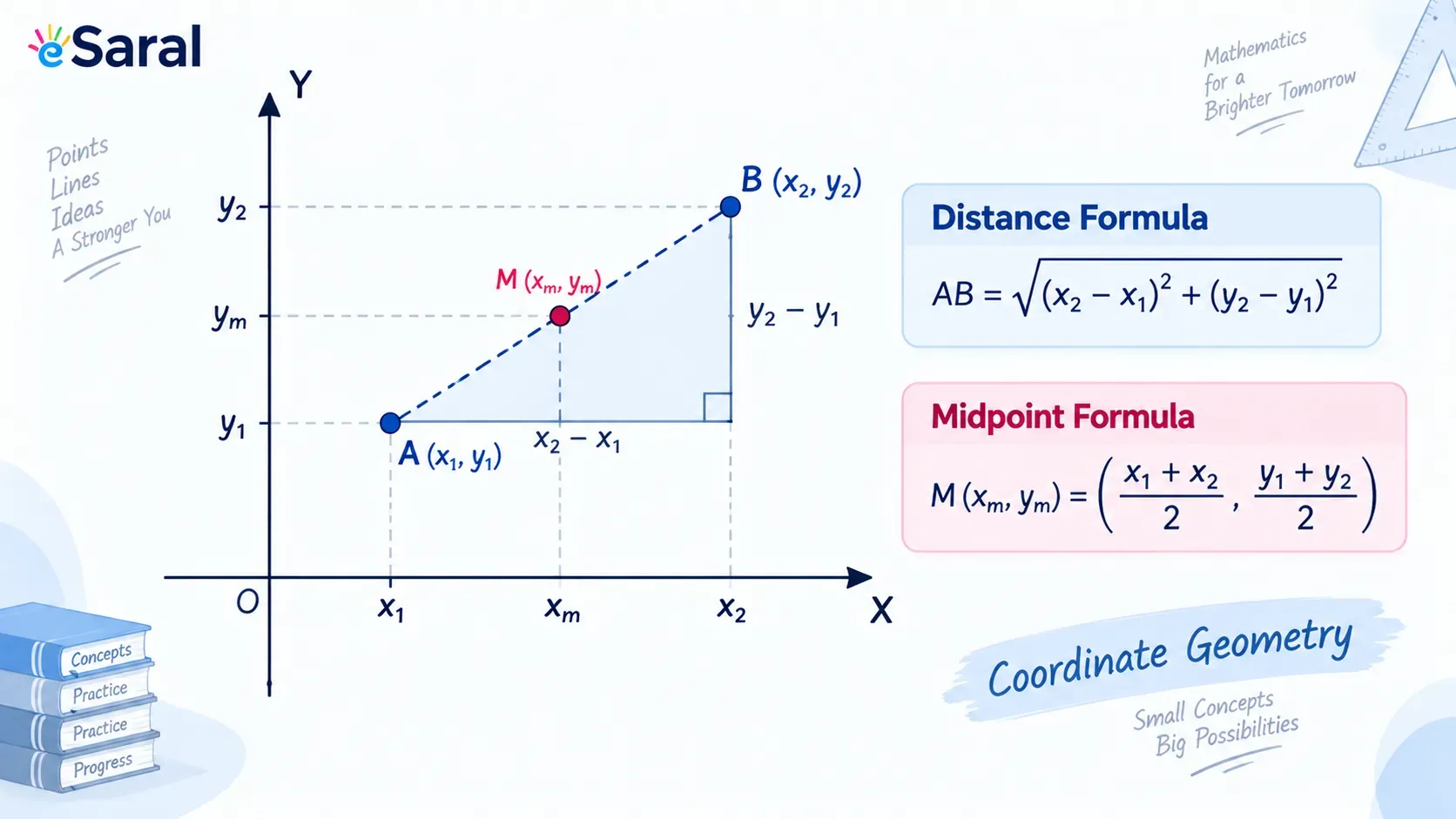
Coordinate Geometry Class 10: Formulas, Notes & Solved Examples
Coordinate geometry class 10: complete CBSE formulas — distance, section, midpoint and area of triangle — with derivation, notes and solved examples.
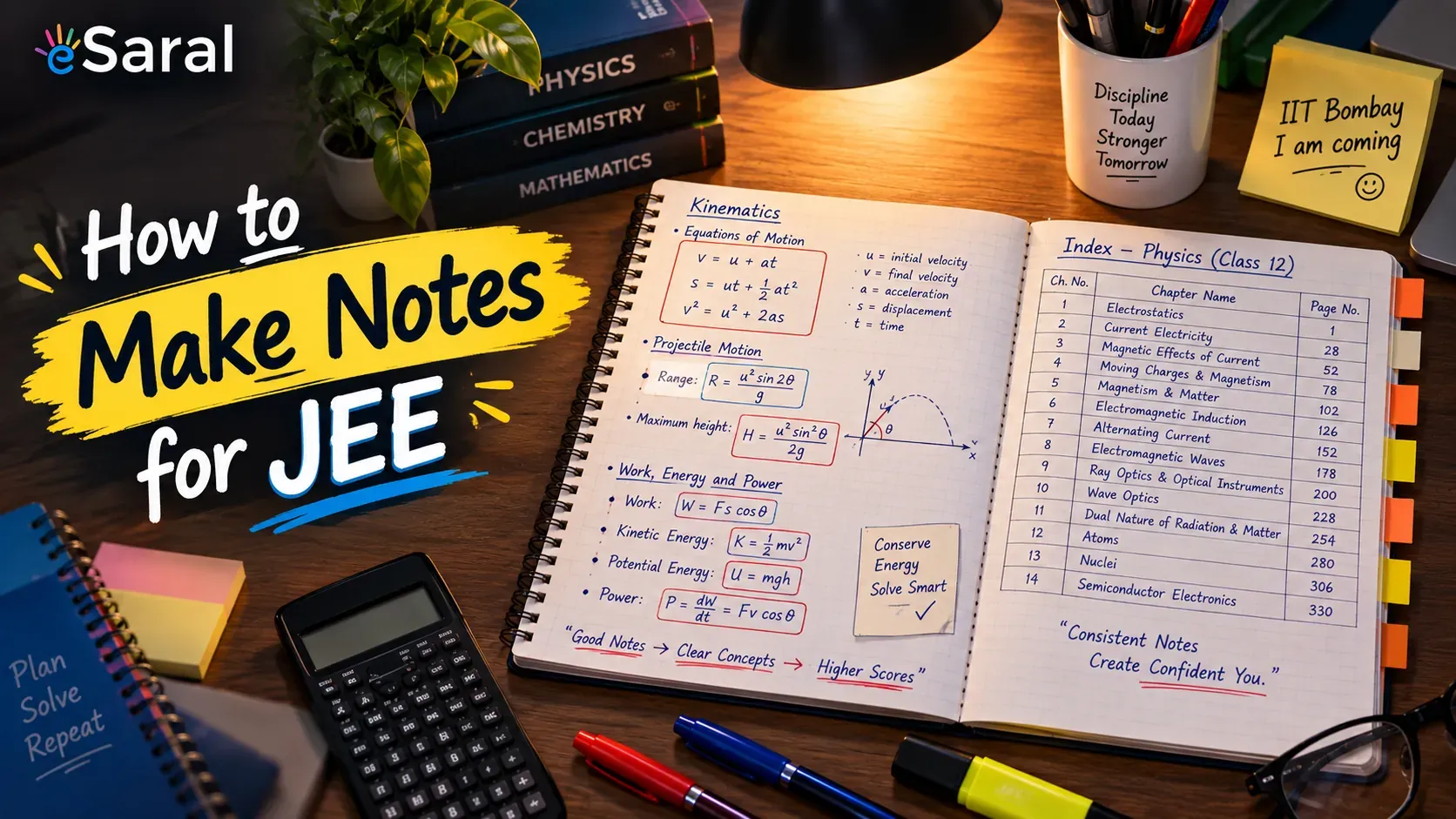
How to make Notes For JEE Smart Notes Strategy of an AIR 41
Learn how to make notes for JEE the way toppers do — indexing, shorthand, and smart short notes for JEE that cut revision time to just 5–7 days.
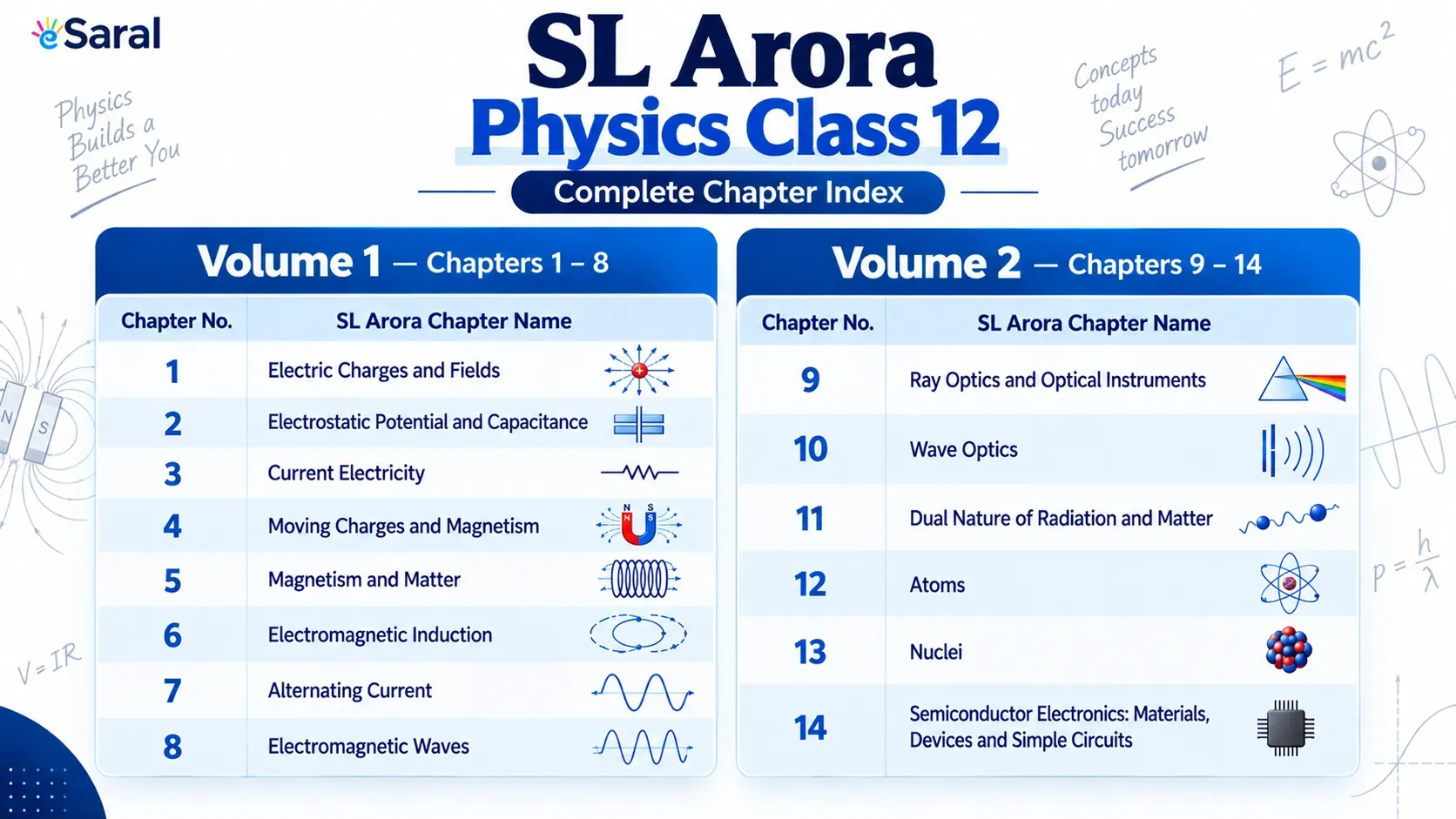
SL Arora Physics Class 12 Index – Chapter List for Volume 1 & 2
SL Arora Physics Class 12 index — complete chapter list for Volume 1 & 2, mapped to NCERT solutions for board, JEE Main, and NEET preparation.