
Center of Mass - JEE Advanced Previous Year Questions with Solutions

eSaral Academic and Editorial Team
Summary
Center of Mass JEE Advanced previous year questions cover elastic and inelastic collisions, momentum conservation, and COM displacement problems. Questions include both single-correct and multiple-choice formats. Mastering these requires strong conceptual clarity in Newton's laws, energy conservation, and relative motion — all tested heavily in JEE Advanced Paper 1 and Paper 2.

eSaral > JEE Advanced Physics PYQs > Center of Mass

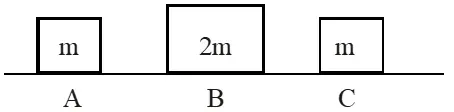
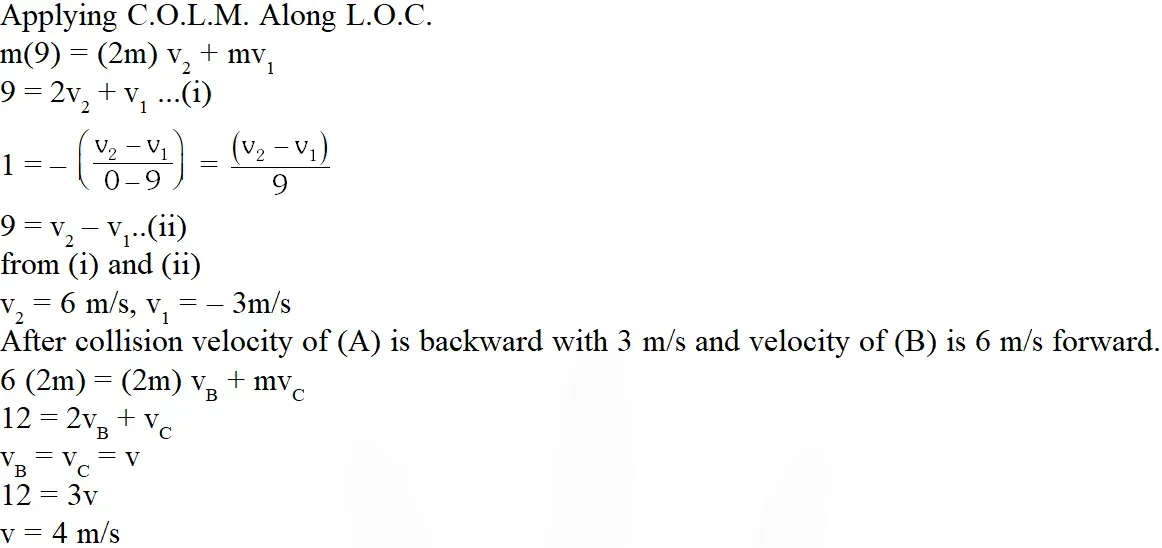
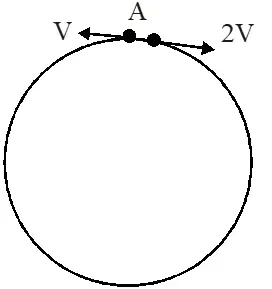
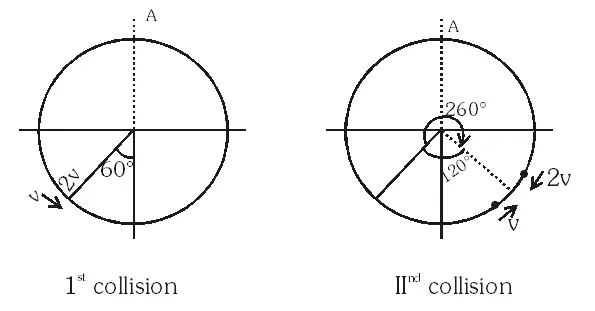
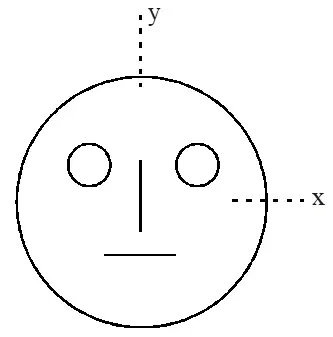
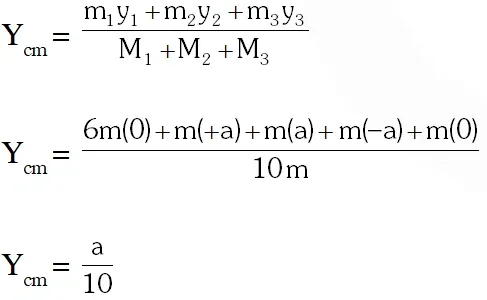
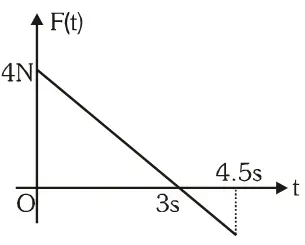
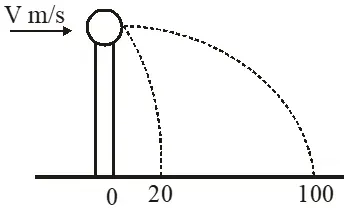
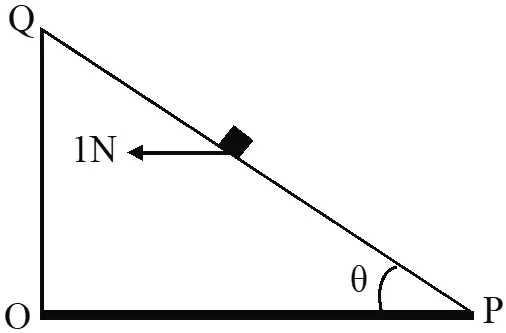
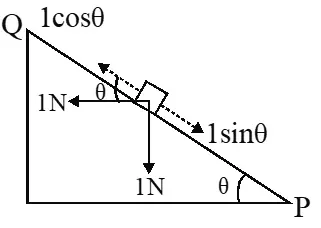
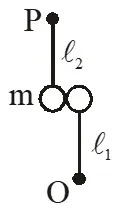
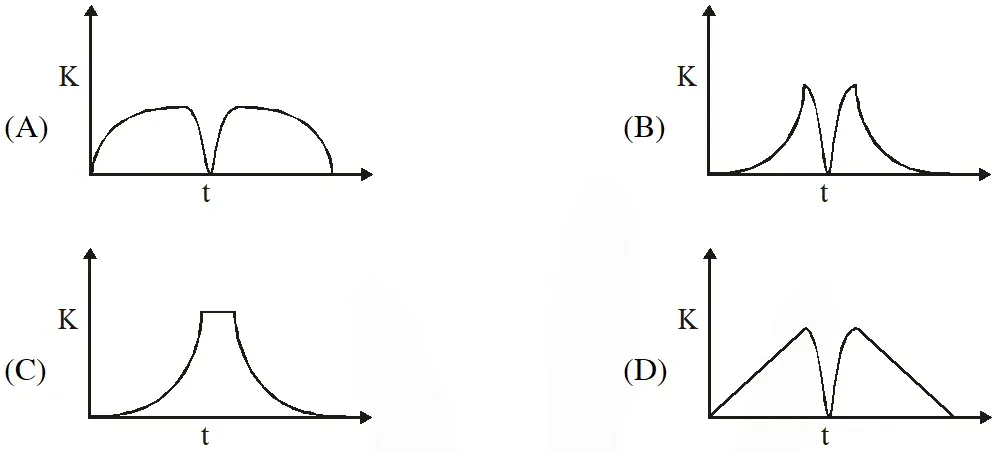
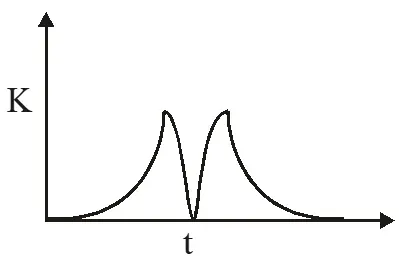
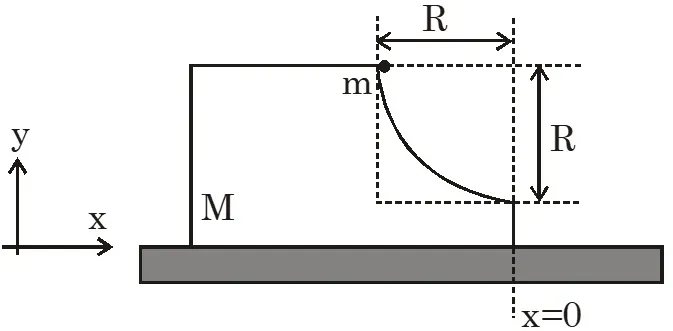
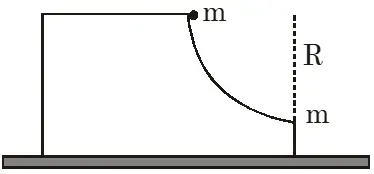
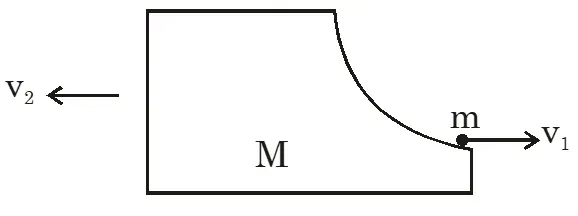
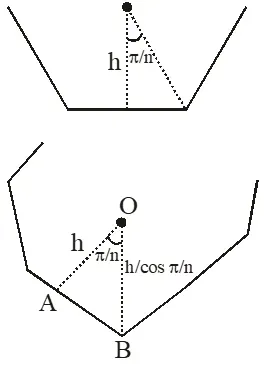
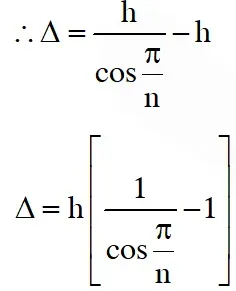
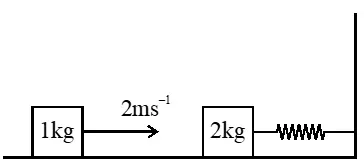
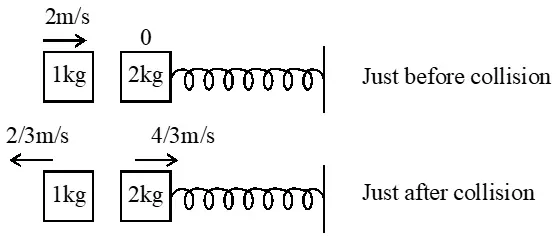
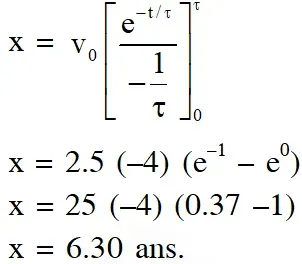
JEE Advanced Previous Year Questions of Physics with Solutions are available at eSaral. Practicing JEE Advanced Previous Year Papers Questions of Physics will help the JEE aspirants in realizing the question pattern as well as help in analyzing weak & strong areas. Get detailed Class 11th & 12th Physics Notes to prepare for Boards as well as competitive exams like IIT JEE, NEET etc. eSaral helps the students in clearing and understanding each topic in a better way. eSaral is providing complete chapter-wise notes of Class 11th and 12th both for all subjects. Click Here for JEE main Previous Year Topic Wise Questions of Physics with Solutions Download eSaral app for free study material and video tutorials. Simulator Previous Years JEE Advanced Questions [esquestion] Three objects A, B and C are kept in a straight line on a frictionless horizontal surface. These have masses m, 2m and m, respectively. The object A moves towards B with a speed 9 m/s and makes an elastic collision with it. Thereafter, B makes completely inelastic collision with C. All motions occur on the same straight line. Find the final speed (in m/s) of the object C. #tag# [IIT-JEE-2009] #sol# 4m/s [/esquestion] [esquestion] Two small particles of equal masses start moving in opposite directions from a point A in a horizontal circular orbit. Their tangential velocities are v and 2v, respectively, as shown in the figure. Between collisions, the particles move with constant speeds. After making how many elastic collisions, other than that at A, these two particles will again reach the point A? (A) 4 (B) 3 (C) 2 (D) 1 #tag# [IIT-JEE-2009] #sol# (C) Particle with velocity 'v' covers and angle of $120^{\circ}$ and after collision its velocity become '2v'. It will cover angle of $$240^{\circ}$$ [/esquestion] [esquestion] Look at the drawing given in the figure which has been drawn with ink of uniform line-thickness. The mass of ink used to draw each of the two inner circles, and each of the two line segments is m. The mass of the ink used to draw the outer circle is 6m. The coordinates of the centres of the different parts are: outer circle (0, 0), left inner circle (–a, a), right inner circle (a, a), vertical line (0, 0) and horizontal line (0, –a). The y-coordinate of the centre of mass of the ink in this drawing is – $(\mathrm{A}) \frac{\mathrm{a}}{10}$ (B) $\frac{\mathrm{a}}{8}$ (C) $\frac{\mathrm{a}}{12}$ (D) $\frac{\mathrm{a}}{3}$ #tag# [IIT-JEE-2009] #sol# (A) [/esquestion] [esquestion] A point mass of 1 kg collides elastically with a stationary point mass of 5 kg. Aftr their collision, the 1 kg mass reverses its direction and moves with a speed of 2 m/s. Which of the following statemet(s) is (are) correct for the system of these two masses ? (A) Total momentum of the system is 3 kg m/s. (B) Momentum of 5 kg mass after collision is 4 kg m/s. (C) Kinetic energy of the centre of mass is 0.75 J. (D) Total kinetic energy of the system is 4 J. #tag# [IIT-JEE 2010] #sol# (A,C) Conservation of linear momentum (1) u = – (1) 2 + (5) v 5v –2 = u ... (i) By definition of ‘e’ $1=\frac{v+2}{u} \Rightarrow v+2=u$... (ii) By solving above equations $\mathrm{v}=1 \mathrm{ms}^{-1}$ and $\mathrm{u}=3 \mathrm{ms}^{-1}$ For $(\mathrm{A}):$ Total momentum of system $=1 \times \mathrm{u}=3 \mathrm{kg} \mathrm{ms}^{-1}$ For (B) : Momentum of 5 kg after collision $=5(1)=5 \mathrm{kg} \mathrm{ms}^{-1}$ For $(\mathrm{C}): \mathrm{K}_{\mathrm{cm}}=\frac{1}{2}(1+5)\left(\frac{1 \times 3+0}{1+5}\right)=0.75 \mathrm{J}$ For (D) : Total kinetic energy of the system $=\frac{1}{2}(1)(3)^{2}=4.5 \mathrm{J}$ [/esquestion] [esquestion] A block of mass 2 kg is free to move along the x–axis. It is at rest and from t=0 onwards it is subjected to a time–dependent force F(t) in the x–direction. The force F(t) varies with t as shown in the figure. The kinetic energy of the block after 4.5 second is (A) 4.50 J (B) 7.50 J (C) 5.06 J (D) 14.06 J #tag# [IIT-JEE-2010] #sol# (C) Area in F–t Curve = change in momentum $\mathrm{P}=\frac{1}{2}(4 \times 3)-\frac{1}{2}(1.5)(2)=\frac{9}{2}$ $\mathrm{V}=\frac{9}{4} \mathrm{m} / \mathrm{s}$ $\mathrm{k.E.}=\frac{1}{2} \times 2 \times\left(\frac{9}{4}\right)^{2} \approx 5.06 \mathrm{J}$ [/esquestion] [esquestion] A ball of mass 0.2 kg rests on a vertical post of height 5m. A bullet of mass 0.01 kg, traveling with a velocity V m/s in a horizontal direction, hits the centre of the ball. After the collision, the ball and bullet travel independently. The ball hits the ground at a distance of 20 m and the bullet at a distance of 100 m from the foot of the post. The initial velocity V of the bullet is – #tag# [IIT-JEE 2011] (A) $250 \mathrm{m} / \mathrm{s}$ (B) $250 \sqrt{2} \mathrm{m} / \mathrm{s}$ (C) $400 \mathrm{m} / \mathrm{s}$ (D) $500 \mathrm{m} / \mathrm{s}$ #sol# (D) 0.01 V = 0.2 u + 0.01 × 5 u Time of flight $\mathrm{t}=1$ s; Range for ball $=\mathrm{u} \times \mathrm{t} \Rightarrow 20=\mathrm{u} \times 1 \Rightarrow \mathrm{u}=20 \mathrm{m} / \mathrm{s}$ $\Rightarrow \mathrm{V}=500 \mathrm{m} / \mathrm{s}$ [/esquestion] [esquestion] A small block of mass of 0.1 kg lies on a fixed inclined plane PQ which makes an angle $\theta$ with the horizontal. A horizontal force of 1 N acts on the block through its center of mass as shown in the figure. The block remains stationary if (take $\left.\mathrm{g}=10 \mathrm{m} / \mathrm{s}^{2}\right)$ (A) $\theta=45^{\circ}$ (B) $\theta>45^{\circ}$ and a frictional force acts on the block towards P (C) $\theta>45^{\circ}$ and a frictional force acts on the block towards Q (D) $\theta>45^{\circ}$ and a frictional force acts on the block towards Q #tag# [IIT-JEE 2012] #sol# (A,C) (1) If $\sin \theta=\cos \theta \Rightarrow \theta=45^{\circ} \Rightarrow$ no friction will act and the block will remain at rest. (2) If $\sin \theta>\cos \theta \Rightarrow \theta>45^{\circ} \Rightarrow$ friction will act towards $\mathrm{Q}$ (3) If $\sin \theta<\cos \theta \Rightarrow \theta<45^{\circ} \Rightarrow$ friction will act towards $\mathrm{P}$ [/esquestion] [esquestion] A bob of mass m, suspended by a string of length $\ell_{1}$ is given a minimum velocity required to complete a full circle in the vertical plane. At the highest point, it collides elastically with another bob of mass m suspended by a string of length $e_{2}^{\mathrm{T}}$, which is initially at rest. Both the strings are mass-less and inextensible. If the second bob, after collision acquires the minimum sped required to complete a full circle in the vertical plane, the ratio $\frac{\ell_{1}}{\ell_{2}}$ is. #tag# [JEE Advanced-2013] #sol# 5 $\sqrt{9 \ell_{1}}=\sqrt{5 \mathrm{g} \ell_{2}} \Rightarrow \frac{\ell_{1}}{\ell_{2}}=5$ [/esquestion] [esquestion] A tennis ball is dropped on a horizontal smooth surface. It bounces back to its original position after hitting the surface. The force on the ball during the collision is proportional to the length of compression of the ball. Which one of the following sketches describes the variation of its kinetic energy K with time t most appropriately ? The figures are only illustrative and not to the scale. #tag# [JEE Advanced-2014] #sol# (B) During fall, v = 0 + gt $\mathrm{KE}=\frac{1}{2} \mathrm{mv}^{2}=\frac{1}{2} \mathrm{m}(\mathrm{gt})^{2}$ $\mathrm{KE} \propto \mathrm{t}^{2},$ so graph is upward parabola. During collision, KE will decrease in compression and increase in reformation. Finally, during going up KE will decrease. [/esquestion] [esquestion] A block of mass M has a circular cut with a frictionless surface as shown. The block rests on the horizontal frictionless surface of a fixed table. Initially the right edge of the block is at x = 0, in a co-ordinate system fixed to the table. A point mass m is released from rest at the topmost point of the path as shown and it slides down. When the mass loses contact with the block, its position is x and the velocity is v. At that instant, which of the following options is/are correct ? (A) The x component of displacement of the centre of mass of the block M is : $-\frac{\mathrm{mR}}{\mathrm{M}+\mathrm{m}}$ (B) The position of the point mass is : $\mathrm{x}=-\sqrt{2} \frac{\mathrm{mR}}{\mathrm{M}+\mathrm{m}}$ (C) The velocity of the point mass m is : $\mathrm{v}=\sqrt{\frac{2 \mathrm{g} \mathrm{R}}{1+\frac{\mathrm{m}}{\mathrm{M}}}}$ (D) The velocity of the block M is : $\mathrm{V}=-\frac{\mathrm{m}}{\mathrm{M}} \sqrt{2 \mathrm{gR}}$ #tag# [JEE Advanced-2017] #sol# (A,C) $\mathrm{M}_{\mathrm{s}} \Delta \overline{\mathrm{x}}_{\mathrm{cm}}=\mathrm{m}_{1} \Delta \overline{\mathrm{x}}+\mathrm{m}_{2} \Delta \overline{\mathrm{x}}_{2}$ $0=\mathrm{m}(+\mathrm{R}+\overline{\mathrm{x}})+\mathrm{m} \overline{\mathrm{x}}$ $\overline{\mathrm{x}}=\frac{-\mathrm{mR}}{\mathrm{M}+\mathrm{m}}$ (A) ans $0=\mathrm{m} \overline{\mathrm{v}}_{1}+\mathrm{M} \overline{\mathrm{v}}_{2}$ $\overline{\mathrm{v}}_{2}=-\frac{\mathrm{m} \overline{\mathrm{v}}_{1}}{\mathrm{M}}$ $\operatorname{mg} \mathrm{R}=\frac{1}{2} \mathrm{mv}_{1}^{2}+\frac{1}{2} \mathrm{Mv}_{2}^{2}$ $\mathrm{mgR}=\frac{1}{2} \mathrm{mv}_{1}^{2}+\frac{1}{2} \mathrm{M}\left(\frac{\mathrm{mv}_{1}}{\mathrm{M}}\right)^{2}$ $\operatorname{mg} \mathrm{R}=\frac{1}{2} \mathrm{mv}_{1}^{2}\left(1+\frac{\mathrm{m}}{\mathrm{M}}\right)$ $\sqrt{\frac{2 \mathrm{gR}}{\left(1+\frac{\mathrm{m}}{\mathrm{M}}\right)}}=\mathrm{v}_{1}$ [/esquestion] [esquestion] Consider regular polygons with number of sides n = 3, 4, 5 ..... as shown in the figure. The center of mass of all the polygons is at height h from the ground. They roll on a horizontal surface about the leading vertex without slipping and sliding as depicted. The maximum increase in height of the locus of the center of mass for each polygon is D. Then D depends on n and h as : (A) $\Delta=\operatorname{hsin}^{2}\left(\frac{\pi}{\mathrm{n}}\right)$ (B) $\Delta=\mathrm{h} \sin \left(\frac{2 \pi}{\mathrm{n}}\right)$ (C) $\Delta=\mathrm{h}\left(\frac{1}{\cos \left(\frac{\pi}{\mathrm{n}}\right)}-1\right)$ (D) $\Delta=h \tan ^{2}\left(\frac{\pi}{2 n}\right)$ #tag# [JEE Advanced-2017] #sol# (C) OA = h $\mathrm{OB}=\frac{\mathrm{h}}{\cos \frac{\pi}{\mathrm{n}}}$ Initial height of COM = h Final height of $\mathrm{COM}=\frac{\mathrm{h}}{\cos \left(\frac{\pi}{\mathrm{n}}\right)}$ [/esquestion] [esquestion] A spring-block system is resting on a frictionless floor as shown in the figure. The spring constant is 2.0 N $\mathrm{M}^{-1}$ and the mass of the block is 2.0 kg. Ignore the mass of the spring. Initially the spring is in an unstretched condition. Another block of mass 1.0 kg moving with a speed of 2.0 m $\mathrm{s}^{-1}$ collides elastically with the first block. The collision is such that the 2.0 kg block does not hit the wall. The distance, in metres, between the two blocks when the spring returns to its unstretched position for the first time after the collision is _____. #tag# [JEE Advanced-2018] #sol# (2.09 M) $\mathrm{T}=2 \pi \sqrt{\frac{\mathrm{m}}{\mathrm{k}}}=2 \pi \mathrm{sec}$ block returns to original position in $\frac{\mathrm{T}}{2}=\pi \mathrm{sec}$ $\mathrm{d}=\frac{2}{3}(\pi)=\frac{2}{3}(3.14)=2.0933 \mathrm{m}$ d = 2.09 m [/esquestion] [esquestion] A solid horizontal surface is covered with a thin layer of oil. A rectangular block of mass m = 0.4kg is at rest on this surface. An impulse of 1.0 N s is applied to the block at time to t = 0 so that it starts moving along the x-axis with a velocity v(t) = $v_{0} \mathrm{e}^{-t / \tau}$, where $v_{0}$ is a constant and $\tau=4 \mathrm{s}$. The displacement of the block, in metres, at $t=\tau$ is................... Take e $^{-1}$ = 0.37 ? #tag# [JEE Advanced-2018] #sol# 6.3 $\mathbf{V}=\mathbf{V}_{0} \mathbf{e}^{-\mathbf{t} / \tau}$ $\mathrm{v}_{0}=\frac{\mathrm{J}}{\mathrm{m}}=2.5 \mathrm{m} / \mathrm{s}$ $\mathbf{V}=\mathbf{V}_{0} \mathbf{e}^{-\mathbf{t} / \tau}$ $\frac{\mathrm{dx}}{\mathrm{dt}}=\mathrm{v}_{0} \mathrm{e}^{-\mathrm{t} / \tau}$ $\int_{0}^{\mathrm{x}} \mathrm{dx}=\mathrm{v}_{0} \int_{0}^{\mathrm{r}} \mathrm{e}^{-t / \tau} \mathrm{dt} \quad \int \mathrm{e}^{-\mathrm{x}} \mathrm{d} \mathrm{x}=\frac{\mathrm{e}^{-\mathrm{x}}}{-1}$ [/esquestion]



Once Centre of Mass - JEE Advanced PYQs (Physics) is complete, see how the topic appears alongside others in the JEE Advanced PYQ.
Center of Mass is an important part of Mechanics and requires a strong grip on applying concepts to unfamiliar situations. After working through these JEE Advanced questions, students can explore Irodov Selected Questions for JEE Advanced to encounter a wider range of challenging problems and sharpen their approach to advanced Physics.
Frequently Asked Questions
What is the difference between elastic and inelastic collision in JEE problems?
In an elastic collision, both kinetic energy and linear momentum are conserved. In a completely inelastic collision, only linear momentum is conserved — the objects stick together and kinetic energy is lost. JEE Advanced frequently tests problems where the first collision is elastic and the second is inelastic (as in Q1 of 2009), requiring students to apply different formulas in sequence.
Is Center of Mass in JEE Main syllabus as well?
Yes. Center of Mass is part of the JEE Main syllabus under the unit "Laws of Motion and Work, Energy, Power." JEE Main questions are generally single-step and formula-based, whereas JEE Advanced questions combine COM with projectile motion, rotational mechanics, or spring-mass systems in multi-step problems.
How many questions on Center of Mass appear in JEE Advanced each year?
Typically 1–2 questions on Center of Mass appear in JEE Advanced per year, sometimes bundled within a larger paragraph-type or multi-correct set. Over the period 2009–2023, the topic has contributed an average of 8–12 marks per paper cycle, making it one of the most consistently tested mechanics sub-topics.
Why do JEE Advanced COM problems often involve circular motion or projectile motion together?
JEE Advanced is designed to test multi-concept application, not isolated formula recall. The exam paper is set by IIT faculty who intentionally combine topics — for example, the 2013 question links elastic collision with the minimum speed condition for circular motion. Practising topic-wise questions (like this set) and then full mixed-topic papers is the most efficient two-phase preparation strategy.
Which chapters from Class 11 NCERT should I study before attempting these questions?
You should be confident in Chapter 5 (Laws of Motion), Chapter 6 (Work, Energy and Power), and Chapter 7 (System of Particles and Rotational Motion) from Class 11 Physics. These three chapters together form the complete theory base for all COM and collision problems in JEE Advanced. Detailed solutions are available at NCERT Solutions for Class 11 Physics.
How do you find the velocity of COM in a collision problem?
The velocity of COM is given by $v_{cm} = \frac{m_1 v_1 + m_2 v_2}{m_1 + m_2}$. Crucially, $v_{cm}$ does not change during a collision if no external force acts on the system. This is a key property used in multi-correct questions where the KE of COM is asked — as seen in the 2010 question above.
Team eSaral
eSaral Academic and Editorial Team
Team eSaral is the collective author profile for educational content created by eSaral’s teachers and academic contributors. The team draws on expertise from IIT graduates, doctors, experienced educators and subject specialists to develop resources for JEE, NEET and school students. Our articles aim to explain concepts clearly and help students study with confidence.
Related Posts
Plant Cell Diagram: Labelled Structure, Parts and Functions
Simple, labelled plant cell diagram with parts and functions. Covers plant cell structure for Class 6, 7, 8, 9, 10 and 11 students, CBSE-aligned.
Saransh Gupta Sir's Visit to IIT Patna: Hostel Life, Placements & Lessons for JEE Aspirants
Inside Saransh Gupta Sir's IIT Patna visit — hostel life, the library, placements, internships, and real advice for JEE aspirants from students living the IIT dream.
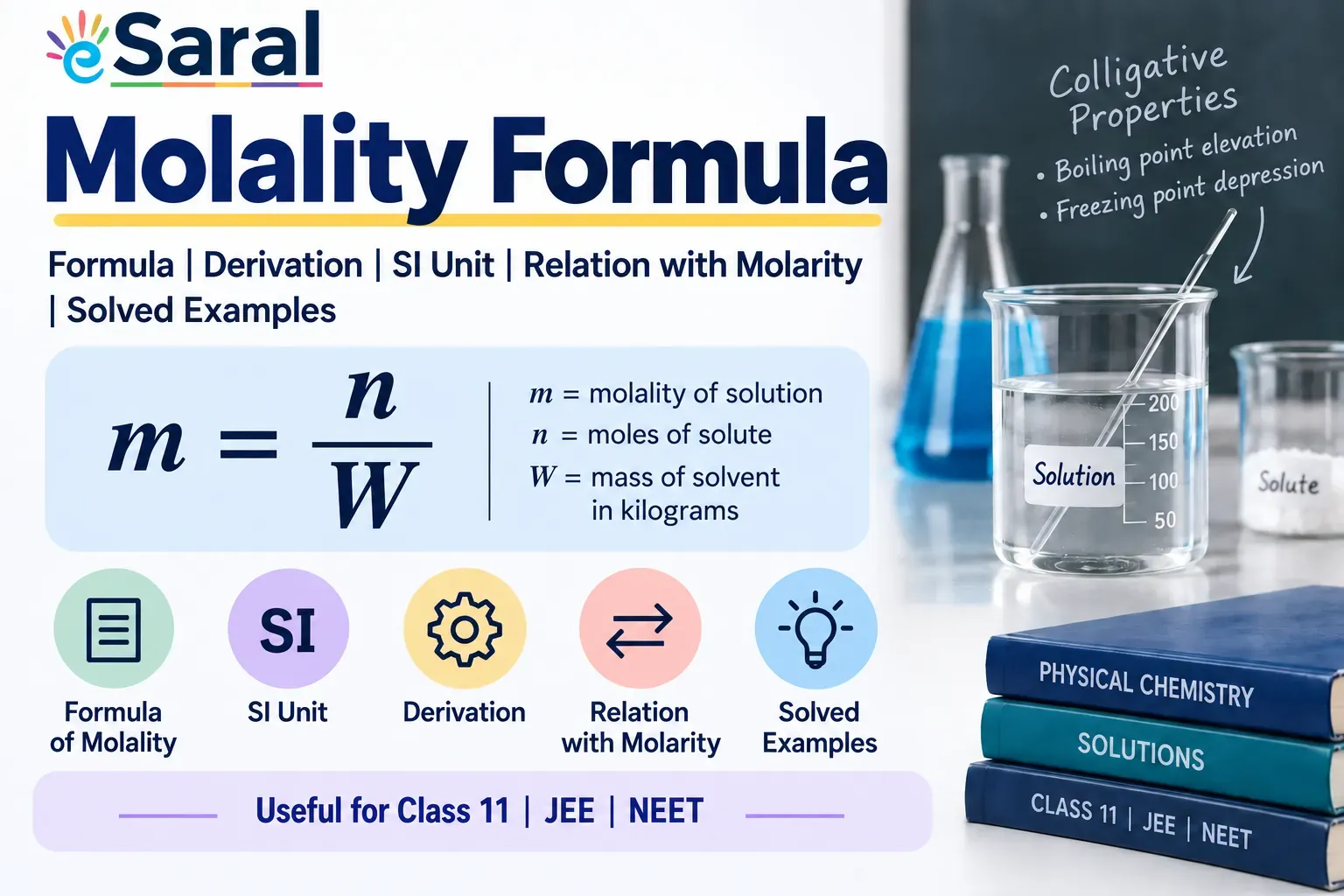
Molality Formula: Formula for Molality, Derivation & Solved Examples
Molality formula is $m = \dfrac{n}{W}$. Learn the formula of molality, its SI unit, derivation, relation with molarity, and solved examples for Class 11, JEE and NEET.
BITSAT Previous Year Question Paper PDF
Download BITSAT previous year question papers PDF. Get year-wise BITSAT PYQs, memory-based papers, exam pattern, and preparation tips to improve your BITSAT preparation.

Teachers’ Day 2026 at eSaral Gurukul: Celebrating the Bond Between Students, Teachers & Mentors
See how Teachers’ Day 2026 was celebrated at eSaral Gurukul, reflecting the bond among students, teachers, and mentors, and the role of guidance beyond academics.
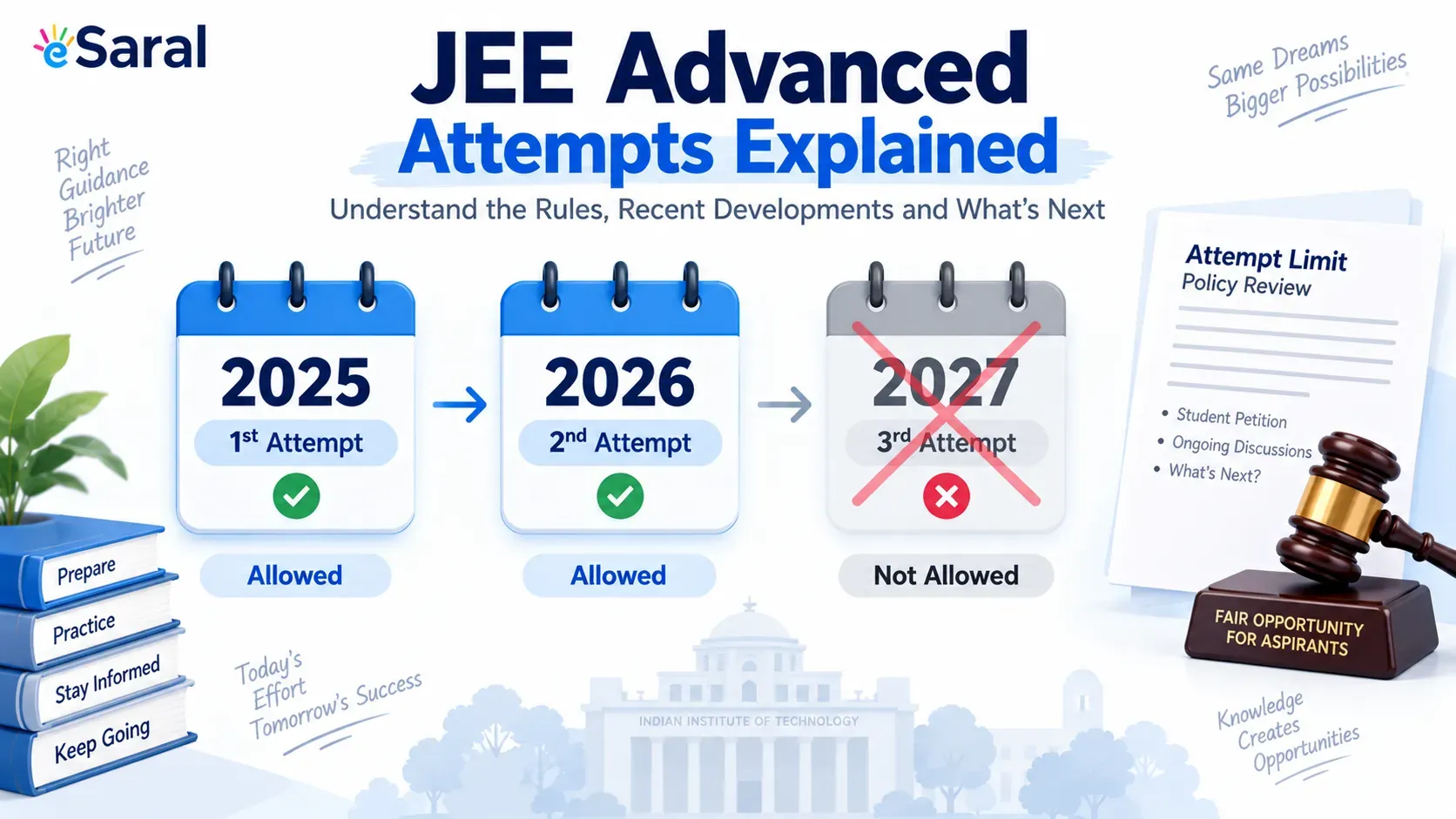
JEE Advanced Attempts: Can You Give It a Third Time? Rules Explained
JEE Advanced attempts: current rule is 2 consecutive years only: full eligibility criteria, the 2025 third-attempt controversy, and the latest 2026 petition news.

Best JEE Preparation App
Best JEE preparation app for Main & Advanced: AI mock tests, live doubt-solving, thousands of practice questions. JEE preparation app for droppers & Class 11-12.
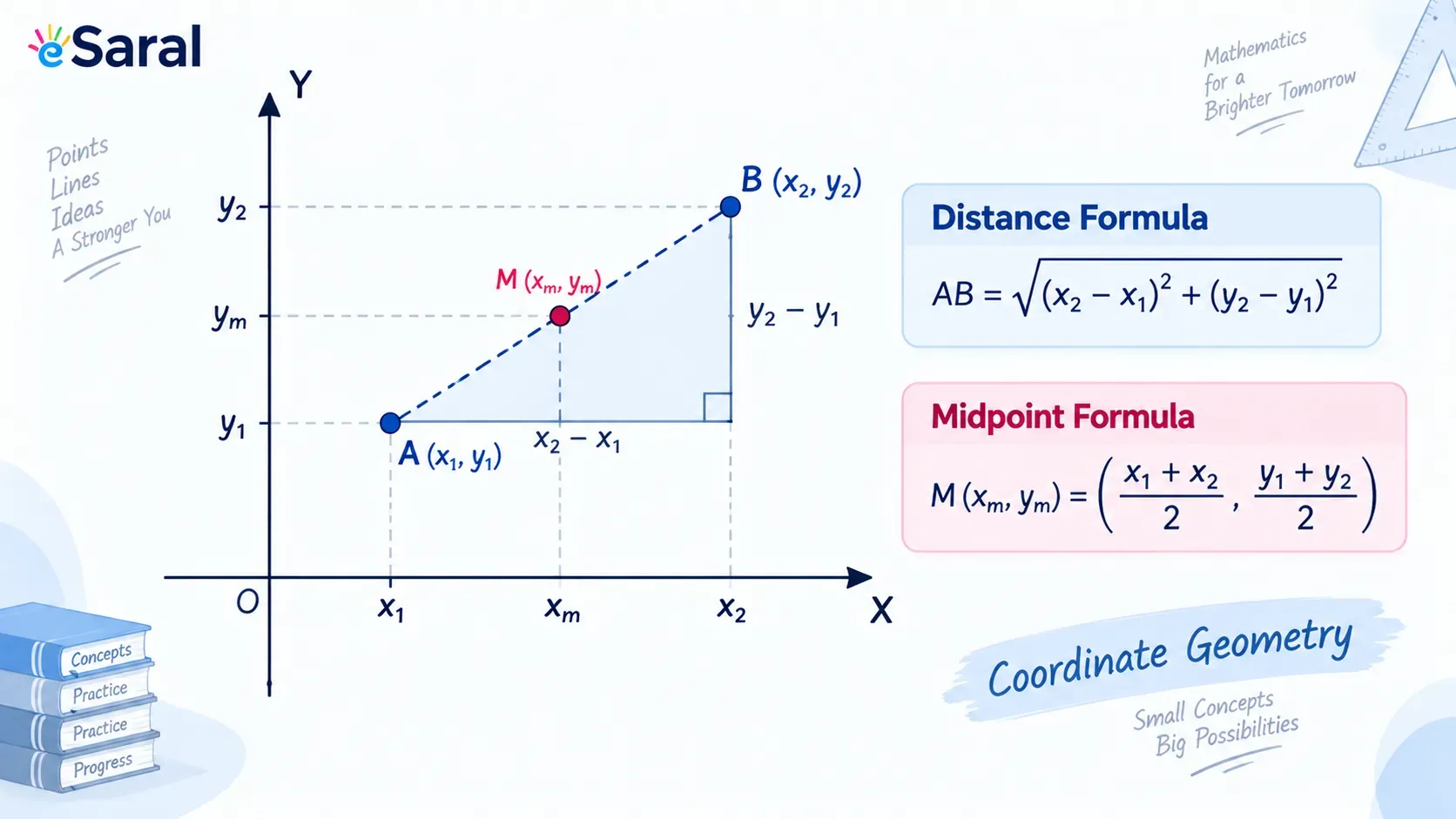
Coordinate Geometry Class 10: Formulas, Notes & Solved Examples
Coordinate geometry class 10: complete CBSE formulas — distance, section, midpoint and area of triangle — with derivation, notes and solved examples.
How to make Notes For JEE Smart Notes Strategy of an AIR 41
Learn how to make notes for JEE the way toppers do — indexing, shorthand, and smart short notes for JEE that cut revision time to just 5–7 days.
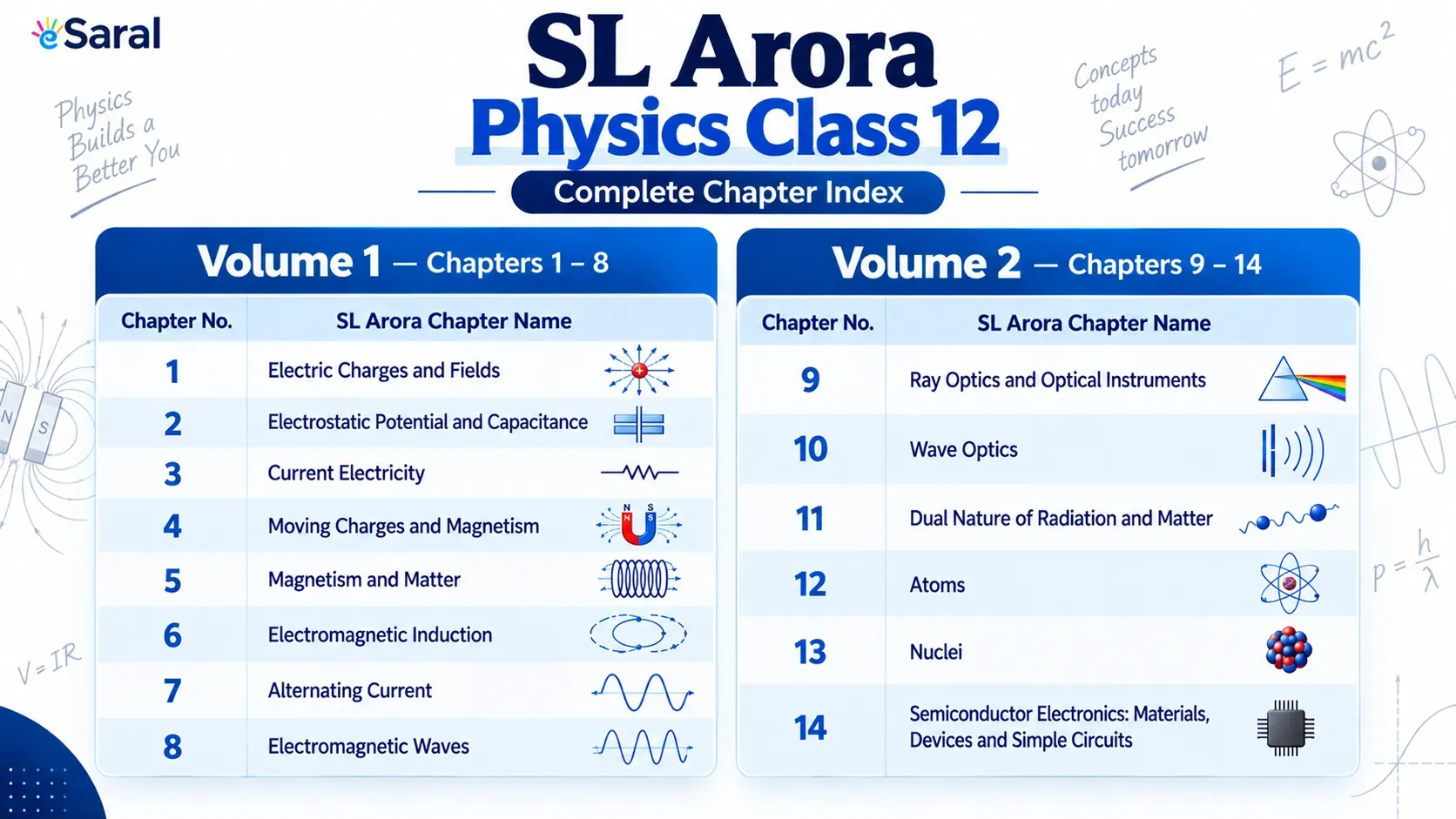
SL Arora Physics Class 12 Index – Chapter List for Volume 1 & 2
SL Arora Physics Class 12 index — complete chapter list for Volume 1 & 2, mapped to NCERT solutions for board, JEE Main, and NEET preparation.