
Chemical Bonding - NEET Previous Year Questions with Complete Solutions

eSaral Academic and Editorial Team
Summary
<p>Chemical Bonding NEET Previous Year Questions cover VSEPR theory, hybridisation, bond order, resonance, dipole moment, and molecular geometry. This chapter appears in almost every NEET paper with 2 to 3 questions worth 8 to 12 marks. Solving previous year questions from Chemical Bonding is one of the most effective ways to predict what NEET will ask and secure marks quickly in Chemistry.</p>
eSaral › NEET › Neet test-series›Chemical Bonding - NEET Previous Year Questions with Complete Solutions

Why Chemical Bonding Is Critical for NEET Chemistry
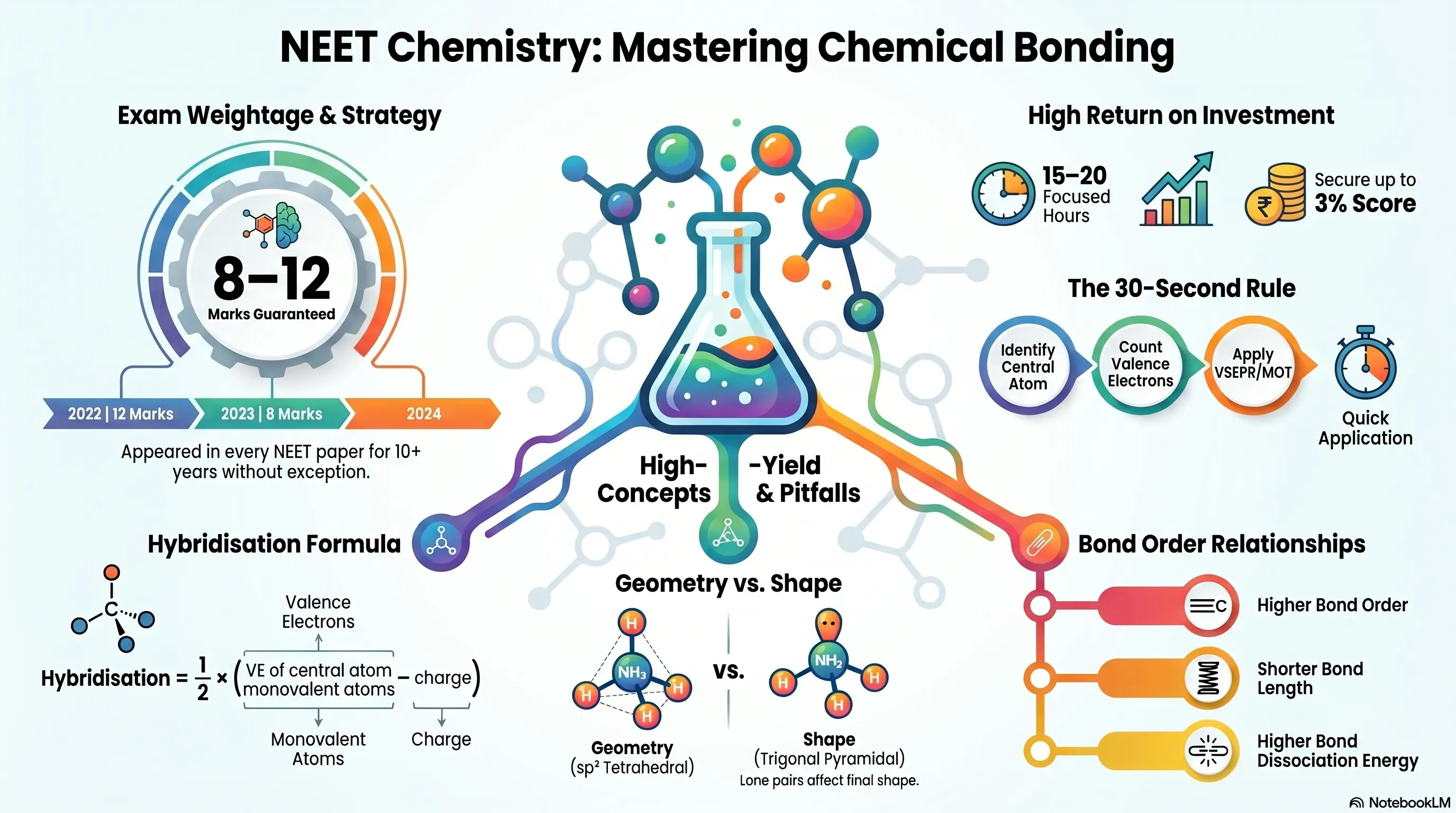
Chemical Bonding and Molecular Structure is a Class 11 chapter that directly contributes to your NEET score year after year. Unlike some chapters that appear inconsistently, Chemical Bonding has appeared in every NEET paper for the past 10+ years without exception.
NEET Weightage for Chemical Bonding
Year | Questions from Chemical Bonding | Marks |
|---|---|---|
NEET 2024 | 2–3 questions | 8–12 marks |
NEET 2023 | 2 questions | 8 marks |
NEET 2022 | 3 questions | 12 marks |
NEET 2021 | 2 questions | 8 marks |
NEET 2020 | 2–3 questions | 8–12 marks |
At 4 marks per correct answer (and −1 for wrong), these 2–3 questions can swing your score by 12–16 marks depending on accuracy. That is the difference between getting into a government medical college and missing the cut-off.
💡 Expert Tip by eSaral Chemistry Faculty: "Chemical Bonding is one of those chapters where students who practise NEET PYQs seriously outperform students who only read theory. The same 8–10 concepts repeat in different forms every year. Know those concepts cold, and you will rarely miss a question from this chapter."
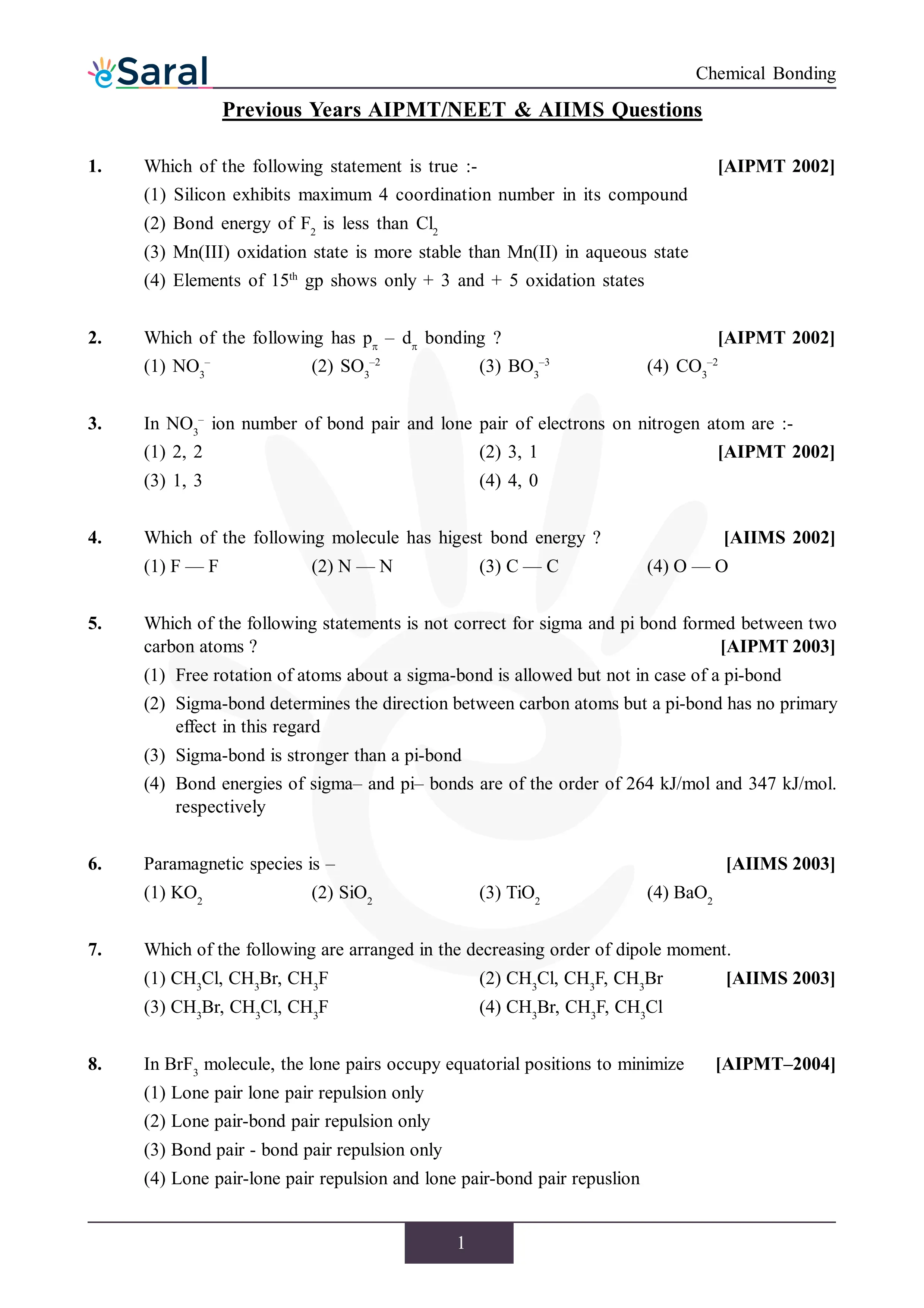
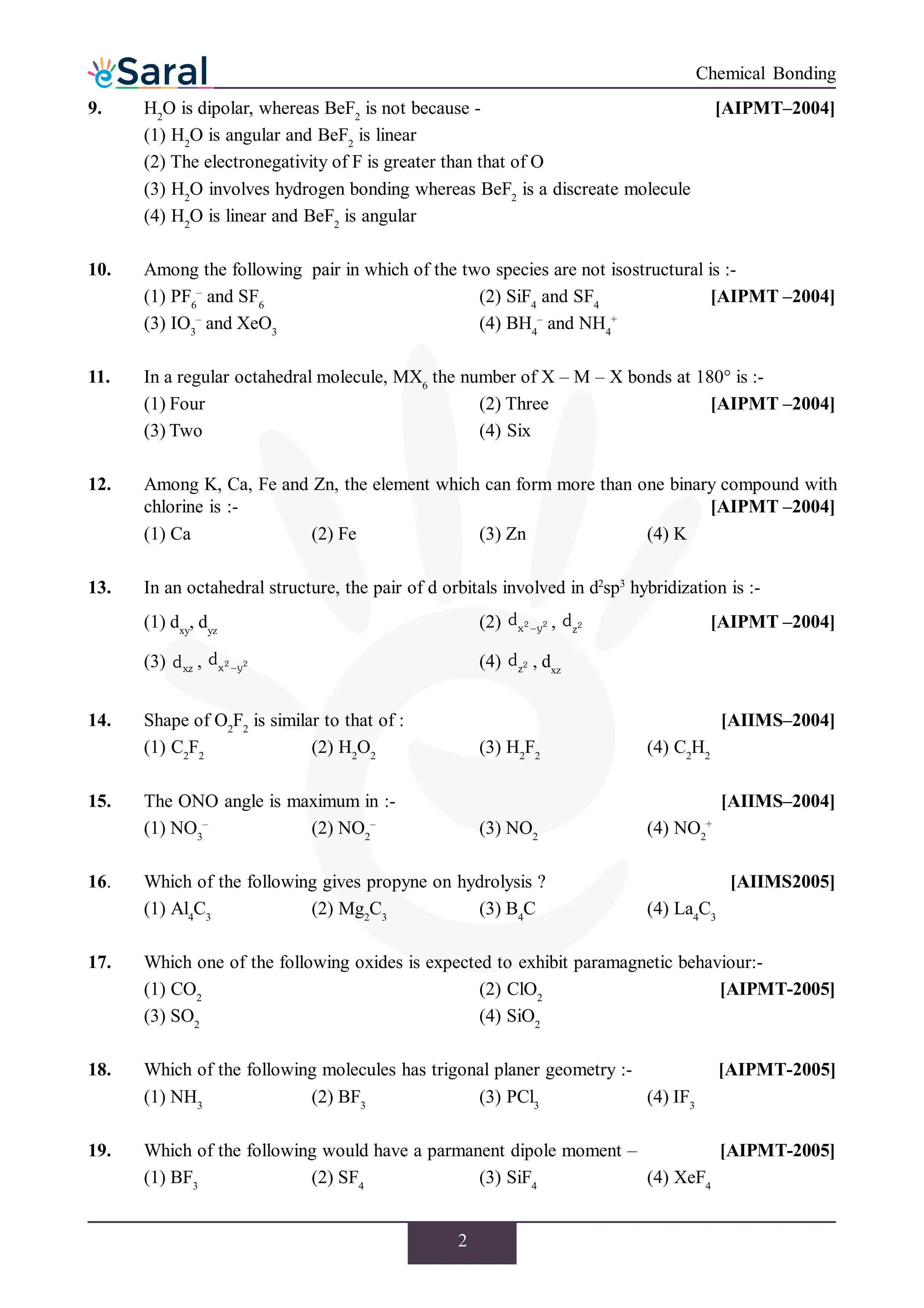
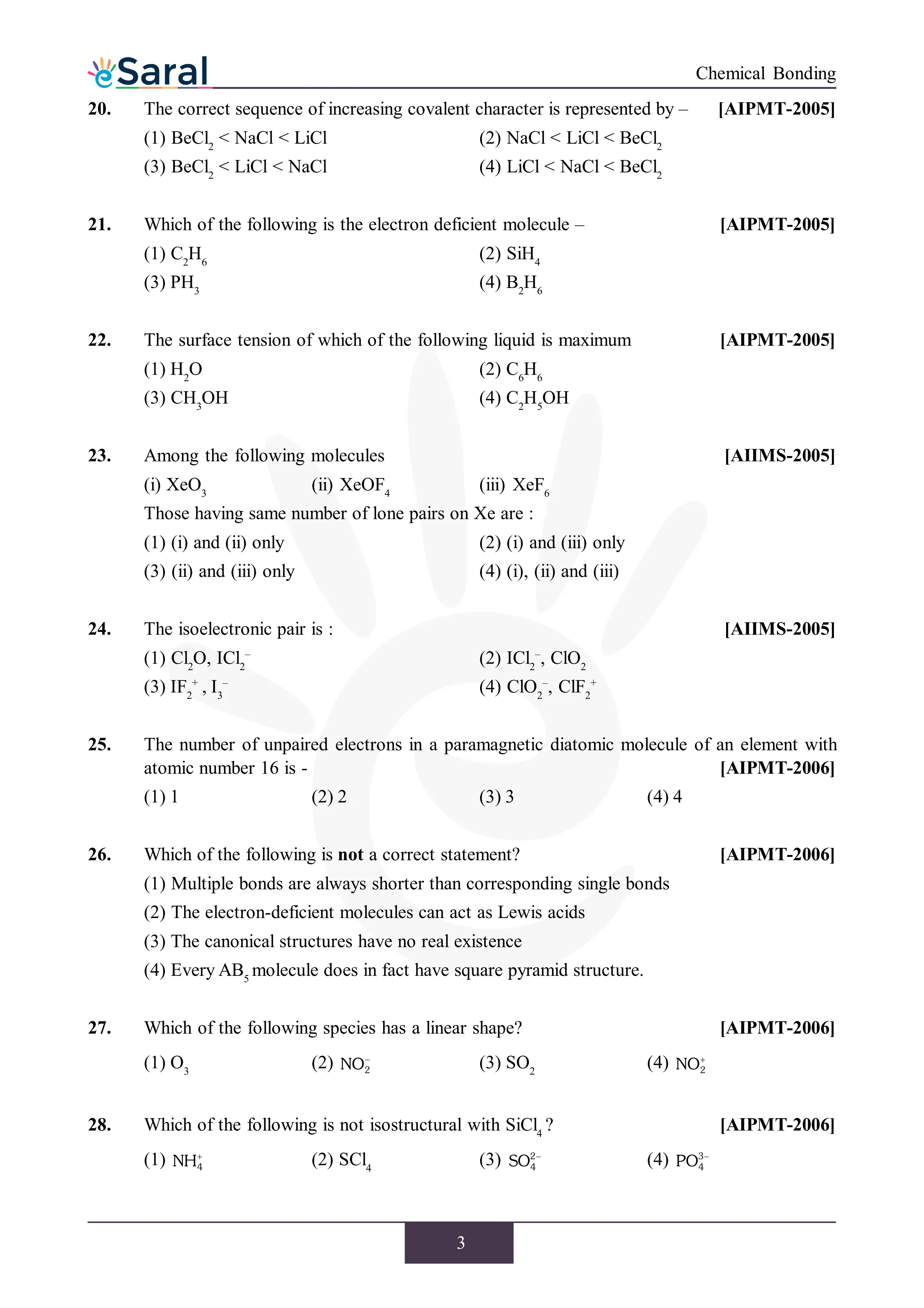
NEET Previous Year Questions — Chemical Bonding (with Solutions)
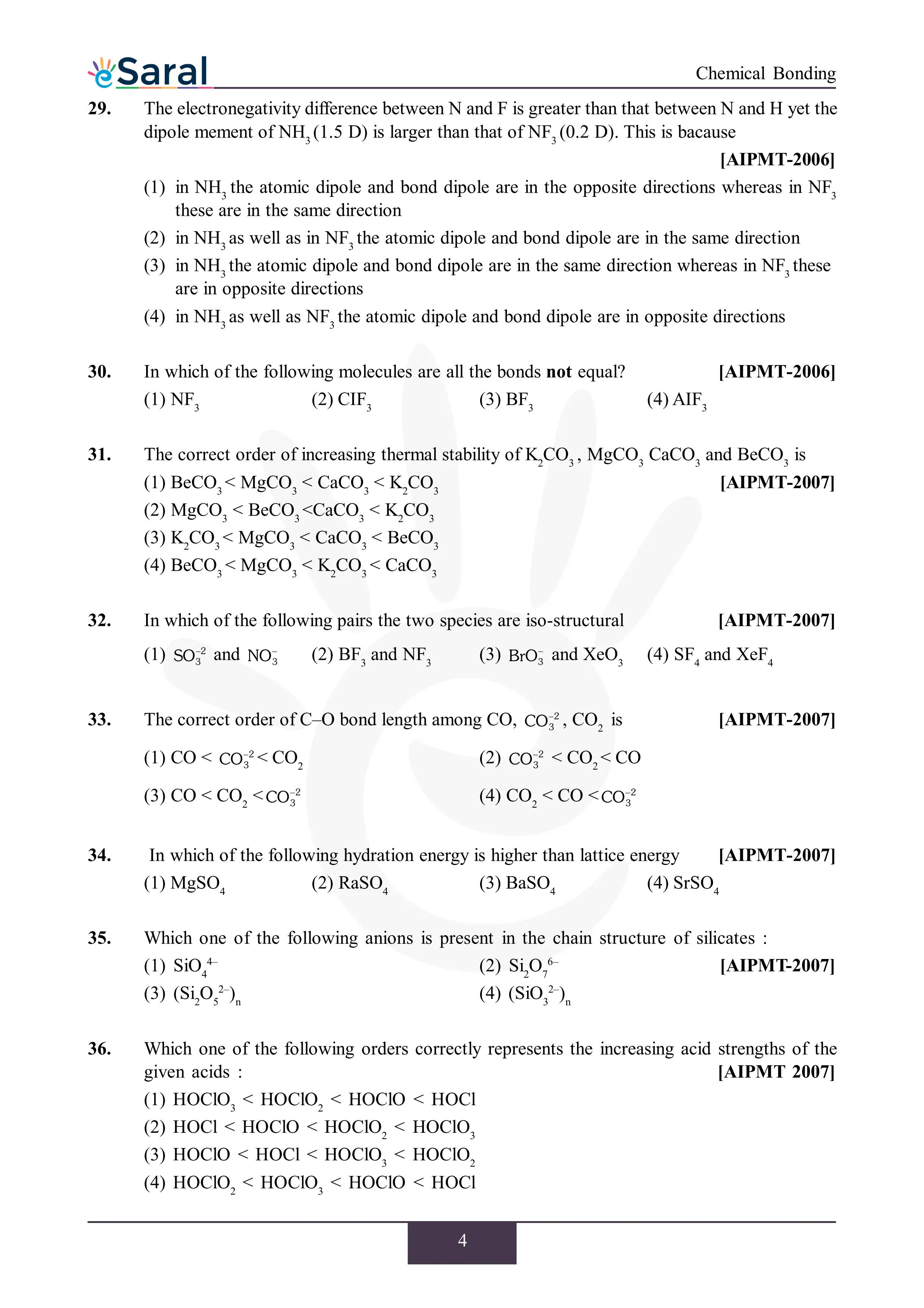
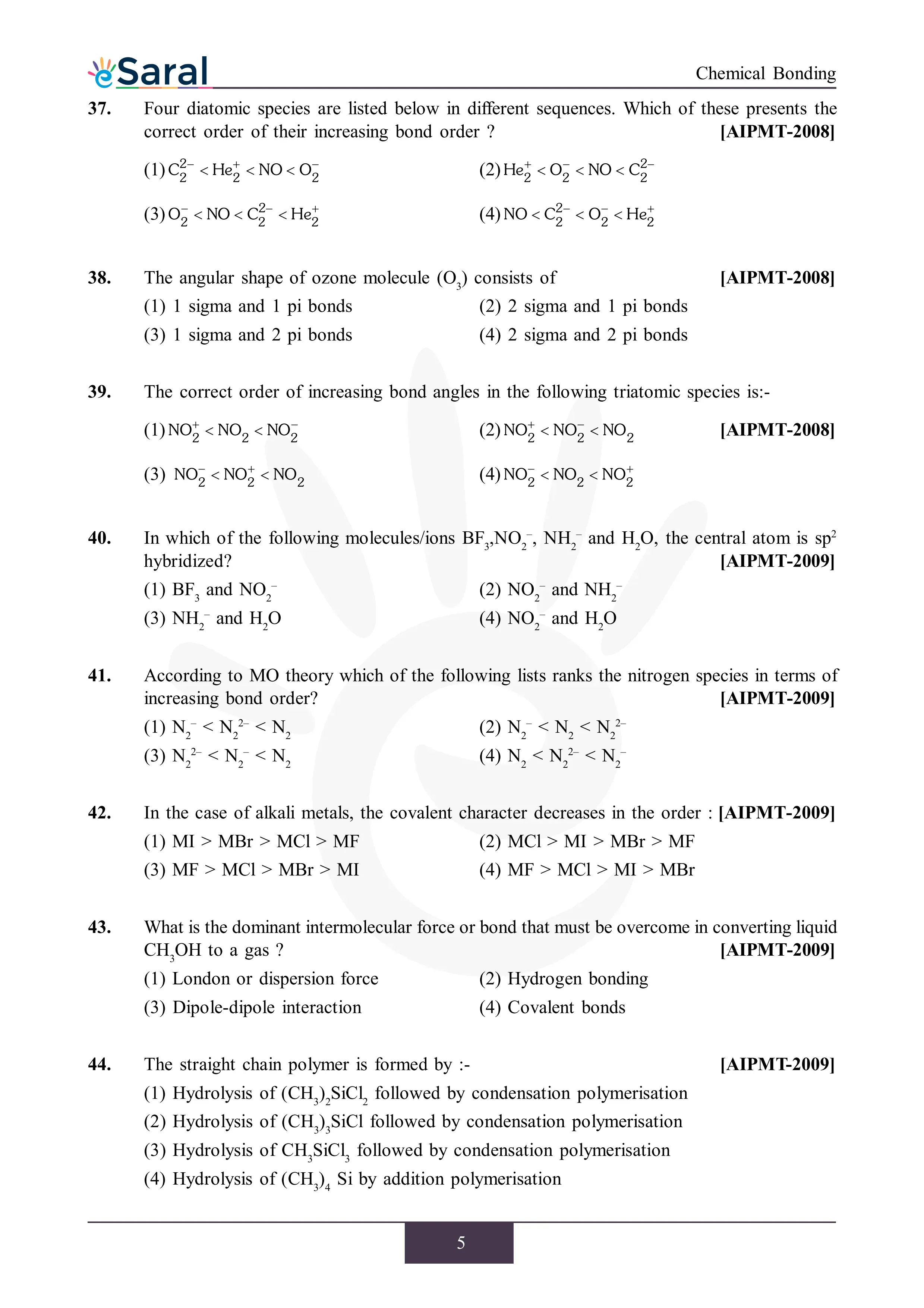
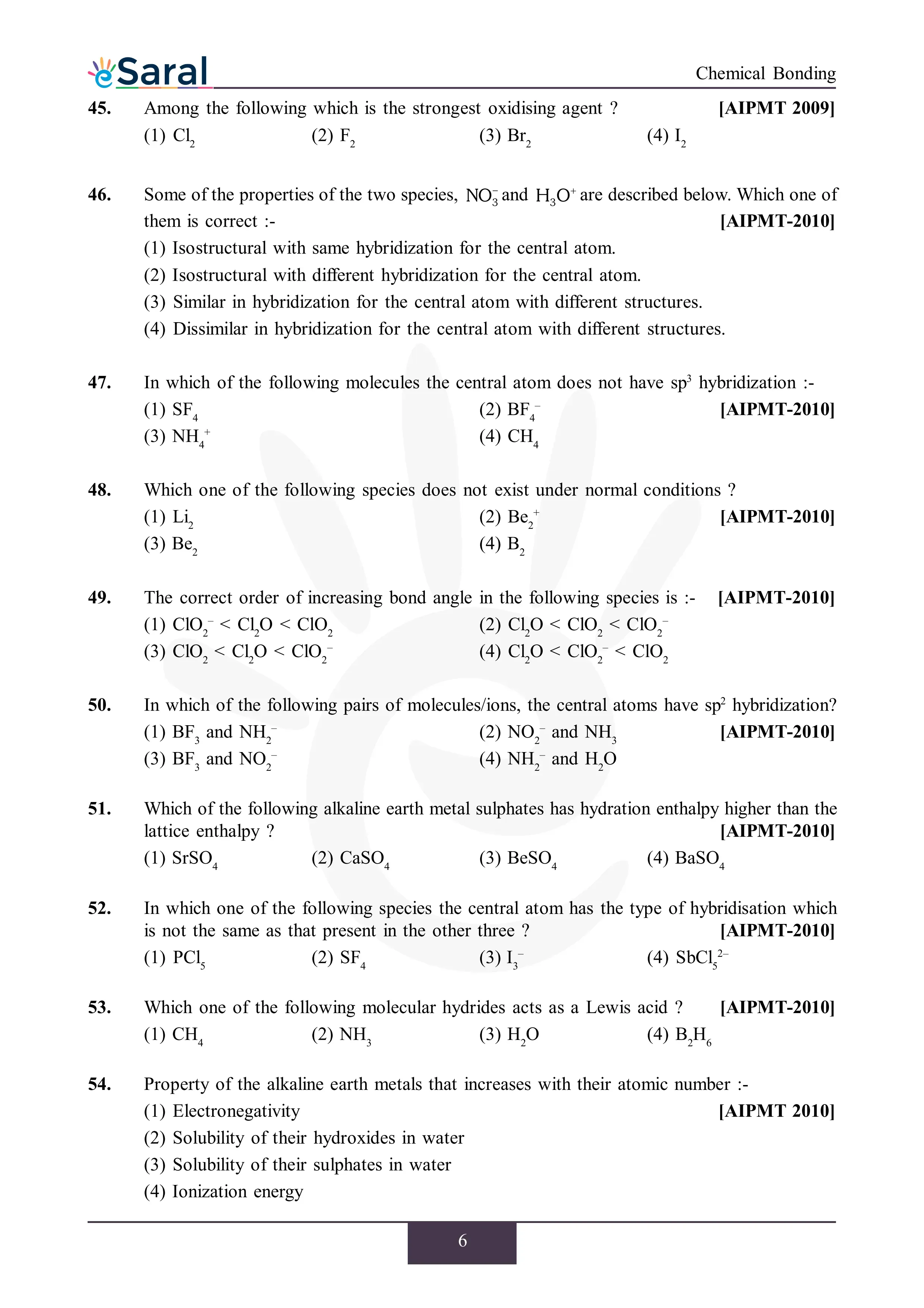
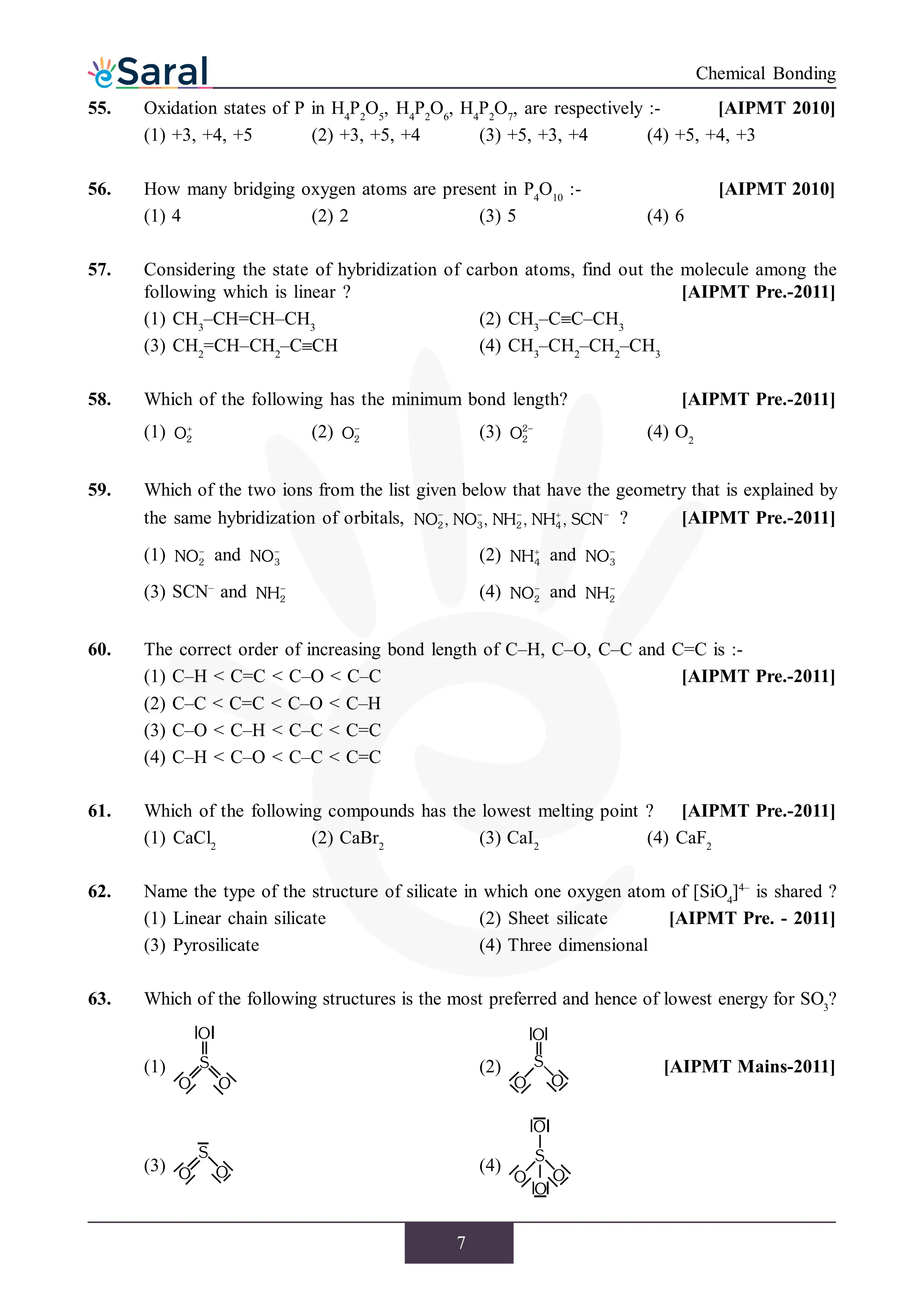
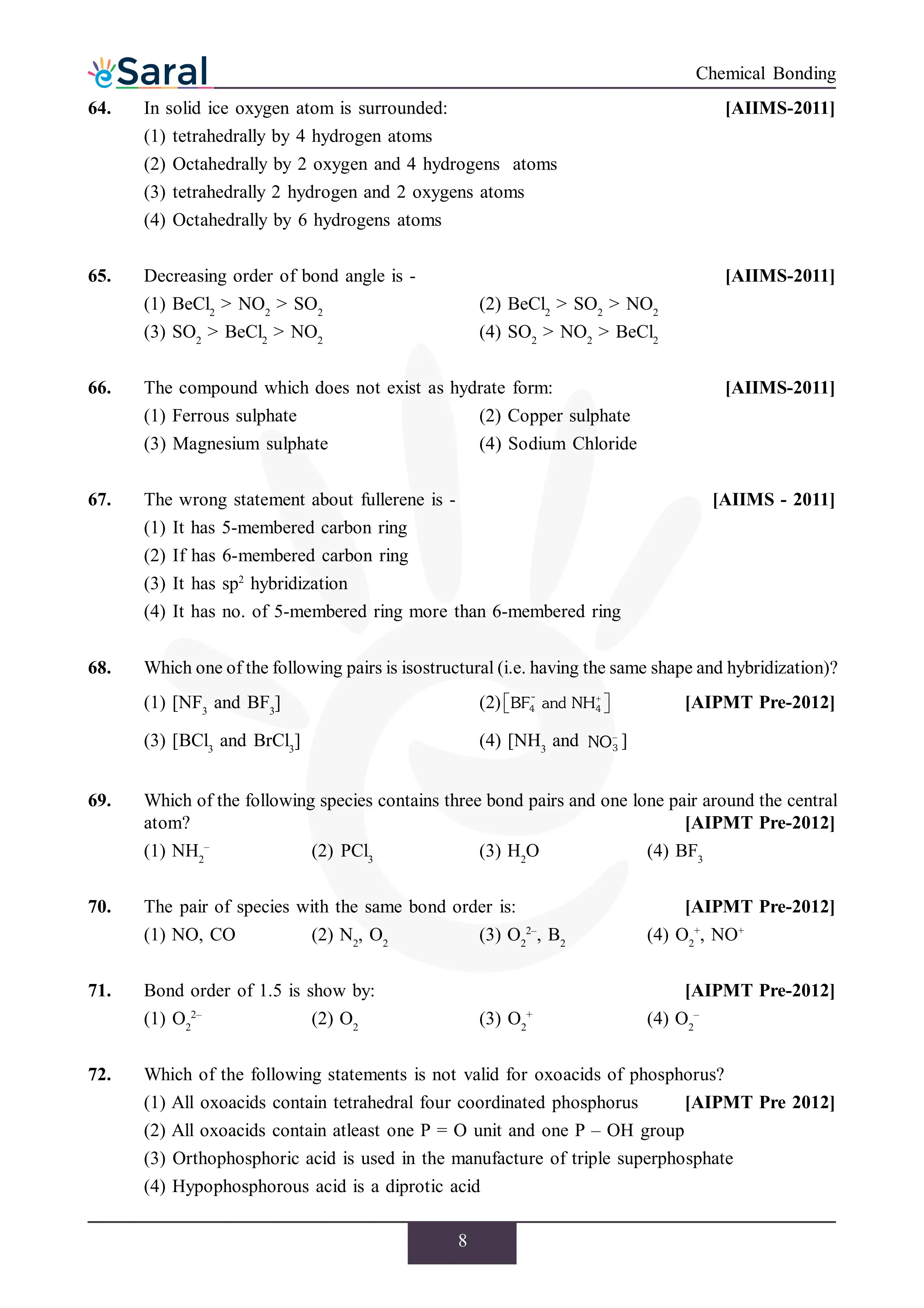
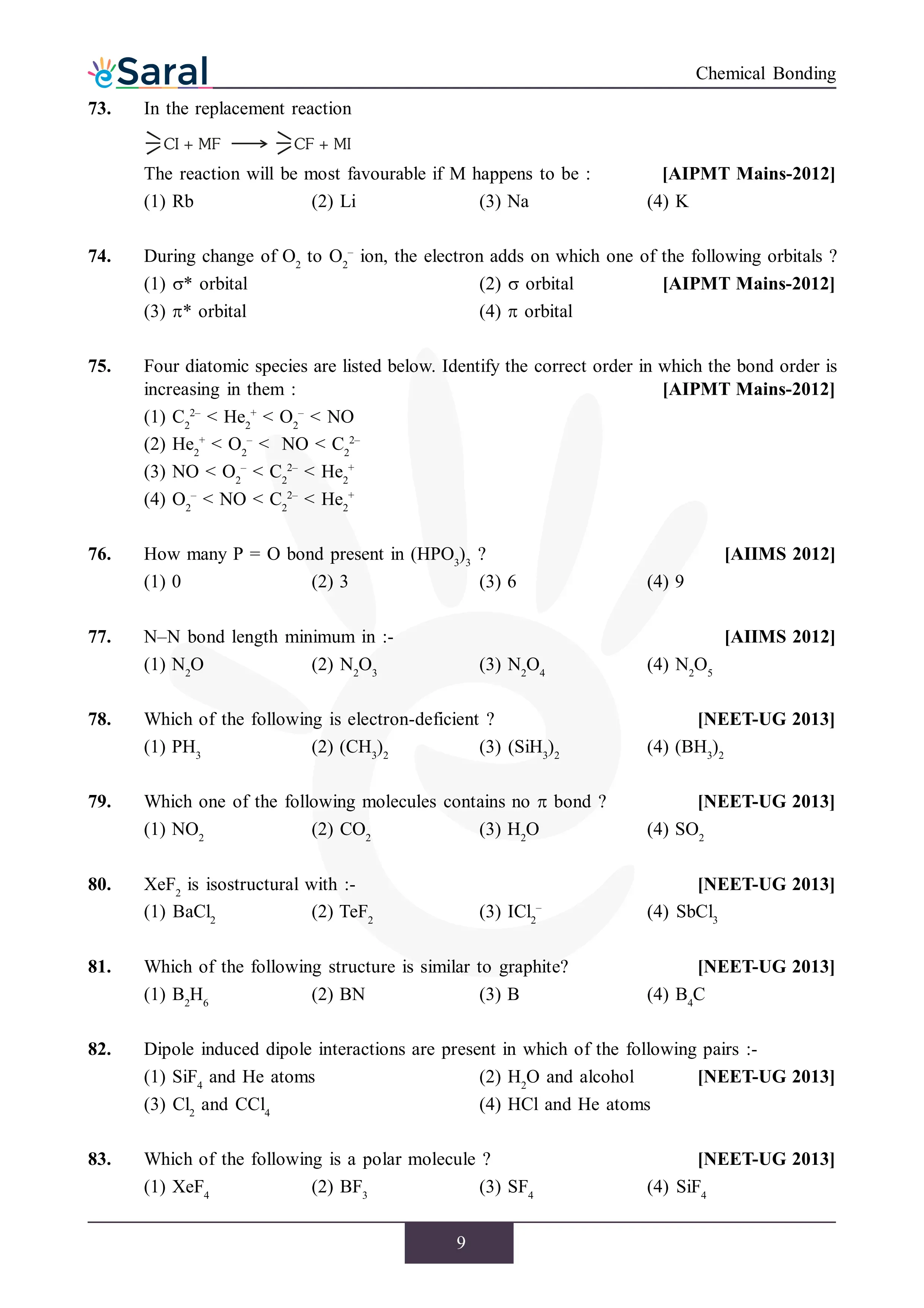
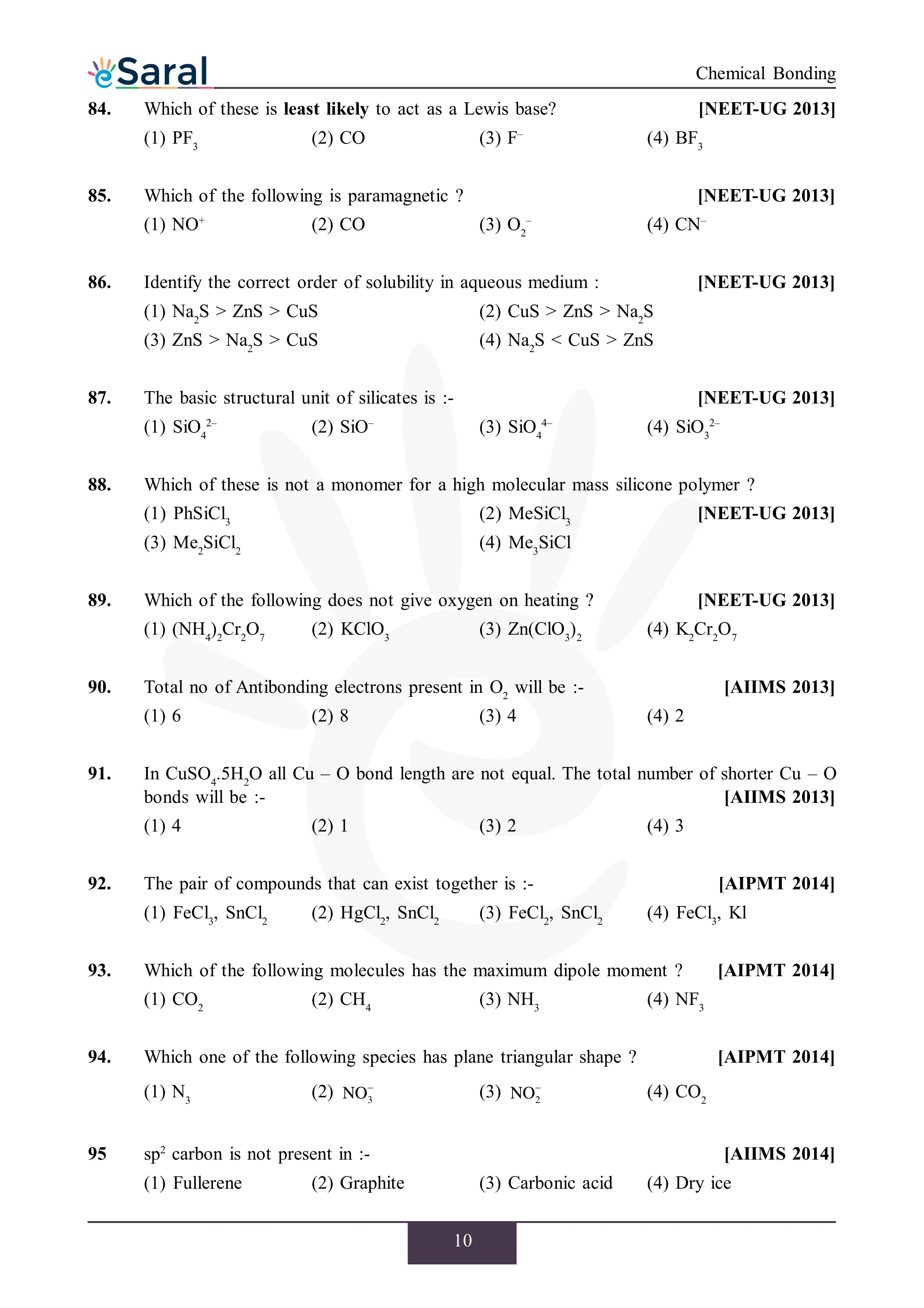
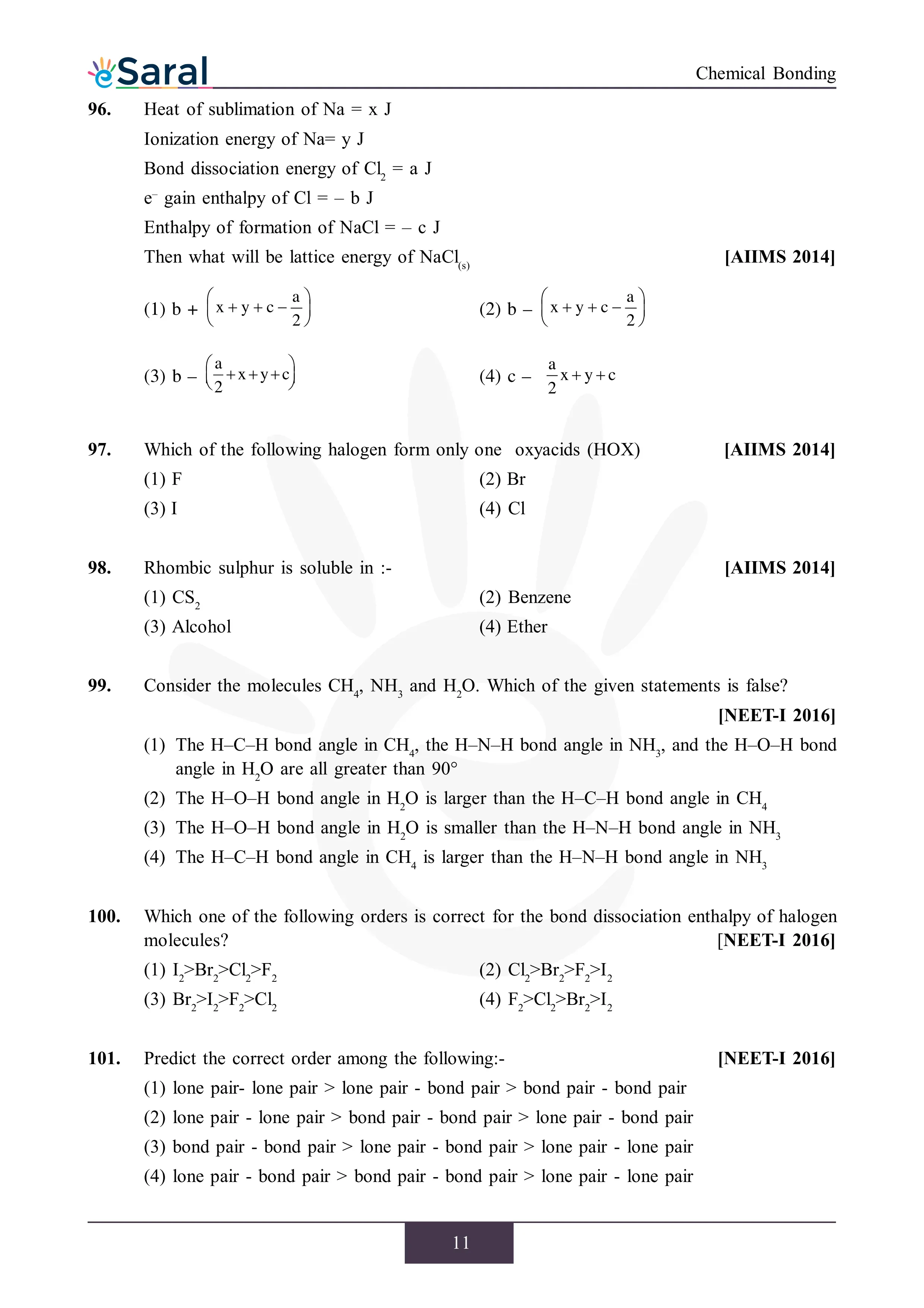
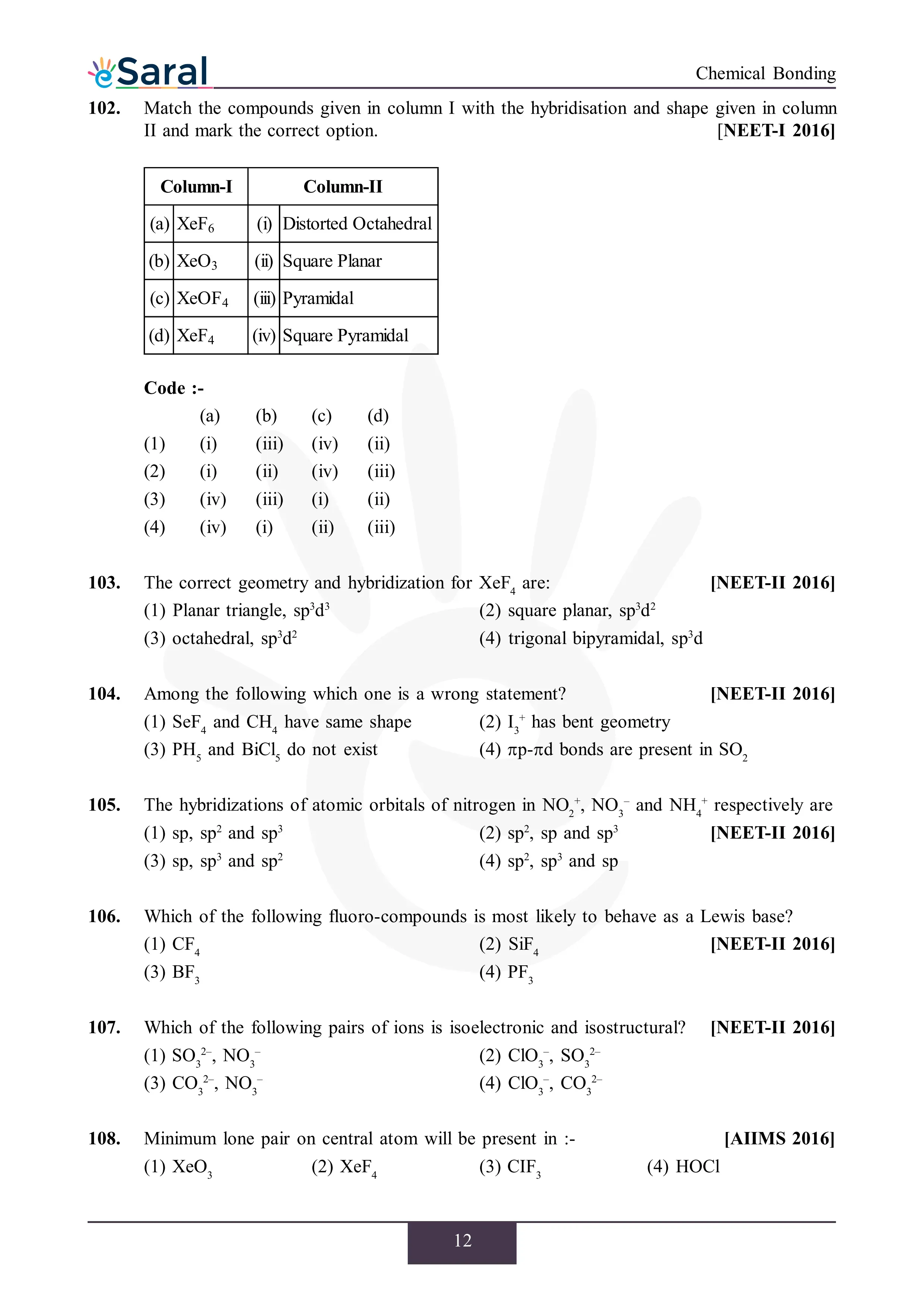
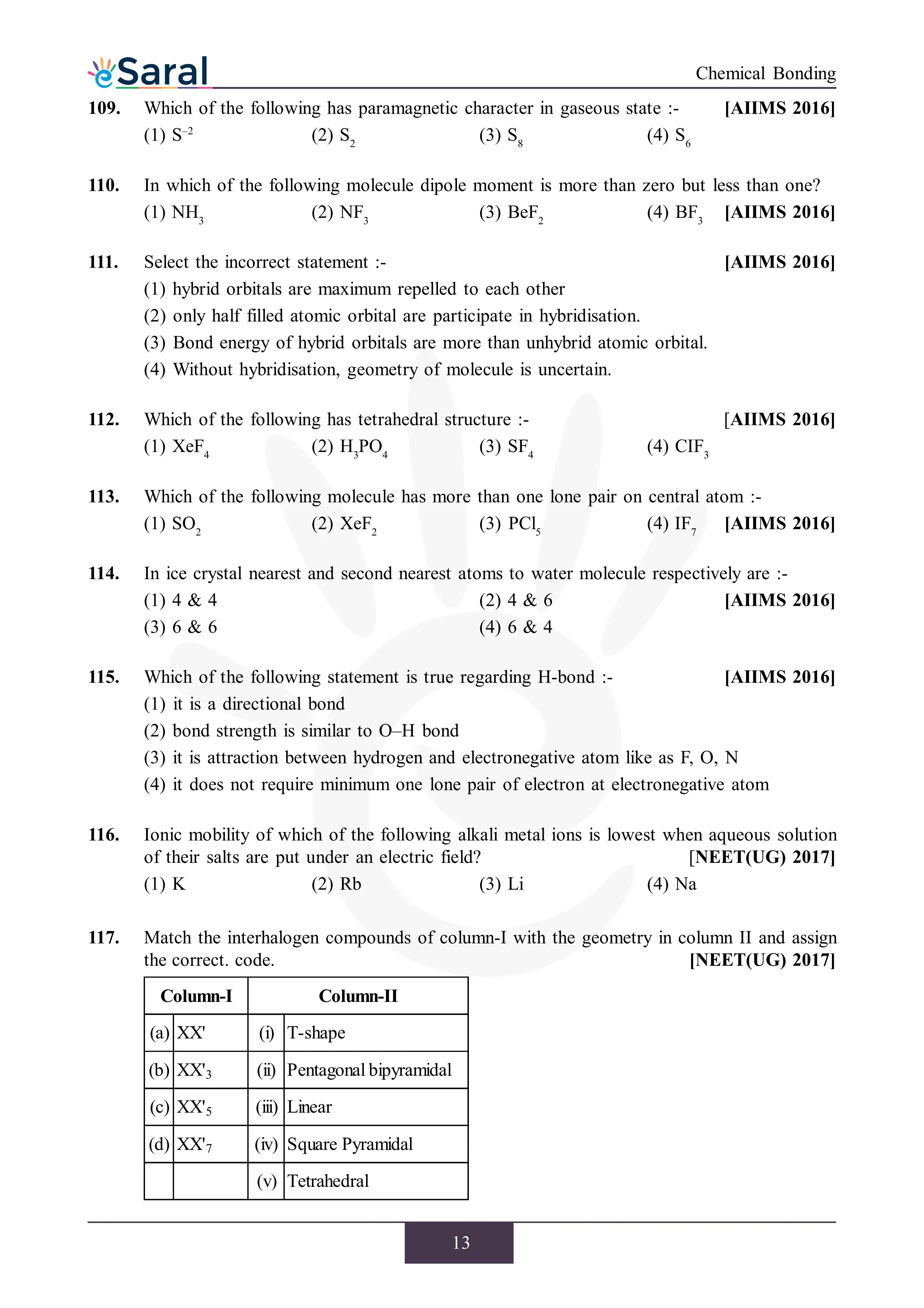
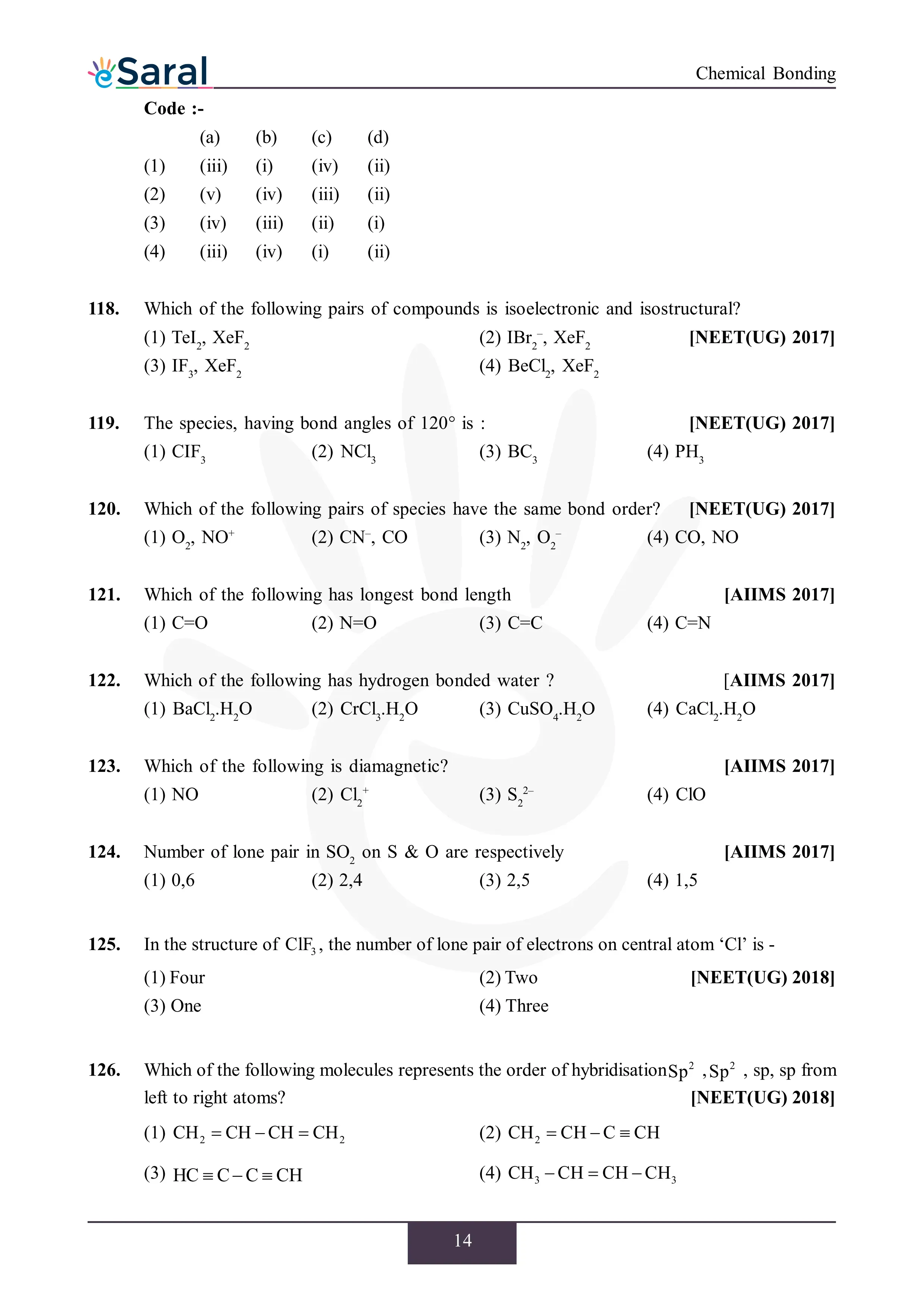
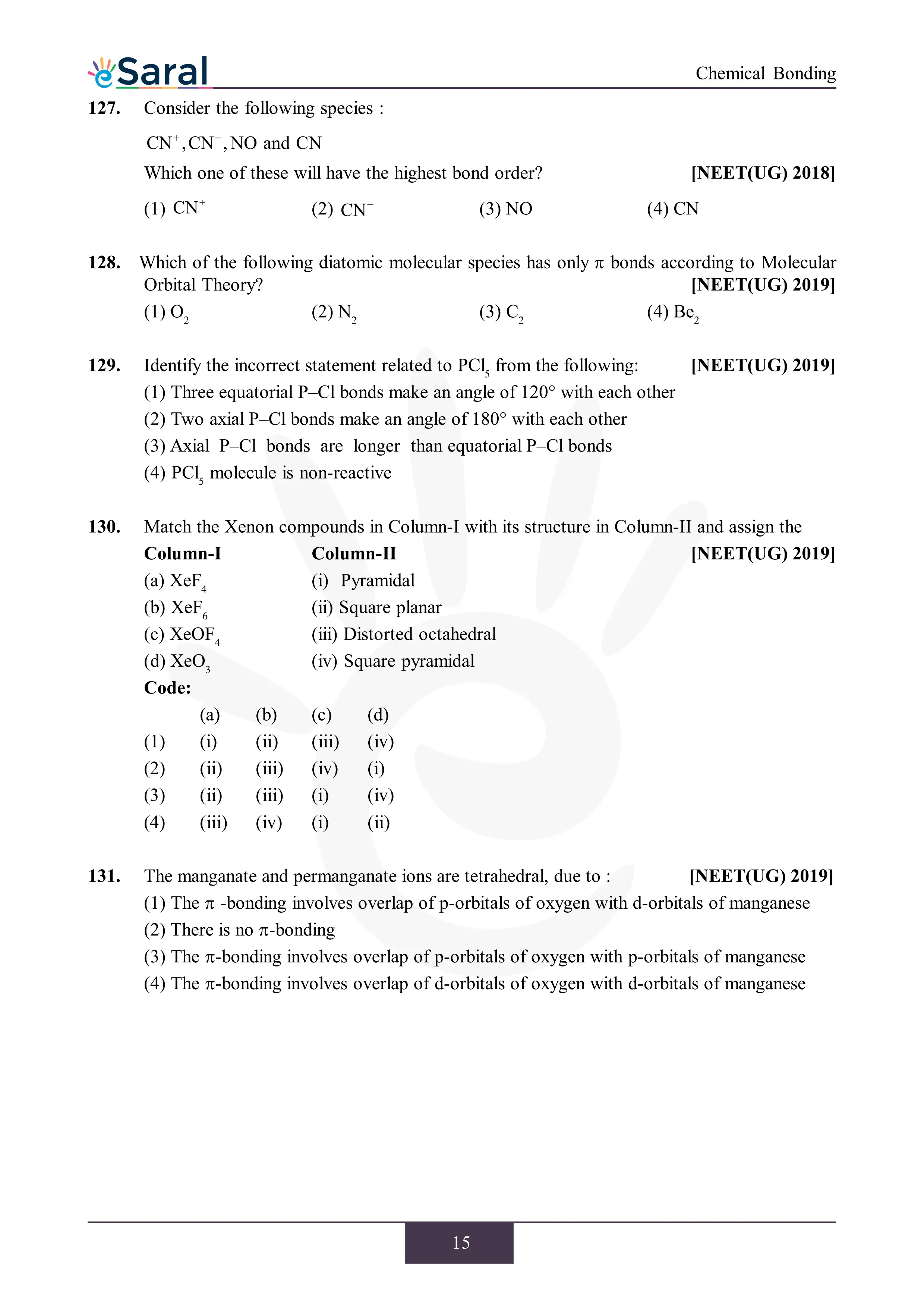
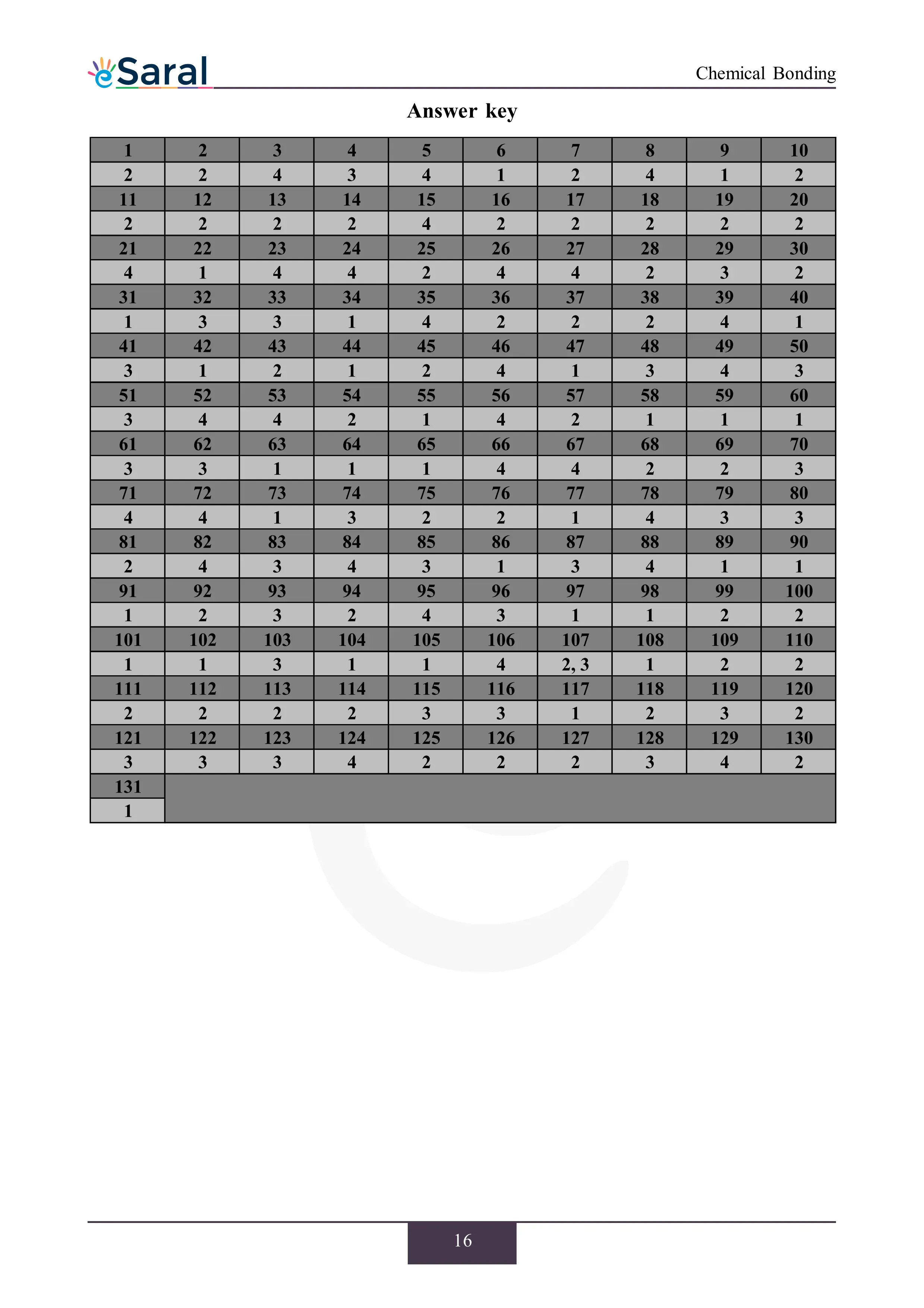
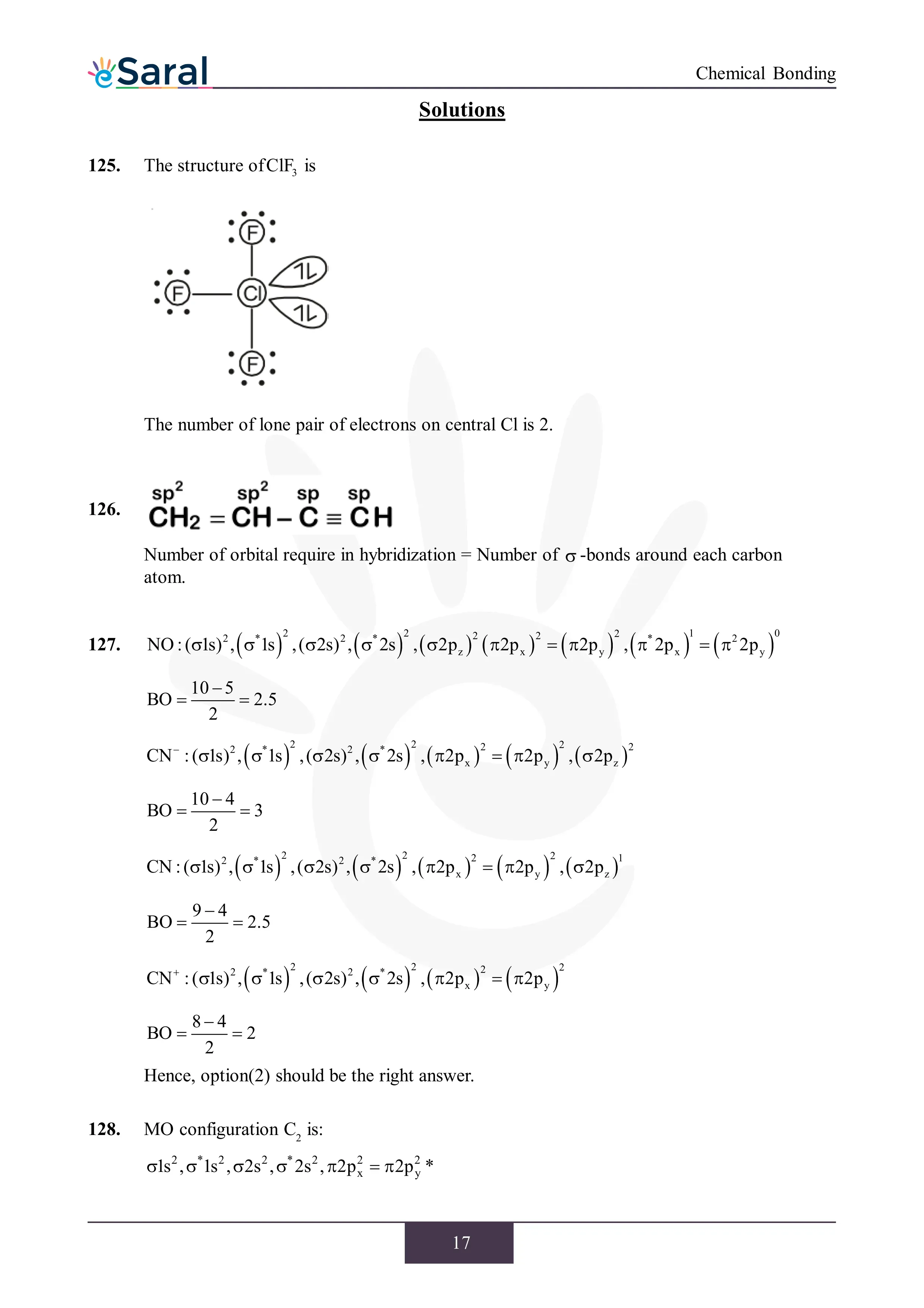
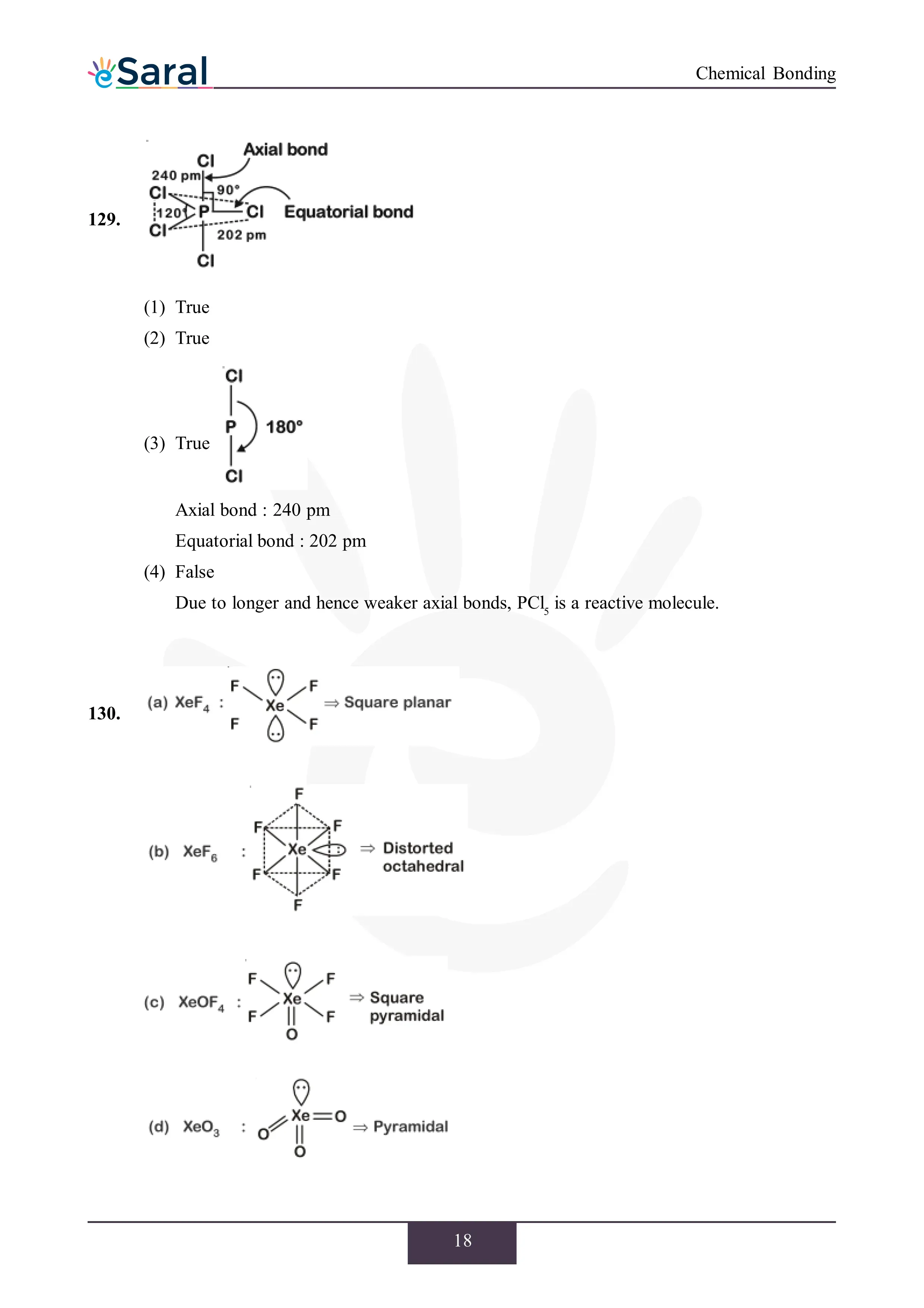
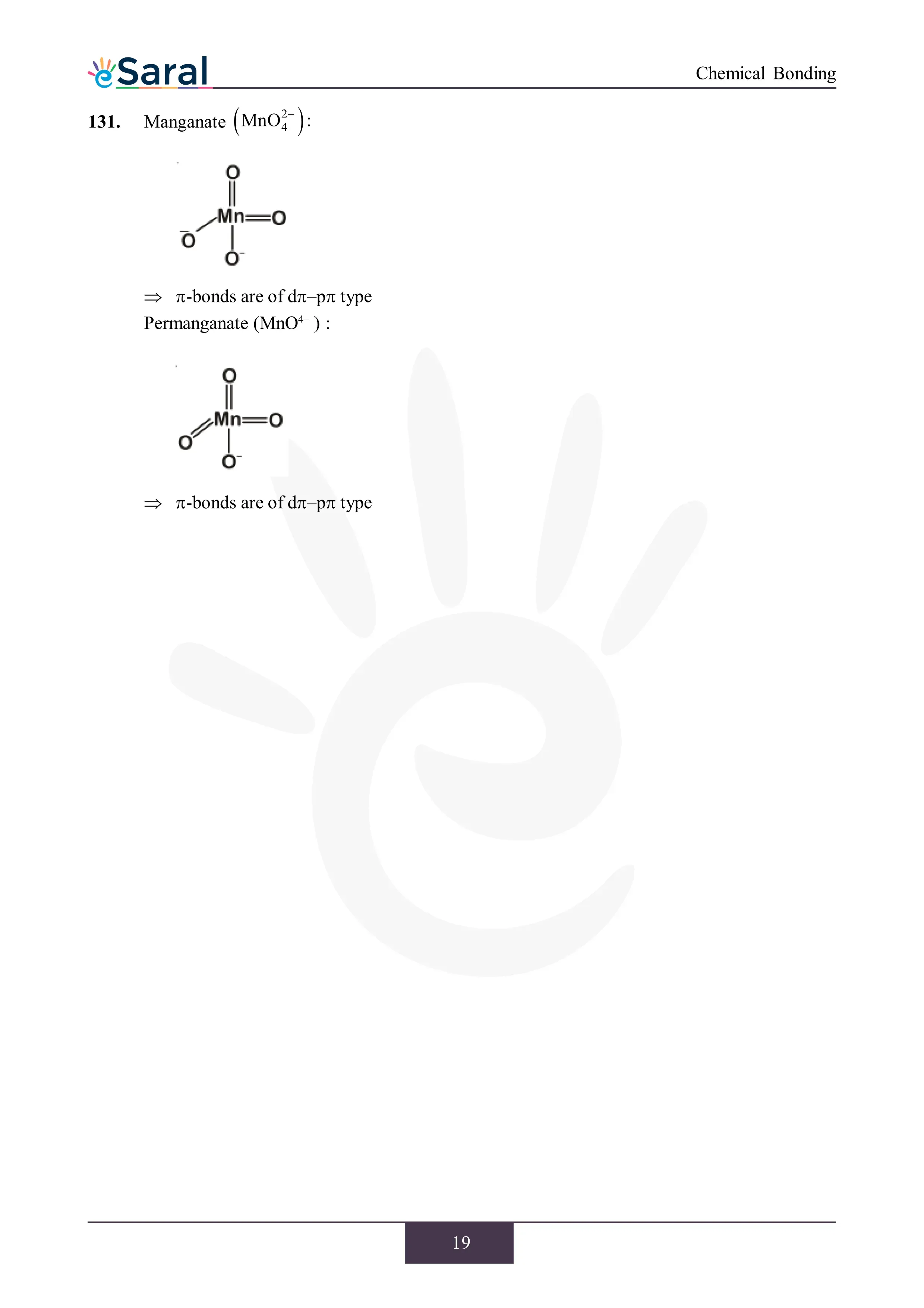
Topic-Wise Breakdown of NEET Questions from Chemical Bonding
Chemical Bonding is a broad chapter. NEET does not test all of it equally. Here is the actual distribution of questions based on analysis of the last 10 years of NEET papers:
Topic | Frequency in NEET | Difficulty |
|---|---|---|
VSEPR Theory — shape and geometry | Very High | Easy–Medium |
Hybridisation (sp, sp², sp³, sp³d, sp³d²) | Very High | Medium |
Bond Order (MOT) | High | Medium |
Resonance and Formal Charge | High | Medium |
Dipole Moment | Medium | Medium |
Hydrogen Bonding | Medium | Easy |
Ionic vs Covalent Character | Medium | Easy |
Molecular Orbital Theory (MOT) | Medium | Medium–Hard |
Fajan's Rules | Low–Medium | Medium |
Lattice Energy and Born-Haber Cycle | Low | Hard |
Bottom line for NEET preparation: Master VSEPR, hybridisation, bond order, and resonance first. These four areas alone account for over 70% of NEET questions from this chapter.
Most Repeated Concepts in Chemical Bonding NEET PYQs
1. VSEPR Theory — Shape and Bond Angle
NEET loves asking: "What is the shape of XeF₄?" or "Which molecule has a bent shape?"
The key is counting bond pairs + lone pairs on the central atom:
- 2 BP, 0 LP → Linear (e.g., BeCl₂)
- 3 BP, 0 LP → Trigonal Planar (e.g., BF₃)
- 4 BP, 0 LP → Tetrahedral (e.g., CH₄)
- 3 BP, 1 LP → Trigonal Pyramidal (e.g., NH₃)
- 2 BP, 2 LP → Bent/V-shape (e.g., H₂O)
- 5 BP, 1 LP → See-saw (e.g., SF₄)
- 4 BP, 2 LP → Square Planar (e.g., XeF₄)
- 6 BP, 0 LP → Octahedral (e.g., SF₆)
2. Hybridisation
NEET frequently asks for the hybridisation of a central atom in a given molecule. Quick method:
Hybridisation = ½ × (valence electrons of central atom + number of monovalent atoms − charge)
- sp → linear, 180°
- sp² → trigonal planar, 120°
- sp³ → tetrahedral, 109.5°
- sp³d → trigonal bipyramidal, 90° and 120°
- sp³d² → octahedral, 90°
3. Bond Order from Molecular Orbital Theory
Bond Order=Bonding electrons−Antibonding electrons2\text{Bond Order} = \frac{\text{Bonding electrons} - \text{Antibonding electrons}}{2}Bond Order=2Bonding electrons−Antibonding electrons
Higher bond order = shorter bond length = stronger bond = higher bond dissociation energy.
NEET commonly asks: "Arrange O₂, O₂⁺, O₂⁻, O₂²⁻ in order of bond length."
Remember: Bond length is inversely proportional to bond order.
4. Resonance
Molecules with resonance (like O₃, NO₃⁻, CO₃²⁻, SO₂) have bond orders that are non-integers. The actual bond length is intermediate between single and double bond values. NEET tests whether you can identify resonating structures and compare bond lengths.
How to Approach Chemical Bonding Questions in NEET
Follow this 4-step method for every Chemical Bonding question in NEET:
- Identify the central atom — who is the central atom in the molecule?
- Count valence electrons — total VE of central atom + contribution from surrounding atoms ± charge
- Apply VSEPR / MOT / Hybridisation — use the right framework for the specific question type
- Eliminate options — NEET MCQs often have two clearly wrong options; eliminate those first, then choose between the remaining two
💡 Expert Tip by eSaral Chemistry Faculty: "NEET gives you 48 seconds per question on average. For Chemical Bonding questions, you should take no more than 30 seconds. If you have practised NEET PYQs from this chapter, the question pattern will feel familiar and your answer time will drop dramatically."
How Many Hours Should You Spend on Chemical Bonding for NEET?
Chemical Bonding needs about 15–20 focused hours to cover theory, practice examples, and solve 5–7 years of NEET PYQs. Given it yields 8–12 marks every year, the return on time invested is very high. Do not skip it even if you find MOT difficult — focus on VSEPR and hybridisation first and pick up the easy marks.
Key Formulas and Rules You Must Know
Concept | Formula / Rule |
|---|---|
Bond Order | (Bonding e⁻ − Antibonding e⁻) / 2 |
Hybridisation number | ½ × (VE of central atom + monovalent atoms − charge) |
Formal Charge | VE − Non-bonding e⁻ − ½(Bonding e⁻) |
Dipole Moment | μ = q × d (Debye units) |
Fajan's Rule — more covalent when | Smaller cation, larger anion, higher charge |
Hydrogen Bond strength order | F−H···F > O−H···O > N−H···N |
Bond length order | Triple bond < Double bond < Single bond |
VSEPR — lone pairs repel more | LP–LP > LP–BP > BP–BP |
Common Mistakes Students Make in Chemical Bonding NEET Questions
Avoid these errors that cost students marks every year:
- Confusing geometry with hybridisation: NH₃ is sp³ hybridised but trigonal pyramidal in geometry (not tetrahedral) because one position is occupied by a lone pair
- Ignoring lone pairs in VSEPR: Always count lone pairs when determining shape. XeF₄ is sp³d² but square planar because two lone pairs occupy axial positions
- Bond order of O₂: O₂ has a bond order of 2 (double bond) and is paramagnetic (two unpaired electrons in π* orbitals). This is a classic NEET trap
- Dipole moment of CO₂ vs SO₂: CO₂ is linear → net dipole = 0. SO₂ is bent → net dipole ≠ 0. Both have polar bonds but CO₂ is non-polar overall
- Resonance does NOT mean isomers: Resonance structures are different representations of the same molecule, not different compounds
Frequently Asked Questions
How many questions come from Chemical Bonding in NEET every year?
Chemical Bonding typically contributes 2 to 3 questions in NEET UG every year, worth 8 to 12 marks. It has appeared consistently in every NEET paper for the past decade. VSEPR theory, hybridisation, and bond order are the most frequently tested sub-topics.
What are the most important topics in Chemical Bonding for NEET?
The most important topics are VSEPR theory and molecular shapes, hybridisation (sp to sp³d²), bond order via Molecular Orbital Theory, resonance, dipole moment, and hydrogen bonding. These account for over 70% of NEET questions from this chapter. Focus on these before attempting Fajan's Rules or Born-Haber cycles.
Is Chemical Bonding hard for NEET?
Chemical Bonding has moderate difficulty in NEET. The theory is conceptual rather than mathematical, which makes it manageable with focused study. Students find VSEPR and hybridisation straightforward. Molecular Orbital Theory (MOT) is slightly harder but only 1 question per year typically comes from it.
What is the bond order of O₂ and why is it paramagnetic?
The bond order of O₂ is 2 (double bond). According to Molecular Orbital Theory, O₂ has two electrons in degenerate π* antibonding orbitals (one in each), making it paramagnetic. This is a classic NEET question because it contradicts the Lewis structure prediction of all paired electrons.
How do I remember VSEPR shapes for NEET?
The fastest method is to count total electron pairs (BP + LP) on the central atom. 2 pairs = linear, 3 = trigonal planar, 4 = tetrahedral base (then subtract for lone pairs to get shape: 3BP+1LP = pyramidal, 2BP+2LP = bent). Practise with 10–15 molecules until it becomes automatic. The shapes of NH₃, H₂O, XeF₂, XeF₄, PCl₅, SF₆ appear most often in NEET.
Team eSaral
eSaral Academic and Editorial Team
Team eSaral is the collective author profile for educational content created by eSaral’s teachers and academic contributors. The team draws on expertise from IIT graduates, doctors, experienced educators and subject specialists to develop resources for JEE, NEET and school students. Our articles aim to explain concepts clearly and help students study with confidence.
Related Posts
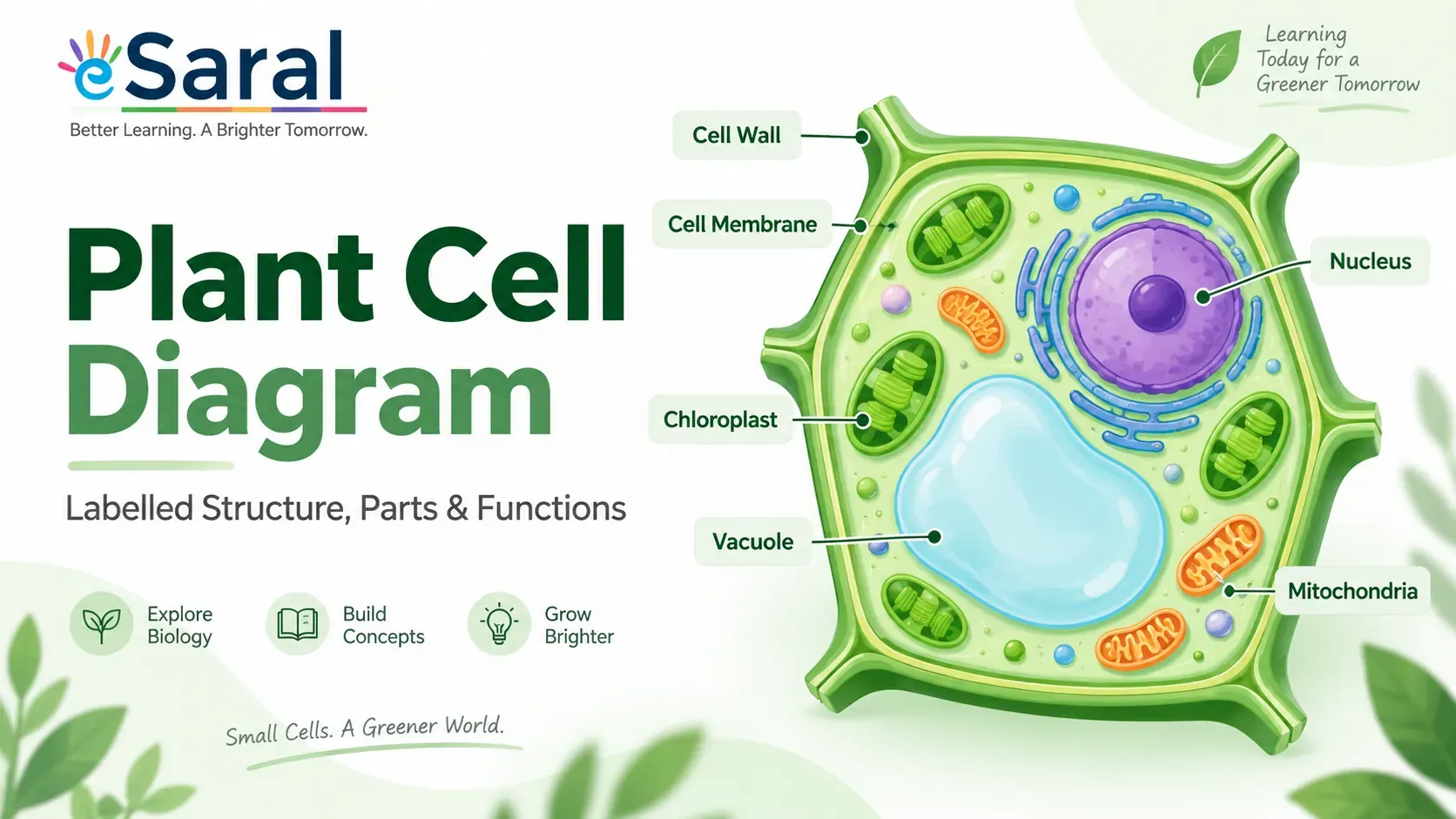
Plant Cell Diagram: Labelled Structure, Parts and Functions
Simple, labelled plant cell diagram with parts and functions. Covers plant cell structure for Class 6, 7, 8, 9, 10 and 11 students, CBSE-aligned.

Saransh Gupta Sir's Visit to IIT Patna: Hostel Life, Placements & Lessons for JEE Aspirants
Inside Saransh Gupta Sir's IIT Patna visit — hostel life, the library, placements, internships, and real advice for JEE aspirants from students living the IIT dream.
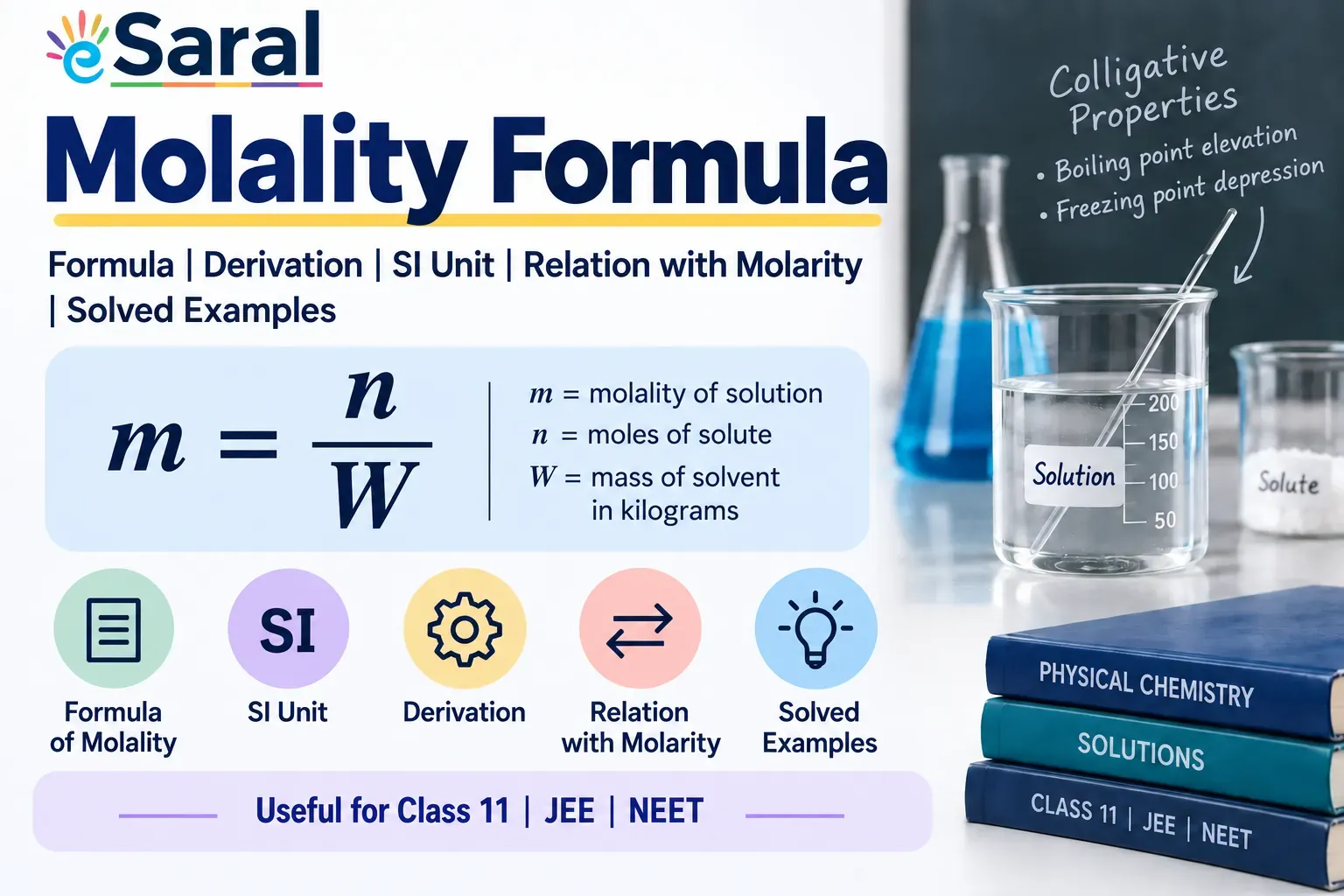
Molality Formula: Formula for Molality, Derivation & Solved Examples
Molality formula is $m = \dfrac{n}{W}$. Learn the formula of molality, its SI unit, derivation, relation with molarity, and solved examples for Class 11, JEE and NEET.
BITSAT Previous Year Question Paper PDF
Download BITSAT previous year question papers PDF. Get year-wise BITSAT PYQs, memory-based papers, exam pattern, and preparation tips to improve your BITSAT preparation.

Teachers’ Day 2026 at eSaral Gurukul: Celebrating the Bond Between Students, Teachers & Mentors
See how Teachers’ Day 2026 was celebrated at eSaral Gurukul, reflecting the bond among students, teachers, and mentors, and the role of guidance beyond academics.

JEE Advanced Attempts: Can You Give It a Third Time? Rules Explained
JEE Advanced attempts: current rule is 2 consecutive years only: full eligibility criteria, the 2025 third-attempt controversy, and the latest 2026 petition news.

Best JEE Preparation App
Best JEE preparation app for Main & Advanced: AI mock tests, live doubt-solving, thousands of practice questions. JEE preparation app for droppers & Class 11-12.
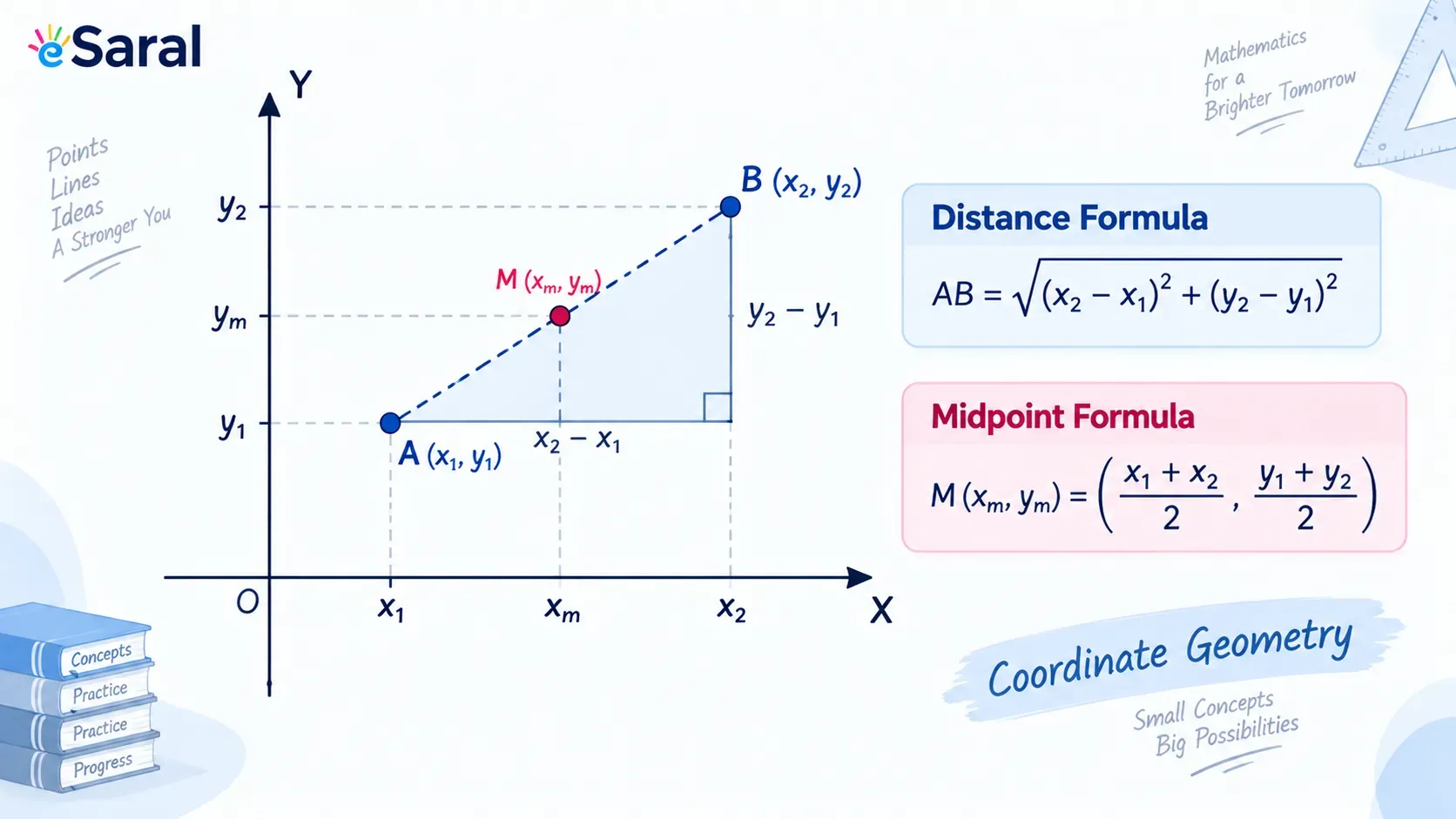
Coordinate Geometry Class 10: Formulas, Notes & Solved Examples
Coordinate geometry class 10: complete CBSE formulas — distance, section, midpoint and area of triangle — with derivation, notes and solved examples.
How to make Notes For JEE Smart Notes Strategy of an AIR 41
Learn how to make notes for JEE the way toppers do — indexing, shorthand, and smart short notes for JEE that cut revision time to just 5–7 days.
SL Arora Physics Class 12 Index – Chapter List for Volume 1 & 2
SL Arora Physics Class 12 index — complete chapter list for Volume 1 & 2, mapped to NCERT solutions for board, JEE Main, and NEET preparation.