
Classification and Nomenclature - NEET Previous Year Questions with Complete Solutions

eSaral Academic and Editorial Team
Summary
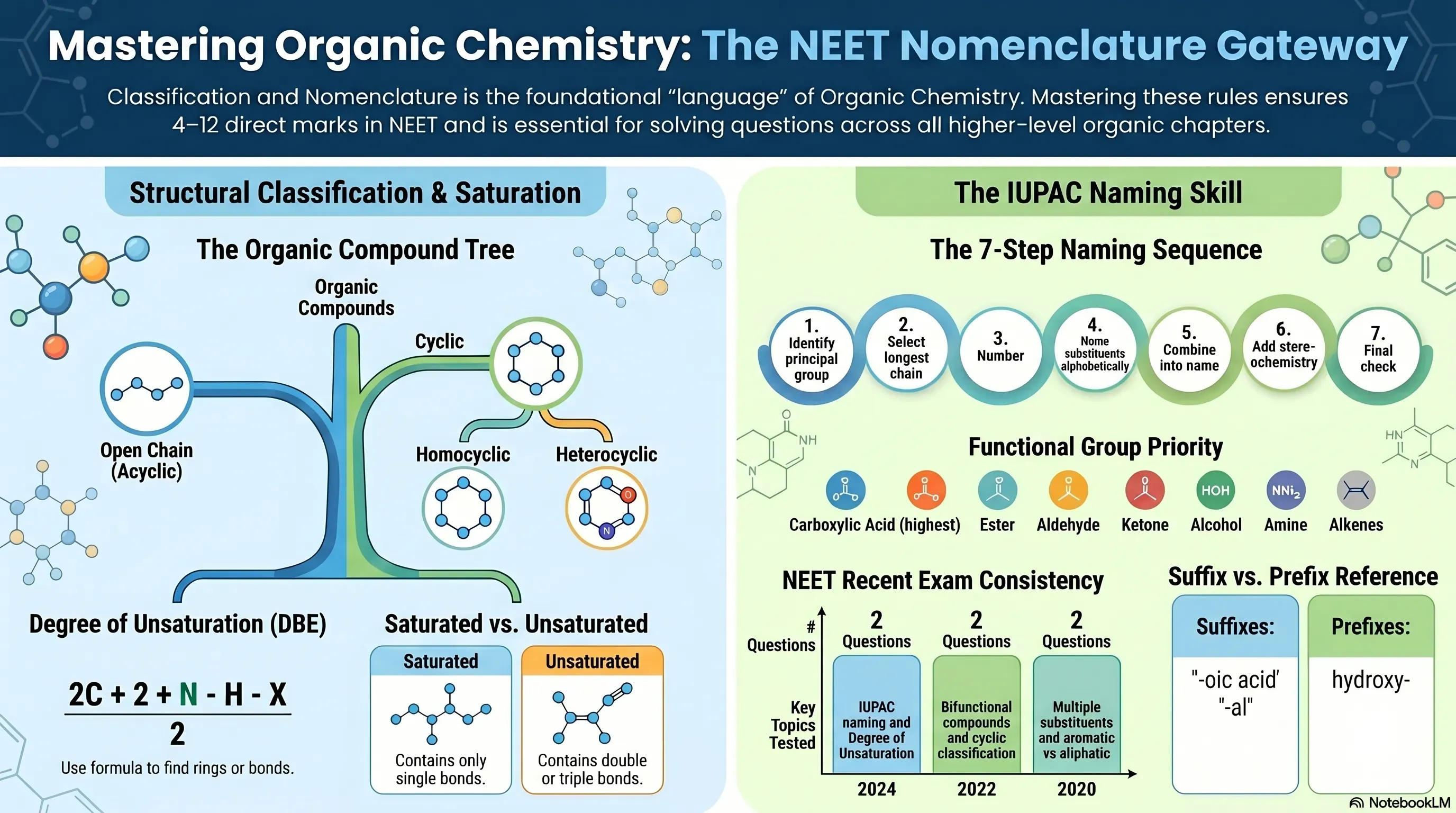
Classification and Nomenclature of Organic Compounds is the foundation of Organic Chemistry for NEET, focusing on compound classification, functional groups, IUPAC naming rules, homologous series, and degree of unsaturation, with most questions testing naming skills and functional group identification.
eSaral › NEET › Neet test-series›Classification and Nomenclature

Why This Chapter Is the Gateway to All of Organic Chemistry in NEET
Classification and Nomenclature of Organic Compounds (Class 11, Chapter 12) is not a chapter that stands alone — it is the language of all Organic Chemistry. Every subsequent organic chapter — Hydrocarbons, Haloalkanes, Alcohols, Aldehydes, Amines, Biomolecules — uses IUPAC naming, functional group identification, and structural classification as its foundation.
A student who cannot name a given structure or draw the structure from a given IUPAC name will lose marks not just in this chapter but across every organic question in NEET.
Directly from this chapter, NEET tests 1–3 questions per year worth 4–12 marks — on IUPAC naming, functional group identification, homologous series, and classification. These are predominantly direct recall and application questions. A student who has practised systematically will almost never lose marks here.
💡 Expert Tip by eSaral Chemistry Faculty: "IUPAC nomenclature is not memorisation — it is a skill with rules. Most students read the rules once and move on. The students who score full marks from nomenclature questions are the ones who practised naming 30–40 structures until the sequence of rules became reflex. Invest 3 days in this skill and it pays back through all of Class 12 Organic Chemistry in NEET."
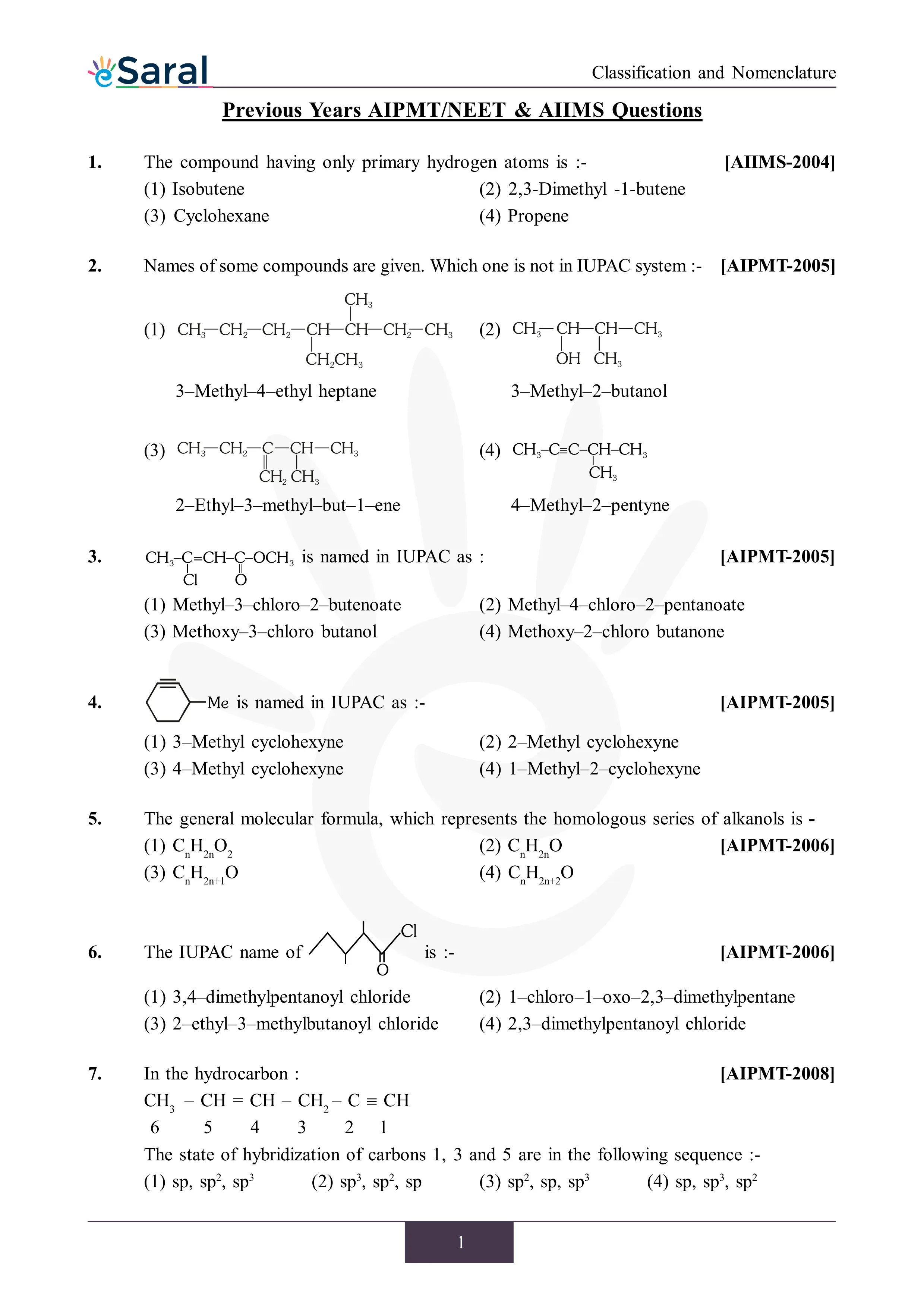
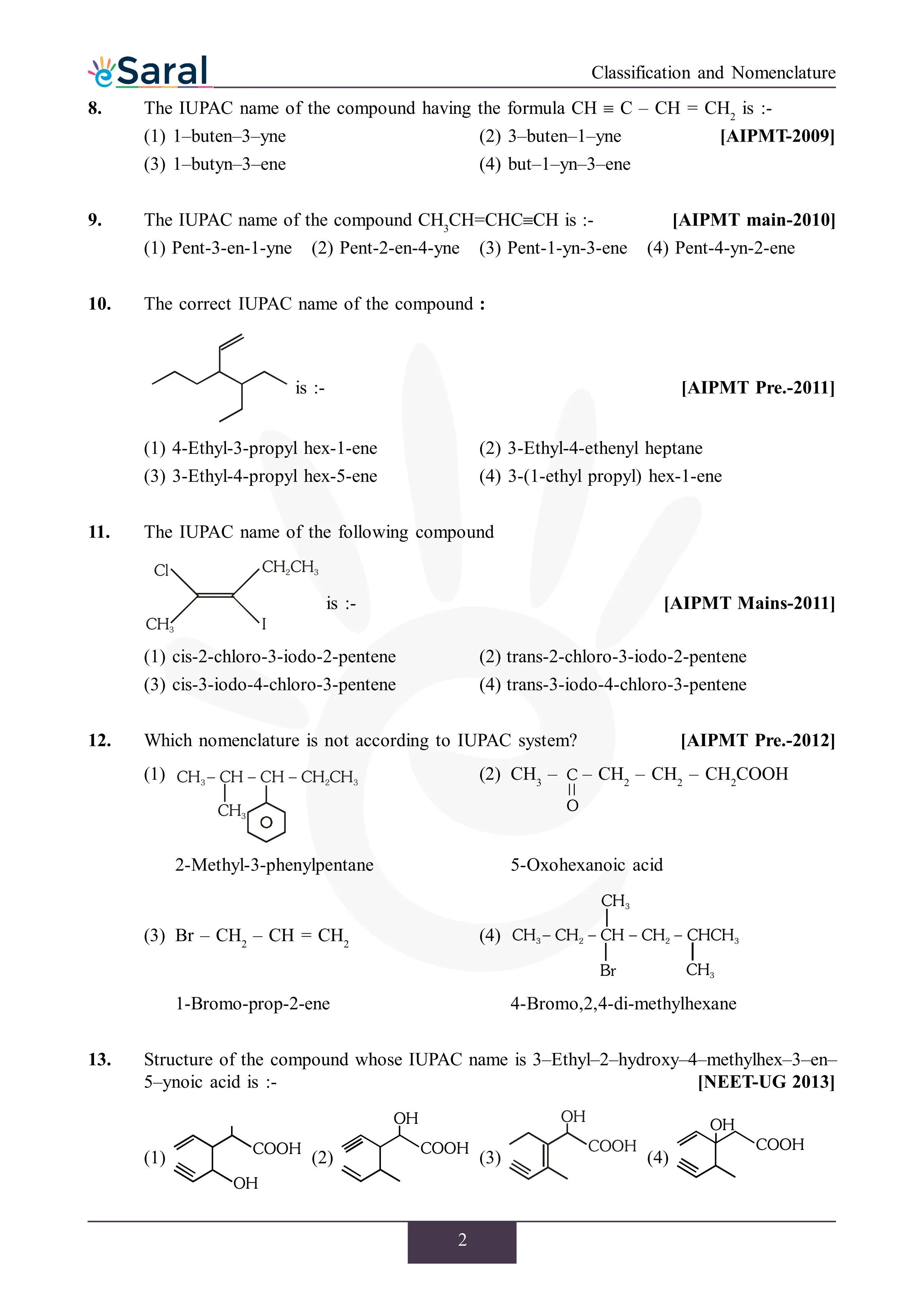
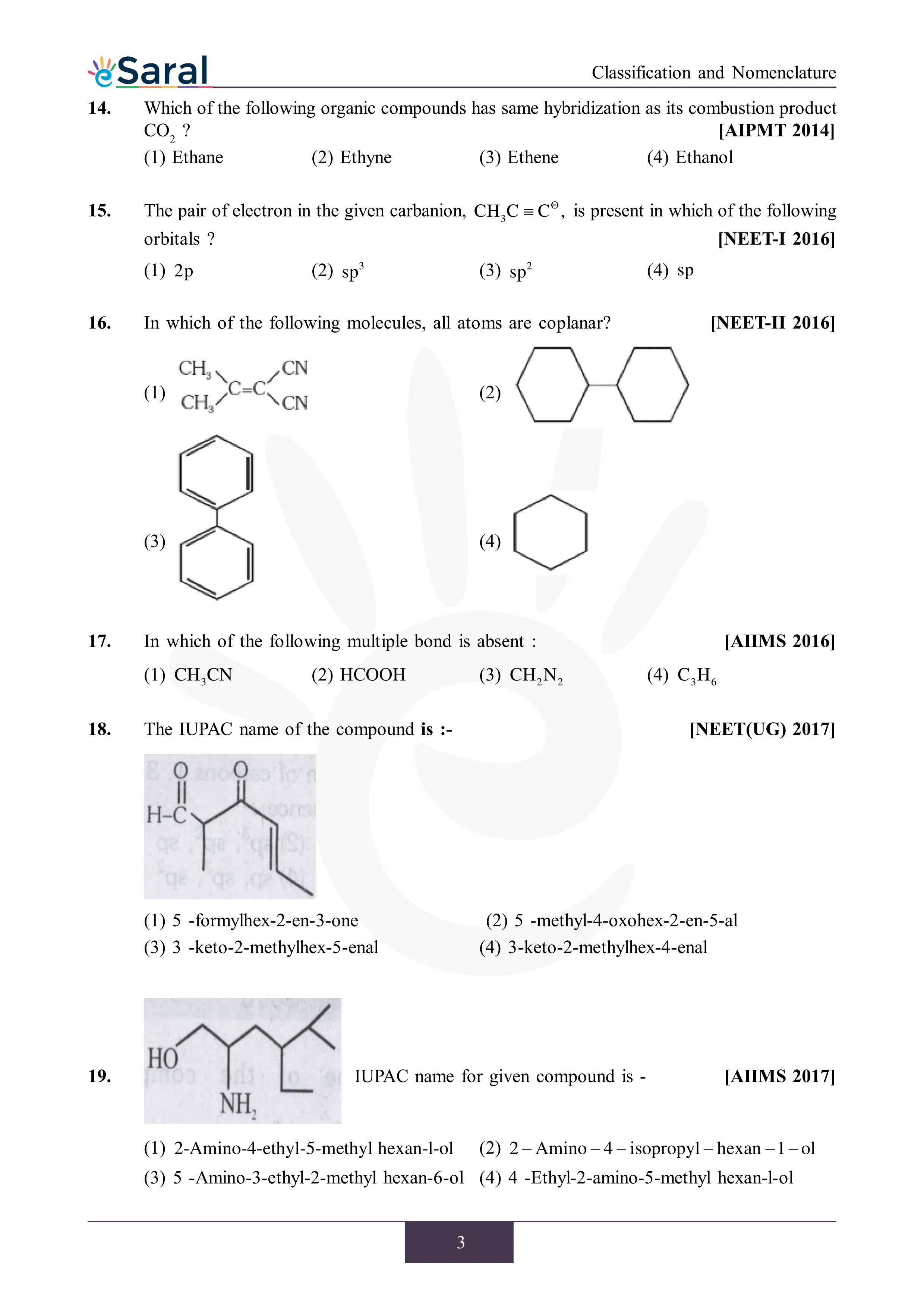
NEET Previous Year Questions — With Solutions

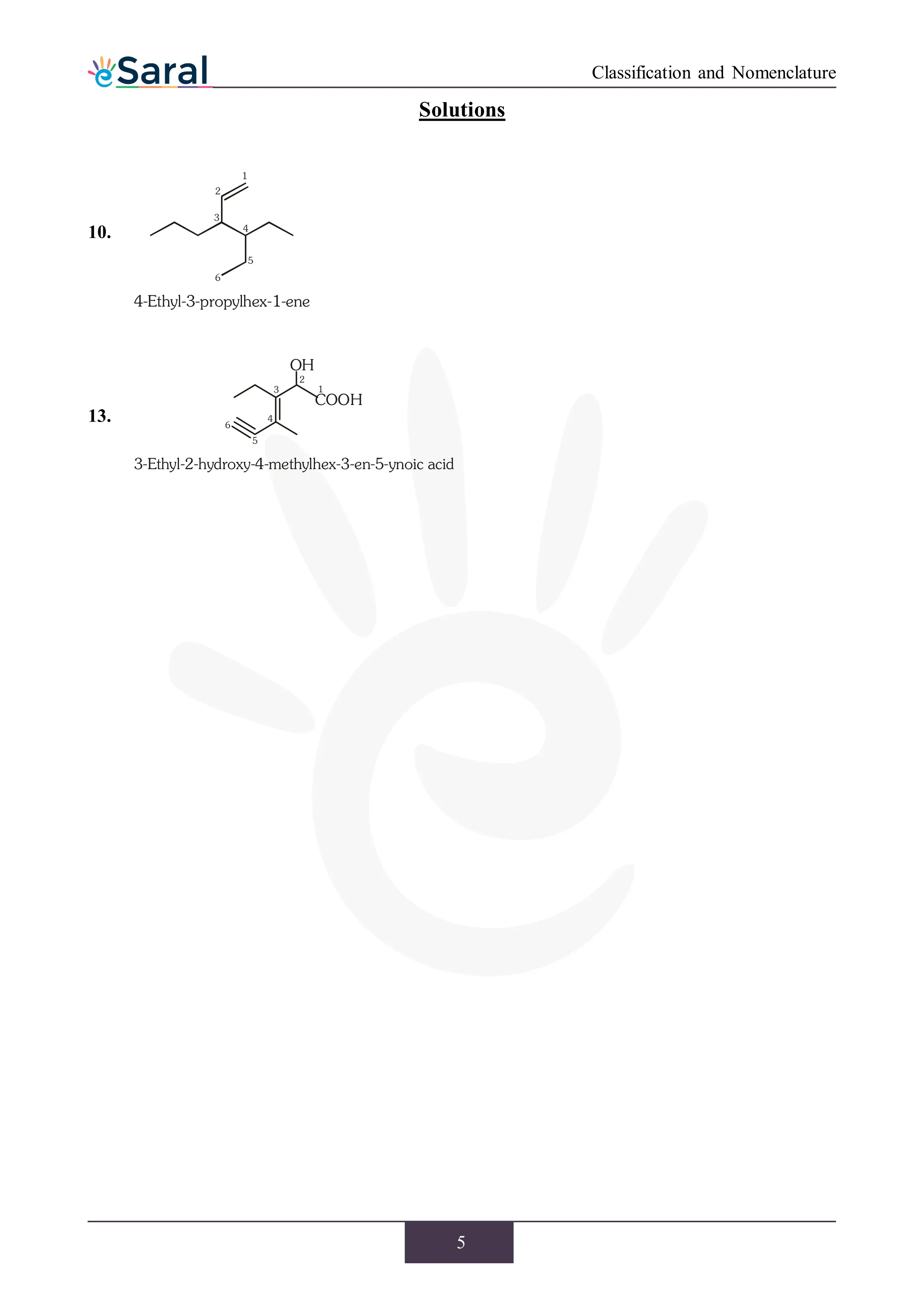
Chapter Overview: Topics and Subtopics
What This Chapter Covers
Topic | Key Subtopics | NEET Frequency |
|---|---|---|
Classification — Open Chain | Straight chain, branched chain, saturated, unsaturated | Medium |
Classification — Cyclic | Homocyclic (carbocyclic), heterocyclic, alicyclic, aromatic | Medium |
Functional Groups | Identification and naming of all major functional groups | Very High |
Homologous Series | Definition, properties, general formula | Medium |
IUPAC Nomenclature — Alkanes | Parent chain selection, numbering, and substituent naming | Very High |
IUPAC Nomenclature — Alkenes and Alkynes | Position of multiple bonds, E/Z notation | High |
IUPAC Nomenclature — Functional Groups | Suffix and prefix for each functional group, priority order | Very High |
Common Names vs IUPAC | Trivial names (formaldehyde, acetone, acetic acid) and their IUPAC equivalents | High |
Structural Isomerism | Chain, position, functional group, metamerism from naming perspective | Medium |
Degree of Unsaturation (DBE) | Formula: DBE = (2C + 2 + N − H − X) / 2 | High |
NEET Weightage Analysis: Year-Wise Question Count
How Many Questions Come From This Chapter in NEET?
NEET Year | Questions | Key Topics Tested |
|---|---|---|
NEET 2024 | 2 | IUPAC naming with functional group, degree of unsaturation |
NEET 2023 | 1 | Functional group identification, homologous series |
NEET 2022 | 2 | IUPAC naming (bifunctional compound), classification of cyclic compounds |
NEET 2021 | 1 | Common name vs IUPAC name, functional group priority |
NEET 2020 | 2 | IUPAC naming with multiple substituents, aromatic vs aliphatic |
NEET 2019 | 3 | IUPAC naming, degree of unsaturation, functional group recognition |
NEET 2018 | 2 | Parent chain selection, nomenclature of alkenes |
NEET 2017 | 1 | Homologous series, IUPAC naming |
Average: 1.75 questions per year — approximately 7 marks. Critically, the naming skills tested in this chapter appear embedded in questions from every other organic chapter too — making its effective contribution to your NEET score significantly higher than the direct question count suggests.
💡 Expert Tip by eSaral Chemistry Faculty: "Here is the real value of this chapter that most students miss: in NEET, a question from Alcohols or Aldehydes will give you a structure and ask you to identify its IUPAC name — or give you an IUPAC name and ask you to identify a property. Both of those questions test this chapter's skills. The student who has mastered nomenclature gets the organic question right even without deeply knowing that specific organic chapter."
Classification of Organic Compounds — Complete Framework
Primary Classification Tree
ORGANIC COMPOUNDS
│
├── OPEN CHAIN (Acyclic)
│ ├── Straight chain (normal) — e.g., n-butane
│ └── Branched chain — e.g., isobutane
│
└── CYCLIC (Closed chain)
├── HOMOCYCLIC (Carbocyclic — only C in ring)
│ ├── Alicyclic — saturated/unsaturated, non-aromatic
│ │ e.g., Cyclopentane, Cyclohexene
│ └── Aromatic — Hückel's rule (4n+2 π electrons)
│ e.g., Benzene, Naphthalene
│
└── HETEROCYCLIC (Ring contains atom other than C)
├── Aromatic — e.g., Pyridine (N), Furan (O), Thiophene (S) └── Non-aromatic — e.g., Tetrahydrofuran, Piperidine
Classification by Degree of Saturation
Class | Bond Type | General Formula | Example |
|---|---|---|---|
Saturated | Only C−C single bonds | CₙH₂ₙ₊₂ (alkane) | Ethane C₂H₆ |
Unsaturated | Contains C=C or C≡C | CₙH₂ₙ (alkene); CₙH₂ₙ₋₂ (alkyne) | Ethene, Ethyne |
Aromatic | Benzene ring (delocalised π system) | — | Benzene, Toluene |
Degree of Unsaturation (DBE/DoU) Formula
DBE=2C+2+N−H−X2\text{DBE} = \frac{2C + 2 + N - H - X}{2}DBE=22C+2+N−H−X
Where C = carbon atoms, H = hydrogen atoms, N = nitrogen atoms, X = halogen atoms. Oxygen and sulfur are not included in the formula.
Interpretation:
- DBE = 0 → fully saturated (alkane)
- DBE = 1 → one ring OR one double bond
- DBE = 2 → two double bonds, or one triple bond, or one ring + one double bond
- DBE = 4 → benzene ring (3 double bonds + 1 ring)
Worked Example: C₆H₅Cl (chlorobenzene) DBE = (2×6 + 2 − 5 − 1) / 2 = (12 + 2 − 5 − 1) / 2 = 8/2 = 4 (benzene ring confirmed)
IUPAC Nomenclature: Rules, Priority Order and Worked Examples
The Seven-Step IUPAC Naming Sequence
Step 1 — Identify the principal characteristic group (highest-priority functional group) When a molecule has more than one functional group, only the highest-priority one gets the suffix. All others become prefixes.
Functional Group Priority Order (Highest → Lowest): Carboxylic acid > Anhydride > Ester > Acid halide > Amide > Aldehyde > Ketone > Alcohol > Thiol > Amine > Double bond > Triple bond
Step 2 — Identify the principal chain (parent chain) Select the longest carbon chain that:
- Includes the principal characteristic group (highest-priority functional group)
- Contains the maximum number of carbon atoms
- Contains the maximum number of multiple bonds (if no functional group difference)
Step 3 — Number the chain Number from the end that gives the principal characteristic group the lowest locant. If there is still a tie, give the lowest locant to the double bond, then triple bond, then substituents.
Step 4 — Name substituents as prefixes
- Alkyl groups: methyl, ethyl, propyl, butyl, etc.
- Halogen: fluoro, chloro, bromo, iodo
- Nitro: nitro-
- Alkoxy: methoxy, ethoxy
Step 5 — Arrange substituents alphabetically Ignore multiplying prefixes (di, tri) when alphabetising. e.g., ethyl comes before methyl; chloro comes before ethyl.
Step 6 — Apply multiplying prefixes di (2), tri (3), tetra (4), penta (5), hexa (6) for simple substituents. bis, tris, tetrakis when the substituent name itself contains a number.
Step 7 — Write the complete IUPAC name Format: [substituents alphabetically]-[parent chain]-[suffix for principal group]
Suffix and Prefix for Major Functional Groups
Functional Group | Structure | Suffix | Prefix |
|---|---|---|---|
Carboxylic acid | −COOH | -oic acid | carboxy- |
Ester | −COO− | -oate | alkoxycarbonyl- |
Aldehyde | −CHO | -al | oxo- / formyl- |
Ketone | C=O (not terminal) | -one | oxo- |
Alcohol | −OH | -ol | hydroxy- |
Amine | −NH₂ | -amine | amino- |
Alkene | C=C | -ene | — |
Alkyne | C≡C | -yne | — |
Halide | −X | — | fluoro/chloro/bromo/iodo |
Nitro | −NO₂ | — | nitro- |
Worked IUPAC Naming Examples
Structure | IUPAC Name | Key Rule Applied |
|---|---|---|
CH₃−CH₂−CH₂−COOH | Butanoic acid | 4C parent chain + -oic acid suffix |
CH₃−CO−CH₃ | Propan-2-one | Ketone at C2; 3C chain |
CH₃−CH(OH)−CH₃ | Propan-2-ol | OH at C2; number from nearest end to OH |
CH₂=CH−CH₂−OH | Prop-2-en-1-ol | Both alkene and alcohol; OH is higher priority → gets suffix; double bond gets lower locant after OH positioned |
CH₃−CH(Br)−CH₂−CH₃ | 2-Bromobutane | 4C parent chain; Br at C2 |
CH₃−CH=CH−CH₂−CH₃ | Pent-2-ene | Double bond starts at C2 |
(CH₃)₃C−OH | 2-Methylpropan-2-ol | Branch at C2; OH at C2; 4C total |
CH₃−CO−CH₂−CH₂−COOH | 4-Oxopentanoic acid | COOH is suffix (highest priority); C=O at C4 becomes oxo- prefix |
Functional Groups — Complete Reference Table
Functional Group | Name | Class of Compound | General Formula |
|---|---|---|---|
−OH | Hydroxyl | Alcohol | R−OH |
−CHO | Aldehyde | Aldehyde | R−CHO |
C=O (within chain) | Carbonyl (ketone) | Ketone | R−CO−R' |
−COOH | Carboxyl | Carboxylic acid | R−COOH |
−COO− | Ester linkage | Ester | R−COO−R' |
−NH₂ | Amino | Amine | R−NH₂ |
−NO₂ | Nitro | Nitro compound | R−NO₂ |
−X (F, Cl, Br, I) | Halo | Halide | R−X |
C=C | Double bond | Alkene | — |
C≡C | Triple bond | Alkyne | — |
−SH | Thiol | Thiol (mercaptan) | R−SH |
−OR | Alkoxy | Ether | R−O−R' |
−CONH₂ | Amide | Amide | R−CONH₂ |
−CN | Cyano / Nitrile | Nitrile | R−CN |
How to Study This Chapter for Maximum NEET Marks
Step-by-Step Study Plan
Step 1 — Learn the classification framework (Day 1) Draw the classification tree from memory: open chain vs cyclic, homocyclic vs heterocyclic, alicyclic vs aromatic. For each branch, write one concrete example with structure and name. This framework organises every organic compound you will ever encounter.
Step 2 — Memorise the functional group priority order (Day 1) Write the priority order from carboxylic acid (highest) down to amine (lowest) on a flashcard. This determines which group gets the suffix in any polyfunctional compound — and NEET tests this directly. Revise it daily for the first week.
Step 3 — Practise the 7-step IUPAC naming sequence with 20 structures (Day 2–3) Work through the 7-step naming sequence for at least 20 different structures — starting with simple alkanes, then adding substituents, then functional groups, then polyfunctional compounds. The sequence must become automatic: identify principal group → find longest chain → number → name substituents alphabetically → write name.
Step 4 — Master the DBE formula with 10 practice calculations (Day 3) DBE = (2C + 2 + N − H − X) / 2. Practice calculating DBE for 10 structures and interpret the result (ring vs double bond vs triple bond). Remember: O and S are not in the formula.
Step 5 — Learn common name → IUPAC conversions (Day 4) Make a two-column table: Common Name | IUPAC Name. Key conversions tested in NEET:
- Formaldehyde → Methanal
- Acetaldehyde → Ethanal
- Acetone → Propan-2-one
- Acetic acid → Ethanoic acid
- Formic acid → Methanoic acid
- Chloroform → Trichloromethane
- Iodoform → Triiodomethane
- Glycerol → Propane-1,2,3-triol
Step 6 — Solve PYQs year-wise (Day 5) Work through all NEET Classification and Nomenclature PYQs from 2024 back to 2017 using the complete NEET chapter-wise PYQ collection on eSaral. For every question you get wrong, identify which step of the 7-step sequence you missed — then practise that step specifically.
Frequently Asked Questions
How many questions come from Classification and Nomenclature in NEET?
This chapter directly contributes 1–3 questions per NEET paper — approximately 4–12 marks. However, its real contribution is much larger: IUPAC naming skills are tested indirectly in questions from every other Organic Chemistry chapter (Hydrocarbons, Haloalkanes, Alcohols, Aldehydes, Amines). A student who masters nomenclature gains an advantage across the entire Organic Chemistry section of NEET.
What are the most important IUPAC naming rules for NEET?
The five most critical rules are: (1) identify the highest-priority functional group (it gets the suffix), (2) select the longest chain that includes the principal functional group, (3) number from the end nearest the principal functional group, (4) name substituents alphabetically as prefixes, and (5) for anionic/ester/amide names, use the correct suffix. Mistakes in steps 1 and 3 account for the vast majority of NEET nomenclature errors.
Which functional groups are most tested in NEET nomenclature questions?
Carboxylic acids (−COOH), aldehydes (−CHO), ketones (C=O), alcohols (−OH), and amines (−NH₂) are the most frequently tested functional groups in NEET nomenclature. Polyfunctional compounds combining alcohol + alkene (e.g., prop-2-en-1-ol), or ketone + acid, are tested to check functional group priority — the most conceptually demanding aspect of IUPAC naming.
What is the formula for degree of unsaturation and how is it used in NEET?
DBE = (2C + 2 + N − H − X) / 2, where C = carbons, N = nitrogens, H = hydrogens, X = halogens. Oxygen and sulfur are excluded. DBE = 1 means one ring or one double bond. DBE = 4 usually indicates a benzene ring (3 double bonds + 1 ring). In NEET, DBE questions ask you to calculate it for a given formula and interpret whether the compound is aromatic, contains rings, or has multiple bonds.
Where can I get all NEET chapter-wise PYQs for Chemistry with solutions?
eSaral provides a free, complete collection of NEET chapter-wise previous year questions with solutions for Physics, Chemistry, and Biology — organised by chapter and year, with no sign-up required. For timed exam practice, the eSaral NEET Test Series replicates real NEET conditions with full performance analysis.
Team eSaral
eSaral Academic and Editorial Team
Team eSaral is the collective author profile for educational content created by eSaral’s teachers and academic contributors. The team draws on expertise from IIT graduates, doctors, experienced educators and subject specialists to develop resources for JEE, NEET and school students. Our articles aim to explain concepts clearly and help students study with confidence.
Related Posts
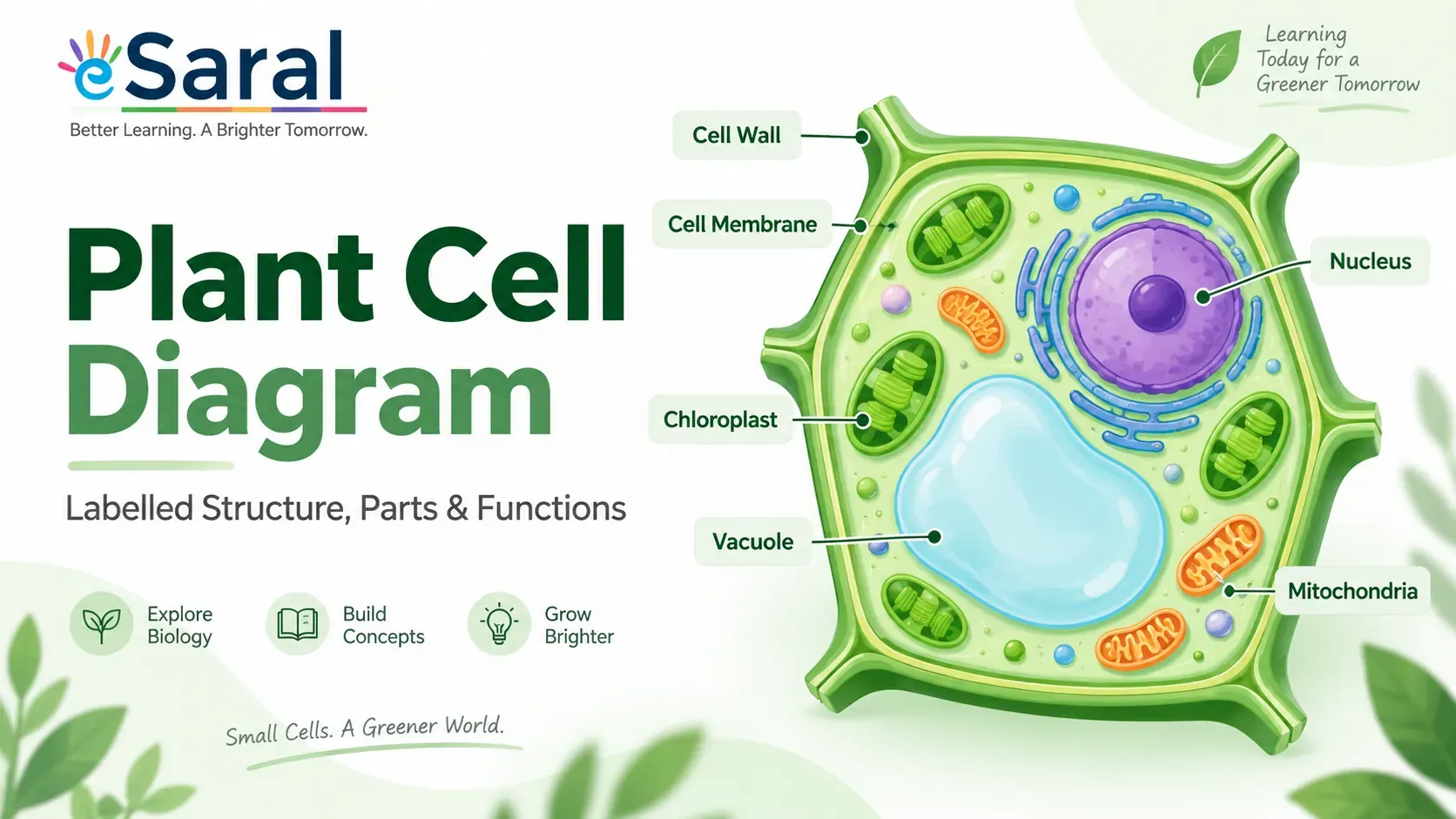
Plant Cell Diagram: Labelled Structure, Parts and Functions
Simple, labelled plant cell diagram with parts and functions. Covers plant cell structure for Class 6, 7, 8, 9, 10 and 11 students, CBSE-aligned.

Saransh Gupta Sir's Visit to IIT Patna: Hostel Life, Placements & Lessons for JEE Aspirants
Inside Saransh Gupta Sir's IIT Patna visit — hostel life, the library, placements, internships, and real advice for JEE aspirants from students living the IIT dream.
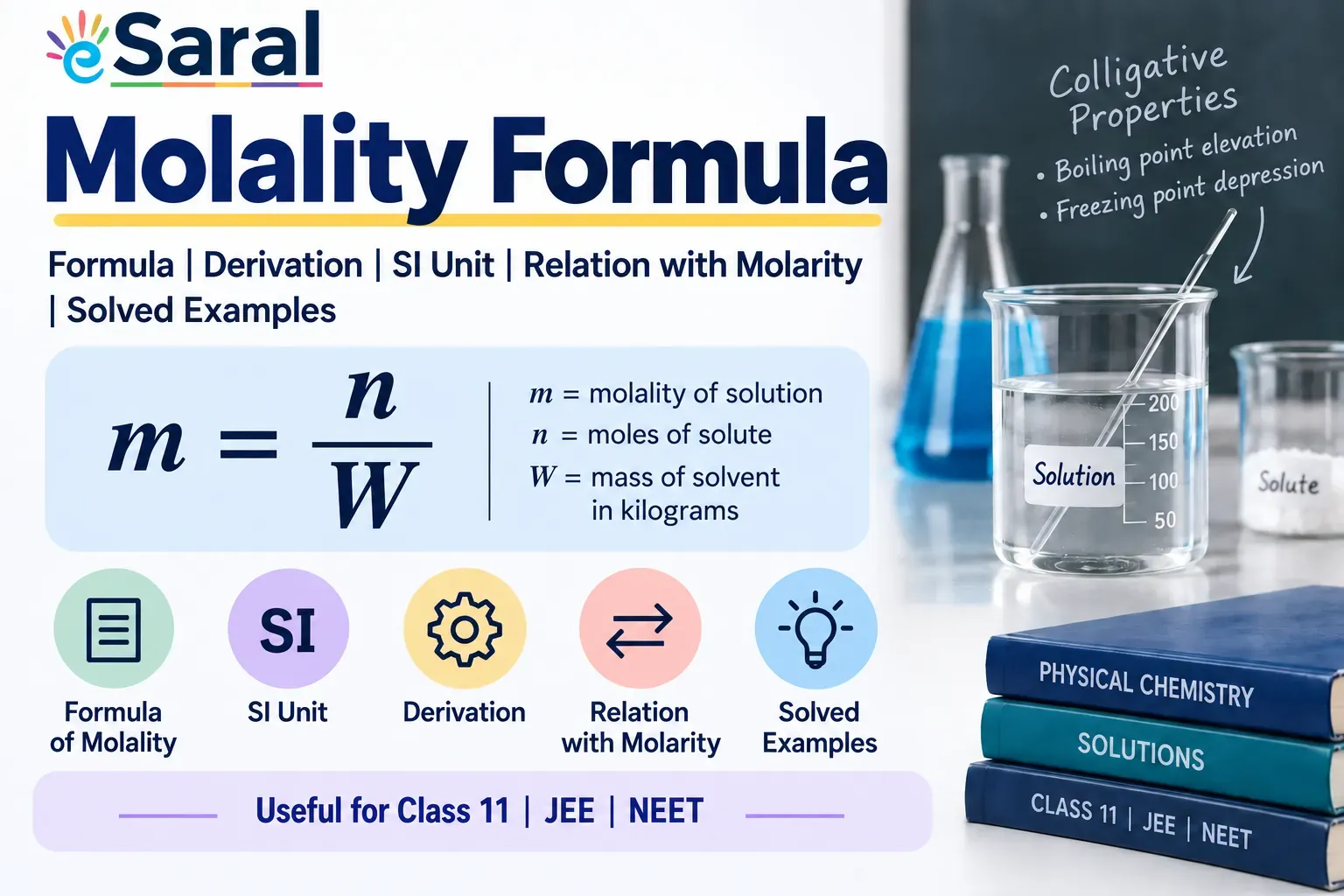
Molality Formula: Formula for Molality, Derivation & Solved Examples
Molality formula is $m = \dfrac{n}{W}$. Learn the formula of molality, its SI unit, derivation, relation with molarity, and solved examples for Class 11, JEE and NEET.
BITSAT Previous Year Question Paper PDF
Download BITSAT previous year question papers PDF. Get year-wise BITSAT PYQs, memory-based papers, exam pattern, and preparation tips to improve your BITSAT preparation.

Teachers’ Day 2026 at eSaral Gurukul: Celebrating the Bond Between Students, Teachers & Mentors
See how Teachers’ Day 2026 was celebrated at eSaral Gurukul, reflecting the bond among students, teachers, and mentors, and the role of guidance beyond academics.
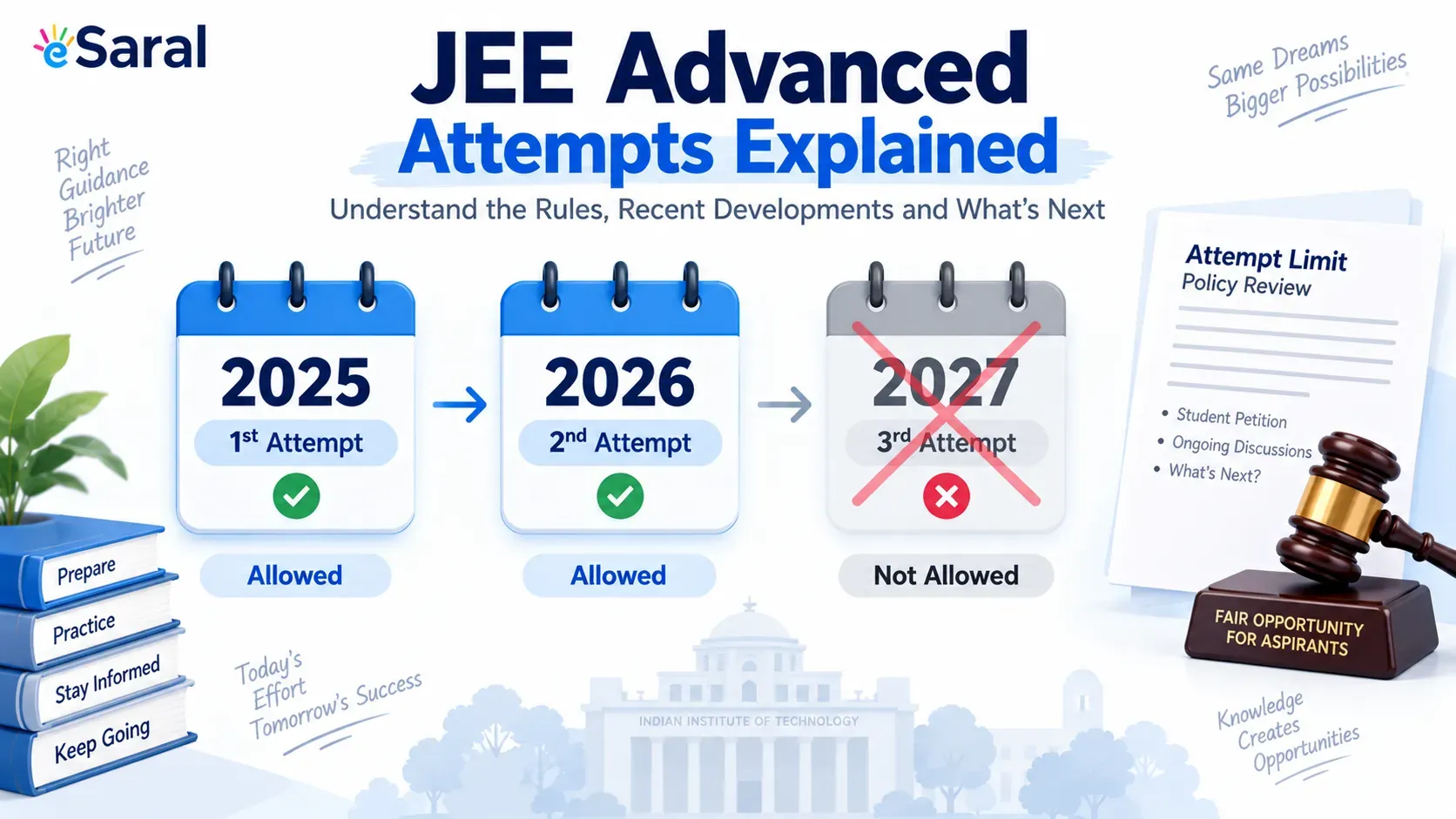
JEE Advanced Attempts: Can You Give It a Third Time? Rules Explained
JEE Advanced attempts: current rule is 2 consecutive years only: full eligibility criteria, the 2025 third-attempt controversy, and the latest 2026 petition news.

Best JEE Preparation App
Best JEE preparation app for Main & Advanced: AI mock tests, live doubt-solving, thousands of practice questions. JEE preparation app for droppers & Class 11-12.
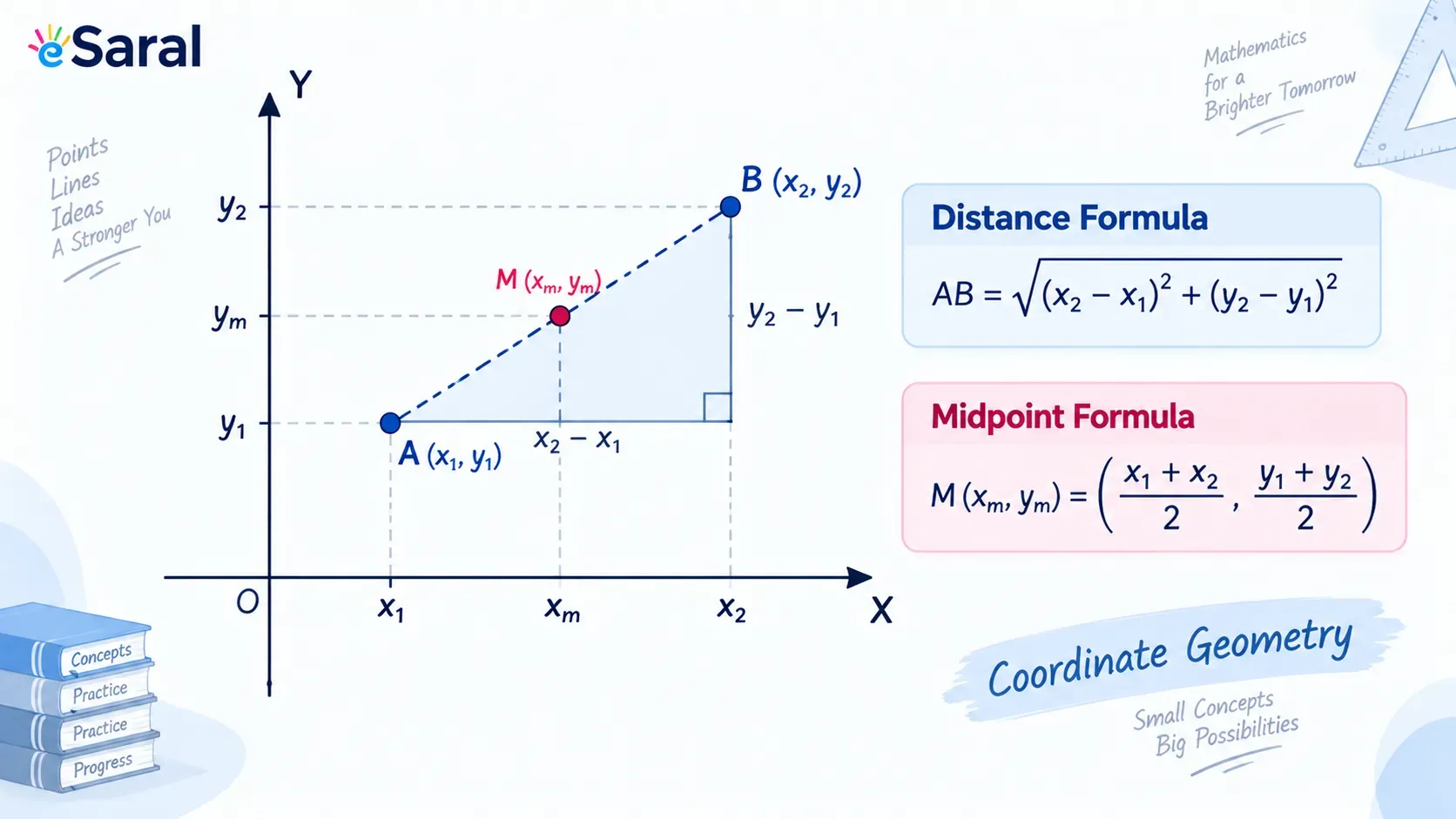
Coordinate Geometry Class 10: Formulas, Notes & Solved Examples
Coordinate geometry class 10: complete CBSE formulas — distance, section, midpoint and area of triangle — with derivation, notes and solved examples.

How to make Notes For JEE Smart Notes Strategy of an AIR 41
Learn how to make notes for JEE the way toppers do — indexing, shorthand, and smart short notes for JEE that cut revision time to just 5–7 days.
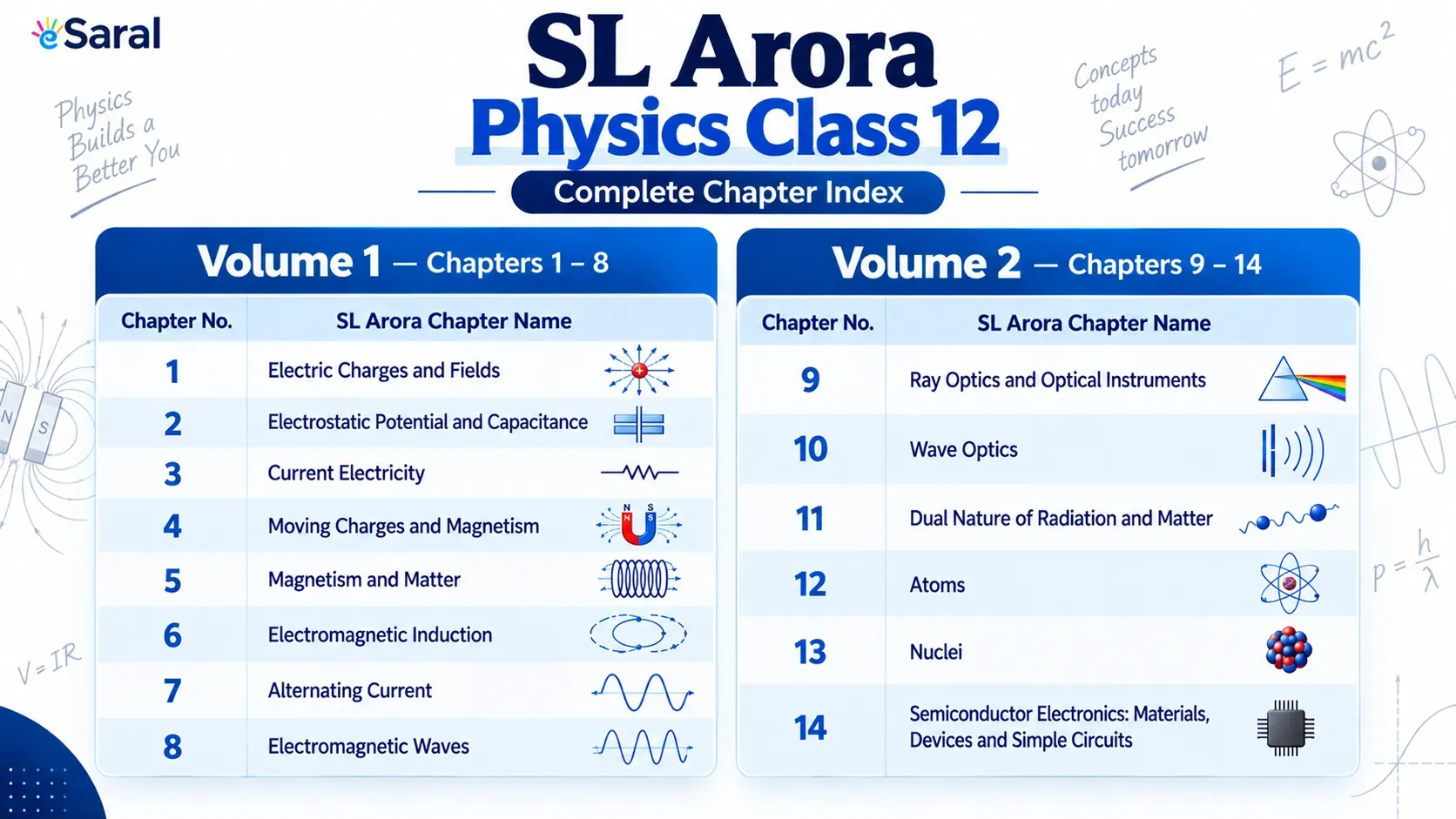
SL Arora Physics Class 12 Index – Chapter List for Volume 1 & 2
SL Arora Physics Class 12 index — complete chapter list for Volume 1 & 2, mapped to NCERT solutions for board, JEE Main, and NEET preparation.