
Genetics - NEET Previous Year Questions
Summary
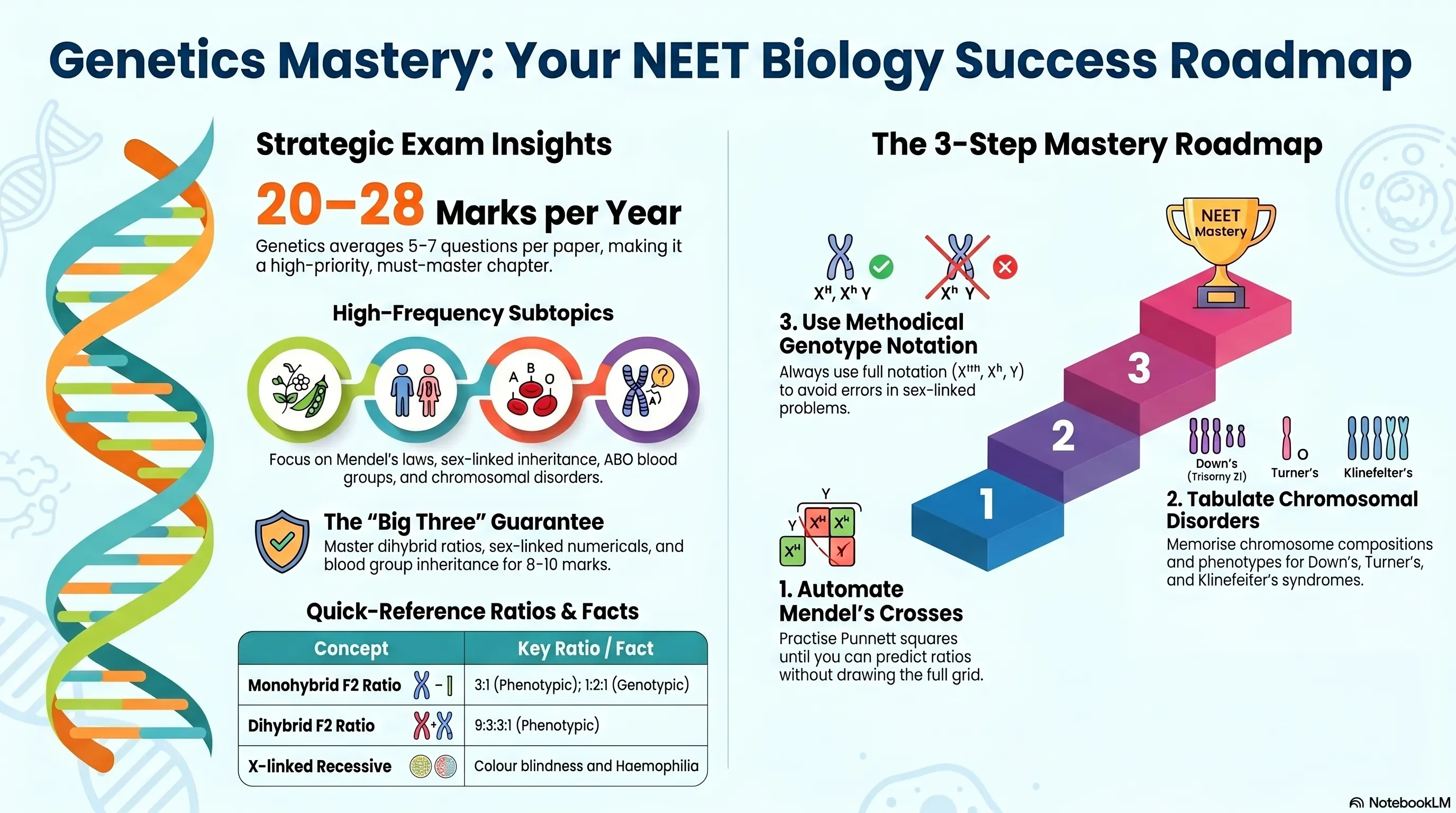
<p>Genetics is one of the highest-weightage NEET Biology chapters, contributing 5–7 questions annually with a strong focus on Mendelian inheritance, dihybrid crosses, sex-linked inheritance, chromosomal disorders, and pedigree analysis, while this page provides previous year questions, key concepts, and preparation strategies to master recurring NEET patterns.</p>
eSaral › NEET › Neet test-series›Genetics - NEET Previous Year Questions

Why Genetics Is a Must-Master Chapter for NEET Biology
Parameter | Details |
|---|---|
NCERT Chapter | Principles of Inheritance and Variation (Class 12, Chapter 5) |
Average questions per NEET paper | 5–7 questions |
Marks weightage | 20–28 marks per year |
Difficulty level | Moderate — conceptual + problem-solving |
Most tested subtopics | Mendel's laws, dihybrid cross ratios, sex determination, sex-linked inheritance, chromosomal disorders |
Closely related chapter | Molecular Basis of Inheritance (Class 12, Chapter 6) — 3–5 more questions |
💡 Expert Tip by eSaral Academic Team, IIT Bombay Faculty: "Genetics is one of the few NEET Biology chapters where you can predict the exact type of question before you see it. NEET has tested dihybrid cross ratios, sex-linked inheritance numerical problems, and ABO blood group inheritance almost every year since 2013. Master these three question types and you have 8–10 marks locked before the exam begins."
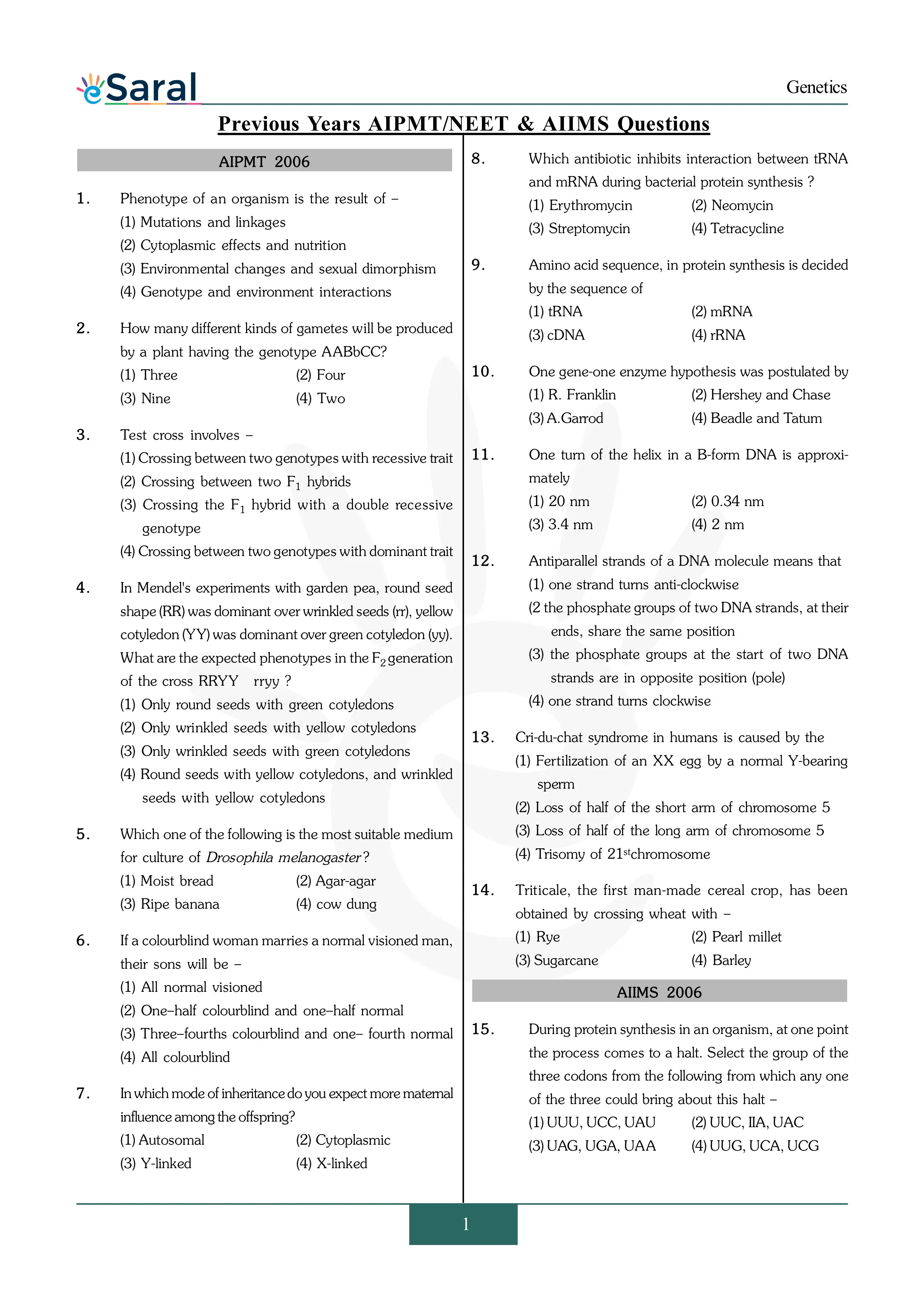
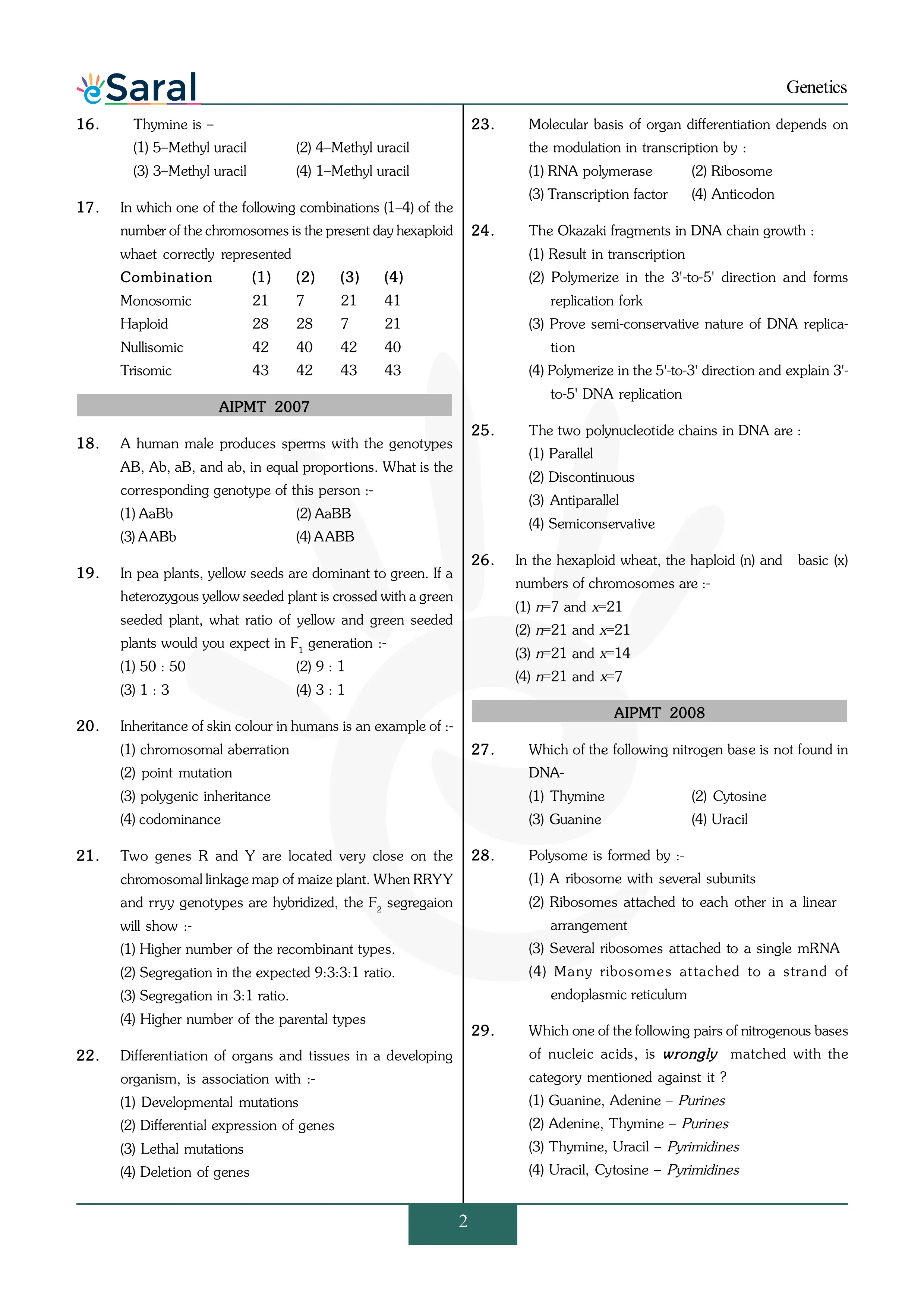
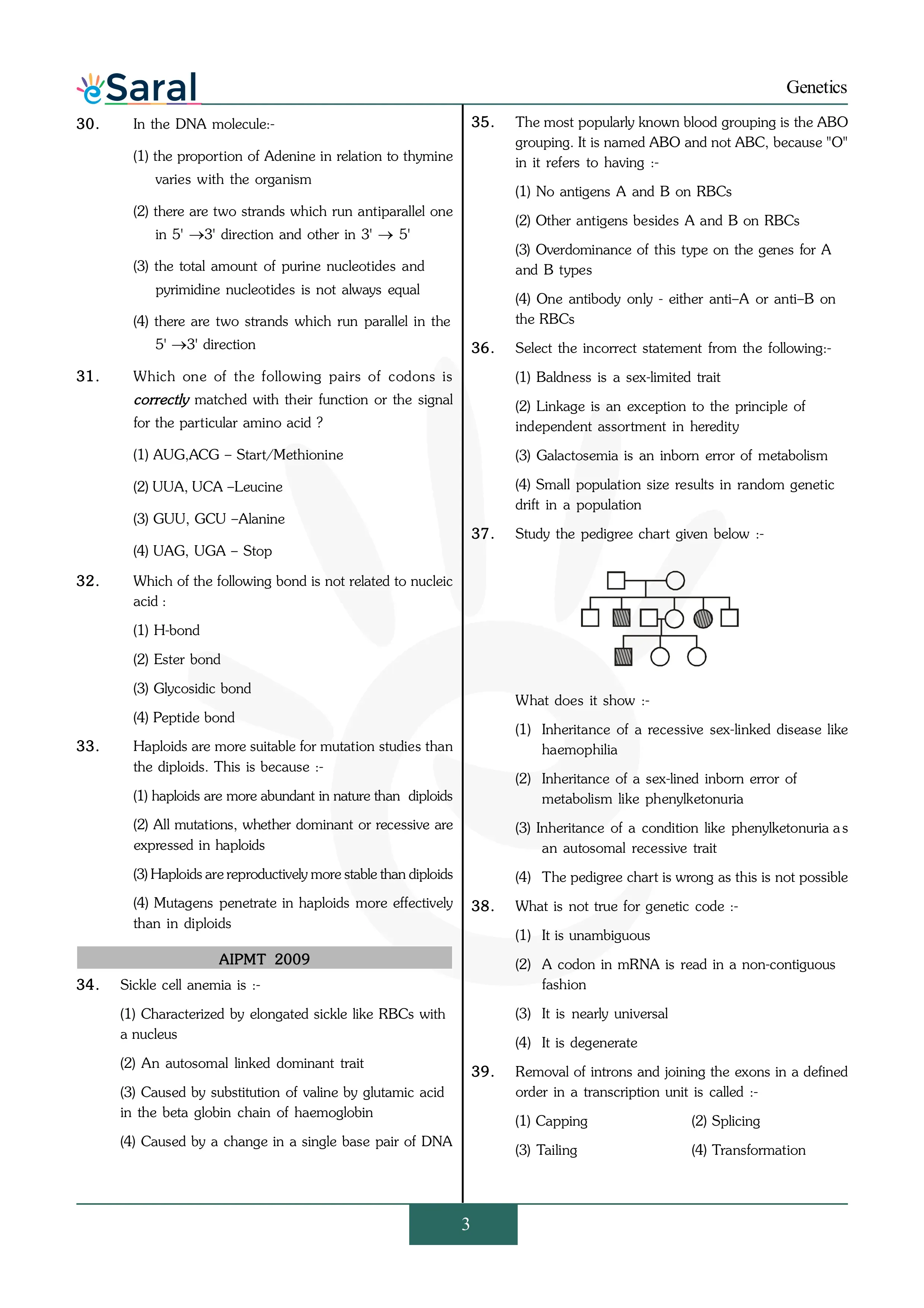
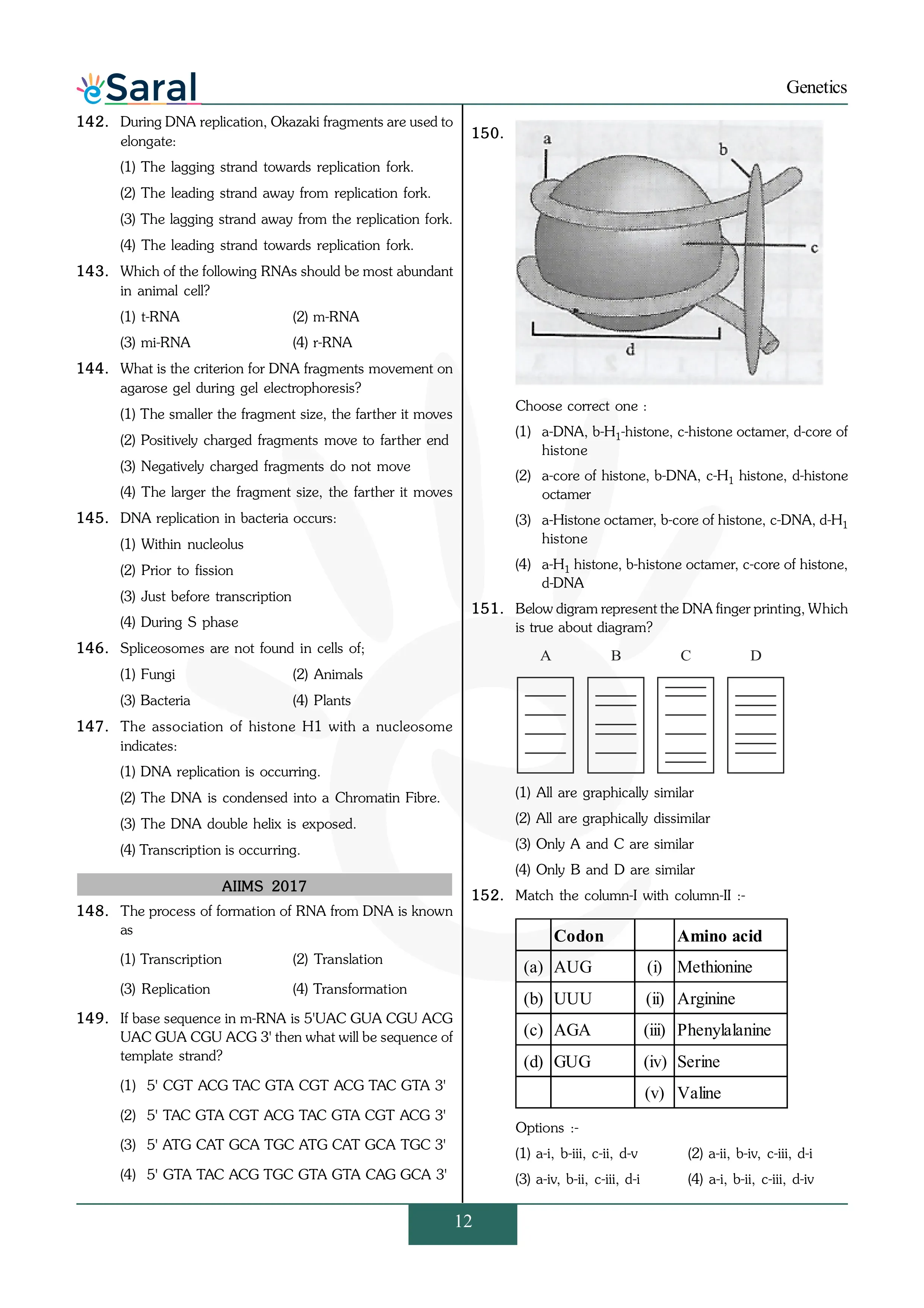
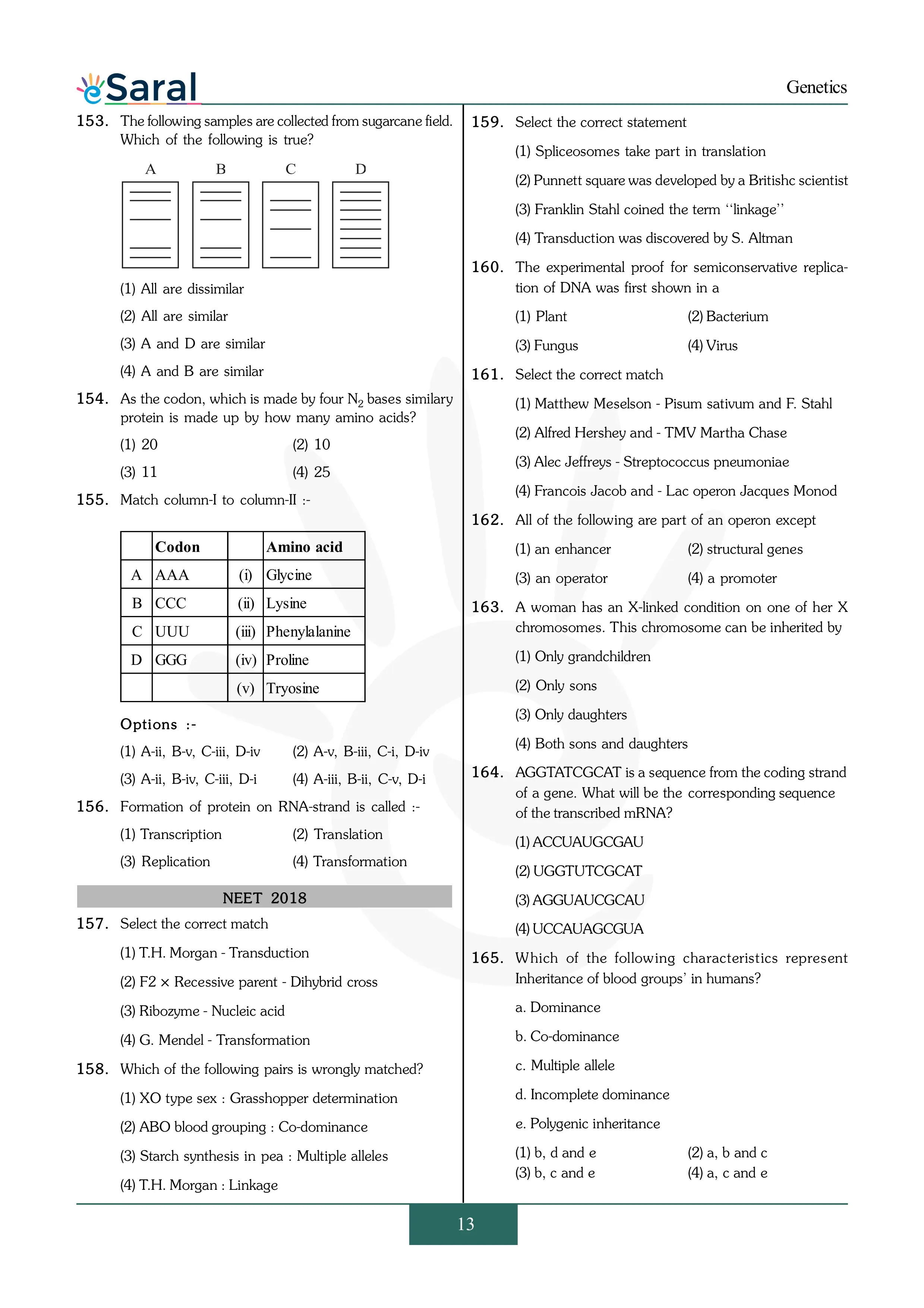
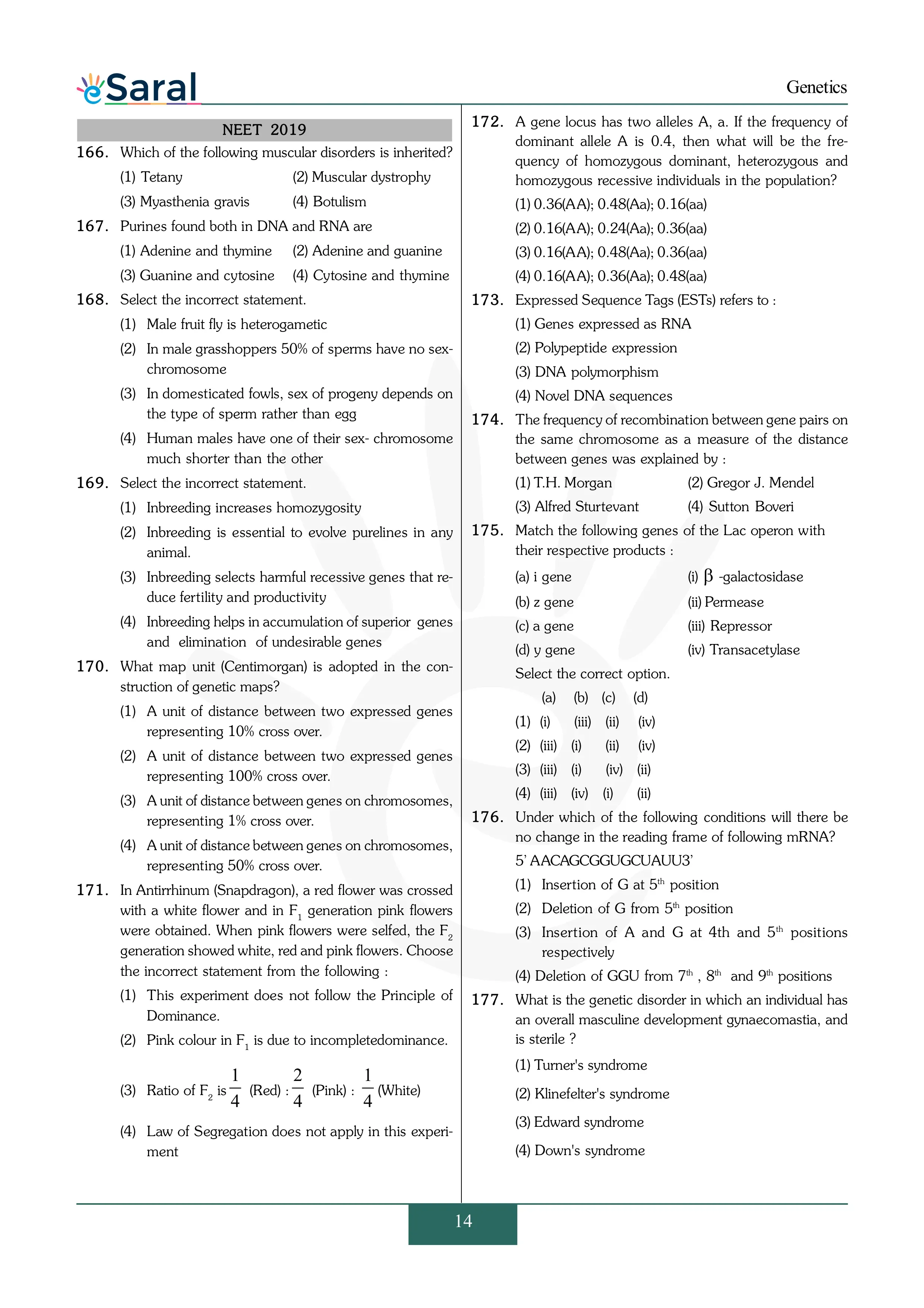
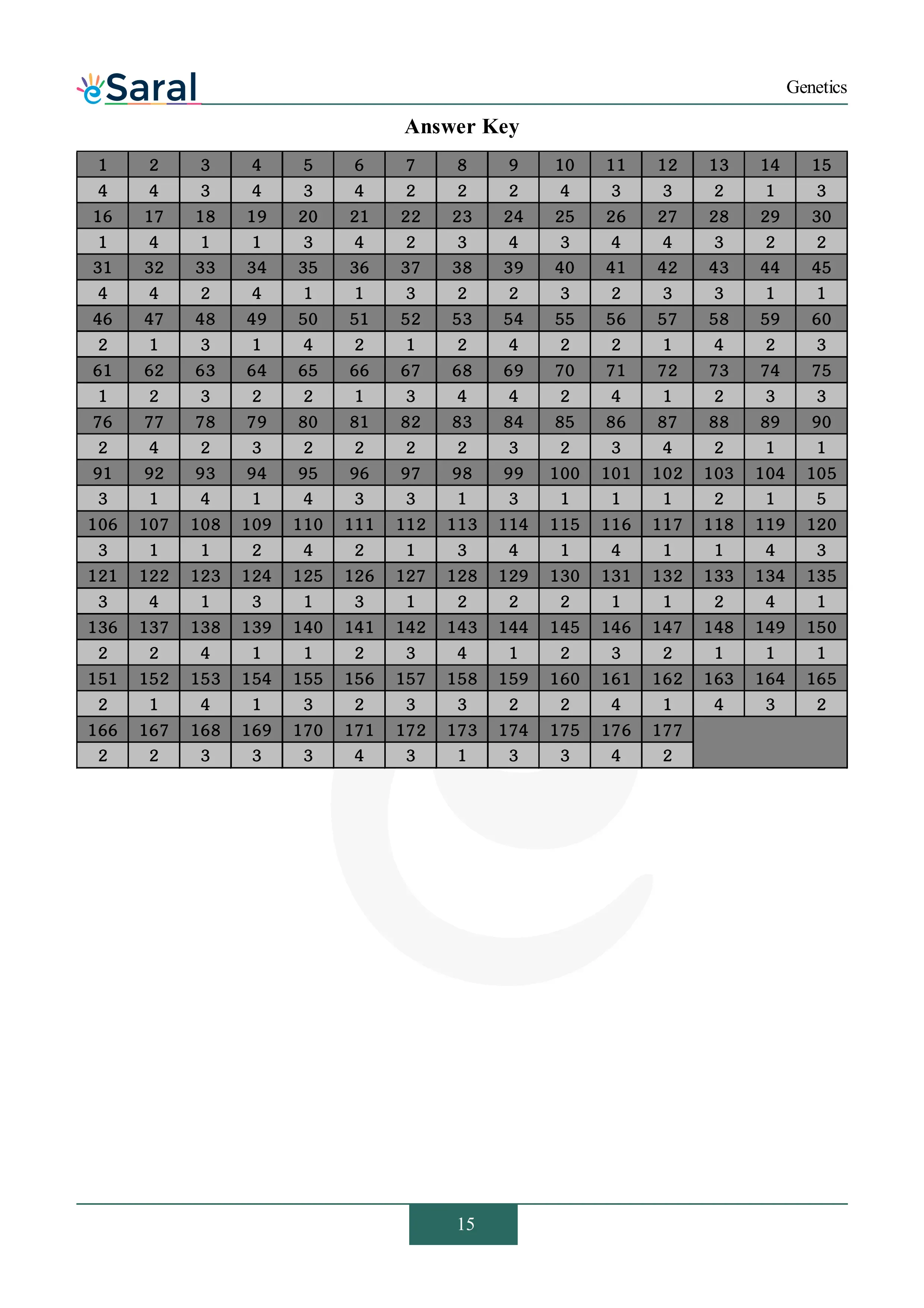
Genetics NEET Previous Year Questions with Solutions
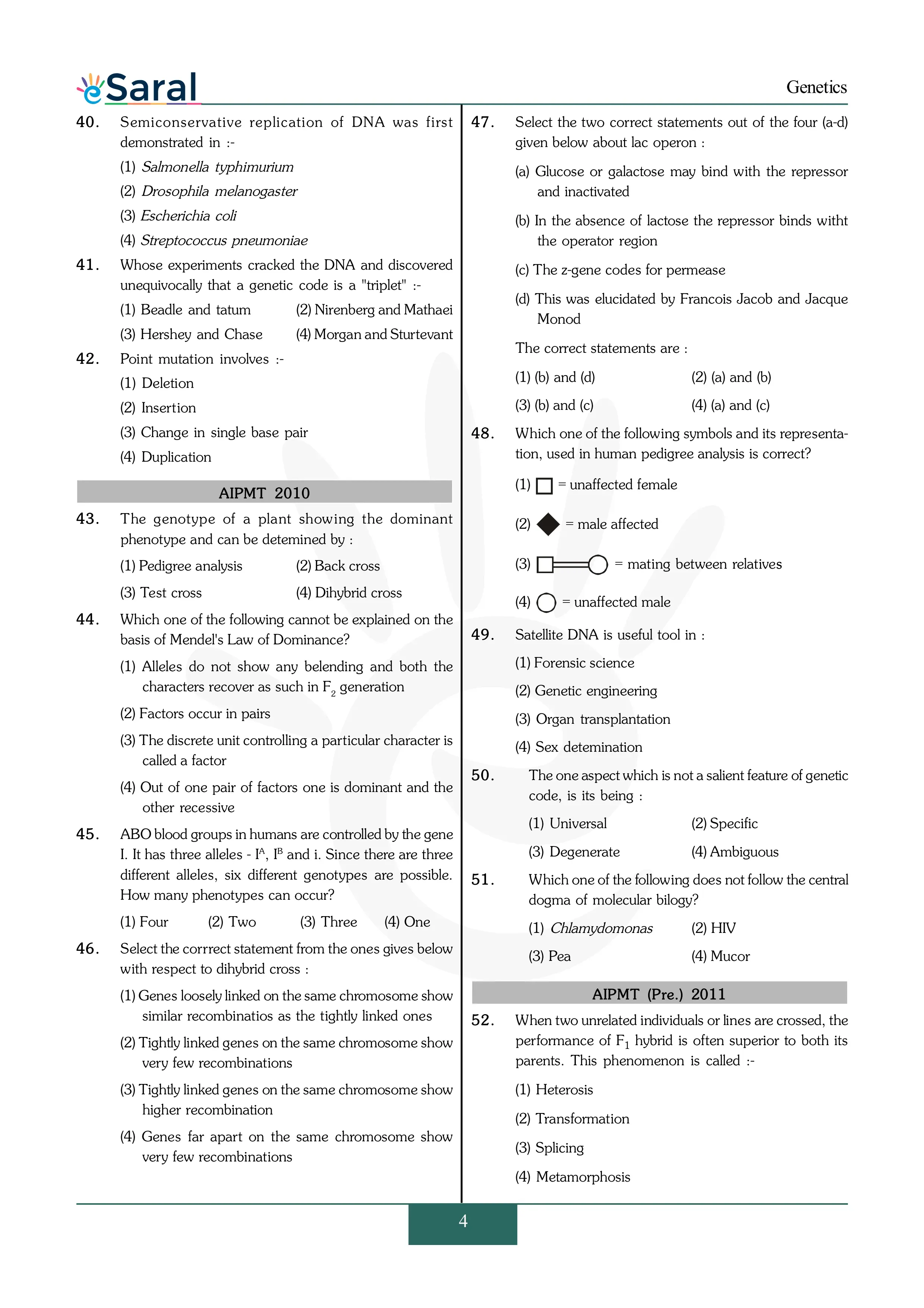
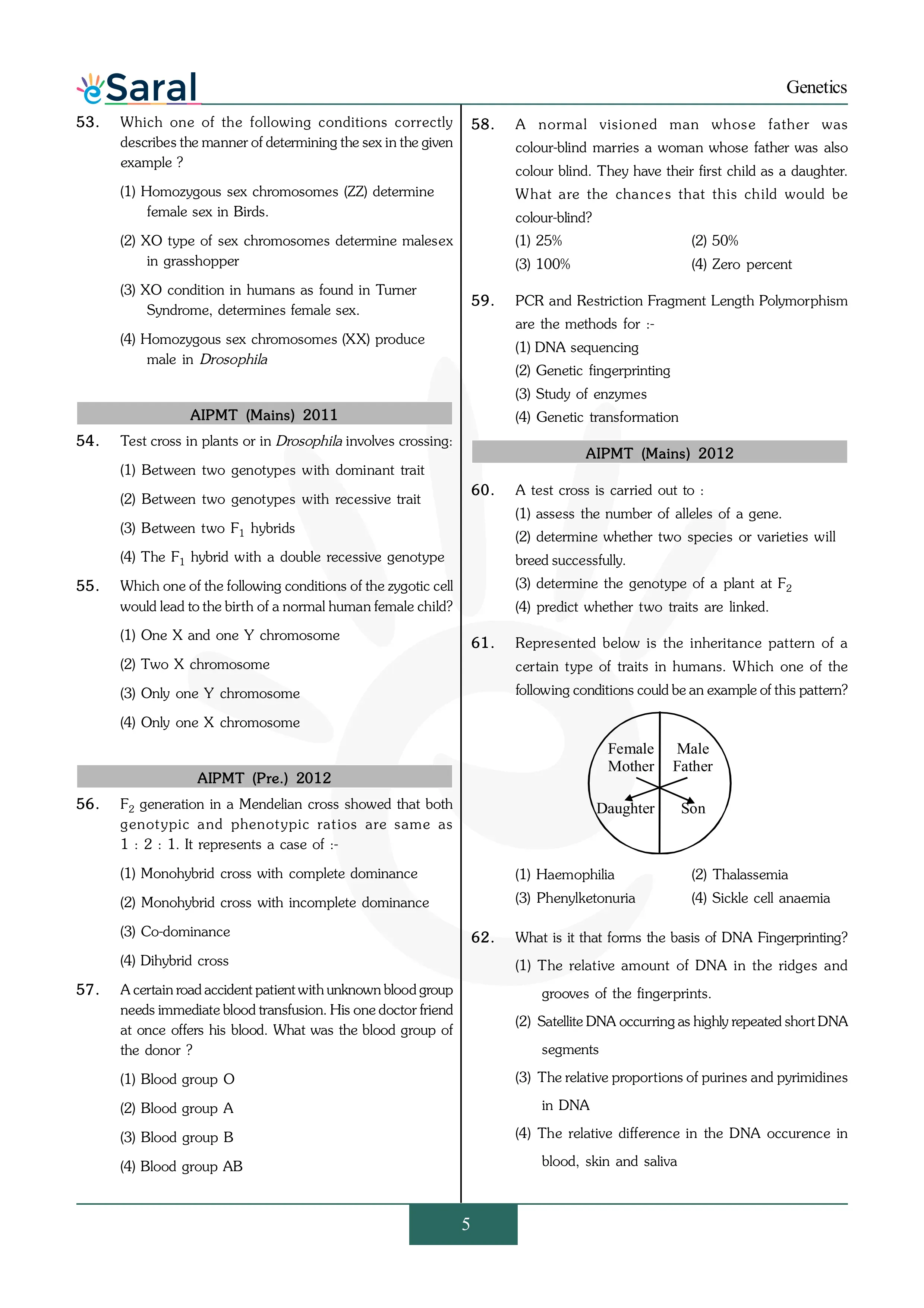
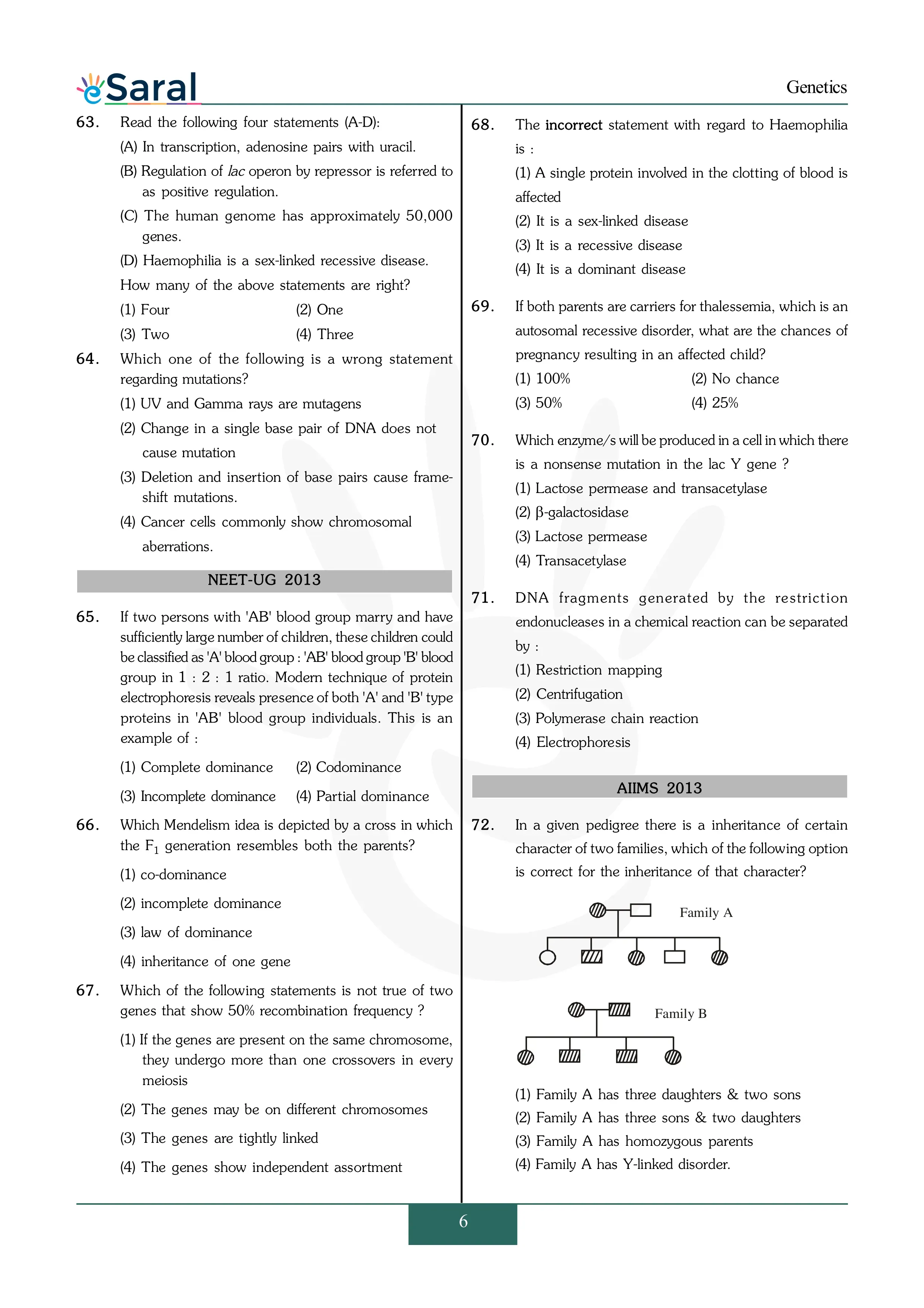
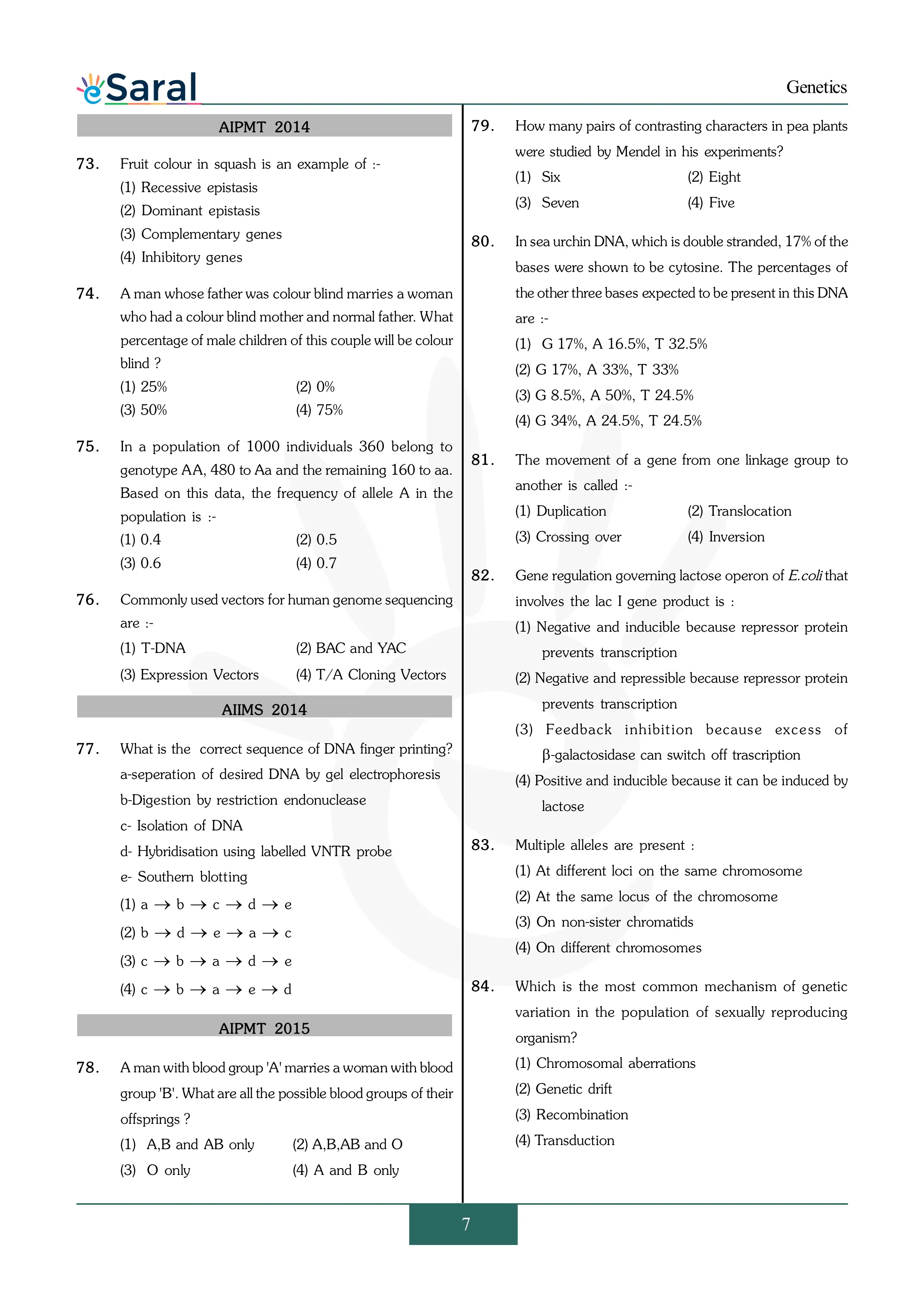
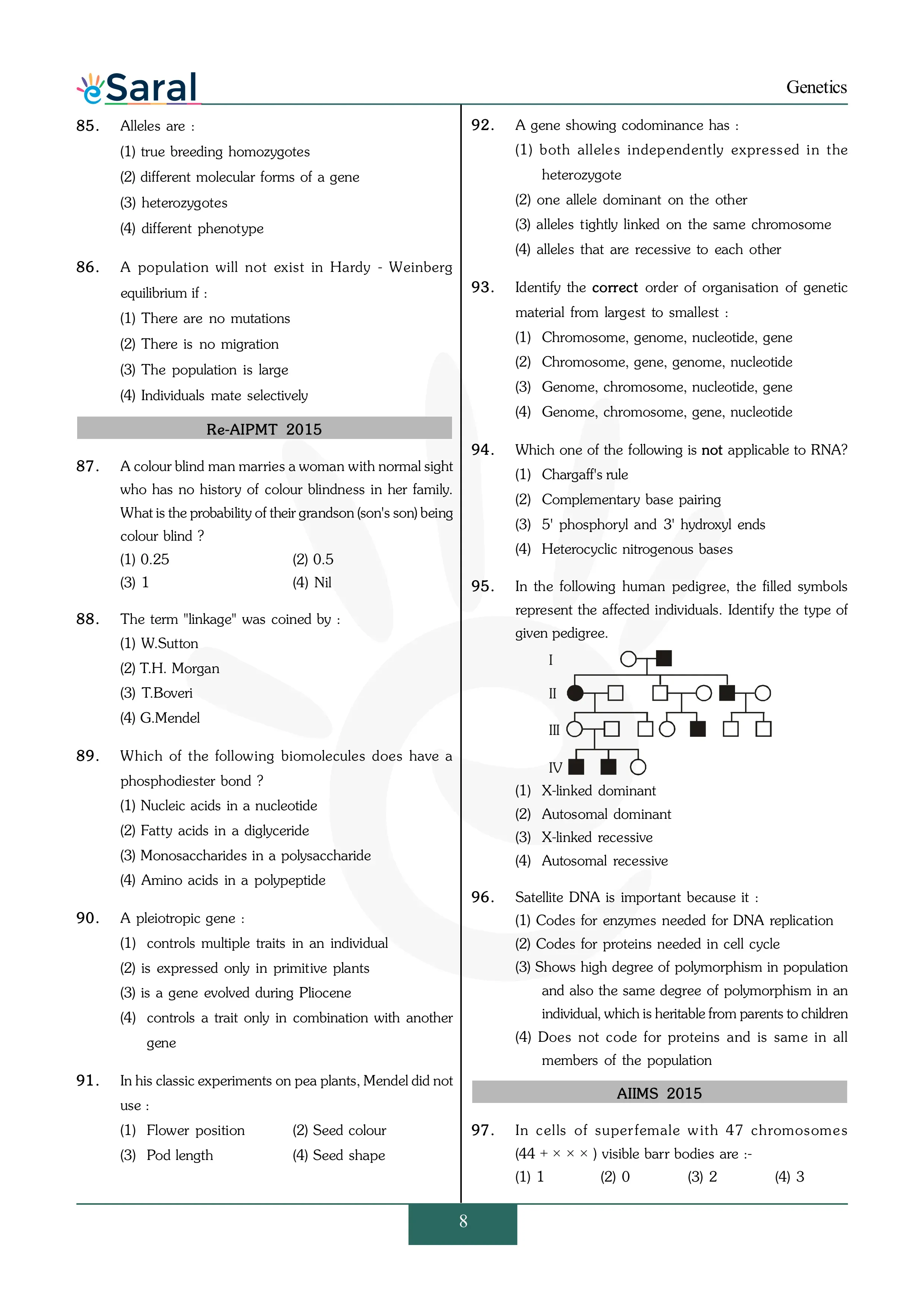
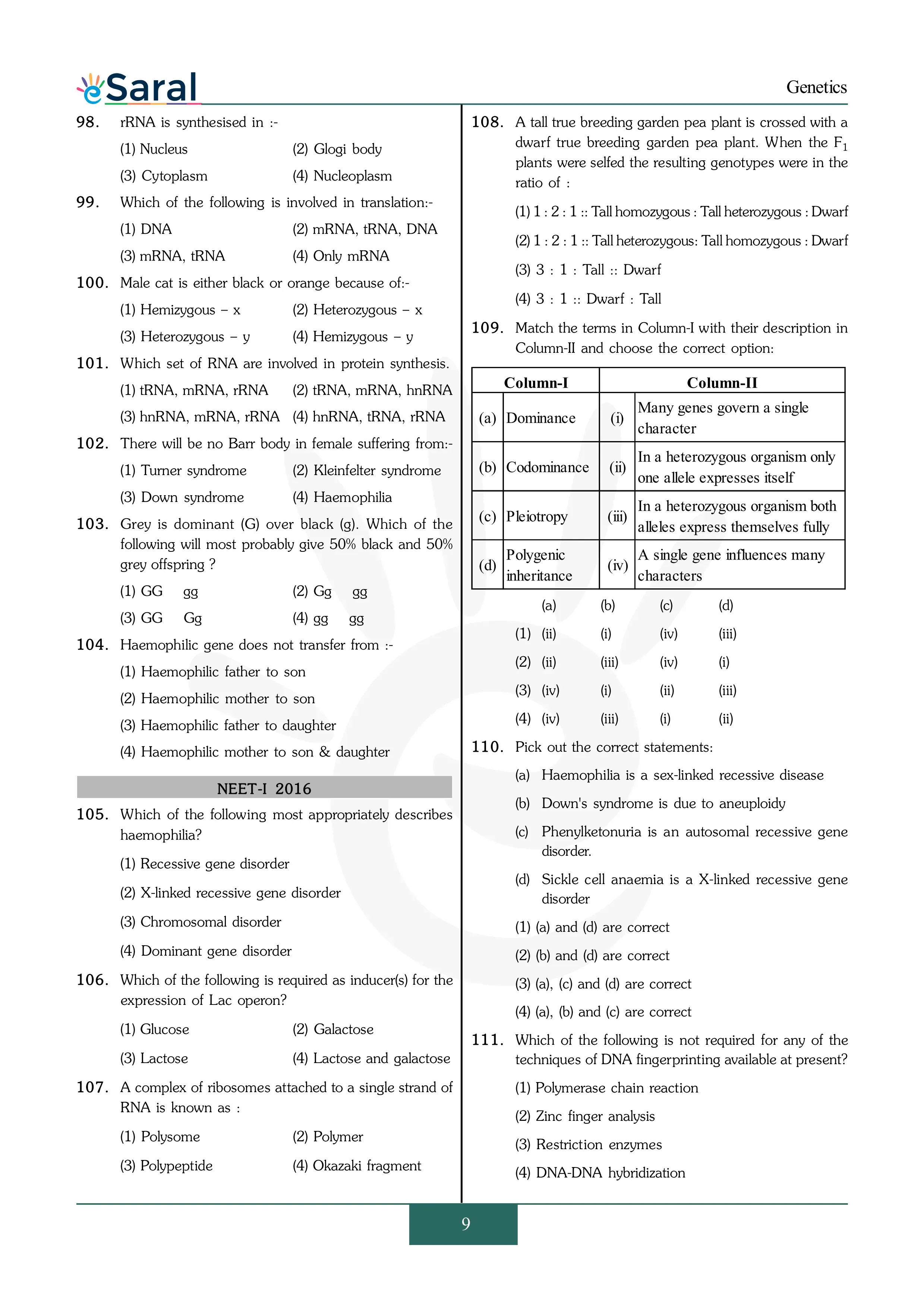
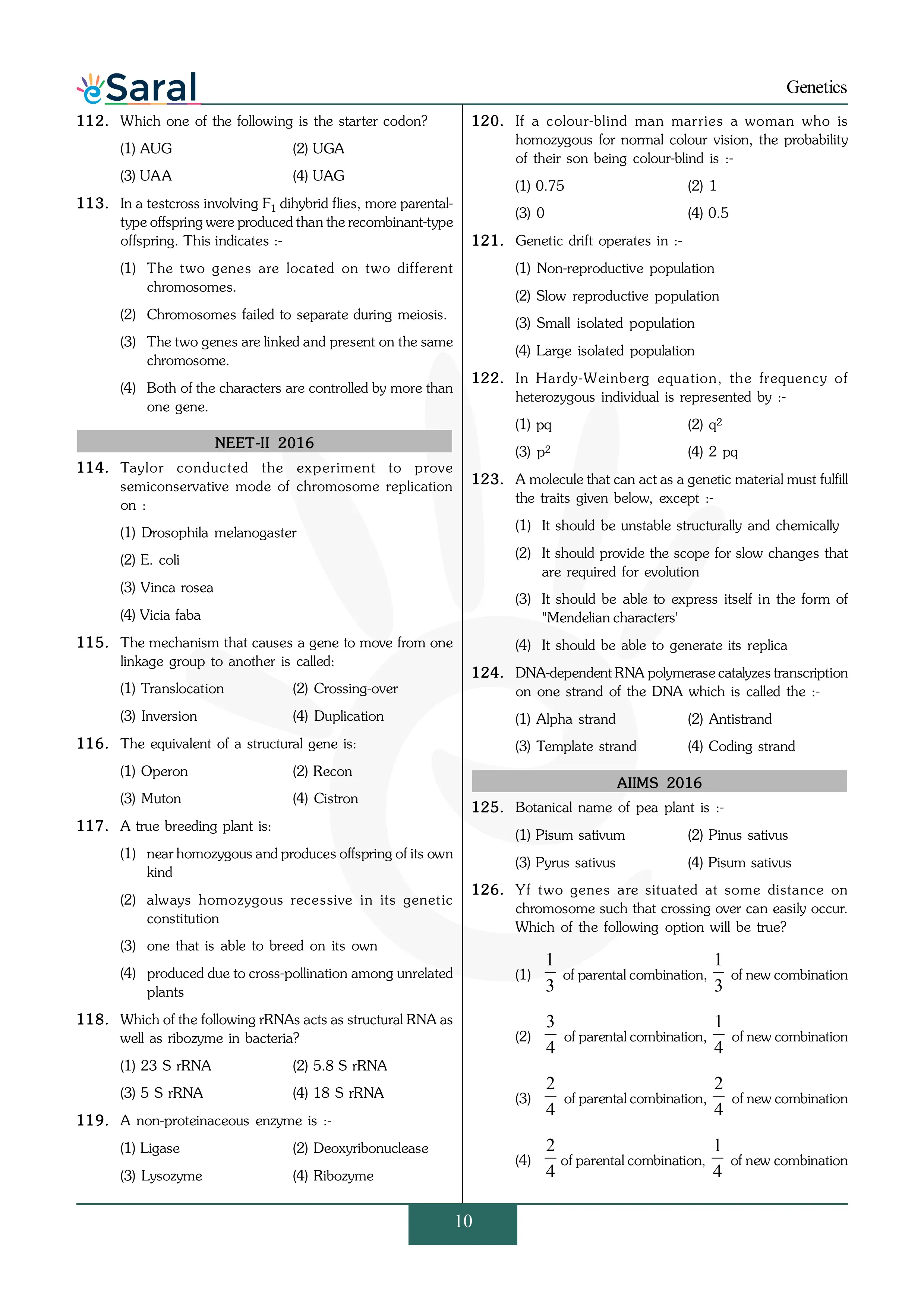
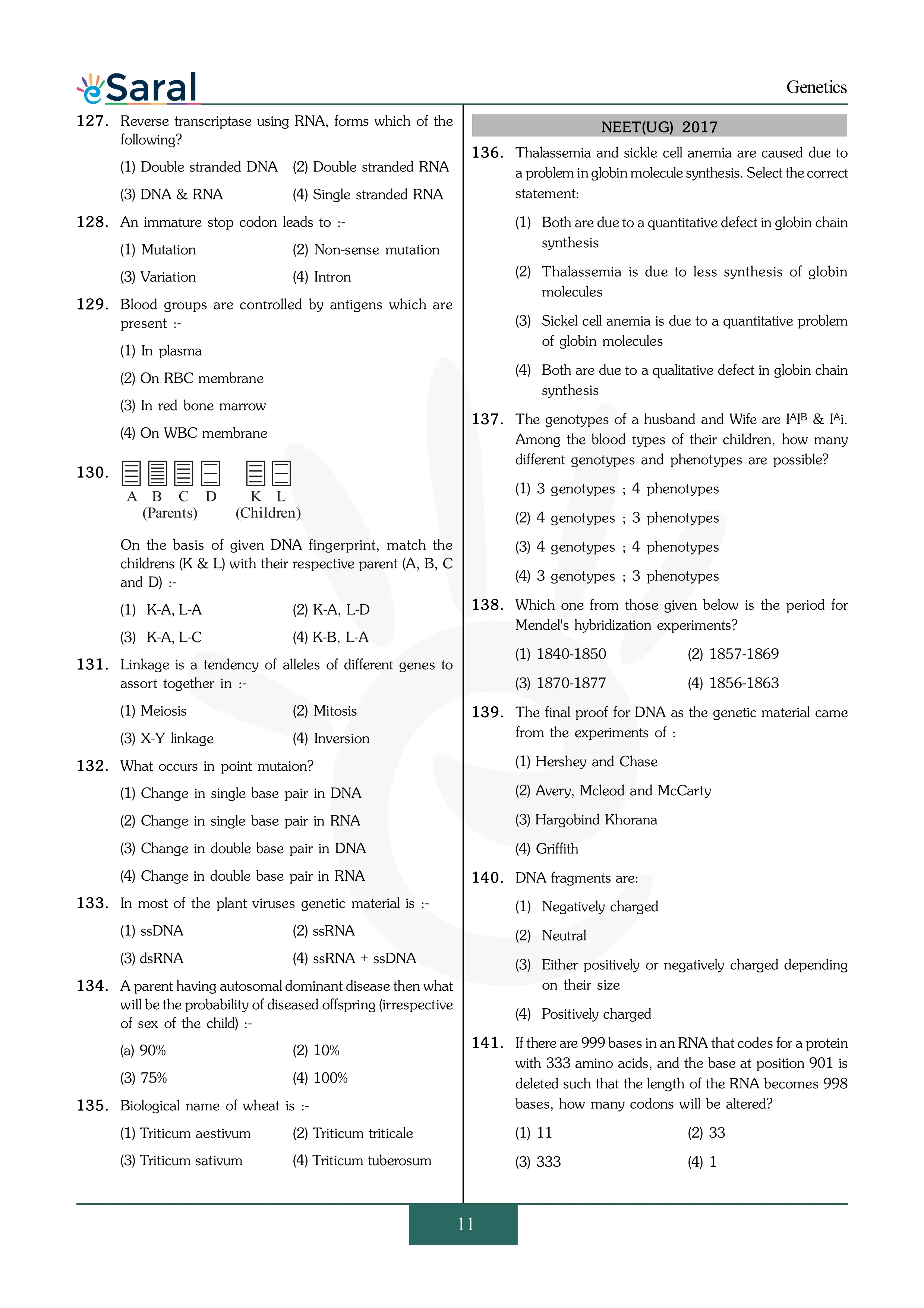
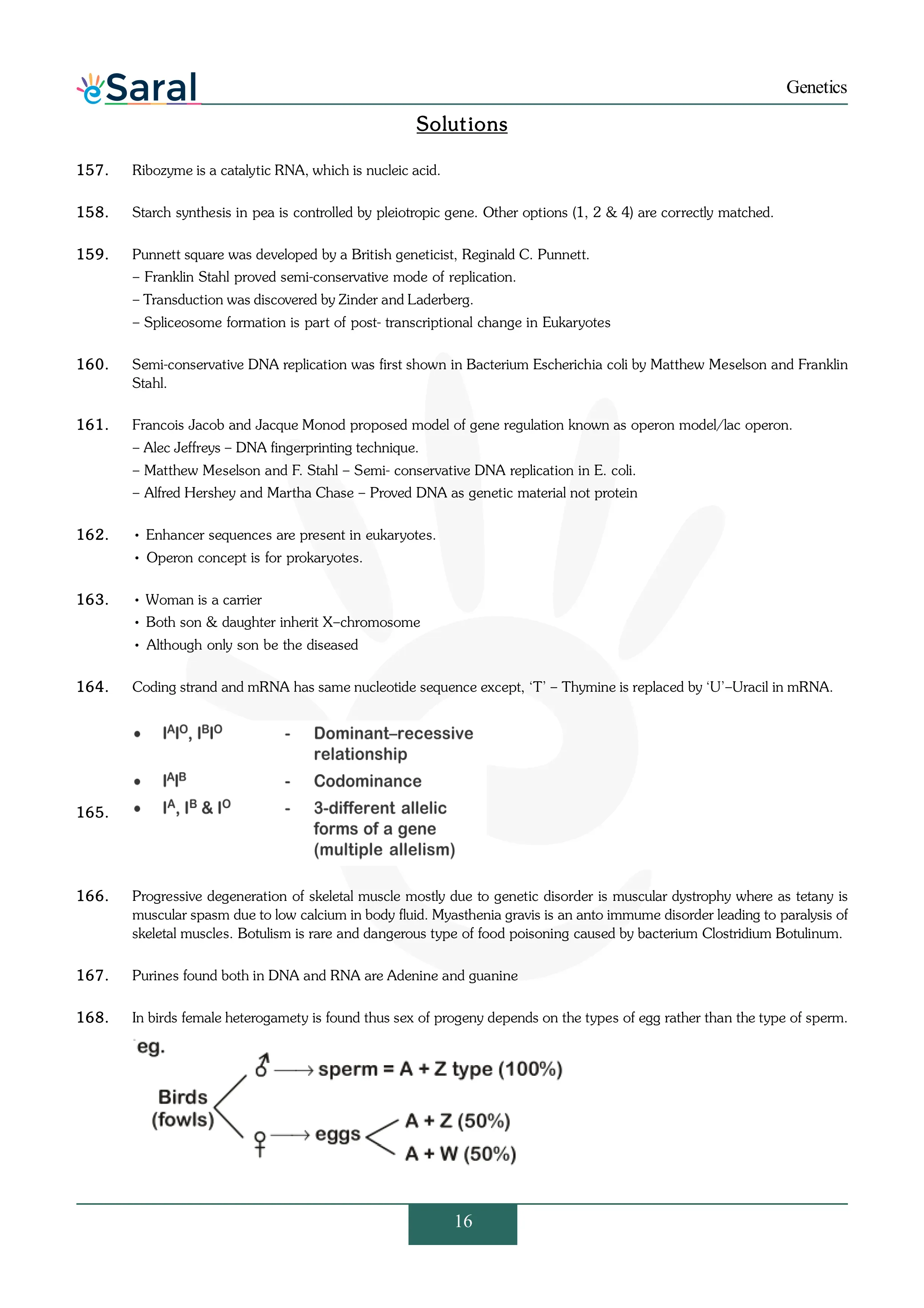
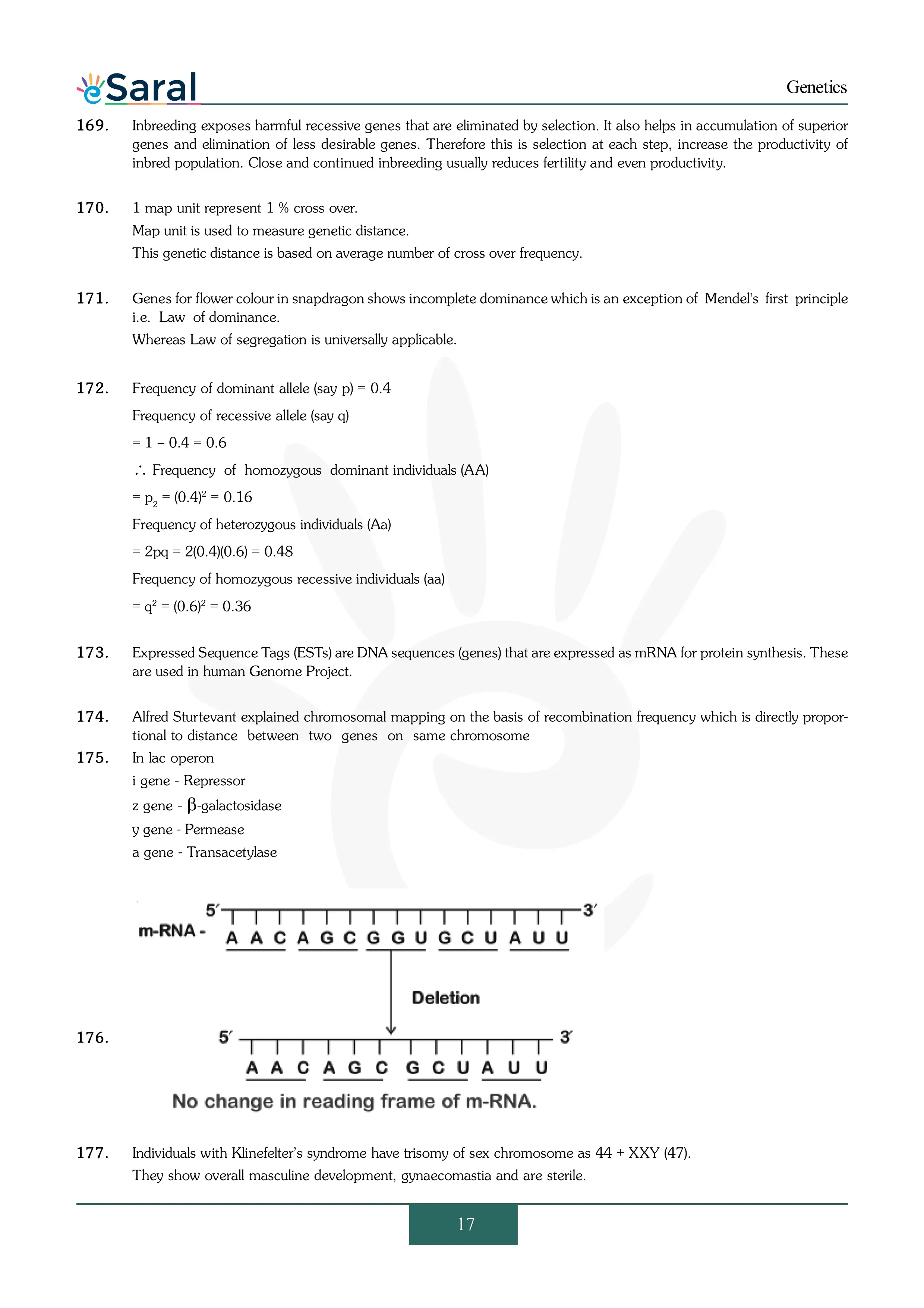
High-Frequency Subtopics in Genetics NEET PYQs
Based on analysis of NEET papers from 2013 to 2025:
Subtopic | Frequency | What NEET Tests |
|---|---|---|
Mendel's Laws (Dominance, Segregation, Independent Assortment) | Very High | Ratio prediction, law identification |
Monohybrid and Dihybrid cross ratios | Very High | F1/F2 ratio calculation, phenotype/genotype counts |
Incomplete dominance and codominance | High | ABO blood groups, sickle cell anaemia |
Sex determination mechanisms | High | XX-XY, ZW-ZZ, XO systems |
Sex-linked (X-linked) inheritance | High | Colour blindness, haemophilia problems |
Chromosomal disorders | High | Down's, Turner's, Klinefelter's syndrome |
Linkage and crossing over | Medium | Morgan's experiments, recombination frequency |
Pedigree analysis | Medium | Autosomal dominant/recessive, X-linked patterns |
Mutation types | Medium | Point mutation, frameshift, chromosomal |
Polygenic inheritance | Low-Medium | Skin colour, height inheritance |
Key Concepts Summary for Quick Revision
Concept | Key Fact |
|---|---|
Monohybrid F2 ratio | 3:1 (phenotypic); 1:2:1 (genotypic) |
Dihybrid F2 ratio | 9:3:3:1 |
Test cross (monohybrid heterozygote) | 1:1 |
Test cross (dihybrid heterozygote, unlinked) | 1:1:1:1 |
Incomplete dominance F2 | 1:2:1 (phenotypic = genotypic) |
Codominance example | ABO blood groups (I^A I^B = AB) |
Colour blindness / Haemophilia | X-linked recessive |
Sex determination (humans) | XX = female; XY = male |
Down's Syndrome | Trisomy 21 (47 chromosomes) |
Turner's Syndrome | 45,XO (monosomy X) |
Klinefelter's Syndrome | 47, XXY |
Linkage | Genes on the same chromosome; violates independent assortment |
Recombination frequency | Distance between linked genes |
How to Prepare Genetics for NEET
Step 1: Master Mendel's Laws with Punnett Squares
Do not move to complex Genetics topics until monohybrid and dihybrid cross Punnett squares are completely automatic. Practise 20–30 cross problems — including test crosses and back crosses — until ratios come to you without drawing the full grid.
Step 2: Learn All Chromosomal Disorders as a Table
Down's (Trisomy 21), Turner's (45,XO), Klinefelter's (47,XXY), Patau's (Trisomy 13), Edward's (Trisomy 18) — memorise chromosome composition, phenotype, and distinguishing features for each. NEET tests these as 1-mark identification questions.
Step 3: Solve Sex-Linked Inheritance Problems Methodically
Always write genotypes using full notation (X^H, X^h, Y). Never assume — always derive the answer from the cross. NEET sex-linked problems are straightforward if you use proper notation; they become error-prone if you try to solve them in your head.
Step 4: Work Through All NEET PYQs from This Chapter
Pattern recognition from past papers is irreplaceable for Genetics. Visit eSaral's NEET previous year questions and solve all Genetics PYQs year by year. After 5–6 years of papers, NEET's preferred question formats become very familiar.
Step 5: Connect Genetics to the Molecular Basis of Inheritance
NEET treats these as two chapters but the questions overlap significantly. DNA replication, transcription, translation, and mutation concepts directly connect to Genetics. Prepare both chapters together for maximum efficiency.
Frequently Asked Questions
How many questions come from Genetics in NEET every year?
Genetics (Principles of Inheritance and Variation) contributes 5–7 questions per NEET paper, worth 20–28 marks. When combined with the related Molecular Basis of Inheritance chapter, the total reaches 8–12 questions. It is consistently one of the most heavily tested Biology chapters in NEET. Mendel's laws, sex-linked inheritance, and chromosomal disorders appear almost every year.
What is the most important topic in Genetics for NEET?
Mendelian genetics — specifically dihybrid cross ratios and test cross interpretation — is the single most important Genetics topic for NEET. Sex-linked inheritance (colour blindness and haemophilia numerical problems) is a close second. Together, these two areas account for 3–4 questions per year. Chromosomal disorders (Down's, Turner's, Klinefelter's) are also consistently tested and can be prepared with a simple memorisation table.
What is the difference between incomplete dominance and codominance in NEET?
In incomplete dominance, the heterozygote shows a phenotype intermediate between the two homozygotes — neither allele fully dominates (e.g., pink flowers from red × white). In codominance, both alleles are fully expressed simultaneously in the heterozygote — neither suppresses the other (e.g., ABO blood group AB from I^A × I^B). NEET distinguishes these in questions about ABO blood groups and flower colour inheritance.
What are the chromosomal compositions of major genetic disorders tested in NEET?
Down's Syndrome has trisomy 21 (47 chromosomes). Turner's Syndrome has monosomy X (45,XO — female phenotype, infertile). Klinefelter's Syndrome has 47,XXY (male phenotype, infertile, gynaecomastia). Patau's Syndrome has trisomy 13 (47 chromosomes, severe defects). Edward's Syndrome has trisomy 18 (47 chromosomes). All result from non-disjunction during meiosis.
Where can I find all NEET Biology previous year questions chapter wise?
Complete chapter-wise NEET previous year questions for Biology, Physics, and Chemistry — with detailed solutions — are available at eSaral's NEET PYQ page. Questions are organised by chapter, so you can target Genetics specifically during revision without working through full papers.
Team eSaral
Related Posts
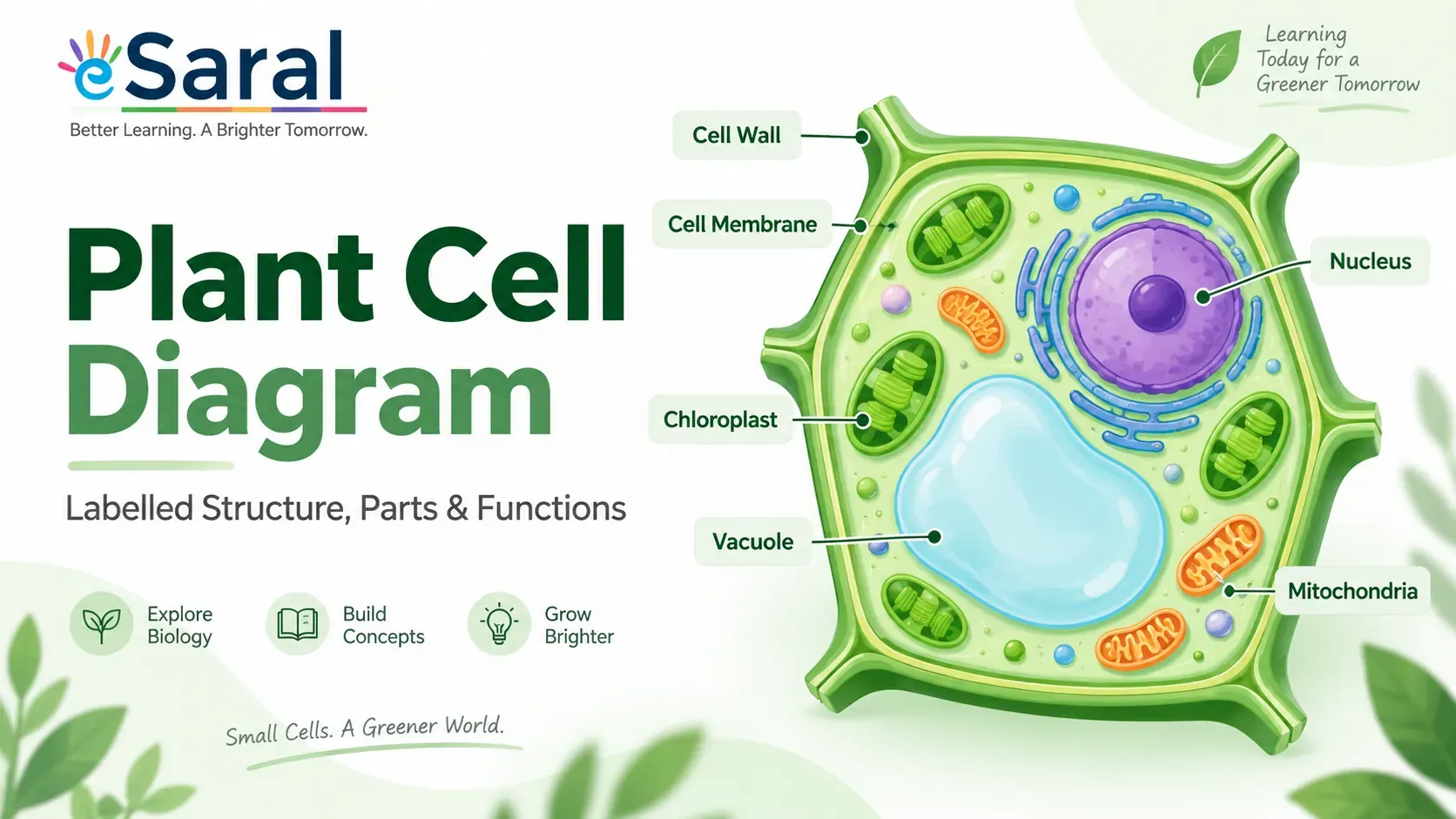
Plant Cell Diagram: Labelled Structure, Parts and Functions
Simple, labelled plant cell diagram with parts and functions. Covers plant cell structure for Class 6, 7, 8, 9, 10 and 11 students, CBSE-aligned.
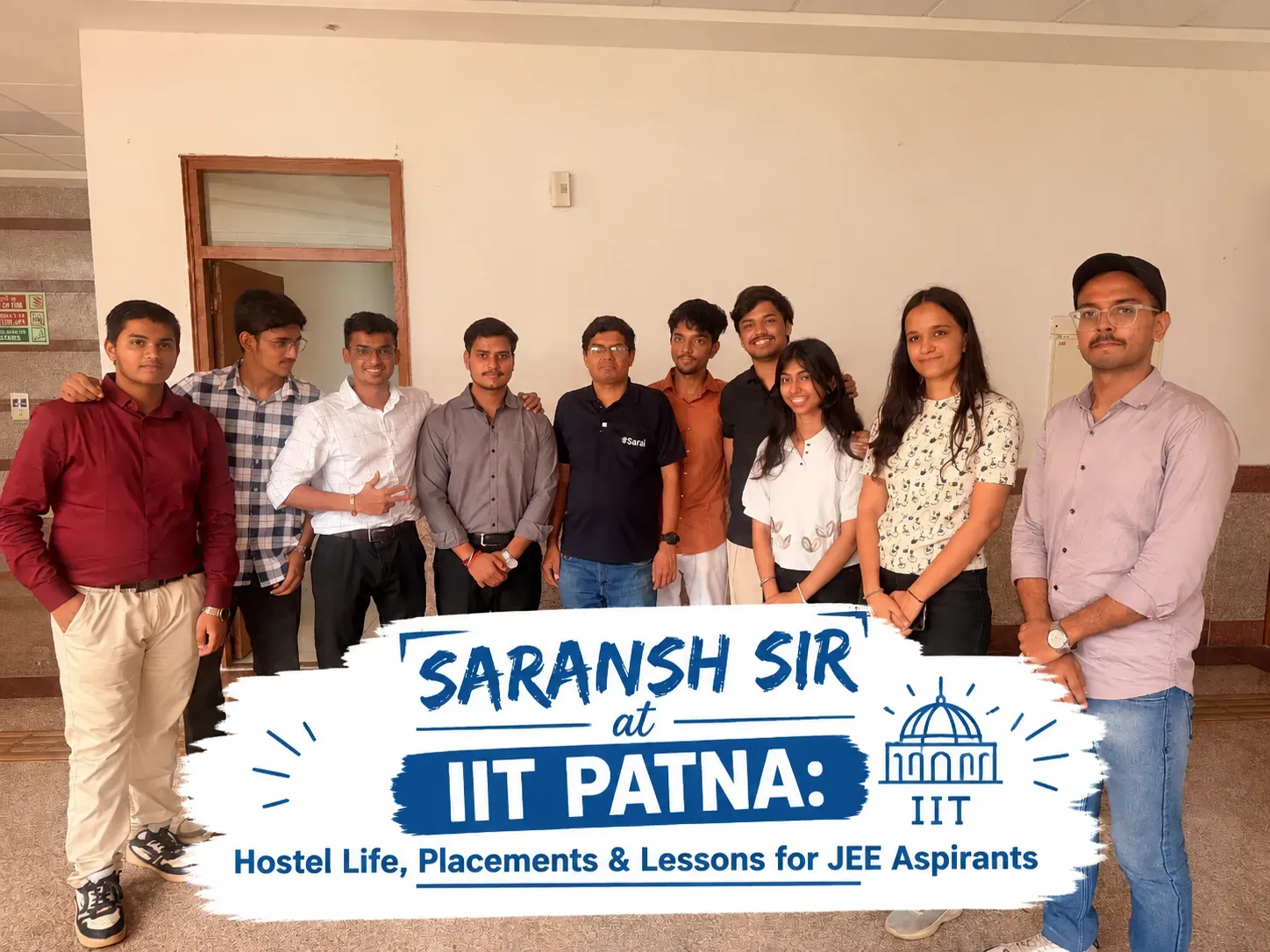
Saransh Gupta Sir's Visit to IIT Patna: Hostel Life, Placements & Lessons for JEE Aspirants
Inside Saransh Gupta Sir's IIT Patna visit — hostel life, the library, placements, internships, and real advice for JEE aspirants from students living the IIT dream.
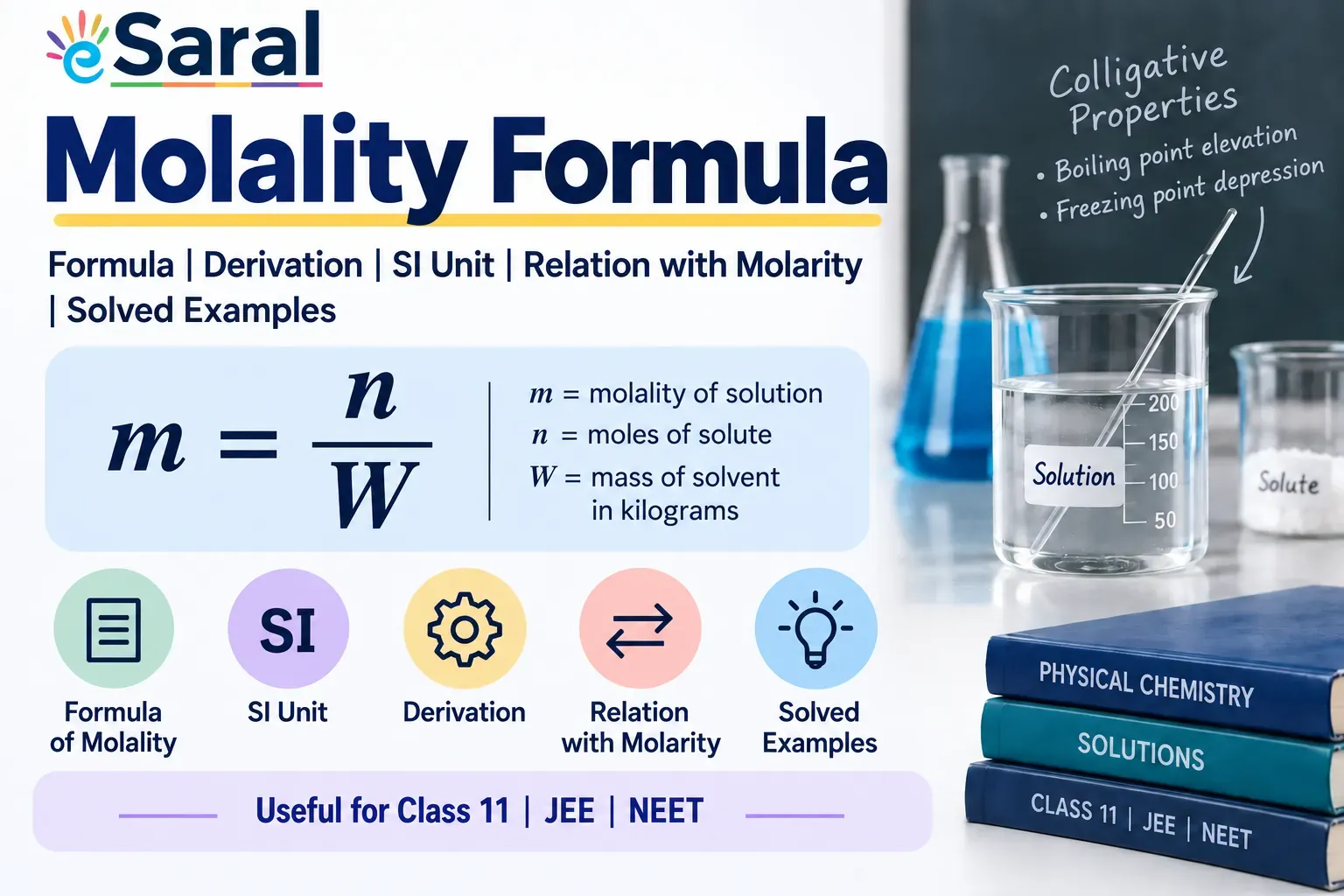
Molality Formula: Formula for Molality, Derivation & Solved Examples
Molality formula is $m = \dfrac{n}{W}$. Learn the formula of molality, its SI unit, derivation, relation with molarity, and solved examples for Class 11, JEE and NEET.
BITSAT Previous Year Question Paper PDF
Download BITSAT previous year question papers PDF. Get year-wise BITSAT PYQs, memory-based papers, exam pattern, and preparation tips to improve your BITSAT preparation.

Teachers’ Day 2026 at eSaral Gurukul: Celebrating the Bond Between Students, Teachers & Mentors
See how Teachers’ Day 2026 was celebrated at eSaral Gurukul, reflecting the bond among students, teachers, and mentors, and the role of guidance beyond academics.
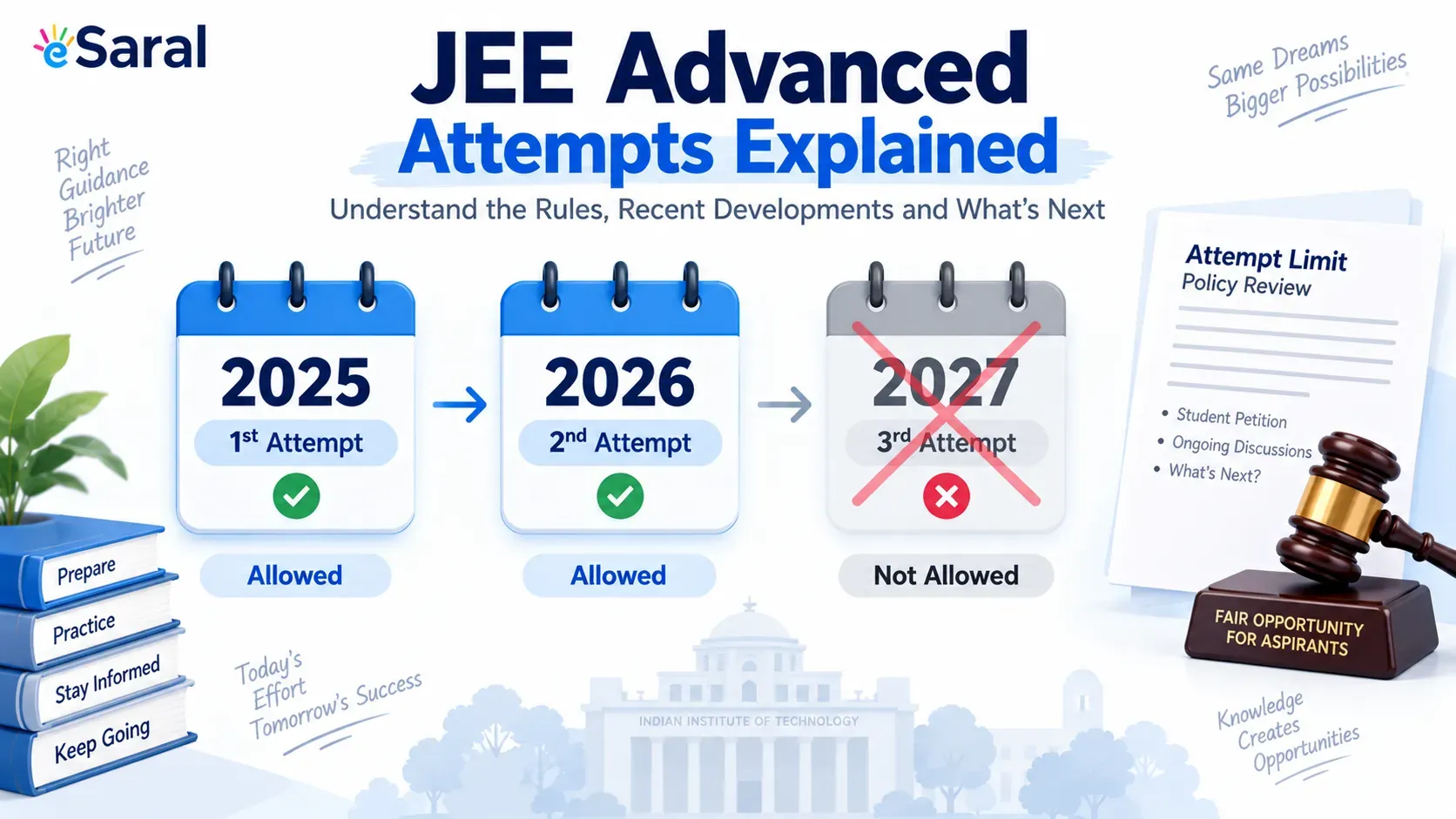
JEE Advanced Attempts: Can You Give It a Third Time? Rules Explained
JEE Advanced attempts: current rule is 2 consecutive years only: full eligibility criteria, the 2025 third-attempt controversy, and the latest 2026 petition news.
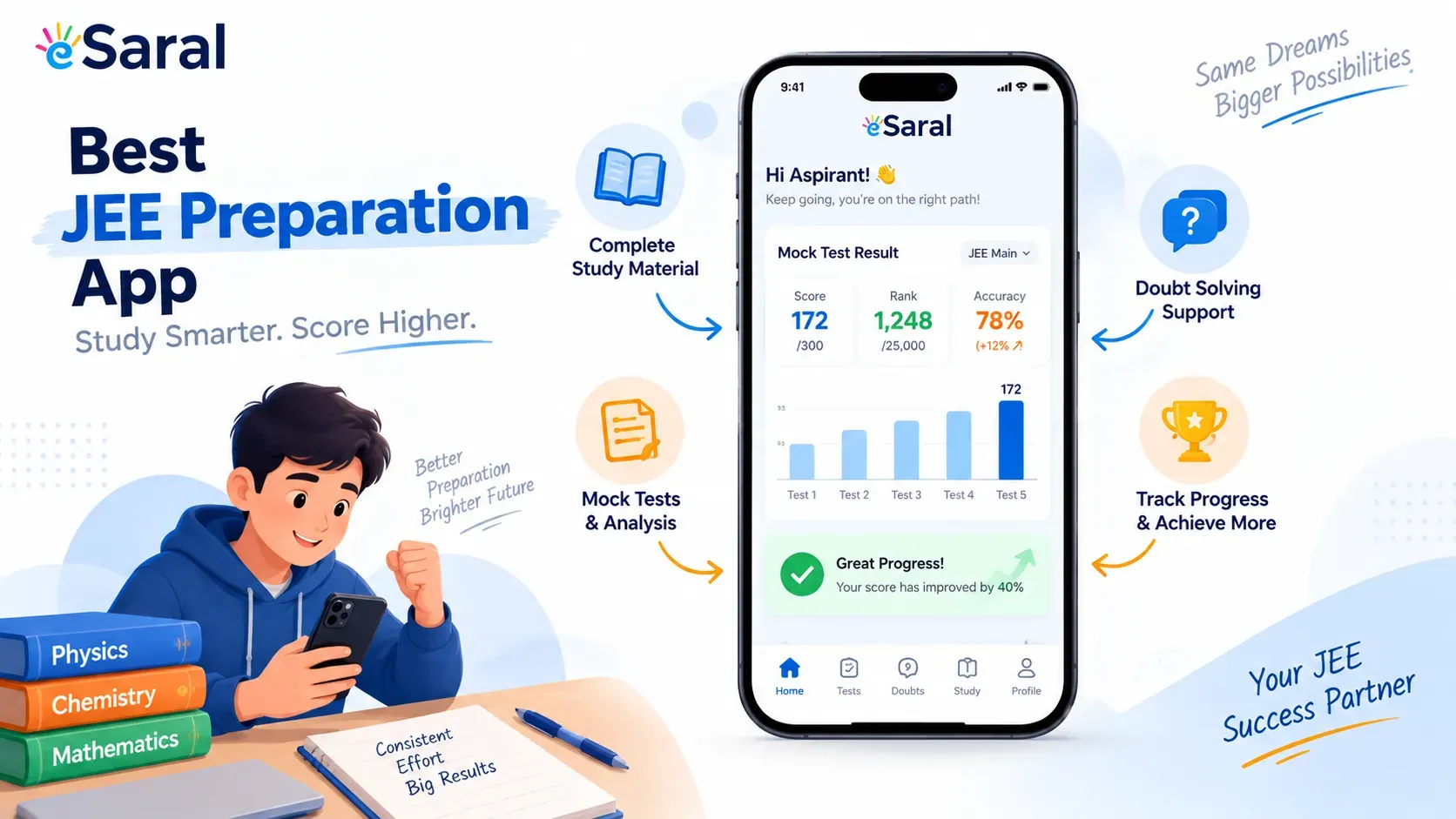
Best JEE Preparation App
Best JEE preparation app for Main & Advanced: AI mock tests, live doubt-solving, thousands of practice questions. JEE preparation app for droppers & Class 11-12.
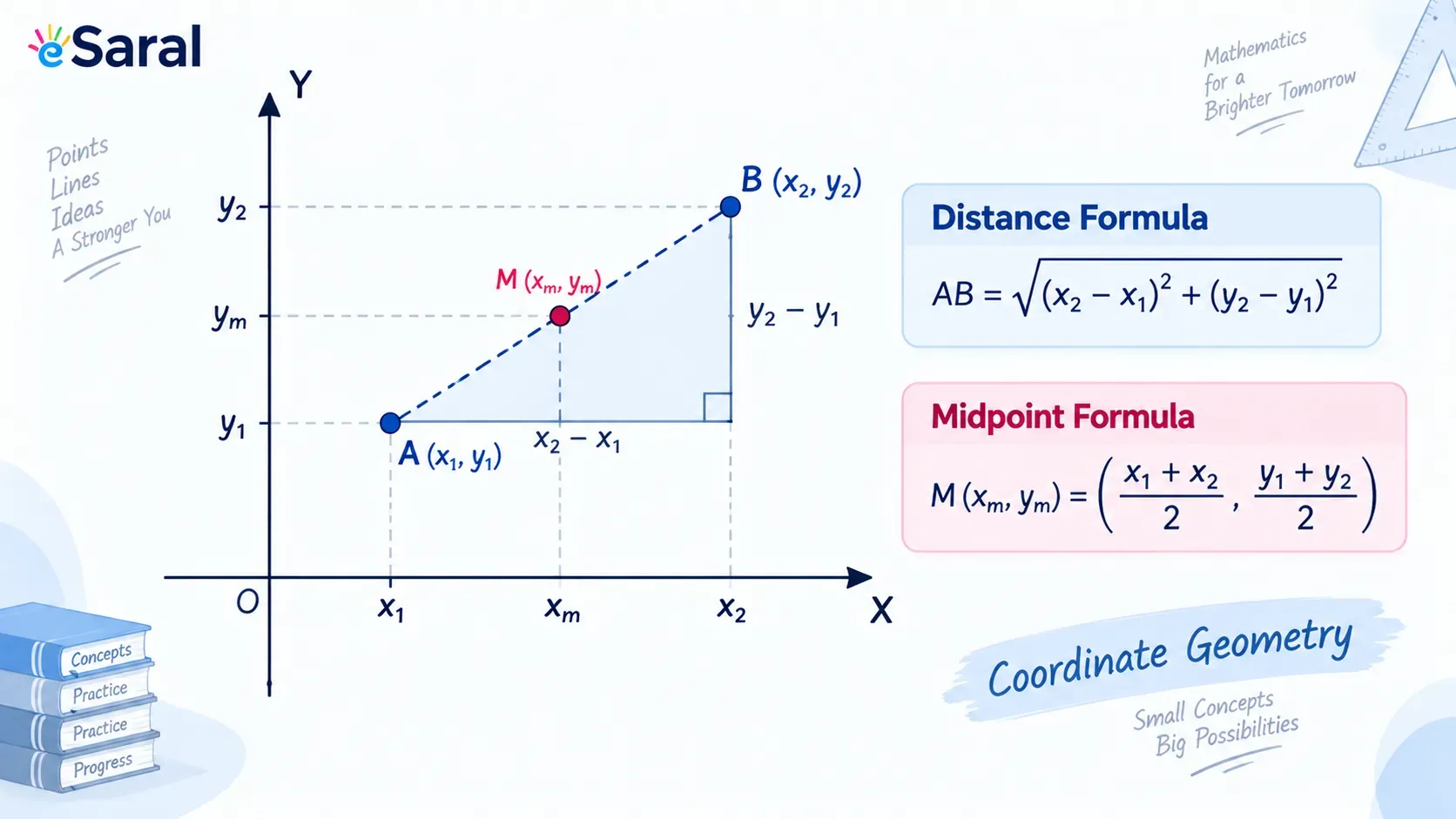
Coordinate Geometry Class 10: Formulas, Notes & Solved Examples
Coordinate geometry class 10: complete CBSE formulas — distance, section, midpoint and area of triangle — with derivation, notes and solved examples.
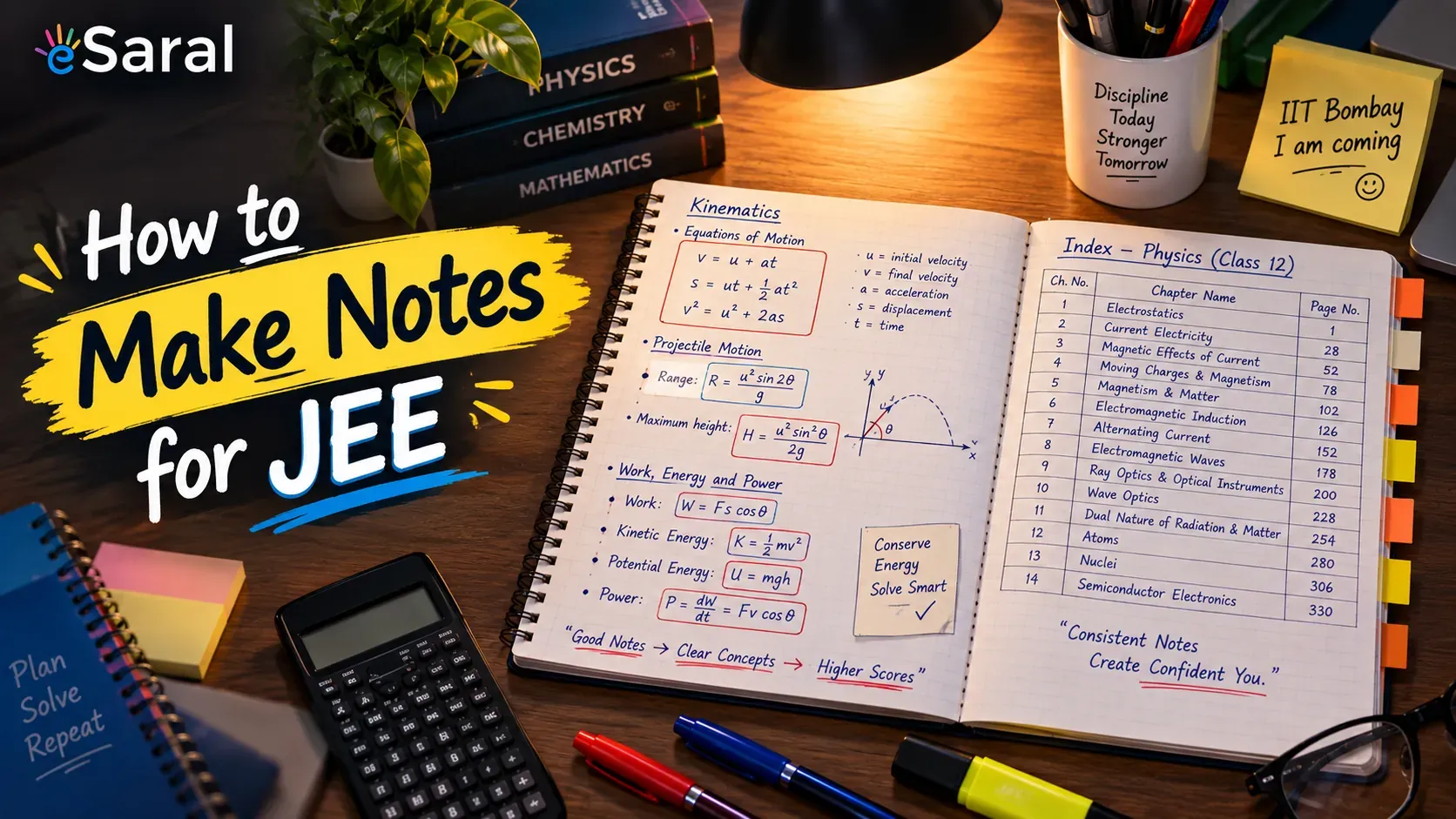
How to make Notes For JEE Smart Notes Strategy of an AIR 41
Learn how to make notes for JEE the way toppers do — indexing, shorthand, and smart short notes for JEE that cut revision time to just 5–7 days.
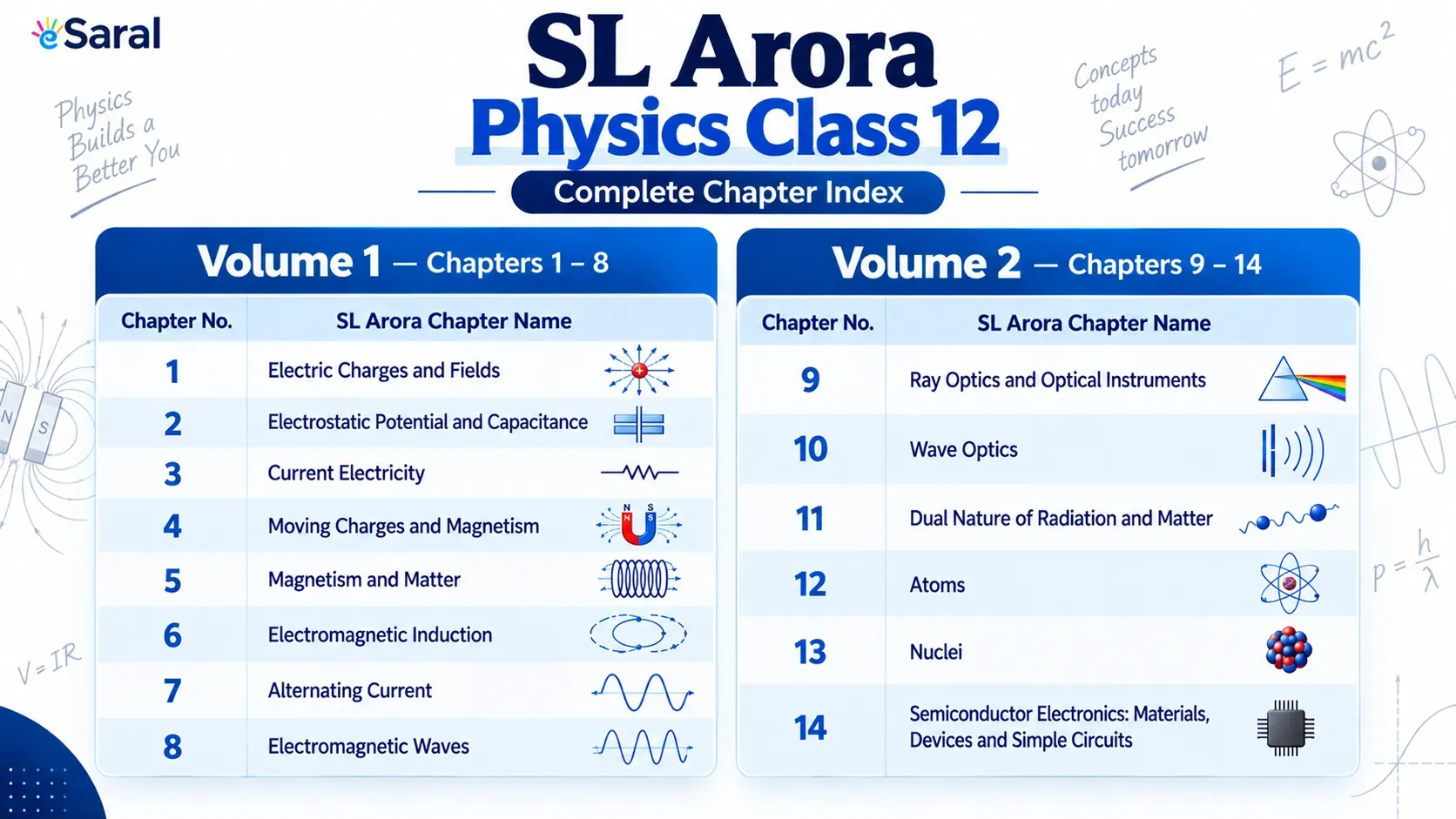
SL Arora Physics Class 12 Index – Chapter List for Volume 1 & 2
SL Arora Physics Class 12 index — complete chapter list for Volume 1 & 2, mapped to NCERT solutions for board, JEE Main, and NEET preparation.