
Locomotion & Movement - NEET Previous Year Questions with Complete Solutions

eSaral Academic and Editorial Team
Summary
Locomotion and Movement NEET previous year questions cover approximately 2–4 MCQs per year from Class 11 Biology. This chapter tests skeletal anatomy, joint types, sarcomere structure, and muscular disorders. Solving these PYQs systematically is one of the fastest ways to secure easy marks in the NEET Biology paper.

eSaral › NEET › Biology › Locomotion and Movement Previous Year Questions with Complete Solutions

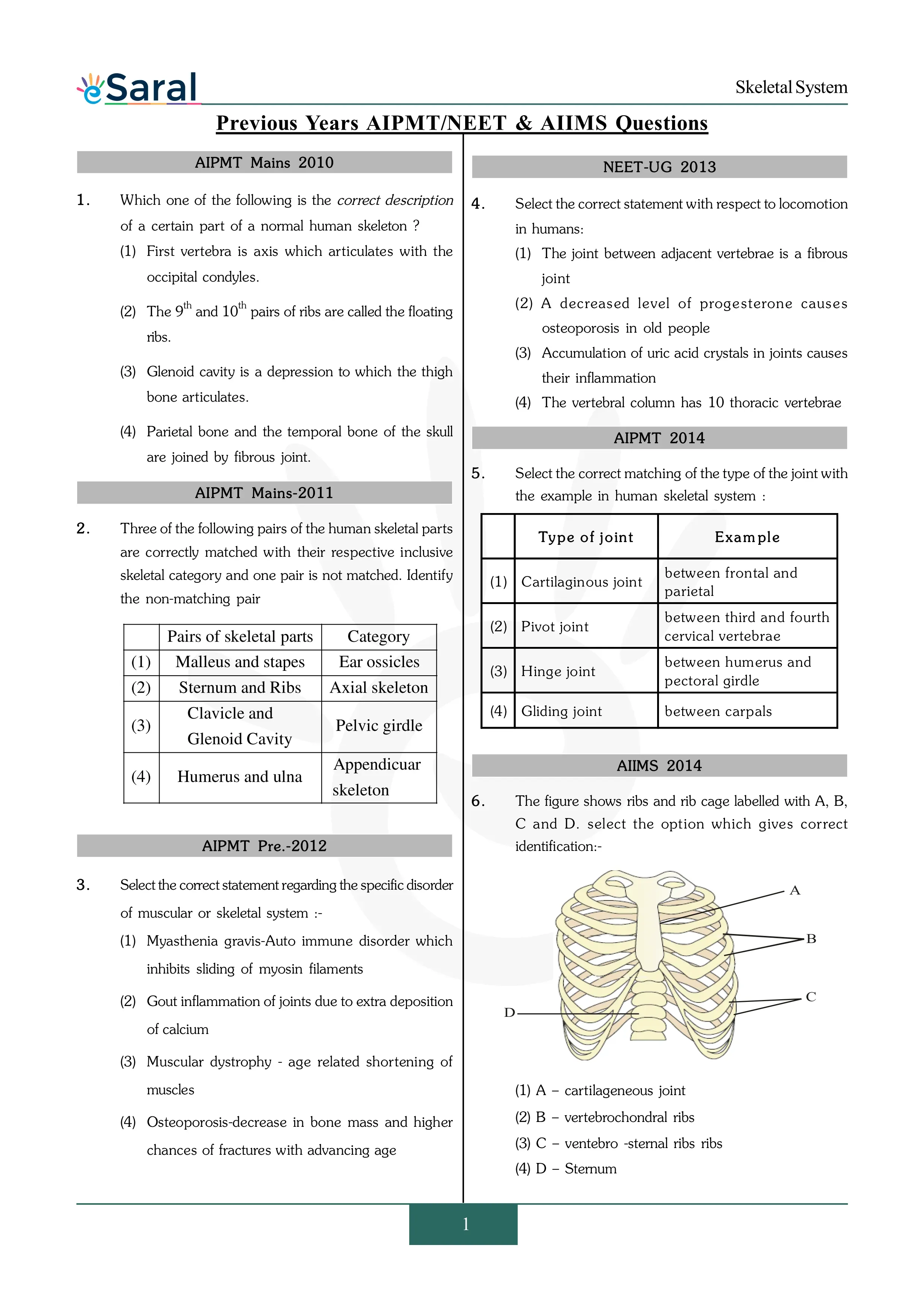
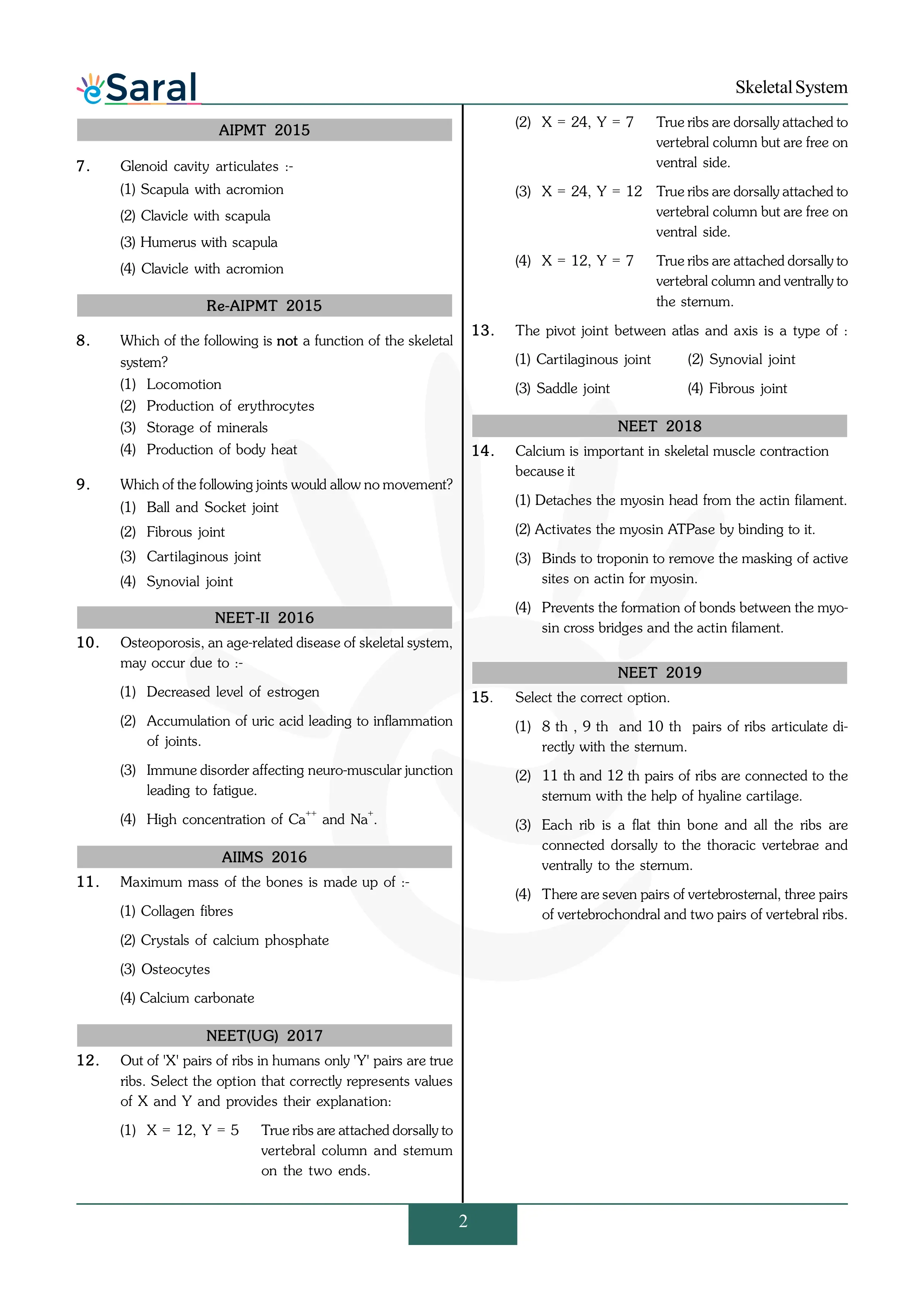
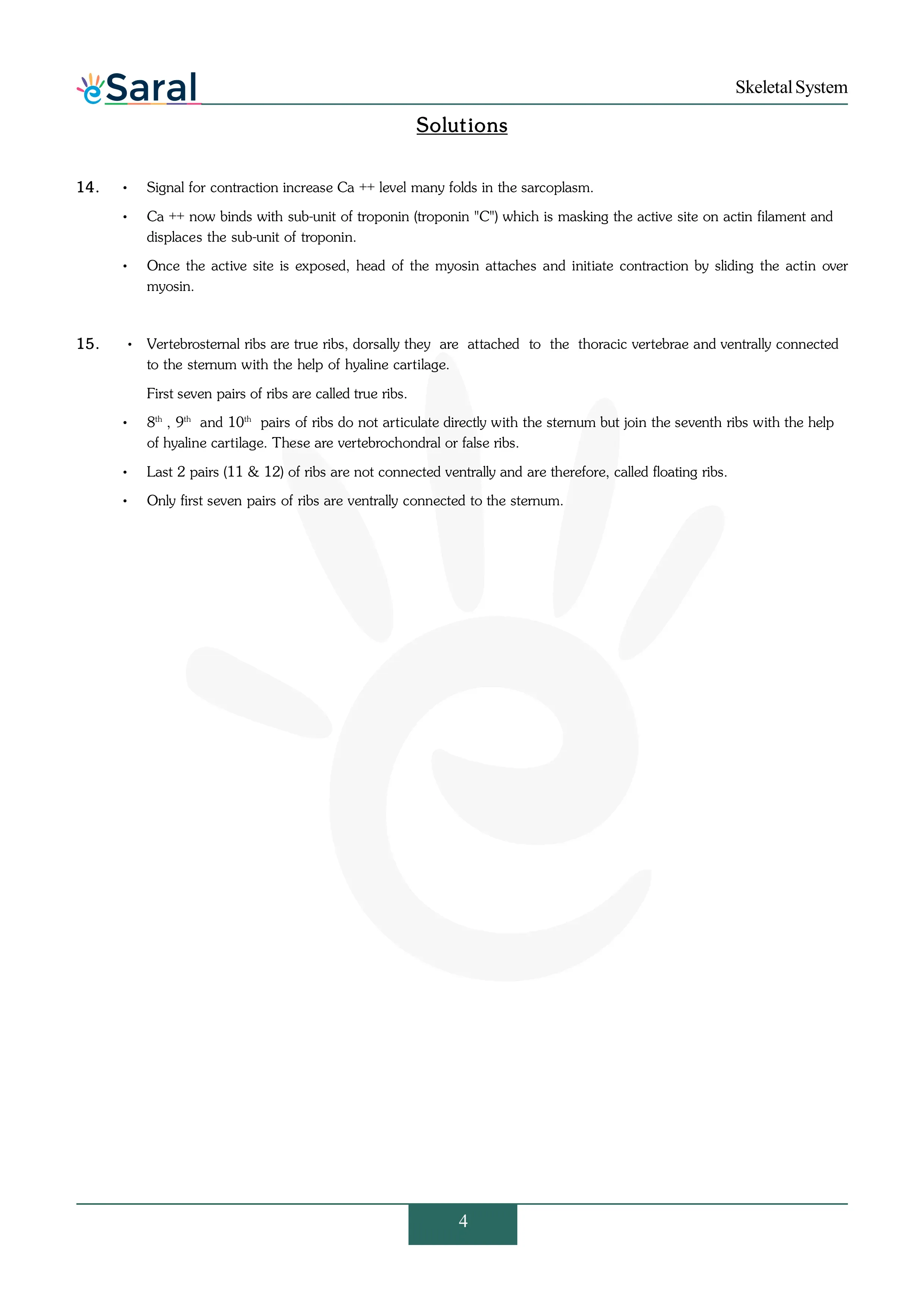
Here you will get Complete Locomotion & Movement NEET Previous Year Questions with complete and detailed solutions.
Get complete NEET previous year questions for Physics, Chemistry, and Biology.
You will find all the solutions at the end of this page:

Frequently Asked Questions
Is Locomotion & Movement difficult for NEET?
No — this chapter is considered moderately easy relative to other Class 11 Biology chapters like Biomolecules or Breathing & Gas Exchange. Most questions are factual and directly drawn from NCERT. Students who read the chapter carefully, memorise the sarcomere diagram, and practise 5–6 years of PYQs can reliably score full marks from this chapter on exam day.
Which topic in Locomotion & Movement carries the most weight in NEET?
<p>The sliding filament theory and sarcomere structure is the highest-weightage topic. Questions on the A-band, I-band, H-zone, and Z-line — and which of these shorten or remain constant during contraction — appear almost every year. The second most tested area is joint classification, particularly the sub-types of synovial joints and their examples.</p>
How many questions come from Locomotion & Movement in NEET every year?
<p>NEET typically includes 2 to 4 questions from Locomotion & Movement every year. Based on NTA-released papers from 2016 to 2024, the average is approximately 2.7 questions per paper. This makes it a reliable scoring chapter because the question types repeat predictably across years, especially on sarcomere structure and joint classification.</p>
What is the sarcomere and why is it important for NEET?
A sarcomere is the functional unit of a skeletal muscle, bounded by two Z-lines. It contains overlapping thick (myosin) and thin (actin) filaments arranged in bands. The sarcomere is central to NEET because it directly tests understanding of the sliding filament theory, and every component — A-band, I-band, H-zone, M-line — has appeared in at least one past NEET question between 2016 and 2024.
What are the main muscular disorders tested in NEET from this chapter?
The most frequently tested disorders are Myasthenia Gravis (autoimmune; acetylcholine receptor blockade), Muscular Dystrophy (genetic degeneration), Tetany (low calcium causing spasms), Osteoporosis (low bone density), and Gout (uric acid crystal accumulation in joints). NEET questions typically ask for the cause or mechanism of the disorder, not just its name, so understanding the underlying biology is essential
How should I use these NEET PYQs to maximise my score?
<p>Start by reading NCERT Chapter 20 once fully. Then attempt the PYQs without looking at solutions. For every wrong answer, go back to the NCERT line or diagram that explains it — this builds source-level clarity. Finally, re-attempt all questions 10 days before the exam as a rapid revision test. Students following eSaral's structured NEET Biology programme — guided by expert faculty with Kota-level teaching experience — typically complete this loop in under 4 hours for this chapter.
Can I rely only on NEET PYQs for this chapter, or do I need additional practice?
PYQs cover 80–85% of what NEET will test from this chapter, because the concept pool is finite. However, you should supplement with at least one full mock chapter test to cover questions on bone counts (carpals, tarsals, vertebrae) and disorder mechanisms that appear less frequently but do appear in years when the paper is tougher. Use our NCERT Solutions as a quick reference tool between question sets
Team eSaral
eSaral Academic and Editorial Team
Team eSaral is the collective author profile for educational content created by eSaral’s teachers and academic contributors. The team draws on expertise from IIT graduates, doctors, experienced educators and subject specialists to develop resources for JEE, NEET and school students. Our articles aim to explain concepts clearly and help students study with confidence.
Related Posts
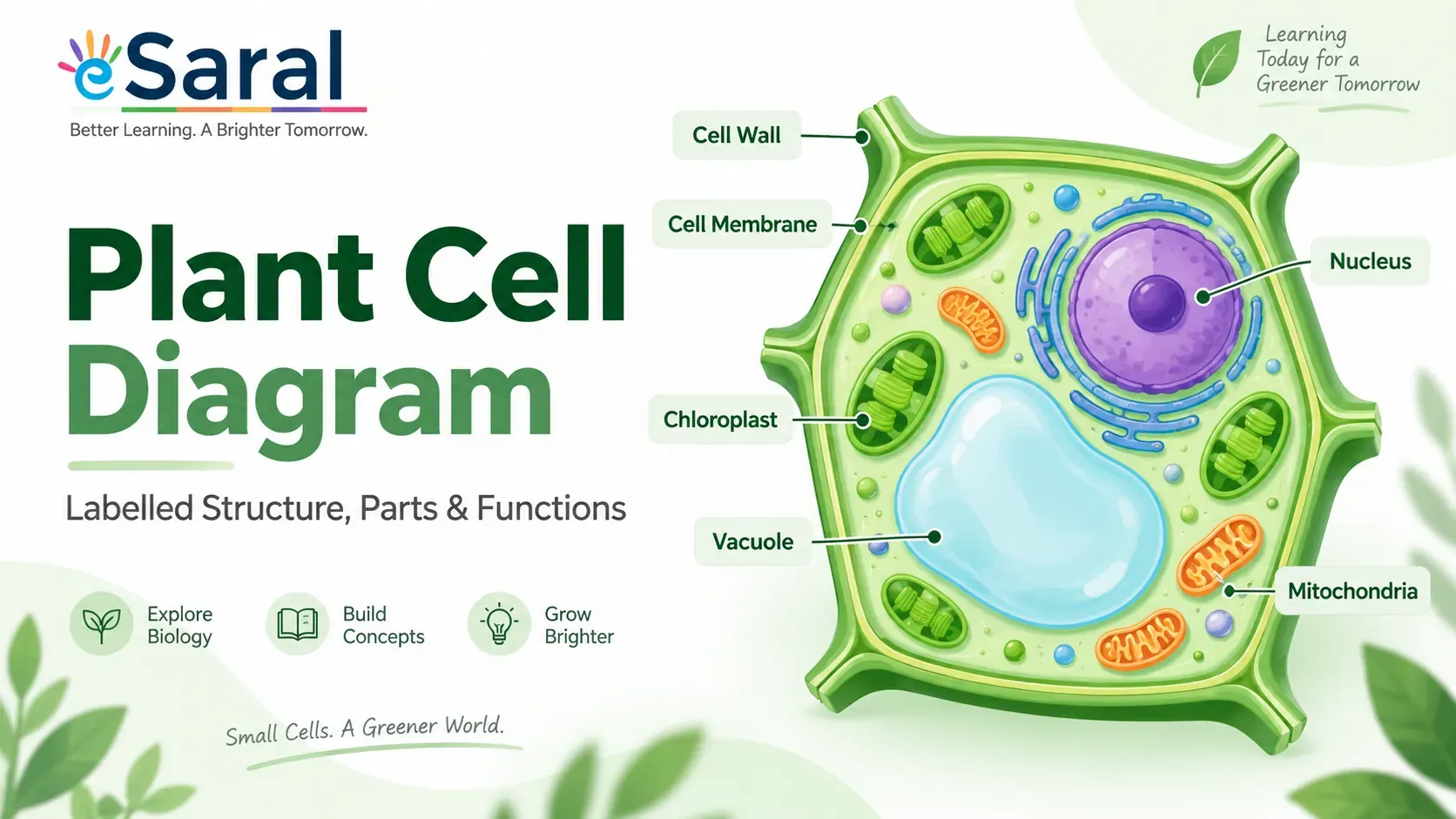
Plant Cell Diagram: Labelled Structure, Parts and Functions
Simple, labelled plant cell diagram with parts and functions. Covers plant cell structure for Class 6, 7, 8, 9, 10 and 11 students, CBSE-aligned.
Saransh Gupta Sir's Visit to IIT Patna: Hostel Life, Placements & Lessons for JEE Aspirants
Inside Saransh Gupta Sir's IIT Patna visit — hostel life, the library, placements, internships, and real advice for JEE aspirants from students living the IIT dream.
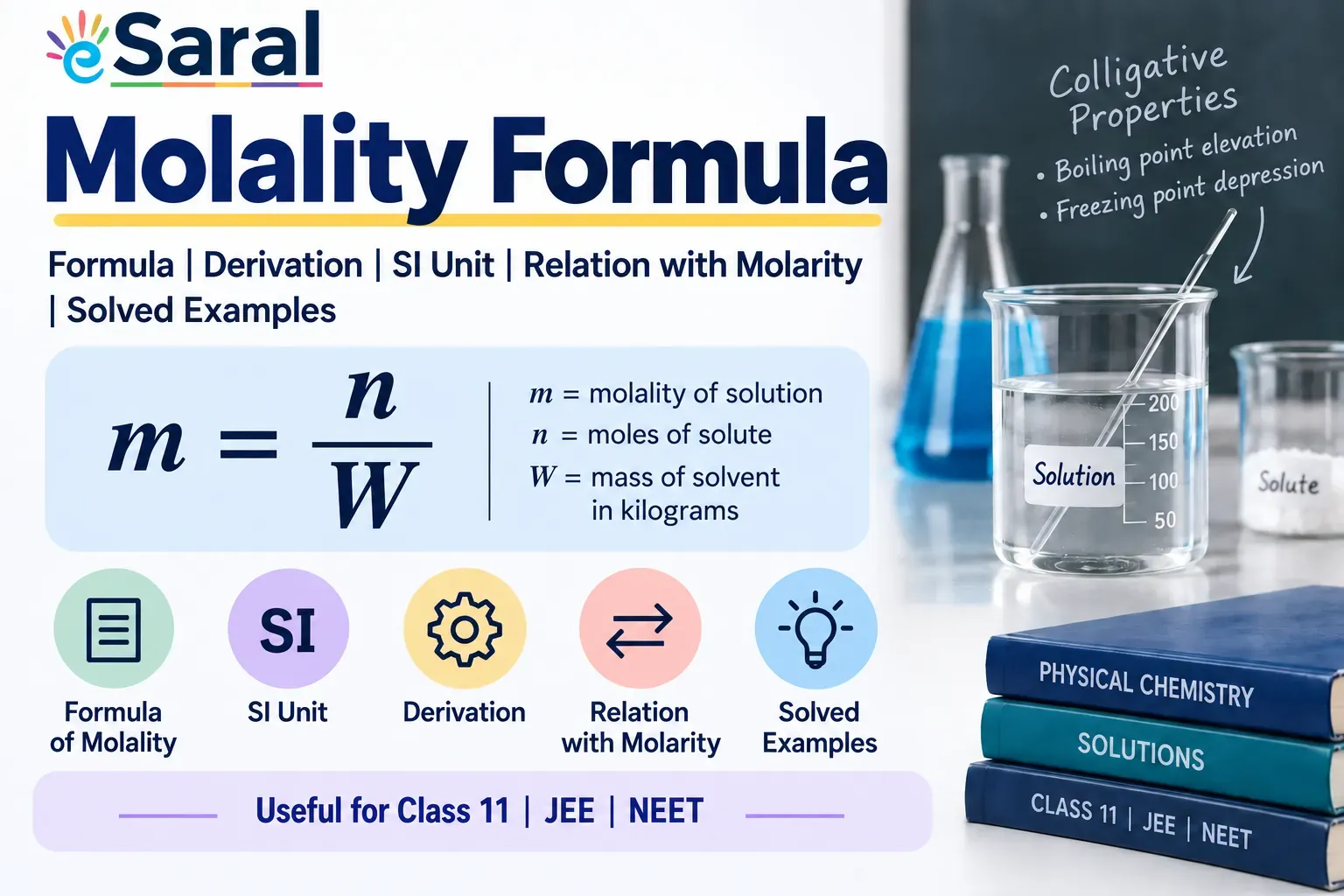
Molality Formula: Formula for Molality, Derivation & Solved Examples
Molality formula is $m = \dfrac{n}{W}$. Learn the formula of molality, its SI unit, derivation, relation with molarity, and solved examples for Class 11, JEE and NEET.
BITSAT Previous Year Question Paper PDF
Download BITSAT previous year question papers PDF. Get year-wise BITSAT PYQs, memory-based papers, exam pattern, and preparation tips to improve your BITSAT preparation.

Teachers’ Day 2026 at eSaral Gurukul: Celebrating the Bond Between Students, Teachers & Mentors
See how Teachers’ Day 2026 was celebrated at eSaral Gurukul, reflecting the bond among students, teachers, and mentors, and the role of guidance beyond academics.
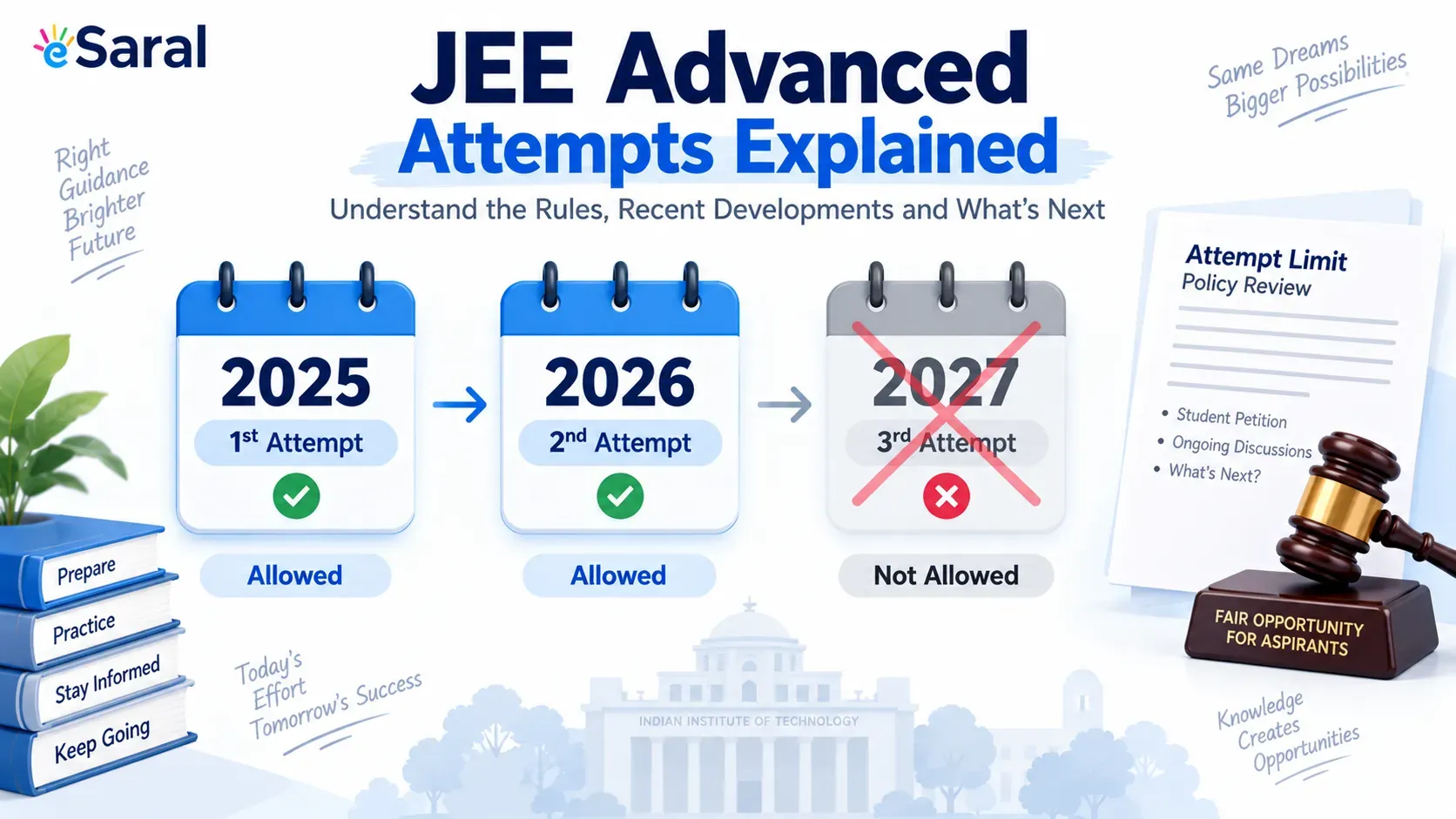
JEE Advanced Attempts: Can You Give It a Third Time? Rules Explained
JEE Advanced attempts: current rule is 2 consecutive years only: full eligibility criteria, the 2025 third-attempt controversy, and the latest 2026 petition news.

Best JEE Preparation App
Best JEE preparation app for Main & Advanced: AI mock tests, live doubt-solving, thousands of practice questions. JEE preparation app for droppers & Class 11-12.
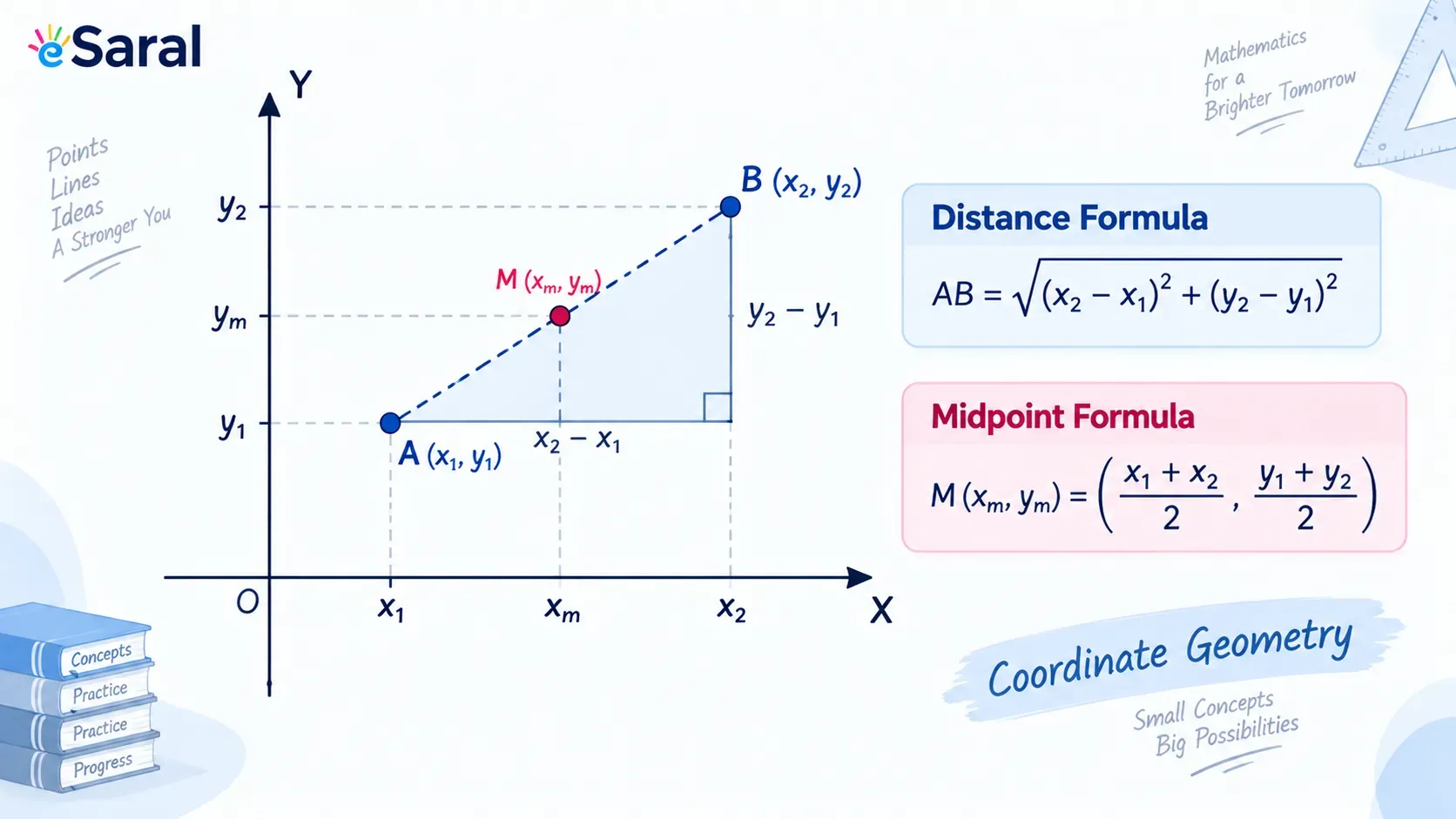
Coordinate Geometry Class 10: Formulas, Notes & Solved Examples
Coordinate geometry class 10: complete CBSE formulas — distance, section, midpoint and area of triangle — with derivation, notes and solved examples.
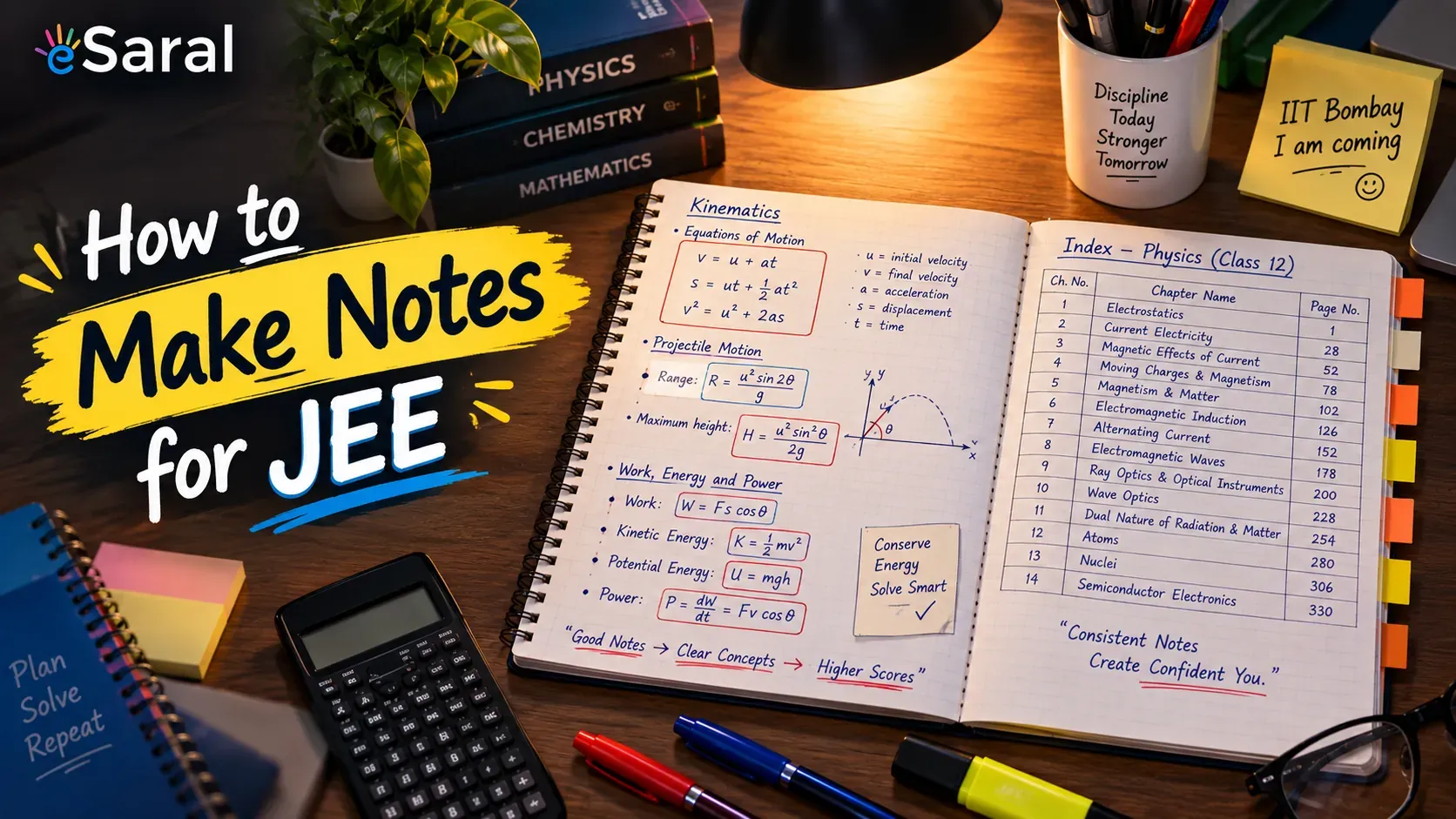
How to make Notes For JEE Smart Notes Strategy of an AIR 41
Learn how to make notes for JEE the way toppers do — indexing, shorthand, and smart short notes for JEE that cut revision time to just 5–7 days.
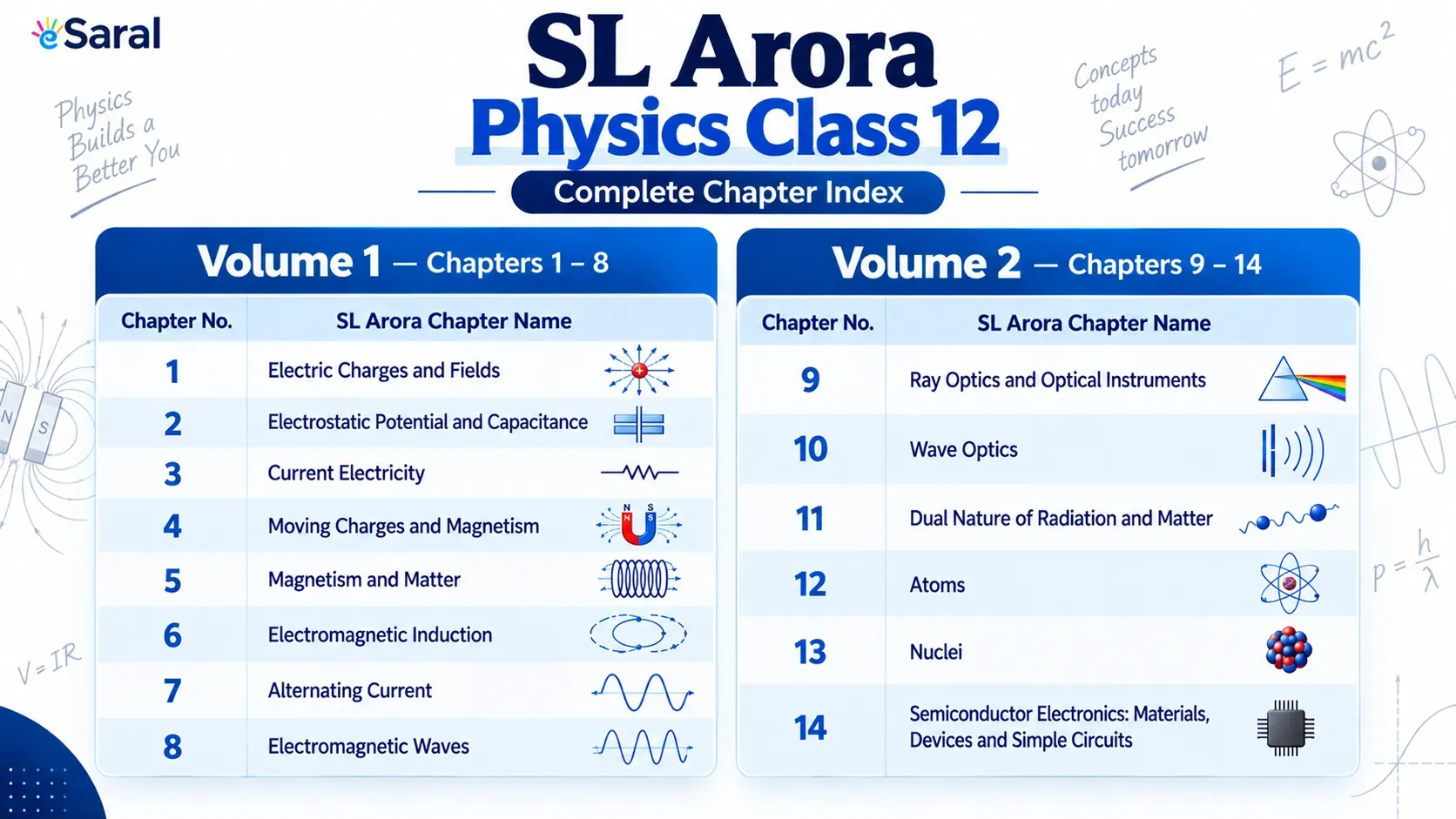
SL Arora Physics Class 12 Index – Chapter List for Volume 1 & 2
SL Arora Physics Class 12 index — complete chapter list for Volume 1 & 2, mapped to NCERT solutions for board, JEE Main, and NEET preparation.