
Microbes in Human Welfare - NEET Previous Year Questions with Complete Solutions

eSaral Academic and Editorial Team
Summary
Microbes in Human Welfare is Chapter 10 of NCERT Class 12 Biology. In NEET, this chapter contributes 2–4 questions per year, primarily from topics like biogas production, antibiotics, biofertilisers, sewage treatment, and industrially important microbes. Solving previous year questions from this chapter is one of the fastest ways to secure guaranteed marks in NEET Biology.

eSaral › NEET › Biology › Microbes in Human Welfare Previous Year Questions with Complete Solutions

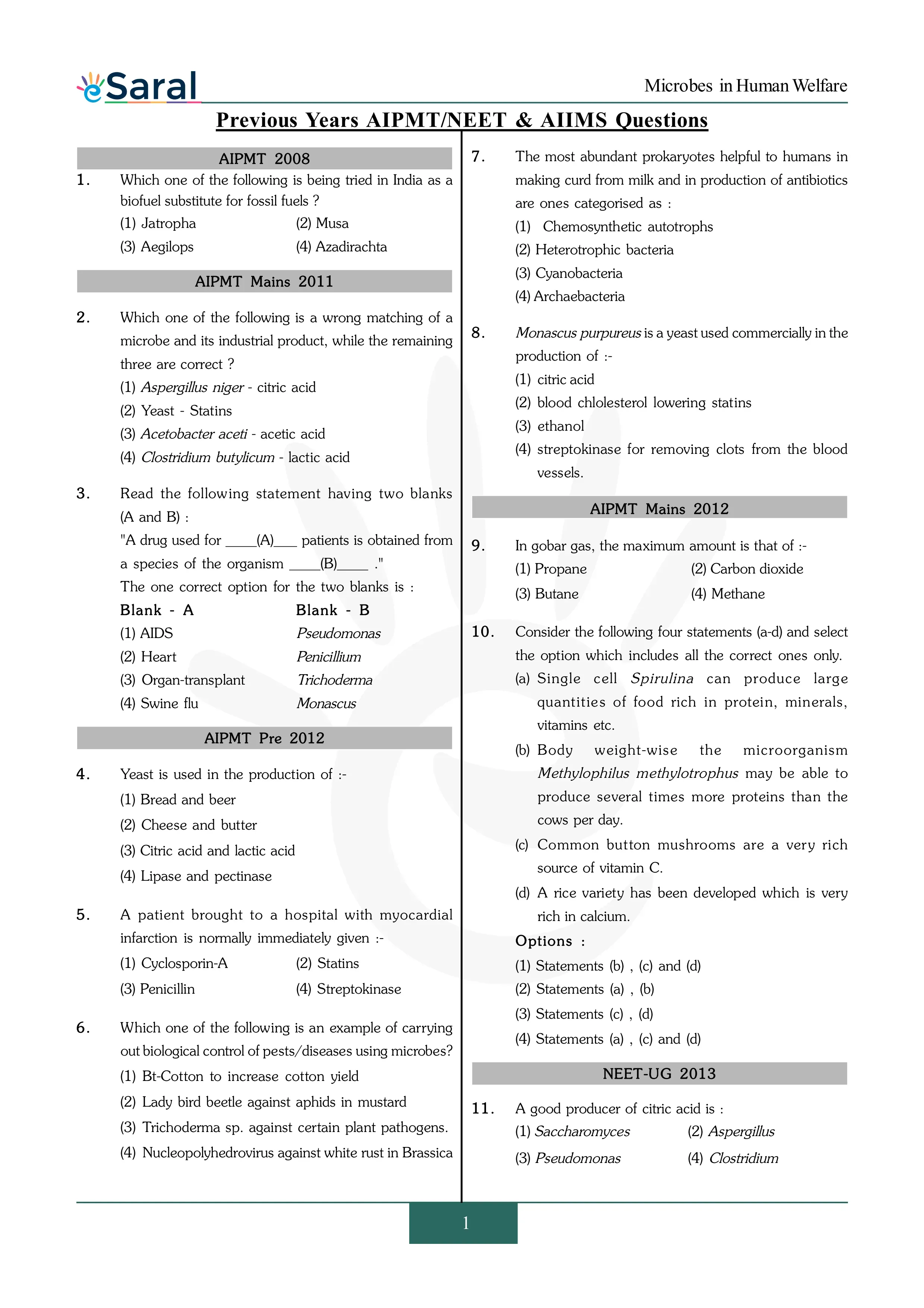
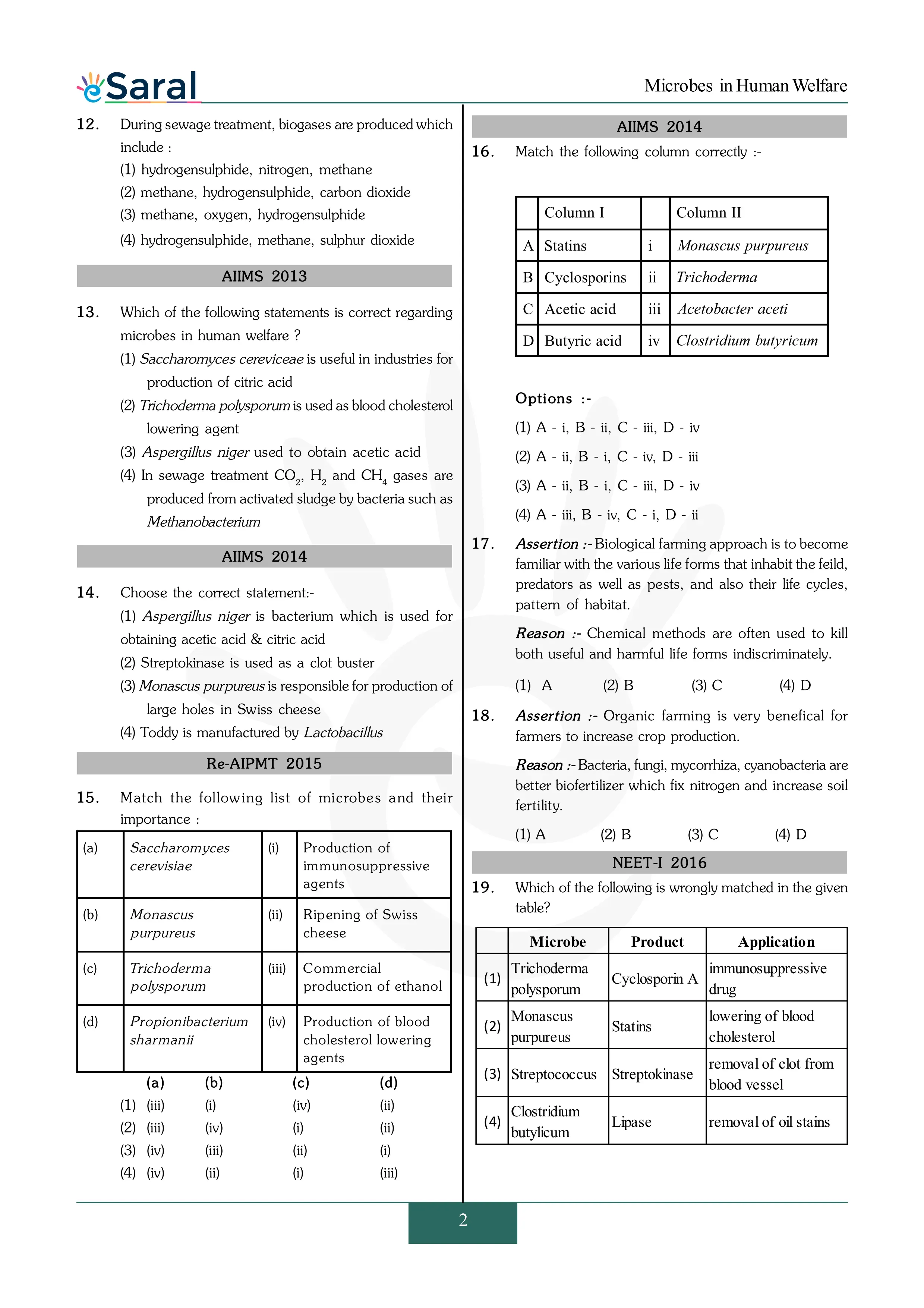
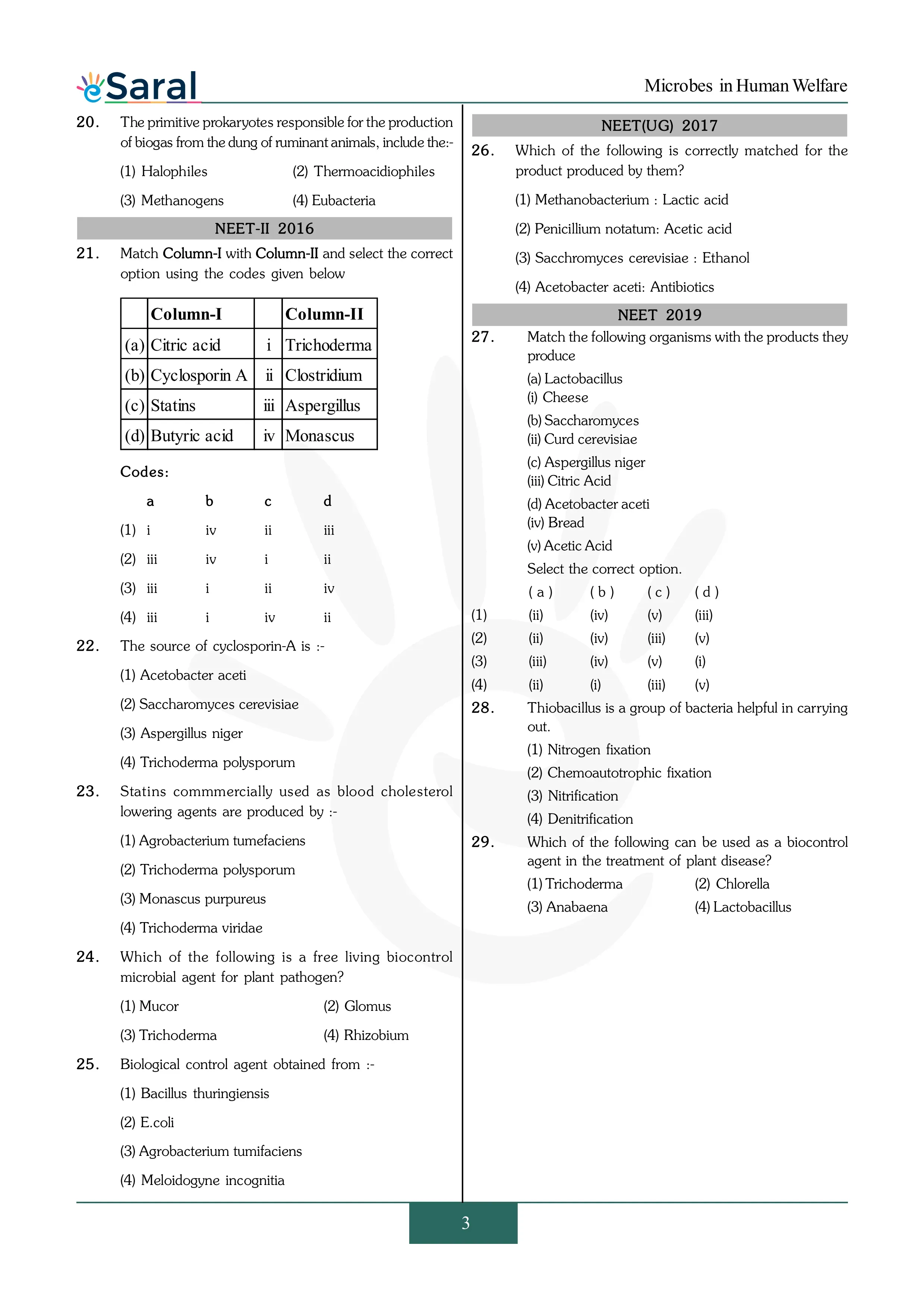
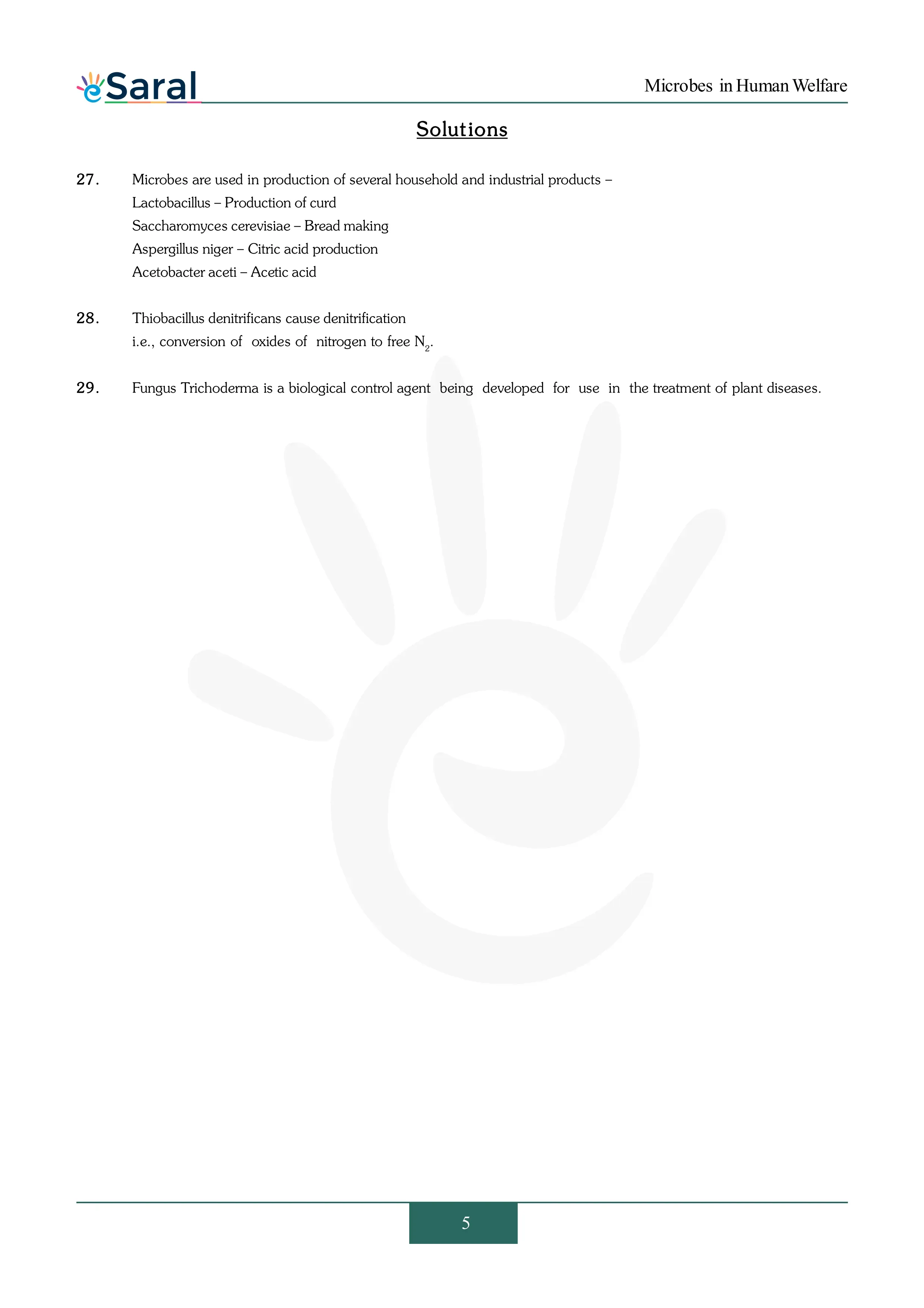
Here you will find Complete Microbes in Human Welfare NEET Previous Year Questions with detailed solutions.
Get complete NEET previous year questions for Physics, Chemistry, and Biology.
You will find all the solutions at the end of this page:

Frequently Asked Questions
Is NCERT enough for Microbes in Human Welfare in NEET?
Yes. For this chapter specifically, NCERT Class 12 Biology is completely sufficient. Every NEET question from this chapter in the last 10 years has been answerable directly from the NCERT text, tables, or diagrams. No additional reference book is needed — but you must read NCERT carefully, not skim it
Which topics are most important in Microbes in Human Welfare for NEET?
The highest-frequency topics are: organism-product pairs (antibiotics, statins, organic acids), sewage treatment stages and BOD, biogas production and methanogens, and biofertilisers like Rhizobium and Azolla. Biocontrol agents — especially Bacillus thuringiensis and baculoviruses — have also appeared repeatedly in recent years.
How many questions come from Microbes in Human Welfare in NEET?
NEET typically includes 2–4 questions from this chapter every year. Based on analysis of papers from 2013 to 2024, the chapter has appeared in every single NEET paper. This makes it one of the most reliable scoring chapters in Biology, especially because the questions are factual and directly from NCERT Class 12.
What is the difference between biocontrol agents and biofertilisers?
Biocontrol agents are living organisms used to control pests and pathogens — examples include Bacillus thuringiensis (controls insect larvae) and Trichoderma (controls plant fungal diseases). Biofertilisers are microorganisms that enrich soil nutrients, especially by fixing atmospheric nitrogen — examples include Rhizobium, Nostoc, and mycorrhiza. Both replace harmful chemicals but serve different agricultural functions.
What are methanogens and where are they found?
Methanogens are strict anaerobic bacteria that produce methane (biogas) by breaking down organic matter. In nature, they are found in the rumen (gut) of cattle and in marshy areas. In biogas plants, they act on cattle dung slurry to produce methane, CO₂, and H₂S. Methanobacterium is the key organism to remember for NEET.
What is BOD and why does NEET ask about it?
BOD stands for Biochemical Oxygen Demand. It measures the amount of dissolved oxygen needed by aerobic microorganisms to break down organic matter in a water sample. A high BOD means the water is heavily polluted. NEET tests this concept as part of the sewage treatment process — specifically the secondary (biological) treatment stage.
Team eSaral
eSaral Academic and Editorial Team
Team eSaral is the collective author profile for educational content created by eSaral’s teachers and academic contributors. The team draws on expertise from IIT graduates, doctors, experienced educators and subject specialists to develop resources for JEE, NEET and school students. Our articles aim to explain concepts clearly and help students study with confidence.
Related Posts
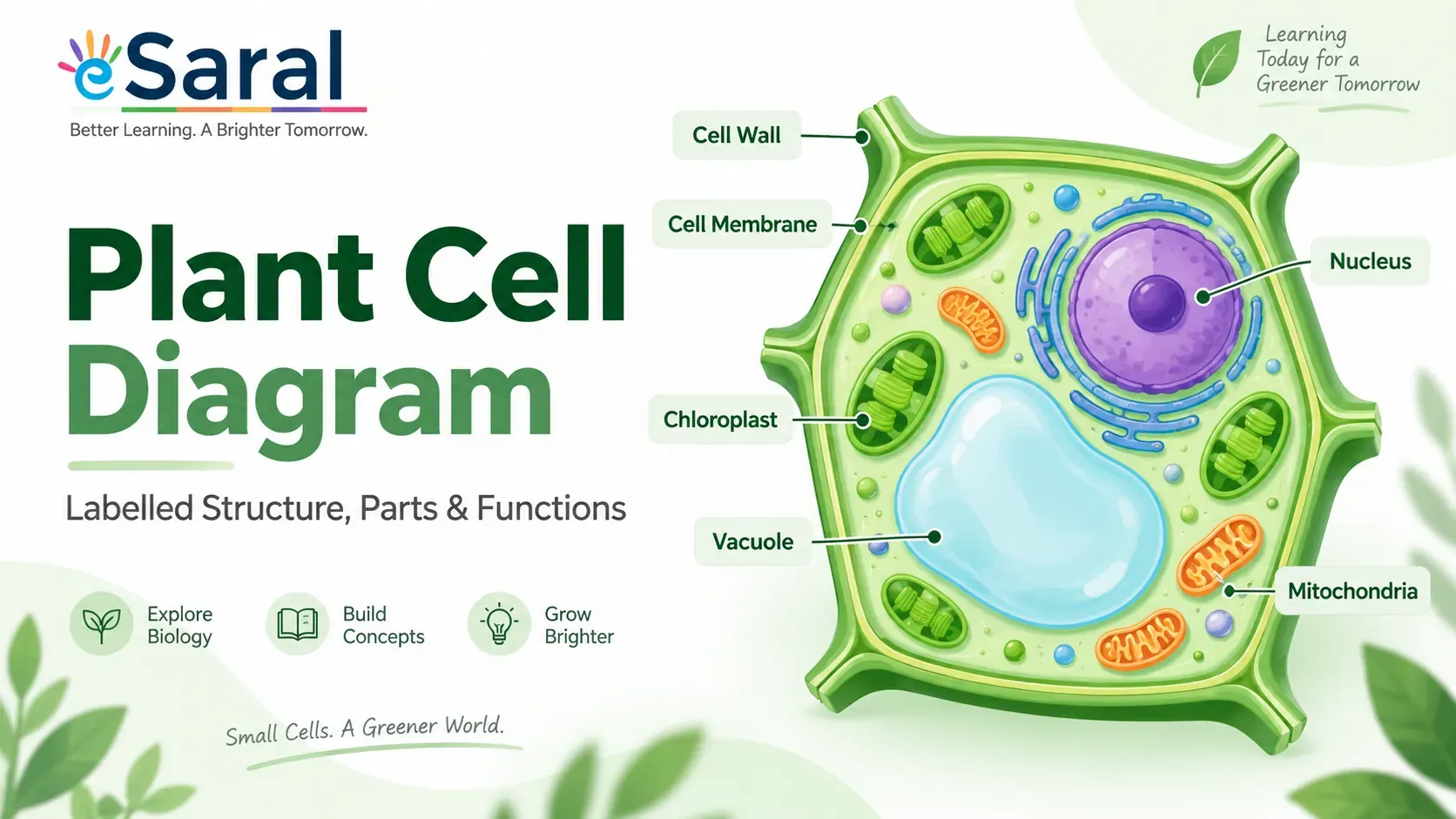
Plant Cell Diagram: Labelled Structure, Parts and Functions
Simple, labelled plant cell diagram with parts and functions. Covers plant cell structure for Class 6, 7, 8, 9, 10 and 11 students, CBSE-aligned.

Saransh Gupta Sir's Visit to IIT Patna: Hostel Life, Placements & Lessons for JEE Aspirants
Inside Saransh Gupta Sir's IIT Patna visit — hostel life, the library, placements, internships, and real advice for JEE aspirants from students living the IIT dream.
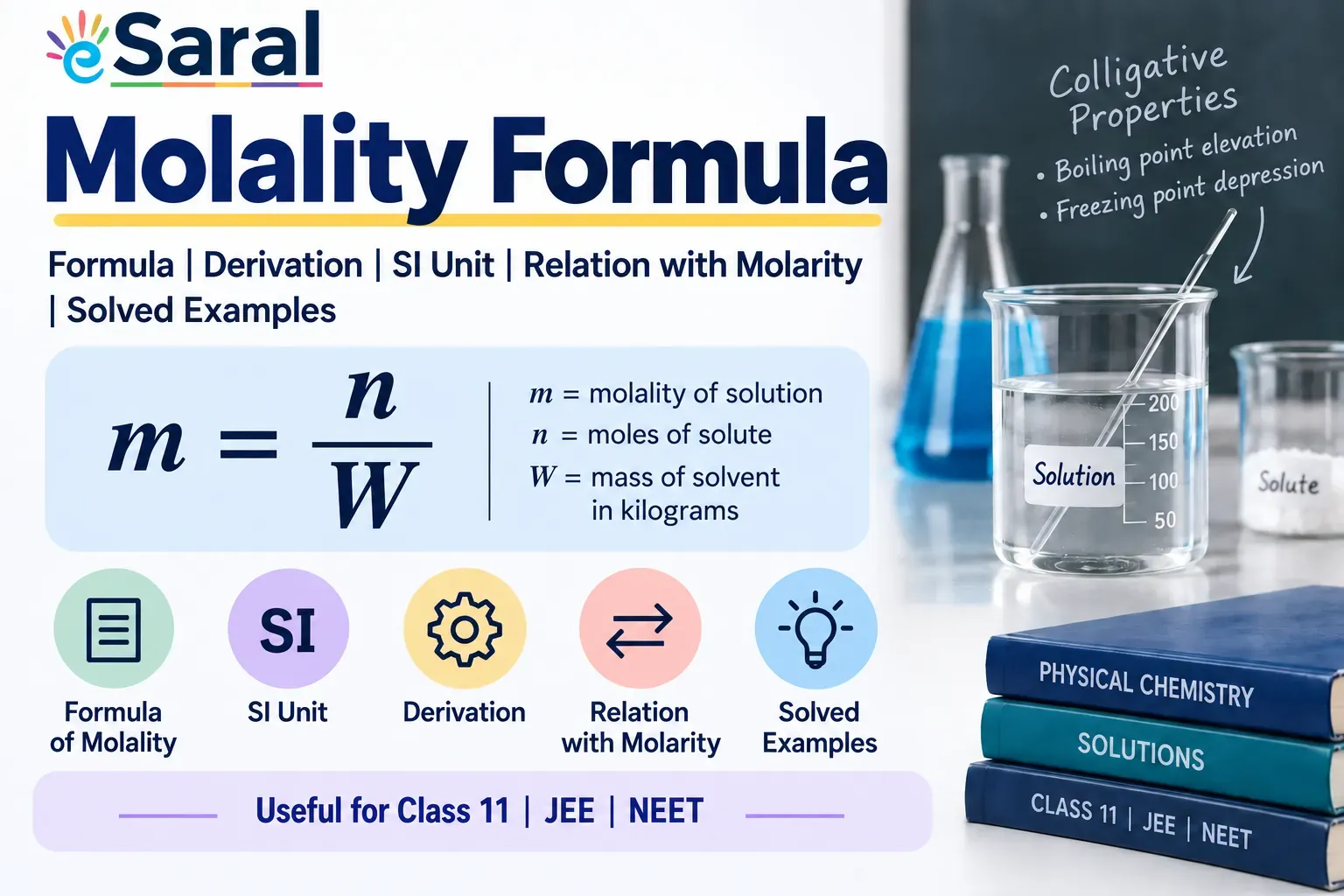
Molality Formula: Formula for Molality, Derivation & Solved Examples
Molality formula is $m = \dfrac{n}{W}$. Learn the formula of molality, its SI unit, derivation, relation with molarity, and solved examples for Class 11, JEE and NEET.
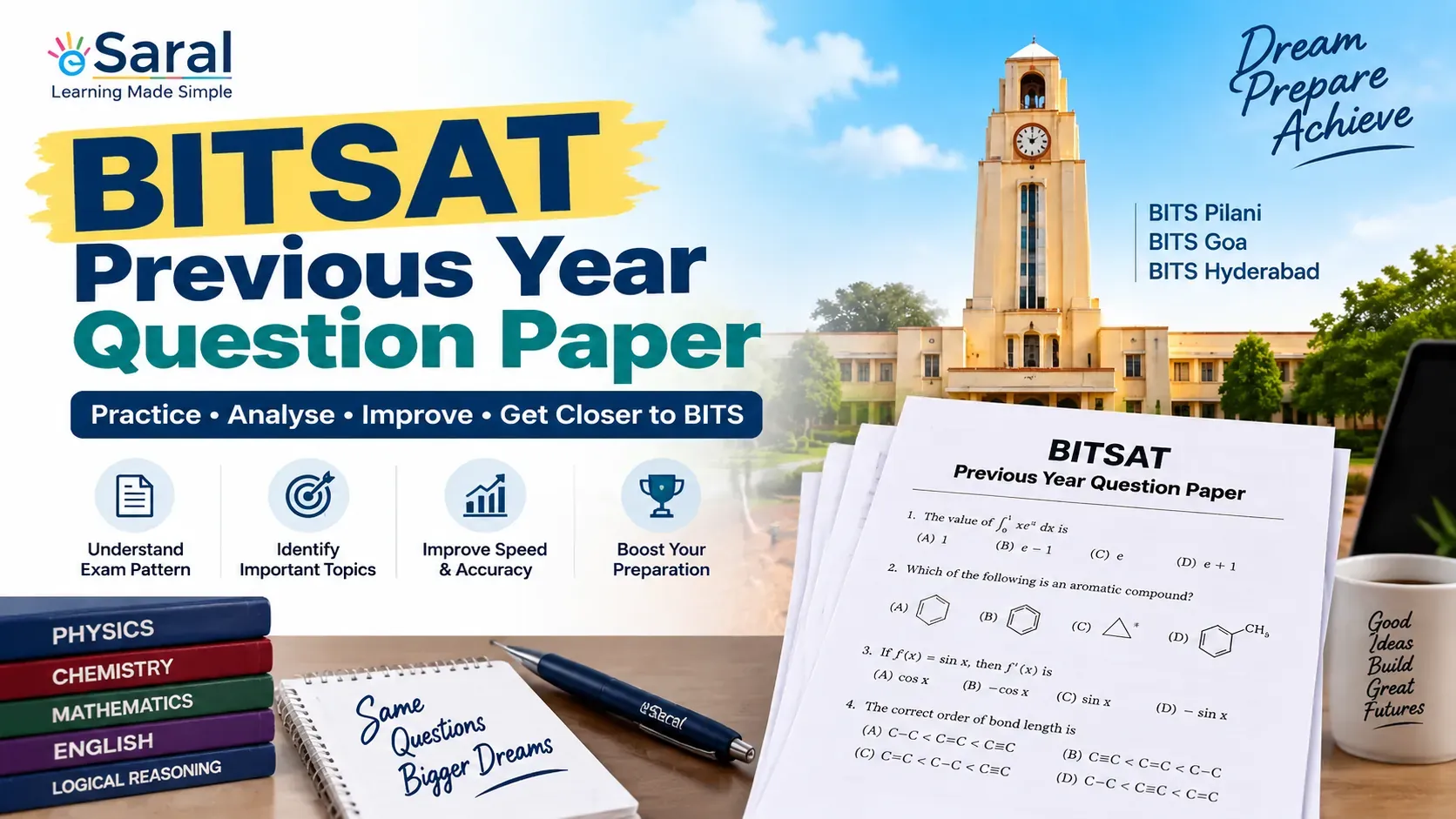
BITSAT Previous Year Question Paper PDF
Download BITSAT previous year question papers PDF. Get year-wise BITSAT PYQs, memory-based papers, exam pattern, and preparation tips to improve your BITSAT preparation.

Teachers’ Day 2026 at eSaral Gurukul: Celebrating the Bond Between Students, Teachers & Mentors
See how Teachers’ Day 2026 was celebrated at eSaral Gurukul, reflecting the bond among students, teachers, and mentors, and the role of guidance beyond academics.
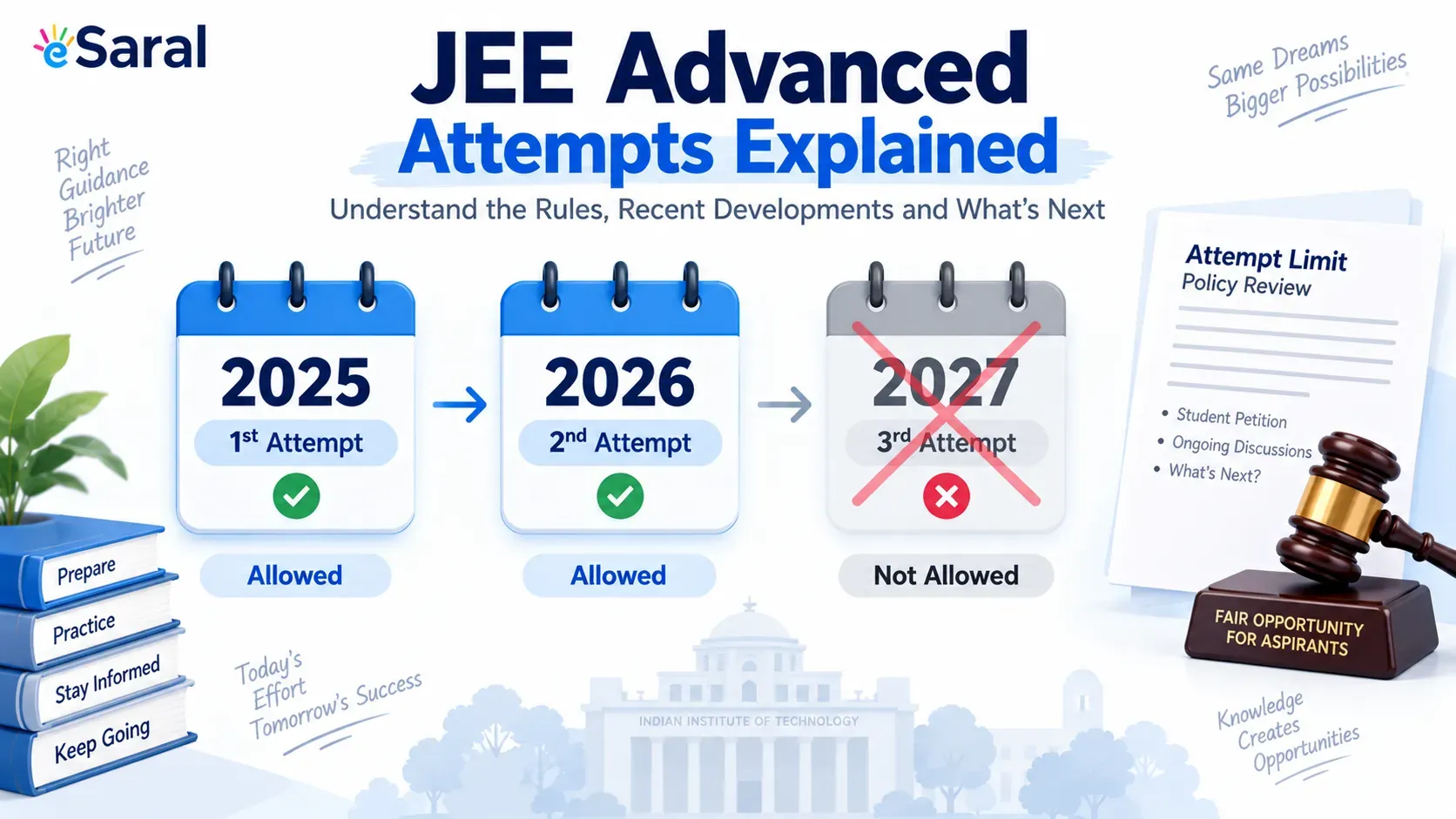
JEE Advanced Attempts: Can You Give It a Third Time? Rules Explained
JEE Advanced attempts: current rule is 2 consecutive years only: full eligibility criteria, the 2025 third-attempt controversy, and the latest 2026 petition news.

Best JEE Preparation App
Best JEE preparation app for Main & Advanced: AI mock tests, live doubt-solving, thousands of practice questions. JEE preparation app for droppers & Class 11-12.
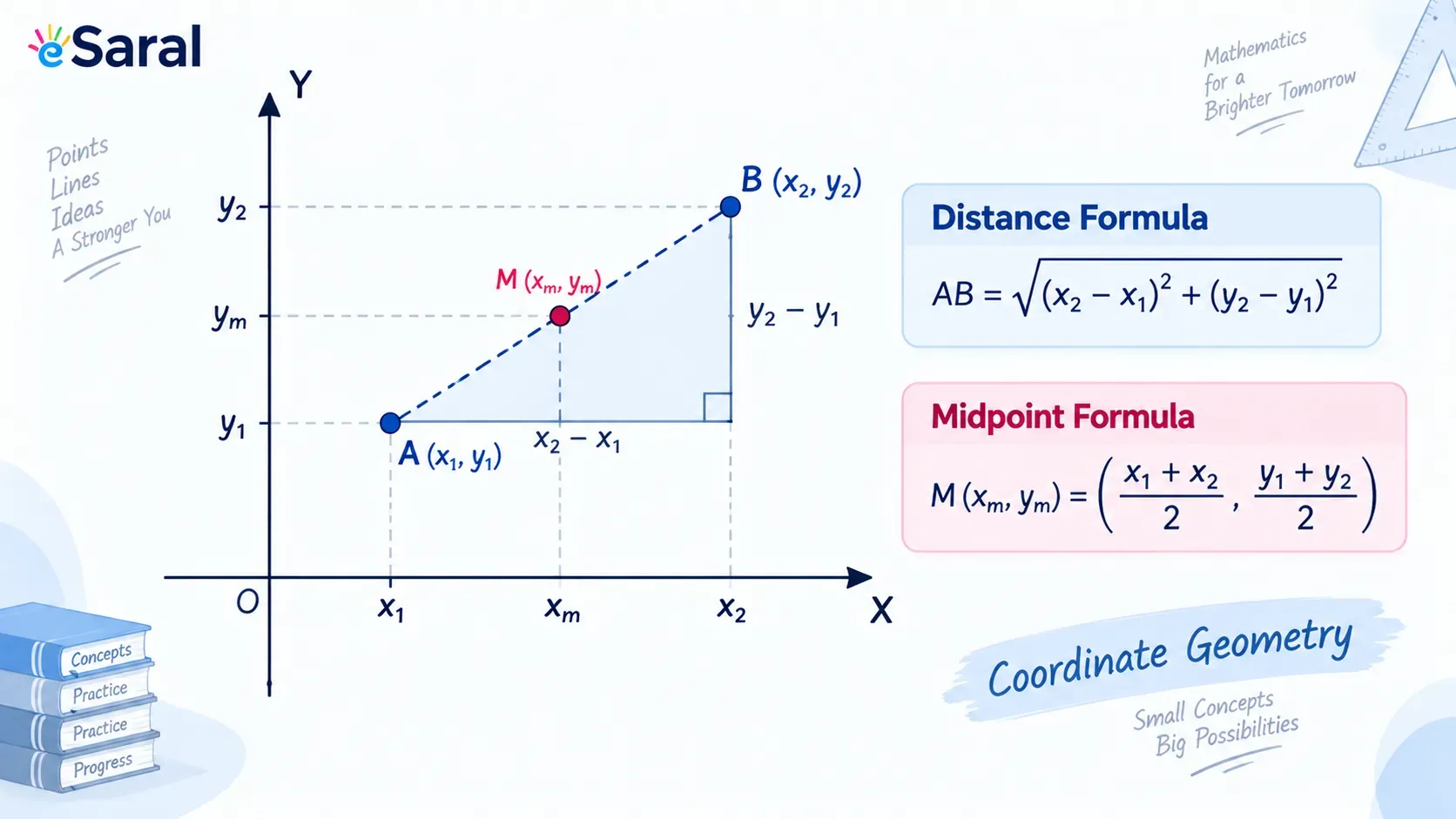
Coordinate Geometry Class 10: Formulas, Notes & Solved Examples
Coordinate geometry class 10: complete CBSE formulas — distance, section, midpoint and area of triangle — with derivation, notes and solved examples.

How to make Notes For JEE Smart Notes Strategy of an AIR 41
Learn how to make notes for JEE the way toppers do — indexing, shorthand, and smart short notes for JEE that cut revision time to just 5–7 days.
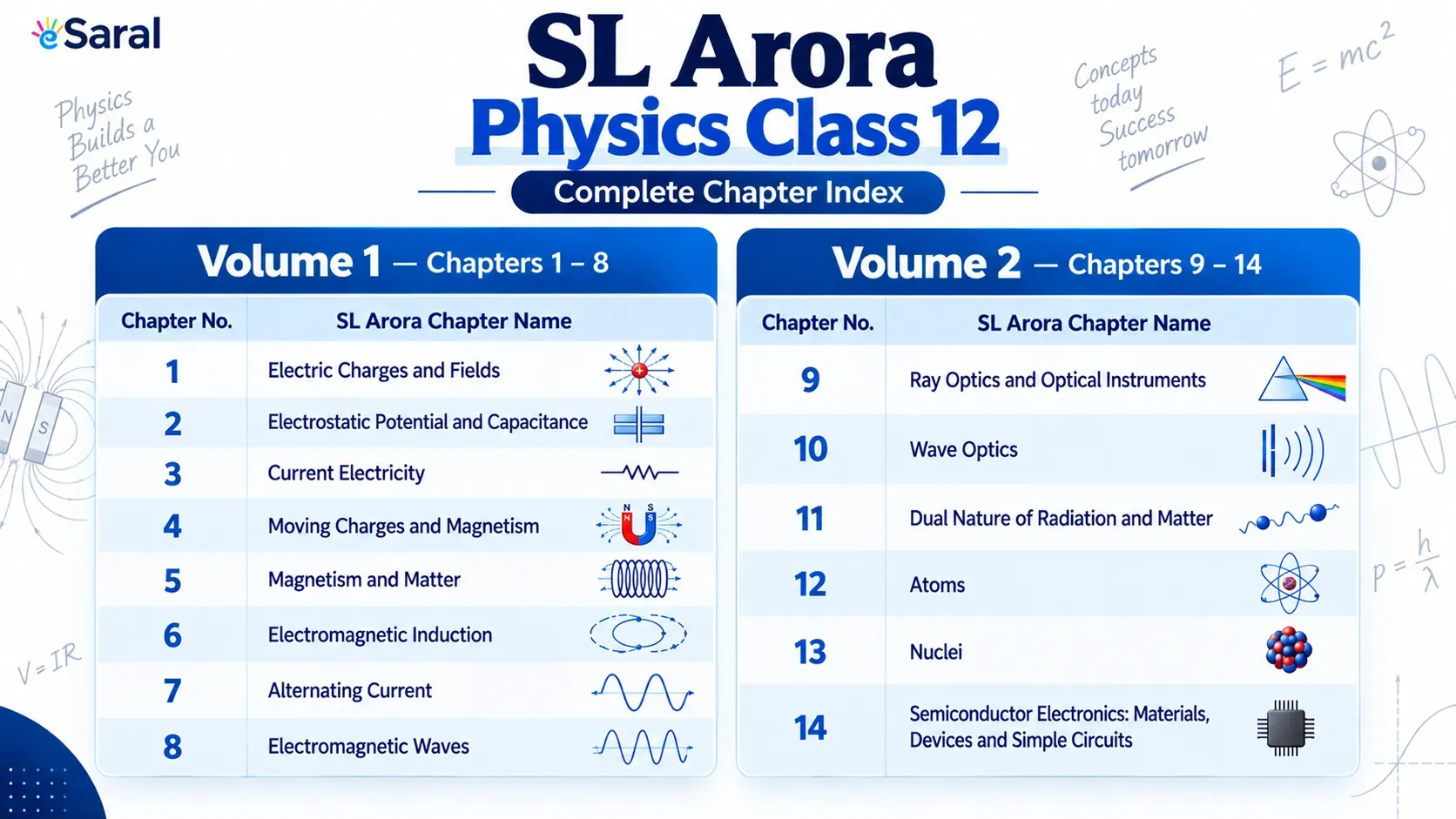
SL Arora Physics Class 12 Index – Chapter List for Volume 1 & 2
SL Arora Physics Class 12 index — complete chapter list for Volume 1 & 2, mapped to NCERT solutions for board, JEE Main, and NEET preparation.