
Morphology of flowering plants - NEET Previous Year Questions with Complete Solutions

eSaral Academic and Editorial Team
Summary
<p>Morphology of Flowering Plants is an important NEET Biology chapter that covers the structure, modifications, and identification of roots, stems, leaves, flowers, fruits, and seeds, forming a key part of the Structural Organisation in Plants unit.</p>
eSaral › NEET › Morphology of flowering plants

What is the morphology of flowering plants in NEET?
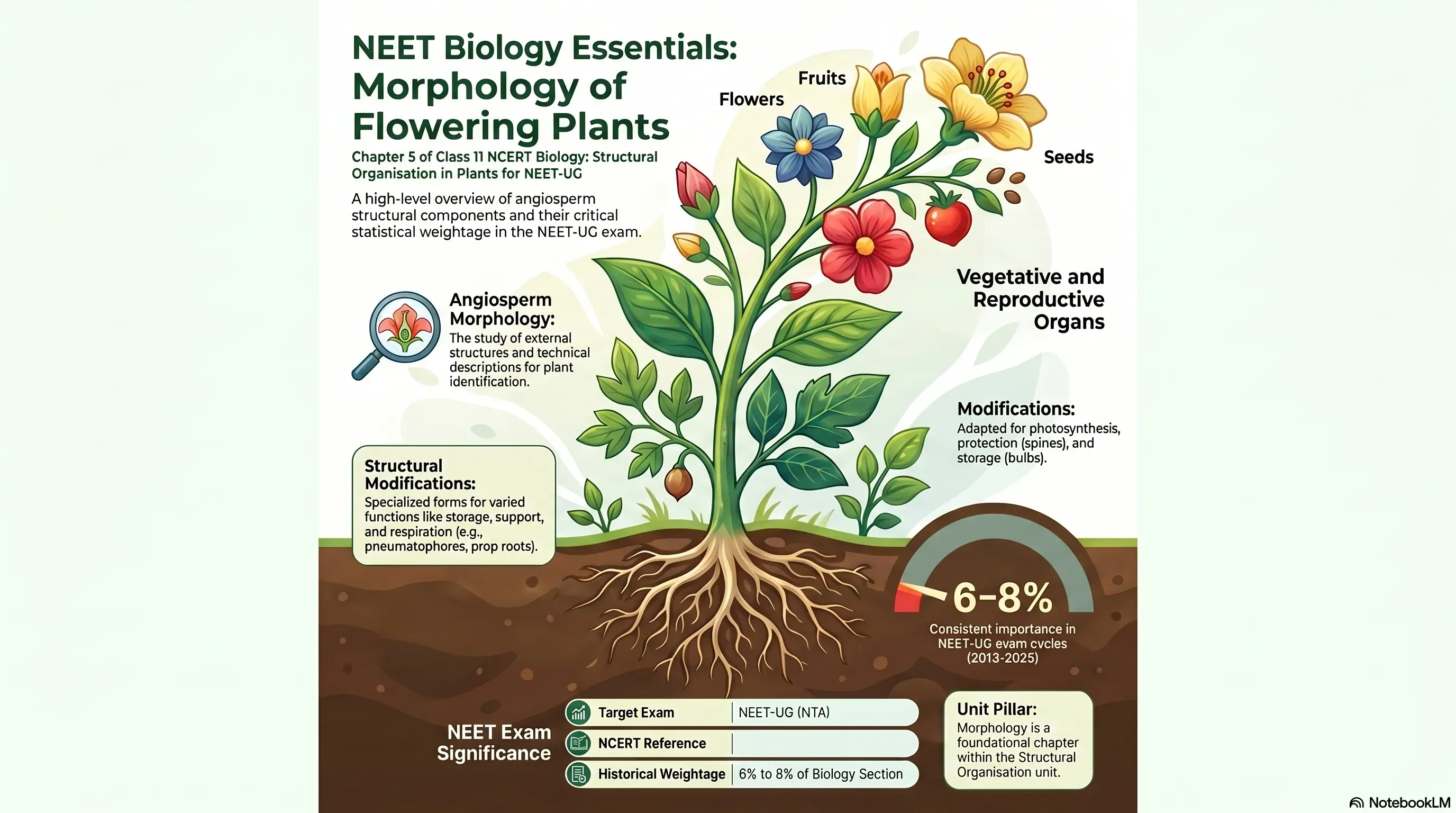
The morphology of flowering plants is Chapter 5 of Class 11 NCERT Biology. It covers the external structure and form of flowering plants (angiosperms) — including roots, stems, leaves, flowers, fruits, and seeds — along with their modifications and the semi-technical descriptions used in plant identification.
For NEET-UG, this chapter falls under the Structural Organisation in Plants unit, which NTA has consistently weighted at 6–8% of the total Biology section across exam cycles from 2013 to 2025.
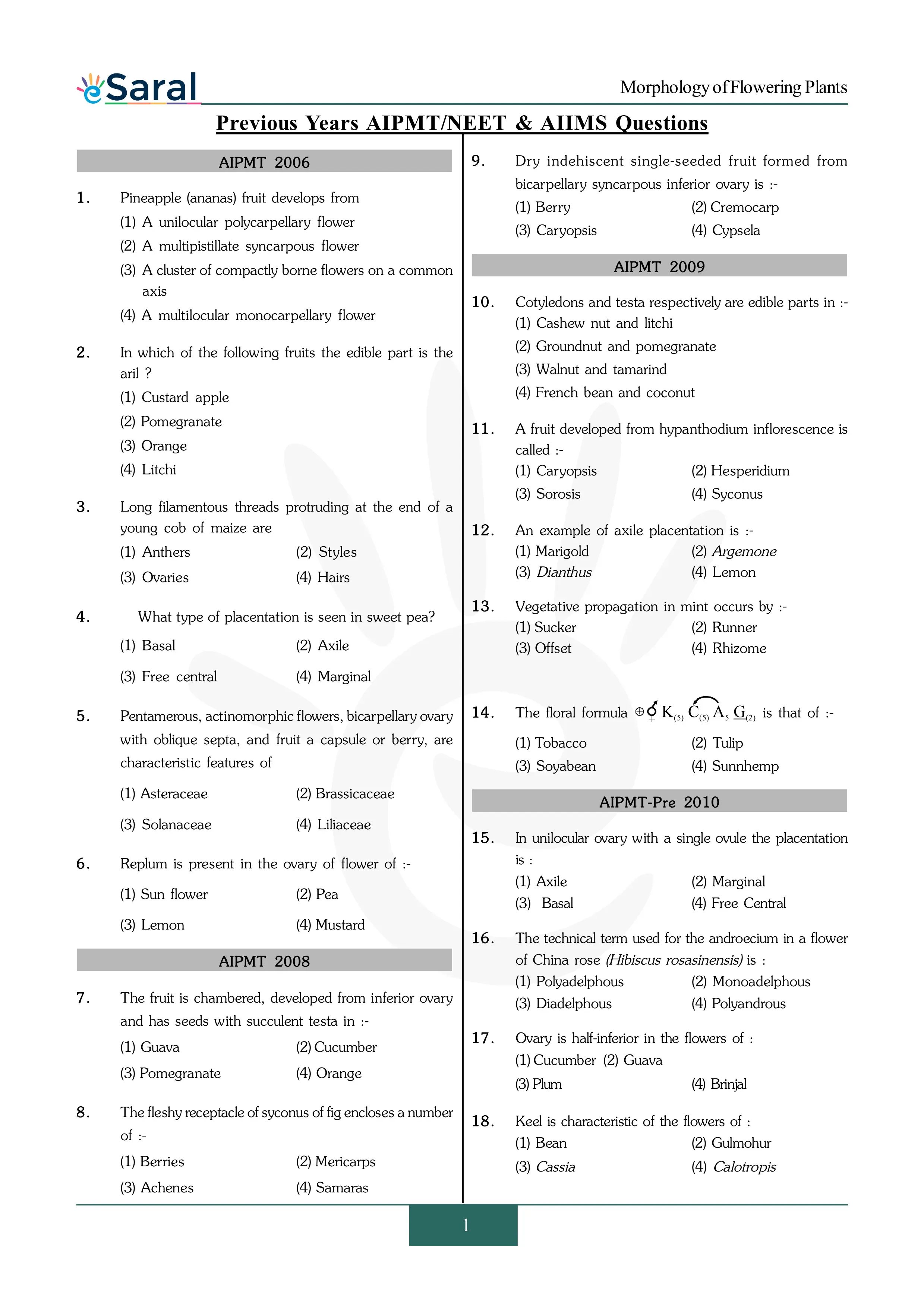
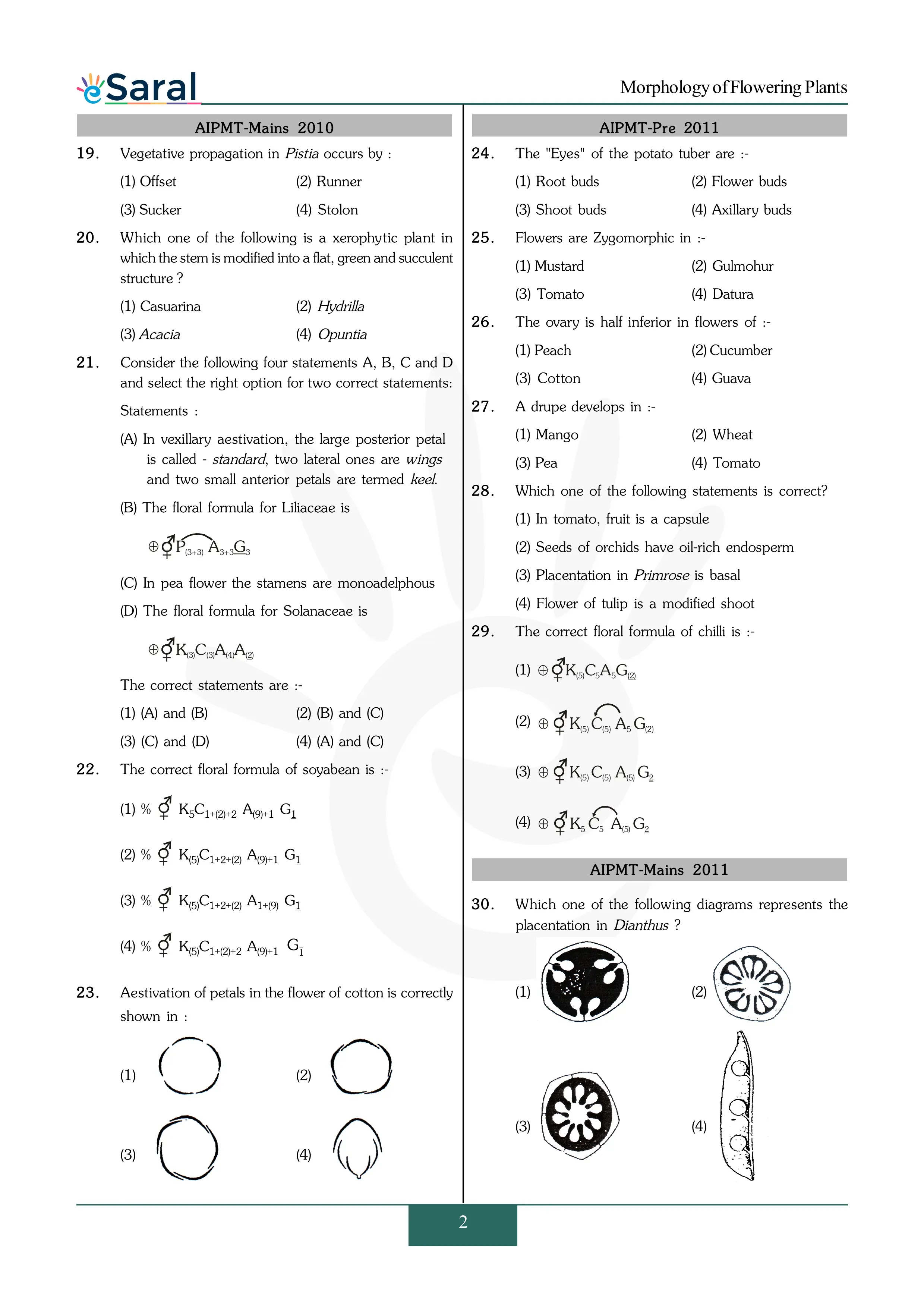
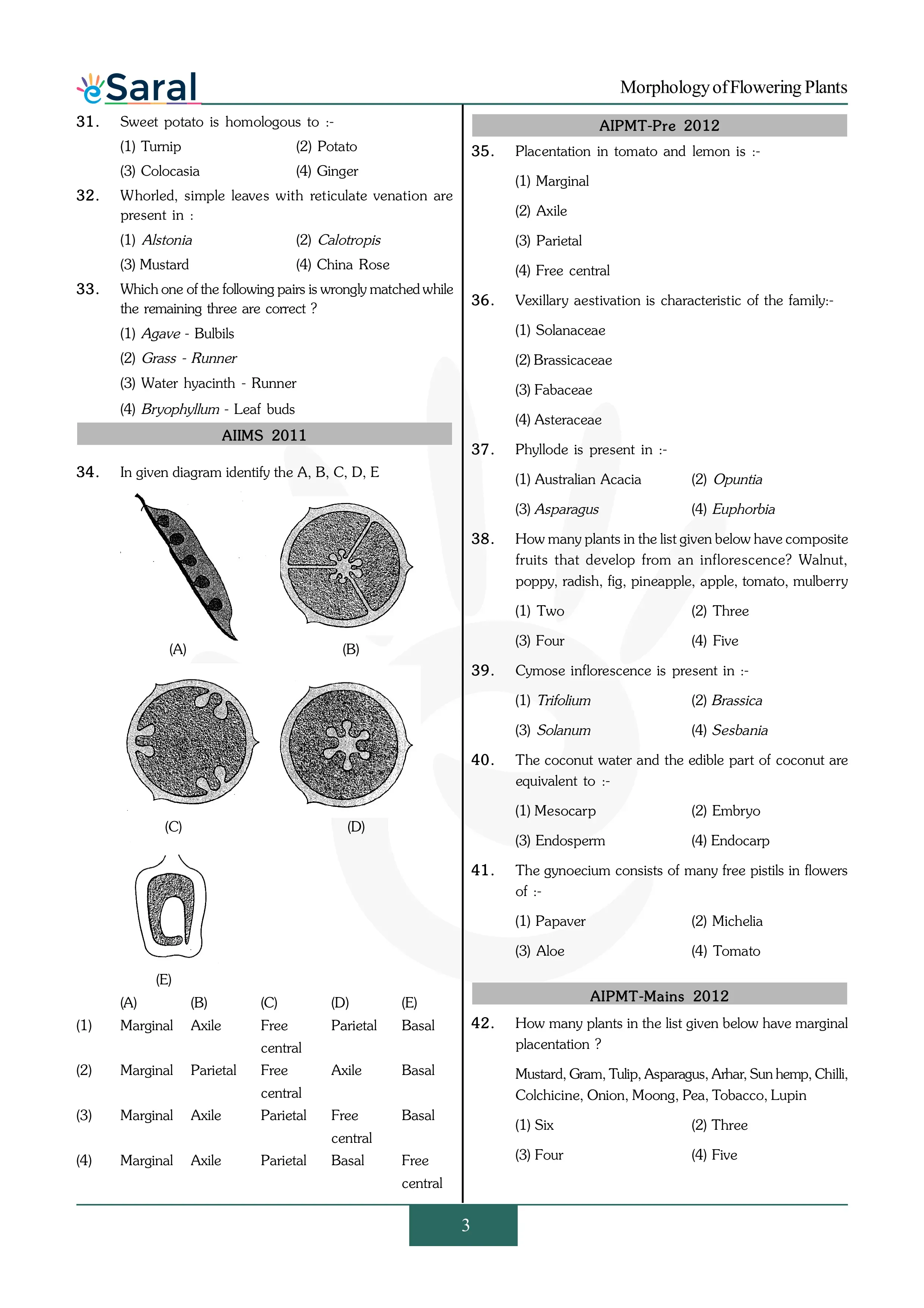
Morphology of Flowering Plants NEET PYQ with Solutions
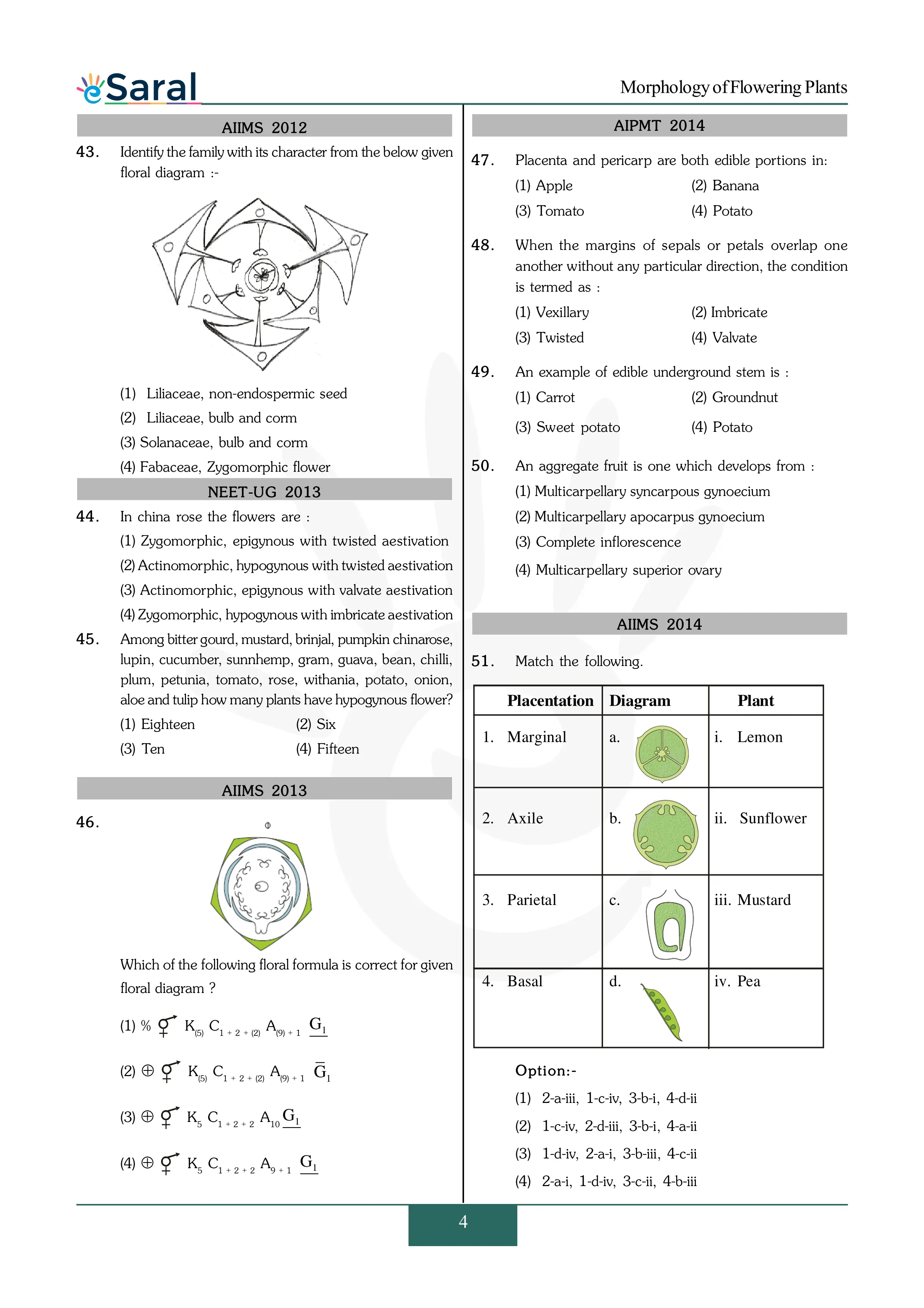
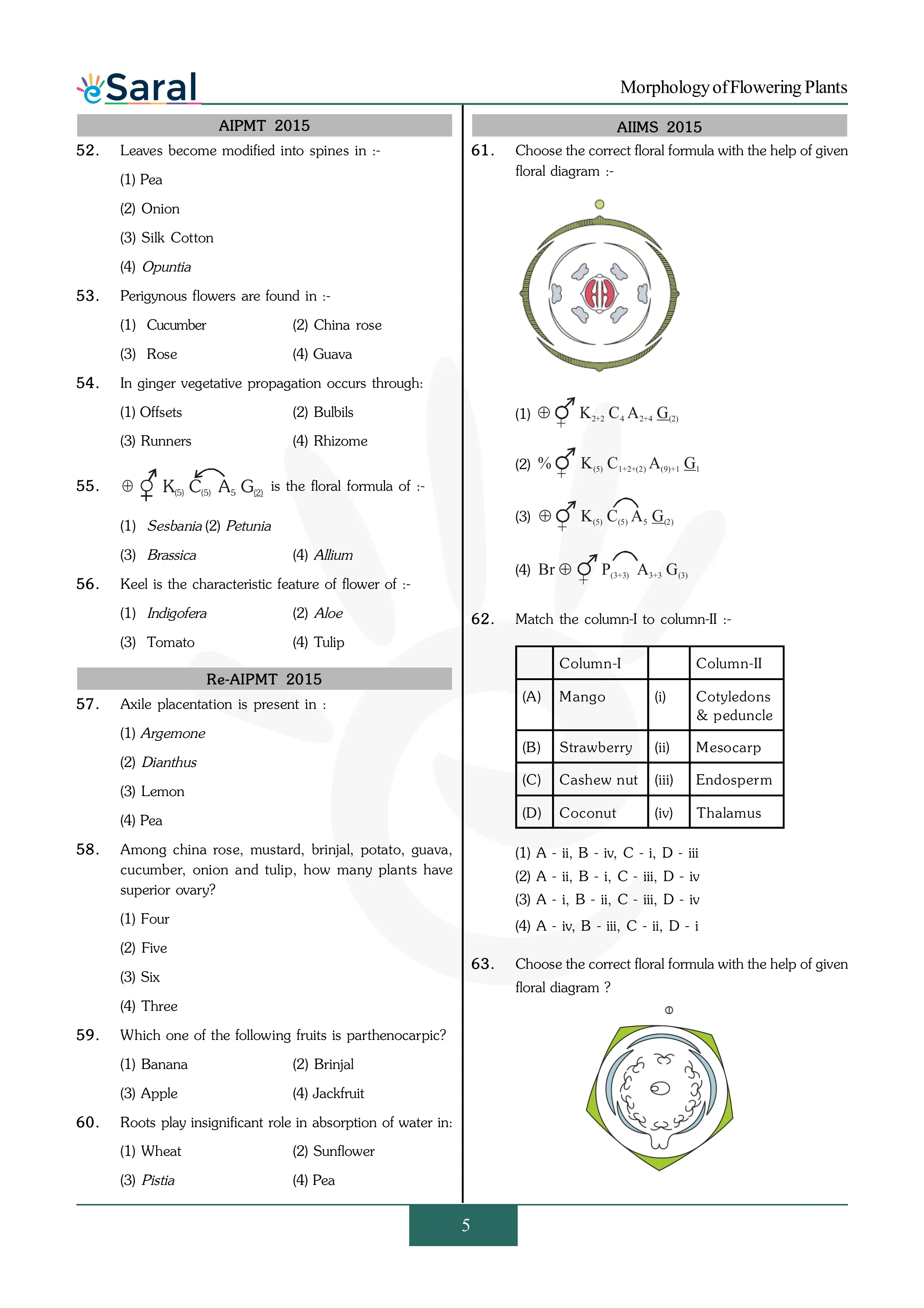
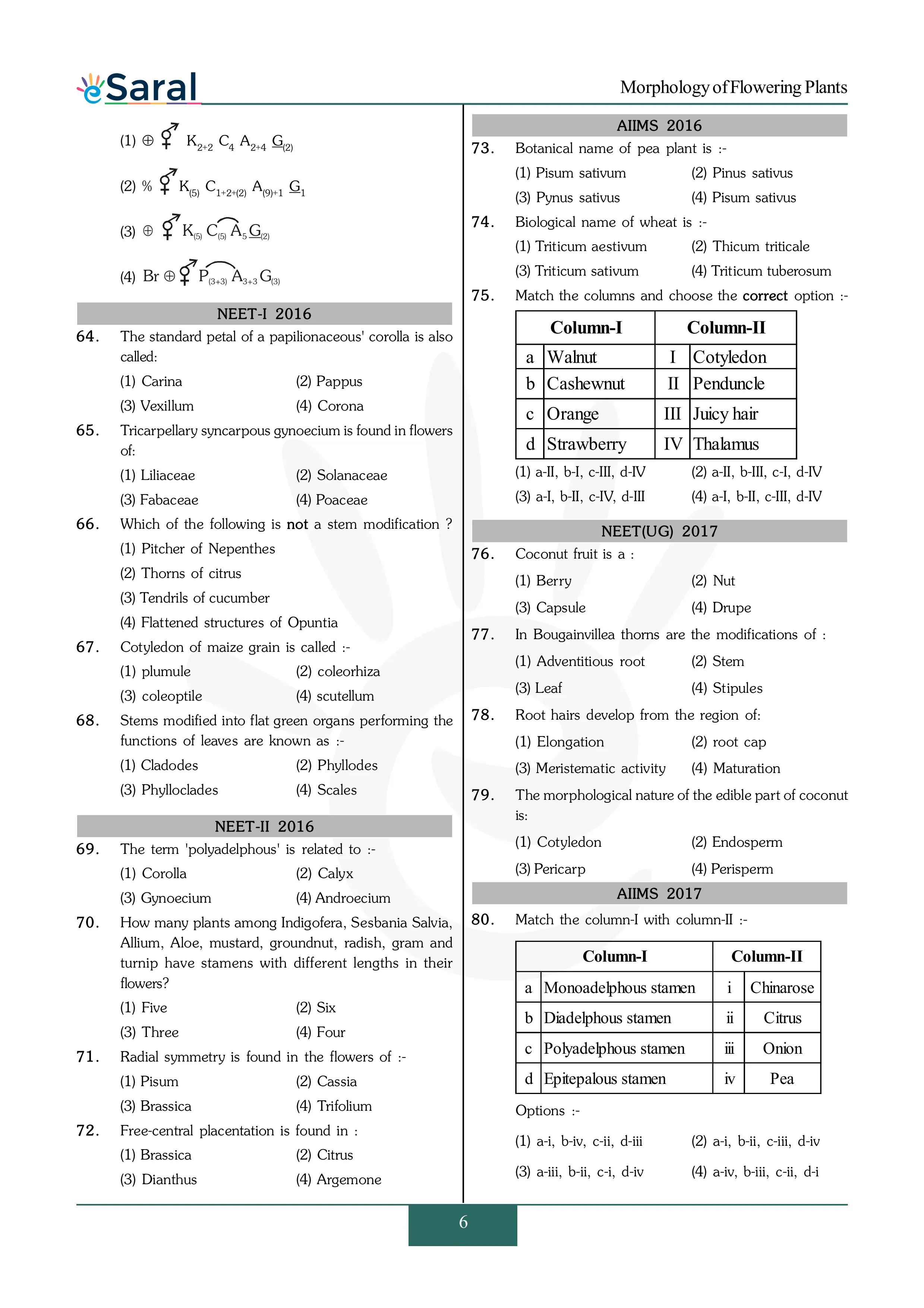
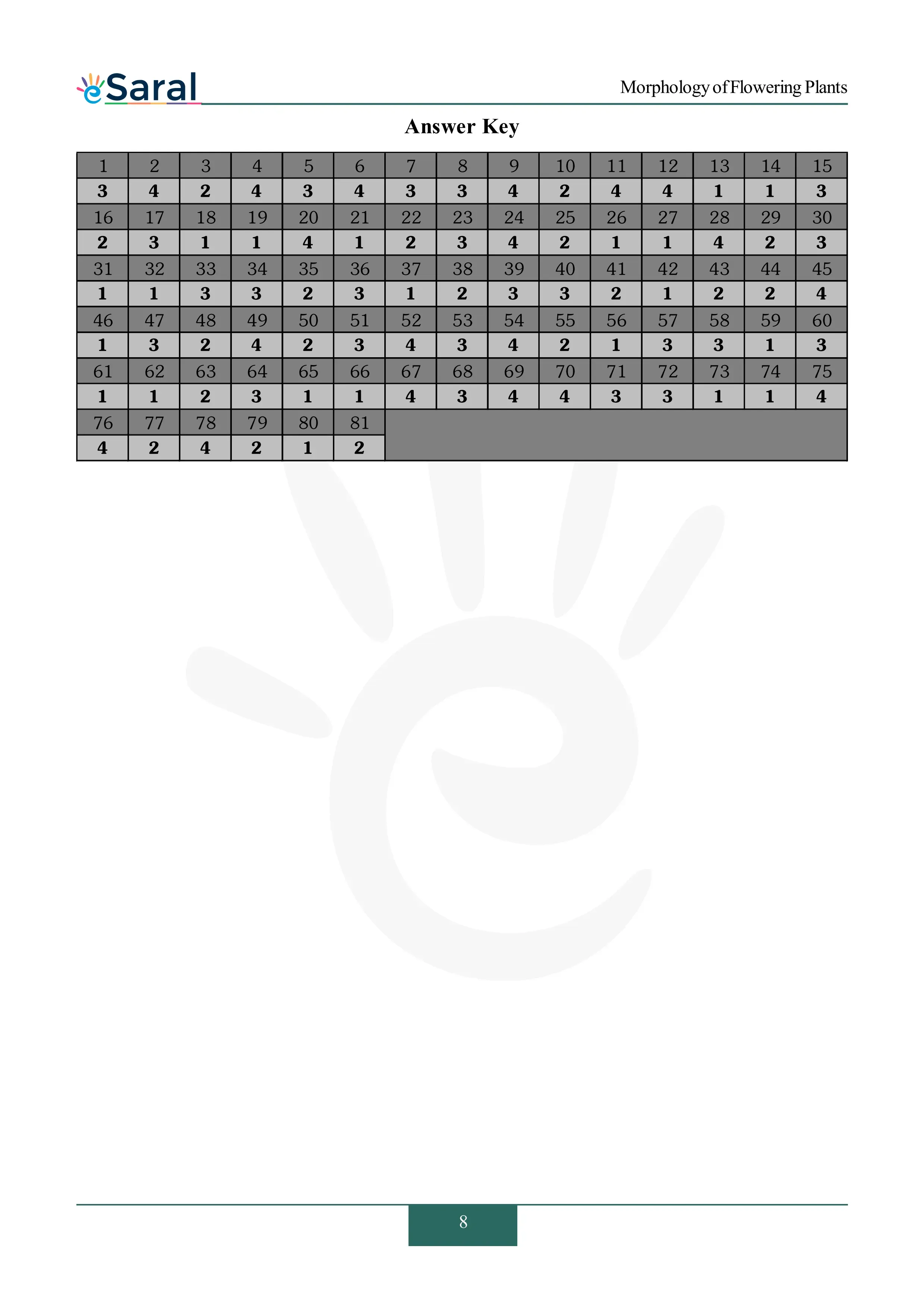

Frequently Asked Questions
How many questions come from Morphology of Flowering Plants in NEET?
NEET typically has 2–4 questions from Morphology of Flowering Plants every year. Based on NTA official papers from 2013 to 2025, this chapter contributed an average of 3.1 questions per paper. At 4 marks per question, it accounts for roughly 8–16 marks, making it one of the more rewarding Class 11 Biology chapters to prepare thoroughly.
Is style absent in Papaver somniferum (opium poppy)?
Yes, the style is absent in Papaver somniferum. This is because the stigma sits directly on the ovary in a sessile arrangement — a condition called subsessile or sessile stigma. The stigma forms a flat disc (stigmatic disc) sitting directly on the top of the ovary. This is an exception to the typical pistil structure and has been tested in NEET objective questions.
What is the correct floral formula for Liliaceae in NEET?
The correct floral formula for Liliaceae according to NCERT Class 11 Chapter 5 is: ⊕ P(3+3) A3+3 G(3). The ovary is superior — represented by G(3), not G(3̄). Some older coaching notes incorrectly show an inferior ovary. Always rely on your NCERT textbook for this notation, as NEET marks strictly follow NCERT.
Are NEET biology PYQs available in Hindi?
eSaral's chapter-wise PYQ banks are currently available in English. NTA publishes official NEET question papers in Hindi on its official website (nta.ac.in), where you can access Hindi-medium papers from 2017 onwards. For Hindi-medium students, it is recommended to solve the NTA official Hindi papers and then use eSaral's solutions for answer explanations.
Which is more important for NEET — Morphology or Anatomy of Flowering Plants?
Both chapters are important and together they form the plant structure unit in Class 11 NCERT. Historically, Morphology of Flowering Plants yields slightly more questions (average 3.1/year) compared to Anatomy of Flowering Plants (average 2.3/year). However, both chapters are easy to score in once NCERT is read carefully, so neither should be skipped.
Team eSaral
eSaral Academic and Editorial Team
Team eSaral is the collective author profile for educational content created by eSaral’s teachers and academic contributors. The team draws on expertise from IIT graduates, doctors, experienced educators and subject specialists to develop resources for JEE, NEET and school students. Our articles aim to explain concepts clearly and help students study with confidence.
Related Posts
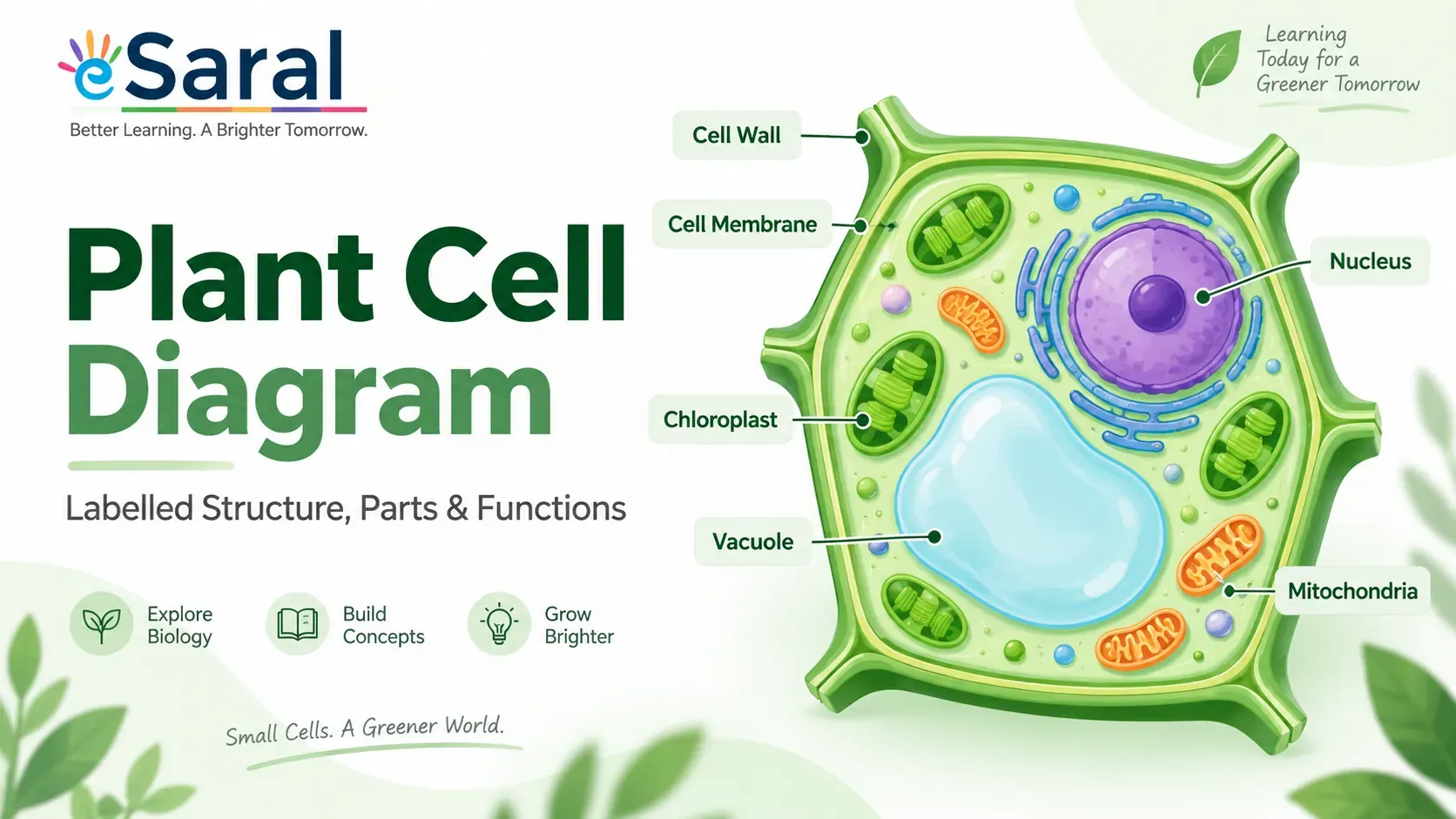
Plant Cell Diagram: Labelled Structure, Parts and Functions
Simple, labelled plant cell diagram with parts and functions. Covers plant cell structure for Class 6, 7, 8, 9, 10 and 11 students, CBSE-aligned.

Saransh Gupta Sir's Visit to IIT Patna: Hostel Life, Placements & Lessons for JEE Aspirants
Inside Saransh Gupta Sir's IIT Patna visit — hostel life, the library, placements, internships, and real advice for JEE aspirants from students living the IIT dream.
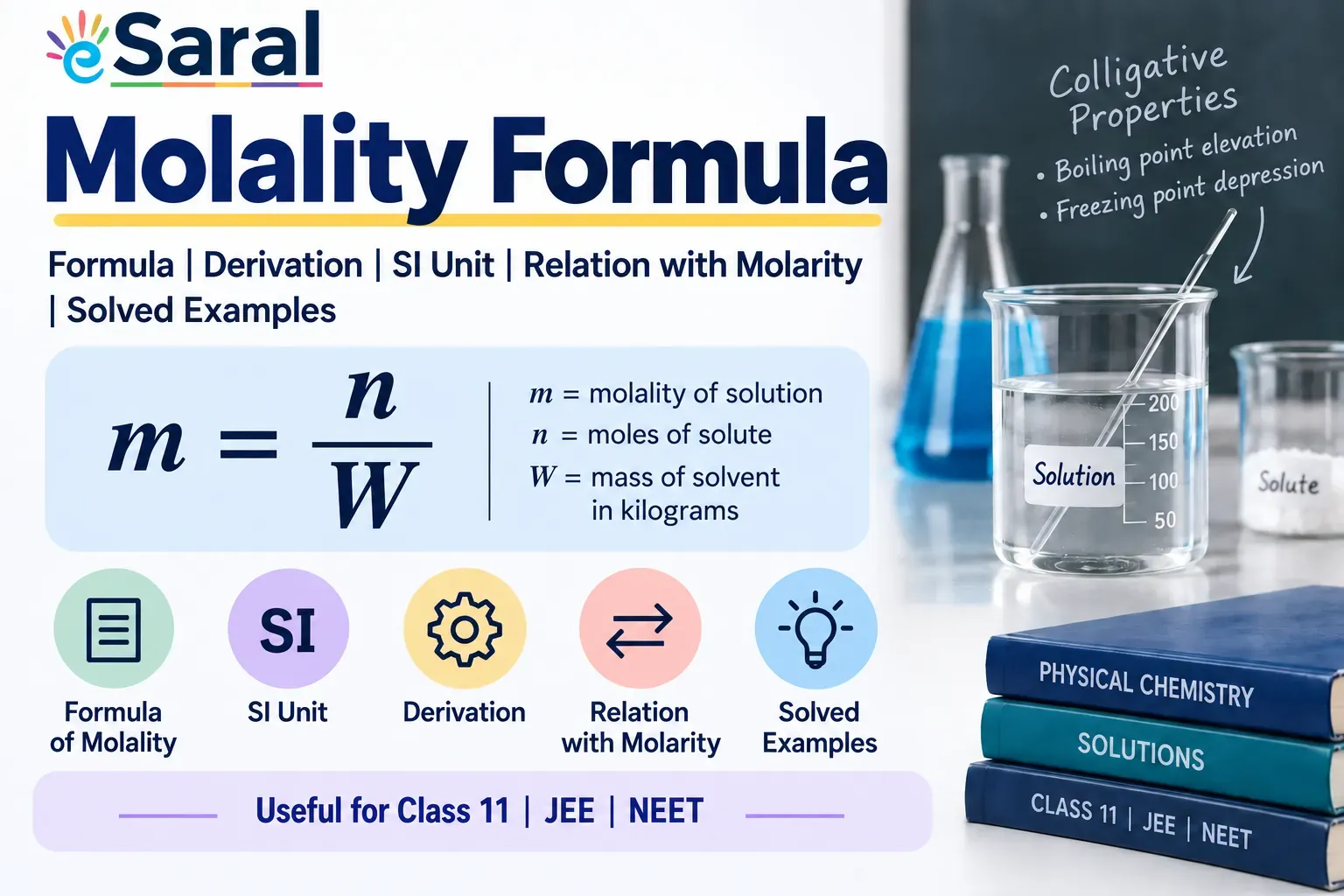
Molality Formula: Formula for Molality, Derivation & Solved Examples
Molality formula is $m = \dfrac{n}{W}$. Learn the formula of molality, its SI unit, derivation, relation with molarity, and solved examples for Class 11, JEE and NEET.
BITSAT Previous Year Question Paper PDF
Download BITSAT previous year question papers PDF. Get year-wise BITSAT PYQs, memory-based papers, exam pattern, and preparation tips to improve your BITSAT preparation.

Teachers’ Day 2026 at eSaral Gurukul: Celebrating the Bond Between Students, Teachers & Mentors
See how Teachers’ Day 2026 was celebrated at eSaral Gurukul, reflecting the bond among students, teachers, and mentors, and the role of guidance beyond academics.
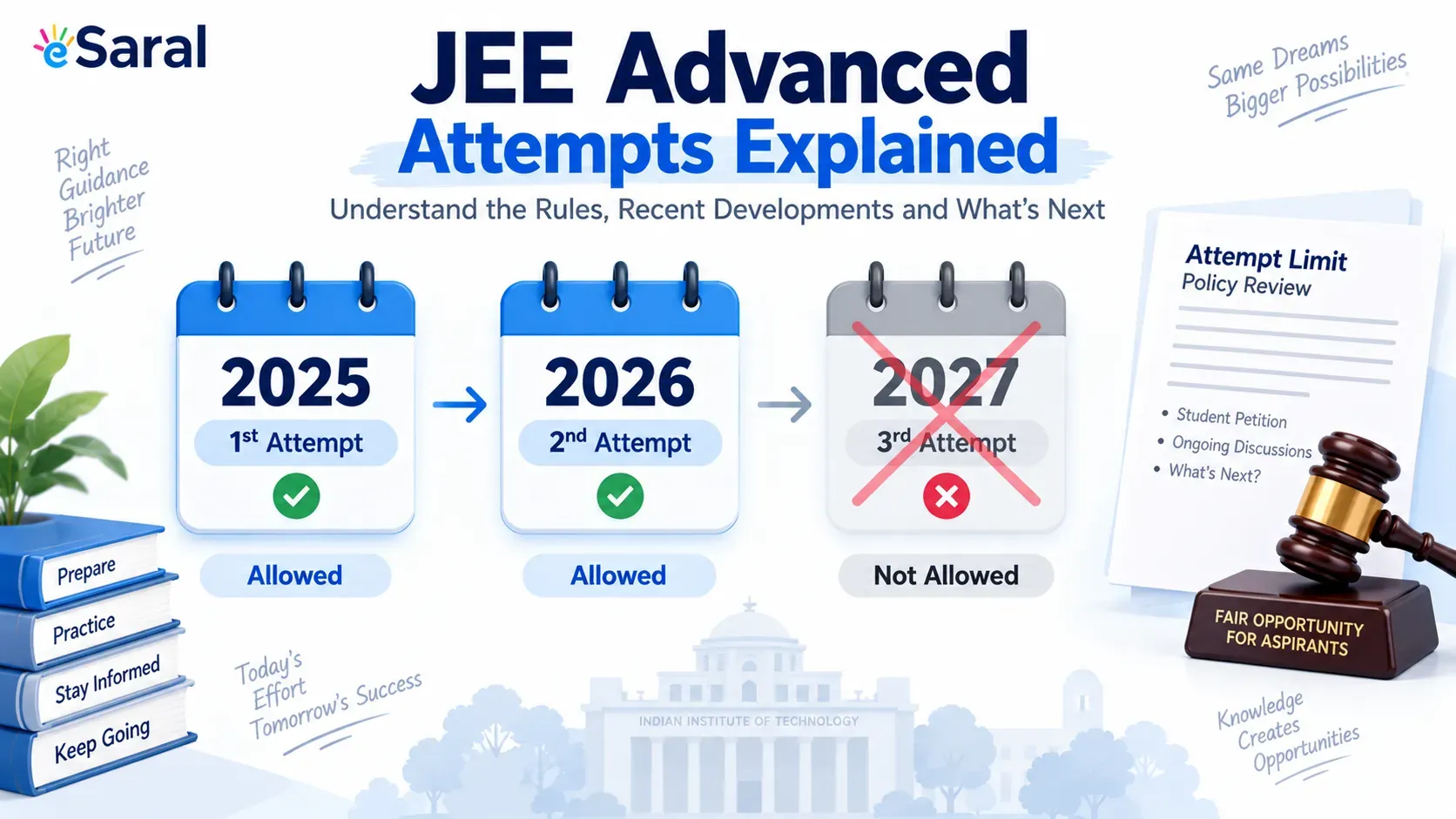
JEE Advanced Attempts: Can You Give It a Third Time? Rules Explained
JEE Advanced attempts: current rule is 2 consecutive years only: full eligibility criteria, the 2025 third-attempt controversy, and the latest 2026 petition news.

Best JEE Preparation App
Best JEE preparation app for Main & Advanced: AI mock tests, live doubt-solving, thousands of practice questions. JEE preparation app for droppers & Class 11-12.
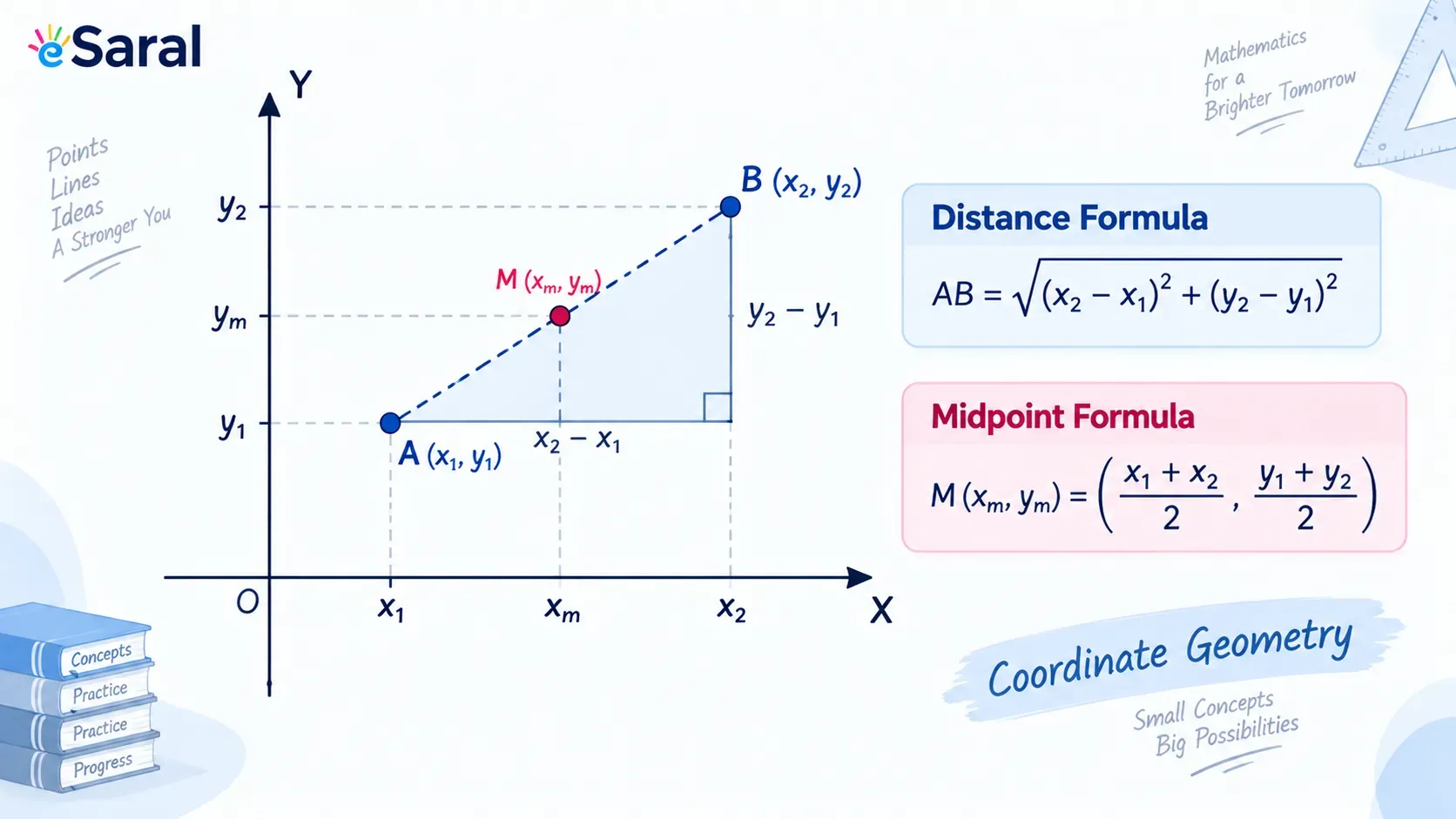
Coordinate Geometry Class 10: Formulas, Notes & Solved Examples
Coordinate geometry class 10: complete CBSE formulas — distance, section, midpoint and area of triangle — with derivation, notes and solved examples.
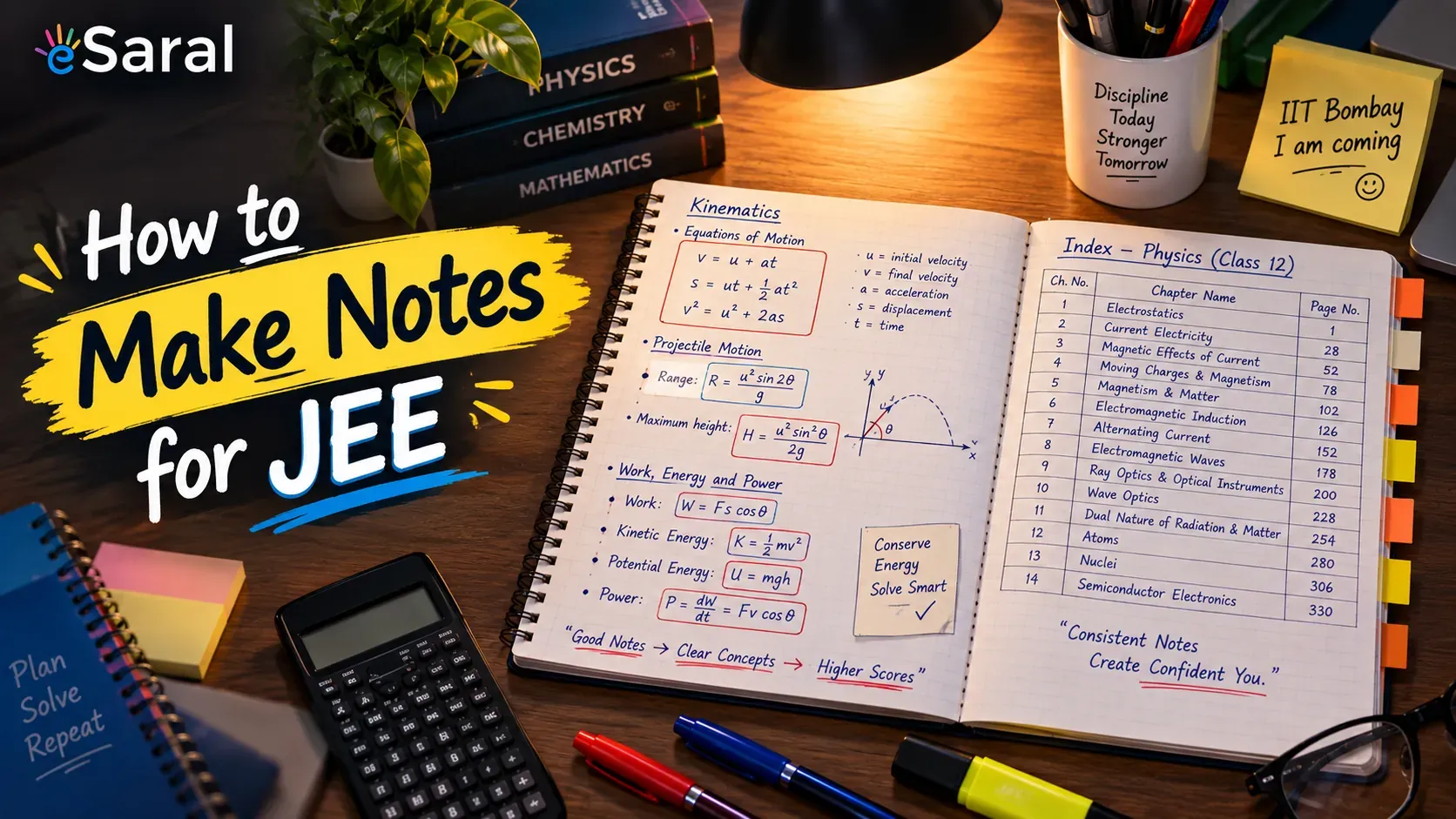
How to make Notes For JEE Smart Notes Strategy of an AIR 41
Learn how to make notes for JEE the way toppers do — indexing, shorthand, and smart short notes for JEE that cut revision time to just 5–7 days.
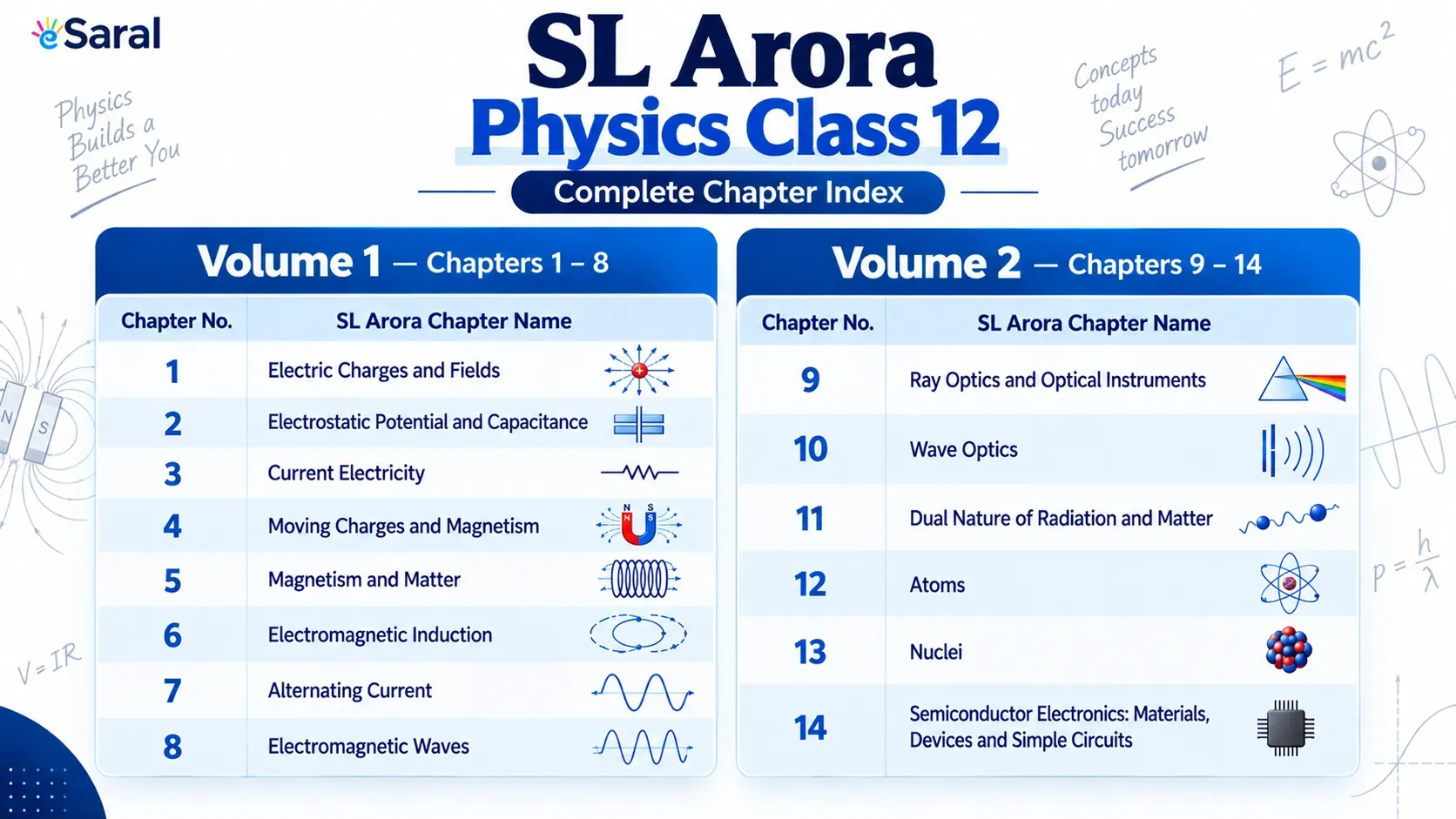
SL Arora Physics Class 12 Index – Chapter List for Volume 1 & 2
SL Arora Physics Class 12 index — complete chapter list for Volume 1 & 2, mapped to NCERT solutions for board, JEE Main, and NEET preparation.