
NCERT Solutions Class 12 Chemistry - Chapter 1 Solutions - PDF Download

eSaral Academic and Editorial Team
Summary
Master Class 12 Chemistry Chapter 1 (Solutions) with NCERT solutions covering solution types, concentration terms, solubility, vapour pressure, ideal and non-ideal solutions, colligative properties, Henry’s law, and abnormal molar masses for JEE, NEET, and board exam preparation.
eSaral › Class 12 >NCERT Solutions Class 12 Chemistry - Chapter 1 Solutions

🚀 Checkout eSaral Courses
Sections Covered in Chapter 1 - Solutions
Section Name | Topic Name |
2 | Solutions |
2.1 | Types of Solutions |
2.2 | Expressing Concentration of Solutions |
2.3 | Solubility |
2.4 | Vapour Pressure of Liquid Solutions |
2.5 | Ideal and Non-ideal Solutions |
2.6 | Colligative Properties and Determination of Molar Mass |
2.7 | Abnormal Molar Masses |
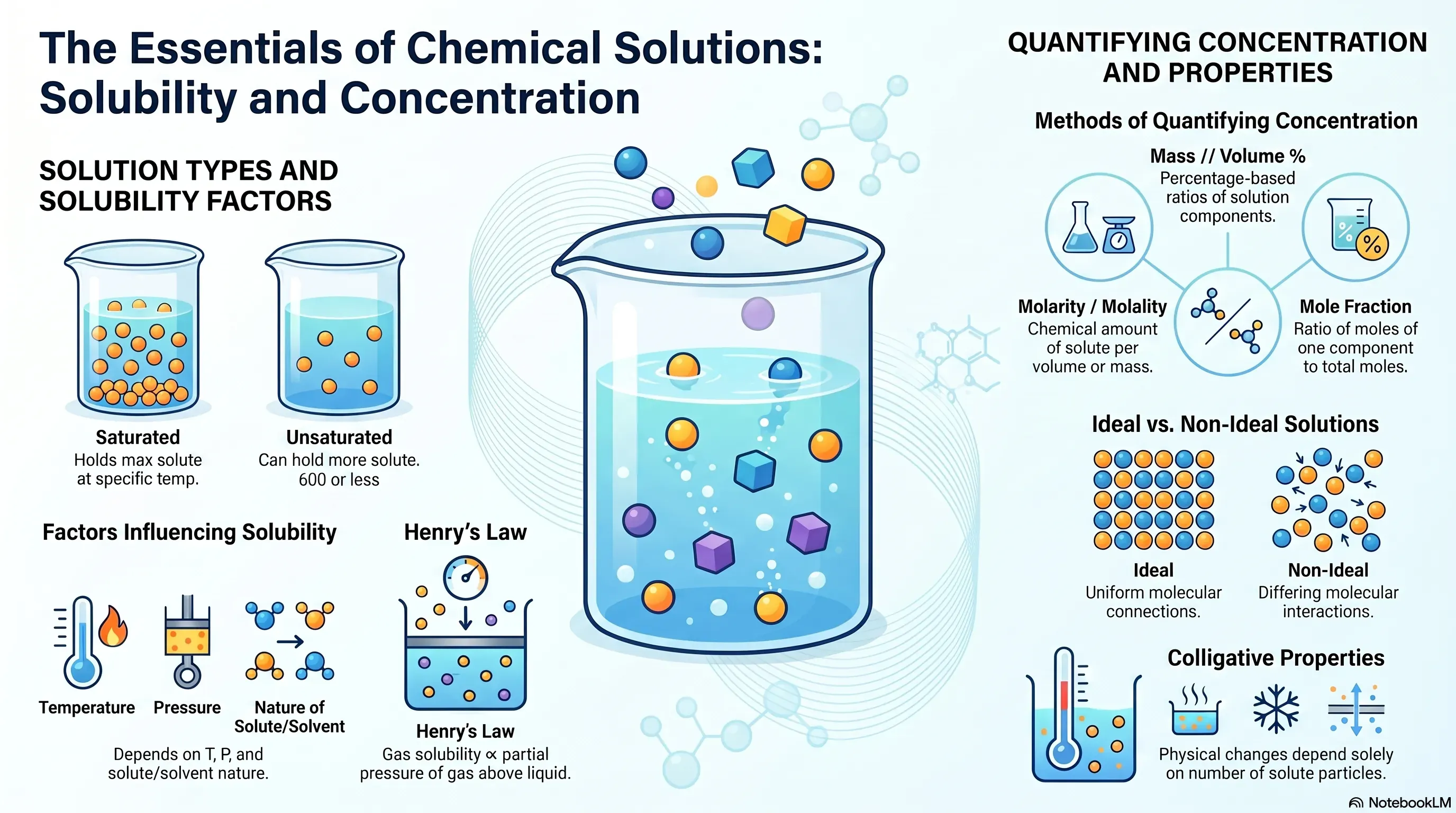
Types of Solutions: Depending on solubility in the solvent, solubles can be classified as supersaturated solubles, unsaturated solubles or saturated solutions.
Expressing Concentration of Solutions: Concentration terms are used to describe how much of one substance is mixed with another. They can be used for any kind of chemical mix, but they're most commonly used when it comes to solutions, where they refer to how much of a particular solute is dissolved in a solvent. Concentration terms terms are relative and do not provide us with the quantitative concentration.
There are a number of ways to quantify the concentration of the solution which are given below:
- Concentration in parts per million
- Mass percentage
- Volume percentage
- Mass by Volume percentage
- Molarity
- Molality
- Normality
- Formality
- Mole Fractio
Solubility: solubility is the amount of a substance that can be dissolved in a specific amount of a specific solvent at a specific temperature. It depends on the nature of the solute and solvent, as well as the pressure and temperature.
Vapour Pressure of Liquid Solutions: Vapour pressure of a liquid solution is the pressure exerted by vapours on a liquid solvent when the solvent is in equilibrium and at a specific temperature. The vapour pressure of a solution changes with the surrounding temperature and with the composition of the liquid.
Ideal and Non-ideal Solutions: An ideal solution is one where all molecules or ions have the same connections. A non-ideal solution is one where the actions of different molecules in the solution are different.
Colligative Properties and Determination of Molar Mass: Colligative properties refer to the physical changes that occur when a solute is added to a solvent. The properties of a solvent depend on the number of solute particles present and the amount of solvent present.
The molar mass can be calculated from the freezing point depression and the osmotic pressure.
Abnormal Molar Masses: When molar masses are measured and if they are greater or less than the expected molar mass, they are called abnormal molar mass. They are measured using colligative properties.
Important Points of NCERT Class 12 Chemistry Chapter 1 – Solutions
- Definition of a Solution: A solution is a homogeneous combination of two or more solvents in a solvent.
- Solubility: The solubility of the solution is determined by the amount of solute dissolved in the solvent at a given temperature and pressure. Examples of solubility include saturated, unsaturated, and supersaturated solutions.
- Factors Affecting Solubility: Temperature, pressure, and the nature of the solute and solvent all play a role in determining solubility.
- Henry's law: Henry's law of gas solubility is a mathematical equation that states that the partial pressure of a gas above the liquid is proportional to the solubility.
Frequently Asked Questions
What is Raoult's Law in Class 12 Chemistry?
Raoult's Law states that the partial vapour pressure of a solvent in a solution is equal to the vapour pressure of the pure solvent multiplied by the mole fraction of the solvent. It applies to ideal solutions where solute-solvent interactions are similar in strength to pure component interactions. Non-ideal solutions deviate from this law positively or negatively.
What is Henry's Law and why is it important?
Henry's Law states that the solubility of a gas in a liquid is directly proportional to the partial pressure of the gas above the liquid. It is important for understanding phenomena like carbonation in beverages, oxygen transport in blood, and deep-sea diving physiology. The law is expressed as p = KH × χ, where KH is Henry's constant.
What are the four colligative properties in Class 12 Chemistry?
The four colligative properties are: (1) relative lowering of vapour pressure, (2) elevation of boiling point, (3) depression of freezing point, and (4) osmotic pressure. All four depend on the number of solute particles in solution, not on the chemical identity of the solute. They are used to calculate the molar mass of unknown solutes.
What is the van't Hoff factor and how is it used?
The van't Hoff factor (i) measures the ratio of the actual number of particles in solution to the number of formula units dissolved. For electrolytes that dissociate (like NaCl), i > 1. For solutes that associate (like acetic acid in benzene), i < 1. It corrects colligative property calculations when abnormal molar masses are observed.
What is the difference between molarity and molality?
Molarity (M) is the number of moles of solute per litre of solution; it changes with temperature because solution volume changes. Molality (m) is the number of moles of solute per kilogram of solvent; it does not change with temperature. For colligative property calculations that involve temperature changes, molality is always preferred.
Team eSaral
eSaral Academic and Editorial Team
Team eSaral is the collective author profile for educational content created by eSaral’s teachers and academic contributors. The team draws on expertise from IIT graduates, doctors, experienced educators and subject specialists to develop resources for JEE, NEET and school students. Our articles aim to explain concepts clearly and help students study with confidence.
Related Posts
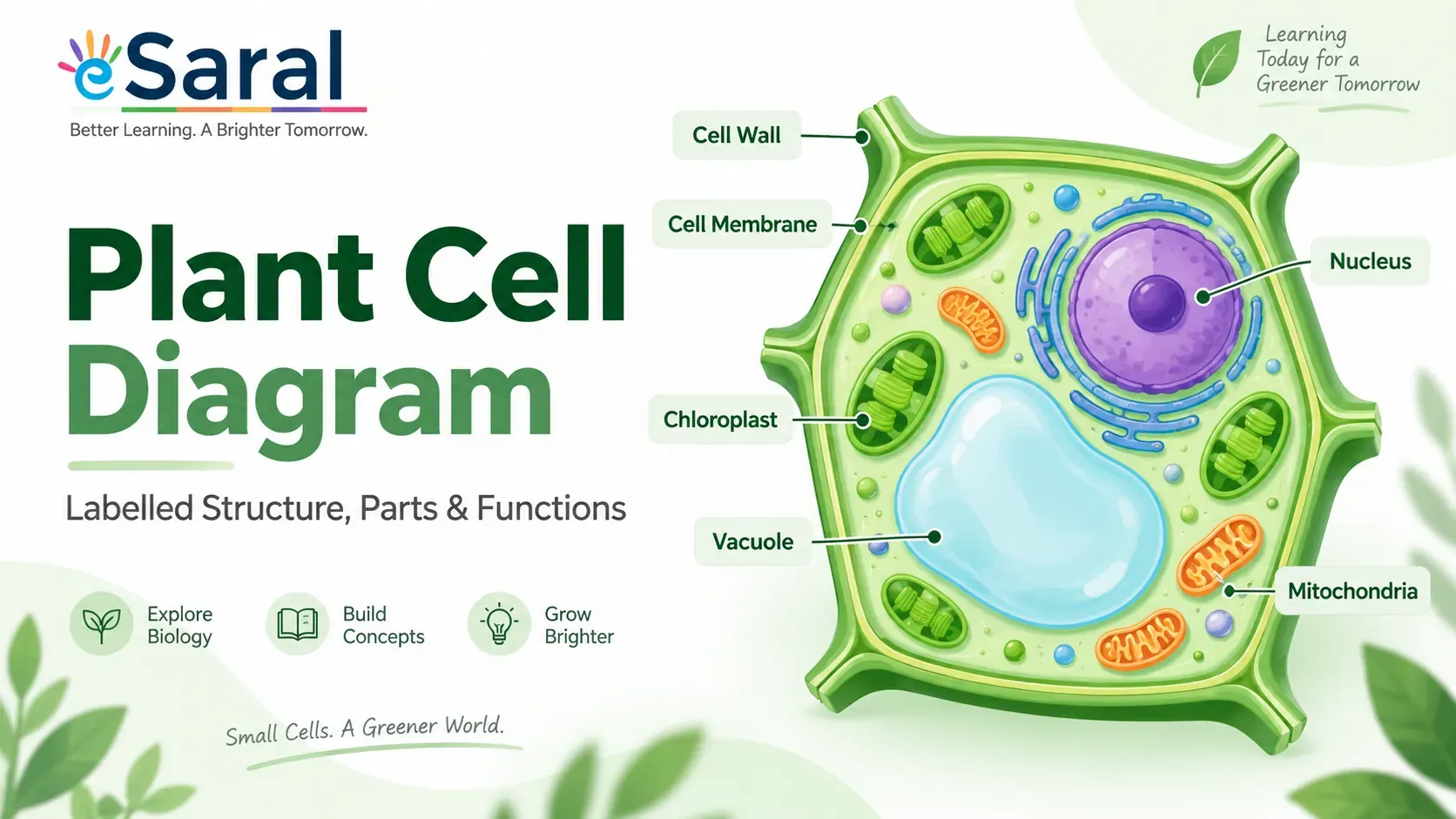
Plant Cell Diagram: Labelled Structure, Parts and Functions
Simple, labelled plant cell diagram with parts and functions. Covers plant cell structure for Class 6, 7, 8, 9, 10 and 11 students, CBSE-aligned.

Saransh Gupta Sir's Visit to IIT Patna: Hostel Life, Placements & Lessons for JEE Aspirants
Inside Saransh Gupta Sir's IIT Patna visit — hostel life, the library, placements, internships, and real advice for JEE aspirants from students living the IIT dream.
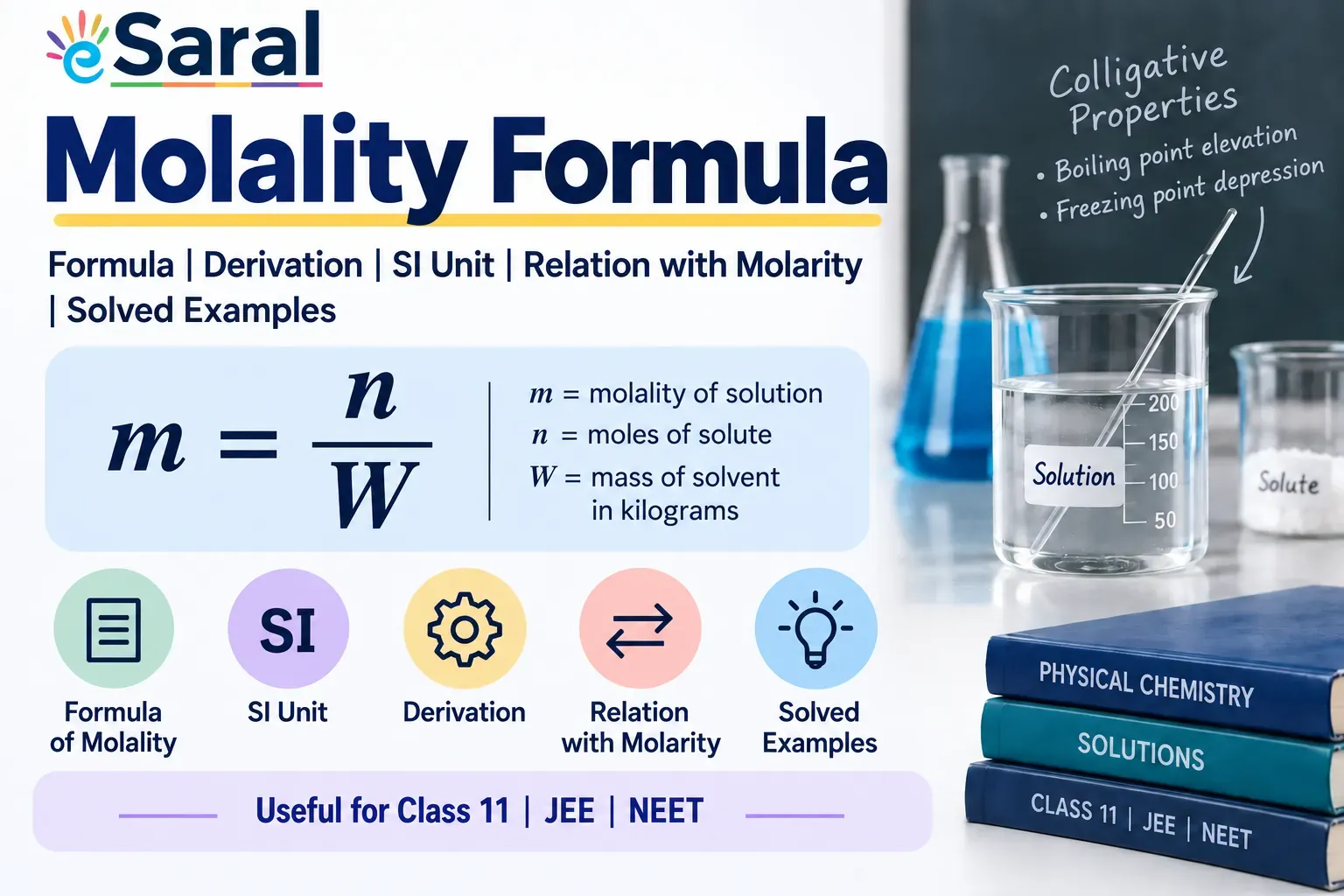
Molality Formula: Formula for Molality, Derivation & Solved Examples
Molality formula is $m = \dfrac{n}{W}$. Learn the formula of molality, its SI unit, derivation, relation with molarity, and solved examples for Class 11, JEE and NEET.
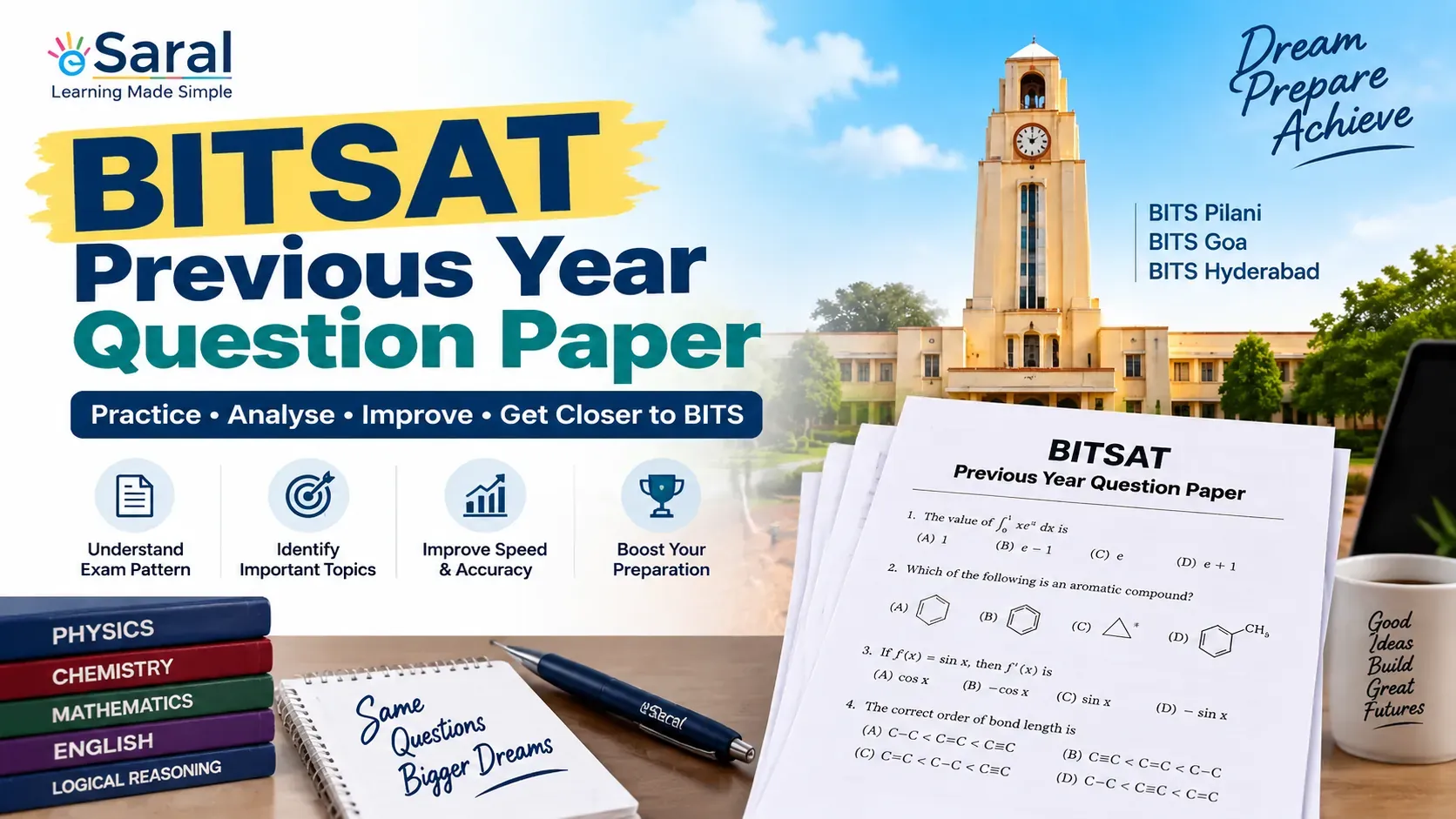
BITSAT Previous Year Question Paper PDF
Download BITSAT previous year question papers PDF. Get year-wise BITSAT PYQs, memory-based papers, exam pattern, and preparation tips to improve your BITSAT preparation.

Teachers’ Day 2026 at eSaral Gurukul: Celebrating the Bond Between Students, Teachers & Mentors
See how Teachers’ Day 2026 was celebrated at eSaral Gurukul, reflecting the bond among students, teachers, and mentors, and the role of guidance beyond academics.
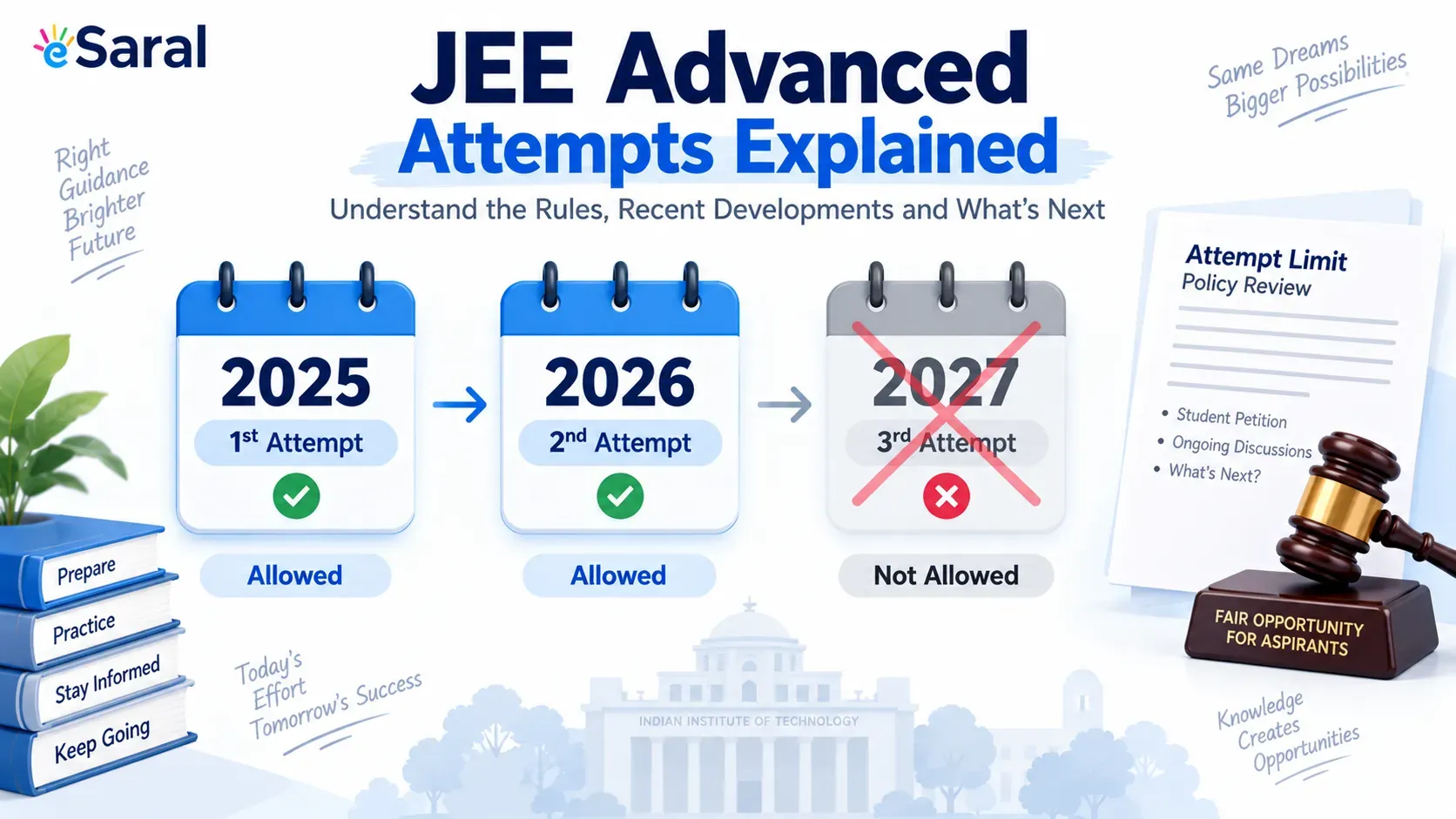
JEE Advanced Attempts: Can You Give It a Third Time? Rules Explained
JEE Advanced attempts: current rule is 2 consecutive years only: full eligibility criteria, the 2025 third-attempt controversy, and the latest 2026 petition news.

Best JEE Preparation App
Best JEE preparation app for Main & Advanced: AI mock tests, live doubt-solving, thousands of practice questions. JEE preparation app for droppers & Class 11-12.
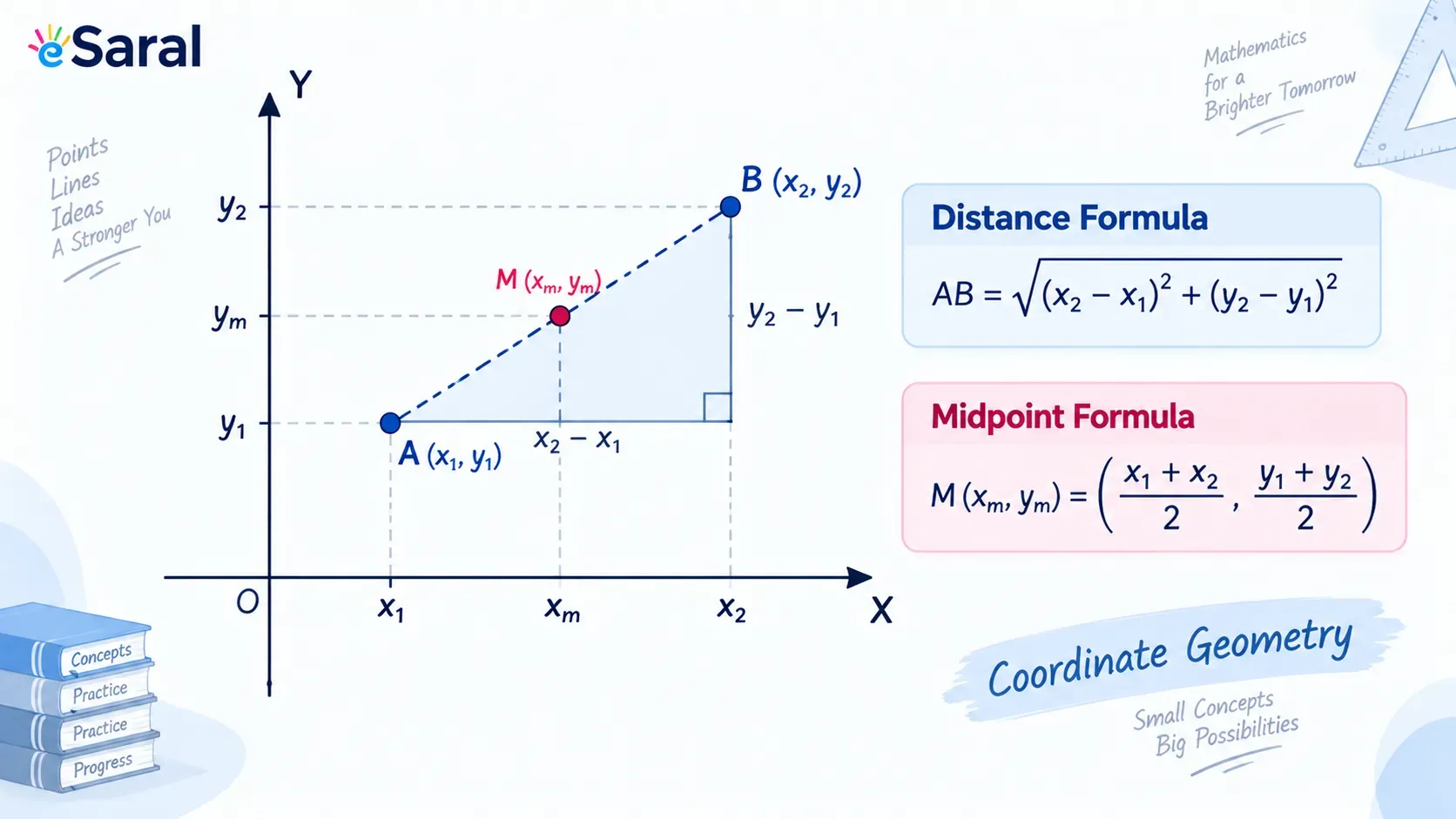
Coordinate Geometry Class 10: Formulas, Notes & Solved Examples
Coordinate geometry class 10: complete CBSE formulas — distance, section, midpoint and area of triangle — with derivation, notes and solved examples.
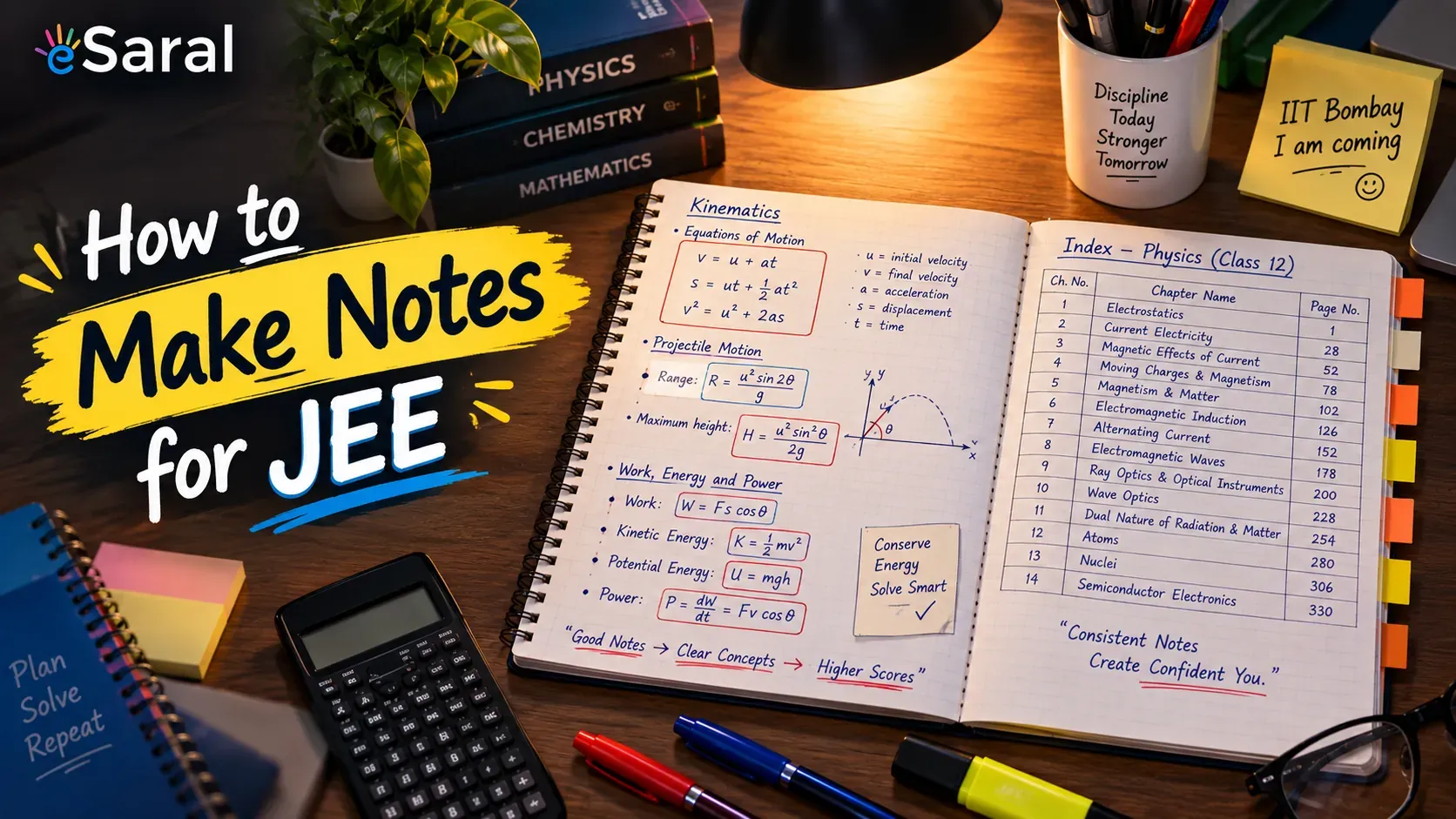
How to make Notes For JEE Smart Notes Strategy of an AIR 41
Learn how to make notes for JEE the way toppers do — indexing, shorthand, and smart short notes for JEE that cut revision time to just 5–7 days.
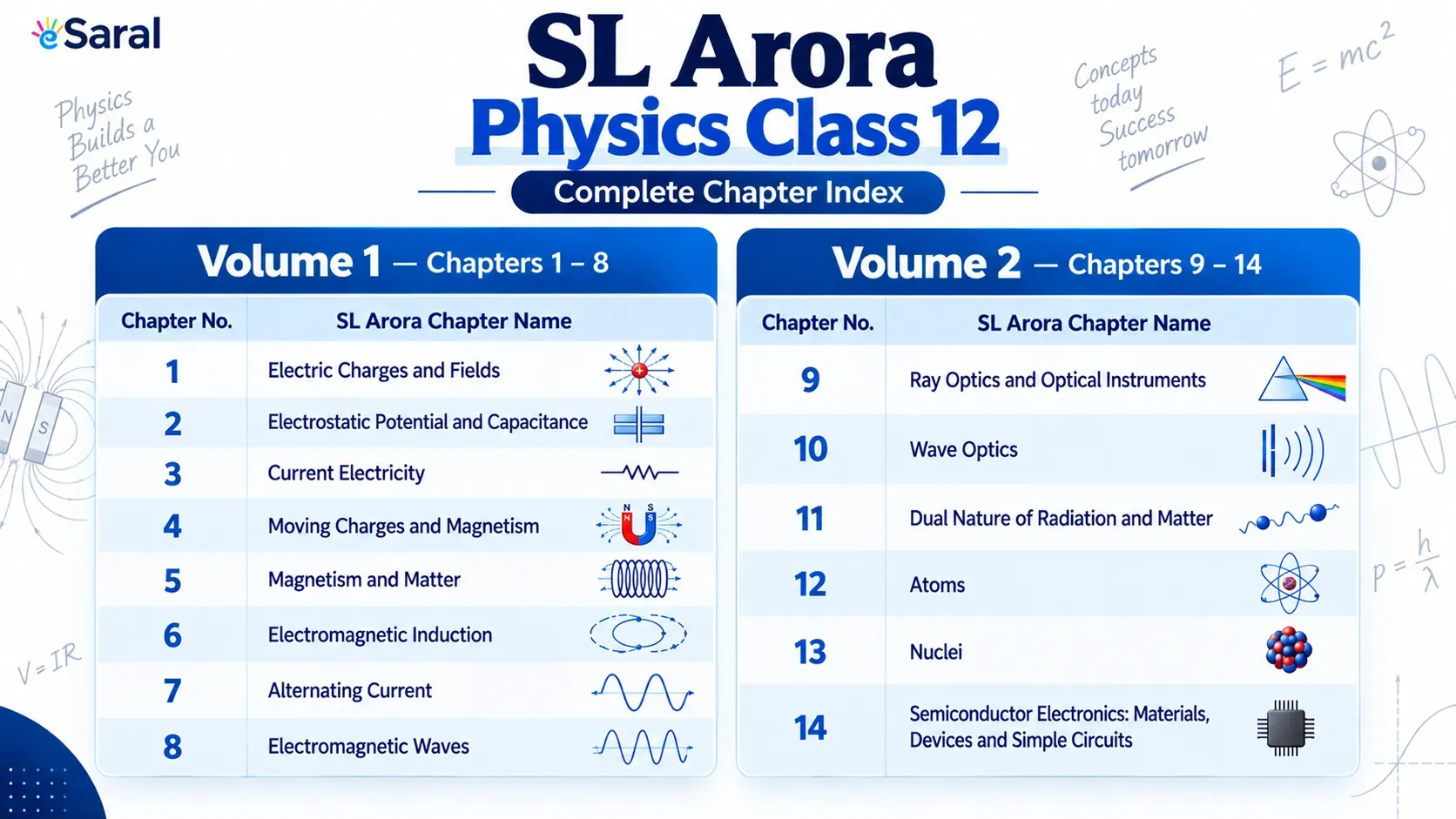
SL Arora Physics Class 12 Index – Chapter List for Volume 1 & 2
SL Arora Physics Class 12 index — complete chapter list for Volume 1 & 2, mapped to NCERT solutions for board, JEE Main, and NEET preparation.