
NCERT Solutions Class 12 Chemistry - Chapter 9 Amines - PDF Download

eSaral Academic and Editorial Team
NCERT solutions for class 12 chemistry chapter 9 Amines make it easy for students to understand the concept of amines so they can memorize complex structural formulas of Amines for a long time. NCERT solutions for Class 12 chemistry chapter 9 amines are prepared by eSaral’s subject experts. If you have any doubts about this chapter, then refer to these solutions right away.
Amines are a derivative of ammonia which is obtained by the substitution of hydrogen. Amines are the most significant nitrogen-containing organo-compounds. Students will understand the classifications, properties and structures of amines in this chapter's NCERT Solutions. Our subject experts provide solved examples based on amine basicity, synthesis, and reactions performed by amines.
Upon completing NCERT solutions for class 12 chemistry chapter 9 Amines, you’ll be able to:
- describe amines as pyramidal-structured derivatives of ammonia
- differentiate amines into primary secondary and tertiary amines
- name amines using common names and IUPAC
- describe some of the most important ways of preparing amines
- explain amines’ properties
- decide which amines are primary, secondary or tertiary
- describe the method of preparing diazo salts and their role in synthesizing a series of aromatic compounds (including azo-dyes)
NCERT Solutions for Class 12 Chemistry Chapter 9 Subtopics
Section Name | Topic Name |
9 | Amines |
9.1 | Structure of Amines |
9.2 | Classification |
9.3 | Nomenclature |
9.4 | Preparation of Amines |
9.5 | Physical Properties |
9.6 | Chemical Reaction |
9.7 | Method of Preparation of Diazonium Salts |
9.8 | Physical Properties |
9.9 | Chemical Reactions |
9.10 | Importance of Diazonium Salts in Synthesis of Aromatic Compounds |
9.1 Structure of Amines: Like ammonia, the nitrogen atom in amines is a trivalent, meaning it has two electrons that don't go together. So the nitrogen orbitals in amines are sp3 hybridised, and the geometry of the amines is also pyramidal.
9.2 Classification: Ammonia molecules are classified as 1° (primary), 2° (secondary) or 3° (tertiary) depending on the number of substituted hydrogen atoms in the molecule (alkyl or aryl groups).
9.3 Nomenclature: Aliphatic amines are denoted in the common system by alkyl groups being prefixed to amines, for example, by the word "alkyl" as a single word (for example, "alkylamine"). In the case of secondary and tertiary aromatic amines, the prefix "di" or "tri" is added to the name of the alkyl groups. Primary amines in the IUPAC system are denoted as "alkanamines"
9.4 Preparation of Amines:
In this section, different methods of preparation of amines has been discussed.
- Reduction of nitro compounds
- Ammonolysis of alkyl halides
- Reduction of nitriles
- Reduction of amides
- Gabriel phtalimide synthesis
- Hoffmann bromamide degradation reaction
9.5 Physical Properties
In this section, physical properties of amines has been discussed
Aliphatic amines (lower aliphatic) are gases with a fishy smell. Primary amines (three or more carbon atoms) are liquids and secondary amines (more than three carbon atoms) are solid. Arylamines (like aniline) are usually colourless, but get colourled on storage as a result of atmospheric oxidation.
9.6 Chemical Reaction
In this reaction, following chemical reactions of amines have been discussed
- Basic character of amines
- Alkylation
- Acylation
- Carbylamine reaction
- Reaction with nitrous acid
- Reaction with arylsulphonyl chloride
- Electrophilic substitution
9.7 Method of Preparation of Diazonium Salts
Aniline is reacted with nitrous acid at a temperature of 273-278K to form benzeniazonium chloride. In the reaction mixture, nitrous acid is formed by the addition of sodium nitrite and hydrochloric acid to the aniline. Diazotization is a process by which primary aromatic amines are converted into diazepam salts.
9.8 Physical Properties: Benzenediazonium chloride is a colorless, crystalline solvents. It is soluble in water and stable in cold temperatures. However, it reacts with water in warm temperatures.
9.9 Chemical Reactions: The reactions of diazonium salts can be divided into two further reactions
1. Reactions involving displacement of nitrogen
- Replacement by halide or cyanide ion
- Replacement by iodide ion
- Replacement by fluoride ion
- Replacement by H
- Replacement by hydroxyl ion
- Replacement by -NO2 ion
2. Reactions involving retention of diazo group
- Coupling reactions
9.10 Importance of Diazonium Salts in Synthesis of Aromatic Compounds : The synthesis of aromatic compounds involves the use of diazonium salts, especially in the synthesis of substituted aromatic compounds. This broad class of compounds is used in a wide range of industrial and academic contexts, such as pharmaceuticals, agri-chemicals, materials sciences, and more.
Key Points of Class 12 Chemistry Chapter 9 NCERT Solutions
- Amines, also known as amino functional groups or their derivatives, are organic compounds that are composed of one or more substituted hydrogen atoms of ammonia (NH3). Amines play an essential role in a variety of biological, pharmaceutical and industrial processes.
- There are three main categories of amino acids: primary, secondary, and tertiary. The primary amino acid is RNH2, which has an alkyl (or aryl) group attached to its nitrogen atom. The secondary amino acid is R2NH, which has two alkyls (or aryls) attached to it. The tertiary amino acid is R3N, which has three alkyls or aryls attached to it.
- Amines are able to undergo hydrogen bonding because of the formation of nitrogen and hydrogen bonds. Amines have a higher boiling point than similar molecular weight hydrocarbons because of hydrogen bonding. Amines often have an unpleasant smell, especially for amines of lower molecular weight.
- Amines, on the other hand, react with acyl chloride or acid anhydride to produce amides.
- Diazonium salts are prepared by the reaction of primary aromatic amines with nitrous acid, which may undergo a variety of substitution reactions.
- Hofmann degradation: primary amides are converted into primary amines by the treatment of bromine with sodium or potassium hydride, and primary amines are formed by the treatment of quaternary amines with excess silver oxide.
Importance of NCERT Solutions for Class 12 Chemistry Chapter 9 PDF Download
Class 12 Chemistry Chapter 9 “Amines” NCERT solutions offer several benefits to students. Here are the reasons why students can download these solutions in pdf format:
Concept clarity: Amines is a difficult topic for some students to understand. NCERT solutions explain concepts, reactions and mechanisms related to Amines in a clear and concise manner, improving students’ understanding.
Accuracy and authenticity: The NCERT solutions are created by subject matter experts in accordance with the official curriculum.
Exam preparation: Chapter 9 Class 12 Chemistry is a crucial chapter for exam preparation. Students can practice the questions and solutions to become familiar with the type of questions that can be included in their exam.
Step by step solutions: NCERT solutions often offer step by step solutions to complex problems. These solutions help students to understand the logical sequence of problem solving and improve their problem solving skills.
Time management: NCERT solutions help students to manage their study time efficiently. With limited time for exam preparation, students can focus on certain areas they find difficult and make sure they cover all essential concepts.
Self-assessment : With NCERT solutions, students can self-assess their understanding. Students can try to answer questions independently and then compare their answers to the solutions. This helps students to identify areas that require further practice or clarification.
Frequently Asked Questions
Question 1: What are amines?
Answer 1: Ammonia (NH3) is an organic compound that is composed of one or more substituents of hydrogen atoms. These substituents are the amino functional groups (-NH2) and their derivatives.
Question 2: How are amines classified?
Answer 2: Amines are categorized as primary, secondary, or tertiary amines according to the number of aryl or alkyl groups on the nitrogen atom. A primary amine has one group, a secondary amine has two groups, and a tertiary amine has three groups.
Team eSaral
eSaral Academic and Editorial Team
Team eSaral is the collective author profile for educational content created by eSaral’s teachers and academic contributors. The team draws on expertise from IIT graduates, doctors, experienced educators and subject specialists to develop resources for JEE, NEET and school students. Our articles aim to explain concepts clearly and help students study with confidence.
Related Posts
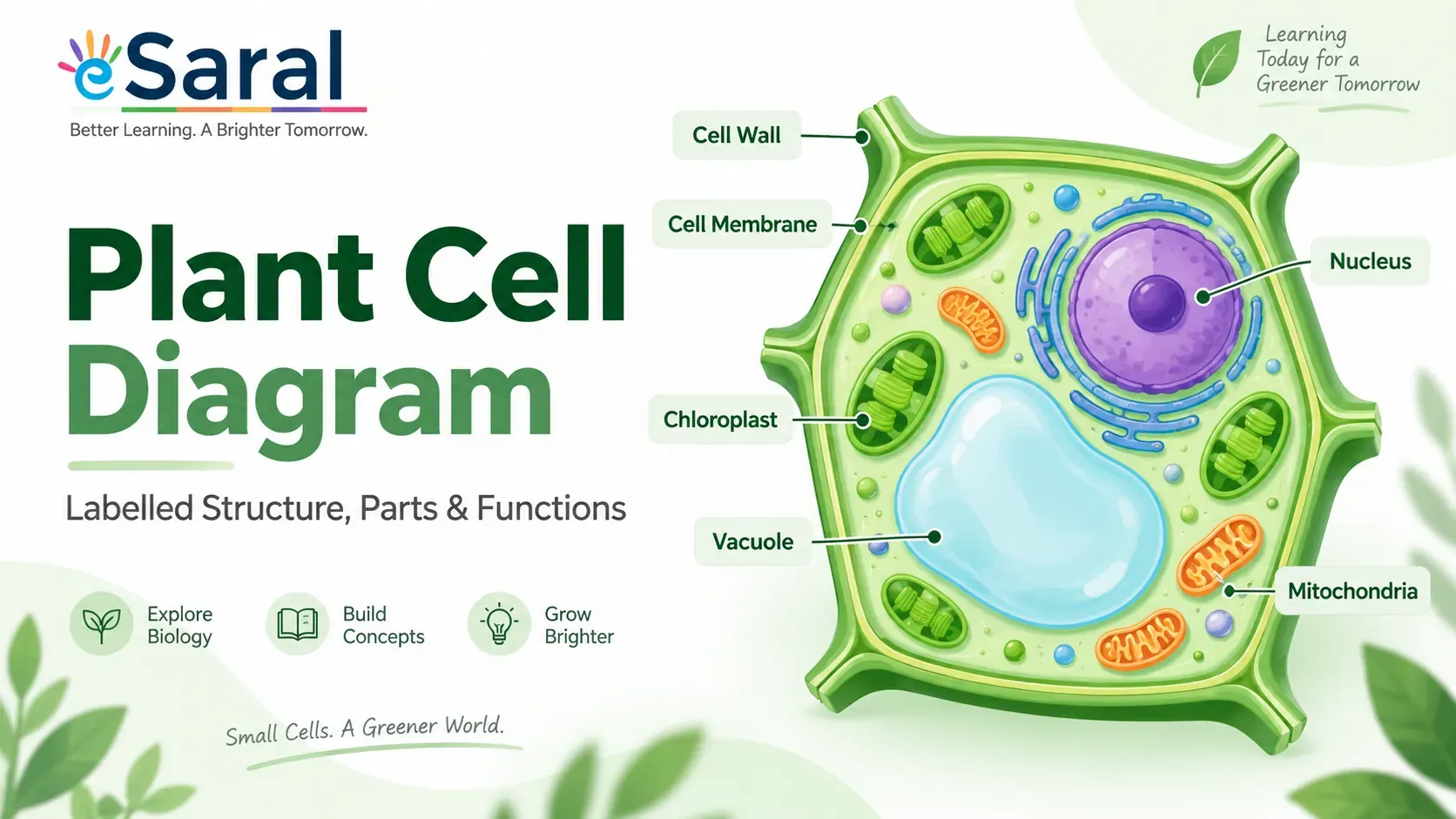
Plant Cell Diagram: Labelled Structure, Parts and Functions
Simple, labelled plant cell diagram with parts and functions. Covers plant cell structure for Class 6, 7, 8, 9, 10 and 11 students, CBSE-aligned.

Saransh Gupta Sir's Visit to IIT Patna: Hostel Life, Placements & Lessons for JEE Aspirants
Inside Saransh Gupta Sir's IIT Patna visit — hostel life, the library, placements, internships, and real advice for JEE aspirants from students living the IIT dream.
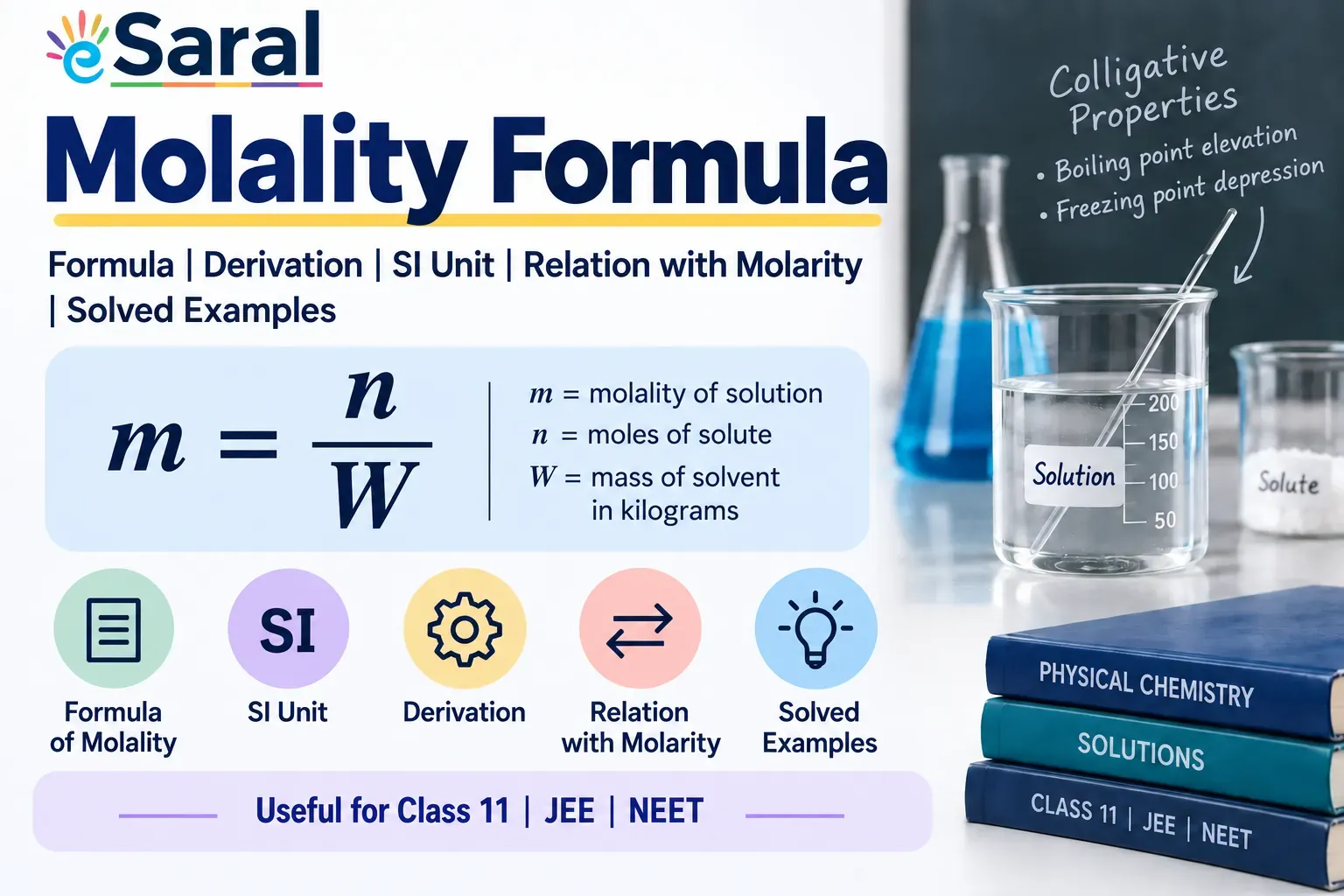
Molality Formula: Formula for Molality, Derivation & Solved Examples
Molality formula is $m = \dfrac{n}{W}$. Learn the formula of molality, its SI unit, derivation, relation with molarity, and solved examples for Class 11, JEE and NEET.
BITSAT Previous Year Question Paper PDF
Download BITSAT previous year question papers PDF. Get year-wise BITSAT PYQs, memory-based papers, exam pattern, and preparation tips to improve your BITSAT preparation.

Teachers’ Day 2026 at eSaral Gurukul: Celebrating the Bond Between Students, Teachers & Mentors
See how Teachers’ Day 2026 was celebrated at eSaral Gurukul, reflecting the bond among students, teachers, and mentors, and the role of guidance beyond academics.

JEE Advanced Attempts: Can You Give It a Third Time? Rules Explained
JEE Advanced attempts: current rule is 2 consecutive years only: full eligibility criteria, the 2025 third-attempt controversy, and the latest 2026 petition news.

Best JEE Preparation App
Best JEE preparation app for Main & Advanced: AI mock tests, live doubt-solving, thousands of practice questions. JEE preparation app for droppers & Class 11-12.
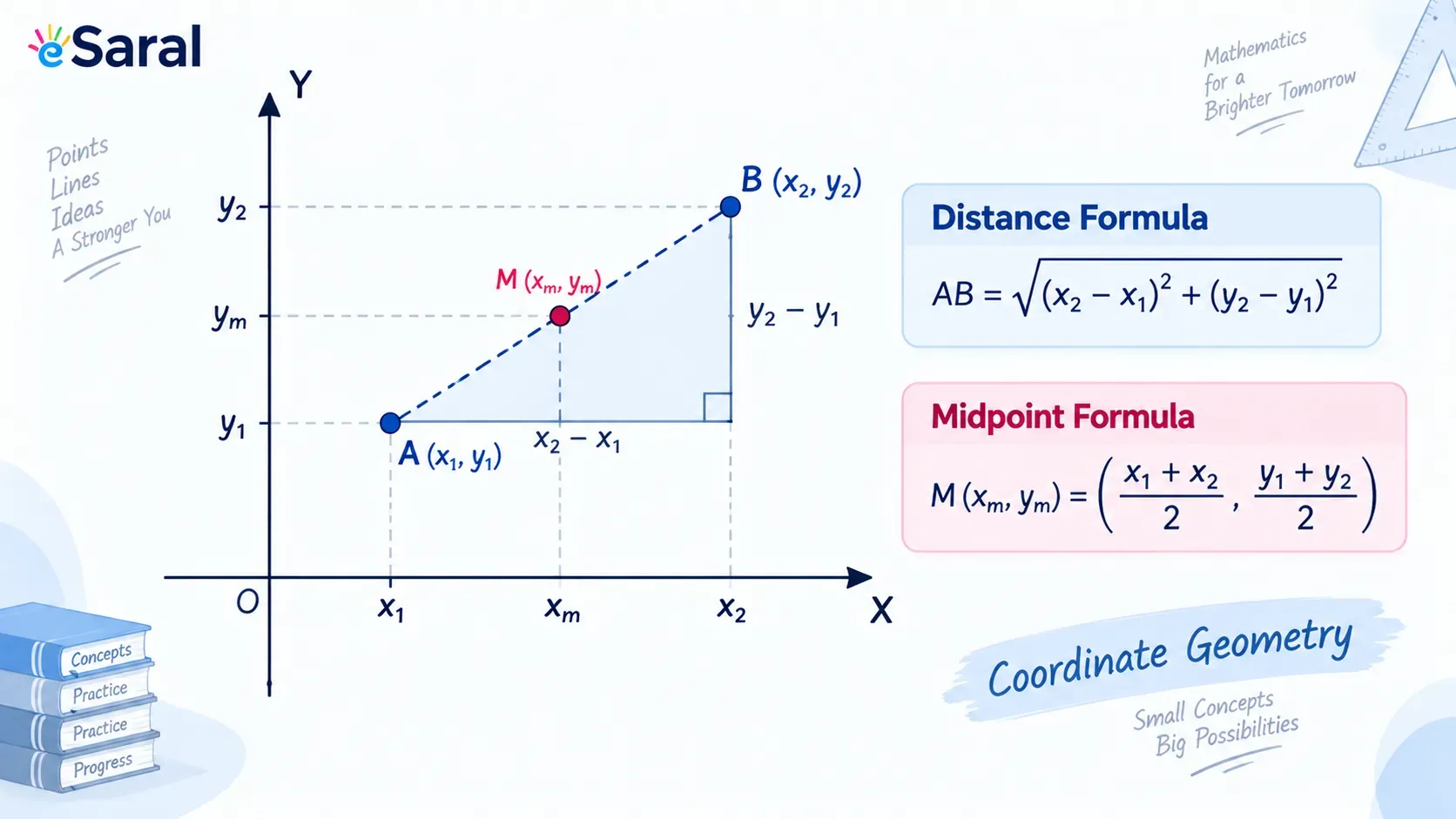
Coordinate Geometry Class 10: Formulas, Notes & Solved Examples
Coordinate geometry class 10: complete CBSE formulas — distance, section, midpoint and area of triangle — with derivation, notes and solved examples.

How to make Notes For JEE Smart Notes Strategy of an AIR 41
Learn how to make notes for JEE the way toppers do — indexing, shorthand, and smart short notes for JEE that cut revision time to just 5–7 days.
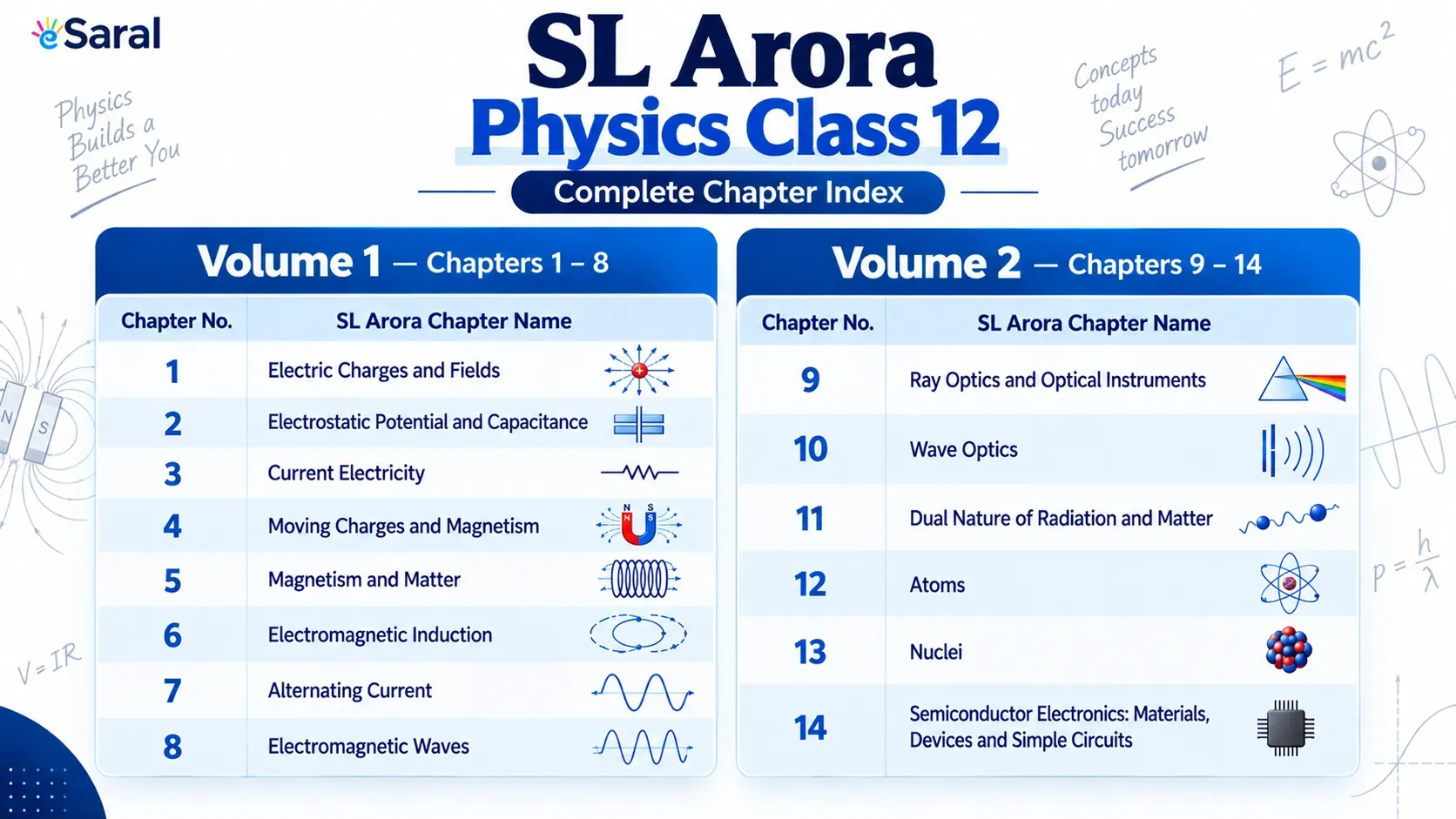
SL Arora Physics Class 12 Index – Chapter List for Volume 1 & 2
SL Arora Physics Class 12 index — complete chapter list for Volume 1 & 2, mapped to NCERT solutions for board, JEE Main, and NEET preparation.