
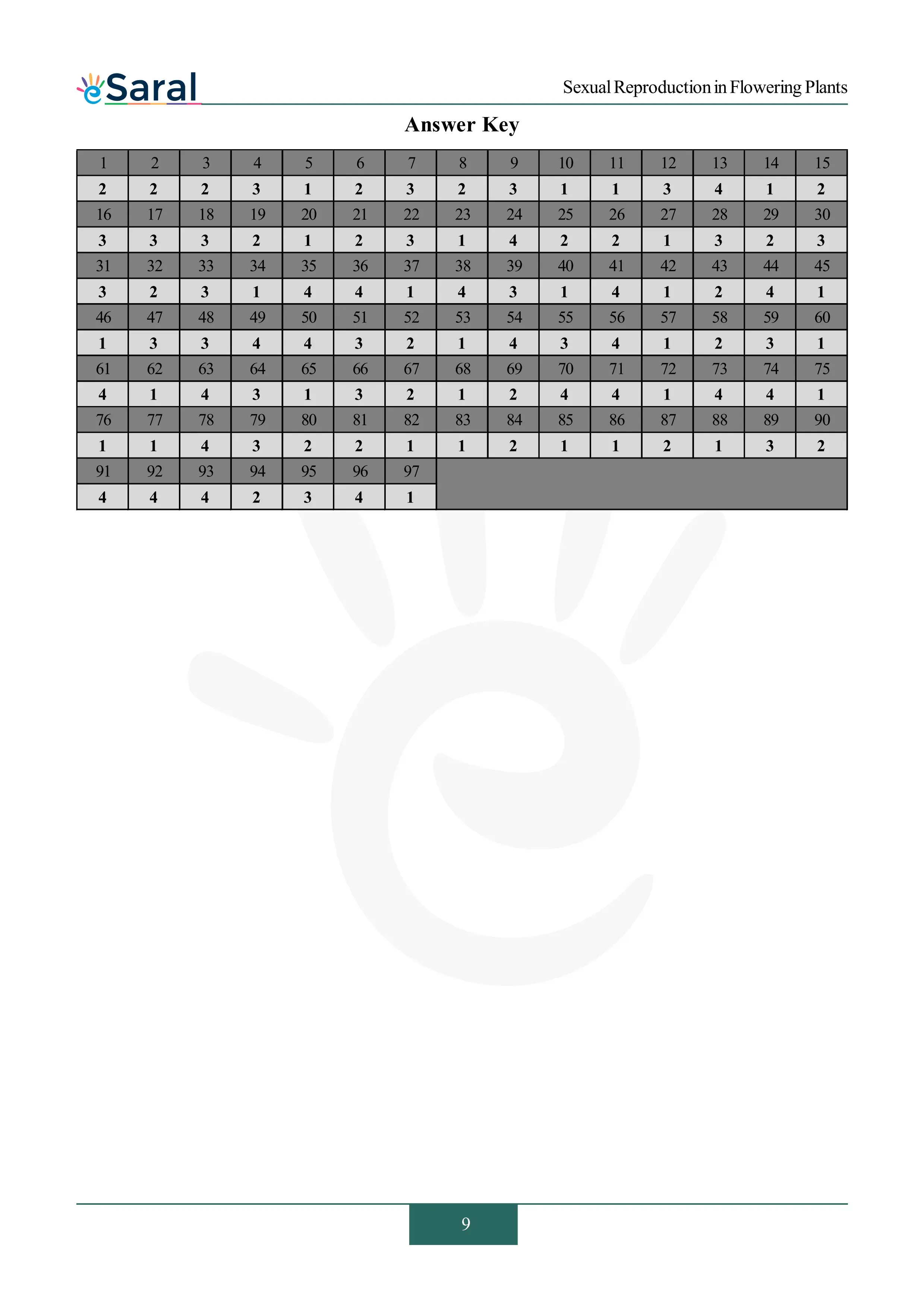
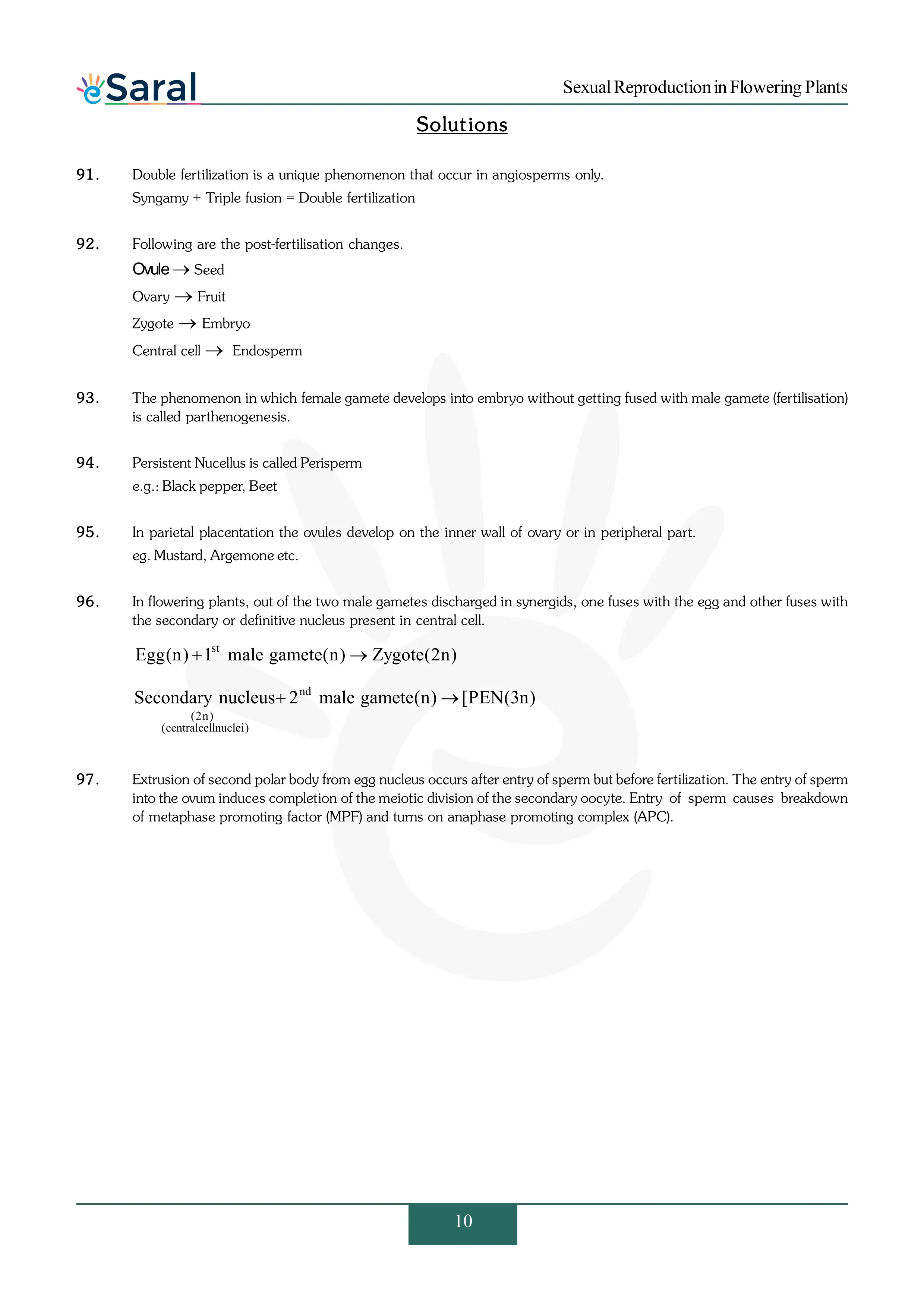
Sexual Reproduction in flowering plants - NEET Previous Year Questions with Complete Solutions

eSaral Academic and Editorial Team
Summary
<p>Master Sexual Reproduction in Flowering Plants for NEET with PYQs, weightage analysis, key concepts, embryo sac diagrams, double fertilisation, pollination, endosperm, apomixis, and expert Biology preparation tips.</p>
eSaral › NEET ›Sexual Reproduction in flowering plants

Why Sexual Reproduction in Flowering Plants Is Critical for NEET
Sexual Reproduction in Flowering Plants (Chapter 2, Class 12 Biology) is not an optional chapter for NEET aspirants — it is a scoring guarantee when prepared correctly.
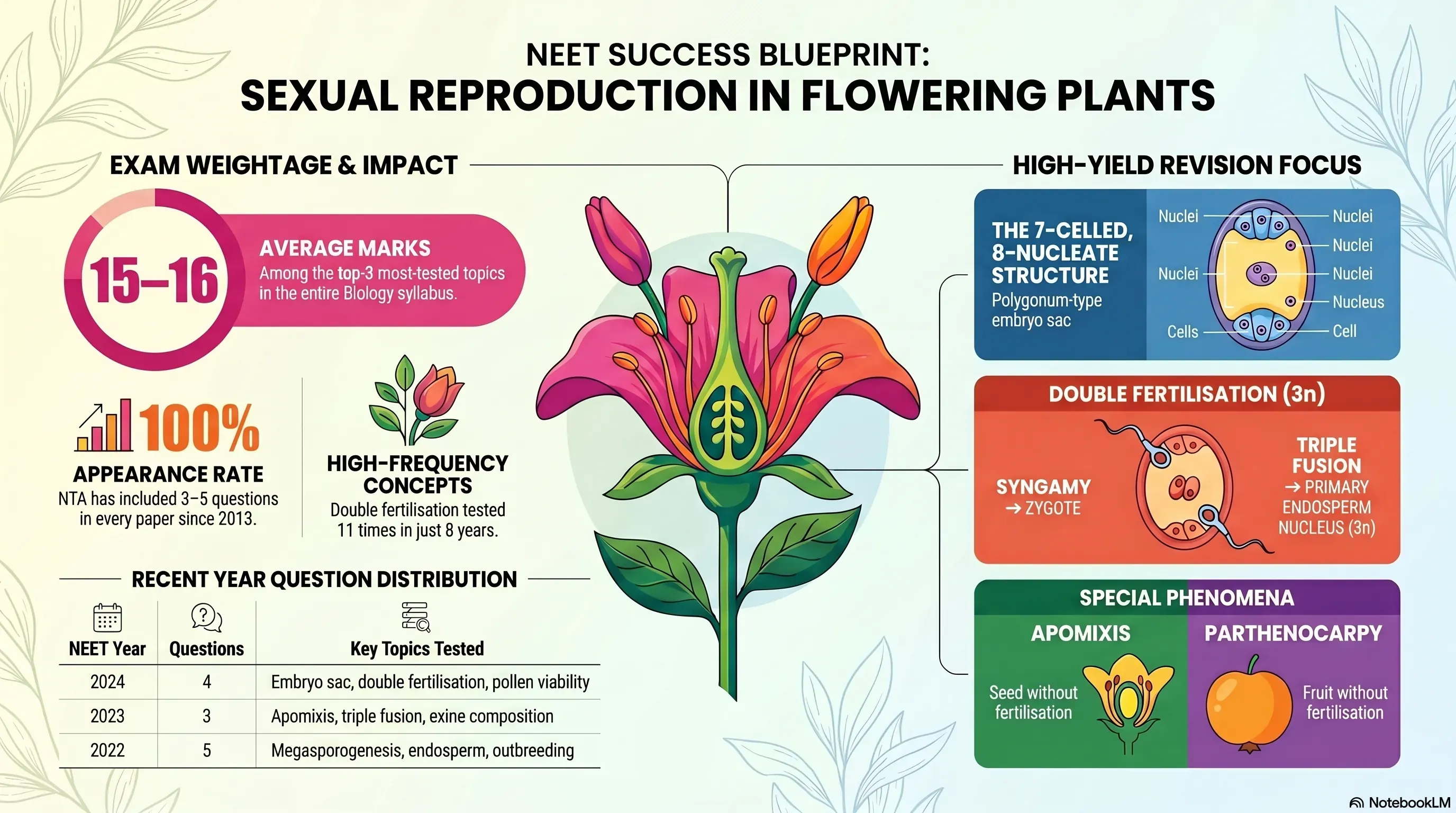
This chapter has appeared in every single NEET UG paper since 2013. The National Testing Agency consistently draws 3–5 questions from it, making it one of the top-3 most-tested chapters in the entire Biology syllabus. Students who master this chapter alone pick up 12–20 marks without touching any other chapter.
The reason NTA favours it is structural: the chapter has a high density of distinct, testable facts — pollen grain structure, embryo sac development, double fertilisation mechanics, endosperm types, and polyembryony. Every one of these subtopics has appeared as a standalone NEET question at least once.
💡 Expert Tip by eSaral Biology Faculty: "Do not just read this chapter — draw it. The female gametophyte (embryo sac) is responsible for at least 1–2 questions in almost every NEET paper. Students who draw the 7-celled, 8-nucleate structure repeatedly during revision never get those questions wrong."
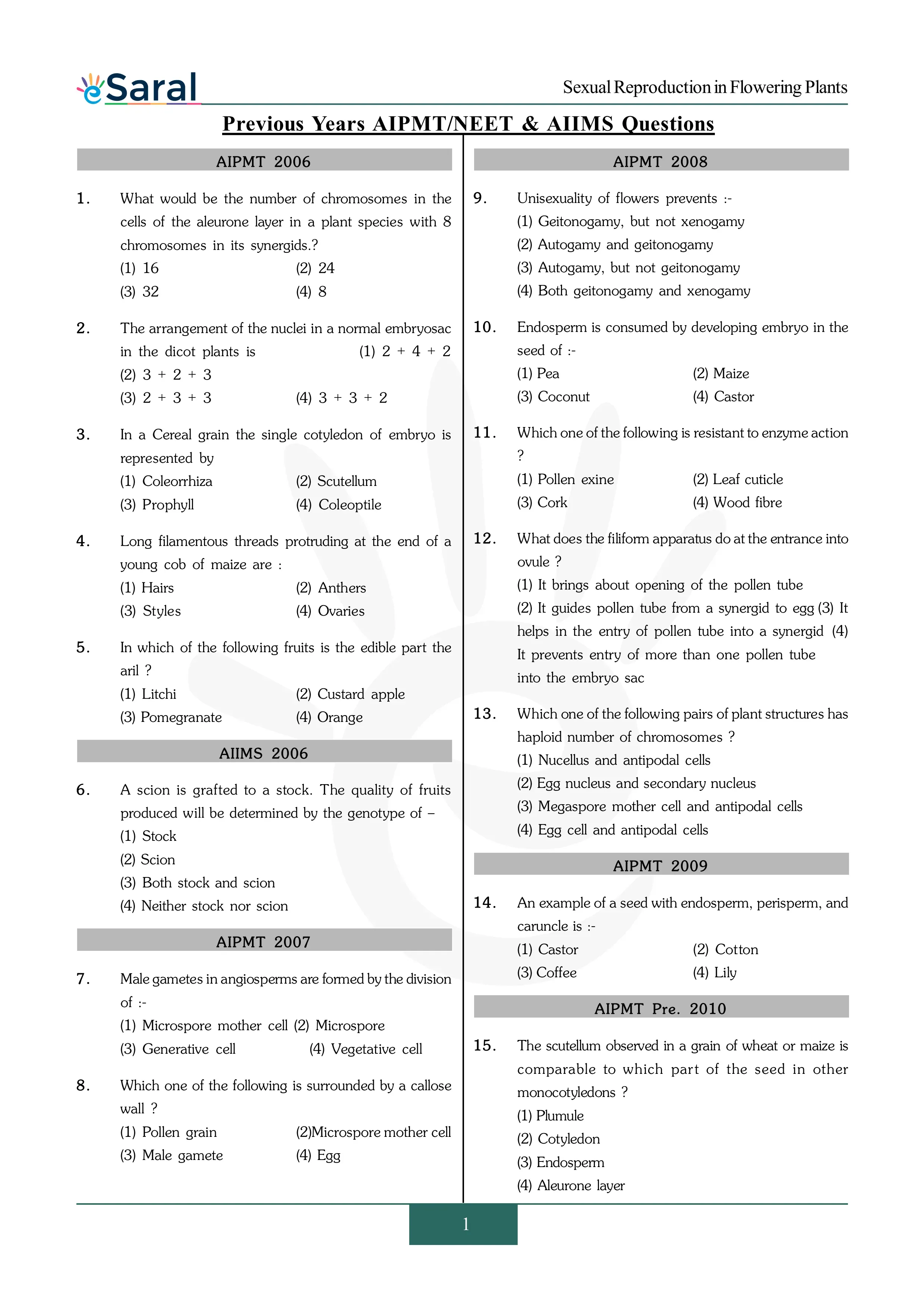
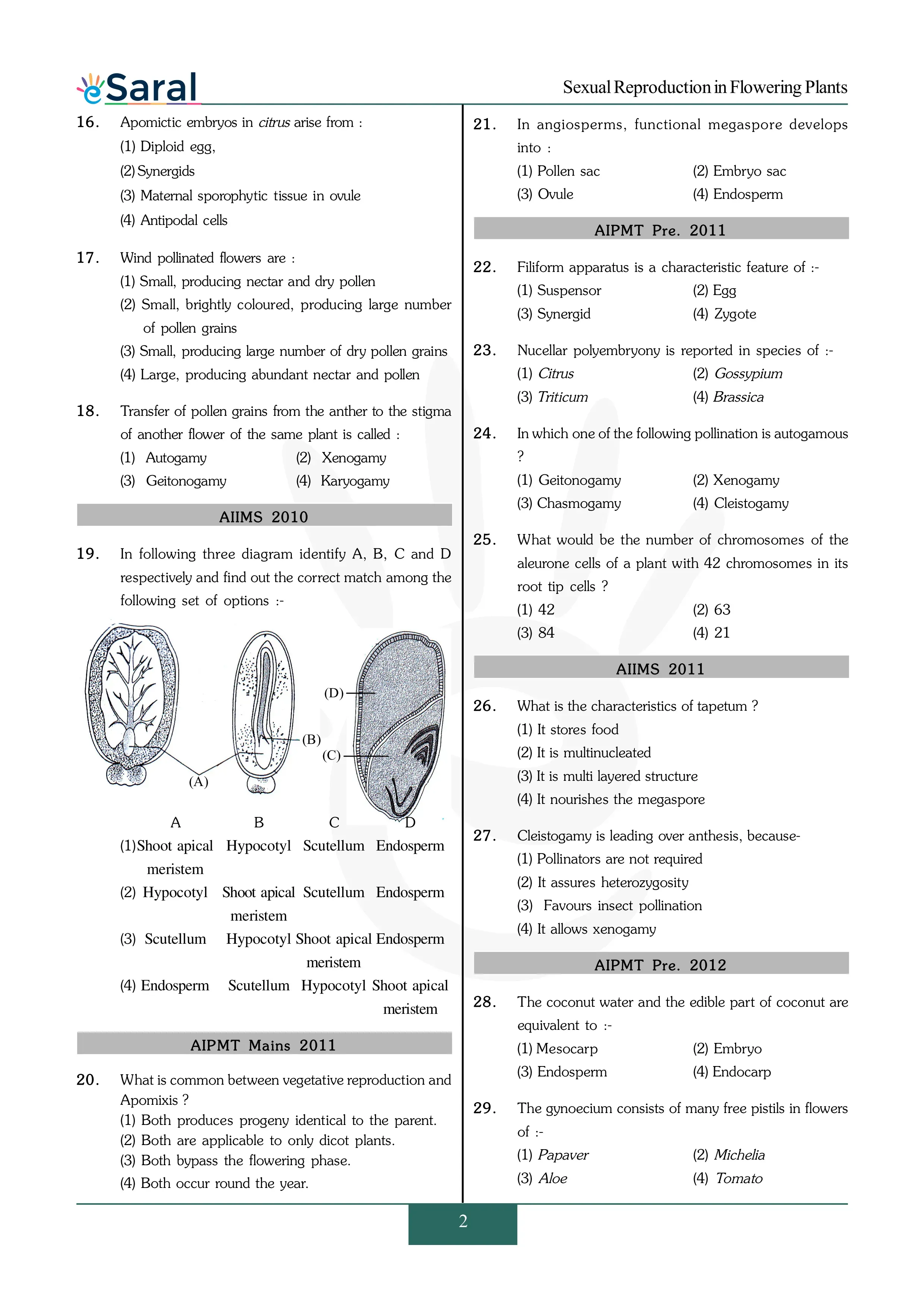
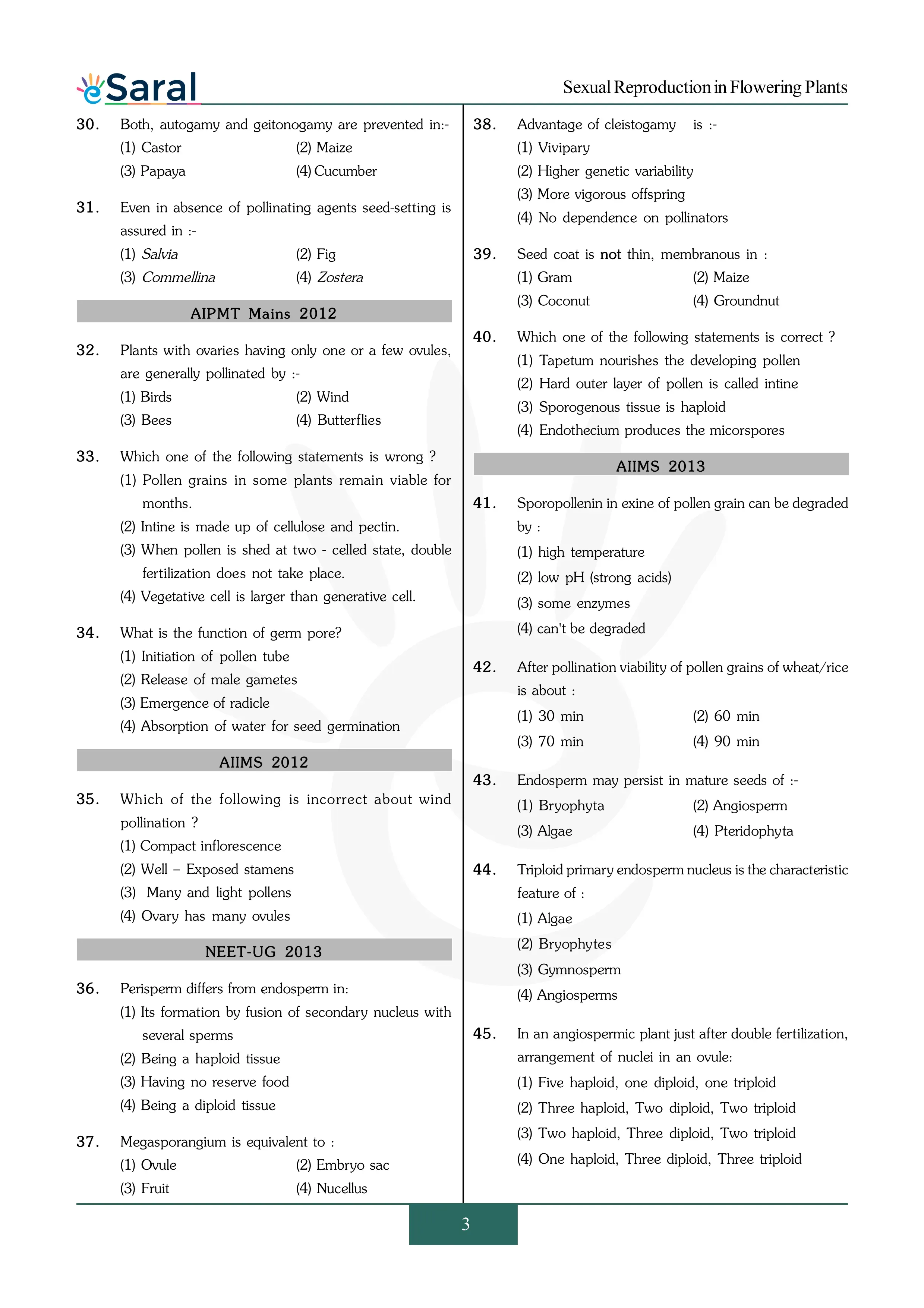
NEET Previous Year Questions — Sexual Reproduction in Flowering Plants
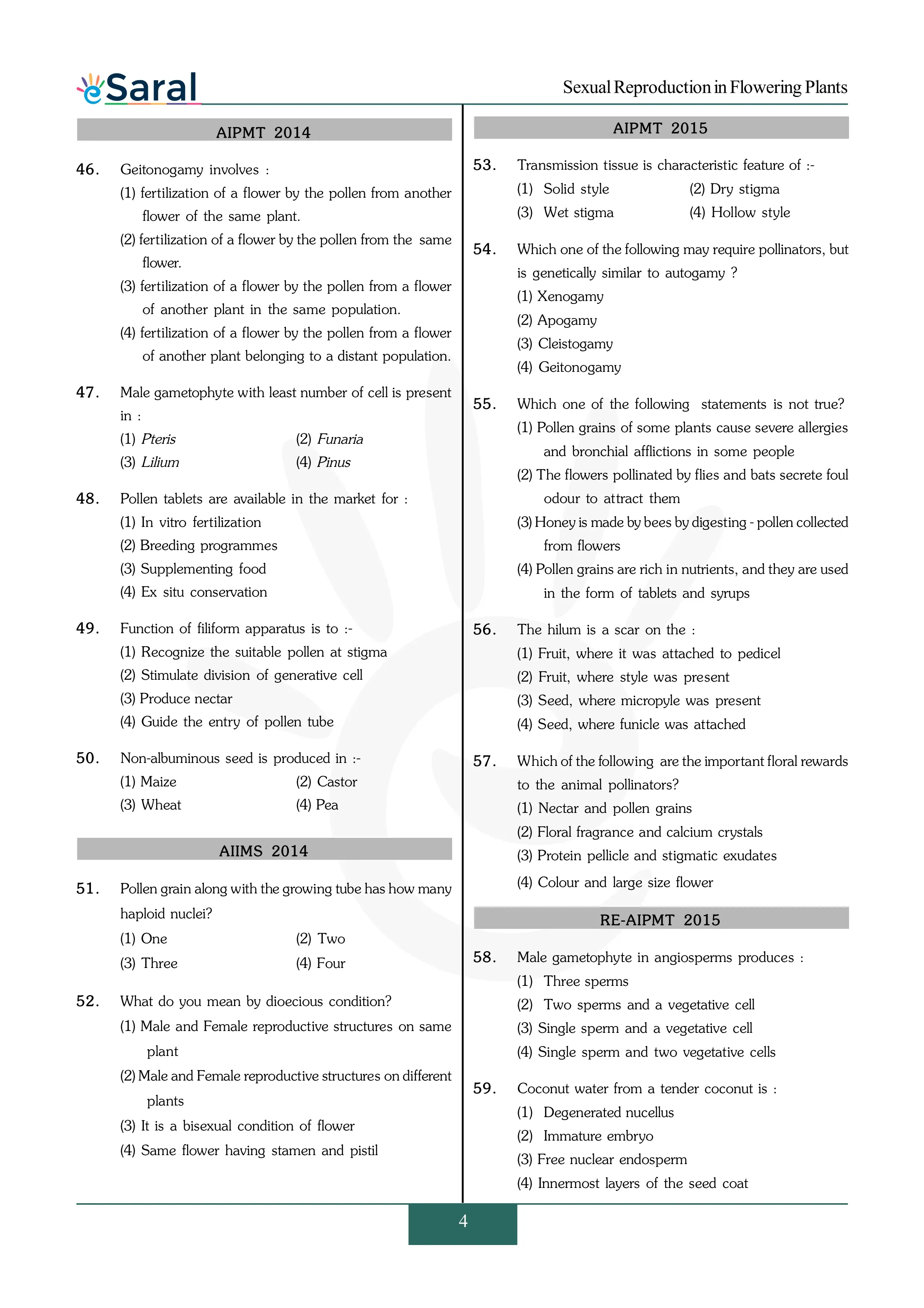
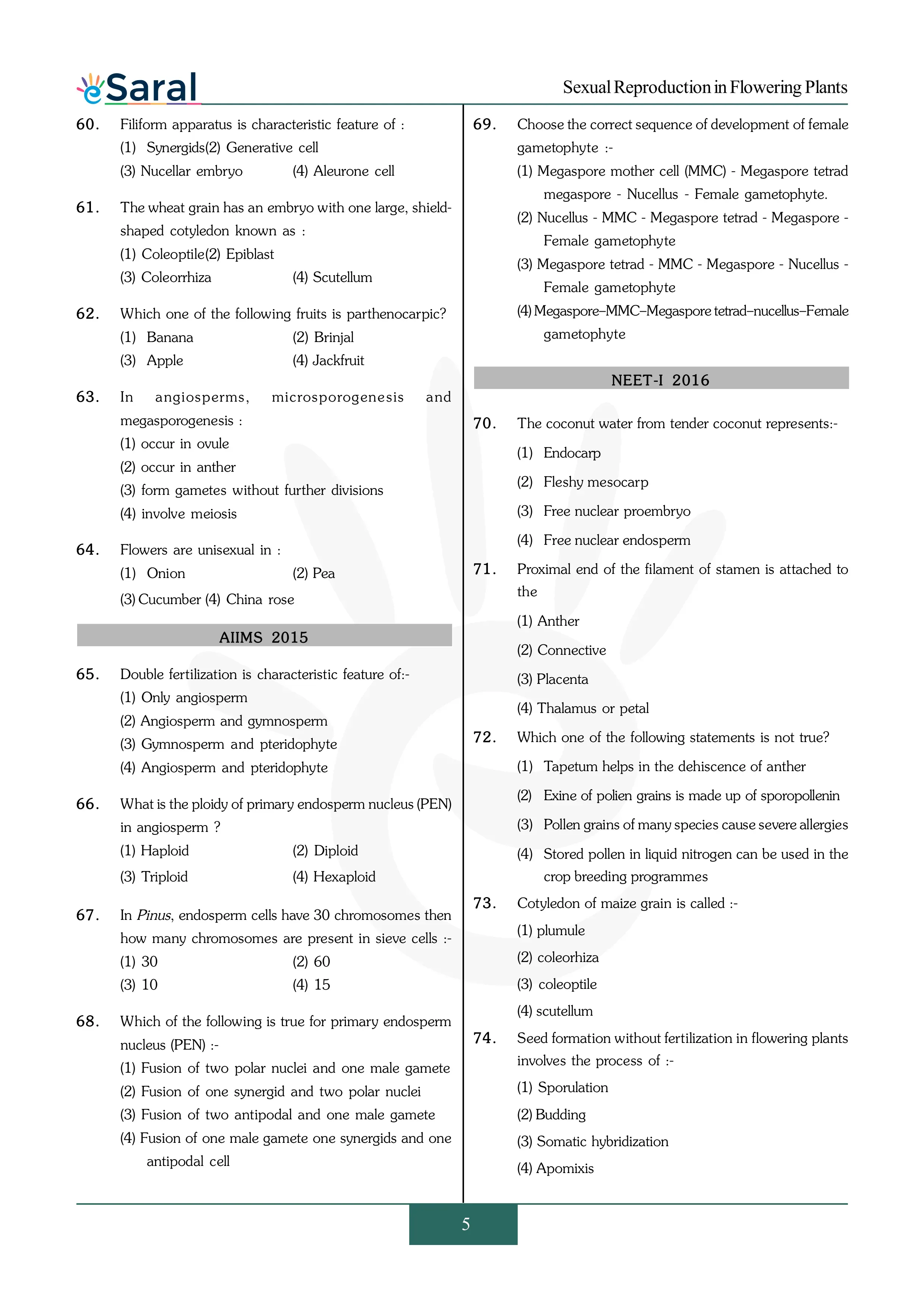
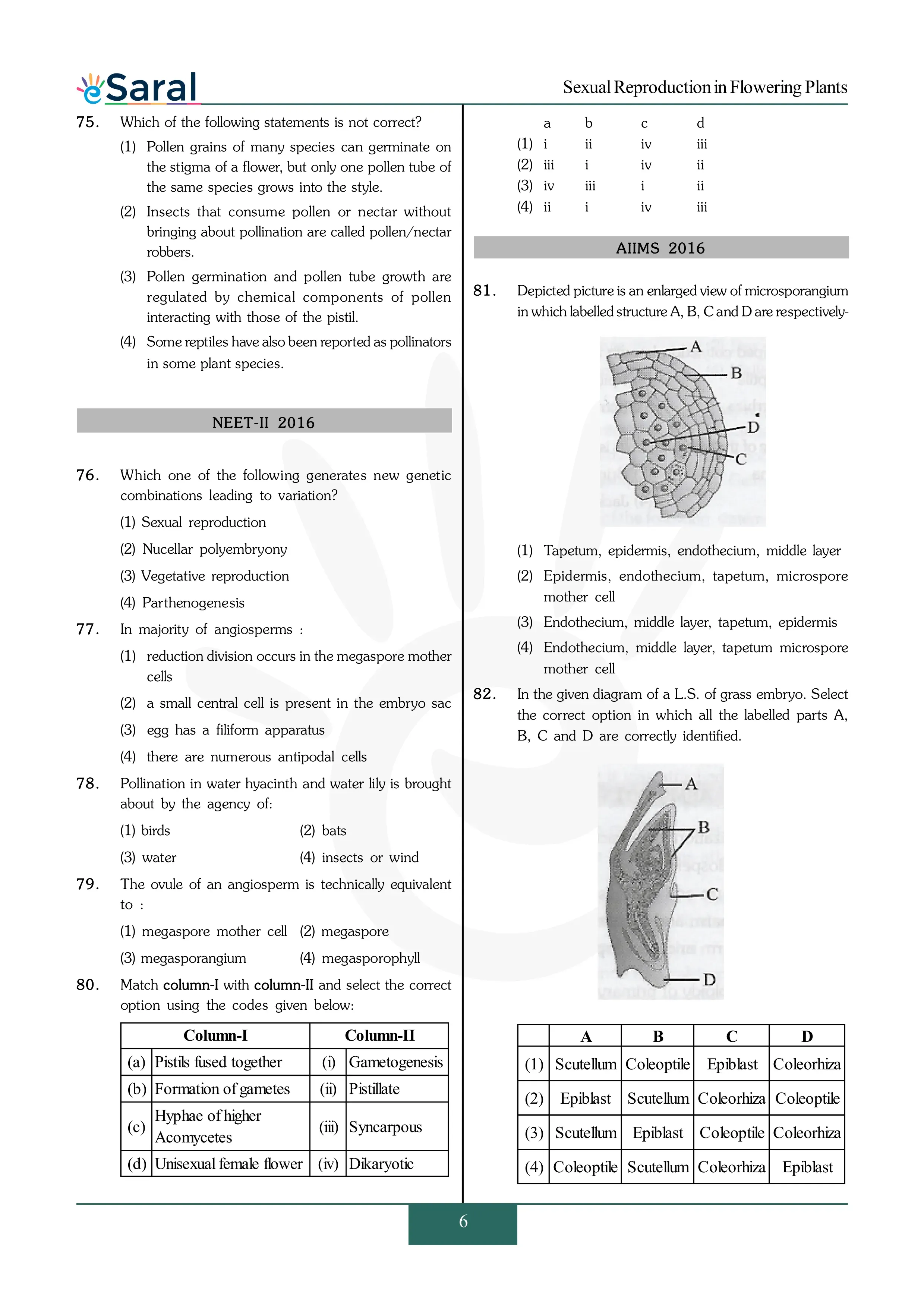
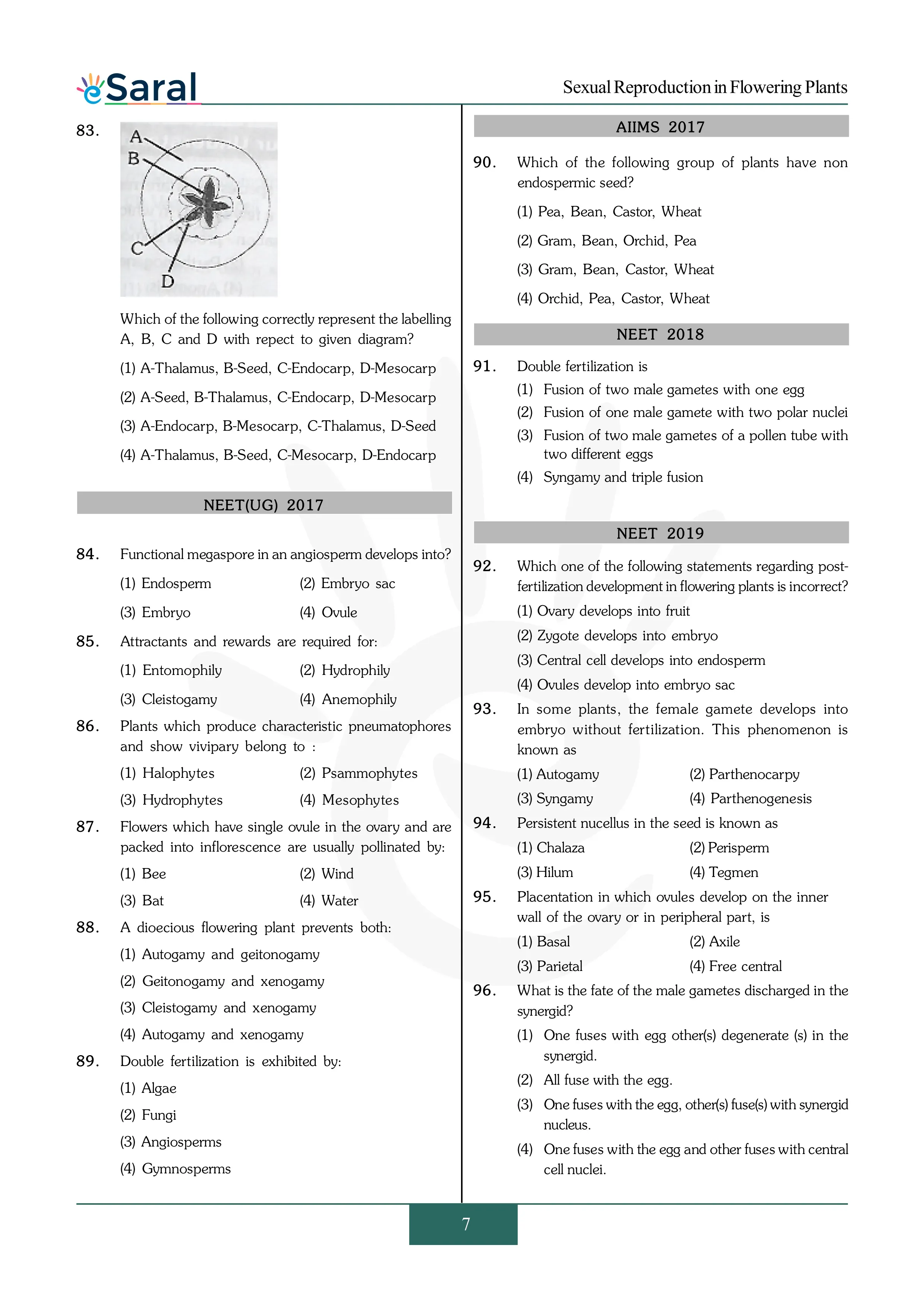

Chapter Overview: Topics and Subtopics
What Does This Chapter Cover?
Topic | Subtopics | NEET Frequency |
|---|---|---|
Flower Structure | Parts of a flower, stamen, pistil, and receptacle | Low–Medium |
Microsporogenesis | Anther structure, pollen grain wall (exine/intine), pollen viability | High |
Male Gametophyte | Pollen grain development, generative cell, vegetative cell | High |
Megasporogenesis | Ovule types, nucellus, megaspore mother cell | Medium |
Female Gametophyte | Embryo sac (Polygonum type), 7-celled 8-nucleate structure | Very High |
Pollination | Types — autogamy, geitonogamy, xenogamy; agents — wind, water, insects | Medium |
Outbreeding Devices | Self-incompatibility, dioecy, heterostyly, pollen-pistil interaction | Medium |
Fertilisation | Germination of pollen tube, double fertilisation, syngamy, triple fusion | Very High |
Post-Fertilisation | Endosperm (nuclear, cellular, helobial), embryo development | High |
Seed and Fruit | Seed structure, dormancy, fruit types | Low–Medium |
Special Phenomena | Apomixis, parthenocarpy, polyembryony | High |
NEET Weightage Analysis: How Many Questions Come From This Chapter?
Year-Wise Question Count
NEET Year | Questions from This Chapter | Key Topics Tested |
|---|---|---|
NEET 2024 | 4 | Embryo sac, double fertilisation, pollen viability |
NEET 2023 | 3 | Apomixis, triple fusion, exine composition |
NEET 2022 | 5 | Megasporogenesis, endosperm, outbreeding |
NEET 2021 | 4 | Female gametophyte, polyembryony, pollination types |
NEET 2020 | 3 | Pollen grain wall, syngamy, parthenocarpy |
NEET 2019 | 4 | Embryo development, endosperm types, cleistogamy |
NEET 2018 | 3 | Tapetum function, pollen tube pathway, triple fusion |
NEET 2017 | 5 | Embryo sac structure, fertilisation, apomixis |
Average: 3.9 questions per year. At 4 marks each, this chapter alone accounts for approximately 15–16 marks in a typical NEET paper.
💡 Expert Tip by eSaral Biology Faculty: "If you solve all PYQs from this chapter year-wise — not topic-wise — you will notice that NTA repeats the concept behind questions even when the wording changes. Double fertilisation has been tested 11 times in 8 years. Learn the concept, not just the answer."
Key Concepts You Must Know Before Solving PYQs
The 5 Non-Negotiable Facts for NEET
These five facts appear in NEET questions repeatedly. Memorise them precisely:
- The mature pollen grain is 2-celled — one vegetative (tube) cell and one generative cell (which later divides to form 2 male gametes).
- The Polygonum-type embryo sac is 7-celled and 8-nucleate — 3 antipodals, 2 synergids, 1 egg cell, 1 central cell with 2 polar nuclei.
- Double fertilisation: one male gamete fuses with the egg cell (syngamy → zygote); the second fuses with the two polar nuclei (triple fusion → primary endosperm nucleus, which is triploid — 3n).
- Endosperm development precedes embryo development. Nuclear endosperm is the most common type in angiosperms.
- Apomixis = seed formation without fertilisation. Parthenocarpy = fruit formation without fertilisation. These are tested together as a pair — know the difference cold.
Key Terminology Table
Term | Definition (as tested in NEET) |
|---|---|
Tapetum | Innermost nutritive layer of the anther wall; nourishes developing pollen |
Sporopollenin | Hardest biological material; forms the exine of pollen grain; resistant to acids, alkalis, and high temperatures |
Filiform apparatus | Finger-like projections in synergid cells that guide the pollen tube |
Perisperm | Remnant of nucellus in the seed (e.g., Black pepper, Beet) |
Cleistogamy | Pollination within a closed flower (e.g., Viola, Oxalis); guaranteed self-pollination |
Emasculation | Removal of stamens from bisexual flowers before anthesis; used in artificial hybridisation |
Frequently Asked Questions
How many questions come from Sexual Reproduction in Flowering Plants in NEET?
This chapter contributes 3–5 questions in almost every NEET UG paper. Over the last 8 years, the average is approximately 4 questions per year (around 16 marks). It is one of the top-5 highest-weightage chapters in NEET Biology and should be treated as a guaranteed scoring chapter.
What are the most important topics in Sexual Reproduction in Flowering Plants for NEET?
The highest-frequency topics are: (1) embryo sac structure — 7-celled, 8-nucleate, (2) double fertilisation — syngamy and triple fusion, (3) sporopollenin and pollen grain wall, (4) apomixis and parthenocarpy, and (5) tapetum function. These five areas account for roughly 70% of all questions from this chapter in the last 10 years.
Which year had the most questions from Sexual Reproduction in Flowering Plants in NEET?
NEET 2017 and NEET 2022 both had 5 questions from this chapter — the highest recorded. In most other years, the count is 3–4. No year since 2013 has had fewer than 3 questions from this chapter.
Is Sexual Reproduction in Flowering Plants tough for NEET?
It is moderately difficult — not conceptually hard, but detail-intensive. The challenge is precision: students who confuse 7-celled vs 8-nucleate, or who mix up apomixis and parthenocarpy, lose marks they should never lose. The solution is diagram-based learning combined with solving PYQs year-wise.
Are NCERT diagrams from this chapter directly asked in NEET?
Yes. NEET regularly tests the T.S. of anther, the mature embryo sac structure, and the pathway of the pollen tube. These diagrams appear as labelling or identification questions. Drawing them 10–15 times from memory during revision is the fastest way to lock them in.
Team eSaral
eSaral Academic and Editorial Team
Team eSaral is the collective author profile for educational content created by eSaral’s teachers and academic contributors. The team draws on expertise from IIT graduates, doctors, experienced educators and subject specialists to develop resources for JEE, NEET and school students. Our articles aim to explain concepts clearly and help students study with confidence.
Related Posts
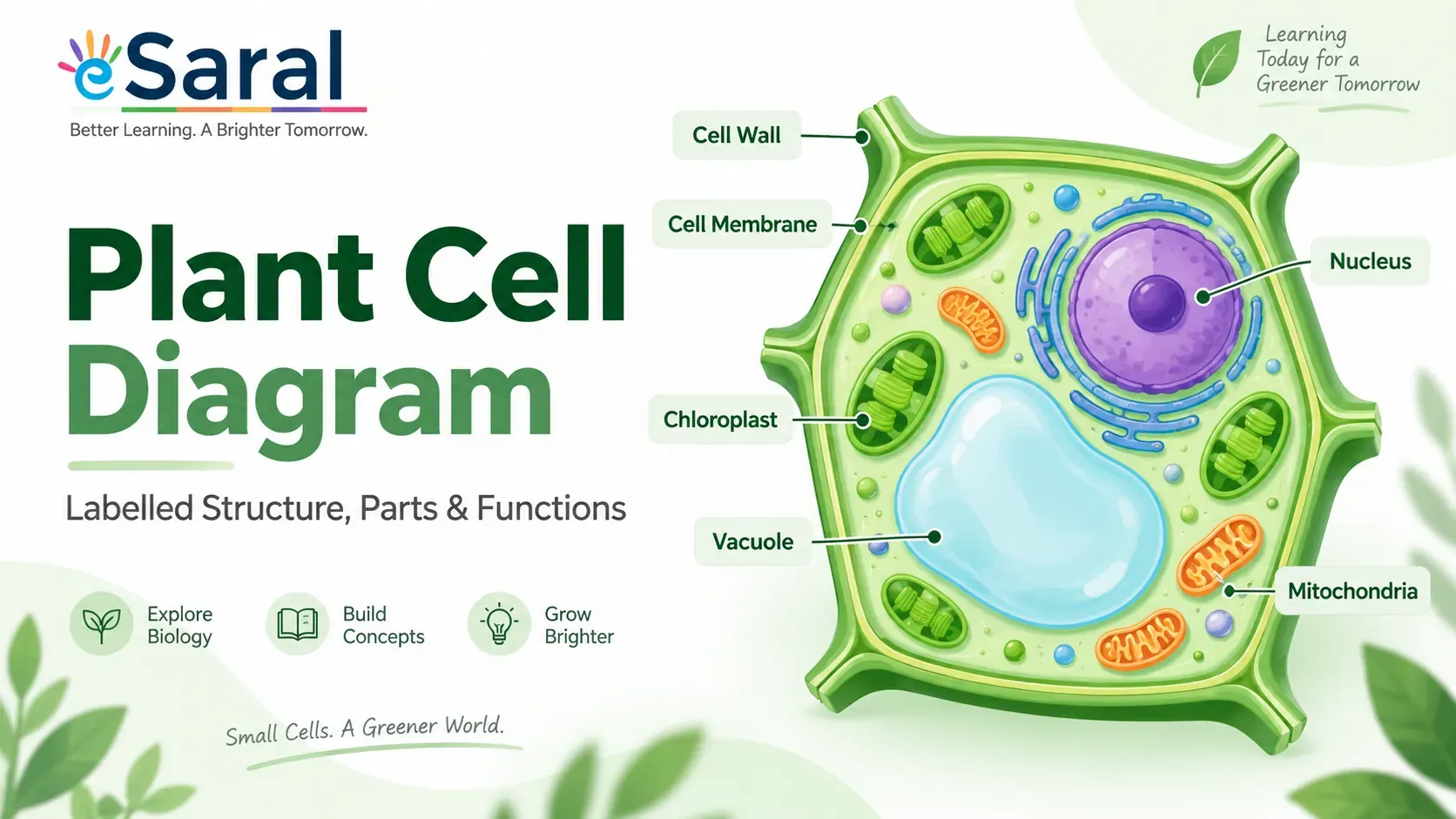
Plant Cell Diagram: Labelled Structure, Parts and Functions
Simple, labelled plant cell diagram with parts and functions. Covers plant cell structure for Class 6, 7, 8, 9, 10 and 11 students, CBSE-aligned.
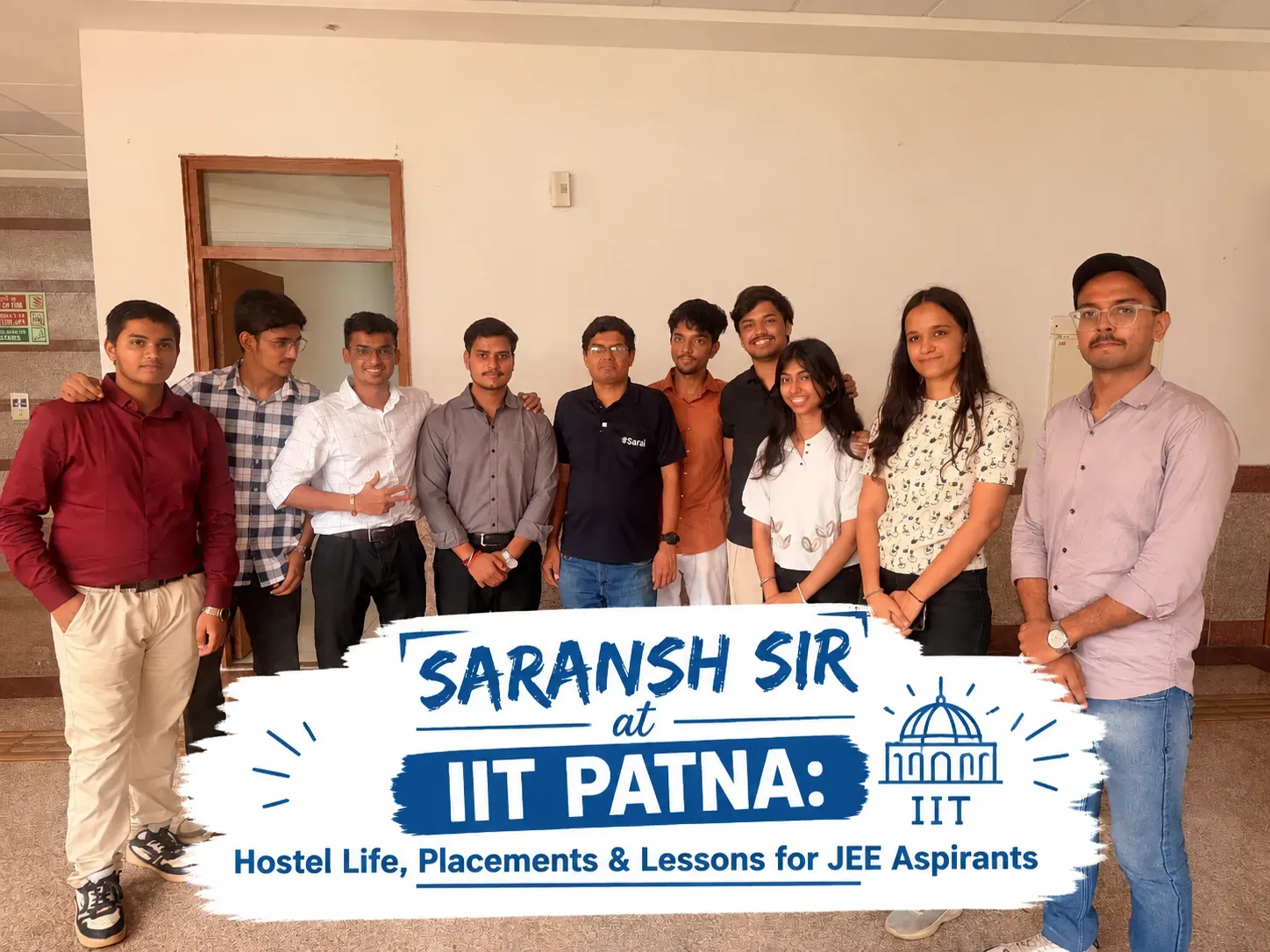
Saransh Gupta Sir's Visit to IIT Patna: Hostel Life, Placements & Lessons for JEE Aspirants
Inside Saransh Gupta Sir's IIT Patna visit — hostel life, the library, placements, internships, and real advice for JEE aspirants from students living the IIT dream.
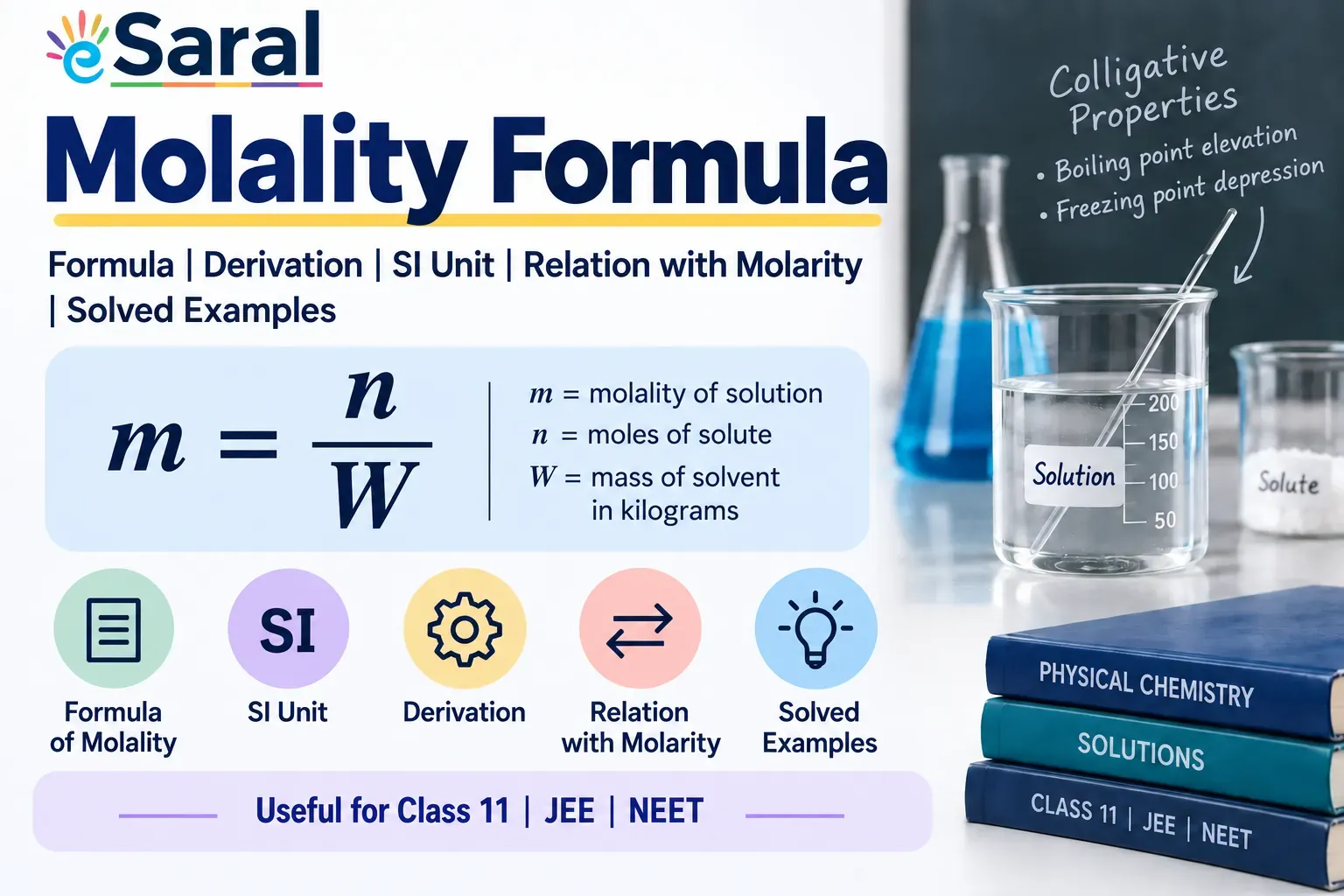
Molality Formula: Formula for Molality, Derivation & Solved Examples
Molality formula is $m = \dfrac{n}{W}$. Learn the formula of molality, its SI unit, derivation, relation with molarity, and solved examples for Class 11, JEE and NEET.
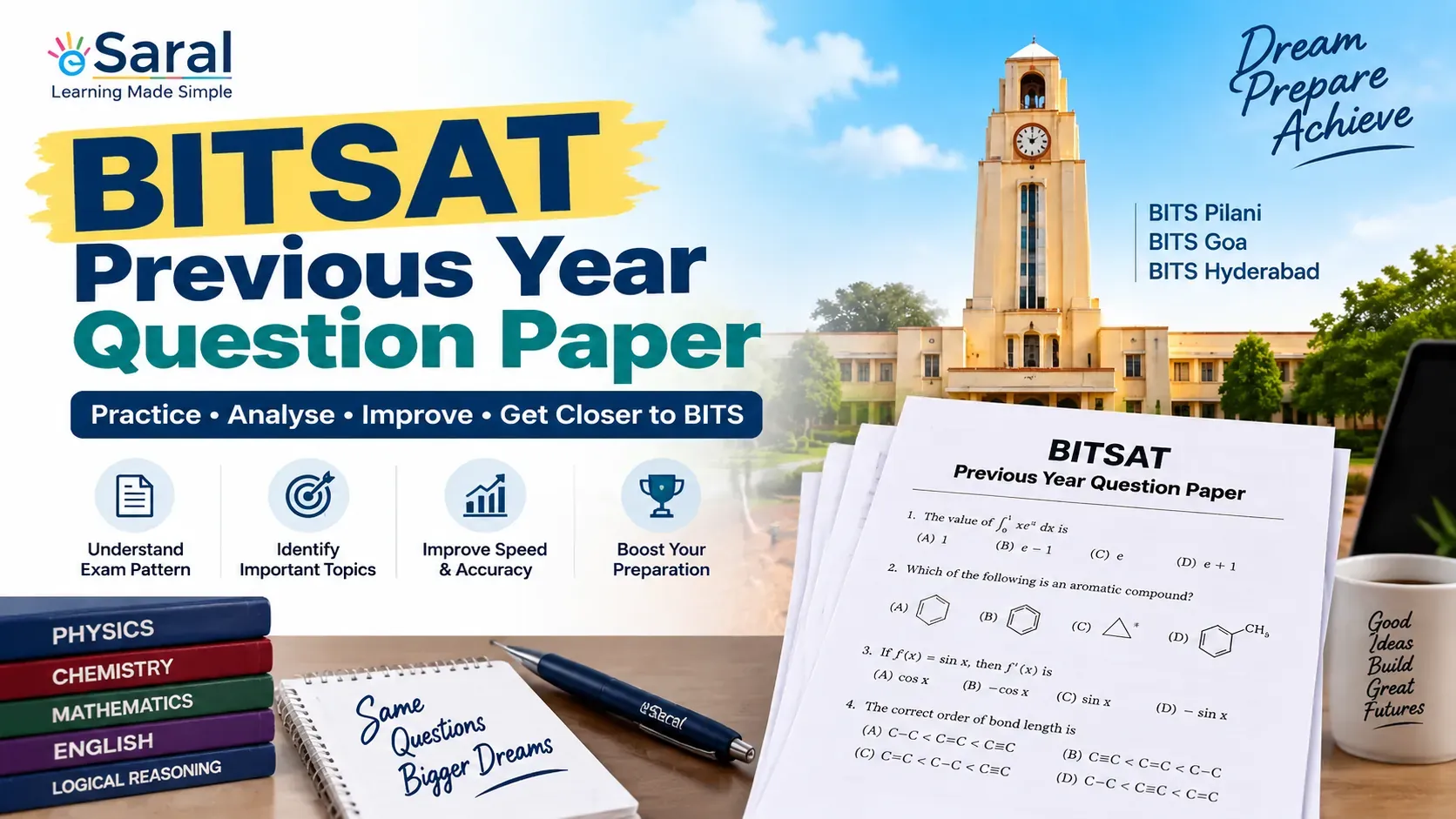
BITSAT Previous Year Question Paper PDF
Download BITSAT previous year question papers PDF. Get year-wise BITSAT PYQs, memory-based papers, exam pattern, and preparation tips to improve your BITSAT preparation.

Teachers’ Day 2026 at eSaral Gurukul: Celebrating the Bond Between Students, Teachers & Mentors
See how Teachers’ Day 2026 was celebrated at eSaral Gurukul, reflecting the bond among students, teachers, and mentors, and the role of guidance beyond academics.
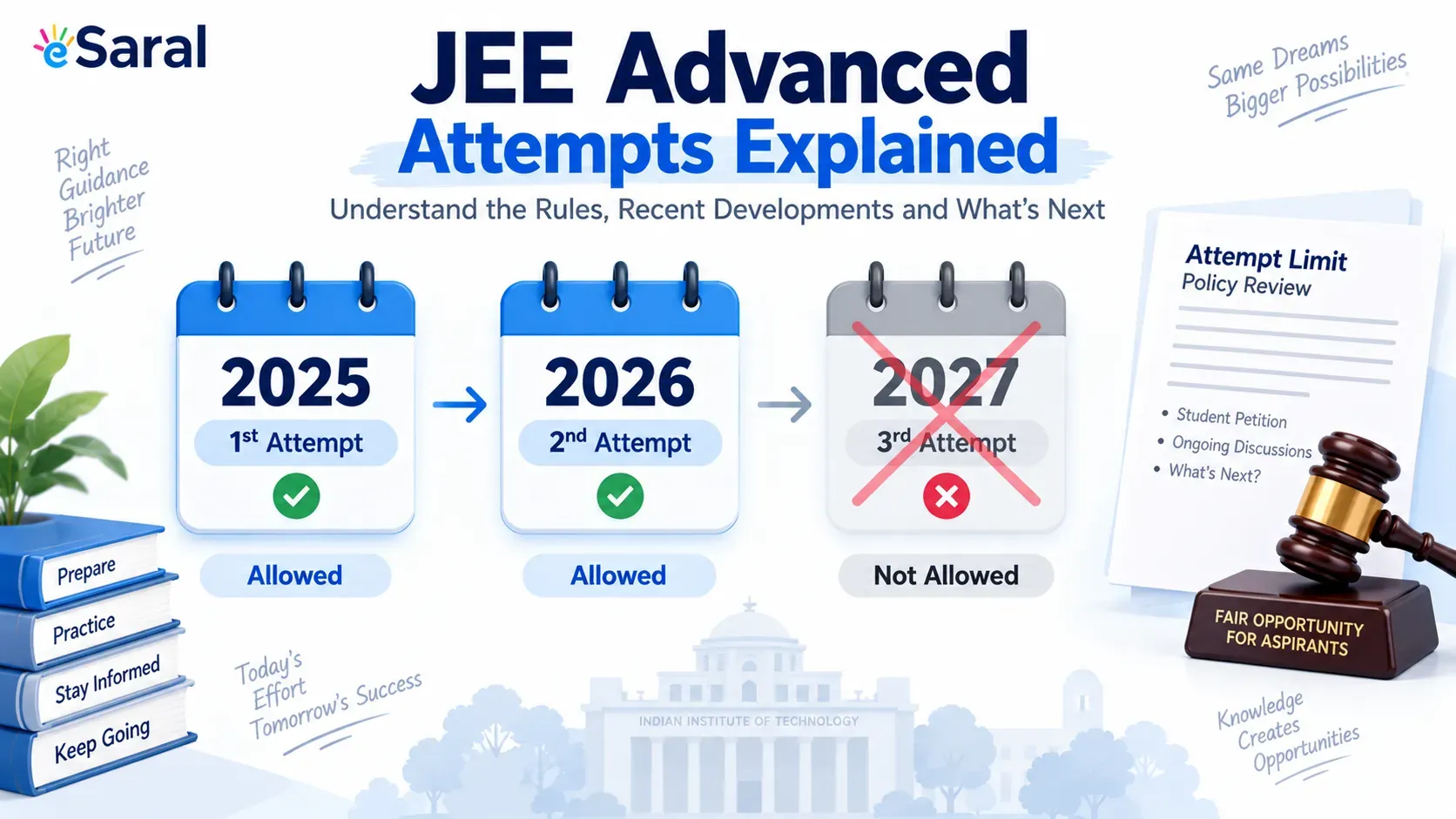
JEE Advanced Attempts: Can You Give It a Third Time? Rules Explained
JEE Advanced attempts: current rule is 2 consecutive years only: full eligibility criteria, the 2025 third-attempt controversy, and the latest 2026 petition news.

Best JEE Preparation App
Best JEE preparation app for Main & Advanced: AI mock tests, live doubt-solving, thousands of practice questions. JEE preparation app for droppers & Class 11-12.
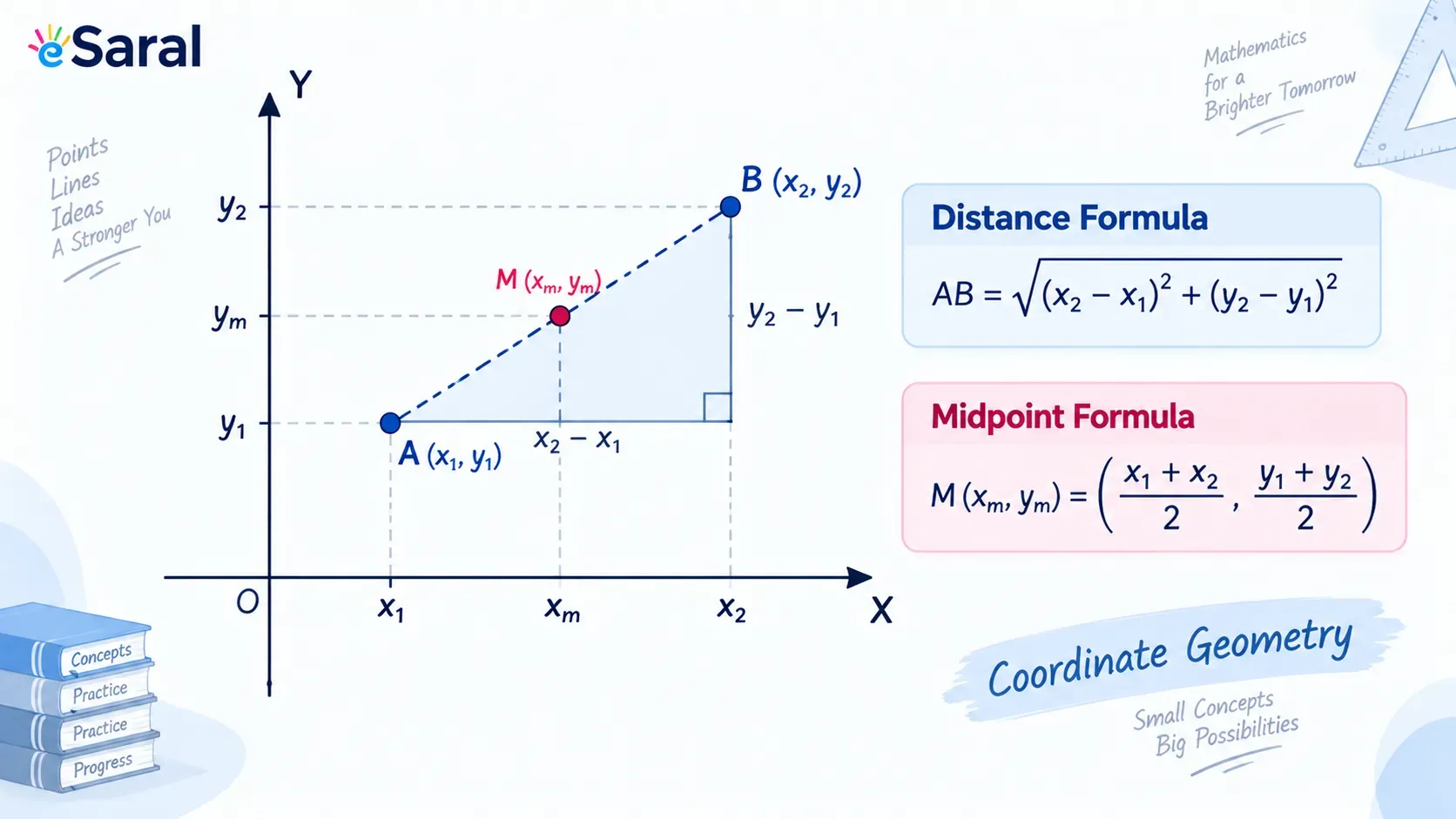
Coordinate Geometry Class 10: Formulas, Notes & Solved Examples
Coordinate geometry class 10: complete CBSE formulas — distance, section, midpoint and area of triangle — with derivation, notes and solved examples.

How to make Notes For JEE Smart Notes Strategy of an AIR 41
Learn how to make notes for JEE the way toppers do — indexing, shorthand, and smart short notes for JEE that cut revision time to just 5–7 days.
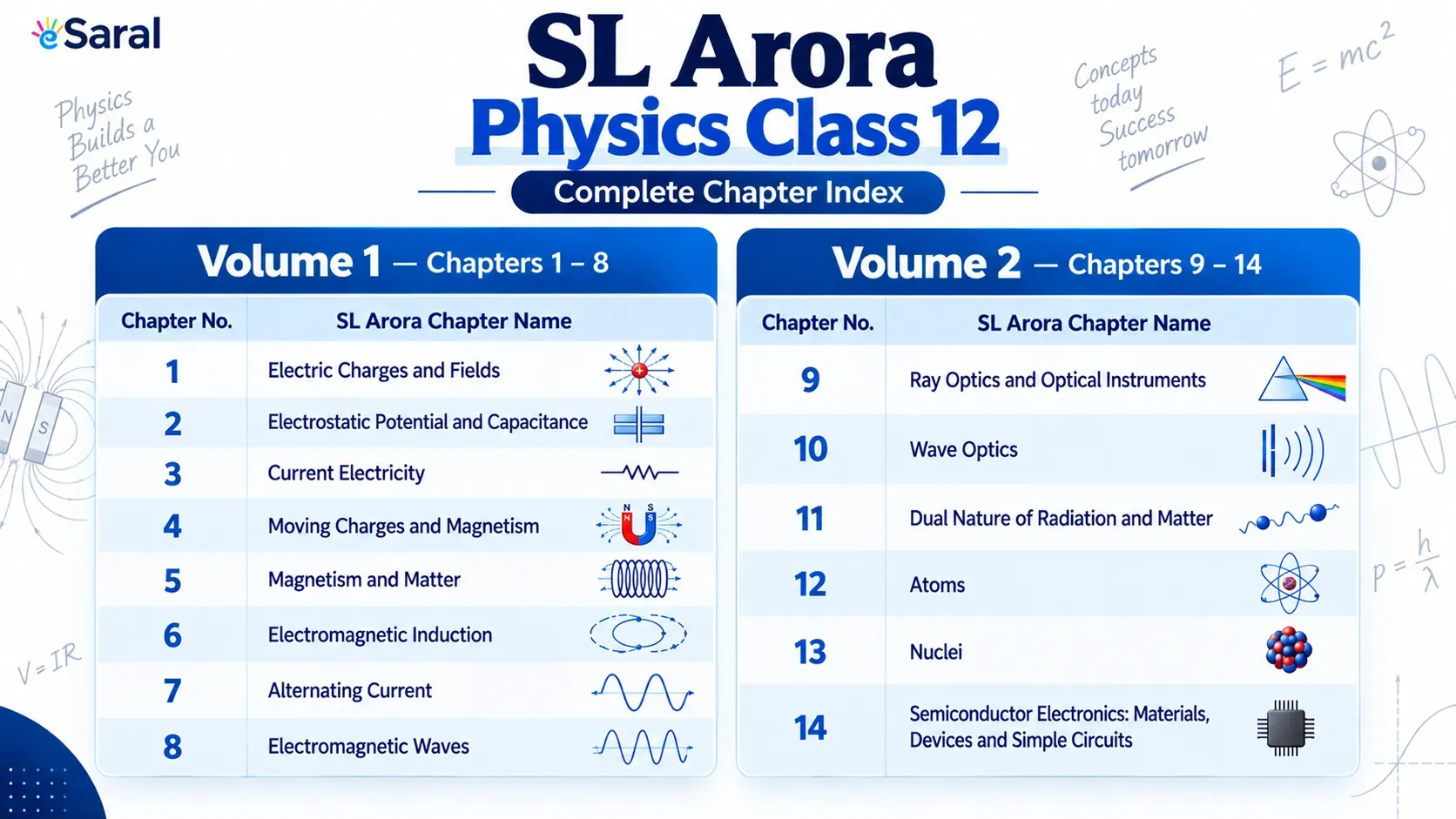
SL Arora Physics Class 12 Index – Chapter List for Volume 1 & 2
SL Arora Physics Class 12 index — complete chapter list for Volume 1 & 2, mapped to NCERT solutions for board, JEE Main, and NEET preparation.