
Structural Isomerism - JEE Main Previous Year Questions with Solutions

eSaral Academic and Editorial Team
Summary
Structural isomerism in JEE Main covers chain, position, functional group, and metamerism sub-types, while stereoisomerism covers geometrical and optical forms. Between 2009 and 2014, NTA/CBSE set 9+ questions from this topic in AIEEE and JEE Main. Mastering these PYQs with solutions gives a predictable 4–8 mark advantage on exam day.

eSaral › JEE Main › Chemistry › Structural Isomerism Previous Year Questions with Solutions

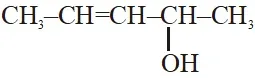
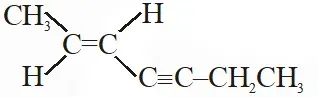
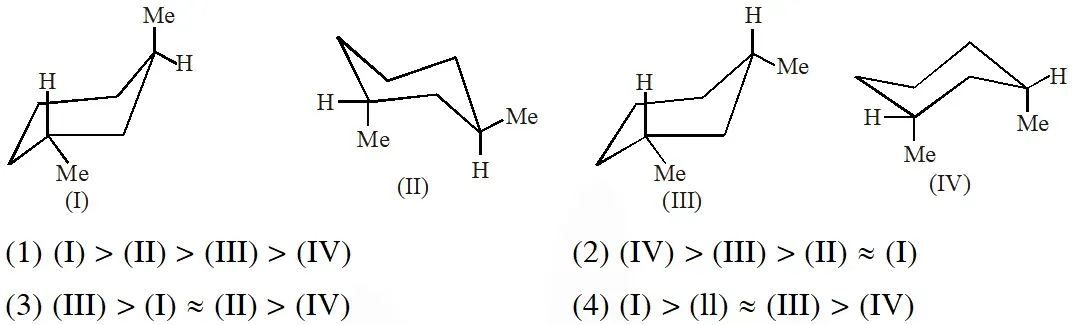
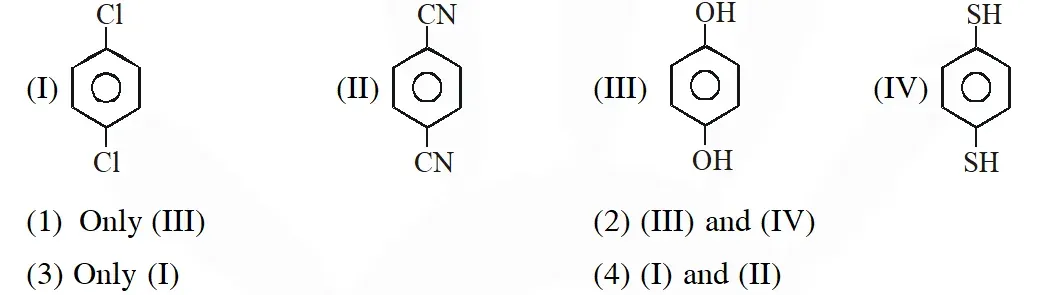
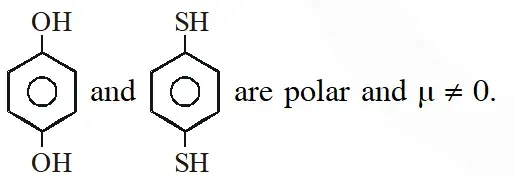
JEE Main Previous Year Papers Questions of Chemistry With Solutions are available at eSaral. Simulator Previous Years AIEEE/JEE Mains Questions [esquestion] The alkene that exhibits geometrical isomerism is :- (1) 2–butene (2) 2–methyl–2–butene (3) Propene (4) 2–methyl propene #tag# [AIEEE-2009] #sol# (1) [/esquestion] [esquestion] The number of stereoisomers possible for a compound of the molecular formula CH3–CH=CH–CH(OH)–Me is :- (1) 4 (2) 6 (3) 3 (4) 2 #tag# [AIEEE-2009] #sol# (1) exhibits both geometrical as well as optical isomerism. Cis – R Trans – R Cis – S Trans – S [/esquestion] [esquestion] Out of the following, the alkene that exhibits optical isomerism is : (1) 2-methyl-2-pentene (2) 3-methyl-2-pentene (3) 4-methyl-1-pentene (4) 3-methyl-1-pentene #tag# [AIEEE-2010] #sol# (4) [/esquestion] [esquestion] Identify the compound that exhibits tautomerism :- (1) 2-Pentanone (2) Phenol (3) 2-Butene (4) Lactic acid #tag#[AIEEE-2011] #sol# (1) [/esquestion] [esquestion] The IUPAC name of the following compounds is : (1) (Z) – 5 – hepten – 3 – yne (2) (Z) – 2 – hepten – 4 – yne (3) (E) – 5 – hepten – 3 – yne (4) (E) – 2 – hepten – 4 – yne #tag# [JEE-Main-2012] #sol# (4) [/esquestion] [esquestion] Dipole moment is shown by :- (1) trans-2, 3-dichloro- 2-butene (2) 1, 2-dichlorobenzene (3) 1, 4-dichlorobenzene (4) trans-1, 2-dinitroethene #tag# [JEE-Main 2012] #sol# (2) [/esquestion] [esquestion] Maleic acid and fumaric acids are :- (1) Tautomers (2) Chain isomers (5) Geometrical isomers (4) Functional isomers #tag# [JEE-Main 2012] #sol# (3) [/esquestion] [esquestion] Monocarboxylic acids are functional isomers of : (1) Esters (2) Amines (3) Ethers (4) Alcohols #tag# [JEE-Main 2013] #sol# (1) Monocarboxylic acid and Esters $(-\mathrm{COO}-)$ has same general $(-\mathrm{COOH}) .$ Formula $\left[\mathrm{C}_{\mathrm{n}} \mathrm{H}_{2 \mathrm{n}} \mathrm{O}_{2}\right]$ but different FG, so are called functional group isomer. [/esquestion] [esquestion] Arrange in the correct order of stability (decreasing order) for the following molecules: #tag# [JEE-Main 2013] #sol# (3) [/esquestion] [esquestion] For which of the following molecule significant $\mu \neq 0$ #tag# [JEE-Main 2014] #sol# (2) Due to presence of $\ell . \mathrm{p}_{(\mathrm{s})}$ on oxygen and sulphur atom which are out of plane hence [/esquestion]

After completing Structural Isomerism, continue your Chemistry revision through the JEE Mains PYQ chapter wise collection.
Curious how often Structural Isomerism gets tested? Browse our JEE Main previous year question paper archive and count the questions yourself, session by session.
Frequently Asked Questions
Which alkene shows geometrical isomerism?
An alkene shows geometrical isomerism only when each carbon of the C=C double bond carries two different substituents. 2-Butene (CH₃–CH=CH–CH₃) qualifies because each sp² carbon has –H and –CH₃. 2-Methylpropene does not qualify because one sp² carbon has two identical –CH₃ groups.
How many types of isomerism are asked in JEE Main?
JEE Main questions cover structural isomerism (chain, position, functional group, metamerism) and stereoisomerism (geometric/E-Z and optical). Conformational isomerism (chair conformations of cyclohexane) also appears occasionally. Based on PYQs from 2009–2023, geometrical and optical isomerism together account for roughly 60% of isomerism questions.
What is structural isomerism in JEE Main chemistry?
Structural isomerism (also called constitutional isomerism) is when two or more compounds share the same molecular formula but differ in the order or manner in which atoms are connected. JEE Main tests four sub-types: chain, position, functional group, and metamerism. Questions typically ask you to identify or count isomers for a given formula.
Why does 1,2-dichlorobenzene have a dipole moment but 1,4-dichlorobenzene does not?
In 1,4-dichlorobenzene (para), the two C–Cl bond dipoles point in exactly opposite directions and cancel completely, giving μ = 0. In 1,2-dichlorobenzene (ortho), the bond dipoles are at approximately 60° to each other and do not cancel, resulting in a net dipole moment μ ≠ 0. This is a direct application of vector addition of bond dipoles.
How do you count stereoisomers for a JEE Main question?
First, count chiral centres (n) in the molecule — these give 2ⁿ optical isomers. Then check if the molecule also has a C=C with restricted rotation — this adds a factor of 2 (cis and trans). Multiply both. For CH₃–CH=CH–CH(OH)–CH₃: 1 chiral centre × 1 double bond = 2 × 2 = 4 stereoisomers
What is the difference between maleic acid and fumaric acid?
Maleic acid and fumaric acid are both butenedioic acids (molecular formula C₄H₄O₄). Maleic acid is the cis isomer (both –COOH groups on the same side of the double bond) and fumaric acid is the trans isomer. They are geometrical isomers of each other, not tautomers or functional isomers.
Team eSaral
eSaral Academic and Editorial Team
Team eSaral is the collective author profile for educational content created by eSaral’s teachers and academic contributors. The team draws on expertise from IIT graduates, doctors, experienced educators and subject specialists to develop resources for JEE, NEET and school students. Our articles aim to explain concepts clearly and help students study with confidence.
Related Posts
Plant Cell Diagram: Labelled Structure, Parts and Functions
Simple, labelled plant cell diagram with parts and functions. Covers plant cell structure for Class 6, 7, 8, 9, 10 and 11 students, CBSE-aligned.

Saransh Gupta Sir's Visit to IIT Patna: Hostel Life, Placements & Lessons for JEE Aspirants
Inside Saransh Gupta Sir's IIT Patna visit — hostel life, the library, placements, internships, and real advice for JEE aspirants from students living the IIT dream.
Molality Formula: Formula for Molality, Derivation & Solved Examples
Molality formula is $m = \dfrac{n}{W}$. Learn the formula of molality, its SI unit, derivation, relation with molarity, and solved examples for Class 11, JEE and NEET.
BITSAT Previous Year Question Paper PDF
Download BITSAT previous year question papers PDF. Get year-wise BITSAT PYQs, memory-based papers, exam pattern, and preparation tips to improve your BITSAT preparation.

Teachers’ Day 2026 at eSaral Gurukul: Celebrating the Bond Between Students, Teachers & Mentors
See how Teachers’ Day 2026 was celebrated at eSaral Gurukul, reflecting the bond among students, teachers, and mentors, and the role of guidance beyond academics.
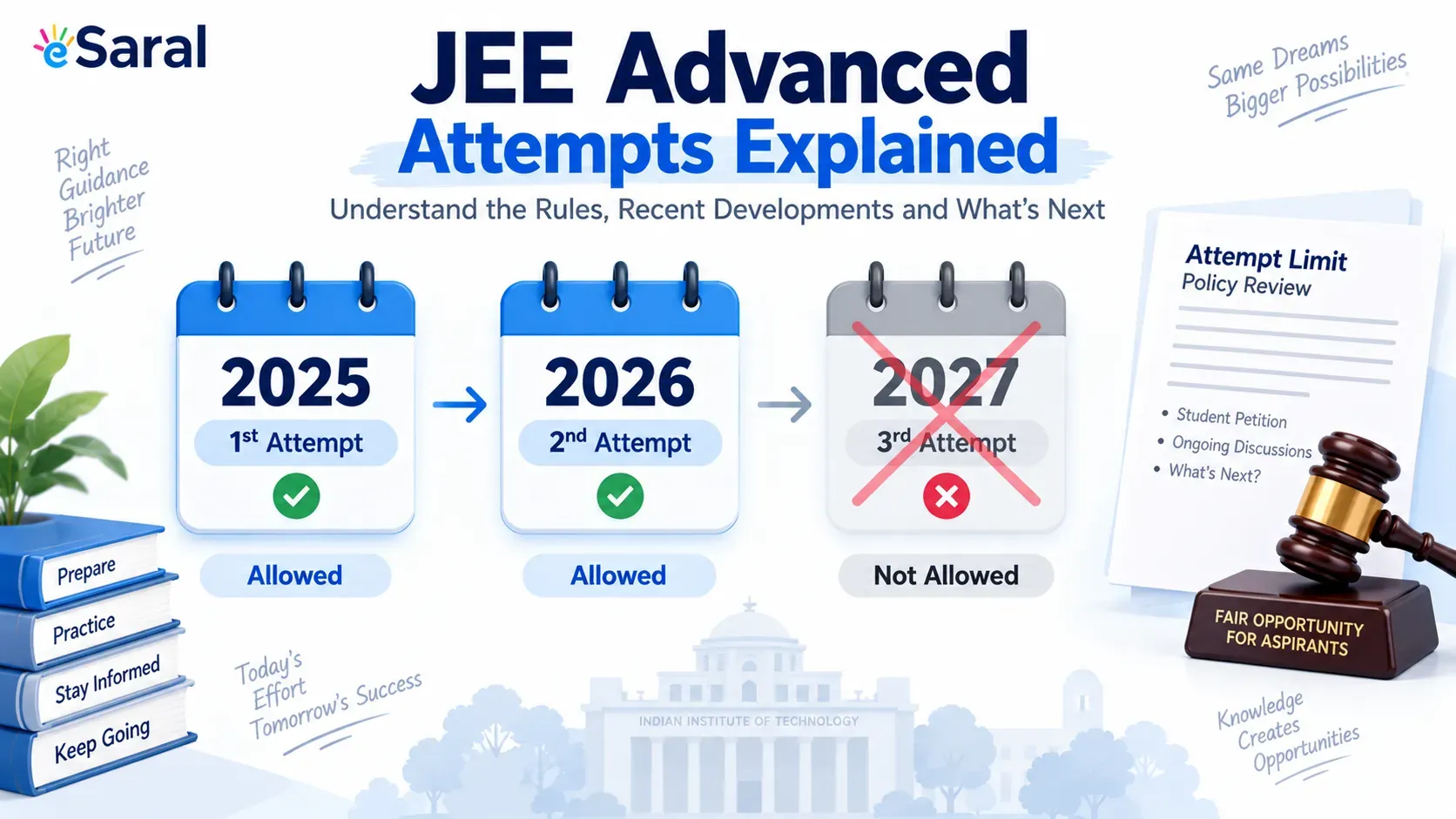
JEE Advanced Attempts: Can You Give It a Third Time? Rules Explained
JEE Advanced attempts: current rule is 2 consecutive years only: full eligibility criteria, the 2025 third-attempt controversy, and the latest 2026 petition news.

Best JEE Preparation App
Best JEE preparation app for Main & Advanced: AI mock tests, live doubt-solving, thousands of practice questions. JEE preparation app for droppers & Class 11-12.
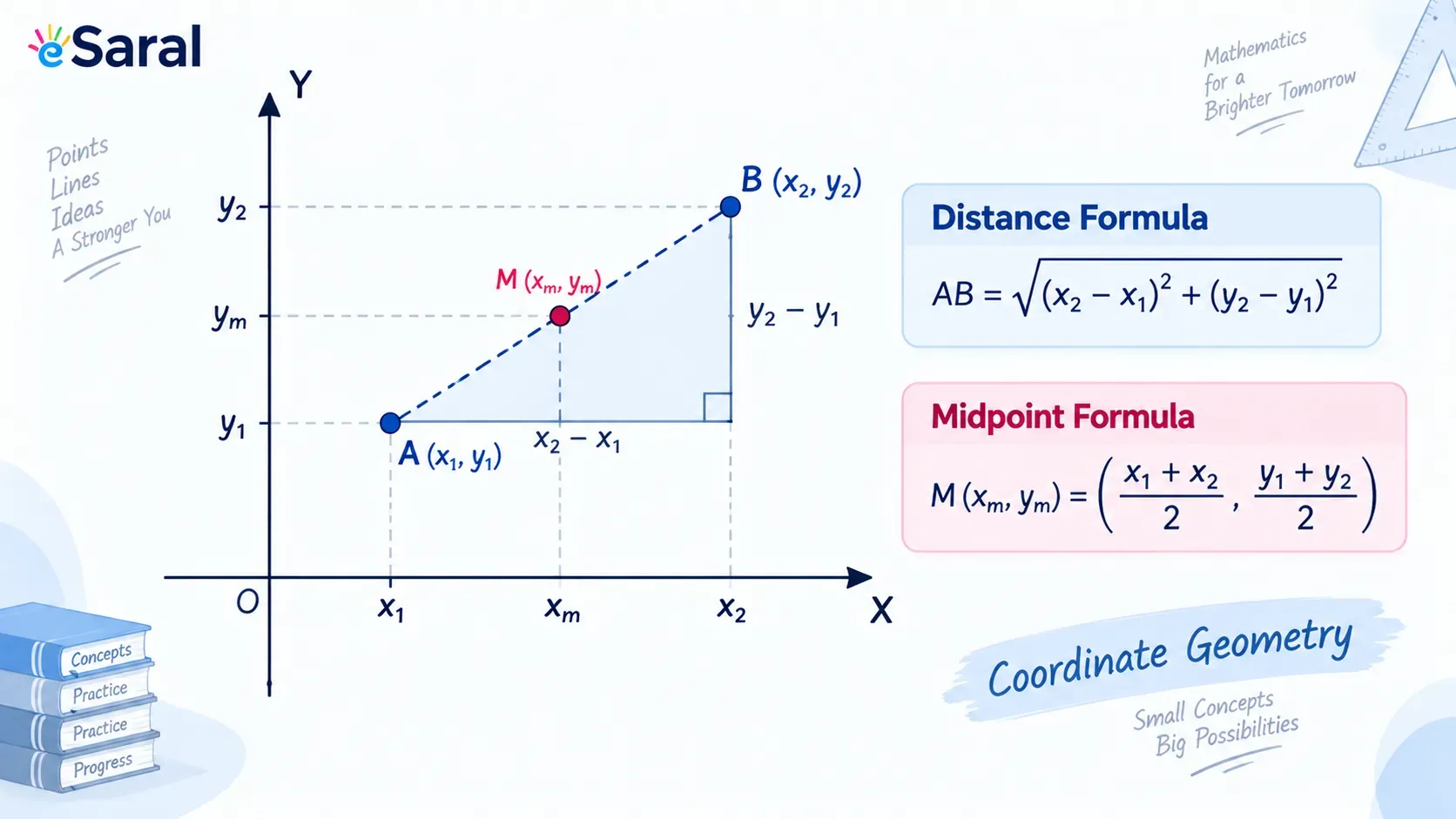
Coordinate Geometry Class 10: Formulas, Notes & Solved Examples
Coordinate geometry class 10: complete CBSE formulas — distance, section, midpoint and area of triangle — with derivation, notes and solved examples.
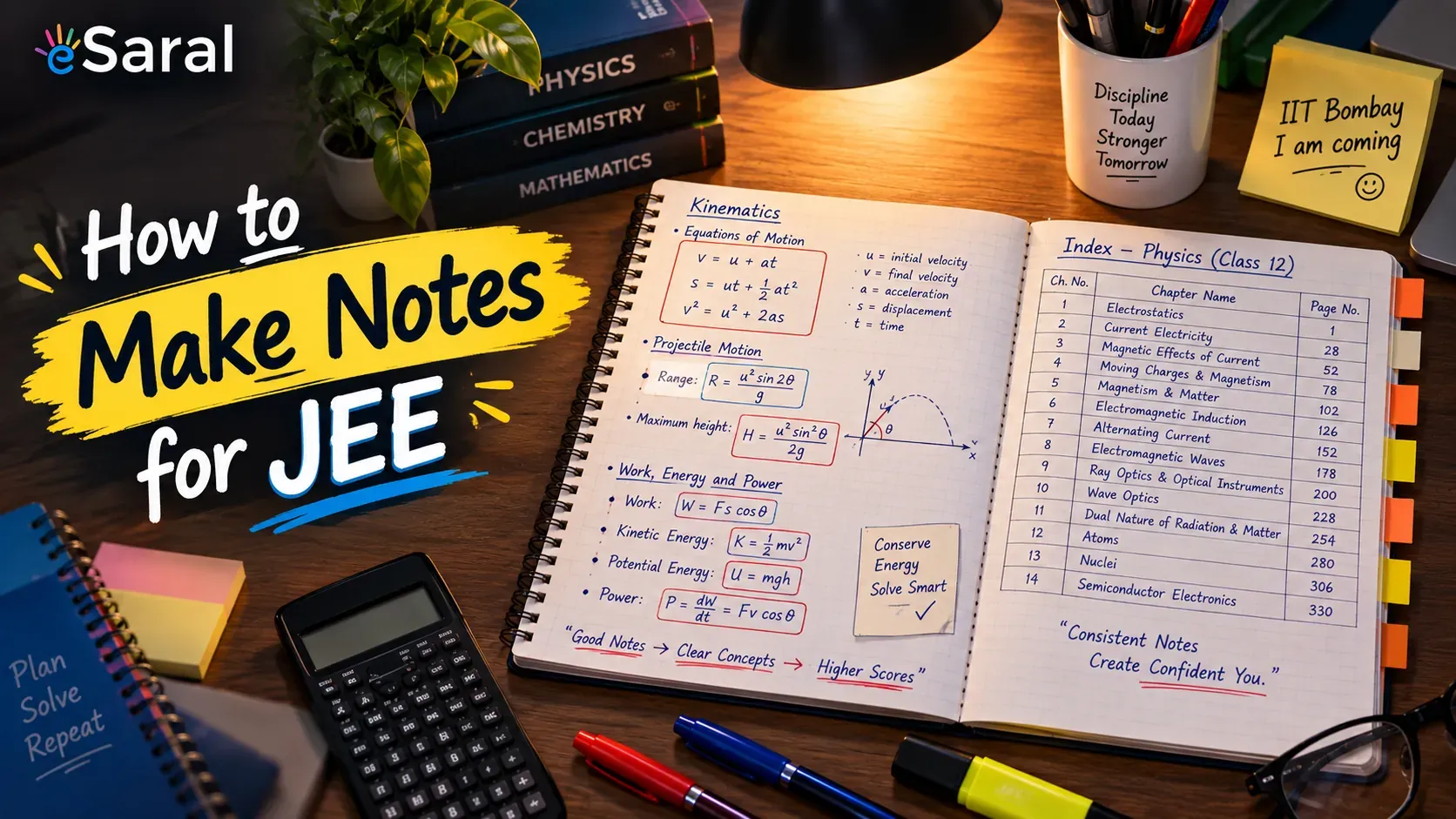
How to make Notes For JEE Smart Notes Strategy of an AIR 41
Learn how to make notes for JEE the way toppers do — indexing, shorthand, and smart short notes for JEE that cut revision time to just 5–7 days.
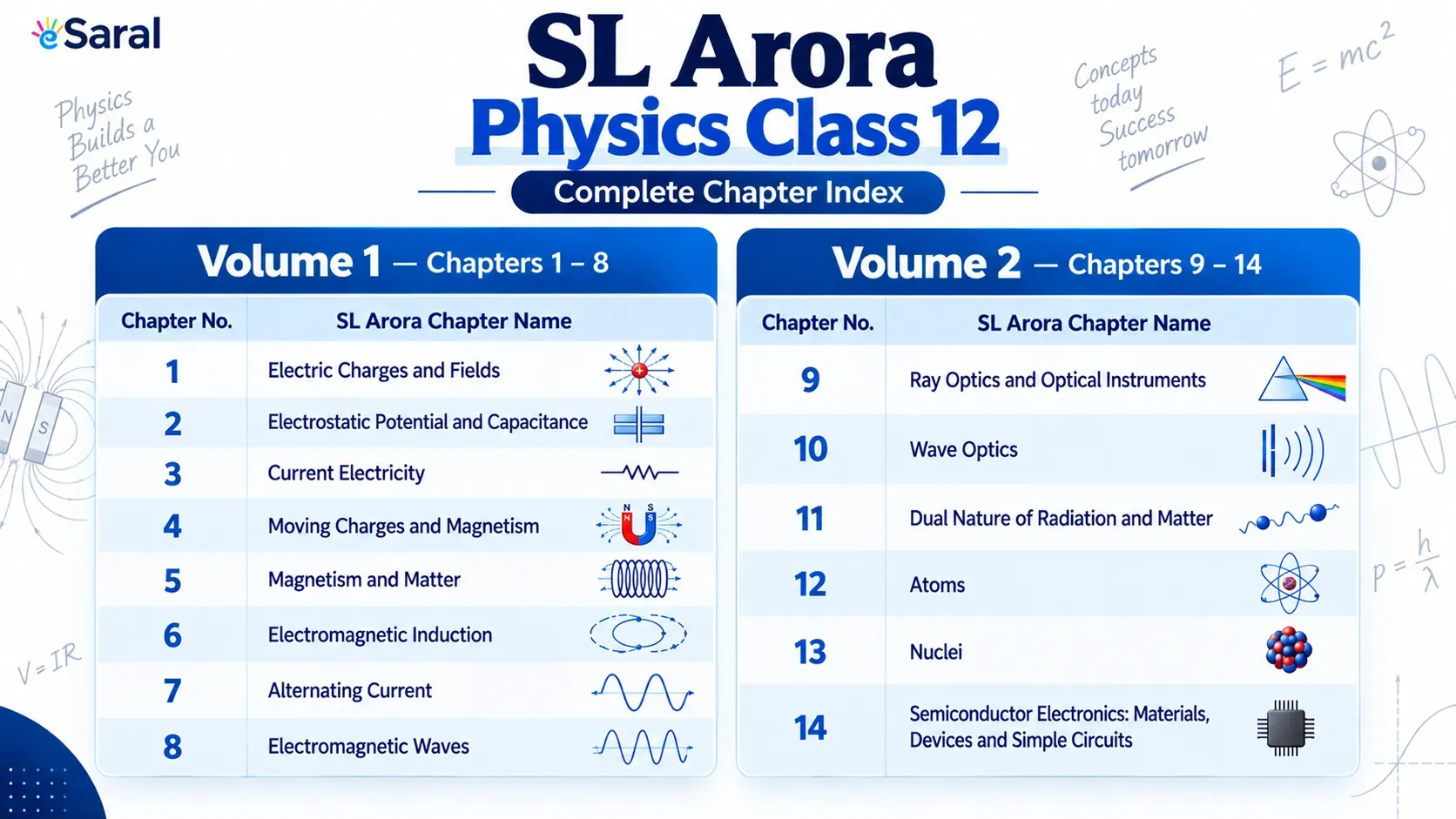
SL Arora Physics Class 12 Index – Chapter List for Volume 1 & 2
SL Arora Physics Class 12 index — complete chapter list for Volume 1 & 2, mapped to NCERT solutions for board, JEE Main, and NEET preparation.