
Alcohol, Ether and Phenol Notes for Class 12, IIT JEE & NEET

eSaral Academic and Editorial Team
Summary
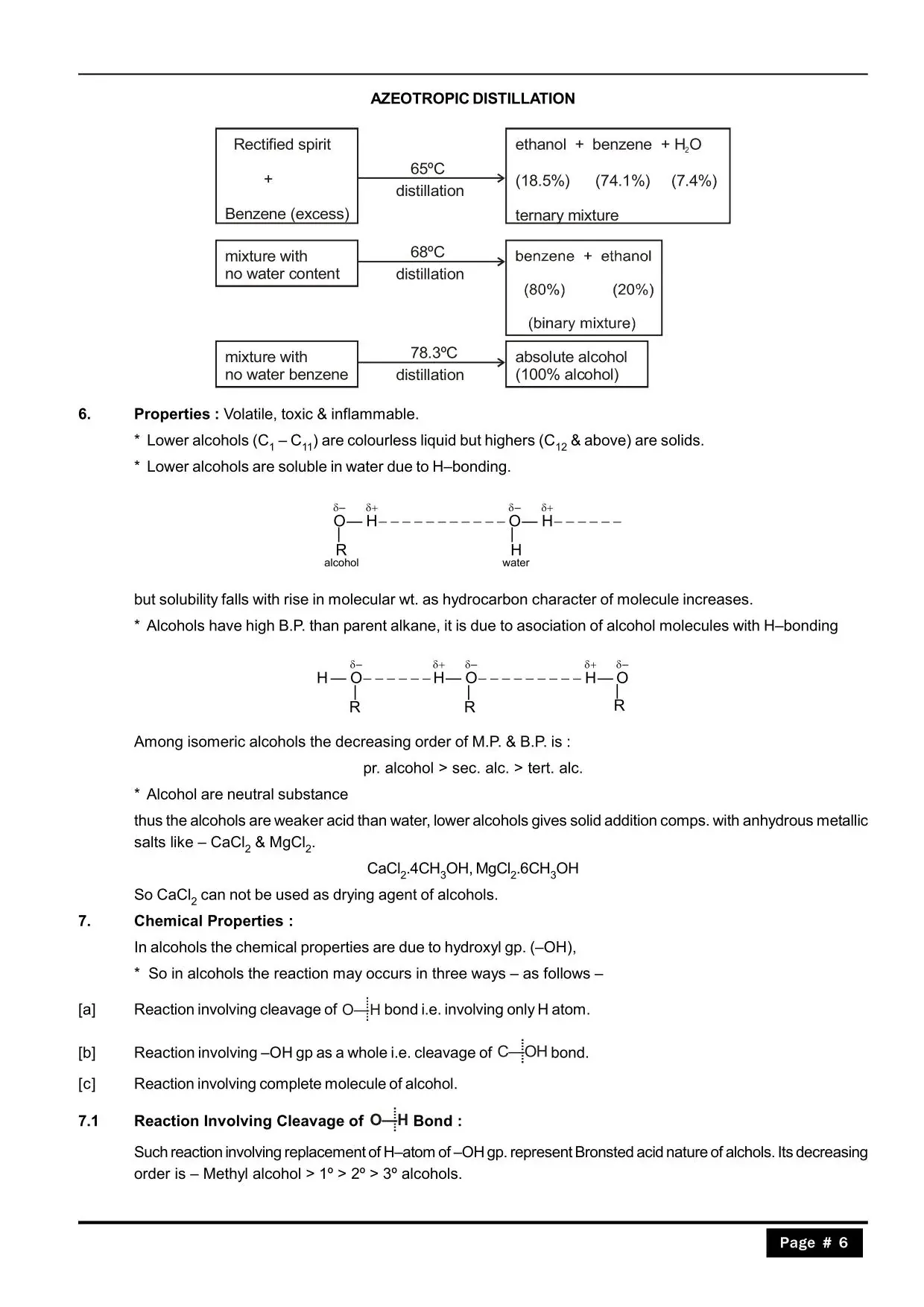
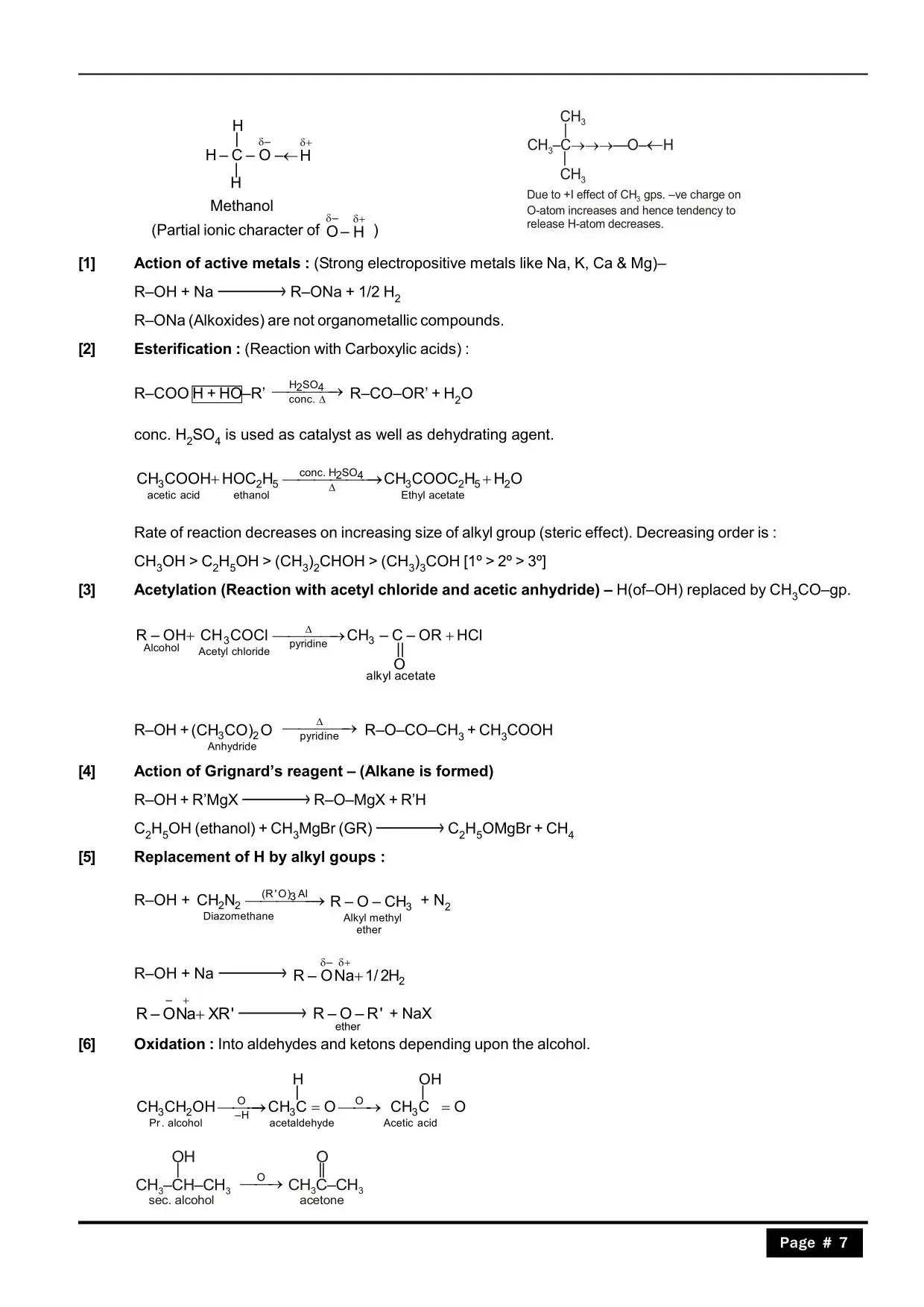
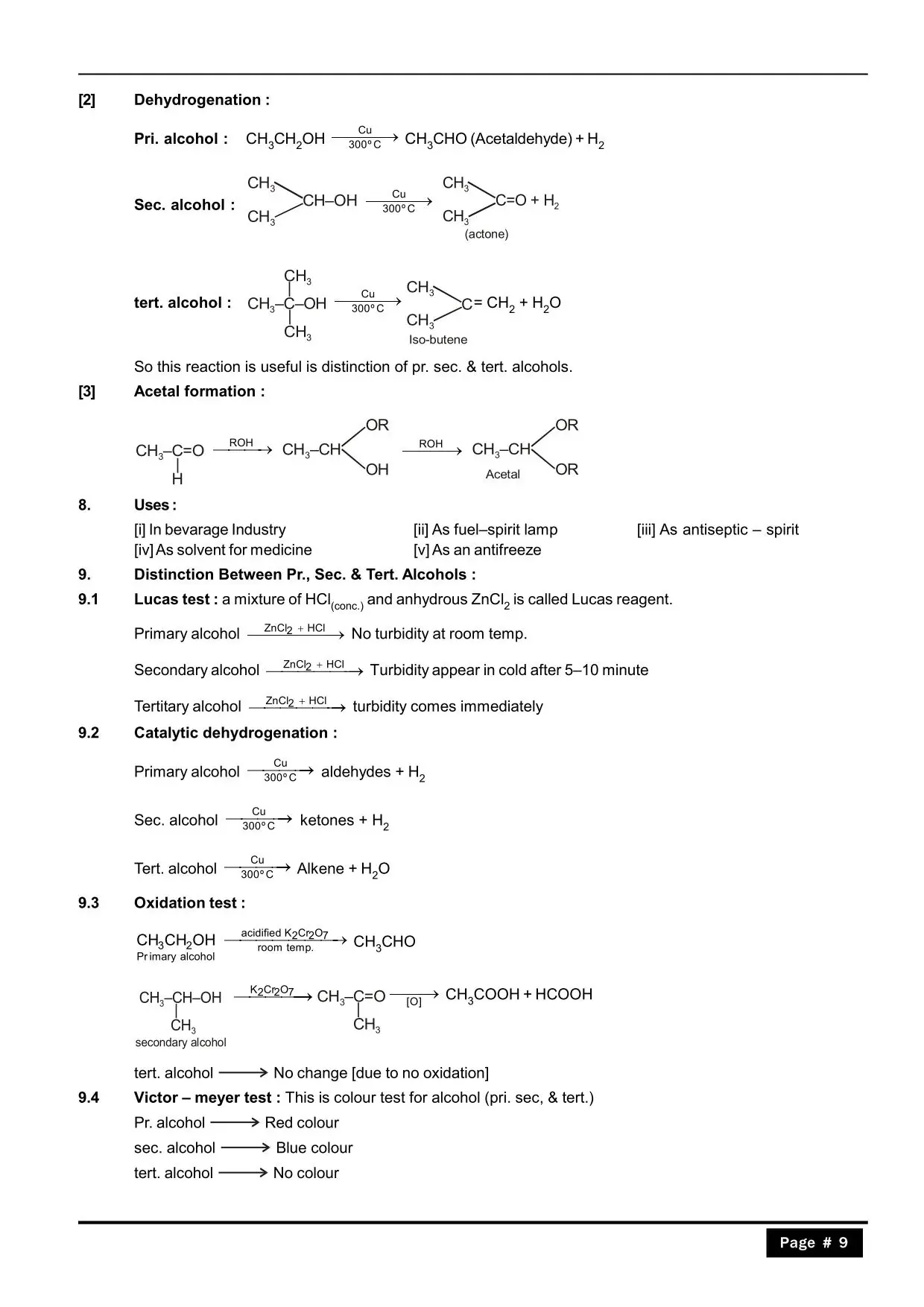
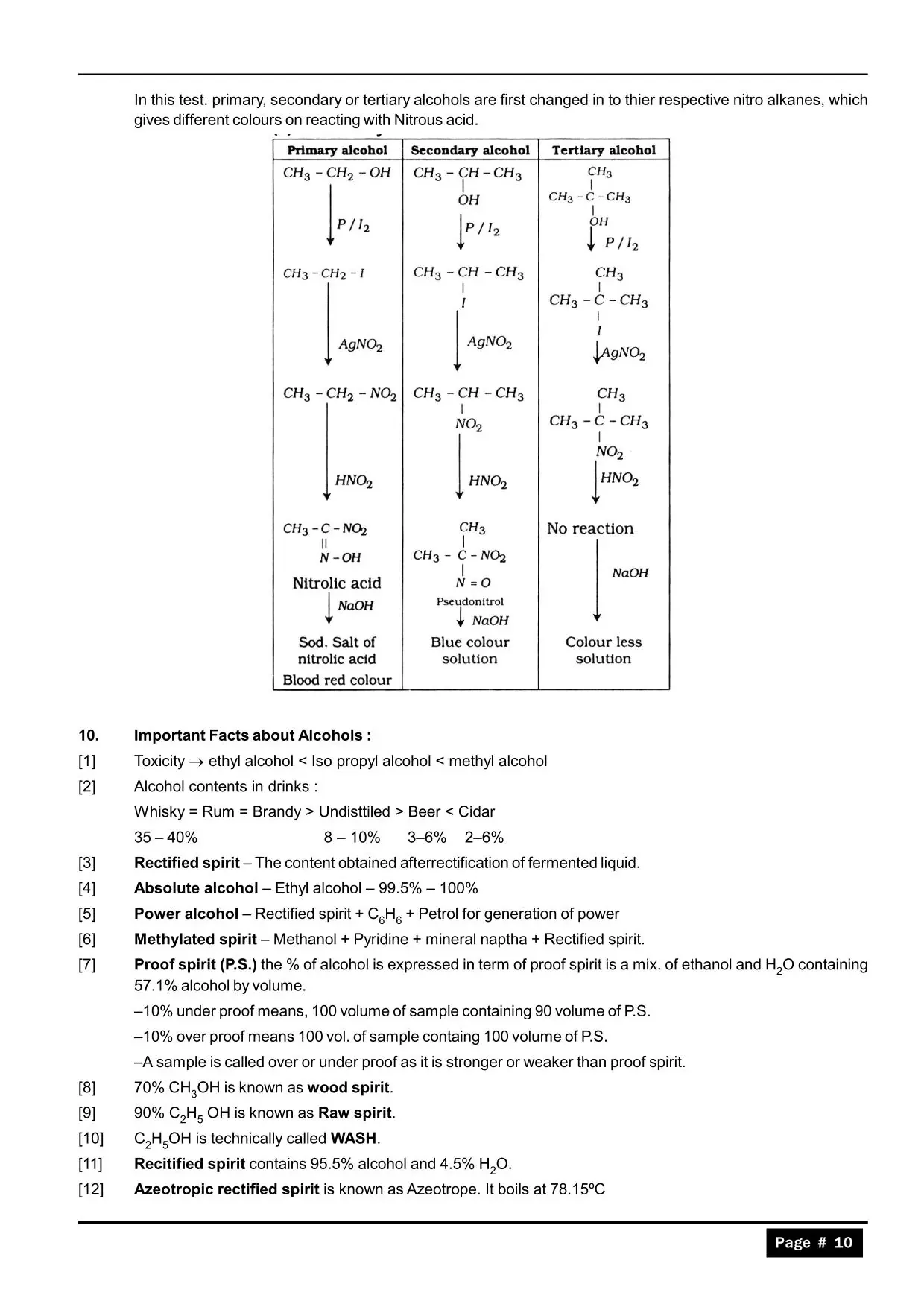
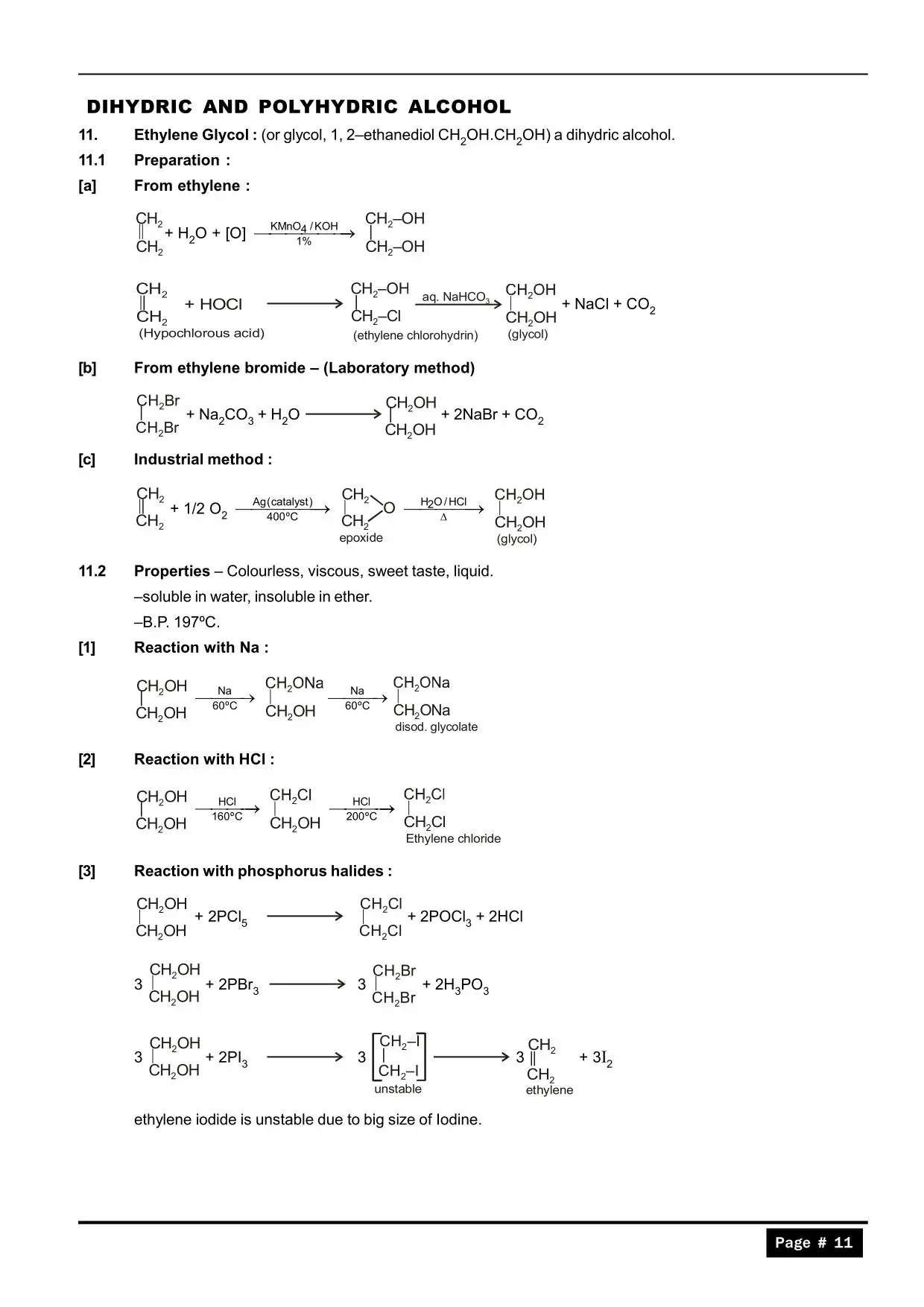
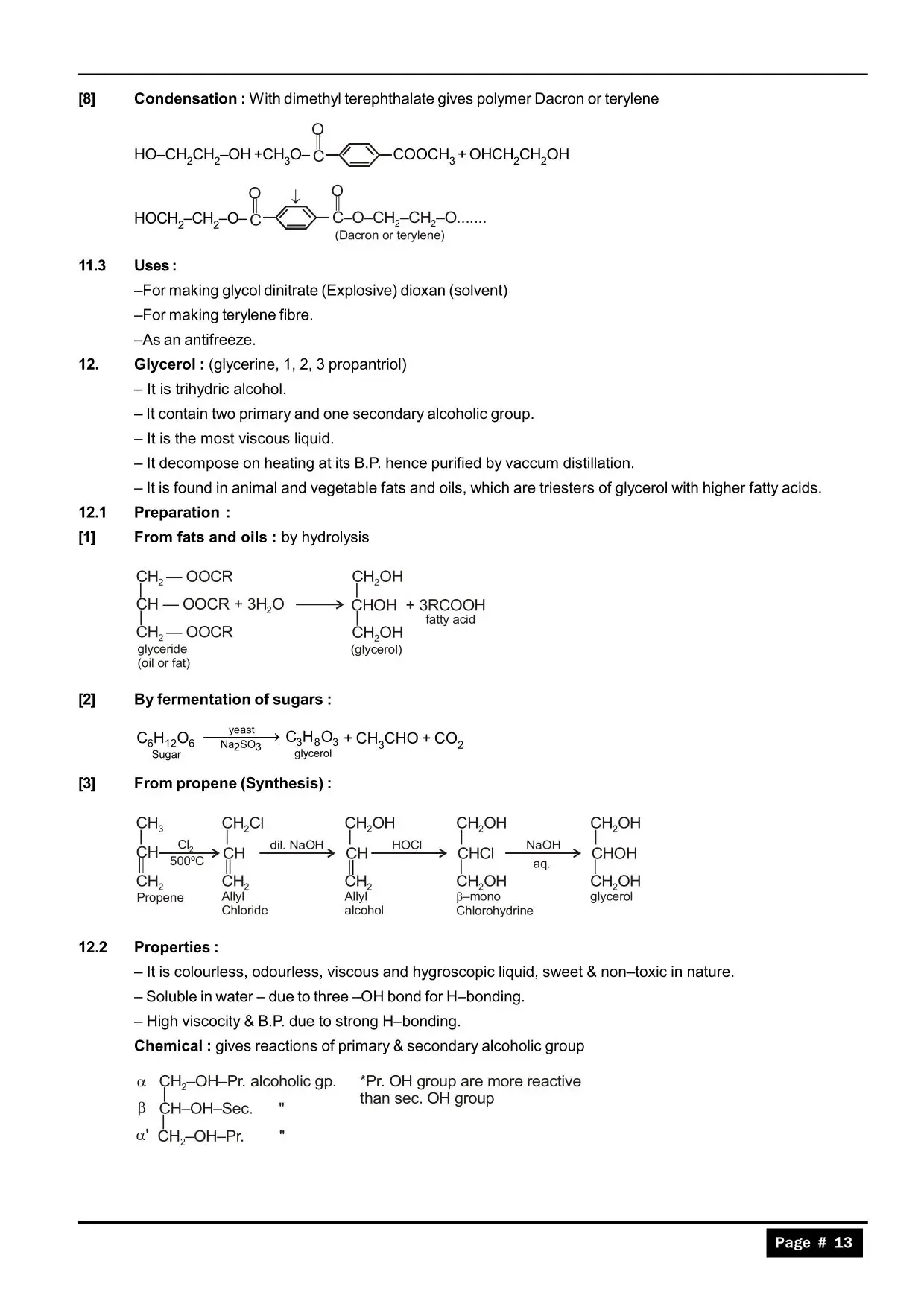
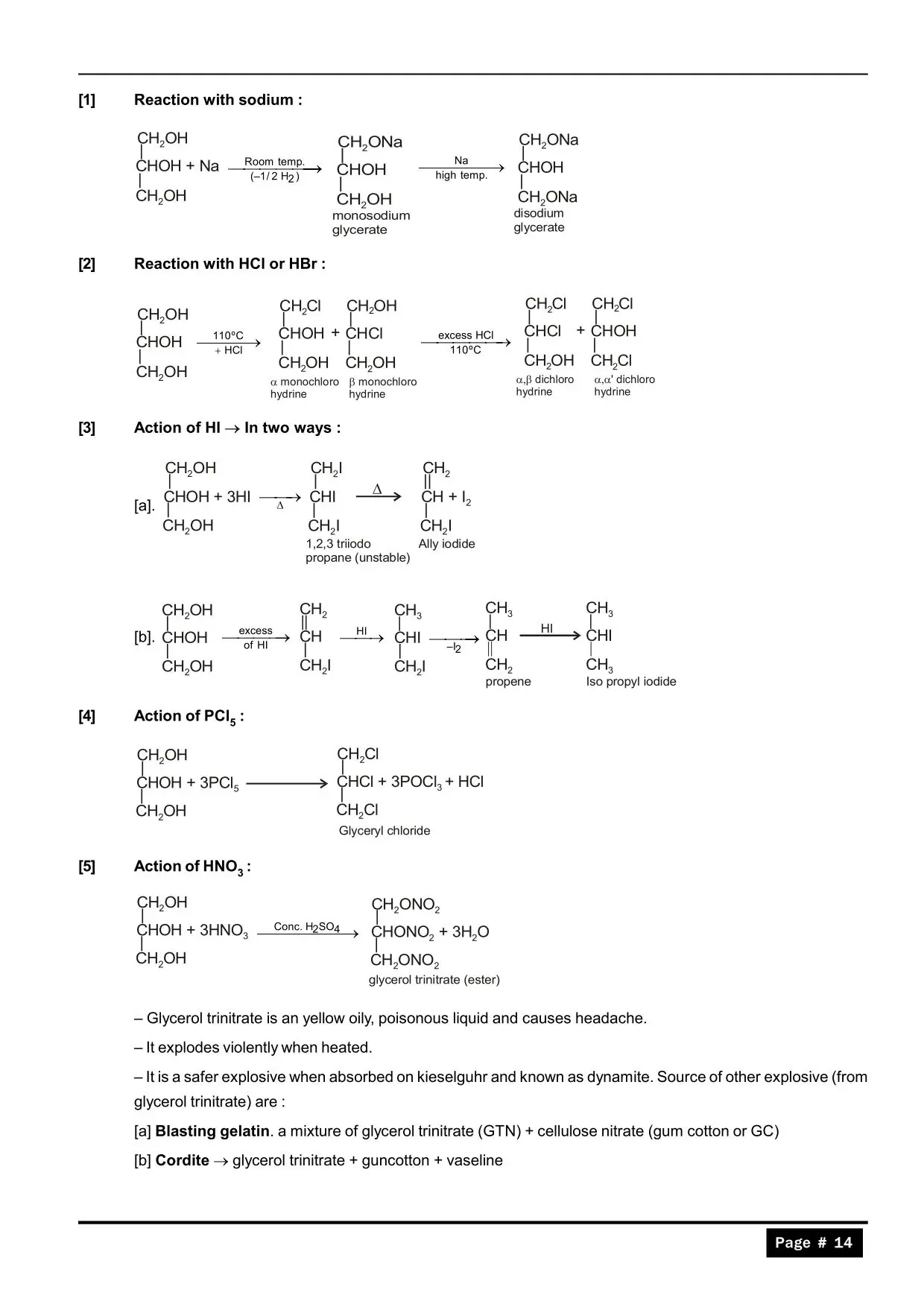
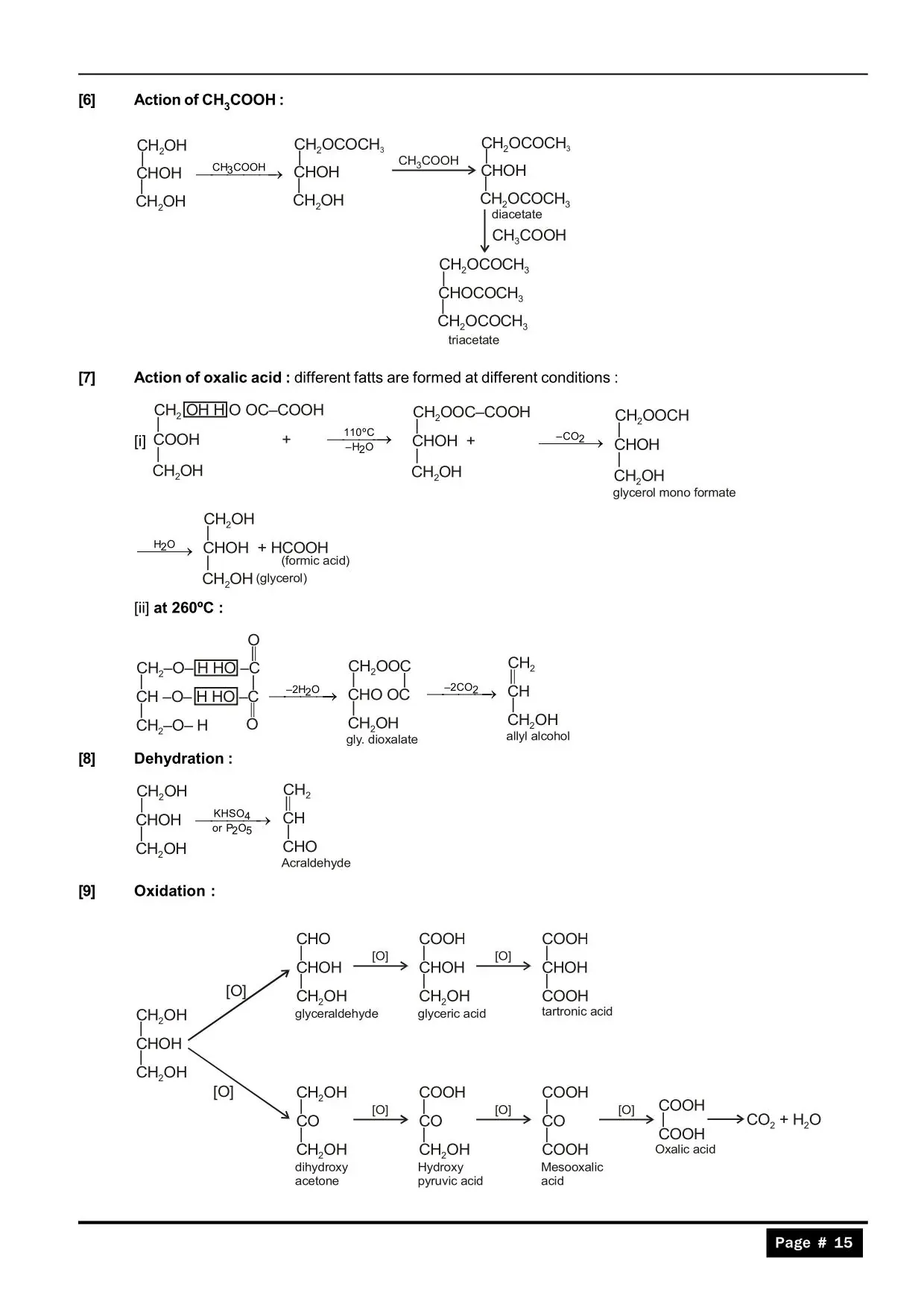
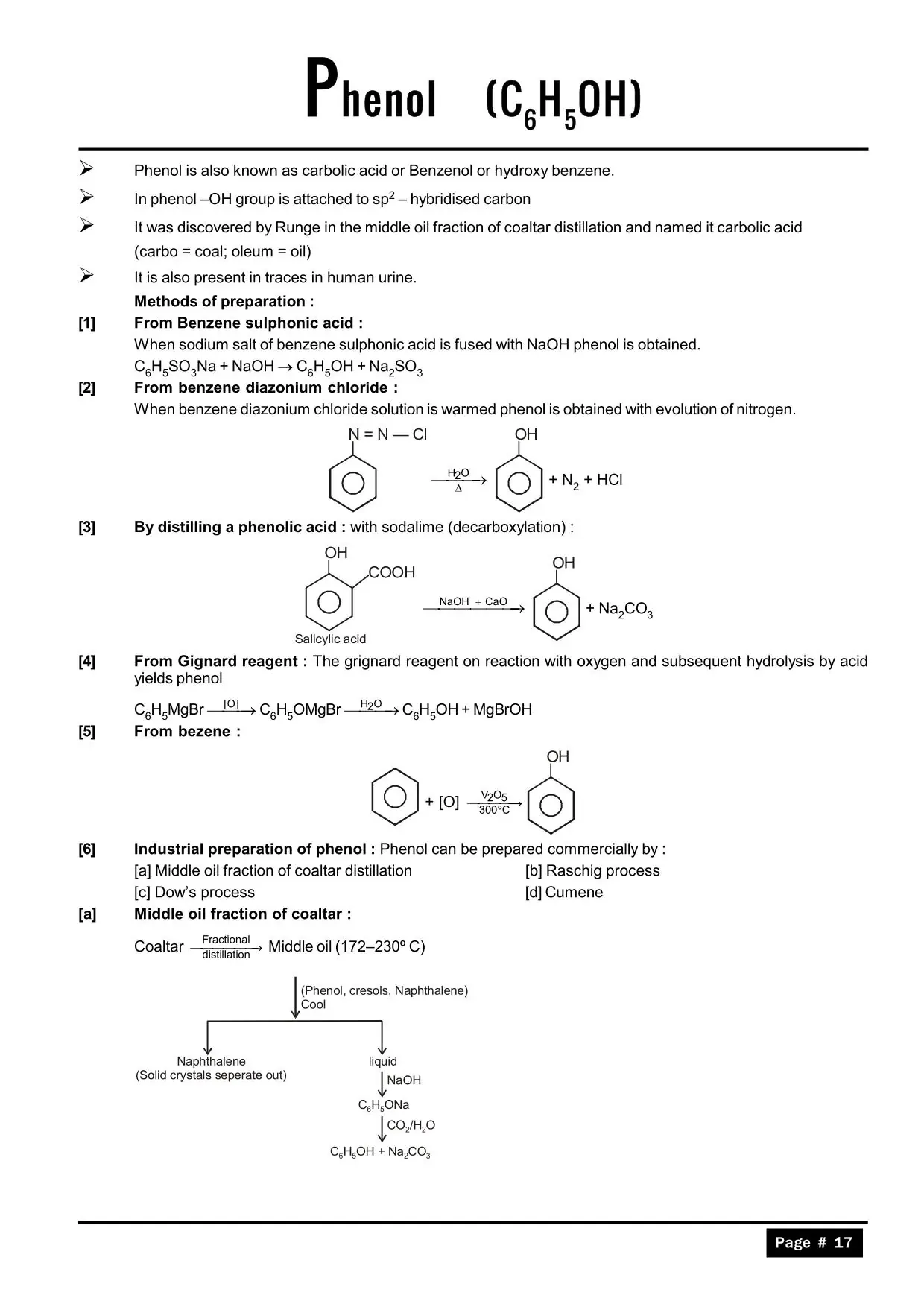
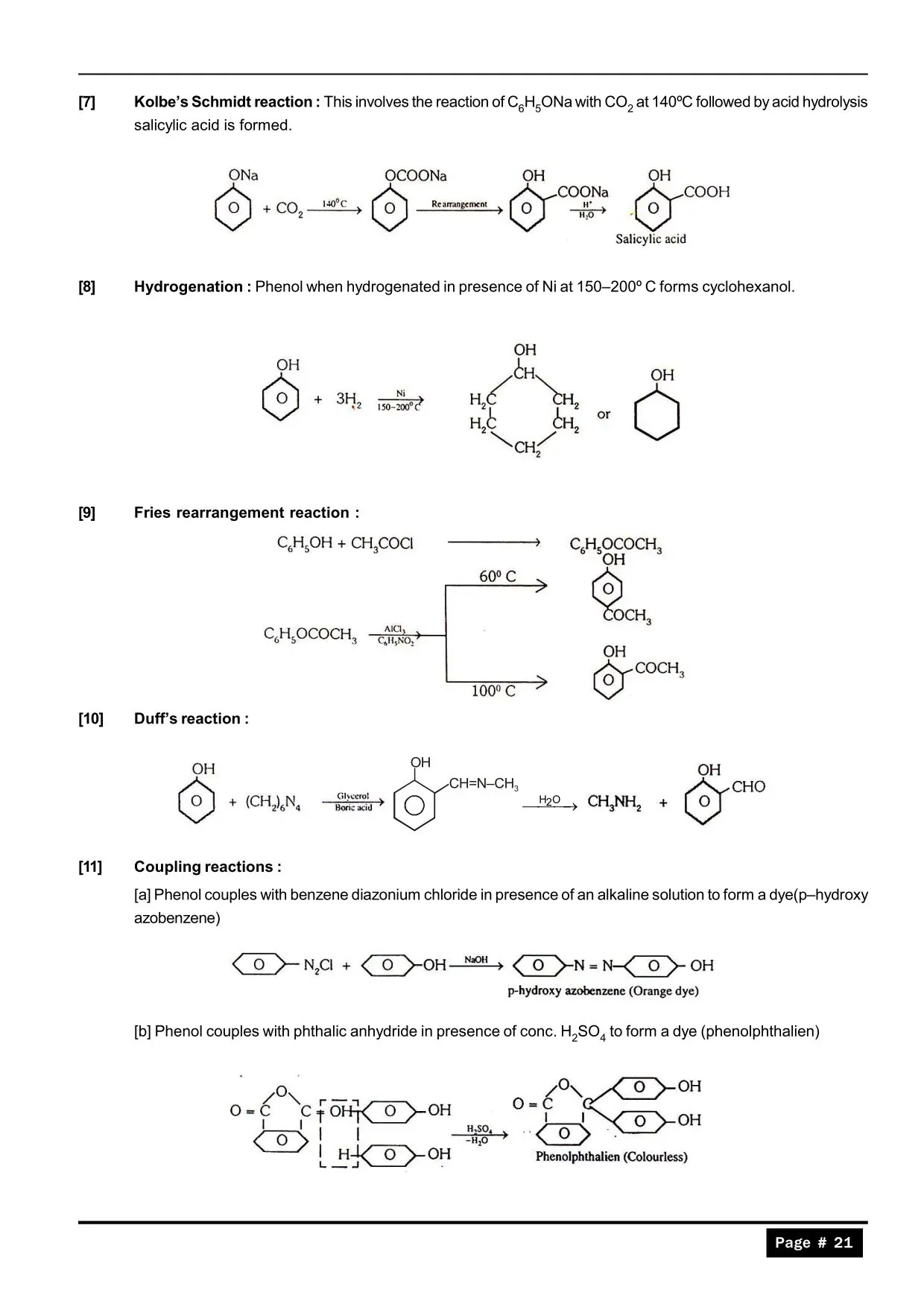
<p>Alcohols, Ethers and Phenols is a high-weightage Class 12 Organic Chemistry chapter covering the structure, properties, preparation, reactions, and acidity of alcohols, ethers, and phenols, making it essential for JEE Main, JEE Advanced, and NEET preparation.</p>
eSaral › Class 12›Alcohol, Ether and Phenol Notes for Class 12

🚀 Checkout eSaral Courses
Introduction
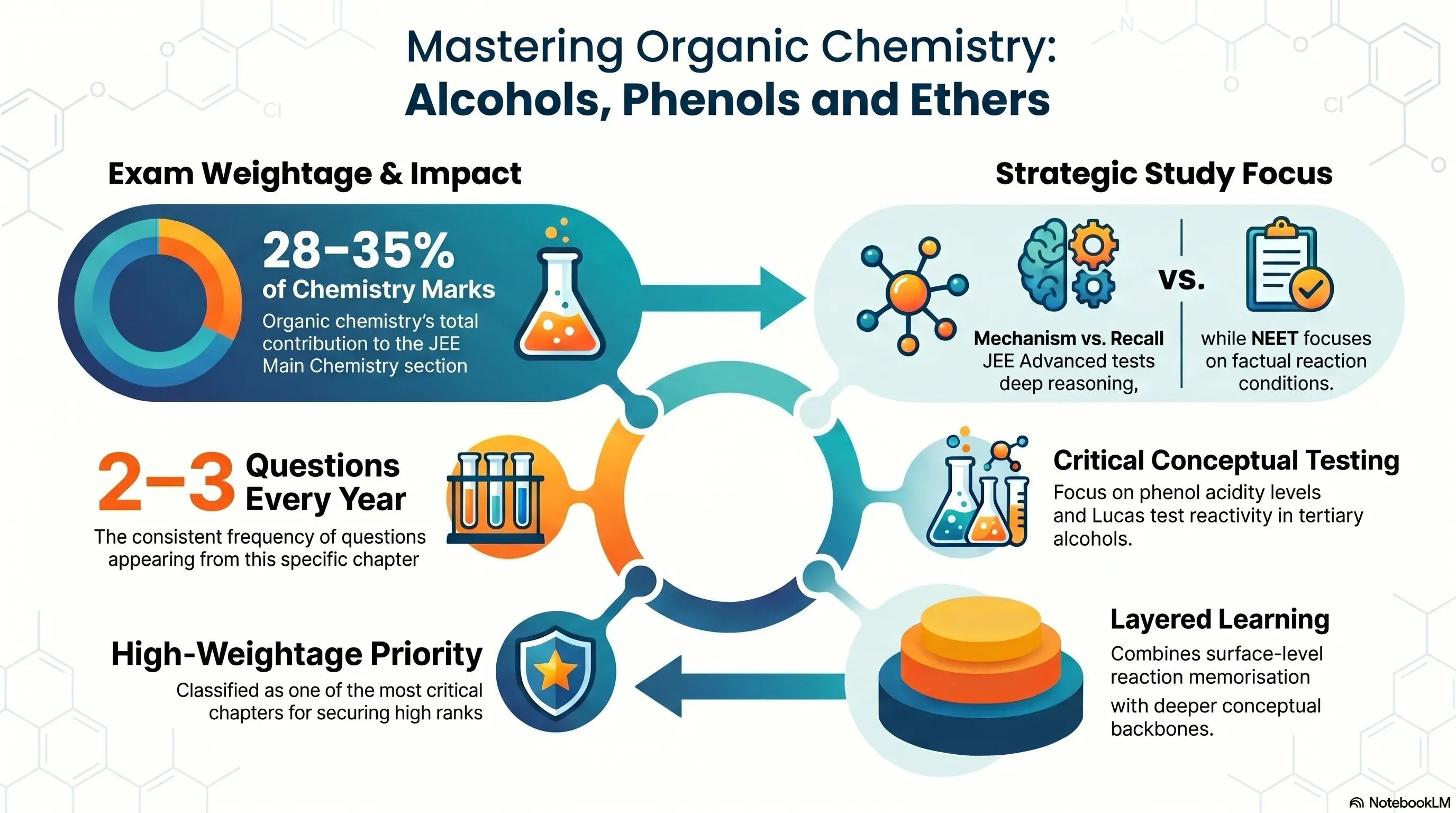
Alcohol, Ether and Phenol (NCERT Class 12 Chemistry, Chapter 11) is one of the highest-weightage organic chemistry chapters in both JEE Main and NEET. According to NTA's official topic distribution, organic chemistry accounts for roughly 28–35% of the Chemistry section in JEE Main — and this chapter alone contributes 2–3 questions almost every year.
The chapter is deceptively layered. At the surface it looks like memorising reactions, but JEE Advanced questions regularly test mechanism-based reasoning — why phenol is more acidic than ethanol, or why tertiary alcohols react faster in the Lucas test. NEET, on the other hand, focuses on clean factual recall of reactions and their conditions.
These notes are designed to give you both: a clear conceptual backbone and a reaction-by-reaction revision sheet. Pair them with the NCERT Solutions for Class 12 Chemistry to consolidate your understanding chapter by chapter.
Alcohol, Ether and Phenol Notes for Class 12
India's Best Exam Preparation for Class 12th - Download Now
India's Best Exam Preparation for Class 12th - Download Now
India's Best Exam Preparation for Class 12th - Download Now
India's Best Exam Preparation for Class 12th - Download Now
India's Best Exam Preparation for Class 12th - Download Now
India's Best Exam Preparation for Class 12th - Download Now
.
India's Best Exam Preparation for Class 12th - Download Now
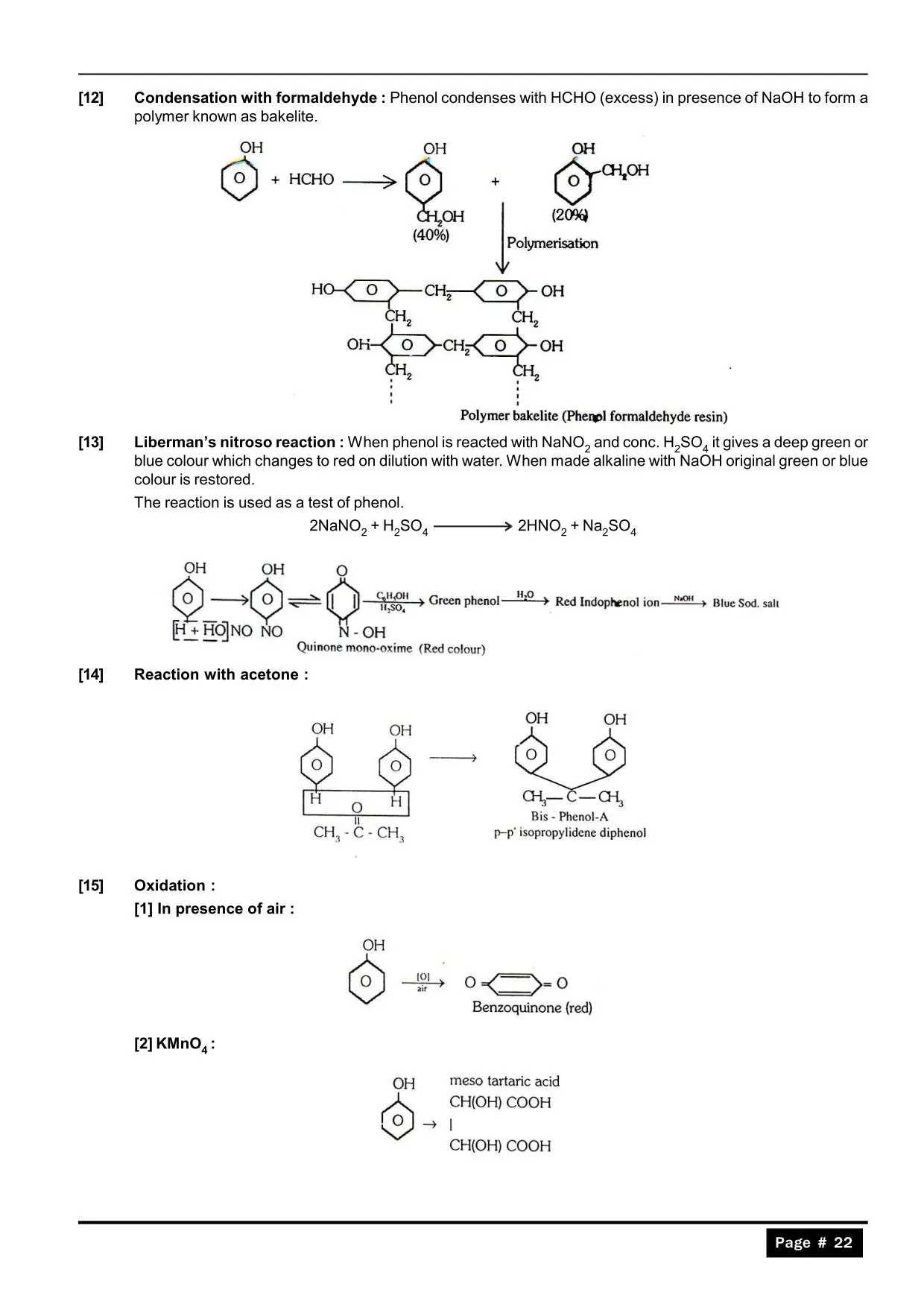
India's Best Exam Preparation for Class 12th - Download Now
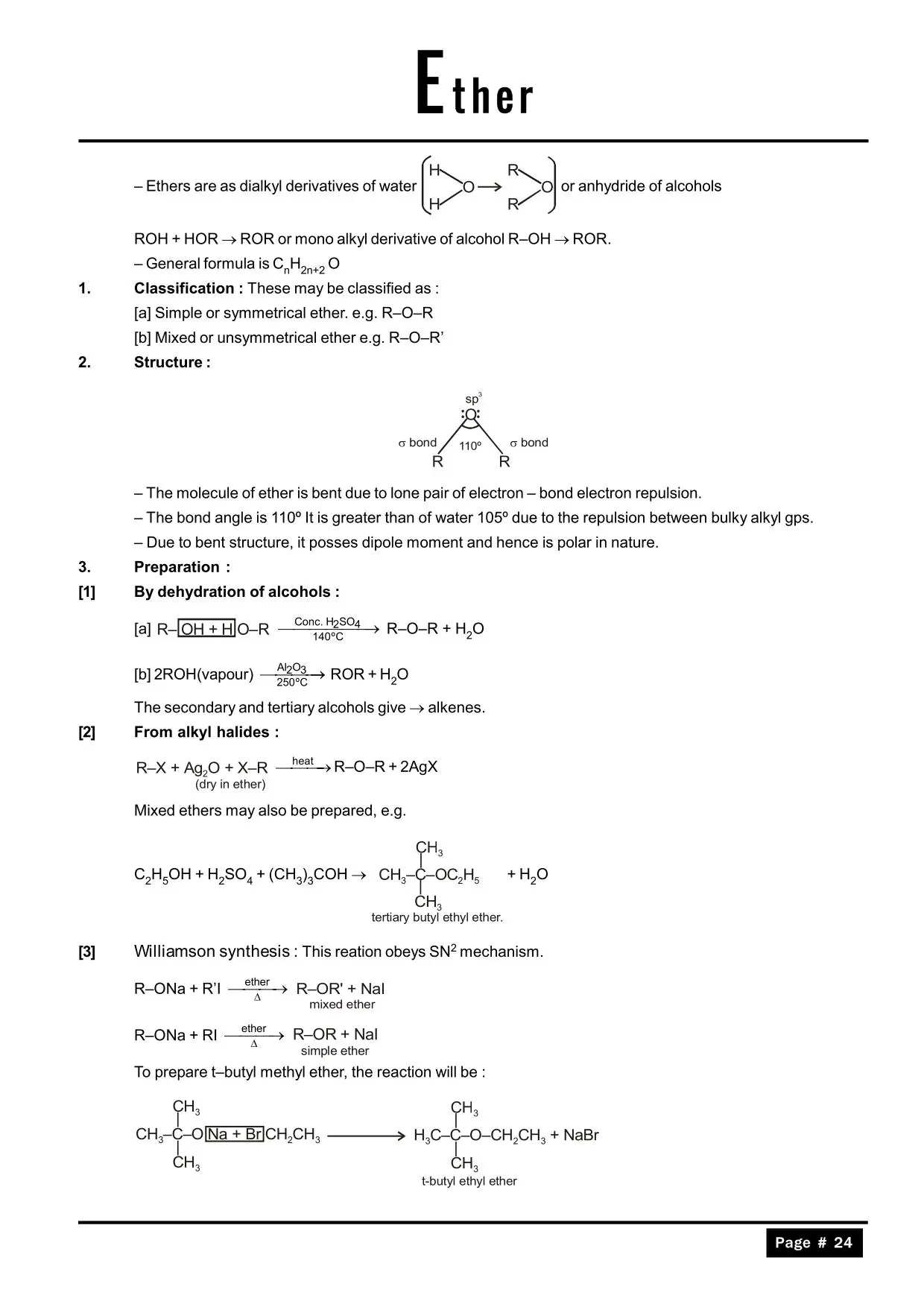
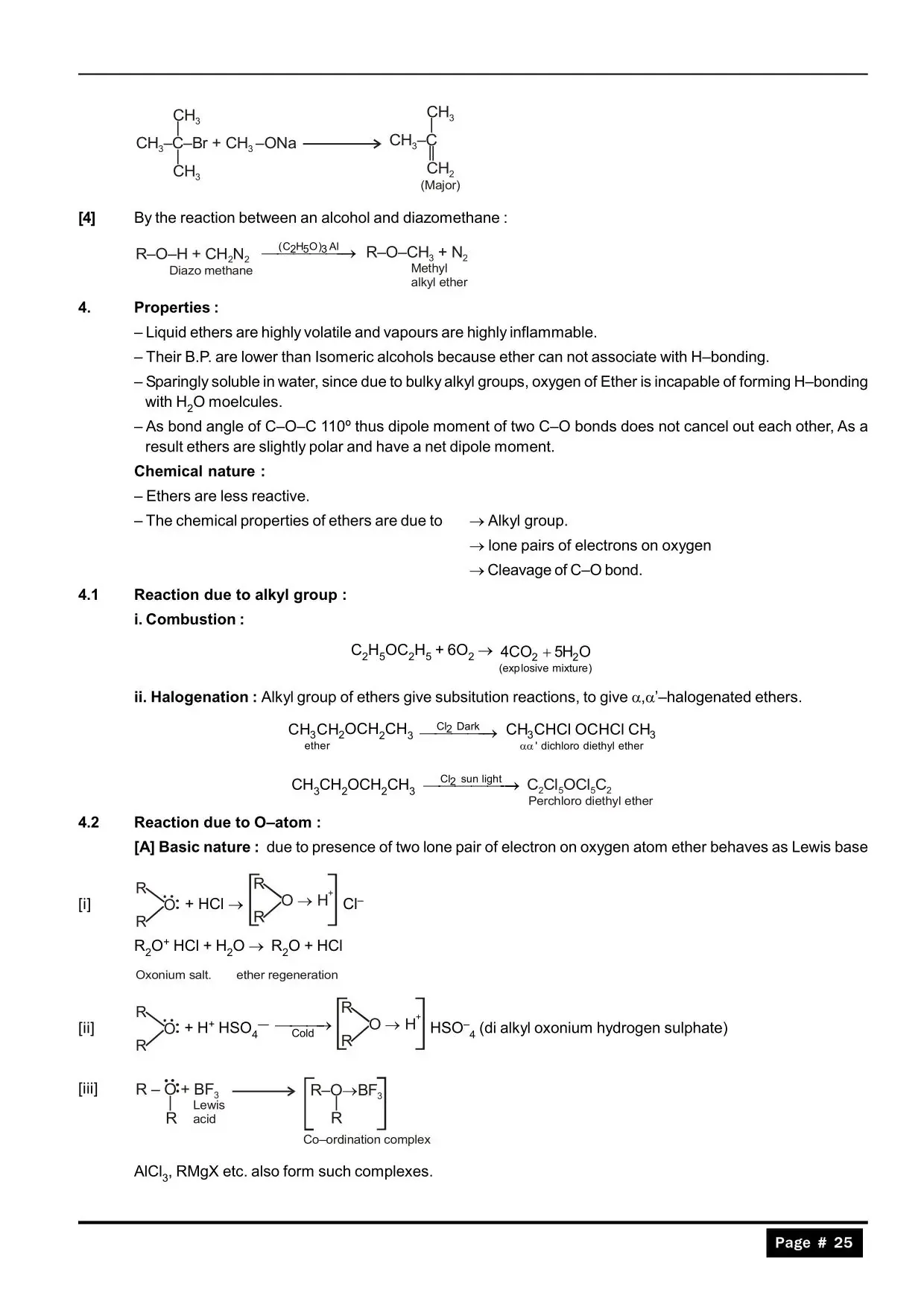
Frequently Asked Questions
What is the acidity order of alcohols, phenols, and water?
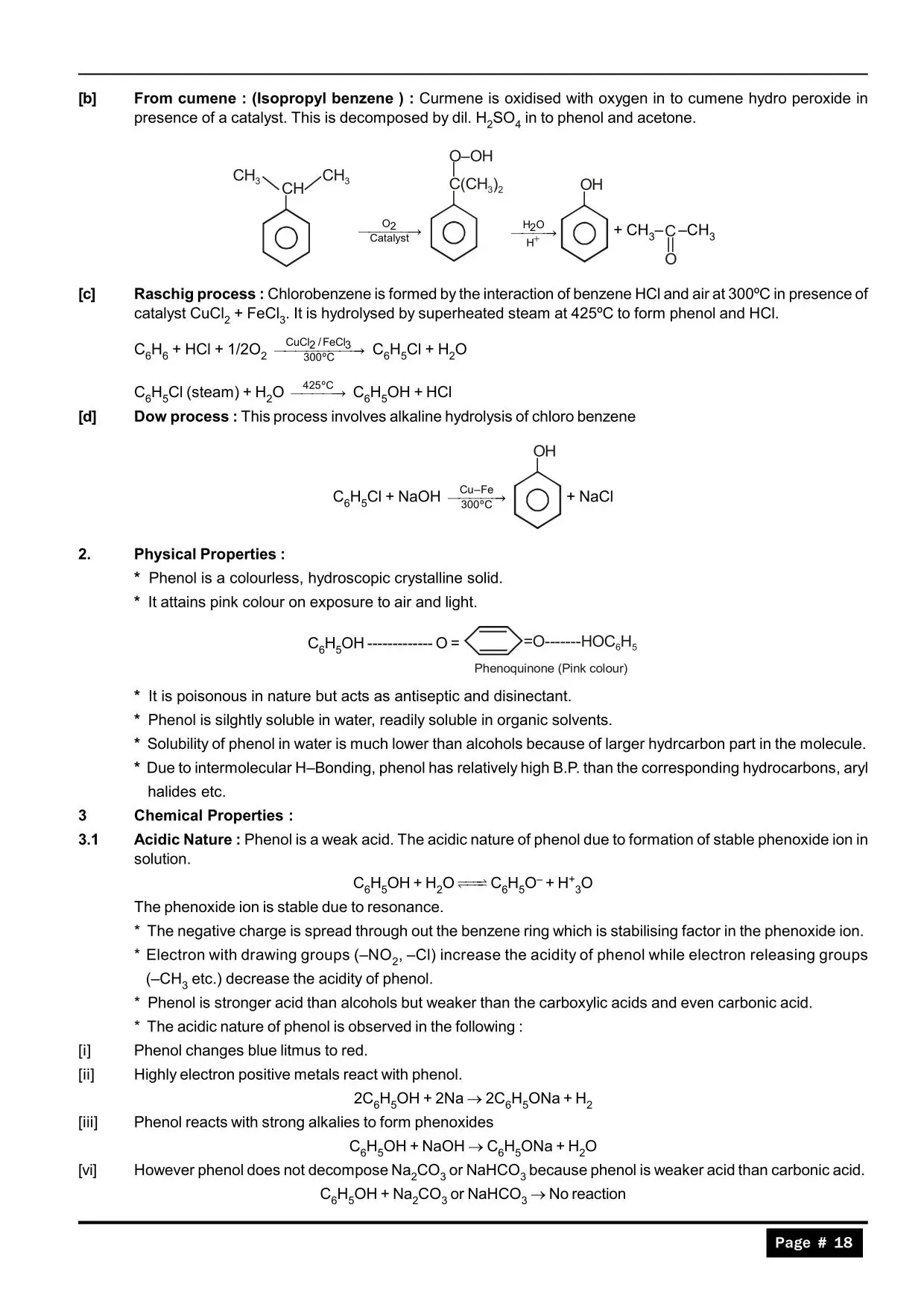
Phenol (pKa ≈ 10) is more acidic than water (pKa ≈ 15.7), which is more acidic than alcohols (pKa ≈ 16–18). Phenol's higher acidity arises from resonance stabilisation of the phenoxide ion. This order — phenol > water > alcohol — is tested almost every year in both JEE Main and NEET.
Why does tertiary alcohol react fastest in the Lucas test?
The Lucas test uses ZnCl₂ and conc. HCl to convert an alcohol to an alkyl chloride. Tertiary alcohols form stable tertiary carbocations (SN1 mechanism) instantly at room temperature, turning the solution turbid immediately. Secondary alcohols react slowly, and primary alcohols require heating to react at all.
What is Williamson ether synthesis and why must a primary alkyl halide be used?
Williamson ether synthesis is an SN2 reaction between sodium alkoxide and an alkyl halide to form an ether. A primary alkyl halide must be used because secondary and tertiary halides undergo elimination (E2) instead of substitution when attacked by the strongly basic alkoxide. The product would be an alkene, not an ether.
What are the conditions for dehydration of alcohols to give alkene vs ether?
Both reactions use the same alcohol and conc. H₂SO₄. At 413 K (lower temperature), intermolecular dehydration of two alcohol molecules gives an ether. At 443 K (higher temperature), intramolecular dehydration gives an alkene. Temperature is the deciding variable — this is a standard JEE Main question format.
How does the –OH group in phenol direct electrophilic substitution?
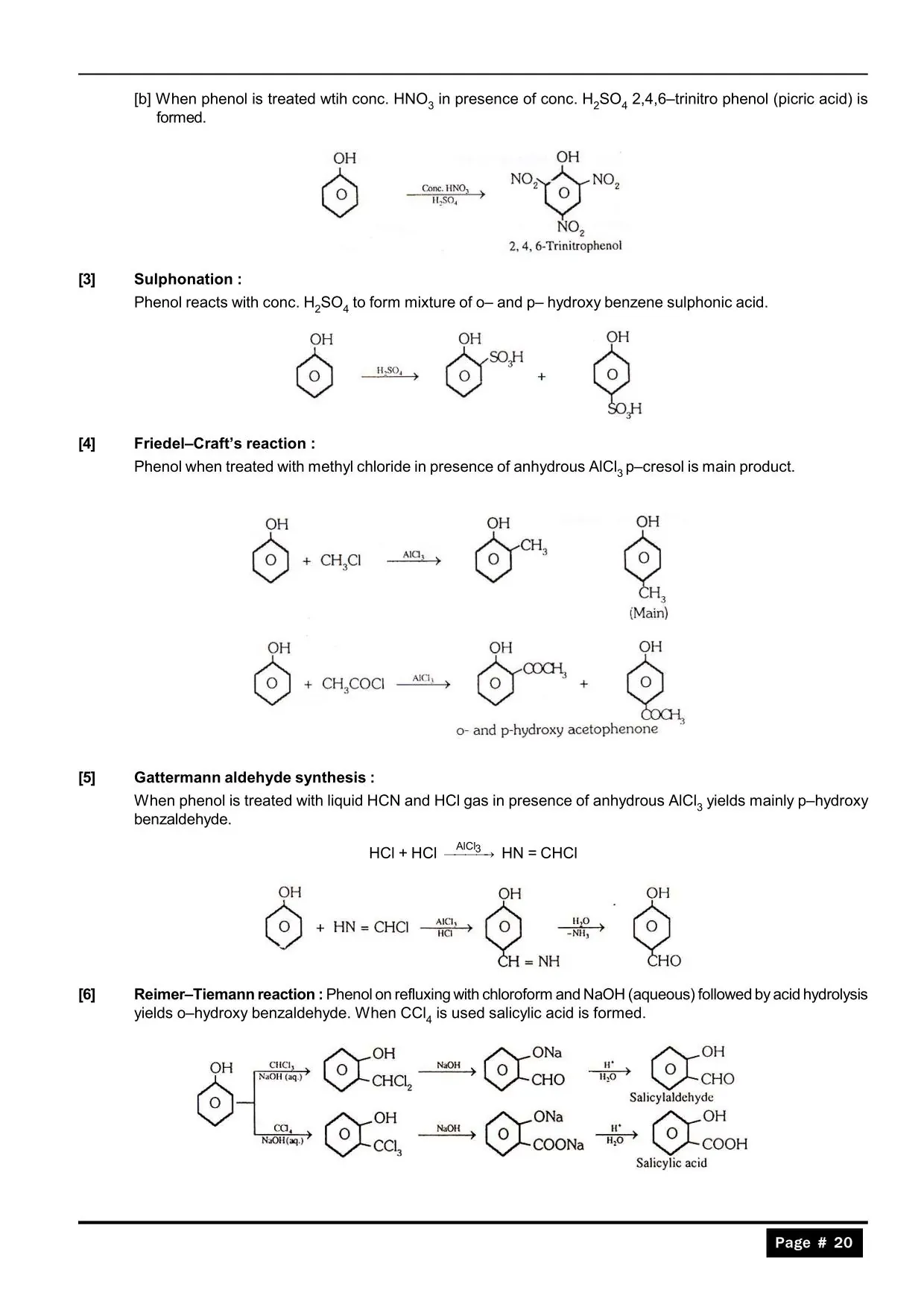
The –OH group donates electron density into the benzene ring through resonance, activating the ring towards electrophilic attack. It directs incoming electrophiles to the ortho and para positions. This is why bromination of phenol with Br₂(aq) gives 2,4,6-tribromophenol directly without a Lewis acid catalyst, unlike benzene bromination.
Team eSaral
eSaral Academic and Editorial Team
Team eSaral is the collective author profile for educational content created by eSaral’s teachers and academic contributors. The team draws on expertise from IIT graduates, doctors, experienced educators and subject specialists to develop resources for JEE, NEET and school students. Our articles aim to explain concepts clearly and help students study with confidence.
Related Posts
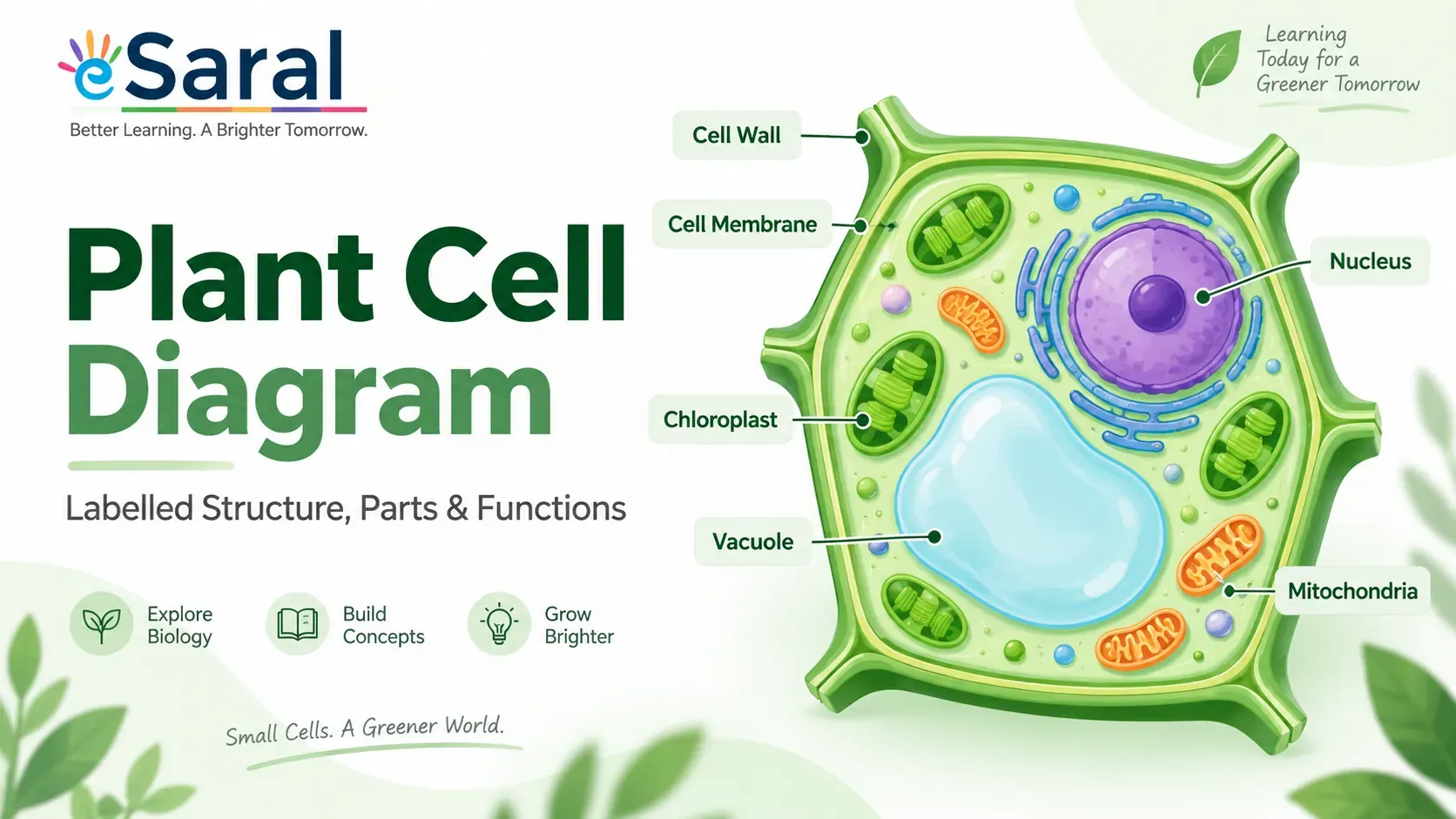
Plant Cell Diagram: Labelled Structure, Parts and Functions
Simple, labelled plant cell diagram with parts and functions. Covers plant cell structure for Class 6, 7, 8, 9, 10 and 11 students, CBSE-aligned.

Saransh Gupta Sir's Visit to IIT Patna: Hostel Life, Placements & Lessons for JEE Aspirants
Inside Saransh Gupta Sir's IIT Patna visit — hostel life, the library, placements, internships, and real advice for JEE aspirants from students living the IIT dream.
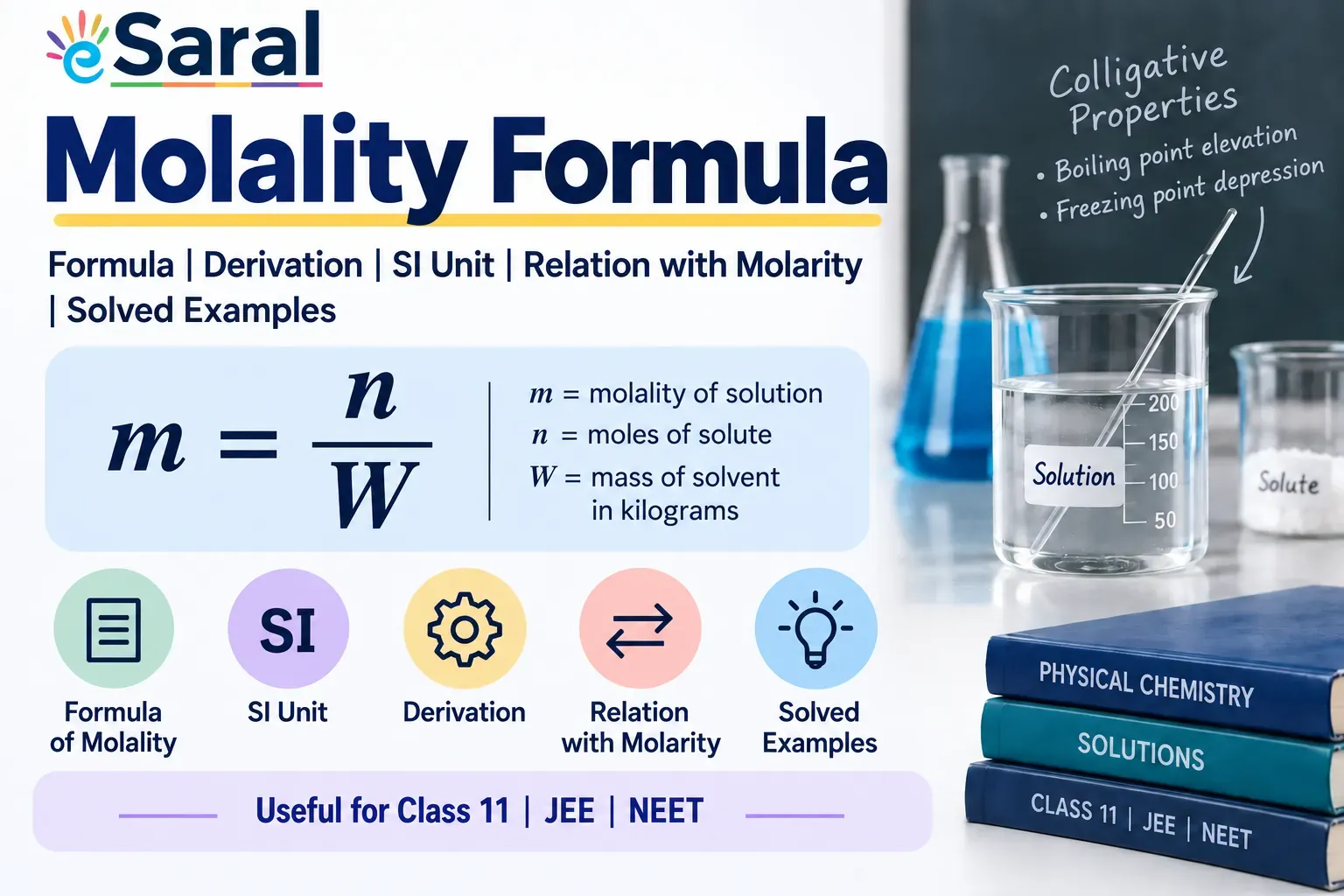
Molality Formula: Formula for Molality, Derivation & Solved Examples
Molality formula is $m = \dfrac{n}{W}$. Learn the formula of molality, its SI unit, derivation, relation with molarity, and solved examples for Class 11, JEE and NEET.
BITSAT Previous Year Question Paper PDF
Download BITSAT previous year question papers PDF. Get year-wise BITSAT PYQs, memory-based papers, exam pattern, and preparation tips to improve your BITSAT preparation.

Teachers’ Day 2026 at eSaral Gurukul: Celebrating the Bond Between Students, Teachers & Mentors
See how Teachers’ Day 2026 was celebrated at eSaral Gurukul, reflecting the bond among students, teachers, and mentors, and the role of guidance beyond academics.
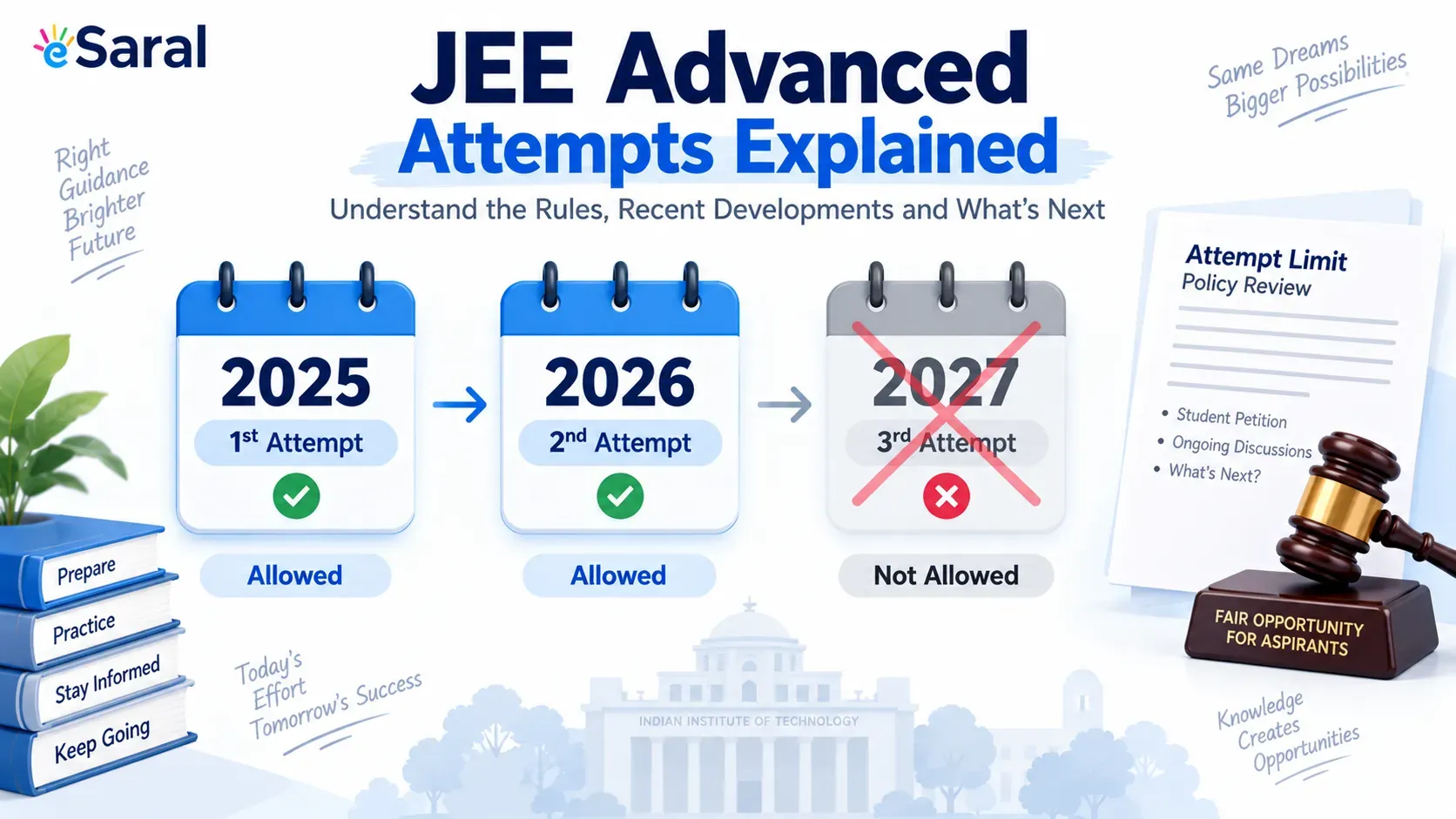
JEE Advanced Attempts: Can You Give It a Third Time? Rules Explained
JEE Advanced attempts: current rule is 2 consecutive years only: full eligibility criteria, the 2025 third-attempt controversy, and the latest 2026 petition news.

Best JEE Preparation App
Best JEE preparation app for Main & Advanced: AI mock tests, live doubt-solving, thousands of practice questions. JEE preparation app for droppers & Class 11-12.
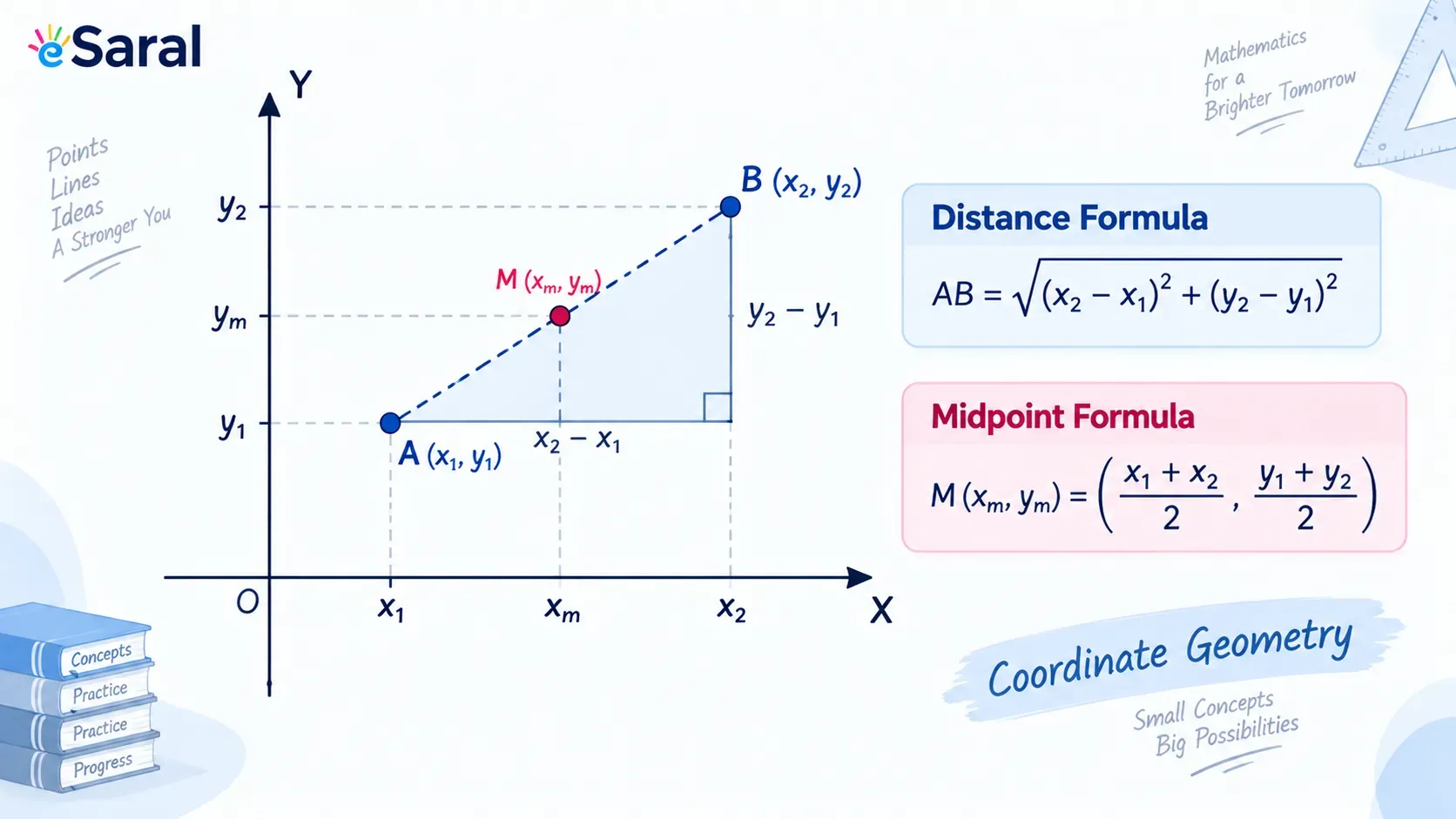
Coordinate Geometry Class 10: Formulas, Notes & Solved Examples
Coordinate geometry class 10: complete CBSE formulas — distance, section, midpoint and area of triangle — with derivation, notes and solved examples.
How to make Notes For JEE Smart Notes Strategy of an AIR 41
Learn how to make notes for JEE the way toppers do — indexing, shorthand, and smart short notes for JEE that cut revision time to just 5–7 days.
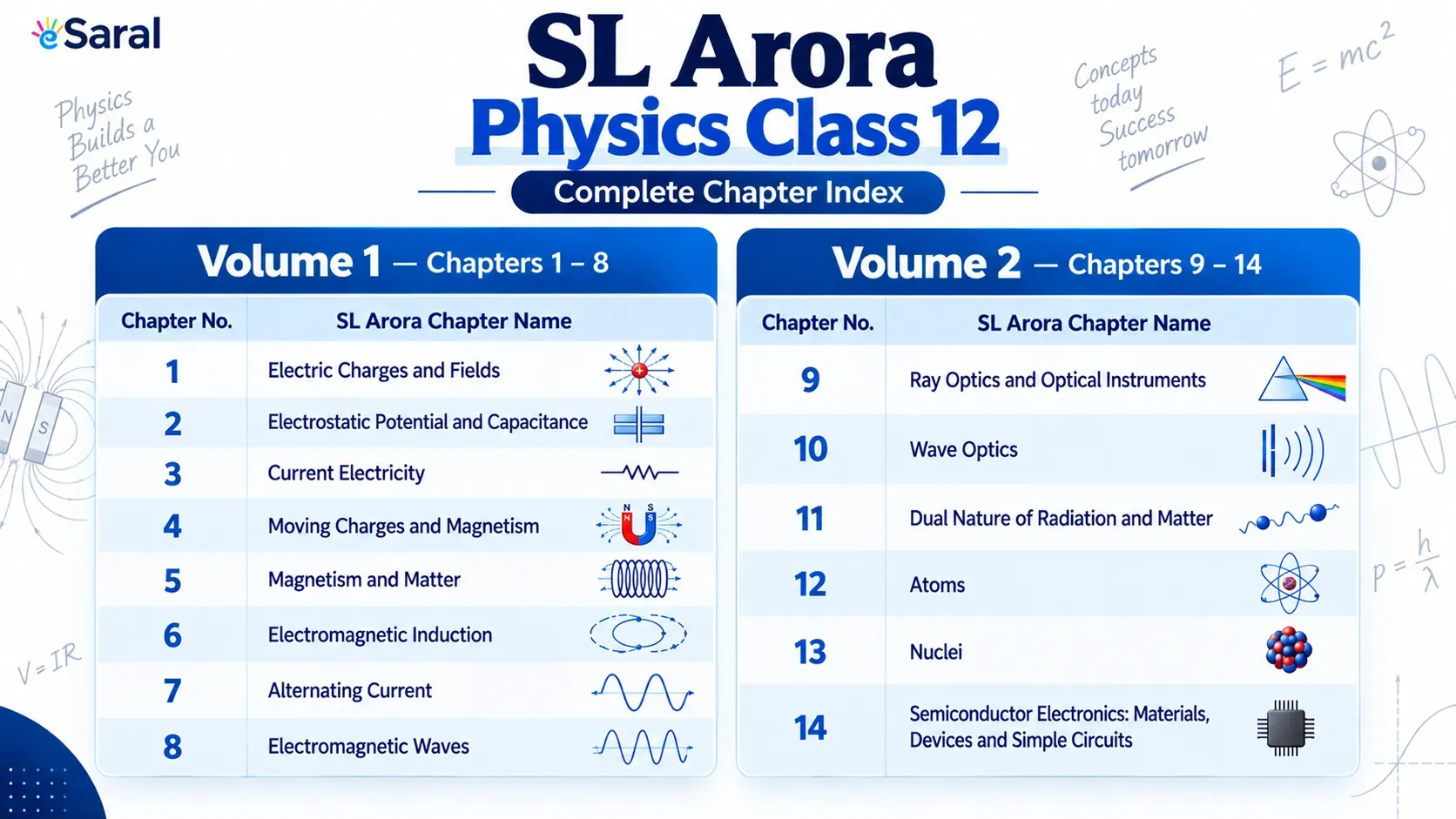
SL Arora Physics Class 12 Index – Chapter List for Volume 1 & 2
SL Arora Physics Class 12 index — complete chapter list for Volume 1 & 2, mapped to NCERT solutions for board, JEE Main, and NEET preparation.